In a sudden bout of racial killings, a South African suburb sees a dark history repeating itself #SootinClaimon.Com

#SootinClaimon.Com : ขอบคุณแหล่งข้อมูล : หนังสือพิมพ์ The Nation.

https://www.nationthailand.com/international/40004368

In a sudden bout of racial killings, a South African suburb sees a dark history repeating itself


PHOENIX, South Africa – Thirty-six years separated the infamous race riots of 1949 and 1985 in this area, when people of African and South Asian descent – pitted against one another at the bottom rungs of the apartheid system – killed each other in a bubbling over of resentment.
Last month, another 36 years after the last riots, Phoenix and surrounding towns ignited once again.

Amid a week-long bout of looting, arson and clashes that saw at least 342 killed across two South African provinces, 36 were killed in this patchwork of poor Black townships and more developed “Indian” suburbs that had been coexisting peacefully, though unequally. Most of the dead were Black this time, and most of the suspected killers were Indian, the country’s police chief said this week.

Interviews with nearly two dozen people – including victims, their family members, community leaders, politicians, business owners and others – were laced with disbelief. Decades of work had been put into building a peaceful coexistence. All wondered the same thing: How had it unraveled so suddenly?

The answer, most thought, was rooted in South Africa’s failure to truly heal the divides of apartheid. The country may have christened itself the Rainbow Nation, but high walls of income and opportunity still divide each of its stripes.

The wave of looting that swept across the metropolitan areas of Johannesburg and Durban, two of South Africa’s biggest cities, had already been raging for days when Thuto Shwuaka, 18, and friends decided to gather for a pickup soccer game on an empty field in Phoenix, whose population of around 200,000 is mostly descended from South Asians brought to South Africa more than 100 years ago by the British colonial government as farm and railroad laborers.

The television news had been broadcasting live shots of mostly Black crowds streaming out of department stores and warehouses with whatever they could grab. Interspersed with such footage were interviews with mostly White and Indian men in relatively affluent neighborhoods who said they had armed themselves in case the looters came for their homes. Shwuaka and his friends were stopped by one of these groups, he said.

“We came across a group of Indian men who told us that we could not pass there and turned us away,” he recalled on a recent day at home. “Then they accused us of being part of the group of people who had been looting and started beating us.”

ADVERTISEMENTx

In a sudden bout of racial killings, a South African suburb sees a dark history repeating itselfIn a sudden bout of racial killings, a South African suburb sees a dark history repeating itself

Nearly a month after the violence, South Africa’s police have come forward with a clearer picture of what transpired.

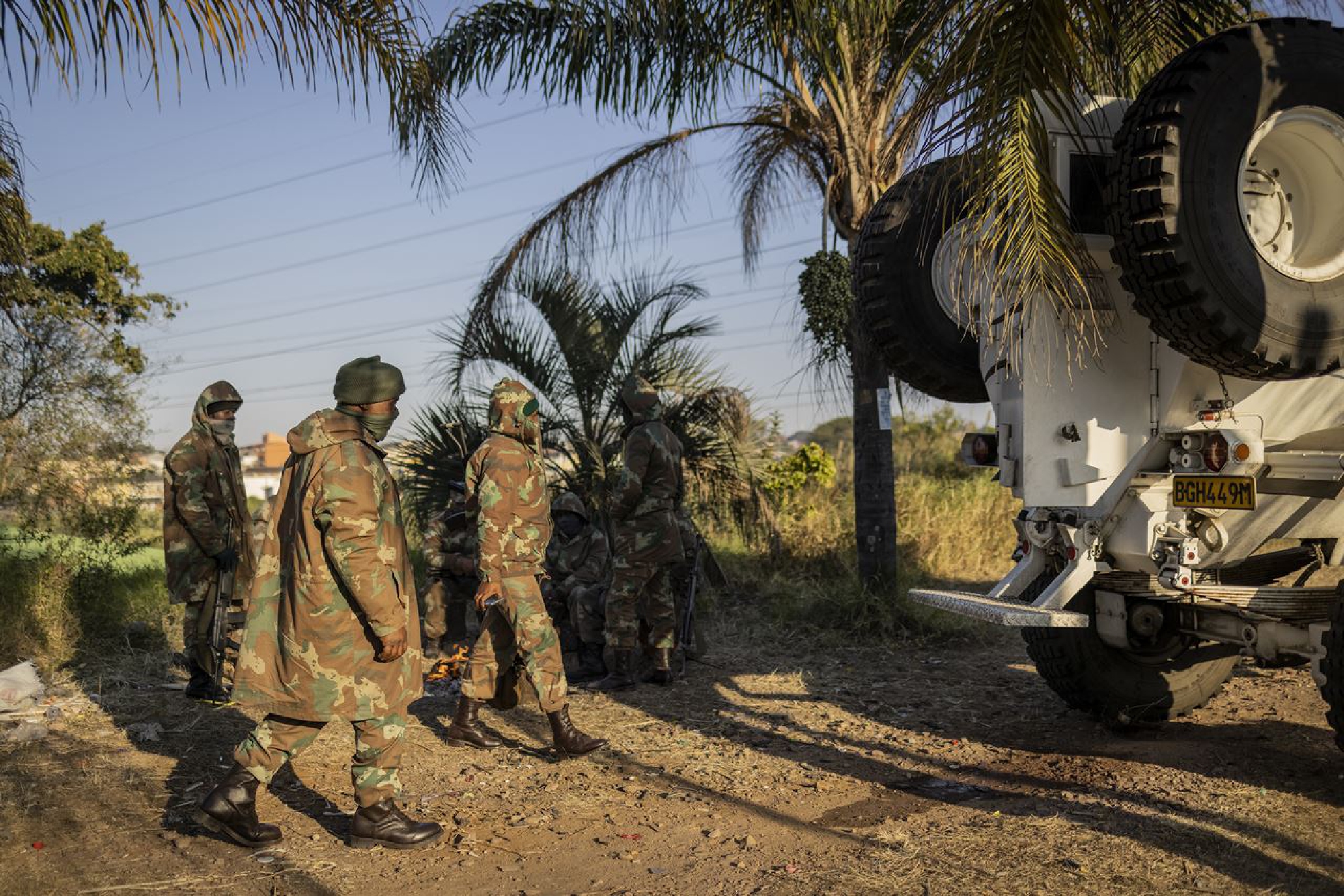
On July 12, days before President Cyril Ramaphosa ordered the deployment of thousands of reserve soldiers to the area, Phoenix residents began setting up checkpoints, according to Bheki Cele, the country’s top police official.

“Problems started when people at checkpoints turned to vigilantism and started racially profiling people, preventing them entry into the suburb,” Cele said at a news conference Tuesday, adding that the targets were “mainly African people.” Cele did not explain why so few police were available to intervene, leaving an opening for vigilantism.

Tensions quickly rose, and people on both sides brought weapons to the checkpoints. Shots were fired, people spread out and recriminations took place across Phoenix and adjacent settlements. People were “butchered with bush knives,” Cele said. “Vehicles were set alight.”

ADVERTISEMENT

“We are concerned about the potential outbreak of racial tension going forward,” Sihle Zikalala, the premier of KwaZulu-Natal, the province where Phoenix is located, said at the same news conference. He referred to the events of July 12 as a “massacre.”

All in all, 30 were shot dead. Two were burned to death. One was stabbed and one run over with a truck. Two more died of injuries from assaults. All but three of the dead were Black.

The police have deployed 31 special detectives to the area in the weeks since and have opened 52 cases of attempted murder, 25 cases of assault and other cases against a smattering of people accused of spreading inflammatory misinformation online. They have seized 152 firearms from “private security companies” and another 112 from private citizens.

The debate over private gun possession in South Africa roughly mirrors that in the United States.

“Discussions about guns are highly emotional, and pro-gun groups are mostly conservative and White and similar to the National Rifle Association in the U.S.,” said Guy Lamb, an expert on urban crime and policing at the University of Stellenbosch. “Whereas most of the gun violence that takes place in South Africa is in poor, Black townships.”

ADVERTISEMENT

South Africa’s police force has recently pushed for a ban on licensing firearms for private citizens but has faced enormous pushback from gun owners. South Africa already requires owners to be over 21, and to undergo background checks and competency tests.

“There was clearly a failure in policing,” Lamb said of what happened in Phoenix. “In those instances, people may feel justified to use vigilantism.”

In a sudden bout of racial killings, a South African suburb sees a dark history repeating itselfIn a sudden bout of racial killings, a South African suburb sees a dark history repeating itself

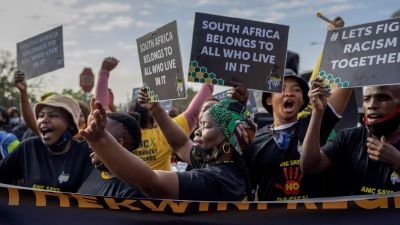
Court proceedings are underway against dozens of alleged perpetrators of the violence in Phoenix. Outside a courtroom last week, police and soldiers separated large crowds of protesters. “No bail, no bail” was the loudest chant.

“We want to make sure that people who are murderers do not get bail,” said Vukani Ndlovu, provincial treasurer for the opposition Economic Freedom Fighters party, which supports a radical vision of racial justice based on the redistribution of land from those who benefited from apartheid to the Black majority.

Supporters of the ruling African National Congress, which promotes a more conciliatory racial tone, emphasized that the killings should not drive a wedge between communities that had come to rely on each other for jobs and services.

“We must not allow the incidents of the past weeks to divide us,” said Kwazi Mshengu, a provincial ANC official, standing on the sidelines of the protest. “We are one people. We need to build a nonracial, united South Africa.”

The ANC has struggled to achieve that goal since apartheid ended in 1994. The party inherited a country that had been strictly divided by race in almost all walks of life by the apartheid government. All towns were racially segregated by the Group Areas Act, which imposed apartheid’s hierarchical system of privileges and services onto South Africa’s geography.

Phoenix’s Indian community is not wealthy by South African standards, but it is glaringly better off than the impoverished Black communities nearby that suffer from lack of water and electricity – public services that the ANC government has yet to reliably provide after nearly three decades in power.

While the two communities rely on each other, racism and resentment stretch back at least 120 years to when a young Mahatma Gandhi lived in Phoenix, where he published a newspaper and was a community leader. Despite his saintly reputation elsewhere, South African scholars have detailed his racist views toward Africans, and he is remembered by the Black community in South Africa as an apologist for the supremacist notions that undergirded what would eventually become the apartheid system. So-called Indian South Africans make up about 2.5 percent of the national population.

The White community, which makes up close to 10 percent of the population, was relatively untouched by July’s violence, an indicator of how much more separate they remain from the rest of South Africans than the Indian community.

“What has happened here again is a blight on humanity and it shows the failure of the democratic project,” said Amyna Fakhude, an activist working on interracial and interfaith dialogue in Phoenix. “Due to the negligence that has happened [since apartheid ended], we actually shot ourselves in the foot as a society by not working toward equality.”

That inequality is most keenly felt in Black townships like KwaMashu, just south of Phoenix.

When the looting began to spread through KwaZulu-Natal, some members of the community there saw an opportunity to take basic goods like refrigerators and couches that are too expensive to normally afford. But most stayed at home out of fear that Blacks would collectively be seen as looters and rounded up or worse.

“We don’t own anything. We are consumers and spectators in our own economy,” said Mlamuli Shangase, president of the local chapter of the Black Business Federation, a national organization. “What happened is not about ‘Indians and Africans,’ it is about criminals who took law into their hands.”
In a sudden bout of racial killings, a South African suburb sees a dark history repeating itselfIn a sudden bout of racial killings, a South African suburb sees a dark history repeating itself

As the violence surged on July 12, Fabian Moodley, the protective eldest son of a young single mother in a rough neighborhood, rushed to one of the checkpoints that had sprung up. He was shot dead there under disputed circumstances.

Looking back on that day, his mother, Tashleen, feels not just sadness but anger at the absence of the police. Faybian, 18, had always acted older than his age, but she wished he’d been more like a child that day.

“It wasn’t his place to assist in a roadblock, we have law enforcement, we have police. If our president could deploy the army for covid,” she said, before trailing off. “My child is not a soldier, he shouldn’t have been there.”

On the way to meeting committee members in the township of Bhambayi, a man pointed a gun at a driver of Indian descent hired by The Washington Post.

In a meeting arranged later, Blessing Nyuswa, one of the committee’s conveners, said that even though many in Bhambayi relied on Phoenix for jobs, schools and clinics, they were hesitant to go back, even though it might worsen their economic status.

“The people in Bhambayi say to me, ‘Before you tell us about peace, Blessing, tell us: Why did they kill us?” she said.

The answer she gives them is an indictment of South Africa’s quest for racial justice in the decades since apartheid was ended.

“We didn’t get freedom,” she said. “We only got democracy.”

Published : August 08, 2021

By : The Washington Post · Gulshan Khan, Hlengiwe Motaung, Max Bearak
Malaysia changes criteria for easing lockdown; Asean reports over 95,000 cases #SootinClaimon.Com
#SootinClaimon.Com : ขอบคุณแหล่งข้อมูล : หนังสือพิมพ์ The Nation.

https://www.nationthailand.com/international/40004363

Malaysia changes criteria for easing lockdown; Asean reports over 95,000 cases


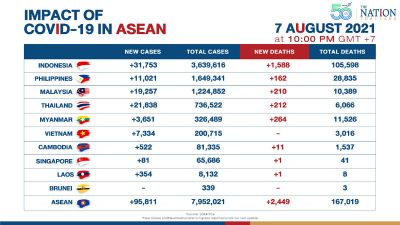
Southeast Asia saw a reduction in new Covid-19 cases and deaths on Saturday collated data showed.

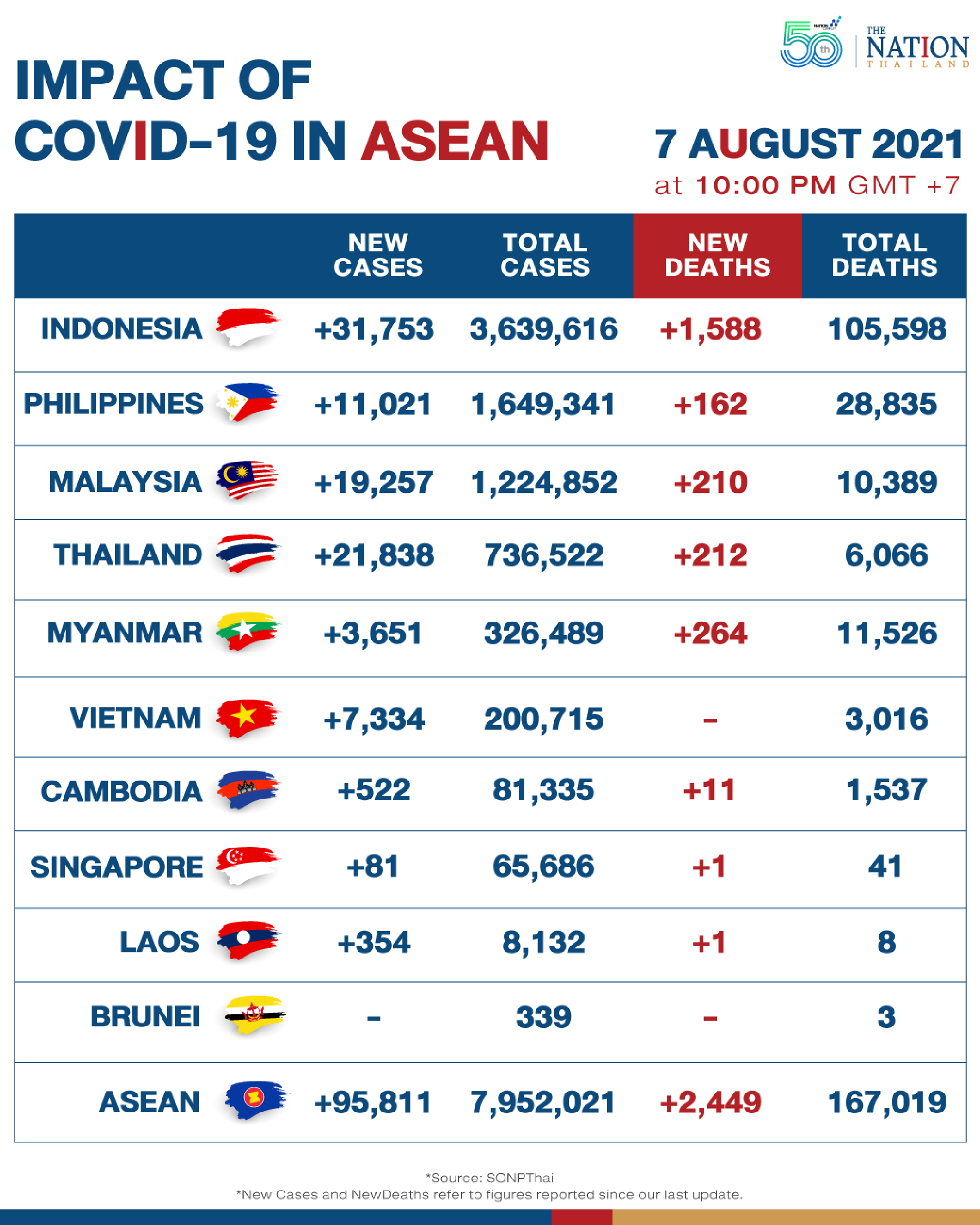
Asean countries reported 95,811 cases and 2,449 deaths on Saturday, lower than the record 105,278 and 3,069 respectively on Friday.

The Malaysian government said it would consider easing lockdown measures based on the number of patients being admitted to hospitals, patients being treated in ICU rooms and total vaccinated people, instead of of daily Covid-19 cases.

The move is in line with the third phase of the country’s economic recovery plan.

Currently, Malaysia is one of the Southeast Asian countries with the highest vaccination rate — 46 per cent have received the first shot and 24.5 per cent the second shot.

However, Malaysia’s Disease Control Division has confirmed that Covid-19 prevention principles, such as wearing face mask and maintaining social distance are still necessary.

ADVERTISEMENTx

The first batch of 97,111 doses of Pfizer-BioNTech mRNA vaccine has been delivered to Vietnam.

The delivery came after the Vietnam government decided to purchase 31 million doses of Pfizer vaccine on June 7 after over 20 discussions spread over 10 months.

However, the government did not reveal how much it had paid for the procurement.

Meanwhile, Vietnam’s Health Ministry said that 3 million doses of the Pfizer vaccine would be delivered to the country by the third quarter, while 27-28 million doses would be delivered by the end of this year.

Malaysia changes criteria for easing lockdown; Asean reports over 95,000 casesMalaysia changes criteria for easing lockdown; Asean reports over 95,000 cases

Published : August 08, 2021

By : The Nation

Biden pushes harder for masks, vaccines amid surge of U.S. COVID-19 cases #SootinClaimon.Com

#SootinClaimon.Com : ขอบคุณแหล่งข้อมูล : หนังสือพิมพ์ The Nation.

https://www.nationthailand.com/international/40004357

Biden pushes harder for masks, vaccines amid surge of U.S. COVID-19 cases


The rise in COVID-19 cases has prompted the CDC to issue new guidelines on mask wearing, and some areas are returning to restrictions seen last year during the height of the pandemic. As an increased number of cities call for employee vaccinations, they are seeing pushback from some labor unions.

 U.S. President Joe Biden is pushing harder on vaccines and masks as COVID-19 cases are surging across the country due to the spread of the highly contagious Delta variant.

COVID-19 cases, hospitalizations, and deaths continue to increase in most of the United States, especially in communities with lower vaccination coverage, the U.S. Centers for Disease Control and Prevention (CDC) said in a weekly report on Friday.
 

The outlook is especially dire in the South. The states of Florida and Louisiana recently set seven-day case records, according a report by The New York Times. In Florida, coronavirus hospitalizations are roughly equal to their previous peak from last summer. In Louisiana, intensive care units are strained and young adults are contracting serious cases of the virus.

ADVERTISEMENTx

PUSHING FOR MASKS, VACCINES

The rise in COVID-19 cases has prompted the CDC to issue new guidelines on mask wearing, and some areas are returning to restrictions seen last year during the height of the pandemic.

Mask wearing has been a subject of controversy in the United States for more than a year, with a significant chunk of the population refusing to wear masks for many different reasons. Some believe such choices are up to the individual, others believe – against current data – that masks do not necessarily protect against the virus.

Recent weeks have also seen a marked increase in the number of private sector companies promoting vaccinations for those who want to return to the office.

In a sharp about face of previous statements, recent days saw Biden say he would like to see companies move toward mandates.

ADVERTISEMENT

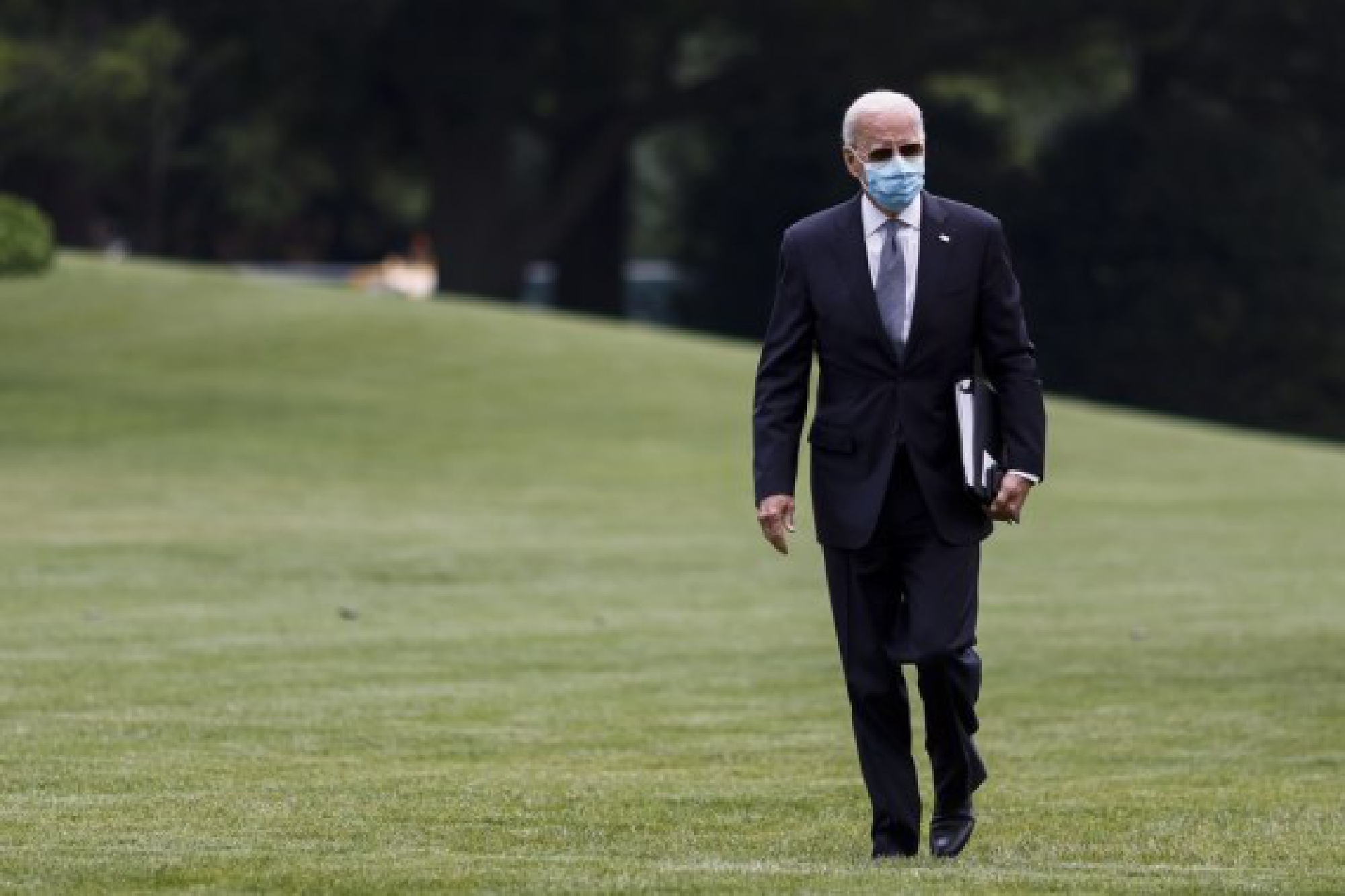
U.S. President Joe Biden returns to the White House after spending the weekend in Camp David, in Washington, D.C., the United States, on Aug. 2, 2021.U.S. President Joe Biden returns to the White House after spending the weekend in Camp David, in Washington, D.C., the United States, on Aug. 2, 2021.
Biden announced in recent days that all federal workers must be vaccinated or be required to wear masks and undergo regular testing.

Biden also said he believes more cities and states should institute rules like those in New York City, where customers at restaurants, gyms and other venues are required to be vaccinated.

Many Americans refuse to get the jab in the belief that the side effects will be worse than COVID-19 itself. Others believe conspiracy theories about the vaccines, which are widely circulated on social media.

As of Friday, 50 percent of the U.S. population – more than 165.9 million people – had been fully vaccinated against COVID-19, according to the CDC.

ADVERTISEMENT

Brookings Institution Senior Fellow Darrell West told Xinhua: “Many public and private sector organizations have instituted mask and vaccine requirements.”

“Some leaders oppose this but they are in states with low vaccination rates and high COVID rates,” West said.

An article published on Yalemedicine.org, one of Yale University’s websites, said people who are fully vaccinated “appear to have strong protection against Delta compared to those who aren’t… But anyone who is unvaccinated and not practicing preventive strategies is at high risk for infection by the new variant.”

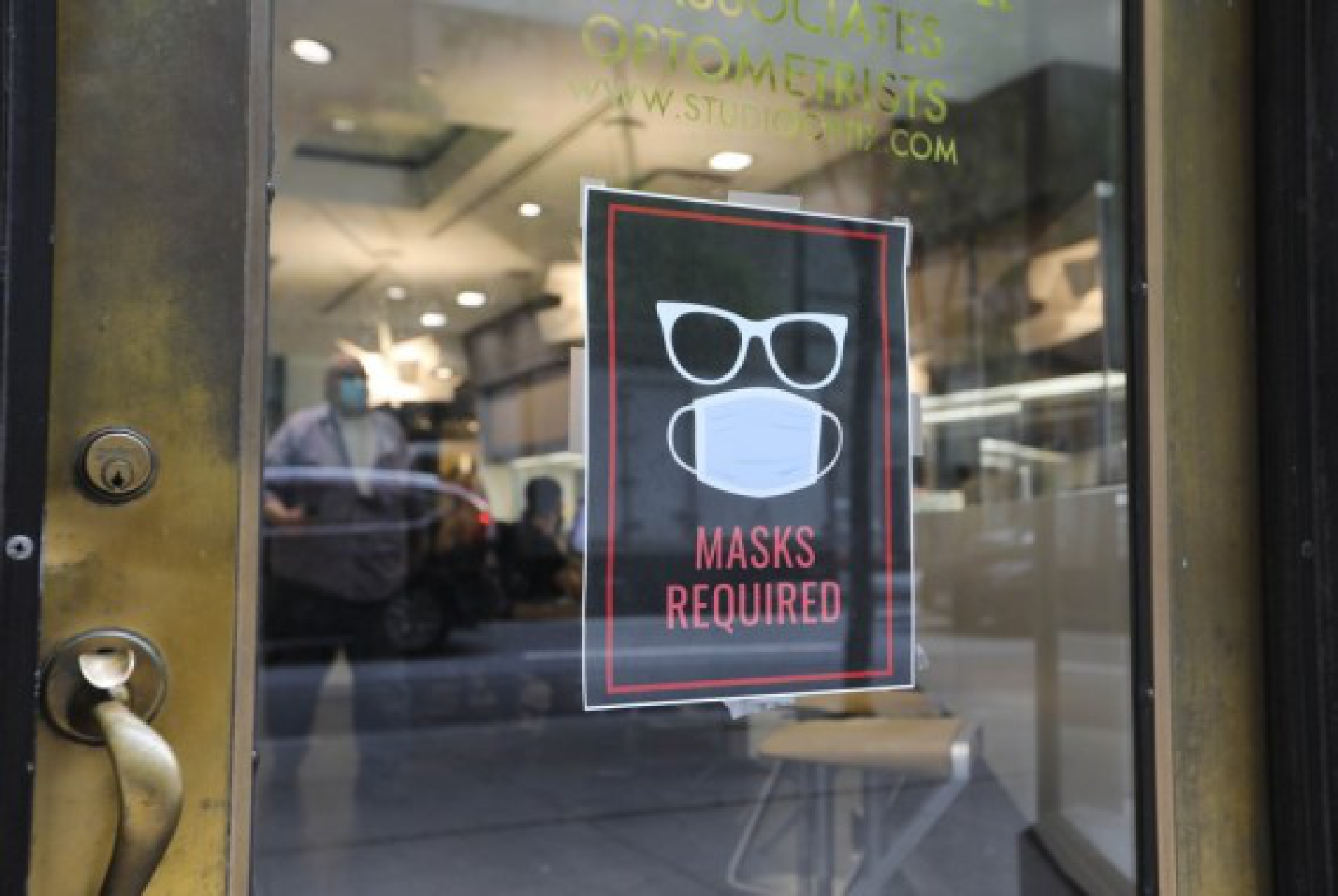
A sign is seen at the entrance to an optical shop in New York City, the United States, Aug. 2, 2021.A sign is seen at the entrance to an optical shop in New York City, the United States, Aug. 2, 2021.

CRITICS PUSH BACK

As an increased number of cities call for employee vaccinations, they are seeing pushback from some labor unions.

New York unions were outraged last week after the city implemented employee vaccination requirements.

“We are absolutely against an absolute mandate to vaccinate everyone,” said Henry Garrido, executive of New York’s health union.

The New York Fire Department (FDNY) also expressed anger about the possibility of weekly COVID-19 testing paid for by employees.

“This testing will not be done on our own time or our own dime,” FDNY union president Andrew Ansbro said. “If the city wants this, they can make it possible and they can pay for it.”

Clay Ramsay, a researcher at the center for international and security studies at the University of Maryland, told Xinhua the Biden administration has two choices: not to take requirements much beyond what it’s already done, or try out a new requirement and wait to see what the judicial system does.

The administration “doesn’t like to launch things that it believes put the courts into a real quandary and are hard to support before a judge,” Ramsay said.

“However, … sometimes Biden may go ahead in this fashion,” Ramsay said.

Conservative media also voiced strong opposition to any sort of mandate, arguing that the pandemic is over in the United States.

Fox News host Kayleigh McEnany, also press secretary for former President Donald Trump, said earlier this week, “We’re in a different stage of the pandemic now. We don’t need mandates. We don’t need masks. People are getting vaccinated.”

The administration is “slowly tiptoeing” toward vaccine mandates, “with Joe Biden tacitly approving the New York mandate that you have to be vaccinated to even eat at a restaurant,” McEnany said on Fox News.

She called such moves “ridiculous” and “dictatorial.”

Colleen Dudley, an office manager in the U.S. state of New Jersey in her 50s, told Xinhua that mask mandates should not come from the federal government.

“It should be up to the state health departments,” she said.

As of Saturday afternoon, more than 616,000 Americans have died since the virus hit the United States, and 35.7 million have been infected, showed a tally by the Johns Hopkins University.

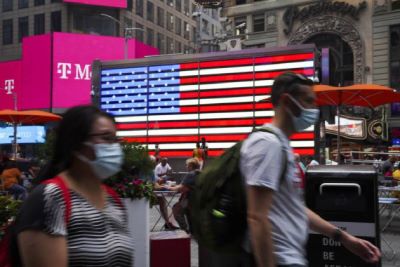
A pedestrian walks past a COVID-19 vaccine inoculation billboard in New York, the United States, July 26, 2021.A pedestrian walks past a COVID-19 vaccine inoculation billboard in New York, the United States, July 26, 2021.
Published : August 08, 2021

By : xinhua

Climate change to blame for Europes summer of extreme weather, say analysts #SootinClaimon.Com

#SootinClaimon.Com : ขอบคุณแหล่งข้อมูล : หนังสือพิมพ์ The Nation.

https://www.nationthailand.com/international/40004354

Climate change to blame for Europes summer of extreme weather, say analysts


Most experts agree that while it is impossible to link any one specific weather event to climate change, there seems to be consensus that the frequency and intensity of such events have been accelerated by climate change.

Unusually hot and dry weather in much of southern Europe together with heavy rainfall in other parts of the continent are combining to produce one of the most challenging summer seasons in years.

ADVERTISEMENTx

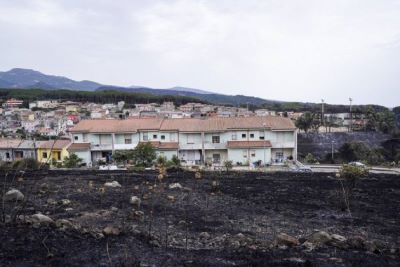
Reports across southern Europe, from Italy to Greece and Turkey, show record or near-record high temperatures. The weather condition has sparked wildfires on the Italian island region of Sardinia, prompting local officials to evacuate hundreds of residents and declare a state of emergency. In Greece, the capital city of Athens and its famed Acropolis have been shrouded in heavy smoke for days, with firefighters working around the clock.

“The country is facing an unprecedented environmental crisis, with multiple large fires,” Greek Prime Minister Kyriakos Mitsotakis told journalists on Thursday after visiting the site where the ancient Olympics were held. More than a dozen villages in the area had been evacuated for safety reasons.

Lenio Myrivili, the first-ever chief heat officer appointed for Athens, said recent events were a call to action.

They confirm the fact that “heat is becoming more of an issue for cities, one that we have to take seriously,” Myrivili told Xinhua. “We have to start mobilizing.”

Massive fires have also prompted evacuations in Turkey and Albania. In North Macedonia, the government declared a 30-day state of crisis while it confronts wildfires, while on the island of Malta, residents have experienced record-high temperatures.

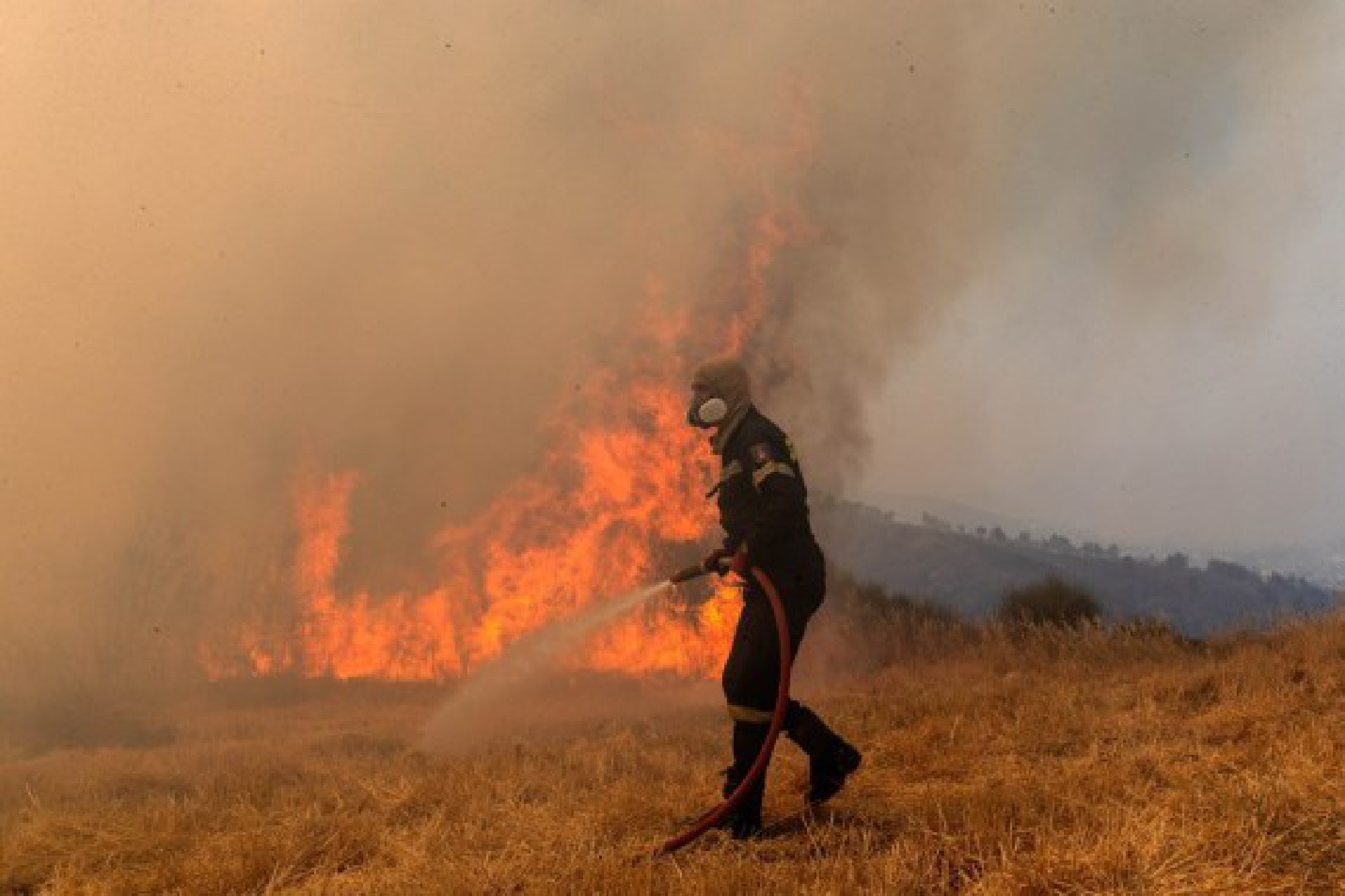
A firefighter tries to put out a fire in Afidnes, some 30 kilometers away from the Greek capital of Athens, on Aug. 6, 2021. A firefighter tries to put out a fire in Afidnes, some 30 kilometers away from the Greek capital of Athens, on Aug. 6, 2021.

In Romania, the capital city of Bucharest this week experienced its highest temperatures in years, something local climatologist Roxana Bojariu said was partly due to global warming.

While some parts of Europe are burning, other parts are being drenched by unseasonal rainfall. In recent weeks, Germany, Belgium, and Switzerland have all been hit by heavy rains that have left dozens dead, and damaged buildings and key infrastructure.

Like many expert observers, Virginijus Sinkevicius, European Commissioner for Environment, Oceans and Fisheries, put the blame for the extreme events on climate change, calling on countries to take strong action.

“We are fighting some of the worst wildfires we have seen in decades,” Sinkevicius said via social media. “But this summer’s floods, heatwaves, and forest fires can become our new normality. We must ask ourselves, is this the world we want to live in? We need immediate action … before it is too late.”

A resident cleans furniture in Pepinster, Belgium, July 20, 2021. Belgium is affected by floods and clean-up is under way to help the hard-hit regions recover from the destructions. A resident cleans furniture in Pepinster, Belgium, July 20, 2021. Belgium is affected by floods and clean-up is under way to help the hard-hit regions recover from the destructions.

Most experts agree that while it is impossible to link any one specific weather event to climate change, there seems to be consensus that the frequency and intensity of such events have been accelerated by climate change.

Luca Iacoboni, head of the climate and energy office for Greenpeace Italy, an environmental lobby group, said there was little doubt about the severe impacts of climate change.

“It’s no longer accurate to describe these trends as instances of bad weather,” Iacoboni told Xinhua. “They are climate emergencies and should be treated as such. What we are seeing in Europe is the same kind of phenomenon we have seen in the past in the Philippines or in California. The world must take notice and work together to reduce these threats before it is too late.” 

Photo taken on July 16, 2021 shows roads and houses damaged in flood disaster in Schuld, a town in Ahrweiler, Photo taken on July 16, 2021 shows roads and houses damaged in flood disaster in Schuld, a town in Ahrweiler,
Published : August 08, 2021

By : xinhua

Over 1 mln U.S. kids not enroll in local schools amid COVID-19 #SootinClaimon.Com

#SootinClaimon.Com : ขอบคุณแหล่งข้อมูล : หนังสือพิมพ์ The Nation.

https://www.nationthailand.com/international/40004353

Over 1 mln U.S. kids not enroll in local schools amid COVID-19


The steepest student enrollment drop was in the households below or just above poverty line.

Over one million U.S. children did not enroll in local schools, with the sharpest drop in kindergarten — more than 340,000 students, as the COVID-19 pandemic is sweeping the country, the New York Times quoted official data as reporting on Saturday.

ADVERTISEMENTx

The report said that the kids who had been expected to enroll in local schools did not show up, either in person or online, and the missing students were concentrated in the younger grades.

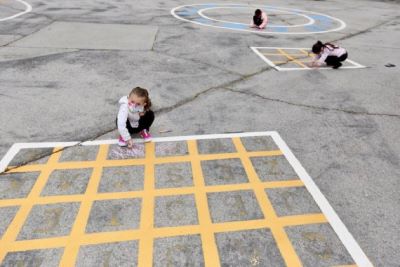
The report added that besides triggering vast disparities in health care and income, the pandemic also “hardened inequities in education, setting back some of the most vulnerable students before they spent even one day in a classroom,” according to an analysis of enrollment at 70,000 public schools across 33 U.S. states.

The analysis by the New York Times in conjunction with Stanford University shows that in the 33 states, 10,000 local public schools lost at least 20 percent of their kindergartners. In 2019 and in 2018, only 4,000 or so schools experienced such steep drops.

The survey also showed that the steepest student enrollment drop was in the households below or just above poverty line, adding that the decline was 28 percent larger in schools in those communities than in the rest of the country. 

A student is seen on the steps of the closed public school PS 139 in the Ditmas Park neighborhood in Brooklyn of New York, the United States, Oct. 8, 2020.A student is seen on the steps of the closed public school PS 139 in the Ditmas Park neighborhood in Brooklyn of New York, the United States, Oct. 8, 2020.



Published : August 08, 2021

By : xinhua

Favipiravir recommended on immediate basis for all Covid patients #SootinClaimon.Com

#SootinClaimon.Com : ขอบคุณแหล่งข้อมูล : หนังสือพิมพ์ The Nation.

https://www.nationthailand.com/life/40004373

Favipiravir recommended on immediate basis for all Covid patients


Patients with coronavirus awaiting treatment should receive standardised favipiravir medication immediately, the Department of Medicine has said.

nits guidelines for the care of people infected with Covid-19 who are waiting to be admitted to a hospital, Dr Somsak Ankasil, director-general of the Department of Medical Services, informed all medical units said patients should be given favipiravir tablets on an immediate basis, including for home isolation, community isolation, field hospitals, special wards (hospitel) and healthcare facilities.

Patients with mild Covid-19 symptoms or asymptomatic should also be given favipiravir as soon as possible.

He also recommended favipiravir for probable cases and confirmed cases according to the guidelines to maximise the benefits of treatment for those infected with Covid-19, and added that the patient’s waiting status should not impede access to favipiravir.

Published : August 08, 2021

By : The Nation

Leicester pip Man City to win FA Community Shield #SootinClaimon.Com

#SootinClaimon.Com : ขอบคุณแหล่งข้อมูล : หนังสือพิมพ์ The Nation.

https://www.nationthailand.com/life/40004374

Leicester pip Man City to win FA Community Shield

Leicester City won the FA Community Shield for the second time on Saturday.

Apenalty kick in the dying moments of a hard-fought match against Manchester City at Wembley Stadium sealed a 1-0 victory for the “Siamese foxes”.

ADVERTISEMENTx

Leicester pip Man City to win FA Community ShieldLeicester pip Man City to win FA Community Shield

The two teams were neck and neck until the 88th minute when a foul by Man City’s Nathan Aké in the box resulted in a penalty kick. Kelechi Ihenacho scored from the spot to give Leicester their second community shield 50 years after their first triumph in 1971.

Leicester pip Man City to win FA Community ShieldLeicester pip Man City to win FA Community Shield

Published : August 08, 2021

By : The Nation

Bronze medallist Sudaporn to carry Thai flag at Olympics closing ceremony #SootinClaimon.Com

#SootinClaimon.Com : ขอบคุณแหล่งข้อมูล : หนังสือพิมพ์ The Nation.

https://www.nationthailand.com/life/40004370

Bronze medallist Sudaporn to carry Thai flag at Olympics closing ceremony
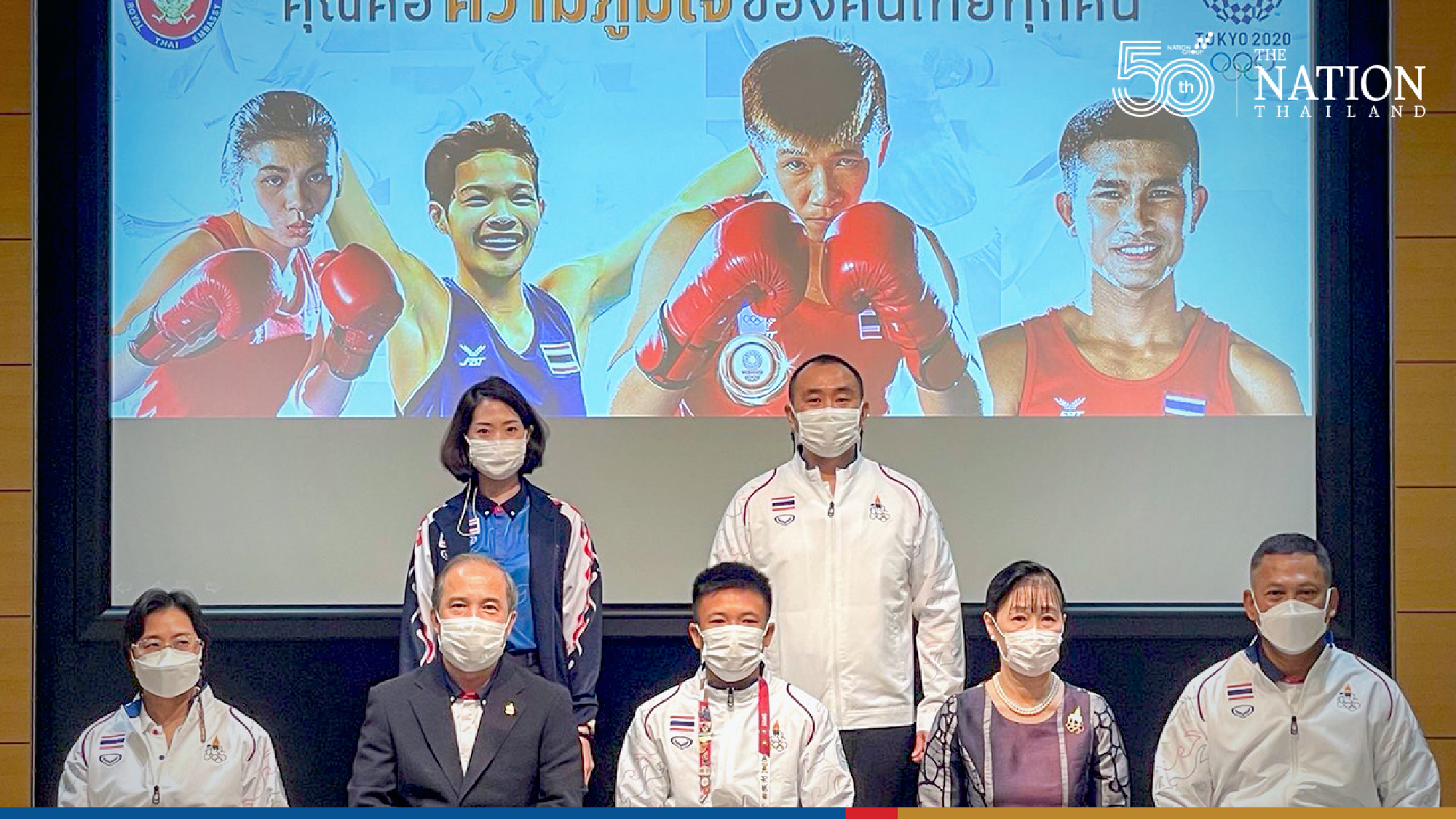

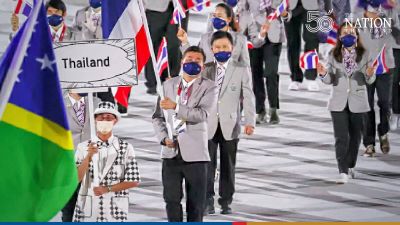
‘Taew’ Sudaporn Seesondee and Thailand’s boxing team will take part in the 2020 Tokyo Olympic Games closing ceremony parade on Sunday. Thailands ambassador to Japan on Saturday had hosted a congratulatory party for Sudaporn for her Olympics bronze medal achievement.

The closing ceremony will be held on Sunday, 6pm Thailand time, at Tokyo’s Olympic Stadium.


Sudaporn, Thailand’s first Olympics female boxing bronze medalist, will lead the Thai boxing contingent as all other Thai athletes have flown back after their competitions.
Sudaporn will receive her medal in the women’s lightweight (60kg) boxing on Sunday afternoon and carry the Thai flag at the closing ceremony later in the evening.


The governor of the Sports Authority of Thailand (SAT), Kongsak Yodmanee, will be a representative of Thailand to attend the ceremony, while Prince Akishino is representing the Emperor of Japan.


The Olympic flag will be handed over from Japan to France for the 2024 Paris Olympics.
Koike Yuriko, governor of Tokyo, will return the flag to International Olympic Committee (IOC) President Thomas Bach, who will hand it over to Paris mayor Anne Hidalgo.

Bronze medallist Sudaporn to carry Thai flag at Olympics closing ceremonyBronze medallist Sudaporn to carry Thai flag at Olympics closing ceremonyBronze medallist Sudaporn to carry Thai flag at Olympics closing ceremonyBronze medallist Sudaporn to carry Thai flag at Olympics closing ceremony
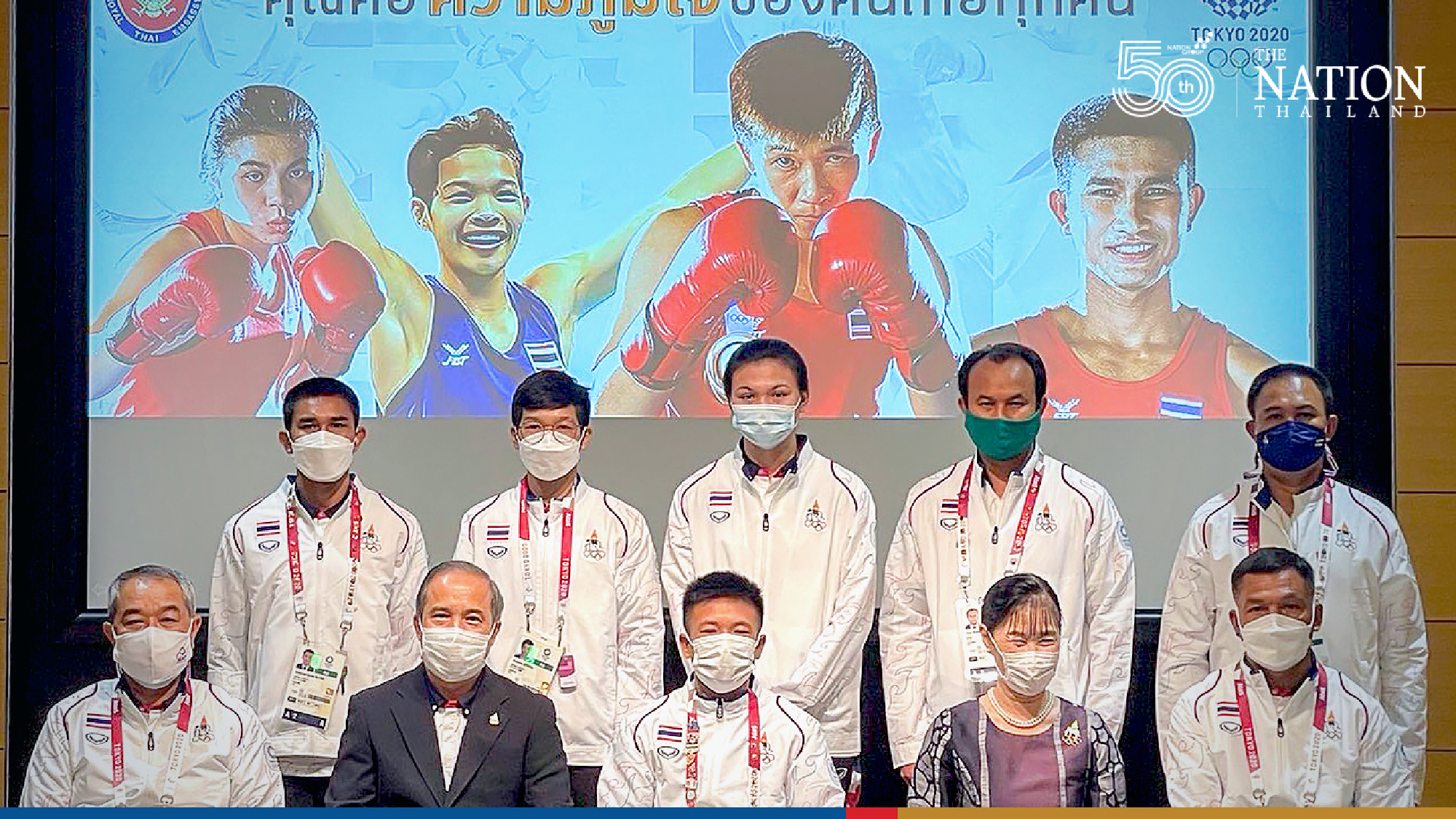
The congratulatory party for Sudaporn’s bronze medal, hosted by Thailand’s Ambassador to Japan Singtong Lapisatepun, was held on Saturday in Tokyo. The ambassador gave her a flower bouquet and Japanese sweets on behalf of Thai Deputy Prime Minister and Minister of Foreign Affairs, Don Pramudwinai.


The party strictly implemented Covid-19 safety measures. Members from the National Olympic Committee of Thailand, the Thai boxers and coaches attended the party. The boxing team will return to Thailand on Monday morning after taking part in the Olympics closing ceremony on Sunday.

ADVERTISEMENTx

Bronze medallist Sudaporn to carry Thai flag at Olympics closing ceremonyBronze medallist Sudaporn to carry Thai flag at Olympics closing ceremonyBronze medallist Sudaporn to carry Thai flag at Olympics closing ceremonyBronze medallist Sudaporn to carry Thai flag at Olympics closing ceremony

Published : August 08, 2021

By : The Nation

Kenyas Eliud Kipchoge delivers running masterclass to retain Olympic marathon title #SootinClaimon.Com

#SootinClaimon.Com : ขอบคุณแหล่งข้อมูล : หนังสือพิมพ์ The Nation.

https://www.nationthailand.com/life/40004360

Kenyas Eliud Kipchoge delivers running masterclass to retain Olympic marathon title


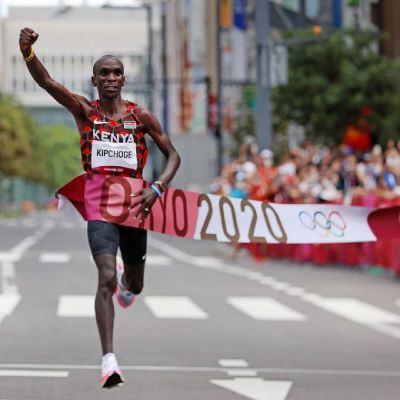
Kenya’s Eliud Kipchoge delivered a masterclass in running to retain the Olympic title in the men’s marathon at the Olympic Games Tokyo 2020.

Report From olympics.com : The Kenyan runner, running in his fourth Olympics, crossed the finish line in Sapporo Odori Park in a time of two hours eight minutes and 38 seconds.

The time was faster than the one he ran to win Olympic gold in Rio in 2016.

ADVERTISEMENTx

“It means a lot for me, especially at this time,” said Kipchoge on winning his second Olympic gold. 

“It was really hard last year, it (Olympic Games Tokyo 2020) was postponed. I am happy for the local organising committee who made this race happen. 

“It is a sign that shows the world we are heading in the right direction – we are on the right transition to a normal life. 

“I can say congratulations to them that they made this Olympics happen.”

Kipchoge, won bronze in Athens in 2004 and silver in Beijing 2008 in the 5000m, already has a full set of medals thanks to his marathon gold in Rio. 

ADVERTISEMENT

But this addition to his collection is Kenya’s fifth medal in the men’s Olympic marathon since the Games in Beijing in 2008.

With this win, Kipchoge joins a select group of runners who have successfully defended the Olympic marathon title. The others are Ethiopia’s Abebe Bikila (1960 and 1964) and East Germany’s Waldemar Cierpinski (1976 and 1980). 

“I think I have fulfilled the legacy by winning the marathon for the second time, back-to-back,” Kipchoge added. “I hope now to help inspire the next generation.”

The defending champion was one minute and 20 seconds ahead of the next closest finisher.The race for the silver and bronze came down to a sprint finish. 

Abdi Nageeye of the Netherlands outsprinted his training partner, Bashir Abdi of Belgium and Kenya’s Cherono Lawrence to claim the silver in a time of 2:09:58.

ADVERTISEMENT

Bashir, the winner of the Boston and Chicago marathons in 2019, finished two seconds later, in 2:10:00, for the bronze. Lawrence was a further two seconds adrift in fourth.

Kenya's Eliud Kipchoge is epitome of sportsmanship as he cruises to second Olympic gold in gruelling marathon race in Sapporo

“I love it. I don’t want to mention names but many people they had doubts,” said Nageeye on what winning silver means to him. “They never believed in me. I always believed in myself.” 

“I was a nomad, I packed my bags and trained in France, America, Ethiopia, Kenya. 

“People think I’m doing too many things (with training), but I just kept believing in myself.

“To stand on the podium with (former training partner) Eliud Kipchoge, the greatest of all time – we are still good friends. It is amazing.”

One hundred and five runners started the race in a hot and humid Sapporo, but the conditions soon took their toll, with many high-profile runners and pre-race favourites failing to finish the race.

Uganda’s Stephen Kiprotich, the London 2012 champion and Ethiopia’s Shura Kitata, the 2020 London Marathon champion, were just two of the runners that struggled in the humidity and withdrew in the first 15 kilometres.

Despite the gruelling conditions, Kipchoge, the world record holder, looked comfortable throughout.

In acts that embodied sportsmanship spirit at its finest, the Kenyan collected bottles of water and ice from tables and passed them to his rivals in the early stages of the race.

And in one of the moments to remember from the Olympic Games in Tokyo, Kipchoge was laughing and fist-bumping with Daniel Do Nascimento of Brazil.

“That smile is the happiness,” said Kipchoge, explaining why he was grinning during the race. 

“They say to enjoy this world is to be happy. While you are happy it helps you relax and enjoy the race.”

Having suffered a rare loss in the London Marathon in 2020, Kipchoge was clearly a man on a mission and seemingly back to his dominant best. 

The Kenyan made his move at the 25km mark and added an injection of pace to stretch out the leading group of runners.

Seemingly unphased by going it alone in searing heat, Kipchoge continued to surge clear of the chasing pack, and had a gap of more than one minute with three kilometres to go.

As he approached the line, Kipchoge continued to make the race look easy following a masterful display of his abilities. He smiled and waved at the small, assembled crowd of spectators.

He even took the time to greet and congratulate his fellow marathon runners as the crossed the line for some time after he finished his own race – the mark of a true champion.

Published : August 08, 2021

By : xinhua

Highlights of Tokyo 2020: New Sports in Olympics #SootinClaimon.Com

#SootinClaimon.Com : ขอบคุณแหล่งข้อมูล : หนังสือพิมพ์ The Nation.

https://www.nationthailand.com/life/40004355

Highlights of Tokyo 2020: New Sports in Olympics


The Tokyo Olympics have featured a record 33 sports and 339 events.

 In 2016, the International Olympic Committee (IOC) approved five new sports for the Tokyo Olympic Games, namely baseball and softball, karate, skateboarding, sport climbing and surfing.

ADVERTISEMENTx

Kiyuna Ryo of Japan competes during the Men's Kata Final Bout of karate at Tokyo 2020 Olympic Games in Tokyo, Japan, Aug. 6, 2021.
Yndiara Asp of Brazil competes during women's park final of skateboarding at the Tokyo 2020 Olympic Games in Tokyo, Japan, Aug. 4, 2021.
Sky Brown of Great Britain competes during women's park final of skateboarding at the Tokyo 2020 Olympic Games in Tokyo, Japan, Aug. 4, 2021.
Italo Ferreira of Brazil competes during the men's surfing match at Tsurigasaki Surfing Beach in Chiba Prefecture, Japan, July 27, 2021.
Jakob Schubert of Austria competes during the sport climbing men's combined final at the Tokyo 2020 Olympic Games in Tokyo, Japan, Aug. 5, 2021.

Naito Minori of Japan competes during the softball final between Japan and the United States at the Tokyo 2020 Olympic Games in Yokohama, Japan, July 27, 2021.Naito Minori of Japan competes during the softball final between Japan and the United States at the Tokyo 2020 Olympic Games in Yokohama, Japan, July 27, 2021.

Jack Lopez of the United States competes during the baseball semifinal match between the United States and South Korea at the Tokyo 2020 Olympic Games in Yokohama, Japan, on Aug. 5, 2021.Jack Lopez of the United States competes during the baseball semifinal match between the United States and South Korea at the Tokyo 2020 Olympic Games in Yokohama, Japan, on Aug. 5, 2021.

Published : August 08, 2021

By : xinhua