Brazil retains Olympic mens football gold medal with extra time goal
Brazils mens football team successfully defended their Olympic title after beating Spain in the final after 120 minutes.
Brazil retained its Olympic men’s football gold medal with a goal in extra time to beat Spain 2-1 on Saturday.
After its first Olympic gold at Rio 2016, the samba legion repeated its glory at the International Stadium Yokohama, where its national team won the 2002 World Cup.
Brazil missed the chance in the first half to take a lead. Spain’s goalkeeper Unai Simon took out Matheus Cunha in the box when trying to clear an incoming pass, and the referee awarded Brazil a penalty.
ADVERTISEMENTx
Everton forward Richarlison, who came to the final as the tournament’s best scorer with five goals, took to the spot but blazed the ball over the bar.
Brazil found their goal in the additional time of the first half when a floated ball drop into the box and Cunha took control of it ahead of Spanish defenders to put it into the net.
Spain found their equalizer in 61 minutes. Captain Mikel Oyarzabal caught a beautiful cross to hammer home with an unstoppable full volley strike.
Bryan Gil almost delivers the winning goal in the 88th minute for Spain but his powerful strike from outside the box hit the crossbar.
As the match went into extra time, it was brazil who found the winning goal. Malcom, who came out from substitution, powered over Spanish defender in catching an overhead pass and shoot the ball past the Spanish goal keeper in the 108th minute.
Brazil maintained the score until the final whistle and won the match 2-1.
In the Bronze medal match on Friday, Mexico defeated hosts Japan 3-1 in a commanding victory. Sebastian Cordova first scored a penalty for Mexico before assisting two further goals for his teammates. Japan only got one back in the 78th minute.
Navy plans to develop 500 rai area to support U-Tapao aviation hub
The Royal Thai Navy has said that the development of Eastern Economic Corridor (EEC) continued to move forward despite the Covid-19 situation.
Private concessionaire projects such as U-Tapao Airport and Eastern Aviation City continue to proceed on the parts that can be done, such as surveying and project design.
Meanwhile, the Navy and the Eastern Economic Corridor Policy Office (EECO) are also discussing the development of other projects to support investment after the Covid-19 pandemic. As part of the development plan, the EECO aims to implement projects related to the aviation industry zone (ATZ) development over a 500-rai (80 hectares) area to support investment in the aviation industry.
The ATZ project will support private investments related to the targeted industries, such as the Maintenance, Repair and Overhaul Centre (MRO), which will help support U-Tapao Airport and the EEC’s Eastern Aviation City as a hub for the aerospace industry development.
In the process of planning, it is expected to begin test investor interest and invite investors by September.
The private sector has expressed interest in investing in the aircraft repair centres in the ATZ area as they expect a boom in the aviation industry, especially in Asia. This will enable the aviation industry to recover by leaps and bounds and lead to investment in aircraft repair centres.
The Navy expects the aviation industry will return to pre-Covid-19 activity levels in 2023-24.
How cryptocurrency became a powerful force in Washington
WASHINGTON – At 2:36 p.m. Wednesday, the message went out on Twitter: “Crypto Red Alert!”
The message, from a left-leaning tech advocacy group called “Fight for the Future,” urged people to call U.S. senators to object to one provision of new rules for cryptocurrencies in the massive federal infrastructure bill. Senate offices were swamped with phone calls. Support came in from the likes of Jack Dorsey, the head of Twitter and Square, and Brian Brooks, a top banking regulator during the Trump administration who had become a key crypto executive.
And after years of debate over how to improve America’s infrastructure, and months of sensitive negotiations between the White House and lawmakers, the $1 trillion bipartisan infrastructure proposal suddenly stalled in part because of concerns about how government would regulate an industry best known for wild financial speculation, memes – and its role in ransomware attacks.
On Saturday, the Senate took a procedural step toward passing the infrastructure bill – expected to occur over the next few days – but remain divided over how heavy a hand government should take in overseeing the industry.
Sen. Rob Portman, R-Ohio, and the Biden administration agreed on a proposal that would give federal regulators authority to impose new tax reporting obligations on cryptocurrency brokers, which enable traders to buy and sell cryptocurrency. The crypto provisions emerged as lawmakers struggled to find ways to pay for the bill, with nonpartisan estimates suggesting the tax changes – which would codify work the Internal Revenue Service was beginning to undertake – would increase federal revenue by about $28 billion over 10 years.
But an odd-couple coalition of liberals concerned about government overreach into tech and conservatives skeptical of financial regulation have pushed back strongly against the plan, who argue it would harm innovation.
The disagreement has led to a days-long stalemate – continuing Saturday – in which negotiators fiercely contested details over which parts of the complicated cryptocurrency sector would be subject to the new requirements.
Regardless of the measure’s ultimate fate, the fact that crypto regulation has become one of the biggest stumbling blocks to passage of the bill underscored how the industry has become a political force in Washington – and previewed a series of looming battles over a financial technology attracting billions of dollars of interest from Wall Street, Silicon Valley and financial players around the world, but that few still understand.
“What I think you’re seeing is the maturing of the industry – you see the crypto folks now understanding how Washington can influence their world and Washington learning a little bit about the technology,” said Mick Mulvaney, former chief of staff under President Donald Trump, one of many former officials to be recruited to the crypto industry in recent years.
“One of the challenges that legislators face is they are still learning the language of crypto,” said Mulvaney, who joined the advisory board at the blockchain trade group Chamber of Digital Commerce in September.
Cryptocurrency is a medium of exchange that allows people to transfer value to others without needing a government overseeing it or a financial institution acting as a middleman. Cryptocurrencies have ballooned into a $1.7 trillion industry from nothing in a little over a decade. There are bitcoin, Ethereum, XRP and many others. All are digital currencies with transactions recorded in a decentralized system.
Once an obscure fascination of the tech set, cryptocurrencies today are close to mainstream acceptance, with growing interest from institutional investors – as well as lawmakers and financial regulators who see the potential for misconduct.
The companies also have beefed up lobbying efforts, attracting a bipartisan set of former officials.
Max Baucus, D, the former Montana senator, landed a job earlier this year advising cryptocurrency exchange Binance. In May, Rosa Rios, U.S. treasurer during President Obama’s administration, joined the board of blockchain start-up Ripple.
Cryptocurrency firms today have nearly 60 registered lobbyists. Five years ago, they had one, according to the Center for Responsive Politics. They are also on track to spend more than $5 million on lobbying this year, twice the total from just last year.
“They see the writing on the wall and they want to get ahead of regulations,” said Casey Burgat, director of George Washington University’s legislative affairs program. “I’m just surprised it took them this long to ‘lobby up.'”
But suspicion of this new kind of money runs high. Cryptocurrency – celebrated for being largely untraceable – faces criticism for its potential role in drug-dealing, money laundering and online ransomware attacks. Some enthusiastic supporters also draw quizzical looks for claims that the technology has the potential to create beneficial societal changes and total freedom from central banking powers. The technology has also generated concerns about its potential to worsen climate change by demanding huge amounts of energy to produce the coins.
Attempts to craft regulations are unusually difficult because cryptocurrency and its digital recording system known as blockchain are notoriously complex topics. That leaves plenty of room for lobbying members of Congress who are unlikely to have a deep understanding, some officials say.
ADVERTISEMENTx
Senators on Saturday were searching for a path of compromise between two different approaches. One, favored by the crypto industry and advanced by Sens. Pat Toomey, R-Pa., Ron Wyden, D-Ore., and Cynthia Lummis, R-Wyo., would specifically exempt cryptocurrency miners and software developers from new tax reporting obligations that they say would prove impossible technically to meet. Cryptocurrencies depend on “miners,” individuals and firms who through complex computing processes produce digital coins, such as bitcoin.
The Biden administration has maintained it has no intention to impose the reporting requirements on miners, but expressed concern that including broad exemptions could provide a loophole exploited by the industry to avoid tax compliance.
In an effort to find a middle ground, the administration and Sens. Portman and Mark Warner, D-Va., proposed exempting only one category of cryptocurrency miners, but under intense industry blowback agreed on Saturday to broaden their proposal to include another substantial category of mining. But those concessions did not, as of Saturday afternoon, appear likely to satisfy Wyden, Lummis, and Toomey, who want much broader exemptions.
The various political coalitions that have emerged around the issue do not fall neatly along partisan lines. Toomey, an advocate of laissez faire economic policies, has praised the innovative technology. He’s one of the few lawmakers on Capitol Hill who has in recent months, as the top Republican on the Senate Banking Committee, made it his mission to understand and embrace blockchain technology, hiring a crypto expert for his staff and becoming a go-to for the industry.
Wyden has been drawn to the issue as one of the Senate’s biggest privacy hawks. Lummis, meanwhile, has billed herself as the first bitcoin owner to be elected to the Senate and represents a state that has become a hub for cryptocurrency innovation.
Portman and Warner, who have been working closely with Treasury officials to craft legislative text that provides regulators more power, have close ties to Wall Street and the banking industry – the systems some say cryptocurrency has the potential to upend.
Meanwhile, liberals like Sens. Elizabeth Warren, D-Mass., and Sherrod Brown, D-Ohio, who have pressed regulators to ramp up oversight of what they’ve described as an unstable and volatile market that poses a risk to consumers, could ultimately align with conservative national security hawks who view crypto as a growing opportunity for terrorists, money launderers, and other criminals.
After years of hoping to avoid government oversight, many in the cryptocurrency world have shifted gears. They see regulation as inevitable. In their eyes, it is better to try to have a role in writing the new rules.
It’s a realization familiar to other industries, such as gambling or marijuana, which once sought to avoid the glare of the federal government. But they all want the blessing to operate nationwide, said George Washington’s Burgat. He pointed to the decision by former House Speaker John Boehner, R-Ohio, to join the board of the public cannabis company Acreage Holdings in 2018.
“We do need a legal framework that supports this ecosystem,” said Perianne Boring, head of the Chamber of Digital Commerce. “That does require engagement with regulators and policymakers.”
After the initial bipartisan infrastructure legislation containing cryptocurrency provisions was unveiled, the sector’s nascent lobbying force sprung into action. The Blockchain Association, a Washington-based trade group whose membership has more than quadrupled since 2018, immediately began to team up with other advocacy groups, such as Coin Center and Digital Currency Group.
They coordinated lobbying efforts over Google Meet video calls and encrypted messages on Signal. They used Google Sheets to track congressional office contacts.
“This is a whole new level of coordination and effectiveness that the cryptocurrency industry has been able to have in Washington,” said Kristin Smith, executive director of the Blockchain Association.
“This week has to me felt like a completely different experience than anything else we have taken on as a group before,” Smith said.
Cryptocurrency’s cause has drawn support from Silicon Valley figures including venture capitalists Marc Andreessen and Ben Horowitz as well as big-name investors including Dallas Mavericks owner Mark Cuban.
Crypto’s most vocal proponents believe the hostility toward the industry stems from a failure to look past all the speculation over tokens and ignoring the business opportunities that blockchain technology can generate. Cuban, who’s backing a host of crypto-related businesses, likened the potential of the budding technology to the rise of the Internet.
“Shutting off this growth engine would be the equivalent of stopping e-commerce in 1995 because people were afraid of credit card fraud. Or regulating the creation of websites because some people initially thought they were complicated and didn’t understand what they would ever amount to,” he said in an email to The Post.
The parallels between cryptocurrency’s current battle and how “big tech” once approached regulation are notable.
Just as leaders of San Francisco’s tech scene once swore off the “dirty business” of advocacy but later engaged in politics, the cryptocurrency industry increasingly realizes the influence game can work to its advantage, especially as suspicion and scrutiny mount in Washington.
Even as cryptocurrency was fighting to change language in the infrastructure bill, a new potential battle emerged.
It started when SEC Chairman Gary Gensler said in a speech at the Aspen Security Forum Tuesday that he believes most cryptocurrencies should be regulated as securities.
“I believe we have a crypto market now where many tokens may be unregistered securities, without required disclosures or market oversight,” Gensler said. “This leaves prices open to manipulation. This leaves investors vulnerable.”
A day later, Brian Quintenz, a Republican on the Commodity Futures Trading Commission, argued that cryptocurrencies were, in fact, commodities rather than securities.
“Just so we’re all clear here,” Quintenz said in a tweet, “the SEC has no authority over pure commodities or their trading venues, whether those commodities are wheat, gold, oil . . . or #crypto assets.”
The ongoing disputes over what cryptocurrencies even are signal the depths of the potential problems faced by the industry.
“Any industry wants to be involved in regulation discussions,” said Reid Yager, a former lobbyist and current director of communications at Blockhaus, a blockchain marketing firm. “But explaining all this to a septuagenarian lawmaker is a huge challenge.
Published : August 08, 2021
By : The Washington Post · Todd C. Frankel, Jeff Stein, Jacqueline Alemany, Hamza Shaban
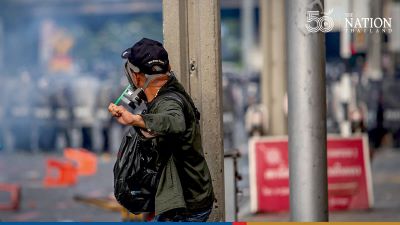
PM lauds police efficiency in dealing with anti-government protest
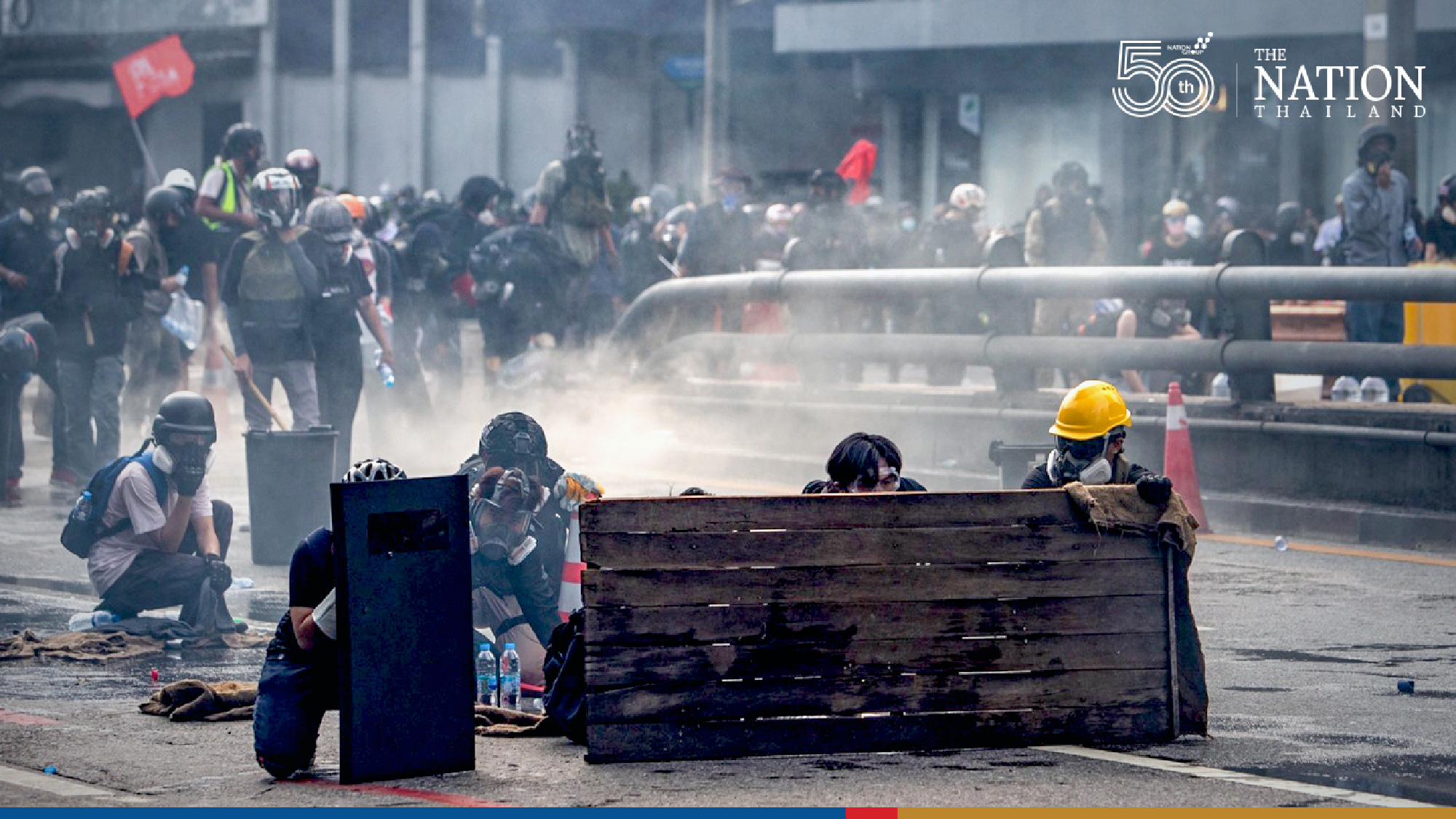
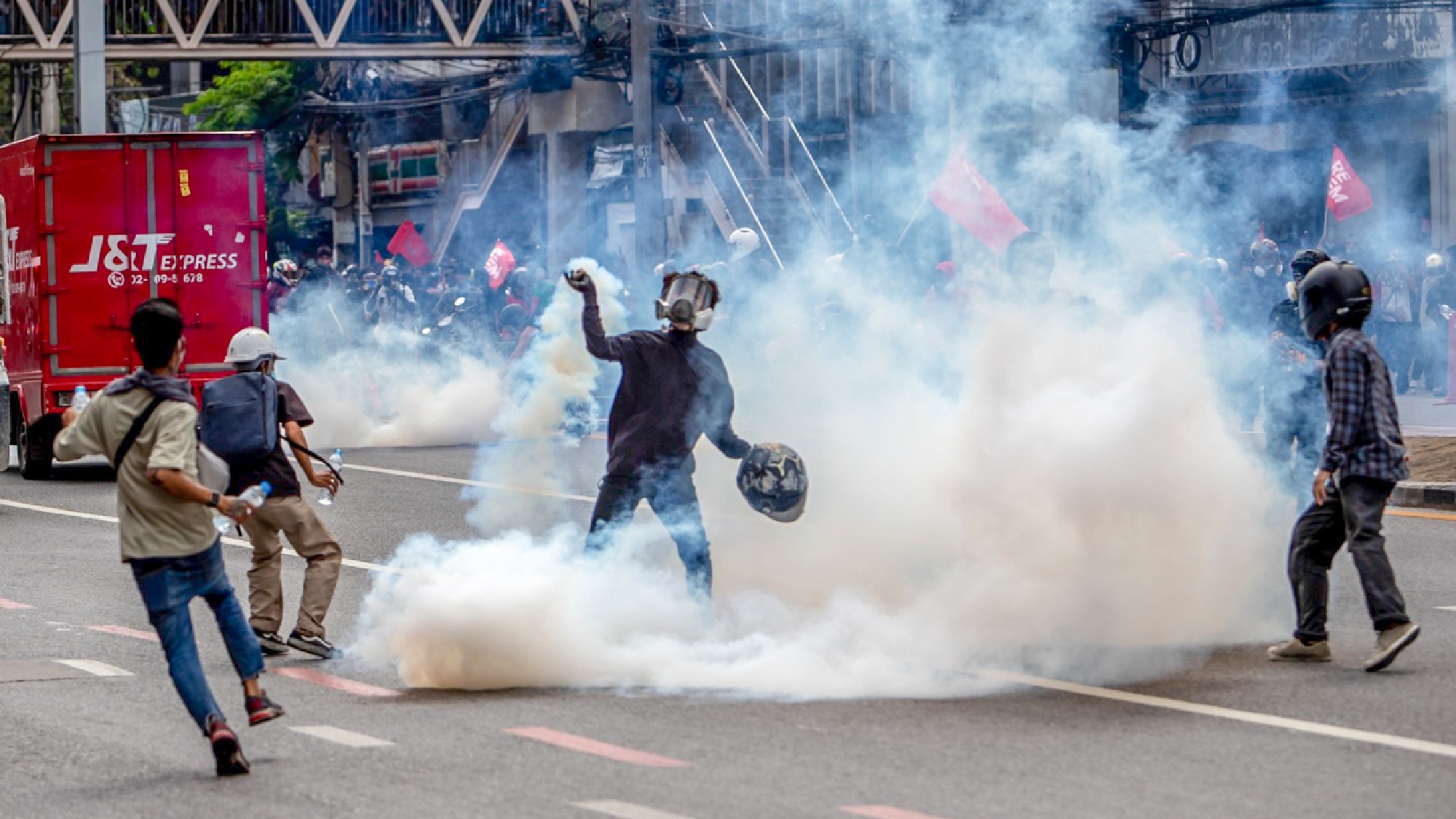
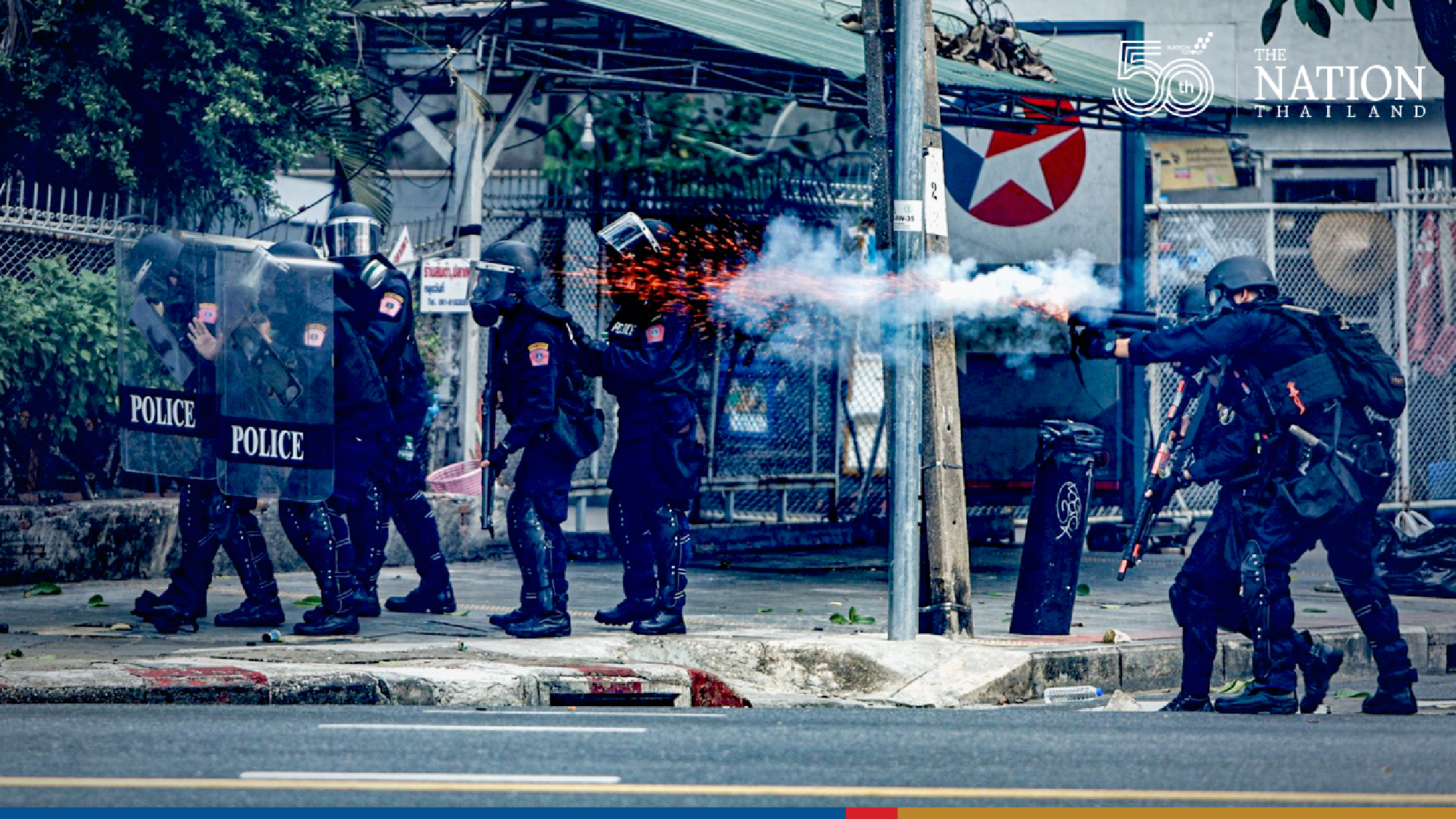
Prime Minister Prayut Chan-o-cha has thanked police officers for maintaining security in line with international principles during the anti-government protest on Saturday, Government Spokesman Anucha Burapachaisri said.
Prayut also thanked people who avoided participating in the protest, while expressing regret over damage to properties and trouble caused to people near the protest sites, Anucha added.
“Prayut emphasised that using violence during the protest was against the law, such as Communicable Disease Act and the state of emergency,” Anucha said.
“People who hold or participate in such gatherings, which raise the risk of Covid-19 infection, would face two years’ imprisonment or THB40,000 fine or both.”
ADVERTISEMENTx
PM lauds police efficiency in dealing with anti-government protestAnucha also asked protesters to propose suggestions or file complaints to the government properly and avoid using violence.
PM lauds police efficiency in dealing with anti-government protestPM lauds police efficiency in dealing with anti-government protestPM lauds police efficiency in dealing with anti-government protestPM lauds police efficiency in dealing with anti-government protest
Volunteer applications for Chula Covid vaccine close ahead of schedule
Applications for volunteers to trial the ‘ChulaCov19’ vaccine closed on Saturday, three days before the due date. The Chula Vaccine Research Centre’s (CVRC) vaccine is expected to be ready for administration trial by the end of August.
The Faculty of Medicine of Chulalongkorn University announced on Saturday the closure of applications as they already had the required number of volunteers.
The ChulaCov19 vaccination trial had sought healthy volunteers. The Thai mRNA vaccination volunteer registration was opened from August 3-10. Volunteers were required to be in the 56-75 years age range with no congenital disease, have never been Covid-19 infected, and not received the virus vaccination.
Volunteers who pass the initial screening will be contacted by the staff by August 15. Those who don’t make it will receive an SMS via the registered phone number.
The ChulaCov19 vaccine has been developed by Thai officials with support from Prof Drew Weissman, a University of Pennsylvania professor who invented the mRNA vaccine technology. The vaccine was developed from the creation of tiny parts from the coronavirus genetic material without using any infection. After receiving the vaccine, the body will produce spike proteins, stimulate the immune system, and the mRNA will be dissolved without any accumulation inside the body within several days.
Chulalongkorn University’s CVRC had conducted successful vaccination trials on monkeys and mice earlier before the first phase of human trial was conducted in June 14. The second phase of the vaccination trial will be held by the end of August.
Suspect in death of Swiss tourist says he intended to rob not kill
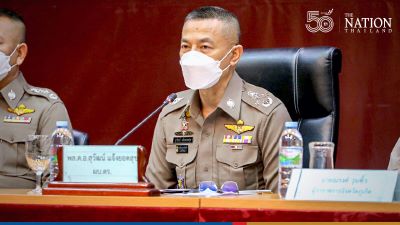
The suspect in the murder of a Swiss tourist in Phuket has confessed to committing the crime with the intention of robbing money from the victim to buy drugs, the police chief revealed on Sunday.
National Police chief Pol General Suwat Jangyodsuk stated in a press release on Sunday morning: “The suspect in the murder of a Swiss tourist at Ton Ao Yon waterfall in Phuket province is a 27-year-old local resident who lives near the crime scene, and had lost his job due to the pandemic. The suspect was arrested on an arrest warrant on Saturday and has confessed to the crime.
“The deceased was reportedly seen leaving the hotel in Ao Yon area on Tuesday [August 3] around 11.30am and arrived at the waterfall entrance 20 minutes later.
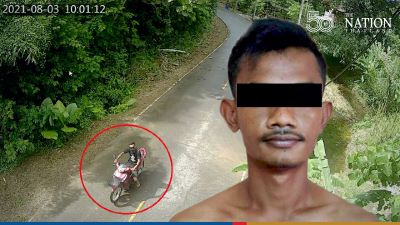
“An investigation of CCTV footage showed that the suspect was riding a motorcycle towards the crime scene 12 minutes before the deceased arrived, and drove back on the same route three hours later,” the police chief said.
The suspect reportedly said that he was finding wild things around the Ton Ao Yon waterfall area when he saw the woman sitting alone by the waterfall. The suspect tried to strangle the victim from the back but the woman fought back. Both fell into the pond, but the Swiss woman died. The suspect then laid the dead body face down, and covered it with a dark-coloured plastic sheet and rocks found nearby. The deceased’s backpack was hidden behind the tree and the shoes were thrown away. The suspect took THB300 cash from the deceased’s backpack and allegedly used some of it to buy drugs.
Suspect in death of Swiss tourist says he intended to rob not killSuspect in death of Swiss tourist says he intended to rob not kill
ADVERTISEMENTx
Police has charged the suspect with stealing and causing death. The suspect has been arrested in the past for drug possession — on October 5, 2020.
During the press conference at Phuket Police Station, police established telephonic contact with the suspect and allowed media to ask him questions. During the call, the suspect insisted that he did not intend to murder. He was only in need of money as he had lost his job due to Covid-19. The suspect apologised for the damage he had caused Thai people and the deceased’s family.
Suspect in death of Swiss tourist says he intended to rob not killSuspect in death of Swiss tourist says he intended to rob not kill
The heart-rending picture of a nurse hugging her bereaved Covid-19-infected pregnant friend went viral on social media on Saturday.
On August 7, Facebook user ‘Payaban Mhoo’ (Pig Nurse), a Covid-19 medic, posted a picture of herself standing in a hospital’s Covid-19 patient room, clad in a PPE suit, giving a comfort hug to an infected pregnant friend who had recently lost her husband to the infection.
In the post, she wrote: “This hug is from the heart. I wish to release all the bad feelings inside of you, and I want to let you know that I will always be there for you no matter what. I have tried my best in every possible way and I am truly sorry for what happened. From now on, you will need to take good care of yourself, eat more food and have enough rest, for the sake of your own child. I love you, and I thank you for your strength. I promise to always be there for you whenever you need me, always.”
The post instantly went viral on social media and has received many comments and support from netizens.
RT-PCR test document sufficient for Covid-19 patients to file insurance claim
Insurance companies should use Covid-19 documents that can verify the identity of those who have been tested by RT-PCR method for the virus from a laboratory accredited by the Department of Science instead of a report or certificate from a doctor for the payment of benefits under the Covid-19 insurance policy, the Office of Insurance Commission has said.
Suthiphon Thaveechaiyagarn, the secretary-general of the office, said that the current pandemic situation was severe. Many patients infected with Covid-19 are experiencing difficulty in getting medical treatment and certificates from hospitals due to difficulty in travel.
The office has issued the order to protect the benefits of the insured under the Covid-19 insurance policy, as payments have been delayed in many cases, Suthipon said.
Man suspected of killing Swiss tourist in Phuket hit with two charges
A man arrested for allegedly killing a Swiss tourist in Phuket has been charged with stealing and causing death, National Police chief Pol General Suwat Jangyodsuk said on Saturday.
The body of a 57-year-old Swiss woman was found near Ton Ao Yon waterfall in Tambon Vichit of Muang district on Thursday.
Suwat said the suspect, a 27-year-old Thai man, was arrested on Saturday after being spotted in CCTV footage near the crime scene.
“Recently, police filed charges of stealing and causing death against a suspect. The results of forensic examination and autopsy are necessary before filing a rape charge,” he said.
“Clear evidence is necessary to acknowledge the suspect’s real intention because his testimony was only partly reliable.”
ADVERTISEMENT
Suwat added that the police has discussed with Phuket government agencies on tightening security for tourists.
Isolated thundershowers forecast for most parts of Thailand
A few heavy showers are forecast for the west coast of the South, the Thailand Meteorological Department said on Sunday.
The southwest monsoon prevails over the Andaman Sea, Thailand and the Gulf of Thailand with thundershowers continuing over the western portion of Thailand.
People in risky areas should beware of the severe conditions and flash floods, the department said.
Winds and waves over the Andaman Sea and the Gulf of Thailand are weakening.
Wind waves up to 1-2 metres high are likely in the Andaman Sea and the upper Gulf of Thailand and above two metres high during thundershowers. Waves about a metre high are likely in the lower Gulf of Thailand, and 1-2 metres high during thundershowers.
All ships in the Andaman Sea and the upper Gulf of Thailand should proceed with caution and keep off the thundershowers area.
ADVERTISEMENTx
The weather forecast for the next 24 hours:
North: Isolated thundershowers mostly in Mae Hong Son, Chiang Mai, Chiang Rai, Nan, Tak and Phetchabun provinces; minimum temperature 23-26°C, maximum 34-37°C; southwesterly winds 10-20 km/hr.
Northeast: Isolated thundershowers mostly in Bueng Kan, Sakon Nakhon, Nakhon Phanom, Chaiyaphum, Amnat Charoen, Nakhon Ratchasima and Ubon Ratchathani provinces; minimum temperature 24-26°C, maximum 34-37°C; southwesterly winds 10-20 km/hr.
Central: Isolated thundershowers mostly in Uthai Thani, Kanchanaburi, Nakhon Pathom, Ratchaburi and Samut Songkhram provinces; minimum temperature 24-25°C, maximum 36-37°C; southwesterly winds 10-20 km/hr.
East: Isolated thundershowers mostly in Nakhon Nayok, Prachin Buri, Chanthaburi and Trat provinces; minimum temperature 25-28°C, maximum 33-35°C; southwesterly winds 15-35 km/hr; waves 1-2 metres high and above two metres during thundershowers.
South (east coast): Isolated thundershowers mostly in Phetchaburi, Prachuap Khiri Khan, Chumphon, Surat Thani, Yala and Narathiwat provinces; minimum temperature 23-25°C, maximum 33-35°C; southwesterly winds 15-30 km/hr; waves about a metre high and 1-2 metres during thundershowers.
South (west coast): Scattered thundershowers mostly in Ranong, Phang Nga, Phuket and Krabi provinces; minimum temperature 18-26°C, maximum 30-33°C; southwesterly winds 15-35 km/hr; waves 1-2 metres high and above two metres during thundershowers.
Bangkok and surrounding areas: Isolated thundershowers mostly in the afternoon to evening; minimum temperature 26-27°C, maximum 34-37°C; southwesterly winds 10-20 km/hr.







 PM lauds police efficiency in dealing with anti-government protestAnucha also asked protesters to propose suggestions or file complaints to the government properly and avoid using violence.
 PM lauds police efficiency in dealing with anti-government protest
 PM lauds police efficiency in dealing with anti-government protest
 PM lauds police efficiency in dealing with anti-government protest
 PM lauds police efficiency in dealing with anti-government protest
 Suspect in death of Swiss tourist says he intended to rob not kill
 Suspect in death of Swiss tourist says he intended to rob not kill
 Suspect in death of Swiss tourist says he intended to rob not kill
 Suspect in death of Swiss tourist says he intended to rob not kill


 SootinClaimon.Com