กรมอนามัย กระทรวงสาธารณสุข ร่วมกับ”กระทรวงศึกษาธิการ” เตรียมแนวทาง” Sandbox Safety Zone in School” หวังนักเรียนสามารถไปเรียนที่โรงเรียนได้ในภาคการศึกษาหน้า ภายใต้การปฏิบัติตัวตามมาตรการของกระทรวงสาธารณสุขกำหนด
กรมอนามัย กระทรวงสาธารณสุข ร่วมกับกระทรวงศึกษาธิการ เตรียมแนวทาง Sandbox Safety Zone in School หวังนักเรียนสามารถไปเรียนที่โรงเรียนได้ในภาคการศึกษาหน้า ภายใต้การปฏิบัติตัวตามมาตรการของกระทรวงสาธารณสุขกำหนด พร้อมย้ำช่วงนี้พ่อแม่ผู้ปกครองควรดูแลเด็กเป็นพิเศษ เพื่อให้ปลอดภัยจากโควิด-19
นายแพทย์สราวุฒิ บุญสุข รองอธิบดีกรมอนามัย เปิดเผยถึงการประชุมเตรียมการแนวปฏิบัติ Sandbox Safety Zone in School ร่วมกับกระทรวงศึกษาธิการ เมื่อวันที่ 6 สิงหาคม 2564 ที่ผ่านมา ว่า ขณะนี้กระทรวงสาธารณสุขโดยกรมอนามัยได้ร่วมกับกระทรวงศึกษาธิการ เตรียมจัดทำแนวปฏิบัติ Sandbox safety in school ด้วยการจำกัดบุคคลเข้าออกโรงเรียนอย่างชัดเจนและจะมีการคัดกรองโดยใช้วิธี Rapid Antigen Test
เน้นการทำกิจกรรมในรูปแบบ Bubble and Seal ต้องปฏิบัติตามมาตรการของ Thai Stop COVID Plus มีระบบติดตามเข้มงวดของครูและบุคลากรพร้อมเฝ้าระวังสุ่มตรวจทุก 14 วันหรือ 1 เดือนต่อภาคการศึกษา ด้านครู บุคลากรทางการศึกษา มีการประเมินความเสี่ยงผ่าน Thai save Thai สม่ำเสมอ เข้าถึงการฉีดวัคซีนครอบคลุมมากกว่าร้อยละ 85
Covid-19 Delta variant runs riot in SL: Three patients die every one hour
As hospitals and allied medical facilities reached breaking point in the backdrop of the virulent Delta strain of the Coronavirus wreaking havoc across the country, Sri Lanka’s top national professional medical body, called for the re-imposition of travel restrictions to curb the rapid transmission of the deadly variant.
“That’s the only solution to combat surging caseloads in the short term”, says the Sri Lanka Medical Association (SLMA).
The final outcome could be disastrous if there’s no decisive action at this juncture to clamp down on unrestricted public movement as the country is on the brink of the fourth wave, SLMA Vice President, Consultant Endocrinologist, Dr. Manilka Sumanatilleke warned.
The Colombo area was found to be particularly vulnerable as most of the positive cases that have emerged so far were linked to the highly transmissible Delta variant, medical officials said.
“The infection is spreading super fast”, they cautioned, while pointing out that the spike in the caseload and the mortality rate reported on a daily basis was due to Delta surfacing as the dominant Covid-19 strain.
Director of the Department of Immunology and Molecular Medicine of the Sri Jayewardenepura University, Dr. Chandima Jeewandara, confirmed that 75% of the Covid-19 cases detected in Colombo during the last week of July were associated with the Delta variant.
ADVERTISEMENTx
The rapid spread of the strain in Colombo has become increasingly clear because in the first week of July, only 13% Delta infections were found following laboratory testing on Covid-19 variants, he said.
Initially detected in the Dematagoda area, the strain has spread rapidly to many other parts of the country bringing in its wake a bigger caseload, which has overwhelmed the country’s health sector.
According to latest figures, 94 Covid related deaths were reported (49 males and 45 females), while 1,885 positive cases were reported on August 5. This has pushed up the total caseload to 320,640 and the death toll to 4,821 so far.
The situation is so grave that there are three Covid linked deaths in Sri Lanka every hour, Dr. Sumanatilleke explained.
“The frequency of accommodating patients have already been exceeded in Colombo, Gampaha, Kalutara, Galle, Kununegala and Puttalam”.
The virus is spreading faster than the ongoing inoculation drive, he said, while stressing that the only option to combat the growing threat is to re-impose travel restrictions.
The government must be proactive in addressing the crisis without allowing the situation to reach alarming proportions, he noted.
With hospitals at maximum capacity in terms of patient’ admissions, the whole outlook is frightening, he pointed out.
Though the SLMA and other professional medical bodies have called for a fresh travel ban, there has still not been a positive response from the health sector.
Government medical officials have expressed confidence that galloping infection numbers can be tackled by broad-basing the ongoing inoculation drive.
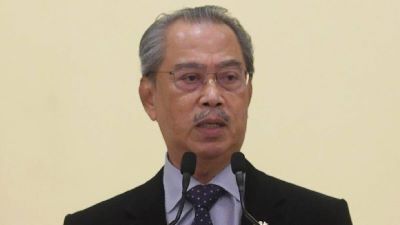
KUALA LUMPUR: Plans are being finalised ahead of the anticipated announcement by the Prime Minister to reopen certain sectors of the economy.
The National Security Council (NSC), chaired by Tan Sri Muhyiddin Yassin, is expected to announce the reopening of the business sector, especially the small and medium enterprises (SMEs) soon.
The sectors involved in the first phase would probably be those with proven low or even zero infection records, said government sources. As part of the move, vaccinations in the Klang Valley are likely to be bumped up to meet the targets to enable such flexibility.
Separately, coordinating minister for the National Recovery Plan (NRP), Tengku Datuk Seri Zafrul Tengku Abdul Aziz, said the reopening, especially SMEs, needed to be decided based on the risk of Covid-19 infection in the respective sectors.The Finance Minister also said it needed to be assessed based on robust science and data, adding that sector-based risk analysis alone might produce inconsistent results.
“So we have to look at all sectors, not just based on specific sectors, but in terms of the risk of Covid-19 in the respective sectors,” Bernama quoted him as saying yesterday.
The government sources cautioned that enhanced standard operating procedures would be part of the reopening.
“I won’t expect all sectors to reopen at once as the government would be cautious to ensure no negative backlash. The numbers (Covid-19 cases) are still high but it is in the right direction to allow businesses to sustain,” said the sources.Muhyiddin on Friday chaired the second meeting of the National Recovery Council (NRC), which, among others, discussed the leeway for the business sector, especially SMEs, to reopen under stringent SOP.Later yesterday, Tengku Zafrul said in a statement that “daily symptomatic hospital admission rate” (based on each state’s population) would be the new indicator to determine whether a state would change phases (ranging from one to four) under the NRP.
ADVERTISEMENTx
The criterion for symptomatic cases is based on daily hospital admission number of patients in Categories Three (with pneumonia), Four (needs supplementary oxygen) and Five (critical condition with multiple complications).
“The NSC and NRC meetings chaired by the Prime Minister (last week) have considered and accepted the new indicator, based on expert health advice as well as international and domestic experiences on the decline of Covid-19 transmission in tandem with adult vaccination,” he said.
“NRC decided that the new indicator will replace the existing indicator (new daily Covid-19 case numbers) when the vaccination percentage in any particular state under Phase One has hit at least 50% of the adult population.
“The evaluation for progression from one phase to another is still subject to meeting other indicators such as the availability of intensive care unit (ICU) beds and adult vaccination rate,” said Tengku Zafrul.
For example, when the Klang Valley, Johor, Negri Sembilan, Kedah and Melaka, all of which are still under Phase One, achieve at least a 50% vaccination rate, the indicator that will be used is based on new hospital admission rates.
ADVERTISEMENT
He said these states could only move to Phase Two if they did not breach the threshold for daily hospital admissions (6.1 per 100,000 residents), while the availability of ICU beds remained “moderate”.
Moving from Phase Two to Three will mean that a state’s hospital admission rate does not exceed three per 100,000 residents, while ICU beds are even more freely available. Meanwhile, ministry sources said that one factor when considering whether a business would be allowed to reopen was the percentage of workers who were fully vaccinated, other than the ability of the employer to create “safe bubbles” at the workplace.
The sources said the government was prepared to consider companies that had vaccinated at least 80% of their employees to reopen under Phase One of the NRP.
Muhyiddin had also recently met with industry leaders.
“Representatives of the American Malaysian Chamber of Commerce met with the Prime Minister and conveyed to him that some of the multinational companies had vaccinated all their employees under the Pikas (Public-Private Partnership Industrial Covid-19 Immunisation Programme), put in place safe work bubbles, and we’re willing to conduct testing every two weeks.
ADVERTISEMENT
“Yet in the lockdown on Selangor, these multinational companies still can’t operate as they do not fall under the essential list. This created much unhappiness as they have spent a lot of money, time and effort on this. Their workers are mostly Malaysians,” said the sources.
“The Prime Minister also considered that the data from May 2020 showed that the first total lockdown resulted in a 5.3% unemployment rate, one of the highest in the country’s history, where 826,000 people lost their jobs.
“Further data from the Statistics Department was presented to show NSC that should the economy sectors remain closed, we may be seeing a million going jobless as companies cannot pay their employees while not operating at maximum capacity, if at all,” added the sources.
The Delta dilemma: How the Covid-19 variant is disrupting the worlds reopening plans
The Delta variant of the coronavirus has played havoc with governments plans to return life to some sense of normality.
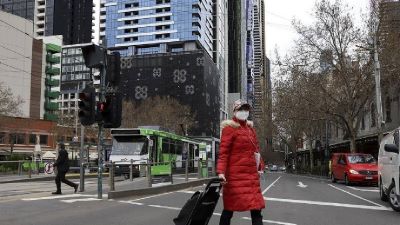
Fresh outbreaks fuelled by the highly infectious strain have forced major cities in China, Australia, the Philippines and elsewhere back into lockdown and spurred the authorities, particularly in Asia, to reimpose harsh restrictions as low vaccination rates leave people vulnerable to Covid-19.
Economies have taken a hit as manufacturing hubs like Thailand and Vietnam see their supply chains interrupted. Factories making goods for global brands are halting work and potentially missing out on the crucial holiday shopping season in major markets.
The wave of new infections has also seen the likes of Israel, Britain and the United States scramble to reinstate mask recommendations even among the vaccinated, as data emerges to show that more fully vaccinated individuals are also catching the Delta strain, and might be just as likely to spread it to others around them.
The Delta variant, first identified in India, has become by far the most dominant strain in many countries: It now accounts for almost all new Covid-19 cases in the US, Britain, Russia, Germany, South Africa and Singapore, among other countries.
ADVERTISEMENTx
‘Breakthrough’ cases
Studies show that the variant to date is the fastest, fittest and most formidable version of the Sars-CoV-2 virus, which causes Covid-19.
Scientists estimate that it is roughly 50 per cent more contagious than the Alpha variant first found in Britain, which in turn was about 50 per cent more contagious than the original strain detected in the Chinese city of Wuhan.
It has also proven more potent than its predecessors, capable of infecting fully vaccinated people.
Still, such individuals – even if infected with Covid-19 – remain far less likely than those who are unvaccinated to fall severely ill, require hospital care, or die from any known variant of the coronavirus.
ADVERTISEMENT
US data shows that infections, hospitalisations and fatalities remain rare among those who are fully vaccinated.
More than nine in 10 of all new cases, hospitalisations and deaths in US states that reported on Covid-19 from the beginning of the year occurred among those who were unvaccinated or yet to be fully vaccinated, according to the Kaiser Family Foundation, a US non-profit organisation that has been collecting and analysing data on Covid-19 vaccinations.
In Singapore, the fully vaccinated made up about four in 10 of all new cases over the past month – a surprising statistic that can be explained by the fact that around 70 per cent of the population have already been fully inoculated, so the probability of encountering an infection in a vaccinated individual is significantly higher.
Aggressive contact tracing and testing measures would also have identified mild or asymptomatic infections that might not have surfaced otherwise.
Significantly, not one of the fully vaccinated people who were infected died, and current data shows that only one is in intensive care.
ADVERTISEMENT
Health experts stress that cases of fully vaccinated individuals becoming infected with Covid-19, commonly called “breakthrough infections”, do not imply that the vaccines are ineffective.
“The risk (of infection) among vaccinated people should be closer to 0.0 per cent everywhere, but the fact that they are not is less a matter of some failure of the vaccines themselves than the fact that the virus is spreading so widely,” Dr James Hamblin, a public health policy lecturer at the Yale School of Public Health, wrote in his online health bulletin on Friday.
“The more people who refuse to get vaccinated, the more vaccinated people will get infected.”
Separately, the preventative medicine physician wrote on Twitter: “No one… ever claimed vaccines will stop the virus from landing on you. Vaccines prevent serious illness. They do that very well.”
Transmission risks
What about the chances of fully vaccinated people infecting others around them with the virus? The jury is still out on this.
In a study last month, Chinese researchers reported they had found early evidence that while those who are vaccinated and infected with the Delta strain do not necessarily get sicker, they do become more contagious and for longer.
The researchers said those infected with the Delta variant had on average about 1,000 times more virus in their respiratory tracts than people who caught the original strain.
“Let’s say you had to spend 15 minutes with an infected person in a closed room before you would be exposed to enough virus to get sick. Now we’re talking about 1,000 times that potentially,” civil and environmental engineering professor Linsey Marr at Virginia Tech, who studies airborne transmission of viruses, told The Wall Street Journal.
“So that 15 minutes become just a few seconds.”
Those infected with the Delta variant also started carrying detectable virus earlier than those who got the original strain (four days versus six days after exposure), the Chinese study found.
But another recent study by researchers at Imperial College London showed that fully vaccinated people with the Delta strain may be less likely to infect others. It found lower viral loads in the samples of these individuals than in their uninoculated counterparts.
They were also half as likely to be infected with the Delta variant than the unvaccinated, with a one in 26 chance of catching the virus, compared with a one in 13 chance for those not inoculated.
But a study by US researchers in Wisconsin, released late last month, suggested that fully vaccinated people might in fact be just as likely as the unvaccinated to spread the Delta variant to others.
A separate study from Singapore found the same, although viral loads decreased faster in the vaccinated group, rendering them less contagious sooner.
All four research papers have yet to be peer-reviewed.
“What makes the (Delta) variant worrisome is the fact that it is a more contagious version of Covid-19 and will find unvaccinated individuals and infect them at a high rate,” said Dr Amesh A. Adalja, a senior scholar at the Johns Hopkins Centre for Health Security in the US.
“If those unvaccinated are at high risk for hospitalisation, and there are many of them in a geographic area, it could be problematic for hospitals.”
Looking to the future
The Imperial College London study estimated that a full course of a Covid-19 vaccine is 49 per cent effective in preventing Delta infection – much lower than previous estimates from other studies.
Early data last month from Israel, where six in 10 people have been fully inoculated with the Pfizer-BioNTech vaccine, also suggested that the full two-dose course was only 39 per cent effective in preventing Delta infections.
Wary that the strain or other new variants might lower the effectiveness of existing vaccines, scientists are already looking into improving the shots, recommending boosters, or developing new ones that offer greater protection.
But data thus far suggests that current vaccines are still sufficiently effective in protecting people against severe illness from the Delta strain.
Four vaccines are currently approved for use in Singapore – Pfizer-BioNTech, Moderna, Sinovac and Sinopharm. The efficacy rates for the first two US-developed vaccines range from 64 per cent to 95 per cent, while the rates for the two Chinese-made ones have not been made clear by their developers.
“The takeaway message remains: If you’re vaccinated, you are protected,” said Dr Celine Gounder, an infectious disease specialist at New York’s Bellevue Hospital Centre.
Olympics: Neeraj Chopra wins historic athletics gold medal for India
Neeraj Chopra on Saturday made history by becoming the first Indian to win gold medal in athletics at Olympic Games when he clinched first position at Tokyo 2020 with a throw of 87.58 metres in the javelin competition.
Chopra has also become only the second Indian after Abhinav Bindra to win an individual gold medal at the Olympics. Chopra now holds gold medals in javelin throw at the Commonwealth Games, Asian Games and now the Olympics, all at the same time.
Chopra’s gold means India, with seven medals at Tokyo Games, have surpassed the tally of six medals won at 2012 London Olympics. This is the most medals won by India in a single edition of Olympics.
ADVERTISEMENTx
Czech Republic’s Jakub Vadlejch bagged silver medal with a throw of 86.67m. His compatriot Vitezslav Vesley took bronze medal with a throw of 85.44m.
Suga denies link between Olympics and surge in COVID-19 cases
Prime Minister Yoshihide Suga said Friday that there is no link between the Tokyo Olympics and the recent surge in the number of coronavirus infections.
At a press conference in Hiroshima on Friday, Suga denied any connection between the Games and the dramatic spread of the virus, saying, “I don’t think that the Tokyo Olympics are the cause of the surge.”
As for how spectators will be handled at the Aug. 24 to Sept. 5 Tokyo Paralympics, Suga said, “The issue will be discussed at the five-party talks [comprising the government, the Tokyo Olympic and Paralympic organizing committee and others] after the closing of the Olympic Games.”
Other topics at the press conference included a class action lawsuit related to the black rain that fell in Hiroshima soon after the 1945 atomic bombing. Suga mentioned people under similar circumstances to the plaintiffs. “I would like to decide how to deal with the issue in a speedy manner by holding discussions between the Hiroshima prefectural government, the Hiroshima municipal government and the central government to give relief to such people.” Suga also said he had met with two of the plaintiffs ahead of the press conference and said to them, “You’ve all been put to a lot of trouble for a long time.”
On the Treaty on the Prohibition of Nuclear Weapons, which took effect in January this year, Suga said, “I don’t think Japan will sign the treaty at the moment.”
Concerning the dissolution of the House of Representatives and the general election, Suga said, “It is natural that the government will give priority to measures against the coronavirus infections.”
ADVERTISEMENTx
■ Bach calls Games a success
Thomas Bach, the International Olympic Committee president, called the Tokyo Olympic Games a “success” Friday.
Bach held a press conference in Tokyo to sum up the Tokyo Olympics ahead of its closing ceremony. He said, “The Olympic Games have been a powerful demonstration of the unifying power of sport.”
Bach also said that athletes “are extremely grateful for the fact that the Olympic Games could happen.”
Commenting on Japan’s decision to have no spectators at most of the venues, Bach said he had been “concerned that these Olympic Games could become an Olympic Games without soul.”
Bach said that the success of the Games far exceeded his personal expectations. He praised the Games by saying such things as that everyone was grateful for the great Olympic venues, that the friendliness of the volunteers could be a model for other countries, and that the transportation was flawless.
■Paris head lauds Tokyo
Tony Estanguet, the president of the Paris 2024 Organizing Committee for the Olympic and Paralympic Games, held a press conference in Tokyo on Friday. Praising the anti-COVID-19 measures at the Tokyo Olympics, Estanguet said that Tokyo proved that the Olympic Games could be held under difficult circumstances and that Japan has dealt with the crisis positively and effectively.
He also appreciated that there were only a few cities that put such great effort into holding the Olympic Games, and said Tokyo’s ability to respond to the pandemic was worthy of a gold medal.
In a summer of smoke, a small town wonders: How are we going to do better than survive?
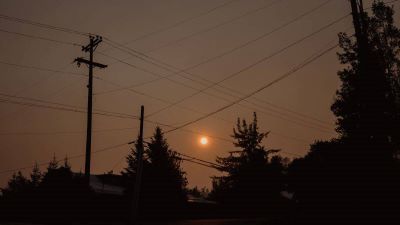
WINTHROP, Wash. – On the worst days, and there have been many, one can see nothing but white – a hot, suffocating fog bank that smells of burning wood and blots out the sun. Hours tick by in a disorienting haze to the whir of air purifiers and box fans. Doors stay sealed, stores are closed and the normal summer bustle in this bucolic mountain town is snuffed out.
For much of the past month, Winthrop and its neighbors up and down the Methow Valley in Washington state have lived under an oppressive blanket of wildfire smoke. On certain days air quality has been the worst in the country – and possibly in the world – according to the National Weather Service, which described it as “almost off-the-charts hazardous.”
The mayor runs three air purifiers around-the-clock in her house and leaves a box of free N95 masks on a bench outside town hall. The town’s marketing director is considering enrolling her children in school in Oregon. A family doctor treats patients struggling to breathe and others knotted with anxiety, uncertain whether to stay or go.
“It’s all people are thinking or talking about,” said Jesse Charles, one of the few doctors in the Methow Valley. “This cloud that’s over everyone.”
It is another summer of smoke in America, as dozens of wildfires rage throughout the West and Canada. A historic drought and record heat waves worsened by climate change have crisped and yellowed the landscape, priming it for massive blazes. The wildfires burning in the West and in British Columbia have produced enough smoke to muddy the skies across much of the United States this summer.
As of Friday, more than 100 large fires were burning across 14 states. Smoke from Oregon’s Bootleg Fire, the nation’s largest at more than 413,000 acres burned, has already traveled to New York City and Washington, D.C. In recent days, the smoke over Minnesota and the Dakotas has pushed air quality into hazardous territory.
The hazy skies and campfire smell of smoke pollution may still be an alarming rarity for parts of the nation; but this corner of the Pacific Northwest is learning what it means to live with an extreme dose year after year.
In Winthrop, two massive wildfires – the Cedar Creek and Cub Creek 2 – have been burning for much of the past month on either side of town. They have consumed more than 113,000 acres of forest and produced billowing towers of smoke visible from Seattle on the far side of the Cascade Mountains. That smoke also settled in the valley and barely budged, amid scorching temperatures and not enough windy days to clear the air.
“It’s kind of the worst-case scenario with smoke,” Winthrop Mayor Sally Ranzau said. “It sandwiches us in there.”
Even though it’s only midsummer, Washington state has already had more than 1,200 wildfires. It’s a record for this time of year and nearly twice the average number over the past decade, said Hilary Franz, who oversees Washington state’s Department of Natural Resources.
In the typically drizzly Pacific Northwest people live for the blue skies of summer and wildfires are increasingly threatening those precious times. Over several days this week, an air quality advisory was in effect for the entire eastern half of the state.
“Unfortunately, year after year now, our summers are being completely lost to smoke,” Franz said. “We move from one gray to the next.”
There have been no deaths and five buildings have been lost in the two Winthrop fires, but that toll doesn’t capture the social and economic harm the community is enduring. The mountains and forests in the area are a major tourist draw – attracting as many as 1 million visitors a year, town officials say – and that economy has ground to a halt. The scenic North Cascades Highway that brings many visitors has been shut down while firefighters battle flaming patches of snags. Many of the trails for hiking, biking and cross-country skiing that made this area a national destination for outdoor recreation run through lands that are burning.
One of the Pacific Northwest’s most famous resorts, the Sun Mountain Lodge, was evacuated last month as the Cedar Creek blaze bore down on the building. To save the resort, firefighters dug bulldozer trenches throughout the manicured grounds. The 3,000-acre resort, one of Okanogan County’s largest employers and a major source of tax revenue, is now shut down through at least August and faces a major restoration effort, said Eric Christenson, the lodge’s director of sales and marketing.
“The thick smoke coated the surfaces of the lodge both on the inside and outside,” he said. “The swimming pools are filthy. The hiking and horse trails – I imagine they’re devastated.”
On Thursday morning, as the air quality sensor at the Montessori school was reading about 260 – a level of fine particle pollution that the Environmental Protection Agency describes as “very unhealthy” – Abby Pattison stood on the deck of the nearby Observatory Inn, wearing an N95 mask and watering her plants. It was about half as smoky as it has regularly been over the past month; clear enough even to see across the street.
“This is actually not too bad,” she said.
Pattison, 43, and her two business partners recently bought the hotel along Winthrop’s main street, with its rough-hewed boardwalk and Old-West-style facades. The Seattle native had moved to this former gold mining town 11 years ago with her ex-husband and soon fell in love with the community and the opportunity to run on endless mountain trails. Both the town and its flow of tourists were growing, and she wanted to invest in helping shape its future. They named their hotel the Observatory Inn because of its high perch and – on a clear day – striking view of the mountains beyond. The sale closed on June 21.
Within a few days, the smoke rolled in.
Since then, the hotel’s been mostly empty. She’s had to warn away potential customers who call and aren’t aware of the air quality. The only guests have been some evacuees from an aborted Outward Bound trip and the occasional firefighter, both being charged at cost, she said. Pattison and her partners have been meeting to discuss expensive new air filtration systems and strategies for the fall since the fires are projected to burn until it snows. This weekend the hotel will be completely vacant, she said.
“We had our rainy day budget and we had to tap into it right away.”
Before the smoke blew into town, the hotel, as with much of Winthrop, had been having its best year on record as the pandemic eased and visitors flocked to outdoor destinations. Over Memorial Day weekend, Abilene Hagee could look out of Trail’s End Bookstore and see throngs of people window-shopping along the main street.
“The boardwalk was more packed than I’d ever seen it. It was just wall-to-wall people,” she said.
ADVERTISEMENTx
In a summer of smoke, a small town wonders: How are we going to do better than survive?
Not long after the fires broke out, her business plummeted by “90 percent, and it’s been kind of hanging out there,” said Hagee, who is also board president of the local chamber of commerce.
“The air quality’s awful,” she said. “We’re a tourist town, economically driven by that. And how do you invite somebody to come and play in your area when it’s so bad?”
Some restaurants, hotels, outfitters and guiding companies in the valley have closed, at least temporarily. Layoffs have set back housekeepers and food service staff members who were just recovering from pandemic disruptions. Many residents who could afford to leave decamped to the other side of the mountains in search of cleaner air.
“The economic impact is the hardest thing,” Ranzau said. “I think the smoke event was worse than covid was. … People were still here during covid. People didn’t go away. There were still visitors. We still had tourists. The highway wasn’t closed.”
ADVERTISEMENT
As his co-workers were laid off, took vacation or found other work over the mountains, Dave Dewbrey, 49, stayed behind, part of the skeleton staff still working at Methow Cycle and Sport. He works on repairs and other projects put off during last year’s rush. But it has not been easy. He is allergic to smoke, he said, which feels to him like an exaggerated form of hay fever. Dewbrey swallows allergy pills every day and is never far from a handkerchief. Particularly worrisome is that his 2-year-old son has developed a cough.
“[We] were walking up the road out at our place. He would run, and then he would stop … and he would do deep breaths. And I would think, ‘Is this smoke affecting him?’ “
Pattison, the hotel owner, decided to move her two daughters, ages 6 and 9, out of the valley when she could see in the distance the flames of the Cub Creek 2 Fire, which erupted July 16. The worst part, she said, was that her daughters were waking up in the middle of the night worrying about fires, unable to fall asleep. They’ve spent part of the time with their grandparents in the San Juan Islands, in western Washington, ever since.
“It just looked huge and very scary,” she said. “We didn’t really know what was going to happen at that point, with just how dry everything was, and it didn’t seem like fire lines were really helping because it was so dry.”
On Tuesday evening, a rainstorm helped clear some of the smoke and Pattison went to a movie at the Barnyard Cinema. The space had well-filtered air and she could see friends and try to relax. She was in the middle of “Roadrunner,” the documentary about chef Anthony Bourdain, when a neighbor texted her.
ADVERTISEMENT
“There’s a smoke check on Davis Lake and we are gone,” the neighbor wrote.
Lightning had just sparked a new fire within a couple miles from Pattison’s home – the closest one yet – and the neighbor needed someone to “get the cats out and turn the sprinklers on.”
Pattison stood up and rushed out of the theater. That night she considered packing up her home and moving out.
Situated in dry forests on the eastern slopes of the Cascades, the Methow Valley is familiar with forest fires. But the pace and intensity of those blazes – and the subsequent threats from smoke and bad air quality – have been increasing as the planet warms, driven by humans burning fossil fuels.
The average temperature in Okanogan County, which includes Winthrop, has risen 1.1 degree Celsius since 1895, slightly above the national average, according to an analysis of temperature data in the United States by The Washington Post.
The big fires and smoke years of the past decade are a part of daily conversation here; just as the charred tree trunks still visible on the mountainsides speak to the proximity of the risk. The Carlton Complex Fire of 2014 that burned more than 300 homes is still the state’s largest wildfire. The Okanogan Complex Fire the next year left three firefighters dead. In 2018, flames threatened the town of Twisp, just south of Winthrop, while smoke blanketed the valley for days.
Even in winter, the Methow Valley struggles with clean air because residents have traditionally heated their homes by burning wood. But the onslaught of wildfires has pushed air quality to distressing levels, regularly above 400 on the state’s air quality index scale.
Over the past decade, Okanogan County has spent more days with compromised air quality than any other county in the state, according to data from the state Department of Ecology’s air quality program. This year has been the worst of all by some measures, as residents have spent nearly half their days breathing air that’s other than “good” – including levels defined as “unhealthy,” “very unhealthy” and “hazardous.” There have already been more “hazardous” days recorded by the county’s three official air quality monitors than in any year since the state started collecting date in 2006.
“It got bad fast and then it stayed bad for a month now,” said Andrew Wineke, a spokesman for the state’s air quality program. “Winthrop had some of the worst air quality in the world several times in the past few weeks.”
In a summer of smoke, a small town wonders: How are we going to do better than survive?
The science is “really clear” that the state’s summers are hotter and dryer and that climate change will continue to worsen the threat of wildfires, said Amy Snover, director of the Climate Impacts Group at the University of Washington. She owns a house in the area and has been visiting since she was a child; after the Cedar Creek blaze erupted last month, her parents were forced to evacuate.
Projections based on climate change models predict a quintupling of the amount of wildfire acreage that will burn in the Columbia River Basin by the end of the century, compared to the average annual area burned from 1916 through 2006, according to Snover.
“We expect exceptionally hot and dry weather to increasingly not be the exception,” she said.
For those who don’t leave by choice or necessity, the solution to coexisting with smoke comes down to finding spaces to breathe.
Liz Walker runs four air purifiers in her home – three plug-in HEPA filters and a box fan strapped to an air filter. Her house is a relatively new construction and meticulously sealed. Even so, on smoky days the air inside regularly exceeds 50 on the EPA’s air quality index scale – considered “moderate,” one step below “good.” Others who have no purifiers or air conditioners and must open their windows on hot nights are forced to breathe extremely polluted air.
Walker, whose background is in toxicology and who has a doctorate from the University of Washington, has been fighting to improve the valley’s air for years. Her organization, Clean Air Methow, is renowned in the area for raising awareness about the problem and getting air filters into the community, particularly among those who can’t afford to fortify their homes against smoke. She calls what is happening this summer a “smoke disaster,” and she believes the federal government should treat such events as they do other natural calamities, with funds for relief and recovery.
The consequences of these disasters are both visible and harder to track. Residents with respiratory troubles face acute health problems and difficulty breathing while others report sore throats, coughing, tightness in the chest, headaches and raspy voices. Many suffer from anxiety and depression. Staff members at a local social services organization, Room One, said that domestic abuse cases and residents coming to them with “suicidal ideation” spiked last month during the most intense smoke.
“This is normal summer now. The last 10 years, seven of those had smoke episodes that extended beyond a week,” Walker said. “How are we going to do better than survive? How do we retain a love of place? A love of summer?”
The increasing number and size of wildfires could make Winthrop something of a cautionary tale as more smoke spreads across the country.
“The 2021 fire year is different from any before,” Randy Moore, the chief of the U.S. Forest Service, wrote his staff in an Aug. 2 letter. The number of large fires burning, and the 22,000 personnel responding, were both nearly three times more than the 10-year average for the month of July. “Severe drought is affecting over 70 percent of the West, and the potential for significant fire activity is predicted to be above normal into October.”
“In short, we are in a national crisis,” he added.
At the Methow Valley Clinic, Jesse Charles, the family doctor, has treated a stream of patients whose asthma and chronic obstructive pulmonary disease have been inflamed and aggravated by the wildfire smoke. Some have been coughing up phlegm and breathing in a way he described as a “death rattle.”
“They’re totally drowning in their own lungs,” he said.
He has been talking about air quality with every single patient since the smoke hit, he said, regardless of the ailment. Children are of particular concern.
“These wildfire events damage the development of children’s lungs, in a long-term, permanent way,” Charles said. “If you have the resources you should just leave the valley.”
Researchers at Stanford University estimated that smoke from wildfires contributed to some 1,200 deaths in California last summer.
After he finished up work on Wednesday evening, Charles sat on the back deck of the local cinema and looked over the valley. The air quality had greatly improved that day – enough that people seized the chance to get outside, not knowing when the haze would be back.
A patient of his walked out onto the deck.
“Enjoying the fresh air?” he asked.
It was somewhat in jest; but she truly was relieved.
There was still smoke in the air, but nothing like they’d been living through for weeks. The sun was setting, and now she could see it.






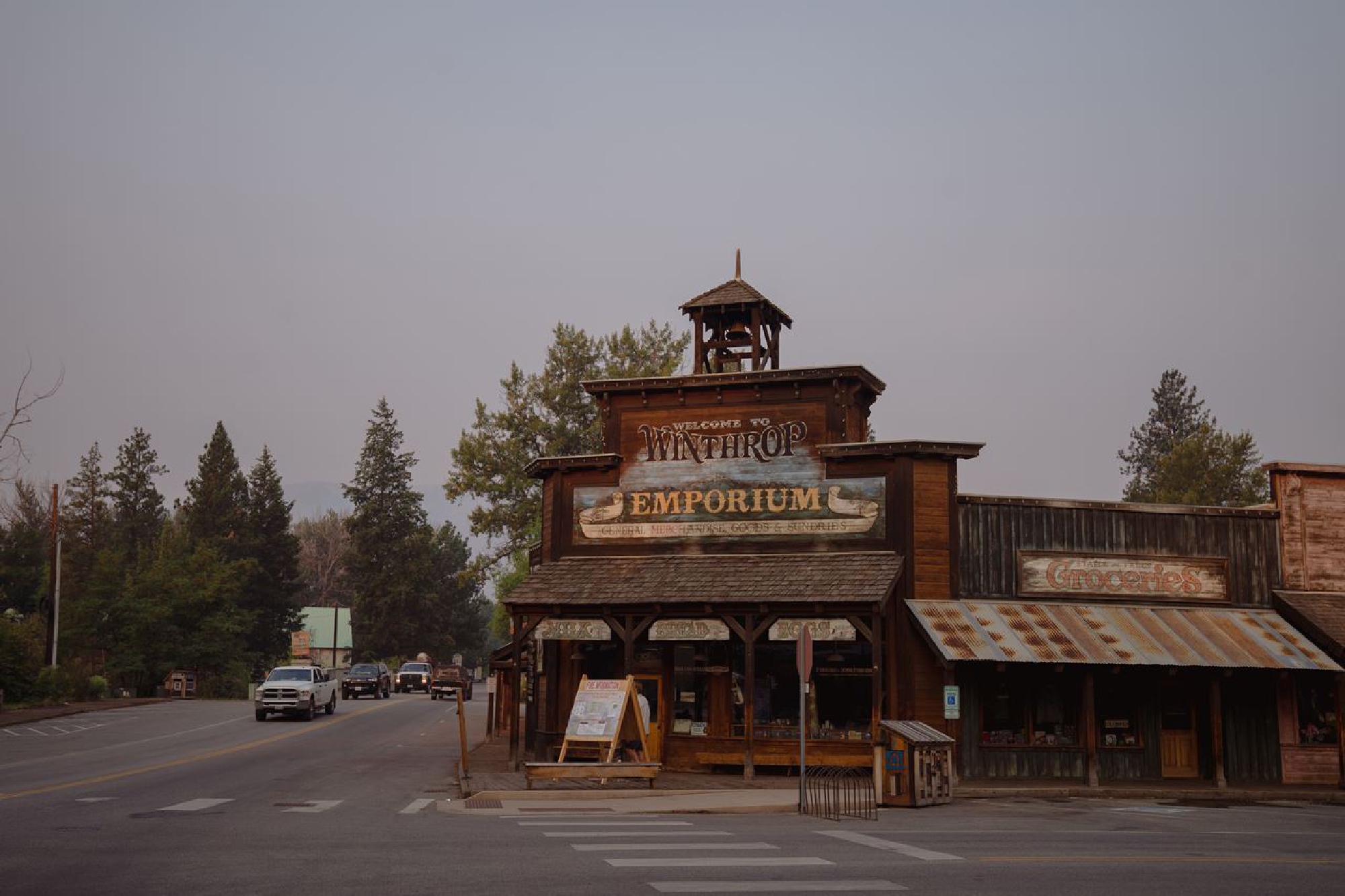 In a summer of smoke, a small town wonders: How are we going to do better than survive?
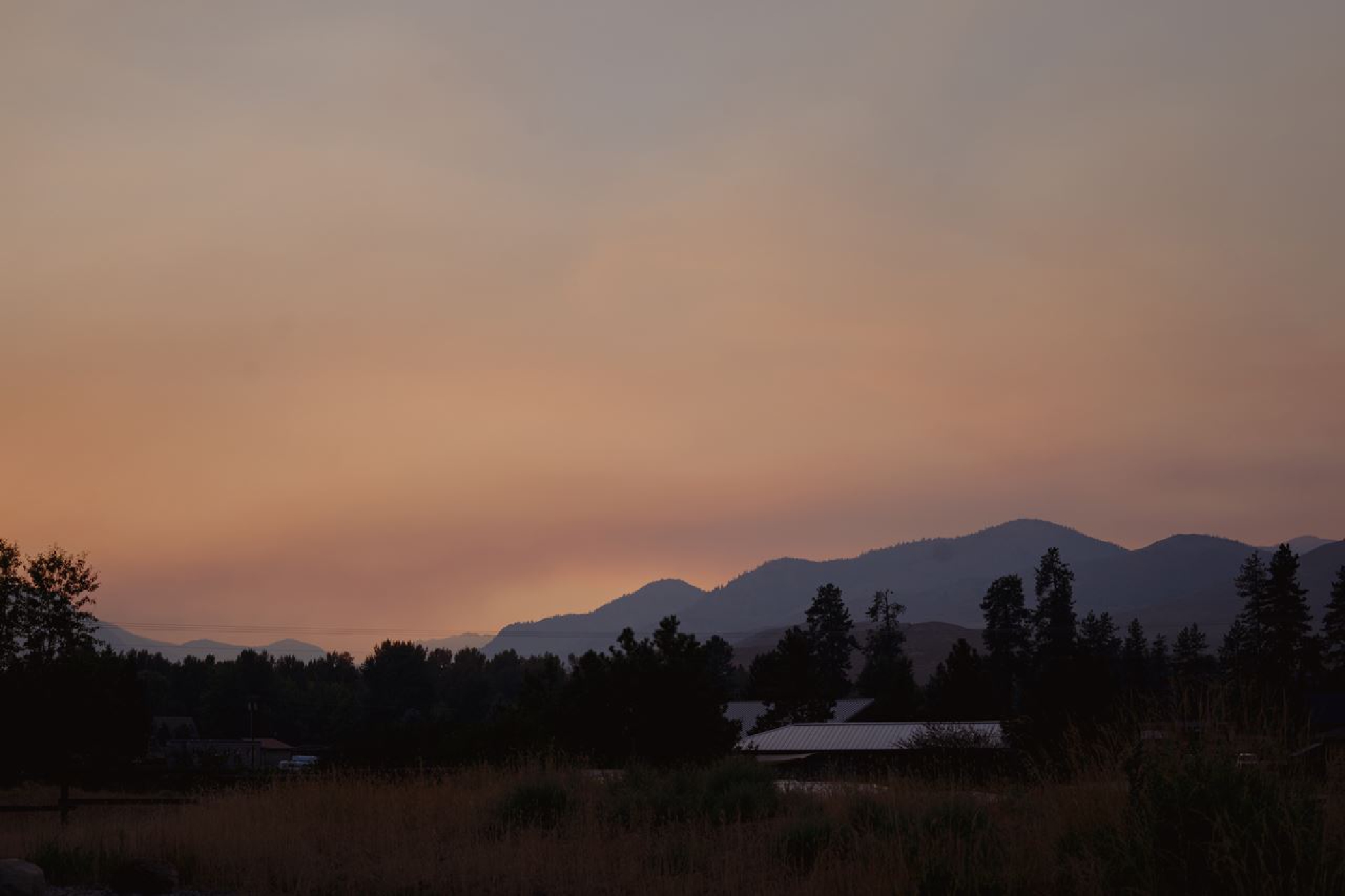 In a summer of smoke, a small town wonders: How are we going to do better than survive?
 SootinClaimon.Com