Dire Covid situation expected to continue impacting baht
The baht opened at 33.15 to the US dollar on Thursday, weakening from Wednesday’s closing rate of 33.14.
The Thai currency is likely to move between 33.10 and 33.20 during the day, Krungthai Bank market strategist Poon Panichpibool said.
Poon explained that the baht would continue to weaken due to the Covid-19 situation. Importers have also purchased US dollars as they are afraid the baht could weaken quickly and sharply, he said.
Moreover, the baht will continue to weaken until the Covid-19 situation gets better, which is expected to be in early September, Poon added.
He said the dollar would strengthen if the US Federal Reserve implements a strengthened monetary policy and investors hold onto safe-haven assets amid concern about the Covid-19 situation.
The dollar could also weaken if investors felt safe and ready to take risks, he pointed out.
Poon believed the key resistance level was between 33.20 and 33.25 to the US dollar. He also felt the Bank of Thailand would help to decrease baht volatility in the short term. Therefore, the currency would tend to stay between 33.10 and 33.20.
The support level would be between 32.90 and 33.00, which is the price range importers are waiting for as a pullback to close risks, he added.
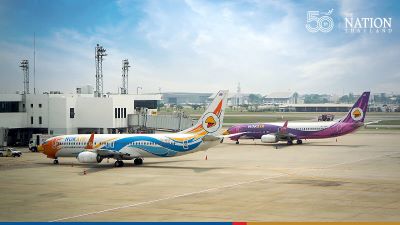
Nok Airlines informed the Stock Exchange of Thailand on Wednesday that it has been instructed by the Central Bankruptcy Court to proceed with its rehabilitation plan.
The airline said in line with the court order it has appointed the rehabilitation planners who were proposed in November last year.
The airline had submitted its rehab plan to the court’s Official Receiver Office on May 17, and the office held a meeting with creditors on Wednesday who accepted the plan.
The court is scheduled to hold a follow-up hearing to consider the rehab plan on August 26.
Over 250,000 insurance policies handed out to medical staff
The government, the Office of Insurance Commission and insurance companies have together provided 250,120 insurance policies to medical staff working closely with Covid-19 patients.
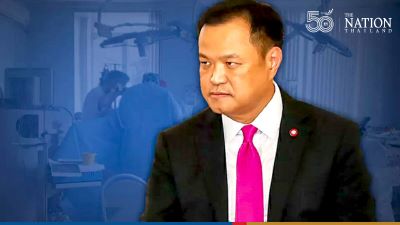
Public Health Minister Anutin Charnvirakul said the government is deeply concerned over medical staff nationwide who risk getting infected as they treat Covid-19 patients.
“Of the total insurance policies, 223,872 have been provided to medical staff under the Public Health Ministry and 26,248 went to those who are not under the ministry, like staff belonging to the Bangkok Metropolitan Administration, Bhumibol Hospital, the Royal Thai Police, the Royal Thai Navy and the Royal Thai Army Medical Department,” he explained.
“Meanwhile, the Public Health Ministry has provided medical supplies to support staff operations and medical treatment to those who had been infected,” he said.
ADVERTISEMENTx
Anutin said insurance policies would cover cases of infection until death due to Covid-19, with a maximum premium of THB1 million per person.
He thanked medical staff for working hard during this Covid-19 crisis.
“The Public Health Ministry is ready to support medical staff in all aspects in a bid to boost their morale and combat the virus safely,” he added.
Key media organisations to govt: Define fake news, don’t control freedom of speech
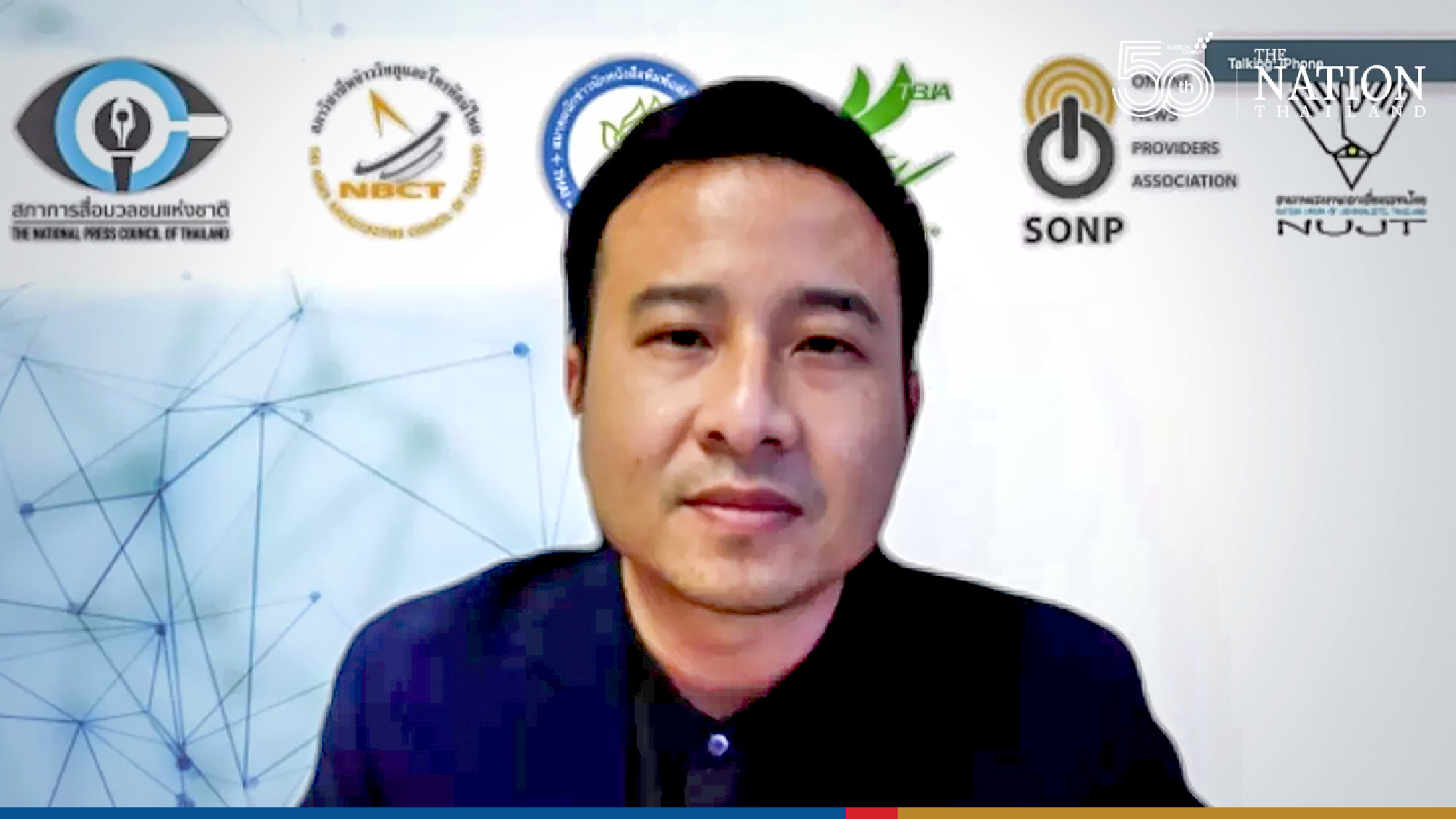
Thailand’s six key media organisations held an online seminar on Wednesday under the topic “Are chilling effects from Emergency Decree any real?” aiming to criticise the government for “controlling people’s freedom of speech under the authority of the Emergency Decree”.
The six organisations comprised the National Press Council, the News Broadcasting Council, the Thai Journalists Association, the Thai Broadcast Journalists Association, the Society for Online News Provider Association and the National Union of Journalists Thailand.
After Prime Minister Prayut Chan-o-cha announced on Facebook on July 27 that serious steps would be taken to deal with “fake news”, the organisations promptly issued a statement pointing out that this announcement aimed to limit the freedom and rights of people and the press.
Also, they said, branding reports as fake news is only an excuse for the authorities. They urged the press as a whole to demand that the government “stop using this excuse to control the public”.
During the seminar, Thai PBS World Centre news anchor and director Nattha Komolwathin said the government must understand that the media will always stand by people and that “our main duty is to investigate the one in power”.
“The media have an obligation to present the truth to the people, a mission that has become increasingly difficult in this online era, when misinformation is all around us,” she said.
“This has prompted the press to become more careful in fact checking and news reporting while complying with the government’s regulations during this emergency situation.
“The biggest problem nowadays is that the CCSA [Centre for Covid-19 Situation Administration] has no centralised news agency to provide all Covid-19 related information from one outlet, forcing the media to find information from various sources, which could lead to unintentional reporting of fake news,” Nattha pointed out. “We therefore would like to ask the government how would you define fake news and what are the policies to prevent the exercising of power beyond that definition, especially now that anyone can share news and information online.”
Key media organisations to govt: Define fake news, don’t control freedom of speech
Online News Provider Association president Rawee Tawantharong said that online media are not only under the law but also under policies of each platform that aim to keep news reporting in compliance with professional ethics while allowing people to cross check the media’s credibility.
“Online media have always been committed to our duty as a watchdog for society,” he said.
“The government must have a clear definition and criteria when they say they will take action against online media that cause public panic and fear, as this policy could affect a lot of people since the number of online viewers has increased considerably,” he added.



 Key media organisations to govt: Define fake news, don’t control freedom of speech










 SootinClaimon.Com