THAI sells prime properties in bid to generate cash flow
Thai Airways International (THAI) on Saturday announced the sale of its assets at prime locations, such as Lan Luang, Si Lom, Don Mueang and Phuket, to boost cash flow.
The announcement was made via “TG Property For Sale” Facebook page, which posts properties for sale at several locations in Bangkok, Phuket, Khon Kaen, Udon Thani, and Phitsanulok provinces.
THAI had sought permission from the bankruptcy court to sell the assets. The company’s crew centre in Lak Si, in Bangkok’s Don Muang district, was sold in an auction to Energy Complex, a subsidiary of PTT, for THB1.81 billion.
The flight prohibition order in the “dark red” zones due to the new Covid-19 wave has forced THAI to further curtail its flights. The company is only allowed to operate special flights to transport Thai citizens back to Thailand, cargo flights, and five international flights to Phuket, routing from Frankfurt, Paris, London, Zurich, and Copenhagen. International flights from Copenhagen to Phuket will be temporarily paused from August 1 to September 30.
Thai Airways is currently in the process of financial sourcing under its business rehabilitation plan, which is time consuming, as a result the company is unable to generate enough cash flow. It has had to put its assets up for sale in a bid to stay solvent.
For information on THAI properties on sale, call (02) 545 2176, (081) 813 5968 or email Propertyforsale@thaiairways.com.
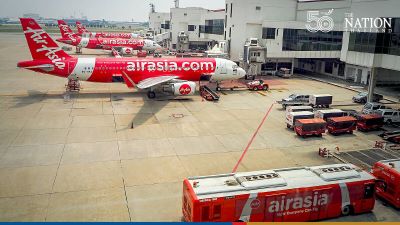
Thai AirAsia shuts operations in August due to domestic flight ban
Thai AirAsia will temporarily cease all operations in August, due to zero revenue following the ban on domestic flights in the “dark red” provinces, in order to meet the conditions of social security assistance.
Employees were paid 50 per cent of their salary in July and the balance payment is postponed to September.
Thai AirAsia Co Ltd announced on Sunday that the company’s board had approved a temporary closure of operations at a meeting on July 29.
At the meeting, the management team explained to the employees that the company had always done its best to manage and seek funds to mitigate the impact. But, due to the third wave of the pandemic since April and the flight prohibition order in the “dark red” zones since July 21, the company has encountered a lack of cash flow and the situation was worse than expected. Therefore, it became necessary to announce short-term measures to postpone employees’ salaries for July-August.
In July, Thai AirAsia’s active employees were to be paid 50 per cent of their salary and another 50 per cent in September, while all managers and senior executives’ payments are postponed to September. In August, the company will be temporary closed for all operations in order to receive social security compensation. The situation is expected to ease in September which will allow the company to receive funds, be able to operate flights, and pay its staff full salary, the compantly said.
At the end of the meeting, Thai AirAsia executives thanked the employees for their understanding, sacrifice, and cooperation. The management team promised to continue to resolve the issues and apologised for any impact they might have caused by not handling the situation well enough.
Thai aviation industry sinking deeper as Covid shuts down travel and tourism: CAAT
Thailands aviation industry is still moving in a downward trajectory due to uncertainty over the Covid-19 outbreak among Thai and foreign tourists, the Civil Aviation Authority of Thailand (CAAT) said on Saturday.
It said the volume of passengers and flights in the second quarter of this year dropped by 35.5 per cent and 27.8 per cent year on year, respectively.
Meanwhile, the volume of air freight has slightly risen by 0.01 per cent compared to the same period last year, it added.
Citing the Bank of Thailand’s forecast, the CAAT said many negative sentiments pressured the aviation industry, such as the vaccination rate and sluggish recovery in the tourism sector’s recovery.
“If the government can procure and distribute 100 million doses of Covid-19 vaccines within this year, herd immunity is expected to be created within the first quarter of next year which is too late because the country’s tourism season will begin from October this year,” the CAAT explained.
The CAAT said the slowdown in the tourism sector’s recovery also affected the aviation industry because Thailand was unable to ease quarantine measures within the second quarter of this year, while the crisis is likely to prolong.
It added that the number of foreign tourists visiting Thailand this year is expected to drop to 700,000 people and 10 million people next year, compared to the previous forecast of 3 million people this year and 21.5 million people in 2022.
“The authority does not expect the aviation industry to recover significantly this year as the Covid-19 crisis is becoming more severe, while Thailand has imposed travel restrictions which directly affect the tourism sector,” the CAAT said.
ADVERTISEMENT
Meanwhile, Airports of Thailand president Nitinai Sirismatthakarn said that the six airports in July saw 10,000 travellers per day, down 80 per cent year on year.
More than 60 per cent of Japanese investors put faith in Thailand
The majority of Japanese investors — more than 60 per cent — have confidence to invest in Thailand, a survey Japanese joint venture companies in Thailand by the Japan Foreign Trade Organisation (Jetro) showed.
The result was revealed by Weris Amrapal, Governor of the Industrial Estate Authority of Thailand (IEAT).
Weris said that due to the Covid-19 outbreak affecting international shipments, there is a possibility of more parts from Thai manufacturers being used.
“It is an opportunity for manufacturers in the industrial estate because they have the ability to produce in a variety of industries. If such issues become clearer, the IEAT will help entrepreneurs have the opportunity to discuss to create further business opportunities,” he said.
Jetro also revealed that Japanese investors are interested in the policy to promote investment in the bioeconomy, or BCG economy, with more than half of the respondents saying that they are still interested in benefits related to BCG, especially in green energy issues such as electricity or steam from renewable energy, energy-saving products such as energy-saving parts in cars and energy-saving appliances, etc, including the issues and treatment or disposal of industrial waste as well.
Japanese are the biggest investors in industrial estates in Thailand, accounting for 37.36 per cent, followed by investors from China 8.16 per cent, USA 6.79 per cent, Singapore 6.78 per cent and Taiwan 4.11 per cent.
Phuket sandbox, Samui foreign tourists projects to continue despite increase in Covid cases
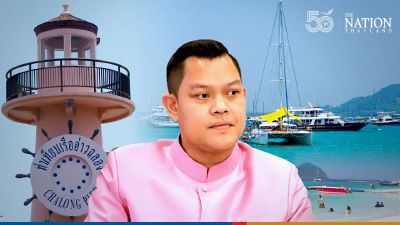
Prime Minister General Prayut Chan-o-cha is closely monitoring the Phuket sandbox and Samui Plus Model and ensuring that both projects continue despite rising new coronavirus cases in Phuket, Thanakorn Wangboonkongchana, aecretary to the Prime Ministers Office, said.
Most of Covid-19 cases are of local people, workers at construction sites or those travelling across the province, he said. The new cases are not of foreign tourists travelling under this project, he added. Only 30 of the 13,281 foreign tourists who have come as part of the sandbox project were infected, he said.
However, Phuket province has increased screening measures for travel into Phuket, effective from August 3-16. The measure effectively limits travel in and out of the province for effective disease control and for the safety of all tourists and Phuket people, but does not close the sandbox project.
Surat Thani province found 54 cases of Covid-19 on Koh Samui, at a cluster of restaurants, which the province was able to control. He confirmed that the Samui Plus Model could continue as the infected group was not from the Samui Plus Model foreign tourists or from the sandbox foreign tourists who had travelled from Phuket.
Suspect, who allegedly spread rumours online of a coup, in police custody
The Royal Thai Police is currently investigating a suspect who allegedly posted fake news related to a military coup, police deputy spokesman Pol General Krisana Pattanacharoen said on Sunday.
Royal Thai Army chief Gen Narongphan Jitkaewtae on Saturday filed a police complaint against a suspect for allegedly posting fake news that the Army will stage a coup and arrest the government’s top executives, resulting in chaos among citizens and damage to the Army.
The suspect, who is a civil servant, was later arrested by Cyber Crime Investigation Bureau (CCIB) police from a house in Chachoengsao province. Police have confiscated the suspect’s smartphone and computer for investigation.
Krisana said the CCIB has finished interrogating the suspect, but it has not filed any charges yet because the investigation and evidence collection process are still underway.
“Police would be summoning up to three netizens who shared the fake news for interrogation,” he said.
ADVERTISEMENT
The suspect would face charges for violation of the emergency decree and the Computer Crimes Act, as well as defamation.
Fire damages 100-year-old tourist-attraction market in Samut Sakhon
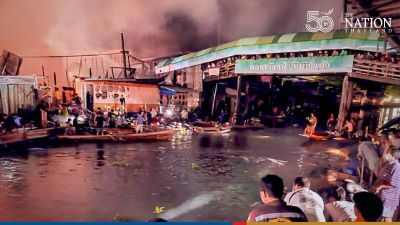
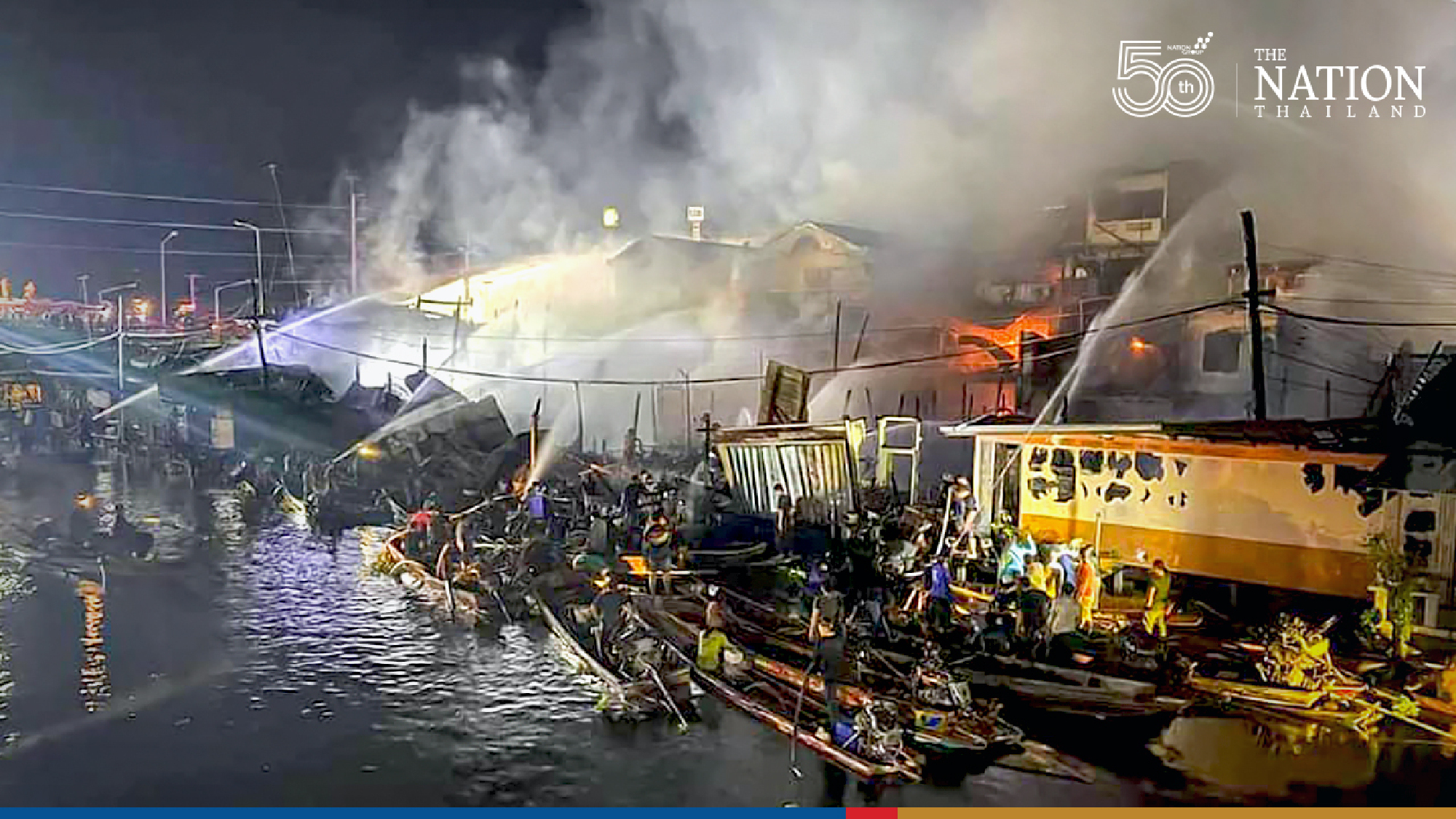
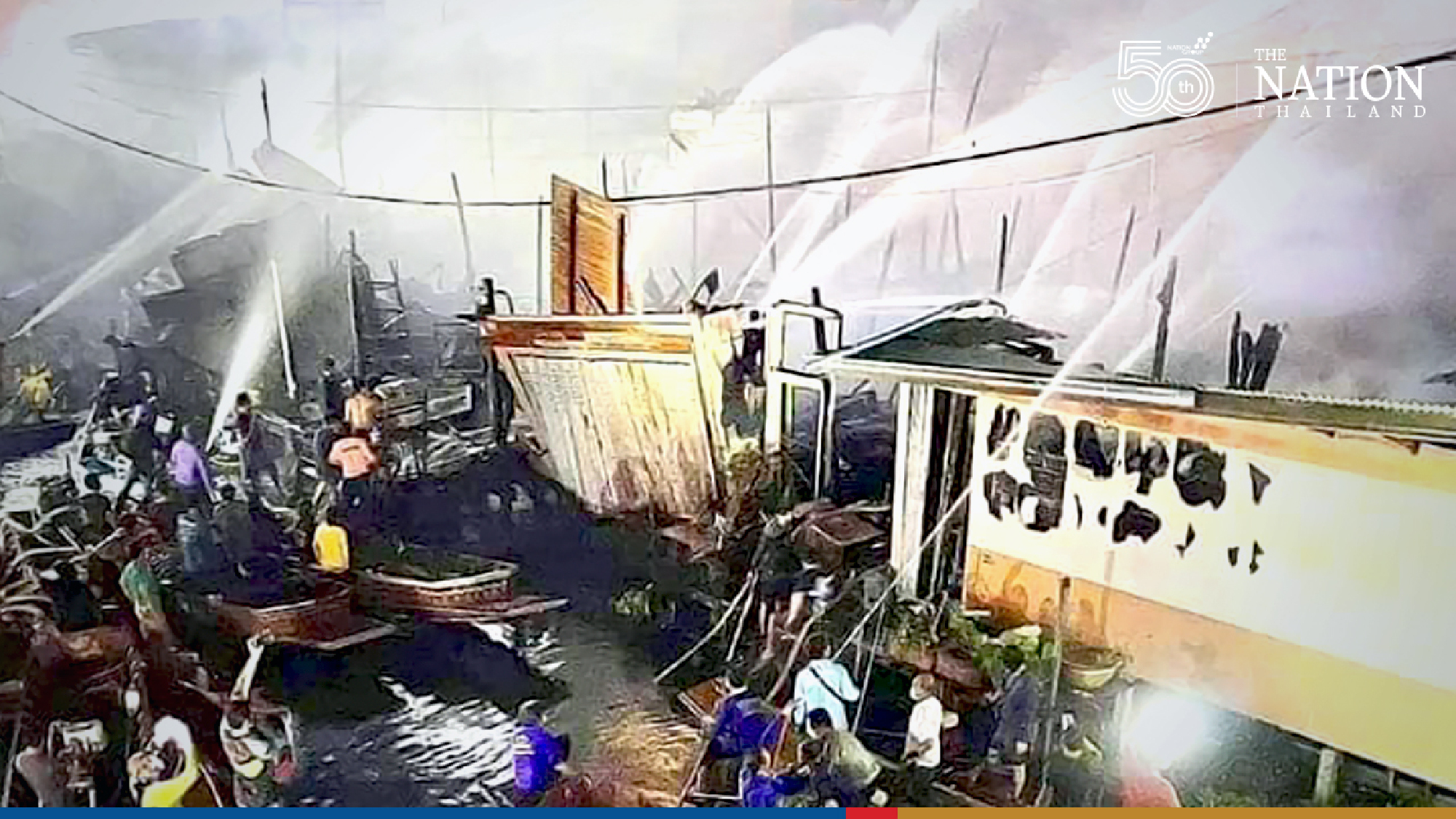
The fire at a 100-year-old waterfront market in Ban Phaeo district of Samut Sakhon province on Saturday was put out with help from officials and locals.
The fire was reported at 9pm to the Department of Disaster Prevention and Mitigation.
The 100-year-old wooden market lies in the “dark red zone” with curfew control measures, causing some delay in firefighters and volunteer rescue teams reaching the blaze site.
Samut Sakhon Governor Weerasak Wijitsaengsri said that the fire was controlled in half an hour with constant water spray throughout the area. More than 10 residences were damaged but no one was injured, and the locals were safely evacuated to Ban Phaeo’s meeting hall.
The fire was put out by the authorities with help from the Ban Phaeo boat team which used water pumps on their boats to spray water from the canal as big fire trucks could not reach the scene.
The 100-year-old waterfront market near the Damneon Saduak canal hosts an ancient community which attracts many tourists, while local vendors sell daily life homemade products.
ADVERTISEMENTx
Fire damages 100-year-old tourist-attraction market in Samut SakhonFire damages 100-year-old tourist-attraction market in Samut SakhonFire damages 100-year-old tourist-attraction market in Samut Sakhon
Field hospital in Nonthaburi increases ICU units as Covid numbers continue to rise
The Bussarakham field hospital in Nonthaburi province has added 17 intensive care units, which will open on Monday, and another 550 oxygen machines.
Dr Kittisak Aksornwong, assistant permanent secretary, Ministry of Public Health, said that the field hospital, located in the Challenger Hall of the Impact Muang Thong Thani exhibition centre, has been in operation since May 14, initially with 1,100 beds. The number of beds was expanded as more patients came in. It currently has 3,700 beds.
In the two and a half months since its opening, a total of 12,929 patients have been treated.
There are currently 3,500 patients undergoing treatment, about 9,000 have gone home, and some have been referred to other hospitals with more facilities, he said.
Dr Kittisak said that from May 14 to June 30, they had only used 2,000 beds with about 4,200 patients. However, the numbers spiked in July with the number of severely-ill patients increasing from 2 per cent to 5-10 per cent at the end of July. The hospital has 800 oxygen points for over 3,000 beds, but 3-4 days ago they had used up almost all of the 750 points. An additional oxygen concentrator is required. The official has ordered an additional 550 units because, from the forecast, the ongoing outbreak could last a while.
Bussarakham Hospital has patients of all types, and of many nationalities, including Laotian, Myanmar, Cambodian and other foreigners. The proportion of foreigners is around 40 per cent. However, the number reduced to 20 per cent in July.
Dr Kittisak said that the hospital is building a 17-bed intensive care unit with negative pressure system for critically ill patients. It is expected to open next week. It has all the required equipment and a team of doctors and nurses are travelling from other provinces on Sunday to staff the ICUs.
Phang Nga beach sand reinforcement project a threat to endangered leatherback turtles: expert
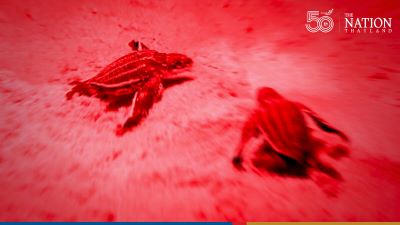
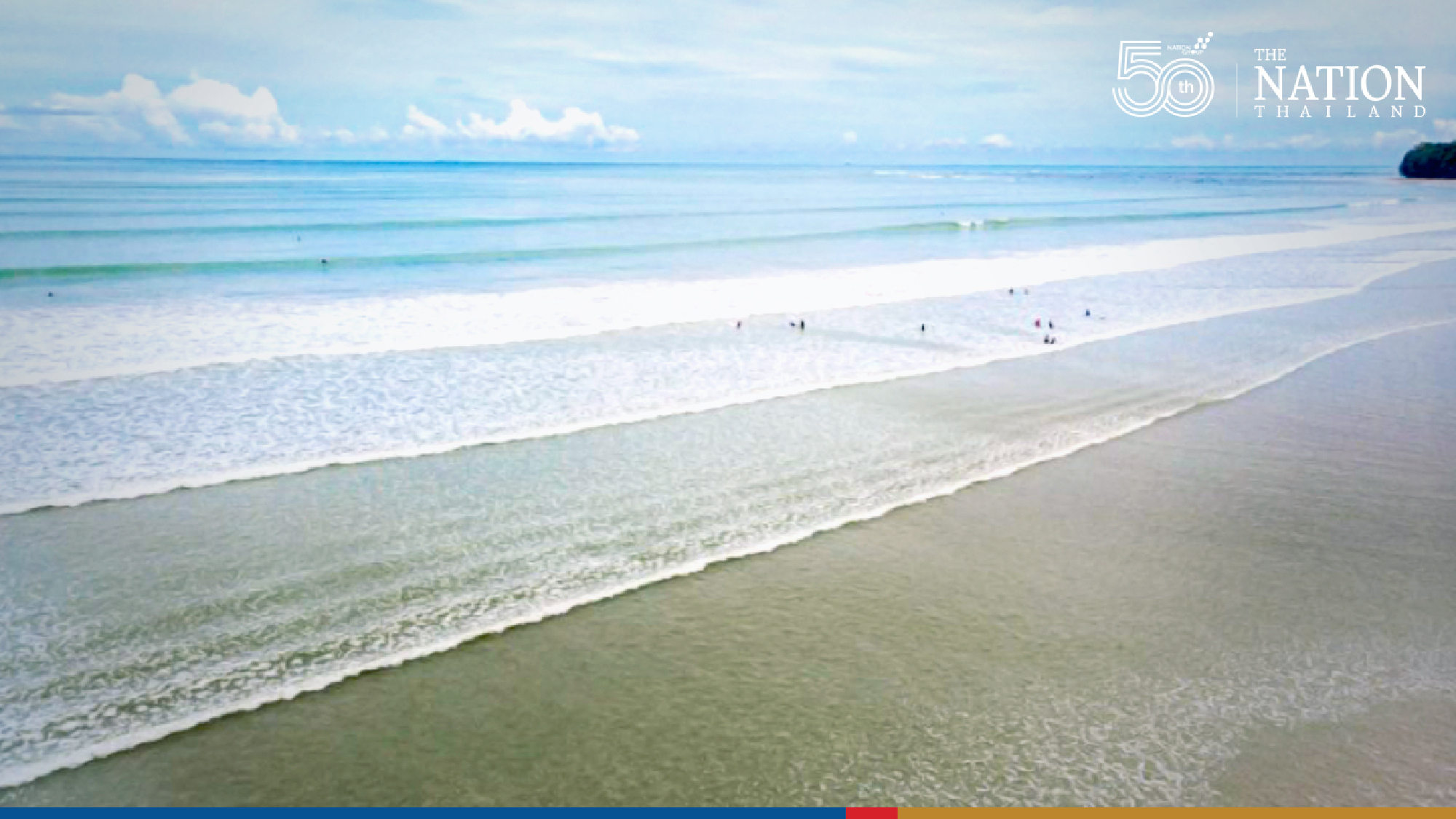
A marine animals expert has warned that a proposed 12-kilometre-long beach sand reinforcement project in the Khao Lak coastal area of Phang Nga province could lead to the extinction of leatherback sea turtles.
After the Marine Dapartment and a team proposed adding sand to a 12-kilometre-long stretch along the Khao Lak coast — from Khao Lak Sunset Hotel to the coral beach in Phang Nga — there has been a lot of opposition from many parties due to concerns about its impact on the environment and tourism.
On Saturday, Dr Thon Thamrongnawasawat, a Kasetsart University scientist and head of Thailand’s endangered marine animals working group, posted on his Facebook page warning that the project may interfere with the spawning of leatherback sea turtles, leading to its extinction.
“Leatherback sea turtles are one of the world’s rarest and biggest turtles. They are a very endangered species, not just in Thailand. These turtles spawn their eggs along the Khao Lak beach coast, all the way to the coral cape in Takua Pa district. They do not lay eggs on coral reef shores like other turtles because they are so large that they cannot enter shallow areas, and the Khao Lak has a relatively deep coastline, a perfect area for the leatherback turtles to spawn,” explained Dr Thon.
“In around 2015, leatherback sea turtles had disappeared from the Khao Lak coastline. But after they were successfully listed as “preserved animals” in 2019, there has been an increase in the number of turtles spawning within this 12-kilometre stretch of the sand reinforcement project area. The project would have a direct impact on the turtles, as the sand bank would become shallow. The leatherback turtles would be unable to spawn their eggs.
“The leatherback sea turtles will become extinct if they are unable to spawn naturally. We have acknowledged the locals to help taking care of these turtles. One missing leatherback turtle’s nest would have a tremendous effect on the number of its population,” he added.
ADVERTISEMENTx
Phang Nga beach sand reinforcement project a threat to endangered leatherback turtles: expert
The 12-kilometre sand reinforcement project in Khao Lak is currently in the process of gathering data and studying its impact.
Dr Thon suggested that it was not too late to discuss with the locals to find particular spots of erosion for reinforcing, instead of doing it on the entire 12-kilometre stretch. According to his survey, there is currently no concern about erosion in any area.
“It is important to research and set out the exact spots of sand erosion with the Marine Department, then we can work from there. If the whole coast is to be reinforced, I would propose ‘Section 17’ to suspend any actions or activities that cause serious damage. I will also resign from all positions if the project is approved. I spent 5-6 years working for the preservation of these leatherback sea turtles.
“I strongly disagree with the idea of reinforcing the entire 12-kilometre-long coastline, but there should not be any problems in cooperating to find the best solution together,” Dr Thon said.
Three groups prioritised for Pfizer vaccine allocation in 13 provinces
The Pfizer Vaccine Administration Working Group has decided on the criteria for allocating Pfizer vaccines to target groups.
They groups are:
1. Medical and public health personnel caring for Covid-19 patients nationwide and whose names appear in the database of the Ministry of Public Health as having received two doses of Sinovac vaccination for at least 4 weeks and have not received a booster dose of AstraZeneca.
Healthcare and public health personnel who do not qualify for the Pfizer vaccine in this lot are those who have received two doses of AstraZeneca; a third dose of AstraZeneca; one dose of Sinovac and one dose of AstraZeneca; only one dose of Sinovac or AstraZeneca, and other vaccines.
2. The risk groups in 13 provinces determined by the number of elderly people who have not been vaccinated. The goal for Bangkok is to cover 80 per cent of the elderly, while in the other 12 “dark red” provinces, the target is about 70 per cent. The vaccine that has been allocated can be injected according to the target group, including the elderly 60 years and over, seven chronic disease groups aged 12 years and over, and pregnant women from the 12th week onwards. A total of 641,760 doses have been allocated as follows: Bangkok 68,640 doses, Nonthaburi 75,360, Samut Prakan 51,360, Samut Sakhon 21,600, Pathum Thani 37,920, Nakhon Pathom 62,880, Ayutthaya 63,840, Chonburi 74,400, Chachoengsao 42,720, Pattani 29,760, Narathiwat 31,200, Yala 19,200, and Songkhla 62,880.
3. Foreigners residing in Thailand, focusing on those 60 years and above, seven chronic disease groups aged 12 years and over, pregnant women, and international travellers who need the Pfizer vaccine. This group must be pre-registered via the Ministry of Foreign Affairs electronic system. www.expatvac.consular.go.th starting August 1.


 Fire damages 100-year-old tourist-attraction market in Samut Sakhon
 Fire damages 100-year-old tourist-attraction market in Samut Sakhon
 Fire damages 100-year-old tourist-attraction market in Samut Sakhon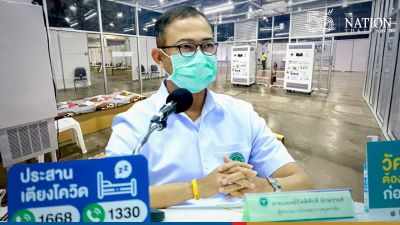
 Phang Nga beach sand reinforcement project a threat to endangered leatherback turtles: expert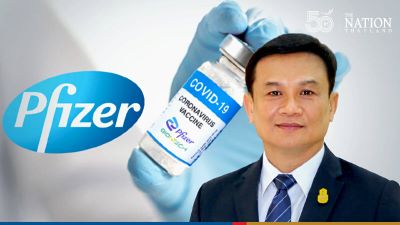
 SootinClaimon.Com