Cabinet approves THB4.1bn for EXIM Bank to support SME loans
The Cabinet on Tuesday approved a capital injection of 4.189 billion baht for the Export-Import Bank of Thailand (EXIM Bank), as proposed by the Finance Ministry. The money will be allocated by the Specialised Financial Institution Development Fund (SFIF), said government spokesperson Ratchada Thanadirek.
EXIM Bank can use the money to support SME loans for investment in trading, both domestically and internationally. The Cabinet wants Thai SMEs to invest in three market segments – domestically, in the CLMV (Cambodia, Laos, Myanmar, Vietnam) and new-frontier markets such as Indonesia, Malaysia and the Maldives. This strategy accords with the 5-year policy of Specialized Financial Institutions (2021-2025).
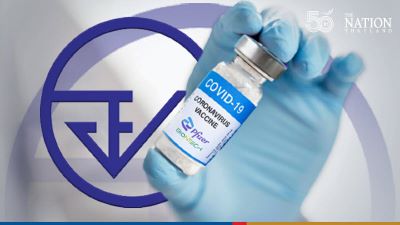
Thai FDA invites Pfizer to register vaccine for commercial use
The Thai Food and Drug Administration (FDA) has invited Pfizer to apply for full vaccine registration in Thailand, which takes 30 days.
Thai FDA
The move follows the full approval granted to Pfizer’s vaccine by the United States FDA, said Thai FDA secretary-general Dr Paisan Dankum. Thailand registered Pfizer vaccine for emergency use on June 24.
The full licensing agreement requires Pfizer to provide the Thai FDA with documents on quality, safety and effectiveness of its mRNA vaccine. The licence will allow Pfizer to sell its product as a regular vaccine in Thailand.
Pfizer is currently registered for emergency use in Thailand for people aged over 12. Dr Paisan said full registration would mean it is fully approved for those aged 16 and over, as in the US.
Thailand strives to elevate tourism industry striken hard by pandemic
Thailands tourism industry is trying to reset its entire system by shifting from mass tourism to high-end tourism to survive through the crisis.
More than a year and a half since the COVID-19 pandemic broke out, Thailand’s tourism industry is now struggling to survive and trying to shift from mass tourism to attracting more quality visitors.
The country received some 40 million international visitors in 2019, and the number came down to only 6.7 million in 2020.
ADVERTISEMENTx
For 2021, the Tourism Authority of Thailand (TAT) predicted that even in the best-case scenario, there will only be around 1-2 million foreign tourists visiting the country. Some believed that this figure is still considered too optimistic given the current vaccination rate and rising number of daily cases in the country.
Focusing on high-end tourism has always been an ambitious target for Thailand. The authorities now believe that Thailand must use the pandemic as the catalyst to overhaul the industry, as this is the only way that the sector can survive and navigate through the crisis.
“The government’s tourism-revival strategy is to target big spenders that are seeking for privacy and social distancing during their stays, especially during and post COVID-19 world,” Tourism Minister Phiphat Ratchakitprakarn said, adding that “the sector will try to attract high-end travellers, rather than a large number of visitors like what we have been relying on in the past.”
Phiphat said quality travel will also help address problems that already existed before the pandemic, such as over-crowding at beaches and temples and other environmental impacts.
It is vital that Thailand resets its entire tourism system, he said. Tourists paddle kayaking in canal near the Ong Ang walking street in Bangkok, Thailand, March 19, 2021.
Several industry experts and operators have also attempted to promote more specific tourism segmentations such as medical and wellness, sports and food, or ultra-luxury travel.
On July 1, Thailand’s resort island of Phuket launched a “sandbox” scheme allowing vaccinated foreign tourists from low-and-medium-risk countries to visit the island without undergoing a two-week quarantine.
Earlier this month, the long-awaited Phuket sandbox “7+7” extension plan was approved by the Center for COVID-19 Situation Administration (CCSA). The program cuts the mandatory stay in Phuket from 14 days to seven days before the visitors are allowed to travel on to other designated destinations such as Koh Samui, Koh Phi Phi, and Krabi.
The Phuket sandbox and other pilot schemes are designed to be a long-term project, building up towards the peak season from December to March. Many tourism-dependent localities elsewhere in the world stand to benefit from the achievement of Thailand’s reopening projects.
Yet two key important factors that will determine the pace of tourism recovery in Thailand are the effectiveness of the vaccine rollout in the country and the ability to control the spread of the virus, especially the more transmissible Delta variant, analysts said.
These major factors are crucial in Thailand’s plan to fully reopen for vaccinated tourists by mid-October, which very much will define the survival of its hospitality industry.
Aerial photo taken on Sept. 13, 2020 shows a beach in Phuket, Thailand.
The Metropolitan Police Bureau said on Tuesday it will summon parents of more than 20 underaged protesters who have joined anti-government rallies in Bangkok over the past few weeks.
“Parents could have violated the Child Protection Act by allowing their children to participate in activities that caused public disturbance and violated the emergency decree,” said Deputy Metropolitan Police chief Piya Tawichai.
Protesters have led a series of anti-government rallies at Victory Monument and Din Daeng intersection this month to demand the resignation of Prime Minister Gen Prayut Chan-o-cha.
Crowd control police have used tear gas, rubber bullets and water cannon in clashes with protesters that have resulted in the destruction of traffic booths and police vehicles as well as injuries on both sides. Police have confiscated several weapons, flares, firecrackers, petrol-filled bottles, pipe bombs and ping pong bombs from arrested protestors.
“So far, 591 individuals have violated the emergency decree and committed other offences,” said Piya. “Of these, 284 have already been arrested by police.
He added that police have summoned 127 individuals – 16 protest leaders and 111 protesters – to hear charges before officers pursue legal action against them for their roles in previous anti-government protests.
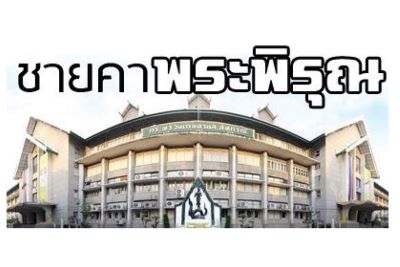
Nakhon Phanom panda teacher delivers lunch to his cubs daily
With schools in Nakhon Phanom province closed indefinitely as part of Covid-19 preventive measures, one teacher dons a panda costume every morning so he can deliver milk and lunch to students.
Chanchai Anu, 53, along with other teachers from a Child Development Centre in the province, have been delivering lunch and milk to students. He said they visit some 30 to 40 houses daily and the edibles are covered by the school lunch money allocated to the centre.
He added that he dresses up like a panda to gain a few laughs from students and their parents during this crisis.
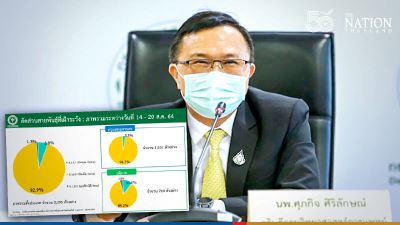
The Delta variant now accounts for nearly 93 per cent of new Covid-19 infections in Thailand, the Department of Medical Science said on Tuesday.
Dr Supphakit Siriluck, the department’s director-general, said its latest weekly survey of new cases from August 14-20 showed that 2,132 out of 2,295 samples (92.9 per cent), were infected with Delta, formerly known as the Indian strain.
“Delta is responsible for 96.7 per cent of cases found in Bangkok and 85.2 per cent found in all other provinces,” he said.
The Alpha variant accounted for 5.8 per cent of cases sampled (134 patients) while the Beta variant accounted for only 1.3 per cent (29 patients). The Beta cases were mostly found in the southern provinces of Narathiwat, Krabi, Phuket, Pattani and Songkhla, said Supphakit.
He added that a factory employee in Samut Sakhon province who cited a laboratory result to claim he had tested positive for Covid-19 so he could take sick leave was later found to have faked the result and has not contracted the virus.
“The Department of Medical Science keeps detailed records of all Covid-19 tests by certified laboratories, so we can verify a test result and immediately know which ones are fake,” he warned. “Do not use fake test results, whether to take sick leave or to claim insurance, as falsifying documents is a serious criminal offence,” he added.

 Tourists paddle kayaking in canal near the Ong Ang walking street in Bangkok, Thailand, March 19, 2021.
 Aerial photo taken on Sept. 13, 2020 shows a beach in Phuket, Thailand.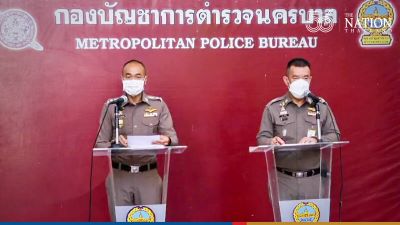


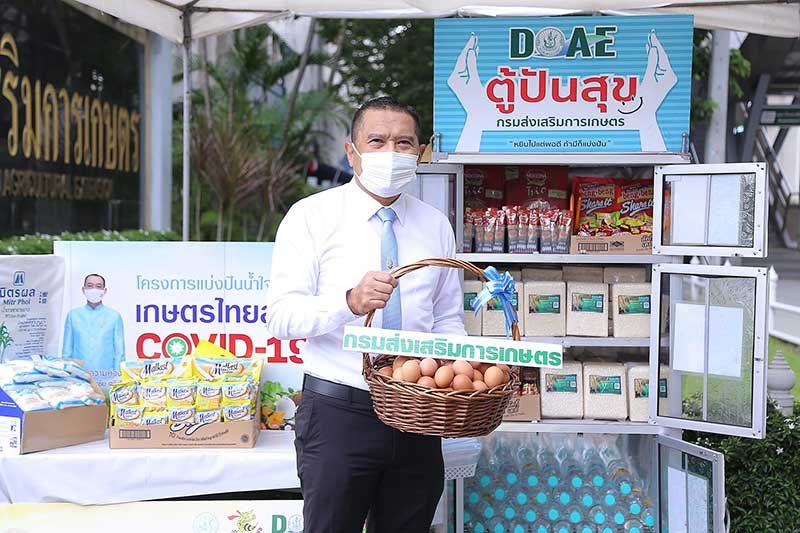
.jpg)

 SootinClaimon.Com