Thailands national futsal team failed to qualify for the quarterfinal of the 2021 Fifa Futsal World Cup Thursday after being trounced 7-0 by Kazakhstan on Thursday.
The 18th-ranked Thais played the seventh-ranked Kazakhstan in the round of 16 at Žalgiris Arena in Kaunas, Lithuania.
Thailand have lost in the round of 16 at the Fifa Futsal World Cup three consecutive times.
Head coach Rakphol Sainetngam apologised to Thai fans for failing to advance to the quarterfinal.
He said everyone was disappointed, including staff and the players. “They did their best but everything was not good,” he said.
Top scorer Suphawut Thueanklang added that they got off to a bad start and conceded an early goal. They had to change their plan after that. However, there were many errors, as a result we conceded too many goals, he said. He said they had done their best and apologised for disappointing the fans.
Thais crash out of futsal World CupThais crash out of futsal World CupThais crash out of futsal World Cup
Athletes who hope to compete for Team USA in the Winter Olympics and Paralympics in Beijing next year will be required to be fully vaccinated against the coronavirus under a new policy announced by the U.S. Olympic and Paralympic Committee.
U.S. athletes competing in Beijing must be fully vaccinated by Nov. 1 or obtain a medical or religious exemption by then, the organization’s website states. The requirement applies to team staff members who use the organization’s facilities and training centers as well. The Olympics begin Feb. 4 – less than six months after the end of the Summer Games – and the Paralympics start March 4. The new mandate extends to all who plan or hope to be part of Team USA’s delegation, who must show proof of vaccination or be granted an exemption by Dec. 1. In addition, the mitigation and protocols set for Tokyo’s Summer Games will remain in place.
The USOPC said in July that around 83% of the 613 American competitors in the Tokyo Olympics were vaccinated, but there was no requirement. The International Olympic Committee has not announced whether vaccination will be a requirement for non-U.S. athletes in Beijing, and its first playbook on health and other matters is expected next month.
“The stark reality is that this pandemic is far from over,” Sarah Hirschland, the USOPC’s CEO, wrote in a letter obtained by The Washington Post. “This step will increase our ability to create a safe and productive environment for Team USA athletes and staff, and allow us to restore consistency in planning, preparation and service to athletes.”
Roughly 240 athletes will compete in Beijing. In the days before and during the Tokyo Games, 28 athletes tested positive; the Paralympics had 13 positive tests. Golfer Bryson DeChambeau and swimmer Michael Andrew said before the Summer Games that they had not been vaccinated and DeChambeau missed the Games, testing positive just before flying to Japan. Andrew said he previously had covid-19.
ADVERTISEMENT
The policy goes a step beyond those of North America’s major pro teams, which do not require athletes to be vaccinated to compete.
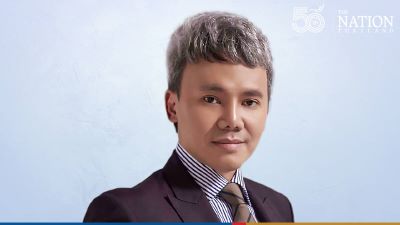
Thailand Phil is one of four international orchestras selected to have video performances screened at the 2021 Busan Maru International Music Festival in South Korea.
The Thailand Phil is honored to announce that it has been selected to have video performances screened at the 2021 Busan Maru International Music Festival (BMIMF) in Busan, South Korea. Only three other international orchestras were chosen to participate in this festival: the Gustav Mahler Orchestra of Hong Kong, the National Symphony Orchestra of Ukraine, and the Mihail Jora Philharmonic Orchestra of Romania.
The Busan Maru International Music Festival normally features live performances of internationally-renowned musicians and ensembles. This year, due to the pandemic, it has invited select musicians and ensembles to submit pre-recorded video performances. The performances will be projected at the Busan Cinema Center’s state-of-the-art 4000-seat outdoor theater which boasts the largest outdoor screen in Korea and 7.1-channel surround sound. The videos will also be broadcast on the festival’s YouTube channel.
Thailand Phil to be featured in international music festival Notably, two works that will be performed by the Thailand Phil have Thai origins. Celebration was composed by Dr. Narong Prangcharoen, Thailand’s foremost composer of classical music as well as Thailand Phil’s Music Director and Dean of the College of Music at Mahidol University. Also, Col. Prateep Suphanrojn’s arrangement of the Thai traditional piece, Lao Duang Duean, will be performed.
Other works presented by the Thailand Phil include Brahms’ Clarinet Sonata No. 1, Tchaikovsky’s Overture to 1812, and Mussorgsky’s Pictures at an Exhibition. The Brahms features clarinet soloist Calogero Palermo, Principal Clarinetist of the Royal Concertgebouw Orchestra. All performances are under the direction of Thailand Phil’s esteemed Chief Conductor, Alfonso Scarano.
Thailand Phil to be featured in international music festival
ADVERTISEMENT
These performances are just latest on Thailand Phil’s growing list of international achievements. Maestro Scarano comments, “In my tenure with the Thailand Phil I have seen, day by day, our level of performance elevate to the international standard we have achieved. Our video participation at BMIMF in South Korea is just the latest testament to this. I must genuinely thank all of my colleagues in the Thailand Phil including the musicians, management, staff, and all conductors, most especially our Founding Chief Conductor Gudni Emilsson, that have contributed to our sixteen years of growth.”
Thailand Phil’s Music Director, Dr. Narong Prangcharoen, echos these sentiments. “I am incredibly proud of what our orchestra has accomplished. We have become one of the leading orchestras in Southeast Asia and have brought positive recognition to Thailand from around the world. Our participation in the BMIMF is a great achievement. It is especially meaningful that, despite the difficulties caused by the pandemic, Thailand Phil still strong and finding new ways to reach our audience as well as expand to new audiences.”
“The Thailand Phil has become an indispensable part of the culture and life in Thailand,” says Maestro Scarano. “We are excited to soon announce our plans and projects for the 2021-2022 season. The future of the Thailand Phil is bright.” –– Busan Maru International Music Festival website: www.bmimf.co.kr YouTube: www.youtube.com/channel/UCDi1i5DYX5D21R3gYFu2nfg
The 21st branch of the health-shop-cum-supermarket, Golden Place, opened its doors near the Wat Phra Sri Mahathat BTS station in Bangkok’s Laksi area on Friday.
The shop, operated under Royal patronage, was opened in a special ceremony presided over by His Majesty’s secretary. Also present were directors and executives of the Suvarnachad Company.
The supermarket, located inside the Battalion Infantryman 11th Palace Guard Division compound, is surrounded by a beautiful garden and sports a spacious 100-car-capacity parking lot.
Operating under the concept “Think Health, Think Golden Place”, the shop offers a variety of health products as well as organic vegetables, fruits and produce grown under Royal projects.
This branch has the largest seafood zone, as well as a Golden Kitchen and Golden Coffee zone that serves Arabic coffee from the Mae Salong Royal Project in Chiang Rai.
Shoppers can also pick up clothes and souvenirs from different Royal projects.
Palace-run Golden Place supermarket opens new branch in LaksiPalace-run Golden Place supermarket opens new branch in Laksi
This Golden Place branch is open every day from 7am to 7.30pm due to current curfew restrictions. Under normal circumstances, it operates from 7am to 11pm. Products can also be bought via its official Line account @goldenplace or via www.goldenplace.co.th. Golden Place can also be found on Facebook and Instagram.
Fashion houses such as Stella McCartney and Victoria Beckham have long eschewed animal products in their wares, while automakers including Audi, BMW, Land Rover, and Tesla offer leather-free and sustainable interiors as options in their cars.
So far, Volvo is among the very few brands to say it will not offer any leather at all, even as an option, in any of its vehicles. Electric truckmaker Rivian currently offers only vegan “leather” seats in its R1T pickup, with no option for leather seating or trim.
The shift at Volvo will begin next year with the C40 Recharge, a plug-in electric SUV with a 200-plus mile driving range. It will continue until 2030, when Volvo’s by then all-electric lineup will have entirely phased out leather products. This is a decision driven as much by reading and predicting market trends as from concern for the ethical treatment of animals, Volvo executives tell Bloomberg Pursuits during a private video interview announcing these changes.
“We see our customer’s expectations are changing,” says Robin Page, the head of design for Volvo Cars. “They are changing their habits in fashion and products they are buying. They want to know more about the materials and where they are sourced from and where they come from, and people are much more aware of climate change and the effects on the planet.”
According to a report from Infinium Global Research quoted by Stuart Templar, Volvo’s director of global sustainability, the vegan leather market is expected to reach 73 billion euros ($85 billion) in value by 2025. By that time, a quarter of the materials in Volvo’s new cars will consist of recycled and bio-based content, says Page, and all of its immediate suppliers, including material suppliers, will use 100% renewable energy.
ADVERTISEMENT
“Consumers are increasingly focused not just on the end product but how it is produced,” adds Templar, “and that includes responsible sourcing.”
Volvo will introduce a new wool-blend option, made from certified suppliers, as the company looks to ensure full traceability and animal welfare in its materials supply chain. It will also offer Microtech, a suede-like textile made from recycled polyester, as well as components made from sustainably sourced flax and linen.
“There are premium alternatives to leather,” Page says. Previously, consumers viewed anything that isn’t leather as inferior; now that they understand more about climate change, they are changing their minds. Livestock, he says, is estimated to be responsible for around 14% of global greenhouse gas emissions from human activity, with the majority coming from cattle farming. “Our ultimate aim is to get recycled natural materials, because that is the full sustainability part.”
Nordico, another new, non-leather material Volvo will be using, consists of textiles made from recycled material such as plastic (PET) bottles, wood remnants from sustainable forests in Sweden and Finland, and corks recycled from the wine industry.
The announcement comes amid what Volvo has called “really annoying” challenges in obtaining computer chips. In July, Volvo agreed to take control of its China ventures from parent Geely Automobile Holdings Ltd., potentially boosting its valuation ahead of a planned share sale.
Volvo could earn a valuation of roughly $20 billion, with a listing expected by the end of September. Even if dwarfed by the estimated $80 billion initial public offering expected for electric pickup truck startup Rivian, Volvo’s would be among the biggest IPOs in Europe in 2021.
Taiwan request to join the Asian-Pacifics biggest working trade deal, coming just days after Chinas submitted its own bid, presents the member nations with a difficult choice – admit one, both or neither?
Both Beijing and Taipei have asked to join the Comprehensive and Progressive Agreement for Trans-Pacific Partnership in the past week. That creates the possibility of a long and politicized application process, with the members divided between democracies such as Japan, Australia and Canada pushing for Taiwan’s accession, and Southeast Asian nations keen to remain in China’s good graces, making them vulnerable to pressure from Beijing to thwart Taipei’s bid.
Officials in Taipei are aware of the challenge they face.
“China always obstructs Taiwan’s room to maneuver on the international stage. This is something everyone’s aware of,” Taiwan’s chief trade negotiator John Deng said at a briefing Thursday. “So if China is able to join first, it’s clear that Taiwan’s application will be at risk.”
The original goal of the $13.5 trillion trade agreement was to create a western-led alliance to counterbalance China’s economic might in the Pacific region. While it was initially spearheaded by the U.S., Japan assumed a key role in reviving the plan after former President Donald Trump withdrew in 2017.
ADVERTISEMENT
CPTPP member countries account for over 24% of Taiwan’s international trade, according to a cabinet statement Thursday.
It will be a challenge for Taiwan to reach the required consensus among all 11 nations for its application to succeed, according to Drew Thompson, a former U.S. defense official who is now a visiting senior research fellow at the National University of Singapore’s Lee Kuan Yew School of Public Policy.
“They will need to develop a smart strategy that reflects both their own domestic politics as well as the interests of key CPTPP members,” he said in a email Thursday. “Taiwan will have to satisfy many constituencies, but it might make sense to start with one big player, such as Japan, and work bilaterally to achieve Tokyo’s overt support, leveraging that support to convince other members to constructively engage Taipei.”
Taiwan President Tsai Ing-wen urged Japan to support her government’s efforts to join the deal in a tweet in Japanese Thursday, adding that her government has been preparing to join for the past five years and is prepared to accept all the rules.
Japan welcomed Taiwan’s bid and would respond “based on a strategic point of view and with the public’s understanding,” Foreign Minister Motegi Toshimitsu said Thursday in New York, according to a Kyodo News report. That contrasts with his statements about China’s application last week, when he said that Japan would have to look properly at whether China was “ready to reach the high level of TPP.”
Joining the group would be seen as a major political coup for Tsai, who’s government views Taiwan as a de facto sovereign nation awaiting broader international recognition. However China claims the island as part of its territory and vehemently opposes any moves that imply separate statehood for Taiwan, such as joining international organizations.
Taiwan and China already peacefully coexist as members of the same trade organization as both are part of the World Trade Organization, although Taiwan is a member as “the Separate Customs Territory of Taiwan, Penghu, Kinmen and Matsu.” Eager to eliminate as many political barriers as possible, Taiwan’s government used the same designation in its application to join the CPTPP.
China’s Taiwan Affairs Office laid out its stance on a possible Taiwanese application earlier this month, saying in a statement on Sept. 8 that Taiwan must adhere to Beijing’s “one-China principle” and any other countries must avoid implying Taiwan is a sovereign country in their dealings with Taipei.
That likely means that China needs to join before Taiwan, and the official title of Taiwan can’t be the “Republic of China,” according to Henry Gao, associate professor of law at Singapore Management University, who has written extensively on Chinese law and the World Trade Organization.
In response to questions about Taiwan’s application, New Zealand’s foreign ministry referred to the island as “Chinese Taipei,” another moniker used to avoid diplomatic problems.
Jeremy Huai-Che Chiang, a former researcher at the Taiwan-Asia Exchange Foundation focusing on Southeast Asian relations, sees countries in the region as unlikely to upset China over Taiwan due to Beijing’s economic weight and past record of punitive measures.
However, “I do think this is smart maneuvering on the part of Taipei,” he said via message Thursday. “Given that consensus is needed for membership, and the different geopolitical times that we are in right now, it will likely put a ‘two-or-nothing’ pressure on existing members.”
U.S. stocks rallied for a second day as investors embraced the Federal Reserves bullish economic outlook while downplaying the risk of contagion from turmoil in Chinese debt markets. Yields jumped worldwide after the Bank of England moved closer to raising rates and the dollar weakened.
The S&P 500 registered its biggest two-day gain since July, jumping 2.2%, with the Fed signaling on Wednesday that it’s on track to start scaling back asset purchases this year as the recovery takes hold. Yields climbed globally led by the U.K. market, where the 10-year gilt yield topped 0.90% for the first time since May after the Bank of England opened the door to a 2021 rate increase to contain a surge in inflation. Treasury yields surged, led by the 30-year, which rose about 12 basis points in the biggest increase in more than a year.
“A hawkish Fed was surprisingly welcomed by equity markets as it was seen as a confirmation of continued strength and ‘substantial progress’ made by the economy in recovering from the COVID shock,” said Anu Gaggar, global investment strategist at Commonwealth Financial Network. “While we are far from the end of QE and near-zero rates, the tide seems to be beginning to change. So far, the market had welcomed bad news as good news, but a market reacting to signs of an economy able to stand on its own without the monetary policy crutches is a refreshing change.”
Even with Thursday’s jump in yields, confidence is building that markets can ride out a pullback in Fed stimulus, unlike 2013 when the so-called taper tantrum triggered large losses in bonds and equities. Investors are betting that the economic and profit recovery will be strong enough to outweigh a reduction in asset purchases, while ultra-low rates will continue to support riskier assets even as concerns linger about contagion from China’s real-estate woes.
ADVERTISEMENT
“The turbo-charged taper — a little bit of a surprise, it was coming in a relatively short period that they’re planning for this, but the markets are OK with that at the end of the day,” Paul Donovan, UBS’s global chief economist, said during a Bloomberg TV interview.
Meanwhile, the British pound rallied and gilts declined as traders brought forward wagers on a Bank of England rate hike to 0.25% after officials said developments since its August meeting appear to have strengthened the case for modest tightening.
Stocks briefly pared gains during European market hours after a report that Chinese authorities signaled reluctance to bail out Evergrande, even as Beijing injected more cash into the financial system and regulators instructed the embattled property developer to avoid a near-term default.
Fears of an Evergrande failure have caused a sharp rise in borrowing costs for other junk-rated Chinese developers and cast doubt on the health of some smaller Chinese banks.
Elsewhere, emerging-market stocks climbed for a third day. Turkey’s lira slumped to record low against the dollar after the central bank unexpectedly cut interest rates. Oil gained and gold declined, while Bitcoin steadied around $44,000.
Here are key events to watch this week:
– Fed Chair Jerome Powell, Fed Governor Michelle Bowman and Vice Chairman Richard Clarida discuss pandemic recovery, Friday
Here are the main moves in markets:
– – –
– The S&P 500 rose 1.2% as of 4:03 p.m. New York time
– The Nasdaq 100 rose 0.9%
– The Dow Jones industrial average rose 1.5%
– The MSCI World index rose 1%
– – –
– The Bloomberg Dollar Spot index fell 0.4%
– The euro rose 0.5% to $1.1740
– The British pound rose 0.7% to $1.3723
– The Japanese yen fell 0.5% to 110.28 per dollar
– – –
– The yield on 10-year Treasuries advanced 12 basis points to 1.42%
– Germany’s 10-year yield advanced seven basis points to -0.26%
– Britain’s 10-year yield advanced 11 basis points to 0.91%
– – –
– West Texas Intermediate crude rose 1.4% to $73.21 a barrel
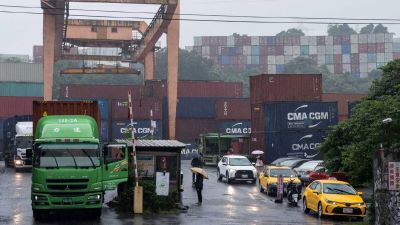
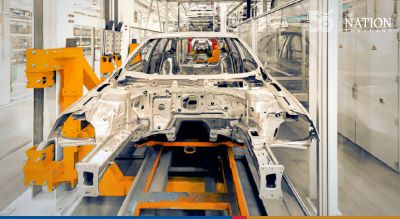
The global semiconductor shortage that has paralyzed automakers for nearly a year shows signs of worsening, as new coronavirus infections halt chip assembly lines in Southeast Asia, forcing more car companies and electronics manufacturers to suspend production.
Awave of delta-variant cases in Malaysia, Vietnam and the Philippines is causing production delays at factories that cut and package semiconductors, creating new bottlenecks on top of those caused by soaring demand for chips.
Underscoring that the problem has defied easy solutions, the White House on Thursday held its second summit in five months with semiconductor manufacturers and buyers, in part to gain more clarity on the scope of the crisis, senior administration officials said.
Attendees included senior executives from Intel, General Motors, Ford, Apple, Microsoft, Samsung and two dozen other companies, as well as Commerce Secretary Gina Raimondo and National Economic Council Director Brian Deese.
Frustration has mounted on all sides. Automakers want semiconductor companies to crank out more chips for cars. Smartphone companies do not want their semiconductors diverted to automakers. Chip manufacturers say the auto industry shot itself in the foot by canceling semiconductor orders after the covid crisis hit. They are also impatient for Congress to approve $52 billion in federal subsidies to boost domestic semiconductor manufacturing. That measure, supported by the White House, has cleared the Senate but not the House.
The Biden administration, meanwhile, says that while it can play a supporting role, it expects the private sector to take the lead in sorting out the crisis.
ADVERTISEMENT
“It’s on industry to come up with the solutions here and to identify some of the path forward,” one of the administration officials said Wednesday, speaking on the condition of anonymity to preview Thursday’s meeting.
At the meeting, Raimondo asked companies to fill out questionnaires to clarify how much supply and demand there really is in the market, and said the administration would consider invoking the Defense Production Act to compel them to provide the information if they don’t comply, a Commerce Department spokeswoman said, confirming a Bloomberg News report.
The administration wants the information in part to address a big problem: Manufacturers are placing chip orders larger than what they actually need because they’re concerned suppliers won’t fill the entire order, industry executives say. That makes it hard for semiconductor factories to know what they need to supply to meet real, short-term needs – and how much they should invest in new production lines. The administration also wants the information to determine whether some chip buyers are hoarding supplies.
Also known as computer chips, semiconductors are the brains behind modern electronics. Demand for the components is soaring as more consumer goods become computerized, but supply is scarce because semiconductor factories are extremely expensive and time-consuming to build.
Pat Gelsinger, the chief executive of Intel, the U.S.’s largest chip maker, has said he expects shortages to last into 2023. Others say it could last through the end of that year.
“The chip shortage continues to get worse and at this point we’re going to go through 2023,” said Ambrose Conroy, founder of Seraph Consulting, which is advising car companies on the crisis.
Automakers, which rely on dozens of chips to build a single vehicle, have been particularly hard hit, forced to halt production lines globally as they await chip supplies. The debacle is likely to cost the auto industry $450 billion in global sales from the start of the crisis through the end of 2022, according to Seraph Consulting.
Martin Daum, chief executive of the Daimler AG division that makes trucks and buses, described the problem as intensifying.
“Until the second quarter we were able to manage the situation quite well at Daimler Truck,” Daum said Wednesday. “But since summer the semiconductor situation has worsened for us. Our production in Germany and the U.S. was affected, which led to a situation in which we could deliver fewer vehicles to our customers.”
Even automakers such as Toyota and Hyundai, which planned for potential shortages and initially managed to avoid crippling shutdowns, are starting to encounter problems.
Toyota this month was forced to slash production at 14 factories in Japan over a lack of semiconductors. Some of the cuts will continue into October due to a lack of components from Southeast Asia, Toyota has said.
Ford and General Motors in recent months have been suspending production for weeks at a time at more than a dozen North American factories. As a result, Ford this month said its U.S. sales declined by 33 percent in August compared with a year ago.
The list of attendees at the White House meeting – including the medical device maker Medtronic and the appliance manufacturer Siemens – shows how the problem is hurting industries beyond autos.
“This is having an impact all across the economy, with automobiles, yes, but even beyond that, into medical devices, networking equipment – we’re hearing regularly from companies that cannot get the supply they need,” one of the Biden administration officials said.
Administration officials said the United States is asking its embassies around the world to help monitor production problems at chip factories and to provide any technical assistance needed to keep them running.
“I applaud Secretary Raimondo for her leadership today in recognizing the current chip shortage requires both short and long-term solutions,” Tom Caulfield, chief executive of the U.S.-based chip manufacturer GlobalFoundries, said in an emailed statement after the meeting.
Some chipmakers have taken steps to help auto manufacturers. Taiwan’s TSMC, which produces a type of chip called a microcontroller that is widely used by automakers, said it is increasing output of the components by 60 percent this year compared with 2020.
GlobalFoundries is adding manufacturing equipment to a factory near Albany, N.Y., to increase output for all types of chips, and recently broke ground on a $4 billion expansion of its factory in Singapore, with financial support from the Singaporean government.
Globally, chip factories have increased their production capacity by 8 percent since early 2020 and plan to boost it by over 16 percent by the end of 2022, according to the U.S.-based Semiconductor Industry Association.
Global spending on semiconductor manufacturing equipment is likely to grow by more than 30 percent this year to $85 billion, showing that chipmakers are expanding production, according to C.J. Muse, a semiconductor analyst at Evercore ISI.
But that comes after chip companies had “underinvested over the last five years,” he said. Industry executives say investment has been particularly low in production lines for automotive chips because they are older-tech components that offer lower profits.
Some semiconductor companies are holding back on big domestic investments until the subsidy plan is signed into law. GlobalFoundries has said it will double output at its New York site by building a new facility there if the subsidies come through.
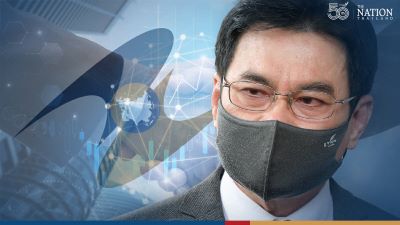
Thailand will seek a free-trade agreement (FTA) with Russia and four of its neighbours during a meeting with the Eurasian Economic Commission later this month.
Commerce Minister Jurin Laksanawisit will chair the second round of trade talks with the commission by video link on Monday (September 27).
The Eurasian Economic Union (EAEU) covers Russia, Kazakhstan, Belarus, Armenia and Kyrgyzstan – an economy of more than 180 million people and a GDP of over US$1.9 trillion.
It also boasts rich natural energy sources of oil, gas, coal and other minerals.
The EAEU already has an FTA with two Asean member countries, Vietnam and Singapore.
Trade between Thailand and the EAEU in the first seven months of 2012 (January-July) totalled $1,831.31 million, up 25 per cent from the same period last year.
The Stock Exchange of Thailand (SET) Index closed at 1,631.15 on Thursday, up 11.56 points or 0.71 per cent. Transactions totalled 140.53 billion baht with an index high of 1,637.65 and a low of 1,623.00.
The index rose for the third successive day after gaining 0.74 per cent on Tuesday and 0.29 per cent on Wednesday.
In the morning session, Krungsri Securities expected Thursday’s index to rise to between 1,625 and 1,630 points as regional stock markets responded to hints that the US Federal Reserve will taper its quantitative easing programme soon and raise the interest rate next year.
It added that the index also gained positive sentiment from Siam Commercial Bank’s move to restructure and establish a fin-tech arm, SCB X.
“However, investors should beware of foreign fund outflows in response to the weakening baht,” Krungsri Securities said.
The 10 stocks with the highest trade value today were SCB, KBANK, TRUE, BBL, TIDLOR, DTAC, PTT, ADVANC, SAWAD and AOT.
China’s Shanghai SE Composite Index closed at 3,642.22, up 13.73 points or 0.38 per cent, while the Shenzhen SE Component Index closed at 14,387.36, up 110.28 points or 0.77 per cent.
Hong Kong’s Hang Seng Index closed at 24,510.98, up 289.44 points or 1.19 per cent.
South Korea’s KOSPI closed at 3,127.58, down 12.93 points or 0.41 per cent.
Taiwan’s TAIEX closed at 17,078.22, up 152.40 points or 0.90 per cent.
Japan’s Nikkei Index was closed for Health and Sports Day.


 Thais crash out of futsal World Cup
 Thais crash out of futsal World Cup
 Thais crash out of futsal World Cup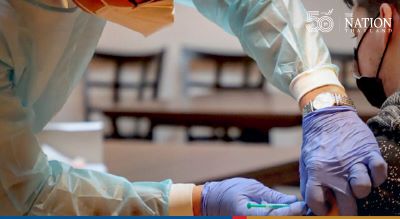
 Thailand Phil to be featured in international music festival
 Thailand Phil to be featured in international music festival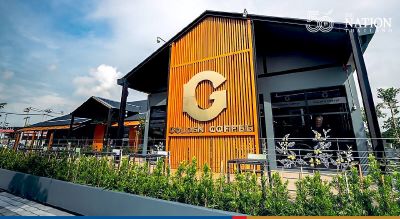
 Palace-run Golden Place supermarket opens new branch in Laksi
 Palace-run Golden Place supermarket opens new branch in Laksi
 Palace-run Golden Place supermarket opens new branch in Laksi
 Palace-run Golden Place supermarket opens new branch in Laksi

 SootinClaimon.Com