VN to strengthen financial foundation in the next ten years #SootinClaimon.Com

#SootinClaimon.Com : ขอบคุณแหล่งข้อมูล : หนังสือพิมพ์ The Nation.

https://www.nationthailand.com/international/40008965


Viet Nams top priority for 2021-30 is to build a solid financial foundation for the countrys sustainable development, said policymakers and experts during a conference held on Tuesday to discuss finance strategy for the 2021-30 period and solutions for economic recovery and development in Viet Nam.
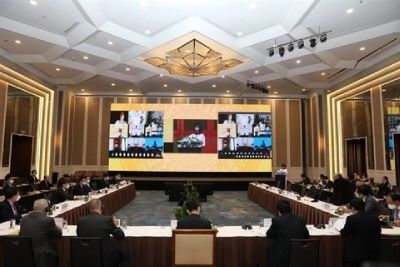
Speaking at the conference, Deputy Minister of Finance Vo Thanh Hung stressed the importance of conducting further studies for financial and budget solutions to speed up the country’s economic recovery and to achieve macroeconomic stability.

Hung said the State budget’s ability to weather the storm during the last two pandemic years has been a result of a long and difficult road, which started ten years ago with the approval of Viet Nam’s Finance Strategy until 2020 by the Prime Minister’s Office.

During 2016-20, Viet Nam’s development investment was on average 33.7 per cent of annual GDP and slightly higher than the 2011-15 period at 31.7 per cent. The country’s tax policy has been constantly put under review and pushed to modernise and improve. In 2011-20, State budget collection increased by 380 per cent compared to the 2001-10 period. Of which, the domestic source has been steadily increasing from an average of 68.7 per cent during the 2011-15 period to 82 per cent during 2016-20, and reached 85.6 per cent in 2020.

Pandemic budget

However, as the economy took a hit during the pandemic, budget collection has plummeted, especially after the government approved a number of support and rescue packages, mainly consisting of tax and fee reductions, to aid the business community.

Viet Nam’s fiscal policy has faced numerous challenges due to massive expenses incurred to check the spread of the virus and to secure medical equipment and vaccines. This has forced the government to come up with a comprehensive financial strategy to spearhead economic recovery in the near future.

Nguyen Nhu Quynh, deputy head of the National Institute for Finance under the Ministry of Finance, said a sound financial strategy is required at the core of the country’s effort to liberate, mobilise and utilise all available financial resources for the development of science and technology, the digitalisation process and the realisation of other socio-economic development targets in the next ten years.

Quynh urged the government to quickly move to standardise and boost the efficiency of budget collection, to improve the business environment and encourage investment from the private sector. Meanwhile, Viet Nam must maintain strong fiscal discipline, especially in limiting budget deficit, national debt and in building up the financial system’s resilience.

Prof. Tran Ngoc Anh, a member of the Prime Minister’s Economic Council, said countries spend on average 1 per cent of GDP on disease prevention while Viet Nam’s spending remained around 0.3-0.4 per cent. The pandemic has served as an example of why the country must allocate more resources in the production and procurement of medical supplies, medicine and vaccines.

Reforms

“Viet Nam must carry out strong financial reforms and establish a policy framework to guide all stakeholders’ actions in a prudent and efficient manner,” deputy chair of the National Financial Supervisory Commission Vu Nhu Thang told the Viet Nam News Agency.

Special attention must be paid to the development of the banking sector to ensure fair competition, stability and capital market growth. In addition, the country must continue to push to modernise its financial infrastructure by taking full advantage of the latest technologies and information channels in order to deliver better financial services at lower costs to customers.

Economist Vu Thanh Tu Anh said policymakers should learn from efforts by other countries to centralise their finance. Anh said there were still shortcomings and limitations, especially on local government level financial systems who often fail to collaborate and combine financial resources for greater returns.

Earlier this month, economists called for greater efforts by the government to focus on domestic finance to produce greater growth during the Viet Nam Economic Pulse (VEP) – a semi-annual forum analysing trends and exploring emerging issues in economics and policymaking.

“Countries pursuing a strategy of export-led growth record trade surpluses and thus are net capital exporters in some form. On average, they invest a larger share of national income than capital importing countries,” said Jonathan Pincus, senior economist from the United Nations Development Programme (UNDP).

He said the objectives of development finance policy are clear: Increasing access to long-term finance for infrastructure, industry and other classes of borrowers including small and medium-sized businesses; maintaining macroeconomic stability by reducing the procyclicality of finance; discouraging investment in unproductive, speculative activities; and reducing the probability and severity of the financial crisis.

“Viet Nam’s economic recovery from the COVID-19 pandemic and prospects for realising national development goals and the SDGs will to a significant extent be determined by the country’s ability to formulate a coherent and workable development finance strategy, to create new institutions capable of generating stable, long-term finance and to reform existing institutions,” said Pincus.

By the end of 2020, the amount of taxes and fees waived for businesses hard hit by the pandemic reached VND129 trillion (US$5.7 billion). In the Ministry of Finance’s recent projection, the amount waived this year will reach over VND140 trillion. In addition, additional funds must be secured in response to a volatile global economy in recovery and prolonged adverse effects caused by the virus in many years to come. — VNS

By Anh Pham

Published : November 18, 2021

By : Vietnam News
PM asks China to help Cambodia produce Covid vaccines #SootinClaimon.Com

#SootinClaimon.Com : ขอบคุณแหล่งข้อมูล : หนังสือพิมพ์ The Nation.

https://www.nationthailand.com/international/40008964


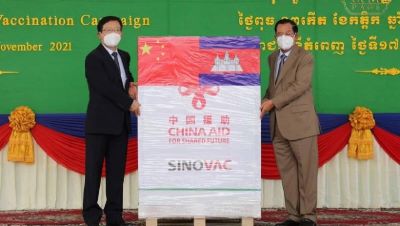
Prime Minister Hun Sen has requested that China construct a factory in Cambodia for the production of vaccines for Covid-19 so that the Kingdom can have domestically produced jabs for local use and for distribution to other countries.

He made the remarks at the ceremonial handover of another two million doses of Covid-19 vaccines donated by the Chinese government on November 17 at Phnom Penh International Airport.

“I spoke with Chinese ambassador Wang Wentian about the continuing supply of the vaccines and so I took the initiative to inquire about vaccines production in Cambodia,” he said.

Hun Sen added that the establishment of a Covid-19 vaccine production factory in Cambodia would enable the Kingdom to use vaccines produced domestically and to distribute them to other countries in the region through either purchases or donations.

“I hope that His Excellency Wang Wentian will forward my request to President Xi Jinping and Premier Li Keqiang – and any other relevant parties – to open discussions on producing vaccines in our country because we do not know when Covid-19 will end.

“If we make it possible to do the final stage of vaccines production in Cambodia, that would give us the reassurance that we will be able to protect the lives of Cambodian people and we won’t need to get vaccines from abroad, which in turn eliminates all of this long-distance shipping,” Hun Sen said.

He delegated the task of negotiations on this matter to the Ministry of Health, which will follow up with the Chinese embassy and contact the relevant Chinese institutions to explore the possibility.

“Vaccines that originated in China have played a crucial role in Cambodia’s core strategy for managing Covid-19 and they have been key to protecting public health and saving the lives of the Cambodian people,” Hun Sen said.

Wang noted that to date China has provided nearly 39 million Covid-19 vaccine doses to Cambodia, which is about 90 per cent of the total vaccines the Kingdom has received so far from various sources.

“Chinese vaccines are effective and safe and they have contributed significantly to the prevention of Covid-19 in Cambodia,” he said.

Wang added that Cambodia’s high rate of Covid-19 vaccinations was the best in the entire world presently. The rate of infections is on the decline and the number of infected people is relatively low at this point.

As of November 17, a total of 39.8 million vaccine doses have been provided by China, 8.3 million of which came in the form of donations while the other 28.5 million doses were purchased.

By Mom Kunthear

Published : November 18, 2021

By : The Phnom Penh Post

Chinese Premier pledges to expand opening-up #SootinClaimon.Com

#SootinClaimon.Com : ขอบคุณแหล่งข้อมูล : หนังสือพิมพ์ The Nation.

https://www.nationthailand.com/international/40008963


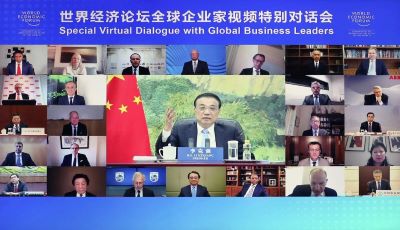
China has adopted a series of measures that effectively eased pressure on the supply of electricity and coal, and the countrys future energy supply is guaranteed, Premier Li Keqiang said on Tuesday.

While addressing the World Economic Forum Special Virtual Dialogue with Global Business Leaders, Li said that China will consider its national conditions and push forward the low-carbon transition in a balanced and orderly way on the premise of ensuring the steady and safe supply of energy.

The dialogue was chaired by Klaus Schwab, founder and executive chairman of the WEF, and nearly 400 business leaders from over 40 countries participated.

During the dialogue, Li said that China’s economy has in general sustained the momentum of steady recovery this year while facing new downward pressures.

However, the fundamentals of China’s long-term economic development remain unchanged, as the country’s total number of 150 million market entities have provided resilience and vitality for the Chinese economy and strongly supported employment, he added.

Next, China will step up cross-cyclical adjustments, will not resort to “floodlike” stimulus, and will introduce a mix of tax and fee reductions at an appropriate time to keep its economic operations within a reasonable range, Li said.

The premier also reiterated China’s firm commitment to expanding opening-up, saying that China will promote international cooperation and build a market-oriented and world-class business environment governed by a sound legal framework.

He also said that China will treat all types of market entities on an equal basis and protect intellectual property rights in accordance with the law.

Enterprises from all countries are welcomed to invest in and prosper in China, Li added.

Given that the COVID-19 pandemic is undergoing many twists and turns and global economic recovery faces increasing uncertainty, Li said that China stands ready to join hands with all parties to fight the virus and ensure the stable and smooth functioning of global industrial and supply chains.

China will also improve its trade and investment liberalization and facilitation and step up international macroeconomic policy coordination, in order to promote the steady recovery of the world economy, he said.

By MO JINGXI

Published : November 18, 2021

By : China Daily

Japan allows mixing COVID-19 vaccine doses for booster shots #SootinClaimon.Com

#SootinClaimon.Com : ขอบคุณแหล่งข้อมูล : หนังสือพิมพ์ The Nation.

https://www.nationthailand.com/international/40008915


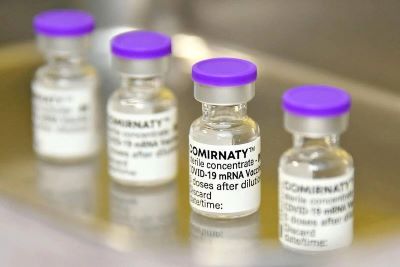
COVID-19 vaccine booster shots can be from a different manufacturer than the first two doses, the health ministry decided Monday.

The government in principle requests the same manufacturer’s vaccine to be administered, but it decided to allow mixing certain manufacturers after examining the efficacy and safety of such use. The strategy is part of the Health, Labor and Welfare Ministry’s basic policy for booster shots.

According to the basic policy, the booster shots will be administered from Dec. 1 through September 2022 and will be available to everyone 18 and over who wishes to receive them. The health ministry’s expert panel agreed Monday to publicly fund the entire cost of conducting booster shots.

Generally, a third dose should be given after at least eight months from the second dose. However, the ministry decided it can be administered after six months if municipal governments feel the need based on such factors as the coronavirus infection situation, as some data suggests that vaccine efficacy is reduced by half after about six months from the second dose.

Following moves by Western countries, Japan will use vaccines using messenger RNA for booster shots. Based on overseas clinical trials, the government determined that there was no problem to alternatively use vaccines made by different manufacturers in terms of efficacy and adverse reactions.

Domestically, vaccine manufactured by U.S. pharmaceutical giant Pfizer Inc. has received special approval for booster shots, while vaccine manufactured by U.S. biotech firm Moderna, Inc. is currently under review.

Booster shots will be recommended to all eligible residents, with special emphasis on medical workers and people with higher risk of developing serious conditions, such as people with underlying diseases and the elderly. Booster shots for people 12 to 17 will be considered as soon as data is collected.

Japan’s COVID-19 vaccination rollout started in February with medical workers given the Pfizer vaccine. In general, second doses were given to medical workers from March, people 65 and over from May and people under 65 from July. The vaccination rate for the second dose exceeds 75% in the nation.

Delivery of the Pfizer vaccine for booster shots started Monday. Enough vaccine for about 4.1 million doses, which are expected to be administered from December through January, will be distributed across the nation by the end of November.

Published : November 17, 2021

By : The Japan News

[Vietnam] CAAV proposes full resumption of domestic flights from December #SootinClaimon.Com

#SootinClaimon.Com : ขอบคุณแหล่งข้อมูล : หนังสือพิมพ์ The Nation.

https://www.nationthailand.com/international/40008914


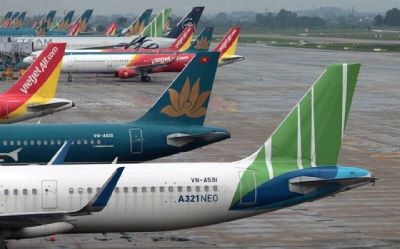
HÀ NỘI – The Civil Aviation Authority of Vietnam (CAAV) has proposed the Ministry of Transport increase domestic flights this month, and resume the normal operations of all domestic routes in December.

In November, the number of two-way flights on Hà Nội – HCM City, Hà Nội – Đà Nẵng and Đà Nẵng – HCM City routes are expected to increase to 19 daily, of which national flag carrier Vietnam Airlines and Viejet Air each will operate six flights, Bamboo Airways and Pacific Airlines each three flights, and Vietravel Airlines one.

The agency also proposed adjusting flight frequency on other routes to nine each day, with flights to be performed by the four carriers.

The normal flight frequency is set to be resumed in December.

In addition, CAAV said airlines should be allowed to continue providing in-fight services, especially food, to support service suppliers.

According to the agency, between October 21 and November 3, four domestic airlines, except Vietravel Airlines, had restored domestic flights, with a total of 979 round-trip flights carrying 170,200 passengers on 42 domestic air routes to  22 airports nationwide.  

All passengers must be fully vaccinated or recovered, or having a negative test certificate for SARS-CoV-2 within 72 hours.

However, the current flight plan was only applicable until November 30 this year, so airlines would have difficulty in planning to operate in the winter 2021/2022 flight schedule, especially during the Lunar New Year of of 2022, CAAV said.

They also proposed adjusting regulations on transferring passenger information from the PC-COVID application directly between the Ministry of Information and Communications and localities. Airlines do not need to transfer passenger destination information to the local authorities.

With this proposal, localities can update by themselves passenger information every 30 minutes from the PC-COVID application.

CAAV also sent a document to agencies regarding the launch of international flights, under which regulations on COVID-19 prevention and control must be observed at airports.

Airlines that operate international flights to and from Việt Nam have to co-ordinate with travel businesses to develop plans and organise pilot flights to receive international tourists to and from Việt Nam as per the temporary Guidance No 4122/HD-BVHTTDL of the Ministry of Culture, Sports and Tourism and send the plans to the CAAV. – VNS

Published : November 17, 2021

By : Vietnam News

Moon, CEPI CEO discuss Korea’s vision for global vaccine production hub #SootinClaimon.Com

#SootinClaimon.Com : ขอบคุณแหล่งข้อมูล : หนังสือพิมพ์ The Nation.

https://www.nationthailand.com/international/40008913


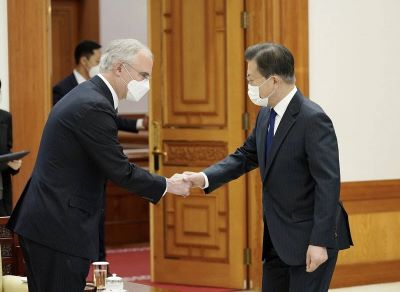
President Moon Jae-in and Richard Hatchett, CEO of Coalition for Epidemic Preparedness Innovation, held a meeting at Cheong Wa Dae on Tuesday and exchanged views on South Korea’s pandemic preparedness and its vision for a global vaccine production hub.

Moon applauded CEPI’s leadership role in facilitating investment into vaccine development and manufacturing against COVID-19, which he said greatly helped in saving people’s lives around the world.

“Since joining CEPI last year, Korea is also ramping up efforts to increase vaccine production,” Moon said. “Developing our own vaccine is our national goal. Thank you again for CEPI’s support for the drive so far.”

Oslo-based CEPI was launched in 2017 with an aim to finance independent research projects developing vaccines against emerging infectious diseases. Since the onset of the coronavirus pandemic, it has focused more resources into COVID-19 vaccines.

The coalition gets funding from governments and organizations like the Bill & Melida Gates Foundation. The Korean government has invested in related research work through the coalition since last year.

Korean pharmaceutical company SK Bioscience is currently conducting phase-3 trials of its own COVID-19 vaccine as part of a vaccine partnership project between the Korean government and the CEPI.

During the meeting, Moon pinned high hopes on the ongoing studies of the vaccine candidate that is highly likely to become the nation’s first homegrown COVID-19 vaccine debuting early next year.

In response, the CEPI CEO expressed gratitude for the Korean government’s contribution to COVAX, the global vaccine-sharing platform that is co-led by CEPI, the WHO and Gavi, the Vaccine Alliance. Korea has pledged a total of $200 million of funding to COVAX by the end of next year.

He also praised Korea for setting a global standard in terms of pandemic preparedness, citing the nation’s much lower fatality rate compared to other developed countries.

Tuesday’s meeting was also attended by Health Minister Kwon Deok-cheol and SK Bioscience CEO Ahn Jae-yong.

By Lee Ji-yoon

Published : November 17, 2021

By : The Korea Herald

Countries to relax visa curbs for media workers #SootinClaimon.Com

#SootinClaimon.Com : ขอบคุณแหล่งข้อมูล : หนังสือพิมพ์ The Nation.

https://www.nationthailand.com/international/40008912


China and the United States will permit journalists and other media workers to freely move between both countries on the condition they strictly comply with COVID-19 control protocols.

Countries to relax visa curbs for media workers

By MO JINGXI | CHINA DAILY | Updated: 2021-11-17 07:16

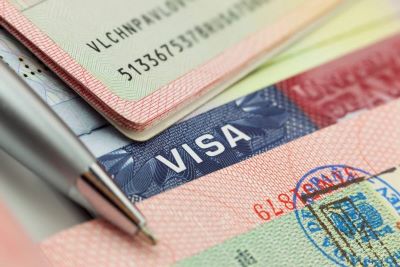
File photo of the US visa. [Photo/IC]

China and the United States will permit journalists and other media workers to freely move between both countries on the condition they strictly comply with COVID-19 control protocols.

Sources with the Foreign Ministry told China Daily that easing media visa controls was one of three points agreed between the two sides ahead of Tuesday’s virtual meeting between President Xi Jinping and US President Joe Biden.

It was agreed that the US will issue one-year multiple-entry visas to Chinese media workers and will immediately initiate a process to address “duration of status” issues.

Based on the principle of reciprocity, the Chinese side commits to granting equal treatment to US journalists immediately after the relevant US policies come into force, the sources said.

China and the US will issue media visas for new applicants based on relevant laws and regulations, the sources added.

The consensus was the result of more than a year of difficult negotiations over the treatment of media outlets in both countries.

Calling the agreement good news for journalists from both nations, the sources said that it also reflected the “new normal” of China and the US looking at and treating each other in an equal manner.

The consensus also showed that as long as the two countries calmly communicate in the spirit of mutual respect, equality and mutual benefit, they can reach consensus on issues that provide reciprocal benefits, the sources said.

It is hoped that more good news is ahead for the two countries’ media outlets through further China-US cooperation, they added.

Previously, Chinese media workers had to reapply for a one-year US visa if they left for a short period or to visit family in China. The single-entry visa for Chinese journalists was due to the discriminatory policies the US instituted for Chinese journalists stationed in the US, the sources said. Since 2018, the US has denied visas to more than 20 Chinese journalists without giving cause.

In May last year, US authorities even limited the visa period for Chinese journalists to no more than 90 days, requiring them to apply for an extension every three months.

By MO JINGXI

Published : November 17, 2021

By : China Daily

Xi calls for sound China-US relationship #SootinClaimon.Com

#SootinClaimon.Com : ขอบคุณแหล่งข้อมูล : หนังสือพิมพ์ The Nation.

https://www.nationthailand.com/international/40008911


Two sides should respect each other, pursue win-win cooperation, he says

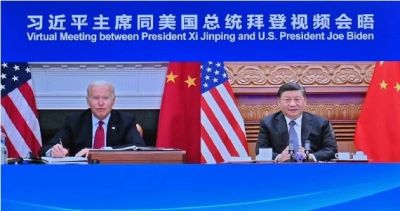
President Xi Jinping set out priorities on Tuesday for relations between China and the United States for the new era, urging both sides to lead the international community in responding to key challenges and manage differences and sensitive issues in a constructive manner.

In his first virtual meeting with US President Joe Biden, Xi called upon the two nations to follow the principles of mutual respect, peaceful coexistence and win-win cooperation, highlighting the need to treat each other as equals, keep differences under control and seek common ground while putting aside their differences.

The meeting, which followed two phone calls between the two leaders in February and September, went on for three-and-a-half hours. The presidents had in-depth exchanges on issues of strategic, overarching and fundamental importance that shape the development of bilateral relations and on important issues of mutual interest.

The conversation opened on a friendly note from both leaders. Xi, who spoke with Biden from the East Hall of the Great Hall of the People, referred to the US president as “my old friend”.

Xi said he is willing to work with his US counterpart to build consensus and take active steps to move the relationship forward in a positive direction.

“Doing so will advance the interests of the two peoples and meet the expectations of the international community,” he said.

A sound and steady China-US relationship is required for advancing the two countries’ respective development and for safeguarding a peaceful and stable international environment, including finding effective responses to global challenges such as climate change and the COVID-19 pandemic, Xi said.

He underlined the restoration and growth of China-US relations as the most important event in international relations, benefiting the two countries and the world.

The most important event in international relations in the coming 50 years, he said, will be for China and the US to find the right way to get along.

History is a fair judge, and what a statesman does, be it right or wrong, an accomplishment or a failure, will all be recorded by history, he said, adding that he hopes Biden will demonstrate political leadership and steer the US policy on China back on to a reasonable and pragmatic track.

Xi expounded on the three principles the two sides should uphold for the new era. The two countries need to respect each other’s social systems and development paths, respect each other’s core interests and major concerns, and respect each other’s right to development, he said.

He underscored that no conflict and no confrontation is a line that both sides should hold and that the two nations stand to gain from cooperation and lose from confrontation as their interests are deeply intertwined.

The world is big enough for the two countries to develop individually and collectively, he said, adding that the right thing to do is to choose mutual benefit over a zero-sum game.

Xi said the two nations must both shoulder the responsibility of major countries and bilateral cooperation may not solve all problems, but few problems can be solved without China-US cooperation.

He listed the economy, energy, military, law enforcement, education, cyber affairs and environmental protection as areas where the two sides share broad common interests.

The president compared China and the US to two giant ships sailing in the ocean, saying that it is important for them to keep a steady hand on the tiller so that the two vessels will break waves and forge ahead together, without losing direction or speed, still less colliding with each other.

Xi explained China’s development path and strategic intentions, underscoring that the Chinese people’s aspiration for a better life is the biggest internal driver for China’s development and an inevitable trend of history.

As China’s leader, the president said, serving the 1.4 billion Chinese people and working with them for a better life is a great challenge and a great responsibility. “I will put aside my own well-being and live up to people’s expectations,” he said, repeating a pledge he made during a visit to Italy in 2019.

He stressed that aggression and hegemony are not in the blood of the Chinese nation and that the nation has no intention of selling its development path around the world.

He reiterated China’s commitment to opening-up, a fundamental State policy and a hallmark of China. The nation will not change its determination to open up at a higher level, nor will it change its determination to share growth opportunities with the rest of the world, he said.

He highlighted China’s commitment to peace, development, equity, justice and democracy-the common values of humanity. Drawing ideological lines or dividing the world into different camps or rival groups will only make the world suffer, and the bitter lessons of the Cold War are still fresh in the memory, Xi said, adding that Beijing hopes Washington will live up to its pledge not to seek a “new Cold War” with concrete actions.

Xi urged the US side not to test China’s resolve on the Taiwan question, as he ascribed the new wave of tensions across the Taiwan Straits to the repeated attempts by the Taiwan authorities to look for US support for their “independence” agenda as well as the intention of some in the US to use the question to contain China.

Such moves are extremely dangerous, just like playing with fire, and whoever plays with fire will get burned, he warned.

Xi told Biden that Beijing has patience and will strive for the prospect of peaceful reunification with utmost sincerity and efforts.

However, he said, the nation will be forced to take resolute measures should the separatist forces for “Taiwan independence” take provocative actions or even cross the red line.

Xi underscored that civilizations are rich and diverse, and so is democracy. Whether a country is democratic or not should be left to its own people to decide, he said. He said that China is ready to have dialogue on human rights on the basis of mutual respect, but it opposes using human rights as a pretext to meddle in other countries’ internal affairs.

Sino-US trade relations are in essence mutually beneficial and bilateral economic and trade issues between the two countries should not be politicized, he said.

Biden underlined the shared responsibility of both leaders in ensuring that “that the competition between our countries does not veer into conflict, whether intended or unintended”.

“It seems to me we need to establish some common-sense guardrails, to be clear and honest where we disagree, and work together where our interests intersect, especially on vital global issues like climate change,” he said.

Biden reiterated that the US does not seek to change China’s system, the revitalization of its alliances is not anti-China, and the US has no intention of having a conflict with China.

He reaffirmed the US government’s long-standing one-China policy, stating that the US does not support “Taiwan independence”, and expressed the hope for peace and stability to be maintained in the Taiwan Straits.

Key quotes

・ The most important event in international relations in the coming 50 years will be for China and the US to find the right way to get along.

・ China-US cooperation may not solve all problems, but few problems can be solved without China-US cooperation.

・ It is important for the two sides to keep a steady hand on the tiller, so that the two giant ships will break waves and forge ahead together, without losing direction or speed, still less colliding with each other.

・ China means what it says. It only commits to what it can deliver, and never makes a promise it cannot keep.

・ China has no intention of selling its own development path around the world. On the contrary, China encourages all countries to find development paths tailored to their respective national conditions.

By XU WEI

Published : November 17, 2021

By : China Daily

HCM City schools prepare to welcome students back #SootinClaimon.Com

#SootinClaimon.Com : ขอบคุณแหล่งข้อมูล : หนังสือพิมพ์ The Nation.

https://www.nationthailand.com/international/40008867


HCM CITY — Most schools in HCM City are now ready to accept students back, and are making vital preparations to reopen after the months-long closure due to COVID-19.

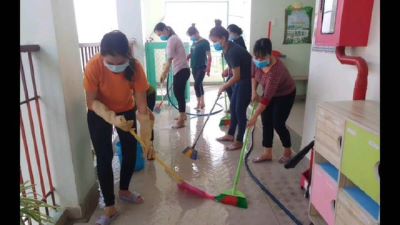
They are cleaning and rearranging classrooms, furniture and teaching tools to ensure children’s safety though the city has not yet decided on the exact date of reopening due to the unpredictable nature of the pandemic.

Lê Hoài Nam, deputy director of the Department of Education and Training, said his department has set safety criteria for schools.

All have been told to prepare for students’ return to classes but also have plans for teaching online if the pandemic resurges.

Many schools were used as COVID treatment and quarantine facilities and so needed to be thoroughly disinfected and cleaned before reopening.

Đặng Đình Quý, vice principal of Nguyễn Thái Bình High School in Tân Bình District, told Sài Gòn Giải Phóng (Liberated Sài Gòn) newspaper that his school has completed preparations for classrooms and equipment, and more than 95 per cent of its students have been vaccinated.

“I hope the students stay healthy, and always strictly comply with the 5K regulations when they return to school.”

The school’s medical worker, Hán Hồng Thái, said she and teachers helped vaccinate the school’s students, and was happy teachers, staff and students could reunite after more than five months.

“There were radiant smiles behind the masks.”

Teachers and students at Võ Văn Kiệt High School in District 8 are also very eager to return to classes.

Nguyễn Ngọc Gia Huy, an 11th grade student at the school, said he and his classmates have got the first dose of a vaccine and would get the second soon, and so are not worried about returning to class.

All classrooms at Trường Thạnh Secondary School in Thủ Đức city have been cleaned carefully for reopening after months of serving as a quarantine facility.

An eighth-grade student, Đào Xuân Vinh, said he has been studying online for the past two months.

“I’m looking forward to the first day back at school so that I can meet my teachers and classmates again.”

In recent days staff of the Bình Chiểu Secondary School in Thủ Đức have repaired school facilities, planted saplings and placed flowerpots to be ready to welcome students back.

Preparations are also under way at many primary schools and kindergartens.

Trần Văn Vân Primary School in Thủ Đức has cleaned classrooms, added books to the library and installed a basin for washing hands.

Officials, teachers and employees cleaned the campus and disinfected all utensils and toys.

Tuổi Thơ Kindergarten in District 1 has repaired students’ lockers, decorated classrooms and cleaned and disinfected them and teaching tools and toys.

Preschools have not been able to teach online and were instead told to create video lessons and other teaching methods and send to parents to help their children learn at home.

Many private preschools have had to close down after being bankrupted due to the pandemic. — VNS

Published : November 16, 2021

By : Vietnam News

Singapore still an attractive global investment hub, but lacks element of fun: GIC top exec #SootinClaimon.Com

#SootinClaimon.Com : ขอบคุณแหล่งข้อมูล : หนังสือพิมพ์ The Nation.

https://www.nationthailand.com/international/40008866


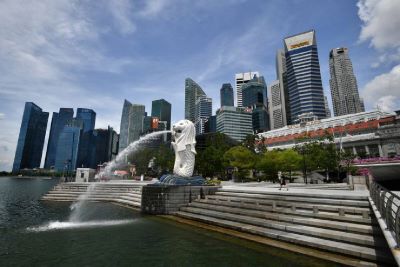
SINGAPORE – The Republic remains an attractive hub for global investments, but lacks an element of fun to draw a greater variety of market participants and raise the citys brand as the place to be, said GIC deputy group chief investment officer and chief operating officer Tay Lim Hock during a panel at the 2021 Milken Institute Asia Summit on Monday (Nov 15).

Mr Tay was asked what more could be done to raise Singapore’s attractiveness as a global investment hub, during the two-day summit that kicked off on Monday at Marina Bay Sands.

He added that while Singapore has made progress in bringing “first-class entertainment events” such as the F1 race and Singapore Aerospace Show to its shores, it could do with more industry-focused events such as “private equity and alternative investment-specific conferences”, as well as real estate fairs.

Economic Development Board managing director Jacqueline Poh noted that the city is preparing to host a larger number of conferences and events next year “that will bring together groups of people that have never before had their own conferences or occasions to network in Singapore”.

She cited the Singapore Cocktail Festival from Nov 12 to Dec 12, which is expected to rejuvenate the food and beverage sector as the Republic opens up.

Speakers on the panel agreed that Singapore remains an attractive global investment hub, particularly for alternative or private capital. The past two years have been “good years for assets under management”, with investments by venture capital and private equity funds reaching levels surpassing the pre-pandemic period, Ms Poh said.

She added that private capital inflows to Singapore have benefited entrepreneurs, with some 3,500 start-ups and 200 accelerators now based here. “We have about 25 unicorns in South-east Asia, 12 of which are Singapore-based,” she said.

Meanwhile, there are about 400 family offices that have set up base in Singapore and this has led to new areas of growth in professional services such as legal and accountancy solutions, added Ms Poh.

Mr Ganen Sarvananthan, managing partner of alternative asset manager TPG Capital Asia, said many wealth managers have successfully raised alternative capital and private equity in Singapore recently. That is because the city has “a combination of capital, investors and interesting companies headquartered here”, he said.

Mr Kevin Lu, partner and chairman of fund manager Partners Group, said Singapore continues to facilitate the private equity market in that the city has been an important place to hold board meetings, be more “hands on” when working with portfolio companies and gain access to professional services.

He added: “In private equity, we act on legal insider information to generate returns. When you deal with these sorts of information flows, it is much easier to be in a place where the other participants also are at in person rather than remotely.”
 

By Kang Wan Chern

Published : November 16, 2021

By : The Straits Times