HCM CITY — Prices of consumer staples in HCM City, the countrys largest economic hub, have been on the rise since the beginning of November, reported the Vietnam News Agency.
For example, a bottle of chilli sauce has increased to VNĐ14,000 (US$0.61) from VNĐ12,000, box of instant noodles to VNĐ145,000 from VNĐ120,000. Prices for frozen and packaged food items have also increased by VNĐ1,000-5,000 on average.
The price for a tank of gas has increased to over VNĐ500,000 from VNĐ340,000 at pre-pandemic levels. Petrol prices have also been on the rise in recent months. This has forced manufacturers and businesses to make price adjustments to better reflect increased costs in logistics, input materials and operations.
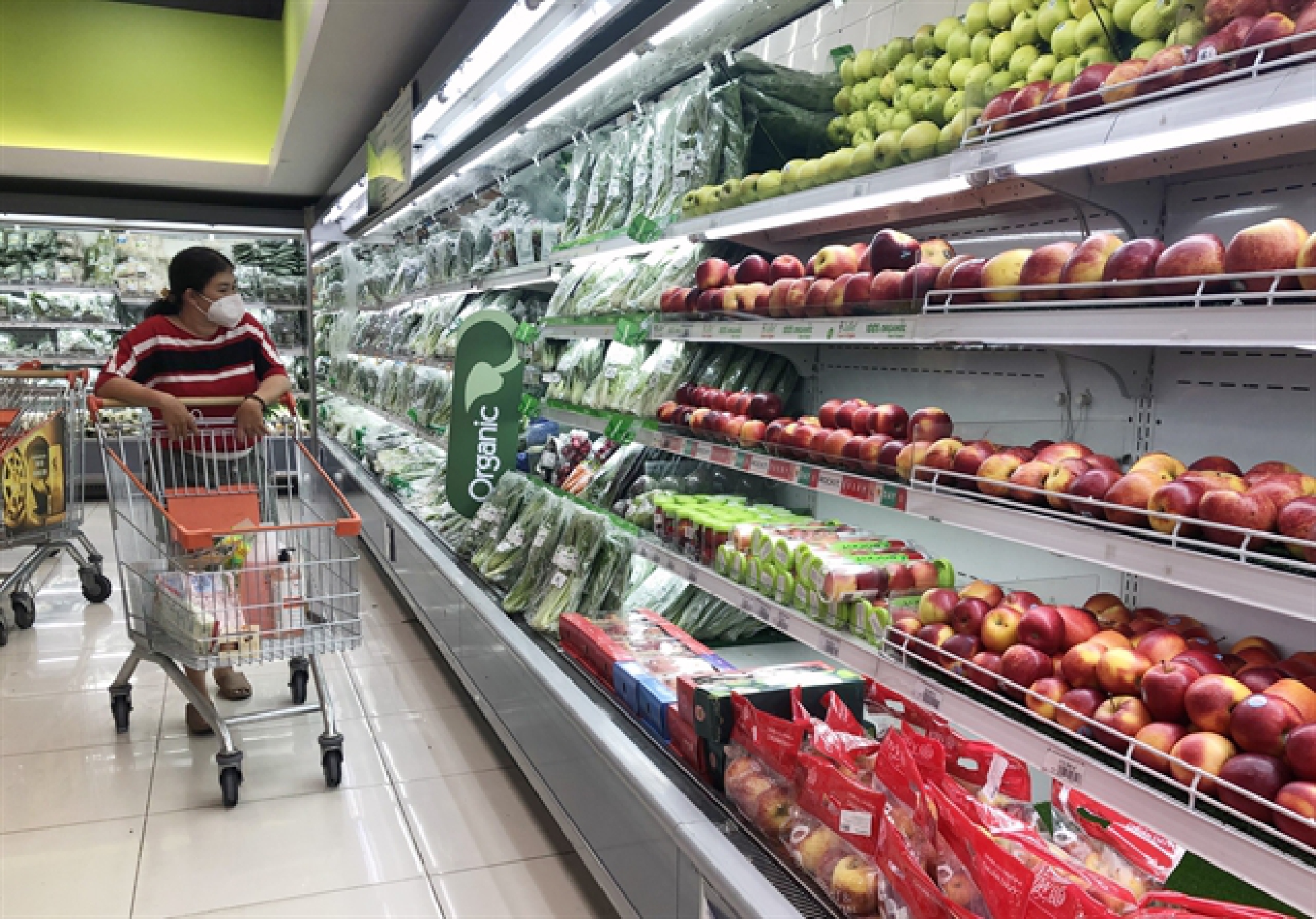
While supermarkets and stores such as Saigon Co.op, Satra, Aeon Mall, MM Mega Market and LOTTE Mart were still running a number of promotions, prices have been reported to increase across the city.
They have been relying on combo sales and promotions to deliver discounts to consumers, especially for clothes, kitchenware, vegetables and fruits.
Nguyễn Ngọc Thắng, director of operations from Co.opmart, said the supermarket chain has been working closely with big brands such as Suntory Pepsico, Coca-Cola, Abbott, Carlsberg Vietnam and Unilever to roll out even more sales and promotions. Notably, Co.opmart has been running discounts of up to 47 per cent on 11,000 consumer staples and up to 50 per cent during the weekends.
Food maker VISSAN has rolled out additional delivery services for more districts in the city as well as Đà Nẵng and Hà Nội. The company’s website, which introduced a delivery service a year ago, served as an effective sales channel during the pandemic.
VissanMart, the corporation’s in-house food retail service, allows consumers to shop for a wide variety of high quality and fresh food products. Consumers may even choose the time of delivery or pick up at their convenience as well as cashless payments, according to a VISSAN representative.
Similarly, other retailers have rolled out their own online sales and delivery services. During the city’s prolonged period of lockdown, online shopping, delivery and electronic payment, all parts of the city’s effort to control the spread of the virus, have become popular among its residents.
Businesses have also realised the benefits of online sales in reducing operational costs including rental fees and wages and in reaching more consumers. — VNS
SINGAPORE – The validity period during which Singapore residents will be considered “fully vaccinated” after their last Covid-19 jab will be reviewed as more data becomes available, the Government has said.
Under the current regulations, a person’s vaccination status expires one year and 14 days after their second dose of the Covid-19 vaccine.
The Ministry of Health (MOH) was responding to a Forum letter published in The Straits Times on Wednesday (Nov 10) in which reader Lynn Tan Gek Lian highlighted how it had stipulated this validity period for a resident’s vaccination status.
MOH said in a response published on Thursday that it regularly reviews evidence from studies in Singapore and abroad on the protection provided by Covid-19 vaccines.
Dr Derrick Heng, MOH’s deputy director of medical services for the public health group, said: “As these studies are ongoing, when enacting the regulations earlier, we had in the interim specified a duration of (one year)… to allow persons who have completed the primary series of their vaccinations to be exempted from vaccination-differentiated safe management measures.”
Ms Tan’s letter had raised concerns over the expiry of the vaccination status, given that most public spaces have rolled out vaccination-differentiation measures. She also highlighted the uncertainty over the longer-term health implications of routine booster shots.
Dr Heng said: “While two doses of the mRNA vaccines provide excellent protection against severe disease, there will be waning protection against infection. Hence MOH recommends all eligible vaccinated persons to receive their booster doses to improve their protection against Covid-19 infection and reduce transmission. This will also further increase protection against severe disease.”
MOH added that as more data becomes available, including on the increase in protection provided by booster doses, the Expert Committee on Covid-19 Vaccination will study the evidence and make its recommendations. The ministry will then review the stipulated time frame.
As at Tuesday, 85 per cent of the population have received two doses of Covid-19 vaccines while 86 per cent have received at least one dose, and 19 per cent have had boosters.
Last month, Reuters reported that Pfizer and its German partner BioNTech said data from a phase three trial demonstrated that their Covid-19 vaccine was highly effective against the virus, including the Delta variant.
Pfizer had said its vaccine’s efficacy drops over time, citing a study that showed 84 per cent effectiveness from a peak of 96 per cent four months after a second dose.
South Korea temporarily lowered fuel taxes Friday in an effort to ease the impact of surging oil prices on the countrys consumer inflation and peoples lives.
Government officials said the 20 percent reduction in taxes on gasoline, diesel and liquefied petroleum gas (LPG) will remain in place for six months until the end of April next year.
Under the move, the fuel tax on gasoline drops to 656 won ($0.55) per liter from 820 won, with that on diesel falling to 466 won from 582 won. Taxes account for around 40 percent of domestic gasoline prices.
Industry watchers said it will likely take a couple of weeks for local gas stations to reflect the lowered taxes in their prices.
Local petrol stations are notorious for being quick in raising prices during an international oil cost hike and slow in bringing down prices when crude costs less.
In late October, the government and the ruling party agreed to cut fuel taxes as international oil prices soared to a near three-year high amid the global economic recovery from the pandemic.
Prices of Dubai crude, South Korea’s benchmark, hit $83.89 per barrel on Oct. 18, up from an average of $72.63 in September.
Asia’s fourth-largest economy depends on imports for almost all of its energy needs.
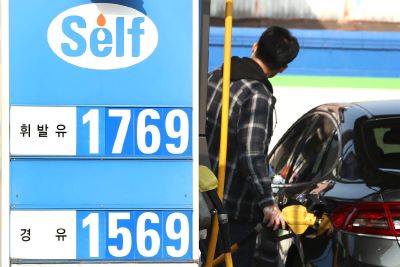
The average gas price surged to 1,810 won per liter Thursday, up 116 won from Oct. 13, according to data compiled by the state-run Korea National Oil Corp.
South Korea is faced with rising consumer inflation. Consumer prices rose 2.5 percent on-year in September due to high prices of farm and oil products, growing more than 2 percent for the sixth straight month.
The fuel tax cut is predicted to reduce the government’s tax revenue by 2.5 trillion won ($2.1 billion) over the six months, while driving down the country’s consumer inflation rate by 0.33 percentage point.
South Korea last cut fuel taxes by 15 percent in November 2018 for six months as oil prices exceeded $80 per barrel. The tax benefits ended in August 2019 after being extended for several rounds. (Yonhap)
Another four of Cambodia’s lost cultural treasures have been reclaimed by the Kingdom and are on their way home – this time from the Denver Museum in the US – thanks to a memorandum of understanding between the two countries, according to the Ministry of Culture and Fine Arts.
In a press release on November 11, the ministry said the office of the US Attorney for the Southern District of New York and Homeland Security Investigations jointly filed a civil forfeiture action against the Denver Museum and then seized the four Cambodian antiquities.
The ministry said the four priceless artifacts that have been recovered are a Khmer sandstone sculpture depicting a standing Prajnaparamita, a standing Surya, an iron-age bronze bell and a sandstone lintel depicting a sleeping Vishnu and the birth of Brahma.
The standing Prajnaparamita dates back to the late 12th or early 13th century and it depicts the bodhisattva of wisdom that is the spiritual mother of all those who achieve enlightenment like Buddha.
“According to reports from witnesses, this Prajnaparamita statue was found in a rice field near an ancient temple in Takeo province not far from Tonle Bati,” the ministry said.
The sandstone standing Surya statue dates back to the 7th or 8th century and it depicts the Sun God of Hinduism. Citing reports from witnesses, the ministry said this statue is believed to have been taken from a temple on Mount Kulen in Siem Reap province. It is extremely rare – one of just a few examples of Surya sculptures known to still exist.
The iron-age bronze bell was found as part of a set of 12 bells in an area that straddles Pursat and Battambang provinces. The bells were arranged in a circle around a central pillar.
Scholars believe that they were crafted and tuned to create a special effect when they were all rung together, but it has been impossible to test that theory as some of the bells remain missing.
The sandstone lintel of the sleep of Vishnu and birth of Brahma dates back to the 7th or 8th century. It is similar to the temple lintels at the Sambor Prei Kuk temple complex in Kampong Thom province, but it comes from a temple on Mount Kulen.
“We are thrilled to be welcoming home these precious treasures and we are very pleased with our ongoing collaboration with the US government,” said culture minister Phoeurng Sackona.
The minister said the recovery of these four priceless heritage objects was possible today because Cambodia has achieved peace and it will continue to be a top priority of the government to secure the return of the “souls of our Khmer ancestors that departed Cambodia during the time of war and conflict”.
“We encourage all museums and private collectors in possession of any Khmer cultural properties to reach out to the ministry, share with us your provenance documentation and consider moving forward and voluntarily repatriating to Cambodia its looted cultural treasures.
“Because we will continue to gather extensive evidence on the looting of our treasures and the improper possession of them by others,” she said.
Sackona also praised the US government, the Office of the US Attorney for the Southern District of New York and US Homeland Security Investigations for their diligent support of Cambodia’s mission to reclaim its stolen cultural heritage.
The minister also extended special thanks to private attorneys Bradley Gordon of Edenbridge Asia and Steven Heimberg of Heimberg Barr LLP for the work they are doing in this area on behalf of the Cambodian people, the press statement said.
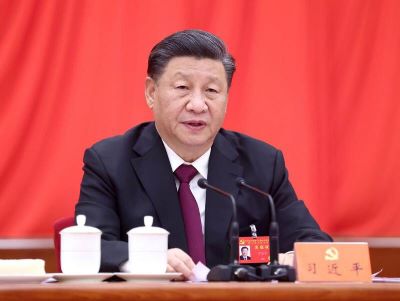
BEIJING – A high-profile meeting of the Communist Party of China (CPC) has adopted a landmark resolution on the major achievements and historical experience of the CPCs 100 years of endeavors, according to a communique released on Thursday.
The resolution was reviewed and adopted at the sixth plenary session of the 19th CPC Central Committee, held in Beijing from Nov 8 to 11, said the communique of the plenum.
Xi Jinping, general secretary of the CPC Central Committee, made an important speech at the session, which was attended by 197 members and 151 alternate members of the CPC Central Committee.
The session heard and discussed a work report Xi delivered on behalf of the Political Bureau of the CPC Central Committee. He also explained the draft of the resolution to the session.
The session also reviewed and passed a resolution on convening the 20th National Congress of the CPC in the second half of 2022 in Beijing.
Since its founding in 1921, the Party has made seeking happiness for the Chinese people and rejuvenation for the Chinese nation its mission, said the communique.
In the period of the new-democratic revolution, Chinese communists, with Comrade Mao Zedong as their chief representative, adapting the basic tenets of Marxism-Leninism to China’s specific realities, established Mao Zedong Thought, which charted the correct course for securing victory in the new-democratic revolution, according to the communique.
In the period of socialist revolution and construction, Chinese communists, with Comrade Mao Zedong as their chief representative, put forward a series of important theories for socialist construction. China was transformed from a poor and backward Eastern country with a large population to a socialist country, according to the communique.
During the new period of reform, opening up, and socialist modernization, after the third plenary session of the 11th Central Committee, Chinese communists, with Comrade Deng Xiaoping as their chief representative, by focusing on the fundamental questions of what socialism is and how to build it, established Deng Xiaoping Theory. The reform and opening up drive was launched, and socialism with Chinese characteristics was successfully founded.
After the fourth plenary session of the 13th Central Committee, Chinese communists, with Comrade Jiang Zemin as their chief representative, deepened the understanding of what socialism is and how to build it, and what kind of Party to build and how to build it. On this basis, they formed the Theory of Three Represents. Socialism with Chinese characteristics was successfully launched into the 21st century.
After the 16th National Party Congress, Chinese communists, with Comrade Hu Jintao as their chief representative, united and led the whole Party and the entire nation in advancing practical, theoretical, and institutional innovation during the process of building a moderately prosperous society in all respects, and formed the Scientific Outlook on Development. They succeeded in upholding and developing socialism with Chinese characteristics under new circumstances, according to the communique.
Following the Party’s 18th National Congress, socialism with Chinese characteristics entered a new era. Chinese communists, with Comrade Xi Jinping as their chief representative, have established Xi Jinping Thought on Socialism with Chinese Characteristics for a New Era.
Xi Jinping Thought on Socialism with Chinese Characteristics for a New Era is the Marxism of contemporary China and of the 21st century. It embodies the best of the Chinese culture and ethos in our times and represents a new breakthrough in adapting Marxism to the Chinese context. The Party has established Comrade Xi Jinping’s core position on the Party Central Committee and in the Party as a whole and defined the guiding role of Xi Jinping Thought on Socialism with Chinese Characteristics for a New Era. This reflects the common will of the Party, the armed forces, and the Chinese people of all ethnic groups, and is of decisive significance for advancing the cause of the Party and the country in the new era and for driving forward the historic process of national rejuvenation, according to the communique.
Since the Party’s 18th National Congress, the Central Committee’s authority and its centralized, unified leadership have remained robust and, through revolutionary tempering, the Party has grown stronger, according to the communique.
China’s economic development has become much more balanced, coordinated, and sustainable, and the Party has consistently promoted broader and deeper reform across the board.
The Party has actively developed whole-process people’s democracy and made comprehensive efforts to improve the institutions, standards, and procedures of China’s socialist democracy.
The system of socialist rule of law with Chinese characteristics has constantly been improved, and a sweeping and fundamental shift has been seen in the ideological domain.
The people’s lives have improved in all aspects, and the environmental protection endeavors have seen sweeping, historic, and transformative changes.
The people’s military has been through an all-around revolutionary restructuring in preparation for the next stage, according to the communique.
The CPC Central Committee has made moves to restore order in Hong Kong and ensure a turn for the better in the region; and firmly opposes foreign interference and maintains the initiative and ability to steer cross-Straits relations.
With regard to foreign affairs, the major-country diplomacy with Chinese characteristics has been advanced on all fronts, with the concept of a human community with a shared future becoming a banner leading trends of the times and human progress, the communique added.
The Party’s endeavors over the past century have opened up the right path for achieving rejuvenation of the Chinese nation, enabling China to complete a process of industrialization that took developed countries several centuries in the space of mere decades, and bringing about the two miracles of rapid economic growth and enduring social stability.
The Party has led the people in great endeavors and accumulated valuable historical experience over the past century. This covers the following ten aspects: upholding the Party’s leadership, putting the people first, advancing theoretical innovation, staying independent, following the Chinese path, maintaining a global vision, breaking new ground, standing up for ourselves, promoting the united front, and remaining committed to self-reform, said the communique.
It was stated at the session that “to accomplish the Party’s mission, we should never forget why we started.”
The whole Party must uphold Marxism-Leninism, Mao Zedong Thought, Deng Xiaoping Theory, the Theory of Three Represents, and the Scientific Outlook on Development and fully implement Xi Jinping Thought on Socialism with Chinese Characteristics for a New Era, the communique said.
The entire Party must forever maintain close ties with the people and act in line with the people-centered philosophy of development, it added.
The Central Committee calls upon the entire Party, the military, and all Chinese people to rally more closely around the Central Committee with Comrade Xi Jinping at its core, the communique said, vowing to make tireless efforts to realize the Second Centenary Goal and the Chinese Dream of national rejuvenation.
SINGAPORE – HSBC Singapore on Thursday (Nov 11) launched a US$200 million (S$270 million) fund to lend support to high-growth tech companies in the Republic to expand in South-east Asia and globally.
Car marketplace Carro – a home-grown unicorn, or a start-up valued at US$1 billion or more – is among the bank’s first clients to tap the fund.
The fund will mainly back up enterprises tapping opportunities within the Asean region’s growing digital economy – in areas such as e-commerce, artificial intelligence (AI) and robotics, fintech and payment platforms, disruptive telecommunications as well as ride hailing and transport.
It will provide loans to companies that have already received funding from strategic investors, including venture capital or private equity firms, and passed the proof-of-concept phase.
Ms Regina Lee, HSBC Singapore’s head of commercial banking, said the Republic has a vibrant tech culture with firms seeking to fill digital gaps among consumers and businesses.
“To succeed, these businesses need to scale up quickly, often including for customer reach, employees and data capabilities. The fund aims to provide this specialised finance to support the next generation of growth companies in South-east Asia,” she added.
Carro’s chief financial officer Ernest Chew said: “Covid-19 has accelerated e-commerce and so we must keep investing to ensure the online experience is more enriching than the in-person buying experience.”
The company was founded in 2015 and has since raised more than US$400 million in equity.
“HSBC’s fund has provided us with capital in addition to our existing equity, enabling us to better serve the underserved used car segment with AI and tech,” he added.
HSBC will allow nominated clients to access its full range of banking services, in areas such as cross-border cash management, foreign exchange as well as private and public capital markets.
These solutions are usually available to “higher revenue generating firms”, said the bank, adding that it will also help to connect companies with peers and industry leaders through events.
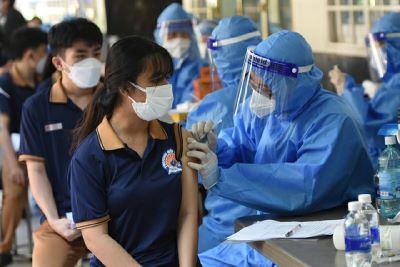
HÀ NỘI — Nearly 792,000 children from 12-17 years old in Hà Nội are expected to be vaccinated against COVID-19 in the fourth quarter of 2021 and first quarter of 2022.
Under a plan jointly developed by the city Departments of Health, Education and Training, and Labour, Invalids and Social Affairs, the children will get the shots right after the city receives the vaccines.
The scheme will be implemented in different phases with priority given to older children. Currently, the city has 519,547 children from 12 to under 16 years old and 272,374 between the age of 16 to under 18 years old.
Adjustments in the vaccination time and priorities will be made depending on the developments of the pandemic in the city.
Along with vaccination stations in hospitals and healthcare stations, mobile vaccination facilities will be set up at schools and localities.
The objective of the scheme is to get 95 per cent of eligible children aged from 12-17 years old vaccinated against COVID-19, thus minimising infections and death toll due to the pandemic.
Southern Bà Rịa-Vũng Tàu Province on Wednesday announced a plan to vaccinate nearly 119,000 children aged 12-17 from Friday.
Southern Đồng Nai Province has started to inoculate children from 12-17 years old. About 300,000 local children will be vaccinated. — VNS
Netflix hit series “Squid Game” will return with a second season.
“Discussion about a second season is indeed in progress, but nothing has been confirmed yet,” a Netflix official told The Korea Herald on Wednesday morning.
Earlier, Hwang Dong-hyuk, the director and writer “Squid Game,” had said that there would be a second season of the dystopian drama during a special screening and Q&A with reporters in Los Angeles on Tuesday.
The creator told the reporters through a translator that there will be “Squid Game Season 2.”
“So there has been so much pressure, so much demand and so much love for a second season. So I almost feel like you leave us no choice. I will say there will indeed be a second season. It’s in my head right now. I’m currently in a brainstorming stage,” the Associated Press quoted Hwang as saying during Netflix’s red carpet event in Los Angeles.
The director believed that it was too early to say “when and how that’s going to happen,” but hinted at the return of actor Lee Jung-jae as the protagonist.
Hwang’s Netflix debut series “Squid Game” revolves around hundreds of cash-strapped players accepting an unexpected invitation to compete in six different children’s games for grand prize of 45.6 billion won ($39 million).
The nine-part thriller became a global sensation and the streaming platform’s biggest series ever, surpassing 100 million views. The popularity led “Squid Game” to become a first Korean series to reach the No. 1 slot on Netflix US and topped Netflix’s global TV show lists for more than 20 days.
As the world watched the Korean series, the dystopian thriller spawned many new trends around the world.
Items from the drama caught the attention of viewers, resulting in dalgona-making kits being sold on eBay. Dalgona, a type of Korean honeycomb, was enjoyed by countless TikTok users.
The green tracksuit and pink jumpsuit inspired numerous Halloween costumes this year.
The games, enjoyed by Korean children in the 1970s and the 1980s, attracted viewers across generations who created parodies and memes in both online channels and television programs in Korea and countries around the world.
Netflix announced in October that “Squid Game” was watched by 111 million households around the world.
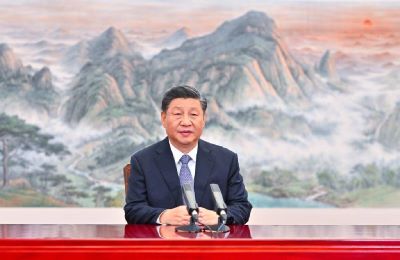
BEIJING — Chinese President Xi Jinping on Thursday urged the Asia-Pacific region to face up to the responsibility of the times, be in the drivers seat, and strive hard to meet the goal of building an Asia-Pacific community with a shared future.
Xi made the remarks while delivering a keynote speech at the Asia-Pacific Economic Cooperation CEO Summit via video.
At present, COVID-19 is still ravaging the world, and the journey to global economic recovery remains a difficult and tortuous one, Xi said.
He urged the region to make all-out efforts to fight COVID-19. “At this trying time, it is all the more important that we should stay confident, keep a steady hand on the tiller, and forge ahead with determination,” Xi said.
Xi called for openness and cooperation in the Asia-Pacific region. “We should all be broad-minded, follow the underlying trend of the times and proactively expand opening-up.”
The Asia-Pacific region should “advance trade and investment liberalization and facilitation, keep industrial and supply chains stable and functioning, and promote the orderly flow of resources and inputs to boost economic recovery and achieve interconnected development,” he said.
While urging the region to be forward-looking and move ahead, Xi said that the Asia-Pacific region cannot and should not relapse into the confrontation and division of the Cold War era.
In terms of green transition, he urged the region to follow the principle of common but differentiated responsibilities and deliver on what was agreed upon in the Paris Agreement on climate change and at the 15th Meeting of the Conference of the Parties to the Convention on Biological Diversity.
“Working together, all of us can embark on a path of green, low-carbon and sustainable development,” Xi said.
Talking about innovation, Xi called for efforts to speed up scientific and technological innovation and institutional innovation, promote the commercialization of scientific and technological advances, and foster new drivers of growth.
“We need to scale up cooperation between member economies of the Asia-Pacific on scientific and technological innovation, and foster an open, fair, equitable and non-discriminatory environment for the development of science and technology,” Xi said.
China has attained the goal of fully building a moderately prosperous society within the set time frame, secured a historic success in eradicating absolute poverty, and embarked on a new journey toward fully building itself into a modern socialist country. “This will create greater opportunities for our region,” Xi said.
He pledged that China will remain firm in advancing reform and opening-up so as to add impetus to economic development in the Asia-Pacific.
China is committed to building a high-standard market system and will work to make new progress in reforming important areas and key links. The country will pursue high-standard institutional opening-up, and continue to improve its business environment, Xi said.
The country will work to cement the foundation for long-term development of the Chinese economy and better support businesses from both the Asia-Pacific and the wider world in investing and operating in China, Xi said.
He stressed that China will advance green transition on all fronts and make its due contribution to boosting ecological conservation in the Asia-Pacific and beyond.
“China will strike a balance between low-carbon transition and ensuring the living needs of its people, and between development and carbon reduction, and will achieve carbon peak and carbon neutrality within the time frame we set,” Xi said.
He underscored that China will stay committed to promoting win-win cooperation and contribute to the economic development of the Asia-Pacific.
China will continue to practice true multilateralism, take an active part in global economic governance and promote the building of an open world economy, Xi added.
China will also inject impetus into economic recovery and sustainable development in the Asia-Pacific region, and strive to build a global community of development with a shared future, he noted.
China and the United States have signed a joint declaration to address the global climate crisis during the next decade, marking one of the most significant breakthroughs yet to come out of the United Nations Climate Change Conference of the Parties, or COP26, in Glasgow, Scotland.
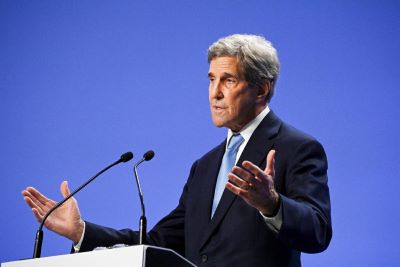
The declaration, which is called the US-China Joint Glasgow Declaration on Enhancing Climate Action in the 2020s, was announced on Wednesday evening by China’s special climate envoy, Xie Zhenhua, and US special presidential envoy for climate, John Kerry.
The move took many onlookers in Glasgow by surprise, with the media alerted to a joint news conference just an hour before it started. Several world leaders have labelled this year’s COP as the most important since the Paris Agreement was signed in 2015, and a US-China declaration is sure to send a strong signal to all delegations in attendance.
Xie said that the problem of global warming is “increasingly urgent and severe” and that climate change threatens an “existential crisis”.
“In the area of climate change, there is more agreement between the US and China than divergence, making it an area with huge potential for our cooperation,” Xie said. “As two major powers, both China and the US shoulder international responsibilities and obligations. We need to think big.”
Kerry said the current time represents a “critical decade” in the fight to combat global warming.
“The US and China have no shortage of differences, but on climate, cooperation is the only way to get things done,” Kerry said. “We cannot reach our goals without countries working together, and China and the US in particular, as the two largest emitters in the world, both have to help show the way.”
In the joint declaration, both sides reaffirmed their commitment under the Paris Agreement to “hold the global average temperature increase to well below 2 C and to pursue efforts to limit it to 1.5 C”.
The two countries also agreed to cooperate closely during the next 10 years on a range of climate-related issues, including methane emissions, fossil fuel reduction, and clean energy technologies.
UN Secretary-General Antonio Guterres called the declaration an “important step in the right direction”.
“I welcome today’s agreement between China and the US to work together to take more ambitious climate action in this decade,” Guterres said on Twitter. “Tackling the climate crisis requires international collaboration and solidarity.”
European Commission Vice-President Frans Timmermans said on Twitter that bilateral cooperation between the US and China “should boost negotiations at COP26”.
China and the US said they intend to establish a Working Group on Enhancing Climate Action in the 2020s, which will meet regularly to “address the climate crisis and advance the multilateral process, focusing on enhancing concrete actions in this decade”.
In the declaration, the US cited domestic targets to reduce methane emissions, and China announced its own plans for a “comprehensive and ambitious National Action Plan on methane”, aiming to achieve significant emissions control and reductions in the 2020s.
Also on Wednesday, COP26 President Alok Sharma published a first draft of the proposed Glasgow agreement, which parties will aim to reach at this year’s conference, after further negotiations.
The draft called on countries to accelerate the phasing out of both coal and fossil fuel subsidies, neither of which has been mentioned in previous COP agreements. The document also included stronger language on the warming target of 2 to 1.5 degrees, which was set in Paris six years ago.
The draft “recognizes that the impacts of climate change will be much lower at the temperature increase of 1.5 degrees Celsius compared to 2 degrees, and resolves to pursue efforts to limit the temperature increase to 1.5 degrees”.
Wang Yi, a senior scientific advisor in China’s delegation at COP26, told China Daily on Wednesday that adjusting this target could have a disruptive knock-on effect.
“If we decrease the indicator, the target, to 1.5 only, that means we must change the whole Paris Agreement,” Wang said.
Last week special climate envoy Xie said it is important to honor what was decided on in Paris, calling the agreement “science-based, rule-based, inclusive and realistic”.
Sharma said that the draft is not offering decisive language on the target.
“I also want to be clear we are not seeking to reopen the Paris Agreement,” Sharma said on Wednesday. “The Paris Agreement clearly sets out the temperature goal well below 2 C and pursuing efforts towards 1.5 C.”