The price of gold in Thailand on Monday morning was unchanged from the one-time trading price announcement on Saturday.
A9.26am report from the Gold Traders Association showed the buying price of gold bar at THB28,200 per baht weight and selling price at THB28,300, while the buying and selling price of gold ornaments is THB27,697.32 and THB28,800, respectively.
The spot gold price on Monday morning was hovering around US$1,795 (THB59,462) per ounce after Comex gold at close on Friday rose by $14.4 to $1,796.3 per ounce due to support in buying gold as a safe-haven asset amid concerns about rising US inflation.
Krungsri Securities forecast the Stock Exchange of Thailand (SET) Index on Monday would fluctuate between 1,635 and 1,655 points.
It said the index gained positive sentiment from rising oil price of above US$83 per barrel, the government’s move to lift the curfew in 17 provinces and the Bank of Thailand’s move to relax loan-to-value (LTV) mortgage rule.
“However, the index would be under pressure due to uncertainty the US Federal Reserve signalling it would taper its quantitative easing in November and mass sell-offs of shares after the index hit the resistance line,” Krungsri Securities said.
It also recommended buying of the following companies’ shares as an investment strategy:
▪︎ AOT, AAV, BA, MINT, KBANK, SCB, CPN, CRC, HMPRO, CPALL, AMATA, WHA, MAJOR, BTS and BEM, which benefit from the country reopening.
▪︎ PTT, PTTEP, TOP, PTTGC, SPRC and BCP, which benefit from rising oil price and gross refining margin.
▪︎ GULF, CHG, BCH, BDMS, KCE, PSL and TTA, whose third-quarter profit is expected to grow.
The SET Index rose by 0.28 points or 0.02 per cent to 1,643.70 on Monday morning, witnessing a high of 1,645.91 and a low of 1,643.18 in opening trade.
255 electric vehicles (EVs) have been registered in September, bringing total EV registration in the nine months of 2021 to 1,485 units, increasing 42.4 per cent year on year, according to the Federation of Thai Industries Automotive Industry Club.
“As of September 30, Thailand recorded cumulative number of BEVs (battery electric vehicles) at 3,547 units, increasing 92.56 per cent from the previous year,” said club vice president and spokesman Surapong Pisitpattanapong. “Meanwhile, the number of HEVs (hybrid electric vehicles) was at 180,175 units, increasing 11.29 per cent year on year. Plug-in hybrid electric vehicles (PHEVs) were recorded at 29,401 units, increasing 337.25 per cent year on year.”
For electric motorcycles, the club reported total number of BEVs at 5,548 units, increasing 102.93 per cent year on year, and HEVs at 8,510 units, increasing 31.96 per cent year on year. Lastly, Thailand recorded total 123 electric buses at the end of September, increasing 2.5 per cent from the previous year.
“The government has been supporting the manufacturing of electric buses by domestic factories. We estimated that this year up to 500 units will be produced domestically,” said Surapong.
He further added that the government set the target that by 2027 Thailand will use 282,240 electric vehicles or 26 per cent of total vehicles used in the country, and will manufacturer at least 380,250 electric vehicles, or 17 per cent of total vehicles manufactured in the country.
“The export of electric vehicles and their parts are expected to grow at 5 per cent annually, while the investment in research and development of technology related to electric vehicles is expected to increase by 20 per cent by 2027,” he said. “We also expect to have trained not less than 30,000 skilled personnel in the fields related to electric vehicles and have installed additional 5,000 public fast charge stations for electric vehicles nationwide by 2027.”
TOKYO – Major Japanese companies are putting more focus on the development of femtech-related products and services that help women deal with wellness issues they face.
From moisture-absorbing underwear for use during menstruation and menstrual cups, to items that help women deal with the physical issues that occur during pregnancy or menopause, a wide range of products make use of technology to support women.
In the past decade, femtech goods and services have become popular overseas, mainly in countries in Western Europe and North America. In Japan, the market is growing, centering around goods and services related to menstruation.
A start-up’s online sales of femtech products have been leading the way in Japan, but this year, major companies dealing in clothing and daily goods have entered the market. There is now a broader selection of such goods and services for women.
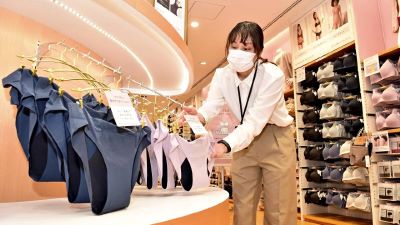
In mid-September, Uniqlo Co. started selling period underwear that can absorb 1-1.5 ounces (30 to 40 milliliters). The triple-layered underwear made with the company’s Airism material is also antibacterial and odor- and water-resistant.
Uniqlo has set the price at $17.50 (1,990 yen), lower than similar products being sold for around $45 (5,000 yen) by major underwear manufacturers.
“There were many requests for the product from customers, and their response after its release was great,” said Tadashi Yanai, chairman and president of Uniqlo operator Fast Retailing Co. “By discovering the needs of people who face various situations, we want to continue developing better products.”
According to a public relations official at the company, the product has been well-received by people across a wide age range. A typical comment is along the lines of, “As the material feels smooth and comfortable, I have no sense of discomfort, even if I wear it all day long.”
Unicharm Corp. has developed a menstrual cup and began selling the product on a limited basis in late April. A 30-year-old from Chiba Prefecture, who started using the product after giving birth, said: “I can’t even feel it. Daily life during my period has become very comfortable.”
New types of services related to femtech have also started. From this month, the Prince Park Tower Tokyo has been offering an overnight package for women to heal mentally and physically through listening to infrasound or bathing in a natural hot spring.
The global femtech market is projected to reach $50 billion (5.7 trillion yen) in 2025, according to U.S. market research firm CB Insights, which is why major companies are being drawn to this sector.
Another reason has to do with productivity in Japan. According to the Economy, Trade and Industry Ministry, the annual economic loss due to menstruation is $6 billion (682.8 billion yen).
“Pushing ahead with the improvement of the working environment for women will lead to enhanced productivity at businesses,” the ministry said in a presentation material.
In Japan, women tend to avoid discussing topics related to their physical health such as menstruation. Many women often put up with their period-related symptoms, considering it normal to be in pain.
According to a labor force survey taken by the Internal Affairs and Communications Ministry, however, the employment rate of women ages 15 and over was 51.8% in 2020, up 5.5 percentage points from 2010. As the number of working women has increased and topics such as menstruation are more visible than before via social media and the like, women’s interest in femtech goods and services has grown.
As the economy ministry anticipates that the femtech sector has the potential to become a growth industry, in June it began extending support. For instance, it has designated 20 business schemes with femtech-related service projects to be eligible for government subsidy.
For many people in Japan, their attention was first drawn to femtech thanks to Fermata Inc., which was founded in October 2019. The company started selling only femtech-related products online. This proved so popular that it began selling some of its items at a store in the Roppongi district of Tokyo in 2020.
That year, when various femtech-related products came on the market, was dubbed the “first year of femtech in Japan.” This year as well, the trend continues.
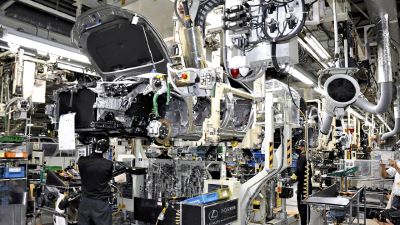
Japanese automakers expect production to be down by at least 1.3 million units in fiscal 2021 due to the global semiconductor shortage and the covid-19 pandemic in Southeast Asia, according to eight major manufacturers.
The cut is equivalent to 5% of the automakers’ total annual production in fiscal 2020 when they produced 23.35 million vehicles.
Under Nissan Motor Co.’s new production plan, the company will reduce its global production for October and November by about 30% from the planned level. The company did not indicate the specific number of units.
The company said it could not secure the parts needed to assemble finished vehicles due to a shortage of semiconductors and stalled production of auto parts in Southeast Asia.
At the end of July, Nissan indicated that it expected to cut production by 250,000 units in total this fiscal year, and Nissan executives said that there was a strong possibility that production would fall further due to the pandemic situation in Southeast Asia.
Seven other automakers are also cutting production for the same reason.
On Oct. 15, Toyota Motor Corp. announced it would cut global production in November by between 100,000 and 150,000 units. The automaker has announced several production cuts since August, lowering its full-year production plan from the initial 9.3 million units to around 9 million units.
In August, Honda Motor Co. lowered its forecast for global sales for the current fiscal year by 150,000 units to 4.85 million units.
The company has announced a series of domestic production cuts since August, which may further lower its sales volume forecast.
Honda has said it is minimizing the impact, but that the situation will continue to be uncertain.
Suzuki Motor Corp. expects the impact of the semiconductor shortage to continue throughout the current fiscal year, and expects to reduce production by 350,000 units, the largest among the eight automakers.
Since the second half of last year, Japan, the U.S. and China have seen rebounds in automobile demand, which had dipped following the outbreak of the COVID-19 pandemic.
If the production cuts continue, Japanese automakers might miss out on the bump in demand.
The automobile sector is a key industry that accounts for about 20% of all domestic manufacturing shipments.
From steel manufacturing to parts makers, a wide range of industries are involved in the production of vehicles, supporting Japan’s manufacturing sector.
Large-scale production cuts will have a negative impact on the performance and employment situation of such companies, potentially putting the brakes on the economy’s pandemic recovery.
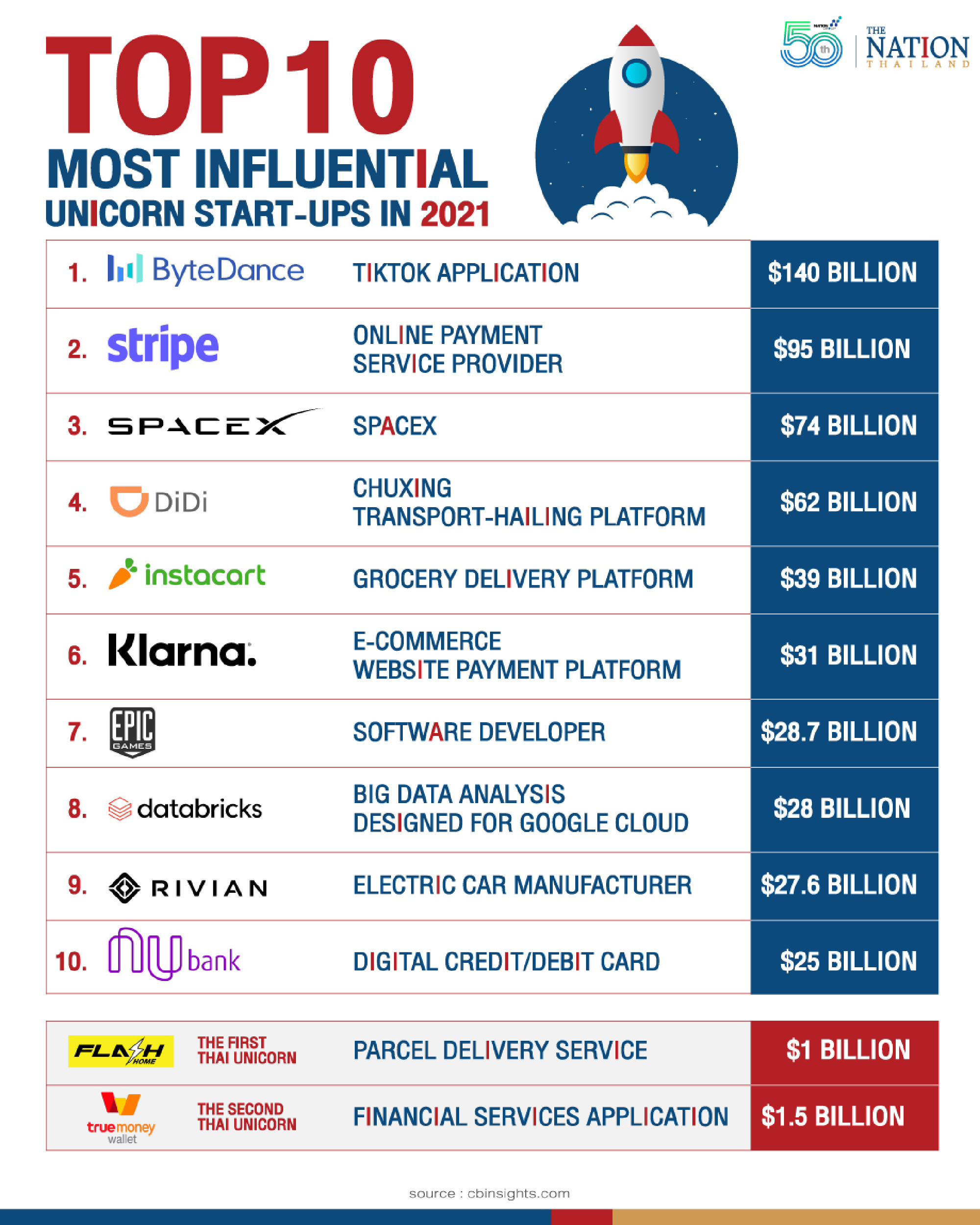
In today’s world, start-ups are playing such a major role both internationally and domestically that they could change the very face of the global economy.
These new ventures support the IT business, which has rapidly expanded and generated a large amount of income. Google, Facebook and Youtube, for instance, began life as start-up businesses in the US.
However, not many start-up companies have seen sustained growth: as many as 90 per cent have failed to survive in the first three years.
Start-ups have the potential to reach the “unicorn” level, where they can be valued at more than US$1 billion (THB33 billion).
Despite the Covid-19 pandemic, many businesses both inside and outside the country have soared to become unicorns.
Total spending through the government’s “Khon La Khrueng” (Let’s Go Halves) co-shopping subsidy scheme came in at 105.44 billion baht via 25.32 million members as of October 21, the Finance Ministry said on Friday.
This is the third phase of the scheme.
Under the scheme, members can buy food, beverage and basic necessities at half the price when paying through the Pao Tang application at participating shops. The total subsidy is capped at 3,000 baht per person, who can spend up to 150 baht per day.
“Of the total spending via Khon La Khrueng, 53.58 billion came from registrants and 51.85 billion was covered by the government,” Finance Ministry spokesman Pornchai Theerawet, who is also Fiscal Policy Office director, said.
‘Let’s Go Halves’ phase 3 spending exceeds THB100 billion
“The scheme will run until December 31, and people can register at www.คนละครึ่ง.com between 6am and 10pm daily until the 28 million limit for registrants is reached.”
Meanwhile, the other shopping stimulus scheme, “Ying Chai Ying Dai” (Spend More, Get More) recorded total spending of Bt2.7 billion through 479,293 participants as of October 21.
Under this scheme, eligible registrants are granted an e-voucher of up to 7,000 baht that can be used via the Pao Tang application at participating shops. People can sign up for this scheme at www.ยิ่งใช้ยิ่งได้.com between 6am and 10pm every day until the 1 million registrants limit is reached.
This campaign will also run until the end of December.
Ministry of Agriculture and Cooperatives is planning to connect the Northern railway with China’s Yuxi–Mohan railway to expand trade routes to China, Asia and Europe.
“We are working to connect the northern train route at Chiangkhong Customs Checkpoint in Chiang Rai province with the Yuxi–Mohan railway, also known as the Yumo railway,” Alongkorn Polabutr, adviser to the agriculture minister on Thursday. “The project will open up new trade routes in several regions including all provinces of China, East and Central Asia, the Middle East, Russia and Europe.”
The Yumo railway is a railway under construction in Yunnan Province of southwest China. The line is slated to run 503.9 km. from Yuxi in central Yunnan to Mohan, a town in Mengla County on the border with Laos in the Xishuangbanna Dai Autonomous Prefecture of southern Yunnan. Once connected to the railway to be built in Laos, the Yumo railway would become part of the Kunming-Singapore railway and carry traffic across the Greater Mekong Subregion.
The ministry also planned to use the Khorgos Gateway Dryport in Kazakhstan as a distribution hub for agricultural and food products from Thailand, as well as implementing low-cost air cargo system at international airports in Northern provinces to distribute Thai products to global markets.
“The railway connection project, along with the Northern Thailand Food Valley programme, are part of the initiative to promote agriculture, industry and export in the Northern region given by Minister of Agriculture and Cooperatives Chalermchai Sri-on,” added Alongkorn.
The Stock Exchange of Thailand (SET) Index closed at 1,643.42 on Thursday, up 5.87 points or 0.36 per cent. Transactions totalled 71 billion baht with an index high of 1,646.50 and a low of 1,639.16
The index gained for the second day running after rising by 7.16 points or 0.44 per cent on Wednesday.
In the morning session, Krungsri Securities forecast the SET Index on Thursday would fluctuate between 1,630 and 1,650 points.
It explained that the index gained positive sentiment from rising crude price of above US$83 per barrel, plus speculations in stocks whose third-quarter performance is expected to improve.
However, it advised investors to beware of institutions’ mass sell-offs of shares to adjust their portfolio and escape risks during three day holidays as it would pressure the index.
The 10 stocks with the highest trade value today were KBANK, BBL, PTT, BANPU, SPALI, SCB, LH, PTTEP, AOT and SCC.
Other Asian indices were mixed: Japan’s Nikkei Index closed at 28,708.58, down 546.97 points or 1.87 per cent. China’s Shanghai SE Composite closed at 3,594.78, up 7.78 points or 0.22 per cent, while the Shenzhen SE Component closed at 14,444.86, down 7.39 points or 0.051 per cent. Hong Kong’s Hang Seng Index closed at 26,017.53, down 118.49 points or 0.45 per cent. South Korea’s KOSPI Index closed at 3,007.33, down 5.80 points or 0.19 per cent. Taiwan’s TAIEX Index closed at 16,889.51, up 1.69 points or 0.010 per cent.
The price of gold rose by THB150 in morning trade on Thursday.
A9.25am report from the Gold Traders Association showed the buying price of gold bar at THB28,150 per baht weight and selling price at THB28,250, while the buying and selling price of gold ornaments is THB27,636.68 and THB28,750, respectively.
At close on Wednesday, the buying price of gold bar was THB28,000 per baht weight and selling price THB28,100, while gold ornaments were THB27,500.24 and THB28,600, respectively.
The spot gold price on Thursday morning was hovering around US$1,788 (THB59,665) per ounce after Comex gold at close on Wednesday rose by $14.4 to $1,784.9 per ounce due to support from the appreciation of the US dollar and buying gold as a safe-haven asset amid concerns about US inflation.






 ‘Let’s Go Halves’ phase 3 spending exceeds THB100 billion