Most credit card holders have resumed paying off what they owe after a three-month debt moratorium expired at the end of June, credit card companies report.
Krungthai Card Plc (KTC)’s president Rathian Srimongkol said that 100 of its cardholders had applied to enter the debt suspension scheme but 80 per cent had now returned to paying their debts as usual.
He forecast that customers’ debt default situation would continue to improve over the next six months.
Meanwhile, Ayudhya Capital Services Co’s managing director Nayanee Peaugkham said that 90 per cent of customers who had opted for debt suspension were back paying their debts as normal.
By Special To The Washington Post · Jon Marcus · NATIONAL, EDUCATION
Stately and historical Power Street in Providence, R.I., feels sedate at the busiest of times, but on a Friday in the midst of the pandemic, it was as silent as a stopped clock.
Then, over College Hill, came a scruffy caravan of vehicles hung with protest signs, blaring horns and blasting the Woody Guthrie lyrics of the labor movement ballad “Union Maid.” (“I’m sticking to the union ’til the day I die.”)
Behind the wheels were graduate students from Brown University, trying to get the attention of the school’s president, Christina Paxson, with this noisy drive-by of her official red-brick, white-trimmed 1922 mansion set behind walls of stone and wrought iron.
The disruption of this genteel neighborhood exemplified the growing anger of students like these, who, at Brown and elsewhere, have been demanding higher stipends and better benefits in exchange for the work they do as teaching and research assistants.
Before the coronavirus pandemic, there seemed little chance they would get anywhere. Contract and collective bargaining negotiations had been dragging on for years at the few universities that would entertain them; other schools refused to recognize graduate worker unions at all. The Trump administration’s National Labor Relations Board, or NLRB, had approved a policy change effectively denying graduate workers at private universities the automatic right to unionize. Graduate teaching assistants in California who staged a wildcat strike were summarily fired at the beginning of March.
But quietly, and overshadowed by everything else that has been happening, graduate students in the last few months have won surprising victories that are the culmination of decades of effort. They and others chalk this up, at least in part, to universities’ need for their labor in what promises to be a tumultuous fall.
Four private universities – American, Brown, Georgetown and Harvard – have reached contract deals with their graduate workers since the end of January. That doubles the number of private institutions at which graduate unions now have contracts. (The others are Brandeis, Tufts, the New School and New York University.)
Columbia wrapped up its first-ever contract with postdoctoral students and is in talks with its other graduate workers. Hard-fought collective bargaining agreements have been approved during the pandemic at public universities, too, including Oregon State University.
Meanwhile, graduate students at more than 75 universities in the United States and Canada have for the first time organized themselves into a loose alliance demanding better pay and protections, driven by anger over incidents such as the firings in California and new momentum from the recent unexpected successes.
“There’s this huge synergy because people are realizing what we can actually accomplish,” said Kaitlyn Hajdarovic, the graduate students’ bargaining committee co-chair at Brown, where she is a research assistant and doctoral student in neuroscience.
Though none of the universities would answer the question of why they have agreed now, of all times, to long-resisted contracts with their graduate students, independent experts say the motivations include politics and public relations.
The schools “don’t want to look bad, and they especially don’t want to look bad with regard to their graduate students in the midst of a pandemic and a recession,” said Gary Rhoades, the director of the Center for the Study of Higher Education at the University of Arizona.
Graduate students have taken advantage of that fear with such spectacles as the noisy drive-by at Brown. There was also a car and bicycle protest outside the lead negotiator’s house at Oregon State, complete with a trumpeter playing improv jazz and military marches, and a campaign called Chop from the Top demanding pay cuts for top administrators to avert layoffs for the lowest-paid workers.
“If I’m in those administrations, my sense would be, ‘Let’s take care of this issue. We’ve got so much other stuff going on right now, this is an easy one,’ ” Rhoades said.
Public support for graduate workers was evident when, in March, the University of California at Santa Cruz dismissed more than 40 graduate teaching assistants for striking and withholding grades to demand a cost-of-living raise. Even though the students were in violation of a no-strike clause in their contract, the firings triggered protests across the University of California system. (UC-Santa Cruz in July announced that it will let the fired students reapply for jobs.)
And when Trump appointees on the NLRB ruled that graduate research and teaching assistants should be considered primarily students, not workers – reversing their Obama-era right to unionize – “that mobilized even more people, because the battle lines were clear,” Rhoades said.
“The larger political environment is catalyzing the movement and makes management more willing to come to the table and acknowledge that they don’t want to be seen as being in bed with the Trump administration.”
Graduate students who reached contract deals in the last few months speculated that their universities also wanted to avoid disruptions like the 29-day strike on the eve of final exams staged in December by graduate teaching assistants and tutors at Harvard.
They said negotiators seemed anxious to make sure they had enough graduate workers for a fall semester already expected to be challenging.
“On the Georgetown side, there was this pressure to wrap up these negotiations and just have it settled,” said Jewel Tomasula, a doctoral student and research fellow there and incoming president of the Georgetown Alliance of Graduate Employees. “The sense I had was that they just wanted to get this done because they have other things to deal with.”
At Brown, Hajdarovic said, the university had stopped meeting with the union in January and February, and canceled further sessions at the start of the pandemic shutdowns. Then the talks were suddenly put back on a weekly schedule, and they began to make progress on stipends and other financial issues that had previously stalled.
“Their tune on that really shifted,” she said. “My view was that they wanted to get the financials locked down.”
In this crisis, university administrators “understood just how important and essential the graduate workers are,” said Randi Weingarten, the president of the American Federation of Teachers, which helped organize the graduate unions at Brown, Georgetown and Oregon State. (Harvard’s graduate workers are affiliated with the United Auto Workers; American’s is with the Service Employees International Union.)
“Teaching assistants, who are mostly graduate workers, are basically the muscle of what makes things work in a university,” Weingarten said. “They know where the keys are.”
The pandemic created heightened urgency for the graduate students, too. Most have had to teach online, or their labs were closed, jeopardizing deadlines and financial aid. Some were called back to help with coronavirus-related research, and they were concerned about their health. International graduate students fear they will lose their visas or be deported.
Usually buried in their lab work, graduate research assistants have traditionally been less involved in union efforts than graduate teaching assistants, or TAs, Hajdarovic said. “Most of the organizing comes from TAs. They can see how they’re being pushed around by the university, and how the university benefits from their work.”
But when the pandemic descended, she said, “more people started to realize that maybe the university didn’t have their best interests in heart, that it wasn’t going to take care of them. I had people in my department who had never been interested in the union before, who reached out to me to say, ‘Hey, what are we going to do about that?’ “
Existing or anticipated budget cuts on some campuses added yet another layer of anger and determination to this mix.
“Crisis does radicalize people,” said Alexandra Adams, a doctoral candidate in biological sciences at Rutgers University at Newark, which has declared a financial emergency and announced layoffs and a salary freeze.
Graduate students at Rutgers, which is a public institution, already have a union and a contract that took 14 months to hammer out, shielding them from losing their jobs and health-care coverage, though a scheduled cost-of-living raise may be postponed. Seeing how a contract can protect them at a time like this, Adams said, is motivating graduate union organizers elsewhere to redouble their efforts.
“People are fighting because in this pandemic and this austerity period in higher education, it’s fight or flight,” said Andrea Haverkamp, the president of the Coalition of Graduate Employees at Oregon State, where she is a doctoral candidate and graduate research assistant in environmental engineering. “When push comes to shove, workers stick up for themselves.”
All of these things come on top of years-long complaints about escalating fees, stipends too low to cover the cost of living in many university communities and other problems, even as the academic job market dries up and prospects for employment narrow.
“It used to be that you worked long hours for a low stipend, and you were rewarded with a tenure-track job,” Hajdarovic said. “Now we’re realizing: Hey, we’re working for peanuts, and there is no light at the end of the tunnel. Our reward is going to be adjunct jobs and no health care.”
At Georgetown, after five years of organizing and 13 months of collective bargaining, graduate workers got between 12 and 15 percent increases in their stipends, plus paid parental leave and dental insurance for doctoral candidates and cost-of-living raises in the contract’s second and third years.
Harvard graduate workers, who started organizing nearly five years ago and spent 19 months negotiating, won a 2.8 percent raise, funds to help with health and child care, and protection from harassment, including from supervisors.
Brown’s deal includes a 3.7 percent stipend increase, an appointment extension for some graduate workers – to make up for the time they lost to the pandemic shutdowns – and full reimbursement for coronavirus testing and treatment.
Graduate workers elsewhere also have been making gains. A bill was introduced in the Georgia General Assembly proposing that student fees be waived for research and teaching assistants. Graduate students at the University of Colorado at Boulder helped launch a new all-worker union, the United Campus Workers Colorado, across all of the public university system’s campuses.
“We’re moving in a great direction,” said Alex Wolf-Root, who just completed a doctorate in philosophy and is now an adjunct lecturer and a founding member of the Colorado group. “We have some good momentum.”
That in itself is a significant change. The first collective bargaining agreement for teaching assistants was reached at the University of Wisconsin at Madison in the spring of 1970; in the 50 years since, there have been only about 40 more, covering just one in five graduate student workers, according to the National Center for the Study of Collective Bargaining in Higher Education and the Professions at Hunter College.
“Some of these organizing efforts have been going on for decades,” said William A. Herbert, the center’s executive director.
Several private universities still refuse to negotiate with graduate workers’ unions, including the University of Chicago. Because of the NLRB decision, those that have agreed to contracts are under no requirement to renew them. And the Harvard deal is for one year, not several years, as the graduate workers’ union there had wanted.
Still, said Aparna Gopalan, a doctoral student in anthropology at Harvard and an active member of the union on that campus, graduate workers during the pandemic have gained a big foothold.
“This year is going to be the most volatile year any of us have ever had,” Gopalan said. “At least we’ll have the contract to fall back on. And who knows where we’ll be in a year?”
By Syndication Washington Post, The Japan News-Yomiuri · No Author · WORLD, ASIA-PACIFIC
The government has decided to provide up to $4.6 billion (¥500 billion) loans over the next two years to help developing countries in the Asia-Pacific region fight against the novel coronavirus, sources said.
The yen loan system for emergency financial assistance will be utilized for the first time since the collapse of Lehman Brothers in 2008. In principle, the funds provided under the scheme can be used for any purposes.
Under the emergency loan system, the government will provide loans with lower than usual interest rates to developing countries impacted by tax revenue declines and other difficulties. As part of the scheme, the repayment period will be reduced by half to about 15 years.
For one of the first steps, the government processed a document July 1 for a loan of up to ¥50 billion to the Philippines, which has been hit hard by the spread of infections.
The interest rate on yen loans had been typically set at 0.5% to 1% for countries other than the extremely poor, however, for the Philippines, a low-middle-income country, the rate was set at 0.01%, and the same conditions are to be applied to Myanmar and Bangladesh.
After the fall of U.S. investment bank Lehman Brothers in 2008, the government had secured up to ¥300 billion for its emergency loan system and provided loans worth a total of ¥70 billion to Vietnam, Indonesia and the Philippines. As the spread of the novel coronavirus is expected to have a greater impact on the global economy than Lehman’s downfall, the government is now preparing to extend a greater number of yen loans than what was offered in the wake of the 2008 economic crisis.
The yen loans now being issued are in part aimed at bolstering Japan’s regional presence, as Beijing has been increasing its influence amid the coronavirus pandemic through the active provisioning of medical and other assistance to the international community. The targets of the yen loan system are to be expanded to include Pacific island countries, which were not included after the collapse of Lehman Brothers. The Asian Development Bank, based in Manila, will also provide loans in cooperation with Japan.
Outgoing Bank of Thailand Governor Veerathai Santiprabhob has declined a post in Prime Minister Prayut Chan-o-cha’s Cabinet, according to a central bank press release on Sunday.
Reacting to local reports Veerathai said in the release that he had been approached to join the government’s incoming economic team, but he had told the premier recently that he could not take any post in the Cabinet. He also thanked the PM for trusting him and approaching him to join the Cabinet.
The five-year term of the current BOT governor will end in September. He took office on October 1, 2015.
Prayut has approached a number of high-profile persons to join his Cabinet, following the resignation of five key members.
Deputy Prime Minister Somkid Jatusripitak, Finance Minister Uttama Savanayana, Energy Minister Sontirat Sontijirawong, Minister of Higher Education, Science, Research and Innovation Suvit Maesincee and deputy secretary-general to the PM for political affairs Kobsak Pootrakool handed in their resignations on July 16.
The premier has reportedly approached Predee Daochai, president of the Thai Bankers’ Association, to join the Cabinet but he has yet to respond.
On Friday, the National Economic and Social Development Council issued a press release denying a local news report that its secretary-general, Tossaporn Sirisamphan, will take up a post in the Cabinet.
Tossaporn said in the release that he still worked as National Economic and Social Development Council secretary-general as usual and was engaged in a crucial mission of screening projects worth Bt400 billion, which are aimed at lifting the battered economy.
Investors should keep an eye on the Covid-19 situation, tensions between the US and China, and commercial banks’ performance announcements, as they could affect the baht and the Stock Exchange of Thailand (SET) Index next week, experts said.
The baht this week (July 13 to 17) moved between Bt31.245 and Bt31.76 against the dollar before closing at Bt31.70, weaker compared to the dollar due to uncertainty among investors about a second Covid-19 wave in Thailand.
Meanwhile, the yen also weakened as Japan’s economy remains under pressure. The Bank of Japan expected Japan’s economy to shrink by 4.7 per cent, while Japan’s Consumer Price Index (CPI) is expected to fall by 0.5 per cent in fiscal year 2020, which will end in March next year.
A currency analyst at CIMB Thai Bank expected the baht next week to move between Bt31.40 and Bt31.80, advising investors to monitor the Covid-19 situation in many countries as the number of new cases continue to rise, as well as the conflict between the US and China that began to escalate.
The SET Index on Friday (July 17) closed at 1,359.58, down 11.72 points or 0.87 per cent. Total transactions amounted to Bt41.354 billion.
A stock analyst at Asia Plus Securities expected the index next week to fluctuate sideways or sideways up between 1,340 and 1,380.
“The index would be under pressure from commercial banks’ performance at the beginning of next week as their profit is expected to drop by over 30 per cent both year on year and quarter on quarter,” the analyst said.
“However, the decline in commercial banks’ profit would not cause much of an impact on the market because the proportion of bank shares to the market was less than in the past.”
The price of gold on Friday stood at US$1,802.49 per ounce, while the price in Thailand was Bt27,000 per baht weight.
A gold analyst at YLG Bullion International advised investors to trade gold in the short term when the price fluctuates.
“We advise investors to sell gold if the price rises to the resistance level between $1,808 and $1,818 per ounce,” the analyst said. “Meanwhile, investors should determine the stop-loss at $1,786 per ounce.”
By Syndication Washington Post, Bloomberg · Claire Ballentine, Vildana Hajric · BUSINESS U.S. stocks rose as investors digested this week’s initial burst of corporate earnings, economic data and coronavirus news. The dollar weakened and crude oil declined.
The S&P 500 withstood a late session swoon to register its third consecutive weekly gain for the first time since December. Trading volume was about 25% below the average over the prior 30 days. Intel Corp. and Cisco Systems Inc. helped the Nasdaq 100 avoid its first back-to-back daily decline since mid-May. A University of Michigan survey showed U.S. consumer sentiment slumped in July, missing all forecasts, after the resurgent coronavirus nearly wiped out any emerging optimism around reopenings.
“This pandemic is still vexing everybody,” said Lori Heinel, deputy global chief investment officer at State Street Global Advisors. “Until we have a clearer path toward more effective treatments or a clearer path to vaccination, we should just expect that we’re going to continue to have volatility.”
Investors were closely watching to see how the broader technology sector reacted to Netflix Corp.’s weaker than expected outlook. The Nasdaq Composite has managed to go two months without posting back-to-back declines, but that’s now under threat as investors question the resilience of tech’s searing rally.
Netflix Puts a Record Run of Resilience at Risk in Nasdaq
“We’re going to continue to see a bifurcated economy, bifurcated market, unless we get rid of this virus and everything goes away for some reason,” said David Yepez, a money manager at Exencial Wealth Advisors. “If we find a vaccine and, you know, that will be the point where value will start to outperform.”
In Europe, traders are holding out hope for policymakers to conclude a stimulus pact. German Chancellor Angela Merkel raised doubts on Friday that European Union leaders would be able to agree this week on a landmark 750 billion-euro ($855 billion) recovery fund to help their economies heal from the pandemic. Positive earnings from Daimler AG and Ericsson AB pulled carmakers and tech stocks higher.
Elsewhere, Chinese shares were steady after a more than 4% slide on Thursday, with investors assessing moves by policymakers to tame signs of exuberance.
These are the main moves in markets:
Stocks
The S&P 500 Index gained 0.2% to 3,224.78 as of 4:02 p.m. EDT.
The Dow Jones industrial average was little changed at 26,672.46.
The Nasdaq Composite Index increased 0.2% to 10,503.19.
The MSCI All-Country World Index rose 0.3% to 548.33.
Currencies
The Bloomberg Dollar Spot Index dipped 0.3% to 1,204.30.
The euro gained 0.5% to $1.1439, the strongest in more than four months.
The Japanese yen strengthened 0.2% to 106.94 per dollar.
Bonds
The yield on two-year Treasurys increased less than one basis point to 0.14%.
The yield on 10-year Treasurys increased one basis point to 0.62%.
Germany’s 10-year yield gained two basis points to -0.45%.
Commodities
West Texas Intermediate crude decreased 0.1% to $40.60 a barrel.
Gold strengthened 0.7% to $1,810.58 an ounce, the highest in almost nine years on the biggest advance in a week.
The Stock Exchange of Thailand (SET) Index closed at 1,359.58 today (July 17), up 11.72 points or 0.87 per cent. Total transactions amounted to Bt41.354 billion with an index high of 1,361.39 and a low of 1,350.10.
In the morning session, a stock analyst at Krungsri Securities expected the index to fall to 1,340 before rebounding slightly due to a lack of new positive sentiments to stimulate investment.
“The index is still under pressure from US-China tensions after the US imposed visa restrictions on Chinese technology company employees, claiming the companies supported the Chinese government in abusing human rights,” the analyst said.
“Also, the figure of more than 1 million US jobless claims will pressure the index.”
However, the analyst said the index would rebound via mass buy-ups of shares in companies whose second-quarter performance would improve.
“We advise investors to follow banks and financial institutions’ second-quarter performance announcements,” the analyst added. “We expect banks and financial institutions’ second-quarter performance to drop, both quarter on quarter and year on year.”
The 10 stocks with the highest trade value today were STGT, EA, STA, CPALL, PTT, CPF, KBANK, MINT, SUPER, and OSP.
As of 4.30pm, the price of crude oil had dropped by US$0.26 or 0.64 per cent to $40.49 per barrel, while gold rose by $2.70 or 0.15 per cent, to $1,803 per ounce.
Changes in Asian indices were mixed:
Japan’s Nikkei Index closed at 22,696.42, down 73.94 points, or 0.32 per cent.
China’s Shang Hai SE Composite Index closed at 3,214.13, up 4.03 points, or 0.13 per cent, while the Shenzhen SE Component Index closed at 13,114.94, up 118.60 points, or 0.91 per cent.
Hong Kong’s Hang Seng Index closed at 25,089.17, up 118.48 points, or 0.47 per cent.
South Korea’s KOSPI Index closed at 2,201.19, up 17.43 points, or 0.80 per cent.
Taiwan’s TAIEX Index closed at 12,181.56, up 23.82 points, or 0.20 per cent.
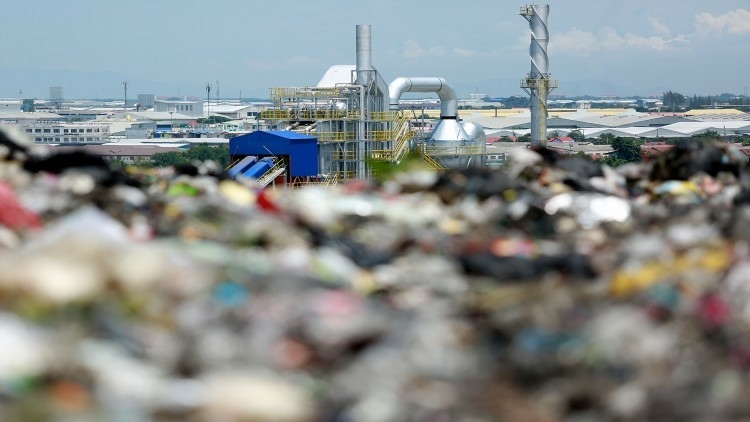
Khomgrich Tantavanich, secretary-general of the Energy Regulatory Commission (ERC), said that the Power Development Plan (PDP) has reviewed plans to purchase 400-megawatts of electricity from a community-based waste-power plant and is awaiting approval by the Interior Ministry’s Energy Policy and Planning Office (EPPO).
“The community waste-power plant purchase was included in the quota of the current PDP scheme. If the Energy Ministry sends the plan to the ERC, we may purchase 200MW this year and another 200MW next year,” Khomgrich said.
He added that the ERC is also open to purchasing power from public solar projects this year. So far, 78 have shown interest and have signed agreements with the state for the sale of 468.32 kilowatts of energy this year.
He added that the trend of power charges for 2021 depends on several important factors such as power consumption, GDP and other factors such as the direction of the currency. ERC reckons that a negative 1 per cent GDP growth rate will affect the use of electricity by about 0.7 to 0.8 per cent.
As for the rate of electricity in the last quarter of this year, ERC has decided to adjust the variable tariff by Bt0.83 per unit, resulting in the average cost of electricity to be reduced to Bt3.63 from Bt3.64 per unit excluding VAT.
Jul 17. 2020Former Energy Minister Sontirat Sontijirawong
By The Nation
Former Energy Minister Sontirat Sontijirawong today said it was now the task of the incoming minister to call bids for the 23rd round of petroleum exploration and production in the Gulf of Thailand.
Sontirat had planned to invite interested bidders next week but he resigned from his post yesterday, effective immediately.
The Round 23 exploration and production covers three offshore blocks. Sontirat said it should create 4,000 new jobs.
Meanwhile, Sontirat said he was confident that the project to construct community power plants will also be continued.
The price of gold dropped by Bt50 per baht weight in morning trade on Friday (July 17), the Gold Traders Association reported.
As of 9.28am, the buying price of a gold bar was Bt26,900 per baht weight and selling price Bt27,000, while gold ornaments cost Bt26,408.72 and Bt27,500, respectively.
At close on Thursday (July 16), the buying price of a gold bar was Bt26,950 per baht weight and selling price Bt27,050, while gold ornaments cost Bt26,469.36 and Bt27,550, respectively.
Comex gold to be delivered in August dropped by US$13.5, or 0.74 per cent, to US$1,800.3 (Bt56,998) per ounce at Thursday’s close.
The gold price dropped after the European Central Bank decided to maintain the interest rate and credit for buying bonds in the meeting yesterday. Also, the strengthening dollar pressured the gold price as well.


 Veerathai Santiprabhob

 Former Energy Minister Sontirat Sontijirawong