The Transport Ministry has secured Bt231.924 billion for the 2021 fiscal year, up 17.64 per cent from the previous fiscal year, Transport Minister Saksayam Chidchob said on Wednesday (July 1)
Of the total budget, Bt186.359 billion will be spent on land transport projects, 16 per cent more than the funds earmarked in the 2020 fiscal year, while Bt33.603 will be spent on railway projects, up 28 per cent. The ministry has also earmarked 16 per cent more for waterway projects at Bt4.867 billion and Bt6.120 billion for aviation projects, up 3 per cent.
The top five agencies with the highest allocation of funds are Highways Department at Bt128.577 billion, up 22 per cent, Department of Rural Roads Bt49.465 billion, up 9 per cent, and the State Railways of Thailand Bt18.108 billion, up 33 per cent. The other two are the Mass Rapid Transit Authority of Thailand with a budget of Bt15.367 billion and Department of Airports Bt5.799 billion, up 8 per cent.
“I have instructed every agency to be well prepared for the annual budget bill debate in Parliament,” the minister said.
Meanwhile, members of the opposition Move Forward Party attacked the government for allocating a huge chunk of the national budget, Bt223.5 billion, to the Defence Ministry.
Lawmakers began debating on the bill on Wednesday. The government plans to spend Bt3.3 trillion, 3.1 per cent higher than the budget for the current fiscal year, which comes to an end on September 30. The government plans to continually run fiscal deficit , or Bt623 billion shortfall from expected revenue, representing about 4 per cent of the GDP as the government aims to boost the economy that has been severely affected by the Covid-19 fallout.
The Stock Exchange of Thailand (SET) Index rose 10.41 points or 0.78 per cent, closing at 1,349.44 today (July 1), while total transactions stood at Bt53.380 billion with an index high of 1,350.16 and a low of 1,331.60.
In the morning session, an analyst at Krungsri Securities said he expected the index to fluctuate between 1,330 and 1,350 as there were no new factors to boost investment. “The market won positive sentiment from strong US economic data as the US housing price index rose 4.7 per cent year on year in April, while US consumer confidence index rose to 98.1 in June,” he said.
“However, the index is still under pressure from uncertainty over a second wave of coronavirus infections, as the number of new cases in the US is still rising.”
The top 10 stocks with the highest trade value today were STA, PTT, BAM, KCE, PTTEP, CPALL, GULF, ADVANC, AOT, and KBANK.
As of 4.30pm, the price of crude oil rose by US$1.25 or 3.18 per cent to $40.52 per barrel, while gold prose by $4.20 or 0.23 per cent, to $1,804.70 per ounce.
Changes in other Asian indices were mixed:
Japan’s Nikkei Index closed at 22,121.73, down 166.41 points, or 0.75 per cent.
China’s Shanghai SE Composite Index closed at 3,025.98, up 41.31 points, or 1.38 per cent, while Shenzhen SE Component Index closed at 12,112.96, up 120.62 points, or 1.01 per cent.
South Korea’s KOSPI Index closed at 2,106.70, down 1.63 points, or 0.077 per cent.
Taiwan’s TAIEX Index closed at 11,703.42, up 82.18 points, or 0.71 per cent.
Hong Kong’s Hang Seng Index was closed due to the Hong Kong Special Administrative Region Establishment Day.
The Joint Standing Committee on Commerce, Industry and Banking revised its forecast for Thailand’s economic growth on Wednesday (July 1), bringing it down from between -3 and -5 per cent to between -5 and -8 per cent.
It also brought its forecast for export expansion down to -7 to -10 per cent from its earlier prediction of -5 to -10 per cent.
Predee Daochai, the committee’s chairman, said that despite the gradual easing of lockdown measures, the purchasing power of households and the business sector is still weak. Also, he said, the export and tourism sectors are still under pressure from the shrinking global economy and the global impact of the Covid-19 pandemic.
He went on to say that the Thai economy will continue facing uncertainty in the second half due to escalating infections. Also, trade wars between the US and other countries, coupled with a strengthening baht, is also putting pressure on Thailand’s export and manufacturing sectors.
The committee has also voiced concerns about the baht appreciating faster than its regional peers in June. The Thai currency is expected to strengthen further.
The price of gold rose by Bt200 per baht weight during Wednesday’s (July 1) morning trade, the Gold Traders Association said.
As of 9.24am, the buying price for gold bars was Bt26,000 per baht weight, and selling price Bt26,100, while gold ornaments could be bought for Bt25,529.44 and sold at Bt26,600.
At closing on Tuesday, the buying price of gold bars was Bt25,800 per baht weight and selling price Bt25,900, while gold ornaments were going for Bt25,332.36 and Bt26,400, respectively.
On Wednesday morning, the Gold Spot Index moved to around US$1,782 (Bt55,168) per ounce after the price rose by $19.3 to $1,800.5 per ounce at Tuesday’s closing, the highest since September 2011.
Gold is gaining because investors are continuing to buy the metal as a safe-haven asset amid uncertainty over a second wave of Covid-19 infections and a weakening dollar.
Fifteen Asia-Pacific countries will sign the RCEP trade pact by the end of 2020 but India will not be among them, the Commerce Ministry has confirmed.
However, members of the Regional Economic Partnership Agreement (RCEP) last week opened the way for India to return to negotiations without having to start the process anew, said Auramon Supthaweethum, director-general of the ministry’s Department of Trade Negotiations.
He was speaking after last week’s RCEP teleconference between ministers for all 10 Asean countries and their counterparts from China, Japan, South Korea, Australia and New Zealand.
India withdrew from the announcement of successful negotiations during the RCEP summit hosted by Thailand at the end of 2019, sparking concern that the Asian giant’s trade deficit with RCEP member countries could grow.
“When refining of the agreement’s legal language is completed, every member-country must prepare for the signing. Thai negotiators will request approval from the Cabinet before signing the agreement. Then, it will be put to the House of Representatives for another approval. To be implemented, the pact requires agreement from more than half of Asean members and more than half of the negotiating parties. We expect the pact to come into force in the middle of 2021.” said Auramon.
She added that the RCEP will become the largest free trade agreement (FTA) in the world. RCEP members have a combined population of nearly 3.6 billion people or 48.1 per cent of the world population. In 2019, RCEP members had a combined gross domestic product (GDP) of over US$28.5 trillion or 32.7 per cent of global GDP, with total trade value of more than $11.2 trillion or 29.5 per cent of world trade value.
The Stock Exchange of Thailand (SET) Index opened on Wednesday (July 1) at 1,345.28, up 6.25 points, or 0.47 per cent.
A stock analyst at Krungsri Securities expected the index to fluctuate between 1,330 and 1,350 due to lack of new factors to boost investment.
“The market gained positive sentiment from strong US economic data as the US house price index in April rose by 4.7 per cent year on year, while the US consumer confidence index in June rose to 98.1,” the analyst said.
“However, the index is still under pressure from uncertainty following the second wave of coronavirus as the number of new cases in the US is still increasing.”
He recommended investors buy:
▪ Energy stocks that benefit from a rising crude oil price, such as PTT, PTTEP, Top, PTTGC, IRPC, SPRC, and IVL.
▪ Stocks whose second-quarter performance will improve, such as CKP, Tasco, and STA.
▪ Stocks that benefit from the Cabinet’s domestic tourism stimulus measures, such as MINT, CENTEL, ERW, AOT, and AAV.
The SET Index rose by 9.27 points, or 0.70 per cent, on Tuesday, closing at 1,339.03. Total transactions amounted to Bt58 billion.
By Syndication Washington Post, Bloomberg · Hailey Waller, Andrew Marquardt · BUSINESS
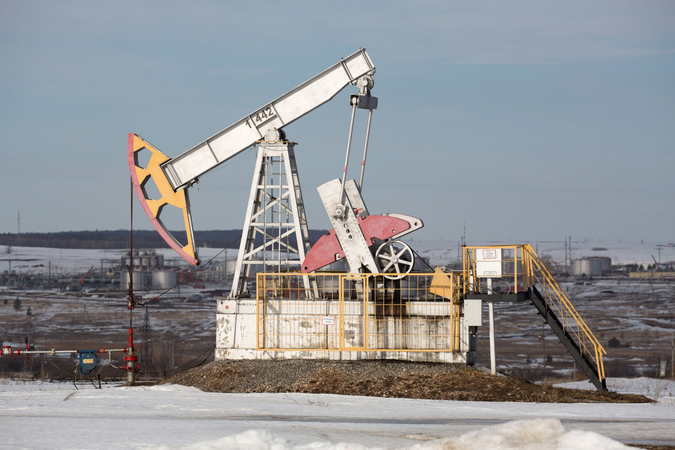
After posting its worst quarter on record, oil is now headed for its best three months in 30 years as it bounces back from this year’s historic crash. Yet the rebound remains tenuous.
Futures in New York have almost doubled in value this quarter, buoyed by OPEC+ production cuts and rebounding oil consumption in post-lockdown China. The market’s climb from negative territory in April has been swift but bumpy, with the U.S. benchmark struggling to hold above $40 a barrel amid a stubborn supply glut and a resurgence of Covid-19 cases that’s darkened the demand outlook.
“It’s not going to jump back up to $60 overnight, but to get to where we are now from where we were at is an incredible story,” said Phil Flynn, an analyst at Price Futures Group Inc. How quickly the market can complete its recovery is an open question. “Coming out of the rut will have to happen one day at a time,” he said.
While demand is gradually improving, it’s still a long way off pre-crisis levels. In the U.S., a spike in virus cases is prompting many states to pause or reverse re-openings, which could curb summer travel just as fuel consumption was beginning to ramp up. Across the Atlantic, European Union governments extended a travel ban for U.S. residents.
Rising American inventories are also weighing on prices, which are still 35% down from last year. Crude stockpiles have expanded for the last three weeks to the highest level on record while diesel supplies have swelled for 11 of the last 12 weeks. Government data to be released on Wednesday will reveal whether the situation is worsening.
“It could be a slaughter,” said Robert Yawger, director of the futures division at Mizuho Securities USA. “We could have three records tomorrow in gasoline, distillate and crude oil at all-time record storage levels.”
In yet another threat to the market recovery, rising prices have prompted some U.S. producers to restart wells they shuttered after the crash. ConocoPhillips is the last to announce it will restore some curtailed production next month.
While increasing U.S. output complicates OPEC+’s goal of balancing the market, the producer alliance has made good on its historic pledge to cut production but almost 10 million barrels a day. Saudi Arabia and Russia have both slashed exports to multiyear lows, supporting physical prices in some parts of the world.
In another bright spot for the oil market, China’s recovery is continuing with manufacturing data for June beating estimates, pointing to stronger demand from the world’s largest consumer.
“The worst is behind us,” Amin Nasser, chief executive officer of Saudi Aramco, said in an interview with consultant IHS Markit. “I’m very optimistic about the second half of this year. We see it in China today, it’s almost at 90%.”
By The Washington Post · Thomas Heath, Hamza Shaban · NATIONAL, BUSINESS, US-GLOBAL-MARKETS Stocks overcame weeks of uncertainty, social unrest and a resurgence in coronavirus infections to finish one of Wall Street’s best quarters in history.
Two of the three major stock indexes are still down for the first six months of the year, and Federal Reserve chairman Jerome Powell on Tuesday cautioned that the economic recovery remains “extraordinarily uncertain” in the face of the stubborn coronavirus.
But indexes have rebounded from their March lows as investors placed their faith and money on the transformative power of remote technology and on their belief that a slow-but-sure broad recovery – backed by trillions in federal guarantees – is in the works.
The Dow Jones industrial average jumped nearly 300 points, or 1.1 percent, as the session came to a close. The Dow sealed a 16 percent comeback in the second quarter, leaving the blue chips 10 percent short of break even for the year. Apple, Home Depot, Dow and Microsoft muscled the index higher in the quarter.
“The second quarter revival was like Lazarus coming back from the dead,” said Howard Silverblatt of S&P Dow Jones Indices.
The Standard & Poor’s 500 index jumped 1.5 percent on Tuesday to cap its best quarter since the fourth quarter of 1998 – in the midst of the dot-com bubble – with a 19 percent gain. Energy, technology and discretionary spending – all industries that are tied to a broad economic recovery – led the S&P for the quarter. The index closed Tuesday at 3,100.23 and is down 4 percent on the year.
The Nasdaq – led by a handful of technology powerhouses – is up more than 11 percent on the year. Stay-at-home stocks like Zoom, payments firm PayPal Holdings, online marketplace MercadoLibre and the electric carmaker Tesla lifted the Nasdaq to a 30 percent gain in the second quarter.
The comeback follows a swift and frightening economic freeze caused by a plague that swept through the globe, closing countries, demolishing economies and killing hundreds of thousands.
The broad S&P plunged 31 percent for the year on March 23 after states shut down, telling people to stay inside, putting nearly 30 million Americans out of work, grounding airlines, closing schools, sports and businesses and bringing commerce to a standstill.
Much of Wall Street believes the economy bottomed in April, followed by positive economic news has filtered up in May and June. Personal incomes rose by 10.5 percent, thanks largely to federal stimulus checks. First-time unemployment filings have leveled off. As more drivers took to the roads, the price of oil doubled in June, aiding a crucial industry that supports millions of jobs. The housing market is on the rise, thanks to record-low interest rates. Early in June, a closely-watched report on private payrolls showed 2.8 million jobs lost in May, far fewer than the nearly 9 million experts had predicted. The next private payroll report is due out on Thursday.
“The Great Recession of 2020 may go down in history as the deepest but shortest recession,” said Kristina Hooper, chief global market strategist at Invesco.
Analysts said that the quarterly 401(k) retirement plan statements that will be mailed to tens of millions of participants in the next few weeks will show the big stock gains, which could instill confidence in consumers and cause them to feel more comfortable about spending. But much could still go wrong with the economy if the virus spreads and causes more economic slowing or even contraction.
“Many investors lived through 2008 and 2009, and learned from that experience the swiftness with which markets can rebound,” said Nicole Tanenbaum of Chequers Financial Management. “Those investors were rewarded for staying the course, and when they open their 401(k) statements later this month and see green numbers, they will again feel justified.”
Most investors have sat tight through the turmoil. From mid-February through the end of May, fewer that 1 percent of Vanguard’s household and retirement plan participants abandoned equities for safer harbors, according to Vanguard, which has $5.7 trillion under management.
“Very few people panicked,” said Vanguard senior investment strategist Jean Young. “And of those that traded, two-thirds bought equities instead of selling. Vanguard investors largely stayed the course.”
Fidelity Investments said its most recent data covering January through early May show only a tiny number of individual investors in retirement plans sold out of stocks.
“Despite some significant market volatility earlier this year, most of our retirement savers stuck to their long-term savings plan,” said Fidelity spokesperson Mike Shamrell.
An extraordinary committee tasked with studying whether Thailand should join the Comprehensive and Progressive Agreement for Trans-Pacific Partnership (CPTPP) has said it requires another 60 days.
The committee’s chairman Veerakorn Kamprakob said this was necessary as its three subcommittees need more time to complete their work. The original deadline for the job was early July.
The three subcommittees were assigned the job of studying the pact from the aspects of economy, agriculture and public health. Given that Thailand is an agriculture-oriented country, this aspect needs to be studied very carefully.
The committee, which was appointed by the House of Representatives last month, will put in for an extension at the House meeting on July 10.
The CPTPP is a free-trade agreement between Australia, Brunei, Canada, Chile, Japan, Malaysia, Mexico, Peru, New Zealand, Singapore and Vietnam.
Nine out of 19 stocks in the SET100 Index generated returns of more than 10 per cent, while 51 out of 81 stocks performed worse than expected in the first half of this year.
The stock that rose the highest was Sri Trang Agro Industry (STA), which spiked 167.5 per cent to Bt26.75 per share.
STA stocks did well after the company decided to list its subsidiary Sri Trang Gloves (STGT) in the Stock Exchange of Thailand (SET) in July.
Through the listing, STA will be able to raise approximately Bt15 billion to expand its production of rubber gloves worth about Bt11 billion, while STA will hold 50.7 per cent of STGT shares after launching initial public offerings.
Other stocks that did well were TQM Corporation (TQM) and Super Energy Corporation (SUPER), which rose by 104.55 and 66.07 per cent, respectively.
Investors were positive about these stocks as TQM’s net profits rose from Bt404 million in 2018 to Bt507 million in 2019 and Bt179 million in the first quarter of this year, while SUPER’s net profit rose from Bt1.045 billion in 2018 to Bt2.137 billion in 2019 and Bt718 million in the first quarter of this year.
Meanwhile, the stock that fell the most was that of Banpu (BANPU), which dropped 49.16 per cent to Bt6.05 per share, followed by Thai Airways International (THAI) and Minor International (MINT), which dropped by 45.99 per cent and 45.28 per cent respectively due to the Covid-19 fallout.
Sornchai Pitthayaprug, a stock analyst at Capital Nomura Securities, said BANPU’s net profits dropped due to a decline in coal prices as many countries are opting for clean energy. The coal business accounts for approximately 70 per cent of BANPU’s earnings before interest, tax, depreciation, and amortisation (EBITDA).
“In the second half of this year, coal businesses may face oversupply as many countries are aiming to cut down on the consumption of coal,” he said, adding that BANPU’s move to invest in natural gas may also result in oversupply due to the economic slowdown and the Covid-19 impact.
“However, the price of BANPU stock is likely to rise because there is always a demand for natural gas, but it also depends on the world’s economy,” he said, adding that BANPU’s net profits in the first quarter rose to Bt1.7 billion from a loss of Bt552 million in 2019 thanks to Bt3.3 billion in profits from foreign exchange.
“We expect BANPU’s second-quarter performance to drop to its lowest this year,” he added.
Meanwhile, a stock analyst at Phillip Securities expects BANPU to make a loss of about Bt3.2 billion this year.
“However, we are advising investors to buy this stock at Bt8 per share as its price to book value ratio [P/BV] was 0.6 times,” the analyst said.

 Transport Minister Saksayam Chidchob