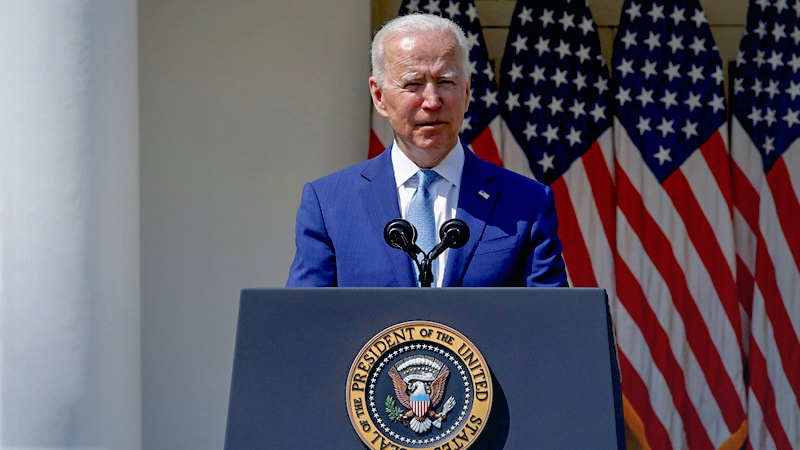
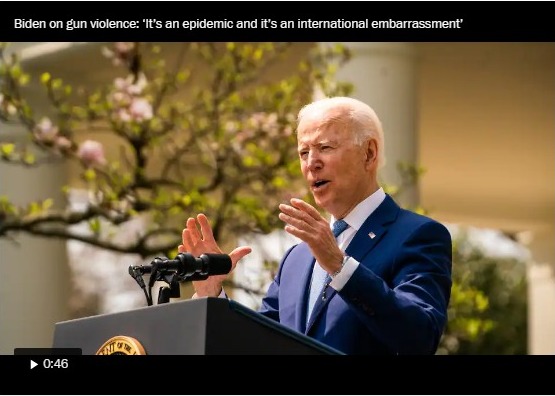
WASHINGTON – President Joe Biden announced an array of executive actions Thursday morning intended curb gun violence, following pressure from activists and fellow Democrats in the aftermath of two recent mass shootings.
In the White House Rose Garden, the president announced new rules on firearms that are assembled at home, which lack serial numbers and are harder to track, among other moves designed to make it harder for unqualified people to obtain dangerous weapons.
Biden also named David Chipman as his pick to run the Bureau of Alcohol, Tobacco, Firearms and Explosives, although it is unclear how the nominee will fare in an evenly divided Senate. Chipman is a senior adviser to a gun control group founded by former congresswoman Gabrielle Giffords, D-Ariz., who was severely injured in a mass shooting in 2011.
Biden was joined Thursday by Attorney General Merrick Garland and first lady Jill Biden.
Biden’s moves come amid growing impatience from gun control activists that the administration has not acted more quickly. Biden promised during his campaign that he would take action to limit gun violence on the first day of his administration, but that fell by the wayside.
In his presidency’s early days, Biden has prioritized other emergency issues, including coronavirus pandemic relief and the struggling economy. He suggested recently that he considers gun control a less urgent priority that can be tackled over the long term.
But the issue of gun violence moved vividly the forefront after the two mass shootings, one in the Atlanta area in which eight people were killed and another in Colorado, where 10 were killed.
Biden’s aides stressed that beyond mass shootings, the president wants to focus on curbing the more frequent and deadlier epidemic of day-to-day gun violence that disproportionately affects Blacks and Latinos.
A former chairman of the Senate Judiciary Committee, Biden has a long record of arms control initiatives, including the 10-year assault weapons ban that was part of a 1994 crime bill he sponsored.
But the politics of gun control are turbulent. Rural voters, who skew sharply Republican, strongly support gun rights, while the suburbanites coveted by both parties tend to be more open to gun control.
Among Biden’s highest-profile moves Thursday was directing his administration to take action on “ghost guns,” firearms without serial numbers that are sold in kits and assembled at home.
The president also directed the Justice Department to draft a new rule regulating a device that can be placed on a pistol to turn it into a short-barreled rifle.
And he ordered the department to create a template that states can use to enact “red flag” laws, which allow judges to seize firearms from people who are deemed a threat to themselves or others.
Other initiatives include asking the Justice Department to issue a report on gun trafficking and directing several agencies to allocate more money for violence intervention programs.
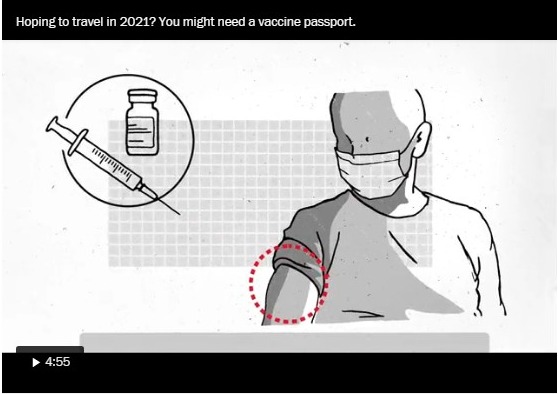
New York just became the first state to offer a digital “vaccine passport” – a free app and website you can use to prove you’ve been vaccinated against the coronavirus or gotten a recent negative coronavirus test result. With the new technology, called the Excelsior Pass, New Yorkers can show a screen or a printout with a special code that businesses scan with an app made by the state. A green check mark means you’re allowed inside.
Regardless of where you live, vaccine passports on the horizon promise to fast-track our safe return to public spaces. But only if people are able to access and trust them. And that’s a big if.
With the help of New Yorkers across a range of ages, I’ve been testing Excelsior Pass to see whether digital vaccine passports create more problems than they solve. Using Excelsior Pass is entirely voluntary, but it requires learning about the state’s system and mastering a few different websites and apps. It took me 20 minutes over Zoom to help an octogenarian set up his pass, though it was certainly simpler than mastering vaccine-appointment websites. Even when we thought we understood the system, Excelsior Pass didn’t always work: My tech-reporter colleague tried to use it to enter Yankee Stadium, but the system didn’t update with his clearance until after the game was over.
The good news: For the digitally savvy people who figure it out, using Excelsior Pass doesn’t appear to pose major privacy risks. The system, designed for the state by IBM, cannot be easily used by the state to track you. And it’s more discreet than the alternative of showing your medical records to a bouncer.
But I question how effective Excelsior Pass will be at keeping everyone safe. For one, it’s pretty easy to set up a fake pass. (Yikes, you might want to take down any vaccine selfies you posted to social media.) To stop potential fraud, you always have to show your ID along with Excelsior Pass – which is another kind of barrier that could make some people not want to use it.
As other states and even private companies work on their own vaccine passports, some of New York’s other choices also deserve scrutiny. The state hasn’t been very clear about where, and for how long, we might be required to show a vaccine passport – digital or physical. We all expect to need a passport at a border crossing, but will we eventually need a vaccine passport at Starbucks? The grocery store? Work? I found you could technically already use Excelsior Pass to scan your own dinner party guests . . . if they’d still call you a friend after.
At Madison Square Garden, which used Excelsior Pass for three games last week, most people still aren’t using the app – but it’s doing the job of being quick. “While the numbers are still small, they’ve nearly doubled at every game, which we expect will continue as more people become familiar with the app,” spokeswoman Kim Kearns says. “From a technology standpoint, everything has been straightforward, and worked well.”
As goes New York, so goes the nation? Here’s what we can all learn from the early days of Excelsior Pass.
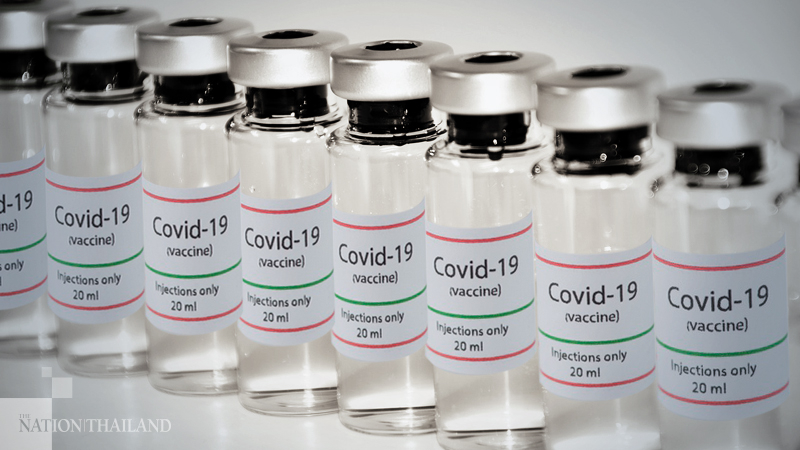
In the United States, the good vaccine news keeps coming. For much of the world, things look bleak.
As of Thursday, just short of 20% of the U.S. population was fully vaccinated, giving some 66 million people a strong measure of protection against a disease that has already killed more than 500,000 Americans.
By contrast, Covax – a World Health Organization-backed push for equitable distribution – aims to secure enough doses to cover up to 20% of the people in participating countries by the end of 2021, but it may not meet that relatively modest goal, experts warn.
The gap between the vaccine “haves” and “have-nots” is widening, fueling frustration and potentially extending the pandemic.
“It’s unconscionable,” said Zain Rizvi, an expert on access to medicine at Public Citizen, a watchdog group. “Many countries will be lucky if by the end of the year they are close to where the U.S. is now.”
So far, the vaccine race has been dominated by a handful of relatively wealthy nations: most notably Israel, where nearly 57% the population was fully vaccinated as of April 7; Chile, at about 22%; and the United States. Britain has been vaccinating rapidly, as well, but it has delayed second doses as it tries to get a first to as many people as possible.
Meanwhile, Our World in Data estimates based on publicly reported data that at least 5% of the global population has had a dose, with the real number (incorporating China’s nonpublic tally) perhaps between 6 and 7%.
Priority-supply deals, export restrictions and other means of hoarding by rich nations have contributed to a severe global supply crunch and left many countries scrambling.
Covax has delivered 38 million doses, providing potentially lifesaving shots to places and people that might otherwise go without. Yet divided between 100 economies, those doses amount to only a thin layer of protection.
“It’s been heartening to see a small number of doses reaching countries around the world,” said Suerie Moon, co-director of the Global Health Center at the Graduate Institute of International and Development Studies in Geneva. “But the big picture is more troubling than reassuring, because we have a lot of things are not going well.”
While the U.S. administers millions of inoculations a day, some countries are still waiting for their first shots to arrive, or have just started vaccinating. A recent WHO estimate suggested that just 2% of the 690 million doses administered to date globally went to Africa.
A chorus of experts and officials have argued – for months – that rich countries have not only a moral obligation to close the gap, but an interest in doing so. With a fraction of the world’s population vaccinated, they argue, the global economy won’t recover and the virus will mutate and spread.
Treasury Secretary Janet Yellen on Monday called for speeding up distribution to poorer nations, warning that the pandemic may force 150 million people into poverty, hurting growth.
“Our first task must clearly be stopping the virus by ensuring that vaccinations, testing and therapeutics are available as widely as possible,” she said in remarks delivered to the Chicago Council on Global Affairs.
The same day, while introducing a new coordinator for global covid response and health security, Secretary of State Antony Blinken addressed the danger of variants.
“Even if we vaccinate all 332 million people in the United States tomorrow, we would still not be fully safe from the virus, not while it’s still replicating around the world and turning into new variants that could easily come here and spread across our communities again,” he said.
Still, Blinken defended the effort to vaccinate Americans first and suggested that further action would have to wait until the United States was more confident of its vaccine supply.
“I know that many countries are asking for the United States to do more, some with growing desperation because of the scope and scale of their covid emergencies,” he said. “We hear you. And I promise, we’re moving as fast as possible.”
The woman he introduced as the new global covid response coordinator, Gayle Smith, served as the chief executive of the ONE Campaign, a nonprofit organization that has called on wealthy countries to donate 5% of their surplus doses once they’ve vaccinated 20% of their population.
For its part, the Biden administration announced the “loan” of a combined 4 million doses of AstraZeneca’s coronavirus vaccine – not yet authorized by U.S. regulators – to Mexico and Canada. It is not clear, however, if or when the administration will offer up a more substantial portion of the hundreds of millions of surplus doses the country has secured.
A recent survey of 788 Americans by researchers at Virginia Commonwealth University found strong support for the idea of donating 10% or more of the U.S. supply to less prosperous countries, but views were divided on the timing. While 41% of respondents said donations should happen immediately, 28% wanted to wait until at-risk Americans had been vaccinated and 31% said donations should happen only after everyone in the United States who wanted to be vaccinated had been.
In Israel, Prime Minister Benjamin Netanyahu offered in February to donate doses to 20 foreign allies, but the plan was put on hold in the face of domestic pushback and lawsuits.
The Biden administration’s moves so far have focused on longer-term efforts to bolster the global rollout.
In February, the White House threw its support behind Covax, announcing up to $4 billion dollars, including an initial contribution of $2 billion that Congress appropriated in December.
And last month, the United States, India, Japan and Australia pledged to jointly manufacture and distribute up to 1 billion doses of coronavirus vaccine with a focus on Southeast Asia. But the timeline is long, with a goal of having things up and running before the end of next year.
The Biden administration has so far resisted pressure to waive patent protections in a way that would allow more countries to make coronavirus vaccines.
However, recent statements from Blinken suggest some new initiative could be on the way.
“The clock is ticking,” said Moon, “and the situation is not getting better.”
By Syndication Washington Post, Bloomberg · Peter Laca, Jake Rudnitsky
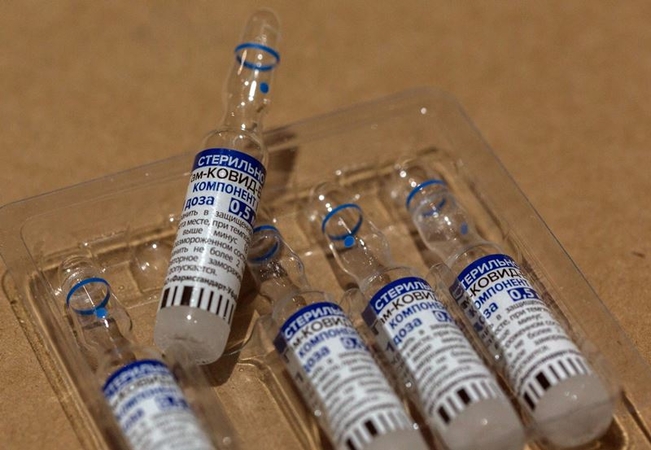
Slovakia and Russia clashed over the Sputnik V covid-19 vaccine after the European Union member accused Moscow of delivering shots that were different from those used in a peer-reviewed study.
Russia rejected the allegations and demanded Bratislava return the 200,000 doses it sent. The dispute may set back efforts to use Sputnik widely in Europe. Slovakia was one of a few members of the bloc pushing to use the Russia-developed vaccine to help speed the roll-out of inoculations. But political tensions over the push to use what one critic called “a tool in hybrid war” caused a crisis that cost Prime Minister Igor Matovic his job.
EU regulators are still reviewing Sputnik’s application and the process could take several months, leading some nations to undertake their own checks to accelerate approval.
But a day after saying it hasn’t received sufficient documentation from the Sputnik’s developers to declare it safe and effective, the Slovak regulator went further, charging that the doses it received have different properties than the ones described in an article in The Lancet medical journal earlier this year. That widely cited report found Sputnik to be 91.6% effective and gave a major boost to Russia’s efforts to distribute it abroad, allaying some concerns about the Kremlin’s rush to approve the vaccine at home.
“According to published reports, Sputnik should be used in about 40 countries, although these vaccines are associated only by the name,” Zuzana Batova, the head of Slovak State Institute for Drug Control, said in a report. “The comparability and consistency of various batches produced in different places hasn’t been confirmed. In several cases, it appears that the vaccines have different properties.”
The Slovak regulator said Wednesday it was still conducting tests, but added that it hasn’t been able to come to a conclusion about the risks and benefits of Sputnik because of the “lack of a large amount of data from the producer, the inconsistency of the drug forms and the inability to compare batches used in various studies and countries.”
Sputnik’s developers dismissed the claims as “disinformation” and said all batches of the inoculation are of the same quality and undergo vigorous quality control.
“In violation of existing contract and in an act of sabotage the State Institute of Drug Control ensured that Sputnik V tested in a laboratory which is not part of the EU’s Official Medicines Control Laboratory network,” the developers wrote on Twitter.
Slovakia and Hungary are the only two EU members to agree to use the Russian-developed vaccine. On Thursday, Germany said it plans to hold bilateral discussions with Russia on buying doses amid criticism of a slow start to its inoculation campaign.
The nation of 5.5 million agreed to buy 2 million Sputnik V shots. But when junior coalition parties said the deal had been agreed behind their backs, Matovic was forced to swap jobs with the finance minister. Foreign Minister Ivan Korcok has called Sputnik “a tool in a hybrid war” as the country’s right-of-center parties expressed concerns its purchase may undermine the European Union and NATO member’s foreign-policy direction.
The Russian Direct Investment Fund, which backed the vaccine’s development and handles its international roll-out, has set a target of increasing overseas output sufficiently to inoculate nearly one in ten people globally this year.
Hong Kong democracy activist Nathan Law given asylum in U.K.
InternationalApr 09. 2021Nathan Law, standing committee member of the Demosisto political party, at a news conference in Hong Kong on June 19, 2020. MUST CREDIT: Bloomberg photo by Chan Long Hei.
By Syndication Washington Post, Bloomberg · Kitty Donaldson
The U.K. granted asylum to Hong Kong pro-democracy activist Nathan Law, a move likely to fuel tensions with China after it imposed sweeping security powers over the former British colony last year.
“The U.K. has a proud history of providing protection to those who need it,” Foreign Secretary Dominic Raab said on Twitter.
Law, a former elected politician in Hong Kong, fled to London last year after China introduced its National Security Law, which brought unprecedented restrictions to a city accustomed to regular protests and a free media. He faces arrest under the legislation if he returns.
“It means a lot to me because I can reside outside Hong Kong, free from direct political persecution and continue my advocacy work,” Law said in an interview. He urged the U.K. government to help more activists who have a lower profile and are in a “more difficult situation when applying for asylum.”
China on Thursday accused the U.K. of sheltering “wanted criminals” by giving asylum to Law. Beijing says its security law is designed to bring Hong Kong into line with mainland China and clamp down on sedition and terrorism.
“If the U.K. blatantly endorses Hong Kong separatists and provides wanted criminals so-called shelter, they are grossly interfering in Hong Kong’s judiciary, violating international law and basic norms of international relations as well as the rule of law principle,” foreign ministry spokesman Zhao Lijian said.
When the legislation was introduced, the U.K. responded by offering a path to British citizenship for eligible Hong Kongers — separate to the political asylum given to Law. That triggered a row with Beijing, which has repeatedly accused Prime Minister Boris Johnson’s government of interfering in its affairs.
The U.K. expects hundreds of thousands to take up the new British National (Overseas) visa. In the three months to March, 27,000 people had applied.
On Thursday, the government said it will spend 43 million pounds ($59 million) to help the settlement and assimilation of Hong Kongers arriving under the new system. The money will fund 12 welcome hubs to help people access housing, education and employment. Schools will also receive resources to teach pupils about the U.K.’s historic connections to Hong Kong.
The U.K. government has faced criticism that it has been too slow to set out help for people arriving from Hong Kong.
“This program will ensure British National (Overseas) status holders and their families have the very best start as soon as they arrive, and support to help them find a home, schools for their children, opportunity and prosperity,” Communities Secretary Robert Jenrick said in an emailed statement.
By Syndication Washington Post, Bloomberg · Joao Lima, Viktoria Dendrinou, Chiara Albanese
The European Union failed to form a united response to links between AstraZeneca Plc’s coronavirus vaccine and a rare type of blood clotting, missing an opportunity to inject momentum into the bloc’s sluggish inoculation program.
At a meeting that ran until late Wednesday, EU health ministers promised to continue discussions on vaccination planning and process. Health Commissioner Stella Kyriakides had called on the bloc’s governments to forge a coordinated strategy, saying it “will be key for us to speak with one voice.” The EU needs “an approach which does not confuse citizens and that does not fuel vaccine hesitancy,” she said.
In a statement afterward, the EU said ministers had shared “different interpretations” of a safety report on the AstraZeneca shot by the bloc’s drugs regulator, indicating what may be deep divisions on the way forward. Despite the risks, the EU regulator — and its British counterpart — on Wednesday insisted the product’s benefits outweigh its risks, that the clot occurrences are rare and that the shot should remain a vital tool in the pandemic fight.
In response to the safety concerns, Italy followed Germany and France by recommending it only for people over 60. Prime Minister Mario Draghi’s government urged other EU members to implement the same policy, according to people familiar with the matter who asked not to be identified.
This week Spain will also recommend limiting the Astra vaccine to those over 60, Health Minister Carolina Darias said late Wednesday.
The moves to limit the vaccine’s use came just hours after the European Medicines Agency announced finding a “strong association” with blood clots. The regulator didn’t issue any guidelines about usage, leaving the implementation up to member states.
Thomas Mertens, the head of Germany’s vaccine commission, said that while the EMA bases its decisions on what it believes is best for the whole EU, Germany can afford to be more careful as it is not so dependent on the AstraZeneca shot for its inoculation drive.
“We can therefore greatly reduce or even eradicate the risk of these serious side-effects in certain age groups,” Mertens said Thursday in an interview with ZDF television. “I think you can justify both approaches very well.”
The EU has been hit by a fresh wave of the coronavirus, which has caused more than 600,000 deaths in the region. Italy and France have gone back into lockdown. Germany is debating stricter curbs, while Chancellor Angela Merkel considers taking control from state leaders.
The continent’s immunization program has been bogged down by poor planning, supply delays and increasingly a lack of solidarity. Greek Health Minister Vasilis Kikilias expressed concern about the pluralism that confuses citizens on such an important issue.
With aggressive variants spreading, the region can ill afford further problems. The EU has administered doses for just 9.5% of its population — about a third of Britain’s pace, according to Bloomberg’s Coronavirus Tracker.
The U.K. conducted a similar safety review of the AstraZeneca vaccine and is now advising that people under 30 be offered an alternative if one is available, the country’s Medicines and Healthcare Products Regulatory Agency said Wednesday.
The warnings dealt another blow to the vaccine Astra developed with the University of Oxford and continued to cloud its global rollout. The drugmaker said it’s studying the individual cases to understand the “epidemiology and possible mechanisms that could explain these extremely rare events.” It’s also working with regulators on their request for new labels on its shots, AstraZeneca said in a statement.
Concerns about the vaccine center on an unusual type of blood clot in the brain called cerebral venous sinus thrombosis. There were also some cases of clots in the abdomen and in the arteries, which occurred together with low levels of blood platelets.
Italian officials said the change of policy wouldn’t hamper the country’s rollout as supplies increase and doses of other shots get redistributed.
AstraZeneca’s vaccine has been dogged by controversy. Before the health concerns, the drugmaker got embroiled in a battle with the EU after a production issue led to delivery delays.
Unity among member states has become a broader issue.
“We must not forget that individual decisions affect everybody,” Portuguese Health Minister Marta Temido said, appealing for a coordinated position. “This is a technical decision. It is not a political decision. We must continue to follow the best scientific information provided.”
Panasonic bets on Tesla ‘beer can’ battery to unlock $25,000 EVs
InternationalApr 09. 2021The Gambit Energy Storage Park in Angleton, Texas, the utility-scale battery project owned by a Tesla subsidiary. MUST CREDIT: Bloomberg photo by Mark Felix.
By Syndication Washington Post, Bloomberg · River Davis, Yuki Furukawa
Panasonic Corp. is betting that close to a century of experience making car batteries has prepared it to manufacture a difficult-to-produce next-generation battery championed by Tesla as the key to unlocking cheaper and more ubiquitous electric vehicles.
Elon Musk, Tesla’s chief executive officer, first unveiled the 4680 battery at Tesla’s Battery Day in September as a “massive breakthrough” in cell technology that will make it possible for his company to produce EVs that sell for $25,000, roughly a third less than Tesla’s most basic Model 3. While Tesla plans to make the cells in-house, it has also asked its oldest battery supplier, Panasonic, to begin producing them as well.
The catch: the thicker and more voluminous 4680 cells, named after their dimensions of a 46-millimeter diameter and 80-millimeter height, are still largely unproven. Industry experts even question whether the batteries, which resemble a downsized version of the aluminum cans used for sodas and beer, are possible to mass produce.
“There are significant technological issues to get past, issues that many in the industry have been trying to tackle for years,” said Ram Chandrasekaran, a transportation and mobility analyst at Wood Mackenzie. “If achievable, these battery cells would be groundbreaking. But the jury’s still out on whether they’re deliverable.”
Panasonic says it may be best-positioned to see the tricky new cells to market. Right now, the Japanese electronics maker is working to set up a prototype production line for tests.
“Producing these larger cells requires you raise your craftsmanship one or two full levels or there will be safety issues,” Yasuaki Takamoto, Panasonic’s EV battery head, said in an interview. The company’s time-tested safety-management systems “absolutely give us an upper hand here,” he said.
Much of the benefit of the new 4680 cells comes from the fact that they are more than five times the size of the smaller 1865 and 2170 cells Panasonic currently supplies to Tesla. This means that the typical 4,000 to 8,000 cells found in an EV today can be reduced to around 500, which, in turn, means fewer parts such as bonding pieces used to string individual cells together. New cell shapes such as the 4680 are “key to making more affordable EV models that are capable of meaningfully spreading,” said Akira Nagasaki, technical strategy head on Takamoto’s team.
The larger capacity, however, is also what makes the cells more difficult to produce. They are prone to overheating because it’s difficult to disperse heat from their center. They’re also more susceptible to particle contamination, a frequent cause of EV battery fires that occurs when minuscule metal pieces find their way into the center of a cell, causing it to short-circuit, according to Takamoto.
Compared with other EV battery heavyweights, Panasonic has been slow to build scale, instead touting the safety advantage of its batteries and expanding production only at a pace at which it can maintain safety standards, Takamoto said. The same know-how that lets Panasonic produce 2.5 billion cells a year without major safety issues also gives it an advantage in producing the 4680 cells, he said.
Tesla and Panasonic’s push to develop next-generation batteries comes as virtually all automakers jostle to secure their own supply of the core component. Batteries are crucial to differentiating automakers’ models as the industry as a whole shifts to EVs, said Wood Mackenzie’s Chandrasekaran. “It’s a pivotal moment,” he said.
Fearing future shortages, carmakers such as Volkswagen are demanding more batteries and even pushing to manufacture their own. This has led to notable tension between OEMs and their suppliers, as battery makers hesitate to invest in new capacity based solely on buzzy future sales projections, Chandrasekaran said.
That struggle is apparent in the development of the 4680 cells. Musk, who’s set an extremely ambitious goal for Tesla to produce 20 million EVs a year by 2030, plans to make the cells in-house and is also reported to be talking to battery makers other than Panasonic. Panasonic, in turn, says it will seek to sell the batteries to EV makers other than just Tesla.
But the next-generation technology also underscores the potential for mutual benefits if automakers and battery suppliers are able to develop specific technologies today that will let them ride the wave of growing EV sales together in the future.
Musk himself acknowledged the challenge of mass producing 4680 cells when speaking at a European battery conference in November. Tesla had produced the battery at a “bench-top level” and was aiming to have it at “pilot-plant level” soon, but “scaling up the production process is much harder than proving something out on a lab bench,” Musk said.
Panasonic has been mass producing lithium-ion batteries for cars since 2010 – around the same time its biggest battery-buyer was just launching its initial public offering.
“Working with a partner like Panasonic that has extensive experience in large-scale cell manufacturing will boost the likelihood of Tesla achieving the targets the company outlined at its Battery Day event,” BloombergNEF analyst James Frith wrote in a note published shortly after Panasonic’s chief financial officer announced the company was working on the new 4680 cell in October.
For Panasonic, the 4680 battery that Tesla asked it to produce is a potential source of growth as it looks to reduce its reliance on its once-core consumer electronics business. Taking into account the number of EVs Musk wants to see out on roads and demand from other automakers as well, if Panasonic decides to move forward with producing 4680 cells “we will do so on a large scale,” Takamoto said.
Inflation has gone k-shaped in the pandemic like everything else
InternationalApr 09. 2021A person wearing a protective mask holds a fuel pump nozzle at a Chevron gas station in San Francisco on March 11, 2021. MUST CREDIT: Bloomberg photo by David Paul Morris.
By Syndication Washington Post, Bloomberg · Alex Tanzi
Low-income Americans bore the brunt of job losses when the pandemic arrived. Now they’re getting hit hardest by price increases as the economy recovers.
The headline consumer inflation rate in the U.S. remains subdued, at 1.7% — but it masks large differences in what people actually buy.Some of the biggest price hikes of recent months, for example, have come in gasoline. A gallon of regular is up 75 cents since late last year — adding more than $60 a month to the budget of someone who fills up with 20 gallons a week.
Food-price inflation is running at more than double the headline rate, and staples like household cleaning products have also climbed.
Price increases like these are causing trouble all over the world — and they tend to hurt low-income people most. That’s because groceries or gas take up a bigger share of their monthly shopping basket than is the case for wealthier households, and they’re items that can’t easily be deferred or substituted.
An analysis by Bloomberg Economics, which reweighted consumer-price baskets based on the spending habits of different income groups, found that the richest Americans are experiencing the lowest level of inflation.
Those same high-earners already posted windfall gains during what’s been labeled a K-shaped recovery from the pandemic. Their net worth surged, thanks to booming stock and real-estate markets — and they mostly kept their jobs and were able to work from home.
The richest 10% of households captured 70% of wealth created in 2020, according to the Federal Reserve, while the bottom half got just 4%. A January study by Opportunity Insights, a Harvard research project, found that the recession was essentially over for those making at least $60,000 a year, while employment among the lowest-paid — who earn less than half that amount — was still almost 30% below pre-pandemic levels.
The question of who exactly gets hurt by higher prices could become more urgent as inflation accelerates. Most economists expect a pickup in the next 12 months.
The Fed, which is in charge of keeping inflation under control, says any increase will likely prove temporary. The central bank isn’t planning to use its inflation-fighting tool of higher interest rates anytime soon.
The idea behind the Fed’s new thinking is that allowing the economy to run a bit hotter — and inflation to creep a bit higher — will actually help to reduce income inequalities, because it will encourage a strong jobs market that benefits low-paid Americans the most. There’s some evidence that this is already happening in the restaurant, hotel and other service industries.
Meanwhile, the Biden administration says it will push U.S. statisticians to produce more detailed data that breaks down economic outcomes for different racial or income groups.That initiative could have consequences for people whose incomes are tied to measures of inflation — like recipients of Social Security or food stamps. They can get squeezed when those gauges fail to accurately capture changes in the cost of living. There’s been talk in the past, for example, of pegging Social Security to an index that specifically measures the inflation experienced by older people.
The distributional questions raised by higher prices aren’t just a U.S. phenomenon.
A United Nations gauge of global food costs rose for a ninth straight month in February, the longest run of increases since 2008 when the world faced the first of two food crises within a few years.
“The food price story and inflation story are important to the issue of equality,” says Carmen Reinhart, the World Bank’s chief economist. “It’s a shock that has very uneven effects.”
The problem of K-shaped inflation predates the pandemic and may have deep-rooted causes, according to Xavier Jaravel, an assistant professor at the London School of Economics.His research has shown that a key reason why richer people experience lower rates of inflation is that there’s more competition among producers for their dollars — leading to higher levels of innovation in the kind of goods and services bought by the wealthy, which helps keep prices down.
“One can hope that statistical agencies around the world will soon adopt new data sources and price indices to better measure inflation inequality,” Jaravel wrote in a recent paper, “and that economists will pay more attention to the distributional effects of prices.”
WASHINGTON – President Joe Biden on Thursday will announce a half-dozen executive actions focused on curbing gun violence, including regulations on home-assembled firearms and the nomination of a gun-control advocate to head the Bureau of Alcohol, Tobacco, Firearms and Explosives.
The initiatives are the first major actions that Biden will take as president on guns, a top Democratic priority that has only become more urgent after recent mass shootings in Boulder, Colo., and the Atlanta area.
“We know that Americans are dying from gun violence every single day in this country,” a senior administration official, briefing reporters on the condition of anonymity, said Wednesday. “That’s why we are pursuing an agenda that will address not only mass shootings, but also community violence disproportionately affecting Black and Brown Americans, domestic violence and suicide by firearm.”
The White House has suggested that executive actions by Biden would not preclude legislation on Capitol Hill, where a pair of bills expanding background checks passed the House last month, with support from nearly all Democrats and a handful of Republicans. The senior administration official emphasized that Biden could issue more executive actions on gun violence in the future.
Biden plans to announce his new directives at a White House event accompanied by Attorney General Merrick Garland, as well as advocates for stricter gun laws and lawmakers who have worked on the issue.
So-called ghost guns – devices without serial numbers that are sold in kits and assembled at home – will be a major focus of Thursday’s executive actions. Biden plans to direct the Justice Department to issue a tentative rule meant to “help stop the proliferation” of the devices, the official said, without providing specifics.
The president will also tap David Chipman – a veteran ATF special agent who for five years has served as senior policy adviser at Giffords – as his nominee to lead the bureau, a key agency in the fight against gun violence that has gone without a permanent director for years.
Before his current role at Giffords – an advocacy group led by former congresswoman Gabrielle Giffords, D-Ariz., who was injured in a 2011 mass shooting – Chipman was a special agent at ATF for more than two decades. He worked on gun-trafficking operations and investigations into the 1993 World Trade Center bombing and the 1995 Oklahoma City bombing.
Over his 25-year career at ATF, Chipman rose from an investigator focused on bombings and arson to a supervisory role in the agency. He was a member of ATF’s version of a SWAT team and was in charge of the agency’s firearms programs. After leaving ATF, Chipman worked at Everytown for Gun Safety and ShotSpotter, a private company focused on improving policing strategies.
The ATF director role has often become embroiled in political battles, and it is not clear if Chipman can be confirmed in an evenly divided Senate given his record of advocating for tougher gun laws. The last permanent director of the bureau was Todd Jones, who was confirmed in 2013 under the Obama administration and left the post in 2015.
Biden on Thursday will also direct the Justice Department to draft a new rule regulating a device that, once placed on a pistol, turns it into a short-barreled rifle. DOJ will also craft a template for states to enact red-flag laws, which empower a judge to keep firearms from people determined to be a threat to themselves or others.
The other actions include a directive to the Justice Department to issue a report on gun trafficking and an order for more funding of community violence intervention programs.
“It is long, long past time for Congress to act,” the senior administration official said. “But that doesn’t mean that we can”t call for Congress to act and also push through executive actions at the same time.”
In lieu of legislative action, several lawmakers have urged the president to issue executive orders on guns. Four Democratic senators – Robert Menendez of New Jersey, Dianne Feinstein of California, Edward Markey of Massachusetts and Richard Blumenthal of Connecticut – wrote to Biden last month, asking the administration to regulate ghost guns like other firearms.
“It’s incredibly exciting and a tremendous relief to finally have allies in the struggle against gun violence in the White House,” Blumenthal said Wednesday. “Both President Biden and Vice President [Kamala] Harris are longtime champions committed to doing everything in their power to stem the tide of this public health epidemic.”
Republicans contend that tightening gun control would do little to prevent gun violence.
“Every time there’s a shooting, we play this ridiculous theater where this committee gets together and proposes a bunch of laws that would do nothing to stop these murders,” Sen. Ted Cruz, R-Texas, said at a recent Judiciary Committee hearing.
Any change to current gun regulations is likely to be challenged in court by gun rights groups. One such lawsuit resulted recently in a federal appeals court rejecting a Trump administration rule change designed to ban bump stocks, attachments to semiautomatic rifles that make the weapons fire much more quickly, similar to fully automatic weapons.
While campaigning for the Democratic nomination, Biden promised that gun legislation would be a “day one” priority for him, including legislation that would repeal liability protections for gun manufacturers. But the White House has yet to release a legislative plan, instead deferring to a pair of bills passed by the Democratic-controlled House last month.
On the liability legislation, as well as executive actions on guns, Biden said in a news conference last month that he planned to do “all of the above” but that it was a “matter of timing,” suggesting that other goals were more urgent.
“As you’ve all observed, successful presidents – better than me – have been successful, in large part because they know how to time what they’re doing – order it, decide and prioritize what needs to be done,” Biden said.
The House measures would expand background checks to include private transactions between unlicensed individuals, while closing what advocates of stricter gun laws have called the “Charleston loophole,” which allows a gun sale to go through if a background check isn’t finished after three days.
Senate Majority Leader Charles Schumer, D-N.Y., has promised to put those bills on the Senate floor for a vote, but it’s unclear whether they can win even a simple majority, much less the support of 60 senators needed to pass most legislation in the Senate.
Sen. Joe Manchin III, D-W.Va., has signaled opposition to the House-passed gun measures, preferring instead a more modest expansion of background checks that he co-wrote with Sen. Patrick Toomey, R-Pa., in the aftermath of the 2012 shooting at Sandy Hook Elementary School in Newtown, Conn.
– – –
The Washington Post’s Devlin Barrett contributed to this report.
In confidential interrogation reports, Iraqi detainee M060108-01 is depicted as a model prisoner, “cooperative” with his American captors, and unusually chatty. At times he seemed to go out of his way to be helpful, especially when offered a chance to inform on rivals within his organization, then known as the Islamic State of Iraq.
Over several days of questioning in 2008, the detainee provided precise directions on how to find the secret headquarters for the insurgent group’s media wing, down to the color of the front door and the times of days when the office would be occupied. When asked about the group’s No. 2 leader – a Moroccan-born Swede named Abu Qaswarah – he drew maps of the man’s compound and gave up the name of Qaswarah’s personal courier.
Weeks after those revelations, U.S. soldiers killed Qaswarah in a raid in the Iraqi city of Mosul. Meanwhile, the detainee, U.S. officials say, would go on to become famous under a different name: Abu Ibrahim al-Hashimi al-Qurashi – the current leader of the Islamic State.
U.S. officials opened a rare window into the terrorist chief’s early background as a militant with the release this week of dozens of formerly classified interrogation reports from his months in an American detention camp in Iraq. Whereas the Defense Department previously released a handful of documents that cast the future Islamic State leader as an informant, the newly released records are an intimate portrait of a prolific – at times eager – prison snitch who offered U.S. forces scores of priceless details that helped them battle the terrorist organization he now heads. The Islamic State grew out of an organization that was once called al-Qaida in Iraq.
“Detainee seems to be more cooperative with every session,” one 2008 report says of the man whose real name is Amir Muhammad Sa’id Abd-al-Rahman al-Mawla. “Detainee is providing a lot of information on ISI associates,” says another.
As spelled out over 53 partially redacted reports, Mawla’s cooperation with American forces included assisting with artists’ sketches of top terrorism suspects, and identifying restaurants and cafes where his erstwhile comrades preferred to dine.
In an ironic twist, Mawla appears in the reports to be particularly helpful in equipping the Americans to go after the group’s propaganda unit, as well as non-Iraqis in his organization – volunteers from across the Middle East and North Africa who joined the group during the U.S. occupation of Iraq. Foreign terrorism branches and media operations are regarded as the most effective components of today’s Islamic State.
“He did a number of things to save his own neck, and he had a long record of being hostile – including during interrogation – toward foreigners in ISIS,” said Christopher Maier, director of the Defense Department’s Defeat-ISIS Task Force, who discussed in an interview the records released by the Combating Terrorism Center at West Point, a Pentagon-funded academic institution at the U.S. Military Academy. “With the rise of ISIS, and the desire to form a caliphate with thousands of foreign fighters, that’s problematic” for Mawla.
The records, which were released as part of an academic study, have helped U.S. officials fill in blanks in the biography Mawla, a relatively obscure functionary in the Islamic State when he was named as the caliph after the death of Abu Bakr al-Baghdadi in October 2019. After some initial uncertainty about the true identity of the new leader, U.S. counterterrorism officials concluded that it was Mawla, an Iraqi figure well known to them from his previous captivity.
The Iraqi, then a 31-year-old midlevel official within the Islamic State of Iraq – later known simply as the Islamic State – was apparently captured in late 2007 or early 2008, and was subjected to dozens of interrogations by U.S. military officials. The precise date of his release is not known, but the interrogation record stops in July 2008. By then, al-Mawla has stopped being cooperative, and reports reveal that he was “anxious” about his status, suggesting that he expected to be rewarded for the quantity of information he supplied.
What is clear from the reports is that over a period of at least two months in early 2008, Mawla was an interrogator’s dream, revealing the identities of terrorism leaders and providing map-like directions on how to find them. In one instance, he walked U.S. officials through his personal phone book, a black notebook that was seized when he was captured. In one session, he pointed out the phone numbers of 19 Islamic State officials and even disclosed how much money some of them made.
“Al-Mawla was a songbird of unique talent and ability,” Daniel Milton, an associate professor at the Combating Terrorism Center and one of the researchers who reviewed the documents, wrote in an essay published by the national security blog Lawfare. “These [interrogation reports] are chock-full of such details.”
The officials who released the documents clearly understood their potential as a source of embarrassment for Mawla, although the Islamic State leader’s background as an informant was already known within Islamist militant circles. Prominent commentators on pro-Islamic State social media sites criticized the decision to elevate the Iraqi to caliph, arguing that he was not qualified for the job.
He took the position several months after the liberation of the last of the Islamic State’s territorial holdings in Syria, and since that time he has kept a relatively low profile. U.S. counterterrorism officials think he is hiding out in Iraq or Syria, the terrorist group’s traditional base. There, he has continued to wage a low-grade insurgency marked by frequent attacks against military outposts and government and tribal officials.
The group’s propaganda organs meanwhile have sought to shift attention to the achievements of Islamic State branches in Africa, where well-armed terrorists are regularly killing government soldiers and occasionally seizing territory. Last month, militants seized the town of Palma on Mozambique’s northern coast in a brazen operation that killed dozens.
U.S. officials warn that even a tarnished and partially defanged Mawla remains dangerous, given the ample opportunities to acquire money, weapons and recruits in ruined and largely lawless provinces in eastern Syria.
“They’re biding their time and waiting for circumstances to change in their favor,” said John Godfrey, the State Department’s acting special envoy for the global coalition against the Islamic State. “They’re conducting just enough high-profile attacks to show that they’re still there and still relevant.”


 Nathan Law, standing committee member of the Demosisto political party, at a news conference in Hong Kong on June 19, 2020. MUST CREDIT: Bloomberg photo by Chan Long Hei.
 The Gambit Energy Storage Park in Angleton, Texas, the utility-scale battery project owned by a Tesla subsidiary. MUST CREDIT: Bloomberg photo by Mark Felix.
 A person wearing a protective mask holds a fuel pump nozzle at a Chevron gas station in San Francisco on March 11, 2021. MUST CREDIT: Bloomberg photo by David Paul Morris.