InternationalJan 07. 2021Security officers point weapons at a House chamber door as a mob of rioters storms the Capitol on Wednesday, Jan. 6, 2021. MUST CREDIT: Washington Post photo by Bill O’Leary
By The Washington Post · The Washington Post · NATIONAL, POLITICS, COURTSLAW, CONGRESS, NATIONAL-SECURITY, WHITEHOUSE
A mob of rioters pushed past police and into the U.S. Capitol on Wednesday as Congress debated the certification of the presidential election. A person was shot and later died, and District of Columbia Mayor Muriel Bowser, a Democrat, imposed a 6 p.m. curfew.
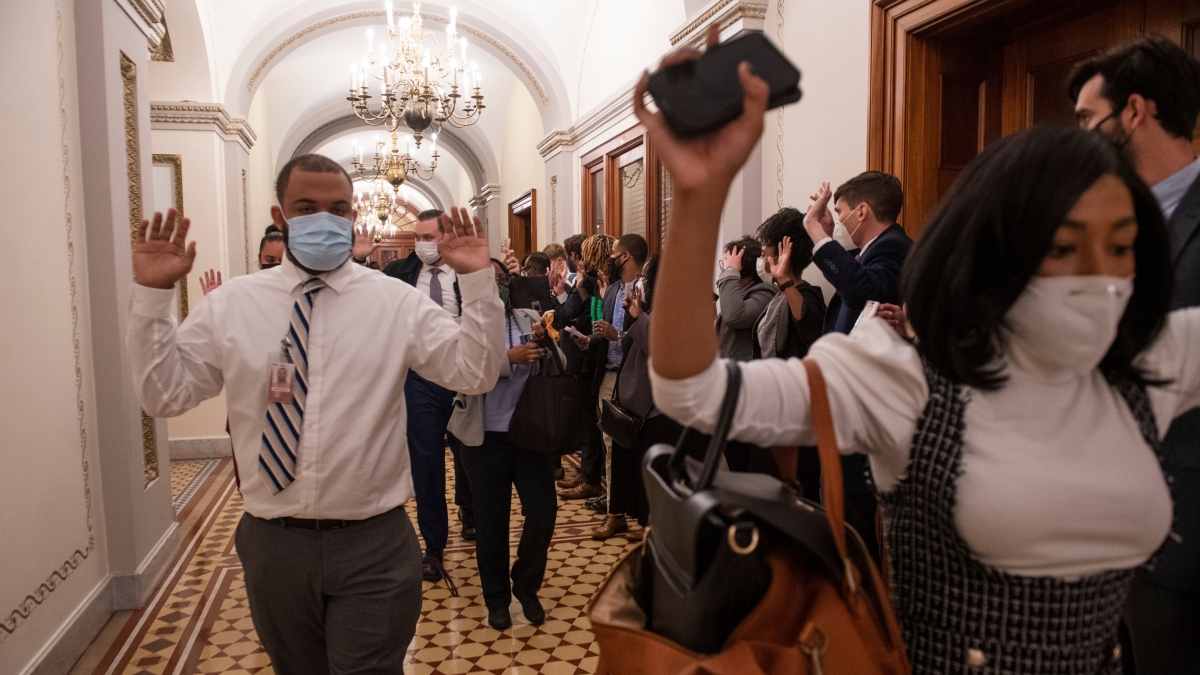
Capitol police direct members and staffers out of the House as a mob of rioters storms the Capitol on Wednesday, Jan. 6, 2021. MUST CREDIT: Washington Post photo by Bill O’Leary
Police cleared the Capitol interior about 6 p.m. and were working to move people away from the grounds Wednesday night.
These are photos from the scene.
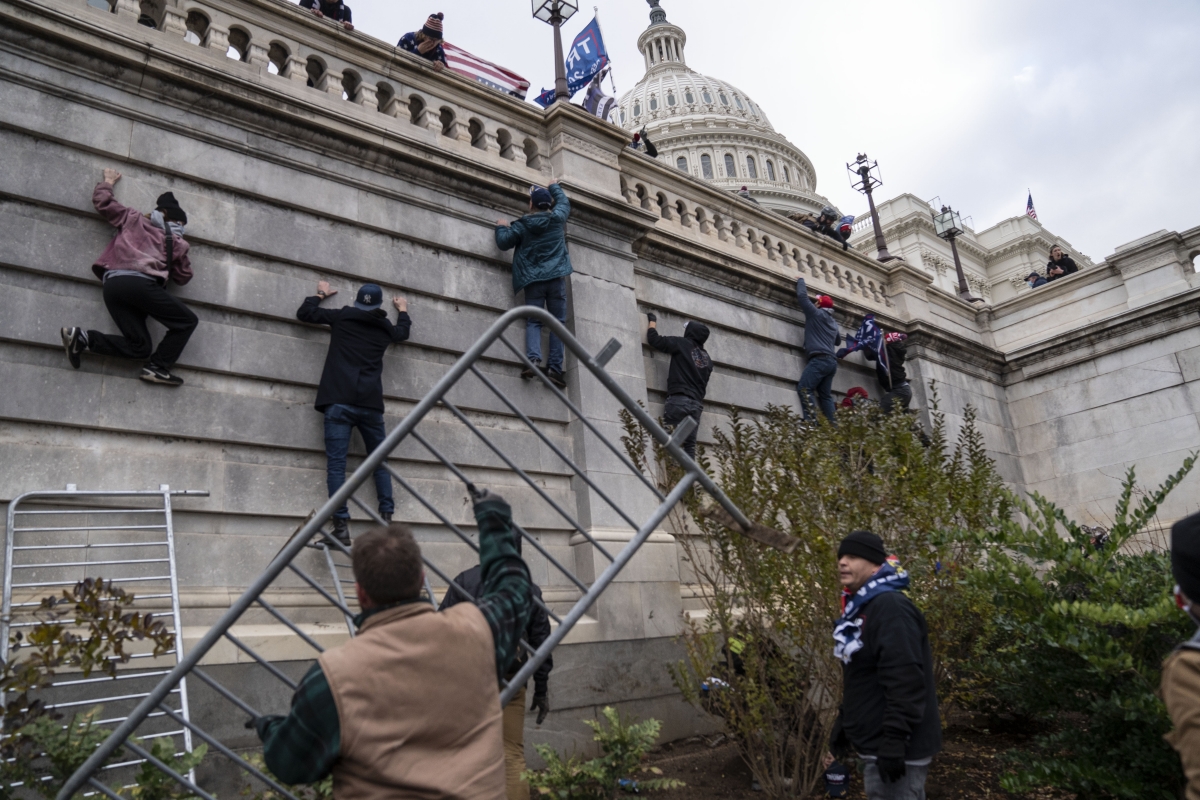
Trump supporters scale the walls on the Senate side of the Capitol on Wednesday, Jan. 6, 2021. MUST CREDIT: Washington Post photo by Michael Robinson Chavez—
People stand outside the Capitol on Wednesday, Jan. 6, 2021. MUST CREDIT: Photo for The Washington Post by Amanda Voisard
—
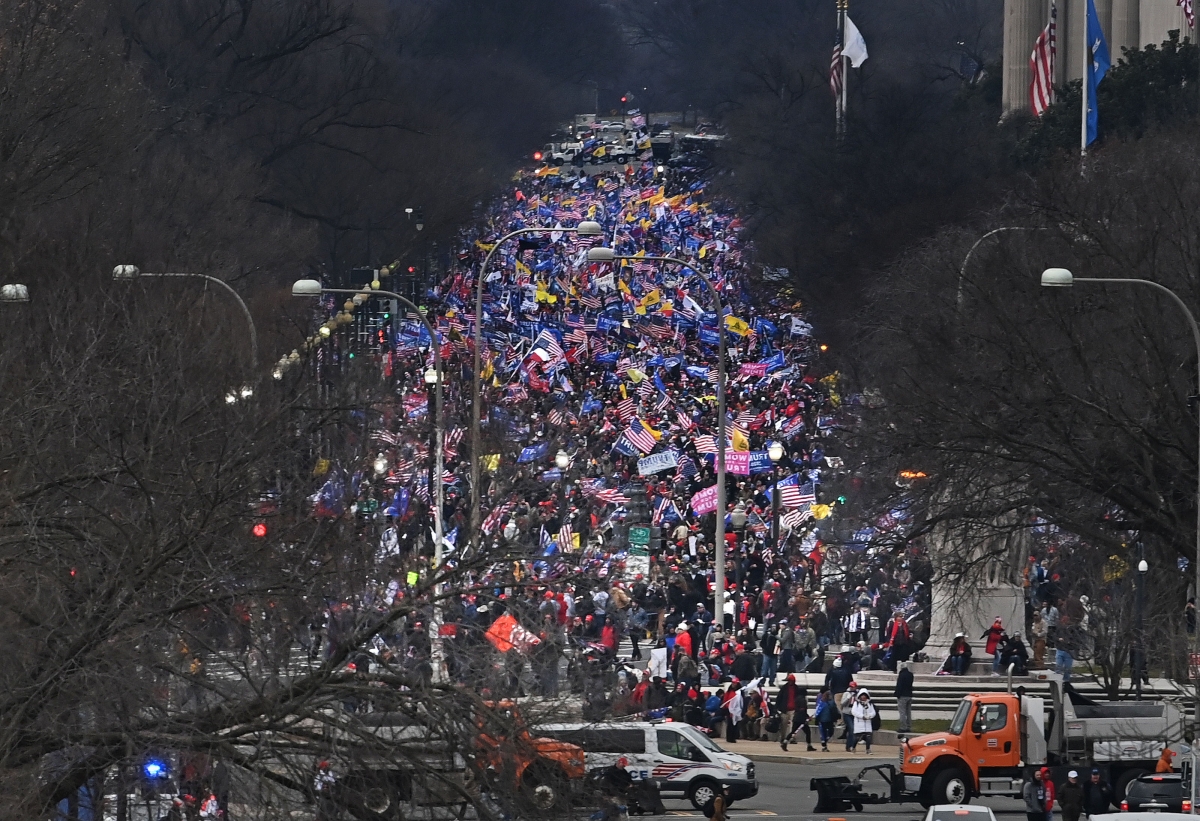
Trump supporters make their way up Constitution Avenue en route to the Capitol after the president gave a speech at the White House Ellipse on Wednesday, Jan. 6, 2021. MUST CREDIT: Washington Post photo by Michael S. Williamson
—
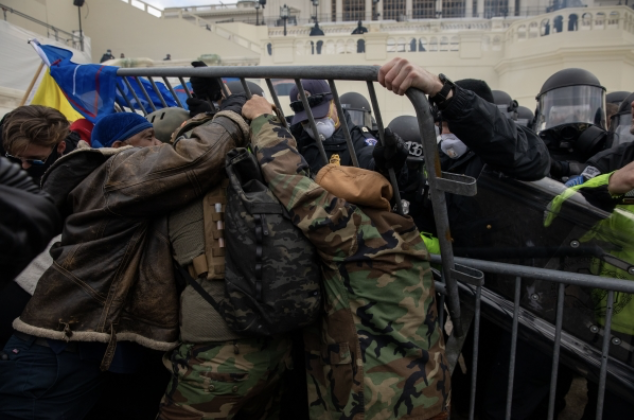
A mob of rioters push into Capitol police on Wednesday, Jan. 6, 2021. MUST CREDIT: Washington Post photo by Michael Robinson Chavez
—
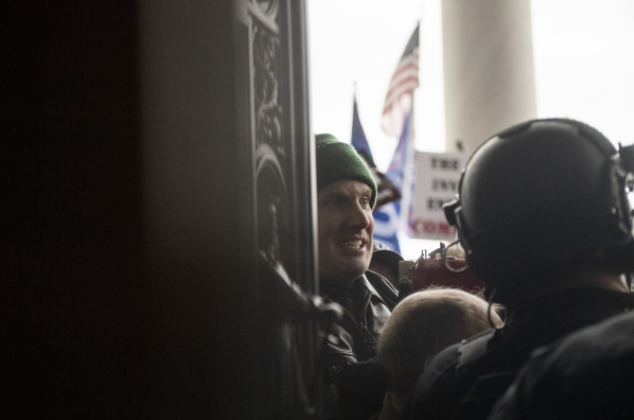
A mob of rioters bursts through a door at the Capitol on Wednesday, Jan. 6, 2021. MUST CREDIT: Photo for The Washington Post by Amanda Voisard
—
Congressional staff members are ushered out of the Capitol after a mob of rioters breached the building on Wednesday, Jan. 6, 2021. MUST CREDIT: Photo for The Washington Post by Amanda Voisard
—
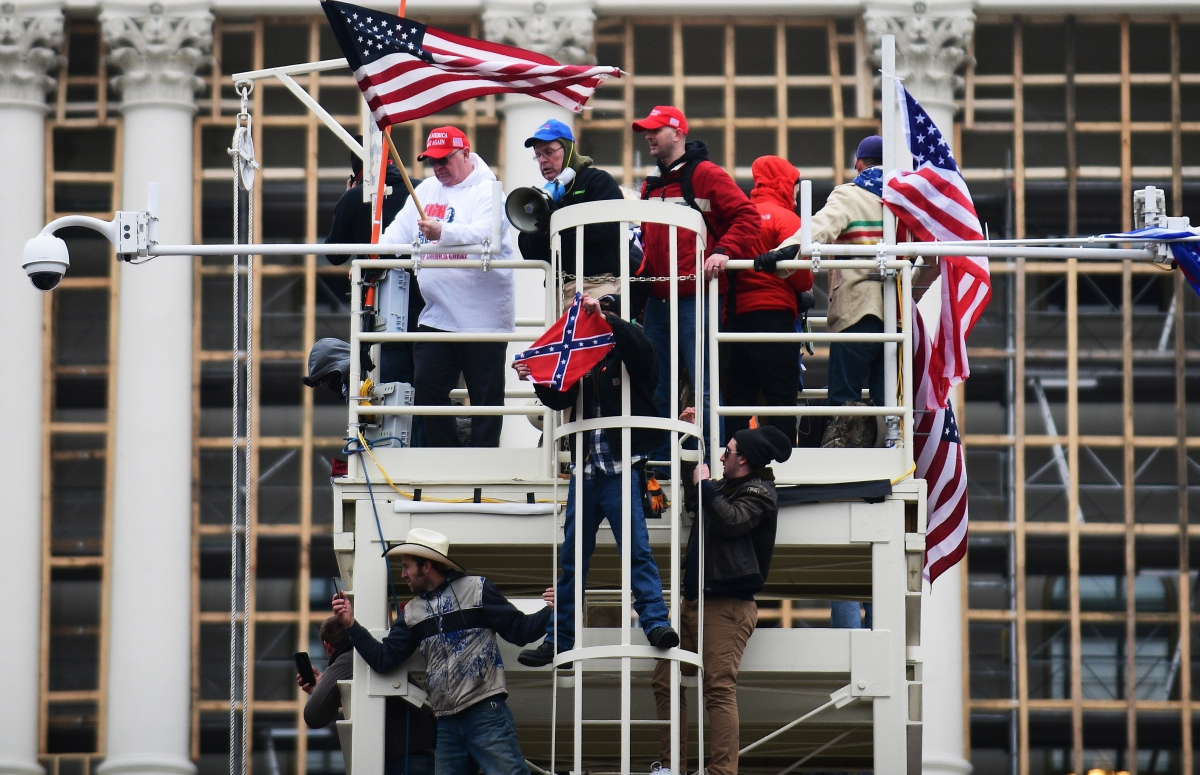
A mob riots at the U.S. Capitol in support of President Donald Trump on Wednesday, Jan. 6, 2021. MUST CREDIT: Photo for The Washington Post by Astrid Reicken
—
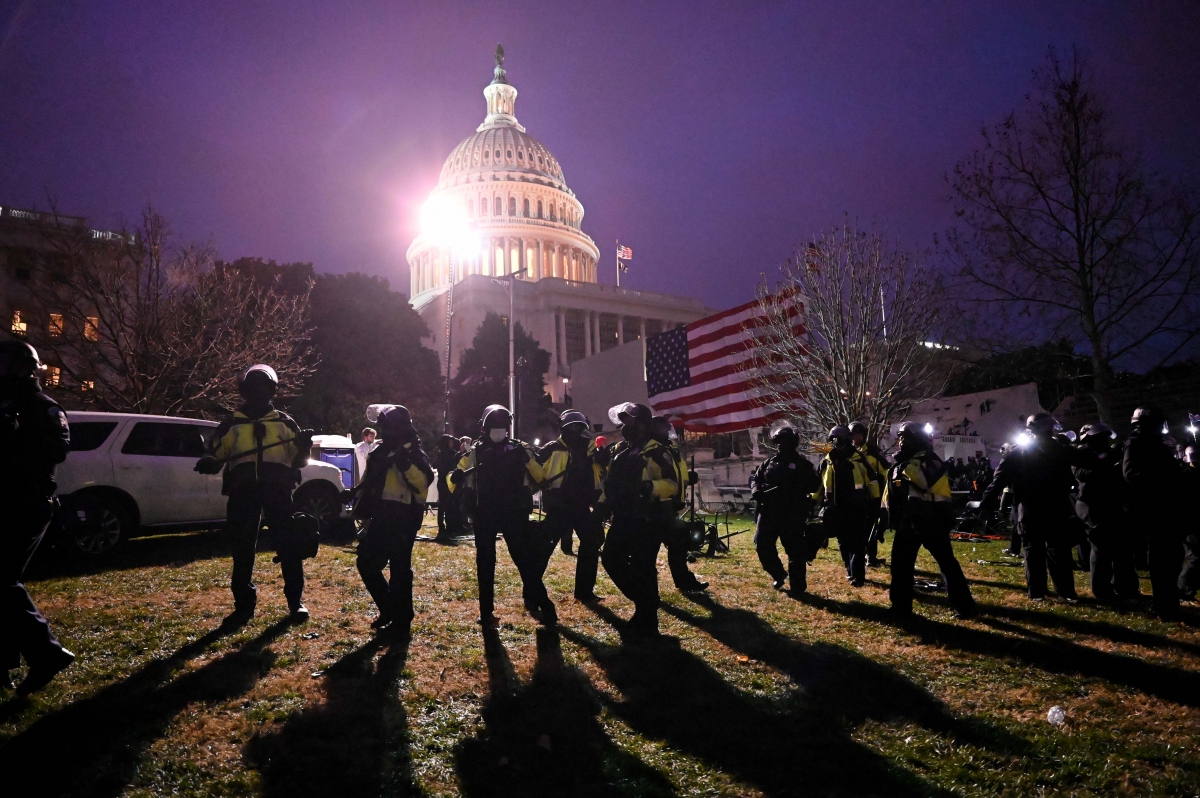
Police clear the U.S. Capitol grounds after a pro-Trump mob rioted there on Wednesday, Jan. 6, 2021. MUST CREDIT: Washington Post photo by Katherine Frey
Woman dies after being shot during mob rioting at Capitol; explosive devices found near DNC, RNC headquarters
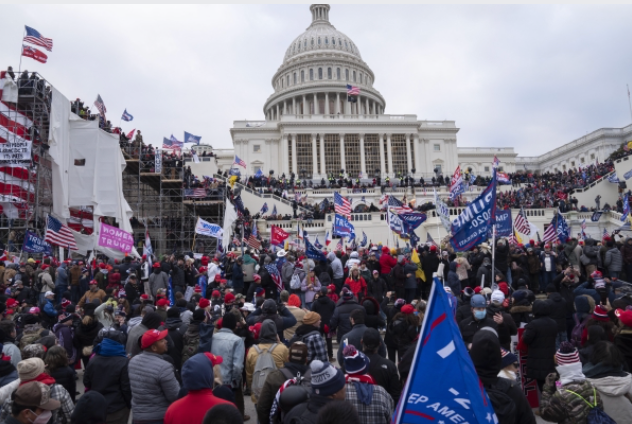
InternationalJan 07. 2021Supporters of President Trump stand outside the east side of the Capitol. MUST CREDIT: Washington Post photo by Marissa J. Lang
By The Washington Post · Rebecca Tan, Peter Jamison, Rachel Chason, Marissa J. Lang, John Woodrow Cox
WASHINGTON – As President Donald Trump told a sprawling crowd outside the White House that they should never accept defeat, hundreds of his supporters stormed the U.S. Capitol in what amounted to an attempted coup that they hoped would overturn the election he lost.
The chaotic, violent scene – all of it incited by the president’s incendiary language – was like none other in modern American history, bringing to a sudden halt the congressional certification of Joe Biden’s free and fair electoral victory.
With poles bearing blue Trump flags, the mob bashed through Capitol doors and windows, forcing their way past police officers unprepared for the onslaught. Lawmakers were ushered away shortly before an armed standoff at the House doors. Canisters of tear gas were fired across the Rotunda’s white marble floor, and on the steps outside the building, rioters flew Confederate flags. At least one person, a woman, was shot and rushed to an ambulance outside the building. She later died.
“USA! USA!” chanted the would-be saboteurs of a 244-year-old democracy.
The Senate halted its proceedings, and the House doors were closed. In a notification, U.S. Capitol police said no entry or exit was permitted in the buildings as officers struggled to regain control. “Stay away from exterior windows, doors. If outside, seek cover,” police warned.
All 1,100 members of the D.C. National Guard were activated, and Mayor Muriel Bowser, a Democrat, imposed a citywide curfew. From 6 p.m. Wednesday to 6 a.m. Thursday, Bowser said no one other than essential personnel would be allowed outdoors in the city. The governors of Maryland and Virginia also activated state troopers and members of their Guards to help respond to the situation.
What appeared to be two realistic-looking homemade bombs were found near the Republican National Committee headquarters and the Democratic National Committee headquarters in downtown Washington, officials said, adding to the danger and disorder.
Rachel Ethridge and Mike Wyatt, who live in Missouri, stand near the Washington Monument on Wednesday. MUST CREDIT: Washington Post photo by Emily Davies
The suspected bomb outside the RNC was found next to a trash container, and was a metal pipe with metal end caps, with wires running from inside the pipe to a plastic kitchen timer, according to people familiar with the matter who spoke on the condition of anonymity to discuss ongoing investigations.
FBI explosives experts responded to both devices, and they were “rendered safe by the FBI and our law enforcement partners,” the bureau said in a statement. “The investigation is ongoing.”
In a statement, the RNC called the suspicious package outside their building an “explosive device that was successfully detonated.”
At 6 p.m., police were pushing the mob away from the Capitol and authorities said the interior of the Capitol had been secured, fully cleared of rioters.
Police announced to those still outside the Capitol shortly after 6 p.m., “A curfew is now in effect. All individuals must leave the U.S. Capitol grounds or be subject to arrest.” Hundreds of people slowly walked toward the mall as police in riot gear marched forward.
Scattered catcalls and curses met the police advance. “We’ll be back, traitors,” a man yelled. Chants of “U-S-A” continued to break out as the rioters dispersed.
Supporters of President Donald Trump gather near the Washington Monument on Wednesday. MUST CREDIT: Washington Post photo by Matt McClain
Protesters were far outnumbered by law enforcement, whom one man on a loudspeaker blamed for starting “the United States civil war.” “This is China,” said one man leaving the grounds, echoing shouts of “Tiananmen Square” that came when police cleared the grounds.
The mob had arrived hours earlier, charging past the metal barricades on the property’s outer edge. Hundreds, then thousands, followed them. Some scaled the Capitol’s walls to reach the entrances; others climbed over one another.
On the building’s east side, police initially pushed the pro-Trump demonstrators back, but were soon overpowered and fell back to the foot of the main steps. Within a half-hour, fights broke out again, and police retreated to the top of the steps as screaming Trump supporters surged closer. After the police perimeters were breached, the elated crowd began to sing the national anthem.
For an hour, they banged on the doors, chanting, “Let us in! Let us in!” Police inside fired pepper balls and smoke bombs into the crowd but failed to turn them away. After each volley, the rioters, who were mostly White men, would cluster around the doors again, yelling, arguing, pledging revolution.
Dozens soon broke their way inside, where they smashed windows and vandalized offices.
“MURDER THE MEDIA,” read a message written on one door.
“WE WILL NOT BACK DOWN,” read another left in House Speaker Nancy Pelosi’s office.
Just before 3 p.m., Trump supporters began running out of the southeastern entrance.
“They shot a girl!” someone yelled.
A supporter of President Donald Trump walks near the White House on Wednesday. MUST CREDIT: Washington Post photo by Matt McClain
A team of paramedics with a gurney soon arrived and a Capitol police officer stepped aside to let them pass. “White female, shot in the shoulder,” the officer said as they hurried past. They emerged minutes later.
On the gurney was a woman in jeans, gazing vacantly to one side, her torso and face covered in blood. As the gurney was loaded into the back of the ambulance, pro-Trump protesters swarmed around it, screaming, “Murderers!”
Capitol police officers with long guns pushed them back, and the ambulance drove off.
The woman’s name was not released.
Dustin Sternbeck, spokesman for the District of Columbia police, said Wednesday evening that the woman had died. He provided no further information as to the circumstances of the shooting.
At 3:30 p.m., more law enforcement in riot gear arrived at the Capitol.
“Traitors,” Trump supporters shouted. “What’s your oath?”
Biden condemned what he called an “unprecedented assault” on American democracy, “unlike anything we’ve seen in modern times.”
“This is not dissent. It’s disorder. It’s chaos,” he said. “It borders on sedition, and it must end now.”
For hours, the president made little effort to quell the violence he had instigated, sharing a video at 4:17 p.m. in which he told people to “go home” – while continuing to promote the lie that he had won the election.
“We love you,” he told them. “You’re very special.”
Those who made it inside the Capitol took on a celebrity status when they came back out. A woman who said she had footage on her phone of Capitol police pointing guns at rioters was circled by dozens who wanted to see it. People traded what information they had about the woman who was shot inside. Some called her a “martyr.”
After she was taken away, the mood soured, though many remained joyous. “We’re making history,” one woman said as she strolled down Independence Avenue with friends.
Beneath streaming flags, including some that read “F— Biden” and that depicted Trump as the movie character Rambo, people loudly exhorted Jesus and chanted “USA.”
Many called friends and family and took videos.
“We weren’t violent before, but we are now,” a middle-aged White man said, talking into his cellphone. “There’s no going back.”
Their compatriots online celebrated the chaos, cheering the violence across a wide array of social media sites and calling for bloodshed in the days ahead.
Supporters of President Donald Trump gather Wednesday near the White House with a spillover crowd extending to the Washington Monument. MUST CREDIT: Washington Post photo by Matt McClain
Trump, who has stoked fury over baseless allegations of a stolen election, called for calm on Twitter as the riots halted a process to tally the electoral college votes certifying Joe Biden as the next president of the United States. But Trump’s plea came in a video that was itself laced with disinformation, and he shared the message only after most of the mob had been pushed outside the building – leaving a trail of online and offline discord in his wake.
Facebook took the rare step of removing Trump’s video after hours of internal debate about his actions. Twitter similarly took aim at Trump, limiting the reach of a tweet he sent late Wednesday that again sent mixed messages about the events that had unfolded.
Some House Democrats on Wednesday night called for impeaching Trump for a second time in response to the siege of the Capitol they accuse him of fomenting.
“I am drawing up Articles of Impeachment,” Rep. Ilhan Omar, D-Minn., wrote on Twitter. “We can’t allow him to remain in office, it’s a matter of preserving our Republic.”
Omar is one of the most liberal Democrats in Congress. But the sentiment was shared in other corners of the party as well – including by members of House Speaker Nancy Pelosi’s, D-Calif., leadership team.
“This is outrageous, and the president caused it,” Rep. David Cicilline, D-R.I., said on Twitter. “We should impeach him tomorrow.”
Trump is scheduled to be in office for two more weeks, and has already been impeached once, in December 2019, on charges of abuse of power and obstruction of Congress related to his efforts to pressure the president of Ukraine to investigate the Biden family. But that waning tenure does not appear to have dissuaded Democrats from reserving impeachment as an option to be exercised in his final days in office.
Rep. Hakeem Jeffries, D-N.Y., the head of the House Democratic Caucus, was asked Wednesday by ABC News whether impeachment was an option. “When I say all options are on the table,” he answered, “I mean all options are on the table.”
World stunned by subversion of U.S. democracy after pro-Trump throng breaches Capitol
InternationalJan 07. 2021A mob riots at the U.S. Capitol in support of President Donald Trump on Wednesday, Jan. 6, 2021. MUST CREDIT: Photo for The Washington Post by Astrid Reicken
By The Washington Post · Siobhán O’Grady · NATIONAL, WORLD, POLITICS, WHITEHOUSE
WASHINGTON – The world watched with dismay as a surreal scene at the U.S. Capitol, like little else seen in its history, unfolded Wednesday.
Rioters loyal to President Donald Trump burst through police barricades and mobbed the building, disrupting at the 11th hour a vote to formalize Joe Biden’s presidential election victory. Shortly before the breach, Vice President Mike Pence had announced he would not reject the election results, as Trump had urged.
Many foreign observers, already glued to news of the final chapters of the election saga, reacted with alarm and grief, especially in allied countries that have looked to U.S. democracy for inspiration.
“The United States Congress has been the symbol of freedom and democracy around the world for centuries,” tweeted Armin Laschet, the leader of Germany’s most populous federal state. “The attacks on the Capitol by fanatical Trump supporters hurt every friend of the United States.”
Across much of Europe, top officials echoed these sentiments. British Prime Minister Boris Johnson called the scenes of chaos “disgraceful.” Canadian Prime Minister Justin Trudeau told Canada’s News 1130 radio station in Vancouver that his government is concerned and “following the situation minute by minute.”
“I think the American democratic institutions are strong, and hopefully everything will return to normal shortly,” he said.
The surge of reactions from allies and foreign observers illustrated one of the Trump era’s key consequences, which has become more apparent as it winds to a chaotic close: The beleaguered but persistent role of the United States as a model for democratic norms and institutions – in its own self-conception and in the eyes of friends – has been severely tarnished.
In the view of the world, the Trump era has provided no shortage of captivating spectacle, sometimes grim. Wednesday’s events went beyond that, into disconcerting territory: far-right attacks on democracy made literal.
The turmoil also gave an opening to countries with poor track records on human rights and democracy to lecture a superpower.
Turkey, a U.S. NATO ally that has been widely condemned for jailing thousands of critics, academics, journalists and artists and has seen its partnership with the United States deteriorate in recent years, called on “all parties in the U.S.A. to show restraint and common sense,” in a statement released by its foreign ministry.
In Venezuela – which has been embroiled in its own political and social crisis for years – Jorge Arreaza, foreign minister of authoritarian leader President Nicolas Maduro, issued a statement condemning “the political polarization and the spiral of violence that reflects the profound political and social crisis the United States is currently experiencing.”
One senior European diplomat compared the images to events in Kyrgyzstan, where protesters stormed the nation’s parliament in Bishkek in October. The diplomat spoke on the condition of anonymity to speak frankly about violence in an allied country.
Nicola Sturgeon, the first minister of Scotland, described the situation as “utterly horrifying” and called for “solidarity with those . . . on the side of democracy and the peaceful and constitutional transfer of power. Irish Prime Minister Micheál Martin tweeted that the people of Ireland have a “deep connection with the United States” and that “many, like me, will be watching the scenes unfolding in Washington DC with great concern and dismay.”
“Enemies of democracy will be happy to see these unbelievable pictures from #WashingtonDC. Riotous words turn into violent acts – on the steps of the Reichstag, and now in the #Capitol,” German Foreign Minister Heiko Maas tweeted, referring to far-right protesters who rushed the historic Parliament building in August. “The disdain for democratic institutions is devastating.”
Some foreign outlets, including the BBC and the Sydney Morning Herald, maintained live coverage of Wednesday’s developments in Washington as they unfolded.
Many eyes were already turned on the United States as foreign observers tracked the closely contested runoff Senate race in Georgia. By Wednesday afternoon, both Democratic candidates, Raphael Warnock and Jon Ossoff, had been declared winners – tipping the Senate to the Democrats and granting the party control of the White House and Congress.
“How I would like to be a voter of the #DekalbCounty in #Georgia! And vote #Ossoff,” former Italian prime minister Enrico Letta tweeted earlier in the day, referring to a Georgia county with a large number of Democratic voters.
“U. S. and international politics over the next few years will depend on his victory,” he wrote. “Those votes will affect us too.”
Letta has been a critic of Trump’s handling of the election. When Trump tweeted “STOP THE COUNT” the day after polls closed in November, Letta responded, “IT’S CALLED DEMOCRACY!”
Pentagon deploys entire D.C. National Guard after pro-Trump protesters storm Capitol
InternationalJan 07. 2021President Trump supporters scaled the walls at the Capitol during a massive protest on Jan. 6, 2021. MUST CREDIT: Washington Post photo by Michael Robinson Chavez
By The Washington Post · Paul Sonne, Dan Lamothe, Missy Ryan, Alex Horton · NATIONAL, POLITICS, NATIONAL-SECURITY
WASHINGTON – The Pentagon scrambled to deploy the entire D.C. National Guard on Wednesday after taking a subdued approach to the planned pro-Trump protests, which saw aggressive demonstrators storm the U.S. Capitol through thin defenses while lawmakers sheltered in place.
The D.C. National Guard will be fully activated on Wednesday, putting 1,100 guardsmen on duty after supporters of President Donald Trump overwhelmed the Capitol Police and breached the premises.
“We have fully activated the D.C. National Guard to assist federal and local law enforcement as they work to peacefully address the situation,” acting defense secretary Christopher Miller said in a statement. “We are prepared to provide additional support as necessary and appropriate as requested by local authorities. Our people are sworn to defend the constitution and our democratic form of government and they will act accordingly.”
The governors of Maryland and Virginia also activated state troopers and members of their National Guard to respond to the situation.
Pentagon spokesman Jonathan Rath Hoffman said in a statement that the Department of Justice would lead the law enforcement response.
Speaking at a news conference alongside D.C. Mayor Muriel Bowser, Army Secretary Ryan McCarthy said he fully mobilized the D.C. National Guard around 3 p.m., about 1,100 people. McCarthy said that there had been a requests for additional support on Wednesday from the Capitol Police but that confusion led to a delay. He said he responded by mobilizing the D.C. National Guard.
It was not immediately clear if the National Guard will be armed. Previously, they were assigned on the condition that they not carry firearms, as defense officials sought to limit how much the military was dragged into the political fray.
By early evening, the National Guard was ordered to reestablish a perimeter around the building.
The task of clearing the Capitol has now fallen primarily to federal law enforcement agents, with acting attorney general Jeff Rosen overseeing the response.
An FBI spokeswoman said agents have been “deployed to assist our U.S. Capitol Police partners as requested in protection of federal property and public safety,” and added the bureau is also investigating a number of suspicious packages reported around the city.
The full activation of the D.C. Guard represented an about-face for the Pentagon. Top defense officials had crafted a narrow role for the D.C. Guard in preparations for Wednesday’s events, after facing heated criticism last June over the Trump administration’s outsized and militarized response to protests in the District following the police killing of George Floyd in Minneapolis.
Because the District is not a state, the D.C. Guard answers to the president, but he has delegated authority to command the capital’s guardsmen to Miller and McCarthy – two of the top officials at the Pentagon. Guardsmen are specifically trained in riot control tactics to back up police faced with aggressive mobs.
While preparing for Wednesday’s demonstrations, Pentagon leaders were still smarting from criticism of the June response, which included the deployment of guardsmen from D.C. and 11 states, as well as the staging of active-duty troops outside the capital and the deployment of federal agents without insignia. Members of the National Guard were also on site at the White House when federal law enforcement cleared protesters in Lafayette Square with tear gas and rubber pellets, allowing Trump to cross the street to take a photograph with a Bible in front of St. John’s Church.
With criticism of those events in mind, top defense officials specifically ensured the D.C. Guard would stay away from the U.S. Capitol to avoid the poor optics of uniformed military personnel and Humvees once again returning to the streets of the District, even though guardsmen often backup police who are expecting large crowds during moments of civil unrest.
One senior U.S. official told The Washington Post on Tuesday ahead of the demonstrations that at the Pentagon “everyone has got a lot of scar tissue and a lot of PTSD from the domestic unrest of the summer” and didn’t want a repeat. The official added, “We’ve learned our lessons and will be absolutely nowhere near the Capitol Building.”
Now that decision is facing scrutiny.
“Questions will be asked about the adequacy of the planning by the various law enforcement organizations tasked with protecting the Capitol against violent disorder like this,” said Peter Feaver, a professor of political science and an expert in civil-military relations at Duke University.
Feaver said that given all the advance warning from Trump supporters about their willingness to escalate to violence, one would have expected authorities to have a robust plan in place with contingencies assessed and war games run, with the National Guard in a backup role.
“Given what happened in June, authorities are understandably wary about escalating to the National Guard,” Feaver said. “That said, no mature and secure democracy wants to see its legislative chambers taken over by violent mobs.”
The Pentagon’s initial reluctance to bolster Washington with soldiers contrasts with the response in June, when a pair of Guard helicopters roared over demonstrators, flying as low as 45 feet and prompting fierce criticism and an ongoing investigation.
“Here it seems it’s disproportionate force on the other side of the spectrum,” said Rachel E. Vanlandingham, a military law expert and professor at the Southwestern Law School in Los Angeles. “Now they seem to be underreacting.”
LONDON – A British judge on Wednesday refused to grant bail and release WikiLeaks founder Julian Assange, who will remain in a prison cell on the outskirts of London while the U.S. government pursues its case against him.
On Monday the same magistrate, District Judge Vanessa Baraitser, ruled that Assange should not be extradited to the United States to face charges of violating the Espionage Act, because he is at extreme risk of suicide and might not be protected from harming himself in a U.S. prison.
Assange – who has been held at London’s Belmarsh prison since the Ecuadoran Embassy revoked his political asylum two years ago – was in the courtroom for the bail hearing, but not shown on cameras providing a video link to reporters and observers, so his reaction to the setback was not seen.
British court rejects U.S. extradition request for WikiLeaks’ Julian Assange, saying he is at risk of suicide
Assange is charged with 18 federal crimes, including conspiring to obtain and disclose classified diplomatic cables and sensitive military reports from the wars in Iraq and Afghanistan.
Lawyers for the U.S. government said they will appeal to Britain’s High Court the judge’s ruling to halt the extradition, a process that could take several months. Prosecutors want Assange flown to northern Virginia to face the charges, which could lead to a life sentence in a maximum-security prison if he were convicted.
But a change in administrations in Washington might alter the course.
The lead prosecutor in the case, U.S. Attorney for the Eastern District of Virginia, G. Zachary Terwilliger, announced his resignation on Tuesday. He was appointed by President Donald Trump.
Terwilliger appeared to raise doubts about the government’s zeal to continue to pursue Assange, telling NPR, “it will be very interesting to see what happens with this case. There’ll be some decisions to be made. Some of this does come down to resources and where you’re going to focus your energies.”
In the bail hearing Wednesday, Assange’s attorney, Edward Fitzgerald, argued that his client was no longer a flight risk and that he would remain in London, closely monitored and under house arrest, to continue to mount his legal defense against the U.S. charges and request to have him extradited.
Fitzgerald said that conditions at Belmarsh prison undermine Assange’s fragile mental health. Experts previously testified that Assange suffers from severe depression, Asperger’s syndrome and suicidal thoughts. Fitzgerald also argued that prison life exposes him to infection by the coronavirus.
If he is freed, Fitzgerald said that Assange would live in a house in London with his fiancee, Stella Moris, and the couple’s two young sons. Moris is also Assange’s former lawyer and the two kept their relationship a secret until recently.
Outside the courtroom, Moris told reporters, “This is a huge disappointment. Julian should not be in Belmarsh prison in the first place. I urge the Department of Justice to drop the charges and the president of the United States to pardon Julian.”
In her ruling from the bench denying Assange’s bid for freedom, the judge recited some history, noting that Assange was granted bail by a British court in 2010 as he fought extradition to Sweden, where he was wanted for sexual assault. The Swedish case was later dropped.
The judge recalled how in June 2012 Assange fled from British justice and sought refuge in the Ecuadoran Embassy in London, which granted him asylum.
Assange spent almost seven years as a fugitive in the embassy, until Ecuador revoked his protection and British police arrested him in April 2019. Since then, he has been in Belmarsh.
Baraitser said that for Assange, “this case has not yet been won. The outcome of this appeal is not yet known. Mr. Assange still has an incentive to abscond.”
She added that Assange has “a huge support network available if he again chooses to go to ground,” and she mentioned whistleblower Edward Snowden’s flight to Russia.
Japan emergency may last months as critics say steps too narrow
InternationalJan 07. 2021Pedestrians wearing protective masks in Tokyo on Dec. 30, 2020. MUST CREDIT: Bloomberg photo by Noriko Hayashi.
By Syndication Washington Post, Bloomberg · Gearoid Reidy
Restrictions set to be imposed under Japan’s state of emergency could last months, with both government advisers and critics of its strategy calling for broader steps than current proposals.
Japan is set to declare an emergency as early as Thursday in Tokyo and three surrounding areas, with relatively narrow restrictions focused on reducing infections at bars and restaurants. But as in spring, the declaration may drag on if those moves fail to change people’s behavior, experts contend.
Lifting the state of emergency in less than a month would be “next to impossible,” Shigeru Omi, the head of the panel of experts advising the government, said on Tuesday. “It’ll need a little longer — March or April, I’m not sure.”
Cases nationwide topped 5,000 for the first time on Wednesday, with Tokyo among a host of regions that saw record one-day increases. The ongoing surge will pose further challenges to the effectiveness of the expected measures.
Prime Minister Yoshihide Suga has called for a more focused state of emergency than that which devastated the economy last spring. He’s seeking to tackle the spread of coronavirus infections at restaurants that have been a primary source of the current surge, while limiting the scope of the restrictions to reduce the economic harm.
Despite saying that a rerun of the spring emergency wasn’t necessary, Omi called for moves that would boost the effectiveness of restrictions on eateries, including encouraging remote work. Suga has at times given short shrift to the panel’s recommendations, particularly over a travel subsidy program that continued to run even as the current wave surged.
While restrictions are envisioned to last for a month, the government plans to set in advance the specific conditions for lifting the emergency, with areas needing to return to “Stage 3” on a tiered system that measures criteria such as infection numbers and hospital conditions, the Nikkei reported.
Omi’s calls were echoed by Hiroshi Nishiura, an expert in mathematical modeling of infectious diseases at Kyoto University who was instrumental in defining the “Three C’s” strategy to avoid the places infections were most likely to spread.
“At a minimum it will take close to two months” to bring things under control, he told public broadcaster NHK. Nishiura published a model predicting that limiting steps to bars and restaurants would not sufficiently reduce the transmission number and would instead keep cases at their current level. Steps similar to the first state of emergency would cut cases in Tokyo to fewer than 100 by the end of February, according to the model.
Kentaro Iwata, a Japanese infectious disease expert who has clashed heads with policy makers before, also said broader steps were required.
“The layers of infections have already spread too much, and intervening in restaurants isn’t an effective policy,” he wrote on Twitter. “The worst thing to do would be to have a watered-down state of emergency.”
Iwata drew headlines in February for suggesting Tokyo may become a “second Wuhan” and called for a full lockdown to control the virus in spring, a step which ultimately proved unnecessary.
While the government is keen to avoid those broader steps, in doing so it runs the same risk that countries in Europe found when attempting to impose a “lockdown lite” in autumn. Japan is entering the current state of emergency with infections in Tokyo averaging nearly 1,000 over the past seven days, though cases per capita are still less than a 10th of those seen in the U.K., which has also returned to its strictest lockdown.
Japan won praise for its early tackling of the virus, relying on public cooperation as its constitution makes European-style enforced lockdowns impossible. While critics at the time contended the steps were too light, the country ultimately exited the state of emergency in just six weeks, and avoided a second one during a summer surge.
Many factors this time are different. Japan left the first emergency just as the summer was beginning. But January and February are the coldest months of the year in the Tokyo region, making ventilation more difficult and providing a more preferable environment for the disease — something other nations such as South Korea have also had to contend with.
The country may also struggle to enlist public cooperation the same way it did in spring. Officials have fretted that public concern over the virus was dropping, while many bars and restaurants, already pushed to the edge over the past year, may be reluctant to cooperate with requests to close.
The World Health Organization expressed disappointment with China for delaying the travel of experts to the Asian country to investigate the origin of the virus, in a rare instance of public criticism from the international organization.
Chinese officials have not yet finalized permission to allow WHO-appointed experts to enter the country even as some of them embarked on travel, said WHO Director-General Tedros Adhanom Ghebreyesus in a briefing on Tuesday. The delay comes despite months of negotiation and planning between Chinese officials and the 10-member expert team.
“I am very disappointed with this news given that two members had already begun their journeys and others were not able to travel at the last minute,” Tedros said. “We are eager to get the mission underway as soon as possible.”
The delay by Chinese authorities fuels concern that Beijing is obstructing international efforts to trace the origins of a pandemic that has now killed over 1.8 million people worldwide. Stung by criticism that China initially covered up the extent of the crisis, state media and government figures have been pushing the possibility that the pathogen did not emerge solely in the Asian country.
China is still working with the WHO on dates and other details regarding the mission, with hopes that a decision for arrangements will be reached as soon as possible, foreign ministry spokeswoman Hua Chunying said in a briefing on Wednesday.
“There might be some misunderstanding in this. But there’s no need to read too much into it,” she said.
Members of the WHO expert team appear to have called off their travel for now. “No, luckily wasn’t on the way yet,” Dutch virologist Marion Koopmans said in a Twitter post, in response to a question on whether she was facing travel obstacles.
The WHO has been criticized for being too deferential to China through the course of the pandemic, and has been blamed by other countries for initially downplaying the severity of the crisis. U.S. President Donald Trump said last year that the superpower would terminate its relationship with the WHO unless it “demonstrated independence” from China.
Top Chinese epidemiologist Liang Wannian, who oversaw the country’s virus response until September last year, told Bloomberg News in an interview on Tuesday that the WHO’s investigation would “begin very soon” in China.
The WHO team and experts from China plan to jointly analyze data and samples taken from the Wuhan wet market where many of China’s earliest Covid-19 patients appear to have become infected, he said.
Liang said he has been working with two WHO experts since July to formulate a plan on how to conduct the tracing work in China.
Germany urges patience with covid vaccine rollout under fire
InternationalJan 07. 2021Visitors enter to receive doses of the Pfizer-BioNTech covid-19 vaccine at a vaccination site in Wurzburg, Germany, on Jan. 4, 2021. MUST CREDIT: Bloomberg photo by Alex Kraus.
By Syndication Washington Post, Bloomberg · Iain Rogers
Chancellor Angela Merkel’s government pleaded for patience as it pushed back against criticism that Germany bungled the rollout of a covid-19 vaccine.
A shortage of doses at the start of the campaign was expected and stems from production bottlenecks rather than insufficient procurement, Health Minister Jens Spahn said Wednesday in Berlin.
“We have to ask large parts of the population for patience,” Spahn said. “We’ve ordered enough, more than enough vaccines.”
Like other European Union countries, Germany started its program with a shot jointly developed with Mainz-based BioNTech on Dec. 27. The shortage will be eased by additional production capacity, including the start of a facility in Marburg in February that will lead to a “massive” gain in output, he said.
A similar vaccine from U.S. biotech Moderna Inc., which won backing from the European Medicines Agency on Wednesday, could further ease supplies. Distribution of the shot could start as soon as next week, Spahn said. The EU has locked up as many as 160 million doses, with Germany to get more than 50 million.
A day after Merkel tightened and extended lockdown measures, she gathered top cabinet ministers in an effort to quell tensions within her government over claims the rollout has been too slow.
Senior members of her Social Democrat partners, including Finance Minister Olaf Scholz, questioned Merkel’s strategy of ceding responsibility for procuring vaccines to the European Union. With a national election slated for September, the tension threatens to inject party politics into the country’s pandemic fight.
At an ill-tempered meeting on Tuesday, Merkel and state leaders agreed to controversial limits on movement, sharpened restrictions on private gatherings and prolonged hard lockdown measures until at least Jan. 31. She also defended the vaccination strategy, saying more supply is coming soon.
“In the second quarter, based on all that we know from the manufacturers, we will already have significantly more vaccine doses,” Merkel said Tuesday in Berlin. The EU has ordered “significantly more vaccine than is necessary” to inoculate everyone in the bloc.
Underscoring the pressure facing Merkel’s government, Germany on Wednesday registered more than 1,000 covid-related deaths for only the second time since the pandemic began. Contagion rates remain more than double a government target despite weeks of strict curbs.
Scholz, the SPD’s chancellor candidate who attended the meeting, denied that his criticism was a campaign ploy.
“This is about a very serious issue, whether we can properly protect the citizens of this country,” Scholz said in an interview with ARD television on Wednesday. “The most important thing, not just for today but in the future, is that we do everything to make sure as much vaccine as possible is made in Germany and Europe.”
After a relatively mild outbreak in the spring, infections in Germany have doubled since the end of November to more than 1.8 million and deaths have surged above 36,000.
Scholz said Germany, which is supporting businesses affected by the lockdown, has the financial resources to weather the crisis “for a long time.”
Thanks to years of prudent budget policy, Germany’s debt as a percentage of gross domestic product won’t rise much above 70% and will quickly shrink again once the pandemic has receded, he told ARD.
With hospitals filling up and concerns about a spike from the holidays still coming, authorities are worried about the pace of inoculations. But Germany is ahead of most other European countries.
According to the latest data from the RKI public health institute, over 367,000 people have been immunized in Germany through 11 a.m. on Wednesday, about 0.4% of the population. That compares with around 1.5% in the U.S. and nearly 2% in Britain, which both began vaccinating several weeks earlier, and about 0.3% in Italy.
Spahn, a leading figure in Merkel’s Christian Democrats, has said he is hopeful everyone who wants a shot in Germany can get one by the summer.
“If you look at some of our neighbors in the European Union, then the structures we’ve put in place are working pretty well,” he said. “I’m not saying everything is perfect, I’m not saying there isn’t room for improvement, but all in all it’s working well.”
Swamped hospitals expose depth of Britain’s unfolding crisis
InternationalJan 07. 2021A pedestrian walks along Regent Street in London on Jan. 5. MUST CREDIT: Bloomberg photo by Hollie Adams.
By Syndication Washington Post, Bloomberg · James Paton, Emily Ashton, Jill Ward
If the British government’s goal throughout the coronavirus pandemic has been to protect the health service, the next few weeks will be the biggest challenge yet.
After overtaking Italy again as the country with Europe’s highest death toll, the U.K. is at the epicenter of the continent’s struggle to contain covid-19. Daily infections are at a record-one in 50 people in England now have the disease-while Prime Minister Boris Johnson this week shut schools and ordered the population to stay at home.
Medical staff say they may be forced to turn people away from hospitals if the latest lockdown fails to curb quickly enough a new strain of the virus that emerged in southeast England last month.
Winter already stretches health care and the virus means more patients are spilling into corridors and others are having to be treated in parked ambulances. The British Medical Association, which represents doctors, said the National Health Service is facing a crisis as rampant infections combine with staff illness and burnout.
“There are so many thousands of patients coming in,” said Tom Dolphin, 42, a consultant anesthetist at a London hospital. “The worrying thing is we probably haven’t seen the peak yet from the patients coming who got infected over Christmas and the New Year period.”
During 10 months of turmoil over its handling of the pandemic, the U.K. government managed to keep the country’s treasured NHS afloat and then became the first Western country to start immunizing its citizens. That now risks becoming a hollow victory as an accelerated vaccine program races against an out-of-control virus.
Medics had been pressuring Johnson to take nationwide action amid the surge in cases in recent weeks. But even at the weekend, the government was suggesting that schools would remain open.
New treatments mean a greater proportion of covid-19 patients are being kept alive, but many still need to remain in the hospital due to breathing difficulties. That’s also putting pressure on capacity. The health system had already entered the pandemic short of about 40,000 nurses.
For nurse Stuart Tuckwood, the tougher lockdown brings at least some relief as the country desperately waits for the vaccination drive to pay off.
“People know how bad things are and how much worse they’re going to get if cases continue to rise the way they are,” said Tuckwood, who works in a hospital in the south of England and is also national officer for nursing at union Unison. “We can’t rely on the vaccine being the magic solution. There can be no complacency about the ability of the health service and staff to cope.”
Britain’s death toll stood at 76,423, according to Bloomberg’s Coronavirus Tracker, after fatalities outpaced Italy’s in recent days. The number of daily cases on Tuesday rose to almost 61,000-the most since the coronavirus swept into Europe, though also after the U.K. ramped up testing.
Johnson said in a televised address on Monday that the number of covid patients in hospitals in England was 40% higher than the first peak in April. Pressure on intensive care units was already severe over the holidays, with figures published in the Health Service Journal showing they were operating at more than 110% of capacity in London and the southeast of England as of late December. Some patients had to be transported hours away to the southwest or north of England.
The dramatic escalation has prompted Johnson to gamble on multiple fronts. As well as locking down the nation again, the government is trying to rapidly increase the number of people who get their first dose of vaccine by pushing back their second shots.
That’s aimed at stretching supplies of the two vaccines being rolled out: one from Pfizer Inc. and partner BioNTech and the other from AstraZeneca and the University of Oxford. The move gained support from some health experts but sparked concerns from others, including Pfizer.
The aim is to maximize the number of vulnerable people who will get at least some protection in the shortest possible time. U.K. health authorities have pointed to data showing the vaccines provide considerable defense after a single dose, with the second shot important over the longer term.
Johnson said on Tuesday that 1.3 million people had been immunized, or almost 2% of the population, by far the most in Europe. Germany had vaccinated 317,000 people as of Jan. 5 and France just 2,000, according to Bloomberg’s Vaccine Tracker. The government in London has set a target of vaccinating almost 14 million people by mid-February.
The reality, though, is that Britain has little choice. New infections in the U.K.-720 per 100,000 population over 14 days-were running at more than twice the rate of Italy or France at the end of December, according to the European Centre for Disease Prevention and Control.
There are almost 9,000 more coronavirus patients in hospital beds than there were on Christmas Day-the equivalent of nearly 18 hospitals, according to the group NHS Providers.
The stress on doctors and nurses is increasing, and “that really does trigger a need for a new way of thinking,” said Doug Brown, chief executive of the British Society for Immunology. “The risk of not doing this is much greater.” In a normal world, the country would stick to the dosing tested in the clinical trials, he said. “We’re not in a normal world at the moment.”
Protecting the NHS resonates in Britain. During the first lockdown in spring, people stood on their doorsteps and applauded healthcare workers every Thursday evening and children painted rainbows to stick on the front windows. The government is relying on a fatigued nation to step up again, with the NHS now key to rolling out the vaccines.
Read More: U.K. Hospitals Face Breaking Point as Johnson Prepares Lockdown
Finding and deploying enough staff to carry out around 2 million vaccinations a week is no easy task and will have a big impact on the health service, said Richard Sloggett, a former special adviser to Health Secretary Matt Hancock.
“It certainly feels like we are moving to a point where we are betting the house on a vaccine program,” said Sloggett, a senior fellow at the Policy Exchange think tank.
The hope is that the lockdown will work before hospitals are unable to cope, said Dolphin, the anesthetist, who is also a member of the BMA’s council. The restrictions are due to run in England until at least mid-February, though Johnson signaled in a press conference Tuesday there could be many more months of restrictions ahead.
“It’s getting to the point where the service isn’t what we would normally recognize as fit for the U.K.,” Dolphin said. “Or fit for any country, really.”
WASHINGTON – President-elect Joe Biden will face pressure to send millions of Americans $2,000 stimulus checks and deliver on an aggressive economic agenda as Democrats closed in on unified control of Washington with likely Senate wins in Georgia.
Democrats whose ambitions have been strangled by a GOP Senate and president for the past two years were eyeing a new world with major opportunities for change on Wednesday – even as the coronavirus rages and the economy teeters on the brink.
Democrat Raphael Warnock won his race against Republican David Perdue in Tuesday’s Senate runoff in Georgia, and Democrat Jon Ossoff held a lead over Republican Kelly Loeffler. Winning those races would give Democrats control of the Senate, which along with their House majority and Biden’s presidency would give them a stranglehold on power in the nation’s capital for the first time since Barack Obama’s first term.
It’s unclear how quickly the Democratic wins in Georgia might be certified, especially since Republicans could challenge the outcomes. Nevertheless Democrats were celebrating.
“It feels like a brand new day. For the first time in six years, Democrats will operate a majority in the United States Senate – and that will be very good for the American people,” said Senate Minority Leader Chuck Schumer, D-N.Y., who would become majority leader if the Democratic wins in Georgia hold.
“America is experiencing one of the greatest crises we have ever faced, and the Senate Democratic majority is committed to delivering the bold change and help Americans need and demand. Senate Democrats know America is hurting – help is on the way,” Schumer said.
The first two years of Obama’s presidency brought the nation the Affordable Care Act. Biden, then vice president, will now have the opportunity to enact an ambitious agenda of his own. First up could be his promise that winning Georgia would bring $2,000 checks to Americans right away.
“Their election will put an end to the block in Washington – that $2000 stimulus check – that money would go out the door immediately, to help people who are in real trouble,” Biden said in Georgia in the closing days of the race. “Think about what it will mean to your lives – putting food on the table, paying rent.”
The $2,000 stimulus payments have gained surprising bipartisan support after President Donald Trump seized on the idea, first floated by liberal lawmakers in Congress in the spring. Biden has over the last several months shifted his position on the stimulus payments, but specifically pledged a $2,000 stimulus payment for voters if Democrats won in Georgia.
Biden’s promise to enact $2,000 checks comes despite a fierce debate among Democratic economists and lawmakers about the merits of the payments, which some critics argue sends too much money to Americans who do not need it. Ossoff and Warnock both pledged while on the campaign trail to enact $2,000 stimulus payments if elected.
“It has been incredible to see the tremendous rush of momentum for $2,000 cash relief,” said Andrew Yang, a 2016 Democratic presidential candidate and early supporter of direct cash assistance. “People need help, and we have woken up to the fact that our government can deliver real relief if it chooses to do so.”
The $2,000 checks would likely be just the beginning of an ambitious agenda that was already provoking furious debate Wednesday morning as Washington woke to a new realignment of power – presuming Ossoff’s victory holds. Democrats may seek to include the stimulus checks in a broader package with other priorities, such as additional funding for state and local governments and a more substantial expansion in federal unemployment benefits.
Infrastructure spending, climate change legislation, expanding health care benefits, student debt forgiveness and more may also be on the table – although congressional aides cautioned that discussions with the Biden team were in the very early stages. With control of both chambers, Democrats can use special budget rules to push through massive legislation with a simple majority in the Senate, instead of the 60 votes usually required for major bills. That’s how Republicans enacted their $1.5 trillion tax cut bill in the first year of Trump’s presidency with no Democratic votes.
But Democrats’ slim majorities will limit their ambitions and likely exacerbate infighting between liberals and centrists about how far to go. Their 222-211 House majority is the smallest margin of control either party has had for years. The Georgia wins would produce a Senate divided 50-50 between the parties, with Vice President-elect Kamala Harris as the tie-breaking vote for Democrats.
Liberals wasted no time Wednesday demanding quick action on their priorities.
“Joe Biden and the entire Democratic Party were incredibly clear of the stakes here, starting with the $2,000 checks and massive economic relief policies that put money and resources in the hands of the people,” said Alex Lawson, executive director of Social Security Works, a liberal advocacy group. “They’re now going to have to deliver that, starting with the checks on day one.”
Renewed signs of economic deterioration will amplify pressure on Democrats to act. Private payrolls shed about 123,000 jobs in December, a startling drop that marked the worst report by the ADP Research Institute in months. The same report showed the number of jobs increasing by more than 300,000 in November. Chris Rupkey, chief financial economist at MUFG, warned in a note to investors that the “dark days of the labor market” from the spring have returned.
“America’s great jobs machine ran into a wall of rising coronavirus cases and state lockdowns which puts the entire economic recovery from recession at risk,” Rupkey said. “The worst economic downturn since the Great Depression isn’t over yet. Bet on it.”
Biden will also have to focus on reining in the rampaging coronavirus pandemic, including more money for vaccines and ensuring they go out more quickly.
Congress in March approved more than $2 trillion in emergency economic aid in response to the pandemic and another $900 billion in December. Those aid package have funneled hundreds of billions to small businesses, jobless Americans, and others hurt by the coronavirus pandemic. The first round of stimulus payments included $1,200 per adult, as well as $500 per child, and were within months disbursed to more than 100 million American households.
In late December Trump almost overnight helped generate sizable Republican support for the $2,000 checks even though they stand in stark contrast to long-standing conservative skepticism of government spending and direct cash transfer programs.
The president nearly upended negotiations on economic relief when he ridiculed Congress, as well as his own treasury secretary, for proposing stimulus payments worth $600 per person. Schumer and House Speaker Nancy Pelosi, D-Calif., raced to demonstrate Democratic support for $2,000 payments as well, aiming to show the bipartisan support for the idea.
Senate Majority Leader Mitch McConnell, R-Ky., refused to put legislation for the $2,000 checks on the Senate floor, preventing the measure from advancing. But McConnell was undermined by a coalition of about a half-dozen Republican Senators who said they supported the large payments, including both Georgia Republicans up for reelection and possible 2024 GOP presidential candidates including Sens. Josh Hawley, R-Mo., and Marco Rubio, R-Fla. The bill passed by the House for $2,000 payments was supported by more than two dozen Republicans as well.

 Security officers point weapons at a House chamber door as a mob of rioters storms the Capitol on Wednesday, Jan. 6, 2021. MUST CREDIT: Washington Post photo by Bill O’Leary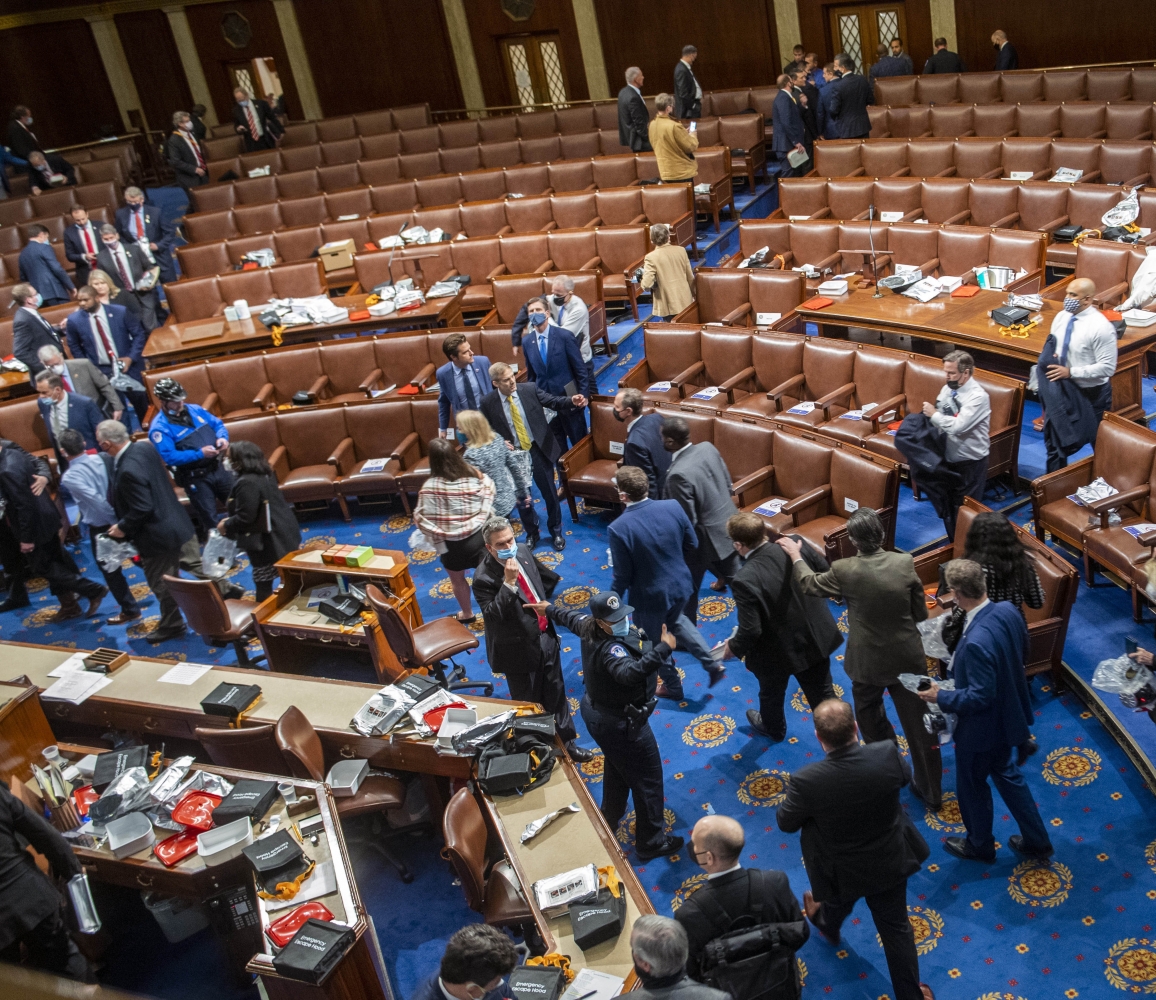
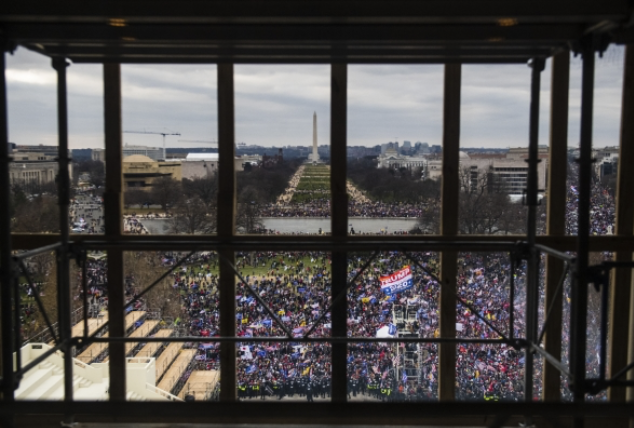
 Supporters of President Trump stand outside the east side of the Capitol. MUST CREDIT: Washington Post photo by Marissa J. Lang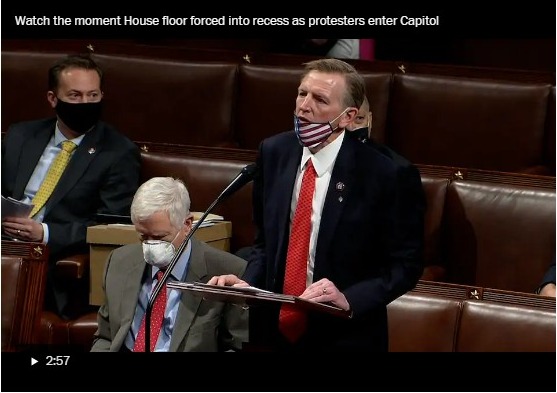


 A mob riots at the U.S. Capitol in support of President Donald Trump on Wednesday, Jan. 6, 2021. MUST CREDIT: Photo for The Washington Post by Astrid Reicken
 President Trump supporters scaled the walls at the Capitol during a massive protest on Jan. 6, 2021. MUST CREDIT: Washington Post photo by Michael Robinson Chavez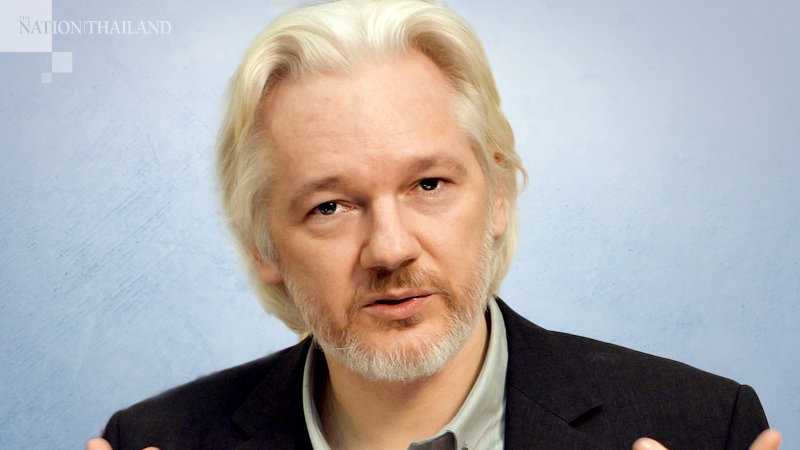
 Pedestrians wearing protective masks in Tokyo on Dec. 30, 2020. MUST CREDIT: Bloomberg photo by Noriko Hayashi.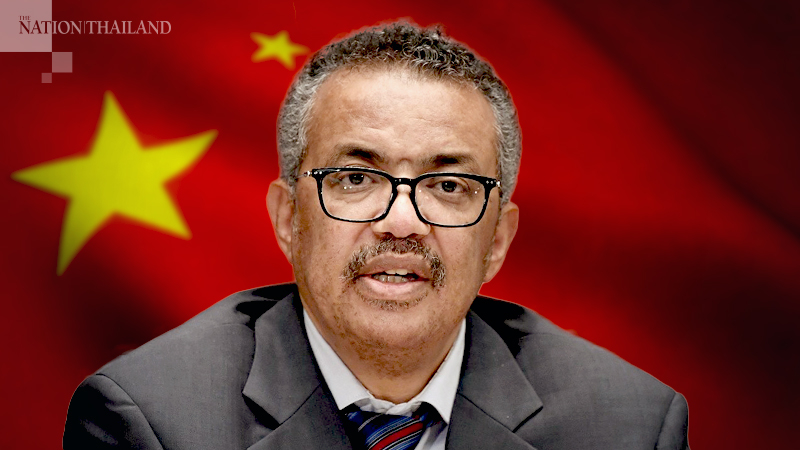
 Visitors enter to receive doses of the Pfizer-BioNTech covid-19 vaccine at a vaccination site in Wurzburg, Germany, on Jan. 4, 2021. MUST CREDIT: Bloomberg photo by Alex Kraus.
 A pedestrian walks along Regent Street in London on Jan. 5. MUST CREDIT: Bloomberg photo by Hollie Adams.
 SootinClaimon.Com