‘The weapon that will end the war’: First coronavirus vaccine shots given in U.S. #SootinClaimon.Com

#SootinClaimon.Com : ขอบคุณแหล่งข้อมูล : หนังสือพิมพ์ The Nation.

‘The weapon that will end the war’: First coronavirus vaccine shots given in U.S. (nationthailand.com)

‘The weapon that will end the war’: First coronavirus vaccine shots given in U.S.

InternationalDec 15. 2020

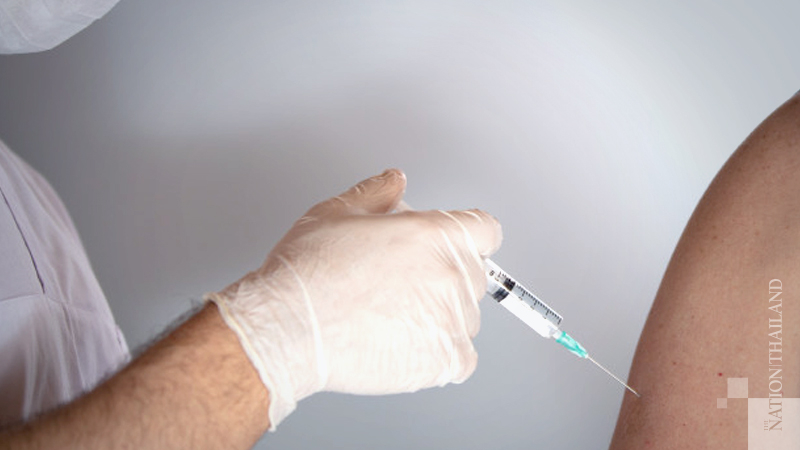
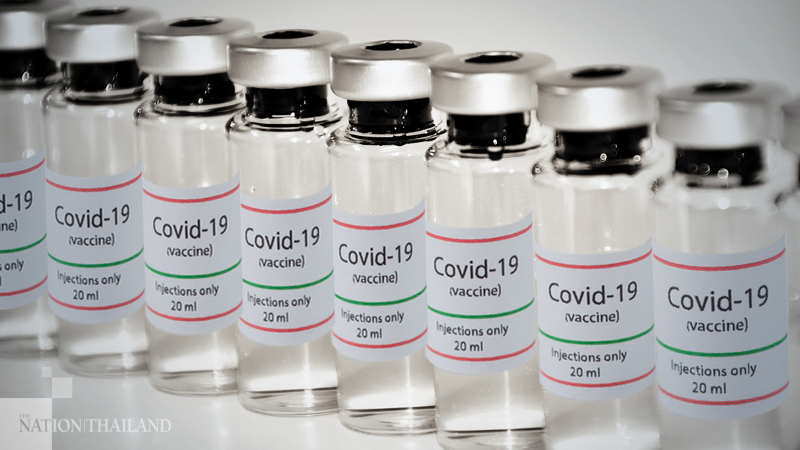
Photo credit: wirestock

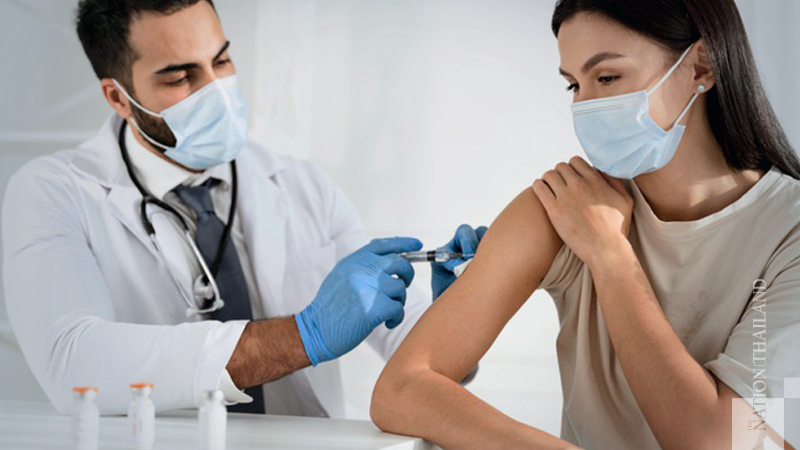
Photo credit: wirestock

By The Washington Post · Ben Guarino, Ariana Eunjung Cha, Josh Wood, Griff Witte

NEW YORK — With a quick jab to a nurse’s left deltoid, America entered a new phase in its fight against the coronavirus on Monday.

The injection to Sandra Lindsay’s arm at Long Island Jewish Medical Center made her the first American to receive the coronavirus vaccine outside a clinical trial. The small shot represented a giant leap in efforts to beat back the virus, a moonshot worth of hope amid a pandemic that has infected more than 16 million and killed more than 300,000 nationwide.

“Sandra, you didn’t flinch,” New York Gov. Andrew Cuomo, D, told the critical care nurse after the injection was administered, as he watched via live stream from his office.

“It didn’t feel any different than taking any other vaccine,” said Lindsay, seated in a puffy blue armchair.

But this vaccine is monumentally different. Developed in record time, it is expected, eventually, to help end a pandemic that has crippled much of life in the United States – and globally – for the better part of a year.

“I believe this is the weapon that will end the war,” Cuomo said.

Vaccinations rolled out across the country Monday, with doctors and nurses at hospitals nationwide injecting one another as part of a federal plan to prioritize front-line health care workers. Some said they had dedicated the experience to the patients they had lost, or to family members they had seldom seen as they battled around-the-clock to save others.

“I just lost my 27th patient today,” said Louisville physician Valerie Briones-Pryor. “So the vaccine I took today was for her family and for the other 26 I lost.”

The immunization campaign will rapidly expand in the days ahead, with some states beginning to include nursing homes. Federal officials leading the effort to manufacture and distribute the vaccines said Monday they expect 20 million people to get the first of two required doses by the end of the year.

The first batches shipped overnight Sunday, following emergency use approval over the weekend, with hospital administrators eagerly checking online tracking tools for arrival updates. In several states, governors were on hand at hospital loading docks as crates of dry-ice-packed vaccine were delivered to doctors and nurses who cheered their arrival.

The first inoculation was heavy on symbolism: Long Island Jewish Medical Center, in Queens, was on the front lines of the covid-19 fight this spring. It is part of the Northwell Health System, which has treated more than 100,000 covid patients. Several among the first to receive the vaccine, Lindsay included, are Black, a reflection of the virus’s outsized toll in communities of color.

But even as Cuomo, Lindsay and others watching live celebrated, they also offered reminders that it will take months for enough people to be vaccinated to influence the broader course of the virus among the public.

“There’s light at the end of the tunnel,” Lindsay said. “But we still need to wear masks and social distance.”

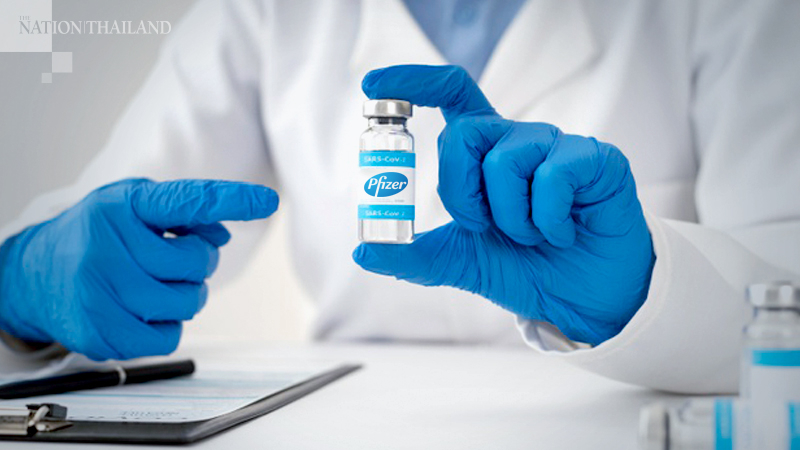
And even with the injection, Lindsay was not protected. The vaccine administered Monday – which was developed by Pfizer with the German company BioNTech – takes two doses to achieve the 95% effectiveness that studies have shown.

The initial distribution of 2.9 million doses will come as much-needed relief for medical workers and residents and staffers at long-term care facilities. But it alone will not arrest the spread of a virus that has never been more prevalent or destructive in the United States than it is today.

The first inoculations Monday came at a time when the United States is averaging more than 200,000 new cases and nearly 2,500 deaths each day. Both are record highs.

Nonetheless, large segments of the population continue to ignore warnings to wear masks and avoid gatherings. A significant segment of the country also says it has no intention of getting immunized: Recent surveys have shown between 42 percent and 61 percent of Americans are willing to get vaccinated.

Monday’s vaccinations – carried out on television and via live stream on social media – were aimed squarely at upping that percentage before the vaccine is made available to the general population, which is likely to happen in the late winter or spring.

“We just have to do it,” urged Cuomo. “The vaccine doesn’t work if it’s in the vial.”

President Donald Trump – who has repeatedly mocked mask-wearing and other public health measures while touting the virtues of a vaccine – signaled his approval. “First Vaccine Administered,” he tweeted within minutes of Lindsay’s injection. “Congratulations USA! Congratulations WORLD!”

The United States was not the first Western country to administer the Pfizer-BioNTech vaccine. That distinction belonged to Britain, which started inoculations last Tuesday with a shot in the arm of 90-year-old Margaret Keenan.

Approvals in the United States took slightly longer. But many American hospitals on Monday were wasting no time getting the process underway, administering doses nearly as soon as they had been delivered. More than half of states had received their initial vaccine shipments by around midday Monday.

At UPMC Children’s Hospital of Pittsburgh, UPS driver Dallas White wheeled a single box of vaccine through the hospital’s loading dock and up to the pharmacy first thing Monday.

Once there, Lynn Peffer, an inventory specialist, and Carol Vetterly, the clinical pharmacy director, used tongs, a box cutter and even a cake knife to work their way through the thickly packaged parcel. Beneath a layer of dry ice, they found a container the size of a kitchen tile containing 975 doses of the vaccine.

The doses were administered to front-line workers who interact with covid-19 patients, including emergency-room doctors, intensive care nurses, anyone assigned to patient transport and even custodial workers.

Sylvia Owusu Ansah, an emergency medicine physician, was among them. She said she wanted to take the vaccine to demonstrate to fellow African Americans that it was safe.

“There is a skepticism there that is not unwarranted,” she said, referencing the seed of distrust between Black Americans and experimental medicine planted with the Tuskegee syphilis experiment, in which Black men in the study were left untreated. “Basically, if I can do it, they can do it.”

In next-door Ohio, Gov. Mike DeWine, R, was on hand when a UPS delivery truck carrying 975 doses of the vaccine arrived outside the Biomedical Research Tower at Ohio State University’s Wexner Medical Center in Columbus at 9:15 a.m.

Just over an hour later, the inoculations were underway.

“Vaccinators, are you ready? Recipients. are you ready? Three, two, one!” Elizabeth Seely, Wexner’s chief administrative officer, announced to a room of 30 front-line health-care workers and vaccinators.

The first six shots were met with cheers and applause.

Robert Weber, 63, chief pharmacy officer and one of those administering the vaccine, said it was a “once-in-a-lifetime opportunity.”

In an appearance at George Washington University Hospital in Washington, Health and Human Services Secretary Alex Azar called the vaccine “a medical miracle.” He said that an additional 30 million Americans are predicted to receive a first dose of the vaccine in January.

Efforts are expected to be bolstered by a drug developed by Moderna that is in the process of being reviewed by federal regulators and, officials said, could be available for use starting next week.

For hospitals preparing to start the vaccination process, there was an expectation of desperately needed relief.

“The vaccine will liberate our workforce, the people who are really working taking care of patients, from worrying about whether they face a death sentence from accidentally getting infected,” said UC Davis Health CEO David Lubarsky.

Nearly 10 months after The UC Davis Medical Center staff treated the first known U.S. case of community transmission, the Sacramento, Calif., hospital was prepared to receive 4,875 doses of the Pfizer vaccine on Tuesday.

That depends, of course, on a smooth delivery of the shipments. But so far at least, there have been no reports of serious delays.

“It’s humbling being a part of this vaccine process because it’s going to save a lot of lives,” said Byron Bishop, the UPS driver who pulled his truck up to the University of Louisville Hospital at 9:40 a.m. He was greeted by applause plus an elbow bump from the governor, Andy Beshear.

Beshear, D, said he was feeling “the best I’ve felt since March 6,” the day when Kentucky counted its first coronavirus case. “Today is the day we start winning the war against covid.”

Later, he appeared to be fighting back tears as he talked about a close friend who lost his mother to the virus and then had to go into quarantine for two weeks, preventing him from grieving with his family.

On a day devoted to allaying concerns about the vaccine, medical professionals were among those who acknowledged some early concern, given the extraordinary speed with which it was developed.

“My initial thought was, it usually takes years and years to get a vaccine approved for anything, so I was a little skeptical at first,” said David Meysenburg, who directs Nursing, Emergency and Trauma Services at UF Health Jacksonville. “But then the more information I got on it, and the more research I did from credible sources, I felt very comfortable.”

He said he still felt that way after receiving his first dose Monday. He also felt hope.

“This is the first time where you can sense that there’s an end in sight,” he said.

At Ochsner Medical Center in Jefferson, La., the administration of the first doses was streamed live on Facebook. The event was a slick production full of medical details, such as how five doses are carried in each vial.

Chief Medical Officer Robert Hart hosted interviews with a diverse group of staffers as they got their shots, sending them off with “CV-19 vaccinated” stickers.

“She is in the middle of it day in and day out,” he said of one nurse, Mia Yepez, who works in a covid-19 unit.

Yepez said that it is especially important for her to be there because she is African American. She encouraged her colleagues and others in her community to get vaccinated.

“We want to be able to stop the many admissions,” she said.

Louisiana is one of the many states where the Black community was hit hard by initial waves of the outbreak and where news of the vaccine has been greeted with some skepticism.

When the presidents of two historically Black colleges in Louisiana – Walter Kimbrough of Dillard University and C. Reynold Verret of Xavier University – announced in early September that they had volunteered to test one of the vaccines, many reacted on social media with alarm.

On Monday, some of that hesitation showed up on Ochsner Medical Center’s Facebook page, with people commenting that they may eventually get the vaccine but have decided not to at the moment.

At the site of the first injection – Long Island Jewish Medical Center, in Queens – Yves Duroseau, emergency-medicine chair at Manhattan’s Lenox Hill Hospital, was the second person to receive his shot. Michelle Chester, director of employee health services for Northwell Health, administered vaccines to both Duroseau and to Lindsay.

“This is the beginning of the end of covid,” Chester said. “Together, as a community, as a nation, we can end this.”

Chester donned purple gloves and gave Duroseau a swift jab with a slender syringe.

“Ready?” she said.

“Please,” Duroseau said.

“Let’s do this!”

Duroseau said he had seen “devastation” from covid-19 in his family, with the death of an uncle. Another of his family members is in the hospital with the disease.

“Everyone was waiting for this day,” he said. “It could not have come soon enough.”

D.C. region rolls out coronavirus vaccines amid push to reach priority groups #SootinClaimon.Com

#SootinClaimon.Com : ขอบคุณแหล่งข้อมูล : หนังสือพิมพ์ The Nation.

D.C. region rolls out coronavirus vaccines amid push to reach priority groups (nationthailand.com)

D.C. region rolls out coronavirus vaccines amid push to reach priority groups

InternationalDec 15. 2020

Photo credit: freepik

Photo credit: freepik

By The Washington Post · Rebecca Tan, Lola Fadulu, Michael Brice-Saddler

WASHINGTON – The first doses of a coronavirus vaccine were administered Monday in the Washington region, marking the start of a logistically massive undertaking that officials hope will halt a virus that has infected more than 540,000 residents and killed nearly 11,000 in the area.

Governments and hospitals are hosting events this week to show residents getting vaccinated as part of an effort to foster public trust in the vaccine. D.C., Maryland and Virginia are reserving the first shipments for health-care workers, first responders and nursing home residents.

Members of the public, officials said, probably will have to wait until spring. The rollout comes as the seven-day average of new infections approaches 7,000 across the greater Washington region – the most since the start of the pandemic.

“We still have a long way to go,” Maryland Republican Gov. Larry Hogan said to a group of hospital workers who were vaccinated Monday afternoon, “but you guys are the first. And we’re proud of all of you.”

Virginia Democratic Gov. Ralph Northam said the vaccine’s arrival is a “much-needed symbol of hope” for the state. Speaking at the Bon Secours hospital in Richmond, Va., which received a batch of doses on Monday, he urged residents to remain vigilant.

“This is the first step in a months-long process to receive, distribute and administer the vaccine as it becomes available,” he said.

Monday’s activity came as advocates for people with intellectual and developmental disabilities are calling on officials to add those individuals to the Phase 1 priority list, especially if they live in group homes. Research shows that they are significantly more likely to die of the novel coronavirus than others in the public, but Maryland and D.C. officials haven’t said when people with those disabilities might receive the vaccine.

“We just don’t know where folks with developmental disabilities are [on the vaccine list],” said David Ervin, chief executive for the Jewish Foundation for Group Homes, which operates 29 sites in Virginia and Maryland. “So far, nothing has been articulated.”

D.C. officials said “residential care community residents” would be in the latter part of the first phase of its distribution plan, though it’s not clear whether that would include residents of group homes. First in line are healthcare workers and first responders, city Health Director LaQuandra Nesbitt said last week.

As hospitals in the city received their first doses Monday, D.C. Democratic Mayor Muriel Bowser encouraged residents to beware of misinformation about the Pfizer-BioNTech vaccine, which the Food and Drug Administration authorized last week. She cited the vaccine’s efficacy and reminded residents that it would be normal to experience symptoms such as headaches and sore muscles after receiving it.

Six institutions will receive the city’s initial allotment of 6,825 doses this week. Five employees at George Washington University Hospital, including emergency medicine nurses and anesthesiologists, were among the first in the nation’s capital to receive the vaccine.

Shylee Stewart, a labor and delivery nurse, said she initially was unsure about receiving the vaccine because of possible side effects. “I was hesitant because I was uneducated,” Stewart said. “And then I did my own research and talked to my colleagues . . . and I had no doubt once I educated myself.”

Raymond Pla, an anesthesiologist, was the sole Black worker of the five to get vaccinated. His message to Black Americans was that it didn’t hurt and was supported by robust research.

“If you want the funerals from the covid-19 infection to slow down and stop, you got to get the vaccine,” he said.

Some government workers in the city, including members of the fire department, will be vaccinated this week as part of a campaign to build confidence in the vaccine, particularly among Black and Latino residents.

“My mother died when I was 5,” said Lt. Keishea Jackson, a firefighter who volunteered to be vaccinated. “My father is everything to me – whenever I come home from work every day, I have anxiety about passing [the virus] on to him.”

Like Pla, Jackson said she wants to “send a message to Black and Brown people” about the safety of the vaccine. “It is my race that is dying at a high rate,” she said.

D.C. officials said last week that the city is being shortchanged on vaccine doses. There are nearly 85,000 health-care workers in the city, but because most of them commute from Virginia or Maryland, the city expects to receive only a fraction of the requisite doses in its first shipment from the federal government.

On Monday, Nesbitt said Virginia would provide about 8,000 doses of the vaccine to residents employed as health-care workers in D.C.

Virginia and Maryland are expected to receive 70,000 and 50,000 doses, respectively, of the vaccine in their first shipments. Officials in both states also have said those estimates fall far short of what they need to protect all health-care workers, much less other vulnerable groups such as nursing home residents or those with other health conditions.

Daphne Pallozi, chief executive of CHI Centers, which operates 17 group homes in Maryland, urged Hogan last week to include group home residents in the state’s vaccine distribution priority list. She cited a recent study that includes data from Maryland and shows that individuals with intellectual disabilities are at least twice as likely as others in the public to die of covid-19, the disease caused by the coronavirus.

The Centers for Disease Control and Prevention says in its vaccine guidelines that states should prioritize long-term care settings.

Erin Beard, a Virginia Health Department spokeswoman, said Monday that group home residents will have the highest vaccine priority in the state. But Charlie Gischlar, a spokesman for the Maryland Health Department, said adults with intellectual disabilities fall under “Phase 1B” in the state’s vaccine distribution plan, meaning they will receive it after hospital workers and nursing home residents.

More details on vaccine distribution will be “fleshed out as more information is received from the federal government,” he said.

Group home providers, who care for thousands of vulnerable individuals in homes of four to six, say they have struggled to get adequate state and local assistance throughout the pandemic.

When the virus arrived in the spring, advocates say, they received less help in procuring protective equipment and cleaning supplies than nursing homes. In August, a coalition of providers told Virginia lawmakers that some group homes would close indefinitely without financial relief.

Amid soaring community spread, the virus has made its way back into some group homes, providers say. Without early vaccination, they say these facilities are likely to report more deaths.

The greater Washington region on Monday reported more than 5,700 new infections. Virus-related hospitalizations and deaths have trended upward since mid-November and are likely to continue growing until there is a significant change in transmission rates.

“We’re seeing record case numbers, and they’re continuing to grow, and they’re going to continue to increase,” said Neil J. Sehgal, assistant professor of health policy and management at the University of Maryland.

Facing Christmas lockdown, Germany says no singing in church, no mulled wine and no New Year’s fireworks #SootinClaimon.Com

#SootinClaimon.Com : ขอบคุณแหล่งข้อมูล : หนังสือพิมพ์ The Nation.

Facing Christmas lockdown, Germany says no singing in church, no mulled wine and no New Year’s fireworks (nationthailand.com)

Facing Christmas lockdown, Germany says no singing in church, no mulled wine and no New Year’s fireworks

InternationalDec 15. 2020

By The Washington Post · Rick Noack, Antonia Noori Farzan

BERLIN – Germans will have to do without singing in churches and shopping for gifts in person this year. Mulled wine, the lifeblood of seasonal celebrations and Christmas markets, is set to disappear from the streets starting Wednesday. And the markets themselves are largely shuttered.

https://www.washingtonpost.com/video/c/embed/7ccb5ada-6e5f-4466-a898-85b23938a922?ptvads=block&playthrough=false

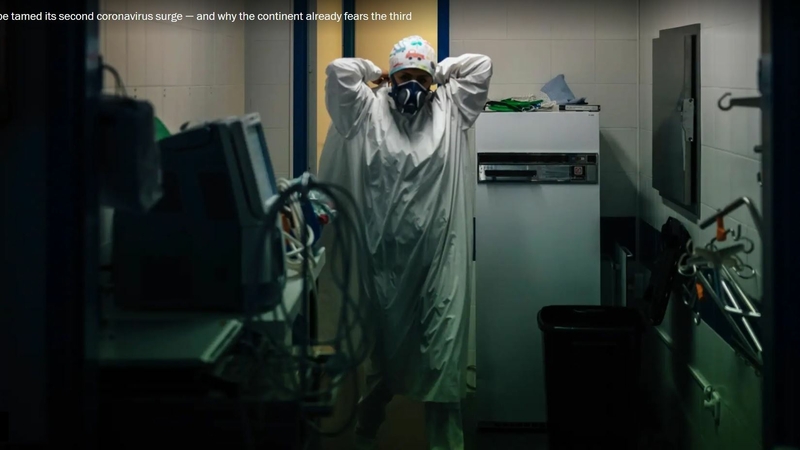
This country is bracing for comparatively cheerless Christmas and holiday season under lockdown after mounting restrictions in recent months failed to suppress the spread of the coronavirus.

New measures – announced Sunday by Chancellor Angela Merkel and set to take effect Wednesday – resemble the country’s hard lockdown in spring, with most retail stores set to close and most schools pivoting to remote learning.

As recently as last month, European leaders had raised hopes for a degree of normality over Christmas. But with Christmas Eve 10 days off, the dire reality of the pandemic is undeniable. Strict shutdowns are set to return or are being pondered in Germany, parts of Britain, the Netherlands and elsewhere on the continent.

Germany Chancellor Merkel on Sunday said social contact had “risen considerably” as a result of Christmas shopping, resulting in an “urgent need to take action.”

Officials appealed to Germans to refrain from rushing to gift shops before they close Wednesday. “I wish and I hope that people will only buy what they really need, like groceries,” Economy Minister Peter Altmaier said late Sunday. “The faster we get these infections under control, the better it is for everyone.”

Private gatherings will be limited to five people from no more than two separate households, though households in most parts of the country will get a temporary reprieve over Christmas, when they will be allowed to host up to four adult relatives, plus children. Germany is not instituting a ban on religious services, but all attendees must register in advance.

The restrictions are expected to last at least through Jan. 10.

At a barber shop in Berlin, the phone rang nonstop Monday morning, while customers hoping for last-minute trims lined up outside. Streets in the capital remained somewhat crowded.

Germany’s tougher guidelines will also include a ban on fireworks sales and public gatherings on New Year’s Eve. Officials said they hoped to avoid the typical spate of fireworks-related injuries over the holiday, given that hospitals are already overburdened.

Germany had initially opted for a more relaxed response to the second wave of the virus in Europe than many other European nations did, amid hopes that the country could keep its economy humming over the winter in the wake of one of the worst economic downturns in living memory. Last month, Germany closed theaters, museums and other venues, and ordered restaurants and bars to switch to takeout, but allowed other aspects of normal life to continue.

While some countries in Europe that imposed strict lockdowns in October or November saw case numbers drop in recent weeks, Germany’s infection rate only leveled off, before starting to surge again.

Germany recorded 181 new infections per 100,000 people over the last seven days, compared to 122 in France and 60 in Spain, even though infection rates are still over two times lower in Germany than in the United States.

Germany reported fewer per capita infections in spring than many of its European neighbors, but what was seen as a key reason for its success in spring – the federal system that empowered regional leaders to take action and allowed for quick mass testing programs – has hampered the coherence of country’s response to the second wave.

The new rules announced Sunday were the result of difficult discussions between Merkel and the leaders of the country’s 16 federal states, which had for weeks struggled to find common ground on a nationwide lockdown because infection rates differ across the country.

Unable to enforce such a lockdown on her own, Merkel appealed to state leaders in an emotional address to Parliament last week. “If we have too many contacts now before Christmas, and that ends up making it the last Christmas with the grandparents, then we will have failed,” she said.

Singapore approves Pfizer vaccine and enters last phase of curbs #SootinClaimon.Com

#SootinClaimon.Com : ขอบคุณแหล่งข้อมูล : หนังสือพิมพ์ The Nation.

Singapore approves Pfizer vaccine and enters last phase of curbs (nationthailand.com)

Singapore approves Pfizer vaccine and enters last phase of curbs

InternationalDec 15. 2020

By Syndication Washington Post, Bloomberg · Philip J. Heijmans, Krystal Chia

Singapore has approved the use of Pfizer and BioNTech’s coronavirus vaccine and expects the first shipments by the end of the month, by which time it also plans to move into the final phase of its virus curbs.

Other vaccines are expected to arrive in Singapore “in the coming months,” Prime Minister Lee Hsien Loong said in a speech on Monday, adding the country will have enough for everyone by the third quarter of next year. Meanwhile, Singapore will further ease restrictions to stem the spread of the virus on Dec. 28, expanding the number of people allowed to gather from five to eight.

The country has set aside more than S$1 billion ($750 million) for vaccines, Lee said during the national address. “We placed multiple bets, to sign advance purchase agreements and make early downpayments for the most promising candidates,” including with Moderna and Sinovac Biotech, he said.

Singapore will be one of the first countries to obtain the Pfizer-BioNTech vaccine, Lee said. The drug has already been approved in the U.K. and Canada, and recently gained emergency U.S. authorization, marking a scientific sprint that could eventually help bring an end to a pandemic that has killed more than 1 million people worldwide.

Lee said first priority will be given to those who are at greatest risk: health care workers and front-line personnel, as well as the elderly and vulnerable. The government has also accepted the recommendation by a committee of doctors and experts to vaccinate the entire adult population, though for this to be made voluntary, and will make vaccinations free for all Singaporeans and long-term residents.

About a third of the roughly 300,000 migrant workers in Singapore, who account for the vast majority of infections in the country, have not been exposed to the virus and may get vaccinated later too, officials said at a briefing, although they did not elaborate on the timeline for this.

The vaccination regime submitted by Pfizer-BioNTech requires two doses of vaccine to be administered 21 days apart, in individuals aged 16 years old and above, according to a statement by the Health Sciences Authority. Pregnant women, immunocompromised persons and those below 16 should not receive this vaccine as the safety and efficacy data for these people is not available yet.

With the number of reported daily infections in the community at or near zero in the city-state of 5.7 million people, the prime minister also said authorities will ease capacity limits in public places like malls and attractions and at places of worship under the so-called phase three.

Here are extra details of easing measures under this phase:

– For malls and large standalone stores, the capacity limit will be eased from 10 square metres per person to 8 square metres per person

– Attractions may apply to increase operating capacity from 50% to up to 65%

– All religious organizations can increase their capacity for congregational and other worship services to up to 250 persons

– The government will start a pilot scheme in the first quarter with some migrant worker dormitories to allow the laborers to access the community once a month, subject to some rules including the wearing of contact tracing tokens

“Please understand that even as we enter phase three, the battle is far from won,” the prime minister said. “The covid-19 virus has not been eradicated.”

The government has previously said that in phase three, Singapore could gradually see more travel resume while restrictions such as mask wearing and safe distancing will remain in place.

In the early months of the pandemic, Singapore in April imposed a two-month partial lockdown. Since then, the country has bolstered its treatment and testing capacity. Last month, it said it will make coronavirus tests available to anyone who needs one.

Even with low rates of infection, the task of resuming certain activities in Singapore’s tourism-dependent economy has proved difficult. After suspending a highly anticipated air travel bubble with Hong Kong, the city-state said over the weekend it will be tightening border measures for travelers from there given the deteriorating outbreak situation. Last week, a covid-19 scare aboard a cruise ship prompted by an incorrect positive diagnosis forced an early end to an ongoing trip.

British businesses plead for time to avoid Brexit cliff edge #SootinClaimon.Com

#SootinClaimon.Com : ขอบคุณแหล่งข้อมูล : หนังสือพิมพ์ The Nation.

British businesses plead for time to avoid Brexit cliff edge (nationthailand.com)

British businesses plead for time to avoid Brexit cliff edge

InternationalDec 15. 2020

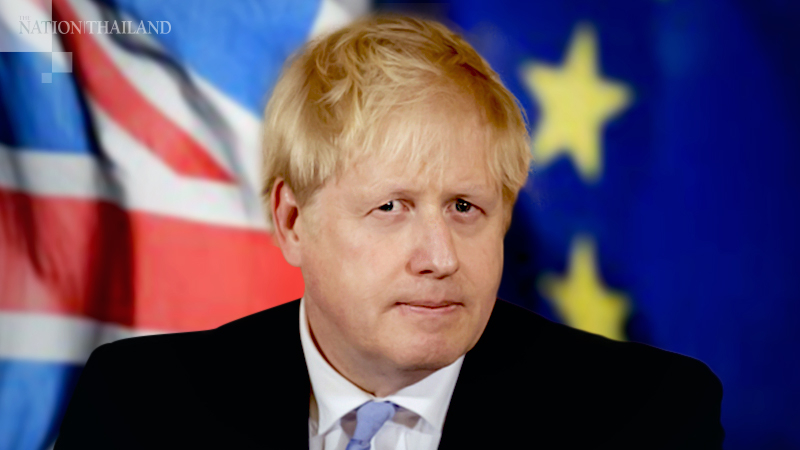
U.K. Prime Minister Boris Johnson

U.K. Prime Minister Boris Johnson

By Syndication Washington Post, Bloomberg · Deirdre Hipwell, Jennifer Ryan

British business groups pleaded with the government to extend the time they have to prepare for the nation’s departure from the European Union after leaders from both sides agreed to continue talks.

U.K. Prime Minister Boris Johnson and European Commission President Ursula von der Leyen on Sunday gave negotiators another shot at reaching a deal on the terms of trade before the Brexit transition period ends on Dec. 31.

Lobby groups responded with relief at the prospect that the sides may yet avoid a no-deal divorce, which would mean the application of costly tariffs and quotas. The raft of changes that Brexit nevertheless entails — from licensing standards to paperwork requirements — mean U.K. companies still have a lot of work ahead to adjust to their new relationship with the nation’s biggest trading partner.

“Government must move with even more determination to avoid the looming cliff edge of January 1st,” Tony Danker, director general of the Confederation of British Industry, said in a statement. Measures must include “negotiated grace periods to allow firms to adjust to either deal or no deal.”

U.K. and EU negotiators will try to forge a deal over the next few days, and if talks make progress, it is possible an agreement could be struck by the middle of the week, people on both sides said. Still, the extent of the preparation needed has spurred business lobbies to ask the government not to rush them.

Though Britain voted to leave the EU more than four years ago, trade talks have come down to the wire as politicians haggle over key issues like fisheries. Companies, meanwhile, have to try to adapt for life beyond Dec. 31 without knowing the fundamental rules of engagement.

“I think everything that can be said has been said — it was never, ever going to be easy,” said Mark Price, a former trade minister and past deputy chairman of the John Lewis Partnership. “This is about politics now. It is very difficult for business.”

Price’s concerns were echoed by Ruby McGregor-Smith, president of the British Chambers of Commerce. Officials haven’t yet decided how companies should deal with new bureaucratic headaches, such as the need to comply with rules of origin, or how to handle differing product standards.

“It’s very difficult to be ready because there are a number of areas where we don’t have any detail at all,” McGregor-Smith told Sky TV’s “Sophy Ridge on Sunday” program. “I would urge the government to look at the support all businesses need as we come out of this and also give us more time to prepare as we leave the European Union.”

The pandemic makes preparation all the more challenging, she added.

Stockpiling in response to covid-19 is already creating delays at ports on both sides of the English Channel. Asked about potential traffic jams after Jan. 1, French Transport Minister Jean-Baptiste Djebbari said, “There are unfortunately already lineups because we think and we know Britons are stockpiling.”

France has put border declarations online as much as possible to ease transport of cargo in the new year, Djebbari said in an interview Monday on the country’s CNews channel. “The U.K. has more to lose than us on transport in the case of a no deal,” he said. “I hope we can get to an agreement that will be necessary for the U.K. to ensure their supply chain.”

Swedish furniture retailer Ikea issued a statement on Sunday apologizing to customers experiencing difficulties due to shipping logjams.

“Our supply chain — including the ports and goods terminals where our products are received — has been impacted by the effects of covid-19, and our product availability has been affected as a result,” a spokesperson said in a statement. “These continue to be extraordinary times and we apologize unreservedly for the inconvenience caused to our customers.”

If the negotiations fail, the two sides would revert to commercial rules set by the World Trade Organization, which would mean new tariffs and customs controls. The resulting higher prices would lead to reduced volumes and production, according to Graham Biggs, a spokesman for BMW AG, the German luxury-car maker.

Retailers are building up stores of products from toilet paper to canned goods in anticipation of Jan. 1 Still, shops would have no choice but to pass on extra costs from new tariffs to customers, meaning “it will be the public that pay the price of this failure,” said Helen Dickinson, CEO of the British Retail Consortium.

“I am not really sure what the extension means — but it’s a good thing as it is too early to throw in the towel yet,” said Richard Walker, managing director of the U.K. supermarket chain Iceland Foods. “They just need to put ideology aside and push for a pragmatic deal.”

Momentum grows on Capitol Hill for economic relief package as bipartisan group releases two bills #SootinClaimon.Com

#SootinClaimon.Com : ขอบคุณแหล่งข้อมูล : หนังสือพิมพ์ The Nation.

Momentum grows on Capitol Hill for economic relief package as bipartisan group releases two bills (nationthailand.com)

Momentum grows on Capitol Hill for economic relief package as bipartisan group releases two bills

InternationalDec 15. 2020

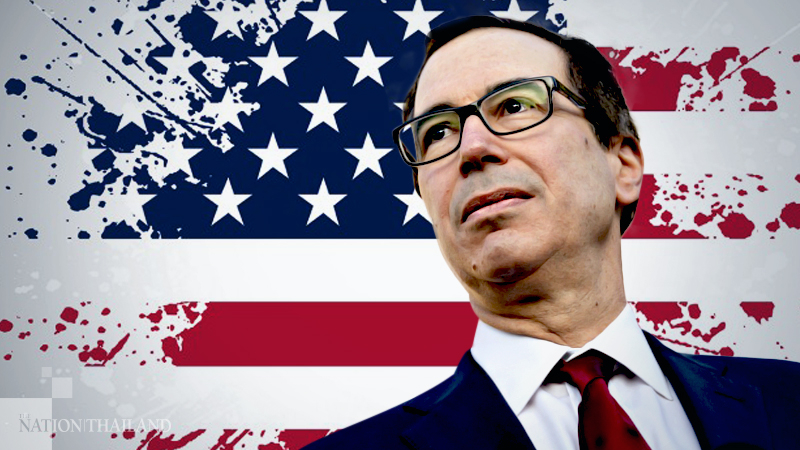
Treasury Secretary Steven Mnuchin

Treasury Secretary Steven Mnuchin

By The Washington Post · Jeff Stein, Mike DeBonis, Seung Min Kim

WASHINGTON – A bipartisan group of lawmakers on Monday released two bills that it said would provide the nation with emergency economic relief as senior congressional officials sounded more hopeful about the odds of approving new relief than they have in weeks.

The group unveiled one $748 billion package that includes new unemployment benefits, small-business aid and other programs that received broad bipartisan support. The second bill includes the two provisions most divisive among lawmakers – liability protections for businesses, and about $160 billion in aid for state and local governments – with the expectation that both could be excluded from a final deal to secure passage of the most popular provisions. This second bill could end up falling out of the final deal if lawmakers do not rally around it.

Still, the progress in the bipartisan group’s work comes as congressional leaders indicate momentum for quickly approving some sort of economic relief package before lawmakers leave for Christmas recess. One senior House Democrat on Sunday appeared open to advancing legislation that lacked state and local funding, a possible concession that could pave the way for an agreement. Senate Majority Leader Mitch McConnell, R-Ky., sounded hopeful and emphasized potential cooperation in a speech on the Senate floor.

The effort to break the months-long legislative logjam over economic aid has been spearheaded by Sens. Joe Manchin, D-W.Va., Susan Collins, R-Maine, Mark Warner, D-Va., Mitt Romney, R-Utah, and Lisa Murkowski, R-Alaska, among other centrist lawmakers who appeared together at a news conference Monday. And it reflects a shift in strategy, as rank-and-file members are trying to spearhead the initiative instead of deferring to congressional leaders.

The first bipartisan bill centers on providing hundreds of billions in aid in unemployment benefits and a second round of small-business relief while devoting tens of billions to other needs such as education, transit agencies, hunger initiatives and vaccine distribution.

“Bipartisanship and compromise is alive and well in Washington,” Manchin said. “We’ve proven that.”

“My hope is that our hard work will spur our leadership on both sides of the aisle, in the Senate, in the House and in the [Trump] administration, to take our products and use them as the basis for a covid-relief package that is urgently needed.”

She called the group’s legislation a “Christmas miracle” after months of partisan gridlock.

The two bills show how far the bipartisan group of negotiators took the process but also the limits of their effort – they were not able to completely solve some of the most complex problems. Sen. Bill Cassidy, R-La., touted the need for state and local aid to make its way into a final package, but it’s unclear whether that element will survive the final stages of negotiations.

Negotiators hope that by advancing both of these measures they will draw Democratic and Republican leaders into the negotiations to speed the process along and lead to a final package. Bringing their bills to congressional leaders could kick off a new round of higher-stakes negotiating.

House Speaker Nancy Pelosi, D-Calif., discussed a relief bill with Treasury Secretary Steven Mnuchin on Sunday, and they were expected to talk again Monday. McConnell also sounded upbeat rather than narrowly denouncing his opponents, saying on the Senate floor: “The Republican side wants to make law, to agree where we can and help people who need it. I hope and believe that my Democratic colleagues feel the same way.”

Lawmakers also made progress over the weekend on the government funding bills. Senior congressional leadership has aimed to include the stimulus legislation with the legislation to fund the government, but that effort has also not been finalized. Appropriators are now optimistic that a compromise could be hammered out by as early as Monday, according to aides familiar with the deliberations. Congress has until Friday to pass spending legislation to avert a government shutdown that would begin Saturday.

The legislation includes 16 weeks of unemployment benefits at $300 per week for jobless Americans and $300 billion in small-business relief, including a second round of Paycheck Protection Program funding, according to a summary of the document provided by a congressional aide.

It also includes $82 billion for schools; $13 billion in emergency food assistance; $25 billion in rental assistance; $35 billion for health-care providers; and $13 billion for farmers, ranchers, growers, and fisheries; among other measures.

The bill will also have an extension of the eviction moratorium until Jan. 31, at which point lawmakers hope the $25 billion in rental assistance would alleviate pressure on renters. Republicans resisted a longer extension of the moratorium, people familiar with the talks said. A one-month extension of the moratorium would ensure that it covers renters until after President-elect Joe Biden’s inauguration, at which point he could do so unilaterally, said Diane Yentel, president and CEO of the National Low Income Housing Coalition, a nonprofit group.

“I really am optimistic this morning – very optimistic,” said Bill Hoagland, a senior vice president at the Bipartisan Policy Center and former Republican staff director for the Senate Budget Committee, citing conversations with Hill aides. “Nobody wants to be the Grinch that stole Christmas this year. They’ll get it done this week; I feel very confident in that for a change.”

The bipartisan effort has left out another potential round of $1,200 stimulus checks, though the White House included a second stimulus check worth $600 in its proposal last week. Sens. Bernie Sanders, I-Vt., and Josh Hawley, R-Mo., have threatened to block a package that left out the stimulus checks.

“It astounds me how just a few months ago [in May] the Democratic House passed the HEROES bill – $3.4 trillion,” Sanders said in an interview Monday. “What kind of negotiating is that?”

Conservatives are also mounting some opposition to the deal. Sen. Rick Scott, R-Fla., wrote an opinion article for the National Review this weekend urging Republican lawmakers not to accept funding for state and local governments, which he called rewarding “Democrats’ fiscal management with more taxpayer money.” Sens. Mike Lee, R-Utah, and Rand Paul, R-Ky., are among those expected among conservative activists to oppose the bill for increasing the amount of federal spending.

Some lawmakers in the bipartisan group have suggested including another round of stimulus checks in the $740 billion proposal that excludes the liability shield and state and local funding, according to two people who spoke on the condition of anonymity to share internal deliberations. Republicans have sought to keep the cost of the bill below $1 trillion, but if state aid is left out, lawmakers may have enough money available to include the checks. The bipartisan group has circulated options for structuring the checks, but it has remained divided on the issue, aides said.

McConnell floated the idea that negotiators leave out both the state and local aid provision and the liability shield, instead only voting on areas where both parties agree. Some Democratic leaders have balked at this pitch, citing potentially large budget shortfalls that could accelerate already stark layoffs among state and local governments.

House Majority Leader Steny Hoyer, D-Md., the second-highest-ranking Democrat in the House, suggested on Sunday that Democrats may be willing to support a deal leaving out the state and local aid component.

“Although I think state and local assistance is critically important, the others are critically important too,” Hoyer said on CNN. “We have millions of people who are at high risk, extraordinarily, health exposure, psychological exposure. We need to act . . . If we can get [state and local aid], we want to get it, but we want to get aid out to the people who are really, really struggling and are at great risk.”

Hopes of reaching a liability compromise that would be broadly satisfactory to both parties have dimmed despite work by members of the bipartisan group. Several proposals have been floated and discarded, including a Democratic idea to create an indemnity fund to reimburse businesses who are sued over pandemic issues, but major sticking points remain. Among them: settling on a definition of “gross negligence” that would allow lawsuits to move forward, creating standards for moving state tort claims to federal courts and vice versa.

People familiar with the talks said there was broad agreement on how to structure state and local funding, using a complex formula to ensure that jurisdictions use any federal relief to address pandemic-related revenue shortfalls. The formula, which takes into account both a scale of a jurisdiction’s revenue loss and its population, would ensure that states and localities would be reimbursed for an equitable share of their 2020 revenue loss even as more populous jurisdictions receive larger sums.

Lawmakers have little time to reach an agreement. About 12 million Americans will lose their unemployment benefits Dec. 26 if there is no extension in aid for the jobless. Somewhere between 2.4 million and 5 million American households are at risk of eviction in January if Congress does not act, Syracuse University professor Gretcher Purser said in new research released Monday. And the U.S. economy shows new signs of deteriorating, with last week’s job report the worst in months.

“The plan is alive and well, and there is no way, no way that we’re going to leave Washington without taking care of the emergency needs of our people,” Manchin said on Fox News on Sunday.

The ‘deep state’ scientists vilified by Trump helped him deliver an unprecedented achievement #SootinClaimon.Com

#SootinClaimon.Com : ขอบคุณแหล่งข้อมูล : หนังสือพิมพ์ The Nation.

The ‘deep state’ scientists vilified by Trump helped him deliver an unprecedented achievement (nationthailand.com)

The ‘deep state’ scientists vilified by Trump helped him deliver an unprecedented achievement

InternationalDec 15. 2020President Trump delivers remarks in the White House press briefing room on Nov. 20. MUST CREDIT: Washington Post photo by Jabin Botsford.President Trump delivers remarks in the White House press briefing room on Nov. 20. MUST CREDIT: Washington Post photo by Jabin Botsford. 

By The Washington Post · Yasmeen Abutaleb, Laurie McGinley, Carolyn Y. Johnson

The timing of the hastily arranged White House “vaccine summit” last Tuesday bewildered many invitees.

It was days before the authorization of the first coronavirus vaccine developed by Pfizer and German firm BioNTech – and nearly a week before millions of vaccine doses would be loaded onto trucks bound for every state in the nation. Wouldn’t those milestones and the mass vaccination effort that followed be what the White House would want to spotlight?

That was not what the president was interested in. As it became clear that vaccines would be a shining success in an otherwise calamitous pandemic response, he wanted to make sure his administration – and specifically Operation Warp Speed, its initiative to speed vaccines – got credit for an unprecedented scientific achievement.

The Dec. 8 event began with a video that featured scientists and pundits warning that the administration’s goal of delivering a vaccine in less than a year was unrealistic. As music swelled to a crescendo, a narrator boasted about how it had in fact delivered that record achievement.

Trump then took the stage to tout his administration’s success. “You saw that very few people thought that this was possible,” he told a small assembled audience. “Of course, they’ll be saying now, ‘We always told you it was so.'”

“People that aren’t necessarily big fans of Donald Trump are saying, ‘Whether you like him or not, this is one of the greatest miracles in the history of modern-day medicine’ or any other medicine – any other age of medicine,” Trump added.

In fact, the lightning-fast development of two leading coronavirus vaccines happened both because of and despite Trump – perhaps the most anti-science president in modern history, who has previously flirted with anti-vaccine views and savaged those who cited scientific evidence to press for basic public health measures in response to the pandemic.

The lifelong businessman who refused to wear a mask himself was able to understand vaccines as something else entirely: a deliverable that he could make happen with money. And unlike a mask, a vaccine represented a display of American technological prowess, an appealing solution that didn’t require painful steps like closing small businesses. For the president, it exerted an increasingly strong pull as the election approached.

“I do think the urgency for Operation Warp Speed was heightened by the fact that we were in the middle of an election year,” said Daniel Carpenter, a political scientist at Harvard University. “On the whole, it was a good thing – it led a potentially anti-science, anti-vaccine administration to push harder for a vaccine. What we will end up seeing in the long run is this is an unparalleled private and public sector mobilization that happened.”

That mobilization, which is pushing out the first 2.9 million doses of the Pfizer-BioNTech vaccine this week, is a testament to the power of science, and also of a global collaboration involving drug companies and government coordinated by political appointees and civil servants across the government – players and a process that Trump has at times disparaged.

To many attendees of the White House summit – and even more who stayed away – that event underscored the awkward, often uneasy relationship between Trump and pharmaceutical companies, government regulators and scientists, even as they jointly pursued the goal of ending a pandemic that has killed more than 298,000 Americans and infected another 16 million.

None of the companies that developed the most promising vaccines were present. Officials said they worried about participating in an event that might reinforce perceptions of political interference and suspicions of a rushed vaccine just as their shots were on the cusp of emergency clearance.

White House spokesman Brian Morgenstern said Trump hosted the summit to build confidence in the vaccine and to “congratulate those involved in this miraculous achievement.” He added that drug company executives had stayed away to avoid contact with FDA regulators.

The president’s bravado seemed to anticipate the FDA’s announcement three days later that it had cleared the nation’s first vaccine from Pfizer-BioNTech – the administration’s biggest triumph to date in a pandemic response otherwise marred by dysfunction and lack of leadership: A second vaccine from Moderna is expected to be authorized later this week. Others could follow if clinical trials are successful.

These accomplishments are remarkable, but they are not “miracles,” in the sense that they sprang fully formed from work that began last spring. They relied on basic research done over decades in government, academic and company research labs. Even the financial model used to insulate vaccine makers from financial risk traced back to an agency that Congress created in late 2006 to incentivize companies to develop urgently needed medicines.

And the true test of Operation Warp Speed is about to occur as the administration tries to meet ambitious timelines that it has revised repeatedly. A key plank involves distributing the vaccine to millions of Americans in a matter of months, which began on Sunday. But potential supply problems already threaten the government’s ambitious vaccination schedule.

Pfizer urged the government to purchase 200 million doses of its vaccine in the summer and this fall, an offer the government declined as recently as October over disagreements about delivery dates. The company has since told the government it may not be able to supply substantial additional doses until late June or July, raising questions about the vaccination timeline. Officials insist they will have enough doses.

This account of how government scientists, regulators, politicians and private industry managed to deliver a coronavirus vaccine in under a year, and the political turbulence that accompanied it, is based on interviews with more than 20 current and former senior administration officials and outside advisers and experts, many of whom spoke on the condition of anonymity to reveal private discussions and speak candidly.

– – –

The extraordinary vaccine initiative was propelled by a $14 billion investment from the federal government – which Trump supported and signed off on – that would become Operation Warp Speed, a public-private partnership to hasten vaccines and treatments, in part by footing the bill to manufacture millions of doses before anyone knew if they worked.

Pfizer made a point of not accepting government research funding, a decision its chief executive Albert Bourla said last month on ABC’s “Good Morning America” was “to liberate our scientists from any bureaucracy that could come by accepting money.” But the company did benefit from the government’s zeal for a vaccine in other ways: It agreed to sell nearly $2 billion worth of vaccines to Warp Speed and was bolstered separately by a strong working relationship with federal regulators.

By contrast, Moderna’s vaccine would have taken much longer without the government investment and its partnership with the National Institutes of Health. The federal government has invested $4.1 billion in Moderna’s vaccine, between research and development funding and the purchase of 200 million doses.

Warp Speed was designed to be largely free of political interference and had leaders with deep experience in vaccine development and logistics, said several officials who were involved in the effort. In many ways, it was an example of how much more successful the government’s pandemic response might have been with clear leadership and officials empowered to follow the science, they said.

“In twenty years, you’ll look back and it’s not going to be . . . a story about bleach or a whistleblower, or who wore a mask and who didn’t,” one senior administration official said. “It’s going to be about Warp Speed and the vaccine – a thing that comes along scientifically in less than one year that ends a global pandemic.”

But the race to develop a vaccine also became intensely politicized by the president, with trust in a prospective vaccine plummeting apparently as a result. Trump recognized early that the pandemic would only truly come to an end when a vaccine became widely available – and then became fixated on delivering one before the Nov. 3 presidential election to convince voters he had the virus under control.

That calculation led the president and top aides – especially Chief of Staff Mark Meadows – to apply unrelenting pressure on the FDA to clear a vaccine before the election. Even after Trump lost his bid, that campaign continued, culminating in an extraordinary threat on Friday, when Meadows ordered FDA Commissioner Stephen Hahn to submit his resignation if the agency did not clear Pfizer’s vaccine by day’s end. The agency pushed its timetable from Saturday morning to late Friday – a change that had no effect on the distribution plans that were set to begin Sunday.

Earlier that same day, Trump had tweeted that the FDA was “a big, old, slow turtle” and badgered Hahn. “Get the dam vaccines out NOW, Dr. Hahn @SteveFDA. Stop playing games and start saving lives!!!”

– – –

The public-private partnership created through Operation Warp Speed is not an idea the administration invented. For years, global public health leaders had talked about using government investment to reduce the financial risks that dissuade companies from developing needed products. That was also the model behind the creation of the Biomedical Advanced Research and Development Authority (BARDA) during the George W. Bush administration, with an eye toward working with private industry on bioterrorism countermeasures.

Warp Speed harnessed those ideas on a massive scale for a different kind of public emergency and then partnered with a half-dozen companies and other government agencies to pull it off.

“It’s a 15-year, overnight success story,” said Richard Hatchett, chief executive of the Coalition for Epidemic Preparedness Innovations, a four-year-old nonprofit that works to finance the development of vaccines against emerging infectious diseases.

The idea took hold in February and March after government scientists realized that covid-19, the disease caused by the coronavirus, was a “catastrophe in the making,” as one senior administration official recalled. But they quickly realized that some vaccine manufacturers did not share that sense of urgency.

Unsure of how long the outbreak would last, some executives were reluctant to spend the hundreds of millions of dollars or more to develop a vaccine without knowing whether they would have a market when they finished. Some companies talked about beginning clinical trials in the fall, with the aim of having a vaccine ready by summer 2021.

“The vaccine manufacturers were in a funk,” the senior administration official recalled. “We woke up to that and realized that is not going to fly.”

In early April, Peter Marks, an oncologist who has worked in both academia and the drug industry and who heads the FDA division that regulates vaccines, began laying the groundwork for what would become Operation Warp Speed.

He teamed up with Robert Kadlec, assistant secretary for preparedness and response at the Department of Health and Human Services, to write a proposal for HHS Secretary Alex Azar detailing a process that went from screening potential vaccine candidates to distributing the final product to an estimated 330 million Americans.

The thought was that if the government could eliminate most of the financial risk of vaccine development, more companies would be inclined to take on the herculean challenge. The government would also help speed development by footing the bill to manufacture millions of doses of vaccines without knowing whether they worked, so that normally sequential steps could be completed all at once.

Marks said the most important step in the vaccine effort was “getting started early with a clear direction in mind and having good partners” in various companies that were motivated “to get to the same place.”

Meanwhile, the virus was leaping from one continent to another, leaving a trail of carnage and spurring a torrent of research. Hundreds of academic teams, companies and government researchers were eager to apply different ideas to fight the virus, but there was also a clear need for a national strategy that could prioritize efforts.

“Uncharitably, people might have called it a bit of a scattershot scenario – that was true for therapeutics and vaccines,” said Francis Collins, director of the National Institutes of Health.

Collins called drug company executives, starting with Mikael Dolsten at Pfizer, with whom he had worked closely for years, to talk about creating a scientific public-private partnership to tackle the pandemic. Collins had crafted a similar partnership to speed up the development of new medicines, but that had taken months. This new one crystallized over two weeks in early April – and included a vaccine working group that began to hammer out some of the principles for how to rapidly test vaccines.

The group calculated that trials with 30,000 people would have the statistical power to answer the most important questions about safety and effectiveness, and to get those answers quickly. They debated, and ultimately settled, on a single unified data and safety board for all the trials. That approach had been taken with some HIV trials, and would mean the same group of independent experts would be reviewing the totality of the raw data from all the trials – and might be able to detect any concerning safety trends or important patterns.

Operation Warp Speed would ultimately bet on six efforts – Pfizer-BioNTech, Moderna, AstraZeneca-University of Oxford, Johnson & Johnson, Novavax, and Sanofi and GlaxoSmithKline. Those that accepted research funding – all but Pfizer – could take advantage of a large network of clinical trials developed over decades by the NIH.

Pfizer and Moderna gambled on a promising but unproved technology that relied on messenger RNA, spurring criticism for taking that approach at a time when a vaccine was desperately needed.

In one meeting in late April, Deborah Birx, the White House coronavirus task force coordinator, expressed frustration that the leading vaccine candidates were not relying on tried-and-true technologies, according to four current and former senior administration officials.

But Anthony S. Fauci, director of the National Institute of Allergy and Infectious Diseases, along with some other experts, was enthusiastic about including those vaccines in the government’s portfolio, since they were backed by years of research and might be developed much more quickly than conventional vaccines

Pfizer and Moderna’s strategy paid off in November, with both companies reporting trial results that showed their vaccines were more than 90 percent effective at preventing disease. By contrast, the vaccine being developed by Sanofi and GlaxoSmithKline, using a proven technology, hit a setback last week when results showed the shot didn’t trigger strong responses in older people. The companies now project their vaccine won’t be available until the end of 2021.

– – –

In April, after Marks and Kadlec gave Azar their proposal, the secretary presented it to the White House coronavirus task force. Some were skeptical about whether it would work and wary of the enormous price tag.

Trump, however, was enthusiastic. Unlike other aspects of the response, he agreed to spend billions on the effort – even as he was publicly predicting the virus would soon be gone.

The project was announced through a reporter at Bloomberg News, when officials were still casting about for a name.

Initially, they called it MP2, shorthand for Manhattan Project 2.0. The name seemed fitting, one senior official recalled, because “it was the historic implication that this was to do something never done before . . . with the same commitment at the national level as the Manhattan Project.”

But they soon realized that referring back to a nuclear bomb wouldn’t work for a vaccine. Marks, a Star Trek fan, and a small group of government officials had been privately calling the project Operation Warp Speed, based on the term “warp speed” popularized by the Star Trek series. In one internal email, Marks used the Star Trek logo with a needle in the middle of it.

Scrambling just before the interview, the officials seized on the name and it stuck.

Azar scouted for a drug industry veteran to run Warp Speed, calling Jim Greenwood to ask for recommendations. At the time, Greenwood, a former congressman, was president of the Biotechnology Innovation Organization, a trade group that represents biotech companies.

Jared Kushner, the president’s son-in-law and one of his most trusted advisers, joined Azar and other health officials to interview four or five candidates. They landed on Moncef Slaoui, who had spent much of his career as a GlaxoSmithKline vaccine researcher and executive.

Slaoui had led an effort to create a dedicated biopreparedness facility in 2016, a research organization that would systematically tick through every virus that had the potential to cause a pandemic and create vaccines for each one.

The proposal flopped, but Slaoui remained convinced that a model that joined government and industry to counter such risks was essential.

“I could have also sat on the sidelines and said why it would never work,” Slaoui said of his decision to join Warp Speed. ” . . . in the month of May when the operation was announced, I do not remember hearing a single expert say, ‘Yes, this is possible.’ I heard everybody explaining to us why it will never work.”

On May 1, Azar met at the Pentagon with then-Defense Secretary Mark T. Esper and a handful of aides to discuss how their agencies could work together, aware that HHS alone could not handle a logistics operation as complex as a nationwide vaccination effort.

They agreed on Gen. Gustave Perna as the logistics chief, a man whose expertise would become critical in managing and coordinating one of the largest ever vaccine distribution efforts in American history.

At one point, when 60 electricians were needed at one facility, Operation Warp Speed used the Defense Production Act to get them.

Slaoui and Perna were mostly walled off from the White House, as well as from Capitol Hill and the media, so they could avoid distractions. Still, Birx and Kushner sat on the board of Operation Warp Speed and attended meetings – a decision officials made intentionally to give the White House a seat at the table but not an outsize role.

“It was recognized that having larger participation from other offices in the White House could be disruptive,” one senior administration official said.

“Perna and Slaoui really wanted to be independent of the politics. They wanted to be able to chase the science and make bets,” a second official said. “In normal times, people will say you wasted a lot of money taking six or seven shots on goals with different types of vaccines. . . . but if we only get one of them, we got one at least.”

– – –

After helping to launch Warp Speed, Marks quickly retreated to the FDA. He and Slaoui had clashed, according to individuals familiar with the situation who spoke on the condition of anonymity because they were not authorized to discuss the issue. Marks also realized that he was most valuable to the vaccine effort as a regulator, not as a developer, he has said. And the FDA drew a bright line between its activities and those of Warp Speed to avoid conflicts of interest.

As Marks and his veteran vaccine experts began working with the pharmaceutical companies on the regulatory requirements, they remained in constant contact in hopes of avoiding unnecessary speed bumps.

“What helped at the outset was having clear guidance on what the expectations were,” Marks said.

In June, the FDA issued guidelines that said any coronavirus vaccine would have to be at least 50 percent more effective than a placebo, or a saltwater shot, in preventing covid-19. The agency proposed updating that guidance in the fall, spelling out additional safety requirements to bolster public confidence in an emergency authorization.

The idea enraged Trump and Meadows, who realized the criteria made it all but impossible for a vaccine to be authorized before the election. FDA ignored their objections and issued the guidelines, whose substance had already been conveyed to the manufacturers.

The FDA had already endured a bruising year, under the leadership of a new and untested commissioner, Stephen Hahn, who came under constant pressure from Trump and the White House to authorize or examine treatments that had no proven effectiveness against covid-19.

In a series of of high-profile missteps, the agency cleared the antimalarial drug hydroxychloroquine – then revoked that authorization – and initially took a hands-off approach to coronavirus antibody tests. On the eve of the Republican National Convention, Hahn overstated the benefits of convalescent plasma during a hastily arranged briefing with Trump, then apologized the next day.

Trump continued to accuse the FDA of moving too slowly, even as the agency staff worked almost around-the-clock. Marks’s pandemic schedule, for example, involves getting up at 3 a.m., taking his dog Eddie for a walk, and beginning work at 4:30 on a torrent of emails and meetings before knocking off at 9 p.m. Dozens of others working on coronavirus vaccines have been maintaining similar schedules.

As Trump pushed to get a vaccine before the election, public trust in the vaccine plummeted from more than 70 percent in May to just over 50 percent in September.

– – –

By November, Americans had become inured to one grim milestone after another, as the nation set countless records for daily infections, deaths and hospitalizations and endured a bitterly divisive presidential campaign.

Six days after a polarizing election called for Joe Biden, Pfizer reported astonishing news: Its coronavirus vaccine, the one that relied on a new genetic technology, was more than 90 percent effective. Those results also augured well for Moderna’s vaccine, which used the same technology and reported equally striking results only seven days later.

Exhausted company and government scientists and regulators were elated. For the first time all year, they could envision an end to the pandemic. The idea that the country could have one effective vaccine by year’s end had seemed like a long shot. Now, it looked like it could have two.

“I would say it’s a historical moment,” Kathrin Jansen, Pfizer’s head of vaccine research and development, said in an interview. “Hearing that at the interim analysis we are over 90 percent effective – it was almost stunning to hear.”

Trump, however, was furious. The additional safety steps the FDA had taken to shore up public trust in the vaccine strengthened his conviction that the agency had conspired against him. Now he said the “medical deep state” had deliberately sought to sabotage his electoral prospects, and he demanded that Azar “get to the bottom” of what happened.

His anger would grow to a fever pitch when Britain cleared Pfizer’s vaccine on Dec. 2. Meadows summoned Hahn to the Oval Office and asked why the United States had not been first. The pressure campaign culminated in the Friday threat to Hahn to clear the vaccine by day’s end or submit his resignation.

The irony is that the quest for a vaccine needed no meddling.

Back in May, when the vaccine trials were still in the planning stages and success was far from certain, Fauci had said he was tuning out politics.

“I worry about a lot of things,” he said in an interview. “But I’m going to do the best possible science, to develop what I consider convincing evidence that it works and is safe, or does not work and is not safe.”

Which is precisely what he and hundreds of other scientists did.

Inside the ‘nasty’ feud between Trump and the Republican governor he blames for losing Georgia #SootinClaimon.Com

#SootinClaimon.Com : ขอบคุณแหล่งข้อมูล : หนังสือพิมพ์ The Nation.

Inside the ‘nasty’ feud between Trump and the Republican governor he blames for losing Georgia (nationthailand.com)

Inside the ‘nasty’ feud between Trump and the Republican governor he blames for losing Georgia

InternationalDec 14. 2020Georgia Gov. Brian Kemp speaks during a rally in support of President Trump on Oct. 16, 2020 in Macon, Ga. MUST CREDIT: Photo by Nicole Craine for The Washington PostGeorgia Gov. Brian Kemp speaks during a rally in support of President Trump on Oct. 16, 2020 in Macon, Ga. MUST CREDIT: Photo by Nicole Craine for The Washington Post 
By The Washington Post · Ashley Parker, Amy Gardner, Josh Dawsey

The first major fissure in the relationship between President Donald Trump and Georgia Gov. Brian Kemp came a year ago, when Kemp paid Trump a clandestine visit in the White House residence.

On the Sunday before Thanksgiving, Kemp flew up to Washington to introduce Trump to Kelly Loeffler, an Atlanta business executive he wanted to appoint to fill his state’s open U.S. Senate seat.

But when Kemp and Loeffler finally got their audience with the president, Kemp presented Loeffler as a fait accompli – telling Trump that he wanted the president to meet the woman he was planning to name to the Senate.

Well, if you’ve already made your decision, Trump grumbled, then I’m not sure why you’re here, according to people familiar with the conversation.

Trump later complained to aides that Kemp was rude and impolite – never forgiving the Georgia governor for what he viewed as a major slight.

The strain between the two Republicans has now boiled over into a full-blown feud in the aftermath of Trump’s 2020 electoral defeat, as the president has fixated on his loss in Georgia as a humiliation that he blames in large part on Kemp. Trump lost the solidly Republican state by approximately 12,000 votes and is furious with Kemp for not heeding his calls to question the integrity of the state’s election results.

In phone calls and conversations with allies and advisers, Trump has griped that Kemp was not pushing Georgia Secretary of State Brad Raffensperger to do more to reverse President-elect Joe Biden’s victory; that Kemp was not defending the president on television; and, perhaps most indefensible in Trump’s mind, that Kemp moved forward with certifying the results of the election.

“Republicans fell into a trap by expecting Brad Raffensperger and Brian Kemp to cheat for them,” said Jordan Fuchs, a longtime Republican strategist in Georgia who is a deputy secretary of state under Raffensperger, and who says the ongoing civil war in her party will have long-term consequences at the polls, including in the state’s two Senate runoff races on Jan. 5.

“The Democrats only have one, singular turnout model, and that’s the argument of voter suppression,” Fuchs added. “They say it in their litigation – it’s the number one poll-tested message they have. This has fed into the hands of Democrats.”

This portrait of Trump’s combustible relationship with Kemp – which portends a potential intraparty civil war in the coming months and years – is the result of interviews with 15 allies and advisers to both men, as well as Republican political operatives, many of whom spoke on the condition of anonymity to share candid details.

Since the election, Trump has personally berated Kemp in private phone calls, people familiar with the conversations said. In one call, the president told Kemp he was losing all of his popularity by not strongly supporting him, and in another, the president pointedly reminded the governor that he had endorsed him in 2018.

Trump has also called Loeffler and Sen. David Perdue (R-Ga.) – both of whom face runoffs on Jan. 5 – to complain about Kemp, though he has not given them any specific edicts beyond generally pressuring Kemp to support the president’s efforts to overturn the election results, one person familiar with the calls said. Loeffler and Perdue did not immediately respond to requests for comment.

“Maybe I should recruit someone to run against him,” the president said in one of these calls, this person added. “Your governor is horrible. He would be nothing without me.”

‘Worse than a Democrat’

Trump emissaries have warned Kemp that the president plans to continue to relentlessly attack him and will publicly criticize him when he returns to the state on behalf of the Republican Senate candidates, possibly on Saturday. The president has attacked Kemp on Twitter, lambasted him at a rally in Valdosta, Ga., earlier this month and went after him again during an interview that aired Sunday on Fox News.

“We won Georgia by a lot,” Trump falsely claimed to “Fox & Friends” host Brian Kilmeade. “We have a governor, a Republican governor, that’s worse than a Democrat. He’s terrible. And he’s hurting Kelly and David very badly, the senators, that are terrific people.”

The White House declined to comment on Trump and Kemp’s relationship.

Kemp, meanwhile, has told allies that he can’t spend his time worrying about Trump’s vindictive tweets and rhetorical broadsides, and that while he wishes the president would stop attacking him, he believes it would be illegal to do most of what Trump is asking. Instead, he said, he is focused on keeping Georgia open as coronavirus cases continue to rise.

“That’s exactly their strategy – to not engage and let it blow over,” said Erick Erickson, a conservative radio host based in Georgia. “If the president comes to Georgia, you would see the governor willing to meet him at the airport and shake his hand, even if he doesn’t go to the event.”

Erickson added that the few times Kemp has appeared on his show, “his people have told me in advance that I’m not going to get anything if I ask about the president.”

Although Kemp’s refusal to buttress Trump’s baseless election claims plunged the duo into open warfare, the relationship between the two men who should have been natural allies has long been tense.

At the core of the president’s displeasure is his belief that Kemp has not kowtowed to him enough.

“Kemp stood out as a Republican governor who didn’t seem to think he needed Trump,” said a senior White House official. “He’s never shown a particular need to play ball with the president, which I think really irked Trump, so that’s kind of the origin of it.”

The roots of tension between the two extend to Trump’s 2018 endorsement of Kemp in his Republican primary against Casey Cagle, then the sitting lieutenant governor. Trump believed Kemp had not been sufficiently appreciative of his support, and Kemp had not realized how hard his allies had lobbied the president for his endorsement, according to people familiar with the episode.

But it was Kemp’s handling of his selection of Loeffler to fill Georgia’s empty Senate seat in late 2019 that particularly angered the president, culminating in the frosty White House meeting that November. Kemp never consulted Trump about the Senate seat when it first opened. And after Kemp created an online application process for the post, Trump complained privately that the Georgia governor was treating the process as if he was “hiring a truck driver,” according to an outside Republican in frequent contact with the White House.

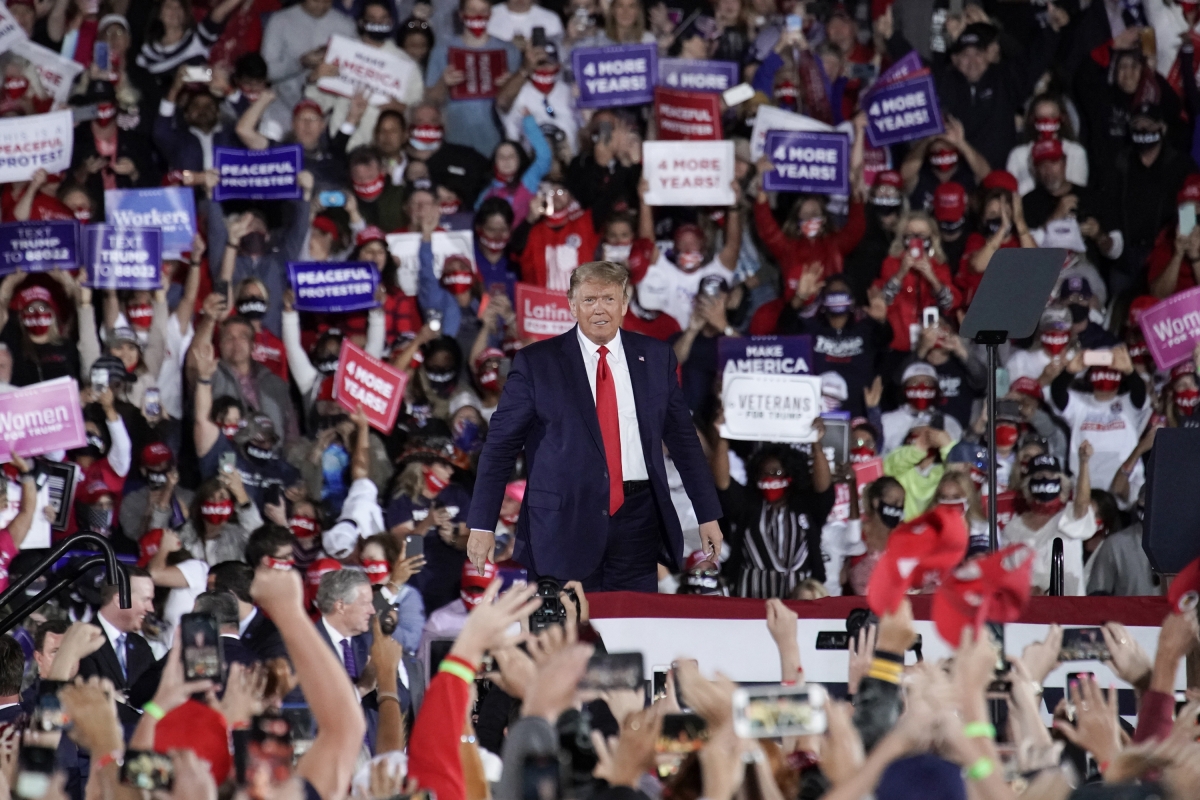
President Donald Trump appears at a rally Oct. 16, 2020 at Middle Georgia Regional Airport in Macon, Ga. MUST CREDIT: Photo by Nicole Craine for The Washington Post

President Donald Trump appears at a rally Oct. 16, 2020 at Middle Georgia Regional Airport in Macon, Ga. MUST CREDIT: Photo by Nicole Craine for The Washington Post

The two men clashed again during the early days of the coronavirus crisis.

Trump initially was supportive of an April 20 executive order from Kemp aimed at opening up businesses in the state, which jibed with Trump’s own push at the time to reopen many businesses against the advice of his public health advisers. Kemp spoke to both the president and the vice president the next day, and both told him they thought it was a good approach, according to a Kemp aide with knowledge of the calls.

Trump had a sudden change of heart, however, in the wake of fierce public criticism of the breadth of Kemp’s order. Trump called Kemp back and was particularly “agitated” about the decision to reopen salons and spas, according to White House officials and people involved in the governor’s race. At a White House briefing, Trump said, “I told the governor of Georgia, Brian Kemp, that I disagree strongly with his decision to open certain facilities.”

In addition, much to the irritation of Kemp’s aides, White House press secretary Kayleigh McEnany called Kemp directly to urge him to revoke the order.

“Just how absolutely ridiculous that is,” said one GOP official. “Who . . . does she think she is, telling the governor – essentially dressing him down on the phone.”

McEnany did not respond to requests for comment.

But Kemp’s biggest alleged sin, in Trump’s view, came in the aftermath of Trump’s disappointing Election Day showing. Several local Republican strategists speculate that the root of Trump’s recent anger with Kemp is simply the fact that he lost Georgia – a conservative state where those below him on the ticket fared better than he did, and where Stacey Abrams, the state’s top Democrat, is credited with building the organization that led to the president’s defeat.

The irony is that Kemp is among the Republican officials in the state who worked relentlessly on Trump’s behalf, said one Republican official in Georgia, noting that the governor held multiple rallies, other appearances and phone recordings with Trump family members.

“No one worked harder to reelect Donald Trump in Georgia than Governor Kemp,” Kemp spokesman Cody Hall said in a statement. “Since Election Day, the governor has called for a signature audit three times, demanded all allegations of fraud to be fully investigated, and supported the President pursuing legal options afforded him under Georgia state law.”

Still, Hall added, “There is no basis in state law for the governor to overturn the results, interfere in election administration or overrule the constitutional authority of our elected secretary of state.”

– – –

On Saturday, Dec. 5 – the morning of Trump’s trip to Valdosta, Ga. – Trump spoke by phone to Kemp. The call vividly revealed just how single-minded the president has become not just in pressuring fellow Republicans to help him overturn the election, but also in attacking those who refuse.

At the start of the contentious phone call, Trump asked Kemp how he was doing, according to someone briefed on the exchange. Kemp was in the midst of a family tragedy after Harrison Deal, a family friend and Loeffler aide, had died in a car crash the previous day. He replied, “It’s been a rough 24 hours.”

The president then incorrectly surmised that Kemp’s low mood must be because of recent poll numbers showing the governor’s approval rating slipping.

No, we lost a close family friend yesterday, Kemp replied, this person said. Trump then offered his condolences.

In the call, Trump demanded that the governor call a special session of the legislature and pressure lawmakers to change state law to allow them to assign Republican electors and reverse the outcome. He also demanded an audit of ballot signatures, which he has claimed without evidence, were not properly matched against signatures on file.

Kemp explained that, for numerous legal reasons, he could not do either of those things.

Kemp’s office declined to comment on the exchange, other than to confirm that the president offered his condolences. Trump campaign spokesman Tim Murtaugh declined to comment on the conversation.

But numerous people with knowledge of the call said the conversation was openly hostile, with Trump effectively threatening the governor and arguing that Kemp would lose reelection if he didn’t cede to the president’s demands.

“It was nasty enough for Kemp to say no to all of the asks,” said one Republican strategist. “I don’t know if you’ve ever talked to Kemp, but he’s politically kind of squishy. He never says yes or no to something. He’ll say something cute and funny, and he pushes it off, but it’s never like a flat ‘No.’ And he said, ‘No.’ He told the president, ‘No’ – twice.”

Later that day, at the rally in Valdosta for Loeffler and Perdue, Trump praised Rep. Douglas A. Collins (R-Ga.), for leading the effort to argue that there was fraud in the state. In private, one Republican said, Trump has floated the prospect of Collins challenging Kemp for the governorship in a 2022 GOP primary.

“Where’s Doug?” Trump said during the Valdosta rally. “Thank you, Doug. What a job he does. You want to run for governor in two years? Yeah. Good-looking governor.”

– – –

The tensions have surprised Republicans in Georgia, many of whom assumed for much of the year that at least some of the apparent chill between Trump and Kemp was staged, because the governor did not want to appear to be too close to Trump ahead of a potential rematch with Abrams.

Kemp clearly has had his eye on his reelection bid all year. Kemp’s narrow win over Abrams in 2018 was dominated by the debate over voting rights and voter suppression. Abrams characterized Kemp as an architect of the disenfranchisement of hundreds of thousands of Georgians, mostly people of color, through an extensive purge of the state’s voter registrations.

Raffensperger said in an email statement that Trump’s loss was simply the result of “changing demographics,” which have made the state more politically diverse and competitive. He also stressed that the Republicans’ full focus now should be on holding the two Senate seats.

“This is what it looks like when your party is losing: scapegoating, finger-pointing,” Raffensperger said. “All we see is a group of individuals who got too cocky and thought Georgia would be a layup shot. It’s time for the Georgia Republican Party to step up and deliver a win, which they failed to do in the general election for President Trump.”

As the feud has exploded into the public view, Kemp has defied the counsel of some in his circle, who have urged him to stay in regular contact with the president. One person familiar with their conversations estimates that they have only spoken several times in as many weeks.

But Nick Ayers, former chief of staff to Vice President Mike Pence and a Georgia native who is close to both Trump and Kemp, said he believes the differences between the two men are hardly insurmountable.

“A lot of this, probably all of it, can be resolved if every principle decision-maker – both national and local – gets in the same room, eye to eye, to discuss the facts and map out a path to achieve what everyone wants to achieve,” Ayers said. “But that hasn’t happened yet and not much will change until it does. It is unfortunate because the goals are so tightly aligned and the stakes are so high.”

Boris Johnson dials up warnings of a no-deal Brexit as Britain and E.U. agree to continue talks #SootinClaimon.Com

#SootinClaimon.Com : ขอบคุณแหล่งข้อมูล : หนังสือพิมพ์ The Nation.

Boris Johnson dials up warnings of a no-deal Brexit as Britain and E.U. agree to continue talks (nationthailand.com)

Boris Johnson dials up warnings of a no-deal Brexit as Britain and E.U. agree to continue talks

InternationalDec 14. 2020Boris JohnsonBoris Johnson 

By The Washington Post · William Booth, Quentin Ariès

LONDON – At the 11th hour, Britain and the European Union said on Sunday afternoon they have made enough progress in their seemingly endless trade and security talks to continue negotiations into the coming days.

Many had feared Sunday was the final hour to reach a Brexit deal. But the talks will roll on. Businesses on both sides of the English Channel, fearing chaos at the ports and steep, immediate tariffs, sighed a collective, “whew, that was close!”

Prime Minister Boris Johnson, in a TV address, did not sound optimstic, however. “I’m afraid we’re still very far apart on some key things,” he said. “But where there is life there’s hope, we’re going to keep talking to see what we can do, the U.K. certainly won’t be walking away from the talks.”

Johnson warned “the most likely” outcome would see Britain leave the European Union with no deal, forcing it to trade on what the prime minister insists on calling “Australian terms,” which really means going forward with no free trade deal at all, but instead defaulting to do business by the rules set by the World Trade Organization.

Britain’s largest trading partner is Europe and so reverting to WTO rules means taxes, or tariffs, on exports sold to the continent. While overall, the average WTO tariff is less than 3 percent, for automobiles it is 10 percent and for fresh meat – such as Welsh lamb – it is 38 percent or higher.

In his remarks, the British prime minister might have been jostling for position. Or he might have been warning the nation.

“The best thing to do now, for everybody, is to follow up all the work that has been done over the last four and half years, colossal amount of preparation at our ports, everywhere across the U.K., get ready to trade on WTO terms,” said Johnson. “There is a clarity and a simplicity in that approach that has it’s own advantages. It is not where we wanted to get to but if we have to end up with that solution, the U.K. is more than prepared.”

Whether Britain is truly prepared to have its import and exports subjected to border controls, inspections and tarrifs is unknown. Many predict chaos at the ports.

European Commission President Ursula von der Leyen was slightly less gloomy. She said it is worth trying to struggle on to a finish line.”We had a useful phone call this morning. We discussed the major unresolved topics,” the commisson president said.

Then she patted both sides on the back, noting, “our negotiating teams have been working day and night over recent days. And despite the exhaustion after almost a year of negotiations, despite the fact that deadlines have been missed over and over, we think it is responsible at this point to go the extra mile.”

And so, “we have accordingly mandated our negotiators to continue the talks and to see whether an agreement can even at this late stage be reached.”

The negotiations will continue, at least for now, in Brussels. Britain exits the European Union at midnight on Dec. 31.

The Irish Foreign Minister Simon Coveney, who has been a close observer of the talks, told the national broadcaster RTE on Sunday that “a deal can be done, but it really needs to be done within the next few days.”

Jitters of a no-deal “hard Brexit” have been dialed up, regardless.

The Guardian newspaper reported the British government “warned supermarkets to stockpile food and other essential supplies amid increasing fears of a no-deal Brexit in less than three weeks’ time.”

On the Sunday morning TV talk shows, Foreign Secretary Dominic Raab sought to assure Britons that there would be enough medicines and vaccines in the country no matter what, because the government has already begun to stockpile supplies.

Meanwhile, Johnson’s government announced that four Royal Navy patrol ships would be ready to take to British waters to protect the country’s fishing grounds in the event of a no-deal Brexit. The vessels would be given the power to board and impound European fishing boats inside Britain’s 200-mile exclusive economic zone.

European Council President Charles Michel, on the French radio on Sunday, said the sides should keep calm and carry on. “The U.K. and Europe are friends, partners, allies and it will be the case after Brexit. I encourage everyone to remain calm. I would not say, like Donald Trump, that our boats are bigger than theirs, because I’m trying to be serious, but, on the European side at least we remain calm …We are reasonable. We want to have close links with the U.K.”

The impasse and issues have not changed over these many months. Britain wants to be able to “take back control” of its sovereignty – for many Brexiteers, that was the whole point of leaving the bloc. Johnson and his allies say it makes no sense to leave the customs union and single market, only to have to continue to align in lock-step with E.U. regulations over state subsidies, labor laws and enviromental regulations.

But Europe has appeared in little mood for compromise – especially over these “level playing field” challenges.

The disagreements have touched on areas that have been sore points for years – in some cases, centuries, like fisheries, specifically European access to British waters.

In addition to wrangling over cod and scallops, which represents far less than 1 percent of GDP to either Britain or Europe, the E.U. also doesn’t want Britain undercutting it on issues such as state aid or environmental regulations to gain a competitive advantage. It wants to make sure British rules stay closely aligned with E.U. ones as a prerequisite for Britain to get relatively unfettered access to the European market.

Members of White House staff to get early access to coronavirus vaccine #SootinClaimon.Com

#SootinClaimon.Com : ขอบคุณแหล่งข้อมูล : หนังสือพิมพ์ The Nation.

Members of White House staff to get early access to coronavirus vaccine (nationthailand.com)

Members of White House staff to get early access to coronavirus vaccine

InternationalDec 14. 2020

By The Washington Post · Felicia Sonmez, Josh Dawsey

WASHINGTON – Some White House staff members will be among the first wave of people in the United States to receive coronavirus vaccinations, a Trump administration official said Sunday night.

The news comes as boxes of the first shipments of the Pfizer-BioNTech vaccine departed a facility in Michigan, with front-line health-care workers, the elderly and other vulnerable people expected to receive top priority.

“Senior officials across all three branches of government will receive vaccinations pursuant to continuity of government protocols established in executive policy,” National Security Council spokesman John Ullyot said in a statement.

President Donald Trump and several of his top aides have played down the severity of the virus that has killed nearly 300,000 Americans, with at least 16 million cases reported since late February. The virus has been surging throughout the United States.

The Trump administration plans come as the White House has forged ahead with a packed season of at least 25 indoor holiday parties, ignoring warnings from the its own public health professionals to limit travel and avoid congregating in large group settings. At a number of the parties, some guests were maskless.

News of the White House vaccinations was first reported by The New York Times.

According to an administration official who was not authorized to speak publicly about the move, the White House considers a coronavirus vaccine “a necessary resource for those continuity personnel across the executive branch to meet their continuity-focused roles and responsibilities.”

Citing a 2016 policy directive called the National Continuity Policy, the official said vaccinations are warranted for “the appropriate leadership and staff across all branches,” without providing further specifics.

The White House declined to say whether Trump, who contracted covid-19, the disease caused by the novel coronavirus, earlier this year, would receive the vaccine. Vice President Mike Pence is expected to receive it soon.

If Trump and others take the vaccine publicly, that could encourage many of his supporters to take it. Former presidents Bill Clinton, George W. Bush and Barack Obama have volunteered to receive it in public. The White House has a steep uphill campaign to build trust in it after repeatedly politicizing the virus, as recently as Friday. The Office of Management and Budget has asked officials in at least four agencies to determine who needs the vaccine.

Moncef Slaoui, chief science adviser to the White House’s effort to develop a vaccine, said in an interview on “Fox News Sunday” that officials hope to get about 70% to 80% of the U.S. population vaccinated between May and June.

In the meantime, he said, those receiving priority will be “the long-term-care-facility people, the elderly people with comorbidities, the first-line workers, the health-care workers.”

According to the Centers for Disease Control and Prevention, indoor gatherings pose more risks than those outdoors, and “gatherings with more people pose more risk than gatherings with fewer people.”

Even so, members of the president’s inner circle – including Trump himself – have at times declined to wear masks, and the White House has held parties this month that include more than 50 guests. Those events could risk the health of White House staff members and others who work at the parties.

News of the vaccinations probably will further the perception that those in proximity to Trump have received access to treatment that is unavailable to ordinary Americans amid the pandemic.

Rudy Giuliani, the president’s personal lawyer, was recently released from the hospital after being treated for covid-19. In a radio interview after his discharge, Giuliani said he received remdesivir, dexamethasone and “exactly the same” treatment that Trump received when he was hospitalized in October.

He also said he was unaware that most Americans are not able to receive those medications because of scarcity issues.

“I didn’t know that. . . . I’m not sure about that,” Giuliani said.