The Finance Ministry’s Excise Department is not planning to increase the tax on spirits, beer or energy drinks, the department’s spokesperson said on Monday.
This was in response to recent rumours that alcoholic beverage makers were planning to increase their retail price by 20 to 30 baht in line with upcoming tax measures.
Spokesperson Natakorn Utensut said the Excise Department had recently spoken to energy-drinks maker Osotspa Co Ltd and learned that it will continue maintaining the retail price of its drinks at 10 baht per bottle. However, he said, the company is planning a new product, which will be sold at 12 baht per bottle.
Other major liquor operators have also confirmed that there are no plans to increase the retail price of their products, he said.
Nattakorn added that the Excise Department will check the retail prices of all spirits, beer and energy drinks from March 14 to 17 before announcing a new recommended retail price.
He said that if an operator wishes to adjust their prices, they must inform the Excise Department first.
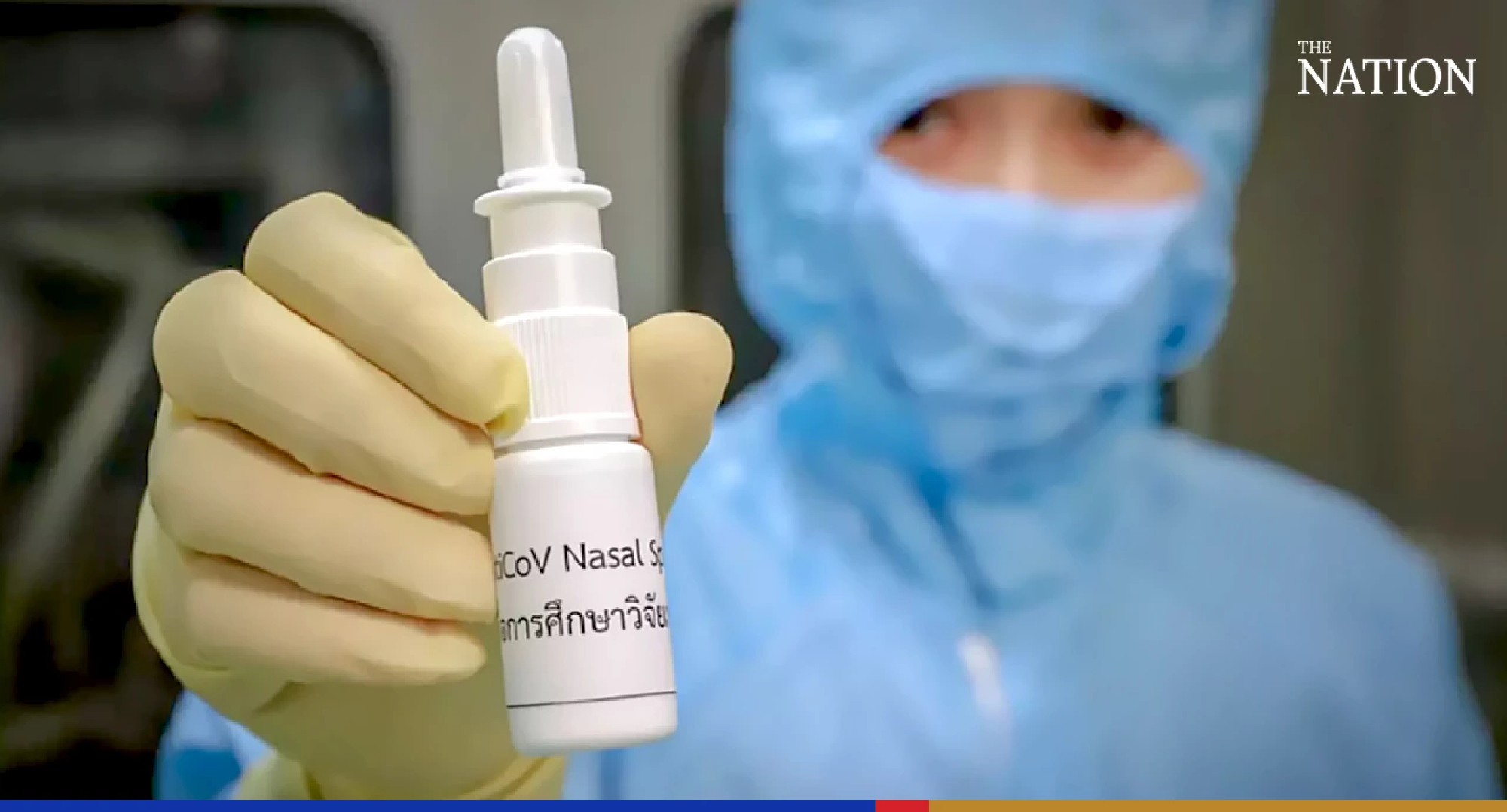
Two universities signed a memorandum of understanding (MoU) with three partners on Monday to develop an anti-Covid-19 nasal spray.
The MoU was signed by Prof Dr Chanchai Sittipunt, dean of Chulalongkorn University’s Faculty of Medicine, Silpakorn University rector Chaicharn Thavaravej, Dr Nopporn Chuenklin, director of the Health Systems Research Institute, Withoon Danwiboon, director of Government Pharmaceutical Organisation (GPO), and Cdr Dr Phaporn Prasitdamrong, an executive of Hibiocy Co Ltd.
The aim of the MoU is to develop an anti-SAR-CoV-2 virus nasal spray that can be widely sold both locally and internationally.
The spray has been successfully tested on animals and a clinical trial on volunteers is being planned for the first quarter of this year. If this trial proves to be successful, the spray should be registered with the Thai Food and Drug Administration by June and go into mass production within the third quarter.
Getting ready for launch
Chanchai said the spray, part of a long list of anti-Covid products developed by Chulalongkorn University, was developed with support from the Health Systems Research Institute. He added that the university has patented the antibodies created to make the spray and that it is now ready to work with other institutions to get the product ready for clinical testing.
Meanwhile, Silapakorn University’s rector Chaicharn said researchers from his university have been working closely with their counterparts in Chulalongkorn to develop a prototype for the spray. He said animal testing shows the spray can effectively prevent infection, so he hopes his five partners will soon be able to produce a product that the public can use to survive the Covid-19 crisis.
Dr Nopporn from the Health Systems Research Institute said the development of the nasal spray is an addition to the research on monoclonal antibody cocktail against Covid-19 that his institute has helped Chulalongkorn researchers to develop.
Withoon, meanwhile, said the GPO will help produce nasal sprays for clinical testing among volunteers before the product is registered with the FDA.
Phaporn said her company, Hibiocy, will later help distribute the spray both locally and internationally.
The spray will be an alternative to Covid-19 vaccines for preventing infections because it will stop the virus from entering the body via the nasal passage, she said, adding that it should be ready to go on the shelves by the third quarter of this year.
The Justice Ministry has helped 4,130 people settle debts of Bt921.65 million at the first “Festival for household debt settlement”, held at the Bangkok International Trade & Exhibition Centre on Friday and Saturday.
Justice Minister Somsak Thepsuthin said on Monday that the event was a “success”.
Somsak said more than 5,000 individuals came to seek help from the ministry to negotiate debt settlements with their creditors, and negotiations were successful for 4,130 debtors, resulting in the restructuring of Bt921.65 million in debts.
Somsak said the event was a result of Prime Minister Prayut Chan-o-cha’s suggestion to government agencies to help settle debts for sensitive groups of people affected by the Covid-19 situation.
Somsak said his ministry can help negotiate restructuring of four types of debts: student loans, loans for purchase of motorcycles and vehicles, credit card debt and personal loans, and debts of government officials.
Somsak said the Legal Execution Department and the Rights and Liberty Protection Department worked with the Student Loan Fund and 16 financial institutions to negotiate and settle debt restructuring during the two days.
The minister said 2,186 debtors sought help for restructuring debt worth Bt132.2 million in cases that have not yet been sent to court, and all the cases were dealt with successfully.
He added that 1,944 debtors had sought help for debt restructuring in cases in which courts have made rulings. The ministry helped settle 1,879 cases totalling Bt798.44 million, Somsak added.
During the event, exhibitions were held by the Legal Execution Department, the Rights and Liberty Protection Department, the Justice Fund, the Student Loan Fund, and the Securities and Exchange Commission. People also received legal advice related to their daily lives during the two-day event, Somsak added.
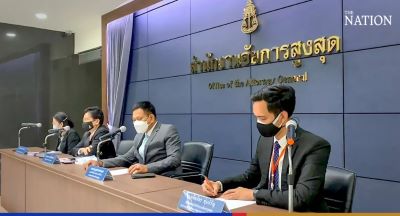
Thai public prosecutors on Monday thanked Canadian authorities for tracking down and arresting one of the two gunmen believed to be behind the killing of an Indian gangster in Phuket early this month.
Prayut Phetkhun, deputy spokesman of the Office of the Attorney General (OAG), held a press conference on Monday morning to announce that suspect Mathew Leandre Ovide Dupre, 36, was arrested in Edmonton, Alberta, on February 20.
The alleged gunman is now in detention under the order of the Alberta Court pending a decision on Thailand’s extradition request.
Dupre is allegedly one of the two gunmen who shot dead Jimi “Slice” Sandhu in Phuket at about 10.30pm on February 4. Sandhu, an Indian gangster with a long-standing criminal record, was shot dead in the parking lot of his rented villa on Rawai Beach in Muang district.
Police later identified the two gunmen as Gene Karl Lahrkamp and Matthew Dupre, both 36 years old, and said Sandhu had been deported from Canada in 2016.
As the case developed
Also present at Monday’s press conference were Jumpol Phansamrit, director of the International Affairs Department and senior public prosecutor Indranee Sumawong.
Prayut said Chalong Police Station had obtained an arrest warrant against Dupre on February 11 upon learning that he had landed in Canada on February 6.
Jumpol told the press that the Royal Thai Police had sent the arrest warrant to the OAG on February 15 seeking Dupre’s extradition. He said public prosecutors began working on the case immediately because it was a public crime related to international gangsters.
The public prosecutors then contacted the extradition division of the Canadian public prosecutors with the help of the United Nations Office on Drugs and Crime’s anti-transnational crime network.
He said the Canadian side required a formal request under the 1911 Siam-Britain Treaty, as Canada is still part of the British Commonwealth.
On February 16, Thai prosecutors met their Canadian counterparts to find out what evidence was required to arrest Dupre.
The Thai prosecution team then travelled to Phuket to obtain evidence, and the OAG gave the go-ahead to send it to Canada on February 17.
The Canadian attorney-general approved the request for Dupre’s arrest and called on the Alberta authorities to seek an arrest warrant for the suspect. Dupre was arrested three days later.
Joint effort
Indranee said the swift arrest was possible thanks to coordination between different sides who worked round the clock.
“The OAG would like to thank the Canadian Justice Department’s extradition division, the Alberta public prosecutors, Canadian police and the UN Office on Drugs and Crime for the arrest,” Indranee said.
She added that public prosecutors will send a formal extradition request to the Alberta Court and the extradition trial may take up to one or two years.
Jumpol added that Canadian authorities have provided information about the second suspect but the information has to be withheld for now.
Thai people spent 78.542 billion baht on alcoholic beverages and cigarettes in the fourth quarter of 2021, higher than in the previous year, the Office of the National Economic and Social Development Council (NESDC) said on Monday.
NESDC deputy secretary-general Jinanggoon Rojananan said that there. was a 0.1 percentage point increase over 2020.
The spending on alcoholic beverages in the fourth quarter of 2021 amounted to 49.51 billion baht, up 1.2 per cent quarter on quarter.
Meanwhile, the spending on cigarettes in the fourth quarter of 2021 totalled 29.032 billion baht, decreasing by 2 per cent from the previous quarter.
The increase in consumption of alcoholic beverages was attributed to easing of Covid restrictions, which allowed restaurants to sell alcoholic beverages from December 1 including the New Year Festival.
Overall, the consumption of these products in 2021 was down 1.8 per cent over the previous year because entertainment venues were closed and sales hours were restricted as part of Covid control measures.
Jinanggoon added that some citizens also wanted to be healthy, while the income of some people were lower so they had to exercise restraint.
The NESDC, however, wants the two behaviours to be monitored closely.
Alcohol drinking could reduce self-control, which raises the risk of getting infected with Covid-19 by two to three times. It also increases the risk of getting severe symptoms or death for those infected with Covid-19. Those who drink continuously might suffer from non-communicable diseases, the NESDC warned.
The NESDC also wants close scrutiny of electronic cigarettes. It could give smokers dual addictions, with even worse consequences for their health. It could be risky for smokers to suffer from brain fog syndrome, especially for people who smoke e-cigarettes before they turn 14 years. Therefore, e-cigarettes should be studied in every aspect before they are legalised, the NESDC said, adding, some measures are needed to reduce new smokers and health risks.
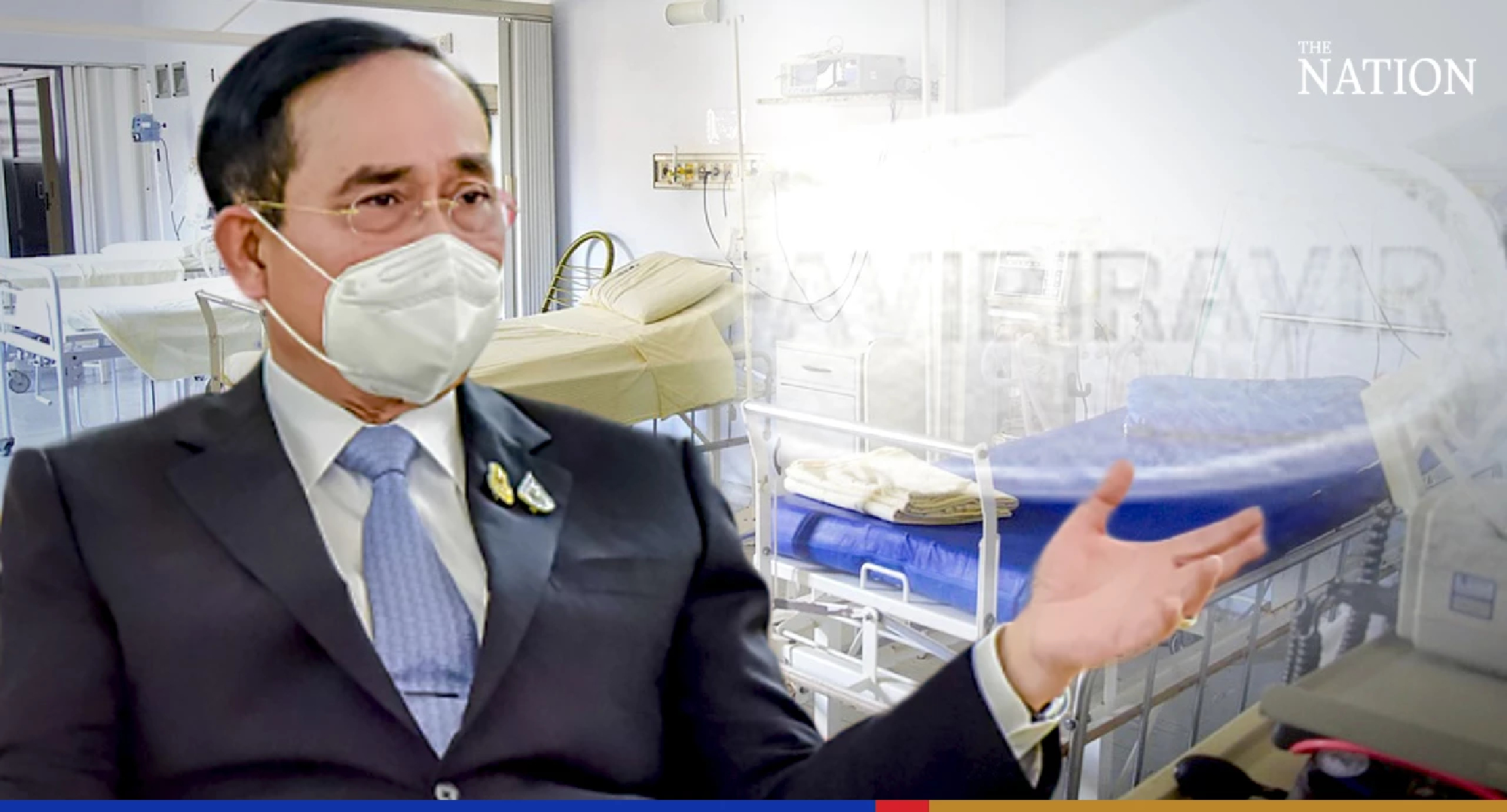
Prime Minister Prayut Chan-o-cha announced on Monday that there are enough stocks of Favipiravir, medical supplies and hospital beds to treat Covid-19 patients nationwide.
The premier also instructed the Government Pharmaceutical Organisation (GPO) to make enough Favipiravir pills available in line with the current Covid-19 situation.
Prayut’s statement was in response to a message posted on the Rural Doctor Society (RDS) Facebook page last week that said several hospitals outside Bangkok were facing severe shortages of Favipiravir.
RDS also accused the GPO of monopolising the industry and ignoring the needs of hospitals outside Bangkok.
The GPO responded by saying it has 24 million Favipiravir pills in stock and is manufacturing another 60 million which is more than enough.
Meanwhile, the Bangkok Metropolitan Administration (BMA) has reported that there were 1,300 beds available for community isolation and that it will prepare another 1,000 beds.
Government spokesman Thanakorn Wangboonkongchana also quoted Prayut as saying he was worried for elderly people, especially those who are bedridden or have chronic conditions. He warned that people living with the elderly should take maximum precaution to ensure nobody is infected.
Daily Covid-19 cases in Thailand have been surging due to the highly transmissible Omicron variant.
Foreign tourists will no longer have to book a second RT-PCR test and hotel room on the fifth day of their stay in Thailand, according to a government announcement on Monday. Meanwhile, mandatory health coverage for foreign visitors has been reduced from US$50,000 to $20,000 (Bt648,000).
The Centre for Covid-19 Situation Administration (CCSA)’s relaxation of restrictions under the Test & Go tourism scheme was published on the Royal Gazette website, making the move official.
The announcement, which was signed by CCSA chairman Prime Minister General Prayut Chan-o-cha, stipulated that the new rules will come into effect on March 1 (Tuesday).
Under the new tourism rules, the second RT-PCR test and hotel booking will be replaced by a self-administered rapid antigen test (ATK). Foreign tourists will have to report the result via a government app.
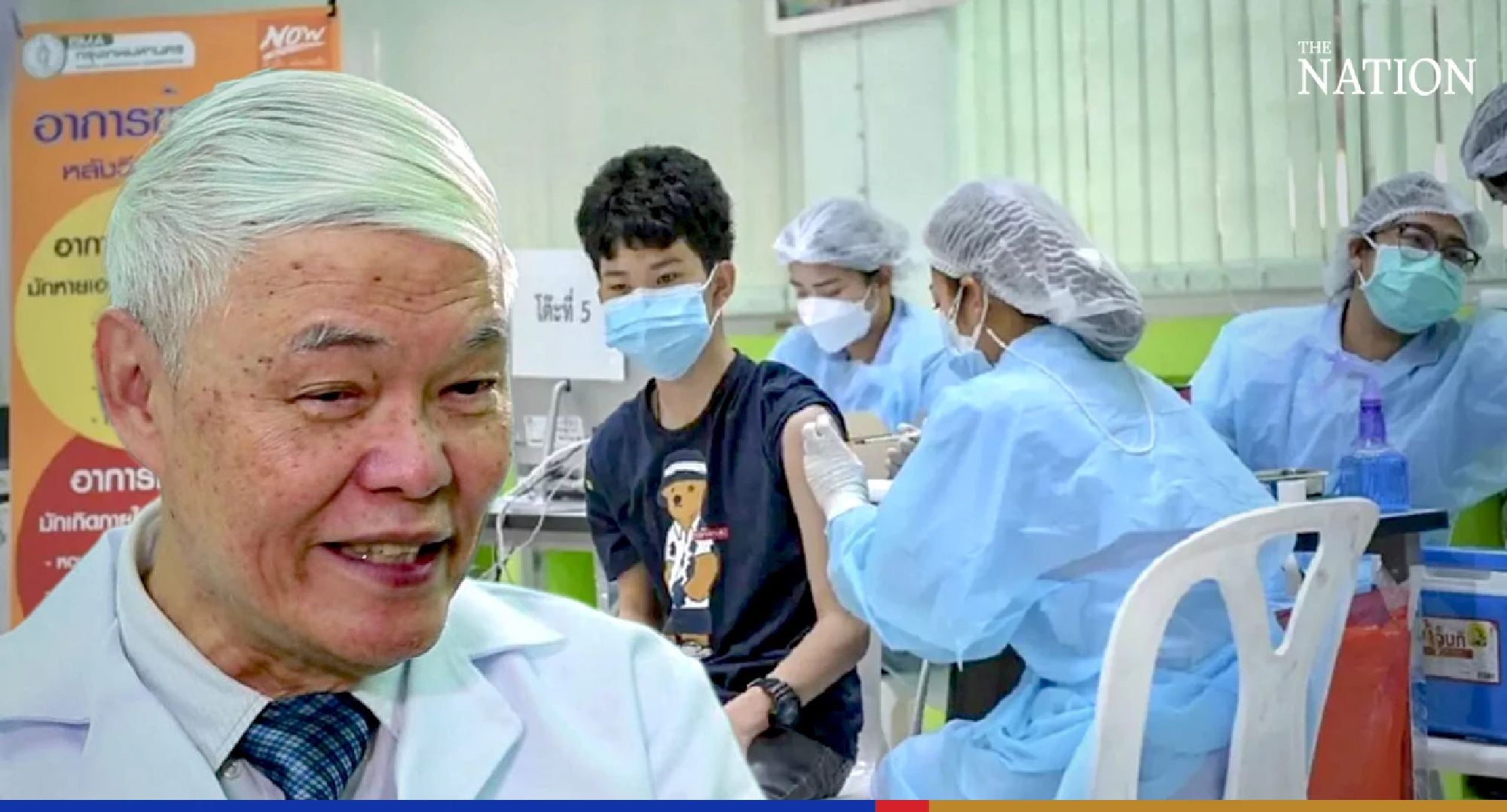
Top virologist Dr Yong Poovorawan has urged the government to accelerate vaccination of children to combat Thailand’s rising wave of Covid-19.
“Children can spread Covid-19 to family members even though most kids develop no or only mild symptoms after infection,” Yong wrote on Facebook on Sunday. “However, children have to study and go to school, especially small kids,” he added.
Yong noted the virus was now spreading rapidly in Thailand but forecast that daily case numbers would begin falling in the middle of March after schools close for the summer break.
He said the respiratory disease had spread rapidly among children during the June -September and January-March semesters. However, he added that the infection rate had fallen during the second semester as vaccination of students got underway.
He urged the government to get children double-jabbed as quickly as possible before providing them with booster jabs during the next semester.
“Two Covid-19 vaccine jabs can protect children in the short term but their immunity will then decline,” he said. “Hence, they need to receive the third jab for higher immunity in the long term.”
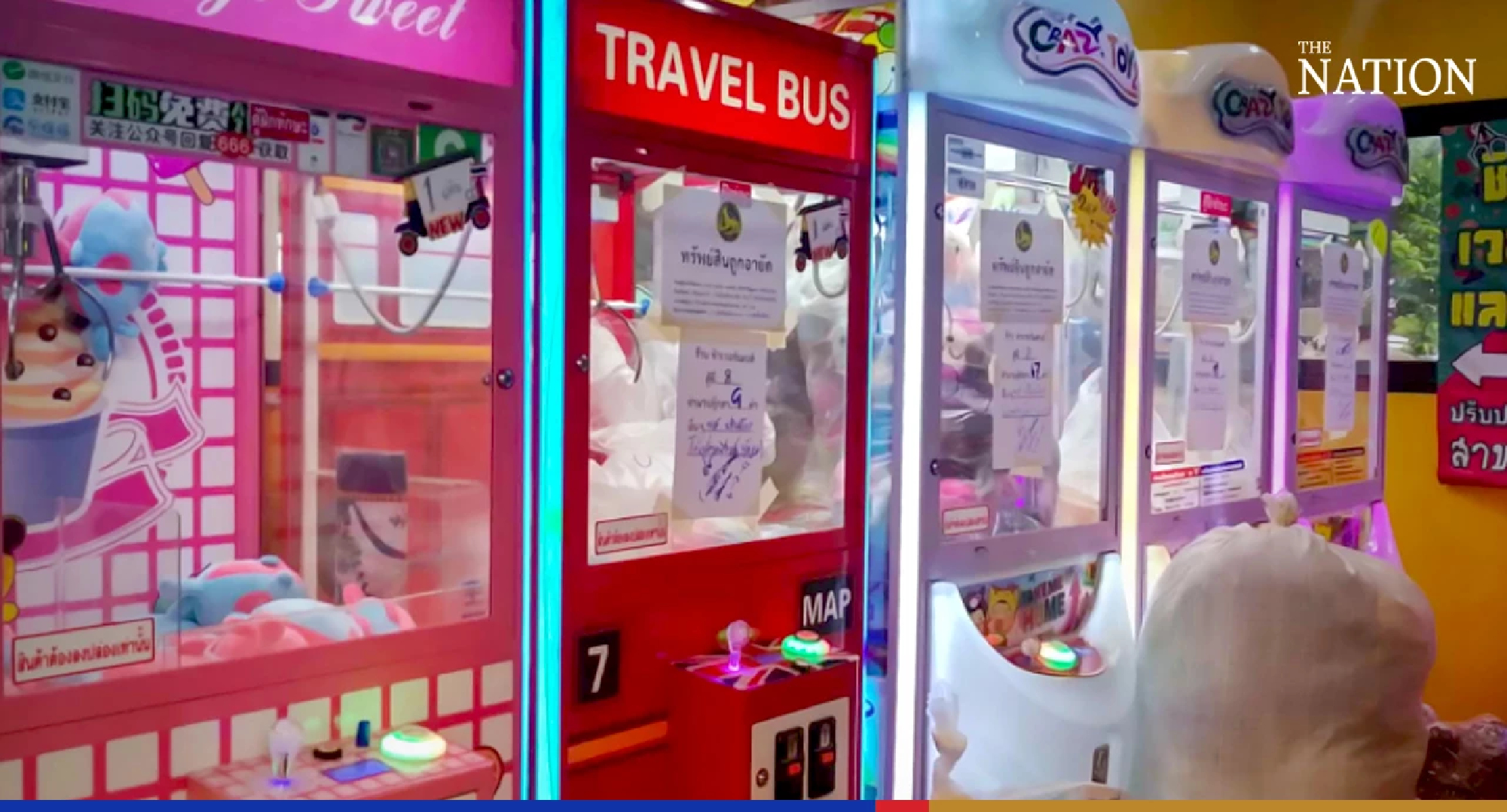
The Chiang Mai public prosecutor has dismissed a case against a “crane-claw” game arcade operator, ruling that the games are vending machines rather than gambling devices.
The ruling could set a precedent, reversing the government’s nationwide ban on claw games imposed two years ago under gambling laws.
Kasem Suphasit, legal adviser to Family Amusement Co Ltd, said the case in Chiang Mai came after police arrested crane-game store operators at Promenada shopping centre in Muang district on March 17 last year.
“Administrative staff and Mae Ping police also seized property in the dispute, including 35 claw machines, seven token-exchange machines, Bt198,750 in cash, and two claw machine keys,” he explained.
He said Chiang Mai’s prosecutor had dropped the charges – organised gambling and concealing or distributing illicitly imported goods – on February 7 this year.
“The prosecutor clarified that Family Amusement Co Ltd produced the claw machines in Thailand,” he said. “Meanwhile, claw machines were considered vending machines and the company ruled to be operating its business in line with Interior Ministry guidelines.”
He added that he didn’t know whether other operators’ claw machines violated the law.
Thailand will officially enter the summer season on Tuesday (March 1) if certain weather conditions are met, the Thai Meteorological Department (TMD) said on Sunday.
TMD deputy director-general Thanasit Iamananchai said the department would assess the conditions before making the call.
He explained that summer conditions include a rise in Thailand’s highest temperature above 35 degrees Celsius, hot weather at noon, and South/Southeast winds blowing over upper Thailand.
“If the conditions are met, the department will make the announcement immediately,” he said.
Summer is the period of transition from the northeast to the southeast monsoon, said the TMD.
Temperatures usually rise during March in Thailand before hitting their yearly peak in April, when they average 32C (89.6F).


 Meanwhile, Silapakorn University’s rector Chaicharn said researchers from his university have been working closely with their counterparts in Chulalongkorn to develop a prototype for the spray. He said animal testing shows the spray can effectively prevent infection, so he hopes his five partners will soon be able to produce a product that the public can use to survive the Covid-19 crisis.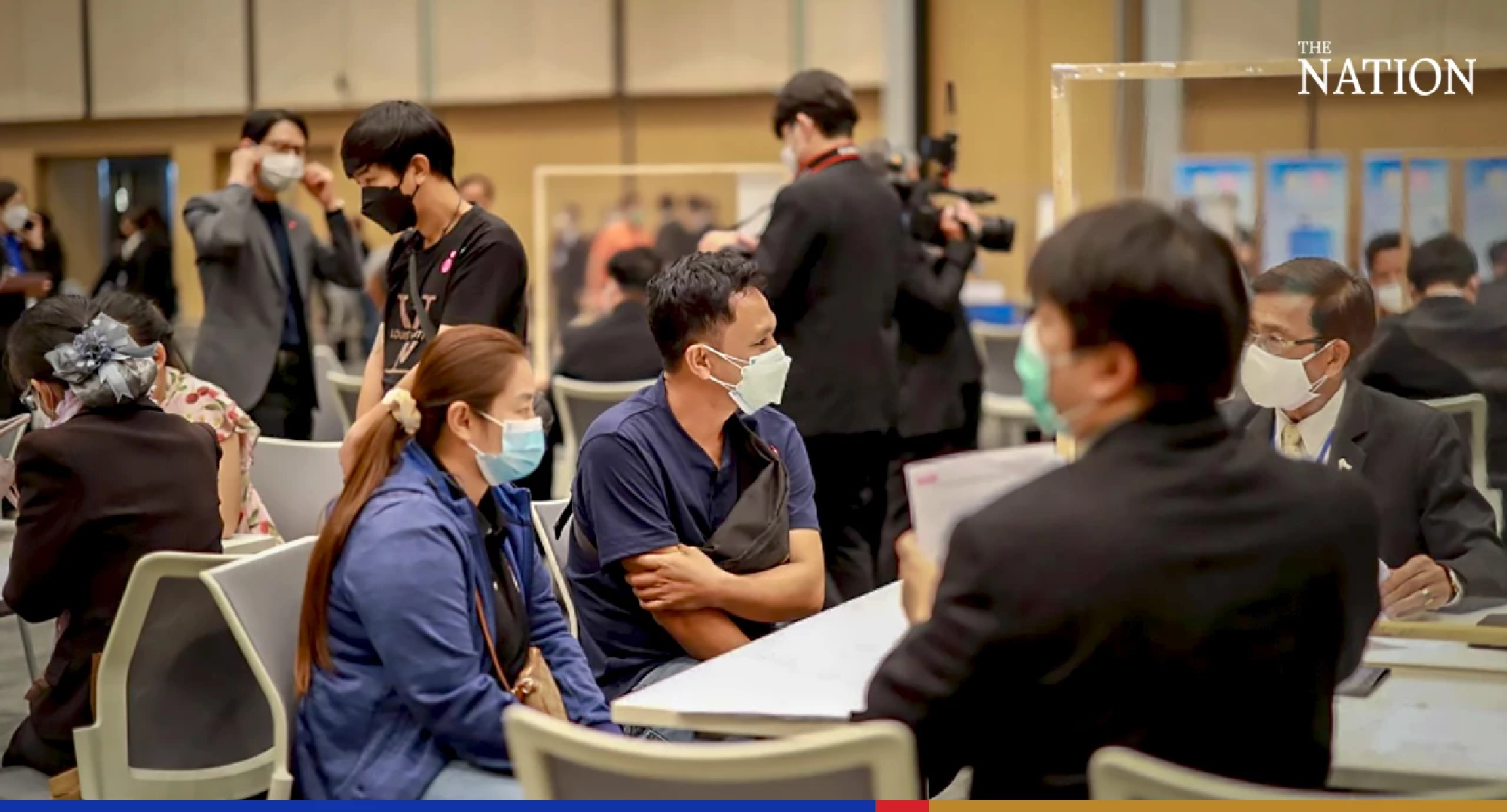
 Somsak said his ministry can help negotiate restructuring of four types of debts: student loans, loans for purchase of motorcycles and vehicles, credit card debt and personal loans, and debts of government officials.