
Whither women’s reproductive health in Asia Pacific

#SootinClaimon.Com : ขอบคุณแหล่งข้อมูล : หนังสือพิมพ์ The Nation.

https://www.nationthailand.com/world/asia-pacific/40024442

Whither women's reproductive health in Asia Pacific

Whither women’s reproductive health in Asia Pacific

SUNDAY, JANUARY 29, 2023

While the world has made many advancements in healthcare, millions of women and girls in low- and low-middle income countries are still far away from having bodily autonomy and are not able to make informed decisions regarding their sexual and reproductive health.

Even in countries like TaiwanJapanMalaysia, or Thailand where total fertility rate is relatively low, despite such commendable progress, there are challenges yet to be overcome.

Progress on women’s health but challenges remain

Data from the FP2030 Measurement Report 2022 does offer some consolation by way of more than 141 million unintended pregnancies, 29 million unsafe abortions, and nearly 148,000 maternal deaths being averted in countries of Asia Pacific during 2021-2022 due to an increase in the number of women using modern contraceptive methods.

However, there are an estimated 140 million women in the Asia Pacific region who still lack access to modern methods of contraception, despite wanting to avoid or delay pregnancy.

Over 60% of unintended pregnancies end in abortion and an estimated 45% of all abortions are unsafe, accounting for up to 13% of all maternal deaths recorded, as per the State of World Population 2022 reportMaternal mortality in the Asia Pacific region is high, with 10 women dying every hour in pregnancy and childbirth. Harmful practices such as child marriage and the preference of having a son, still abound.

Citizen News Service ( CNS ) spoke with some leaders from the field of obstetrics and gynaecology in the Asia Pacific region on the status of women’s reproductive health in their countries.

Whither women's reproductive health in Asia Pacific

Taiwan

At 1.08, Taiwan’s current fertility rate is the lowest in the world.

“As more and more women are getting higher education and entering the workforce, they prefer their career over raising a family. They postpone marriage as well as child birth or even prefer not having children at all”, said Prof Yi Yung Chen, Director, Taiwan Association of Obstetrics and Gynaecology, and Senior Attending Physician, Department of Obstetrics and GynaecologyMackay Memorial Hospital.

Chen shared that Taiwan’s national health insurance scheme covers all health-associated expenditures of its people, including fertility-related problems. All Taiwanese couples where the wife is under 45 years old, can get reimbursement of all expenses incurred for the in-vitro fertilisation (IVF) technique to help people with fertility problems have a baby.

There are education programmes for high school students to avoid unintended pregnancies. Condom use is promoted not only for contraception but also to prevent sexually transmitted infections (STIs), which are an emerging problem in Taiwan. That is why most hospitals provide anonymous testing for them.

Preconception check-up programmes for women check for anaemia and other blood-related diseases and also for STIs like syphilisHIV and chlamydia. Pregnant women are offered free HIV tests, to control vertical transmission of HIV. They are also checked for syphilis as part of the antenatal care programme and given free treatment if needed, added Chen.

Thailand

The country’s fertility rate has come down to 1.2. Its maternal mortality ratio is low at 37, and the unintended pregnancy rate per 1,000 women is 38. With more than 70% of married couples now using modern contraception methods, Thailand has a successful family planning programme. However, there is still a group of the population that is underserved, and these are the adolescents, cautioned Dr Unnop Jaisamrarn, Chief of the Family Planning and Reproductive Health Unit in the Department of Obstetrics and Gynaecology, at Chulalongkorn University, and Secretary General of Royal Thai College of Obstetricians and Gynaecologists.

“We are trying to bring down the rate of unintended pregnancies in adolescents. We need the strong leadership of government departments, and the cooperation of partners like academic institutions, universities, and NGOs, to address this problem. Most important is education and awareness around unintended pregnancies and providing easy access to family planning and contraceptive services throughout the country. We also need to have a very good referral system for clients who need these services”, he said.

Reinforcing the importance of integrating reproductive health and family planning services in the healthcare system, he shared that “In Thailand, we have integrated family planning, maternal healthcare and reproductive health services, into the national healthcare or universal healthcare system and all Thai citizens have access to all these services.”

Japan

Despite a low fertility rate of 1.34, even a developed country like Japan is facing the problem of unintended pregnancies.

“Abortion rate is high at 17%. Japan’s sexual education is focused on avoiding unintended pregnancies. We are also promoting the use of oral contraceptive pills whose current usage for birth control is less than 10%. They are mostly used for control of menstrual disorders”, shared Professor Tadashi Kimura, Professor of Gynaecology and Obstetrics, Osaka University School of Medicine, and Chair of Executive Board of Japan Society of Obstetrics and Gynaecology.

However, the country has practically eliminated vertical transmission (mother-to-child transmission) of HIV, with only such case being reported in 2022, he added.

Malaysia

Malaysia’s fertility rate is 1.9; the maternal mortality ratio is low at 29 and all births are attended by skilled healthcare personnel. The unintended pregnancy rate per 1,000 women is 62.

Dr K Balanathan, Head of Department of Obstetrics and Gynaecology, Hospital Seberang Jaya, Malaysia, and President of the Obstetrical and Gynaecological Society of Malaysia, said that Malaysia has made a lot of progress in the field of family planning and contraception prevalence has increased dramatically. However, despite the progress made, the current modern contraceptive usage is only 57% in women aged 15-49 years, as per UNFPA data.

Adolescent and unintended pregnancies remain a challenge in Malaysia. The 2022 Sexual Health and Intimate Wellness Survey of Malaysian youths revealed that although more Malaysian youths are sexually active today than they were in the past, their knowledge about STIs and pregnancy is poor and misconceptions abound. Given that more and more Malaysian youth are becoming sexually active at a young age, Balanathan strongly advocates for helping them in a constructive manner, by way of providing comprehensive sexual education to youngsters from secondary school level so that they know about reproductive sex and behave responsibly.

“Both males and females need to be advised to avoid unintended pregnancies. We want the young ladies to complete their education rather than get pregnant and become mothers, thus disrupting their own progress. We have to educate the youth to take precautions and not have unprotected sex to not only avoid unintended pregnancies but also prevent STIs, including HIV.”

By Shobha Shukla – CNS (Citizen News Service)

Shobha Shukla is the award-winning founding Managing Editor and Executive Director of CNS (Citizen News Service) and is a feminist, health and development justice advocate. She is a former senior Physics faculty of prestigious Loreto Convent College and current Coordinator of Asia Pacific Regional Media Alliance for Health and Development (APCAT Media). Follow her on Twitter @shobha1shukla or read her writings here www.bit.ly/ShobhaShukla)

Indonesian, Philippine water experts push for more sustainable dams amid climate change

#SootinClaimon.Com : ขอบคุณแหล่งข้อมูล : หนังสือพิมพ์ The Nation.

https://www.nationthailand.com/blogs/world/asean/40024436

Indonesian, Philippine water experts push for more sustainable dams amid climate change

Indonesian, Philippine water experts push for more sustainable dams amid climate change

SUNDAY, JANUARY 29, 2023

Experts warn that dams in both Indonesia and the Philippines, crucial for irrigation, drinking water and electricity generation, may face increased strain as climate change brings unpredictable and high-precipitation weather patterns.

Budi Santoso Wignyosukarto, a hydraulic engineering expert at Yogyakarta-based Gadjah Mada University, said that Indonesia had been accustomed to heavy rain, however, climate change would cause the weather to become less predictable, which would also affect dams.

Budi emphasized the need for Indonesia to be prepared for these uncertainties, as the country is already facing challenges such as rapid population growth that lead to land use changes, as more people need more food, shelter and industry, which all affect the climate.

He said that Indonesia needed to be more flexible and adaptable to climate change by improving its resilience.

“Building this resilience can be done through building infrastructure that can absorb [extreme] rainfall well, such as reservoirs coupled with dams whose capacities have been optimized,” Budi said.

Evi Anggraheni, a lecturer in water resource management at the University of Indonesia’s Civil Engineering Department, agreed that climate change would lead to unstable weather that affected dams, particularly through erosion in upstream areas caused by extreme rainfall. This erosion leads to sedimentation in the reservoirs of dams.

“Conservation [of the environment] at the upstream of dams is needed to improve their performance,” Evi said.

Airlangga Mardjono, the director of dams and lakes at the Public Works and Housing Ministry, said that all dams in Indonesia would be able to withstand the effects of climate change, as they have been designed with their probable maximum flood (PMF) capacity in mind to ensure they can contain large amounts of water.

“Dams are built that way because of the high risk [from holding large amounts of water], so we use the most conservative calculations,” Mardjono said.

There were 228 dams operating in Indonesia as of 2022, an increase from the previous year’s 205 dams.

Mardjono also said the ministry had adjusted the operation patterns of dams to withstand high rainfall by making sure to release excess water from dams’ reservoirs ahead of the rainy season, as well as installing early release floodgates and automating weather monitoring at dams.

One of the best options

The Philippines is also home to dams mainly used for irrigation and energy generation.

The Philippines Biodiversity Management Bureau recorded 39 water storage areas or dams in the country. Nine of these are major dams that are closely monitored by the Philippine Atmospheric, Geophysical and Astronomical Services Administration (PAGASA), the country’s meteorological agency, particularly during typhoons.

Additional dams are expected to become operational soon as a result of the administration of then-president Rodrigo Duterte’s massive infrastructure program, also known as the “Build, Build, Build” project.

According to the Ibon Foundation, a non-profit development organization, the program introduced eight dam projects from Abra in Northern Luzon to Iloilo in the Visayas. Many of these projects are funded by official development assistance from China.

While supporters of dam construction argue that the facilities will address water and energy issues in the Philippines, critics assert that dams have negative impacts on the environment and indigenous communities near the sites, and are vulnerable to typhoons made worse by climate change.

Franz Kevin Geronimo, a Philippine consultant for the World Water Council, said that the intensifying rainfall in the Philippines due to climate change would mean that dam operators needed to release water more frequently or they would break.

“If the dam breaks, there will definitely be a bigger amount of water that will be released,” Geronimo said, adding that the changing rainfall patterns would produce heavy rain in a short span of time.

While dams could provide water and clean energy for the Philippines, Geronimo said that there were other options aside from dams to address these issues.

Geronimo said solar panels or hydrogen fuel were alternatives for providing energy. However, the latter, while feasible, is not yet available in the country due to high cost and safety fears.

To address water issues, Geronimo suggested that the country consider harvesting rainwater. The Philippines already has a Rainwater Collector and Springs Development Act, which requires the public works department to construct rainwater collectors to prevent flooding.

Geronimo also mentioned the options of recycling wastewater and utilizing groundwater, however, they might not be able to provide the amount of water dams do.

“We are talking about big supplies of both water and energy. I think [dams are] still one of the best options at the moment.”

By A. Muh. Ibnu Aqil

The Jakarta Post

Asia News Network

*Freelance journalist Siegfred Lacerna from the Philippines collaborated for this article, which is supported by Climate Tracker and Internews’ Earth Journalism Network through the Climate and Water Nexus Media Fellowship program.

Korn pledges to create Thai spiritual tourism industry with THB1bn per province

#SootinClaimon.Com : ขอบคุณแหล่งข้อมูล : หนังสือพิมพ์ The Nation.

https://www.nationthailand.com/thailand/politics/40024452

Korn pledges to create Thai spiritual tourism industry with THB1bn per province

Korn pledges to create Thai spiritual tourism industry with THB1bn per province

MONDAY, JANUARY 30, 2023

The Chart Pattana Kla Party has pledged to invest 1 billion baht per province to build a Thai spiritual tourism industry if it wins power in the upcoming election.

Party leader Korn Chatikavanij said spiritual tourism has a strong tradition among Thai and international tourists, with potential to generate 5 trillion baht for Thailand’s economy.

He cited Wat Chedi Ai Khai in Nakhon Si Thammarat, saying visitors flocking there over the past three years of Covid-19 had generated much-needed cash for local hotel and business operators.

“Spiritual tourism is now trending globally,” he said, offering the examples of Hong Kong’s Guan Yin statue, Japan’s Asakusa Kannon Temple, and the cathedrals of Europe.

Korn said Watcharapong Radomsitthipat, the party’s economic adviser, had played an important role in promoting new spiritual landmarks in Thailand such as the Luang Pu Thuad statue in Ayutthaya and Ganesha statue in Chachoengsao.

He added that international tourists are drawn by the interesting stories surrounding Thailand’s many religious landmarks.

Korn said the party would use 1 billion baht per province to promote existing spiritual attractions or create new ones.

The investment would generate “enormous revenue”, he promised.

Korn pledges to create Thai spiritual tourism industry with THB1bn per province

He said three things must be done to develop Thailand’s tourism industry:

– Invest in utilities and environmental preservation to boost tourist numbers.

– Increase the number of attractions to coax tourists to stay for longer in Thailand.

– Improve products and services to stimulate spending among tourists.

“Spiritual tourism meets all three requirements,” he said.

The election is tentatively scheduled for May 7.

A century of political parties in Thailand

#SootinClaimon.Com : ขอบคุณแหล่งข้อมูล : หนังสือพิมพ์ The Nation.

https://www.nationthailand.com/thailand/politics/40024437

A century of political parties in Thailand

A century of political parties in Thailand

SUNDAY, JANUARY 29, 2023

This year’s general election marks the latest chapter in the history of Thai political parties that started 10 decades ago with the founding of Khana Ratsadon (People’s Party)

Formed in 1927, Khana Ratsadon’s bloodless coup in 1932 changed the country from an absolute monarchy to a constitutional monarchy 

The party went on to dominate Thai politics until disbanding in 1947, just after the end of World War II

The Democrat Party was formed in 1946 and survives today as the country’s oldest functioning political party 

The Communist Party of Thailand, once a rival of the Democrats, was founded four years earlier in 1942 but was never officially registered and has been inactive since the 1990s

During the course of almost 100 years, Thailand has produced hundreds of political parties

The number of parties formed each year from 1927 to 2022:
1927 – 1
1942 – 1
1946 – 1
1947 – 1
1955 – 8
1956 – 8
1957 – 8
1958 – 1
1968 – 6
1969 – 5
1971 – 2
1974 – 38
1975 – 3
1976 – 8
1979 – 6
1982 – 6
1983 – 4
1984 – 1
1982 – 1
1988 – 3
1989 – 1
1990 – 2
1991 – 2
1992 – 8
1993 – 1
1994 – 4
1995 – 5
1996 – 3
1998 – 13
1999 – 2
2000 – 1
2001 – 1
2003 – 1
2004 – 2
2005 – 1
2006 – 16
2007 – 13
2008 – 13
2009 – 20
2010 – 15
2011 – 15
2012 – 12
2013 – 20
2014 – 10
2016 – 1
2018 – 40
2019 – 8
2020 – 7
2021 – 6
2022 – 10

There were 88 active political parties as of December 2022

Thai Wikipedia lists the Communist Party of Thailand as still active, though this is disputed

Thirty-seven of the registered parties use the term “Thai” in their names

A century of political parties in Thailand

Govt seeks ways to defuse nominee accounts as online scams skyrocket

#SootinClaimon.Com : ขอบคุณแหล่งข้อมูล : หนังสือพิมพ์ The Nation.

https://www.nationthailand.com/thailand/general/40024453

Govt seeks ways to defuse nominee accounts as online scams skyrocket

Govt seeks ways to defuse nominee accounts as online scams skyrocket

MONDAY, JANUARY 30, 2023

The Finance Ministry’s Fiscal Policy Office has been tasked with solving the problem of scammers using nominees to open bank accounts and electronic wallets to escape the long arm of the law.

One proposed solution is to allow financial institutions to freeze accounts after receiving complaints from victims, to prevent damage from escalating, said finance permanent secretary Krisada Chinavicharana on Monday.

He said increasing reports of online scams mostly involved tricking victims into clicking links or inputting their personal info, enabling scammers to take remote control of the victim’s mobile device.

The criminals then siphon the money out of the victims’ accounts into one of their nominee accounts, often when the victims are charging their devices and so don’t notice. This has also led to a widespread misconception that cheap charging cables are responsible for money being siphoned from mobile phones.

Krisada said that allowing financial institutions to take control of nominee accounts required changes to several laws and thus needed thorough study.

“In principle, once the money is transferred to an account, the owner of the destination account also legally owns the money. We are looking into ways of freezing only the transferred amount instead of the whole account,” he added.

Krisada also advised people to keep most of their money in a separate offline account for safety, using their online account only for settling and receiving daily bills.

“This second account should have only a small amount of money,” he said.

In the six months between March and October last year, over 114,000 online scams stole a total of 22 billion baht, according to the Ministry of Digital Economy and Society.

The ministry responded by proposing a draft Royal Decree on Cybercrime Prevention and Suppression.

The draft stipulates punishment of up to three years in jail and/or a maximum fine of 300,000 baht for those who open an account, electronic card, or electronic wallet for purposes other than personal use, or who let others use their SIM card for any illegal purpose. Meanwhile the penalty for asking others to open an account or to use their account, electronic card, electronic wallet, or SIM card for illegal purposes would be 2-5 years in jail and/or a fine of 200,000 to 500,000 baht.

The draft was approved in principle by the Cabinet last week.

Related Stories

Cabinet okays draft Royal Decree on tackling cybercrime

All SIM card holders required to verify themselves in new bid to fight cybercrime

Scale of Thai cybercrime revealed as almost 60,000 bank accounts frozen

Video shows Thai police did extort Taiwanese actress: Chuwit

#SootinClaimon.Com : ขอบคุณแหล่งข้อมูล : หนังสือพิมพ์ The Nation.

https://www.nationthailand.com/thailand/general/40024450

Video shows Thai police did extort Taiwanese actress: Chuwit

Video shows Thai police did extort Taiwanese actress: Chuwit

MONDAY, JANUARY 30, 2023

Thai police did indeed extort money from a Taiwanese actress and her group, as she claims, whistleblowing former politician and massage parlour tycoon Chuwit Kamolvisit said on Monday.

Chuwit also alleged that police had deleted CCTV footage of the incident in their attempt to cover up the scandal.

Taiwanese actress Charlene An (An Yu-qing) alleges she and her friends were victims of a police shakedown while visiting Bangkok early this month. Her allegation made national headlines in Taiwan, to the dismay of Thai tourism operators.

The 33-year-old actress said police stopped their Grab taxi at a checkpoint close to the Chinese Embassy on Ratchadaphisek Road at about 1am on January 5 and detained the group for two hours. She said police eventually released the group in return for a payment of 27,000 baht.

The Metropolitan Police Bureau (MPB) has denied the claims of extortion, saying that CCTV footage of the incident does not back up the actress’s story. Police have contacted Taiwanese authorities in a bid to question An, who has since returned to Taiwan.

In a Facebook post on Monday, Chuwit said a Thai friend who was part of An’s group had paid the 27,000-baht bribe to police.

“The Thai friend had joined a drinking party with Taiwanese actress,” he said, adding that she also had a video clip as evidence.

Chuwit also claimed that MPB chief Thiti Saengsawang had ordered Metropolitan Police Division 1 commander Pol Maj-General Attaporn Wongsiripreeda and Huai Khwang police station chief Yingyos Suwanno to take four steps to cover up the incident.

Chuwit alleges they were ordered to:

  • Delete footage from the Chinese Embassy’s CCTV cameras and police body cameras.
  • Persuade the Grab taxi driver to say that he stayed at the checkpoint for 40 minutes, had no video of the incident, and that the Taiwanese actress was drunk.
  • Release video clips to discredit An.
  • Counter the extortion claim by declaring that she had made up the story.
Video shows Thai police did extort Taiwanese actress: Chuwit

Chuwit said police scandals over collusion with Chinese triads and extortion of the Taiwanese actress had damaged Thailand’s reputation.

“Most importantly, the police made up a story, destroyed evidence and retaliated against Taiwanese actress.”

He added that he expects the police to confess to extortion of the actress soon.

Rumours of prices hikes for baby formula, canned fish denied by ministry

#SootinClaimon.Com : ขอบคุณแหล่งข้อมูล : หนังสือพิมพ์ The Nation.

https://www.nationthailand.com/thailand/general/40024447

Rumours of prices hikes for baby formula, canned fish denied by ministry

Rumours of prices hikes for baby formula, canned fish denied by ministry

MONDAY, JANUARY 30, 2023

Rumours that the government has permitted price hikes for baby formula and canned fish are fake news, according to the Commerce Ministry’s Department of Internal Trade (DIT). However, retailers do have the green light to raise the price of soy milk, said government spokeswoman Ratchada Thanadirek on Sunday.

The ministry was responding to rumours that the prices of infant powdered milk and canned fish were set to increase by 10% and 2 baht per can respectively due to inflation and rising production costs.

Ratchada said both items were on the controlled-products list, meaning any price hike must be approved by the DIT.

“The department has asked manufacturers to fix prices so as not to add to people’s financial burden amid inflation.”

She added, however, that some brands may have increased prices because manufacturers have reduced discounts offered to retailers, who then raise prices to maintain their profit margin.

Rumours of prices hikes for baby formula, canned fish denied by ministry

Regarding rumours of a 1-2 baht rise for a carton soy milk, Ratchada said: “Since soy milk is an alternative product and not controlled under the Price of Goods and Services Act of 1999, manufacturers can raise the price freely.”

However, the DIT has asked manufacturers to submit their cost structure so they can check if the price hike is reasonable, she added.

The prices of 56 products are fixed under the law. The DIT conducts regular market surveys to check that the prices of staple foods such as pork, fresh chicken and cooking oil do not exceed the limit.

The prices of controlled household necessities such as soap, dishwashing liquid, instant food, powdered milk, and toilet paper are checked twice a week.

Manufacturers of controlled products must also seek approval from the DIT before changing their formula, fragrance, or container size in a bid to reduce costs while maintaining retail prices.

Related Stories

Mysteries of Thailand’s New Year gift baskets probed by Trade Dept

Fresh-food demand heats up for Chinese New Year

Price controls on 51 goods, services extended for another year

Activist dies of heart attack at rally to release political prisoners

#SootinClaimon.Com : ขอบคุณแหล่งข้อมูล : หนังสือพิมพ์ The Nation.

https://www.nationthailand.com/thailand/general/40024445

Activist dies of heart attack at rally to release political prisoners

Activist dies of heart attack at rally to release political prisoners

MONDAY, JANUARY 30, 2023

A 67-year-old political activist died of a heart attack in front of the Criminal Court in Bangkok on Sunday as he campaigned for the release of political prisoners.

The death of Pairoj Chotsriphanporn, aka “Uncle Pairoj”, was announced on Facebook by prominent human rights lawyer and activist Arnon Nampa.

Pairoj had joined Sunday’s march from Major Cineplex Ratchayothin to the Criminal Court on Ratchadaphisek Road in an attempt to post bail for political prisoners, Arnon said.

“As a group of lawyers went into the court to submit bail applications, Uncle Pairoj, who was standing in front of the court, suddenly collapsed and lost consciousness,” said Arnon. Medics who treated him said he succumbed to an acute heart attack, he added.

“Uncle Pairoj fought for democracy until his last day. I would like to express my condolences and respect for him as well as all those who fight for the oppressed.”

Activist dies of heart attack at rally to release political prisoners

Protests at the Criminal Court were sparked when Tantawan “Tawan” Tuatulanon, 20, and Orawan “Bam” Phuphong, 23, began a hunger strike on January 16 to demand the release of all political prisoners and the end of lese majeste and sedition laws.

The young activists were charged with defaming the royal family after they conducted a public opinion poll on royal motorcades. They revoked their own bail on January 16 and began a “dry” hunger strike, refusing both food and water.

Their conditions deteriorated on January 20 and they were sent to the Department of Corrections Hospital.

Hundreds of activists gathered at the Court on Sunday to demand the bail release of detainees currently awaiting trial on royal defamation and other charges related to anti-government protests. Thai Lawyers for Human Rights says that at least 1,888 individuals have been prosecuted over their participation in political protests since 2020.

The protest at the Criminal Court is set to continue on Monday.

Related Stories

Anti-government protesters arrested after five policemen injured in clashes

Arnon threatens police with legal action over assault on protesters

Infected pro-democracy protesters perfectly fine, says prison doctor

Taiwanese actress who claimed extortion caught in lie on camera

#SootinClaimon.Com : ขอบคุณแหล่งข้อมูล : หนังสือพิมพ์ The Nation.

https://www.nationthailand.com/thailand/general/40024441

Taiwanese actress who claimed extortion caught in lie on camera

Taiwanese actress who claimed extortion caught in lie on camera

SUNDAY, JANUARY 29, 2023

Security camera footage from several locations in Bangkok shows the Taiwanese actress who claims Thai police extorted 27,000 baht from her after placing a vaping device in her hand using one before and after she was stopped at a checkpoint in the early hours of January 5.

The actress, Charlene An, alleged on Taiwanese social media that she was forced to pay 27,000 baht to Thai police officers after they stopped a taxi she and her friends were travelling in at a checkpoint near the Chinese embassy at about 1 am on January 5.

The actress told Taiwanese media that Thai police put a vaping device into her hand and that she did not know what it was.

She alleged that she was charged with having an illegal e-cigarette device in her possession. Police subsequently took her into an alley and extorted 27,000 from her, she claimed. The actress also alleged she and her friends had been detained for two hours.

Nation TV obtained footage from a security camera of a condo building where An stayed in Bangkok. Nation TV said the clip showed the actress smoking on a vaping device near the condo’s swimming pool on January 31 at 1.55 pm.

Footage from a security camera on the 11th floor of the condo building also showed her holding a vaping device while she was using her smartphone.

Nation TV also obtained a clip from a security camera near Huay Kwan market at 3.46am on January 5 – after she and friends were driven by taxi from the police checkpoint.

The clip, taken in front of the market, showed her holding a vaping device in her left hand.

Taiwanese actress who claimed extortion caught in lie on cameraIf police had charged her with having a vaping device in her possession, it would have been seized as evidence, police said. If it was not seized, any police officers who charged her with possession of the illegal device would be in dereliction of duty, police said.

Nation TV also reported clips of security camera footage showing An holding a vaping device in her left hand while she was using an elevator of the condo at 3.59pm on January 4. She was also seen smoking from the device at 4.02pm in front of her room.

Taiwanese actress who claimed extortion caught in lie on cameraShe was also caught on camera holding the device in her left hand when leaving the room at 11.45pm on January 4.
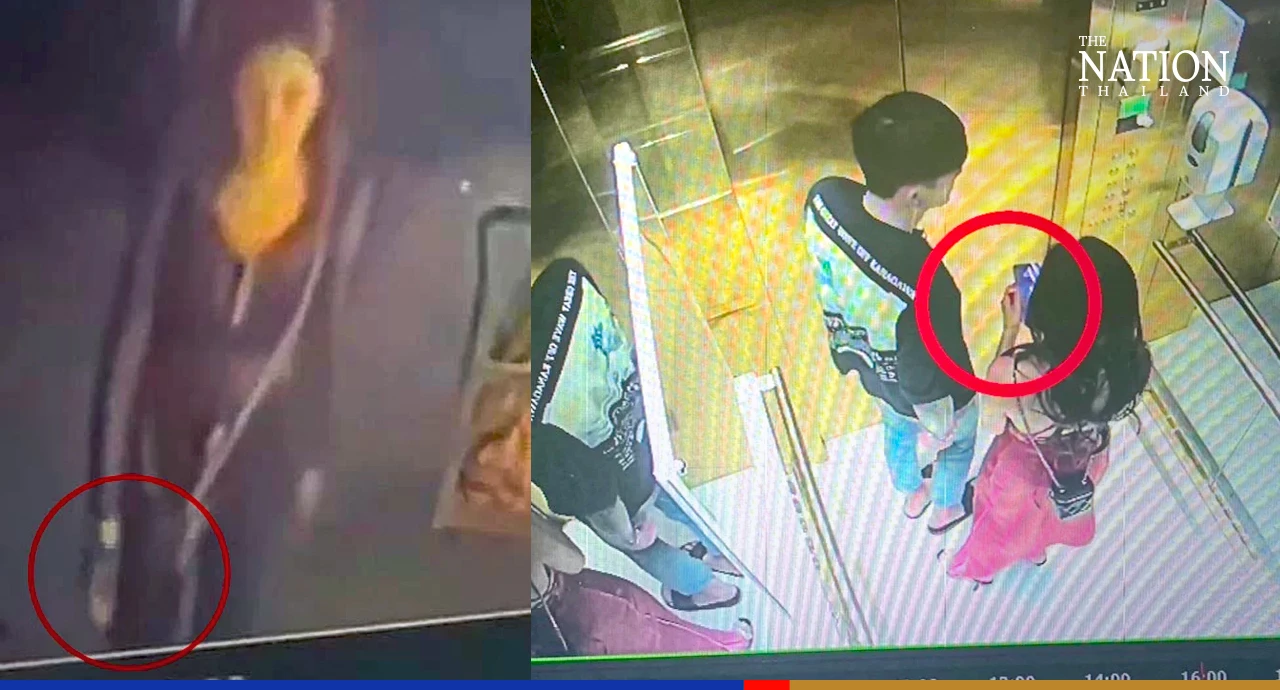
Channel 7 has posted a video clip compiled from security cameras around the Chinese Embassy that shows An and her friends being detained by police at the checkpoint for 47 minutes – not the two hours she claimed.

No footage showed any member of her group being led into an alley by police, Channel 7 added.

An alleged police led her to a spot that was outside of the range of CCTV cameras to extort money from her.

Metropolitan Police Division 1 commander Maj-General Attaporn Wongsiripreeda said he had assigned his subordinate to gather footage to examine from security cameras along the route An travelled before and after being stopped.

Taiwanese actress who claimed extortion caught in lie on cameraPolice cannot stop An from attacking them, but they will gather enough compelling scientific evidence to get to the truth, Attaporn said.

Police are also trying to identify the three men traveling with An in the taxi so that they can be questioned, Attaporn said.

Thai universities welcome return of Chinese students

#SootinClaimon.Com : ขอบคุณแหล่งข้อมูล : หนังสือพิมพ์ The Nation.

https://www.nationthailand.com/thailand/general/40024439

Thai universities welcome return of Chinese students

Thai universities welcome return of Chinese students

SUNDAY, JANUARY 29, 2023

The reopening of China has brought broad smiles to Thai universities as Chinese students return to their classes here and many more are expected to enrol for the next year.

Their return is especially welcomed by several private universities seeing declining enrolment among Thai students in recent years, officials say.

According to the Higher Education, Science, Research and Innovation Ministry, 14,423 Chinese students were studying at Thai universities in 2020 before the Covid-19 pandemic.

The ministry said 102 Thai universities have enrolled students from China, including 50 in Bangkok and surrounding provinces, 19 in the North and 12 in the Northeast.

The ministry said that 10,083 Chinese students, 70% of the total, were enrolled in private Thai universities in 2020 and the rest in state universities.

The top ten universities for Chinese students in 2020 were:

– Dhurakij Pundit University (2,826 Chinese students)

– Assumption University (1,560)

– Krirk University (894)

– Chiang Mai University (882)

– Stamford International University (824)

– Shinawatra University (592)

– Bangkok University (483)

– Huachiew Chalermprakiet University (451)

– Bangkok Thonburi University (342)

– Rajamangala University of Technology Krungthep (340)

Thai universities welcome return of Chinese studentsThe Chinese Embassy in Thailand said the number of Chinese students studying at all school levels here was as high as 50,000 before the pandemic.

Most came from southern parts of China, including Yunnan and Guangxi provinces, the embassy said.

It quoted a recent study that found several reasons why Thailand attracted a large number of Chinese students. They include:

– China’s universities have limited seats for students.

– The cost of studying in Thailand is affordable.

– There are plenty of courses in Thai universities that Chinese students want to study.

– Chinese students love Thai food, culture and tourist destinations.

– It is not hard for them to obtain visas.

– Cooperation between Thai and Chinese universities enhances opportunities for graduates to find jobs.

The trend of Chinese students studying in Thailand has prompted several Thai universities to adjust courses for them.

Thai universities welcome return of Chinese studentsDhurakij Pundit University vice rector Siridej Khamsuprom said his university was among the first Thai universities to tap the market for Chinese students.

He said the success of its courses prompted the Chinese government and education agencies to certify degrees from the university.

Research by Dhurakij Pundit University estimated that Chines students generated 1 billion baht in income a year for Thailand, he said, adding that when they returned to China they helped promote Thai culture and language in China, which improved bilateral ties.

Siridej said the Chinese government also encouraged Chinese students to study in Thailand by granting them scholarships.

Currently, there are over 3,000 Chinese students studying at Dhurakij Pundit University. Their main areas of study are business administration, tourism, and hotel administration.

“When China reopened its borders, Chinese students returned to study in person, after studying online for a few years,” Siridej said.

He expects 1,000 freshmen to enrol in the university this year.

Siridej said his university has cooperated with Chinese universities to develop courses for Chinese students and its Chinese alumni help promote the courses in Shanghai, Beijing, Chengdu, and Kunming.

He said the university is now encouraging educational tourism among Chinese students.

The return of Chinese students is also welcomed by the Khon Kaen Chamber of Commerce.

Charnnarong Buristrakul, its chairman, said Khon Kaen is ready to welcome back Chinse students.

About 2,000 Chinese students are waiting to return to study in the province, Charnnarong said.

He added that the provincial capital is easy to reach because it receives about 20 flights a day from Bangkok. Chinese students can also travel by high-speed rail to Vientiane. It only takes about three hours to reach Khon Kaen from Laos by bus, he added.

Krirk University rector Krasae Chanawong said his university planned to open an international college with some courses adapted for Chinse students to help offset declining enrolment by Thai students.

The number of students at Krirk has declined from over 3,000 to 2,000 a year and it hopes to enrol 1,000 students from China a year, Krasae said.

Currently, about 50 Chinese students are studying language and culture courses at the university, he said.

Rangsit University said about 1,000 Chinese students were studying at the university each year and this year it expects to enrol 400 new students, compared to 300 new students last year.

The university said it had opened a Chinese-Thai Institute because China is placing more importance on Southeast Asia. The institute helps students from China study at the university.