The National Anti-Corruption Commission (NACC) on Tuesday reported that Gen Preecha Chan-o-cha, Prime Minister Prayut Chan-o-cha’s younger brother, allegedly submitted a “false property report” while he was a member of the National Legislative Assembly.
NACC deputy secretary-general Niwatchai Kasemmongkol said the commission will allow Preecha to provide evidence to refute his alleged wrongdoing before reaching a conclusion.
“The news that the NACC has filed a charge against Gen Preecha is not true,” Niwatchai added.
Eight critics of Thai govt lose their Facebook pages
Eight social media pages were ordered closed by a court on Wednesday because their content allegedly violates the Computer Crime Act.
The Digital Economy and Society Ministry announced that the Facebook pages of Pavin Chachavalpongpun, Andrew MacGregor Marshall, Royalist Marketplace, Suda Rangkupan, ป้าหนิง DK, Aum Neko, KTUK and Pixel HELPER will be removed.
These pages carried politics-related content and were critical of the Thai government.
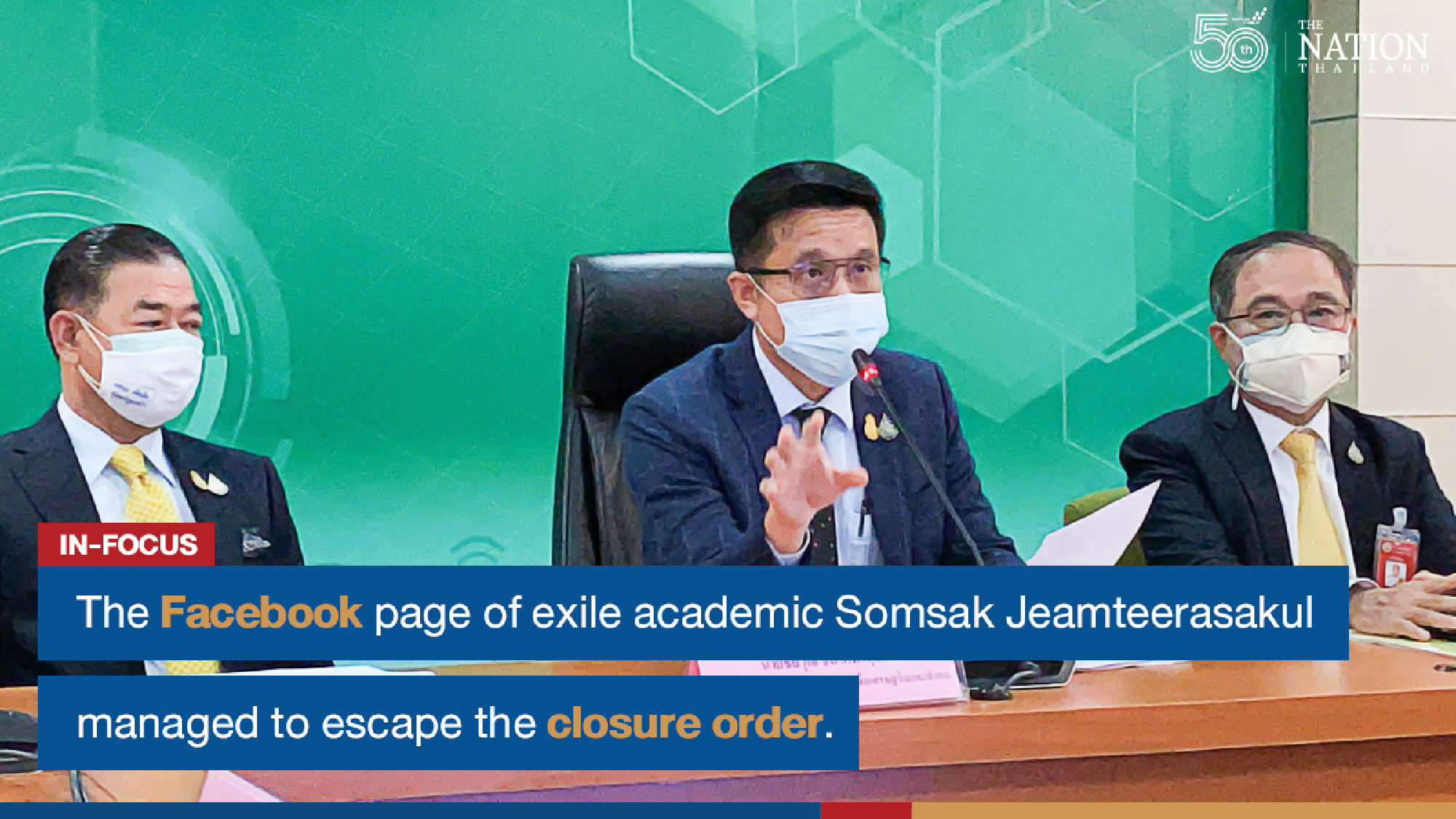
The Facebook page of exiled academic Somsak Jeamteerasakul managed to escape the closure order.
Opposition gets ready to attack govt over 2022 budget bill
The opposition, led by Pheu Thai and Move Forward parties, are getting ready to attack the government over the 2022 national budget in Parliament from Monday.
The House of Representatives is scheduled to debate the 3.1-trillion-baht budget for the fiscal year 2022 until June 2.
Pheu Thai Party will have 55 MPs and the Move Forward Party will have 21 MPs take the floor to question the government’s decision on four aspects:
• What if the expectation of the economy recovering in 2022 is not met?
• Not enough funds have been allocated to stimulate the economy and solve the Covid-19 crisis.
• The government’s decision to take loans will ruin the country’s monetary system.
• Funds have been allocated to benefit the coalition parties instead of the people. For instance, more money has been allocated to the Defence Ministry than the Public Health Ministry.
The 3.1-trillion-baht budget is allocated as follows:
Central budget: 571.04 billion
Prime Minister’s Office: 34.01 billion
Defence Ministry: 203.28 billion
Finance Ministry: 273.94 billion
Foreign Ministry: 7.61 billion
Tourism and Sports Ministry: 5.16 billion
Social Development and Human Security Ministry: 24.66 billion
Higher Education, Science, Research and Innovation Ministry: 124.18 billion
Agriculture and Cooperatives Ministry: 110.12 billion
Transport Ministry: 175.85 billion
Digital Economy and Society Ministry: 6.97 billion
Natural Resources and Environment Ministry: 28.32 billion
Covid jab the best and only protection, Prayut says
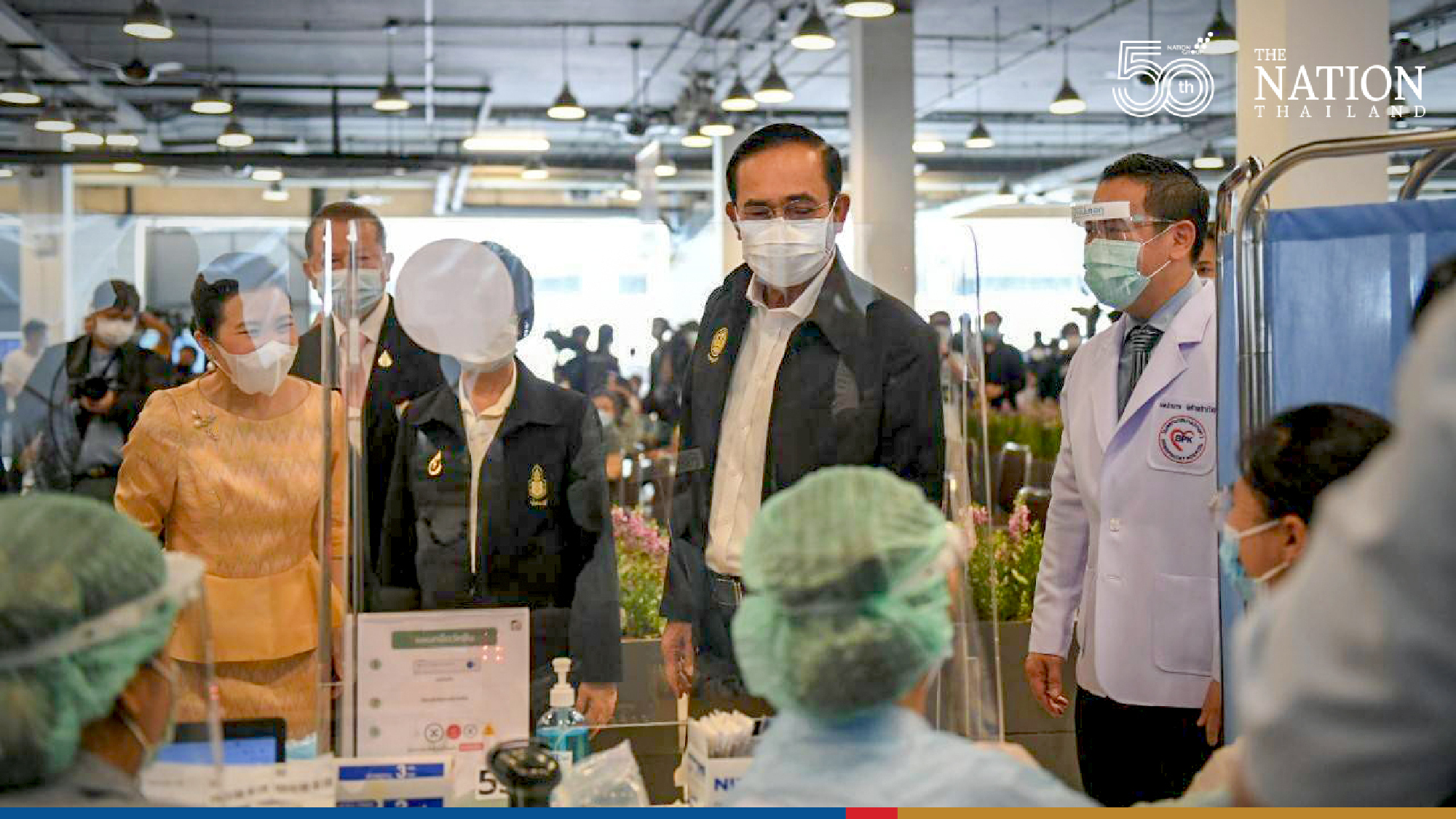
While presiding over the opening of Bangkok’s 9th vaccination station, Prime Minister Prayut Chan-o-cha told Thais not to worry about the new “Thai variant” of the virus and said everyone should get their jab first.
He was overseeing the opening of the station at Asiatique in the capital’s Bang Kho Laem district on Friday.
Prayut said the government will manage the vaccine rollout on a monthly basis and ensure it is in line with the plan to vaccinate all Thais by December.
“Some adjustment to the vaccine management plan is necessary, but I confirm that all Thais will receive their jab for sure,” he said.
As for rumours that a local company has been trying to sell its own Covid-19 vaccine, he said all firms must comply with the regulations of the Government Pharmaceutical Organisation and Food and Drug Administration to import vaccines to Thailand.
Britain on Wednesday reported a new Covid-19 variant that reportedly originated from Thailand.
Jatuporn and ‘Impatient Thais’ up pressure on PM to resign
Former red shirt leader Jatuporn Prompan and “Thai Mai Thon” (Impatient Thais) group submitted a letter at the Government House grievance centre in Bangkok on Tuesday, urging Prime Minister Prayut Chan-o-cha to resign from his position.
The letter said political conflict had emerged across the country because of Prayut’s failure to impose reforms to tackle corruption, the economy and other aspects of governance.
It also said that the number of Covid-19 infections in Thailand had soared to over 2,000 per day because of the Prayut government’s failure in procuring and managing vaccines.
To resolve the country’s crisis, the power of government and the private sector would have to be combined and Prayut would have to resign, it added.
Message from… “Boy sex workers in Thailand” … to Government
Message from “Boy sex workers in Thailand” to Government “If We Had Choices, We Would Step Out of Sex Trade” via Research on “Sexual Exploitation of Boys and SOGIE Youth in Thailand”
All of us must have heard from news reports, via TV and newspapers, about sexual exploitations of boys or underage male prostitution before. It has been reported, for example, that a procurer brought a 14-year-old boy to Thai and foreign homosexuals for sex services. If the boy refused to yield, he would be subject to physical assaults. Also in news reports were how boys aged below 18 sought customers via online platforms. Underage male prostitution has long existed in Thai society though its form has changed over time in response to changing context. The main reason behind boys’decision to provide sex service is that they want to get out of poverty and difficulty.
“We have interviewed 20 boy sex workers. Of them, 18 want to quit if they find other means of livelihoods”.
The quote comes from an online event held to release findings from research on the sexual exploitation of boys in late April.
The research on “Sexual Exploitation of Boys and SOGIE Youth in Thailand” by the ECPAT International and the Thailand Institute of Justice, conducted in-depth interviews with 20 boy sex workers aged between 15 and 24 years old in Chiang Mai and Bangkok. Interviewees are from “SOGIE” group (SOGIE is abbreviated from ‘Sexual Orientation, Gender Identity and Expression’. Findings show more than half of them started providing sex services in return for something from a young age. The youngest age was just 12. Sometimes, sex services were provided because they wanted a roof over their head, safety, or a small amount of cash. Common causes of their entry into the flesh trade were poverty, domestic violence, and gender-based discrimination.
Mark Kavenagh, Head of Research and Policy, ECPAT InternationalMark Kavenagh, Head of Research and Policy, ECPAT International, said the research took one and a half years to complete. “Findings show young SOGIE sex workers are not seen as victims of sexual exploitations due to prevailing biases. Due to prejudices, many people believe SOGIE boys have engaged in sex services to fulfil their own sexual needs. But the truth is that youth are victims, no matter what their gender, in prostitution. Aside, 18 out of 20 young persons whom we interviewed said they would definitely stop providing sex services if they had other means to support themselves”.
According to the research, “frontline welfare service providers” or officials of organizations with close contact with children have had problems building the trust needed for them to work for the causes of young male sex workers. Due to the lack of trust, they have been unable to reach out to these sex workers’ community and to provide counselling to this SOGIE group. Importantly, “frontline welfare service providers” may inadvertently have prejudices against young male institutes as they tend to believe that “boys offering sex services are not victims of sexual exploitations”. Such prejudices threaten to deprive such boys of access to legal protection. Officials, therefore, should receive additional training in order to deliver better performance.
The research, most important of all, recommends legal amendments. Under current laws, sexually-exploited youth may still face criminal actions for “engaging in prostitution” when they should have been considered damaged parties. Aside, Thailand does not have any law to criminalize the seduction of children via online platforms or LIVE Streaming. The research also suggests that the 15-year statute of limitation for sexual exploitation of children be cancelled on grounds that in many cases, information related to the crimes was disclosed long after they happened. However, in this aspect, Thai laws have a good point in that they have no sexual discrimination. Both males and females have equal protection under laws.
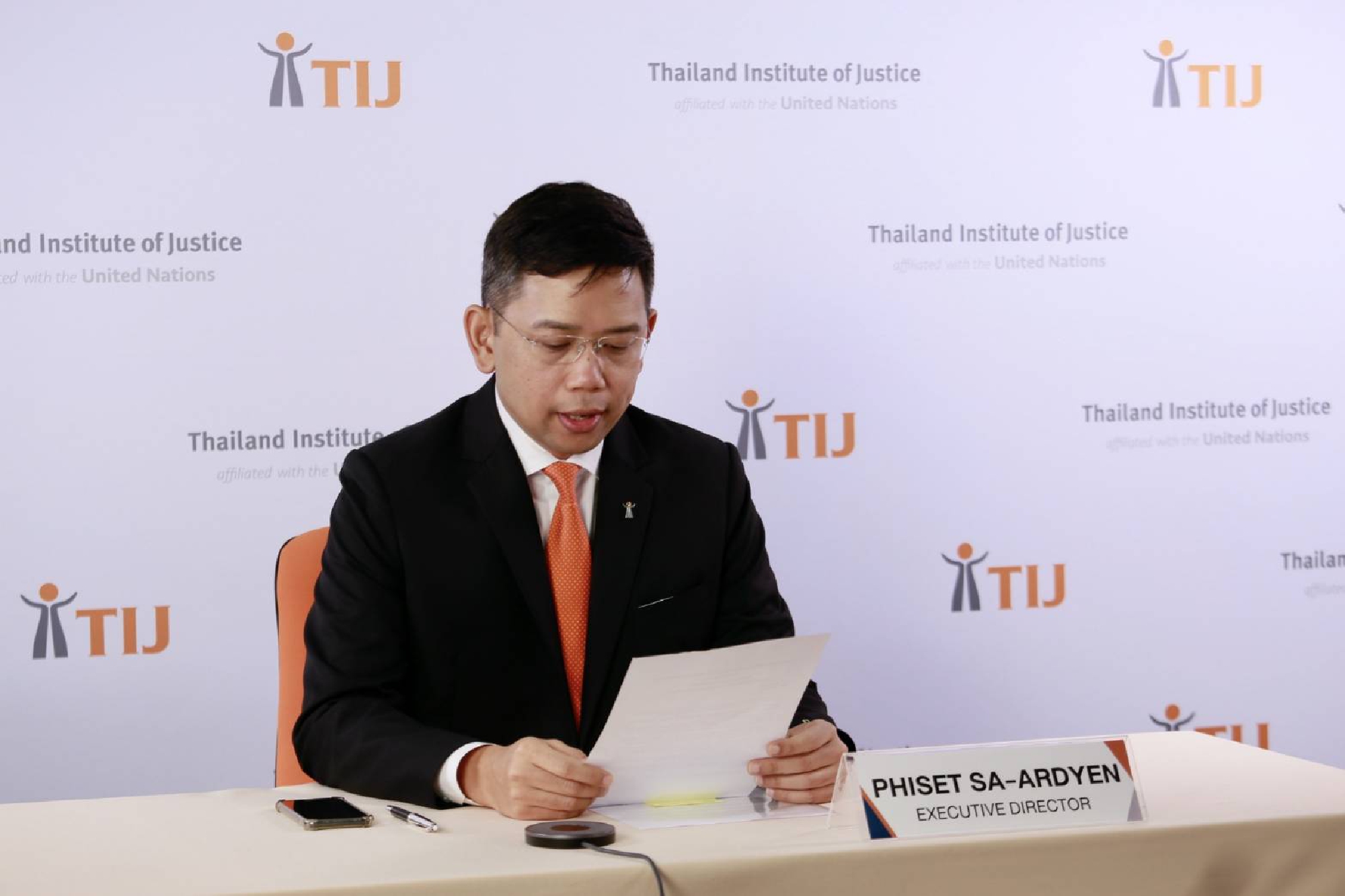
Dr.Phiset Sa-ardyen, Executive Director of TIJDr. Phiset Sa-ardyen, Executive Director of TIJ, said the findings are interesting because they include frontline welfare service providers’ viewpoints and address the vulnerability of sexually-exploited “boys” who have received less attention than girls. He believes this research will mark the first step for Thailand to develop greater understanding of the issue. Cases mentioned in the research involve boys and SOGIE youth, who are often sexually abused through online media. The proper understanding will pave the way for laws researchers to design a process that better addresses the problem.
Today, the judicial process must deal with a new threat like a technologically-enabled sexual threat against children. As technologies have played a bigger role in the COVID-19 era, children also face bigger risks. In addition to poverty, other economic problems, and domestic violence, children may struggle to adapt to tech-driven society. One of TIJ’s missions is to “combat violence against children” in pursuit of sustainable development goals (SGDs). TIJ, therefore, has promoted the legal structure that promotes children’s rights and facilitates their social participation.
Maia Mounsher from Chiang Mai-based Urban Light Foundation Thailand
Maia Mounsher from Chiang Mai-based Urban Light Foundation Thailand said a SOGIE boy had suffered from domestic violence to the point that he was sent to an orphanage. At the age of just 12, he dropped out of schools as friends dragged him to alcohol and narcotics. After staff at the orphanage found that he abused alcohol and narcotics, he received severe rebukes. He at that point decided to leave the shelter and became a street kid. He ends up supporting himself and drug consumption by offering sex services. Mounsher pointed out that several adults, namely parents, teachers, and orphanage staff, on several occasions could have prevented this boy from entering the flesh trade, but they missed those opportunities due to the lack of tools and understanding of his needs.
Santanee Disayabutr, Director, Secretariat Office of Nitivajra Institute, Office of the Attorney GeneralSantanee Disayabutr, Director, Secretariat Office of Nitivajra Institute, Office of the Attorney General said society generally cares more about girls than boys due to sexuality myths from the past. While there are much fewer cases of sexual crimes against boys than those against girls in Thailand, boys’ cases have seen more violence. Santanee, too believed that laws should be improved to resonate with the United Nations’ strategies that call for equal legal protection for all genders. Laws should protect, not prescribe criminal punishments to, damaged parties. The attitudes of “frontline welfare service providers” and laws enforcers should also be adjusted to ensure operations are conducted in the best interests of children.
Pol Captain Khemachart Prakaihongmanee, Deputy Director of the Department of Special Investigation’s Bureau of Foreign Affairs and Transnational CrimePol Captain Khemachart Prakaihongmanee, Deputy Director of the Department of Special Investigation’s Bureau of Foreign Affairs and Transnational Crime, said from his over 15-year-long experience in handling cases of sexual crimes against children at DSI that the number of sexually-abused boys is higher than that of sexually-abused girls. He also disclosed that in addition to being abused, boys’ pornographic materials are always released online. According to him, boys have less tendency to tell others – even those in their close circles – about their ordeals when compared to girls because of the shame involved. These boys, as a result, tend to develop mental health issues and a higher inclination towards narcotics.
Recommendations for Relevant Authorities…Solution to Thailand’s Boy Prostitution
The research has recommended the followings, which include proposed legal framework:
• Criminal punishment against persons involved in prostitution should focus on protecting boys who are sexually exploited. Without such focus, sexually-exploited boys risk being identified as laws offenders.
• Laws about the online sexual exploitation of children should be compiled and amended, with criminal punishments be stipulated against such exploitation including the online seduction of children for sexual purposes and the live broadcast of sexual abuses against children.
• Data collection and storage should be done based on proper principles in the best interests of children to ensure digital evidence can be kept. Collaboration with laws enforcement agencies that handle internet service providers (ISPs), mobile operators, social-media firms, Cloud Storage providers, and tech industry should be fostered;
• Civil law should be amended to set the minimum age for marriage at 18, without any exception;
• Sexual exploitations of children should have no statute of limitation;
• Laws-enforcement agencies should be provided with guidelines and training so that they have more knowledge and skills needed to help sexually-exploited children; and
• Laws and policies should be formulated in a way that ensures sexually-exploited children’s rights to optimal rehabilitation and remedy.
While the problem cannot be fast solved by any single agency or person, the research is prepared in hopes that it is useful and will foster collaboration among agencies, society, and people in a way that leads to concrete solutions in the future.
Reflections on Criminal Justice Trends at UN Crime Congress
The united nations Office on Drugs and Crime holds the UN Crime Congress every five years in collaboration with host countries. This international forum presents opportunities for participants to exchange knowhow, discuss situations, and shape directions for policies on crime prevention
After World War II, the world became a melting pot and nationalism faded in the face of globalization. Influenced by economic, technological, cultural, and political cooperation, the globalized world also fostered international collaboration on the prevention of and the battle against “contemporary social problems”, including criminal activities.
The 14th UN Crime Congress was held in Kyoto, Japan, in early March 2021 for the purpose advancing crime prevention, criminal justice and the rule of law toward achieving the UNODC 2030 Agenda. The advancement is expected to not only deliver tangible results in fighting crime but also to encourage recovery from the COVID-19 crisis.
The Thailand Institute of Justice (TIJ), a member of the United Nations Crime Prevention and Criminal Justice Programme (UN-PNI), attended the 14th UN Crime Congress to participate in the joint international formulation of criminal-justice direction. This forum addressed a diverse range of relevant topics, including the 10th anniversary of Bangkok Rules, the Integration of Sports into Youth Crime Prevention and Criminal Justice Strategies, and Cross-Sectoral Collaboration on Crime Prevention.
Reflections on Criminal Justice Trends at UN Crime Congress
Four Global Trends in Criminal Justice System
Dr. Phiset Sa-ardyen, executive director of the Thailand Institute of Justice (TIJ), summarised the crucial “Kyoto Declaration on Crime Prevention” at the forum, shedding light on the world’s criminal-justice situation and current trends. At the UN Crime Congress, the following four major components of the declaration were addressed:
1. Evidence-based crime prevention: Placing a firm focus on strategic operations that are rooted in indicators, statistics, as well as comprehensive and systematic evaluation of crime-prevention measures. Evidence-based crime prevention, for example, recommends that police performance be evaluated based on crime statistics and local people’s sense of safety with the help of effective mechanisms. Such monitoring and evaluation, however, have faced challenges in practice due to budget constraints.
2. Integrated Criminal Justice System: “Punishment” is meted out to hold wrongdoers responsible for their actions and can be in the form of a fine and/or imprisonment.
At the UN Crime Congress, participants from the judicial field raised questions about the “efficiency” of the current punishment system when considering key indicators such as “Recidivism Rates”. In several countries, including Thailand, there is a high rate of former inmates returning to crime. Therefore, it is necessary to review whether current punishments have effectively achieved their goals in building a peaceful society and respecting human rights in imposed freedom restrictions.
The latest UN Crime Congress tried to persuade member states to consider “alternatives to imprisonment” to “reintegrate former convicts to society”. Examples of alternatives are probation, community services, and electronic monitoring.
“Imprisonment may not be the best option in some cases. In Thailand, several convicts are given a jail term even though their offences are not serious. These convicts, in fact, could have led normal lives in society if probation had been used. It is also better to send drug abusers to rehabilitation programmes rather than send them to jail. When delinquents are imprisoned, they can get close to criminals and learn to do worse things. They also get few opportunities to make a living after being released from jail. Often, employers require that their employees never have any criminal record.
“Many former convicts may have learned bad things in prison and are often prone to reoffend and return to jail. As a result, a global trend of non-custodial, unharmful-to-society measures is growing.As an organisation that has studied international standards and conducted research on such alternatives, TIJ trusts that it can make contributions on this front,” Dr. Phiset said.
3. Promoting Rule of Law via Culture of Lawfulness: Considered the foundation of a peaceful society, the rule of law thrives where a “culture of lawfulness” is fostered. To win public trust in the judicial process or build public satisfaction with current regulations, a state must demonstrate that the “rule of law” is in place. It is impossible to merely strengthen the rule of law by giving more power to law enforcers because people’s access to the judicial process is also crucial. Educating youth about the rule of law is a good way of developing a strong society.
4. Enhancing Prevention and Suppression of Transnational Organized Crimes: In the face of increasingly advanced technologies, transnational organised crimes have become more severe and complex while the “cost of committing crimes” has lowered. With online platforms, committing crime has become easier. Cybercrimes are a new form of transnational organised crime and they are borderless. Instigators of such crimes and victims may live hundreds of kilometres apart or even in different countries. Laws in their areas may be different, hence international, cross-sectoral collaboration covering different government agencies, the private sector, civil society and academics is necessary.
Criminal Justice for Sustainable Development
Dr. Phiset said after attending the UN Crime Congress over several years, he has realised that significant progress is being made. For instance, compared to the two previous meetings – in Bangkok and in Doha, Qatar – the latest forum had a wider base of participants. Previously, attendees were mainly from state agencies such as police units, courts and the Corrections Department. This time, however, participants included members of the private sector, non-governmental organisations, civil society, and academics. This diverse base of participants is most likely a result of topics being discussed in a “wider context” that resonate with the global agenda of “sustainable development”.
“In the past, the criminal justice process was independent of one another though academic-driven collaboration existed in the form of extradition deals. However, several sessions of the UN Crime Congress show that the direction is now shifting to be more in line with the world’s key agendas. The rule of law has been highlighted as an element of sustainable development, and the UN Crime Congress has been realigning the criminal-justice paradigm,” Dr. Phiset said.
The TIJ executive director added that the “Use of Sports to Prevent Youth Crimes” has been added to the UN Crime Congress’s agenda for discussion. To advance crime prevention among youth, TIJ proposed “Integrating Sport into Youth Crime Prevention and Criminal Justice Strategies” at the Commission on Crime Prevention and Criminal Justice (CCPCJ) 2019 forum in Vienna, Austria and underlined the importance of sports in sustainable development.
“We believe sports will give youth both confidence and life skills, which will reduce the risk of them getting involved in crime. Sports can even drive former juvenile convicts in the right direction. Thailand’s Bounce Be Good Club, initiated by HRH Princess Bajrakitiyabha, is training youth in table-tennis and badminton at juvenile observation and protection centres. Professional coaches have been on hand to take care of the students. Continuous investment in the club has transformed former juvenile convicts into athletes, coaches and referees. This approach has delivered the most sustainable results,” Dr. Phiset said.
The UN Crime Congress is also placing more importance on producing outcomes of the meeting in the form of rules that are equivalent to “soft laws”. For instance, the Bangkok Rules now apply to both Thailand and several other countries to solve problems related to specific groups, such as the vulnerable, and to address issues such as violence against children and women. Since these soft laws complement one another, they achieve a synergy and facilitate the pursuits of Sustainable Development Goals (SDGs).
Future of Thailand’s Criminal Justice
According to Dr. Phiset, Thailand’s state agencies are taking a more holistic approach to crimes by considering economic and social factors, as well as working with relevant organisations from various sectors in crime prevention and suppression. Thailand has been promoting participation in the criminal justice process through novel methods, and in the future, the country’s criminal-justice work could be as follows:
1. Increased evidence-based crime prevention;
2. Integrated criminal justice system: Members of the government sector, private sector, civil society and academic organisations will engage in meetings, discussions and exchange opinions on appropriate crime prevention policies, solutions and related research grants;
3. Greater awareness of gender equality guidelines: New paradigms will be created for the better treatment of women prisoners and their children, such as better prison environment. In case of minor crimes, support for non-custodial measures will grow stronger;
4. Increased integrated innovations to promote participation in the criminal justice process: Products from the “Wansook” brand from the Corrections Department are now available via Shopee platform;
5. Strengthened multilateral collaboration: The Kamlangjai Project and Street Food project are examples. The latter provides cooking training to inmates who will be released within three months; and
6. Enhanced public communications to reduce the stigmatisation of former inmates.
Thailand, however, needs to further develop its criminal justice system to overcome existing challenges to building a peaceful society. The government, for instance, could help by providing a sandbox experiment in the privatisation of some public services or utilise social-enterprise models.
“The criminal justice process both in Thailand and rest of the world will become more people-centric, increasingly connected to sustainable development, and cross-sectoral collaborations. All these are challenges that practitioners in Thailand must triumph,” Dr. Phiset concluded.
Cabinet okays borrowing of another THB700 billion to tackle Covid impact
The Cabinet on Tuesday approved a Finance Ministry proposal to borrow another THB700 billion to tackle the impact of Covid-19. This is in addition to the previous THB1-trillion loan.
The Finance Ministry said it was necessary to borrow the extra THB700 billion because only THB180 billion was left from the earlier loan of THB1 trillion. Of the THB180 billion, THB150 billion will go to the public to relieve people’s suffering and THB30 billion baht will be handed to the Public Health Ministry.
“Of the THB700-billion loan, THB500 billion will go to tackle Covid-19 while the remaining THB200 billion will be used to compensate for lower-than-targeted revenue collection during fiscal year 2021-2022,” the ministry said.
Minister denies Prayut in secret talks with Myanmar junta chief
Digital Economy and Society (DES) Minister Chaiwut Thanakmanusorn has rebutted a Nikkei Asia report that Prime Minister Prayut Chan-o-cha is engaged in backdoor diplomacy with the head of Myanmar’s junta Min Aung Hlaing.
The May 12 report quotes “a source in the prime minister’s inner circle” as saying:
“We have maintained back channels, and [Prayut and Min Aung Hlaing] can communicate without having to meet. They have talked since the coup.”
Min Aung Hlaing led the February 1 coup against the government of Aung San Suu Kyi which has been followed by a crackdown on civilian protests that advocacy groups say has killed almost 800 people.
DES Minister Chaiwut said the report, which has been shared widely by Thai netizens, was inaccurate and would affect relations between Thailand and Myanmar.
“I would like to confirm that since the emergence of Myanmar’s protests, Prayut has not contacted Min Aung Hlaing, while there is no person close to the PM who would share such information with foreign news agencies,” he said.
Chaiwut said that so far, official negotiations between Thailand and Myanmar had not included personal contact between Prayut and Min Aung Hlaing, while Prayut had confirmed many times that Thailand will not interfere in Myanmar’s internal affairs.
“The source cited by Nikkei Asia was a former official at the Foreign Affairs Ministry who has a standpoint opposed to Prayut’s government,” he added.
Anti-establishment movement leader Panupong “Mike” Jadnok, who is still behind bars, has tested positive for Covid-19, Noraset Nanongtoom, a lawyer with the Thai Lawyers for Human Rights (TLHR), said on Thursday.
In a Facebook post, the lawyer said TLHR has called on the court to grant the activist bail so he can be taken to hospital.
Panupong is being held at the Bangkok Remand Prison, where 1,795 Covid cases were confirmed by the Department of Corrections on Wednesday.
On Wednesday morning, fellow protest leader Panusaya “Rung” Sithijirawattanakul also tested positive for Covid-19. She had been released from the Central Women’s Correctional Institution on May 6.
As many as 1,040 detainees at the correctional facility were confirmed as infected on Wednesday.
The day before confirming her infection, Panusaya had visited the Bangkok Remand Prison to greet fellow protesters Parit “Penguin” Chiwarak and Chai-amorn Kaewwiboonpan as they were released on bail.
The protest leaders have been detained for lese majeste and sedition charges.





 Mark Kavenagh, Head of Research and Policy, ECPAT InternationalMark Kavenagh, Head of Research and Policy, ECPAT International, said the research took one and a half years to complete. “Findings show young SOGIE sex workers are not seen as victims of sexual exploitations due to prevailing biases. Due to prejudices, many people believe SOGIE boys have engaged in sex services to fulfil their own sexual needs. But the truth is that youth are victims, no matter what their gender, in prostitution. Aside, 18 out of 20 young persons whom we interviewed said they would definitely stop providing sex services if they had other means to support themselves”.
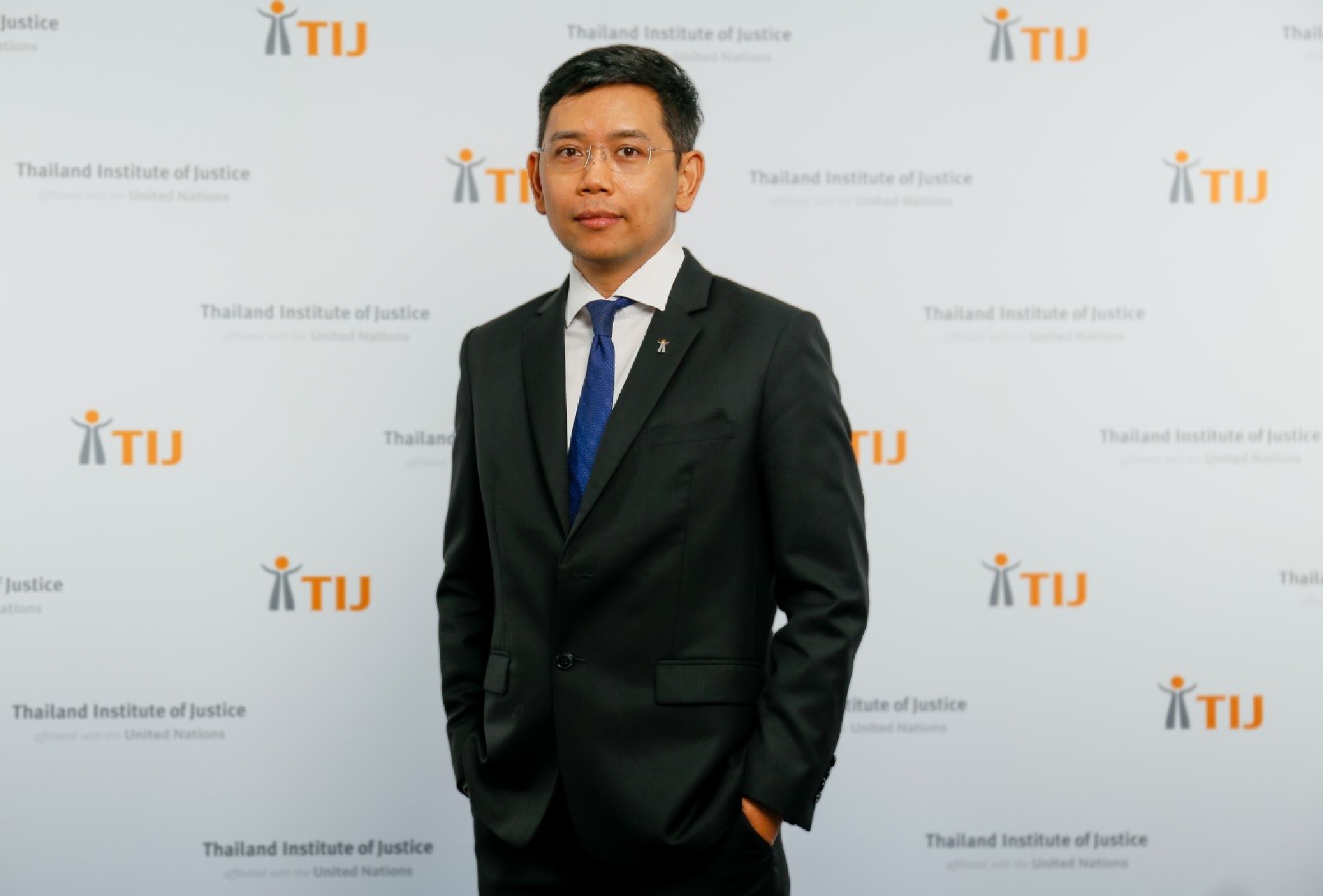 Dr.Phiset Sa-ardyen, Executive Director of TIJDr. Phiset Sa-ardyen, Executive Director of TIJ, said the findings are interesting because they include frontline welfare service providers’ viewpoints and address the vulnerability of sexually-exploited “boys” who have received less attention than girls. He believes this research will mark the first step for Thailand to develop greater understanding of the issue. Cases mentioned in the research involve boys and SOGIE youth, who are often sexually abused through online media. The proper understanding will pave the way for laws researchers to design a process that better addresses the problem.
 Maia Mounsher from Chiang Mai-based Urban Light Foundation Thailand
 Santanee Disayabutr, Director, Secretariat Office of Nitivajra Institute, Office of the Attorney GeneralSantanee Disayabutr, Director, Secretariat Office of Nitivajra Institute, Office of the Attorney General said society generally cares more about girls than boys due to sexuality myths from the past. While there are much fewer cases of sexual crimes against boys than those against girls in Thailand, boys’ cases have seen more violence. Santanee, too believed that laws should be improved to resonate with the United Nations’ strategies that call for equal legal protection for all genders. Laws should protect, not prescribe criminal punishments to, damaged parties. The attitudes of “frontline welfare service providers” and laws enforcers should also be adjusted to ensure operations are conducted in the best interests of children.
 Pol Captain Khemachart Prakaihongmanee, Deputy Director of the Department of Special Investigation’s Bureau of Foreign Affairs and Transnational CrimePol Captain Khemachart Prakaihongmanee, Deputy Director of the Department of Special Investigation’s Bureau of Foreign Affairs and Transnational Crime, said from his over 15-year-long experience in handling cases of sexual crimes against children at DSI that the number of sexually-abused boys is higher than that of sexually-abused girls. He also disclosed that in addition to being abused, boys’ pornographic materials are always released online. According to him, boys have less tendency to tell others – even those in their close circles – about their ordeals when compared to girls because of the shame involved. These boys, as a result, tend to develop mental health issues and a higher inclination towards narcotics.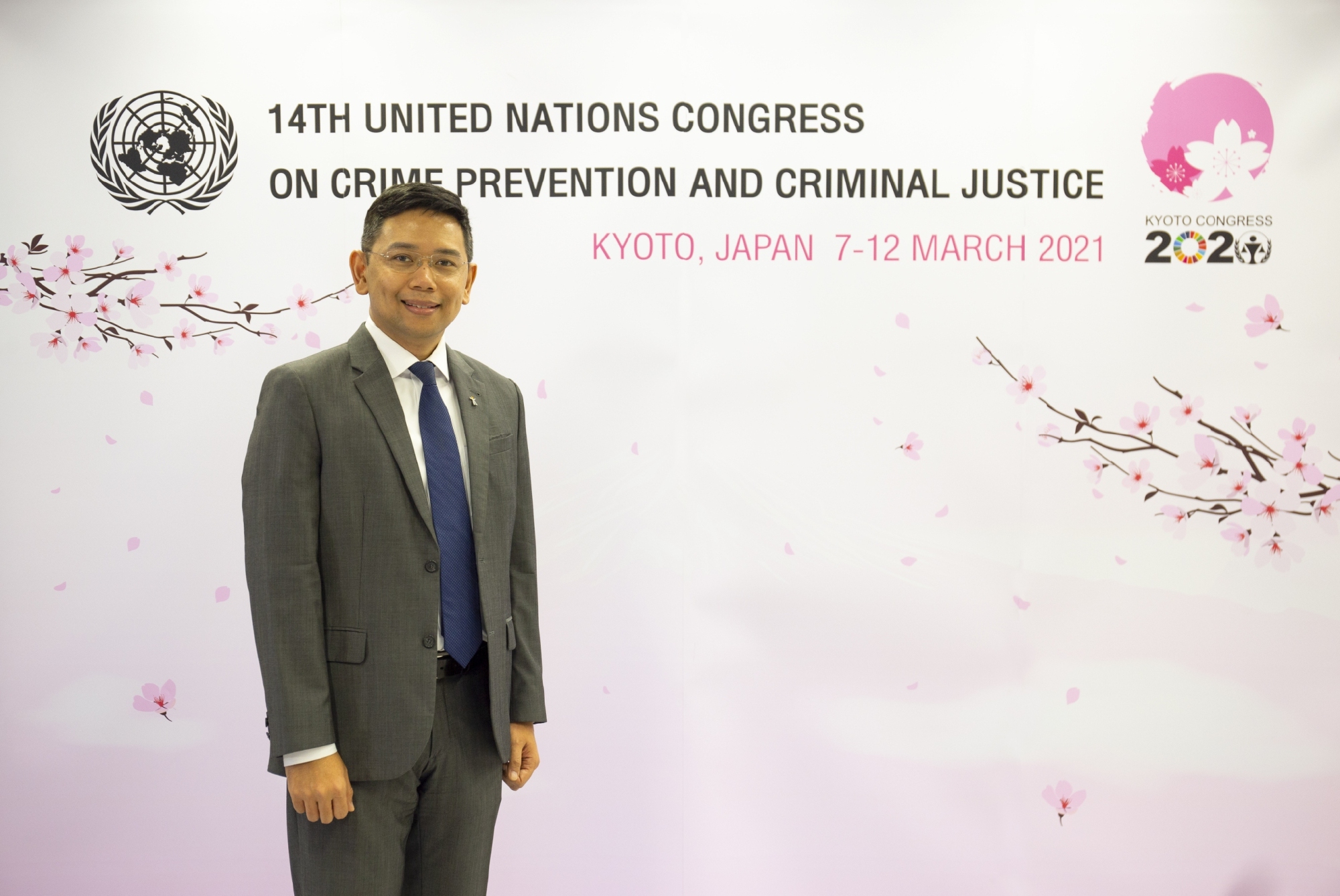
 Reflections on Criminal Justice Trends at UN Crime Congress


 SootinClaimon.Com