U.K. scraps solo virus-tracing app to join Apple and Google #ศาสตร์เกษตรดินปุ๋ย

#ศาสตร์เกษตรดินปุ๋ย : ขอบคุณแหล่งข้อมูล : หนังสือพิมพ์ The Nation.

U.K. scraps solo virus-tracing app to join Apple and Google

Health & Beauty

Jun 19. 2020

By Syndication Washington Post, Bloomberg · Nate Lanxon, Thomas Seal, Alex Morales · WORLD, TECHNOLOGY, HEALTH, EUROPE 
The U.K.’s National Health Service abandoned its solo effort to create a covid-19 track-and-trace mobile app and will use technology jointly developed by Apple and Google instead.

The switch has been anticipated since last month, when Bloomberg reported Britain’s app had been delayed by bureaucracy and the addition of more symptoms to monitor.

Using the solution proposed by the two tech giants will address some of the specific technical challenges identified in testing, said Dido Harding, the former telecommunications industry executive who is leading the government’s tracing program, and Matthew Gould, head of the state National Health Service’s digital arm NHSX.

It’s another setback for Prime Minister Boris Johnson’s government, which has been criticized for being slow to go into lockdown, not having enough ventilators or protective equipment and a failure to properly protect care homes.

U.K. authorities found the Google and Apple protocol was better at identifying contacts, although the U.K.’s independently developed product did a superior job in judging the distance between two phones — a crucial element that helps inform whether people should be told to self-isolate after coming near an infected person.

“As part of a collaborative approach we have agreed to share our own innovative work on estimating distance between app users with Google and Apple,” Harding and Gould said in a statement on Thursday.

Tests showed the NHSX app identified 75% of contacts of Android phone users, and just 4% for Apple phone users. The Google-Apple app identified 99% of contacts on both platforms.

Health Secretary Matt Hancock originally said the British app would be ready by the middle of May, but now authorities refuse to set a date on when it’ll be made available.

The decision by NHSX “is unsurprising and yet another example of where the government’s response has been slow and badly managed,” the opposition Labour Party’s health spokesman, Jonathan Ashworth, said in a statement.

Britain’s Department of Health and Social Care said Thursday there’s still no viable system. One problem is that if the app is too sensitive, it could give out wrong indications and be useless.

An app based on the Google-Apple interface looks most likely to address limitations identified in field testing, but final delivery is still some way off.

“There is still more work to do on the Google-Apple solution, which does not currently estimate distance in the way required,” the department said in a statement.

The efforts are among many voluntary mobile app projects being pursued by governments around the world that would use Bluetooth technology to trace possible infections and alert users when they may have been near someone infectious.

The original U.K. model had been criticized by privacy advocates for giving the government too much control over people’s data. Apple and Google’s system keeps the personal data on users’ devices. It updates the software on billions of phones so if a person notifies the system that they have covid-19, people who have been near them get an alert saying they may be at risk.

The method removes some technical problems around interoperability and battery life. It’s also considered a more privacy-conscious approach.

Some governments have criticized this decentralized system because it doesn’t let authorities store data on who has the virus and track where it’s spreading.

Sweden is ‘surprisingly slow’ in achieving herd immunity #ศาสตร์เกษตรดินปุ๋ย

#ศาสตร์เกษตรดินปุ๋ย : ขอบคุณแหล่งข้อมูล : หนังสือพิมพ์ The Nation.

Sweden is ‘surprisingly slow’ in achieving herd immunity

Health & Beauty

Jun 17. 2020A group of people socialize on a jetty on the water's edge in Stockholm, Sweden, on May 22, 2020. MUST CREDIT: Bloomberg photo by Loulou D'AkiA group of people socialize on a jetty on the water’s edge in Stockholm, Sweden, on May 22, 2020. MUST CREDIT: Bloomberg photo by Loulou D’Aki

By Syndication Washington Post, Bloomberg · Niclas Rolander, Charles Daly · WORLD, HEALTH, EUROPE

Sweden has made less progress than expected in achieving immunity to the coronavirus, according to its state epidemiologist.

After leaving schools, shops and restaurants open throughout the pandemic, contagion rates in Sweden are much higher than anywhere else in the Nordic region. Its covid-19 mortality is among the worst in the world. Scientists have been eager to learn whether the flipside of widespread contagion is a higher level of immunity.

But according to Anders Tegnell, Sweden’s state epidemiologist, “the trends in immunity have been surprisingly slow.” He also says “it’s difficult to explain why this is so.”

Speaking in an interview with Swedish Radio on Wednesday, Tegnell said it’s important to remember “that there is a time lag in all such measurements.”

An analysis of 50,000 tests by Werlabs, a private company, shows that about 14% of people tested over the past six weeks in the Stockholm region have developed covid-19 antibodies. That compares with a study published this month of Bergamo — once the covid-19 epicenter in Italy — which showed that 57% had developed antibodies.

In Sweden, “the number of immune cases today is much closer to our forecasts than it has been before,” Tegnell told Swedish Radio. “The 14% of those surveyed is from two or three weeks ago, meaning that immunity levels are higher today.”

Sweden’s approach to tackling covid-19 has been among the most controversial in the world. Unlike the rest of Scandinavia, where governments quickly imposed strict lockdowns, Sweden advised its citizens to observe social distancing rules, but left most of society open.

Some analysts have predicted that the softer lockdown means Sweden’s economy will fare better than others. But the country’s high death rate has triggered considerable backlash, and a recent poll suggested most Swedes have lost faith in their country’s strategy to fight the virus.

Tegnell and Prime Minister Stefan Lofven have insisted that Sweden’s strategy is the right one. That’s based on an assumption that covid-19 will be around for a long time, meaning short-term lockdowns ultimately won’t help, and governments need to come up with more sustainable models for living with the virus.

People born before 1992 face greatest risk of hepatitis infectionsa #ศาสตร์เกษตรดินปุ๋ย

#ศาสตร์เกษตรดินปุ๋ย : ขอบคุณแหล่งข้อมูล : หนังสือพิมพ์ The Nation.

People born before 1992 face greatest risk of hepatitis infectionsa

Health & Beauty

Jun 15. 2020

By The Nation

Thai actor Saranyu “Tua” Wongkrachang, who recently died of liver cancer at the age of 59, may have developed cirrhosis of the liver due to the hepatitis virus, said Dr Asadang Ruaycharin, deputy director-general and spokesperson for the Department of Disease Control.

He said that though there are five main types of hepatitis virus, A, B, C, D and E, the most prevalent types in Thailand are hepatitis B and C and infections are fast becoming a problem in the country.

Dr Asadang added that there are approximately 2.3 million people with chronic hepatitis B in Thailand with most of them having been born before 1992. People born after 1992 have been immunised against the highly infectious disease, bringing the rate of prevalence in this age group down to 0.6 per cent.

Hence, he said, people born before 1992 should undergo screening for hepatitis B to prevent infections.

Meanwhile, approximately 750,000 people are infected with hepatitis C, with infections most common among HIV/Aids patients and drug users.

“A free hepatitis B and C screening will be offered in August at hospitals under the purview of the Public Health Ministry,” he said.

Call the Department of Disease Control hotline 1422 for more information.

Hedge fund manager stands to profit on ‘flip’ of taxpayer-funded coronavirus drug #ศาสตร์เกษตรดินปุ๋ย

#ศาสตร์เกษตรดินปุ๋ย : ขอบคุณแหล่งข้อมูล : หนังสือพิมพ์ The Nation.

https://www.nationthailand.com/lifestyle/30389488?utm_source=category&utm_medium=internal_referral

Hedge fund manager stands to profit on ‘flip’ of taxpayer-funded coronavirus drug

Jun 12. 2020
By The Washington Post · Christopher Rowland · NATIONAL, BUSINESS, HEALTH, SCIENCE-ENVIRONMENT

Ridgeback Biotherapeutics had no laboratories, no manufacturing facility of its own and a minimal track record when it struck a deal in March with Emory University to license an experimental coronavirus pill invented by university researchers with $16 million in grants from U.S. taxpayers.

But what the tiny Miami company did have was a willingness from its wealthy owners – hedge fund manager Wayne Holman and his wife, Wendy – to place a bet on the treatment in the midst of the coronavirus pandemic. That wager paid off with extraordinary speed in May when, just two months after acquiring the antiviral therapy called EIDD-2801 from Emory, Ridgeback sold exclusive worldwide rights to drug giant Merck.

The rapid turnaround of rights to a publicly financed drug highlights the frenzy of financial speculation that has accompanied the spread of the coronavirus around the world. Congress and the Trump administration have authorized more than $7 billion for research and industry subsidies in a desperate hunt for therapies and vaccines.

The perception that companies are profiteering during a global medical crisis – especially in cases where inventions were funded by taxpayers – poses political dangers to the pharmaceutical industry.

Demands are increasing in Congress and around the world that drug companies set affordable prices on coronavirus treatments and vaccines and distribute them equitably. Yet the role of middlemen like Ridgeback puts pressure on companies to increase prices, by adding extra costs. It also raises questions about who is financially benefiting by securing monopoly licensing rights to publicly financed inventions.

Ridgeback was a relatively obscure entity when it snapped up EIDD-2801 from Emory in a deal signed March 19. The university, without disclosing terms, said in a news release that Ridgeback “will be responsible for conducting the necessary trials to bring EIDD-2801 to licensure.”

Within days of securing Emory’s licensing deal, the company mounted a campaign to win hundreds of millions in government funding to develop the drug, according to a whistleblower complaint by Rick Bright, former director of the Biomedical Advanced Research and Development Authority, as well as emails obtained by The Washington Post. After failing to secure the government contracts, Ridgeback launched a human safety trial of the drug in the United Kingdom and transferred rights to Merck in late May.

In addition to an upfront payment of undisclosed size from Merck, Ridgeback will receive unspecified “milestone” payments and a share of net proceeds if the drug is approved, the companies said. Merck will conduct future clinical trials, apply for regulatory approvals and manufacture the drug, which has been shown in lab and animal studies to cripple the virus by interfering with viral RNA.

Specialists in drug development called Ridgeback’s turnaround unusually rapid.

“I would think that universities . . . would not normally transfer products to basically a house-flipper,” said Aaron Kesselheim, a physician at Brigham and Women’s Hospital in Boston and professor at Harvard Medical School. “I wouldn’t think they would have to engage with speculators, like it appears that Ridgeback Biotherapeutics is.”

Wayne Holman, who holds a medical degree from New York University, is a hedge-fund manager with a long track record of investing in pharmaceutical stocks. He founded his fund Ridgeback Capital Management in 2006. Wendy Holman, chief executive of Ridgeback Biotherapeutics, is a former investment manager who was named to President Trump’s advisory council on HIV/AIDS in 2019.

The Holmans live on Miami’s exclusive Star Island, where they bought two mansions for a combined $47 million in 2014 and tore one of them down. Ridgeback Capital’s headquarters is in a small office building not far away in Coconut Grove, near a private school where Wendy Holman serves on the board of trustees. Ridgeback has one other drug in development that has been supported with $25 million in government contracts, a potential Ebola treatment invented by a division of the National Institutes of Health. The couple did not respond to requests for comment.

EIDD-2801 is among hundreds of projects underway around the world to develop treatments and vaccines to combat the coronavirus amid signs that covid-19, the disease the virus causes, will become a stubborn, endemic illness that lingers in human populations for many years. If it works and is found to be safe, it likely would become a strong rival to Gilead’s remdesivir, the first antiviral to treat the coronavirus, which must be given intravenously.

“EIDD-2801 has several attributes including oral availability, broad antiviral activity versus multiple coronavirus strains, notably SARS-CoV-2, as shown in preclinical studies, and early clinical results showing that it is well-tolerated from a study conducted by Ridgeback,” Merck said in an email.

But the path to Merck’s portfolio of early-stage drugs has grabbed attention.

“Molecule-flipping is a good characterization of what it is,” said James Love, director of Knowledge Ecology International, a nonprofit watchdog group that tracks public investments and intellectual property.

Hunting through scientific papers and forging alliances with academic laboratories is often done by small firms backed by venture capitalists. Startups looking to profit by securing rights to new molecules and nurturing their early-stage development are an ingrained part of the ecosystem of drug development. The goal typically is to push a drug far enough through the approval pipeline – a process that often takes years – until a larger company buys the rights and completes commercialization.

With the coronavirus creating huge demand, that activity is accelerating, say specialists in drug licensing and intellectual property.

“Merck is much better positioned and funded to move the drug through development,” said Joseph DiMasi, director of economic analysis and research at the Tufts Center for the Study of Drug Development, which receives drug industry funding. “It is the speed with which this has happened that is extraordinary. That speed in the context of a pandemic is a good thing.”

The flood of government money is spurring attention to diseases that have been neglected by large drug companies. Vaccines and therapies for viruses do not hold the promise of large, lucrative drug sales because they are not taken as chronic treatments. Many virus outbreaks disappear on their own, making it risky for companies to spend on research. To plug the gap, U.S. government agencies support academic research, or invent and develop drugs directly in government labs.

“When it was limited to things like Ebola and SARS, you didn’t see as much as engagement by the private sectors. These were normally backwater areas in neglected disease,” said Love. “People now are rushing in and scaling up.”

Emory had secured pledges of $30 million in government contracts from science and defense agencies in the past five years to develop EIDD-2801 but tapped just more than half of the available funds, an Emory spokeswoman said. The university did not respond to questions about how it picked Ridgeback.

“Emory is proud that we invented EIDD-2801, and we appreciate the partnerships and government support that makes it possible to provide therapies that will benefit society,” Nancy Seideman, Emory’s vice president for academic communications, said in an email. “Any royalties that we receive – if anything – are channeled directly back to serving our educational and scientific mission.”

In instances where taxpayer-financed drugs make it to market via exclusive licensing deals – which typically have undisclosed terms – debates have sprouted around monopoly pricing.

Liberal members of Congress and consumer advocates have demanded that taxpayers’ investments be factored into government contracts for development of coronavirus treatments and vaccines, and that terms of licensing deals be disclosed to the public. But Democratic proposals to place constraints on prices for covid-19 therapies did not make it into the $3 billion in emergency subsidies for the drug industry that lawmakers approved in March.

Some companies with experimental medicines backed by public investment have been the subject of intense financial speculation. Investors have gambled that Gilead’s drug remdesivir, which has been proven to modestly improve outcomes, will produce a windfall for the company. The company’s stock has been subject to volatile swings in the past three months.

Remdesivir was developed with at least $70 million in public investment, according to advocates, and a debate has begun about costs and access before Gilead has even set a price.

Moderna is developing a leading vaccine candidate that is co-owned by NIH. Government interest in the vaccine has not stopped a boost in the company’s stock of nearly 200 percent since the end of February.

EIDD-2801, which was invented as an influenza drug and has demonstrated effectiveness against multiple viruses in lab dishes, works similarly to Gilead’s remdesivir by interfering with viral RNA. But it has the advantage of being a pill, which means it could be taken by people in their homes, soon after symptoms appear. If the drug proves to be safe and effective, it could prevent countless hospitalizations and deaths and reduce the spread of infection.

Drugs in its class have been known to cause genetic mutations that lead to birth defects, but Merck said when it licensed the drug last week that it was “well-tolerated.” Wayne Holman has said the drug can safely be used for a short course of treatment to fight a viral infection.

As for potential pricing, “Merck and Ridgeback are committed to ensuring that any medicines we develop for SARS-CoV-2 will be accessible to patients globally,” Merck said in an email. It would not discuss specifics.

The deal between Emory and Ridgeback was inked by the university’s Drug Innovation Ventures at Emory (DRIVE), a nonprofit tech-transfer corporation led by Emory scientist George Painter, who holds patents related to the drug. Highly accomplished in both laboratories and boardrooms, Painter is the former chief executive of Chimerix, a North Carolina drug company, and a high-ranking official in antiviral research at the former Glaxo Wellcome. Painter did not respond to interview requests.

On March 20, the day after the Ridgeback licensing contract was completed, Painter and other scientists at the University of North Carolina, Vanderbilt University and Emory posted a preliminary scientific paper on the preprint website bioRxiv.org showing EIDD-2801 thwarted SARS-CoV-2 in human cells and in mice infected with other types of coronaviruses. The peer-reviewed journal Science Translational Medicine published the paper on April 6.

At Vanda Pharmaceuticals, a biotechnology firm headquartered in the District of Columbia, founder and chief executive Mihael Polymeropoulos saw the scientific results in the journal and had his company contact Emory about a potential licensing opportunity. It was too late.

“They came back and they said they had already done a deal with this company, Ridgeback,” Polymeropoulos said. “This deal must have happened in record speed.”

The chief operating officer at Emory’s DRIVE told the Daily Report, an Atlanta trade publication, that the licensing contract, which normally would take four to six months to complete, was negotiated and signed in two weeks after a “mad scramble” by university and Ridgeback lawyers rushing to respond to the coronavirus.

Ridgeback’s involvement burst into the broader public sphere in early May, when Bright, the ousted head of BARDA, filed his explosive whistleblower complaint. Bright alleged that he clashed with Robert Kadlec, the Health and Human Services assistant secretary for preparedness and response, over demands that he award BARDA contracts to well-connected companies. HHS has said it “strongly disagrees” with Bright’s allegations.

In his complaint, Bright cited attempts to secure money for EIDD-2801 – first by Painter in November 2019, and then by Wendy Holman in early April – among episodes of alleged political pressure.

Bright said he rejected requests to fund EIDD-2801 because Emory had already received pledges of $30 million from the National Institute of Allergy and Infectious Diseases and the Department of Defense to cover development of the drug, including human safety testing. Without first seeing safety results, Bright said, it did not make sense to back the drug with new infusions of federal cash.

Wendy Holman’s pleas for government money in early April – less than two weeks after Ridgeback secured rights to the drug from Emory – are contained in emails she wrote to government officials. The full emails, excerpts of which were cited in Bright’s whistleblower complaint, were previously disclosed by the journal Science and were obtained by The Washington Post. Holman said in one email to BARDA that she had been in personal contact with Kadlec, who wanted the project to move forward.

“We need this approval to start the clinical trial for EIDD-2801 as soon as possible,” Wendy Holman wrote to a BARDA contracting official on April 7, just days before Ridgeback planned to launch its first human safety trials. “Lives are literally depending on it, Dr. Kadlec is pushing us to move fast, but we can’t without this authorization.”

“To avoid any delay in executing this clinical trial, Ridgeback must receive approval . . . as soon as possible” to incur expenses in anticipation of a contract, Holman wrote to a related agency within the Office of the Assistant Secretary for Preparedness and Response on April 3. “We desperately need guidance on this.”

Bright said in his complaint that Ridgeback had been seeking $100 million to further the drug’s development. In an April 13 email, a BARDA official said the proposal from Ridgeback could obligate the government to pay the company more than $300 million. The contract official objected to the outlay because Ridgeback had not followed proper application procedures.

Ridgeback went away empty-handed by the time Bright departed in late April. It started its safety trial on April 10, testing the EIDD-2801 drug against a placebo in 122 healthy volunteers in England, according to its disclosure on clinicaltrials.gov. It hired a contract research organization called Covance to conduct the study. The NIH said in an email that Ridgeback conducted the study at its own expense.

In an interview with The Post on April 15, before the controversy erupted, Wayne Holman talked up the drug and made it clear that Ridgeback would be seeking partnerships and investment from the private sector.

“Treating orally and early can change the course of this pandemic. Not only would it treat the person that is sick, but it should theoretically reduce the infectiousness of that person, and the time period they are infectious to others,” he said. “We have inbound interest from pharma companies.”


U.S. eclipses 2 million coronavirus cases #ศาสตร์เกษตรดินปุ๋ย

#ศาสตร์เกษตรดินปุ๋ย : ขอบคุณแหล่งข้อมูล : หนังสือพิมพ์ The Nation.

https://www.nationthailand.com/lifestyle/30389486?utm_source=category&utm_medium=internal_referral

U.S. eclipses 2 million coronavirus cases

Jun 12. 2020
By The Washington Post · Kim Bellware, Jacqueline Dupree · NATIONAL, HEALTH, SCIENCE-ENVIRONMENT

As the United States approaches five months since from the first coronavirus patient was confirmed, the country on Thursday surpassed the staggering milestone of 2 million cases, according to data analyzed by The Washington Post.

The United States as of Thursday had at least 2,012,031 confirmed cases of covid-19, the disease caused by the coronavirus, with patients testing positive in all 50 states.

Officials believe the first known case of the disease emerged on Jan. 17 in Snohomish County, Wash.; four days earlier, the 35-year-old patient had returned from visiting family in Wuhan, China, where virus was first reported.

Although states have been able to confirm more new cases as testing capacity has increased from the early months of the outbreak, testing nationwide has remained short of goals set by health experts. And the numbers of where the outbreak is growing serve as a troubling reminder that the country is far from identifying new sources of infection – let alone containing it.

States that recorded higher infection rates in the initial months of the outbreak continue to see declines, like Illinois, Michigan, New York and Washington. But the average number of new cases is increasing in places like Arizona, Arkansas, Florida, North Carolina, Oregon, South Carolina, Texas and Utah – states that previously had lower rates of infection.

New infections in those states started to climb – along with hospitalizations – just before Memorial Day, when many states started to ease stay-at-home restrictions.

Former Food and Drug Administration commissioner Scott Gottlieb warned Thursday that a resurgence of coronavirus cases in several states is a sign that the local authorities haven’t been able to isolate the source of the infection.

“When you look at states like Arizona and Texas, South Carolina, North Carolina – those are where the big outbreaks are right now; Florida to some degree seems to be going up – it’s not a second wave. They never really got rid of the first wave,” Gottlieb said during his appearance on CNBC.

States like Texas that for months have seen relatively low infection rates still had persistent infection, Gottlieb added. “Now, we’re starting to see it go back up as they reopen.”

Ashish Jha, who directs the Harvard Global Health Institute, said the post-Memorial Day rise in infections in states that have not yet been hard hit by virus is a clear concern. Jha said he looks at testing rates, hospitalizations, total cases and the death toll to assess how the nation is managing the pandemic and what might explain the spike in cases.

“How much of that can be explained by testing?” Jha said during a “Today” show appearance Thursday. “Some of what we’re seeing can be, but not all of it by any means.”

At least five states on Thursday reported four-digit increases in the daily number of new cases. The single-day sum of new cases from Arizona, California, Florida, North Carolina and Texas alone totaled 8,007, according to data tracked by The Post.

Arizona, which has seen one of the worst surges in cases, has averaged more than 1,000 new confirmed cases every day this week. The surge in infections is already stressing the state’s hospital system, with one official warning Arizona could run out of hospital beds in a few weeks.

“If we continue for the next several weeks like we have the past few, it’s very possible that we’ll run out of capacity in our hospitals and ICUs sometime in early July,” Joe Gerald, program director for public health policy and management at the University of Arizona’s Zuckerman College of Public Health, said earlier this week.

Since the start of the outbreak, more than 111,000 people in the United States have died of covid-19 – a figure Jha, of the Harvard Global Health Institute, warned could double by September if the federal government doesn’t increase testing and contact tracing.

D.C. region reports 1,058 new coronavirus cases; rates continue to fall #ศาสตร์เกษตรดินปุ๋ย

#ศาสตร์เกษตรดินปุ๋ย : ขอบคุณแหล่งข้อมูล : หนังสือพิมพ์ The Nation.

https://www.nationthailand.com/lifestyle/30389300?utm_source=category&utm_medium=internal_referral

D.C. region reports 1,058 new coronavirus cases; rates continue to fall

Jun 09. 2020
By The Washington Post · Dana Hedgpeth, Antonio Olivo · NATIONAL, HEALTH
WASHINGTON – The Washington region reported 34 additional covid-19 deaths Monday, though the rates of coronavirus infections and new hospitalizations continued to drop.

Last week, portions of Maryland and Virginia entered a second phase of their reopening plans, with restaurants allowed to offer dining indoors and group gatherings of up to 50 people permitted. At the same time, tens of thousands of people in Washington and elsewhere – some masked, some not – protested police brutality and the killing of George Floyd in Minneapolis police custody.

Local officials say they are watching virus-related data closely for signs of a resurgence – or for evidence that the pandemic may be receding in the region.

On Monday, Maryland Gov. Larry Hogan, a Republican, said hospitalizations for the virus had fallen below 1,000 for the first time since April 10, to 979. The rate of people testing positive dropped to a new low of 7.38%.

The tally of coronavirus infections in the District of Columbia, Maryland and Virginia reached 119,044 Monday, with officials reporting 1,058 new cases.

But with the total number of cases partly driven by increased testing, local officials have been focused more on rates of infection, daily hospital admissions and the capacity of area hospitals to absorb a spike in cases.

They have also worked to increase testing and contact tracing, while beefing up their supplies of personal protective equipment. As the number of tests has increased, the rate of people testing positive has declined significantly.

Officials say the spread of the virus has not yet slowed enough in D.C. and its closest suburbs to lift Phase 1 restrictions that, among other things, limit restaurants to outdoor dining and gyms and fitness centers to outdoor exercise classes.

D.C. reported two new covid-19 deaths Monday – both of them older residents – for a total of 491 fatalities. According to D.C. health officials, the city has had seven days of a “sustained decrease in community spread.” As of Saturday, D.C. had a 12% positivity rate. That marked four days of the city being at a less than 15% positivity rate.

Maryland reported 27 new deaths Monday, bringing the number of people who have died of covid-19, the disease caused by the novel coronavirus, in the state to 659.

Montgomery County had three new deaths, and Prince George’s County added four. The positivity rate in the two counties – which have been hit harder by the virus than anywhere else in Maryland – has dropped to 11.83% in Prince George’s and 10.26% in Montgomery.

Maryland also reported the coronavirus-related death of a corrections officer who worked at a Baltimore City facility. The employee, whom authorities did not identify, was in his or her 60s and had been a correctional officer for 20 years, according to the Maryland Department of Public Safety and Correctional Services.

AFSCME, the union that represents workers in Maryland’s prisons, said the officer was the first union member in the state to die as a result of being exposed to the virus on the job and called for more protections for employees.

Virginia reported five new deaths, for a total of 1,477. Its statewide positivity rate was 10% as of Thursday, down from a high of about 22% in mid-April. In northern Virginia, the positivity rate was 14.3%, compared with 35.9% in mid-April.

With unemployment rates having spiked amid the prolonged coronavirus shutdown, Virginia Gov. Ralph Northam, a Democrat, announced a moratorium on all evictions through June 28, ordered by Virginia Supreme Court Chief Justice Donald Lemons. Northam said he will spend the next three weeks implementing “a comprehensive rent relief program for the thousands of Virginians facing housing insecurity in the midst of this public health crisis.”

“Access to safe and stable housing is critically important, and this action will keep thousands of families in their homes as we work to get them the support they need,” he said.

New York City, once the U.S. epicenter of the coronavirus, begins to reopen #ศาสตร์เกษตรดินปุ๋ย

#ศาสตร์เกษตรดินปุ๋ย : ขอบคุณแหล่งข้อมูล : หนังสือพิมพ์ The Nation.

https://www.nationthailand.com/lifestyle/30389295?utm_source=category&utm_medium=internal_referral

New York City, once the U.S. epicenter of the coronavirus, begins to reopen

Jun 09. 2020
By The Washington Post · Ben Guarino, Shayna Jacobs · NATIONAL, HEALTH
NEW YORK – On Monday, 100 days after the first coronavirus case was confirmed in New York City, the city that was once the epicenter of America’s coronavirus pandemic began to reopen.

Gears of New York’s great economic machine that had gone idle for months began to turn as the city eased out of a stay-at-home order. Democratic Mayor Bill de Blasio estimated that between 200,000 to 400,000 workers returned to work throughout the city’s five boroughs.

“All New Yorkers should be proud you got us to this day,” de Blasio said at a news conference Monday morning at the Brooklyn Navy Yard, a manufacturing hub.

Monday marked the first, limited phase of a four-part reopening plan. Wholesale sellers and manufacturers were allowed to resume business and the construction industry made its noisy return. Workers in hard hats swarmed a site in south Queens, installing walls and machinery within the skeleton of a tower that had been mostly hollow since March.

Florists, clothing shops and other retail establishments that have been shuttered for weeks welcomed customers to pick up goods at the curb – with masks and social distancing required. The Brooklyn Grange, a 5.6-acre farm that grows herbs and vegetables on three large roofs in New York, will host its first rooftop farmers market of the season on Saturday and Sunday, said co-founder Anastasia Cole Plakias.

The gradual reopening of New York does not mean the city is returning to the way it was before the coronavirus, said New York City health commissioner Oxiris Barbot. She cautioned that people with weakened immune systems, the elderly and others who are at high risk for serious complications from the coronavirus should stay indoors as much as possible. She urged New Yorkers to wear face coverings outdoors, vigorously wash hands and use hand sanitizer.

“We’re still in what I would say is a moderate transmission phase,” Barbot said. “There are still, on a daily basis, hundreds of people that are newly diagnosed with covid-19. ”

More than 207,000 have tested positive for the coronavirus in New York City and more than 25,000 have died.

Many businesses remained closed. In Lower Manhattan, where City Hall and most city agencies are based, lunch spots were still closed or boarded up. Vehicle traffic was light and there was a fraction of the foot traffic that would normally clog sidewalks. In Foley Square, a few people sat on benches, enjoying the springtime weather.

The park, which is across the street from the headquarters of the New York City Police Department, state and federal courthouses and a major federal agency building, has been the site of protests over the death of George Floyd; one began Monday afternoon.

Transit riders appeared to show up on buses and subways in increased numbers Monday. Over the past three weeks, the system has seen ridership increase by 20,000 to 25,000 passengers per day, said Tim Minton, a spokesman for the Metropolitan Transportation Authority.

Ridership bottomed out at around 500,000 trips on April 9, Minton said; by the end of last week it had risen to 1.5 million across the subway and buses.

De Blasio announced a plan Monday to create 20 miles of new bus lanes by October, which the city estimated will serve 750,000 daily riders.

“More service equals less crowding equals more health and safety,” he said.

The agency did not have an official head count for Monday’s commute, though Minton and interim MTA president Sarah Feinberg said they anecdotally observed more people than in previous days.

Over the weekend, workers stuck decals and stenciled markings to subway car floors in six-foot increments to encourage social distancing. The city deployed 800 school safety agents to subway stations to distribute masks and hand sanitizer in tiny squirt bottles. The transportation agency plans to give 2 million masks to riders.

The subway will continue to shut down from 1 a.m. to 5 a.m. to disinfect and clean the train cars until the pandemic is over.

Among the masked riders who took the subway Monday morning was New York Democratic Gov. Andrew Cuomo. He greeted other straphangers with a wave or an elbow-bump.

“Reopening of New York City – we did it all based on data and facts,” Cuomo said at a news conference Monday.

He added: “We went from the worst situation in the nation – frankly, one of the worst situations on the globe – to not only flattening the curve, but to bending the curve.”

New York City is the last place in the state to start reopening. It must meet several thresholds to continue with the reopening plan, such as keeping the hospitalization rate below two per 100,000 residents. Testing – with rate of at minimum 30 per 1,000 residents – and tracing are two key metrics that allow restrictions to lift. Jackie Bray, the deputy executive director of New York City’s Test and Trace Corps, said that the city recently set a record by testing 33,000 New Yorkers in a single day. More than 3,000 tracers have been hired to follow up with possibly exposed contacts.

That tracing program, which launched Monday, made thousands of calls last week, said Test and Trace Corps Director Ted Long.

“We called 100% of every contact listed where we had a phone number,” he said.

Officials urged people who participated in protests against police brutality to get tested for the coronavirus and said they would be monitoring for a spike in infections over the next two weeks. There are more than 150 locations citywide where people can receive a free coronavirus test.

“We need you to get tested,” Bray said, “if you’ve been out in a protest. ”

Stay-at-home orders such as New York’s prevented 60 million coronavirus cases in the United States, per an estimate published Monday in the journal Nature.

“We got this far by hard work and discipline,” de Blasio said. “We’ve got to stick to it so we can get to the next phase and the next phase and the next phase. ”

In the second phase of reopening, retail and office work can resume; in the third, restaurants can seat customers; in the fourth, schools, arts, entertainment and recreation return. The city must remain in a phase for at least two weeks before it progresses to the next.

The reopening comes after months of suffering. The outbreak summoned legions of out-of-town medical workers, the National Guard and a Navy medical ship. White tents of a field hospital went up in Central Park. The intensive care unit was chaotic inside Manhattan’s Mount Sinai Hospital at the height of the pandemic, said 24-year-old nurse KP Mendoza.

Patients were doubled up in small rooms. “We’re trying to keep our I.V. pumps outside the doors,” Mendoza said, though nurses would step on the tubing by accident. “It’s messy, it’s hard.” As he went to sleep he lit lavender candles to erase the hospital’s deathly odor.

Hospitals ran out of rooms to treat patients and transformed lobbies and cafeterias into ICUs. Some ran out of space to store the dead. In April, police found dozens of bodies stacked in two moving trucks parked outside a Brooklyn funeral home.

When doctors opt out of Medicare, the change can be tough for patients #ศาสตร์เกษตรดินปุ๋ย

#ศาสตร์เกษตรดินปุ๋ย : ขอบคุณแหล่งข้อมูล : หนังสือพิมพ์ The Nation.

https://www.nationthailand.com/lifestyle/30389211?utm_source=category&utm_medium=internal_referral

When doctors opt out of Medicare, the change can be tough for patients

Jun 07. 2020
Illustration for HEALTH-MEDICARE by Jenn O'Connor. MUST CREDIT: Hannah Norman/KHN

Illustration for HEALTH-MEDICARE by Jenn O’Connor. MUST CREDIT: Hannah Norman/KHN
By Special To The Washington Post · Carmen Heredia Rodriguez · HEALTH 

Pneumonia. Heart problems. High cholesterol. Betsy Carrier, 71, and her husband, Don Resnikoff, 79, relied on their primary care doctor in Montgomery County, Md., for help managing their ailments.

But after seven years, the couple was surprised when the doctor informed them she was opting out of Medicare, the couple’s insurer.

“It’s a serious loss,” Resnikoff said of their doctor.

Patients can lose doctors for a variety of reasons, including a physician’s retirement or when either patient or doctor moves away. But economic forces are also at play. Many primary care doctors have long argued that Medicare, the federal health insurance program for seniors and people with disabilities, doesn’t reimburse them adequately and requires too much paperwork to get paid.

These frustrations have prompted some physicians to experiment with converting their practices to more lucrative payment models, such as concierge medicine, in which patients pay an annual fee upfront to retain the doctor. Patients who cannot afford that arrangement may have to search for a new physician.

The exact number of physicians with concierge practices is unknown, health-care experts said. One physician consulting company, Concierge Choice Physicians, estimates that roughly 10,000 doctors practice some form of membership medicine, although it may not strictly apply to Medicare patients.

Shawn Martin, senior vice president of the American Academy of Family Physicians, estimated that less than 3 percent of its 134,000 members use this model, but said the number is slowly growing.

The move to concierge medicine may be more prevalent in wealthier areas.

Travis Singleton, executive vice president for medical staffing company Merritt Hawkins, said doctors switching to other payment systems or those charging Medicare patients a higher price for care are likely “in more affluent, well-to-do areas where, frankly, they can get fees.”

It is far easier for physicians than hospitals to opt out of taking Medicare patients. Most hospitals have to accept them since they rely on Medicare payments to fund inpatient stays, doctor training and other functions.

The majority of physicians do still accept Medicare, and most people insured by the federal health insurance program have no problem finding another health-care provider. But that transition can be tough, particularly for older adults with multiple medical conditions.

“When transition of care happens, from one provider to another, that trust is often lost and it takes time to build that trust again,” said Fatima Sheikh, a geriatrician and the chief medical officer of FutureCare, which operates 15 rehabilitation and skilled nursing centers in Maryland.

Shuffling doctors also heightens the risk of mishaps.

A study of at least 2,200 older adults published in 2016 found that nearly 4 in 10 were taking at least five medications at the same time. Fifteen percent of them were at risk of drug-to-drug interaction. Primary care providers mitigate this risk by coordinating among doctors on behalf of the patient, said Kellie Flood, a geriatrician at the University of Alabama at Birmingham.

“You really need the primary care physicians to serve as the quarterback of the health-care team,” Flood said. “If that’s suddenly lost, there’s really not a written document that can sum all that up and just be sent” to the new doctor.

Finding a physician who accepts Medicare depends partly on workforce demographics. From 2010 to 2017, doctors providing primary care services to Medicare beneficiaries increased by 13 percent, according to the Medicare Payment Advisory Commission (MedPAC), a nonpartisan group that advises Congress.

But the swell of seniors who qualify for Medicare has outpaced the number of doctors available to treat them. Every day, an estimated 10,000 Americans turn 65 and become eligible for the government program, the Census Bureau reported.

The impact: In 2010, MedPAC reported, there were 3.8 primary care doctors for every 1,000 Medicare enrollees. In 2017, it was 3.5.

Authors of a MedPAC report out last June suggested that the number of available primary care providers could be an overestimate. Their calculation assumed all internal medicine doctors provided these services when, in reality, many specialize in certain medical conditions, or accept only a limited number of Medicare patients into their practices.

But MedPAC concluded seniors are not at a disadvantage finding a doctor.

“We found that beneficiaries have access to clinician services that is largely comparable with (or in some cases better) access for privately insured individuals, although a small number of beneficiaries report problems finding a new primary care doctor,” the MedPAC researchers wrote.

The outbreak of the novel coronavirus has complicated the ability for many Americans to access care, regardless of their insurer. But many older patients now have an opportunity to connect with their doctors virtually after the Centers for Medicare and Medicaid Services (CMS) broadened access to telemedicine services under Medicare.

Experts said the long-term effects of the coronavirus on doctors and Medicare remain unknown. But Martin said the shortage of cash that many doctors are experiencing because of the coronavirus epidemic has revealed the shortcomings of how primary care doctors are paid.

“The covid crisis really brought to life the challenges of fee for service,” Martin said.

Despite these challenges, the number of doctors choosing to opt out of Medicare has been on the decline, according to CMS data.

Singleton, of Merritt Hawkins, said concern about doctors leaving the Medicare system is part of larger workforce issues. Those include the need to recruit more medical students to concentrate on primary care.

One estimate predicts the nation will face a shortage of 23,600 primary care physicians by 2025. The majority of residents in internal medicine – those who care for adults – are choosing a subspecialty such as cardiac care or gastroenterology, MedPAC reported.

In 2017, MedPAC reported, the median compensation for all doctors was $300,000 a year. Among primary care doctors, it was $242,000.

Creative business models can make up that difference. Under the concierge model, the doctor charges patients an annual fee – akin to a gym membership – to access their practice. The provider still bills the insurer – including Medicare – for all patient care.

Another model, called direct primary care, charges the patient an annual fee for access and care; doctors do not bill health insurance plans.

Proponents say that the model enables them to take more time with their patients without dealing with the bureaucracy of getting paid by health insurers.

“I think what is most attractive to direct primary care is that they just practice medicine,” Martin said.

The size of a physician practice can also determine whether it accepts Medicare. Large practices can better offset the lower Medicare payment rates by leveraging their influence with private insurers to raise those reimbursements, said Paul Ginsburg, director of the USC-Brookings Schaeffer Initiative for Health Policy. But small, independent clinics may not have the same clout.

“If you’re a large primary care practice, private insurers are really going to want to have you in their network,” he said. “And they’re willing to pay more than they might pay an individual solo practitioner who they’re not as concerned (with) because it’s only one physician.”

In Carrier and Resnikoff’s case, after more than a dozen calls they found another primary care doctor. They said she accepts Medicare and impressed them during their meet-and-greet with her knowledge of their medical history. She also met their age and expertise criteria.

“At this point in our lives, I’d be eager to find somebody who’s young enough that they might be in practice for the next 10 years,” Carrier said.

– – –

This report is a product of Kaiser Health News, a nonprofit news service covering health issues. It is not affiliated with Kaiser Permanente.

I learned the impact of prolonged exposure to stress from my foster child #ศาสตร์เกษตรดินปุ๋ย

#ศาสตร์เกษตรดินปุ๋ย : ขอบคุณแหล่งข้อมูล : หนังสือพิมพ์ The Nation.

https://www.nationthailand.com/lifestyle/30389210?utm_source=category&utm_medium=internal_referral

I learned the impact of prolonged exposure to stress from my foster child

Jun 07. 2020
By Special to The Washington Post · Jenn O’Connor · FEATURES, HEALTH, PARENTING 

You know what stress is, right? You’re late for work, your car won’t start, gas costs more than you expected. We’ve all been there, and it’s not pleasant, that palm-sweating, heart-racing anxiety. Luckily, it’s not long-lasting – not toxic.

What is toxic stress? It’s prolonged adversity and/or abuse – not having enough to eat or being exposed to violence. It’s the kind of stress that puts you on edge and keeps you there, day after day after day.

If you’re familiar with the Centers for Disease Control and Prevention-Kaiser Permanente study from the 1990s, you know that factors such as divorce, domestic violence or having an incarcerated parent are called adverse childhood experiences (ACEs). Four or more ACEs can result in chronic health conditions such as heart disease or diabetes. In the long term, living with ACEs or other negative factors, such as poverty, can literally change your brain chemistry.

“Ms. Apple said that I have a traumatized brain,” my daughter, Cleo, said matter-of-factly after school one day. Her counselor had shown her a video and talked with her about why she reacts the way she does to certain triggers, such as someone blocking a door. Telling me this, Cleo sounded relieved, even empowered: It finally made sense to her.

As a director at a nonprofit group for preventing child abuse, I’ve known about ACEs for a long time. But it wasn’t until I brought a 12-year-old foster child into my life that I fully understood their impact. What does it look like for a young person to live with several ACEs and no supports? As custodial guardian to my daughter, now 16, I can only speak from my own observations.

For Cleo, it’s not being able to sleep without the light on. It’s eating even when she’s full. For a while, she was what the school called a “runner” – she left school whenever she was upset. For a while, this happened every day. She’d make it halfway across town before I caught up with her.

She was a cutter; she was suicidal. She had trouble forming appropriate friendships. She trashed her room several times; in one fight-or-flight moment, she climbed out of her window and tumbled one story to the snowy ground. She once jumped out of my car (which was, thankfully, not moving very fast). On several occasions, I had to restrain her by wrapping my arms around her shoulders or waist, using all my strength to keep her from leaving or hurting herself.

When she reacted in those ways, impulsively and without thought, I would tell her over and over, “Stop, calm down, I love you.” One day, when I raised my hand to motion toward something, she flinched. No, that’s not right – she ducked. And my heart broke for this young woman, who should know by now that I would never hit her.

I became a foster parent because I thought I had things to give – time and care and love – to kids who needed them. Initially, I was the person whom the county calls when a child is removed from a home and has nowhere else to go, or when a foster family needs a break. That’s what I signed up for: emergency respite.

Then I met Cleo.

She was all elbows and colt legs, a talented artist who had been in and out of the child-welfare system most of her life. That first weekend with her, I found out that we both like cute kitten videos and television shows about vampires. I saw a child who wanted to be happy but who, after a lifetime of abuse and neglect, didn’t know how.

There was something about this kid that moved me. She tried so hard. Emotionally, she was much younger than 12, but she was also more resilient than most adults I knew. She came to stay with me every weekend after that, until a couple of months later, when her foster family decided that they’d had enough (she was “challenging,” she was “too much”). They sent her to residential care.

Believing that she belonged in a home, I fought with the county social service agencies to bring her home with me. Another year later, I supported a reunification with her biological mother – but, when that didn’t work out, I agreed to share custody. Cleo came to live with me and our dog, Zelda. A host of friends and family cheered us on.

Cleo and I worked hard, both with therapists and on our own, to build her coping skills. We sat together for hours over her schoolwork. I got her an individualized education plan that allowed for smaller classes and more breaks when she needed them. She had near-perfect attendance for the first time ever and glowed when she brought home a good grade. We set aside one hour each night to cuddle on the couch and watch those vampire shows. We had structure. We had routine.

We’d liked each other right away, but trusting each other took time. I’ll never forget the first time she asked, “Can I hug you?”

It’s been four years now. We persevere. We’re in this together, and we are resilient. I’ve taken pains to build a fortress of protective factors around my girl. Protective factors are those things that most of us take for granted – a friend to call when we need advice; someone to help when that car I mentioned won’t start. Some of us are born with built-in protective factors (a supportive family, enough money); others need to collect them (a family made up of friends, perhaps).

For Cleo, protective factors include school supports – not just teachers and staff who are kind, but trauma-informed teachers and staff who understand how ACEs can be reflected in behavior. Her protective factors are as simple as my giving her a night-light, and as complex as my helping to facilitate her relationships with the aunts she hadn’t seen in years. Her biggest protective factor? A dog who shows her unconditional love.

There are so many young people like my daughter everywhere. National data shows that more than 20 percent of children up to age 17 have experienced two or more ACEs. I’ve given a lot of thought to the ways that we, as a society, could help to ease and hopefully heal trauma in children. Here are my ideas:

First, we need to acknowledge that brain toxicity exists. Yes, a child can have post-traumatic stress disorder; PTSD is not reserved for combat veterans. Or maybe it is – maybe we need to start seeing these children as refugees from a war zone. We need to educate ourselves about ACEs and look at all people through a trauma-informed lens. We need to admit that ACEs are not limited to low-income neighborhoods, and that the domestic violence and substance abuse that take place in higher income homes are just as toxic.

We need to stop asking “What’s wrong with you?” and ask, instead, “What happened to you?”

Second, we need to stop treating children who’ve been affected by trauma as if their behavior doesn’t make sense. We need to approach them with understanding and compassion, and give them tools to help them cope. In the state of New York, every April 30 is ACEs Awareness Day, and the state mandates trauma training for domestic-violence shelter workers and child-care providers. My wish list includes trauma training for child-protective services workers, family court and law enforcement personnel, and for physicians. We also need to increase mental-health supports, so that there are therapists and crisis-response teams to refer to.

Finally, we must not see these children as damaged or doomed. They’re only lost causes if we make them so by giving up on them or telling them they’re worthless. Treating them as if their trauma is their fault, or as if their reactions make no sense, doesn’t help anyone. We need to shore up (or perhaps create) a safety net: The child-welfare, mental-health and education systems must work together to serve the whole child, or kids will fall through the cracks.

When I look at my daughter, I see the way her whole face lights up when Zelda licks it. I see how proud she feels when someone praises her for a job well done. I see the baby steps we make every day (not lashing out, not running away) and call them progress – and they are. One night, this teenager who rarely made eye contact as a child went around the room after a party and hugged every adult there.

When I told her that I was writing this piece, she said that she wanted adults to know this: “Records only tell part of the story. Nobody takes into account what the kids are dealing with. You can’t treat kids with trauma like kids without trauma. You have to treat us differently – but don’t make us feel different. You can’t tell us how to feel, or drug us up with medication. You have to listen.”

Cleo is remarkably resilient. How do I know this? Because she gets up every morning and tries again.

She hasn’t given up. So I won’t give up on her. And I hope others don’t, either.

– – –

O’Connor is director of policy and advocacy at Prevent Child Abuse NY and director of the NYS Home Visiting Coordination Initiative. This essay originally appeared on Pulse – Voices From the Heart of Medicine, which publishes personal accounts of illness and healing.

Social media influencers put the coronavirus in the spotlight #ศาสตร์เกษตรดินปุ๋ย

#ศาสตร์เกษตรดินปุ๋ย : ขอบคุณแหล่งข้อมูล : หนังสือพิมพ์ The Nation.

https://www.nationthailand.com/lifestyle/30389176?utm_source=category&utm_medium=internal_referral

Social media influencers put the coronavirus in the spotlight

Jun 07. 2020
By The Washington Post · Frances Stead Sellers · NATIONAL, FEATURES, HEALTH 
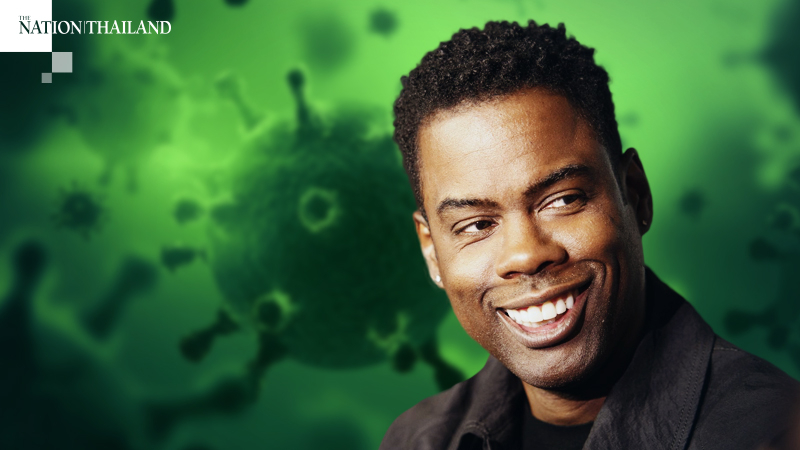
Just as the coronavirus was establishing its deadly grip on the United States and President Donald Trump once again revised his often-contradictory assessment of its risks, comedian Chris Rock posted a video for his 5.2 million Twitter followers. His message was brief and direct.

“During biblical times, Noah was the only one who took the rain serious. Everybody else died. The coronavirus is the rain,” the former “Saturday Night Live” cast member intoned in the late-March clip.

“We’re all in this together. But we’ve got to stay six feet apart,” Rock continued, with a quip about his uncut hair.

The one-minute, 10-second video was Rock’s creation, but it was inspired by an unusual nonpartisan coalition of experts who are repurposing new technologies to keep the most vulnerable populations safe by providing them with clear guidance. They are drawing on behavioral science, social media savvy, lessons from political campaigns and their own connections to persuade influencers such as Rock to spread their messages.

And they are acting against the backdrop of a rising communications crisis in public health – the failure of researchers to adapt to the rapidly changing media landscape combined with the current politicization of science that has sidelined experts, including officials from the Centers for Disease Control and Prevention.

“Public health’s greatest underused tool is educating the public,” said Alfred Sommer, former dean of the Johns Hopkins Bloomberg School of Public Health. “Now, it is playing catch-up during a pandemic and with an administration that uneducates the public and uses social media to mock facts, experts and expertise.”

Public health campaigns have historically relied on broad-based communications – from the televised antismoking advertisements that began in the late 1960s to the contemporary Click It or Ticket seat belt signs on highway billboards. In times of crisis, officials such as the National Institutes of Health’s Anthony Fauci have stood alongside presidents to present a united front.

The National Organizing Coalition On Virus Information Distribution – or NoCovid project – aims instead to meet people where they are, by determining which counties are most vulnerable and then enlisting celebrity messengers who have followers there along with trusted local leaders such as physicians, fire chiefs and fifth-grade teachers to spread the word.

“That’s a lot better than Dr. Fauci telling Johnny to wear a mask,” said James Carville, the Democratic political consultant who with his wife, longtime GOP strategist Mary Matalin, is at the heart of the operation. “People don’t know what the Hopkins Bloomberg school is,” he said. “But they do know their own doctors, teachers and civic leaders.”

The coalition has developed an online “tool kit” for local leaders with links to resources such as best practices, advice on tailoring messaging and how to find influencers to disseminate their messages.

Steve Azar, a music and cultural ambassador in Mississippi, was already working with the state when John Barry, best-selling author of “The Great Influenza” about the 1918 flu outbreak,contacted him.

“It just made sense,” Azar said. “Us entertainer types becoming a voice and vehicle.”

Former pro-football player and philanthropist Herman Moore felt his ability to reach across party lines and age groups would lend nonpartisan weight to his outreach.

“I’m for the people. Period,” he said. “I try and channel as best I can what is given to me as good information for safety of the people.”

Several of the influencers fit a long-standing risk-communication strategy – of personalizing messages, engaging with the audience and encouraging collective action.

Paralympic athlete Blake Leeper, who turned to the courts recently to fight for the right to compete against able-bodied runners in the Tokyo Olympics, said that when the coalition approached him, he felt his message of resilience would resonate “just because of the things I have been through.”

Twelve-year-old singer Angelica Hale described how her struggle with double pneumonia and a kidney transplant almost a decade ago would show young people that they are not bullet proof.

“I lived through it,” said Hale, who is trying to relay the message to her 2.4 million Facebook followers that exposure to the virus might pose a threat to people like her who are immunocompromised.

The NoCovid mission was launched in late March when Carville published an essay in the Chronicle of Philanthropy gently chiding Barry, his friend, for preaching to the choir when he published an op-ed in the New York Times about lessons from the 1918 flu. In the absence of White House leadership, Carville called on foundations to fund a unified patriotic response that would bridge the country’s political and socioeconomic divides – “a Dream Team made up of top leaders from Hollywood, technology, advertising, public relations, polling, and behavioral psychology,” he wrote, that would target “every micro-slice of the population.”

An initial day-long conference call included Carville, Matalin, Barry and Bryan Cunningham, a cybersecurity and privacy lawyer who acts as moderator, and representatives from Ogilvy, the marketing giant, and Palantir, the data-mining firm co-founded by PayPal’s Peter Thiel.

Rock’s apocalyptic message, posted a few days later, has been viewed more than 47,000 times. When the group’s early data suggested Newport News, Va., was in danger from the virus, comic actress Wanda Sykes went online to warn her hometown, “It’s not just New York, New Jersey, no. This bitch has an E-ZPass. The scientists and experts I trust are convinced the next hotspot will be area code 757.”

A videotaped exchange between Louisiana State University football coach Ed Orgeron and the team doctor was picked up by CBS Sports and ESPN and went viral. And in the weeks since its founding, the NoCovid coalition has grown from eight to about 60, including vaccine researchers and online audience experts who spend hours every week on calls, delving into thorny issues such as the threats to civil liberties and privacy posed by contact tracing.

“This isn’t looking to replace anything that public health is doing,” said Julie Schafer, chief technology officer for Flu Lab, a nonprofit dedicated to vanquishing influenza. Schafer began working on the need for coordination among all levels of government in pandemic preparedness 15 years ago. She described the pooling of such disparate skills as unlike any she had experienced in her career, which included supporting the federal vaccine and antiviral drug response during the H1N1 outbreak in 2009.

The need for localized messaging has become even clearer, she and other coalition members say, as states relax restrictions, often resulting in different regulations – as well as conflicting social and political pressures – on opposite sides of a county or state border. Add to that an administration often at odds with public health officials from Fauci on down.

Those competing forces fly in the face of what experts on public health messaging say is the key to success – to sustain advice and back it, when possible, with policy even when it is controversial and pits the needs of the community against personal behaviors such as the right to smoke in public buildings or not to wear a seat belt.

“If covid messages are not sustained, people will revert to old behaviors,” said Barbara Loken, an expert in brand management, health promotion and consumer psychology at the University of Minnesota who co-authored a 2010 paper in the Lancet medical journal on the use of mass media to change health behaviors.

The changes asked of people have to feel doable, particularly when risks and resources vary across geographic areas, said Renata Schiavo, a health communication expert at Columbia University’s Mailman School of Public Health: There’s little point in pushing a handwashing campaign in areas that lack hand-washing facilities.

“Communities are more willing to implement behavior when they feel it is feasible and the barriers to that behavior have been removed,” Schiavo said.

But many scholars agree that public health officials have been slow to recognize the rapid shifts to hyperlocal messaging and to platforms that attract younger generations.

“A leading example of what we don’t know how to do yet relates to covid-19,” said Jay Winsten, director of the Frank Stanton Center for Health Communication at the Harvard School of Public Health. Winsten popularized the designated driver concept through TV sitcoms such as “Cheers,” and has been working on a distracted driving campaign. “There isn’t a lot of smart thinking yet in terms of design of messaging so that it reflects where young people are coming from and whether or not there are alternative messaging concepts that might resonate in a stronger way,” he said.

Winsten suspended a course he used to teach on communication skills at Harvard because the cases were derived from the pre-social media world.

“No one has really fixed the model of health communications for the 21st century,” he said.

And while many health communications experts recognize they were lagging behind, none say they were ready for the current politicization of science – and for President Trump’s relentless questioning of scientific data.

“He repeatedly parades forth public health experts only to ignore and then belittle their advice to the public,” said Sommer, the former Johns Hopkins dean, using Trump not wearing a mask as an example.

At the same time, the CDC has lost its voice of authority.

“What they were really good at was foreshadowing: Here’s what we know; here’s what we don’t; and here’s what we are doing,” said coalition member Bruce Gellin, president of Global Immunization at the Sabin Vaccine Institute, who used to work at the CDC. “That’s what we don’t get from anybody now.”

As the states relax their regulations, complicating the simple stay-at-home message, the coalition is awaiting data on the effects of reopening strategies to inform new messaging, as well as examining ways to measure its impact by tracking comments and retweets with the #nocovid hashtag.

“Until there is some sort of post-mortem, you won’t know if you were really effective or contributing materials out of good will,” said Chris Graves, a coalition member and expert on behavior change at Ogilvy.

In the face of a deadly pandemic, he added, “We are prepared to do that.”