White House struggles to contain public alarm over coronavirus #ศาสตร์เกษตรดินปุ๋ย

#ศาสตร์เกษตรดินปุ๋ย : ขอบคุณแหล่งข้อมูล : หนังสือพิมพ์ The Nation

https://www.nationthailand.com/lifestyle/30382858?utm_source=category&utm_medium=internal_referral

White House struggles to contain public alarm over coronavirus

Feb 26. 2020
File Photo of President Trump

File Photo of President Trump
By The Washington Post · Jeff Stein, Josh Dawsey · NATIONAL, HEALTH

WASHINGTON – Top White House economic adviser Larry Kudlow told The Washington Post late Monday that investors should consider “buying these dips” in the stock market amid the coronavirus panic. The message was to take advantage of one-day slumps and “buy low.”

After all, the Dow Jones industrial average had just fallen 1,032 points. President Donald Trump tweeted similar guidance thousands of miles away in India.

Less than 24 hours later, the Dow Jones industrial average would fall another 879 points, bringing Trump and Kudlow’s economic advice – at least in the short term – under greater scrutiny.

The rosy sheen that Trump, Kudlow, and other White House officials have tried to express about the economic impact of the coronavirus outbreak has now collided with reality: The coronavirus is spreading, quickly, to more countries. The death toll is rising, and the outbreak is wreaking havoc on global supply chains. Efforts to detect and contain it have failed.

And the White House’s efforts to contain and control government messaging on the disease have come under attack. Trump is highly concerned about the market and has encouraged aides not to give predictions that might cause further tremors. He is expected to talk to officials on Wednesday, said aides, who spoke on the condition of anonymity to discuss private conversations.

At least publicly, Trump has devoted the majority of his public statements to slamming Democrats or complaining about the criminal justice system. But he has not publicly engaged much about the coronavirus, other than to downplay what he believes the impact will be on the United States. Privately, Trump has become furious about the stock market’s slide, according to two people familiar with the president’s thinking, who spoke on the condition of anonymity to share internal details.


While he has spent the past two days traveling in India, Trump has watched the stock market’s fall closely and believes extreme warnings from the Centers for Disease Control and Prevention have spooked investors, the aides said. Some White House officials have been unhappy with how Health and Human Services Secretary Alex Azar has handled the situation, they said.

On Tuesday afternoon, as the Dow flirted with its second-straight 1,000-point drop, Azar held a news conference that struck a markedly less concerned tone about the virus’s impact on the United States. By that point, the market didn’t budge.

In January, during his trip to the World Economic Forum in Switzerland, Trump dismissed questions about the coronavirus’s impact in the United States.

“We have it totally under control,” Trump told CNBC at the time. Pressed about the confirmed case in Washington state, Trump said, “It’s one person coming in from China. We have it under control. It’s going to be just fine.”

Now there are more than 50 people in the United States with coronavirus, and health officials believe the number will continue to grow.

On Tuesday, as the stock market began its second day of a precipitous slide, Nancy Messonnier, a top CDC official, told reporters that the coronavirus’s impact on the United States “may seem overwhelming and that disruption to everyday life may be severe.”

She said that it was inevitable the virus would spread more broadly in the United States and that people needed to begin taking precautions.

White House officials often face a tricky balance of trying to assure the public while also not dismissing threats that could become calamities. The Dow is still up markedly from 2017, when Trump took office, but it closed Tuesday at its lowest level since October, before the coronavirus was even detected in China.

“You don’t want to overly feed the darkness, but if you seem like all you do is happy talk then you lose credibility,” said Gene Sperling, who served as a top economic adviser during the Clinton and Obama administrations. “You get a three-hour high from your happy talk, but lose the long-term ability to be seen as serious, factual and potentially reassuring at a later point when it might be justified. This White House may already be in danger of losing the capacity to be seen as serious.”

Now, White House officials’ efforts to contain the economic fallout from the coronavirus have created new political hazards, as they publicly downplay the threat while other federal officials with a background in health and diseases are warning of more severe consequences for inaction. The administration also risks creating new health hazards, should the pressure to assure investors of economic stability undercut its public health message about the mounting threat.

In a statement, the White House defended its response, saying comments have been taken out of context or twisted to try to distract from the Trump administration’s efforts so far. Administration officials strongly denied that the CDC and White House economic team were at odds on Tuesday.

“Unfortunately what we are seeing today is a political effort by the Left and some in the media to distract and disturb the American people with fearful rhetoric and palace intrigue,” White House spokesman Judd Deere said in a statement. “The United States economy is the strongest in the world thanks to the leadership and policies of President Trump. The virus remains low risk domestically because of the containment actions taken by this Administration since the first of the year.”

In India this week, Trump said that the coronavirus is “very well under control” in the United States and that “the situation will start working itself out.”

“Stock Market starting to look very good to me,” Trump tweeted on Monday.

The stock market opened up slightly higher on Tuesday, but the slide began as CDC officials began briefing lawmakers about how problems were worsening. It was a few hours later when Kudlow appeared on CNBC and offered an assessment that appeared to contradict what health officials had conveyed.

“We have contained this. We have contained this. I won’t say airtight, but pretty close to airtight,” Kudlow said. “The business side and the economic side, I don’t think it’s going to be an economic tragedy at all. . . . The numbers are saying the U.S. [is] holding up nicely.”

Kudlow has argued repeatedly that while China may be hurt economically, the impact on U.S. growth is likely to be minimal, citing robust consumer confidence and data showing domestic manufacturing remains strong. Commerce Secretary Wilbur Ross has made similar assessments, telling Fox Business last month, “I think it will help to accelerate the return of jobs to North America, some to [the] U.S., probably some to Mexico as well.”

Their comments come amid widespread concern that the shuttering of numerous Chinese firms could wreak havoc with American companies’ domestic supply chain. U.S. companies do not appear to be cheering the economic disruption. In fact, many are fretting that it could have a severe impact on their operations.

Global markets also appeared to brush off the pronouncements of economic stability from Kudlow and Trump.

“The CDC is probably more credible about the risks from the coronavirus than anything the Trump economic officials say,” said Chris Rupkey, chief financial economist at MUFG Union Bank. “The market is coming down on the CDC.”

The White House’s assurances also fell flat on Capitol Hill, as lawmakers from both parties expressed outrage at the Trump administration’s seeming unfamiliarity with facts about the scale of the problem.

Within the span of a few hours, the CDC’s messaging appeared to change.

“It’s not a question of if this will happen, but when this will happen, and how many people in this country will have severe illnesses,” Messonnier told reporters in the morning.

In the afternoon, the CDC appeared to offer a more optimistic assessment.

“We believe the immediate risk here in the United States remains low and we’re working hard to keep that risk low,” said Anne Schuchat, CDC’s principal deputy director.

The White House may face further practical and political constraints in its ability to contain the virus. The White House asked Congress to approve a $2.5 billion plan to combat the virus on Monday, but it immediately touched off a partisan firestorm and denunciations from Democrats who said it was far too little to meet the growing threat.

The White House’s response to the coronavirus has continued to change. It recently moved to block or restrict travel from China, which some officials believe has helped keep the number of cases in the United States low compared with other countries. But further steps could end up sparking more concern. The administration could issue further travel restrictions on the nations to which the disease has spread, but doing so could further cut off ties between the United States and other countries, fanning even more investor concerns.

She wasn’t drinking after all. Her bladder was brewing its own alcohol. #ศาสตร์เกษตรดินปุ๋ย

#ศาสตร์เกษตรดินปุ๋ย : ขอบคุณแหล่งข้อมูล : หนังสือพิมพ์ The Nation

https://www.nationthailand.com/lifestyle/30382849?utm_source=category&utm_medium=internal_referral

She wasn’t drinking after all. Her bladder was brewing its own alcohol.

Feb 26. 2020
By The Washington Post · Katie Shepherd · NATIONAL, SCIENCE-ENVIRONMENT 

Her urine was full of alcohol. The 61-year-old woman, who was seeking a liver transplant, insisted she had not been drinking. Her doctors hesitated to believe her.

The liver transplant team at the first hospital she visited ushered her into an alcohol abuse treatment program, suspecting she had lied to obscure an addiction that may have contributed to her failing organ, according to a case study published Monday in the journal Annals of Internal Medicine.

“Initially, our encounters were similar, leading our clinicians to believe that she was hiding an alcohol use disorder,” wrote the study’s authors, a group of researchers at the University of Pittsburgh School of Medicine and Medical Center.

Further investigation showed a strange alternative explanation: The woman suffered from “urinary auto-brewery syndrome,” the study said, which caused her bladder to make alcohol.

Curiously, the patient didn’t show any signs of intoxication when she visited the clinic. The high alcohol concentration of her urine should have caused visible impairments if she had consumed the alcohol that ended up in her bladder.

When the doctors drew blood and tested her plasma, they did not find any trace of ethanol. They tested the woman’s urine for ethyl glucuronide and ethyl sulfate, two chemicals the body produces as it metabolizes alcohol and then expels it through the urinary tract. Neither showed up in the lab tests.

But her urine did contain sugar and yeast – the two key ingredients for fermentation.

And ferment it did. Researchers found yeast-rich urine samples became increasingly alcoholic when the sugars were allowed to ferment in the lab. The same process, they theorized, might be happening inside the woman’s body.

The doctors decided the presence of alcohol in her urine, but nowhere else, was “best explained by yeast fermenting sugar in the bladder.” The yeast inside the woman’s body, which was closely related to the “brewer’s yeast” used to make beer, was probably making the ethanol that was showing up in her urine tests, the scientists concluded.

After all of the tests and experiments, the Pittsburgh woman with alcoholic urine was allowed to apply again for a liver transplant. It’s unclear whether she will receive a new organ.

“As a result of our experiment and new appreciation for her pathophysiology, she was reconsidered for liver transplantation,” the University of Pittsburgh study said.

The woman’s bladder brewery is not the first instance of auto-brewery syndrome documented by doctors.

A 46-year-old man pulled over on suspicion of drunken driving claimed he had a similar disorder, The Washington Post reported in October. He refused a breathalyzer but was taken to a hospital, where his blood alcohol level was determined to be more than twice the legal limit to drive a car. Scientists said in a study last year that fungi in the man’s gut were brewing alcohol that made him act drunk, even though he said he had not had a drop to drink.

Not all researchers agree auto-brewery syndrome exists. A review of medical literature published in 2000 concluded “to date none of the studies published supporting the theory have withstood close scrutiny.”

In the 20 years since then, several additional case studies and news reports have documented suspected instances of the syndrome. A more recent study, in 2019, concluded auto-brewery syndrome is “probably an underdiagnosed medical condition.”

In South Korea, a region is stricken with coronavirus. But no China-style lockdowns planned. #ศาสตร์เกษตรดินปุ๋ย

#ศาสตร์เกษตรดินปุ๋ย : ขอบคุณแหล่งข้อมูล : หนังสือพิมพ์ The Nation

https://www.nationthailand.com/lifestyle/30382838?utm_source=category&utm_medium=internal_referral

In South Korea, a region is stricken with coronavirus. But no China-style lockdowns planned.

Feb 25. 2020
By The Washington Post · Min Joo Kim, Simon Denyer · WORLD, ASIA-PACIFIC

SEOUL, South Korea – When a spokesman for South Korean’s ruling party suggested Tuesday that the government would be rolling out a “maximum lockdown” on the coronavirus-hit southern city of Daegu, the backlash was immediate and the political retreat swift.

Hong Ihk-pyo soon clarified that he didn’t mean a “Wuhan-style lockdown” or any blockade on travel into and out of the city – along the lines that China’s Communist Party has imposed on Wuhan and surrounding areas at the center of the covid-19 outbreak.

President Moon Jae-in soon chimed in, too. There would be no regional blockade, he said, only a full-scale effort to contain the spread of the virus.

The measures include tracing and testing potential carriers, canceling large public gatherings and marshaling the country’s medical and financial resources, with help from the police and the military.

But as South Korea struggles to contain a rapid acceleration in coronavirus infections, one thing is clear: the kind of tactics imposed by authoritarian regime in China are simply not on the menu in this compact, democratic and politically outspoken country.

Of South Korea’s nearly 1,000 confirmed cases of the new coronavirus, 543 are in Daegu and another 248 in the neighboring province of North Gyeongsang – with a major burst of cases linked to a church with a messianic leader. All but one of the 11 deaths have taken place in the city or province.

“Some kind of travel restriction on Daegu citizens might have been helpful to contain the virus, but it was just out of the question,” said Choi Eun-hwa, a professor of medicine at Seoul National University and a member of an expert panel who met Moon on Monday. “The South Korean government can’t afford to enforce that kind of restriction as it would spark a huge backlash.”

The World Health Organization argues that China’s policy of keeping tens of millions of people virtual prisoners in their homes has helped curb the spread of the virus. The rate of new cases has plateaued somewhat in China, but infections are spiking in places including South Korea and Italy.

China’s lockdown was also not as effective as it could have been: Wuhan’s mayor said 5 million people left the city before it was even imposed.

And many face widespread discrimination in China, with people from Hubei Province, which includes Wuhan, unable to find work, turned away from hotels and even shunned in shops around the country.

“Isolating a community and enhancing surveillance like in Wuhan is undemocratic – and increases the risk of a backfire,” said Woo Seoc-kyun of the Association of Physicians for Humanism, adoctors’ group in South Korea. “Would Daegu’s citizens flee the city, like people evacuated Wuhan ahead of the lockdown?

The mayor of Daegu urged residents last week to stay indoors if possible, but politicians around South Korea have had to be wary of any charge of scapegoating a city of 2.5 million people.

Won Hee-ryong, the governor of the southern island of Jeju, was forced to publicly apologize to Daegu’s citizens last weekend after proposing a reduction of flights to the city.

“I am very sorry to have hurt the feelings of Daegu citizens who are facing the worst hardships,” Won wrote on Facebook on Saturday, describing a “pressing realization” that “the problem, shared by all the people of South Korea, needs to be overcome with joint efforts.”

The South Korean government also apologized on Saturday for hurting the feelings of Daegu citizens after calling the virus “Daegu covid-19” in a news release.

So if blockades aren’t on the menu, what is?

Moon traveled to Daegu on Tuesday, visiting its main public hospital, a market and city hall, and pledging that his own prime minister would base himself in the city to lead the fight against the virus. Money would be found to “lessen the socioeconomic damage” in Daegu and the surrounding province of North Gyeongsang, he said.

“If we all gather strength, there’s nothing that we can’t overcome,” Moon told city officials. “The government and all the people of our country are in this together with people of Daegu and North Gyeongsang.”

South Korean authorities pledged to test more than 200,000 members of the Shincheonji Church of Jesus, whose followers comprised a major cluster of early cases. Coronavirus tests also will be offered to everyone in Daegu who has cold-like symptoms, an estimated 28,000 people.

Medical experts urged Moon on Monday to shift the country’s strategy from containment to mitigation, and to focus on improving the supply of hospital beds.

It is a shift that is already being made in Japan, which has 170 cases outside the Diamond Princess cruise ship and is bracing for a surge in infections.

On Tuesday, the government announced a new policy designed to focus medical care on the most serious cases, while urging people with mild symptoms to treat themselves at home.

“We shouldn’t have illusions,” said Shigeru Omi, a senior Japanese government adviser. “We can’t stop this, but we can try to reduce the speed of expansion and reduce mortality.”

Focusing resources on protecting the elderly has to be a real priority for both Japan and South Korea, experts say, given how vulnerable they are to covid-19: a quarter of Japan’s citizens are over the age of 65, and 15% of South Korea’s.

The coronavirus epidemic is already exposing weaknesses in the health services of the countries it affects.

In Japan, the failure to establish a specialist Center for Disease Control and Prevention has left the health ministry looking out of its depth and overwhelmed, critics say, while there is a shortage of laboratories capable of carrying out coronavirus tests.

The Korea Centers for Disease Control and Prevention has a much greater capability for testing than Japan and can administer around 20,000 tests a day – one possible reason it has found so many cases.

But with public hospitals underfunded for years, the country’s health service suffers from a shortage of beds, experts say. At least 142 people with coronavirus in Daegu have already been forced to quarantine themselves at home as a result.

“The Moon government promised to strengthen public health infrastructure, but we still haven’t seen a single new public hospital getting built,” Woo said. “The cost of taking a capitalistic approach to public health is now overwhelming the entire country.”

Nonprofits are helping kids with innovative prosthetics #ศาสตร์เกษตรดินปุ๋ย

#ศาสตร์เกษตรดินปุ๋ย : ขอบคุณแหล่งข้อมูล : หนังสือพิมพ์ The Nation

https://www.nationthailand.com/lifestyle/30382691?utm_source=category&utm_medium=internal_referral

Nonprofits are helping kids with innovative prosthetics

Feb 23. 2020
By  The Washington Post · Kate Furby · HEALTH 

Faith Trznadel was born without a tibia bone, and when she was 10 months old, doctors had to amputate her lower leg.

“The hardest part is the staring, the snickering,” said Faith’s mother, Sheila Trznadel, about how other people treated her daughter. “One message to get across to people is it’s OK to ask questions. … It’s better to ask questions than just stare. (It’s) getting rid of that stigma.”

Faith Trznadel's leg was amputated when she was 10 months old. Faith, now 11, loves dancing and gymnastics, activities she is able to pursue because of her prosthetic, which allows running. MUST CREDIT: Sheila Trznadel

Faith Trznadel’s leg was amputated when she was 10 months old. Faith, now 11, loves dancing and gymnastics, activities she is able to pursue because of her prosthetic, which allows running. MUST CREDIT: Sheila Trznadel

When Faith first started walking, she was fitted for a prosthetic. As a growing child, she needed a new leg every eight to 12 months. Insurance covered most of the $30,000 cost for each new prosthetic, but the family was still left with thousands of dollars in medical bills. Because of their medical plan, the total cost depended on their other medical expenses for the year.

When Faith was 5, her family realized her prosthetic was fine for walking, but not running. The walking prosthetic covered by insurance wasn’t designed for fast movement. It lacked an ankle joint, for example, and limited the speed at which Faith could move. So her family tried to get her a prosthetic that would let Faith run.

“Our insurance declared that it was not medically necessary to run,” said Trznadel, who is covered by BlueCross BlueShield, “so she couldn’t have a running leg.”

At first Faith wanted to play tag and other games, and then as she grew up, she wanted to join athletic teams. Without a specialized and more expensive prosthetic, she would be relegated to the sidelines.

Thousands of children are born with limb differences in the United States every year, and many do not have access to affordable prosthetics. Prosthetic limbs can cost from $5,000 to over $50,000, and many insurance carriers restrict financial coverage, placing limits on how much they will pay.

Adult prosthetics may last a few years, but children who need prosthetics can grow out of them as fast as they outgrow their clothes, creating a critical need for affordable, sustainable limbs.

“The amount covered may vary depending on the type of coverage the member has and the benefits allowed under that coverage,” CareFirst BlueCross BlueShield said in a statement. “Typically we provide coverage for prosthetics that are medically necessary to replace an absent or nonfunctioning body part. Repairs, adjustments and replacements due to growth or reasonable weight loss of gain, and normal wear and tear are typically considered medically necessary.”

The nonprofit sector is trying to help fill the gap in affordable prosthetic limbs in innovative ways, as well as creating communities where children can excel. For example, summer camps bring children together and provide athletic training and encouragement. Entrepreneurs are engineering ways to work with recycled plastics and new technologies.

Faith, who lives outside Chicago, is now 11 and loves dancing and gymnastics, activities she is able to pursue because of Amputee Blade Runners. The Nashville-based nonprofit group, which relies on corporate and individual sponsors and foundations for funding, provided her with a running prosthetic.

Joshua Southards, executive director of ABR, said that because most Americans in need of prosthetics are elderly, children are often overlooked. ABR works with children to provide what they need to take part in athletics, such as racing each other on playgrounds and competing in tournaments.

Sheila Trznadel is the former executive director of the NubAbility Athletics Foundation, which hosts camps for children with limb differences. NubAbility pairs children with counselors who look like they do, to build their confidence on and off the sports field. The foundation hosts several camps a year, in different locations.

This year, there are two – one in Florida focused on baseball skills and one in Idaho that will feature snow sports.

“Kids come into our camp, and they’ll be hiding their hand or putting it in their pocket, and then realizing … there’s nothing wrong with me. They walk out with their heads held high,” Trznadel said.

At camp last summer, Faith met Abbey McPherren. “They just clicked,” Trznadel said. “They both did dance, cheer and gymnastics camp together.”

Abbey is a cheerful 11-year-old with dozens of gymnastics medals. She was born with symbrachydactyly, a limb difference on her left hand. One child out of 32,000 births has this congenital condition, characterized by missing, shorter or conjoined fingers.

“I think people tend to be careful with kids who maybe only have one leg or only have one hand. … (Abbey) has taught me a lot about bravery and being courageous,” said Abbey’s mother, Melissa McPherren. “There’s no limit you can put on any kid, with any limb difference or any difference.”

Abbey has a purple and green prosthetic hand, custom-made with recycled ocean plastic by the Million Waves Project. Abbey, who lives with her family outside Seattle, is one of the project’s young spokespersons.

“We’re big ocean people,” Melissa McPherren said. Becoming involved with Million Waves has sparked a passion for ocean conservation in Abbey. “Now when she sees plastic or anything at the beach, she’s like, ‘Oh, my gosh, we’ve got to pick that up, Mom.’ ”

The Million Waves Project creates prosthetic hands for children using plastic water bottles collected from the seas to address two critical needs: providing affordable prosthetic hands and cleaning up ocean plastic pollution.

Every year, 10 to 24 billion pounds of plastic end up in the ocean, adding to the billions of pounds already plaguing our waterways and sea life. The Million Waves Project uses plastic water bottles from beaches and from donations, shreds them and makes them usable for 3-D printers. It takes about 30 water bottles to make a hand, said Chris Moriarity, who started Million Waves with his wife, Laura Moriarity, as a project in their dining room in coastal Northwest Washington state.

Million Waves partnered with a self-described, “digital humanitarian” organization called e-Nable to crowdsource their 3-D printers, working with hundreds of volunteers all over the world who own personal 3-D printers to create custom-fit, eco-friendly prosthetic hands. The hands are provided at no cost to the recipients.

Million Waves and e-Nable match children with makers in their area. The owner of the printer and the family organize fittings and print the custom hand. Kids can even request a “Frozen”-themed Elsa hand or an “Iron Man” arm.

All of the design files are open-source and available through e-Nable.

Jen Owens is the founder of enablingthefuture.org, an online community, and the co-founder of e-Nable. In 2011, excited about their handmade steampunk science-fiction costumes, Jen and her then husband, Ivan, posted a YouTube video showing Ivan using a giant, working mechanical hand. From there, an open-source platform to share engineering ideas was born.

Owens now estimates that their network has grown to 20,000 people in 100 countries. They have made more than 5,000 hands. Owens said it is difficult to find the exact numbers because the designs and materials are all crowdsourced and open-access. People “really have no idea the impact their creativity could have on the world unless they share it,” said Owens.

Abbey and Faith have been inspired by Shaquem Griffin, a linebacker for the Seattle Seahawks, who is also limb different. Abbey was encouraged by a video showing him weightlifting with his prosthetic hand.

Sheila Trznadel said the biggest challenge was making sure the children with limb differences had community, “knowing they’re not alone, knowing that they can do anything.”

Hard fall exposed unusual condition that had caused woman pain for years #ศาสตร์เกษตรดินปุ๋ย

#ศาสตร์เกษตรดินปุ๋ย : ขอบคุณแหล่งข้อมูล : หนังสือพิมพ์ The Nation

https://www.nationthailand.com/lifestyle/30382653?utm_source=category&utm_medium=internal_referral

Hard fall exposed unusual condition that had caused woman pain for years

Feb 23. 2020
Lynda Holland, 71, suffered for six years from severe, unexplained hip pain until she fell while walking her dog and the pain inexplicably stopped. Doctors found that she had a rare condition that causes cartilage overgrowth in her hip joint. She had surgery and is now fine. MUST CREDIT: Family photo provided by Lynda Holland

Lynda Holland, 71, suffered for six years from severe, unexplained hip pain until she fell while walking her dog and the pain inexplicably stopped. Doctors found that she had a rare condition that causes cartilage overgrowth in her hip joint. She had surgery and is now fine. MUST CREDIT: Family photo provided by Lynda Holland
By The Washington Post · Sandra G. Boodman · HEALTH 

If she hadn’t tripped over her neighbor’s dog, causing her to miss the step down into a sunken living room where she landed squarely on her left hip, Lynda Holland still might not know what was wrong.

Holland scrambled to her feet, shaken and grateful she hadn’t been injured: Her puffy down coat had cushioned her fall onto the hardwood floor. Then she realized the pain that had dominated her life for the previous six years had suddenly diminished.

“I thought, ‘This is weird,’ ” said Holland, 71, a retired administrative assistant who lives in Maryland.

For years, Holland’s doctors had disagreed about what was wrong with her hip. She had undergone a slew of scans, plus painful biopsies of her hip bones. Her doctors had prescribed cortisone injections and months of physical therapy to treat what most concluded was osteoarthritis.

But when she sought an explanation for the reason that her March 2017 fall had relieved pain so severe it disrupted her sleep, an X-ray suggested an alarming possibility: a cancer recurrence.

The cause proved to be far less ominous. Holland would learn that the problem had been clearly visible years earlier on an MRI, but its identity and significance were missed.

“I’m a happy camper,” Holland said of the surgery that corrected her problem. “I had thought I was going to be crippled for the rest of my life.”

– —

In 2009, Holland, then 61, was diagnosed with early-stage breast cancer. She underwent a lumpectomy followed by radiation, which appeared successful in eradicating the cancer.

The pain in her upper left leg and hip joint started two years later. Both her oncologist and internist worried it might mean that her cancer had returned and spread to her bones. They ordered a variety of tests, including CT and bone scans, followed by biopsies of her hip bones.

After the tests found nothing significant, Holland began months of physical therapy for a condition her internist decided was trochanteric bursitis, inflammation of the fluid-filled sac near the hip joint. The condition, a common cause of hip pain, often improves with rest, physical therapy and sometimes anti-inflammatory drugs. Holland tried all three; none seemed to help.

Her internist then administered two cortisone shots. Each worked for about two months. Holland, a former gymnast and gymnastics coach who teaches water exercise classes, felt increasingly hobbled by worsening pain that radiated down her leg.

In November 2013, she underwent an MRI scan of her hip. The report noted the presence of “calcified/ossified bodies” in her left hip, which had been detected on an earlier CT scan. The radiologist also noted fluid surrounding her left hip joint, which was “suspicious for an underlying synovitis,” inflammation of the tissue that lines joints and can result from certain diseases including rheumatoid arthritis.

The radiologist concluded that the most likely cause of Holland’s hip pain was not bursitis but rather degenerative osteoarthritis, a common problem in which the protective cartilage around bones wears down over time.

A month before the MRI, Holland had undergone a long-planned partial replacement of her right knee to repair an injury she had suffered years earlier. She had hoped the knee operation might lessen her hip pain.

“My knee felt great,” she recalled. “But the hip did not change. That was a real disappointment.”

A doctor repeatedly insisted her head pain was a tension headache. Something more serious was going on.

By 2015, she had developed pain in a second location: her lower back. Holland consulted an orthopedic spine specialist who told her he thought her hip pain was caused by sciatica, an irritation of the sciatic nerve that runs from the hip down the back of the leg. Her lower back pain, he concluded, was the result of mild spondylolisthesis, which can result from the overextension that occurs in gymnastics. He recommended that Holland receive potentially risky corticosteroid injections in her spine to control her hip pain.

Holland never received those epidural nerve block injections; her insurance company wanted her to try physical therapy first. For the next year, she went to PT faithfully. She also received professional massages, which she deemed “a tremendous help” by improving her mobility and decreasing pain.

But Holland said she worried that this was all that could be done. She was taking anti-inflammatory drugs on a daily basis and still had trouble sleeping because of the pain. Her gait was off, and she sometimes walked hunched over.

“It seemed like my orthopedists were guessing: ‘Is it her hip? Her back? Her knee?’ ” she recalled.

– – –

A week after she fell, Holland returned to the first orthopedist, who had performed her knee operation, and told him about her inexplicable improvement.

She hoped the episode might provide clues about what to do next.

The doctor ordered X-rays and told her she appeared to have a large “loose body near her sciatic nerve.”

He referred her to a third orthopedist for possible removal of the unidentified object, which was the size of a robin’s egg.

The specialist told her he wouldn’t operate. “He said, ‘I don’t know what it is,’ ” Holland remembered. If it was a malignant tumor, he said, surgery could cause it to spread.

Instead, he sent her to a fourth specialist, orthopedic oncologist Felasfa Wodajo of Virginia Cancer Specialists. (Orthopedic oncologists treat both benign and malignant diseases of the musculoskeletal system.)

“She’s very memorable,” Wodajo said. He described Holland as “a great historian” of her case who came armed with scans and medical records.

To Wodajo, Holland’s symptoms and test results did not suggest osteoarthritis. Her joints showed no sign of the degeneration commonly seen in arthritis and she seemed much too active.

Most telling was Holland’s recent X-ray, which showed several dozen small white flecks that resembled pieces of popcorn scattered around her hip joint, along with the large nodule in her left buttock. Wodajo said he immediately knew what was wrong.

“If you’ve never seen it before, I’m not sure it would jump out at you,” he said. But as an orthopedic oncologist, he sees the uncommon condition three or four times a year. Wodajo told Holland her hip pain was caused by primary synovial chondromatosis.

Holland said she remembers asking two questions: Is it cancerous, and can you fix it? His answer to the first question was no and the second was yes. Holland said she promptly burst into tears.

Synovial chondromatosis is a disorder of unknown cause that can result in severe disability. Most commonly seen in men in their 50s, it is not inherited. It occurs when the synovium grows abnormally, generating small nodules composed of cartilage, some no larger than a grain of rice. These pellet-like bodies can become loose inside joints, where they can roll around, damaging the cartilage that covers the joint. In Holland’s case, her fall had dislodged a large calcified body that was pressing on her sciatic nerve.

Those “calcified/ossified bodies” the radiologist flagged in Holland’s 2013 MRI were hallmarks of the condition.

“On that MRI it’s glaringly obvious,” Wodajo said. Because the radiologist did not specialize in orthopedic cases, he noted, it appears their significance was missed.

First he was hoarse. Then he couldn’t chew.

Holland’s history of cancer may have complicated her diagnosis, Wodajo said, because doctors were focused on determining whether her cancer had returned.

“That’s very common,” he said, referring to “people with a history of cancer who turn out to have something unrelated.”

Treatment of synovial chondromatosis, which often recurs, involves surgery that is typically performed arthroscopically through a small incision. But in Holland’s case, that was not possible: Her disease was too extensive.

“I told her we’d have to dislocate her hip, which is not a trivial thing,” Wodajo recalled.

Holland underwent surgery in July 2017. She spent one night in the hospital, less time than initially expected, and then recuperated at home. A week later, she was largely pain-free.

So far, the disorder has not recurred.

Holland regards Wodajo as her “hero” and says she wishes she hadn’t wasted years marked by anxiety and pain chasing a diagnosis that could have been made much earlier.

She hopes her experience will dissuade doctors from resorting to the catchall arthritis diagnosis “if they don’t know what’s wrong.”

“What if I hadn’t fallen, what would have happened?” she asked. “I think about that all the time.”

Coronavirus incubation could be longer than 14 days; global infection numbers rise #ศาสตร์เกษตรดินปุ๋ย

#ศาสตร์เกษตรดินปุ๋ย : ขอบคุณแหล่งข้อมูล : หนังสือพิมพ์ The Nation

https://www.nationthailand.com/lifestyle/30382652?utm_source=category&utm_medium=internal_referral

Coronavirus incubation could be longer than 14 days; global infection numbers rise

Feb 23. 2020
By The Washington Post · Anna Fifield, Simon Denyer, Chico Harlan, Miriam Berger, Marisa Iati · NATIONAL, WORLD, THE-AMERICAS, ASIA-PACIFIC, EUROPE, MIDDLE-EAST

BEIJING – Scientists were studying a case in China that suggested the incubation period for coronavirus could be longer than 14 days, potentially casting doubt on current quarantine criteria even as the epidemic moved into new regions.

The potential for a longer incubation period was linked to a patient in China’s Hubei province, where the virus was first detected in December. A 70-year-old man was infected with coronavirus but did not show symptoms until 27 days later, the local government reported.

South Korea and Japan both reported a sharp spike in cases Saturday, while an additional 109 people died of the virus in China and a sixth person died in Iran. Italian authorities on Saturday said the country was seeing a sudden rise in coronavirus cases, with at least 58 confirmed in the past two days – an outbreak that represents the largest yet across Europe.

Meanwhile, scientists in China reported indications that the virus might be transmissible through urine.

World Health Organization Director General Tedros Adhanom Ghebreyesus said Saturday that WHO experts were due to arrive that day in Wuhan, China, the center of the coronavirus outbreak. The team has visited three Chinese provinces this week, Tedros said in a speech in Geneva.

Outside China, Tedros said the WHO is concerned about the number of cases without a clear epidemiological link, such as recent travel to China or contact with a person known to be infected.

The WHO also has been sending medical supplies to Africa and training the continent’s health-care workers to prepare them for the virus’s possible arrival there, Tedros said. The only confirmed case of the coronavirus in Africa is in Egypt.

“Our biggest concern continues to be the potential for covid-19 to spread in countries with weaker health systems,” Tedros said.

Chinese leader Xi Jinping, who has not visited Wuhan since the outbreak began, was briefed that the situation in the city and in surrounding Hubei province “remains grim and complex,” according to a report by the official Xinhua News Agency published Saturday.

“The nationwide inflection point of the epidemic has not yet arrived,” the report said after a meeting of Communist Party leaders.

China’s National Health Commission reported Saturday that 397 new cases of coronavirus had been diagnosed Friday, taking the total to more than 76,000. The rate of infection outside Hubei appears to have slowed markedly, although there has been a great deal of confusion about the statistics this week as officials have repeatedly changed the criteria for confirming cases.

Among the new cases discovered Friday were a 70-year-old man in Hubei who was confirmed as infected after 27 days in isolation, while a man in Jiangxi province tested positive after 14 days of centralized quarantine and five days of isolation at home. On Thursday, authorities reported that a man in Hubei had tested positive for coronavirus after what appeared to be a 38-day incubation period with no symptoms.

The United States is also struggling with domestic fallout from its responses to the virus. The California city of Costa Mesta has sued the federal government over its plan to transfer quarantined coronavirus patients from the Travis Air Force Base near Sacramento to the former Fairview Developmental Center as early as this weekend. The city said that the area in question is surrounded by residential neighborhoods and that placing patients with a highly contagious disease so close by could pose a risk to public health.

A federal judge granted Costa Mesa’s request Friday, temporarily blocking the transfer of up to 50 patients. The restraining order prohibits state and federal government authorities from transporting anyone infected with coronavirus or who has been exposed to the disease to Costa Mesa before a hearing at 2 p.m. Monday at the Santa Ana federal courthouse, according to the Los Angeles Times.

The State Department, meanwhile, is battling thousands of Russian-linked social-media accounts promoting baseless theories that the United States created the coronavirus outbreak, according to the AFP. The accounts post “almost near identical” messages at similar times in five languages, the report says.

“Russia’s intent is to sow discord and undermine U.S. institutions and alliances from within, including through covert and coercive malign influence campaigns,” Philip Reeker, the acting assistant secretary of state for Europe and Eurasia, told the AFP.

Misinformation about the coronavirus outbreak has proliferated – mostly on social media – since the first cases were reported in December.

– – –

The State Department on Saturday heightened its travel advisories from Level 1 to Level 2 for South Korea and Japan, urging Americans to “exercise increased caution” when traveling to those countries due to the rising number of coronavirus cases there. Older adults and people with chronic conditions, who might be at higher risk of contracting the virus, should consider postponing unnecessary travel to those countries, the department said.

In Seoul, the Korea Centers for Disease Control and Prevention (KCDC) reported Saturday that 229 additional cases of the coronavirus had been detected, taking the total to 433, more than doubling in the space of a day and making South Korea the most affected country outside China.

“Apart from the Diamond Princess cruise ship, [South] Korea now has the most cases outside China, and we’re working closely with the government to fully understand the transmission dynamics that led to this increase,” Tedros said.

The majority of the new cases have been traced to existing clusters at a church in the southern city of Daegu and a hospital in nearby Cheongdo County, according to the KCDC.

More than half of South Korea’s cases are connected to the Daegu branch of the Shincheonji Church of Jesus the Temple of the Tabernacle of the Testimony.

Since members of the church attended a funeral at nearby Cheongdo Daenam hospital, 111 coronavirus cases have been reported there, including two patients who died of the virus.

The mass infection at the hospital is centered on its locked psychiatric ward, where a confined environment could have aggravated transmissions, said Jung Eun-Kyeong, director of the KCDC.

A man in his 40s was found dead at his home in the city of Gyeongju, east of Daegu, after becoming infected with the virus. He is the third person in South Korea to die of the virus.

In Japan, the number of coronavirus cases rose to 121 on Saturday, more than tripling in a week. That number excludes the 634 people on board the Diamond Princess who contracted the virus.

One of the latest cases was a teacher in her 60s at a public junior high school east of Tokyo, who complained of nausea while working. The mayor of Chiba city said the school will be closed until Wednesday, public broadcaster NHK reported.

The teacher had not traveled abroad in the past two weeks and has no record of having been in contact with a known infected person, underlining the fact that the virus is now spreading almost invisibly throughout the country, experts say.

– – –

As numbers suddenly rose in Italy, the government has scrambled to contain the new outbreak, asking some 50,000 people to stay indoors and suspending all public events – including religious ceremonies and school – in 10 small towns to the south of Milan.

Until a few days ago, Italy had seen only three confirmed infections, including a pair of Chinese tourists.

“There is quite an evident contagion, a very strong one,” said Giulio Gallera, health chief of the northern Lombardy region, which has seen the majority of the cases.

Italian officials on Friday attributed the country’s first death to the coronavirus, and on Saturday said that a 77-year-old woman had also tested positive for the virus after being found dead in her home. But Italian authorities said the woman suffered from other health conditions, and were unsure whether it was the virus that had killed her.

The cases in Italy appeared concentrated in the prosperous Lombardy region, which includes the country’s financial hub, Milan, and other areas nearby.

According to Italian media reports, one of the first people to come down with the virus was a 38-year-old who’d had dinner with somebody who had just come back from China. But some three weeks passed between that dinner and the time the man came down with a fever. In between, he ran a half-marathon, played soccer and traveled to several towns, according to La Repubblica, a major Italian daily.

Meanwhile, the number of confirmed cases of the virus in Iran has risen to 28.

The outbreak there has so far been centered on the holy Shiite city of Qom, where on Wednesday authorities suspended schools and religious gatherings as a precaution. On Saturday, Iranian authorities also closed schools in the capital, Tehran, and issued a temporary ban on cinemas and art-related events across the country, state-run Fars News Agency reported.

Other countries in the region have also reacted with alarm, particularly after Lebanon’s first coronavirus case Friday was found to be a woman who had just traveled from Qom.

In the past few days, Iraq and Kuwait suspended direct flights to Iran, while Iraq temporarily halted new visas for Iranian nationals and, along with Turkey, imposed restrictions on travelers who had recently arrived from Iran. Kuwait Airways said Saturday that it would be chartering special flights to evacuate citizens from Mashhad, Iran.

As fears mounted, Israel announced Saturday that nine South Koreans who had recently returned home from a tour in Israel tested positive for the virus. Israeli and Palestinian authorities on Saturday urged anyone who may have interacted with the group visiting from Feb. 8 to 15 to self-quarantine as they work to trace who may have had contact with the tourists, who visited major cities including Jerusalem.

Israel’s ambassador to China, Zvi Heifetz, was among those who self-quarantined, The Jerusalem Post reported, citing Israel’s foreign ministry. Heifetz took the same flight to Seoul as the South Korean tourists and is quarantined in Beijing, the report says.

About 200 students and teachers who came into contact with the South Koreans have also self-quarantined, according to The Times of Israel.

A spokeswoman for Israel’s Population and Immigration Authority said Saturday that all non-Israeli citizens arriving on a direct flight from Seoul to Tel Aviv that evening would be denied entry. Israel’s Health Ministry has ordered Israelis returning from South Korea to self-quarantine.

– – –

Meanwhile, tests are continuing on the crew members on board the Diamond Princess. At least 74 crew members have so far been found to have the virus.

All of the passengers have now been tested and almost all have left the ship, either to go home if they tested negative, to local hospitals or government facilities if they have the virus, or back to their home countries.

Some passengers were asked to stay aboard to serve an additional quarantine if their cabin mate contracted the virus, but they are also disembarking Saturday to serve out the rest of their quarantine in a government facility, local media reported.

More than 200 port calls in Japan by international cruise ships have been canceled this month due to the coronavirus outbreak, a Kyodo News survey showed Saturday, with the lost revenue from passengers coming ashore dealing another blow to Japan’s weakening economy.

– –

The 83-year-old woman who tested positive for the coronavirus when she arrived at Kuala Lumpur airport after disembarking in Cambodia from the MS Westerdam cruise ship has recovered, Malaysia health authorities said Saturday.

The woman “is showing good improvement and signs of recovery, however, she is still being monitored and managed in hospital for a slight cough,” Malaysia’s director general of health, Noor Hisham Abdullah, said in a statement.

The woman repeatedly tested negative while on board the ship and when she disembarked in Sihanoukville, then twice tested positive while transiting in Kuala Lumpur airport on Feb. 15. That set off a global scramble to track the hundreds of other passengers who had also disembarked then boarded planes bound for home.

The woman was taken to a hospital and given antiviral treatment and supplementary oxygen, and she showed improvement after 72 hours of treatment initiation, Abdullah said. Two more tests, conducted 24 hours apart, both came back negative for coronavirus.

But the U.S. Centers for Disease Control and Prevention cast doubt on whether the woman was ever infected, saying she “never had coronavirus to our knowledge.”

Cambodia’s Ministry of Health had previously cleared the 747 crew members who were still on board the Westerdam and the 781 passengers who were still in the country of coronavirus infection.

– – –

Separately, scientists in China are continuing to study how the virus is transmitted.

A research team led by renowned Chinese pulmonologist Zhong Nanshan had isolated live coronavirus strains in urine samples from infected patients, Zhao Jincun, a respiratory expert at the State Key Laboratory, told reporters in Guangdong on Saturday.

The team of scientists had previously said the virus, in addition to being carried in respiratory droplets, appeared to be transmissible through fecal matter, underscoring the need to practice good hand washing as a preventive measure.

Zhao did not directly say that the virus could be transmitted through urine, simply noting that the strains had been isolated and that this had implications for public health control. They are continuing to work on isolating the virus and on a cure, the Guangzhou Daily reported.

But he said people should pay more attention to personal and family hygiene to prevent the spread of the virus and recommended frequently washing hands, closing the toilet lid before flushing and making sure bathroom drains are not blocked.

– – –

Denyer reported from Tokyo, Harlan from Rome, and Berger and Iati from Washington. The Washington Post’s Lyric Li in Beijing, Akiko Kashiwagi in Tokyo, Min Joo Kim in Seoul, Stefano Pitrelli in Rome, Ruth Eglash in Jerusalem, and Yasmeen Abutaleb and Carol Morello in Washington contributed reporting.

Drug overdose deaths rise in the West while they drop in the East #ศาสตร์เกษตรดินปุ๋ย

#ศาสตร์เกษตรดินปุ๋ย : ขอบคุณแหล่งข้อมูล : หนังสือพิมพ์ The Nation

https://www.nationthailand.com/lifestyle/30382595?utm_source=category&utm_medium=internal_referral

Drug overdose deaths rise in the West while they drop in the East

Feb 22. 2020
Paul Harkin, director of harm reduction at GLIDE, hands out naloxone, fentanyl detection packets and tinfoil in an alleyway in San Francisco's Tenderloin neighborhood. MUST CREDIT: Photo by Nick Otto for The Washington Post.

Paul Harkin, director of harm reduction at GLIDE, hands out naloxone, fentanyl detection packets and tinfoil in an alleyway in San Francisco’s Tenderloin neighborhood. MUST CREDIT: Photo by Nick Otto for The Washington Post.
By  The Washington Post · Joel Achenbach · NATIONAL, HEALTH 

SAN FRANCISCO – Downstairs at the medical examiner’s office, the bodies lay side by side on stainless-steel tables and shelves, shrouded and anonymized in white bags, each person identifiable only by a protruding foot that had been toe-tagged.

Upstairs, Luke Rodda, the chief forensic toxicologist, looked over his morning docket and the terse reports from first responders.

Male, 33, “prior history of fentanyl overdose,” found at bus stop.

Male, 27, “white powder in baggie.”

Male, 51, found by construction worker, syringe next to him.

There had been at least nine apparent drug-related deaths over the previous three days in late January, Rodda said.

“This is our new norm now,” he said.

These individual tragedies are part of a national drug crisis that has shifted west. Drug overdoses are rising in many states west of the Mississippi, and dramatically so in California, even as they are falling across much of the East.

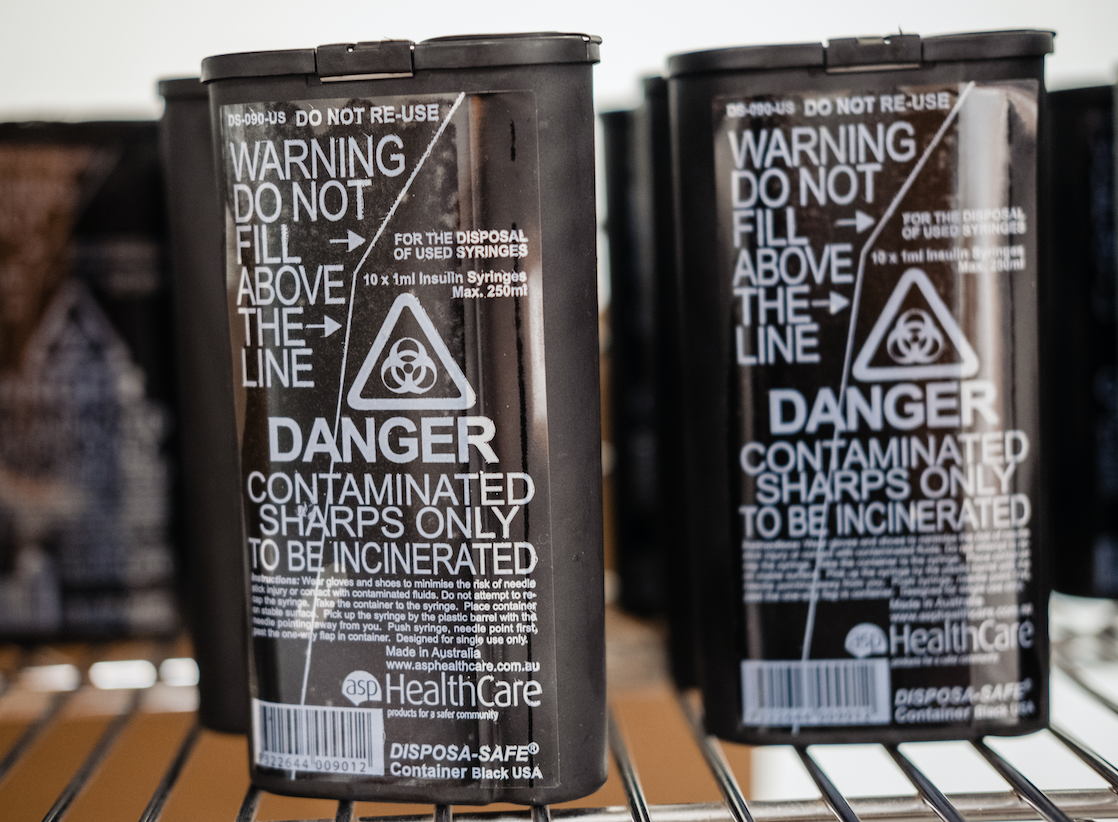
Syringe disposal cans line a shelf in an office at GLIDE, a multi-service social center in San Francisco. MUST CREDIT: Photo by Nick Otto for The Washington Post.

Syringe disposal cans line a shelf in an office at GLIDE, a multi-service social center in San Francisco. MUST CREDIT: Photo by Nick Otto for The Washington Post.

This trend has only recently become clear in government mortality data, including new numbers released Feb. 12. The increase in overdoses in the West is an ominous development that comes after a short period of progress in bringing down the overall drug-overdose death toll.

Drug deaths dropped 4% nationwide from 2017 to 2018, according to final mortality statistics released Jan. 30 by the Centers for Disease Control and Prevention. Secretary of Health and Human Services Alex Azar heralded the new numbers as evidence that the Trump administration’s efforts to combat the overdose epidemic “are beginning to make a significant difference.”

But the provisional CDC statistics released last week, which include estimated underreporting of deaths by medical examiners, show a slight uptick in fatal overdoses nationally over the first half of 2019.

In California, fatal drug overdoses over the previous 12 months increased 13.4% between July 2018 and July 2019, the last month for which the CDC has compiled provisional data – an additional 728 deaths.

In contrast, Illinois’ fatal drug deaths were down 8%, Pennsylvania’s down 10%, Michigan’s down 13% and Maine’s down 20%.

The overdoses in the West are driven largely by opioids, particularly illicit fentanyl, a synthetic drug that is roughly 50 times as powerful as heroin. Fentanyl has finally arrived in force in the western United States. Because fentanyl is so potent, and its dosage so easily miscalibrated, it is killing people who previously had managed their addictions for years.

Historically, the West Coast opioid market has been dominated by black tar heroin, a gunky substance not easily mixed with white powder fentanyl. That’s the orthodox explanation for why fentanyl first became popular in the eastern United States, where white powder heroin has historically been favored and drug dealers could more easily blend fentanyl and heroin.

Fentanyl started becoming more common here around 2015. The medical examiner’s latest, provisional numbers tell an alarming story: Deaths in San Francisco from fentanyl and/or heroin jumped from 79 in 2017 to 134 in 2018, and then more than doubled to 290 in 2019.

People are dying from other drugs as well, with a large spike in deaths linked to the potent stimulant methamphetamine. Efforts to cut off access to meth precursors sold in pharmacies have helped shut down local meth labs like the ones made famous in the TV show “Breaking Bad.” But that opened a new market for the Mexican drug cartels, said Daniel Comeaux, special agent in charge of the Drug Enforcement Administration’s San Francisco division.

“You have no mom and pop labs anymore because so much is coming from the Mexican cartels,” Comeaux said in an interview in his office in the heart of the Tenderloin district. “As much as we’re seizing, they’re producing.”

Comeaux said the DEA remains aggressive in targeting illicit-drug wholesalers.

“Look, we’re putting people in jail,” Comeaux said. The agency last year launched a program to target drug dealing in the Tenderloin district, leading to indictments of more than 100 people.

“If you cause an overdose death, we will put you in jail for 20 years – federally,” Comeaux said.

He acknowledged that there is rampant drug use right outside his office, but said the federal response has made it harder to buy drugs.

“Now you might have to walk three blocks to buy heroin,” he said. “If we didn’t do what we’re doing, you would be able to buy that heroin in one block.”

The drug-using population overlaps to a great degree with the homeless population – another relatively new development, according to Alex Kral, an epidemiologist at RTI International, a nonprofit research firm. Kral said that 15 years ago, he rarely saw people on the street injecting drugs, and estimated that only about a quarter to one-third of homeless people were doing so. Now, he said, upward of 75% of the homeless people in San Francisco are injecting drugs.

And even the most experienced users of heroin can be fooled by fentanyl: “If you’re a new user of fentanyl, you don’t even know necessarily how much to take.”

Kral works on harm reduction – an approach that provides people with tools and support to limit the negative consequences of drug use.

Harm reduction advocates emphasize that the overdose crisis is driven by social factors, including economic inequality, the housing crisis that is tied to a rise in homelessness in San Francisco, systemic racism and the criminalization of drug use.They say the overdose epidemic should be treated as a matter of public health and not as a law enforcement issue.

“The war on drugs has created this problem,” said Eliza Wheeler, a leader in the harm reduction community.

Paul Harkin, director of harm reduction at GLIDE, a multi-service social center, pointed out that testing kits, including chemically treated strips similar to pregnancy tests, could help users know what’s in their drugs and help them avoid overdosing.

“Unfortunately, America is very puritanical. We have to decriminalize in the way Portugal did, and we have to do drug testing so we know what’s in the drug supply,” he said.

That’s particularly a problem with fentanyl, which delivers an immediate, powerful high but can also render the user unconscious and unbreathing almost instantly.

“I’ve never seen so many people die,” said Chris, a young man in a hoodie standing near Eighth and Market streets in an area with open drug use. He did not want to give his full name because of concerns about trouble with law enforcement. He said he takes fentanyl and meth and has been on drugs for 15 years. He spoke in a light pre-dawn rain while, just a few feet away, young people stood at a bus stop waiting to board buses to technology companies in other locations in Silicon Valley.

Chris was engaged in conversation with a man named Brian, 29, who had been sitting unsheltered in the rain, leaning against a fence. Brian said he lives outside and prefers to do so. He said he’s been using meth for 10 years. Neither Chris nor Brian is interested in seeking drug treatment.

“It’s like a 24-hour party out here,” Chris said.

“That’s such a bougie comment,” Brian said.

The use of drugs in public and the burgeoning homeless population are sources of dismay for many of the more affluent residents of the city. Harm reduction activists believe that the law enforcement focus on impoverished and homeless drug users is unfair given that wealthy people often use drugs without repercussions.

“People are interested in open-air drug dealing because it’s visible to people and makes our city look bad,” said Kristen Marshall, a harm reduction worker who distributes naloxone to drug users.

She noted that thousands of overdoses have been reversed by peers on the street who were supplied with naloxone as part of harm reduction efforts. For many years, San Francisco saw a growing population of drug users but had a strikingly low rate of fatal overdoses. But that was before fentanyl showed up.

The statistics of drug use and overdoses do little to capture the gritty reality of life on the downtown streets of San Francisco. The drug use is in plain sight in the Tenderloin and the South of Market neighborhoods. One morning on Market Street recently, a young man in a hoodie was bent over at a bus stop in front of a hotel, injecting himself with a needle. He had slit both pants legs to improve access to his legs. One leg was bleeding. He looked dazed as he stood up, and did not respond when asked his name and whether he needed assistance.

Asked again whether he was OK, he looked puzzled and said, “I feel like there’s something alive in my body and I don’t know what it is.”

China’s foreign minister Wang to attend special Asean-China meeting on Covid-19 #ศาสตร์เกษตรดินปุ๋ย

#ศาสตร์เกษตรดินปุ๋ย : ขอบคุณแหล่งข้อมูล : หนังสือพิมพ์ The Nation

https://www.nationthailand.com/lifestyle/30382396?utm_source=category&utm_medium=internal_referral

China’s foreign minister Wang to attend special Asean-China meeting on Covid-19

Feb 19. 2020
File Photo

File Photo
By The Nation

China’s State councilor and Foreign Minister Wang Yi will attend the Special Asean-China Foreign Ministers’ Meeting on Covid-19 in Vientiane from February 19 to 21.

Wang will co-chair the meeting with Philippines Foreign Secretary Teodoro Lopez Locsin, the current Asean-China country coordinator.

There will also be a meeting of China-Asean medical experts to be held in parallel with the foreign ministers’ meeting.

“Since the outbreak of the Covid-19 epidemic, the Chinese government, acting with a high sense of responsibility to its people and the international community, has put people’s lives, health and safety on top of its agenda and adopted the most comprehensive and rigorous prevention and control measures, which are gradually paying off,” China’s embassy in Bangkok said in a statement.

“As of February 14, new confirmed cases in China, excluding Hubei province, has declined for the 12th consecutive day, while over 8,000 patients have been cured and the mortality rate is controlled at 2.29 per cent nationwide and 0.55 per cent for areas excluding Hubei. The situation speaks volumes that the epidemic is curable and controllable and that China is confident and capable of defeating the epidemic,” the statement added.

At the 56th Munich Security Conference recently, Wang reminded the delegates that we live in a time when traditional and non-traditional security issues are entwined, and when local issues easily become global and vice versa, and that no country can prosper in isolation. Under the concept of a community of shared future for mankind, China and Asean countries have maintained close communication and carried out rounds of effective cooperation in responding to the Covid-19 epidemic, the embassy said.

“Many Asean countries, including Thailand, have offered us support and assistance through various ways, vividly demonstrating the valuable friendship of good neighbours. That the two sides have decided to hold a special foreign ministers’ meeting within such a short period of time demonstrates our will and determination to overcome difficulties with concerted efforts,” the statement added.

At the Vientiane meeting, Wang will talk about China’s strong measures on countering the epidemic and exchange in-depth views on collaboration with Asean counterparts to advance joint prevention and control, maintain normal economic and social exchange, and explore launching a permanent mechanism on public health cooperation, the embassy said. “By doing so, we will safeguard the health and safety of people in regional countries and contribute to global public health,” the statement added.

Vaccines are like a giving your body’s defenses a cheat sheet #ศาสตร์เกษตรดินปุ๋ย

#ศาสตร์เกษตรดินปุ๋ย : ขอบคุณแหล่งข้อมูล : หนังสือพิมพ์ The Nation

https://www.nationthailand.com/lifestyle/30382330?utm_source=category&utm_medium=internal_referral

Vaccines are like a giving your body’s defenses a cheat sheet

Feb 18. 2020
Susan Nasif, an expert on viruses and an artist, helps educate kids about vaccines with comics. In this one, she tells a story about poliovirus, which paralyzed thousands of people before a vaccine was developed. Polio cases nearly disappeared until some people avoided the vaccine. MUST CREDIT: Susan Nasif

Susan Nasif, an expert on viruses and an artist, helps educate kids about vaccines with comics. In this one, she tells a story about poliovirus, which paralyzed thousands of people before a vaccine was developed. Polio cases nearly disappeared until some people avoided the vaccine. MUST CREDIT: Susan Nasif
By Special To The Washington Post · Jason Bittel · FEATURES, HEALTH, KIDS

While the sting of a needle in the arm or leg is nobody’s favorite thing, the vaccines within those shots are some of the most important medical inventions in the history of science. But there can be a lot of misunderstanding about what vaccines are and how they work. So this month, we reached out to Susan Nasif, a virology expert and artist who specializes in creating comics that tackle difficult scientific subjects.

“When I was 8 years old, I remember watching a cartoon that explained the immune system to children,” writes Nasif in an email. “I loved it, and I decided then to draw and create my own comics.”

The immune system is the body’s natural defense against viruses, bacteria and other nasty stuff, Nasif says. But viruses are especially good at developing disguises that help them hide from the immune system. Which is why we need vaccines to help our bodies see through the act.

Most vaccines contain a weakened or dead version of the virus they are meant to protect against, though some vaccines carry only the proteins found on the virus’s surface. In either case, once these substances are injected into the body, your immune system grabs them up and learns how to identify them, kind of like a cheat sheet that helps you prepare for a big test.

Then, when the body comes into contact with the real thing – a healthy virus – it knows how to protect against it and can set to work gobbling up the viruses before they can do too much damage.

You may be wondering why you still have to get shots for something such as polio, even though no one you know has gotten it. This is where a term called “herd immunity” comes into the discussion.

“Vaccines act as a firewall that prevents the spread of diseases to others,” Nasif says.

When enough people develop resistances to a disease by getting a vaccine, the chance that a virus can infect someone and then keep spreading drops to near zero. This is how polio went from a disease that was infecting 350,000 people a year in 1988 to one that caused just 33 cases reported worldwide in 2018. Of course, the protection only continues if people continue to give their bodies a cheat code to beat polio – vaccines.

Many people are concerned that a new virus coming from China could become a big problem for people around the world. Nasif says that scientists are working hard to create a vaccine for this coronavirus, which causes a disease called covid-19, but that it takes time to produce a vaccine that will be safe to use in people.

For now, she says the best thing you can do to protect yourself against this or any other viruses, bacteria and other things that cause diseases, is to wash your hands frequently and avoid being close to people who are coughing or sneezing.

Nasif also suggests eating a healthy diet and getting plenty of sleep at night – two ways you can give your immune system a helping hand.

Nasif also suggests eating a healthy diet and getting plenty of sleep at night – two ways you can give your immune system a helping hand.

Number of confirmed coronavirus infections in China exceeds 72,000, death toll rising to 1,868 #ศาสตร์เกษตรดินปุ๋ย

#ศาสตร์เกษตรดินปุ๋ย : ขอบคุณแหล่งข้อมูล : หนังสือพิมพ์ The Nation

https://www.nationthailand.com/lifestyle/30382310?utm_source=category&utm_medium=internal_referral

Number of confirmed coronavirus infections in China exceeds 72,000, death toll rising to 1,868

Feb 18. 2020
File Photo of Diamond Princess, a cruise ship carrying 2,666 passengers and 1,045 crew members that had been quarantined for two weeks off the Japanese port of Yokohama. Credit :Syndication Washington Post

File Photo of Diamond Princess, a cruise ship carrying 2,666 passengers and 1,045 crew members that had been quarantined for two weeks off the Japanese port of Yokohama. Credit :Syndication Washington Post
By The Washington Post · Anna Fifield, Alex Horton, Abha Bhattarai · NATIONAL, WORLD, HEALTH

BEIJING – Fourteen Americans who tested positive for coronavirus were among the hundreds of U.S. citizens evacuated from a cruise ship off Japan to U.S. facilities over the holiday weekend, the result of a chaotic chain of events that put virus-stricken passengers on flights with other evacuees.

Their return almost doubles the number of confirmed cases of the coronavirus in the United States to 29. The number of confirmed infections in China now exceeds 72,000, with the death toll rising to 1,868, the majority of both in Hubei province, where the virus emerged in December.

The 14 U.S. passengers tested positive for the virus after leaving the Diamond Princess, a cruise ship carrying 2,666 passengers and 1,045 crew members that had been quarantined for two weeks off the Japanese port of Yokohama.

But by the time their test results arrived, they were on a fleet of buses that took 328 asymptomatic passengers from the ship to two charter planes bound for U.S. military bases in Texas and California, according to a senior U.S. official who spoke on the condition of anonymity to speak freely about the incident.

It was a wrench in a coordinated effort. While the buses sat on the tarmac, health experts considered whether to put the 14 on the flight or divert them to hospitals in Japan, the official said. The State Department had already told passengers that virus-infected people would not board flights.

The planes included a sealed-off section of 18 seats in the back, and part of the plan was to isolate passengers there if they developed symptoms midflight, the official said.

Health authorities deemed them “fit to fly” because they were not showing symptoms, the State Department and the Department of Health and Human Services said in a statement Monday. They were cordoned off from the other passengers during the flight, the statement said.

“These individuals were moved in the most expeditious and safe manner to a specialized containment area on the evacuation aircraft to isolate them in accordance with standard protocols,” according to the statement.

It was unclear whether the other passengers were informed, the official said. The State Department did not respond immediately to a request for comment.

Another 44 Americans from the cruise ship tested positive for the coronavirus Sunday and had been taken to hospitals in Japan.

One flight unloaded bleary-eyed passengers at Travis Air Force Base in Fairfield, California, late Sunday night local time, and the other in Lackland Air Force Base in San Antonio early Monday.

All are due to go into quarantine for 14 days, the maximum incubation period for the virus. Ten passengers who tested positive were moved to a hospital in Omaha, Nebraska, upon arrival, where they are being quarantined, retested and monitored in rooms with separate filtration systems at the University of Nebraska Medical Center. Four others with the virus are in a hospital outside Travis Air Force Base and will be moved to Omaha this week, the official said.

Japan’s Health Ministry on Monday reported 99 new cases of coronavirus among the passengers and crew of the Diamond Princess, increasing the total number of infections from the ship to 454, including the Americans. Of those, 18 are in serious condition, the Yomiuri newspaper reported.

Yosuke Kita, a senior official in the Japanese Health Ministry, said the government would finish testing everyone aboard the Diamond Princess by the end of the day Monday. One of the new cases was a Russian woman, the Russian Embassy in Tokyo said on Twitter, and two were Australians, according to the Australian Broadcasting Corporation.

In addition to the cases on the Diamond Princess, Japan reported a sharp rise in the number of people with coronavirus over the weekend, with 65 people confirmed to have the virus, up from 33 on Thursday. The fact that many of the latest cases cannot be traced directly to China led Health Minister Katsunobu Kato to acknowledge that the virus had entered a “new phase” of local transmission.

The country is shifting to an approach focused on community-based control and treatment, said Shigeru Omi, chief director with the Japan Community Health Care Organization, which runs medical centers across Japan.

Kato said Japan can now administer more than 3,000 tests a day, and designated hospitals will be able to take 1,800 of the most severe cases, “and citizens with very light symptoms will be requested to stay home,” Omi said. People who develop symptoms will be encouraged to contact special call centers, rather than visit hospitals on their own.

Omi said that the “goal of this strategy is to slow the speed of transmission and reduce mortality” – a de facto acknowledgment that it has now become impossible to prevent the virus from spreading further in Japan.

The World Health Organization said new data has yielded better understanding of how the virus circulates and shows a decline in new cases, WHO Director General Tedros Adhanom Ghebreyesus said in a news conference Monday. But he cautioned against that as a sign the virus has reached its apex.

“Trends can change as new populations are affected. It’s too early to tell if this reported decline will continue,” he said. “Every scenario is still on the table.”

Government officials in Malaysia, Cambodia and the United States were scrambling on Monday to track down passengers from another cruise ship – the Westerdam, owned by Holland America Line – who may have been exposed to coronavirus.

Hundreds of passengers have flown home, mostly through Thailand or Malaysia, after the ship docked in the Cambodian port of Sihanoukville and health authorities there deemed it coronavirus-free.

But an 83-year-old American woman who disembarked from the ship at Sihanoukville on Friday took a charter flight to Kuala Lumpur, the capital of Malaysia, along with 145 other passengers. They had all passed health checks by Cambodian authorities and cleared to leave the ship and travel onward.

When the woman arrived in Kuala Lumpur, she reported not feeling well and tested positive for the virus. Malaysian authorities say she is in stable condition.

Her traveling companion tested negative, and none of the other passengers or crew members reported symptoms, Holland America Line said in the statement.

The Westerdam on Monday remained in Sihanoukville, where it had docked last week after spending two weeks at sea. Authorities in Japan, Taiwan, Guam, the Philippines and Thailand had turned it away after seeing what happened with the Diamond Princess, where the number of infections grew rapidly even while the vessel and its passengers quarantined.

The new cases come amid a continuing scramble to contain the virus in China, especially in Wuhan, the capital of Hubei province, where the outbreak began.

China’s National Health Commission said over the weekend that the number of new cases outside Hubei province has declined, as authorities impose severe restrictions on people’s movements in an attempt to stop transmission.

In Beijing, China’s ruling Communist Party signaled that it would almost certainly postpone the annual meeting of its legislature, the National People’s Congress and the other national committee of the Chinese People’s Political Consultative Conference. Together, these meetings are known as the “Two Sessions.”

The move to delay it “underscores the gravity of the coronavirus epidemic,” according to the analysts at the NPC Observer blog. “Officially, the Council is reported to have been mainly concerned with pulling NPC delegates (over a third of whom are local officials) away from their epidemic control efforts,” the analysts said in a blog post, linking to a state media article.

Other analysts point out that it would be bad optics for the party to hold a huge meeting when all public gatherings are banned, and even worse to show thousands of cadres in masks. The party’s leaders already have faced criticism for their response to the outbreak.