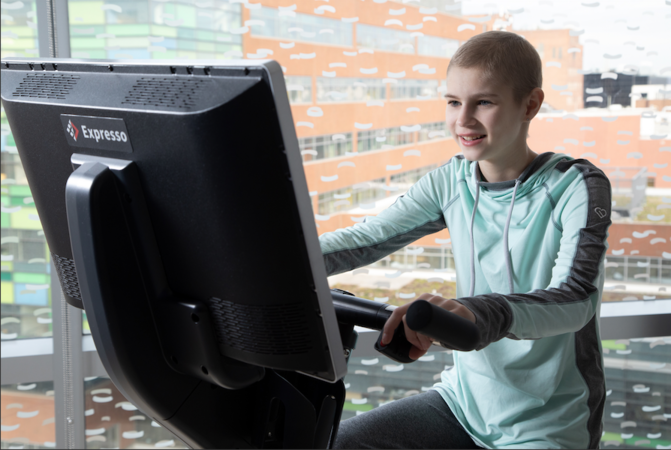
The 10-speed cancer therapy: Bike exercise #ศาสตร์เกษตรดินปุ๋ย

#ศาสตร์เกษตรดินปุ๋ย : ขอบคุณแหล่งข้อมูล : หนังสือพิมพ์ The Nation

https://www.nationthailand.com/lifestyle/30383136?utm_source=category&utm_medium=internal_referral

The 10-speed cancer therapy: Bike exercise

Mar 01. 2020

“It’s much better than walking laps around the unit,” says Bridget Diveley, who underwent treatment at Johns Hopkins and used the bicycles at the hospital. MUST CREDIT: Joe Rubino
By Special To The Washington Post · Ben Opipari · HEALTH

The day before Matthew Simon was to begin crew practice in 2015 as a sophomore at Walt Whitman High School in Bethesda, Maryland, he was diagnosed with leukemia.

Simon was a rower who worked out daily. His initial stay for treatment at Children’s Hospital was three weeks long, and the sedentary routine of chemotherapy was tough. “I got stir crazy,” Simon said. “Patients in a pediatric oncology unit are immunocompromised, so we couldn’t leave the floor. There’s not much to do but walk around.”

He walked laps around the unit when his strength permitted. But walking isn’t rowing, so the staff found an Expresso Go virtual reality bike and moved it into his room, where he rode it daily. After this initial round of treatment, Simon moved to Johns Hopkins, where he sometimes spent several days at a time as an inpatient. There was an exercise bike there too, which he rode often. It helped ward off some of the fatigue from the grueling chemotherapy and even elevated his mood. It was as if he were contributing to his own treatment plan.

“I felt like I was helping myself stay healthy,” he said.

Simon, now in his second year at the University of Virginia, discovered something seemingly counterintuitive: exercising during chemotherapy made him feel less fatigued. Yet as little as 20 years ago, medical experts prescribed bed rest to conserve energy for treatment. It wasn’t until 2010 that the American College of Sports Medicine established exercise guidelines for cancer survivors and patients. Its directive, updated in 2018, is simple: “avoid inactivity.” Exercise training, it said, “is generally safe for cancer survivors.”

Chemotherapy wreaks havoc on the body. It causes fatigue, muscle loss, nausea, pain and disrupted sleep. Patients can become depressed. But regular exercise can help minimize these side effects in cancer patients. Evidence has shown that a consistent exercise routine can reduce cancer-related anxiety and fatigue, and it can reduce depressive symptoms both during and after treatment. Doctors are spreading the word that exercise improves quality of life and that patients need to stay moving after their treatment concludes.

But getting kids to exercise isn’t always easy, which is why Simon two years ago started an organization, Bike to Fight, to raise money to place Expresso Go bikes on adolescent and young adult oncology floors in hospitals nationwide. The bikes are not cheap, retailing for about $7,000, although Interactive Fitness, the company that makes the Go, gives Simon’s group a discount. So far, the bikes are being used in five hospitals, including Johns Hopkins and Children’s Hospital. They feature 26-inch screens with interactive courses and games that riders play.

The bikes have been a huge hit, both with patients and their doctors.

The easy availability of exercise “is a way to normalize [young patients’] lives and a huge psychological benefit. It’s also a way to improve stamina,” says Pat Brown, director of the Pediatric Leukemia Program and associate professor of oncology at Johns Hopkins. The bike helps patients whose sleep cycle is disrupted by treatment.

“Sleep/wake cycles can be unpredictable in hospitals, and it’s discouraging to be awake at 3 a.m. in a hospital bed with nothing to do. The bike is always there for them,” Brown says.

On the virtual reality courses, patients compete against other patients and even against other Expresso Go users anywhere.

Bridget Diveley, 12, rode the bike while undergoing treatment at Hopkins.

“It’s much better than walking laps around the unit,” she says. Like many of the patients, Diveley’s favorite were the virtual reality courses where she raced other people. And while the bike did make her tired, “it also made me feel motivated.”

Another one of the bikes is at Massachusetts General Hospital, where psychologist Giselle Perez-Lougee, chair of the Adolescent and Young Adult (AYA) Oncology Task Force, says the exercise the bike provides is particularly important to this cancer patient population, which has “an elevated risk for adverse physical and emotional health outcomes. There are many health benefits of exercise during and after cancer treatment, but research suggests that AYAs are not meeting exercise guidelines.” (The National Cancer Institute defines the AYA population as ages 15 to 39.)

Besides potentially improving overall health, exercise can improve self-esteem and confidence and decrease fatigue, Perez-Lougee says.

At Comer Children’s Hospital in Chicago, where Simon placed a bike in the pediatric oncology unit, physical therapist Catherine Kennedy tells her young patients that opting out of exercise is not an option. “It’s a way to fight the tired feeling they can get from chemo,” she says. For those who need to be coaxed into exercising, Kennedy encourages short bursts of about 10 minutes throughout the day rather than one long session so that it’s less daunting. Any movement, Kennedy says, is better than no movement.

Doctors who treat these cancer patients hope that exercise will become a permanent lifestyle change for their patients – and for good reason: With advances in treatment, many cancer patients are living longer. There is evidence that exercise can lower the risk of several cancers and some recurrences.

At the same time, the increased survival rates are happening in part because of powerful chemotherapy drugs that also can cause lasting damage to the cardiovascular system, or cardiotoxicity.

Heart disease and other long-term cardiac issues are the biggest risk factors childhood cancer survivors face after intense chemotherapy, says Kathy Ruble, assistant professor of oncology and director of the Life Clinic and Leukemia Survivorship Program at Johns Hopkins.

“The cardiac mortality rate in cancer survivors is about 10 times greater compared to their healthy siblings and peers,” she says. “We see cardiotoxicity decades after treatment. But the good news is that we have decades to change it,” and lifestyle changes are an important part of that.

When her young patients finish cancer treatment, Ruble sits down with every family and stresses the importance of regular exercise.

“They’re already behind [with their health], so my job is to find the secret formula to get these kids moving again,” she says.

At the Lee Jones Lab at Memorial Sloan Kettering Hospital in New York, researchers are studying the long-term cardiovascular side effects of chemotherapy. They are also exploring the benefits of regular exercise on cancer treatment.

“We know the benefits of exercise on heart disease, so given the cardiotoxicity of chemotherapy [on the heart], we hope to apply it to cancer survivors as well,” exercise scientist Lee Jones says. He also is interested in looking at how patients may be able to use exercise to receive or help them tolerate stronger – and therefore possibly more effective – treatment. Jones hopes exercise will eventually be a regular adjunct to chemotherapy.

But what exercise aims to improve – energy, self-esteem, mood and mobility – is often what makes it difficult to get started: motivation can be low when cancer treatments sap your strength and make you depressed. Enticing patients to overcome those feelings often runs up against a mountain of misinformation.

“Patients are still hearing that they shouldn’t exercise,” says Allison Betof Warner, an oncologist at Memorial Sloan Kettering.

Warner’s goal is to prescribe exercise to make cancer therapy work better.

“There’s still this idea that you should save your energy to fight the cancer,” she says, even though it has been shown that in most cases exercise while undergoing treatment is safe.

Betsy O’Donnell, an oncologist at Mass General, says she would like to see Expresso Go bikes connected in hospitals across the country for all cancer patients.

“My dream is a nationwide social network of cancer patients who ride the bikes,” she says. “Then they could take that network home and let it inspire them. We could have programming just for cancer survivors, even maybe a class for just, say, breast cancer survivors.” That connection would effectively be one giant support group, helping to normalize the lives of patients who are living longer than ever before.

Simon, meanwhile, is back to his regular exercise routine.

At U-Va., he tries to make it to the gym five days a week. He sees a cardiologist twice a year to make sure he has not developed any heart complications from the chemotherapy he completed in 2018. So far, there are none.

“I exercise for the same reasons I did when I was undergoing treatment: to relieve stress and stay healthy,” Simon says. “And to ensure there are no residual side effects from my treatment.”

First coronavirus deaths confirmed in U.S., Australia and Thailand; health officials probe possible outbreak at Washington nursing home #ศาสตร์เกษตรดินปุ๋ย

#ศาสตร์เกษตรดินปุ๋ย : ขอบคุณแหล่งข้อมูล : หนังสือพิมพ์ The Nation

https://www.nationthailand.com/lifestyle/30383131?utm_source=category&utm_medium=internal_referral

First coronavirus deaths confirmed in U.S., Australia and Thailand; health officials probe possible outbreak at Washington nursing home

Mar 01. 2020
Health officials confirm first coronavirus death in Thailand on  Sunday/ NationPhotoby Korphuk Phromrekha

Health officials confirm first coronavirus death in Thailand on Sunday/ NationPhotoby Korphuk Phromrekha
By The Washington Post · Paul Schemm, Rick Noack, Katie Mettler, Alex Horton, Meryl Kornfield, Derek Hawkins ·NATIONAL, WORLD, HEALTH

The United States, Australia and Thailand each reported their first coronavirus-related deaths over the weekend, all in the span of about 12 hours, as the virus continued its rapid spread around the globe.

Covid-19 has now killed patients on four continents, with the global death toll climbing toward 3,000. Countries are tightening travel restrictions, canceling public events and urging people to take health precautions.

In Washington state, health officials said Saturday that a man in his 50s with underlying health conditions died at a hospital in Kirkland after testing positive for covid-19. The patient had no recent travel history or contact with people known to be infected, suggesting he may have been infected through person-to-person transmission, officials said. It was not immediately clear when he was admitted, when his symptoms first appeared or how long it took health officials to test him.

Officials in the Seattle area announced two cases related to a possible outbreak at a long-term nursing home, where people are considered to be especially vulnerable to infection. One patient is a female health care worker in her 40s who was in satisfactory condition, according to state health officials. The other, a female resident in her 70s, is in serious condition.

Jeffrey S. Duchin, the chief health officer for Seattle and King County, identified the nursing home as Life Care Center in Kirkland, and said he would not be surprised to find additional cases at the facility as an investigation continued. Of Life Care’s more than 108 residents and roughly 180 staffers, Duchin said 27 residents and 25 staff members have shown coronavirus symptoms.

The Centers for Disease Control and Prevention said it was sending a team of experts to Washington to support its investigation.

Earlier Saturday, the Trump administration outlined new travel restrictions affecting Iran, Italy and South Korea in response to the outbreak, and President Donald Trump said he was considering further restrictions across the southern border.

As cases mounted, the White House scrambled to gain control of a response defined by bureaucratic infighting, confusion and misinformation. “It’s complete chaos,” one senior administration official said.

The Food and Drug Administration expanded coronavirus testing by speeding up hospitals’ abilities to test, though some worried the changes fell short in reducing logistical burdens.

Misinformation about the disease is proving hard to contain. Roughly 2 million tweets peddled conspiracy theories about the coronavirus over the three-week period when the outbreak began to spread outside China, according to an unreleased report from an arm of the State Department.

In an early morning tweet Sunday, Trump said that people traveling from “high risk countries” will be screened for covid-19 both before they board their flight and once they land in the United States.

The CDC has issued Level 3 warnings and encouraged Americans to avoid nonessential travel to South Korea, Italy, China and Iran.

The announcement appears to be another change in travel protocol surrounding the novel virus outbreak, which is expanding in the U.S. by the day. At a news conference Saturday where Trump spoke on the nation’s first coronavirus death, the president announced other new travel restrictions.

They included an extension to the existing travel ban on Iran, which now applies to any foreign nationals who has been in that country over the past 14 days. Trump raised the warning level for travel to Italy and South Korea, recommending Americans not travel to regions where outbreaks are concentrated. Trump said he is also considering restrictions across the southern U.S. border, though Mexico’s Foreign Ministry later pointed out the country has fewer coronavirus cases than the United States.

Appearing on CNN early Sunday, Randi Weingarten, president of the American Federation of Teachers, criticized Trump and the administration’s response to the coronavirus, saying officials had “pretended this didn’t exist” and put schools at risk.

“We pushed very hard to get the Trump administration, you know, back in January and February to do something as opposed to pretending that this was not real,” she told host Christi Paul.

Weingarten further took shots at the administration over budget and staffing cuts at the Centers for Disease Control and Prevention, saying the White House should be guided by science.

“There are still – I mean, I know that the president basically got rid of all the pandemic experts in the White House – but there are still scientists at the CDC who really understand and know what they’re doing,” the union head said. “There are scientists around the country who know what they’re doing.”

The union has been working directly with officials on the cases in California and Oregon related to schools. Every school should have a plan in place for emergent cases, she said.

The director general of the World Health Organization urged Sunday for global markets to calm down in the face of fears of the spreading coronavirus, while admitting that countries should prepare for a pandemic.

Speaking from a humanitarian forum in Saudi Arabia, Tedros Adhanom Ghebreyesus told CNBC that global markets “should calm down and try to see the reality.” He urged everyone to not be irrational and to deal with facts.

“Based on the facts on the ground, containment is possible,” Tedros said, reiterating that “panic and fear” were the real enemies. The past week registered some of the worst global stock market results since the 2008 financial crisis, including a 12 percent drop in the Dow Jones industrial average.

Tedros has repeatedly praised China’s response to the virus and initially backed its assessment that the virus was under control – before it eventually spread to 60 countries and infected about 85,000 people.

The WHO chief has increasingly been striking a sober note about the spread of the virus, warning that developing nations, especially those in Africa with underdeveloped health sectors, could be badly hit. “The window of opportunity for containing it is narrowing. So we need to be preparing side by side for a pandemic,” he said.

Nike shuttered its enormous campus in Beaverton, Oregon, over the weekend after confirmation of presumptive coronavirus in Washington County.

“While we have no information indicating any exposure to Nike employees, out of an abundance of caution, we are conducting a deep cleaning of campus,” Nike said in a statement, according to local media. “All (world headquarter) buildings and facilities, including fitness centers, will be closed over the weekend.”

An employee of Forest Hills Elementary School in nearby Lake Oswego tested positive for coronavirus, which precipitated the decision by Nike, the company said.

The weekend closure is significant given the size and use of Nike’s world headquarters, which operates like a small town for its 12,000 employees. Staffers traverse miles of running trails, eat at restaurants and use child development centers on-site.

It is unclear whether other companies on the West Coast will follow suit and shut down to rid their facilities of virus remnants. Forest Hills Elementary will reopen Wednesday after an in-depth scrubbing.

The first presumptive positive case of coronavirus in Rhode Island was announced by the state’s Department of Health on Sunday.

The person is in their 40s and had traveled to Italy in mid-February, according to a statement sent to The Washington Post. The patient is being treated in a hospital.

The person had limited travel in Rhode Island since returning from Italy and had not returned to work since being abroad, according to the health department.

Other people who were in direct contact with the patient are quarantined and self-monitoring for symptoms for 14 days. Since the person’s symptoms first emerged, his or her family had been self-quarantined.

Presumptive positive cases must still be confirmed by the Centers for Disease Control and Prevention, but Rhode Island said that “might change in the coming days,” the statement said.

Rhode Island had expedited the final steps of implementation to run the test that identified this case, the state’s public health officials said.

“We fully anticipated having a first case of COVID-19,” Director of Health Nicole Alexander-Scott said in a statement. “We are not seeing widespread community transmission in Rhode Island, and the general level of risk for Rhode Islanders is still low. However, everyone in Rhode Island has a role to play in helping us prevent the spread of viruses, just like the flu.”

Governments across Europe were pushing ahead with plans to contain or slow down the spread of the coronavirus on Sunday, with British Health Secretary Matt Hancock and Germany’s Interior Minister Horst Seehofer both refusing to rule out more extreme measures.

Hancock told the BBC that no measures were “off the table.”

Among discussed measures, said Hancock, were road closures or a plea to recently-retired nurses and doctors to return to work.

Putting entire cities with large outbreaks under lockdown, said Hancock, would pose “a huge economic and social downside,” but he added that “we don’t take anything off the table at this stage.”

Germany’s interior minister similarly indicated that lockdowns could be considered, even though they “would be the last resort,” according to the Bild am Sonntag newspaper.

France on Saturday banned all public interior gatherings with over 5,000 individuals as well as some outside events, forcing the cancellation of numerous upcoming conferences and races, including a half marathon that was supposed to take place in Paris on Sunday.

As staff at the Louvre museum assembled for a coronavirus response meeting in Paris on Sunday, the museum temporarily shut its doors to visitors. It was expected to reopen later on, Reuters reported.

Iran announced another spike in coronavirus infections on Sunday with a total of 978 cases in the country, up from just under 600, and a rise in deaths to 54.

Iran has experienced one of the most rapid growths in the covid-19 disease, with no confirmed cases just 10 days ago and now by far most in the entire Middle East. The number of cases have been jumping by hundreds a day – including even the deputy health minister.

Health Ministry spokesman Kianoush Jahanpour said the cases were mostly concentrated in the city of Tehran and the holy city of Qom, a pilgrimage center, where it was first discovered.

Authorities are struggling to contain the rapid spread of the virus and have ordered all hospitals to admit virus patients and have expanded the number of facilities to carry out testing – which could also be behind the discovery of hundreds of new cases. There have also been efforts to disinfect and fumigate public places.

Iran’s foundation for veterans asked those suffering from the long term effects of exposure to chemical weapons to stay at home. Many Iranians were exposed to poisoned gas during the war with Iraq during the 1980s, which resulted in long-term health conditions.

While rarely fatal, the coronavirus is especially dangerous to the elderly and those with pre-existing respiratory conditions.

Cases from Iran have now been traced to several nearby countries, including Bahrain, Iraq, Kuwait, Lebanon and Oman, prompting several countries to halt flights.

As the number of coronavirus cases in Germany surged on Sunday, German Finance Minister Olaf Scholz suggested the possibility of an economic stimulus package “in case the situation demands it.”

Authorities confirmed 117 cases on Sunday, up from 53 on Friday morning. Most cases were reported in North Rhine-Westphalia, the country’s most populous federal state.

Speaking to the Welt am Sonntag newspaper, Scholz, who is also German vice chancellor, said the country was well prepared for the economic fallout of a wider outbreak, even as analysts warned it could slash growth significantly.

The European Union’s biggest economy is still recovering from a number of recent setbacks, including a weakening economic outlook partially due to Trump’s trade disputes with China and other countries that hit the export-dependent German economy.

Sunday’s suggestion of a stimulus package in Germany came as a top Italian official vowed billions of dollars to help country’s embattled economy, even though it remained unclear how or when that funding would become available.

German officials have said they believe the virus is likely to become an epidemic in the country. There are still far less confirmed cases in Germany than in virus-stricken Italy, where the case tally has crossed the 1,000 threshold. But Germany now has more cases than other major European nations, including France, where more than 100 infections were confirmed Sunday, and Spain with over 70 cases.

German authorities hope new measures could slow down the spreading of the virus.

A major travel trade show in Berlin, ITB, which was set to begin next week, was abruptly canceled. Airlines are now required to report the health status of all travelers from South Korea, Japan, Italy, China and Iran. Some companies have asked their employees to work from home until further notice.

The extent of China’s industrial shutdown in the midst of the coronavirus outbreak is clearly visible from the sky, with NASA and European Space Agency satellites showing pollution almost completely disappearing over China this month.

The images, comparing the periods of Jan. 1-20 and Feb. 10-25, show an astonishing drop in concentrations of nitrogen dioxide, a noxious gas emitted by motor vehicles, power plants, and industrial facilities.

Businesses were already closing down ahead of the Lunar New Year holiday, which officially began Jan. 24, when Chinese authorities began shutting down cities – starting with Wuhan, the epicenter of the outbreak – on Jan. 23.

The reduction in nitrogen dioxide pollution was first apparent near Wuhan, but soon spread across the country with the lockdowns.

“This is the first time I have seen such a dramatic drop-off over such a wide area for a specific event,” Fei Liu, an air quality researcher at NASA’s Goddard Space Flight Center, said in a statement.

The drop was much faster and much more enduring than during other periods of slowdown, like the 2008 economic recession and the Beijing Olympics in 2008, Liu said.

While lower emissions are expected during the holiday, when most businesses close for at least a week, it usually returns soon after. This year, it has not.

“This year, the reduction rate is more significant than in past years and it has lasted longer,” she said. “I am not surprised because many cities nationwide have taken measures to minimize spread of the virus.”

A massively scaled-back Tokyo marathon was held on Sunday on often empty streets, with spectators discouraged, viewing stands dismantled and only a few hundred elite runners allowed to take part.

Meanwhile, Japan’s spring sumo tournament in the western city of Osaka will be held in an empty area, the event’s organizers announced on Sunday. The Japan Sumo Association had been considering canceling the event outright but decided instead to go ahead without spectators, Japanese media reported.

The news underlines the sort of dilemmas that the International Olympic Committee may ultimately have to face over the Summer Games in Tokyo if the virus continues to spread.

Japan’s soccer and rugby leagues have postponed games in March, while two preseason baseball games involving the Yomiuri Giants were played in an empty Tokyo Dome this weekend, after the government asked organizers of mass events to postpone, cancel or scale them back.

Japan has confirmed 242 cases of the new coronavirus, including 14 people who were evacuated from China, but not including more than 700 cases among passengers and crew of the Diamond Princess. In all, 11 people have died, and 56 are in serious condition, according to a tally by public broadcaster NHK.

Ethiopia’s Birhanu Legese won the Tokyo Marathon for the second year in a row.

Members of a religious sect linked to a coronavirus cluster in South Korea visited the Chinese city of Wuhan, the epicenter of the virus outbreak, according to the Korea Centers for Disease Control and Prevention.

More than half of South Korea’s 3,526 coronavirus cases are linked to a branch of Shincheonji Church of Jesus in southern city of Daegu. After authorities identified the church as a hotbed of the coronavirus, Christian churches and Buddhist temples across the country called off meetings and held services online.

KCDC Vice Director Kwon Jun-wook told a briefing on Sunday that members of the church visited Wuhan in January. Kwon said it was unclear how many members traveled to Wuhan and the role of the trip in the outbreak at the South Korean church.

South China Morning Post, citing unnamed sources, reported last weekend that members of the church held meetings in Wuhan until December. Shincheonji said in a statement last month that its branch in Wuhan had been closed several years ago.

South Korean health authorities rolled out a plan to test more than 200,000 members of Shincheonji Church of Jesus, formally known as the Temple of the Tabernacle of the Testimony.

The church said on Sunday that its leader Lee Man-hee will be tested for the virus. Lee, who founded the church in 1984, is equated with second coming of Jesus by his followers.

The United Arab Emirates closed all children’s nurseries for two weeks starting Sunday as part of a raft of new measures to combat the spread of the coronavirus in this Middle East travel hub.

In a news conference on Saturday, Minister of Health Abdul Rahman Al Owais said there were now 21 cases of the virus in the country, including two Italian team members with the UAE Tour who came into contact with 612 people, all of whom are being tested. So far five of those infected with the virus have fully recovered.

The UAE tour has been canceled and 181 students involved in the biking event are being quarantined at home for 14 days.

The minister also said that two aircraft are being readied to evacuate UAE nationals from the Iranian capital of Tehran and the resort island of Qeshm. There have been an explosion of the virus in Iran, just across the Persian Gulf from the UAE, with more than 40 deaths out of nearly 600 cases.

The Education Ministry has also ordered all private schools to cancel field trips and any competitions or festivals involving multiple schools. There are currently no confirmed cases of the virus in the school system.

A fake tweet purporting to be from the education department saying all schools were closed Sunday was vigorously denied and condemned by the government. Reports of a case in a residential compound in the capital Abu Dhabi were also denied.

UAE, which is a travel hub and home to two major international airlines, Emirates and Ettihad, was the first Middle Eastern country to report cases of the virus – a tourist from China.

A 35-year-old Thai man has died of causes related to the coronavirus, becoming Thailand’s first fatality in the outbreak, the country’s health officials said Sunday.

The man, a retail worker, contracted dengue fever and the coronavirus at the same time and had been hospitalized for weeks, Thai health officials said at a briefing, according to Bloomberg.

He tested negative in mid-February, but “the damage was already done to his body,” said Tawee Chotpitayasunondh, adviser to the Department of Disease Control.

Thailand had more than 40 confirmed covid-19 cases as of Sunday.

Armenian authorities Sunday announced the first case of coronavirus in the former Soviet country.

The patient is a 29-year-old Armenian man who Friday returned from Iran with this wife, Armenian Prime Minister Nikol Pashinyan posted on Facebook.

Cases in other former Soviet countries close to Iran, Georgia and Azerbaijan, have also discovered cases in recent days related to the Iranian outbreak of the illness.

Strengthening immunity one way to avoid Covid-19 #ศาสตร์เกษตรดินปุ๋ย

#ศาสตร์เกษตรดินปุ๋ย : ขอบคุณแหล่งข้อมูล : หนังสือพิมพ์ The Nation

https://www.nationthailand.com/lifestyle/30383102?utm_source=category&utm_medium=internal_referral

Strengthening immunity one way to avoid Covid-19

Mar 01. 2020
By Dr Thanisorn Thamlikitkul
Special to The Nation

As of February 29, 41 Covid-19 cases had been diagnosed in Thailand. No deaths have been reported. Signs and symptoms of Covid-19 include fever, cough and shortness of breath. Preliminary data suggest that older adults and persons with underlying health conditions or compromised immune systems might be at greater risk for severe illness from the virus.

Certainly the best way to prevent the infection is to avoid getting the virus in the first place. However, there is evidence that moderate exercise, adequate sleep and a healthy diet can enhance our immune system and consequently help to reduce the risk of getting the viral infection.

One practical thing we can do to protect ourselves is getting adequate sleep because lack of sleep will weaken our immune system. That’s because the growth hormone, which has tremendous effects on immunity, is normally released during the first period of Stage 3 sleep. Stage 3 sleep, also known as deep sleep, occurs about an hour after you first fall asleep. As such, simply not getting enough sleep may decrease growth hormone secretion. According to the US Centres for Disease Control and Prevention, an adult should sleep 7-9 hours a night.

Sleep and exercise are inextricably linked with each other. Exercise routinely, but finishing it at least one hour before bedtime may enhance the quality of your sleep and offer additional immune system benefits.

Adopting a good and balanced diet high in fruits and vegetables can also boost our immune system as they are sources of vitamins and minerals.

Other tips include sitting or walking in the early morning sun for 10 minutes. Here’s why: The precursors of Vitamin D — that is, molecules that produce the vitamin present in our skin — are activated by the sun, and vitamin D can also boost the immune system.

Besides strengthening our immunity, hygiene habits such as frequent washing of hands with soap and water, or an alcohol hand rub, eating food promptly and using a serving spoon should be maintained during the pandemic period. Regarding smoking, scientists doubt that it increases the risk of people with Covid-19 because China has not reported if any of the infected people were smokers, but previous studies have shown that smoking increases the risk of being hospitalised if you get the flu. Now is a great time to develop healthy habits.

In Thailand, it is recommended to wear a proper face mask in public to protect yourself from viruses, but it isn’t foolproof. Keep a distance from sick people, especially those coughing or sneezing. Also, avoid touching your face with your hands to minimise your exposure to harmful germs. Lastly, if in doubt seek medical attention.

(Dr Thanisorn Thamlikitkul is associated with Romrawin Clinic)

WHO raises coronavirus risk level; outbreak pummels financial markets #ศาสตร์เกษตรดินปุ๋ย

#ศาสตร์เกษตรดินปุ๋ย : ขอบคุณแหล่งข้อมูล : หนังสือพิมพ์ The Nation

https://www.nationthailand.com/lifestyle/30383049?utm_source=category&utm_medium=internal_referral

WHO raises coronavirus risk level; outbreak pummels financial markets

Feb 29. 2020
File Photo/ Syndication Washington Post, Bloomberg

File Photo/ Syndication Washington Post, Bloomberg
By The Washington Post · Adam Taylor, Rick Noack, Siobhán O’Grady, William Wan · NATIONAL, WORLD, HEALTH 

The World Health Organization raised its risk assessment of the coronavirus to “very high” Friday, citing risk of spread and impact. WHO officials said their assessment — the highest level short of declaring a global pandemic — doesn’t change the approach countries should take to combat the virus, but should serve as a “wake up” and “reality check” for countries to hurry their preparations.

WHO officials said in a Friday briefing that declaring a pandemic would be tantamount to throwing in the towel on containing the virus and signaling to governments that they should focus instead on mitigating its effects. WHO officials said they want countries to pursue containment and mitigation simultaneously, which is the main reason they are not declaring a pandemic.

“To accept that mitigation is the only option is to accept that the virus cannot be stopped,” said Michael Ryan, WHO director for health emergencies. “And we’ve seen evidence from China that this virus can be significantly curbed in its spread if robust measures are taken.”

As the virus has spread from China to Europe and the Middle East and beyond, there are clear instances where containment has failed. But WHO officials said there are also examples where containment has succeeded and they don’t want countries to stop trying. They pointed to countries such as China and Singapore, where new cases have declined, and other countries that detected only one or two cases and have not reported any since.

Public health officials define containment as steps to interrupt transmission, like tracing patient contacts, isolation and quarantine. Mitigation is when you accept that you cannot prevent the virus from spreading, and instead focus on treating patients, vaccines and reducing the strain on health systems and society.

WHO officials said that even if containment efforts in some places fail, they are slowing down the virus and giving countries much-needed time to prepare.

Fears that a coronavirus pandemic could tip the world economy into recession sent global stocks into a tailspin, with markets on track for their worst week since the financial crisis that began in 2008.

The Dow Jones industrial average plunged 1,000 points in the morning, swinging widely throughout the session. It closed down 357 points, or 1.4%. The Standard & Poor’s 500 index shed 0.8% while the Nasdaq rallied to end flat.The 10-year Treasury yield, a key marker in global finance, also hit a record low Friday, a sign that investors are fleeing equities for the safety of bonds. The Cboe Volatility Index, known as the VIX, surged to its highest level since the Great Recession, signalling to investors that more volatility is ahead.

While there were indications that the outbreak may be slowing in China, France and Germany reported upticks in infections and South Korea’s tally surpassed 2,300, as more events were canceled and airlines said they would cut flights. In Japan, officials declared a state of emergency on the northern island of Hokkaido and told residents to stay indoors as the country reported its 10th death from covid-19, as the disease caused by the virus is known.

Investors have watched the outbreak with increasing concern. U.S. oil futures slipped again Friday, raising expectations that officials from oil-exporting nations will cut output after they meet next week.

Here are the latest developments:

– Stocks in Europe and Asia tanked as the specter of prolonged economic disruption haunted investors. Swiss authorities on Friday banned all events with more than 1,000 participants until mid-March, forcing the cancellation of the Geneva International Motor Show, which was scheduled to open next week.

– Japan’s Hokkaido island – where Olympic marathons are due to take place this summer – declared a state of emergency. Olympic organizers indicated that they would announce plans next week to scale back the torch relay.

– An Italian man diagnosed with the virus in Nigeria marks the first confirmed instance of the virus in sub-Saharan Africa.

– Far more coronavirus cases appeared likely to be confirmed outside China, where the crisis originated, than within it. China announced 327 new cases and 44 deaths. South Korea announced 571 new cases Friday, bringing its total to 2,337, while France and Germany confirmed new infections.

Also Friday, President Donald Trump tweeted that the virus was spreading “very slowly in the U.S.” and suggested that his political opponents were blaming him for the outbreak. His remarks came after a whistleblower alleged that the U.S. government sent workers without proper training for infection control or appropriate protective gear to greet evacuees from Wuhan, China.

Acting White House chief of staff Mick Mulvaney sought to downplay the threat of the coronavirus to the United States but acknowledged it could lead to school closures and other disruptions. He made the comments during an appearance in which he also accused the media of hyping coverage to “bring down the president.”

“Is it real? It absolutely is real,” Mulvaney said at the annual Conservative Political Action Conference outside Washington. “But you saw the president the other day — the flu is real. . . . Are you going to see some schools shut down? Probably. May you see impacts on public transportation? Sure. We know how to handle this.”

Mulvaney also accused the media of ignoring the administration’s early planning efforts because they were focused on Trump’s impeachment trial.

“We took extraordinary steps four or five weeks ago. Why didn’t we hear about it? What was going on four or five weeks ago? Impeachment,” Mulvaney said. “And that’s all the press wanted to talk about. So while real news was happening . . . we were dealing with it in a way, I think, that you would be extraordinarily proud of.”

He said the media covered the impeachment process intently because “they thought . . . it would bring down the president.”

“The reason they are paying so much attention to [the coronavirus] today is that they think this is going to bring down the president. That’s what this is all about,” Mulvaney added.

He said a reporter emailed him to ask what the president planned to do to “calm the markets.”

“Turn off your televisions for 24 hours,” Mulvaney said.

Lawmakers and aides said Friday they intend to work through the weekend to get agreement on an emergency spending bill to fight the coronavirus. A vote in the House could come as soon as next week.

“We need to move as quickly as possible,” said Rep. Rosa L. DeLauro, D-Conn., a senior member of the House Appropriations Committee.

Negotiators are circling around a $6 billion to $8 billion commitment, with some officials involved saying they anticipate ending up at the higher end of that range. The final figure will dwarf the $2.5 billion spending plan the White House proposed earlier this week. Also, the White House plan included only $1.25 billion in new funding, while taking more than $500 million from an Ebola response fund and other sums from the National Institutes of Health and elsewhere. The congressional spending bill is expected to be all new money.

“We’re not going to take money from Ebola, we’re not going to take money from NIH and other places for an emergency supplemental,” DeLauro said. The bulk of the spending will be directed to the Health and Human Services Department, which houses NIH and the Centers for Disease Control and Prevention. DeLauro cited a litany of needs, including vaccine development, test kits, and reimbursement to state and local governments.

White House legislative affairs director Eric Ueland told reporters Friday, “We’ve got great interaction with folks here on the Hill, and we’re hopeful they can land a pretty good and responsible package by early next week.”

California undertakes extensive effort to trace contacts of woman with coronavirus #ศาสตร์เกษตรดินปุ๋ย

#ศาสตร์เกษตรดินปุ๋ย : ขอบคุณแหล่งข้อมูล : หนังสือพิมพ์ The Nation

https://www.nationthailand.com/lifestyle/30383000?utm_source=category&utm_medium=internal_referral

California undertakes extensive effort to trace contacts of woman with coronavirus

Feb 28. 2020
By The Washington Post · Geoffrey A. Fowler, Lenny Bernstein, Laurie McGinley · NATIONAL
VACAVILLE, Calif. – California has launched a far-reaching effort to find anyone who might have come in contact with a new coronavirus patient infected despite having no known link to others with the illness, as federal officials tried to fix the faulty testing process that has hamstrung their ability to track how widely the disease is spreading.

U.S. officials raced to meet the daunting new challenge of a virus that could be spreading through a Northern California community, even as the covid-19 virus continued its relentless march around the globe. Stock markets continued to plunge, Japan initiated a weeks-long school closure and an Iranian lawmaker contracted the infection. From the Middle East to South Korea to parts of Europe, the number of deaths and infections continued to grow.

https://www.washingtonpost.com/video/c/embed/5c44e183-70b7-45c5-811e-e0a4c6aa1c52

In Washington, Vice President Mike Pence convened his first meeting as the new head of the task force battling the virus. On the other side of the country, California Gov. Gavin Newsom, a Democrat, and state health officials sought to reassure jittery residents that public health officials would be able to handle the first U.S. case of community transmission.

Projecting an air of calm during a moment of rising anxiety over the outbreak, Newsom repeatedly told reporters that methods of tracing a Solano County woman’s contacts have been honed in response to other public health crises, from tuberculosis to the swine flu.

“This is not our first great challenge as it relates to public health,” Newsom said. “Quite the contrary. These protocols have been perfected.”

Federal officials have faced fierce criticism for overly narrow criteria about who should be tested and for shipping coronavirus test kits to public health labs that included a component that in most cases did not work correctly.

But on Thursday, the Centers for Disease Control and Prevention expanded the federal guidelines for testing to include people who have unexplained severe respiratory symptoms and people with symptoms who have recently traveled to Iran, Italy, Japan and South Korea as well as China.

Federal health officials also are moving to try to correct the problems with the test kits. Scott Becker, executive director of the Association of Public Health Laboratories, said that although only eight public health labs are able to run the tests, federal officials have approved a procedural change that may allow about 40 more labs to come online very shortly.

New tests are expected to be sent out to labs next week. That should result in all 100 public health labs across the country being able to run tests by the end of two weeks.

Newsom and state health officials acknowledged the Solano County woman was in the community and showing symptoms of the disease before she was admitted to a hospital here Feb. 15. That is a worrisome prospect because the virus is highly transmissible, especially when someone with the disease has its flulike symptoms. Officials did not share any details about the woman’s family, work or social contacts, citing patient privacy, and declined to say how many people she came in contact with.

At the same time, experts reminded the public that, in other parts of the world at least, most cases of the virus are mild. To date, the coronavirus has killed 2,801 people and sickened more than 82,000, the vast majority of them in China. The United States has seen 60 cases, none fatal, and most of them among people who caught the virus while quarantined on a cruise ship off Japan.

Nevertheless, the CDC warned Americans on Tuesday that community spread is almost certain and that they should prepare for the possibility of significant disruption in their daily lives.

“This virus has adapted extremely well to the human species,” said Anthony Fauci, director of the National Institute of Allergy and Infectious Diseases and a key member of the coronavirus task force. “This one has the capability of spreading readily from human to human.”

Solano County, where the new case emerged, is home to Travis Air Force Base, where hundreds of Americans repatriated from China and from the Diamond Princess cruise ship have been quarantined. Officials have said the woman had no known contacts with people quarantined on the base.

Newsom said the CDC was sending 10 staffers to aid state and local personnel in tracing the woman’s contacts.

Mark Ghaly, secretary of the California Health and Human Services Agency, described a “robust and first-class reaching out to . . . many, many individuals in all walks of this person’s life.” That includes the people who cared for her at NorthBay VacaValley Hospital here, some of whom have been put on paid leave and are isolated at home monitoring themselves for symptoms, according to Aimee Brewer, president of NorthBay Healthcare, which owns the hospital.

The Solano County woman wasn’t tested for the disease for four days, despite an immediate request to the CDC, because she did not meet the strict criteria for the test, according UC-Davis Medical Center, where she is being treated after spending four days at the community hospital in Vacaville.

The CDC has not responded to that assertion. But federal health officials have said clinicians always have discretion to order the test for people who do not meet the criteria.

https://www.washingtonpost.com/video/c/embed/c9b6d2f4-9255-4143-925f-d2fb601c7882

The patient brought herself to NorthBay VacaValley Hospital, a 50-bed community hospital in Vacaville, California, with flulike symptoms on Feb. 15.

Staff members at that hospital questioned the woman about travel and contacts under CDC guidelines, but she did not meet the criteria for someone who should be tested for the virus, because she had not recently traveled to China or had contact with someone who is a confirmed case, according to Brewer.

The hospital is “meticulously tracing” anyone who may have come into contact with the woman there, and monitoring scores of staff members who may have been exposed,” Brewer said in a statement. She added that staffers who had direct contact with the patient have been tested for the virus and are on paid leave, tracking their health at home. So far, there have been no positive tests, she said.

Brewer said in an interview that the woman had a private room, and “we believe strongly that our patients are protected.”

The hospital was going through “records and security footage to make sure we know every person who has been in contact with the patient to determine if they are a low, medium or high risk,” she said. “We did that last night and are finishing it up today.”

Staff at NorthBay inserted a tube in the woman’s lungs to help her breathe, a procedure experts say increases risk of exposure to the virus because it can aerosolize respiratory droplets, according to a person briefed on the case.

When the woman’s health continued to decline, Brewer said, she was transferred to UC-Davis Medical Center in Sacramento, which has more capacity and expertise with pulmonary patients. UC-Davis officials said she arrived there on Feb. 19.

“Contact tracing,” or finding people the woman has come in contact with, “sounds simple,” but “is really a resource-intensive effort, even with a single case” said Thomas Inglesby, director of the Center for Health Security at the Johns Hopkins Bloomberg School of Public Health.

“They are going to be working to identify everyone who spent substantial time in close contact – within six feet – during the time the person could have been incubating the virus. Family is fairly straightforward, then close co-workers, but there may have been contacts” that are more difficult for public health workers to track down.

“Standing in line quite briefly next to a person would probably be considered low risk, but sitting next to someone in church for a half-hour might be high risk,” he said.

A pair of colleges in nearby Sacramento said they have sent home two students – one from each school – who came into contact with the infected woman. The students at American River College and Cosumnes River College were exposed during their work as health-care providers.

Like other health-care workers who have had contact with the patient, the students have been asked by county health officials to isolate themselves for 14 days and monitor for symptoms.

Neither school is asking other students to stay home, and classes are continuing as scheduled.

https://www.washingtonpost.com/video/c/embed/f6538cdc-3bee-4101-9bed-debb312969a5

On Thursday afternoon, UC Davis announced that three students who lived in its Kearney Hall dormitory were in insolation and being monitored for symptoms of coronavirus. One of the three was getting a covid-19 test from the CDC, while the other two had shown no symptoms and would not be tested, per current CDC guidelines. The dorm is located on the main UC Davis campus in Davis, Calif., about 19 miles west of the UC Davis Medical Center.

The university did not say how or where the students were exposed to the virus or where they were staying while in isolation, because they were no longer in their campus housing. The university said it plans to increase daily sanitation procedures in Kearney Hall. No UC Davis classes are being canceled at this time.

UC Davis Medical Center officials sent an email to employees Wednesday that said the woman arrived at the medical center Feb. 19 but was not tested until Sunday because she did not meet the criteria.

“When the patient arrived, the patient had already been intubated, was on a ventilator, and given droplet protection orders because of an undiagnosed and suspected viral condition,” according to an email sent by David Lubarsky, vice chancellor of human health sciences, and Brad Simmons, interim chief executive of UC Davis Health. “Since the patient arrived with a suspected viral infection, our care teams have been taking the proper infection prevention (contact droplet) precautions during the patient’s stay.”

UC Davis asked the CDC to conduct a test for the virus because local and state labs were not doing so. “Since the patient did not fit the existing CDC criteria for covid-19, a test was not immediately administered. UC Davis Health does not control the testing process,” they wrote.

The CDC ordered a test Sunday and additional precautions were taken, they wrote. The agency confirmed the positive test Wednesday.

Coronavirus testing widened as California case makes containment more urgent #ศาสตร์เกษตรดินปุ๋ย

#ศาสตร์เกษตรดินปุ๋ย : ขอบคุณแหล่งข้อมูล : หนังสือพิมพ์ The Nation

https://www.nationthailand.com/lifestyle/30382992?utm_source=category&utm_medium=internal_referral

Coronavirus testing widened as California case makes containment more urgent

Feb 28. 2020
By The Washington Post · Carolyn Y. Johnson, Laurie McGinley · NATIONAL, HEALTH

The four-day delay in testing a California woman for coronavirus highlights how a faulty test and until Thursday, a narrow definition of who should be tested have hindered the U.S. ability to track how widely the disease has spread. Infectious disease experts worry the disease may be spreading undetected in other places.

Those concerns were stoked by the emergence of the nation’s first case of community transmission in Northern California, where hospital administrators say the patient, a woman, was not tested when clinicians requested it because she did not meet strict CDC criteria that recommended that only those with symptoms who had a recent trip to China, or close contact with a person confirmed to be infected with covid19.

“We have just a few hundred testing kits in the state of California,” Gov. Gavin Newsom said Thursday at a news conference. “That’s simply inadequate to do justice to the kind of testing that is required to address this issue head on. . . . Testing protocols have been a point of frustration for many of us.”

“You don’t know what you don’t know unless you’re testing,” he added.

The problems underscored by the California case include the limited availability of tests – which were shipped out to labs nationwide with a problematic component that is only now being corrected – and the federal testing criteria, which had become outdated as the outbreak evolved from being centered in China to circulating in more than three dozen countries. On Thursday, the Centers for Disease Control and Prevention expanded federal guidelines to include testing for people who have unexplained severe respiratory symptoms and people with symptoms who have recently traveled to Iran, Italy, Japan and South Korea as well as China.

Newsom said the state was working with CDC to get more testing kits and the ability to do tests without shipping samples across the country.

“There’s a desperate need to do more testing,” said Marc Lipsitch, an epidemiologist at the Harvard T.H. Chan School of Public Health. “The point is to find out if, like many other countries, we have undetected chains of transmission that we’re just not detecting.”

While Lipsitch said that Guangdong Province in China had conducted more than 300,000 tests in fever clinics, the U.S. has tested 445 people, not including those who were evacuated. Health and Human Services Secretary Alex Azar said Thursday that 3,600 tests have been run but did not clarify how many people had received them.

In addition, the tests sent out nationwide earlier this month had a faulty component that has required most samples to be sent to the Centers for Disease Control and Prevention in Atlanta for analysis. There were signs Thursday federal health officials were also correcting those problems. As of 9 a.m. Thursday, Scott Becker, executive director of the Association of Public Health Laboratories, said he was aware of only eight public health labs currently able to run tests, but about 40 more labs are expected to come online very shortly. And he said he expected all 100 public health labs across the country to be able to run tests by the end of two weeks.

Infectious disease experts and others had been calling for the expanding of testing criteria for some time.

“It’s long overdue that it [testing criteria] be broadened,” said Amesh Adalja, senior scholar at Johns Hopkins Center for Health Security. He said the reason testing should include people with unexplained symptoms is because “travel history will become less important as we have community spread in countries around the world, as well as perhaps in the United States.”

He also said it’s important to test people with mild disease; right now, the emphasis is on those with lower respiratory symptoms like coughs or shortness of breath versus symptoms like runny noses and sore throats. “But testing people with milder symptoms will give us an understanding of how widespread this is in the community,” Adalja said.

Hawaii Lt. Gov. Josh Green, who is an emergency physician, gave the example of a person who arrived in his state with flulike symptoms earlier this week from Las Vegas.

“Very likely, he had the flu; he hadn’t been in a region of concern for a full month, but it would have been very convenient to test,” Green said.

Some people who have fallen ill with what they fear may be the coronavirus are also upset they haven’t been able to get tested because they haven’t meet the CDC criteria.

A 57-year-old woman who lives in New York City said that her husband developed a severe sore throat after returning from a business trip to South Korea in mid-February. He got a strep test, which came back negative. Ten days later, she got sick, with many more symptoms, including aches and pains, headache, congestion and fever. Her doctor wanted her tested for the coronavirus, but she wasn’t eligible because she hadn’t traveled to a country with widespread transmission or been in contact with someone known to be infected.

“The testing needs to be broadened,” said the woman, who requested anonymity because of a desire to protect her privacy. “If you don’t test, you don’t find. This is irresponsible.”

The woman said she has decided to self-quarantine for several days, but worries that other people might not suspect they are infected and will pass on the virus. “It’s a Catch-22 that will put the weak and elderly at risk,” she added.

Jeff Engel, executive director of the Council of State and Territorial Epidemiologists, said that the tests not working has been the biggest impediment, in part because public health officials need to gain experience using them as they ramp up.

“I think the biggest disappointment was not getting field experience on laboratory testing,” Engel said. “We’ve already lost two weeks on that, and I think that was the biggest blow to progress.”

Officials are taking steps to try to fix the test. One of the three reagents, or components of the test, was giving inconclusive results when many laboratories were trying to verify that it was working. Public health labs received guidance late Wednesday afternoon that would allow them to go ahead with tests using two of the three components, if they were able to get those working. New test kits are expected to be sent out to labs next week.

NOOK to ease mental health concerns of young Thais #ศาสตร์เกษตรดินปุ๋ย

#ศาสตร์เกษตรดินปุ๋ย : ขอบคุณแหล่งข้อมูล : หนังสือพิมพ์ The Nation

https://www.nationthailand.com/lifestyle/30382954?utm_source=category&utm_medium=internal_referral

NOOK to ease mental health concerns of young Thais

Feb 27. 2020
By The Nation

If you’ve ever felt alone, you’re not alone. And if you’re not ok, that’s ok, too. For those that have questions to ask; thoughts to explore; or feelings to express about mental health, Bangkok’s first pop-up mental health space The NOOK is being launched this weekend; space where you can come to when you are “no(t) ok”.

The NOOK is a 4-day pop-up space organised by social impact agency Love Frankie in partnership with Acorn & Associates and TQPR, designed to discover new and diverse ways to openly discuss and actively tackle mental health issues, all under the guidance of highly trained experts and practitioners. Through more than 30 activities for free, young people will gain advice and insight through educational talks, take part in intimate sharing sessions and enjoy creative workshops that engage the body, heart, and mind. The hope is to build a community of care where all who join can be seen, heard, understood, and feel a little less alone.

R U OK? The popular podcast hosted by movement therapist and psychotherapist Dujdao Vadhanapakorn will have a live recording taking participants through an experiential workshop where the live audience will discover different tips and tools that will allow them to start a conversation with themselves.

Tuesday Circle founded by the Thai Counseling Psychologist Club and conformed by the country’s leading counselors and psychologists, will have a live recording as well for their podcast at The NOOK. This session will explore how technology, social phenomena, and changing values are shaping the state of mental health in contemporary society.

For music lovers, Piyapong Muenprasertdee, co-founder of music community Fungjai, will be joined by singer/songwriter Lukpeach and her partner in a panel discussion about the healing potential of music. Following the panel, Lukpeach will take audience members through a songwriting workshop before closing with a live jam session

Khaisri Wisutthipinetr, author of Tales from the Tip of the Iceberg will lead a writing workshop to move thoughts and feelings out of the mind and onto paper, where they can be more tangibly observed, reviewed, and reflected upon.

These are just a few of the highlights of what will happen at The NOOK. Join and be part of the community. Limited spaces are still available. Reserve your spot for the activities on the FB event pages at www.facebook.com/nookfriends

New Thonburi hospital caters to ‘super-aged’ society with specialist care #ศาสตร์เกษตรดินปุ๋ย

#ศาสตร์เกษตรดินปุ๋ย : ขอบคุณแหล่งข้อมูล : หนังสือพิมพ์ The Nation

https://www.nationthailand.com/lifestyle/30382886?utm_source=category&utm_medium=internal_referral

New Thonburi hospital caters to ‘super-aged’ society with specialist care

Feb 26. 2020
By The Nation

Thonburi Healthcare Group Pcl has opened a special hospital for the aged, specialising in providing care to Alzheimer’s and stroke patients.

The 54-bed Thonburi Burana Hospital treats those with chronic diseases and Alzheimer’s, offering full facilities, from patient room to the medical clinic, and medical counselling services provided by experienced doctors, pharmacists, therapists, dietitian, nutritionist and psychologists, Dr Boon Vanasin, managing director and chairman of Thonburi Healthcare Group Pcl, said.

He expects Thailand to become a “super-aged society within decades” and said the project was aimed at accommodating and transforming healthcare as Alzheimer’s and stroke were big obstacles in daily life.

Many countries around the world are becoming ageing societies, and over the next 10 years Thailand is expected to enter the super-aged society with the proportion of population aged 65 years and above comprising more than 20 per cent of population.

The major diseases which cause the elderly to have accidents or death are Alzheimer’s and stroke, Boon said. “Both diseases affect the elderly and caretakers are unable to live their normal lives and be happy as before. There are severe symptoms such as weakness in legs and arms, difficulty in speaking, hard swallowing, Bell’s palsy, pressure ulcers in the tract food even psychiatric disorders, etc.

“These problems require specialised care from specialists such as physical therapists, acupuncture, alternative medicine, nutrition therapy, rehabilitation with activities and using modern technology to help.”

He said the Thonburi Burana Hospital is in the midst of a natural environment and facilities, and it will help patients achieve positive results and return to a good quality of life.

Shortages, confusion and poor communication complicate coronavirus preparations #ศาสตร์เกษตรดินปุ๋ย

#ศาสตร์เกษตรดินปุ๋ย : ขอบคุณแหล่งข้อมูล : หนังสือพิมพ์ The Nation

https://www.nationthailand.com/lifestyle/30382866?utm_source=category&utm_medium=internal_referral

Shortages, confusion and poor communication complicate coronavirus preparations

Feb 26. 2020
File Photo

File Photo
By The Washington Post · Lena H. Sun, Christopher Rowland, Lenny Bernstein · NATIONAL, WORLD, HEALTH ·

Major U.S. hospital systems are burning through their supplies of specialized masks needed for a widespread epidemic of coronavirus, in part because federal protocols call for them to be thrown out after a single use in practice sessions, federal officials have told health-care leaders.

Some hospitals have just a week’s inventory of the N95 face masks, which filter out 95 percent of all airborne particles, even as a top official with the Centers from Disease Control and Prevention warned Tuesday that spread of the virus here now appears inevitable.

At a tense invitation-only briefing held last week, the Department of Health and Human Services offered few answers to health system leaders trying to prepare for wider spread of coronavirus, according to participants. Parts of the presentation were obtained by The Washington Post.

The possible mask shortage is one of countless critical issues that federal, state and local officials and health care providers are confronting as the U.S. posture on the covid-19 crisis shifts from keeping the virus out of the country to mitigating its impact here. Already, coordination and communication problems among the various parts of the public health apparatus are beginning to cause difficulties, according to providers on the front lines.

HHS also said 60 percent of large-chain pharmacies are already unable to meet demand at stores for the masks, technically known as “respirators.”

“Personal protective equipment is not what you think about day-to-day” at most hospitals, said Lauren Sauer, who oversees preparedness and response for Johns Hopkins Medicine and the Johns Hopkins University system. “What is the plan for allocation of scarce resources? Is it going to be who has the most face time” [with HHS officials] who gets the most supplies?”

CDC spokesperson Kristen Nordlund said the agency’s guidance has to be flexible. “We can’t be too specific, because it might not be something a health department or hospital can do, or it might not fit their needs at the moment.”

Many of those involved in the response have been preparing for weeks. But if there was any doubt among them, the CDC eliminated it Tuesday by openly asking Americans to prepare for the disruption that widespread transmission of the virus would cause in their communities.

“Ultimately we expect we will see community spread in the United States,” said Nancy Messonnier, director of the CDC’s National Center for Immunization and Respiratory Diseases, who described a breakfast table conversation she had with her own children. “It’s not a question of if this will happen but when this will happen, and how many people in this country will have severe illnesses.”

Messonnier outlined scenarios she said Americans now must contemplate, including school and day-care closings, increased teleworking and limiting, postponing or canceling mass gatherings. She did not mention lockdowns like the one that has paralyzed central China, the epicenter of the outbreak that has killed more than 2,400 people and sickened more than 80,000. The United States so far has 57 known cases and no deaths.

Hospitals and public health officials on the leading edge of the U.S. mitigation strategy have been preparing for weeks.

In San Antonio, for example, Metro Health Director Dawn Emerick said she is rounding up 30 recreational vehicles that might be used to house infected people and looking for a place to put them. The city already has 11 people who were evacuated from the Diamond Princess cruise ship and Wuhan, China in isolation rooms in a special facility, but Emerick anticipates greater need as tests of more individuals come in.

At one point, Emerick halted the RV plan when federal officials told her that sick people evacuated from Asia to nearby Lackland Air Force Base would be sent to a facility on a former Army base in Anniston, Alabama. But when officials in that state objected, the RV plan was resurrected, she said.

“What we’ve been trying to do at the local level is look at alternatives that are safe, that are away from the community,” Emerick said.

At the sprawling NYU Langone Health system in New York, which has nearly 1,700 inpatient beds at six facilities, doctors are working to prevent patients from swamping hospitals with minor respiratory complaints and crowding out patients who may need more intensive care.

They are ramping up messaging that tells people how to arrange online appointments with providers and other alternatives, said Michael S. Phillips, chief hospital epidemiologist for the system.

Similarly, hospitals in Washington State are discussing triaging patients in parking lots and “and if it’s really bad, people can get a drive-through screening in their car,” said state Health Director John Wiesman.

The Hopkins health system also has contingency plans to use nonmedical spaces, such as cafeterias, a children’s play area and ambulance ramps to treat respiratory patients. The ambulance ramp is set up to accommodate a tent, has heated water, gas lines and electricity.

Health systems need more specific guidance, Sauer said. “We’ve maxed out on our capacity to prepare without additional pieces of information. People would really like to see something concrete from the federal government, like say, ‘it’s a pandemic, it’s time to shift strategies to mitigation’.”

Guidance from the CDC on use of face masks has too many caveats said Russell Faust, medical director of Oakland County, Michigan’s health department. Under current federal guidelines, after a mask is adjusted to form a seal over an individual’s mouth and nose during a test run, it should be thrown away.

CDC recommended that providers “consider” extended use or repeat use of the respirator, he said. “They’re waffling big time,” he said. “That is a little concerning. We hope that at some point, someone will say, ‘Here’s what you do when you run out of N95 respirators.”

Faust already has developed a workaround. If coronavirus arrives, Oakland County personnel will put surgical masks over N95s, protecting the underlying mask somewhat so it can be used again.

NYU is already working to conserve “personal protective equipment” – full body moon suits, masks, face shields and other gear – for a shortage that Phillips considers inevitable. Many masks used in U.S. hospitals come from Hubei province in China, where the outbreak began. And when production in China resumes, equipment surely will be reserved for use in that country, he said. About 65 percent of N95 respirators are manufactured outside the continental United States, in China and Mexico, according to HHS data.

NYU is urging health-care personnel to re-use moon suits now to help preserve inventory for later. That is appropriate, for example, in treating patients with tuberculosis, he said. Face masks can be used again by the same individual, especially after practice sessions, he said.

“We are really looking carefully at how we’re utilizing [protective equipment] and I think every hospital in the United States is girding for these kind of shortages,” he said.

While some hospitals have as many as 14 weeks worth of masks on hand, the overall situation is grim. India, Taiwan, and Thailand also have halted or limited exports as they brace for spikes in demand in their own countries.

Anticipating a surge in need, California’s state officials have ordered 300,000 masks to distribute to hospitals and clinics on an emergency basis, hoping to add to the 20,000 currently in state stockpiles. Officials would not say where they hope to find that many masks.

Health care systems nationally have about two weeks of supply left on hand, said Soumi Saha, senior director of advocacy at Premier Inc., a large group purchasing organization that serves 4,000 hospitals.

Normally, an average of 2 million masks per month is used in the United States, Premier said. That rises to 4 million per month during a typical flu season.

Two domestic manufacturers that use raw material from the United States – 3M and Prestige Ameritech – are ramping up production but are not expected to be able to satisfy demand of 4 million masks a month until April, Saha said.

“I don’t think hospitals can sort of buy their way out of this problem. It is not a bidding war for N95s,” said Amy Ray, director of infection prevention for the MetroHealth System in Cleveland. “The supply is the supply and prudence is necessary to preserve the stock that we have.”

Italy’s elderly population in danger as coronavirus spreads #ศาสตร์เกษตรดินปุ๋ย

#ศาสตร์เกษตรดินปุ๋ย : ขอบคุณแหล่งข้อมูล : หนังสือพิมพ์ The Nation

https://www.nationthailand.com/lifestyle/30382865?utm_source=category&utm_medium=internal_referral

Italy’s elderly population in danger as coronavirus spreads

Feb 26. 2020
By  The Washington Post · Chico Harlan, Stefano Pitrelli · WORLD, EUROPE

ROME – As the coronavirus death toll ticks up day by day in Italy, a picture has emerged of the people most at risk: a 77-year-old found dead in her home, an 84-year-old man who lost his battle with the virus, and another who was 88.

The virus can be carried by anybody. But as it spreads through China and accelerates in other parts of the world, it is delivering an unequal demographic blow to the elderly and those already sick.

That has set off a race in countries with significant older populations – such as Italy – to figure out whether there are ways to protect their most vulnerable: those in hospitals, in nursing homes, and seniors in sealed-off hotspot towns who are watching television and fearing the worst.

“The purpose is preventing the virus from entering our facility,” said Danilo Achilli, the health director of one Italian nursing home in the northern town of Chignolo Po, where the workers now wear masks, and where management has decided to put strict limits on visits from relatives.

But even as Italy works to contain what is the first major coronavirus outbreak in Europe, there is growing concern that the virus is outracing the health measures.

New cases on Tuesday popped up farther from the original cluster, including in the southern island of Sicily and the tourist-heavy Tuscan capital, Florence. Italy has at least 322 confirmed cases and 11 deaths, all people who were elderly or already sick, and cases have soared as well in South Korea and Iran.

Italy, though, presents a particularly grim laboratory for the virus’s risks.

It has Europe’s highest proportion of people older than 65, a ratio that is second in the world to Japan.

And in the dense northern strip of small Italian towns where the virus first flared – now put on lockdown by authorities – life has become complicated for the many older people who live there. Some elderly inside those restricted zones are unable to see relatives or caretakers. Some smaller health clinics are shuttered. Most people simply have nothing to do.

“I spend the whole day with the TV set on, a shut-in, and I only get out for the most important chores,” said Piera Salamina, 71, a retired math teacher in one of the sealed-off towns, Casalpusterlengo.

Nursing homes say they have employees who haven’t been able to come to work. One nursing home director said his employees still on the job were “scared.”

Efforts to study the illness are only at the beginning stages, but flulike viruses of all kinds tend to be disproportionately risky for the old.

In one of the first major Chinese studies into the coronavirus, published this month, researchers found that people younger than 50 died in roughly one of every 325 cases, or 0.3%. But for people in their 70s, roughly 8% of people who contract the virus don’t survive. For people 80 or older, the death rate hits nearly 15%.

Italy has a far higher proportion of people in their 80s than does China. Italy reported four deaths Tuesday; the victims were 76, 83, 84, and 91 years old.

“The rate of lethality will be higher in Italy,” said Raffaele Antonelli Incalzi, the president of the Italian Society of Gerontology and Geriatrics. “[The elderly] have no higher risk of contagion; the opposite – they’ll likely get infected less, since they have fewer social relations. But if they do fall sick, the illness is graver.”

Italy’s government has not imposed steps specifically aimed at the elderly, and instead has tried to limit movement of people in areas where the virus has emerged.

Across the north of the country, schools, churches and museums are closed. The government has tried to curb unnecessary crowding in hospitals, urging people who think they might have a fever or respiratory problems to dial a hotline before getting into their cars.

The steps to limit the spread are most obvious in a dozen small towns at the center of the outbreak, where authorities have cordoned off entrance points, and where residents like Santino Gobbi, 75, say they feel a mounting sense of isolation.

Several of Gobbi’s grandchildren live in the same town, but now he mostly talks to them on the phone. He no longer has a place to stop for a coffee. When he went outside Tuesday morning, he said he saw people lining up for two things, medicine and cigarettes. They took care to remain several feet apart from anybody else.

Gobbi says he is still healthy, going for walks in the countryside, taking 10,000 steps per day, and says he can’t remember the last time he even had the flu. But what worries him is his sister, who is 80 years old and rarely leaves her house.

“The news is constantly saying that people don’t need to be afraid because the disease is only killing the elderly who are already sick,” said Gobbi, a retired building manager who lives in Casalpusterlengo, southeast of Milan. “Well, this is not something nice to hear from television. If you say something like that, for many elderly people who are at home alone, tension only increases.”

Ten miles away, in Chignolo Po, which has not been closed off, the nursing home has been taking new precautions, and several visitors who showed up in recent days to see their elderly relatives were turned away.

Many of the 72 residents suffer from memory loss and pass the time playing card games or watching TV, but over the weekend, they listened to a staff member try to give the news about what was happening in their country.

Tina Lista, the staffer, felt it was necessary to tell them about the coronavirus because some might already be having questions about why people were wearing masks, and why fewer visitors were coming through the door.

She described the virus as an “aggressive flu.”

Hearing the news, one of the residents brought up the Spanish flu, a 1918-19 pandemic blamed for about 50 million deaths worldwide.

Others said they were worried about their children.

“Usually when I read them the news, we try to keep it colorful – never anything about politics or the economy,” Lista said. “I try to safeguard them.” But now, she said, “the risk is there for everyone.”