Despite multiple vaccine options being widely available, the countrys vaccination campaign has slowed down. Last month, Germanys vaccination rate increased by two percent only and stood at 68.1 percent on Tuesday.
Germany ramped up its COVID-19 measures as the so-called 3G rule, which stands for geimpft, getestet, genesen (vaccinated, tested, recovered) and applies in the workplace and in public transport, came into force on Wednesday.
Passengers who wish to use public transport without a vaccination or recovery certificate “must carry proof of a negative coronavirus test,” the government said, stressing that self-tests will not be accepted.
According to an ongoing survey conducted by the market research institute YouGov, 74 percent of the country’s citizens are in favor of the 3G rule in public transport.
Meanwhile, the daily number of new COVID-19 infections reported to the Robert Koch Institute (RKI) for infectious diseases once again hit a new record of 66,884, an increase of more than 14,000 over last week’s figure.
People queue to receive COVID-19 vaccines outside a vaccination center in Berlin, capital of Germany, Nov. 12, 2021. (Photo by Stefan Zeitz/Xinhua)
The nationwide seven-day incidence rate rose above 400 for the first time since the start of the COVID-19 pandemic, according to the RKI. Within one week, the incidence rate climbed from 319.5 to 404.5 on Wednesday.
The number of COVID-19 patients requiring intensive care increased by around 80 to 4,070 on Wednesday, according to the online registry of the German Interdisciplinary Association for Intensive Care and Emergency Medicine.
Acting Health Minister Jens Spahn criticized those who refused vaccination because they thought the virus could not harm them. “What else must happen for you to get it? ” Spahn asked in the Rheinische Post newspaper on Wednesday.
Despite multiple vaccine options being widely available, the country’s vaccination campaign has slowed down. Last month, Germany’s vaccination rate increased by two percent only and stood at 68.1 percent on Tuesday, according to the RKI.
People with face masks visit the Christmas Market in Frankfurt, Germany, Nov. 22, 2021. (Xinhua/Lu Yang)
A popular British birdwatching festival has been canceled because its organizers are concerned about the carbon footprint of participants flying in. The humans, that is.
The Rutland Water Birdfair – dubbed the avian equivalent of the iconic British music festival Glastonbury – has been running for more than 30 years, attracting local and international celebrities as well as conservationists to a nature reserve each August to help raise funds for global wildlife conservation.
But a combination of pandemic disruptions and climate concerns led its organizers to announce Tuesday they’ll stop running the event.
“The current format of Birdfair is heavily influenced by travel and tourism with exhibitors traveling from 80 different countries to attend,” Jamie Perry of the Leicestershire and Rutland Wildlife Trust said in a statement. “The carbon footprint generated both by the event itself and the activities it promotes does not now fit well with our own strategy towards tackling the climate crisis.”
The coronavirus pandemic has accelerated a broader global shift away from in-person events to digital and virtual events, because of border closures and as people weighed the risk of travel.
Increasingly, companies are beginning to take account of the pollution stemming from their employees’ travel, too. Several companies – such as HSBC, Zurich Insurance, Bain & Company and S&P Global – have announced plans to quickly cut business-travel emissions by as much as 70 percent, Reuters reported.
Airlines, cruise ships and travel companies are also promising to go “net zero,” setting deadlines decades into the future for balancing out their emissions in a race to keep the globe from heating to disastrous levels, The Washington Post has reported.
Even so, the decision to cancel a festival that celebrates the natural wonder of sedge warblers, ospreys, redwings and wigeons that are able to take to the skies carbon-free has left many fans crestfallen.
Many were understanding of organizers’ motives.
“I don’t even go to a large supermarket now, so I’d be unlikely to hang around with 000′s of folks from many corners of the globe,” one Twitter user wrote.
“Pleased that the ecological impact of an [event] reliant on promoting global tourism was a key factor in their decision,” wrote another.
The cancellation comes amid a growing global awareness of the impact of overtourism on the environment. Wildlife-tourism companies were among those that had a presence at the event in recent years, drawing concern about their ecological footprint.
Carrie Johnson, the wife of British prime minister Boris Johnson, spoke at the festival in 2019 about her opposition to trophy hunting. She said at the time that politicians and business leaders have a “gigantic responsibility” to change the way they do business, adding: “But so too do scientists, naturalists, campaigners, birdwatchers and all of us individuals.”
The popularity of birdwatching – of the kind that doesn’t require global travel – soared during the pandemic, as housebound people tuned in to the activities of feathered friends in the yard.
The fact that you could do it without going anywhere became one of birdwatching’s major attractions, with bird groups in the United States reporting big spikes in newsletter subscribers and webinar attendance.
The Leicestershire and Rutland Wildlife Trust said Tuesday that canceling the global birdwatching festival will allow the trust to “turn all of our attention and efforts to our core mission of saving, restoring and connecting people with wildlife and habitats across Leicestershire and Rutland with the aim of aiding nature’s recovery.”
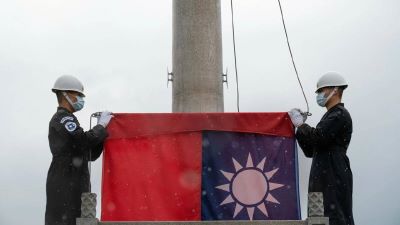
The Biden administration included Taiwan among the 110 invitees to its upcoming democracy summit, the State Department announced on Tuesday night, a move thats intended to show solidarity with a key regional partner but risks angering China.
Taiwan was invited to join nations, including the U.K. and Japan, at the Dec. 9-10 virtual summit, the State Department said on its website Tuesday. The online gathering is an event Joe Biden vowed to host while a candidate for president last year, with the goal of rallying like-minded countries around efforts to fight corruption and authoritarianism and advance human rights.
The final list leaves out several ostensible U.S. partners such as Turkey, a member of NATO, underscoring the challenge the administration faced in pinning down the invitees.
Including Taiwan may be the most controversial decision the administration has made about the summit, even though the island does have one of Asia’s more vibrant and free-wheeling democracies. That’s because only a handful of nations — the U.S. not among them — recognize it as sovereign.
China has assailed nations, companies and international organizations that treat the island as an independent entity. Most recently, Beijing downgraded ties with Lithuania’s government after Taiwan opened a diplomatic office in the Baltic nation.
“China firmly opposes the invitation by the U.S. to the Taiwan authorities to participate in the summit for democracy,” Chinese Foreign Ministry spokesman Zhao Lijian said Wednesday at a regular press briefing in Beijing.
“There is only one China in the world and the government of the PRC is the sole legal government representing the whole of China,” he said, referring to the People’s Republic of China, which is the formal the name of the mainland’s government.
Taiwan’s Ministry of Foreign Affairs said in a statement that Digital Minister Audrey Tang and representative to the U.S. Hsiao Bi-khim will represent Taipei at the summit.
Taiwan’s inclusion follows a series of steps the Biden administration has taken in recent weeks to demonstrate its support for a key ally even as it seeks to ratchet down tensions with Beijing, which claims the self-governing island as its own territory. China has increased military flights near Taiwan and some analysts have warned that President Xi Jinping may be preparing for an invasion in coming years.
Biden’s planning for the summit proved to be a challenge as the administration has grappled with questions over which other countries to invite and which to leave out. The final guest list reflects that challenge: Invitees included Brazil, the Philippines and Poland, all countries that have seen democratic backsliding.
In the end, some countries that were invited appeared to be on the list more as an inducement to institute more democratic principles rather than because they fit neatly into the category of “democracy.” Angola, Pakistan and Serbia also made the list.
Another sore spot was the Middle East, where the U.S. struggled to find any invitees aside from Israel. In the end, Iraq was also included.
Biden has frequently characterized democracies’ battle against autocracies as an essential geopolitical challenge of the 21st century. In a speech to Congress in April, he said the U.S. must push back against Xi and other leaders who seek to show that their system of government is better for their people.
“He’s deadly earnest about becoming the most significant, consequential nation in the world,” Biden said at the time, referring to Xi. “He and others — autocrats — think that democracy can’t compete in the 21st century with autocracies because it takes too long to get consensus.”
Yet after developments, including former President Donald Trump’s continuing refusal to accept his re-election defeat and the Jan. 6 attack on the Capitol by some of his supporters, critics have questioned the state of American democracy.
The Stockholm-based International Institute for Democracy and Electoral Assistance issued a report Monday that said the U.S. “fell victim to authoritarian tendencies itself, and was knocked down a significant number of steps on the democratic scale.”
Swedens first female prime minister, Magdalena Andersson, got the worst possible start to her tenure when she was forced to resign only hours after her historic appointment.
The resignation was triggered after a junior partner to Andersson’s Social Democrats left her government over the loss of next year’s budget vote. The 54-year-old former finance minister, who had to step down to get another go at securing the top seat, said she is still ready to lead a one-party cabinet and will now face a new vote.
The latest turbulence shows how the rise of the anti-immigrant Sweden Democrats has made it extremely difficult to form viable coalitions. Long seen as a two-horse race between a relatively unified center-right and a bloc of left-leaning parties led by the Social Democrats, the country’s political landscape has been upended by the nationalists, whose popularity is fed by worsening gun crime and tensions over immigration.
“I understand that this may look very messy, and what has happened is completely unique,” Andersson said as she announced her resignation less than 8 hours after being appointed. “Despite the fact that the parliamentary positions appear unchanged, the issue should be tried anew. I don’t want to lead a government whose legitimacy might be questioned.”
The government briefly collapsed once already this year because of opposition to a plan to ease rent controls on new apartments. Andersson’s predecessor Stefan Lofven quit in June before being reinstated, and then surprised by announcing a resignation in August. The former union leader, a figure that was able to cobble together impossible alliances, had banked on cooperating with the center-right to keep the Sweden Democrats out of power.
Now, with an election less than 10 months away, the rising political instability may help the nationalists finally get a shot at power. Still, current opinion polls indicate no clear winner.
While the junior partner, the Green Party, said it won’t be part of Andersson’s cabinet, it said it won’t block her appointment.
A center-right party that has previously supported the government refused to back Andersson’s budget in a parliamentary vote earlier on Wednesday, sealing the fate of the government’s bill in favor of a competing proposal by conservative parties.
The amendment means some of the government’s key reforms, such as an extra week off for families, are ditched in favor of more spending on the justice system and a gasoline tax cut.
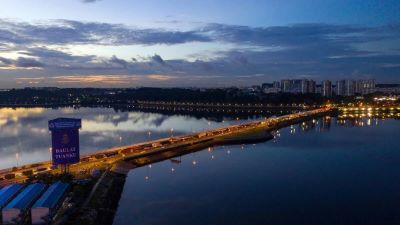
Singapore and Malaysia have agreed to reopen a causeway linking the two countries from Monday, allowing cross-border land travel for the first time since March last year.
Vaccinated passengers will be allowed on designated buses between Singapore and Johor Bahru, the southernmost city on the Malaysian Peninsula, the two governments said in statements Wednesday.
“The causeway was one of the busiest land borders in the world before the Covid-19 pandemic disrupted our cross-border activities,” Singapore Prime Minister Lee Hsien Loong said in the statement. The reopening is “a big step towards reconnecting our people and economies.”
Prior to Covid, some 300,000 people streamed across the land border each day. Malaysians would typically travel south for manual labor in factories or to work as gardeners and security guards, while Singaporeans flocked the other way for bargain shopping trips, cheap fuel and cultural tours.
As many as 2,880 people a day will be allowed to travel between the countries in the initial phase of the causeway reopening. The quota will be reviewed weekly and the countries are exploring train journeys as an additional option, the Straits Times reported, citing Gan Kim Yong, Singapore’s minister for trade and industry.
Initial priority will go to people who have been working in either country to visit their families, the Singapore government said. Travelers must be citizens, permanent residents or long-term pass holders of the nation they are entering. Eligibility will be expanded in time to include general travelers, depending on the Covid situation.
“Many workers from both Singapore and Malaysia have not been able to see their families for many months,” Gan said. “We seek the understanding of workers who may not be able to purchase a bus ticket to travel home immediately due to limited capacity.”
Both sides will work to restore travel on the Tuas Second Link, another land connection, Singapore said. The moves come as new Covid cases in Singapore decline to under 2,000 a day, while Malaysia is reporting 5,000 to 6,000.
The land links are key for the supply of goods. The Singapore government maintained the flow of essential products during the border shutdown via air and limited shipments over the causeways.
Singapore and Malaysia agreed earlier this month to open an air-travel lane between Changi Airport and Kuala Lumpur on Nov. 29 for vaccinated passengers. Singapore is allowing quarantine-free visits from almost two dozen countries and Malaysia is gradually following suit after placing strict limits on movement early in the pandemic.
Singapore was Malaysia’s biggest source of visitors in 2019 with some 10 million arrivals, according to the Ministry of Tourism, Arts and Culture Malaysia. That number fell to 1.5 million in 2020, primarily made up of visitors in the first couple of months of the year before lockdowns. Singaporean tourists also bring in the most money, spending about 20.5 billion ringgit ($4.9 billion) in 2019.
In addition to trips by workers to Singapore, about 1.2 million Malaysian tourists traveled there in 2019, a figure that dropped to 153,650 last year, according to the Singapore Tourism Board. Singapore-Kuala Lumpur was the world’s second-busiest international route in 2019, data from flight-tracking firm OAG show.
Bus operator Transtar Travel will operate 32 daily designated trips (16 trips from Malaysia to Singapore, and 16 trips from Singapore to Malaysia) between the Woodlands Temporary Bus Interchange in Singapore and Larkin Sentral Bus Terminal in Johor Bahru, according to Wednesday’s announcement.
Handal Indah will similarly operate 32 daily trips between Larkin Sentral Bus Terminal in Johor Bahru and Queen Street Terminal in Singapore. The maximum capacity for each designated bus will be 45 fully seated passengers per trip.
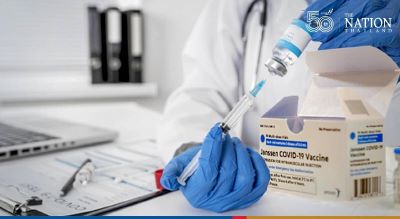
South Africa asked Johnson & Johnson and Pfizer to suspend delivery of Covid-19 vaccines as it now has enough stock, an illustration of how plunging demand is undermining the countrys rollout ahead of a potential fourth wave of infections.
Africa’s most developed economy has fully protected just 35% of adults, more than six months after doses were first made available to the public. About 120,000 people received shots on Tuesday, less than half the daily peak.
“We have over 16 million doses in country, or more than 150 days at present consumption,” Nicholas Crisp, deputy director-general of the Department of Health, said by text message Wednesday. “It makes no sense to stockpile and risk expiry when others are desperate for supplies.”
The move contrasts with the country’s position earlier in the year, when the government was heavily criticized for being slow to secure vaccines ahead of a devastating mid-year surge. It also comes as most of Africa remains chronically short of doses, partly because richer countries rushed to tie up vast quantities of stock.
“It is entirely owing to hesitancy,” Crisp said. “We have plenty vaccine and capacity but hesitancy is a challenge. Unfortunately it means that many unvaccinated people may have an unhappy festive season and will possibly result in hospitals being congested.”
South African President Cyril Ramaphosa has accused developed countries of hoarding shots, and been a lead figure in a campaign to force pharmaceutical companies to share vaccine recipes with poorer nations. Yet the government will not be redistributing excess doses around the continent, said Foster Mohale, a spokesman for the Department of Health.
“If other countries require vaccines they go directly to the manufacturer — they won’t come to us,” he said. “There is currently no discussion on donating or selling stock to elsewhere.”
The government originally had a target of inoculating about two-thirds of adults by year-end, but will fall a long way short. Ramaphosa has also said he envisaged 300,000 vaccines being consistently administered a day, another goal that hasn’t been met.
The number of weekly vaccinations fell to 609,180 in the week ended Nov. 21 from a peak of 1.09 million in the week ended Oct. 17, according to government data
It “would be wise” to use the excess shots as boosters, tweeted Shabir Madhi, Professor of Vaccinology at the University of Witwatersrand in Johannesburg. “Let those who willing to be vaccinated benefit.”
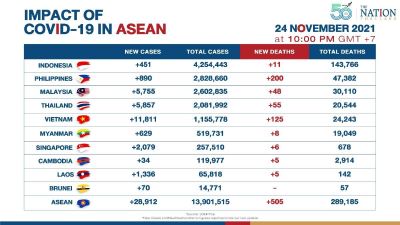
The number of Covid-19 cases crossed 13.9 million across Southeast Asia, with 28,912 new cases reported on Wednesday (November 24), higher than Tuesday’s tally at 27,254. New deaths are at 465, decreasing from Tuesday’s number of 505. Total Covid-19 deaths in Asean are now at 289,185.
Cambodia’s Prime Minister Hun Sen is set to open the 13th Asia-Europe Meeting (ASEM) on Thursday, with Cambodia hosting the biennial event. The two-day meeting will be held virtually this year under the theme ‘Strengthening Multilateralism for Shared Growth’. The plenary session will discuss ASEM’s role in the rehabilitation of global peace and stability, strengthening of trade agreements, and handling of Covid-19 outbreak.
Indonesia has administered at least one vaccine dose to half its population, reaching that benchmark after nearly a year of starting the program. Health Ministry reported that more than 135.4 million people have gotten at least one shot, while 90.2 million are fully vaccinated. The population stood at 270.2 million as of the 2020 national census.
The government plans to expand booster shots to all adults once more than half of Indonesians are fully vaccinated. About 1.2 million booster doses have been administered so far.
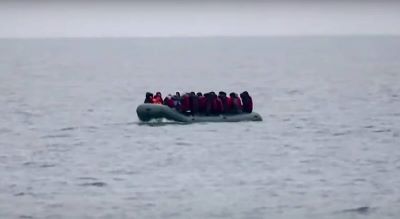
PARIS – At least 27 migrants died while trying to cross the English Channel from France to Britain on Wednesday, making it one of the deadliest incidents on a dangerous route.
French Interior Minister Gérald Darmanin said in a news conference that 31 bodies had been recovered, including five women and a small girl, while two people survived. But his ministry told French media outlets later that the number of dead had been revised to 27.
One person was thought to be unaccounted for when a search-and-rescue operation involving ships and helicopters was called off late Wednesday night.
“Today is a [day of] great national mourning for France, and for Europe, and humanity,” Darmanin said.
Both French and British officials focused the blame on human traffickers, though migrant crossings are also a point of contention in the post-Brexit tussle between Paris and London. Four suspects who might be connected to the incident had been apprehended, Darmanin said.
The Organization for Migration said Wednesday’s drowning amounted to the largest known loss of life in the Channel since the U.N.-affiliated group started recording data in 2014. At least 15 more people have died at other points in 2021, as attempts to cross have increased.
Wednesday’s incident occurred off the coast of Calais, France, in the Dover Strait, where the Channel narrows to 21 miles across. That’s one of the world’s busiest shipping lanes. It can also be dangerous for people in small flimsy boats when hammered by strong currents and high winds.
Wednesday’s weather forecast, though, was for fairly calm seas and light and variable winds. Local fishermen told Reuters that more migrants than usual had tried to set out, to take advantage of the conditions, though the water remained extremely cold.
Officials on Wednesday did not release any information about the nationality of those who drowned. Lille Prosecutor Carole Etienne told the Associated Press that officials were still working to identify the victims and that the investigation may involve multiple countries.
Aid workers say many of the people who try to make the journey are fleeing conflict – in Afghanistan, Iran, Syria, Iraq, Sudan, Eritrea, Yemen and elsewhere. Some want to get to Britain to reunite with family, or because they speak English and hope that will help them find work.
Since 1999, at least 300 people have died attempting to cross, according to the Institute of Race Relations, a British think tank.
French Prime Minister Jean Castex called Wednesday’s incident a “tragedy” and condemned human traffickers who “exploit the distress and misery” of migrants.
The regional prosecutor opened an investigation into aggravated manslaughter, organized illegal migration and other potential charges.
French President Emmanuel Macron said in a statement that “France will not let the Channel become a cemetery.” He called for more action at the European level, including an emergency meeting of European ministers and an “immediate reinforcement” of the European Border and Coast Guard Agency’s resources.
From Downing Street, British Prime Minister Boris Johnson called the drownings “appalling.”
“What this shows is that the gangs who are sending people to sea in these dangerous crafts will literally stop at nothing,” Johnson said.
He added that efforts to slow the human smuggling by France, with $70 million in new funding from Britain to help patrol the beaches, “haven’t been enough.”
“Our offer is to increase our support, but also to work together with our partners on the beaches concerned, on the launching grounds for these boats,” Johnson said.
“Because there is no doubt at all that the gangs concerned, unless they are shown that their business model won’t work, that they can’t simply get people over the Channel from France to the U.K., they will continue to deceive people, to put people’s lives at risk and, as I say, to get away with murder,” he continued.
France’s interior minister called the British government’s spending on stopping Channel smugglers “minimal.” He also recently complained the British government was using Franch as a “punchbag,” while failing to address its unregulated labor market.
Macron, in his statement on Wednesday, defended French efforts, saying that more than 1,500 traffickers had been caught in the region since the beginning of the year.
French police also regularly clear – in a way that draws complaints from migrants and human rights groups – the makeshift camps on the northern coast, where people gather before attempting to cross the Channel.
Still, nearly three times as many migrants have crossed by sea this year compared with last year. Earlier this month, 1,185 people ventured across in a new daily record that the British Home Office described as “unacceptable.”
Conservative Party lawmakers have urged the British government to “take back control” of the Channel. Critics have compared the scene to the U.S.-Mexico border, decrying what they see as a too-soft approach to illegal immigration.
In response, Home Secretary Priti Patel recently authorized tough new tactics to push boats back toward France. That policy, however, has not been implemented. Such aggressive moves could violate maritime law and endanger lives, if migrant vessels were unseaworthy and in distress.
Natalie Elphicke, a Conservative lawmaker for Dover, called Wednesday’s incident an “absolute tragedy” and said it highlighted why “saving lives at sea starts by stopping the boats entering the water in the first place.”
“As winter is approaching the seas will get rougher, the water colder, the risk of even more lives tragically being lost greater,” she said.
Pro-Brexit campaigner Nigel Farage, now a host on GB News, has warned that Johnson’s government is ignoring the crossings and opening England’s beaches to illegal immigration.
In a column in the Daily Telegraph on Monday, Farage warned, “the migrant crisis is out of control, and the Prime Minister doesn’t seem to care.”
As it turns out, Farage himself was out in a boat in the English Channel on Wednesday, filming migrant vessels and tweeting, as he prepared for an evening broadcast.
Responding to the increase in recent crossing attempts, a sporting goods company last week stopped selling kayaks in its shops in northern France.
But drowning at sea is not the only way that migrants have died trying to reach Britain. Others have been killed trying to board trucks, containers and trains, traveling either via ship or through the Channel Tunnel.
In 2019, 39 Vietnamese migrants were found dead in a shipping container, having suffocated on their journey by sea ferry and truck hauler, from Zeebrugge in Belgium to Purfleet in south east England. Two of the smugglers were convicted of manslaughter and sentenced to 20 and 27 years.
Pham Thi Tra My, 26, was among the victims. She sent a heartbreaking text message to her mother when she was in the container, en route to England. “Mom, I love you. I’m dying, I can’t breathe,” she wrote.
Albert Einstein typically threw out drafts of his paradigm-shifting work.
But thanks to the Nobel Prize-winning scientist’s friend and collaborator, a rare, working manuscript “almost miraculously” survived to the present – and it sold for a hammer price of nearly $11.5 million at an auction in Paris on Tuesday, to an anonymous private individual.
With fees, the total price adds up to more than $13 million, Sofia Hame, a spokeswoman for Christie’s, said. Christie’s held the sale for the Aguttes auction house.
The 54-page document, handwritten jointly by Einstein and Swiss engineer Michele Besso – his lifelong friend and only acknowledged collaborator – documents preparatory work for Einstein’s general theory of relativity, an idea that changed human understandings of the universe and has been described as the most beautiful theory in physics.
“As one of only two surviving manuscripts documenting the genesis of general relativity, it provides a remarkable insight into Einstein’s work and a fascinating glimpse into the mind of the greatest scientist of the 20th century,” Christie’s said on its website.
Valued at between $2.4 million and $3.5 million before the auction, it was the most valuable Einstein manuscript to be sold. Christie’s described it in a news release as “one of the most important scientific autographs ever to come to auction.”
Most of the document was composed in June 1913, when Einstein was living in Zurich. It consists of calculations etched largely in ink on yellowed leaves of foolscap and squared paper, with 26 pages in Einstein’s handwriting, 25 pages in Besso’s and three containing entries from both scientists.
The famous German scientist was working with Besso to test his theory of the relationship between gravitation and the space-time curvature by examining the anomaly of the planet Mercury’s orbit.
Replete with errors, crossed-out equations and corrected calculations, the pages slated for the auction block Tuesday showcase what Christie’s called a “crucial stage” in the relativity theory’s development.
The scientists’ calculations in the manuscript were incorrect, and Einstein and Besso paused their work in June 1913 when Besso had to return home to present-day Italy. Besso tried to continue on his own in early 1914 but ultimately gave up on the project.
Einstein later reworked the calculations and published the theory of general relativity under only his name in November 1915. The contribution upended understandings of gravity, space and time, opening up explorations of gravitational time dilation, light deflection and gravitational waves. It was one of the breakthroughs that helped make Einstein’s name synonymous with genius in popular culture.
Einstein was awarded the Nobel Prize in physics for 1921. He died in 1955 at age 76.
Diana Kormos Buchwald, a historian of science and director of the Einstein Papers Project, described the manuscript as a “foundational document” that sheds light on the painstaking – and collaborative – process that led to one of the field’s most significant discoveries.
“Doing the archaeology of what he knew and when he knew it has been very important for our understanding of the development of modern physics,” Kormos Buchwald said. “What this does for us is it removes to a certain extent a halo around a scholar in the attic having ‘Aha!’ moments and presents a much more realistic image of the hard working, calculating physicist… who ploughs many furrows before reaching the goal.”
It is thanks to Besso that the document survived, Christie’s said, because Einstein was known for discarding his working drafts. Besso held onto the pages throughout his life and passed them down to his son, Vero, who later gave them to Pierre Speziali, the editor of correspondence between Michele and Einstein. Speziali shared a photocopy with the Einstein Papers Project, which published it in a volume of Einstein’s collected papers.
The original was eventually sold at auction in 1996 before being acquired along with other Einstein papers in 2002 for roughly half a million dollars by French company Aristophil.
Aristophil sold shares in a large collection of rare manuscripts appraised at high prices – including the Einstein-Besso document – to some 18,000 people. In 2015, French authorities arrested Gérard Lhéritier, the company’s founder, accusing him of defrauding investors and essentially running a literary Ponzi scheme.
Tuesday’s sale was part of a series of judicial auctions to find new homes for Lhéritier’s collection.
Kormos Buchwald said Einstein was aware of the growing value of his papers during his lifetime and “would have liked a manuscript sale to go to a good cause.”
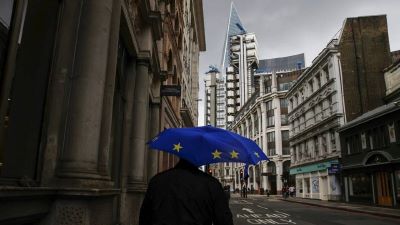
Tens of thousands of European Union citizens are still applying to remain in the U.K. months after the governments post-Brexit deadline, a sign that many businesses may be employing people without so-called settled status.
Last month alone, the British Home Office received almost 65,000 applications from EU citizens to stay in the country, according to Bloomberg calculations from official data. That brings the total received since the June 30 deadline to more than 236,000.
People are only discovering that they don’t have the right papers as they start traveling again or when they try to change jobs, according to immigration lawyers. The government so far appears to be taking a flexible approach to the late applications. Still, mixed messaging and a lack of clarity around how such workers may be dealt with in the future is creating uncertainty for industries like hospitality that rely on EU talent.
The current climate is “nerve-racking” for firms helping EU citizens who missed the deadline, said Kim Vowden, senior associate at Kingsley Napley LLP in London. “At the moment the Home Office is being flexible about people applying late, but they can change the policy whenever they like.”
EU nationals enjoyed the right to live and work in the country before Brexit took effect in January. Following Britain’s exit from the bloc, those already living in the U.K. had to apply to the EU Settlement Scheme to secure their residence rights. Those that don’t have that settled status now require a visa to work, live or study in Britain.
The confusion around settled status adds further complications to an already tight labor market across Britain’s supply chains. Over 200,000 EU citizens left the U.K. in 2020, driven away by Brexit and the worst recession in three centuries. Sectors like construction and retail have struggled to fill vacancies.
Vowden said a client of his firm who is awaiting approval of a late application was questioned by the Border Force while trying to board the Eurostar in Rotterdam in October. The person was handed a letter saying that they could return to the U.K., but should then avoid traveling again until receiving settled status.
Around 5.5 million EU nationals applied to continue living in the U.K. by June 30. The Home Office made a U-turn in August when it said it would support late submissions for those with “reasonable grounds” for missing the deadline. Those can range from medical conditions and mental health issues, to Covid-19 restrictions and a simple lack of knowledge of the process.
There is currently a backlog of almost 400,000 applications waiting to be processed, according to the Home Office website.
“We look for reasons to grant status rather than refuse and we encourage anyone eligible who is yet to apply to get in touch and join the millions who have already secured their rights,” a Home Office spokesperson said in an email.
The light-touch approach also applies to British employers. According to official guidance, businesses only have to check the right-to-work status for new hires, not for those who were already on their payroll as of July 1. If they happen to discover existing EU employees didn’t apply for settled status, they should advise them to submit an application within 28 days.
Lawyers expect that many firms will continue to be unaware that they have workers without settled status unless they carry out their own internal audits.
Meanwhile, the Home Office has said it will continue to accept late applications indefinitely. It is now also sending letters to EU nationals who haven’t applied yet urging them to do so in 28 days.

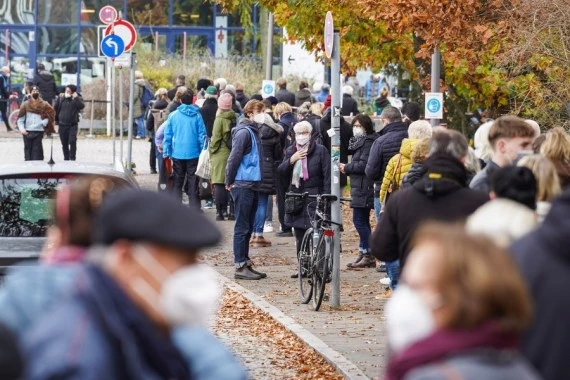 People queue to receive COVID-19 vaccines outside a vaccination center in Berlin, capital of Germany, Nov. 12, 2021. (Photo by Stefan Zeitz/Xinhua)
 People with face masks visit the Christmas Market in Frankfurt, Germany, Nov. 22, 2021. (Xinhua/Lu Yang)