India to halt some coal-fired plants to clean Delhis air #SootinClaimon.Com

#SootinClaimon.Com : ขอบคุณแหล่งข้อมูล : หนังสือพิมพ์ The Nation.

https://www.nationthailand.com/international/40008950


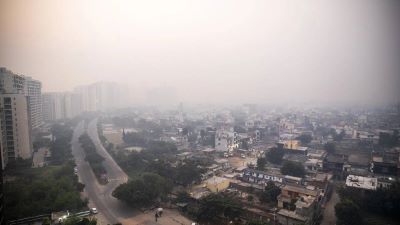
India has directed six coal-fired power plants located around Delhi to shut down until the end of this month as part of measures to clean some of the worlds dirtiest air, as a cloud of smog has enveloped the city and its suburbs for nearly two weeks.
The federal Environment Ministry late Tuesday also barred the entry of all trucks except those carrying essential items into the National Capital Region of Delhi and encouraged citizens to work from home to curb pollution. The decision came after officials from the Delhi government and the neighboring states of Uttar Pradesh, Punjab, Rajasthan and Haryana met to discuss ways to check the soaring pollution.

India’s Supreme Court on Monday called for urgent restrictions on vehicular movement and industrial activities in and around the capital. The city has ordered schools to only teach online until Nov. 20, halted construction activities and asked some government employees to work from home after the top court called the situation an “emergency” on Saturday.

About half the 13,210MW thermal power capacities in the capital region have been ordered shut to improve air quality. Thermal capacity of 6,300 MW capacity within a 300-kilometer (186 miles)-radius of Delhi that has been closed down includes two units of 2,400 MW in neighboring Haryana, two units of 2,180MW in Punjab and two of 2,320 MW in Uttar Pradesh.

India, which batted to prolong coal use at the COP26 in Glasgow last week, uses the dirtiest fossil fuel to fire almost 70% of its electricity needs.

The move is unlikely to have an impact on power supplies to the Indian capital and other states. Power companies are usually prepared for this annual exercise and tie up capacities in advance to deal with the situation. Any step that affects power supply would be counter-productive as it could lead to a jump in the use of diesel-fueled generators.

The Supreme Court Wednesday deferred its review of the new measures to Nov. 23 after the federal government’s top lawyer said the pollution levels are expected to drop because of the steps taken and due to favorable wind and weather conditions after Nov. 21.

During the hearing the court questioned the government on upgrading power plants and industries with non-polluting technologies. “Stricter regulations for thermal power plants are in place. The question is of implementation,” Solicitor General Tushar Mehta told the court. “There is a lack of exercise but not of will.”

The shutting down of power plants will help address emissions and cut pollution, said Jyoti Pande Lavakare, author of ‘Breathing Here is Injurious to Your Health’ and co-founder of civil society group Care for Air. But “We need a thought-through, ambitious plan, which is being led with leadership right from the top” to address the issue in the long term, she said.

A thick blanket of of toxic haze is an annual phenomenon in the northern city and its surroundings, especially as winter arrives and temperatures dip. Politicians and authorities have squabbled over a solution for years, with dialog picking up only when the pollution soars. However, as the pollution levels ebb the debate dies down and the issue has never caused any serious political fallout.

Speaking at the Bloomberg New Economy Forum in Singapore on Wednesday, Sunil Mittal, the billionaire chairman of Bharti Airtel Ltd. said he would fly back to Delhi later tonight, a city that is “covered in smog.”

“We can’t live like this,” Mittal said. “We talk about 5 million people dying of the pandemic; we don’t talk about how many people have been choked around the world.”

The air quality index, or AQI, for New Delhi was at 244 at 8:30 a.m. local time, according to website IQAir, which monitors air pollution around the world. Readings below 50 are considered safe, while anything above 300 is considered hazardous. PM2.5 concentration in the air was recorded 38.7 times above the WHO annual air quality guideline value, its said.

The toxic air quality across several Indian cities is driven by a combination of factors, including vehicular and factory emissions, road dust, construction activities and stubble burning by farmers.

Published : November 18, 2021

By : Bloomberg
Protesters disrupt the worlds largest coal port: This is us responding to the climate crisis #SootinClaimon.Com

#SootinClaimon.Com : ขอบคุณแหล่งข้อมูล : หนังสือพิมพ์ The Nation.

https://www.nationthailand.com/international/40008948


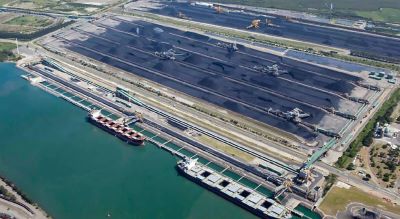
Two young women scaled a huge coal handling machine shortly before dawn on Wednesday, disrupting operations at the worlds largest coal port for several hours to protest what they say is Australias lack of action on climate change.

“My name is Hannah, and I am here abseiled off the world’s largest coal port,” 21-year-old Hannah Doole declared on a live-streamed video as she hovered high over massive piles of coal bound for export. “I’m here with my friend Zianna, and we’re stopping this coal terminal from loading all coal into ships and stopping all coal trains.”

Since officials met in Glasgow, Scotland, earlier this month to plot the planet’s path away from fossil fuels, Australia, the world’s second-biggest coal exporter, has showed little sign of changing course. Prime Minister Scott Morrison on Monday said the coal industry will be operating in the country for “decades to come.”

When he agreed last month to go carbon-neutral by 2050, the man who once brought a lump of coal into Parliament promised that his plan – which was short on details and long on speculative technology – would not crimp coal exports nor cost miners their jobs.

In the face of that apparent lack of urgency from government, protesters are increasingly taking matters into their own hands. A string of protests have disrupted the Port of Newcastle and surrounding railroads in the past two weeks, prompting police to establish a strike force to crack down on the high-profile stunts.

The protesters, from an activist group called Blockade Australia, plan to converge on Sydney, the commercial capital, in June next year, bringing the city to a halt.

“This is us responding to the climate crisis. This is humans trying to survive,” Doole said on Wednesday. “We are trying to induce the social tipping points, which will give us a chance at another generation,” she remarked on camera, pausing to laugh ironically, before adding: “What a wild thing to want.”

Despite the progress made at the COP26 climate summit, optimism about the agreement hangs on whether countries will actually deliver on the promises made in Glasgow. Coal production in China, the world’s largest consumer of coal, has surged to the highest levels in years as the country addresses power outages.

Matt Kean, the environment minister for New South Wales state, speaking on Sydney radio 2GB on Wednesday, said police need to “throw the book” at anti-coal activists, describing their dramatic stunts as “completely out of line.”

On Monday, another protester locked herself to a railway line leading to the port, preventing coal cars from entering. On Tuesday, two activists strapped themselves to another piece of coal-loading machinery. They hung in the air for several hours before being arrested.

Interfering with a railway or locomotive with the intention causing a derailment can result in prison sentences up to 14 years, police said, while other possible charges carry jail terms of up to 25 years. A local police minister described the protests as “nothing short of economic vandalism.” (A spokeswoman for the Port of Newcastle said other operations at the port were continuing, beyond the rail lines and coal-loading facilities.)

Doole and Zianna Faud, 28, were arrested and taken to a local police station about 9 a.m. local time. The live-streamed video showed authorities approaching on a metal gangway above the protesters, who were suspended on ropes below, with a police officer appearing to read them their rights.

According to a spokeswoman for the activist group, Faud appeared before Newcastle magistrates court on Wednesday, where she faced charges of hindering the working of mining equipment, which carries a maximum sentence of seven years imprisonment, and entering enclosed lands. She pleaded guilty and was given community service and a roughly $1,090 fine, and ordered not to associate with her co-accused, Doole, for two years.

Doole and three other activists were refused bail and will be seen by the court tomorrow.

“We are running rings around the police and the push back shows that direct action is effective,” Faud said in a statement following her release.

In the video, Doole said she considered the dangers before the protest – imagining herself running across piles of coal with police helicopters in pursuit. Then, she thought back to the time, a couple of summers ago, when thousands of Australians fled from their homes as wildfires raged and skies turned blood red. She and her family hunkered down in their property as towns around them burned.

“Getting chased by a police helicopter, that’s not fun. . . . But you know what scares me more?” she said. “I just think back to that New Year’s Eve, when I thought I was going to die in a fire, caused by climate change. And that’s the barest glimpse of what’s going to happen.”

Published : November 18, 2021

By : The Washington Post

U.S. and China to ease restrictions on journalists #SootinClaimon.Com

#SootinClaimon.Com : ขอบคุณแหล่งข้อมูล : หนังสือพิมพ์ The Nation.

https://www.nationthailand.com/international/40008947


China and the United States reached an agreement to loosen restrictions on journalists operating in each others countries, marking one of the first diplomatic breakthroughs between the Biden administration and Beijing as leaders from both countries met on Monday to keep tensions from spiraling into conflict.

Chinese Foreign Ministry spokesman Zhao Lijian said Wednesday that after several rounds of discussions, the two sides reached an agreement to lift visa limits on journalists, reversing policies that had severely curtailed travel and access for media professionals in both countries for more than a year.

Hours after President Biden and Chinese President Xi Jinping met in a virtual summit Monday, the official China Daily reported that the two governments had reached an agreement before the meeting. A spokesman for the U.S. Embassy in Beijing confirmed the report, adding that U.S. officials had been pressing for months on media access and visas for journalists working for U.S. media outlets in China.

In March 2020, Beijing expelled more than a dozen American journalists working for the Wall Street Journal, the New York Times and The Washington Post, a move China said was in retaliation for restrictions on Chinese nationals working for media outlets in the United States.

Since then, U.S. outlets operating in China have not been granted new visas for journalists. Their correspondents already based in the country were given short-term visas and were unable to leave the country without the risk of losing their accreditation.

Under the new agreement, U.S. journalists in China and Chinese journalists in the United States will be able to travel in and out of their country of assignment. According to the embassy spokesman, China committed to issuing visas for “a group of U.S. reporters,” provided they are eligible under Chinese law and regulations. The spokesman declined to say whether expelled journalists would be able to return but said the affected outlets would be granted new visas.

According to the agreement, the United States will begin issuing multiple-entry one-year visas to Chinese media professionals, up from 90-day visas that were given as part of tit-for-tat measures imposed by the Trump administration in an effort to pressure Beijing and Chinese state media operating in the United States. Zhao said China would give multiple-entry one-year visas to American journalists once the U.S. measures for Chinese journalists are in place.

“This hard-won achievement is in the interests of the media on both sides and is worth cherishing,” Zhao said.

“We welcome this progress but see it simply as initial steps,” the U.S. Embassy spokesman said, speaking on the condition of anonymity according to official policy. “We will continue to work toward expanding access and improving conditions for U.S. and other foreign media, and we will continue to advocate for media freedom as a reflection of our democratic values.”

Chinese authorities have for years sought to restrict the work of foreign media outlets operating in the country, from surveilling and detaining reporters to withholding visas as a way to punish those whose work was seen as too critical of the government.

The Trump administration, in an effort to push back, slashed the number of visas given to Chinese nationals working for Chinese state media in the United States. In response to the expulsion of American journalists in March last year, those visas were limited to 90 days.

Under Biden – who on Monday told Xi that “guardrails” are needed to ensure competition between the two countries does not turn into conflict – U.S. diplomats have begun to walk back some of those policies, engaging with China on trade and climate change. Reaching an agreement on journalist visas was seen as an easier task that could improve chances for other breakthroughs.

The State Department declined to say how many visas would be granted to U.S. journalists. Reporters in China said they continue to face restrictions on their work. Last year, Chinese authorities detained Australian citizen Cheng Lei, who worked for Chinese state media, and later detained Chinese national Haze Fan, working for Bloomberg News.

Last week, the family of Chinese citizen journalist Zhang Zhan – detained after filming the struggles of residents under lockdown in Wuhan at the beginning of the pandemic – said she would likely die soon as a result of a sustained hunger strike.

The agreement to allow more U.S. journalists into China comes two months before Beijing hosts the 2022 Winter Olympics. Earlier this month, the Foreign Correspondents Club of China said in a statement based on accounts from media outlets that reporters were being denied access to Olympic events, blocked from venues and berated for coverage that mentioned calls for boycotting the Games over China’s human rights record.

In response, Chinese Foreign Ministry spokesman Wang Wenbin described the statement as “not based on facts,” adding that China’s preparation for the Winter Olympics “follows the principle of openness.”

“We have always welcomed media outlets from across the world for reporting and coverage,” he said.

Published : November 18, 2021

By : The Washington Post

Uncle Sams story cycle — changing narrative of Indonesias wildlife efforts #SootinClaimon.Com

#SootinClaimon.Com : ขอบคุณแหล่งข้อมูล : หนังสือพิมพ์ The Nation.

https://www.nationthailand.com/international/40008930


Using shadow puppets made of cardboard waste, Uncle Sam tells the story of the many threats to Indonesias natural heritage, in particular the animals which may disappear forever without urgent help.

Samsudin, or “Uncle Sam”, is a man with a mission. Seven years ago, Sam left his job as a teacher to take to the road and become a full-time storyteller.

Since then, he has travelled all over Indonesia, encouraging children to be more aware of the world around them and to do what they can to protect the nation’s rich biodiversity.

Using shadow puppets made of cardboard waste, Uncle Sam tells the story of the many threats to Indonesia’s natural heritage, in particular the animals which may disappear forever without urgent help.

“The habitat for wild animals in Indonesia is threatened. Children need to know about it,” Samsudin told Xinhua on Monday.

Two Sumatran tiger cubs, born on Dec. 12, 2019, are seen in the cage at Kinantan Wildlife Cultural Park in Bukittinggi district, West Sumatra, Indonesia, Jan. 30, 2020. (Photo by Andri Mardiansyah/Xinhua)Two Sumatran tiger cubs, born on Dec. 12, 2019, are seen in the cage at Kinantan Wildlife Cultural Park in Bukittinggi district, West Sumatra, Indonesia, Jan. 30, 2020. (Photo by Andri Mardiansyah/Xinhua)
To the children, the stories are funny, or wise, but the real lives of the animal protagonists are in real danger, as human activity drives them from their homes. His main character is a rhinoceros, critically endangered on the islands of Java and Sumatra. Sometimes he takes to the stage in a rhino costume. He also uses other animal characters such as Sumatran tigers, elephants, and orangutans to do the story-telling.

Uncle Sam is unique among storytellers in Indonesia, said Efi Fatary, who regularly invites him to visit a large housing estate in South Jakarta. “He uses simple words that children easily understand,” she said.

In 2016, Sam rode a bicycle from Java to Banda Aceh. His five-month odyssey left him in no doubt about the urgency of the situation. The archipelagic country has lost 300,000 square km of tree cover over the last 20 years, an area bigger than the U.S. state of Texas.

When an earthquake struck Lombok in West Nusa Tenggara province in 2018, Sam came to tell stories to children at evacuation camps. In the midst of the COVID-19 pandemic, he continued to tell stories via social media. Now Sam wants to share his message with the world.

“Children’s voices must be heard in global efforts to save forests and other habitats,” Uncle Sam said. 

Published : November 17, 2021

By : Xinhua

Experts say Xi-Biden virtual meeting sends positive signal on China-U.S. ties #SootinClaimon.Com

#SootinClaimon.Com : ขอบคุณแหล่งข้อมูล : หนังสือพิมพ์ The Nation.

https://www.nationthailand.com/international/40008928


Political experts and scholars around the world view the virtual meeting between Chinese President Xi Jinping and his U.S. counterpart, Joe Biden, as a strong signal that would enhance positive expectations of the international community on bilateral ties.

The two heads of state had a virtual meeting on Tuesday. The two sides had thorough and in-depth communication and exchanges on issues of strategic, overarching and fundamental importance shaping the development of China-U.S. relations and on important issues of mutual interest.

Robert Lawrence Kuhn, chairman of the Kuhn Foundation, told Xinhua that the virtual meeting is an applauding step in navigating the bilateral relationship to the right direction.

Noting that the meeting was “exceedingly important” and “a small uptick in the right direction, he said the importance of the online meeting has been “significantly elevated” as the world is facing serious challenges that could hardly be tackled without the U.S.-China cooperation.

Kenneth Quinn, president emeritus of the World Food Prize Foundation and former U.S. ambassador to Cambodia, told Xinhua that close collaboration between the two sides is “absolutely essential” to enable humankind to meet the great challenges in the future, including food shortage, the negative impact from climate change, and public health risks.

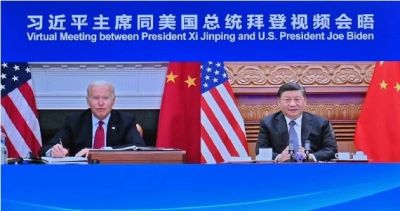
Chinese President Xi Jinping meets with U.S. President Joe Biden via video link, in Beijing, capital of China, Nov. 16, 2021. (Xinhua/Ding Lin)Chinese President Xi Jinping meets with U.S. President Joe Biden via video link, in Beijing, capital of China, Nov. 16, 2021. (Xinhua/Ding Lin)

Related Stories

Calling the meeting “very encouraging,” Lyazid Benhami, vice-president of the Paris Association of French-Chinese Friendship, said that the two countries have obligation not only to their peoples but also to the rest of the world.

Cavince Adhere, an international relations scholar in Kenya, said that the world expects to see more stable and sustainable relations between the two countries. This raises prospects for a more stable international system which can facilitate global cooperation for the benefit of mankind.

“The rest of the world can make little progress in addressing the international challenges without full participation and cooperation of China and the United States,” he said, referring to such issues as the COVID-19 pandemic, and climate crisis.

Herman Tiu Laurel, founder of Philippine-BRICS Strategic Studies, said that China and the United States, two major powers on earth, shoulder the hope of the entire world for a safe, secure and healthy place attaining prosperity for all, which can only be achieved by the partnership of the two.

Faced with common challenges, the commitment and efforts towards durable and permanent peace, as well as stable international political and diplomatic environment is paramount for the major powers to promise and pursue, Laurel added.

Published : November 17, 2021

By : Xinhua

WHO chief says COVID-19 vaccine disparity must stop: VOA #SootinClaimon.Com

#SootinClaimon.Com : ขอบคุณแหล่งข้อมูล : หนังสือพิมพ์ The Nation.

https://www.nationthailand.com/international/40008927


World Health Organization (WHO) Director-General Tedros Adhanom Ghebreyesus has said that the “scandal” of global COVID-19 vaccine disparity must stop, according to a recent report by Voice of America (VOA).

The WHO chief noted in a press briefing on Friday that six times more COVID-19 boosters are administered a day than primary doses in low-income countries, VOA said in the report.

Tedros also said that countries with the highest vaccine coverage “continue to stockpile more vaccines,” while “low-income countries continue to wait” for the shots, according to the U.S. international broadcaster.

“This is a scandal that must stop now,” Tedros said.

Related Stories

COVAX, the vaccine-sharing scheme, could help alleviate the vaccine disparity, but it needs at least 550 million shots to achieve its goal of vaccinating 40 percent of every country’s population by the end of the year, Tedros said. 

Published : November 17, 2021

By : Xinhua

Pfizer seeks emergency authorization for its coronavirus-fighting pill regimen #SootinClaimon.Com

#SootinClaimon.Com : ขอบคุณแหล่งข้อมูล : หนังสือพิมพ์ The Nation.


Pharmaceutical giant Pfizer requested emergency authorization Tuesday for its five-day antiviral pill regimen, Paxlovid, making it the second easy-to-take treatment aimed at keeping newly infected people out of the hospital to go before the Food and Drug Administration.

Pfizer’s submission came shortly after the company announced that the clinical trial testing the drug regimen had been halted early due to overwhelming evidence that it worked. When Paxlovid was given to people at high risk of severe illness within three days of symptom onset, it reduced the rate of death and hospitalization by 89% compared with people given a placebo.

Pfizer is requesting authorization for people who are at increased risk of hospitalization due to age or underlying medical conditions, and the submission will add to a busy holiday season for regulators. The clinical trial did not include people who fell sick after being vaccinated, but the FDA will decide on the final eligible population and usage of the drug.

Scientists at the Food and Drug Administration are already poring over the data on molnupiravir, an antiviral pill developed by Merck and its partner Ridgeback Biotherapeutics that cut risk of hospitalization and death in half in a clinical trial that was also stopped early because the drug was clearly effective. An external advisory committee to the agency is scheduled to meet Nov. 30 to discuss the safety and effectiveness of molnupiravir.

An agency spokeswoman did not immediately respond to questions about the possible timing of an advisory committee meeting focused on the Pfizer drug.

Pfizer is also testing its medicine in people who are at low risk of severe outcomes and in people who have been exposed to the virus, which could eventually lead to broader use.

Pfizer’s Paxlovid is a combination of a new molecule developed specifically to disable SARS-CoV-2 and ritonavir, an HIV medication that helps slow the breakdown of the coronavirus-specific drug. The company has begun manufacturing and packaging the drug in factories in Ireland, Germany and Italy and has projected having 180,000 pill packs available by the end of the year and 50 million in 2022.

The Washington Post reported that the Biden administration is set to announce this week that it has procured 10 million courses of treatment.

Pfizer has also licensed its drug to the United Nations-backed Medicines Patent Pool, which could increase access in poorer countries where half the world’s population lives. Lower-income countries would pay a not-for-profit price, according to Pfizer and the Medicines Patent Pool.

The Biden administration has also pre-purchased 3.1 million treatment courses of molnupiravir at a cost of $2.2 billion. Merck has forecast having 10 million treatment courses available by the end of the year and has also licensed its drug to the Medicines Patent Pool.

Published : November 17, 2021

By : The Washington Post

Asean reported over 27,000 new Covid-19 cases on Tuesday #SootinClaimon.Com

#SootinClaimon.Com : ขอบคุณแหล่งข้อมูล : หนังสือพิมพ์ The Nation.

https://www.nationthailand.com/international/40008907


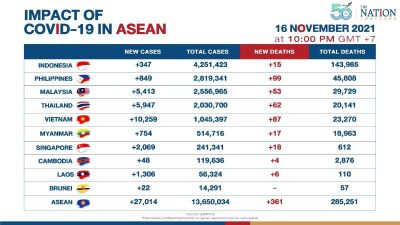
The number of Covid-19 cases crossed 13.65 million across Southeast Asia, with 27,014 new cases reported on Tuesday (November 16), higher than Monday’s tally at 25,571. New deaths are at 361, decreasing from Monday’s number of 365. Total Covid-19 deaths in Asean are now at 285,251.

Singapore set to expand the Vaccinated Travel Lane (VTL) programme to five more countries in the following weeks. From November 29, India and Indonesia will join the programme, while Qatar, Saudi Arabia and United Arab Emirates will join the programme from December 6 onward. Singapore reported 2,069 new patients and 18 deaths on Tuesday, bringing cumulative cases in the country to 241,341 patients and total 612 deaths.

Vietnam’s Hanoi Department of Health has agreed to reduce the waiting time between two AstraZeneca Covid-19 vaccine shots to four weeks from eight. The latest move aims to speed up the vaccination process in a safe and effective way, creating herd immunity as soon as possible, according to the Hanoi Center for Disease Control that proposed the shortening.

AstraZeneca is the first Covid-19 vaccine licensed and used in Vietnam. Currently, it is the main vaccine used for the Covid-19 vaccination campaign in Vietnam.
 

Published : November 17, 2021

By : THE NATION

Coordinated suicide attacks in Ugandan capital kill at least 3 and injure dozens #SootinClaimon.Com

#SootinClaimon.Com : ขอบคุณแหล่งข้อมูล : หนังสือพิมพ์ The Nation.

https://www.nationthailand.com/international/40008904


NAIROBI, Kenya – Twin blasts in the busy heart of the Ugandan capital, Kampala, on Tuesday killed at least three people and wounded another two dozen, a Health Ministry spokesman said.

The Islamic State claimed responsibility for the blasts and said that three of its operatives died in the attack.

Police spokesman Fred Enanga also said that the bombings were “suicide attacks” carried out by three assailants. One blast took place outside Kampala’s Central Police Station and the other near the parliamentary building.

Scenes broadcast on local news channels showed bloodied office workers fleeing from the sites of the explosions, which took place just after 10 a.m. Tuesday. Hours later, downtown Kampala’s streets were nearly emptied.

The apparent attacks were the latest in a string of bombings in Uganda attributed to regional terrorist groups. On Oct. 23, an explosion at a restaurant in a Kampala suburb killed one person and injured seven. Two days later, a suicide bomber detonated his explosives on a bus, killing only himself.

The Allied Democratic Forces, or ADF, an Islamist group that originated in Uganda but now mostly operates in remote areas of the neighboring Democratic Republic of Congo, claimed the restaurant attack. A concerted crackdown by Ugandan forces had suppressed ADF activity in the country in recent years.

The U.S. State Department considers the ADF to be a wing of the Islamic State, but details on coordination between the two groups remain murky.

The worst attack in recent memory in Uganda was a 2010 bombing of multiple bars by the Somali Islamist group al-Shabab. Revelers were watching the World Cup in the bars, and 74 people were killed. Uganda is a major supplier of troops to the African Union-sponsored military deployment in Somalia, which seeks to degrade al-Shabab.

Published : November 17, 2021

By : The Washington Post

Secretive Chinese committee draws up list to replace U.S. tech #SootinClaimon.Com

#SootinClaimon.Com : ขอบคุณแหล่งข้อมูล : หนังสือพิมพ์ The Nation.

https://www.nationthailand.com/international/40008903


China is accelerating plans to replace American and foreign technology, quietly empowering a secretive government-backed organization to vet and approve local suppliers in sensitive areas from cloud to semiconductors, people familiar with the matter said.

Formed in 2016 to advise the government, the Information Technology Application Innovation Working Committee has now been entrusted by Beijing to help set industry standards and train personnel to operate trusted software. The quasi-government body will devise and execute the “IT Application Innovation” plan, better known as Xinchuang in Chinese. It will choose from a basket of suppliers vetted under the plan to provide technology for sensitive sectors, from banking to data centers storing government data, a market that could be worth $125 billion by 2025.

So far, 1,800 Chinese suppliers of PCs, chips, networking and software have been invited to join the committee, the people said, asking not to be identified discussing private information. The organization has so far certified hundreds of local companies this year as committee members, the fastest pace in years, one of the people said.

The existence of the Xinchuang white-list, whose members and overarching goals haven’t been previously reported, is likely to inflame tensions just as Presidents Joe Biden and Xi Jinping wrapped up their first face-to-face virtual summit. It gives Beijing more leverage to replace foreign tech firms in sensitive sectors and quickens a push to help local champions achieve tech self-sufficiency and overcome sanctions first imposed by the Trump administration in fields like networking and chips.

“China is trying to develop homegrown technologies,” said Dan Wang, technology analyst at Gavekal Dragonomics. “This effort is more serious now that many more domestic firms now share that political goal, since no one can be sure that U.S. technologies can avoid U.S. export controls.”

The push to replace foreign suppliers is part of a broader effort by Beijing to exert control over its sprawling technology industry, including over data security. Already, the government has forced overseas cloud providers such as Amazon Web Services and Microsoft to set up joint ventures to operate on the mainland. Apple has also yielded its user data storage business to a government-backed operator in Guizhou. The grip is set to tighten, as the tech industry ministry gains more oversight of industrial and telecom data and proposes new rules that will require crucial data to be stored inside the country.

While few details have been revealed about the Xinchuang committee or its members, any companies that are more than 25% foreign-owned will be excluded from the panel, shutting out overseas suppliers including Intel Corp. and Microsoft. Chinese tech start-ups that are primarily funded by foreign investment will also face a higher bar, though Alibaba Group Holding and Tencent Holdings, the country’s two largest providers of cloud services, have managed to circumvent those rules by applying for membership through locally incorporated subsidiaries, the people said.

“U.S. choke-hold policies, exemplified by the Entity List, were the direct catalyst that pushed China to build the Xinchuang sector,” Shanghai-based research firm iResearch said in a report in July. “The blacklisting underlined the urgency for China to invest more in technology innovation and have the key technologies made in China.”

The Ministry of Industry and Information Technology and the China Electronics Standardization Association, which oversees the committee, didn’t respond to requests for comment. Alibaba representatives didn’t immediately respond to a written request seeking comment. A Tencent spokesperson declined to comment.

The committee had 1,160 members in July 2020, according to Netis, a cloud company that claimed it passed a complex review process. Other prominent companies include Beijing-based CPU maker Loongson, server maker Inspur and operating systems developer Standard Software. Westone, an information security company that could be tasked by Beijing with taking over Didi Global’s data management, is also a member.

Membership on the panel could give local suppliers a key advantage in having their technology approved under the Xinchuang plan, thus unlocking a billion-dollar market. Xinchuang-related business generated 162 billion yuan ($25 billion) in sales last year and is on track to reach nearly 800 billion yuan by 2025, according to a report co-authored by the China Software Industry Association.

“In every sector of the Xinchuang industry, there’s a significant imbalance between supply and demand,” it said. “Suppliers need to press the gas pedal to the floor in order to meet the demand.”

In September, the Xinhua-backed Economic Information Daily newspaper listed 40 top performers of the Xinchuang project, which included Huawei Technologies, Alibaba’s cloud unit and network security company Qi An Xin Technology Group. In an April list of 70 model cases in the Xinchuang industry, the Ministry of Industry and Information Technology praised Alibaba’s “100% self-developed” cloud platform for “providing a safe, trustworthy digital infrastructure for all levels of governments.”

Communist Party entities, the government and military will be the first to adopt Xinchuang products, followed by financial and state-owned companies, according to iResearch.

“Xinchuang can’t be built in one day, it’s a long-term strategy that helps China grow its own IT technologies,” the report said.

Published : November 17, 2021