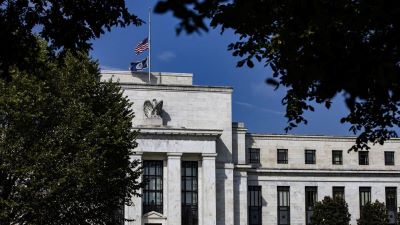
The Stock Exchange of Thailand (SET) Index rose by 0.88 points or 0.05 per cent to 1,623.36 on Wednesday morning, witnessing a high of 1,629.83 and a low of 1,622.51 in opening trade.
Krungsri Securities expected the day’s index would rise to between 1,630 and 1,635 points on rising oil and coal prices in response to China’s power crisis.
It added that the index also gained positive sentiment from hopes over the country reopening after domestic Covid-19 cases continued to decline, plus ongoing development of Molnupiravir anti-coronavirus pill.
ADVERTISEMENT
However, the index would be under pressure in the short term due to uncertainty over the US Federal Reserve signalling it would taper its quantitative easing and raise the interest rate sooner than expected,” Krungsri Securities said.
It also recommended buying of the following companies’ shares as an investment strategy:
▪︎ PTT, PTTEP, TOP, PTTGC, SPRC and IVL, which benefit from rising oil price.
▪︎ Banpu and Lanna, which benefit from rising coal price.
▪︎ AOT, KBank, SCB, CPN, CRC, HMPro, AAV, BA, MINT, Amata, WHA and Major, which benefit from the country reopening.
The SET Index closed at 1,624.24 on Tuesday, up 9.76 points or 0.60 per cent. Transactions totalled 88.96 billion baht with an index high of 1,626.44 and a low of 1,611.42.
The baht opened at 33.83 to the US dollar on Wednesday, weakening from Tuesday’s closing rate of 33.76.
The Thai currency is likely to move between 33.75 and 33.90 during the day, Krungthai Bank market strategist Poon Panichpibool predicted.
Poon said that the baht might weaken further while the dollar strengthens if the results of US economic data especially the ADP National Employment Report turn out than expected. The market speculated that the nonfarm payroll employment report on Friday will also be better than expected.
ADVERTISEMENT
The baht is also supported by the gold price increasing which causes investors to sell.
However, the baht will not strengthen clearly soon in the short term.
Poon added that the baht might test the key resistance level of 34.00 to the dollar until the market is ready to take more risks and invest in Thai assets.
UNICEF and Department of Mental Health caution on World Mental Health Day
BANGKOK October 8, 2021 – Marking the World Mental Health Day on 10 October, UNICEF and Department of Mental Health (DMH) expressed concerns over the continued negative impact of COVID-19 on children and young people’s mental health in Thailand as significant numbers of adolescents face stress, anxiety and depression.
A recent mental health assessment among adolescents in Thailand found that 28 per cent of adolescents experience high levels of stress, while 32 per cent are at risk of depression and 22 per cent are at risk of committing suicide, according to DMH’s Mental Health Check-in, an online mental health evaluation platform which collected data from 183,974 adolescents during the 18-month of COVID-19 pandemic from 1 January 2020 – 30 September 2021.
In a separate UNICEF-led survey last year, 7 in 10 children and young people reported poorer mental health due to the impact of COVID-19 on their lives. Most of them were concerned about family household incomes, their studies, and future education and employment.
“Increasing numbers of children and adolescents in Thailand and around the world are facing mental health conditions and disorders, and we believe this is just the tip of the iceberg,” said Kyungsun Kim, UNICEF Representative for Thailand. “Although the impact of poor mental health among children and young people is significant with the potential to result in lifelong consequences, mental health remains largely neglected and under-estimated, often times even hidden due to the stigma and shame surrounding the issue. This is something all of us must address, to destigmatize mental health conditions, encourage conversation around it, and make services and support easily available for those who need it.”
Earlier this week, UNICEF released a global flagship report The State of the World’s Children 2021; On My Mind: promoting, protecting and caring for children’s mental health which points out that at least 1 in 7 children around the world has been directly affected by lockdowns, while more than 1.6 billion children have suffered some loss of education. The report also warns that children and young people could suffer from the impact of COVID-19 on their mental health and well-being for many years to come.
ADVERTISEMENT
Even before the pandemic, children and young people have carried the burden of mental health conditions without significant investment in addressing them, the report added. According to the latest available estimates, more than 1 in 7 adolescents aged 10–19 is estimated to live with a diagnosed mental disorder globally. Almost 46,000 adolescents die from suicide each year, among the top five causes of death for their age group.
In Thailand, suicide is the leading cause of death among adolescents. In 2019, about 800 adolescents and young people aged 10-29 years old committed suicide, according to DMH. The 2019 data from the DMH’s Child and Adolescent Mental Health Rajanagarindra Institute (CAMRI) also shows that more than 10,000 children aged 10-19 called to seek mental health support via Hotline 1323, with top three issues reported during the calls being related to stress and anxiety, romantic relationship, and depression.
COVID-19 pandemic continues to drive poor mental health among children and young people
Dr. Amporn Benjapolpitak, Director-General of DMH, said the pandemic has significantly affected children, young people and parents. For children who are not adjusting to the new learning environment, their education and development may be affected in the long run. Many parents are not able to balance work and taking care of their children. COVID-19 restrictions, including physical distancing and fewer outdoor activities, have not only affected family bonds but also caused stress among children. Many have become less sociable and more addicted to devices. This also leads to more incidences of family conflicts and domestic violence, resulting in mental health challenges or even suicide. DMH is working with related agencies and UNICEF to monitor children and young people’s mental health more closely.
A lack of knowledge and awareness on mental health, associated stigma and a lack of mental health resources and funding are preventing too many children and adolescents from experiencing positive mental health or accessing the support and services they need. According to CAMRI, Thailand has only 200 psychiatrists specialized on children and adolescent mental health for 15 million adolescent population.
UNICEF and DMH are working with partners to promote access to quality and timely mental health support and services for children and young people. The partnership also aims to break the silence surrounding mental health conditions through encouraging dialogue, addressing stigma, and promoting better understanding of mental health among children and adolescents, parents and society as a whole.
In 2020, UNICEF, DMH and JOOX Thailand implemented The Sound of Happiness campaign to encourage children and adolescents to speak up about their mental health and well-being and seek support. Through podcasts and songs, the campaign aimed at addressing negative perceptions around mental health and encouraging young people to talk about mental health challenges with their friends and family or someone they trust.
“UNICEF is committed to working with DMH, the education authorities, and other partners to ensure that children are growing and learning in a safe, loving and protective environment that supports their mental well-being. We want to make sure that children and adolescents can always access friendly, timely and quality professional mental health services whenever they need them.” Kim added.
Lack of connectivity in Ban Mai Samakki Village became unbearable with COVID-19. Then dtac stepped in.
The Ban Mai Samakki community was established in 2003 in Thailand’s Northern province of Lampang. But until September 2021, it had neither landline nor cell phone coverage. As COVID-19 accelerated digital transformation in Thailand, the community’s lack of connectivity turned into a full-blown crisis. With schools closed, children walked two kilometers every day to catch the nearest mobile signal and connect with their teachers online. The threat of being unable to make an emergency call without making a 40-min hike also became increasingly risky in the midst of a pandemic.
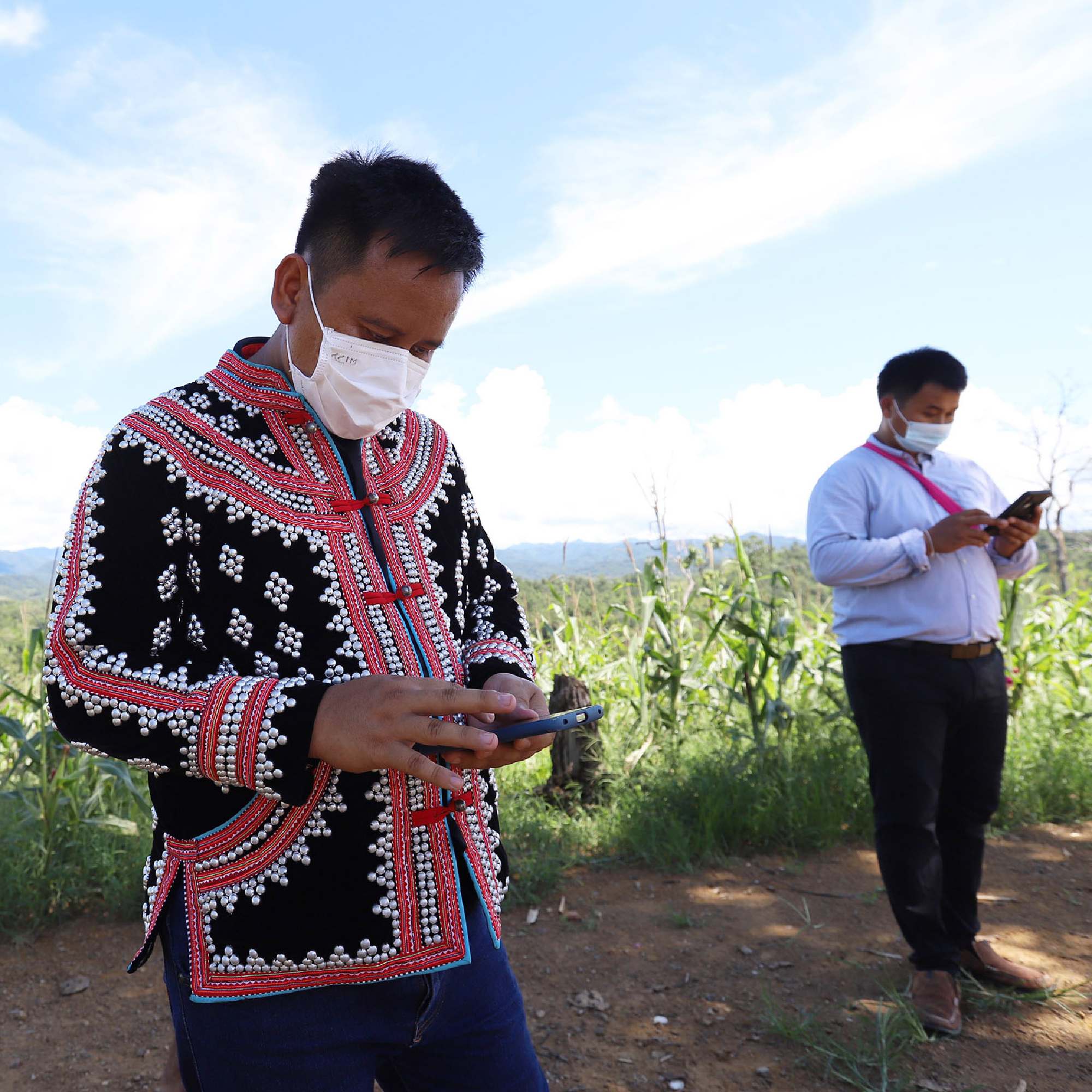
Supud Rala, is the village headman of Ban Mai Samakki, a community of 495 persons, most of them maize farmers. “We sell our crops while raising chicken and pigs for our own consumption. Women also make additional income from handcrafted bags, scarves, and skirts. All our water comes from the river, wells and rainwater. We didn’t even have electricity until 2016,” he said.
Communication is a key issue in this community, rendering it virtually cut off from the outside world. The closest mobile phone signal can be found on a ridge about 2 km from the village, via a forest that can only be crossed by foot.
DTAC breaks isolation of village in Lampang
Mr. Supud said, “One of the worst things that hit the community was in September 2016 when someone in our community needed to make a mobile phone call up in the forest. Unfortunately, he was bitten by mosquitoes that brought dengue fever and which spread throughout the community infecting young and old. The whole community hospitalized for a week. That’s the price we paid for that one phone call.”
Another epidemic, COVID-19, has since prompted lockdowns in many regions of Thailand and resulted in children studying online.
“Every day, our students would walk up to the ridge to find a mobile signal to be able to learn online during the lockdown. The kids from grade 3 and up are physically able to do that, but not the smaller children. And it doesn’t just affect children. We can hardly keep up with the news and often miss out on government assistance.”
ADVERTISEMENT
For example, signing up for the government’s 50-50 co-payment scheme requires sending an SMS to request a one-time password (OTP). These schemes are often fully subscribed in a matter of hours.
DTAC breaks isolation of village in Lampang
When dtac’s rollout teams became aware of the village’s plight, they expedited the deployment of high-speed internet for the community using 700 MHz and 2100 MHz networks within two weeks.
Sharad Mehrotra, CEO of Total Access Communication PLC or dtac, said, “We’re very proud to be the first operator to connect Ban Mai Samakki to voice and data services. We believe that the children will hugely benefit from learning online while the adults will benefit from more economic opportunities. They also gain the ability to contact emergency services instantly. Access to the internet unlocks the community’s potential and opens it up to the world with digital inclusion.”
Mr. Supud said, “This is what we villagers have been waiting for since we founded this community 18 years ago. We can finally regain opportunities that were lost. We can connect to the outside world and to our grown-up children who have left the village. We can now use the internet to make transactions and no longer have to see schoolchildren risking their safety to find phone coverage for online learning. This change transforms our quality of life.”
dtac’s network expansion is focused on digital inclusion by delivering high-speed internet for the many.
B.Grimm aims to develop new business ventures with digital innovation such as IoT in correspondence with the growing needs in the market. After this project, B.Grimm and AltoTech further have a collaborative project to develop AI and IoT solutions focusing on energy optimization and strategically expand across industries.
B.Grimm, in close collaboration with AltoTech, an AI-based energy management platform provider, won The Best Performance ARI Tech Startup Award at the National Innovation Agency’s Deep Tech Incubation Program@EEC.
Since March 2021, B.Grimm joined the “NIA Deep Tech Incubation Program@EEC”, a joint collaboration project between the National Innovation Agency (NIA) and leading organizations as part of the company’s strategy in seeking a partnership with an ARI-tech (AI, robotics, and immersive IoT) startup to help us solve complex business challenges.
More than 100 startups had registered to join the programme, with the top 10 selected by NIA to be matched with corporate partners. AltoTech was matched with B.Grimm to solve energy optimization problems for industrial businesses with AI and IoT solutions.
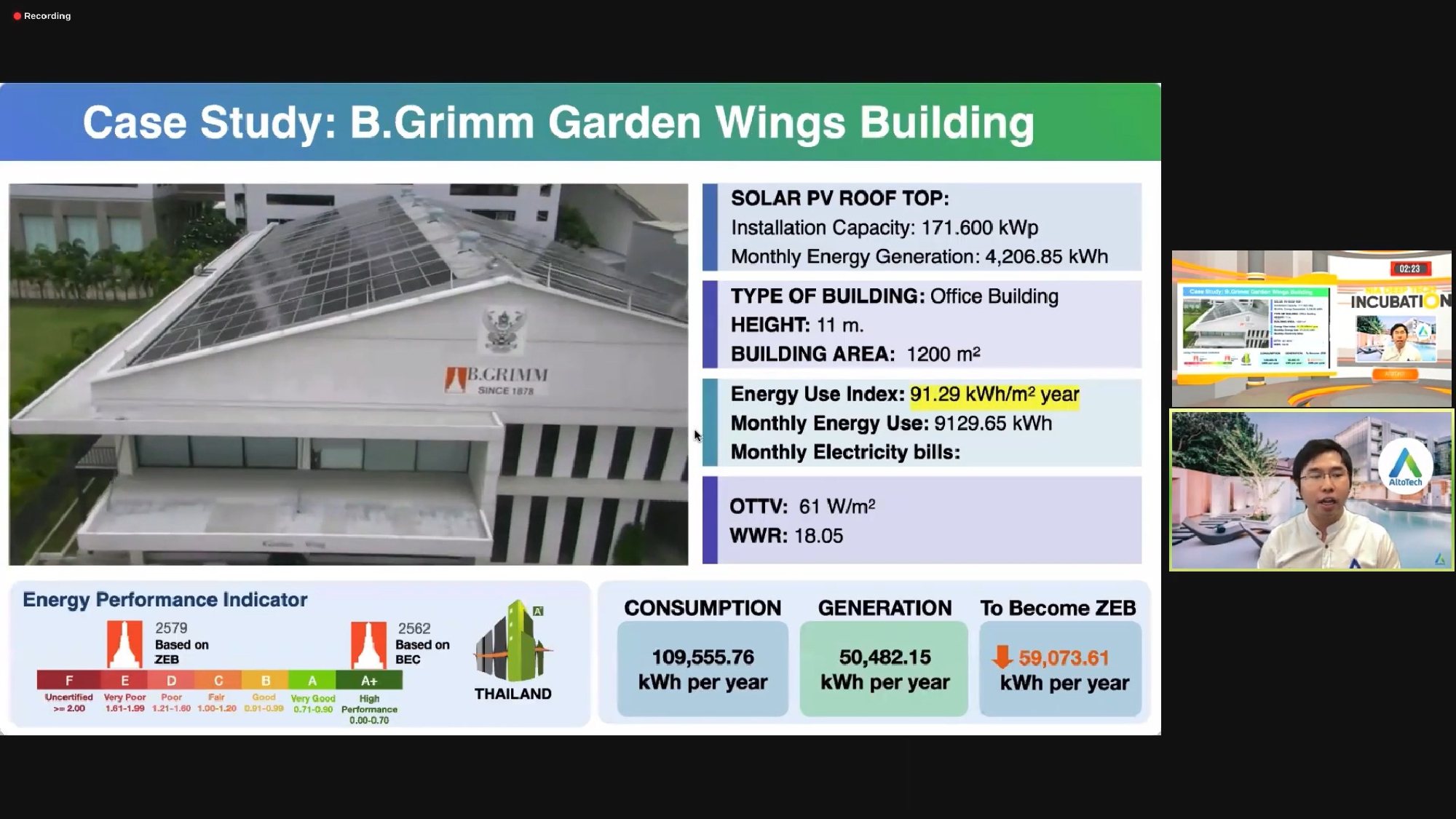
B.Grimm’s Garden Wing, an office building at the company’s headquarters on Krungthep Kreetha Road, was selected as a location to develop the Proof of Concept. During the past few months, AltoTech investigated the building’s infrastructure, energy usage, and electrical equipment. Consequently, they proposed an energy optimization solution with the installation of smart sensors and IoT equipments, together with an AI platform ‘Alto Energy Edge’ that creates a self-driven building environment able to do the following:
ADVERTISEMENT
• Automated blind control according to the ambient light outside the building
• AI-enabled automated air-conditioner control that can adjust the temperature according to the number of people present, corresponding heat load, and tenants’ comfort level through a feedback system
• Automated fresh air unit control according to the level of carbon dioxide inside the building
• Real-time energy monitoring, connected with the solar system to check the power usage and power generation. This information is used to calculate on how to utilize green energy from solar system in the most efficient way
• AI-enabled automated monitoring and control of electrical equipment
• Smart evaluation of weather status and forecast, used to adjust energy usage inside the building
• Energy audit through Digital Twin
Fabrice Goetschmann, President of B.Grimm Industrial Businesses, stated that, “B.Grimm is very pleased to partner with NIA and AltoTech in supporting AI and IoT technologies for Thailand. AltoTech’s innovation aligns perfectly with B.Grimm’s growth strategy centered on digital technology to optimize energy and reduce environmental impact, following B.Grimm’s corporate philosophy of ‘Doing business with compassion for the development of civilisation in harmony with nature’.
“B.Grimm’s industrial businesses are also offering energy-efficient and healthy living solutions comprising sustainable power generation, power optimization, energy-saving insulated facades, and highly-efficient air-conditioning and lighting systems. This is complemented by B.Grimm’s healthy indoor environment offering, which consists of a built-in pathogen removal system for PM2.5 and virus particles, a biometric access control system, and an IoT-based building management system. AI-enabled energy optimization platform from AltoTech is another step to continuously provide the latest technology in terms of energy-efficient and healthy living solutions,” he explained.
Warodom Khamphanchai, CEO of AltoTech, added, “In collaboration with B.Grimm, we had successfully installed smart sensors, IoT equipment, and an AI platform in the Garden Wing building, projected to save up to 28% of electricity per year. The tenants can also give their feedback to the AI platform through QR code system via smartphone, which allows AI to continuously learn to optimize energy, while maintaining the comfort level in the building. We presented the success of our project during NIA’s Demo Day and won The Best Performance ARI Tech Startup Award. We would like to thank B.Grimm and NIA for their strong and continuous support throughout this program.”
B.Grimm aims to develop new business ventures with digital innovation such as IoT in correspondence with the growing needs in the market. After this project, B.Grimm and AltoTech further have a collaborative project to develop AI and IoT solutions focusing on energy optimization and strategically expand across industries.
Modern trade industry is heated up once again as two major retailers in Thailand – Tops, the leading supermarket brand under Central Retail, and Watsons, the #1 leader in health and beauty stores in Thailand
Modern trade industry is heated up once again as two major retailers in Thailand – Tops, the leading supermarket brand under Central Retail, and Watsons, the #1 leader in health and beauty stores in Thailand, have announced an official partnership to win in the health and beauty market, which is Watsons’ strength and expertise. Together, they will make Watsons’ 200 best-selling products from five popular brands available outside Watsons for the first time, introducing an omnichannel experience starting with 30 branches of Tops market, Tops daily and Central Food Hall, as well as Tops online.
Stephane Coum, CEO of Central Food Retail under Central Retail, talked about this partnership, “It is a significant partnership on the occasion of Tops’ 25th anniversary. This partnership will help strengthen and improve our competitiveness in the health and beauty market. Tops is a leader in supermarkets and Watsons is Thailand’s #1 leader in health and beauty, so this partnership will cater to the ever growing health and beauty trends which have continued to thrive despite the COVID-19 situation. During the pandemic, Thai consumers do not change how they take care of their beauty and health, and in beauty communities, consumers actively exchange their views about personal care products, especially hygiene products, skincare products, hair care products, and body cleaning products. Consumers have adapted their behavior to suit the COVID-19 situation, and as a result, retail businesses have to adapt to the consumers as well.
Two major retail brands Tops and Watsons join forces to introduce Watsons products to Tops’ and Central Food Hall’s shelves for the first time
ADVERTISEMENT
“The partnership between the two retailers will leverage Tops’ expertise in retail supermarkets, extensive customer database, and omnichannel distribution experience, with both online and offline platforms nationwide, as well as Watsons’ strength in house brands which cover an extensive range of health and beauty products for every need, loved and trusted by consumers for a long time. The partnership with Watsons will help us expand our customer base and fulfil the needs of both Tops’ and Watsons’ customers, as well as add more choices in health and beauty products than ever. We will focus on best sellers, and these products will be available at 30 Tops market, Tops daily, and Central Food Hall branches in Bangkok, Nonthaburi, Pathumthani, Nakhon Pathom, Chonburi, Saraburi, and Surat Thani, online via www.tops.co.th, via Personal Shopper service on LINE @TopsThailand, and on Grab application under GrabMart. We are confident that these products will be well-received by our customers.”
Two major retail brands Tops and Watsons join forces to introduce Watsons products to Tops’ and Central Food Hall’s shelves for the first time
Pasitt Munkongkuntivong, Managing Director of Watsons Thailand, said, “Watsons is Thailand’s #1 health and beauty store, and we are committed to offering the best access to the best products to our customers always. Our products meet international standards and have high quality. We do not have any animal testing, and we care about sustainability in every step of the way, from ingredient sourcing to packaging. Our success is confirmed by the sales of our products in 27 markets across Asia and Europe. Watsons is delighted to become a business partner of Tops, which is a major retailer in Thailand. Watsons and Tops share a rather similar target customer group, which is those who take care of themselves, particularly their health and beauty, and seek high quality products. This partnership with Tops will ensure consumers can have better access to Watsons’ high-quality and affordable products anywhere, anytime. This is the first time for Watsons’ products to be available outside our stores. We have chosen more than 200 best-selling items from five widely acknowledged brands, namely Watsons, Arome by Watsons, Bella by Watsons, Naturals by Watsons and Garden of Love, focusing on body care products, followed by hair care, oral care, baby care and accessories. We are confident that this partnership will facilitate our customers to have an easier access to Watsons’ products and make our products known among a wider group of people.”
Check out Watsons’ products today at 30 branches of Tops market, Tops daily and Central Food Hall, www.tops.co.th, Personal Shopper service via LINE @TopsThailand and Grab application under GrabMart. For more information, visit http://www.tops.co.th, Facebook TopsThailand and Central Food Hall, LINE @TopsThailand and Facebook Watsons.
Donald Trump, a businessman, entertainer and former U.S. president whose personal brand has always been closely intertwined with his wealth, is no longer in the top tier of Americas richest people.
At least not according to Forbes.
The former president was left off the Forbes 400 list of America’s richest people for the first time in a quarter-century, the magazine reported Tuesday.
The business magazine estimates his net worth fell by about $600 million during the coronavirus pandemic as big-city properties – the core of his assets – lost value, leaving him with a $2.5 billion fortune. The 400th entry on Forbes;s list, the Arkansas-based investment banker Warren Stephens, logged a net worth of $2.9 billion by comparison.
ADVERTISEMENT
Losing a spot on Forbes’ widely followed ranking marks a turn for Trump, whose wealth made him famous long before he entered politics.
Trump’s stewardship of the real estate business he inherited from has father brought him world renown as a dealmaker, setting him up for a hit television show and later paving the way for his presidency. But his exact net worth has often been the subject of speculation and controversy, in part because he refused to release his tax returns when he entered office.
Trump has previously said rankings like the Forbes 400 fail to accurately estimate his holdings. In a 2015 appearance on MSNBC’s Morning Joe, Trump claimed he was worth more than $10 billion, or more than twice what Forbes had estimated. “They have no idea what I own, and it’s irrelevant,” he said at the time, referring to Forbes.
To his point, it can be hard to calculate net worth for individuals’ whose holdings are tied up in private companies, as is the case with the Trump Organization.
Forbes’ job in calculating the former president’s wealth is made all the more difficult by the fractured way in which Trump’s real estate empire is organized. The Trump Organization consists of hundreds of privately owned corporations whose individual valuations have been disputed.
Forbes calculated Trump’s net worth by adding up the individual properties and establishing their value based on public disclosures and conversations with local real estate agents, and others who are familiar with the various real estate markets, said Dan Alexander, a senior editor at Forbes. Then they subtract any debts or related liabilities, similar to how someone might conduct a property appraisal on a house.
“We take this approach with other real estate executives as well, but Trump probably gets the most detailed look of anybody,” Alexander said Tuesday in a phone interview.
Trump’s decision not to divest his assets when he took office five year ago turned out to be pivotal, Alexander noted. Trump opted to hang onto his company and real estate assets, then valued at $3.5 billion, despite the potential conflicts of interest his financial entanglements would create.
Had he divested those assets and invested the money in a simple S&P 500 market-tracking index fund the day he entered the White House, and received a common ethics sign-off allowing him to avoid capital-gains taxes, he would be worth about $7 billion today, according to Forbes.
There were 24 other real estate magnates who did make the list despite pandemic-related head winds, such as the District of Columbia’s Ted Lerner or California’s Donald Bren.
But the top echelons of America’s wealthy in 2021 made their money in the technology sector. Nine of Forbes’ 10 wealthiest Americans ― all except Berkshire Hathaway chairman Warren Buffett ― founded or led a major tech firm.
Amazon founder Jeff Bezos, with an estimated net worth of $201 billion, topped the list for the fourth year in a row, Forbes said. He also owns Blue Origin, an aerospace company, and The Washington Post.
Rounding out the top five are Tesla and SpaceX chief Elon Musk ($190 billion); Facebook founder Mark Zuckerberg ($134 billion); Microsoft co-founder Bill Gates ($134 billion); and Google co-founder Larry Page ($123 billion).
As information technology has dramatically reshaped all industries, many companies are pursuing and driving the digital transformation initiatives, in an effort to capture the benefits of these trends or simply catch up their peers.
To make digital industrial transformation a reality, a company needs both a nerve center and a dedicated digital function. Creating an operational structure with digital leader is key to drive the transformation successfully. It is therefore highly important that the organization would need to appoint so-called a chief digital officer (CDO), a senior leader responsible for the organization’s long-term digital vision and the subsequent execution of the transformation efforts.
The Rise of the Chief Digital Officer
ADVERTISEMENT
CDO think holistically about how a company’s strategy is executed across all digital channels. They own and drive digital strategy throughout the organization to help business unit leaders unlock value.
While many required core leadership skills remain the same whether it is a business or digital leader, there are some particular demands of digital disruption call for certain new skills as well. Based on Deloitte survey and analysis, the new skills required for CDO are;
Transformative vision and forward-looking perspective – this is the most important skill to possess, which includes the ability to anticipate markets and trends, make savvy business decisions and solve tough problems in turbulent times.
Digital literacy – it goes without saying, that understanding technology is a must-have skill for CDO, the leader needs to have general digital literacy, as opposed to hard-core technical skills like programming or data science. This is critical skill because it supports the first skill cited: having transformative vision and being forward-looking. It is often much easier and more effective to equip the business leaders become digitally literate than it is to teach technologists the strategic and business knowledge.
Adaptability – as the pace of change in digital world, a leader must also be change oriented – that is open-minded, adaptable, and innovative. Constantly and continually, leaders need to update their knowledge stores which can be obtained through formal education, in-house training, or cross-generational reverse-mentoring programs.
The digital function
The key elements that will help CDOs achieving their vision and goals are what we called ‘Digital Function’. Digital function is the enabling force that drives the digital transformation strategy, road map and oversees delivery of transformation initiatives across the company.
The most successful transformation efforts tend to integrate these 5 elements or 5Ds.
Digital strategy – acts as a digital North star to help better communicate and guide all digital initiatives across the enterprise. Setting the strategy and road map is the first step in the path that CDOs need to chart. Strategy defines the broad business goals to be achieved, the road map outlines how the company’s existing technical architecture, processes and planned initiatives need to be revamped. Organization should seek inputs from various stakeholders (customers, partners, shareholders, communities), prioritize and schedule the plan and finally get validated again by those key stakeholders, both inside and outside the firm.
Digital investment – most or all projects will be needed funding, the CDO should oversee the investment governance model to help creating influence across the organization. 3-steps must be performed well; Filter (only projects align with the digital strategy), Score (evaluate project based on multi-dimensional scores) and Prioritize by its impacts and ease of execution.
Digital operations – perhaps, this is one of the most difficult elements to be decided which may require thoroughly review and might be adjusted and iterative. Digital operation is served as a backbone of all digital activities. It must be clearly lay out governance, accountability and metrics to consistently monitor digital initiatives’ efficiency and execution.
Digitalization of customer journey – digital transformation mostly seek to improve customer outcomes by creating a more customer-centric organizational culture. It may begin with the development of a sense-and-respond capability to gather customer information and leverage feedback to take action to deliver business capability improvements which requires collaboration across the digital function and the broader organization.
Digital DNA – in partnership with MIT, Deloitte developed concept of Digital DNA which is centered around embedded a digital-first mindset and ways of working into an organization. It can serve as a blueprint for bringing a digital transformation to life, to help companies to organize, operate and behave in digital ways. Cultural changes are some of the hardest to drive within organizations, and embedding Digital DNA requires substantive effort but it can deliver outsized, long-lasting returns. You can find more information about Digital DNA from our Deloitte insight.
Not sure where to start? Most of the time, the best place would be your highest value asset – customers. Customer centricity is always a top-of-mind in most executives. Conducting an outside-in analysis, interview or survey customers to understand their pain points (coupled with design thinking concept), gaining feedback from all touchpoints are a solid foundation to develop your own digital strategy and road map.
By Dr. Narain Chutijirawong, Executive Director of Deloitte Thailand
KPMG’s Integrated Due Diligence team offers businesses a seamless team of multidisciplinary professionals covering all Due Diligence needs, with financial, tax and legal due diligence at its core.
The Merger & acquisitions (M&A) market is on the rise globally, especially booming in North America and in parts of Europe. In Thailand, despite the third wave of the pandemic hitting hard, businesses are still continuing their expansion projects. According to the Board of Investment (BOI), the accumulated value of private investment spiked 158% during the first seven months of 2021 year-on-year. During the same period, Thailand attracted THB279 billion in foreign direct investment, the biggest investors being companies from Japan, the US and China.
“We are seeing continued appetite for business acquisitions in Thailand, whether due to emerging trends such as online retail and life sciences, or sectors which have been impacted by the pandemic and need to adapt,” says Charoen Phosamritlert, KPMG in Thailand, Myanmar and Laos. “Acquiring, investing or merging with a business presents new challenges and opportunities for companies. What is important is that companies consider all aspects of a deal – with financial, tax and legal implications at the forefront. This is why we launched the KPMG Integrated Due Diligence team to provide a one-stop, hassle free service for our clients looking to either acquire or sell their business.”
Charoen Phosamritlert, CEO, KPMG in Thailand
ADVERTISEMENT
KPMG’s Integrated Due Diligence team offers businesses a seamless team of multidisciplinary professionals covering all Due Diligence needs, with financial, tax and legal due diligence at its core. Working closely and efficiently in multi-skilled teams, KPMG helps clients optimize transactions by providing a holistic integrated due diligence service. In addition to these core due diligence services, KPMG Deal Advisory also provide integrated assistance across the M&A spectrum, including commercial due diligence and growth strategy; IT, operational, HR and ESG due diligence; legal and tax structuring, all underpinned by an understanding of the importance of value creation throughout all of these levers.
“Every M&A deal is multi-faceted and impacted by the ever-changing business, tax and regulatory climate,” says Ian Thornhill, Head of Deal Advisory, KPMG in Thailand. “As a result, it is important for any M&A transaction to have clearly defined structures and strategic objectives, and a team of professionals to help execute the transaction effectively. KPMG’s Integrated Due Diligence approach provides a central, coordinated team helping our clients to navigate financial, tax and legal issues as a one-stop service.”
The dollar is entering the crypto age, and the U.S. government is poised to give its clearest signal yet on how that will happen.
The guidance will come through a trio of pending reports related to public and private efforts to digitize the world’s global reserve currency. First, the Federal Reserve Board will release a paper as soon as this month on the U.S. payments system that’s expected to provide direction on whether the country should issue a so-called central bank digital currency. Soon after, the Fed Bank of Boston will publish long-awaited research and open-source computer code on technology that could underpin a digital dollar. Finally, the President’s Working Group on Financial Markets is set to issue policy recommendations on how to regulate stablecoins, which are in effect digital dollars created by private companies.
When put together, the three reports will provide a road map for the broader financial community on how the Fed and Biden administration see the dollar’s crypto future playing out, the extent to which they embrace adoption of a digital currency and the guardrails they may see as necessary to protect individuals and investors in what’s now a largely unregulated corner of the market. What was once seen as a distant project has taken on an increased sense of urgency as the value of digital assets has exploded to about $2 trillion and other countries, such as China, move forward rapidly with plans for their own sovereign digital currencies.
ADVERTISEMENT
“This has gone from, ‘It’s an interesting idea,’ a few years ago to, ‘We need to have a pilot project,'” said Josh Lipsky, director of the Atlantic Council’s GeoEconomics Center, of a Fed-issued digital dollar.
The Fed Board’s paper is expected to focus on the U.S. payments system as well as the potential prospects of a Fed-issued digital currency. Over the past several months, U.S. central bankers have been divided over whether creating a digital dollar is wise, with Fed Vice Chair for Supervision Randal Quarles describing its benefits as “unclear” and its risks “significant and concrete.”
Proponents of creating central bank digital currencies, or CBDCs, say they can speed up payments, reduce their cost, and increase access to the financial system for the underbanked. There are also risks, though. A group of world central banks including the Fed, the Bank of England, and the European Central Bank last week issued a report warning that CBDCs could exacerbate bank runs by making it easier for depositors to clear out their cash during a crisis.
The ultimate issuance of a CBDC would take years and the Fed would prefer Congress to pass legislation authorizing its issuance, Fed Chair Jerome Powell has said.
The second paper, from the Boston Fed, could begin to set technological standards that would be important not just for the rollout of a U.S. digital currency, but for others already being developed around the world, said the Atlantic Council’s Lipsky.
Integration with the U.S. payments system is crucial to most countries’ economies, which means any guidance the Fed gives on what to do about privacy tradeoffs and other attributes could end up molding foreign efforts, Lipsky said.
While an official U.S. digital currency — if it happens — will take years to come about, a cadre of private companies, including Tether International Ltd. and Circle Internet Financial Inc., have launched their own versions, with tokens in circulation now worth more than $120 billion. That trend is what will be addressed by the third paper, which will be released by the President’s Working Group on Financial Markets, a collection of the leaders of U.S. agencies including the Fed and the U.S. Treasury Department.
Federal officials have expressed concern that the reserves of some stablecoins are invested in assets such as corporate bonds and related securities that could experience severe stress if investors were to lose confidence and attempt to cash in their stablecoins all at once. Powell and Securities and Exchange Commission Chair Gary Gensler have likened the coins to money market funds, which also seek to maintain a value of one dollar but during times of stress have sometimes failed.
The report is expected to recommend banklike regulation for stablecoin providers and for Congress to pass a bill establishing a new, limited type of charter to allow crypto banks to manage stablecoins as deposits, said a senior official involved with the report.
Such regulation could limit what stablecoin providers can do with their reserves, potentially constraining their profits in the name of greater investor protection. Some U.S. stablecoin companies such as Circle and Paxos Trust Company either plan to seek or already have a certain type of bank charter. In contrast, Tether — the issuer of the largest U.S. dollar stablecoin — has thus far chosen to try to avoid U.S. regulation and closes its platform to most U.S. customers.
Treasury officials briefed congressional staffers on their work as recently as last week and said they were targeting the release of their report for the coming weeks, said a person familiar with the briefing.
The Fed would have an “enormous competitive advantage” over private tokens if it launches its own digital dollar, Barclays Plc said in a September research report analyzing the case for a U.S. digital currency.
“Together with regulations, a Fed CBDC could crowd out private issue crypto,” the Barclays report said.




 COVID-19 pandemic continues to drive poor mental health among children and young people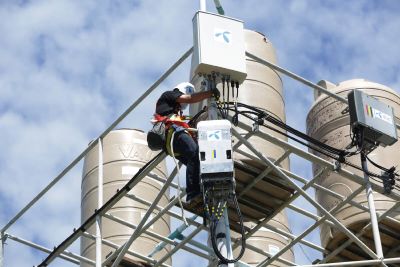
 DTAC breaks isolation of village in Lampang
 DTAC breaks isolation of village in Lampang
 DTAC breaks isolation of village in Lampang
 B.Grimm – AltoTech won “The Best Performance ARI Tech Startup Award” from National Innovation Agency
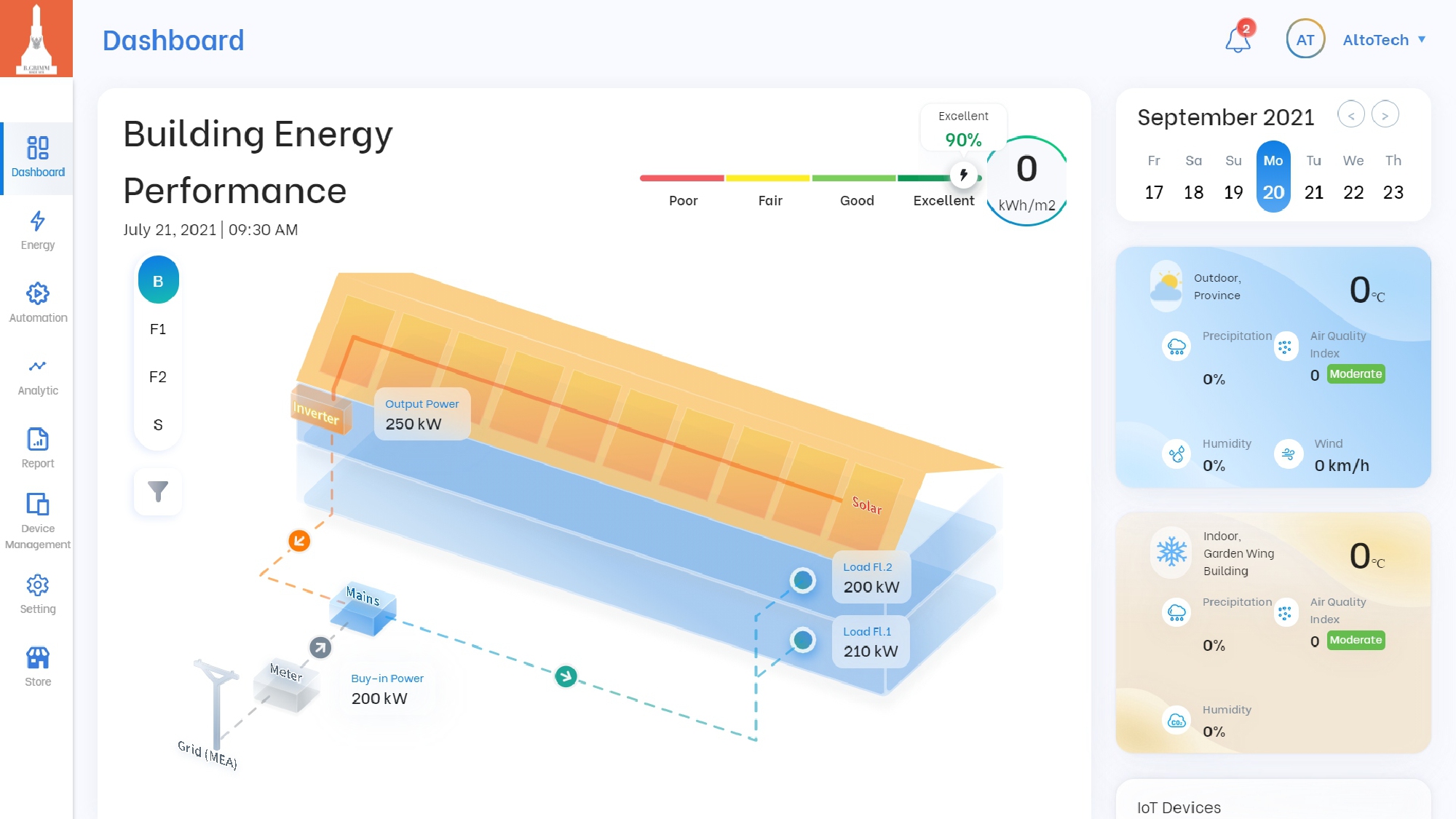 B.Grimm – AltoTech won “The Best Performance ARI Tech Startup Award” from National Innovation Agency
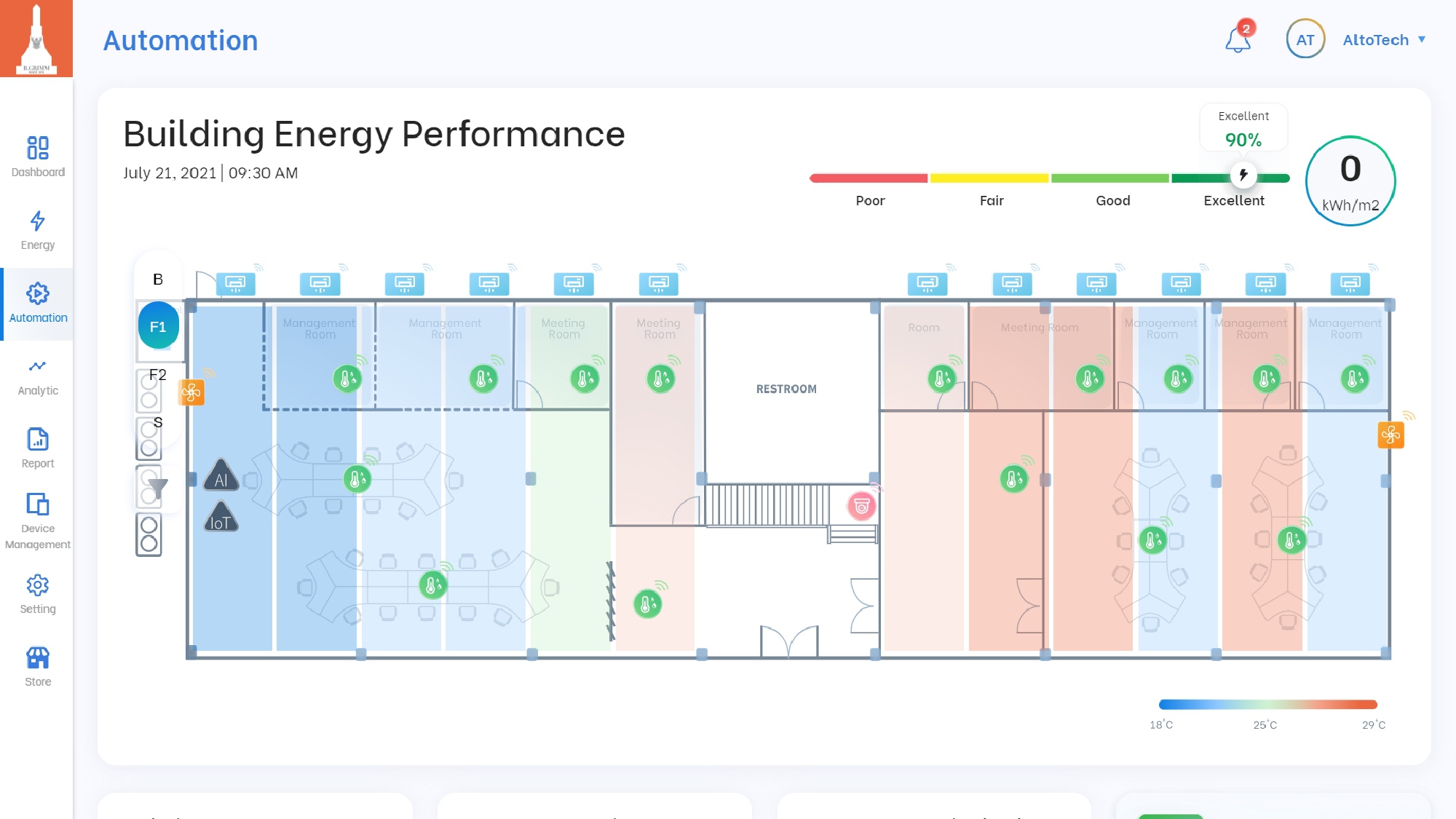 B.Grimm – AltoTech won “The Best Performance ARI Tech Startup Award” from National Innovation Agency
 Two major retail brands Tops and Watsons join forces to introduce Watsons products to Tops’ and Central Food Hall’s shelves for the first time
 Two major retail brands Tops and Watsons join forces to introduce Watsons products to Tops’ and Central Food Hall’s shelves for the first time


 Charoen Phosamritlert, CEO, KPMG in Thailand