SET dips again as new Covid restrictions come into force
The Stock Exchange of Thailand (SET) Index closed at 1,579.17 on Monday, down 3.50 points or 0.22 per cent. Transactions totalled THB68.83 billion with an index high of 1,581.34 and a low of 1,565.31.
In the morning session, Krungsri Securities forecast Monday’s index would fall to 1,570 points despite the US Federal Reserve signalling it was in no hurry to hike the interest rate, and the oil price continuing to rise.
It said the index would face pressure from the government’s move to impose new Covid-19 restrictions in Bangkok and 10 provinces from Monday, plus volatility of foreign fund flows.
The 10 stocks with the highest trade value today were AOT, BDMS, GUNKUL, KBANK, RCL, CHG, BCH, BANPU, KCE and SCGP.
Other Asian indices were mixed:
ADVERTISEMENT
Japan’s Nikkei Index closed at 29,048.02, down 18.16 points or 0.062 per cent.
China’s Shanghai SE Composite Index closed at 3,606.37, down 1.19 points or 0.033 per cent, while the Shenzhen SE Component Index closed at 15,150.17, up 146.32 points or 0.98 per cent.
Hong Kong’s Hang Seng Index closed at 29,268.30, down 19.92 points or 0.068 per cent.
South Korea’s KOSPI closed at 3,301.89, down 0.95 points or 0.029 per cent.
Taiwan’s TAIEX closed at 17,590.97, up 87.98 points or 0.50 per cent.
Suvarnabhumi to go digital next month as AOT works on upgrading six airports
Airports of Thailand (AOT) is working on digitizing six airports, starting with Bangkok’s Suvarnabhumi Airport, in a bid to get ready for a potential influx of tourists once the world reopens next year.
“So far, AOT has developed the Greenfield system which allows passengers to use various services, such as check-in and baggage loading, via smartphone or automatic devices,” AOT president Nitinai Sirismatthakarn said on Monday.
He added that the new technology should be set up in six airports by next year, including Suvarnabhumi Airport, which should have the new system in place by July this year.
He added that the new system should be installed in Phuket International Airport by April or May next year.
“Passengers who do not have baggage can check-in via a kiosk at the airport or via the AOT smartphone application at home,” he said.
“If they need to load baggage, check-in counters will have a biometric system to verify passengers’ identity and they can load their luggage using the self-service baggage loader,” he said.
Nitinai added that airports will use a face recognition system to screen passengers instead of checking their ID cards.
He expects 73 million people, or at least half of the total
passengers before the Covid-19 era, to use these services next year.
“AOT will continue investing to support the return of tourists,” he said.
Nitinai reckoned that AOT will invest about 387 billion baht in the next 10 to 20 years, or twice the value of its total assets worth 180 billion baht.
The baht opened at 31.82 to the US dollar on Monday, weakening from Friday’s closing rate of 31.78.
The Thai currency is likely to move between 31.75 and 31.90 during the day and between 31.60 and 32.10 within this week, Krungthai Bank market strategist Poon Panichpibool said.
He said that the baht tended to weaken due to several factors – such as the dollar’s direction, and the funds flow of foreign investors in Thailand.
Poon predicted that the dollar would strengthen, if the US economy recovered more than observers expected, and Fed officials showed support for stricter fiscal measures.
Also, he added that the Covid-19 situation in Europe and Asia was another factor to support the dollar.
Regarding foreign investment, Poon said that the worsening Covid-19 crisis in Thailand had prompted foreign investors to sell their stocks, pressuring the baht to weaken. The market strategist said that the government must provide at least 500,000 jabs a day in order to make investors more confident in Thailand.
In addition, Poon said that JP Morgan had already changed the proportion of bonds in its Government Bond Index – Emerging Markets. “It was possible that foreign investors would sell their Thai bonds – worth around THB10 billion in total – in order to change their bond proportion,” he explained, adding that last week investors had sold THB4.3 billion worth of Thai bonds.
The important resistance for the baht is at 32 to the US dollar, Poon said.
Global Compact Network Thailand joins forces with “CEOs” to elevate business plan setting targets to reduce greenhouse gas emissions
• Global Compact Network Thailand joins hands with three CEOs of its leading members to share their visions for global sustainability during the UN Global Compact Virtual Leaders Summit 2021, hoping to drive the private sector to implement UN Sustainable Development Goals along with their business plans. Specifically, the business are urged to set targets for reducing greenhouse gas emission.
Global Compact Network Thailand (GCNT), a local network of UN Global Compact in New York, co-hosted UN Global Compact Virtual Leaders Summit 2021. This year CEOs of three leading Thai business organizations reflected on Thailand’s sustainability leadership and global transformation. Global warming was on the top of their agenda. The year 2021 is an important moment to drive the world towards net zero goal in support of the Paris Agreement, which aims to limit the rise of the world’s average temperature within 1.5 degrees celsius. In addition, the key messages shared by the top Thai CEOs are in line with the main objectives of GCNT, which aims to be the sustainability network working with key stakeholders to change the world during “A New Era of Action” as declared by the United Nations.
Ms. Thanyaporn Krichtitayawuth, Executive Director, Global Compact Network Thailand, said that Thailand has been honored for the second year by the UN Global Compact to co-host a global panel discussion with leading CEOs of Thai businesses. They have participated in 3 key sessions. Starting from the opening plenary of the Summit, Mr. Suphachai Chearavanont, CEO of Charoen Pokphand Group (C.P. Group) and Chairperson of Global Compact Network Thailand joined the high-level discussion, “Light the Way to Glasgow and Net-Zero: Credible Climate Action for a 1.5°C World.” Mr. Dan Pathomvanich, CEO of NR Instant Produce Public Company Limited, participated in the discussion, “A New Era of Action, Accelerate Climate Action: Raising Business Pathway to Decarbonization ” to combat climate change and add business solutions to reducing greenhouse gas emissions. Mr. Ho Ren Hua, CEO of Thai Wah Public Company Limited, participated in a plenary discussion on, “SDG Ambition: Mobilizing Ambition for Corporate Actions Towards the Global Goals.” The three leading Thai organizations reflected on the potential of the Thai business sector to make a difference in terms of sustainability on a global scale. They are an example of business organizations adopting Sustainable Development Goals (SDGs), have a clear and concrete plan, especially on climate change, with measurableoutcomes.
Mr. Suphachai Chearavanont, CEO of C.P. Group and Chairperson of Global Compact Network Thailand said that to reduce greenhouse gas emissions, we must start by raising awareness of the current unsustainable consumption patterns such as the long-standing overconsumption of natural resources, resulting in global warming. Being in the agri-food and retail businesses, C.P. Group works with more than 100,000 stakeholders and partners to manage our supply chain. Most importantly, we raise awareness of our more than 400,000 employees to pursue the same objective in sustainable business practices.
Over the next ten years, C.P. Group will draw from renewable energy for our 1,600 MegaWatts of energy need. At the same time, the Group aims to drive waste disposal, especially the food waste, in the entire process to zero.
He also urged all stock exchanges and the governments throughout the world to require all companies to report on their progress towards zero emissions. Such reports will help make the net zero by 2050 goal obtainable and tangible when the entire private sector races towards the same goal. Moreover, he stressed the importance of upgrading our educational system to include not only lessons on digital technology but also sustainability as part of the curriculum.
Mr. Dan Pathomvanich, CEO of NR Instant Produce Public Company Limited noted that NRF aimed to turn the world into carbon-free through changes in the food system. NRF aspires to become the world’s largest producer of plant-based protein and food. The company is going to build the world’s largest production network. From international brands, the network connects to start-ups, to supermarkets, to sustainable transition to low-carbon food production. The NRF’s priority is to manage its supply chain by conveying a clear policy from the CEO to the middle management and even the workers at the sourcing office. This will help ensure that the products’ quality meet the company’s standards.
He also pointed out the main challenge in the food business: Transition from agricultural production based on chemicals to non-chemical and bio-farming. Doing so will reduce the emissions of greenhouse gas in itself.
“COVID-19 has transformed the supply chain. Everyone wants to be healthy. Everyone wants clean food and wants it “NOW.” To fulfill people’s needs will drive the sector to overhaul its business plan towards sustainability and transform companies to become those of the 22nd century,” Mr. Dan said.
Mr. Ho Ren Hua, CEO of Thai Wah Public Company Limited, said that sustainability is part of Thai Wah’s core vision and its strategy on “Developing innovation and sustainability from farm to shelf.” The implementation of its strategy with all stakeholders throughout the value chain fits under 4 pillars: Farm, Factory, Family, and Food.
ADVERTISEMENT
Thai Wah is about to launch a new product this year: innovative and eco-friendly packaging. It is made of biodegradable plastic from tapioca starch, which, in addition to being 100% biodegradable, non-toxic and harmless, can help reduce greenhouse gas emissions. Thai Wah will be Thailand’s first pioneer of tapioca biodegradable plastic and aims to become one of the leading regional bioplastic manufacturers as part of its organization’s long-term reduction in greenhouse gas emissions. The company currently reviews the organization’s emissions report, which is expected to be completed by the second half of this year.
Thai Wah works with various partners, from research institutions, leading universities, and startups to develop prototypes of products that cater to customers as well as create economic values to society and the environment. “Sustainability cannot be created by one person but must be done through collaboration of all parties, both inside and outside the organization. Such collaboration will contribute towards innovation in no time, and of course, it is much better than working alone.” Mr. Ho Ren Hwa concluded.
Thailand Greenhouse Gas Management Organization (TGO), a public organization under the Ministry of Natural Resources and Environment, is responsible for supporting the reduction efforts of greenhouse gas emissions in Thailand. According to Mr. Kiatchai Maitriwong, Executive Director of TGO who also participated in the Leaders Summit, the TGO data indicated that companies in Thailand even further reduced their emissions to help alleviate climate change despite the COVID-19 pandemic. In 2020, 193 companies received carbon footprint certifications. Many companies have also undertaken projects to compensate for their carbon emissions. TGO collaborates with GCNT in technical areas to help companies set goals, audit and certify their emission reductions based on international standards.
Ms. Thanyaporn concluded, “Global Compact Network Thailand, in line with the UN Global Compact in New York, strongly encourages Thai businesses to seriously consider setting significant and measurable scientific targets in order to reduce greenhouse gas emissions. We all should take this as a new business opportunity. Global Compact Network Thailand will support Thai businesses in their efforts while driving the achievement of the UN Sustainable Development Goals.”
New Covid restrictions, volatile foreign funds flow dampen SET sentiment
The Stock Exchange of Thailand (SET) Index fell by 9.38 points, or 0.59 per cent, to 1,573.29 on Monday morning.
The SET Index closed at 1,582.67 on Friday, down 3.05 points or 0.19 per cent. Transactions totalled THB68.1 billion with an index high of 1,596.16 and a low of 1,577.63.
Krungsri Securities has forecast that the SET Index would fall to 1,570 points despite the US Federal Reserve signalling it was in no hurry to hike the interest rate, and oil price continuing to rise.
It said the index, instead, would be under pressure due to the government’s move to announce new restrictions to curb Covid-19 in Bangkok and 10 provinces, plus the volatility of foreign funds flow.
It recommended that investors buy:
▪︎ PTT, PTTEP and BANPU, which benefit from the rising oil price.
▪︎ HANA, KCE, TU and CPF, which benefit from the weakening baht.
▪︎ BCH, CHG, BDMS and CKP, whose second-quarter business turnover is expected to improve.
The price of gold in Thailand in the morning trade on Monday was unchanged from Saturdays close.
The Gold Traders Association report at 9.27am showed buying price of a gold bar at THB26,750 per baht weight and selling price THB26,850, while gold ornaments were priced at THB26,272.28 and THB27,350, respectively.
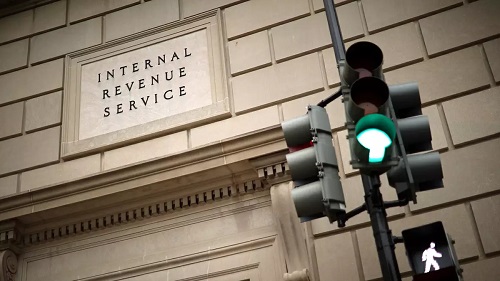
Bipartisan infrastructure deal could make it harder for tax cheats to elude IRS
WASHINGTON – The bipartisan deal on new infrastructure spending that President Joe Biden reached this week with a group of moderate Democrats and Republicans in the Senate represents a significant achievement for the White House, and not only for the roughly $1 trillion it would direct to public works projects if passed into law.
The deal would also secure a boost in the budget of the Internal Revenue Service after a decade of cuts, which independent experts say is critical to ensuring businesses and the wealthiest Americans pay what they owe in taxes. As agreed, the deal would provide $40 billion in new funding for the IRS, which has seen its budget shrink by one-fifth between 2010 and 2018.
Though five moderate Republican senators signed off on the deal, its path is still uncertain in Congress, where there is strong GOP skepticism of the IRS. Republicans renewed their attacks on the agency this month after the investigative news outlet ProPublica published a story based on a vast trove of leaked confidential tax data for the richest Americans.
And the agreement for new funding is not expected to include new reporting requirements for banks, which the Biden administration has proposed in its effort to close the long-persistent “tax gap,” or the difference between the taxes that Americans owe and what they pay.
“What we don’t want is an over-intrusive IRS getting into small businesses and causing inappropriate burdens,” said Sen. Rob Portman, R-Ohio, who helped secure the deal, in describing what Republicans were trying to prevent as part of their agreement on IRS enforcement.
IRS funding from Congress fell 20% in inflation-adjusted dollars between 2010 and 2018, according to a report last year by the Congressional Budget Office. The cuts resulted in a 22% decline in the number of IRS staff.
The number of employees in the enforcement division – the part of the IRS that goes after unpaid taxes – declined by 30%, with even steeper drops among the highly specialized workers who handle the most complex cases.
As a result of the cuts, the number of IRS examinations dropped by 40% between 2010 and 2018, even as the number of tax returns filed increased by 5 percent, the CBO found. The audit rate for returns with more than $1 million in income dropped even further, by 63%. And while nearly all corporations with assets of $20 billion or more were audited in 2010, just half were audited in 2018, the CBO found.
“The big corporations and the wealthiest taxpayers can take advantage of a very complicated tax code and take very aggressive positions . . . and the IRS cannot dispute them,” said Janet Holtzblatt, a senior fellow at the Tax Policy Center. “The IRS with its depleted resources is not in a strong position to dispute the argument that this is avoidance and not evasion.”
Nina Olson, executive director of the Center for Taxpayer Rights and the former U.S. National Taxpayer Advocate, said the IRS needs “significant resources” to improve its employees’ skills and modernize its technology.
“There is no doubt in my mind that the IRS needs sustained investment,” Olson said. “The way that the IRS approaches enforcement now and compliance now is mired in the 20th century.”
The IRS budget cuts over the past decade were driven primarily by congressional Republicans, stemming in part from the agency’s crucial role in enacting the Affordable Care Act, President Barack Obama’s landmark domestic legislative achievement. GOP hostility toward the IRS mounted further in 2013 when an IRS watchdog alleged that the agency had targeted nonprofits affiliated with the tea party and other right-leaning groups for scrutiny.
But over the last few years, Republicans and Democrats alike have expressed concern about the extent of cuts to the IRS. Former Treasury Secretary Steven Mnuchin said in his confirmation hearing in 2017 that the IRS was “under-resourced to perform its duties,” and IRS commissioner Charles Rettig, a Trump appointee, said in Senate testimony this month that “budget cuts over the past decade have resulted in an agency that lacks the capacity to address sophisticated tax evasion efforts.”
In particular, bipartisan concern has coalesced around the tax gap. In part, that is because narrowing the gap is a way to increase government revenue that would not rely on higher tax rates, which conservatives oppose. The most recent IRS research available put the annual tax gap between 2011 and 2013 at $441 billion, and a Treasury Department analysis used that figure to extrapolate forward, putting the 2019 gap at $584 billion.
“There’s just a ton of money out there that we’re not collecting,” said Charles Rossotti, a former IRS commissioner who has put forward a plan to shrink the tax gap, much of which is reflected in the Biden administration’s proposal. “Why don’t we collect some of that before we raise taxes on the people that are already paying?”
But while the extra funding agreed in the bipartisan deal will help the IRS increase revenue, it would barely make a dent in the tax gap. The CBO’s estimate, which assumes no significant changes in reporting requirements, shows that an additional $20 billion in IRS funding for examinations and collections over a decade would bring in an additional $61 billion in revenue, while an extra $40 billion in funding would bring in $103 billion. Both of those are a tiny fraction of the estimated annual tax gap.
The bipartisan deal would provide $40 billion in new money for the IRS, with an expectation that it would result in around $140 billion in new revenue, or a net $100 billion gain. Those numbers differ from the CBO estimates, and it was unclear how they were derived. The White House did not respond to questions about what period of time that money would be spent in.
Independent experts like Rossotti argue that requiring more information to be sent to the IRS is crucial to enabling the agency to collect a larger portion of the taxes owed to the federal government.
“I believe the information reporting is important, and it doesn’t have to be intrusive,” Rossotti said.
A May report released by the Treasury Department concluded that $80 billion in new resources over a decade to fund new technology and to hire and train new agents, if paired with new reporting requirements for banks and other measures, would bring in $700 billion in new revenue. The Penn Wharton Budget Model, an economic research initiative, had a more modest outlook, projecting $480 billion in new revenue over a decade from the proposed tax enforcement measures.
Republicans in Congress have said they are opposed to new bank reporting requirements, pointing to the ProPublica leak as evidence that taxpayer data is not secure. A White House fact sheet on the deal released on Thursday left the issue vague, listing “reduce the IRS tax gap” as one way the bill would be paid for, but with no numbers attached.
ADVERTISEMENT
Any new funding would take time to have a discernible impact. It takes years to fully train a specialized IRS agent, and the agency would need to procure and deploy advanced technology that it doesn’t currently use on a widespread basis. In the meantime, the IRS will be under pressure to show results, Olson said, an approach she said would be a mistake and would potentially put vulnerable taxpayers at risk.
“There will be increasing pressure because you’ve given the IRS all this money,” she said. “Although there are many more protections now than there were for taxpayers in the mid-1990s, we have to be really careful about not putting so much pressure on the IRS to produce that you actually have excesses.”
Dow supports over THB 4 million To help Thailand fight against the new wave of COVID-19
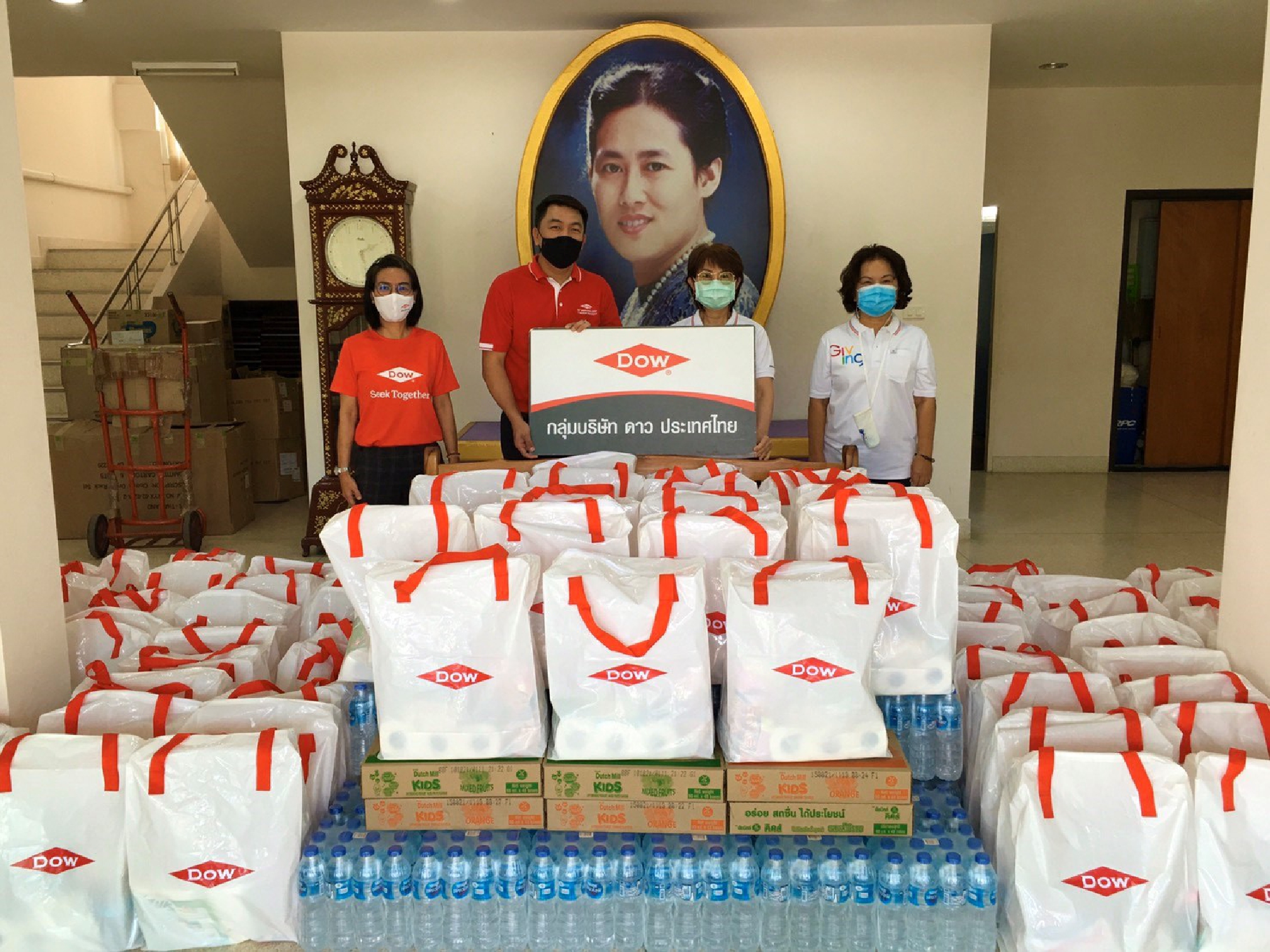
“Dow support Thailand to fight against COVID-19” campaign during the new wave of outbreaks, Dow Thailand Group has continuously provided essential resources, including Dows products, protective equipment, and relief bags in a total value of more than THB 4 million, to government agencies, hospitals, and communities where the company operates.
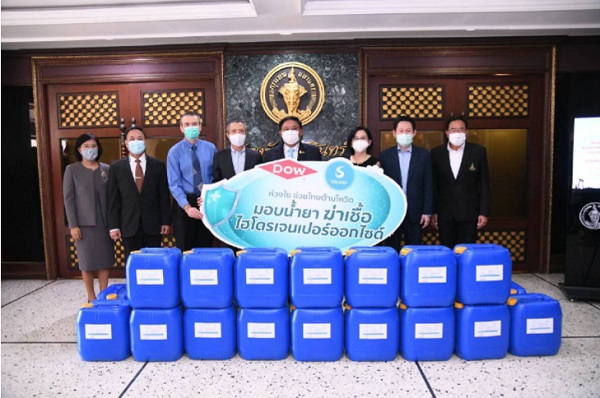
Since the new wave of COVID-19 in 2021, Dow and Solvay have donated more than 100,000 liters of hydrogen peroxide (H2O2) – a product of MTP HP JV Company, a joint venture between Dow and Solvay in Thailand – to Bangkok and Rayong (in addition to over 15 million liters which was already given in 2020) to disinfect public areas. The H2O2 disinfectant is environmentally benign as it is non-corrosive, colorless, and decomposes to oxygen and water without harmful chemicals left after use.
Dow has provided in-need medical and protective equipment to hospitals and COVID-19 screening centers. The effort includes a donation of powered air-purifying respirators (PAPRs) to Rayong hospital, a fund-raising campaign together with employees to support Siriraj Foundation in purchasing the oxygen high-flow devices which increases the COVID-19 patients’ chance of survival. Dow has also supported protective equipment, such as hand sanitizer gel and spray, foot pedal alcohol dispensers, face masks, food, and drinking water to frontline healthcare workers and officials in Rayong, an industrial and tourist destination with a large number of people living.
Dow supports over THB 4 million To help Thailand fight against the new wave of COVID-19
Caring for the health and well-being of local people and youth, Dow has delivered hundreds of sets of COVID-19 protective equipment consisting of alcohol gel, disinfectant soap, and cloth masks to nearby communities. Moreover, relief bags containing rice, dry food, and other daily necessities have been distributed to communities in the Klong Toey area, Bangkok, and Rayong.
“With the latest wave of COVID-19 impacting our country, Dow is committed to protecting the health and safety of our employees and communities while deploying our business solutions where they are needed most. Dow’s employees are also encouraged to be a part of the support. We continuously sending immediate support to organizations directly addressing the COVID-19 crisis and working to protect the resiliency of local communities,” said Chatchai Luanpolcharoenchai, Dow Thailand President.
Watch the video of Dow Thailand’s donations worth more than THB 4 million at:
Knight Frank Thailand Indicates Foreigners Remain Interested in Real Estate in Phuket
Given the current situation in Phuket, we, the people who work and live in the province, have started to receive vaccinations. Over 75 percent of such people have received the Covid-19 vaccine.
Mr. Nattha Kahapana, Deputy Managing Director and Head of Phuket Operation, Knight Frank Thailand, said that, as everyone well knows, the Covid-19 outbreak affected all sectors, including the real estate market in Phuket and Samui, which has slowed down considerably as foreigners cannot travel to the country. The proportion of purchasing power from foreigners is 80 to 90 percent, and only around 10 percent from Thai buyers.
In 2020, the total condominium supply was 26,096 units, demand stood at 19,761 units, and 6,335 units remained. Meanwhile, the total supply of villas was 3,871 units and 3,056 units were bought and sold, which represents a relatively high percentage as villas are generally constructed only when a buyer has reserved one; as a result, the villa market has not been as heavily impacted as the condominium market. Also, selling prices have been lowered to attract both Thai and foreign buyers as well as investors. By focusing mainly on online sales channels, the lowered selling price makes it easier for buyers to make their purchasing decisions.
The Covid-19 situation appeared to have improved during the beginning of 2021, but new outbreaks occurred in April. This new wave is considered to be the third wave of the epidemic, which may affect plans to open the country where Phuket has been designated as a pilot province without quarantine. Most recently, the government announced plans to open Phuket to inbound tourists under the Phuket Sandbox scheme on 1 July. Tourists must meet the following criteria:
1. Foreigners must be fully vaccinated at least 14 days before the travel date, and they must have a certificate of vaccination.
2. Travelers must be from a low risk country only; in the case of children under 6 years old, they must be accompanied by a parent who has been fully vaccinated.
3. Tourists must have medical documents confirming that they tested for Covid-19 and have found no infection no more than 72 hours before departure.
4. Upon their arrival in Phuket, tourists must be tested again and they must wait for the test results in their accommodations until negative test results are found. Only then can they be allowed to travel within Phuket. Also, after a 14-day stay, they are allowed to travel to other provinces.
Given the current situation in Phuket, we, the people who work and live in the province, have started to receive vaccinations. Over 75 percent of such people have received the Covid-19 vaccine. This gives confidence to both people in the country as well as to foreigners who wish to enter the province. When foreign tourists are allowed to travel to Phuket, it will greatly increase sales opportunities for the real estate sector. We are confident that the situation will gradually improve and the real estate market in Phuket and Samui will become vibrant again. From the information we received, there are 28 countries that want to travel to Phuket, such as China, England, Germany, Singapore, Russia, etc.
ADVERTISEMENT
Although in the beginning, those who come in will be a group that focuses on tourism and leisure, they are still considered to be a good sign for recovery. Before the Covid-19 crisis, this group comes from countries whose citizens tended to buy properties in Phuket as second homes rather than for investment purposes. They view Thailand as a safe place with a moderate cost of living and good healthcare system.
In addition, there is news of a policy to stimulate real estate when the country is opened; this includes the expansion of foreign condominium quotas by more than 49 percent, allowing foreigners to have ownership of houses, and extending leasing rights for more than 30 years. If these measures take place, they will help drive the real estate market enormously, to make up for the slowdown in the business during Covid. Thai investors continue to slow their investments in real estate as they are waiting for the country to open to foreigners.
We believe that real estate in Phuket and Samui will recover before other provinces, as most people in Phuket have been vaccinated against Covid. This includes employees of Knight Frank Phuket. We are ready to serve investors and those who wish to purchase real estate in Phuket and Samui as soon as Phuket is open to foreign tourists.
The Stock Exchange of Thailand (SET) Index closed at 1,582.67 on Friday, down 3.05 points or 0.19 per cent. Transactions totalled THB68.1 billion with an index high of 1,596.16 and a low of 1,577.63.
In the morning session, Krungsri Securities expected the stock market on Friday to move between 1,595 to 1,600 points, in response to US stimulus plans based on infrastructure investment, plus the up-trending oil price.
The 10 stocks with the highest trade value today were BANPU, GUNKUL, KBANK, BDMS, PTTGC, RCL, PTT, KCE, CPF and 7UP.
Other Asian indices were up:
ADVERTISEMENT
Japan’s Nikkei Index closed at 29,066.18, up 190.95 points or 0.66 per cent.
China’s Shanghai SE Composite Index closed at 3,607.56, up 40.91 points or 1.15 per cent, while the Shenzhen SE Component Index closed at 15,003.85, up 219.05 points or 1.48 per cent.
Hong Kong’s Hang Seng Index closed at 29,288.22, up 405.76 points or 1.40 per cent.
South Korea’s KOSPI closed at 3,302.84, up 16.74 points or 0.51 per cent.
Taiwan’s TAIEX closed at 17,502.99, up 95.03 points or 0.55 per cent.





 Dow supports over THB 4 million To help Thailand fight against the new wave of COVID-19