The Department of Special Investigation (DSI) held a meeting with the Office of the Attorney General on Thursday to discuss cases in which 114 suspects imported 854 luxury cars worth 2.6 billion baht and allegedly avoided paying customs duties.
The meeting discussed guidelines, processes and related laws.
The DSI subsequently ordered 10 investigation units to carry out probes, as decided in the meeting.
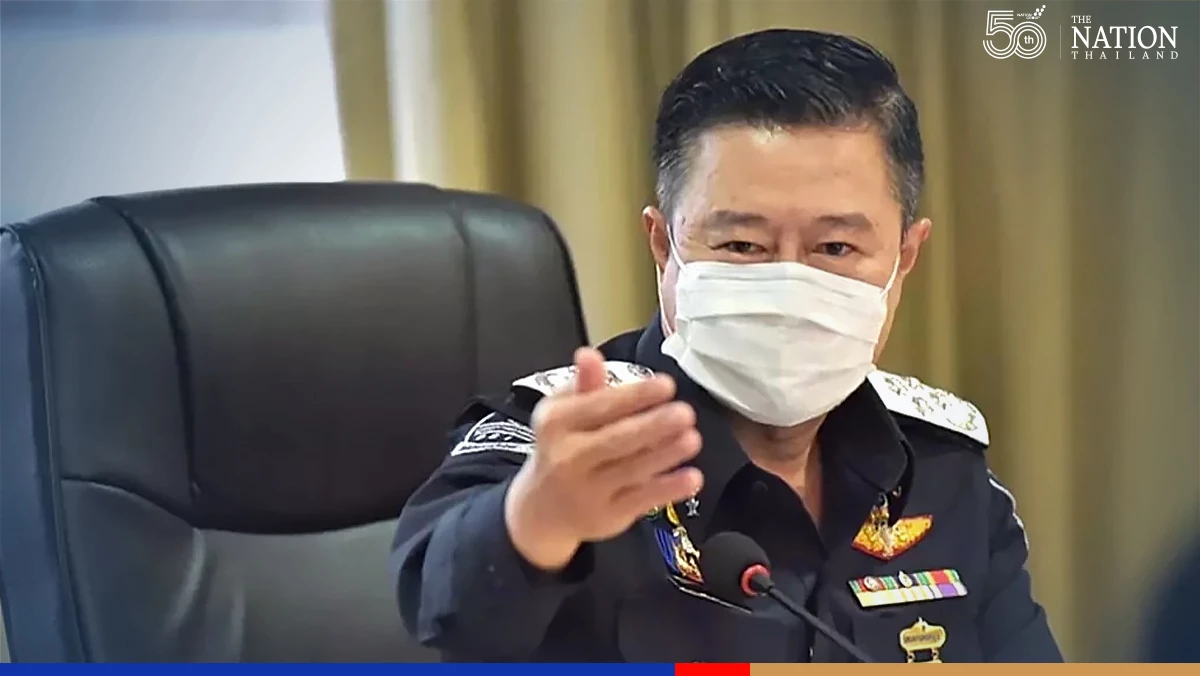
DSI director-general Triyarith Temahivong sought concrete results as soon as possible with transparency.
Those who violate Customs Act BE 2560 (2017) face a prison term of up to 10 years or a fine four times the price of the goods including duty, or both.
The government is expected to make around 10 billion baht from the fines.
Thai Airways has operated its first “cargo-in-cabin” flight to Australia, the airline’s chief of operations, Lt-JG Supoj Charoensuk, said.
The Boeing 777-300ER Flight TG475 (Bangkok-Sydney) departed from Bangkok on Tuesday at 8.01am and arrived in Australia at 8.55pm (local time).
The flight carried 2,930 kilogrammes of antigen test kits in the cabin.
THAI also introduced a cargo-in-cabin operation from China for the first time at the end of January, with Flight TG679 from Guangzhou to Bangkok transporting 2,659kg of antigen test kits.
The cargo-in-cabin service manages cabin space so it is most beneficial, especially when transporting products that need extra care, such as food, medicines and electronic parts. The feature also enhances transport capacity and therefore increases airline revenue.
THAI and fruits exporters have also discussed fruit transport to foreign countries using the cargo-in-cabin service.
The service, operated only in the present Covid-19 situation, is under International Civil Aviation Organisation (ICAO) standards and approved by the Civil Aviation Authority of Thailand.
It will be in operation until March 31 and will be extended if the ICAO gives its approval.
Those who are interested in the service can contact the airline via email cargocharter@thaiairways.com.
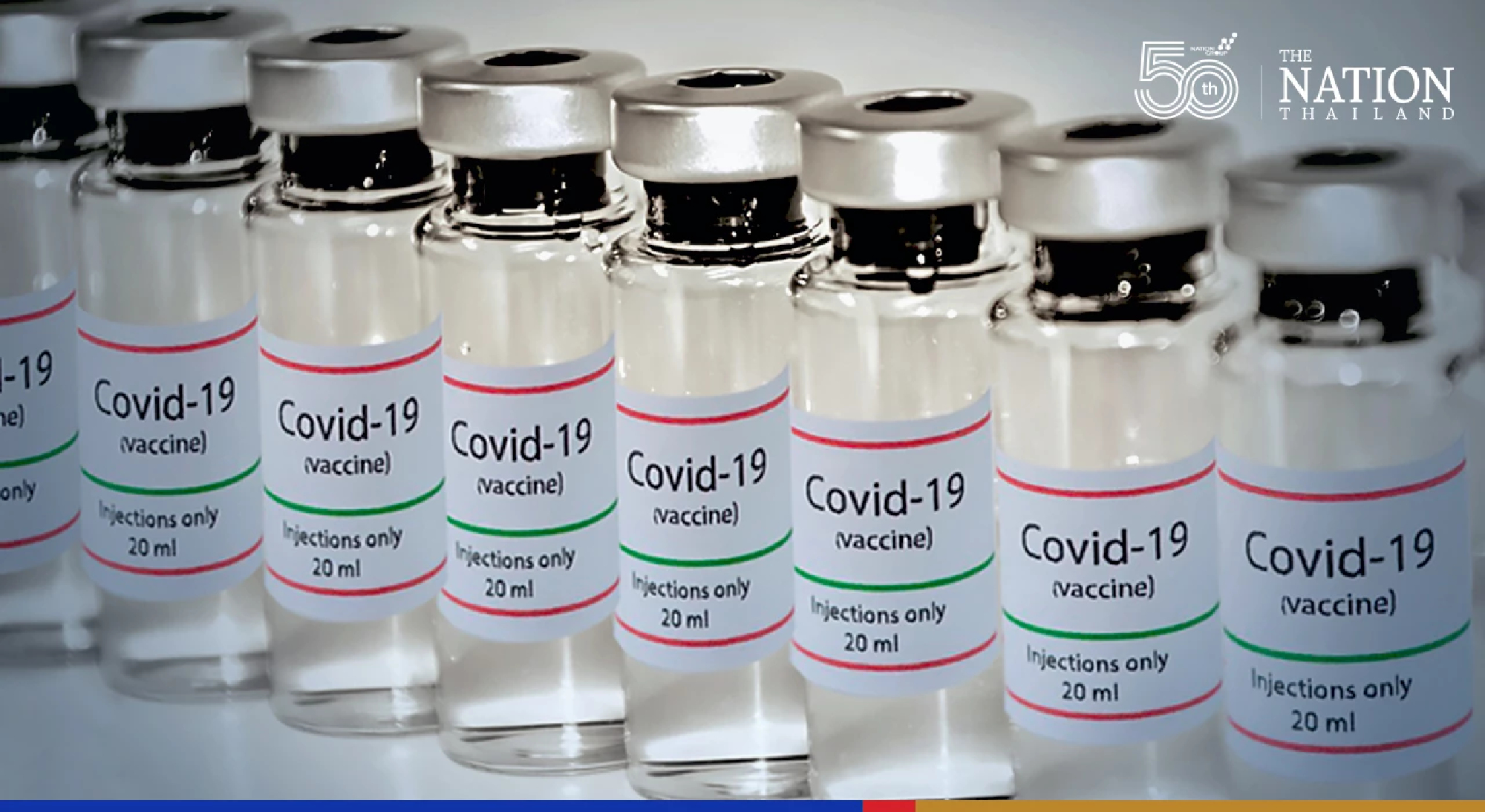
As many as 10 medicines and vaccines to combat Covid-19 have been approved by the Thai Food and Drug Administration (FDA), with Covavax, Novavax, Lagevrio, Olumiant, Paxlovid and Recyrona currently under consideration.
Several Thai government and private agencies are putting a lot of effort into procuring more vaccines as quickly as possible in a bid to prevent Covid-19 – especially the Omicron variant – from spreading and wreaking more havoc.
Here are the medicines and vaccines approved by Thailand’s FDA:
2020
July: Remdesivir
October: Favipiravir
2021
January 20: AstraZeneca (imported by AstraZeneca (Thailand) and produced by Siam Bioscience)
February 22: Sinovac (imported by the Government Pharmaceutical Organisation)
May 13: Moderna (imported by Zuellig Pharma)
May 28: Sinopharm (imported by Biogenetech)
June 24: Pfizer
July 15: Casirivimab and Imdevimab
September 10: Moderna (for children aged 12 and above)
September 22: Sotrovimab
December 20: Pfizer (for children aged 5-11)
2022 so far
Covavax, Novavax, Lagevrio, Olumiant, Paxlovid and Recyrona (under consideration).
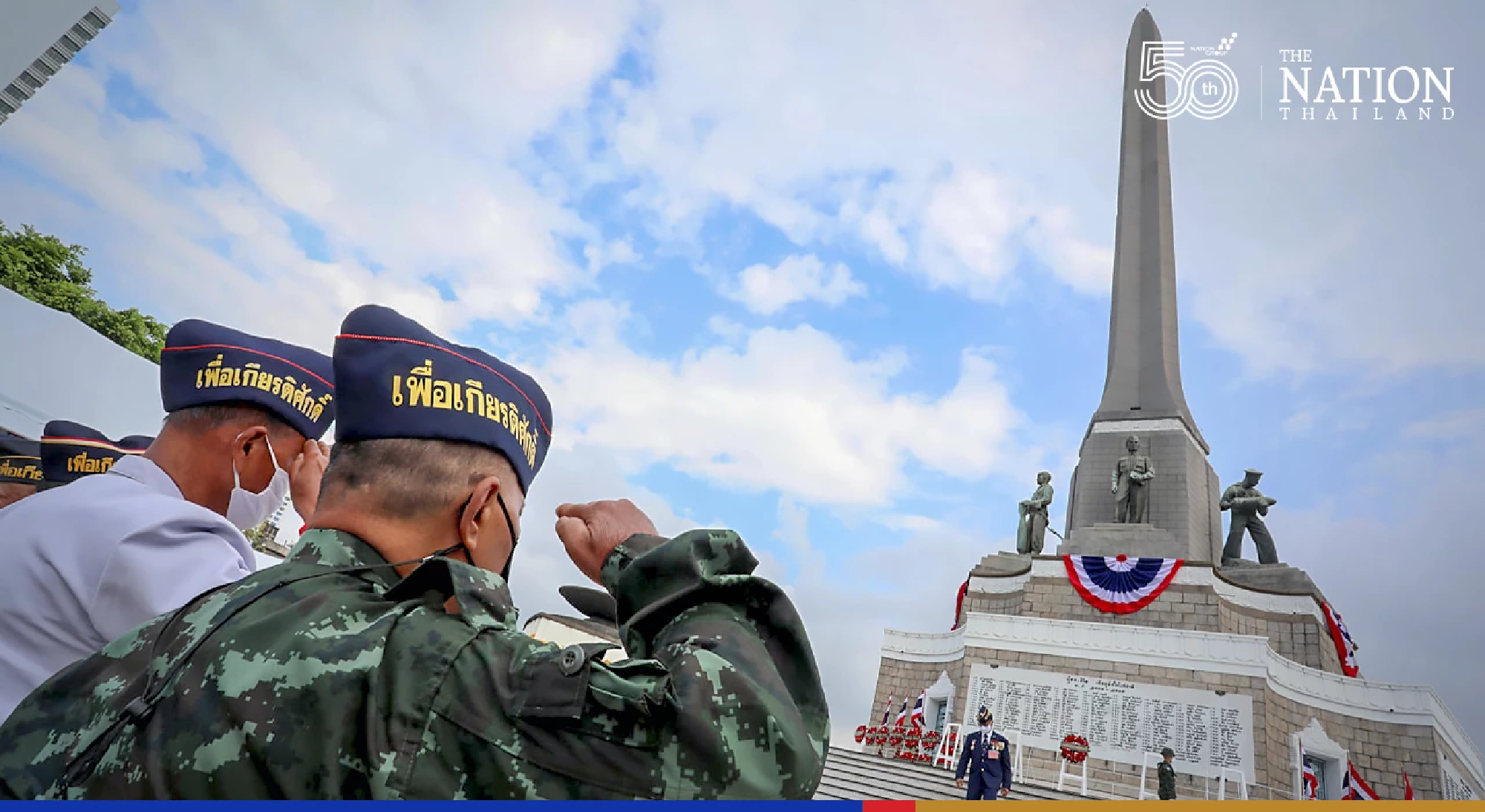
Veterans and elderly former soldiers from all branches of the Royal Thai Armed Forces participate in the annual event to commemorate Veterans Day at Victory Monument on Thursday.
The event was organised by the War Veterans Organisation of Thailand, which was founded in 1948 under His Majesty’s Patronage to honour veterans and their sacrifices in past wars and armed conflicts.
The organisation aims to serve them and their families by providing good welfare conditions while offering and maintaining moral support to the veterans, as well as former soldiers, sailors and airmen.
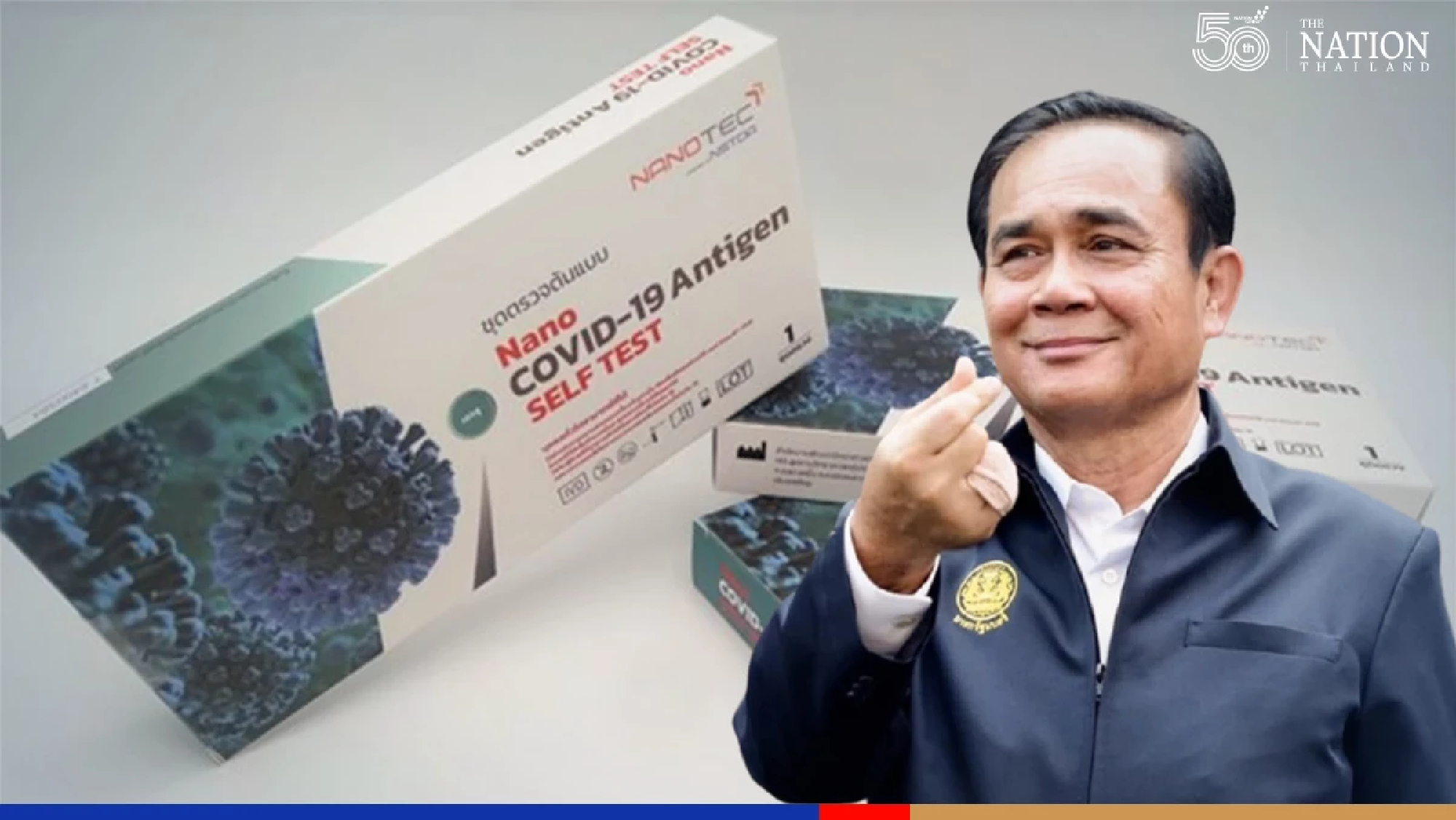
Prime Minister Prayut Chan-o-cha thanked the National Science and Technology Development Agency (NSTDA) and related organisations for inventing a NanoCovid-19 antigen test kit (ATK), government spokesman Thanakorn Wangboonkongchana said on Thursday.
This particular ATK is based on knowledge from influenza virus test kits which use nano and sensor technology.
There are two types of the new Covid-19 kits – ATK Professional Use for medical personnel and ATK Home Use for the public.
Thanakorn pointed out that Thailand has had to import general ATKs from foreign countries, but this invention would help the kingdom export the new ATKs to world markets.
He said the government has always solved the problems of price and quantity of ATKs.
Thanakorn also said the government was ready to support the study and development of innovative equipment, which could be used for commercial purposes and help the medical industry to grow, especially studies in line with a bio-circular-green economy or those that would help Thailand become a medical hub.
Seafood restaurants in Samut Songkhram province are enjoying a near 30 per cent hike in sales after the oil spill incident from an underground pipeline off the coast of Rayong on January 25.
“The oil spill is indeed a terrible news, but at least it has made more people visit coastal provinces in the lower Central and Southern regions instead of the East,” Phanumas Ruamsuk, president of Samut Songkhram Food Merchants Association, said on Thursday.
“In the past week, restaurants in the province have seen an increase in customers and sales are up by around 30 per cent.”
Meanwhile, Mongkhol Sukjaroenkhana, president of Samut Songkhram Fishery Association, said that so far there is no report of seafood in the province being contaminated by the oil slick in the Gulf of Thailand.
“Samut Songkhram is far from the oil spill area and therefore the seafood here is safe to eat,” he said.
“Aquatic animals are very sensitive to changes in their environment. If they detect even a slight trace of a foreign chemical, like oil in the water, they will evacuate to a cleaner area.”
Mongkhol said the oil spill incident was likely to affect the fishing communities in Rayong and nearby provinces for at least three months.
“Local fishermen and small- to medium-sized fishing companies are likely to suffer from low production, as sea animals will not return until they are sure the areas are livable,” he said. “The oil company must take responsibility for this incident, since it is their job to ensure that the pipeline, which has been in commission for a long time, is still in good condition. If this happens in other countries, the company would be facing heavy lawsuits demanding millions in compensation.”
A raid on a sausage factory suspected of manufacturing unsafe foods in Chonburi province on Wednesday led to the seizure of 32 items worth around 700,000 baht.
The raid was conducted jointly by the Central Investigation Bureau (CIB) and Food and Drug Administration (FDA). The owner of the factory reportedly confessed to running the operations without proper authorisation.
Police and the FDA held a joint conference on Thursday to give information on the factory raid.
The FDA had approached the Consumer Protection Police Division after many children had to be hospitalised due to a condition called methemoglobinemia after they ate sausages.
After communication with provincial public health offices in Chiang Mai, Saraburi, Phetchaburi, and Trang to find the sellers, their investigations led to the manufacturer in Chonburi province.
The police, the FDA, and the Chonburi public health office went to the factory and found the owner of the meat factory which manufactures meat products including sausages and meatballs.
She reportedly admitted that the manufacturing operation did not have official authorisation. The sausages’ product labels had no FDA number and reportedly matched the ones that the children ate from.
According to Good Manufacturing Practice (GMP), the product failed the suitability test as it got only a score of 19, or 16.67 per cent. They found many faults such as no manufacturing control, and many of the processes did not follow the legal factory process.
They have collected food samples for laboratory analyses. The factory would be guilty of violating the Food Act if prohibited substances are found in the food.
Manufacture of contaminated food is punishable with two years in jail, or a fine of up to 20,000 baht, or both. Manufacturers of adulterated food could be jailed from six months to 10 years, or fined from 1,000 baht to 100,000 baht.
Currently, the owner will be fined up to 10,000 baht for producing foods not in the GMP criteria and another fine of up to 30,000 baht for incorrect food labels.
The Consumer Protection Police Division has warned citizens to not buy food products from unknown sources because it might be dangerous. They also warned manufacturers against violating safety standards. Citizens could contact the division’s hotline 1135 or its Facebook page.
The FDA also asked food sellers to buy food products only from authorised sources by checking the label. Consumers could contact the FDA’s hotline at 1556, email 1556@fda.moph.go.th, and provincial public health offices if they want to report unsafe food and health products or manufacturers, or are unsure about the quality and safety of food.
The Ban Nam Khem Tsunami Museum in Phang-nga’s Takua Pa district, which was constructed to commemorate the Indian Ocean earthquake and tsunami on December 26, 2014, will be opened on Friday, the Culture Ministry said on Thursday.
Culture Minister Itthiphol Khunpluem said the construction also aims to collect evidence related to the incident, draw Thais and foreign visitors alike and promote the venue as a cultural centre, which would help stimulate the grassroots economy, create jobs and generate revenue for residents.
He said Prime Minister General Prayut Chan-o-cha will preside over the opening ceremony, with a live broadcast on NBT 2 HD channel and the Culture Ministry’s Facebook page.
He explained that the museum was constructed on a 5-rai plot of land, with its design being influenced by ocean waves.
Itthiphol said the museum features a tsunami warning tower that provides visitors with 360-degree views, two fishing boats that were washed ashore due to the tsunami, an information centre, souvenir shops, a multimedia room and an exhibition area.
For more information, contact 076410245 or Culture Ministry hotline 1765.
Emergency plans have been prepared to gain parents’ confidence in student safety as more and more schools reopen, the Education, Interior and Public Health ministries said.
Their remarks came during a seminar titled “Three ministries have confidence in on-site classes and ready to use emergency plans anytime” at the Education Ministry on Wednesday.
Education Minister Treenuch Thienthong said related agencies are putting a lot of effort into ensuring that students are able to study safely at schools amid the Covid-19 crisis by vaccinating both teachers and students, among other measures.
She explained that 99 per cent of teachers nationwide have received their first jabs and more than 80 per cent have got a second jab. Meanwhile, over 80 per cent of students aged 12-17 have been fully vaccinated.
Treenuch Thienthong
“We would like to ask parents to be confident in students’ safety as schools that have been allowed to reopen must strictly undergo Public Health Ministry measures to contain the spread of Covid-19,” she said.
Education Ministry permanent secretary Suphat Champatong said 79 per cent of schools in 40 provinces have been reopened. He expects schools in the other 37 provinces to reopen as well.
Suphat went on to say that 2.57 million children aged 5-11 in 61 provinces are ready to receive their Covid-19 jabs, accounting for 61 per cent of the 5,381,431 children nationwide.
“I believe more parents will allow their children to receive jabs,” he added.
Office of the Basic Education Commission secretary-general Amporn Pinasa said five types of classes have been organised in the past two years – on-site, on-air, online, on-demand, and on hand.
He explained there are safety guidelines for on-site classes, which are divided into two groups: schools that have not been reopened since November 1 last year and schools that have already been reopened but will be closed soon.
“Schools that have not been reopened and have passed the criteria can submit a request to their Educational Service Area Office and Provincial Education Office for consideration. They can restart on-site classes on receiving approval,” Amporn said.
“Schools that have not passed the criteria must improve until they meet the criteria as students’ safety is the first priority,” he added.
Dr Opas Karnkawinpong
Department of Disease Control director-general Dr Opas Karnkawinpong asked parents not to panic over school reopenings as “Covid-19 would become endemic soon”.
He confirmed that the Pfizer vaccine is safe for children and medical staff will conduct a vaccination drive based on vaccine efficiency and safety.
“Of 10 million [orange cap] Pfizer doses, 300,000 will be delivered to Thailand weekly,” he said. “The Public Health Ministry will allocate vaccines to educational institutes to vaccinate Pratom 1-6 students, starting with Pratom 6,” Opas added.
The Naresuan Force’s 14th Ranger Regiment is patrolling Tak’s mountainous border by horseback to prevent human trafficking.
The surveillance is being carried out in Ruam Thai Phatthana and Waw Lay subdistricts in Phop Phra district.
Administrative officials, soldiers and police have arrested a number of human traffickers in Wang Chao, Ban Tak, Mae Ramat and Phop Phra districts, but immigrants are still sneaking into the country each day, according to the media.
As the border area consists of forests, mountains and creeks, the soldiers decided to use sure-footed horses instead of vehicles to patrol the area – with good results.
The media have reported that more than 10,000 immigrants have sneaked into Thailand from Myanmar to work in Bangkok and its surrounding areas. Each of these immigrants has had to cough up 25,000 baht to pay human traffickers.
“In January alone, the Naresuan Force arrested more than 500 immigrants for allegedly sneaking into the country,” the media added.






 Treenuch Thienthong
 Dr Opas Karnkawinpong


