Thai economy stays on downtrend in November #ศาสตร์เกษตรดินปุ๋ย

#ศาสตร์เกษตรดินปุ๋ย : ขอบคุณแหล่งข้อมูล : หนังสือพิมพ์ The Nation

https://www.nationthailand.com/business/30380004?utm_source=category&utm_medium=internal_referral

Thai economy stays on downtrend in November

Dec 30. 2019
By THE NATION

The Thai economy stayed on a path of deceleration in November, according to a Bank of Thailand report today (December 30).

The value of merchandise exports continued to contract, mainly due to the economic slowdown of trading partners, consistent with deterioration in merchandise imports, manufacturing production and private investment indicators.

Public spending also contracted from both current and capital expenditures as private consumption indicators edged up amid the government’s economic stimulus measures.

However, the tourism sector continued its expansion during the month.

On the stability front, headline inflation edged up from the previous month on the back of higher core inflation and lower contraction in energy prices.

The seasonally adjusted unemployment rate slightly increased while the number of employed persons was unchanged. The current account remained in surplus while the capital and financial accounts posted a deficit from the asset position.

Details of economic conditions in November:

The value of merchandise exports, excluding gold, contracted by 7.7 per cent from the same period last year.

The contraction of exports in almost all categories was due to 1) the economic slowdown of trading partners; 2) the non-obvious recovery in electronic cycle; and 3) the contraction of global crude oil prices, coupled with the temporary maintenance shutdown of some oil refineries, leading to the contraction of petroleum-related products exports, both in terms of prices and quantity.

Additionally, structural changes in production and global trade as a result of trade tensions caused some Thai export items being replaced by Chinese products in the Asean market.

However, exports of agro-manufacturing products continued to expand. As a consequence of the merchandise exports contraction, manufacturing production continued to decline.

The value of merchandise imports contracted by 13.9 per cent from the same period last year, excluding gold while imports value contracted by 15.4 per cent.

The contraction of imports in almost all categories, consistent with softening economic activities, was attributable to 1) imports of raw materials and intermediate goods especially in crude oil, partly due to the maintenance shutdown of some oil refineries; 2) imports of capital goods mainly from turbo-jets and telecommunication equipment; and 3) imports of consumer goods particularly in fishery products due to the high base effect last year.

Private investment indicators continued to deteriorate from the same period last year as a result of weak domestic and external demands and the low rate of capacity utilisation in the manufacturing sector, causing businesses to delay investment.

Consequently, investment in machinery and equipment continued to contract from imports of capital goods, domestic machinery sales, and the number of newly-registered motor vehicles.

Meanwhile, investment in construction declined from permitted construction area for residential purposes, consistent with subdued activities in the real estate sector. However, the permitted construction area for manufacturing purposes continued to grow while the permitted construction area for commercial and other purposes expanded in November.

Public spending, excluding transfers, contracted from both current and capital expenditures. Current expenditures contracted due to purchases of goods and services from disbursement of some national security authorities.

Meanwhile, central government’s capital expenditures continued to contract as the FY2020 budget has yet to be enforced. State enterprises’ capital expenditures contracted slightly, mainly among energy-related agencies.

Private consumption indicators expanded at a slightly higher pace from the same period last year but continued to be on a decelerating trend relative to the first half of the year, in line with softening non-farm income and consumer confidence, together with financial institutions’ tightening of credit standards for auto-leasing loans after a deterioration in credit quality. Meanwhile, the government’s economic stimulus measures continued to support households’ purchasing power to a certain extent.

In November, spending on non-durable goods and services decelerated, after accelerating in the previous month due to the government’s economic stimulus measures. Nevertheless, spending on semi-durable and durable goods continued to contract, especially in vehicle sales.

The number of foreign tourist arrivals continued to expand at 5.9 per cent compared with the same period last year from 1) the exemption of the visa on arrival fee, encouraging more visitors from China, India, and Taiwan; 2) the recovery of the Russian economy and an increase in airline route from Russia to Thailand, supporting more Russian tourists; and 3) the continued expansion of other Asian tourists from Laos and Japan etc.

The number of foreign tourist grew at a slower pace from the previous month while the low base effect from the tour boat incident in Phuket last year fades out.

On the stability front, headline inflation stood at 0.21 per cent, accelerating from last month on the back of lower contraction in energy prices due to higher domestic retail petroleum prices from the previous month, and a slightly increase in core inflation.

The seasonally-adjusted unemployment rate slightly increased while the number of employed persons was unchanged. The current account remained in surplus. The overall capital and financial accounts registered a deficit from the asset position as a result of Thai Direct Investment (TDI) especially in equity, and portfolio investment in debt securities of Thai investors.


Banks, electricity agencies work to ensure smooth NY celebrations #ศาสตร์เกษตรดินปุ๋ย

#ศาสตร์เกษตรดินปุ๋ย : ขอบคุณแหล่งข้อมูล : หนังสือพิมพ์ The Nation

https://www.nationthailand.com/business/30380001?utm_source=category&utm_medium=internal_referral

Banks, electricity agencies work to ensure smooth NY celebrations

Dec 30. 2019
By THE NATION

Banks and state electricity agencies have prepared to ensure that New Year celebrations will not be disrupted.

Thai Bankers’ Association chairman Predee Daochai said association members and related parties, including the National Interbank Transaction Management and Exchange, have prepared to ensure that digital banking services and related systems have sufficient capacity to cater to the expected rise in transactions during the celebration period.

He added that all related parties have monitored the situation before New Year will continue to do so after that.

He believes that next year all banks will continue to boost their digital banking services as more people prefer to carry out banking transactions online.

Meanwhile, Roengchai Khongthong, Electricity Generating Authority of Thailand (Egat) deputy governor, Transmission System, said Egat, together with the Metropolitan Electricity Authority and the Provincial Electricity Authority, are prepared to deal with any situation this New Year.

He spoke in his capacity as chairman of the committee tasked to improve electricity-system reliability of the three state electricity agencies.

Three of them have also prepared backup plans for any emergency and have staff ready to solve any service disruption on a 24-hour basis, he added.

Views from the top: Business leaders in the Asia Pacific region looks ahead to 2020 #ศาสตร์เกษตรดินปุ๋ย

#ศาสตร์เกษตรดินปุ๋ย : ขอบคุณแหล่งข้อมูล : หนังสือพิมพ์ The Nation

https://www.nationthailand.com/business/30379998?utm_source=category&utm_medium=internal_referral

Views from the top: Business leaders in the Asia Pacific region looks ahead to 2020

Dec 30. 2019
By THE NATION

Business leaders across Asia Pacific experienced more barriers to cross border activities in 2019 than they had expected and they anticipate similar level of restraints in 2020.

Business leaders also predict increased challenges in the year ahead with 25 per cent expecting an increase in challenges hiring foreign workers, 26 per cent saying the same for providing or receiving services across borders and 24 per cent saying moving data will become even more of a challenge in 2020.

This finding comes from the latest survey by PwC of more than 1,000 business leaders from all 21 Asia-Pacific Economic Cooperation (APEC) member economies.

Business leaders also had a clear message to Asia Pacific policymakers. When asked which one change to policy would have the most impact on their ability to grow their business, 44 per cent said a reduction in tariffs or more directly a resolution to US-China trade tensions would be the greatest help.

Despite concerns about tariffs and the trade tensions between the US and China, business leaders remain positive about prospects for their own organisations, with 34 per cent “very confident” of revenue growth in the year ahead, little changed from 35 per cent in 2018.

Vietnam continues to top the list for an increase in foreign investment with Australia taking the second position and Singapore third. For the first time since 2015, when PwC began analysing net future investment targets across borders in Asia Pacific, neither China nor the US make the top three.

“Uncertain trade conditions have impacted the relative attractiveness of the US and China in this year’s survey,” said Bob Moritz, PwC’s global chairman. “While countries like Vietnam and Australia are benefitting as companies begin to rethink their footprint and look closely at the increased risks of new trade rules.”

There is also relatively good news on the impact of automation on jobs. More businesses (36 per cent) are creating jobs as a result of automation than are reducing headcount (24 per cent) but the gap is narrower than last year. More businesses also say they are redefining roles and responsibilities as a result of automation.

But while business leaders are creating more jobs they are also struggling to fill them, with 23 per cent saying they are finding it hard to recruit the talent they need. Faced with increasing barriers to movement of labour in some markets, business leaders are now ramping up their investment in upskilling their workforce with 86 per cent saying they will increase the budget allocated to digital skills development in the year ahead.

“Providing the skills to ensure that no one is left behind as technology revolutionises the workplace is one of the biggest challenges we face,” said Moritz.

“Business, policymakers, NGOs and educators must come together as we look to reskill people on a massive scale across industries, the public and private sectors and the whole Asia Pacific region.”

In other findings from the survey a majority of business leaders across Asia Pacific say additional regulation is needed to enhance public trust in the areas of artificial intelligence (72 per cent), cyber security (76 per cent) and privacy (70 per cent).

“Business leaders don’t often call for more regulation but companies are acutely aware of the risk that disconnected or ineffective policies in areas such as AI, cyber security and privacy protection can have on their plans for investment and the trust that consumers have in business,” Moritz added.

“With regulation of AI at an early stage there is a real opportunity for policy makers across Asia Pacific to develop standards that support innovation but also promote inclusive and responsible AI. But the time to act is now and we must ensure that fragmented AI policies don’t become a new digital barrier to progress in the Asia Pacific region.”

The need to move quickly on a coordinated policy framework is reflected in how business leaders are now viewing advanced automation and AI. Thirty seven per cent of business leaders across Asia Pacific say AI and automation is a C-suite priority for them with another 49 per cent saying it is a priority at a division or IT level. Only 12 per cent of Asia Pacific business leaders are not viewing AI and automation as a key factor for their business in the next two years.

“Like other peers in the Asia-Pacific region, Thai businesses will continue to face many challenges in 2020, whether it be ongoing concerns over the US-China trade dispute, political unrest in many parts of the world and the impact of the baht’s continued appreciation on exports and tourism,” Sira Intarakumthornchai, CEO for PwC Thailand, commented.

“Even so, next year we expect to see even greater adoption of technologies such as advanced automation, cloud computing and AI. It’s more important than ever for Thai companies to look at upskilling their workforce, which is a priority for many CEOs and business leaders around the world.”

Find the full report “Doing business across borders in Asia Pacific 2019-2020” at www.pwc.com/apec.

America’s marijuana growers are the best in the world, but federal laws are keeping them out of glob #ศาสตร์เกษตรดินปุ๋ย

#ศาสตร์เกษตรดินปุ๋ย : ขอบคุณแหล่งข้อมูล : หนังสือพิมพ์ The Nation

https://www.nationthailand.com/news/30380010?utm_source=category&utm_medium=internal_referral

America’s marijuana growers are the best in the world, but federal laws are keeping them out of glob

Dec 31. 2019
LivWell is building new grow rooms with 30- to 40-foot-high ceilings and state-of-the-art LED lighting that is cool enough to be placed very close to the plant. (Photo by Markian Hawryluk/Kaiser Health News) (Markian Hawryluk/Kaiser Health News)

LivWell is building new grow rooms with 30- to 40-foot-high ceilings and state-of-the-art LED lighting that is cool enough to be placed very close to the plant. (Photo by Markian Hawryluk/Kaiser Health News) (Markian Hawryluk/Kaiser Health News)
By Markian Hawryluk
The Washington Post

Federal prohibitions are getting in the way of efforts to grow the U.S. marijuana business into a global industry. That’s allowed Canadian cannabis growers to dominate the export market.
DENVER — In a large warehouse, LivWell Enlightened Health feeds its cloned cannabis plants a custom blend of nutrients, sprays them with filtered water and pumps extra carbon dioxide into the air, and releases three types of insects to clear unwanted pests without the use of toxic pesticides.

Every part of the growing process is meticulously documented and evaluated to refine the process.

After 20 years of experience, legal marijuana growers in the U.S. have a reputation for creating the best product in the world, scientifically grown and tightly regulated for quality and safety.

The crop would be in high demand internationally — perhaps the centerpiece of a new U.S. industry — if not for the regulatory conundrum in which growers operate.

Because marijuana is legal in many states but still illegal federally, marijuana growers are unable to ship their products to other countries or even other American states that have legalized the drug. So while U.S. cannabis firms have driven product innovation and mastered large-scale grow operations, they restlessly wait for the export curtain to lift.

Instead Canada has emerged as the dominant exporter in the burgeoning global marijuana trade, which ArcView Market Research and BDS Analytics estimated at $14.9 billion in sales for 2019. Companies are raising capital and building international trade ties despite Canada’s unlikely climate to be an agricultural pot haven.

“Canada has a huge advantage because they can fill a gap,” said Rezwan Khan, vice president of global corporate development for cannabis seed supplier DNA Genetics.


Best in the World

California’s growers have been developing legal marijuana products since 1996, longer than everywhere but Amsterdam. Khan describes the state as “the epicenter of cannabis culture.”

California’s cannabis seeds have been distributed all over the world, and many foreign firms are trying to reproduce the quality of West Coast marijuana.

The genetics and sophistication underlying the U.S. cannabis industry lead to better-quality and higher-potency flowers and innovations in oils, tinctures and edibles.

“The world wants that technology,” said Michael Sassano, chief executive of Solaris Farms, the largest cannabis hybrid greenhouse in Nevada. “The Netherlands had a big jump; they could have done anything. But the U.S. is the one that turned the industry into what it is today, with all the products we make, not Canada.”

The other draw of American-grown cannabis, according to Denver-based cannabis law expert Bob Hoban, is that foreign customers value the regulatory oversight that ensures the product is safe and unadulterated.

“It’s being regulated by a government agency, which is not necessarily what’s happening around the rest of the world,” Hoban said.


Hampered growth

But because federal law prohibits the sale and use of marijuana, growers have not had easy access to the banking system. LivWell had to pay cash for its HVAC system, and with sales limited to in-state retailers, it has not been cost effective to invest in automation for its production line. Most processing and packaging is done by hand.

The patchwork of legalization means cannabis is not always grown where it thrives, in warm climates with limited rainfall. It’s grown where it’s legal. California, Oregon and Colorado grow most of the country’s authorized marijuana as legally isolated islands.

That leaves cold Canada as a somewhat odd choice to be the world’s leader in marijuana exports.

When Canada legalized marijuana in 2018, its firms could be listed on the New York Stock Exchange and NASDAQ. So Canadian companies represent a back door for U.S. firms to access capital and export markets, and for smaller firms, a potential exit strategy. Many U.S. marijuana growers are positioning themselves as attractive acquisition targets for Canadian firms eyeing the U.S. market.

Canadian firms are using their head start to sign trade deals and secure licenses to sell marijuana internationally. While the market remains limited, at least 30 countries — including Mexico, Germany and Italy — have legalized medical marijuana. And the numbers are growing as scientific studies have demonstrated its utility for pain control, nausea and glaucoma.

“There’s more than enough time for American companies to catch up,” said Kris Krane, president of 4Front Ventures, which grows and sells marijuana in nine states. “But the longer that we wait, the longer we continue to maintain this unsustainable prohibition, the more difficult it’s going to be for American companies to catch up.”


Ready to export

Changing public sentiments about marijuana in the United States have many American cannabis firms readying for the day they can legally sell their products elsewhere.

“If the state borders do break open, we’re preparing for that,” said Sassano, who also is board chairman at Somai Pharmaceutical, a holding company based in Dublin that distributes medical cannabis products to pharmacies across Europe.

That means an industry that began mainly as small mom-and-pop growers and retailers must now consider its corporate hygiene and whether it’s meeting legal requirements to sell in these new markets.

LivWell is building large-scale indoor cannabis growing rooms in Colorado and Oregon designed to scale up production for interstate or international commerce. The new rooms have 30- to 40-foot-high ceilings and state-of-the-art LED lighting cool enough to sit close to the plants.

“Then you farm vertically,” said Dean Heizer, LivWell’s chief legal strategist. “We learned that from the microgreens that people are farming in old cities and in old skyscrapers. If you can cultivate in cubic meters, you can scale. If you’re cultivating in square feet, you can’t.”

With 11 states plus the District approving recreational use and 33 states legalizing medical marijuana, industry insiders believe marijuana may be legalized nationally in the near future, greatly expanding its market.

In November, the House Judiciary Committee passed a bill with more than 50 co-sponsors that would effectively make marijuana legal in the United States. Though unlikely to pass Congress immediately, it is seen as a sign of hope for the future.

“It’s just a matter of time,” Krane said. “How much time is very much a question of debate.”

Kaiser Health News (KHN) is a nonprofit news service covering health issues. It is an editorially independent program of the Kaiser Family Foundation that is not affiliated with Kaiser Permanente.

Correction

An earlier version of this story used an outdated name for a Dublin-based holding company that distributes medical cannabis products to pharmacies across Europe. It is now called Somai Pharmaceutical.

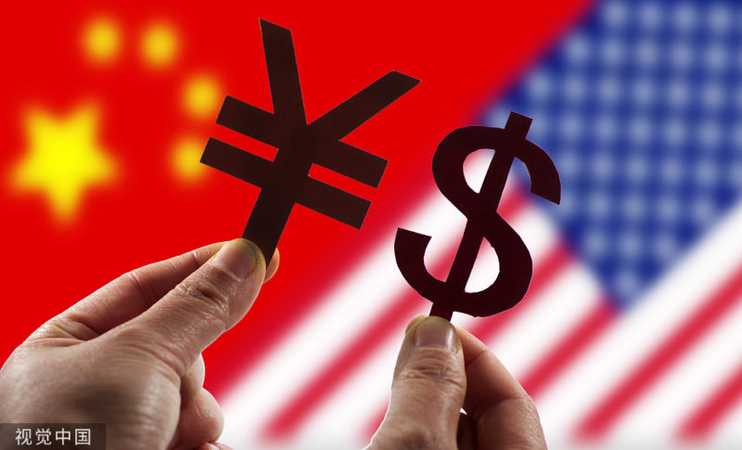
Initial U.S.-China trade deal has major hole: Beijing’s massive business subsidies #ศาสตร์เกษตรดินปุ๋ย

#ศาสตร์เกษตรดินปุ๋ย : ขอบคุณแหล่งข้อมูล : หนังสือพิมพ์ The Nation

https://www.nationthailand.com/news/30380009?utm_source=category&utm_medium=internal_referral

Initial U.S.-China trade deal has major hole: Beijing’s massive business subsidies

Dec 31. 2019
By David J. Lynch
The Washington Post

President Trump’s trade deal with Beijing leaves untouched the marriage of business and government known as China Inc. that American executives for nearly two decades have said tilted global markets against them.

Trump insisted for months that he wanted to resolve all outstanding trade issues with China in a single, comprehensive accord that would refashion the Chinese state’s economic role. As late as September, he rejected talk of a partial agreement, saying instead that he wanted “the big deal.”

 
The two sides discussed industrial subsidies in the early rounds of negotiations over an agreement that exceeded 150 pages. But Chinese officials resisted making structural changes, and by the time officials settled this month on an 86-page partial accord, any commitments to reduce subsidies had been excised.

Chinese steel mills, solar panel manufacturers, electric battery developers, shipbuilders and oil producers all benefit from a vast web of government support. Officials in Beijing arm Chinese companies against their foreign rivals with discounted loans from state banks, cheap land, low-cost electric power, and cash infusions from officially approved investment funds.

“The Chinese effort is dogged, long-term and very well-funded,” said John Neuffer, chief executive of the Semiconductor Industry Association. “That’s why the subsidy issue is such a big one for us.”

Under Chinese President Xi Jinping, who lacks his predecessors’ enthusiasm for the free market, the state spigot has gushed aid. China now devotes more than 3 percent of its annual output to direct and indirect business subsidies — a share of the economy that is roughly equivalent to what the United States spends on defense, according to economist Nicholas Lardy of the Peterson Institute for International Economics, a nonpartisan research group.

Some of that aid is similar to programs in the United States and other advanced nations, encouraging companies to retrain workers, use less energy or otherwise support government goals. But much of it is divorced from any consideration of profit and loss. So it fuels excess production of goods like steel, which spill into global markets, depressing prices and making it hard for American companies to compete.

Trump last year imposed tariffs on steel after the Commerce Department warned that the U.S. share of global production had fallen by nearly two-thirds since 2000, under pressure from heavily subsidized Chinese mills. At the same time, signs that China was lavishing state aid on efforts to supplant the United States as the global leader in advanced technology triggered Trump’s decision to launch his trade war with Beijing.

Subsidies are marbled throughout China’s state-led economy. For Chinese leaders, they are a principal tool of economic management, allowing them to steer credit, land, energy and other resources to favored state-owned enterprises as well as private companies that Beijing sees as strategic.

Whatever the cost, Beijing’s aid gives Chinese companies an important edge in other markets. Peter Navarro, the president’s principal White House trade adviser, calls state subsidies one of China’s “seven deadly sins,” which must be cured before the two countries can enjoy normal trade ties.

In a 215-page report last year, which kicked off Trump’s trade war with China, Robert E. Lighthizer, the president’s chief trade negotiator, identified government financial support as a key element in China’s plan to overtake U.S. technology leadership. China is “grossly subsidizing and taking over our markets,” he complained this summer before the Senate Finance Committee.

But this massive program of government assistance has proved a double-edged sword for China. State help enabled Chinese manufacturers to dominate markets for products such as auto parts, but it also has left the economy riddled with unprofitable “zombie” firms and suffering from pervasive inefficiency, economists said.

“These subsidies are being directed in ways that are really distorting. They are not being directed to dynamic firms,” said Loren Brandt, an economist at the University of Toronto.

Indeed, state-owned firms have become steadily less profitable as they have gotten bigger. Over the decade to 2017, the biggest state-owned enterprises nearly quadrupled their assets. But their returns fell to 2.6 percent from a peak of 6.7 percent in 2007.

Even as they underperform, state companies continue to enjoy easy access to loans from state banks. Meanwhile, private companies with brighter prospects often struggle to obtain credit.

“A lot of money’s getting wasted. There’s a massive misallocation of resources in underperforming state companies,” said Lardy, author of “The State Strikes Back: The End of Economic Reform in China?”

White House officials have acknowledged that some key issues remain unresolved. Lighthizer has said “a lot of hard things” have been left to future talks, which most analysts say will be arduous and unlikely to bear fruit before the November election.

Bargaining over industrial subsidies is expected to be particularly tough.

Though Trump launched the trade war to get China to change practices including its numerous subsidies, the commercial conflict has only convinced Xi to accelerate efforts to become self-sufficient — no matter the cost.

“The hard-liner view — they’re the ones who seem to have Xi Jinping’s ear or this is the way Xi thinks himself,” said Brandt. “But it’s clear that the more reformist constituency has lost out.”

The World Trade Organization prohibits subsidies that are directly linked to exports or that require the use of domestic goods. The U.S. has won at least three disputes over Chinese subsidies before the global trading body, including in 2011, when China agreed to halt a program of wind turbine subsidies after U.S. complaints.

But the WTO rules are poorly designed for a nonmarket economy of China’s size and importance to global trade. One problem is keeping track of the subsidies, which are often hidden or indirect.

Chinese makers of aluminum products appear to be driven by profits. But they benefit from government policies that provide cheap energy to the smelters that produce aluminum and from export limits that lead to a domestic glut, which keeps aluminum prices down too.

“They can be really effective selling into the U.S. or Europe,” said Chad Bown, another Peterson economist. “It’s just that all of their inputs are subsidized.”

After China labeled shipbuilding a strategic industry in 2006, the government funded several new shipyards and an array of subsidies that saved the industry up to $4.5 billion over a six-year period, according to research by economist Myrto Kalouptsidi of Harvard University.

China quickly doubled its market share from roughly one-quarter of world ship orders to half, grabbing business from Japan, South Korea and Europe. Only after analyzing shipyards in several countries and ruling out alternative explanations was Kalouptsidi able to estimate the extent of Chinese subsidies.

“It is practically impossible to explain the rapid increase in China’s market share” without fingering subsidies, she wrote in a 2018 paper.

Under WTO rules, the U.S. can impose steep tariffs to counteract the effects of a trading partner’s subsidies if they injure American companies. The administration has stepped up its use of trade remedies to counter Chinese subsidies, hitting in the past two months imports of steel staples, diamond saw blades, hardwood lumber and ceramic tiles with defensive levies of as much as 356 percent.

About 10 percent of all Chinese imports — more than $50 billion worth of goods — now face countersubsidy or anti-dumping tariffs, according to Bown. That is apart from separate levies the president imposed on $360 billion in Chinese products over the past 18 months.

Using such tariffs offers little prospect of success, though, against China’s multipronged effort to promote its domestic semiconductor industry.

Chinese central and provincial governments have earmarked about $100 billion for equity investments, credit lines and various grants over the next five years so China will become by 2030 the global leader in an industry now dominated by U.S. firms.

Private equity funds backed by the state are funneling cash into China’s semiconductor industry, helping build and outfit dozens of new fabrication plants. There are now more than 1,600 of these “government-guided funds,” commanding a total of $570 billion, according to Zero2IPO Research Center, a Beijing-based consultancy.

Unlike traditional private equity investors in the U.S., these Chinese funds are willing to accept subpar returns to meet government goals.

Two Chinese companies — SMIC and Tsinghua Unigroup — derive more than 30 percent of their annual revenue from government payments. Yet they offer their government investors below-market returns, according to a new study by the Organization for Economic Cooperation and Development in Paris.

Such investments are “probably among the hardest forms of support to identify and quantify,” the OECD concluded.

Despite years of free spending, Chinese semiconductor manufacturers remain far behind the U.S. state-of-the-art. Even failed industrial policy, however, can distort global trade flows and hurt non-Chinese companies.

While the U.S. industry retains a solid lead over aspiring Chinese rivals, the semiconductor industry’s Neuffer says the administration needs a broader response. Along with combating Chinese trade practices, the U.S. should be emphasizing workforce development, competition policy and opening other markets overseas.

“We need an affirmative agenda, too,” he said.

Japan-U.S. trade pact to take effect, lowering beef prices #ศาสตร์เกษตรดินปุ๋ย

#ศาสตร์เกษตรดินปุ๋ย : ขอบคุณแหล่งข้อมูล : หนังสือพิมพ์ The Nation

https://www.nationthailand.com/news/30380008?utm_source=category&utm_medium=internal_referral

Japan-U.S. trade pact to take effect, lowering beef prices

Dec 31. 2019
By Hiroyuki Yoneyama and Mayumi Terashima
The Japan News/ANN

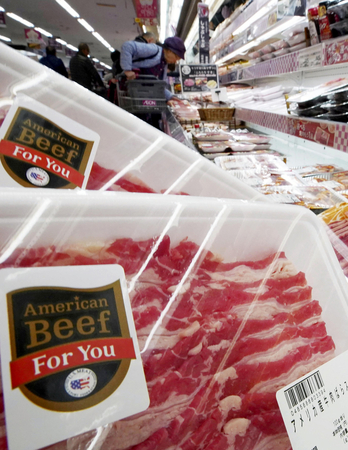
​TOKYO – A Japan-U.S. trade agreement that will go into effect on Jan. 1, 2020, will benefit Japanese consumers, partly because Japan’s tariffs on beef will be lowered. On the other hand, domestic livestock farmers will face intense competition due to imported products.

Tariffs on U.S. beef imports, which currently stand at 38.5%, will be lowered to 26.5% when the pact goes into effect, making import prices cheaper. Some retailers are taking advantage of this business opportunity to boost sales.

Major supermarket chain Aeon Retail Co. plans to launch sales promotions centering around U.S. beef starting in January of next year.

“We will have events that will allow customers to feel the affordability of these products,” said a person in charge of the events, though how much lower the price will be is still undecided.

In addition, consumer expectations are high, due to it being the season when beef for sukiyaki becomes more in demand. “When I eat U.S. beef, I grill it or put it in my curry,” a 47-year-old self-employed man said. “I’d be grateful if the price of beef were much cheaper.”

The United States has famous vineyards, including in California. For U.S. wines, the 15% or 125 yen per-liter tariff will be reduced in stages, going to zero in fiscal 2025. Supermarket chain operator Seijo Ishii Co. will lower the prices of about 70 types of products from California wines to U.S. nuts and peanut butter between Jan. 10 and 26. The company will consider reviewing the price of U.S. products after the events.

However, there is a possibility that domestic beef prices will go down or beef production will shrink, if the volume of cheaper U.S. beef increases in the country.

The Agriculture, Forestry and Fisheries Ministry estimated that the enforcement of the pact would lead to a reduced beef output of ¥23.7 billion to ¥47.4 billion. Dairy farmers will be required to cut costs in order to remain competitive.

Tariffs on cars next to discuss

Tokyo and Washington have agreed to discuss which fields should be renegotiated within four months after the pact goes into effect. Momentum in the Japanese government ahead of negotiations and discussions is not rising, though Japan is expected to ask the United States to eliminate tariffs on imported automobiles and car parts from Japan, one of the fields where negotiation will continue.

However, there is a sense of caution that Washington will try to impose additional tariffs up to 25%, if Tokyo demands it abolish tariffs. Many people in the Japanese car industry said, “[The government] should prioritize the avoidance of additional tariffs rather than the elimination of tariffs on passenger cars which currently stands at 2.5%.”

In the U.S. industry, there are strong opinions that the pact is insufficient, and the United States should aim to agree on a more comprehensive deal.

At a hearing conducted by the U.S. House of Representatives in November, a senior official at the United Automobile Workers voiced dissatisfaction with the fact that the pact didn’t include a foreign exchange clause which restricts a move to push the value of currency lower.

It is not easy for both countries to make concessions on “sensitive” products such as automobiles for the United States and rice for Japan. “I am skeptical that either side will be willing to make … stage-two negotiations a priority in 2020,” Matthew Goodman, a senior adviser at the Center for Strategic and International Studies, said regarding a Japan-U.S. meeting, and pointed out at the hearing that the United States has priorities including a negotiation with China in its trade policy.

Storm batters Luang Namtha #ศาสตร์เกษตรดินปุ๋ย

#ศาสตร์เกษตรดินปุ๋ย : ขอบคุณแหล่งข้อมูล : หนังสือพิมพ์ The Nation

https://www.nationthailand.com/news/30380007?utm_source=category&utm_medium=internal_referral

Storm batters Luang Namtha

Dec 31. 2019
By Keoviengkhone Bounviseth
Vientiane Times/ANN

VIENTIANE – Electricity poles and cables, houses, other buildings and some farmland suffered varying degrees of damage when a squall passed through Sing district in Luang Namtha province on December 28.

Strong winds and hail lashed roofs, some of which were torn off and blown to the ground, with residents receiving assistance to carry out repairs.

Fortunately, there were no reports of injury and local authorities are calculating the cost of the damage, an official in charge at the province’s Meteorology and Hydrology Department said.

Seven electricity poles and the cables they carried were brought down in the middle of a road in Sing district. The road remained impassable for a couple of days and power in the area was cut.

However, the poles were re-erected on Monday after the winds eased, the official said.

The total number of households affected was unknown but local authorities provided aid to those in need by helping them to repair their homes.

The public is urged to take care and be alert to the possibility of sudden weather changes, with strong winds, low temperatures and hail all possible.

This year, tropical storms brought wind and torrential rain to many parts of the country, with persistent heavy downpours in August and September.

Parts of Vientiane suffered damage as well as the provinces of Huaphan, Xieng Khuang, Oudomxay, Luang Prabang, Xayaboury, Xaysomboun, Vientiane, Borikhamxay, Khammuan, Savannakhet, Saravan, Champassak, Xekong and Attapeu.

Tropical storm Podul caused damage to schools, houses, hospitals, roads, reservoirs, bridges and farmland, and affected livestock.

At least 175,000 households in 1,466 villages of 43 districts in the nation’s southern and central provinces were affected by the storm.

Floodwaters submerged at least 151,000 hectares of farmland, 251 hectares of vegetable plots and 3,266 fishponds, and some 252km of roads were severely affected by the floods.

In July, tropical storm Son-tinh lashed northern and central areas, with low-lying areas experiencing wind squalls and flash floods.

In May and June, thunderstorms hit 13 provinces, bringing strong winds and damaging electricity poles, houses, bridges, roads, crops and livestock.

Global stock index rises slightly on Friday #ศาสตร์เกษตรดินปุ๋ย

#ศาสตร์เกษตรดินปุ๋ย : ขอบคุณแหล่งข้อมูล : หนังสือพิมพ์ The Nation

https://www.nationthailand.com/news/30380003?utm_source=category&utm_medium=internal_referral

Global stock index rises slightly on Friday

Dec 30. 2019
Apichat Poobunjirdkul

Apichat Poobunjirdkul
By The Nation

Senior Tisco Securities strategist Apichat Poobunjirdkul said on Monday (December 30) that the global stock index on Friday (December 27) increased slightly, thanks to the improved situation after an initial US-China tariff agreement amid a damaging trade war.

However, trading was quiet due to the Christmas and New Year holidays.

West Texas Intermediate crude closed at US$61.72 (Bt1,857.80) per barrel, up by 4 cents due to a decrease in US crude oil stocks and the number of oil rigs.

“The index is likely to move sideways to sideways up. The impact from contracts in the futures market caused the market to fluctuate. We still expect the market to gain from LTF & RMF inflows and window dressing speculation,” he said.

“If we look at statistics in the past five years, the opportunity for Thai stocks to rise was 80 per cent, with an average return of +0.44 per cent.”

He suggested that investors should sell stocks to make a profit when their stocks come close to a difficult point and buy it back when the price is weak.

Recommended outstanding stocks in January include AP, Intuch, IRPC, KKP, Susco, TVO, and VNT.

[Gallery] Bangkokians make merits at Wat Hua Lamphong #ศาสตร์เกษตรดินปุ๋ย

#ศาสตร์เกษตรดินปุ๋ย : ขอบคุณแหล่งข้อมูล : หนังสือพิมพ์ The Nation

https://www.nationthailand.com/news/30380002?utm_source=category&utm_medium=internal_referral

[Gallery] Bangkokians make merits at Wat Hua Lamphong

Dec 30. 2019
By Wanchai Kraisornkhajit
THE NATION

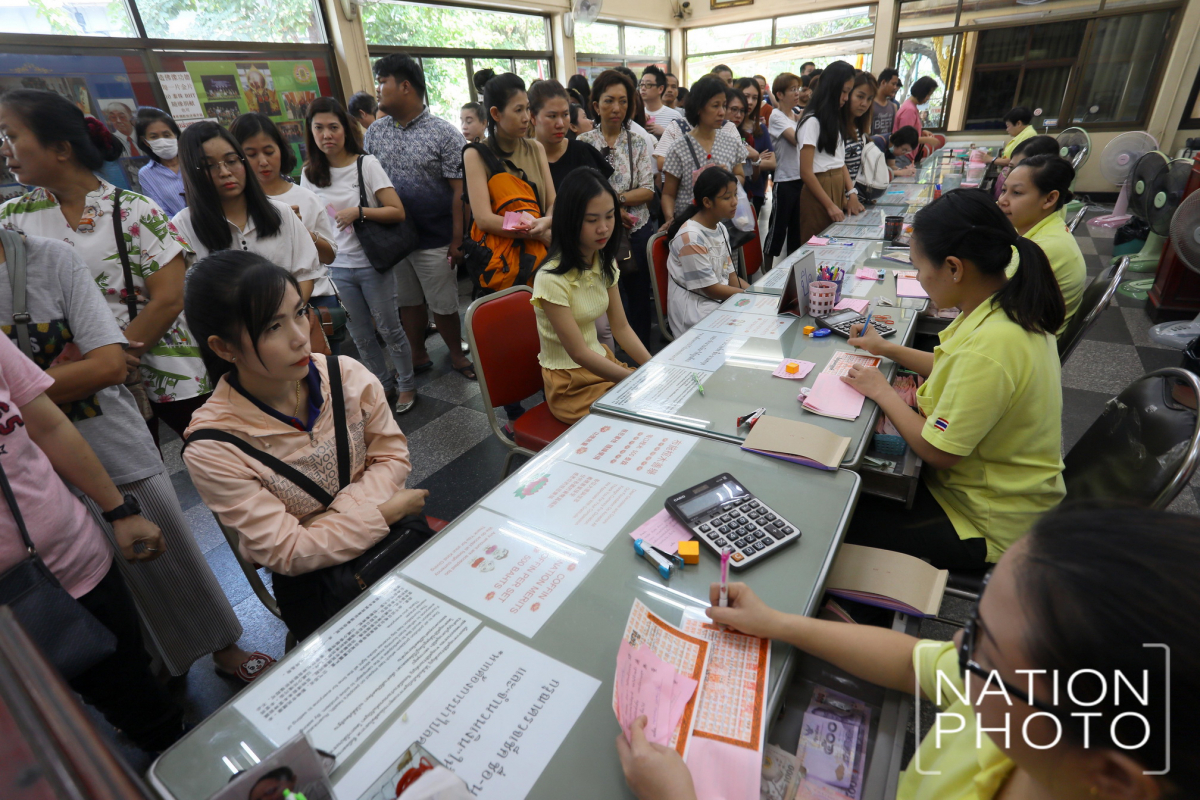
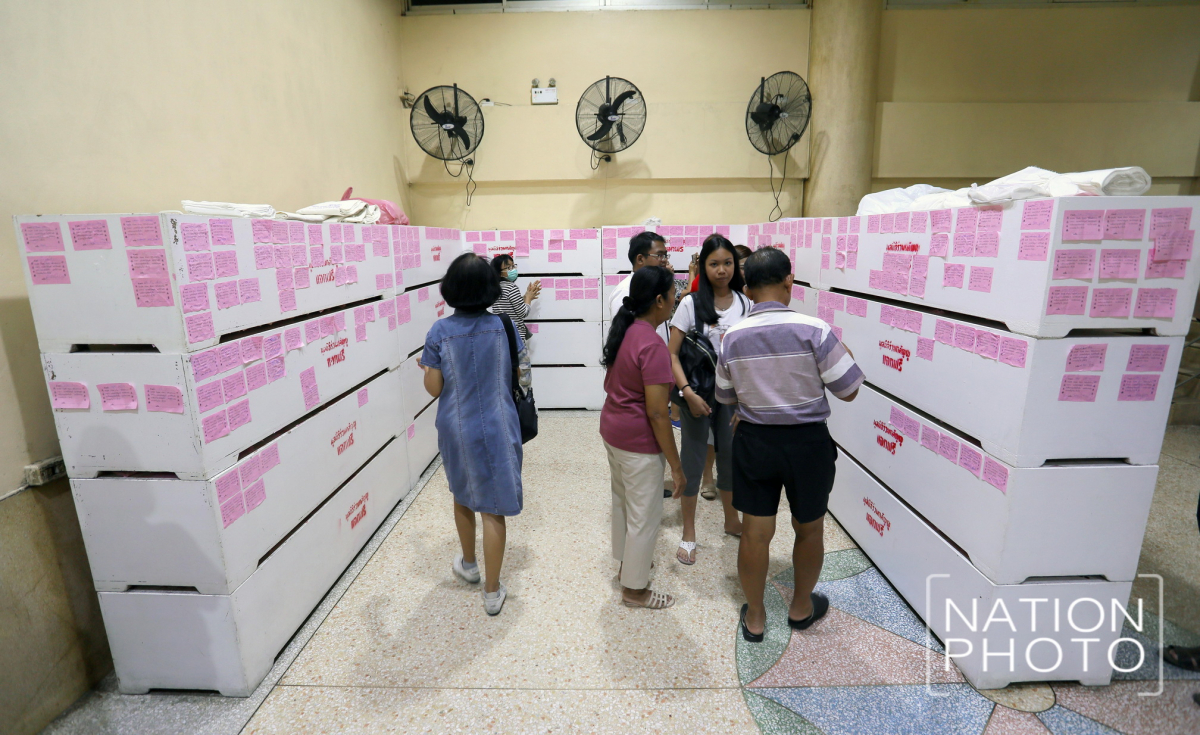
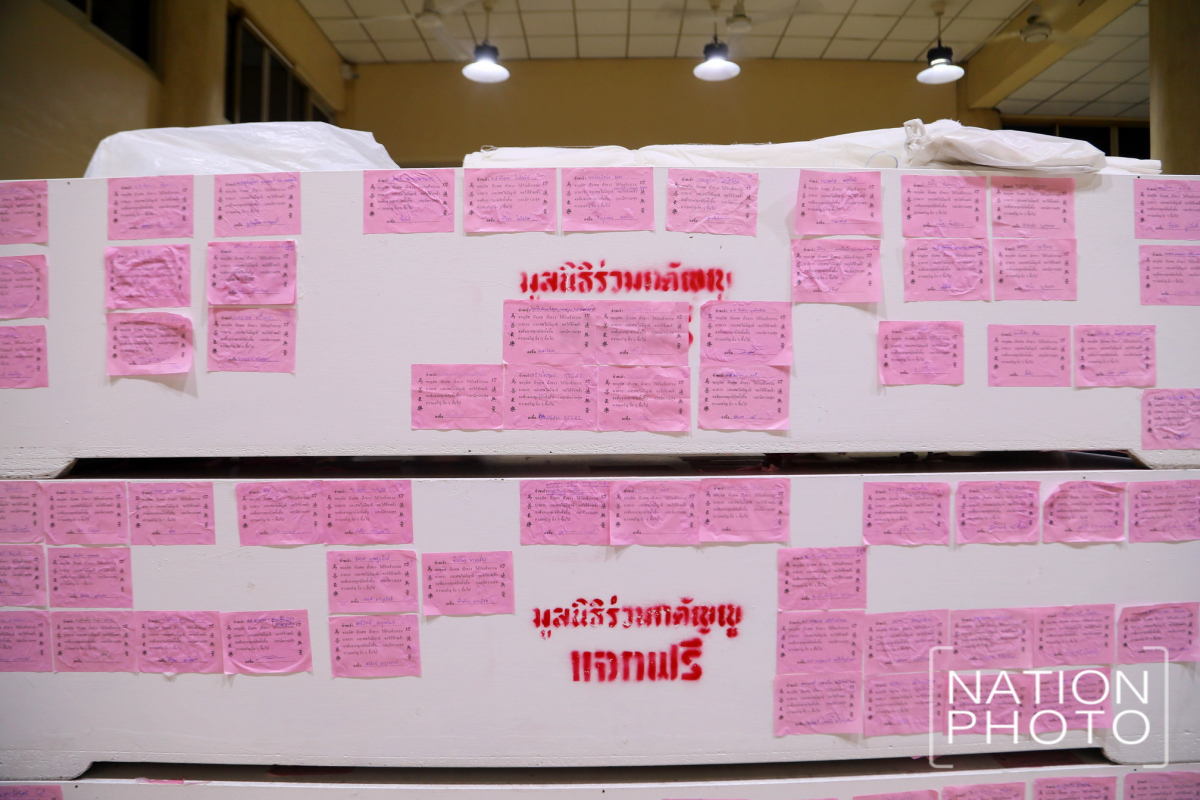
In the run-up to 2020, many families in Bangkok make merits at the Wat Hua Lamphong branch of Ruamkatanyu Foundation on Rama IV Road by donating money towards the funeral costs of the unclaimed dead.

It is believed that buying a coffin for an unclaimed dead person is among the greatest meritorious deeds that will bring the giver luck and security from all dangers.

The Ruamkatanyu Foundation is one of the biggest organisations of rescue volunteers in Thailand.

Shrimp exports expected by increase on 2020 but more govt support needed #ศาสตร์เกษตรดินปุ๋ย

#ศาสตร์เกษตรดินปุ๋ย : ขอบคุณแหล่งข้อมูล : หนังสือพิมพ์ The Nation

https://www.nationthailand.com/news/30380000?utm_source=category&utm_medium=internal_referral

Shrimp exports expected by increase on 2020 but more govt support needed

Dec 30. 2019
By The Nation

Exports of shrimp are expected to increase to 350,000 tonnes in 2020, 20-per-cent up over the past year which saw 290,000 tonnes exported valued at Bt60 billion, Somsak Paneetatyasai, president of the Thai Shrimp Association, has said.

Thai shrimp farmers have been hit by disease in their breeding programmes and protectionism from the US in the last two years leading to lower prices.

The Food and Agriculture Organization of the United Nations (FAO) has announced that shrimps are still much in-demand since shrimps netted at seas are now harder to catch and several countries including the US, the EU and China still have confidence in the quality of Thai shrimps.

However, the government will need to deal with the baht appreciation, which has led to lower revenue while also supporting research and development in shrimp farming so that Thailand can compete with other countries, help small shrimp farm owners access loans, and sign the Free Trade Agreement with the European Union as soo