Critics say Facebook’s powerful ad tools may imperil democracy. But politicians love them.

#ศาสตร์เกษตรดินปุ๋ย : ขอบคุณแหล่งข้อมูล : หนังสือพิมพ์ The Nation

https://www.nationthailand.com/news/30379608?utm_source=category&utm_medium=internal_referral

Critics say Facebook’s powerful ad tools may imperil democracy. But politicians love them.

Dec 19. 2019
By The Washington Post · Craig Timberg

215 Viewed

As Facebook sought to recover from its disastrous 2016 election season, company officials debated ways to curb distortions and disinformation on the platform. One of the most potentially powerful – limiting advertisers’ ability to target narrow slices of voters with political messages – struggled to find support and was abandoned, say people familiar with those discussions.

But today, as disinformation begins to spread ahead of the 2020 presidential vote, Facebook again is discussing “microtargeting” and weighing whether to restrict a set of advertising tools so powerful that, critics say, it may threaten democracy itself.

Though political advertising is a relatively small source of revenue for Facebook, which took in nearly $56 billion overall last year, the stakes are high because many politicians, including President Donald Trump, are avid users of its microtargeting tools. These include the ability to tailor messages to lists of individual voters or to small groups based on characteristics such as age, education, ZIP code, income, relationship status, interests, political leanings or combinations of the above. Politicians and operatives from both major parties have reacted angrily to proposals to curb these powers.

Facebook has been reluctant to meddle with this profit-making machinery, and even now its officials are downplaying talk of major changes as it discusses what new restrictions – if any – to announce. Nick Clegg, Facebook’s head of global affairs and communications, told reporters last week in Brussels that the company would not alter the “fundamental architecture of our approach” to political advertising.

But pressure to change the rules on microtargeting is being applied to Facebook from several directions.

Disinformation experts and researchers say limiting or banning political microtargeting would help slow the spread of falsehoods online by exposing problematic ads – by politicians or political interest groups – to a wider audience, where inaccuracies or outright lies would be more likely to be noticed and exposed.

Actions by rival tech companies also are increasing the pressure. Last month, Twitter announced it was banning ads by political candidates, and Google sharply limited microtargeting for political campaigns, adding to the company’s long list of advertising topics, including gambling, alcohol consumption and medical treatments, for which the company has targeting restrictions.

Some U.S. officials also have spoken out against microtargeting of political ads. Federal Election Commission Chairwoman Ellen Weintraub has repeatedly warned about microtargeting, including in a Washington Post opinion piece last month in which she called the practice “a potent weapon for spreading disinformation and sowing discord.”

Sen. Ron Wyden, D-Ore., a longtime advocate of internet freedoms, called for restrictions on microtargeting in October in an addendum to a Senate Intelligence Committee report detailing Russian interference in the 2016 campaign. Wyden issued a statement last week reiterating his call. “Now that Google and Twitter have taken responsible steps to guard against shadowy political influence campaigns, Facebook should do the same, rather than continuing to chase political advertising dollars,” he said.

Facebook spokesman Kevin McAlister acknowledged that Facebook is discussing how it handles political ads. “We are looking at different ways we might refine our approach to political ads. We’re continuing to collect feedback and are considering the options,” he said.

– – –

Facebook began its efforts to address rampant falsehoods on its platform soon after the 2016 election and intensified them the following year, when it reported that the Internet Research Agency, a Russia-based troll farm that mounted a major online influence operation during the U.S. presidential campaign, had bought ads using Facebook’s targeting tools.

That prompted congressional hearings and intense debate within Facebook over how to address the increasingly obvious problems on the platform. The company gradually adopted several remedial actions, including expanding teams to combat disinformation campaigns, creating an online archive so outsiders could monitor political ads and establishing systems for verifying the identities of ad purchasers.

Limits on microtargeting did not make the cut, and discussions about the idea quieted. But the backlash over Facebook’s political ads policy, which in September officially exempted the claims of politicians from the company’s network of outside fact-checkers, prompted renewed interest in other ways to curb disinformation and jump-started the conversation on microtargeting.

Amid mounting external pressure, an October employee letter to chief executive Mark Zuckerberg, which said the political ads policy “allows politicians to weaponize our platform,” also called for limits on microtargeting, according to a New York Times report that underscored the internal unrest on the issue.

Still, the changes Facebook ultimately undertakes are likely to be far less sweeping than the ones imposed by Twitter or Google, say people familiar with internal discussions who spoke on the condition of anonymity.

One leading idea under discussion is setting a larger minimum size for microtargeted groups. The standard limit of 100, for example, could be raised to 1,000 or 10,000 for political ads, increasing their transparency somewhat, say those familiar with the discussions.

Even that modest change would upset political campaign operatives who have become dependent on microtargeting to communicate messages not only to potential supporters but also to people who are likely to donate to a political campaign.

Microtargeting also is a lucrative staple of corporate advertising, and Facebook has built its business around its remarkable ability to deliver messages tailored to individual Facebook users.

But disinformation experts say that, in the political context, microtargeting opens the door to distortions because no outside observer has a full view of the torrent of tailored messages being delivered. This essential fact of microtargeting undermines the routine scrutiny undergone by television ads or billboards, where any demonstrable falsehood is on display for all to see – and potentially challenge.

Very narrow targeting, say disinformation experts, fractures political understanding far more severely than the traditional red-blue partisan divide.

“Instead of two Americas, you’re potentially looking at hundreds of thousands of Americas,” said Alex Stamos, the former Facebook security chief, now head of the Stanford Internet Observatory, which studies disinformation campaigns. “I don’t think our democracy can survive that kind of Balkanization of the electorate.”

The impact of microtargeting is multiplied by the frenetic pace of modern politics in which a campaign might create thousands of ads a day, each destined for a separate tiny audience.

– – –

Cambridge Analytica, a former Trump campaign consultancy that was forced out of business by controversy last year, once bragged about its ability to use Facebook data it had obtained to tailor messages with unmatched precision, based on personality types of voters determined via preferences expressed through “likes” and other social media signals. While many political professionals considered such claims overblown, the practice of harnessing social media posts and other personal data to direct advertising remains popular, despite the demise of Cambridge Analytica itself, experts say.

Advertisers can even pursue similar tactics using Facebook’s own microtargeting tools, based on the company’s vast troves of data on its nearly 2.5 billion users, including a large majority of U.S. voters. The sources include what users voluntarily post, what they do elsewhere on the internet and what commercial data brokers collect about personal characteristics and financial histories.

Facebook also allows microtargeting by letting advertisers upload lists of people – by name, phone number, email address or other identifying characteristics – to create a matched “Custom Audience” of Facebook users. Advertisers that create “Custom Audiences” also can create a secondary list called “Lookalike Audiences” of people with similar characteristics.

“No other advertising platform in history comes close to having Facebook’s capabilities,” said Jonathan Albright, research director of the Tow Center for Digital Journalism at Columbia University. “If there was no Custom Audiences, then we probably wouldn’t be talking about microtargeting right now.”

Those who favor curbing microtargeting say the simplest and most effective approach would be to ban “Custom Audiences” and “Lookalike Audiences” for political ads, but there is not wide support for such dramatic action within Facebook, say people familiar with discussions there. The company has seriously discussed limiting the number of ads a single candidate can run simultaneously, imposing a blackout on political ads in the 72 hours before a vote and raising the minimum number of people that a campaign could target with a particular ad.

Facebook does have an existing list of restrictions that prohibit targeting for housing, employment or credit offers based on race. It expanded these in March to also include restrictions on advertising based on gender, age and ZIP code – which often serve as proxies for race – to settle civil rights litigation accusing the company of enabling racial discrimination.

The Russians at the Internet Research Agency used Custom Audiences in 2016 for some of its Facebook ad purchases, targeting people who had visited websites and Facebook pages the Russians had created on such hot-button issues as illegal immigration, African American political activism and the rising prominence of Muslims in the United States. But Custom Audiences and microtargeting in general go far beyond such nefarious actors. Their use is routine in political online advertising by campaigns on the right, left and middle.

Trump’s campaign in 2016, for example, produced more than 50,000 ads a day – many with just slight variations in graphics, wording or colors – according to Brad Parscale, then the campaign’s digital adviser and now the campaign manager of Trump’s reelection effort, who described the operation in a “60 Minutes” interview in 2017.

“Facebook now lets you get to places and places possibly that you would never go with TV ads,” Parscale said in the interview. “Now, I can find, you know, 15 people in the Florida Panhandle that I would never buy a TV commercial for. And, we took opportunities that I think the other side didn’t.”

The result was that an Army veteran in Texas concerned about immigration likely saw ads different from those seen by a Pennsylvania nurse concerned about health care. And, more important, they each likely saw ads that were different from those shown to their neighbors, their friends, even their siblings or spouses, because Facebook has such enormous data stores it can distinguish among people with generally similar views.

The reaction to Google’s ban on microtargeting and reports that Facebook might impose its own restrictions highlighted the political stakes involved.

“Google has made an extraordinarily poor decision which will lead to less-informed voters, lower voter engagement, and voter suppression,” said a joint statement last month from Trump’s reelection campaign and three national Republican groups. “Google should immediately reverse its decision in order to ensure they do not suppress voter turnout during both the Democrat primaries and the 2020 general election.”

The Democratic National Committee sent a letter to Facebook Chief Operating Officer Sheryl Sandberg last month, the day after Google announced its restrictions on microtargeting, urging Facebook not to follow suit and calling instead for more transparency, policy enforcement and fact checking. “Banning political ads or severely inhibiting targeting capabilities on Facebook would not be in our party’s best interest nor in the best interest of promoting voter participation,” said the letter, a copy of which was obtained by The Washington Post.

But the record of Facebook’s third-party fact-checking system, created in 2016 as one remedy to disinformation, is viewed as a mixed success within the technology industry because it has proved impractical for reviewers to keep up with the flood of falsehoods that appear online every day.

Limiting microtargeting wouldn’t directly address false claims but it could make their circulation easier to spot and challenge.

“We’re used to seeing the ads where the candidate turns to the camera and says, ‘I approved this ad.’ This is so far from that context that it’s hard to comprehend,” said Ashley Boyd, vice president of advocacy for the Mozilla Foundation, a nonprofit ground that supports an open and inclusive Internet and has called for curbs on microtargeting.

Local entrepreneurs look to Japan for tips on local tourism

#ศาสตร์เกษตรดินปุ๋ย : ขอบคุณแหล่งข้อมูล : หนังสือพิมพ์ The Nation

https://www.nationthailand.com/news/30379623?utm_source=category&utm_medium=internal_referral

Local entrepreneurs look to Japan for tips on local tourism

Dec 19. 2019
By The Nation

197 Viewed

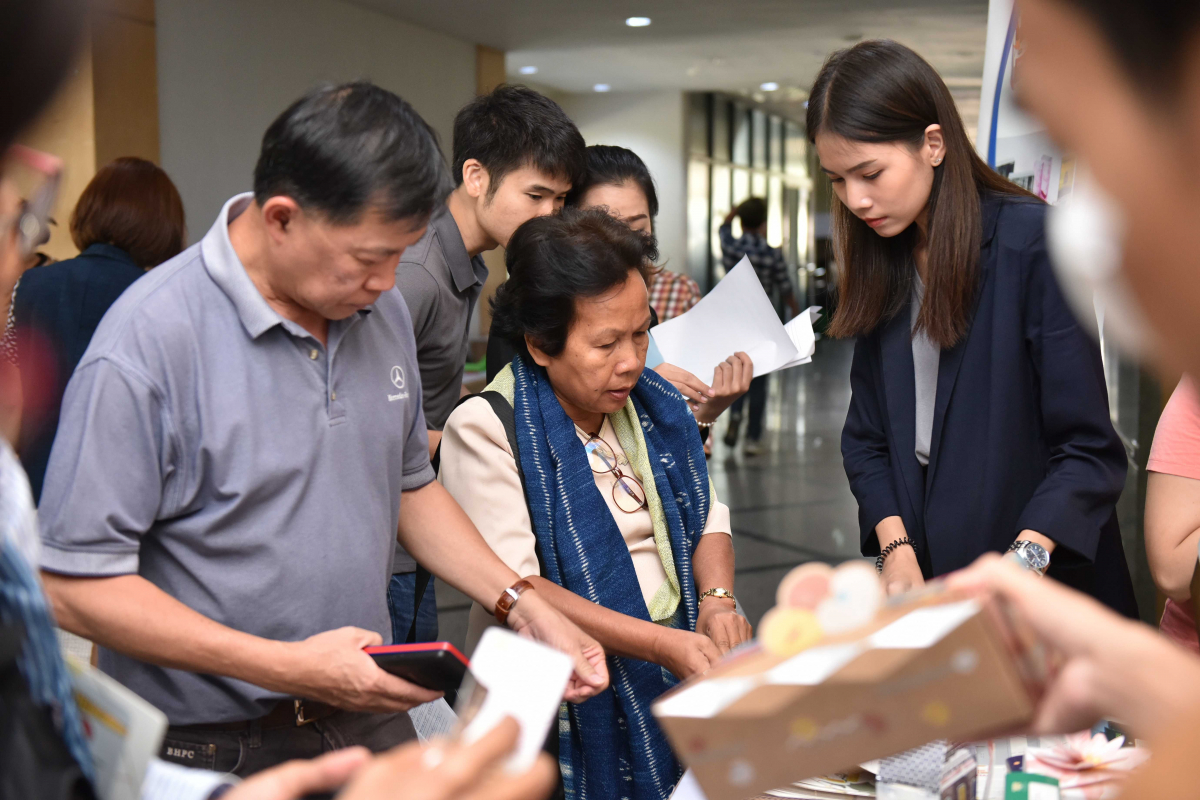
The Thai Chamber of Commerce, the Department of International trade promotion (DITP), the Japan External Trade Organization (JETRO), and the Japanese Chamber of Commerce (JCC) recently organised an international seminar on the theme “Local tourism from Japan role model” for Thai entrepreneurs wanting to learn about the country’s successful business model and packaging design.

In his opening address, Kalin Sarasin, the Thai Chamber of Commerce’s chairman, noted that Thailand was a multi-cultural country with a wide variety of the landscapes yet tourists still tended to visit the major centres like Bangkok, Phuket and Chiang Mai. There was thus a need to encourage interest in smaller and less-known destinations and online media was the ideal channel for such promotion.

However, in addition to online promotion, many local organization need better tourism management and unique packaging that will attract tourists to enjoy what their towns or communities have to offer.

“We invited the lecturers from Mie province, Japan, to share experiences and example of product improvement using storytelling to lure travellers to visit and revisit,” Kalin said.

Parliament staff apologise for that Future Forward kiss

#ศาสตร์เกษตรดินปุ๋ย : ขอบคุณแหล่งข้อมูล : หนังสือพิมพ์ The Nation

https://www.nationthailand.com/news/30379615?utm_source=category&utm_medium=internal_referral

Parliament staff apologise for that Future Forward kiss

Dec 19. 2019
By THE NATION

671 Viewed

The House Speaker’s chief of staff Phongsri Tharaphum and secretary Tankhun Jit-Issara on Wednesday (December 18) hosted a press conference to address a recent event during another press conference in the room set aside for media briefings at Parliament when MPs from Future Forward Party locked lips.

“There are rules for using the press conference room that prohibit inappropriate language, insults, slander and indecent behaviour,” said Tankhun. “Furthermore, users must maintain polite manners at all time in the establishment and follow other stated rules strictly.”

Tankhun further added that in the past months there have been violations of House of Parliament’s rules in the conference room from time to time, especially the unauthorized “live broadcasting” via social media, prompting the announcement that inappropriate behaviour will not be tolerated. “We are not trying to restrict anyone’s freedom of speech or actions, we just want everyone to respect the rules of the establishment,” he added.

Thanyawat Kamolwongwat, spokesperson of House of Parliament’s committee for children, women, elderly persons, disabled persons, ethnic groups and LGBT also issued an apology for actions of Future Forward Party MPs at the House of Parliament’s press conference room. “The committee did not plan for such incident to happen and we are sorry that the incident affected the image of the House of Parliament,” he said. “I will admonish the persons involved and make sure that such an incident never happens again.”

NEA to use AI and Big Data to boost exports

#ศาสตร์เกษตรดินปุ๋ย : ขอบคุณแหล่งข้อมูล : หนังสือพิมพ์ The Nation

https://www.nationthailand.com/news/30379611?utm_source=category&utm_medium=internal_referral

NEA to use AI and Big Data to boost exports

Dec 19. 2019
By THE NATION

462 Viewed

The New Economy Academy (NEA), an agency under the Commerce Ministry’s Department of International Trade Promotion (DITP), says it will use AI and Big Data to promote SMEs and analyse the demand of foreign consumers based on their behaviours, trends and cultures.

NEA director Nanthaphong Jiralertphong said this week that NEA and DITP have together pioneered the use of AI and Big Data technologies to analyse markets in various countries including China, Vietnam, Singapore, Laos and Cambodia. “The project revealed that Thai entrepreneurs are in need of in-depth data on foreign markets in order to develop products that suit the needs of consumers in those countries,” he added.

“In 2020, NEA will start developing our own platform of AI and Big Data Analytics to analyse consumers’ behaviours and market trends in specific areas with real-time updates, focusing mainly on the CLMV (Cambodia, Laos, Myanmar, Vietnam) and China,” he said. “The product groups that will most benefit from this programme are processed agricultural produce, health and beauty, gifts, and other consumer products.”

Nanthaphong further explained that the data analytics module will be combined with the design thinking process to analyze consumers’ behaviors, market trends and cultural preferences and cross reference these with products’ characteristics. “NEA will then use this information to formulate strategic plans for each product and market, enabling Thai entrepreneurs to plan their manufacturing and exports accordingly.”

Further information can be found at https://nea.ditp.go.th and www.ditp.go.th or by calling the hotline at 1169.

Instagram programme aims to groom young entrepreneurs

#ศาสตร์เกษตรดินปุ๋ย : ขอบคุณแหล่งข้อมูล : หนังสือพิมพ์ The Nation

https://www.nationthailand.com/news/30379599?utm_source=category&utm_medium=internal_referral

Instagram programme aims to groom young entrepreneurs

Dec 19. 2019
By The Nation

1,007 Viewed

Instagram has launched a training programme to support young Thai entrepreneurs start their businesses, pointing out that millennials are behind the success that generates Thailand’s small and medium businesses’ market value of Bt7 trillion.

Facebook Thailand’s Head of Small and Medium Business, Chawadee Wongphyat, explained that Instagram has changed the way of discovering local businesses, online shopping and searching for new tourist destinations, as well as sharing moments with other people in the community.

“This platform helps businesses grow. There are 140 businesses that use Facebook, Instagram, and WhatsApp worldwide, while the number of users tends to increase every day,” she said.

This platform also helps connect Thai people with their favourite things and inspire them to create a brand by using hashtags, promoting content via Instagram stories, as well as allowing other people to see behind the scenes images of relevant operation.

Many global content creators and brands are taking advantage of over 200 million Instagram accounts, by allowing them to see brand profiles they are interested at least once a day.

“Aside from using IG Stories which have 500 million users per day, those users also like to share videos. Meanwhile, the success from the IGTV feature helps users to post horizontal videos with a longer duration in the platform,” said Chawadee.

Chawadee said the company held its first training programme in Thailand, “Instagram Academy Thailand” for 250 young entrepreneurs. This programme was designed to provide knowledge and improve the potential of Thai youth and students with digital skills needed to develop their business. This programme is focused on young business groups under 35.

“This programme was developed from the success of using platform service which helps many people and businesses to show their unique potential to the community with over one billion people worldwide,” she said. “More than 90 per cent of these people followed businesses that they were interested in, while this number of people also continually increased in Thailand.”

She added that the people behind Instagram’s success are over 20 million millennials in Thailand.

“They are not only consumers, but some of them dream to be small business owners,” she said.

According to the research of Office of Small and Medium Enterprises Promotion, Thai millennials start their business from the time they turn 19, or while studying in universities. These people have helped create around Bt7 trillion of SMBs market value, or 43 per cent of gross domestic product and gross national product.

THAI to submit rehab, purchase plans in January

#ศาสตร์เกษตรดินปุ๋ย : ขอบคุณแหล่งข้อมูล : หนังสือพิมพ์ The Nation

https://www.nationthailand.com/news/30379600?utm_source=category&utm_medium=internal_referral

THAI to submit rehab, purchase plans in January

Dec 19. 2019
By THE NATION

1,117 Viewed

State carrier Thai Airways International (THAI) plans to submit a rehabilitation plan (2020-2025) to the board of directors in January, comprising twenty projects and four measures.

THAI president Sumeth Damrongchaitham said a separate proposal for the purchase of new aircraft will also be submitted.

The first measure aims to increase Thai Airways’ revenue from ancillary services, such as advance seat selection, food and beverage and ‘preferred seats’ which allows passengers to get a seat with extra space if they paid more. The ‘preferred seats’ service has been well received, expected to increase THAI’s revenue by least Bt70 million per month”, the president said.

“Also, there are measures to improve the carrier’s capacity by using technology, and to control and reduce the organisation’s expenditure by applying a new aircraft management plan ‘Plan Buy Fly Sale’. This plan will allow the organisation to buy or sell aircraft at any time, without waiting for them to be discharged or falling into deterioration”.

The last measure means other measures apart from the three, such as dealer control measure, or a measure to improve collaboration between the organization and the government

In the board of director’s meeting in January 2020, the company’s executives will propose a new aircraft purchase plan, based on the existing framework for 38 aircraft at a maximum cost of Bt156 million.

MoU signed for lowering of green house gas emission

#ศาสตร์เกษตรดินปุ๋ย : ขอบคุณแหล่งข้อมูล : หนังสือพิมพ์ The Nation

https://www.nationthailand.com/news/30379597?utm_source=category&utm_medium=internal_referral

MoU signed for lowering of green house gas emission

Dec 19. 2019
Somjin Piluek

Somjin Piluek
By The Nation

988 Viewed

The Industrial Estate Authority of Thailand (IEAT) on December 18 signed a memorandum of understanding (MOU) with Japan’s Dowa Eco-System Co Ltd (DES) for the fluorocarbons (FCs) management project of the Ministry of the Environment.

The signing is related to the Japan government’s help in improving the treatment of FC substances (CFCs, HCFC and HFCs), said IEAT governor Somjin Piluek.

The project is expected to reduce FCs emission by 219 tonnes a year through the recollection of FC substances from freezers and air conditioners. The release of greenhouse gas will be lowered by using the fluidised bed incinerators in Bangpoo Industrial Estate.

IEAT is collaborating with public and private partners for the project. The Customs Department recently handed over 130 tonnes of smuggled FCs for the project’s experiments while Waste Management Siam Co helped with transportation of the substances to the incinerators for disposal.

BMA ready to deal with surge in electric/electronic wastes at year-end

#ศาสตร์เกษตรดินปุ๋ย : ขอบคุณแหล่งข้อมูล : หนังสือพิมพ์ The Nation

https://www.nationthailand.com/news/30379591?utm_source=category&utm_medium=internal_referral

BMA ready to deal with surge in electric/electronic wastes at year-end

Dec 18. 2019
By The Nation 

1,170 Viewed

The Bangkok Metropolitan Authority (BMA) is working with the Pollution Control Department (PCD) to help citizens get rid of their electrical and electronic wastes during the New Year festival.

BMA permanent secretary Silapasuay Raweesangsoon said on Wednesday (December 18) that the authority was concerned about the garbage problem which impacts the environment and people’s quality of life, especially hazardous waste such as broken electrical and electronic appliances.

The authority’s operations in 2018 found that the amount of hazardous waste in the community totalled 1,229 tonnes of which 29 per cent were light bulbs, 13 per cent electronic appliance batteries, 3 per cent dry cell batteries and others, 40 per cent chemical containers and spray cans, and 15 per cent broken electrical appliances.

“The 50 district offices under the BMA will provide an additional service of collecting various types of hazardous wastes to help the people, as most of them will clean their house during the New Year festivities which may generate a large amount of electrical and electronic wastes,” she said.

She added that the BMA will cooperate with the PCD to collect electrical and electronic wastes by allowing people to bring broken electrical appliances, such as television sets, refrigerators, computers, mobile phones, microwave ovens, washing machines and clothes dryers to the department from now until December 29.

“If the product is not yet disassembled, we will recycle or dispose it of properly,” she added. “Citizens can drop these hazardous wastes as scheduled on Sunday or according to the announcement of the district office. They can also deliver to any of the nearby 50 district offices, or the Pollution Control Department office in Phya Thai district.”

FTI to push government on local procurement in EEC

#ศาสตร์เกษตรดินปุ๋ย : ขอบคุณแหล่งข้อมูล : หนังสือพิมพ์ The Nation

https://www.nationthailand.com/news/30379590?utm_source=category&utm_medium=internal_referral

FTI to push government on local procurement in EEC

Dec 18. 2019
By The Nation

1,251 Viewed

The Federation of Thai Industries (FTI) will propose that the government lay emphasis on procuring domestic materials in the Eastern Economic Corridor (EEC), suggesting up to 90 per cent in some areas.

FTI chairman Supant Mongkolsuthree said on Wednesday (December 18) that the federation has made four proposals:

1 Establish a committee under the Comptroller-General’s Department and The Joint Standing Committee on Commerce, Industry and Banking (JSCCIB) to set guidelines for local product procurement with an appropriate proportion.

2 Set the condition that government and state enterprises’ material procurement from local entrepreneurs should not be less than 40-60 per cent.

3 Set the proportion of domestic materials used for government projects in major industries, for example the government should procure 90 per cent from Thai entrepreneurs in the construction materials industry, 30-40 per cent in the rail industry and 40-50 per cent in logistics, automotive, and shipbuilding industries.

4 Consider using construction materials that comply with Thai Industrial Standards for government projects.

Supant said that production rate statistics during 2016-18 found that entrepreneurs in the construction materials industry still have a capacity of about 65 per cent.

“We suggested that the government should support a minimum procurement of 90 per cent, especially for the dual track railway, high-speed train, and infrastructure in the EEC, which Thai entrepreneurs are able to operate,” he said.

He added that for the rail industry, the government should develop Thai entrepreneurs to be able to produce parts and equipment in the country, because Thailand has a lot of investment in the rail system. Therefore, the government should support at least 30-40 per cent procurement.

“For logistics, automotive and shipbuilding industries, such as transportation businesses, modern logistics centre and the development of areas around the airport and industrial port, the government should support at least 40-50 per cent [domestic procurement],” he added.

Thai fruits buck the trend of slumping exports

#ศาสตร์เกษตรดินปุ๋ย : ขอบคุณแหล่งข้อมูล : หนังสือพิมพ์ The Nation

https://www.nationthailand.com/news/30379588?utm_source=category&utm_medium=internal_referral

Thai fruits buck the trend of slumping exports

Dec 18. 2019
Auramon Supthaweethum

Auramon Supthaweethum
By THE NATION

1,406 Viewed

Thai fruits remain popular in the world market, defying the global economic slowdown and shrinking exports, Department of Trade Negotiations director-general, Auramon Supthaweethum said.

“One reason supporting Thai fruit exports is the increasing trend of healthy food consumption,” she explained. “Free Trade Agreements have also helped reduce or scrap import duties in partner countries, and made Thai fruits more competitive.”

From January to October, Thailand’s fruit exports moved from 10th position in the world in 2018 to sixth, behind Spain, Netherlands, Mexico, US and Chile. Thai fruit exports were valued at US$3.213 billion, up 41 per cent from the same period of last year.

The main export market for Thai fruits is Asean countries and China, with exports to these destinations accounting for $2.690 billion, or 84 per cent of total exports. “The most popular Thai fruits were durian, mangosteen and longan, for which Thailand is the number one exporter,” the director-general added.

Presently, FTAs with China, Australia, New Zealand, Chile, Peru, and Hong Kong have led to scrapping of customs duties on all kinds of frozen and dried fruits. Meanwhile, other FTA partners — Japan, South Korea, India, and Malaysia — have cancelled import duties on most processed fruits on the list.

Also, Auramon said the trend of healthy food consumption would give Thailand an opportunity to export more fruits.

“To win customers’ hearts, farmers should ensure their products meet international standards in sanitary and phytosanitary. Besides, they should improve product quality to satisfy the market demand for organic fruits,” she added.