Thai energy firm sets sights on Taiwan wind power project

#ศาสตร์เกษตรดินปุ๋ย : ขอบคุณแหล่งข้อมูล : หนังสือพิมพ์ The Nation

https://www.nationthailand.com/business/30379442?utm_source=category&utm_medium=internal_referral

Thai energy firm sets sights on Taiwan wind power project

Dec 16. 2019
By THE NATION693 Viewed

Energy Absolute (EA), a renewable energy firm, is interested in bidding for a wind power project in Taiwan, the company’s deputy chief executive officer Amorn Sapthaweekul said.

He expected Taiwan to invite bids next year for Phase 3 development of the wind power to generate 3,000 megawatts.

EA is closely monitoring the project, he added..

He said Taiwan was a country with high potentail in wind power generation.

Besides Taiwan, the company has also conducted a feasibility study on investing in a hydropower project with capacity between 100MW-200MW in Laos, he added.

KBank bids for licences in Idonesia, Myanmar Vietnam

#ศาสตร์เกษตรดินปุ๋ย : ขอบคุณแหล่งข้อมูล : หนังสือพิมพ์ The Nation

https://www.nationthailand.com/business/30379410?utm_source=category&utm_medium=internal_referral

KBank bids for licences in Idonesia, Myanmar Vietnam

Dec 16. 2019
Kattiya Indaravijaya

Kattiya Indaravijaya
By THE NATION

900 Viewed

Kasikornbank (KBank) has applied for a licence to open a branch each in Vietnam, Indonesia and Myanmar as part of its continued overseas business expansion, president Kattiya Indaravijaya said on Friday (December 13).

She expects the bank to be awarded at least one of these licences next year.

There is a high chance that the bank will obtain the licence from either Indonesia or Vietnam, she added.

Currently KBank has combined branches and representative offices in 16 countries.

Amazon gets final OK for its new HQ in Arlington, despite organized labor protest

#ศาสตร์เกษตรดินปุ๋ย : ขอบคุณแหล่งข้อมูล : หนังสือพิมพ์ The Nation

https://www.nationthailand.com/business/30379459?utm_source=category&utm_medium=internal_referral

Amazon gets final OK for its new HQ in Arlington, despite organized labor protest

Dec 15. 2019
File Photo of  Amazon headquarters : Seattle Spheres / Photo Credit:  Amazon

File Photo of Amazon headquarters : Seattle Spheres / Photo Credit: Amazon
By The Washington Post · Patricia Sullivan 

1,359 Viewed

Amazon can build twin 22-story headquarters buildings in Pentagon City, the Arlington County Board (Virginia) agreed Saturday in a 5-to-0 vote, after the online giant promised $20 million in funding for affordable housing and vowed to crack down on labor fraud on its construction site.

It was the final approval Amazon needed to begin building its second headquarters, known as HQ2, in Arlington County, and it came after a four-hour hearing where the only friction was provided by about 100 union carpenters and building trade workers upset by what they said was payroll fraud on the part of contractors and subcontractors working on the company’s temporary headquarters.

HQ2 is expected to be completed by 2023 and could transform the predominantly high-rise residential and low-rise warehouse district into anew center of urban life just across Interstate 395 from the Pentagon.

The 2-million-square-foot headquarters, at the parcel containing 1400 S. Eads St. and 501 15th St. South, will house about 12,500 employees – half the expected 25,000 Amazon employees who will eventually work in the area. Hundreds of employees are already working in leased offices around Crystal City, and another Amazon headquarters building in the neighborhood is working its way through the planning process, most likely to come up for approval next year. (Amazon founder and chief executive Jeff Bezos owns The Washington Post.)

Negotiations between the county and the company for the Eads and 15th Street locations, called Metropolitan Park, were necessary because the site had been zoned for residential use, and Amazon sought to add about 590,000 square feet of density to 1.56 million square feet that was already permitted.

The $20 million commitment for affordable housing is the largest single infusion of money into Arlington’s housing fund.

Amazon also promised to open a new 160-slot day-care facility for use by both employees and other Arlington residents on a first-come, first-served basis; spend about $14 million to expand an existing public park tucked between high-rises into a two-acre public plaza and to pay for its maintenance in perpetuity; create two highly energy efficient structures that will be 100 percent powered by renewable energy by 2030; build two new protected bike lanes; devote its 69,545 square feet of ground-floor space to a “curated” selection of retail shops; and provide a 700-person indoor event space available for county-sanctioned events at least four times a year. An underground garage will have 1,933 spaces and workers will be encouraged to use mass transit, company-provided van pools, bikes and scooters – or walk to work. Additional transit and transportation improvements in the area were also promised.

The outcome of the board’s vote was never really in doubt, because Arlington officials and most residents welcomed the company’s announcement 13 months ago that it had selected the area including Pentagon City, Crystal City and Potomac Yard as the home for HQ2.

But union carpenters filled the hearing room to protest, alleging payroll fraud and misclassification of workers who are renovating existing structures for Amazon’s temporary quarters.

Amazon promised earlier this week to require that contractors and subcontractors working on its headquarters pay the same local prevailing wages to laborers and mechanics they would have to pay if it were a federal contract in excess of $2,000. The company also said that contractors and subcontractors could not employ independent contractors without Amazon’s approval, and that they would be subject to oversight by a third-party labor compliance firm.

Stephen Courtien, executive director of the Baltimore-District of Columbia Building Trades union, said the proposal is “a good idea, but nothing they discussed is very innovative. It comes down to the contractor and he’s self-reporting. They’re not going to know who’s on the job, off the books.”

County Board members, several of whom have been supported by unions, urged the company to pay close attention to the problem, and decried the fact that they cannot require a project labor agreement on major construction projects, due to Virginia’s policy of reserving all such decisions to the General Assembly. At least one bill submitted for the 2020 legislative session would rectify that; State Sen. Adam Ebbin, D-Alexandria, announced Friday night that his proposal would allow three Northern Virginia local governments to make such changes.

“A company that is built on innovation should not be used by low-road actors that use tired, old-school tactics [to hurt workers],” said County Board Chair Christian Dorsey, after praising the plans for its architecture, energy-saving plans and community benefits. The affordable housing contribution, given in exchange for higher density, is “substantial,” he said. “It’s not all the way there, but it’s much better than where we started.”

John Schoettler, Amazon’s global vice president of real estate and facilities, said as soon as he became aware of the labor abuses, he fired the general contractor and subcontractors involved and will not hire them again.

“This is absolutely not acceptable to us whatsoever,” he told the five-member County Board, which is entirely composed of Democrats. “I’ve made it abundantly clear that I will tolerate absolutely none of this going forward and people on my team will be held accountable.”

Saturday’s meeting was in stark contrast to a rowdy March 16 hearing, in which protesters shouted “shame” and forced the County Board to twice leave the room before it approved $23 million in incentives to the company. This time, just 20 people spoke, about one-fifth of the number from last spring, and the four hours that the board spent on the project was lightning speed for an Arlington site plan of this magnitude.

Many of Arlington’s citizen advisory boards and the nearby civic organizations lined up behind the proposal with minor caveats. Both the Arlington Chamber of Commerce and a 3-month-old Northern Virginia Economic Development Alliance, which represents 10 agencies that seek to promote the region, offered its strong support. That group said the Amazon development will result in more than 47,000 new direct and indirect jobs whose benefits will be felt across Virginia.

After the meeting, Schoettler said, “the community was awesome and helped us improve our plans.” He called the labor abuse “very unfortunate, but we took decisive and swift action. We intend to lead by example.”

From Lincoln Logs to luggage, U.S.-China trade deal still leaves huge cloud over American business

#ศาสตร์เกษตรดินปุ๋ย : ขอบคุณแหล่งข้อมูล : หนังสือพิมพ์ The Nation

https://www.nationthailand.com/business/30379457?utm_source=category&utm_medium=internal_referral

From Lincoln Logs to luggage, U.S.-China trade deal still leaves huge cloud over American business

Dec 15. 2019

Rachel Siegel is a national business reporter. She previously contributed to the Post's Metro desk, The Marshall Project and The Dallas Morning News.

Rachel Siegel is a national business reporter. She previously contributed to the Post’s Metro desk, The Marshall Project and The Dallas Morning News.
By The Washington Post · Rachel Siegel
TRADE-ANALYSIS
1,109 Viewed

Classic toys such as Lincoln Logs and My Little Pony bring children smiles every holiday season. But for the company that makes them, Florida-based Basic Fun! Toys, President Donald Trump’s trade war with China promised to make this December a decidedly less joyful time.

The company’s president and chief executive, Jay Foreman, had to lay off a dozen workers recently, in part on fears that another round of China tariffs would take effect Sunday and hit his business hard.

Foreman won a reprieve Friday when Trump canceled those tariffs and announced the details of a “phase one” China trade deal that would ease economic hostilities. But he’s not breathing a full sigh of relief amid anxiety that the truce with China could prove fleeting.

“In relation to tariffs, it’s really been like Mr. Trump’s wild ride,” Foreman said. “It’s like somebody is holding a stone over your head. Please don’t ask me to thank you for not dropping it on my head. You shouldn’t be holding the rock over my head to begin with.”

The deal with China, which was confirmed Friday, offered Trump an opportunity to claim that he is making progress toward fulfilling a major campaign promise as he gears up for reelection. And major business groups welcomed an agreement that would reduce trade tensions that were slowing the economy.

But the pact, which needs to be officially signed and is only the first part of a long-running negotiation, still leaves a huge cloud over the U.S. business community, which has come to rely on China for low-cost manufacturing labor and know-how.

American businesses now are scrambling to anticipate what the next moves will be. While the president can change policy with the speed of a tweet, companies are working to adapt supply chains developed over decades.

The pain is especially acute for companies that are still pinned under a 25 percent tariff on $250 billion in Chinese goods that went unchanged by Friday’s announcement, including in industries such as autos and equipment manufacturing. Others saw their tariff burden reduced: Negotiators agreed to halve the 15 percent tax on about $120 billion in Chinese products that took hold in September.

Even the farming industry, which in some ways has the most to gain under the deal, is taking a wait-and-see attitude.

“[A]ny improvement in relations is likely to be temporary with tensions, on both trade and other issues like technology, continuing to wax and wane for the foreseeable future,” Elena Duggar, associate managing director at Moody’s, said in a research note Friday. “Any partial deal in the short term will not resolve the fundamental differences in the two countries’ economic, political and strategic interests.”

As Foreman drove to the airport for a business trip to China, he was glad to have dodged a new round of tariffs this Sunday. “But obviously everybody wants a final resolution,” he said.

It was particularly true for business owners who weren’t so lucky.

– – –

When he announced the phase one agreement on Friday, Trump tweeted, “This is an amazing deal for all.”

Joe Shamie counted himself out.

His company, Delta Children, manufacturers baby and kids furniture. His cribs, bassinets and other safety products have been weighed down by a 25 percent tariff, and he worries that higher prices will prompt parents to start using old or unsafe cribs.

Delta Children has nine test labs in China and hundreds of employees carrying out inspections. Shamie said he can’t just relocate production to another country because he relies on China’s infrastructure to guarantee his products are safe.

“I’m stuck between a rock and a hard place,” Shamie said. “I can’t move. What do I do?”

Small and midsize business owners say the remaining tariffs are especially brutal for them. Larger companies may have more leverage to work with suppliers or retailers or have more room to absorb price increases before passing them on to consumers.

But Tiffany Zarfas Williams, owner of the Luggage Shop of Lubbock in Texas, must raise prices in concert with her manufacturers. The vast majority of luggage and travel accessories are made in China, and Friday’s deal did nothing to ease the tariff burden for Williams and her five-person company.

She doesn’t think she can increase prices any higher, raising the possibility that the quality of her products will suffer.

“Our manufacturers are going to have to cut corners to keep prices from going up,” Williams said. “It’s hard to have a positive attitude when our tariffs are still there.”

– – –

Of all the winners and losers from Friday’s deal, farmers who have been hard hit during the trade war said they were encouraged that some kind of preliminary deal had been reached.

But some remained skeptical about the amount of agricultural purchases by China that were outlined in the agreement. U.S. officials said Friday they expected such purchases to grow to $40 billion per year, while Trump has repeatedly suggested it could be as high as $50 billion.

That’s more than double the amount of agricultural products that China purchased from the United States in 2017, before the trade war began, experts said.

Blake Hurst, president of the Missouri Farm Bureau – and a corn and soybean farmer – said he was taking a “wait-and-see attitude.”

“I’m struggling with what to say because we’ve been promised a trade deal several times before, although we seem to be further along toward an agreement this time,” he said. Most farmers say Trump’s claim of $50 billion in agriculture exports to China seems “aspirational” at best.

The Trump administration has already doled out more than $26 billion in trade aid to farmers hurt by the tit-for-tat tariffs and plummeting exports.

Doug Sombke, president of the South Dakota Farmers Union, said he was a long way from betting on a lasting truce.

“I’m more skeptical now than I’ve ever been,” said Sombke, a corn and soybean farmer and cattle rancher. “I’ve been let down twice already by these [Trump] tweets. If it happens great, good deal. But until it happens, not going to hold my breath. ”

– – –

The Dec. 15 deadline, which would have included tariffs on cellphones, laptops and other electronics, was slated to hit tech companies such as Apple especially hard. But CEO Tim Cook has largely been able to shield the Silicon Valley giant from Trump’s trade agenda, cultivating a relatively close relationship with the president.

It’s that kind of access that remains elusive for many companies struggling under the trade war.

“Herein speaks to why Cook has become so crucial in these ongoing China negotiations, as Cupertino more than any company out there has the most to lose if this tariff war does not see a truce going forward,” Daniel Ives of Wedbush Securities wrote in an analyst note Friday.

Still, simply being a large company doesn’t guarantee anything in a protracted trade war. Columbia Sportswear, which reeled in $2.8 billion in sales in 2018 and sells products in 90 countries, was mostly affected by the 15 percent tariffs that went into place in September and were reduced on Friday to 7.5 percent.

Peter Bragdon, the company’s executive vice president, chief administrative officer and general counsel, acknowledged that Columbia has a more diversified source base than smaller companies, as well as a roster of experts specializing in trade issues.

But the sportswear giant still has to weigh whether to move manufacturing out of China, raise prices for customers or change products altogether.

“You can try to engineer some products [differently],” Bragdon said, “but you can’t engineer your way around chaos.”

US-China deal a relief for global economy but Thailand faces political challenges

#ศาสตร์เกษตรดินปุ๋ย : ขอบคุณแหล่งข้อมูล : หนังสือพิมพ์ The Nation

https://www.nationthailand.com/business/30379479?utm_source=category&utm_medium=internal_referral

US-China deal a relief for global economy but Thailand faces political challenges

Dec 16. 2019
Thanathorn and his large crowd of supporters held a brief protest against the latest EC move on Saturday in downtown Bangkok and they vowed to intensify their fight against alleged dictatorship on streets next year.

Thanathorn and his large crowd of supporters held a brief protest against the latest EC move on Saturday in downtown Bangkok and they vowed to intensify their fight against alleged dictatorship on streets next year.
By Wichit Chaitrong
The Nation

1,071 Viewed

External risk may decrease following the easing of US-China trade tensions, but domestic political risks may rise, an economist warned while a stock analyst advisee investors to go back to basics by diversifying their investment portfolio.

Anusorn Tamajai, the director of the Economic and Business Research Centre for Reform at Rangsit University’s Institute of Economics, said that the global economy may be in better shape next year after the US and China reached a phase one deal of their trade agreement last week.

President Donald Trump has cancelled a new round of tariff hike on Chinese products scheduled to come into force on Sunday. US also agreed to cut by half the previous tariff hike while China agreed to purchase more of US farm products and promised to open banking, insurance, brokerage services as well as relax technology transfer regulations.

U.S.-China trade deal still leaves huge cloud over American business

US investors on Friday were still confused about the trade agreement due to lack of specific details and numbers.

Anusorn said in a general context that the agreement may rescue global trade previously adversely affected by their trade war. World trade expansion will benefit Thailand’s exports and those of other countries, said Anusorn.

Thailand was previously expected to gain more from trade diversion, which was expected to rise when the trade war intensified as the US would have bought more Thai products and imported fewer Chinese products. After the trade tensions eased to some extent, Thailand is expected to gain less from trade diversion as US would buy more Chinese products, he said.

Thai products that could replace Chinese products in the US market included farm products, food, frozen sea food and processed food, chemical products, plastic pellets, steel and aluminium and home and office appliances.

“Investors who previously planned to move their factories to Thailand and other Asean countries may review their plans following the US-China trade deal,” he said.

However, markets are still closely watching how the trade deal will further develop as the two sides agreed to negotiate a phase two deal.

The trade direction may be clearer after the US election next year, he said.

Asean countries have a competitive edge and offer generous incentives to foreign investors and may still draw in foreign direct investment, he said.

The impact of Brexit is seen as less worrying after the Conservative Party’s triumph in the UK election.

“Thailand needs to accelerate free trade negotiations with both the United Kingdom and the European Union,” said Anusorn.

He warned about domestic policy risk following the Constitutional Court ruling to disqualify popular opposition leader Thanathorn Juangroongruangkit as a member of Parliament and the Election Commission (EC)’s petition to the court to disband his Future Forward Party.

“Political risk will increase because law enforcement does not uphold the rule of law, potentially leading to a political crisis, which will damage investor confidence,” he said, hinting at allegations of double standards of Thai courts and the EC.

Thanathorn and his large crowd of supporters held a brief protest against the latest EC move on Saturday in downtown Bangkok and they vowed to intensify their fight against alleged dictatorship on streets next year.

Meanwhile, Kavee Chukitkasem, the deputy managing director at Kasikorn Securities, said that trade tensions between the US and China is expected to continue as they rival each other for global leadership, therefore investors are advised to be cautious on the global trade front.

He, however, is optimistic that investment opportunities are also present even though stock markets are highly volatile. “We really don’t know what US President Trump will do next, but we can lessen investment risks by adopting a diversified investment strategy,” he suggested.

Investors may need to invest in both equities in emerging markets and developed markets, invest in bonds, gold and property, to shield themselves against risks, he added.

Winners and losers in Trump’s ‘Phase One’ China trade deal

#ศาสตร์เกษตรดินปุ๋ย : ขอบคุณแหล่งข้อมูล : หนังสือพิมพ์ The Nation

https://www.nationthailand.com/business/30379456?utm_source=category&utm_medium=internal_referral

Winners and losers in Trump’s ‘Phase One’ China trade deal

Dec 15. 2019
File Photo: President Trump /GettyImages

File Photo: President Trump /GettyImages
By The Washington Post · Heather Long

2,875 Viewed

President Donald Trump and China finally agreed to a partial trade deal on Friday, putting the 21-month trade war between the world’s two largest economies on pause — for now.

Trump’s White House rushed to characterize it as “amazing” and “historic.” Top Chinese officials held a rare press conference to emphasize this deal was a win for them that meets the “growing needs of the Chinese people.” Stocks hit record highs Thursday as Wall Street applauded on the news, but stocks were little changed Friday as details trickled out. Democratic leaders and many China hawks slammed Trump for caving too easily to China. Many business groups were cautiously optimistic.

The full text of the deal has not been made public, but Trump’s team and Chinese officials confirmed that Trump agreed to scale back some tariffs in exchange for China buying about $200 billion more of U.S. goods in the next two years and opening up to U.S. financial firms.

Here’s a rundown of the winners and losers:

Winners

– Trump, at least politically. He can say he made a deal, even if it’s limited. It by no means fulfills all the objectives Trump set out to achieve in resetting the trade relationship with China. But he and his team are already spinning this as Trump keeping yet another campaign promise, even in the midst of Democrats trying to impeach him. News of the deal made the front pages of major newspapers and was mentioned on TV. He can trumpet the deal particularly to farmers and manufacturing workers hit hard by the trade war. The China deal (and the recently agreed U.S.-Mexico-Canada trade deal) also make it likely the U.S. economy will grow at 2% or more next year, avoiding a recession and helping Trump’s re-election chances.

– Farmers. China has committed to buying a record amount of U.S. agricultural products next year, surpassing the prior record of about $26 billion in 2012. U.S. officials say China has agreed to buy $32 billion of agricultural products , though Trump says China will probably “hit $50 billion.” The Chinese refuse to utter that exact figure, but they have agreed to bump up purchases and they know Trump wants headlines saying it’s the “most ever” even if it’s not quite $50 billion. This will be a much needed injection of cash for farmers, who have been pounded by China’s retaliatory tariffs despite a program Trump set up to compensate them for losses. Farm bankruptcies are up 24% from last year and farm debt is at a record high, according to the U.S. Farm Bureau. But farmers who voted for Trump before are likely to return to him again after this deal.

– Apple and other tech companies. Apple stock soared Friday, even as the overall market was flat. Tech companies like Apple are some of the biggest beneficiaries of this “phase one” deal because they will not be hit by tariffs. Trump had planned to put tariffs on December 15 on cell phones, laptops and other popular tech products made in China and shipped to the United States, but this deal scraps those plans entirely. This is a reminder that certain U.S. companies have quietly managed to avoid most of the tariffs, even as others suffered.

– Walmart and other retailers. Trump scaled back (or cancelled) tariffs on the most popular items that Americans buy in stores, a massive relief for major U.S. retailers like Walmart who were trying to figure out how to pass on the higher costs to consumers next year. The December 15 tariffs on toys and tech products aren’t happening now, and the tariffs enacted in September on many clothing products (shoes, coats, etc.) were cut in half from 15% to 7.5%. Many retailers were able to keep prices down this holiday season because some shipments arrived before the tariffs went into effect, but it would have been much harder to avoid price hikes in 2020. Now that’s not an issue.

– Wall Street investors. The S&P 500 index is on track for a total return of around 29% this year. That would make this the best year for stocks since 2013 and one of the best years of all time. Stocks did fall sharply at the end of last year, but much of that pain has been forgotten after the rebound. Trump loves touting stock market highs (he did it again Friday after this deal sent stocks to a new record close on Thursday). About half of Americans have at least some money in the stock market.

– J.P. Morgan Chase and other U.S. financial companies. One of the biggest breakthroughs in the deal is China finally allowing U.S. banks and credit card companies to enter China on their own without having to partner with a local Chinese company. This has been on the wish list of big American banks for years. J.P. Morgan Chase already started the groundwork this summer to open in China in anticipation of this deal.

– Business leaders. Chief executives of just about every major U.S. company have been urging Trump to strike a deal soon. On Thursday, shortly after Trump gave his final sign-off, he met with the heads of Cummins, Stanley Black & Decker and Union Pacific, who welcomed the deal. Trump frequently claims his tariffs are paid by China, but that’s not true. U.S. companies have been footing the bill (and sometimes passing costs on to consumers). And that bill so far has been $88 billion, one of the largest tax increases in U.S. history, according to the right-leaning Tax Foundation. This deal lowers that burden a bit and, importantly, signals Trump is unlikely to ramp up tariffs further in 2020.

– Chinese government. China didn’t have to give too much here, and Chinese leaders played Trump skillfully at the end, refusing to confirm there was a deal for hours after the White House leaked there was one. China did agree to buy about $200 billion more of U.S. agriculture, energy and manufactured goods, but they were planning to do most of that anyway. They had even offered around that level of purchases in mid-2018. The biggest concession they made in this deal is to agree to penalties if they don’t hold up their end of the bargain, but there is a long process the United States is supposed to go through before imposing punitive tariffs. In the meantime, Chinese leaders can say they got Trump to rollback some tariffs.

Losers

– Peter Navarro, Steve Bannon and China “hawks.” This deal does little to fundamentally change China’s ambitious “Made in China 2025” plans. Trump’s had many trade advisers like Navarro urging him to keep the tariffs on and push China for a bigger deal that would include China committing to no longer subsidize key industries and steal U.S. trade secrets. Instead, Trump scaled back tariffs and settled for a much less ambitious agreement. Trump promises there will be a “phase two” after the election, but many fear this will end up being a one-and-done deal.

– Trump’s “MAGA” trade agenda. The China deal may be a win for Trump politically, but his goal of forcing China to overhaul its economic policies did not happen here. China remains a power player and its “Made in China 2025” plan is still moving ahead. China also did not agree to scale back any of its government subsidies for industries like steel. While the latest trade data shows a small reduction in the trade deficit with China, the U.S. trade deficit with other nations (especially in southeast Asia) is growing.

– Bankrupt farmers. Some farmers didn’t make it to see the gains from this deal after two brutal years for agriculture. In addition to a spike in farm bankruptcies, farmer suicides are on the rise and now exceed veteran suicide rates.

– Democrats. The “phase one” China deal is part of a string of positive news that is causing an upswing in markets and the economic outlook for 2020. A recession looks unlikely now. Trade was the biggest concern, economists said, and that’s mostly off the table now. It’s going to be harder to run against Trump. Senate Minority Leader Chuck Schumer, D-N.Y., tried to cast this deal as Trump “selling out” to China, but at his China policy, but it is going to be easier for Trump to swat away those attacks, especially if farm purchases set records.

– U.S. companies still facing tariffs. Trump still has tariffs in place on about $370 billion of Chinese imports. That includes hefty 25% tariffs on many parts used in manufacturing, especially for autos. Those tariffs look like they are going to stay in place for a long time. Many small and mid-sized businesses have been hit the hardest since they have less ability to shift production to Thailand or Vietnam.

– Hauwei. The Chinese tech giant has become the poster child of Trump’s anger against China. The U.S. government accuses Huawei of spying on the U.S. government and U.S. companies via Hauwei phones and tech products. Trump heavily restricted Hauwei’s operations. The Chinese government tried to intervene numerous times, but Trump mostly held firm. Huawei told The Washington Post this week that the company may need two or three years to recover from Trump’s actions. The phase one deal does not address Huawei’s situation.

– China’s economy. China was already facing a slowing economy before the trade war began. Trump’s tariffs exacerbated the pain. While there is relief that Trump isn’t going forward with tariffs on all Chinese products, as he had planned to do December 15, Trump has still kept in place tariffs on nearly $370 billion worth of imports. Even more importantly, there is evidence that some companies shifted their supply chains out of China to other countries. That business, while modest as a share of China’s total economy, is unlikely to return.

– Obama and George W. Bush. There will be debate for years about whether Trump’s trade war was worth it and whether he achieved enough from the deal. But there’s agreement that Trump changed the conversation about China. There was bipartisan support to go after China for unfair business practices, and Trump seized on that in a way that former Presidents Barack Obama and George W. Bush did not.

U.N. climate talks end with hard feelings, few results and new doubts about global unity

#ศาสตร์เกษตรดินปุ๋ย : ขอบคุณแหล่งข้อมูล : หนังสือพิมพ์ The Nation

https://www.nationthailand.com/news/30379478?utm_source=category&utm_medium=internal_referral

U.N. climate talks end with hard feelings, few results and new doubts about global unity

Dec 16. 2019
'Fridays For Future' Demonstration In Madrid

MADRID, SPAIN - DECEMBER 06: Spanish actor Javier Bardem speaks during the ‘Fridays for Future’ Demonstration in Madrid on December 6, 2019 . Greta Thunberg arrived in Madrid on Friday to join thousands of other young people in a march to demand world leaders take real action against climate change. (Photo Miquel Benitez)

‘Fridays For Future’ Demonstration In Madrid MADRID, SPAIN – DECEMBER 06: Spanish actor Javier Bardem speaks during the ‘Fridays for Future’ Demonstration in Madrid on December 6, 2019 . Greta Thunberg arrived in Madrid on Friday to join thousands of other young people in a march to demand world leaders take real action against climate change. (Photo Miquel Benitez)
By The Washington Post · Brady Dennis, Chico Harlan

571 Viewed

MADRID – Global climate talks lurched to an end here Sunday with finger pointing, accusations of failure and fresh doubts about the world’s collective resolve to slow the warming of the planet – at a moment when scientists say time is running out for humans to avert steadily worsening climate disasters.

After more than two weeks of negotiations, punctuated by raucous protests and constant reminders about the need to move faster, bleary-eyed negotiators barely mustered enthusiasm for the comprise they had patched together, while raising grievances about the many issues that remain unresolved.

At a gathering where the mantra “Time for Action” was plastered throughout the hallways and on the walls, the talks failed to achieve their primary goals. Central among them: convincing the world’s largest carbon-emitting countries to pledge to more aggressively tackle climate change beginning in 2020.

“We are not satisfied,” the chair of the meeting, Chilean Environment Minister Carolina Schmidt said. “The agreements reached by the parties are not enough.”

Delegates from nearly 200 nations wrestled for more than 40 hours past their planned deadline – making these the longest in the 25-year history of these talks – even as workers broke down parts of the sprawling conference hall, food vendors closed and all but the most essential negotiators went home.

As officials scrambled to finalize a complex set of rules to implement the 2015 Paris climate accord, a handful of larger-emitting countries squared off again and again against smaller, more vulnerable ones. In particular, negotiators came to loggerheads while crafting the rules around a fair and transparent global carbon trading system, and pushed the issue to next year. Fights also dragged out about how to provide funding to poorer nations already coping with rising seas, crippling droughts and other consequences of climate change.

The painstaking pace of the talks stood in contrast to the mass demonstrations and vehement pleas from young activists, some of whom staged protests inside the conference hall and accused world leaders of neglecting the most significant challenge facing humanity.

“This is the biggest disconnect between this process and what’s going on in the real world that I’ve seen,” said Alden Meyer, director of strategy and policy for the Union of Concerned Scientists, who has been attending climate talks since the early 1990s.

“You have the science crystal on where we need to go. You have the youth and others stepping up around the world in the streets pressing for action,” he added. “It’s like we’re in a sealed vacuum chamber in here, and no one is perceiving what is happening out there – what the science says and what people are demanding.”

Sunday’s outcome underscored how, only four years after the Paris agreement produced a moment of global solidarity, international divisions and a lack of momentum threaten the effort to limit the warming of the Earth to dangerous levels.

“The can-do spirit that birthed the Paris Agreement feels like a distant memory today,” Helen Mountford, a climate expert for the World Resources Institute who watched the talks closely in Spain, said in a statement Sunday.

The tepid progress in Spain sets up a critical moment ahead of next year’s gathering in Glasgow, when countries had been asked to show up with more ambitious pledges to slash their carbon footprints.

But Sunday’s conclusion raised new doubts about the prospects on whether key nations would rise to that challenge. Already, many countries are not living up to the promises they made in Paris in 2015, when world leaders vowed to limit global warming to “well below” 2 degrees Celsius (3.6 degrees Fahrenheit) – and to try to remain below 1.5 degrees Celsius.

The world already has warmed more than 1 degree Celsius above pre-industrial levels, and current pledges would put the world on a trajectory to warm more than 3 degrees Celsius by the end of the century.

In Madrid, a cross-section of small and developing countries accused the United States and others, such as Brazil and Australia, of obstructing key parts of the negotiations and undermining the spirit and goals of the Paris accord. Countries already hard hit by climate change argued that large emitters continue to dawdle, even as other imperiled nations face intensifying cyclones, increased flooding and other climate-related catastrophes.

“This is an absolute tragedy and a travesty,” Ian Fry, the climate change ambassador from the Pacific island nation of Tuvalu, told fellow negotiators. Fry specifically pointed to the U.S. for playing a destructive role in the talks.

The U.S. is in its final year as part of the international agreement it once helped spearhead. The Trump administration has said it officially will withdraw from the Paris accord on Nov. 4, 2020 – the day after the U.S. presidential election.

As delegates voted on the final texts, many seats were empty: Some negotiators, tired and with flights to catch, had simply gone home. Those who remained had technical trouble retrieving the documents, even as they voted on them, and continually stopped the proceedings to say they needed help.

“If you refresh, maybe?” Schmidt said from the dais.

Later, as countries were offering statements, Norway’s climate minister offered the floor to a 24-year-old member of the delegation, who had taken a 2-1/2 day train ride to Madrid to reduce her carbon footprint.

“Our leaders need to step up,” Sofie Nordvik said. “Please you are solutions.”

This event in Madrid was not envisioned as a landmark moment in the implementation of the Paris accord. Negotiators had primarily been asked to iron out a set of complex but important details about how the deal will be implemented.

At the same time, U.N. Secretary-General Antonio Guterres spent much of this year pleading with countries to leave here having pledged to produce more aggressive plans to combat global warming over the coming year.

“The point of no-return is no longer over the horizon. It is in sight and hurtling towards us,” he said as the climate talks convened, adding that the “world’s largest emitters are not pulling their weight.”

In the end, the promises of future action he had hoped for simply did not emerge.

One question that proved particularly contentious at the talks was carbon trading, an unresolved but crucial aspect of the Paris agreement. Some countries accused Brazil and others of pushing for accounting loopholes that they said would weaken transparency and mask actual emissions in a way that would undermine the integrity of the accord.

After days of a stalemate, officials failed to find a consensus and ultimately punted any resolution on the issue, just as they had done a year ago – a result that many negotiators described as a major disappointment.

The international gridlock comes at a time when scientists have made clear there is no longer time for delay, especially after a decade in which emissions continued to rise.

Last month, a U.N. report found that global greenhouse gas emissions must begin falling by 7.6% each year beginning in 2020 to meet the most ambitious aims of the Paris climate accord. Instead, global emissions are projected to hit another record-high in 2019.

The U.N.-led Intergovernmental Panel on Climate Change this year detailed how warming is already threatening food and water supplies, turning arable land to desert, killing coral reefs and supercharging monster storms. A new federal assessment on Tuesday found that the Arctic might already have crossed a key threshold and could become a contributor to global carbon emissions as huge amounts of permafrost thaw.

One of the few promising developments during the talks came not from Madrid, but from Brussels, where European leaders on Friday pledged to eliminate their carbon footprint by 2050. Though the European Union talks revealed divisions of their own – coal-reliant Poland refrained from signing on for now – they provided a rare example of one of the world’s big emitters taking steps to draw up more ambitious reductions goals.

Roughly 80 countries have already committed to setting more ambitious targets in 2020, but the vast majority are small and developing nations that account for barely 10% of the world’s emissions.

During the talks, officials from many of those small countries spoke with exasperation about the pace and tenor of the proceedings, saying they had been excluded from key negotiations and stonewalled by major-emitting nations. But the most visceral displays of outrage came from young protestors, who held press conferences, chanted, and pressed – often in vain – for sit-downs with negotiators.

The teenagers were part of a broader group that has staged climate strikes across the world this year, many of them inspired by 16-year-old Swedish activist Greta Thunberg.

“I am losing all of my trust in the establishment and the people who are leading this world,” said Jonathan Palash-Mizner, 17, one of the American leaders of Extinction Rebellion, an environmental movement.

As the negotiations headed toward their drawn-out conclusion, some 300 people joined in the middle of the convention hall, with one young speaker after the next holding a megaphone and calling for “climate justice.”

Outside, they gathered with others in front of the cavernous facility. “The oceans are rising and so are we!” they chanted.

But a day, a night and another morning later, when negotiators finally gaveled the divisive conference to a close, the protesters were long gone.

All that remained were the now-empty hallways, dead and dying potted trees and signs that people had passed each day as they exited the nearby subway, warning that time was running short.

“Tick tock,” they read. “Tick tock.”

Bloomberg rains cash on broad efforts to beat Trump

#ศาสตร์เกษตรดินปุ๋ย : ขอบคุณแหล่งข้อมูล : หนังสือพิมพ์ The Nation

https://www.nationthailand.com/news/30379458?utm_source=category&utm_medium=internal_referral

Bloomberg rains cash on broad efforts to beat Trump

Dec 15. 2019
File Photo: Mike Bloomberg/ GettyImages

File Photo: Mike Bloomberg/ GettyImages
By The Washington Post · Michael Scherer

824 Viewed

Billionaire Mike Bloomberg has been steadily pumping tens of millions of dollars into the broader Democratic effort to defeat Donald Trump, part of a move to improve his standing in the party for his unconventional presidential campaign.

Though he has sworn off fundraising for his own campaign, he has made himself a top Democratic Party donor in just the past few weeks, quietly giving the party $625,000 to distribute to infrastructure efforts atop the $175,000 required of all candidates for access to the Democratic National Committee’s voter data. In coming days, his campaign plans to rally wealthy New York activists and donors to give more money to state parties for their programs to register and turn out voters.

Since launching his campaign about a month ago, Bloomberg has committed nearly $250 million to his own campaign advertising and other projects to help the party in November 2020.

Bloomberg’s aides say he is running for president on his executive experience as a mayor, chief executive officer and benefactor, not his money. But they are nonetheless using his enormous wealth – $55 billion, according to Forbes – to win friends and goodwill in the party.

When he travels, large sums of his money tend to precede him or get left in his wake. When he makes phone calls, rank-and-file Democratic leaders buzz with excitement at the possibility of a check. It is a distinct advantage that no other candidate has ever had – an effectively bottomless pocketbook to achieve his aims of making himself the nominee and defeating President Trump.

Bloomberg’s new spending builds on a spree that extends back years, reflecting his political priorities and benefiting groups with influence in determining the Democratic nomination Bloomberg is now seeking.

He has blanketed political committees, liberal interest groups, swing-state cities and key politicians with his money, donating more than $8 billion to philanthropy over his lifetime and hundreds of millions more to political causes. He ranks as a top donor to influential groups like the Sierra Club, Planned Parenthood and the League of Conservation Voters.

When he began talking with members of the Texas Democratic Party before Thanksgiving, the promise of a coinciding check hung heavily in the air. Bloomberg’s aides told them he was running not just for the nomination, but to build the state party and to increase Democratic turnout, a project for which he has committed at least $15 million nationwide. Party leaders were delighted.

“We have 2 million Hispanics in this state that are not voting and we need to get them engaged,” Gilberto Hinojosa, the state party chair, said after meeting with Bloomberg on Dec. 7 in Plano, Texas.

Bloomberg is not above boasting about his resources.

“I realize some people will say, ‘Do we really want a general election between two New York billionaires?’ To which I say, ‘Who’s the other one?” Bloomberg joked in his address to the Texas party. “If ever there was someone who is all hat and no cattle, it is Donald Trump.”

Not counting the unknown cost of his campaign staff or overhead, he has already committed more than $95 million to broadcast ads for his campaign, $100 million to digital spending against Trump in swing states, $15 million or more for voter registration and protection efforts, and the $10 million he has given to defend Democratic House members deemed vulnerable because of the party’s impeachment effort.

Most of the money he has donated elsewhere comes without direct strings attached to his presidential effort. He gave $500,000 to former Georgia gubernatorial candidate Stacey Abrams’ unsuccessful effort in 2018, along with much more to Emily’s List, a group that supports only female candidates who favor abortion rights, like Abrams. This week he sent another $5 million to Abrams’ new voter protection initiative, a part of the $15 million voter effort. Abrams, a potential vice presidential pick for the 2020 ticket, has not yet weighed in with an endorsement.

“Bloomberg’s team has been involved in our world in Georgia for sometime,” said Lauren Groh-Wargo, who is leading the Abrams voter effort. “We had been talking to his team about our efforts at Fair Fight all year.”

In other cases, Bloomberg’s money has led to relationships that have already paid off for the campaign. Bloomberg’s two campaign co-chairs, Columbia, South Carolina, Mayor Steve Benjamin and Louisville Mayor Greg Fischer, have both worked closely with Bloomberg-funded projects to improve city governments.

He is the only candidate who will be able to travel to key cities in swing states, like Detroit, Durham, North Carolia, and Minneapolis, and boast about the city programs he is funding. And this spring he announced two $10 million grants with the governors of Pennsylvania and Michigan – two of the three usually Democratic states Trump flipped in 2016 – to fight opioid addiction.

When Bloomberg flew this week to Madrid to attend the United Nations’ annual climate negotiations, he was able to present a study he funded on climate change and meet with the prime minister of Spain. Then he flew to California, where he appeared with former governor Jerry Brown, another partner in a Bloomberg-funded climate change project.

Brown, who ran for president three times and remains one of California’s most popular Democrats, did not offer an endorsement, but he did praise Bloomberg’s environmental work.

“There is a deep well of goodwill that exists out there,” said Benjamin, the past president of the U.S. Conference of Mayors, which Bloomberg has also funded. “He has reframed the debate around making sure that we are attacking some of the most challenging and pernicious issues.”

Last year, the exchange of attention and money was more explicit. A quick trip to Nevada in September 2018, when Bloomberg was exploring an presidential run, yielded a $10,000 donation to then-gubernatorial candidate Steve Sisolak. A visit to New Hampshire in October produced $15,000 for the state Democratic Party. A tour through Pennsylvania before Election Day was preceded by a $10,000 check to the state party, thousands more for Sen. Robert Casey Jr. and $250,000 for Tom Wolf, the party’s gubernatorial candidate, who won his contest.

At times, Bloomberg’s money reaches deeply into the Democratic infrastructure, as the groups he supports in turn support others with his money. In the last election cycle, he gave millions of dollars as a private citizen to explicitly political groups that were early endorsers of Hillary Clinton in 2016, including Emily’s List; VoteVets, which recently endorsed South Bend, Indiana, Mayor Pete Buttigieg for president; and the League of Conservation Voters, a group that supports candidates based on their environmental records.

Spokeswomen for Emily’s List and the LCV said they chose to withhold endorsements early in this presidential campaign, before Bloomberg entered the race. “We wanted to not endorse anytime soon and really create a race to the top when it comes to the climate crisis,” said Tiernan Sittenfeld, LCV’ssenior vice president of government affairs

Two groups Bloomberg largely funds to counter the National Rifle Association, the Everytown for Gun Safety Support Fund and its sister Action Fund, collectively took in about $63 million in 2017, the latest year for which tax forms are available. He is the largest donor, say people familiar with the financing, but has not disclosed his exact contribution.

A significant share of that money was doled out to other political groups – $130,000 to the Democratic Governors Association, $25,000 to the Nevada State Democratic Party, $25,000 to the Fraternal Order of Police and $25,000 to a group that supports Democratic legislative campaigns.

Virginia Gov. Ralph Northam’s campaign received $1.26 million that year from the Everytown Action Fund, and the state’s Attorney General Mark Herring received $700,000. The Support Fund also gave $5,000 to both the Congressional Black Caucus and the Congressional Hispanic Caucus and $15,000 to the National LGBTQ Task Force.

In 2017 and 2018, Bloomberg’s family foundation spent more than $900 million on philanthropic efforts, including millions of dollars given to politically sensitive groups like Planned Parenthood, a provider of family planning and abortion services, and groups that are trying to curb global warming or promote charter schools. He personally gave an additional $1.5 million to a political action committee affiliated with Planned Parenthood.

A spokesman for the Sierra Club, which received $8 million from the foundation in 2018, said Bloomberg’s entry into the race will not change the group’s endorsement process. The group historically avoids picking sides in competitive Democratic primaries, like the one underway now.

“Our endorsements originate from the ground up, with our political team soliciting feedback from across the organization, including our chapters nationwide,” said Sierra Club National Political Director Ariel Hayes.

Planned Parenthood, which endorsed Clinton through its political arm early in the 2016 campaign, did not respond to a request for comment.

In the past, Bloomberg’s political and philanthropic work have been deeply intertwined, but the campaign recently has taken some steps to create a separation.

Many of his top aides, including campaign chair Patricia Harris and political adviser Howard Wolfson, have stepped away from their roles with his philanthropy, and deputies have taken up the task of maintaining ongoing grants for cities, smoking cessation, arts programs and international health efforts. Bloomberg has also separated himself from Everytown decision-making.

“We are going to do everything to avoid even the appearance of a conflict,” said Stu Loeser, a Bloomberg spokesman.

At the same time, Bloomberg and his campaign staff will continue to make decisions on his political contributions, said a person familiar with the arrangement. Advisers say Bloomberg’s presidential effort is not expected to lead to a decline in funding levels for his other priorities.

But other relationships are harder to untangle. The campaign continues to work out of the $45 million headquarters of his philanthropic efforts, which Bloomberg owns and which has served as interim campaign office, and where the annual property tax bill alone is in excess of $1 million, according to city records.

The company he founded and runs initially offered one measure of support for his campaign. The Bloomberg terminals, desktop computers used by tens of thousands of finance professionals around the world, typically emit standard text-based search results for other Democratic candidates, like former vice president Joe Biden and Buttigieg.

But in the first weeks of Bloomberg’s campaign, typing Mike into the search bar immediately loaded Bloomberg’s campaign website and began playing one of his ads, with sound. The feature has since been disabled.

One benefit remains. Bloomberg has been unapologetic about his news company’s decision not to investigate him or any of the Democratic presidential candidates as long as he is running for office.

“They get a paycheck,” Bloomberg told CBS News on Dec. 5. “But with your paycheck come some restrictions and responsibilities.”


GSB to roll out credit card refinance loan

#ศาสตร์เกษตรดินปุ๋ย : ขอบคุณแหล่งข้อมูล : หนังสือพิมพ์ The Nation

https://www.nationthailand.com/news/30379481?utm_source=category&utm_medium=internal_referral

GSB to roll out credit card refinance loan

Dec 16. 2019
By THE NATION

318 Viewed

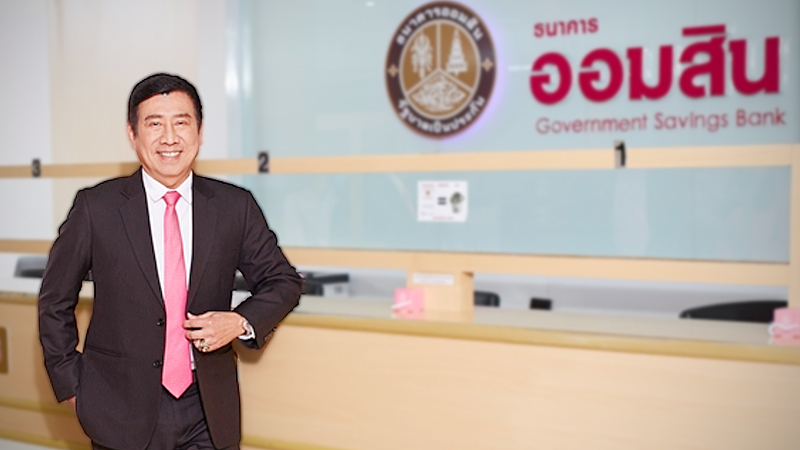
Government Savings Bank (GSB) president Chatchai Payuhanaveechai said last week that the bank is preparing a New Year gift for its clients who wish to refinance their debts on credit cards, cash withdrawal cards and cards issued by non-bank institutes (e.g. Aeon, First Choices).

“We are preparing loans of a maximum of Bt100,000 per person with a 5-year repayment plan and 12-per-cent interest per year, which is lower than the normal rate charged on these cards of 18-20-per-cent annually,” he said. “I will present this campaign to the GSB board meeting on Tuesday (December 17) and hope that it will get the green light before the end of 2019.”

“This loan is in accordance with Finance Minister Uttama Savanayana’s policy to have Bank of Thailand and commercial banks come up with measures to help good borrowers who pay their debts on time,” Chatchai added. “GSB will be the first bank to act on this policy and we expect that the loan will help alleviate the debt burdens of credit cards holders.”

As for the requirement to receive the loan, holders must first close the credit card that they wish to refinance. “In the event they have more than one card, they can keep other cards going.” he said. “This is the main difference between GSB’s loan and Bank of Thailand’s Debt Clinic campaign, which requires participants to stop all their credit cards and bring all their debts into one place before handling them.”

When asked about concerns over borrowers may run up more debts if they still have other cards, Chatchai said that the bank will select only clients with a good record of repayment and who have never missed paying their dues. “Moreover, the NPL from credit card refinancing loans will be separate from NPL of credit card loans, which currently stands at only 2-3 per cent, so this campaign should not mean more risk or burden to the bank,” he added.

Upper Thailand gets warmer and foggy, South sees more rain

#ศาสตร์เกษตรดินปุ๋ย : ขอบคุณแหล่งข้อมูล : หนังสือพิมพ์ The Nation

https://www.nationthailand.com/news/30379480?utm_source=category&utm_medium=internal_referral

Upper Thailand gets warmer and foggy, South sees more rain

Dec 16. 2019
By THE NATION

601 Viewed

The weak high-pressure covering Thailand and the South China Sea will bring a 1-2 degree rise in temperature along with morning fog over upper Thailand, the Thailand Meteorological Department said on Monday (December 16). The North and Northeast will see minimum temperatures ranging from 13-21 °C and fair sky.

The weak northeast monsoon prevails across the Gulf and easterly winds will bring thundershowers to the lower South.

The weather forecast for the next 24 hours is as follows:

Northern region: Cold with fog in the morning, lows 13-18 degrees and highs of 28-35 degrees Celsius. Temperature likely to drop to 3-12 degrees on hilltops.

Northeastern region: Cold with fog in the morning, lows 13-21 degrees and highs 32-35 degrees Celsius. Temperature likely to drop to 8-15 degrees on hilltops.

Central region: Cool with fog in the morning; lows 19-21 degrees, highs 34-35 degrees Celsius.

Eastern region: Cool with fog in the morning; lows 21-25 degrees, highs 33-35 degree Celsius; wave height 1 metre.

Southern region (east coast): Mostly cloudy with thunder showers in 30 per cent of the area; lows 23-24 degrees, high 29-33 degrees Celsius; wave height 1-2 metres, increasing to 2 metres during storms.

Southern region (west coast): Partly cloudy with thunder showers in 30 per cent of the area; lows 23-25 degrees, highs 30-33 degree Celsius; wave height 1 metre, increasing to 1-2 metres during storms.

Bangkok and surrounding area: Fog in the morning; lows 23-24 degrees, highs 33-35 degrees Celsius.