GSB wins three top honours at Money & Banking Awards 2020
Dec 18. 2020
By The Nation
The Government Savings Bank (GSB) won Best Retail Bank of the Year for the fifth consecutive year at the Money & Banking Awards 2020.
GSB also won Money & Banking Awards for Best Service Provider – Deposit 2020, and Best Booth.
GSB president Vitai Ratanakorn and vice president Isara Wongrung received the three honours from Santiviriya Rangsarit, editor-in-chief of the Money and Banking Journal, at the Money & Banking Awards ceremony attended by GSB executives and employees at the Bangkok International Trade and Exhibition Centre (Bitec).
This year, the GSB booth’s layout reflects its status as the “social bank” that plays an important social role by giving Thai people access to funding sources to raise their income levels, improve quality of life and strengthen the economy’s foundations.
AmCham Thailand, Aetna Health Insurance donate computers to Nonthaburi schools
Dec 18. 2020
By The Nation
The American Chamber of Commerce in Thailand Foundation (ATF) along with member company Aetna Health Insurance donated 109 sets of computers to 30 schools in Nonthaburi on December 14.
“AmCham member companies continue to invest in sustainable development of Thailand, and education is a top priority for these companies,” said Sarawan Dever, deputy director of AmCham Thailand.
AmCham members provide funding to improve the quality of education, skills training for students and teachers, and access to infrastructure to give these students an opportunity to fulfil their potential and better their lives, said the foundation. Many of ATF’s students have been employed by AmCham’s member companies. Since 1982 AmCham has supported almost 900 state primary schools throughout Thailand. In addition, ATF has provided more than 3,000 university scholarships since 1976, according to the foundation.
Meanwhile Aetna Health Insurance invests in CSR activities that focus on health and safety of local communities across Thailand and globally. By providing access to better education, health and safety, Aetna aims to support community well-being and development.
At the Nonthaburi Education Area District Office 2 to hand over the computers with Sarawan were Aetna Health Insurance managing director Damian J Delaney and director of marketing and product development, Kunthaphatt Nutapotipan. Receiving the donation was Nonthaburi Primary Educational Service Area Office 2 director, Orawan Saengsuwan, and deputy director Dujdao Tobangpa.
“The schools were grateful for the donation since they do not have the budget to purchase the required computers,” Orawan said.
The event was also attended by teachers and students from recipient schools.
Great Wall Motors showcases new business model to transform Thai automotive industry
Dec 18. 2020
By The Nation
China’s Great Wall Motors (GWM) hosted the GWM Partner Forum last week, inviting investors and businesspeople from the automotive and other industries to learn more about the new strategies and policies of GWM’s New Business Model. The event was held on December 9-11 and received strong feedback from participants. The forum reinforced GWM’s commitment to supporting Thai businesses and driving the Thai automotive industry forward.
Great Wall Motors said it has continued to grow its business in Thailand under its globalisation strategy. The company had shared its new business model, attracting leading investors and business leaders in Thailand. This had also offered opportunities for GWM to listen to Thai businesses’ feedback and exchanges ideas and opinions on designing the most effective business plans and models to better serve the needs of firms and consumers. Steven Wang, MGW Thailand’s vice president for Sales and Marketing in Thailand and Asean, launched the three-day forum, which was joined by more than 324 potential investors, dealers, and entrepreneurs from at least 195 companies across Thailand.
Said Narong Sritalayon, managing director of GMW Thailand: “Selecting partners that have the same visions and commitment as GWM is one of the vital strategies to drive GWM’s business successfully in the future. We are delighted and grateful to all investors and businesspeople who joined this event and we hope to have the opportunities to work with these leading talents in the future. Together, we aim to drive this new business model to deliver the best-in-class experiences to Thai consumers. Great Wall Motors is ready to provide full support in upskilling workforces as well as setting up work systems to ensure the most effective business operations. We hope GWM’s New Business Model will help transform the automotive industry. The model offers new consumer experiences through innovative technologies. Though it is different from current business practices, we are confident that with GWM’s determination to offer the best to consumers and relieve their difficulties, along with the company’s consumer and partner-centric strategies, automotive expertise, and the experience in Thai business of our potential partners, that we can deliver impressive services to best meet the needs of consumers in this digital era at every touchpoint – including car selection, test drives, sales and after sales services.”
Great Wall Motors has now expanded to 60 countries globally. Thailand is a strategic hub for GWM vehicle production, exports and business expansion in the Asean region. As a “Global Mobility Technology Company”, GWM said it is not only committed to delivering the best autos and technologies to consumers, but also focused on upskilling workforces and businesses as well as driving the overall economy of each country to grow the business sustainably together.
DBS Denla School extends generosity in the Christmas spirit
Dec 18. 2020
By THE NATION
The Nonthaburi-based DBS Denla British School has brought British traditions to Thailand by holding a special tree-lighting ceremony and Christmas fair, as well as donating all funds raised in the raffle to charities.
The DBS community, comprising students, teachers, parents and staff, got together on December 11 to light the school’s Christmas tree. The event also featured a Christmas play and a performances by the DBS orchestra and choir. Principal Mark McVeigh could also be heard singing “We Wish You a Merry Christmas”.
Festivities returned to the campus on December 15 with the DBS Christmas Fair, which has been expanded this year to include rides and food trucks, in addition to musical performances by students and raffles. The raffle is a traditional way of raising money for charity in Britain, where numbered tickets are sold and then numbers drawn at random for prizes.
DBS has said it will donate all earnings to charities in Nonthaburi, namely Rainbow House for children with disabilities in Pak Kret, Wat Singthong School and the Aomgred Community Hospital.
Forced displacement of people globally has nearly doubled in the past decade, with nearly 80 million or one in every 100 people becoming refugees.
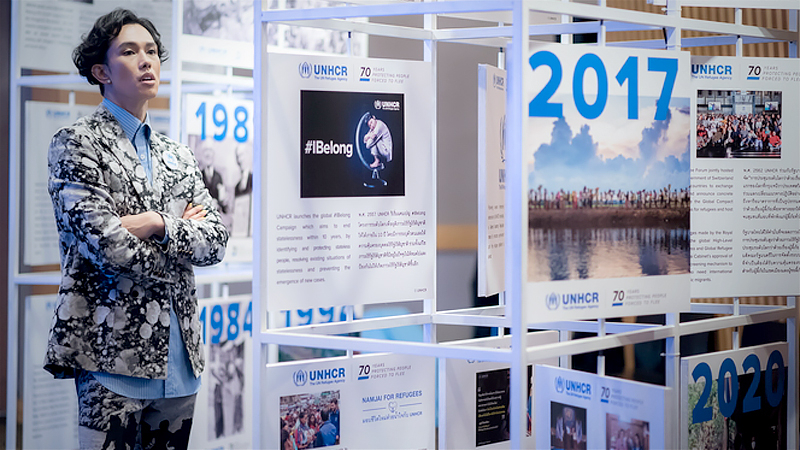
The United Nations High Commissioner for Refugees (UNHCR) is marking its 70th anniversary with an exhibition at the Bangkok Art and Culture Centre (BACC) to recognise the support it has received from all sectors in Thailand and across the world.
The UNHCR was formally entrusted with its mandate on December 14, 1950, and since then, it has been working to protect people forced to flee, provide humanitarian assistance and solutions to millions worldwide. There are more than 17,000 people working for the UNHCR in 135 countries.
UNHCR was invited by the government in 1975 to commence operations in Thailand in response to the Indochina refugee crisis.
“This is not a moment for celebration as the continuous need for protection and humanitarian assistance highlights the tragic displacement situation in the world today,” said Giuseppe De Vincentiis, UNHCR representative in Thailand.
“However, this anniversary is an opportunity to recognise the dedication, courage, and contributions of those who continue to support, work and collaborate with UNHCR, including the Thai government, NGO partners, civil society, private sectors, media partners, donors and the people of Thailand.”
“It’s has been more than five years since I first went on a mission with UNHCR to report on the refugee crisis,” said Thapanee Eadsrichai, founder of The Reporters, which has raised awareness and funds to support UNHCR.
“As both a member of the media and a human being, I am proud to be able to make a difference to millions of lives regardless of race, religion or belief, which inspires me to keep doing good for society at the local and global level and provides me with a sense of fulfilment.”
The “UNHCR 70th Anniversary Exhibition” is open to the public until December 20 at BACC.
The exhibition will take visitors on a trip through UNHCR’s history, work and achievements over 70 years, refugee stories, core relief items provided during displacement situations, archive footage and stories of people forced to flee around the world. There will also be a daily activity, game and documentary screening supported by UNHCR goodwill ambassador Praya Lundberg, The Standard and National Geographic for participants to enjoy.
Covid-19 is devastating communities of color. Can vaccines counter racial inequity?
Health & BeautyDec 19. 2020In Haywood County, Tenn., which includes downtown Brownsville, the covid-19 fatality rate is 50 percent higher than the state average. MUST CREDIT: Photo by William DeShazer for The Washington Post.
By The Washington Post · Isaac Stanley-Becker, Lena H. Sun
Haywood County, a majority-Black community not far from Memphis, has one health department, one nursing home and no hospitals. The fatality rate from covid-19, the disease caused by the coronavirus, is 50 percent higher than the state average.
But a supply of vaccines based strictly on its population would leave the county in the Tennessee Delta, site of the first known slaying of an NAACP member for civil rights activities, woefully short. There would be too few doses to make a dent in the disease’s burden on residents of color, who have been “devastated, both young and old,” said Gloria Jean Sweet-Love, who lives in Brownsville, the county seat, and serves as president of the NAACP’s state conference.
“Can you believe it?” she asked. “In the richest country in the world.”
To account for the disparity, state officials are doing something unusual. They are taking a portion of their share of shots off the top and rushing it to places beset by poverty, poor housing and other factors most linked to the pandemic’s disproportionate toll on people of color. Explaining the move recently, Michelle Fiscus, who leads Tennessee’s immunization program, said, “Covid-19 has revealed that great disparity in outcomes for Black Americans.”
The approach illustrates the urgent effort by public health agencies to make sure inoculation against a virus that has ravaged communities of color – killing 1 in 1,000 Black Americans by the fall – saves the lives of the most at-risk people. The task is made more difficult by the need to reverse the inequities endangering people of color without enshrining an explicit system of racial preferences in the distribution of shots, which could prompt political blowback and legal challenges. It is harder still because of the limited initial supply of the vaccine, which is pitting essential workers, who are disproportionately people of color, against older Americans.
A Centers for Disease Control and Prevention advisory group has signaled it will recommend prioritization of certain essential workers, in part to address racial disparities exposed by the pandemic. People of color are overrepresented in industries such as food processing and transit, in jobs impossible to do from home. Some of these workers could gain access to the shots early in the new year, after health-care workers and residents and staffers at long-term care facilities.
The Advisory Committee on Immunization Practices is scheduled to vote Sunday on recommendations for the next priority groups, heightening the pressure on state officials to refine their plans. The focus on essential workers as a way to advance equity has gained support from all 14 members of the independent panel of experts. Beth Bell, a clinical professor of global health at the University of Washington who chairs the panel’s vaccine working group, bluntly expressed the calculus: “If we’re serious about valuing equity, we need to have that baked in early in the vaccination process.”
Or, as Sweet-Love put it, “These are the folks at the bottom of the totem pole.”
The limited supply of shots, as most Americans head into winter unprotected from the deadly virus, has turned allocation decisions into ethical quandaries. The pandemic, by highlighting how racial fault lines warp the body politic, “also offers a moment to address and dismantle those inequalities so that everyone has a fair and just opportunity for health,” said J. Nadine Gracia, deputy assistant secretary for minority health under President Barack Obama.
Accounting for these inequities in state vaccination plans, Gracia said, is a “moral and economic imperative.”
The Haywood Park Community Hospital in Brownsville, Tenn., has been closed for more than six years, forcing Haywood County residents to seek covid-19 treatment in Jackson, Tenn., or in Memphis. There are plans to reopen the hospital. MUST CREDIT: Photo by William DeShazer for The Washington Post.
All the places where the pandemic has disproportionately harmed people of color – not just Tennessee – are confronting dilemmas about how explicitly immunization should be aimed at rectifying racial inequality.
In California, experts are devising ways to ensure communities of color “disproportionately are benefited” from vaccine distribution, Gov. Gavin Newsom (D) vowed, “because of the impact they have felt disproportionately” during the pandemic. New York Gov. Andrew Cuomo (D) went as far as to threaten to sue the Trump administration over its national distribution plan, which he said failed “Black and Brown communities that were first on the list of who died.”
But it was in Tennessee, far from the made-for-TV promises of blue-state governors, that health officials put a number on their ambitions. They committed to setting aside 5 percent of their vaccine supply for areas with high scores on a CDC social vulnerability index – areas such as Haywood County, where the primary crop is still cotton and the closest emergency room is a half-hour away by car.
The index, originally developed to identify communities most in need of assistance after natural disasters, was recommended by the National Academies of Sciences, Engineering and Medicine for use in vaccine allocation because it incorporates factors “most linked to the disproportionate impact of covid-19 on people of color.” Those include minority status, crowded housing and lack of access to a vehicle – all factors that burden Haywood County, best known as the childhood home of singer Tina Turner.
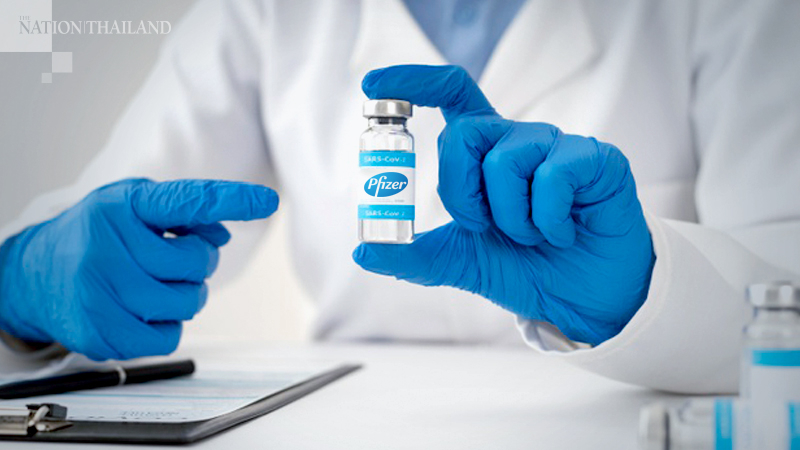
The county, whose lone hospital closed in 2014, is already at a disadvantage because it cannot handle the two-dose vaccine regimen from Pfizer-BioNTech, which comes in 975-dose batches and must be stored at Antarctic temperatures. Distributing shots made by Moderna – the biotechnology company with a vaccine poised for federal authorization – based just on population would bring enough initial shots to Haywood County for not quite half of the county’s health-care workers, Fiscus said. That outcome would not be “as equitable as possible,” she said during a panel discussion this month on vaccine allocation and social justice.
The revised approach setting aside a portion of the state’s allocation to supplement the neediest areas was widely embraced in the deep-red state.
State Rep. Cameron Sexton (R), speaker of the Tennessee House, said he favored use of a clear index over “government picking winners and losers based on arbitrary facts.” Focusing on vulnerable populations, he said, “doesn’t make distribution a race issue. There’s no putting one over another. It’s based on health conditions.”
Others, meanwhile, said they were drawn to the approach precisely because it made race central to the allocation of the vaccine.
“Covid is not race-blind, and we need to act accordingly,” said Michael Caldwell, Nashville’s public health director. In meetings, he said, state health leaders have made it “crystal clear” that using social vulnerability as a guide to vaccine allocation is designed to focus attention on “inequities and disparities.”
The clashing views capture the way a National Academies committee wrestled with the issue. A race-based system of priorities would have prompted a backlash and created the appearance that “populations that already have mistrust of our health system were being told to go to the front of the line,” said Helene Gayle, president and chief executive of the Chicago Community Trust and a committee co-chair.
The approach is politically savvy, said Harald Schmidt, a bioethics expert at the University of Pennsylvania. By “baking metrics that grapple with race into the hardware of vaccine distribution decisions,” states can avoid the perception that they are favoring one group over another, Schmidt said.
Tennessee was the first state to commit in writing to using the CDC index to rush a set-aside share of the state’s supply to the most vulnerable areas, according to an analysis of state plans by specialists in medicine, bioethics and statistics. In draft plans, other states discuss the national index or metrics similar to it, said Schmidt, the paper’s lead author.
California intends to use its own equity metric. Georgia’s draft includes an equity statement that suggests there will be geographical prioritization based, in part, on “race and ethnicity,” but it offers no details, and the state health department did not respond to a question about how the equity aspiration would be realized.
Federal blueprints offer only vague language. The CDC playbook sent to states listed “critical populations” at increased risk from the coronavirus, including “racial and ethnic minority groups.” Just four states – Delaware, Missouri, Montana and Nebraska – retained this language in their plans, according to Ariadne Labs, a Boston center for health system innovation run jointly by Brigham and Women’s Hospital and the Harvard T.H. Chan School of Public Health.
“It could be somewhat random, but looking at those particular states, it could also reflect attention paid to tribal populations,” said Kate Miller, a senior scientist at Ariadne Labs.
Ariadne Labs found that plans in 19 states referred to a disadvantage index, whether to identify priority populations or monitor uptake of the vaccine in underserved areas. Tennessee makes explicit how the index determines the most basic question of all – the allocation of doses.
ill Rawls, mayor of Brownsville, Tenn., said he remains hopeful people reluctant to take a coronavirus vaccine will change their minds. MUST CREDIT: Photo by William DeShazer for The Washington Post.
When Sandra Lindsay, a Black critical-care nurse in New York, became the face of the first coronavirus vaccinations this week in the United States, she took note of the dual nature of her role. She wanted to inspire other nurses, she said in an interview, and to send a message to “minorities, people that look like me,” who may be “hesitant to take vaccines” because of mistreatment by the medical establishment.
Her words illuminated the lessons embedded in allocation plans that, on their face, say little about race. Across the country, some said justice was being done by sticking to deliberate phases putting workers, and especially health-care workers, first.
Stephen Williams, Houston’s health director, smiled recently as he drove past the light-rail station within the Texas Medical Center and saw that many of the waiting passengers were people of color, like him. Soon, he knew, many of the people on the platform would be vaccinated against covid-19 – not because of their skin color but because they are health-care workers.
“Look at how hospitals are staffed,” said Williams, who sits on the state panel making recommendations about vaccine allocation. “The people in their uniforms, getting on the train or bus after their shift – there are a lot of people of color in that group.”
Whether the people operating the buses go next is a more difficult question – and one even more freighted with issues of race and equity.
“The deeper you get, the more complexity there is,” said Nancy J. Cox, a virologist and former CDC official. “A lot of essential workers don’t have the same voice, they don’t have the same political pull, and those kinds of things may be coming into play here.”
Transportation is among the front-line occupations in which workers of color are most overrepresented, accounting for 56.7 percent of bus drivers and other transit workers, according to the Center for Economic and Policy Research, a District of Columbia think tank. More broadly, about 4 in 10 front-line workers are Black, Hispanic, Asian American or Pacific Islander, the group estimated.
Many, like Bruce Caines, also have underlying health conditions. The 61-year-old, who has diabetes, works at a Trader Joe’s on Manhattan’s Upper West Side. During his shift, from 3 to 11 p.m., he unloads deliveries, stocks shelves, rings up customers. The elderly are not the only ones at risk, said Caines, who suffered a mild case of covid-19 in February and does not want to get sick again. “In my store, we already lost one crew member, a young guy in his early 20s,” he said.
Targeting front-line workers such as Caines, who is Black, “will be taking an equity approach,” said Richard Besser, who is chief executive of the Robert Wood Johnson Foundation, the nation’s largest philanthropy focused exclusively on health, and a former top CDC official. “It would be a tragedy if communities of color that have been disproportionately affected by the pandemic are not viewed as a priority for receiving the vaccine.”
The CDC advisory group estimates there are about 87 million essential workers, and states may choose to prioritize some over others. Many states, meanwhile, are building more-granular priorities into each phase, seeking to dodge the choice between front-line workers and elderly people.
Tennessee’s draft plan makes adults with chronic conditions a priority before “critical infrastructure workers” and gives preference to people 65 and older within each phase. California’s draft puts essential workers and people 65 and over in the same phase, betting on expanded supply early in the new year, though Newsom has recently spoken about the need to give particular consideration to teachers, farmworkers and grocery workers.
Gov. Ron DeSantis (R) of Florida, and close ally of President Donald Trump, said at a recent White House summit he would like to see the vaccine reach the “broader senior population” by the end of December, an ambitious target that would probably involve passing over many front-line workers. Participating in a panel with three other Southern governors, he was the only one not to outline how vaccine allocation would address the needs of underserved communities when that question was posed by Health and Human Services Secretary Alex Azar. Instead, he decried “shutdowns that are totally unscientific.”
“I could see how this could become a political hot potato,” said Jennifer Kates, a senior vice president at the Kaiser Family Foundation, a nonprofit health policy organization.
The pressure is heightened by constraints on the vaccine supply, driven by international demand. Some of the thorniest political differences, however, are local.
David Smith, who runs the ambulance authority in Haywood County, said nine of the unit’s workers have fallen ill with covid-19, among a staff of about 27. Still, only three of the workers who respond to calls for emergency medical service intend to be vaccinated, he said. He is not among them, he added, citing concerns about how quickly the vaccines are being developed.
Brownsville’s mayor, Bill Rawls, said he hopes many will change their minds by the time the shots arrive in the county, which could be around Christmastime. So far, only the regional hospital, a half-hour away, has received doses of the Pfizer-BioNTech vaccine.
By The Washington Post · Katie Shepherd, John Wagner
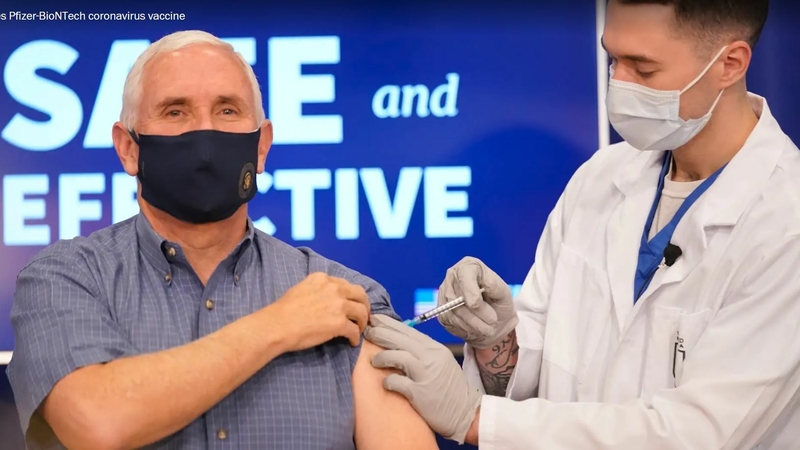
WASHINGTON – Vice President Mike Pence and second lady Karen Pence got the Pfizer-BioNTech vaccine at the White House on Friday, on live TV in an effort to vouch for the vaccine’s safety and efficacy.
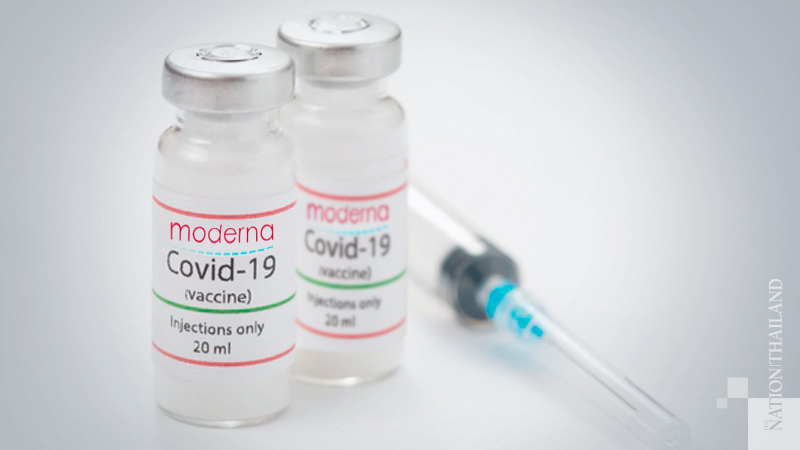
It comes as the Food and Drug Administration prepares to authorize a second coronavirus vaccine, developed by Moderna. An FDA panel deemed that vaccine to be highly effective in clinical trials, clearing the path to approval.
As reporters looked on, the Pences and Surgeon General Jerome Adams received shots of the vaccine in their arms, administered by Walter Reed National Military Medical Center staff, in a room in the White House complex.
“Great job,” a masked Pence said after a small bandage was placed on his arm following the shot.
In remarks afterward, Pence said, “I didn’t feel a thing. Well done.”
“Karen and I were more than happy to step forward,” he said, adding that he wanted to build “confidence in the vaccine.”
Pence touted the Trump administration’s efforts to speed production of coronavirus vaccines, which he touted as a “medical miracle.”
Distribution of vaccines, he said, is “the beginning of the end of the coronavirus pandemic.”
Others on hand for the event included Anthony Fauci, the nation’s top infectious-disease official, and Robert Redfield, director of the Centers for Disease Control and Prevention.
Several screens were set up in the room where the vaccinations took place. They showed messages including: “SAFE and EFFECTIVE” and “PROMISES MADE – OPERATION WARP SPEED – PROMISES KEPT.”
By The Washington Post · Laurie McGinley, Carolyn Y. Johnson
WASHINGTON – The Food and Drug Administration said Thursday night that it will “rapidly work toward” emergency authorization of Moderna’s coronavirus vaccine, just hours after agency advisers endorsed the shot. The announcement appeared to pave the way for another weapon against a pandemic that has killed about 310,000 people in the United States.
The FDA statement came after the agency’s vaccine advisory panel voted almost unanimously – 20 in favor, with one abstention – that the benefits of the highly effective vaccine outweighed its risks for people 18 years of age and older. The FDA intends to authorize the vaccine Friday, according to knowledgeable individuals who spoke on the condition of anonymity because they were not authorized to speak publicly about the schedule.
“I just want to make the point of what a remarkable scientific achievement this is, and pay thanks to all the scientists, present and past, who contributed to this,” James E.K. Hildreth, president of Meharry Medical College and a member of the advisory panel, said at the close of the committee meeting on Thursday. “To go from having a [genetic] sequence of a virus in January, to having two vaccines available in December, is a remarkable achievement.”
Anticipating the authorization decision, Gen. Gustave Perna, who is overseeing the federal effort to distribute vaccines, said Monday that the government was preparing to ship almost 6 million doses of the Moderna vaccine to 3,285 locations in the first week after approval.
“It will be a very similar cadence that was executed this week with Pfizer, where we’re hitting initial sites on Monday, [followed] on Tuesday and Wednesday,” Perna said.
The advisory committee met on the same day the nation set three grim single-day records, for cases (more than 250,000), hospitalized covid-19 patients (more than 114,000) and deaths (more than 3,400). California in the past 48 hours posted more than 100,000 new infections, and the governor has readied a mass fatality plan.
At the same time, questions flared about the availability of the first coronavirus vaccine to receive federal authorization, with officials in multiple states saying they had been told their second shipments of Pfizer-BioNTech’s inoculation had been slashed for next week.
That development sowed confusion, led to dueling statements from Pfizer and federal officials about who was to blame, and raised questions about whether a promise to deliver shots to 20 million people by the end of the year would be kept.
Looming supply issues made clear that even with unprecedented scientific success, the limited availability of vaccines would not prevent a dark winter.
The FDA authorized the Pfizer-BioNTech vaccine last Friday, hours after White House Chief of Staff Mark Meadows warned FDA Commissioner Stephen Hahn he would be asked to submit his resignation if the agency didn’t authorize the shot by the end of that day. The agency had intended to authorize the vaccine on Saturday. The first doses were administered Monday to health-care workers. Questions about the supply have persisted, as Pfizer and the U.S. government have been in negotiations about securing more doses after the first 100 million already purchased for nearly $2 billion.
Moderna developed its vaccine in partnership with the National Institute of Allergy and Infectious Diseases, with the government underwriting the research and development of the vaccine and the advanced purchase of 200 million doses, bringing the government investment to $4.1 billion.
Early in Thursday’s meeting of the advisory committee, the FDA addressed an issue that did not directly involve the Moderna vaccine: reports of allergic reactions to the Pfizer-BioNTech vaccine, including in two health-care workers in Alaska, one of whom was hospitalized. Both are recovering.
“While the totality of data at this time continue to support vaccinations under the Pfizer [emergency use authorization] without new restrictions, these cases underscore the need to remain vigilant during the early phase of the vaccination campaign,” FDA vaccine expert Doran Fink said.
The agency is working with the companies to revise fact sheets provided to patients and health-care professionals, Fink said, and he underscored an existing requirement that facilities administering the vaccine ensure that treatment for a severe allergic reaction is immediately available.
The heightened concern about possible rare allergic reactions will also pertain to the Moderna vaccine, because it uses the same genetic technology as Pfizer-BioNTech. An expert panel convened by the National Institutes of Health on Wednesday tried to discern which of the components of the vaccines might trigger an allergic reaction, Moderna chief medical officer Tal Zaks said, but he added that differences between the two vaccines make it uncertain whether they both could trigger the rare reactions.
During the meeting, he and other Moderna executives explained that they saw no cases of anaphylaxis in their 30,000-person coronavirus vaccine trials. In eight previous trials of a vaccine that uses the same technology against different diseases, there had been a single report of anaphylaxis among a total of about 1,700 participants. That case occurred more than two months after the shot – suggesting there was no link.
The FDA will also closely monitor for cases of Bell’s palsy, a temporary facial paralysis, as the vaccine is rolled out to more people. There were four cases of Bell’s palsy among people that received the Pfizer-BioNTech vaccine in its trial and three in the group that received the Moderna vaccine in its trial. The FDA said there wasn’t a clear causal link but acknowledged that the combined data from the two trials raised questions.
“It’s something we are looking into and thinking much about,” said Rachel Zhang, FDA medical officer.
The Pfizer-BioNTech and Moderna vaccines both use a new genetic vaccine technology, and in addition to the impact the vaccines could have on the pandemic, there is hope the new technology could be used to rapidly create vaccines for other diseases. But the novelty of the technology, which has been tested for years in people but never deployed in an approved medical product, has been used to foster doubt about the vaccines in some social media posts. Moderna executives used Thursday’s advisory committee hearing to address those questions head on.
Melissa Moore, Moderna’s chief scientific officer, explained that a snippet of genetic material, called messenger RNA, is encapsulated in a tiny fat bubble and delivered to the body’s lymph node cells. There, cells’ protein-making machinery follow the genetic instructions to build the coronavirus spike protein. Immune cells interact with the spike to muster a protective response.
Some social media posts have stoked fear that messenger RNA will change people’s DNA. Moore explained that the messenger RNA cannot be integrated into the genome.
Questions have also circulated about the vaccine’s ingredients, especially following the reports of rare allergic reactions. Moore explained that the vaccine contains the synthetic messenger RNA and a fat bubble. It does not contain many ingredients commonly found in other vaccines, such as preservatives or adjuvants, which are used to make vaccines work better – and is not manufactured in human or animal cells.
Moderna’s vaccine was shown to be 94% effective in its large clinical trial; Pfizer-BioNTech’s vaccine was 95% effective. The efficacy was similar across age, gender and racial groups.
Paul Offit, director of the Vaccine Education Center at the Children’s Hospital of Philadelphia and a member of the FDA advisory committee, said Wednesday on CNN that the two vaccines are similar in safety and efficacy. Asked whether people will have a choice of which to get, he replied, “There is not a lot of vaccine out there, so you are going to be asked to get the vaccine that the area has.”
In Moderna’s trial, 30,000 people were randomly assigned to receive either two shots of a vaccine given four weeks apart, or two saline shots. Neither the participants nor the people running the trial knew who was in which group.
Investigators then waited as people were exposed to coronavirus in their daily lives, to see if there were more cases of covid-19 in the group that did not receive the real vaccine. They counted cases starting two weeks after the second dose, to measure how well the vaccine protected participants after the immune system had mustered a full response.
The numbers were decisive: There were 196 cases in the trial, all but 11 of them were in the group that received the placebo shots. There were 30 cases of severe covid-19 and one death from covid-19 in the trial, all in the group that received the placebo.
There was a suggestion that a first dose of vaccine afforded some protection from the virus, but some key information is lacking.
One of the main questions debated by the panel was what to do about the trial once a vaccine is authorized.
Moderna is proposing notifying everyone in the placebo group immediately after the vaccine is cleared and allowing them access to the vaccine, using leftover supply from the clinical trial that will expire soon and can’t be given to people as part of the emergency authorization. That’s different from the Pfizer-BioNTech plan, which will allow individual participants who become eligible for a shot under health agency guidelines to request access to the vaccine. At that point, those participants could opt to find out if they were in the placebo group – and if they were, request the vaccine.
Steven Goodman, professor of medicine at Stanford University, argued that the Moderna plan could erode the ability of the trial to answer key questions about the duration of immunity – and might endanger future trials.
“We have a very strong interest in developing good information for the other vaccines,” Goodman said. “There will be a precedent, as soon as something has been shown to be effective and available, that it’s unethical to ask people to wait any more time to be immunized in any way – and this is a precedent you may not want to set.”
Moderna argued against a plan that was more logistically difficult to implement or that would defer offering the vaccine, in part because of the ethics and because so many trial participants are in high-risk groups who will begin to be offered the vaccine soon and might drop out of the trial otherwise.
Lindsey Baden, the co-principal investigator of the trial at Brigham and Women’s Hospital, said there were two to three severe cases of disease among placebo recipients in the trial each week.
“It’s important we carefully consider the volunteer viewpoint as we navigate fairness, equity, trust, transparency as well as a larger societal interest,” Baden said. “Without them, clinical research cannot function and we have unique obligations to handle the study properly.”
By The Washington Post · Carolyn Y. Johnson, Joel Achenbach
WASHINGTON – The Food and Drug Administration reiterated Thursday that the newly authorized Pfizer-BioNTech coronavirus vaccine should continue to be used with no new restrictions despite several reports of health-care workers who had a severe allergic reaction after receiving the injection.
Two of those incidents happened in the United Kingdom last week, and a third in Alaska on Tuesday. Another Alaska hospital employee had a brief but much less serious reaction on Wednesday.
The FDA said it is closely monitoring these situations and is teaming with the Centers for Disease Control and Prevention to investigate what incited these responses. While that is being investigated, the FDA is working with Pfizer to update fact sheets and prescribing information to reflect the evolving information. The FDA said that would underscore an existing requirement – that facilities administering the vaccine must be capable of immediately treating any severe allergic reaction.
The vaccine developed by the pharmaceutical giant Pfizer and the German company BioNTech passed strict safety reviews during months-long randomized clinical trials involving tens of thousands of people. But three incidents of anaphylaxis – a sudden allergic response that can be reversed quickly with medication – are a complication for officials hoping to gain public acceptance of the vaccine.
They’re also a biochemical mystery. No one knows what component of the vaccine incited the anaphylactic reactions.
“While the totality of data at this time continue to support vaccinations under the Pfizer [emergency use authorization] without new restrictions, these cases underscore the need to remain vigilant during the early phase of the vaccination campaign,” FDA vaccine expert Doran Fink said at the start of an all-day meeting of the FDA advisory committee examining a similar vaccine developed by Moderna, which is poised for emergency authorization in the coming days.
“We learned of these cases through established safety surveillance systems that worked exactly as designed, and FDA is coordinating with the CDC to further investigate the cases in the U.S., and to communicate our findings in a timely manner,” Fink said.
Fink said the totality of data does not suggest new restrictions on use of the Pfizer-BioNTech vaccine are required. Unlike traditional vaccines, these do not include preservatives and do not include ingredients grown in chicken eggs.
Two cases of anaphylaxis occurred last week in the United Kingdom, involving health care workers with a history of severe allergic reactions. They fully recovered after treatment.
A third incident happened Tuesday at Bartlett Regional Hospital in Juneau, Alaska. A health-care worker with no prior history of severe allergic reactions suffered shortness of breath, rapid heartbeat and flushed skin. The first symptoms began 10 minutes after receiving the vaccine injection.
The worker was treated overnight. By the next morning she was stable and not on medication. She then stayed a second night in the hospital “under observation,” according to a hospital statement. “She is still encouraging her colleagues to get the vaccine,” the statement added.
That was the first and, as of Thursday afternoon, only reported case of anaphylaxis since the vaccines began to be administered Monday nationwide.
Another employee at Bartlett Regional Hospital who received the vaccine Wednesday “experienced eye puffiness, lightheadedness, and scratchy throat ten minutes after being injected with the vaccine,” according to a statement from the city of Juneau. He was given a standard treatment of epinephrine, Pepcid and Benadryl and “felt completely back to normal within an hour and was released,” the statement said.
The hospital said that case was not considered anaphylaxis.
Vaccine expert and pediatrician Paul Offit of the Children’s Hospital of Philadelphia said Wednesday that, among all vaccines, about one in a million vaccinations triggers a severe allergic reaction. The guidance for this new vaccine requires people to be monitored for 15 minutes after the injection to see if they have a reaction, or 30 minutes if they have a history of severe allergic responses.
Milder side effects, such as fever, headache, fatigue and pain at the injection site, have also been reported by volunteers in randomized trials, particularly, after the second dose and among younger people who tend to have more robust and reactive immune systems. Those side effects go away in a day or two and are not considered a cause for concern.
Tal Zaks, chief medical officer of Moderna, said at Thursday’s hearing that there are three components of the vaccine that theoretically could cause rare reactions. He said that the National Institutes of Health convened an expert panel Wednesday to discuss the possibilities.
He pointed out that several components of the Moderna vaccine – which has not been linked to any anaphylactic reactions in the randomized trials – are proprietary, and differ from components in the Pfizer-BioNTech vaccine.
“While we all say there’s a [lipid nanoparticle] here delivering mRNA therefore they must be the same . . . I actually think as far as the component that is likely to be the culprit here, I would not necessarily assume that,” Zaks said. “We will be looking very carefully as has been noted, and continue to collaborate with colleagues to understand the mechanism here.”
Moderna executive Jacqueline Miller said Thursday that, after scouring a database from previous use of the same vaccine technology in trials for eight other vaccines with 1,700 people, there was a single case of an anaphylactic event reported, and it was more than two months after the shot was given. The lengthy time delay makes it unlikely that it was directly linked to the shot.
The randomized trials of both the Pfizer-BioNTech and Moderna coronavirus vaccines have not produced cases of anaphylaxis, but those trials did not permit participation by anyone with a known allergy to any component of the vaccine.
States and jurisdictions are continuing to receive deliveries of the first week’s 2.9 million Pfizer dose allocation and provide vaccinations every day. States routinely provide data to the CDC on vaccine coverage, and the CDC is awaiting the first data reports from states about vaccine administration that began Monday.
More than 1.5 million doses had been distributed, but not necessarily administered, by Thursday morning, according to the Department of Health and Human Services.
Muay Thai champ Nong-O proves too strong in defence of bantamweight title
Dec 19. 2020Nong-O Gaiyanghadao of Thailand
Reigning ONE bantamweight Muay Thai world champion Nong-O Gaiyanghadao of Thailand retained his world title with an impeccable knockout performance against ONE bantamweight Muay Thai tournament champion Rodlek PK.Saenchai Muaythaigym, as the ONE Championship put on another exciting martial arts spectacle at the Singapore Indoor Stadium on Friday.
ONE: Collision Course, which was broadcast live on Friday, featured a series of high-level matchups between some of the most talented mixed martial artists, kickboxers, and Muay Thai athletes in the world.
In the first two rounds, the challenger hounded Nong-O with powerful boxing combinations, while the legendary Thai fighter opted to stay on the outside, keeping his opponent at bay with thunderous kicks. In the third round, Nong-O pieced together the puzzle and turned up the pressure on Rodlek. Ultimately, a solid right hand landed square on the chin and dropped Rodlek for the highlight-reel knockout.
In the day’s other main event, reigning light heavyweight kickboxing world champion Roman Kryklia of the Ukraine dominated tough Andrei “Mister KO” Stoica of Romania through five gruelling rounds to win by a unanimous decision.
After a brief exchange in the first round, it became evident that Kryklia possessed clear advantages in reach and striking volume, as he kept Stoica on the end of blistering punch combinations and kicks from the outside. Stoica tried his best to close the gap, but he could not find a way around the defending world champion’s pinpoint striking.
Kryklia grew even more dominant as the bout wore on, pouring the punishment on his opponent, who was compelled to engage. To his credit, Stoica exhibited an incredible ability to absorb damage, as he took Kryklia’s best offence and never buckled under the pressure.
In the end, however, Kryklia proved to be an unstoppable force, battering Stoica throughout the contest to earn the nod on all three judges’ scorecards.
Former ONE featherweight world champion Marat “Cobra” Gafurov of Russia put together a tremendous performance at lightweight, using his veteran savvy to slide past previously unbeaten American and No.5-ranked lightweight mixed martial arts contender Lowen Tynanes.
Gafurov showcased solid striking skills, tagging Tynanes with kicks and punches from range, while the American tried to close the distance.
Gafurov switched gears in round three and successfully took Tynanes to the ground, which undoubtedly weighed heavily on the scorecards.
In the end, Gafurov came away with a close split decision victory.
Russian veteran Yusup Saadulaev overcame a spirited effort from American Troy “Pretty Boy” Worthen, who was handed the first loss of his professional mixed martial arts career. Saadulaev, the No. 4-ranked bantamweight contender, controlled the action during gruelling clinch exchanges throughout the contest.
After creating distance in the third round, he pummelled Worthen with sharp boxing combinations to earn the judges’ nod.
Thailand’s Yodkaikaew “Y2K” Fairtex did just enough to get past Japanese star Tatsumitsu “The Sweeper” Wada, winning their mixed martial arts contest by split decision after three rounds. Wada found success early on, closing the distance and taking Yodkaikaew’s back to threaten with submissions in round one. Yodkaikaew, however, found his range the rest of the way, attacking with thudding leg kicks to impede Wada’s ground assault in rounds two and three. With the victory, the Thai athlete improved to 3-0 in ONE Championship.
China’s “The Hunter” Xie Wei and Cambodia’s Chan Rothana opened up the action, doing battle in mixed martial arts to a chorus of cheers from fans in attendance. Rothana attacked with his Kun Khmer kicks in the first two rounds, while Xie fired back with his powerful right hand. In the third frame, Xie connected on a left hook to drop Rothana, ending the bout shortly after via TKO with strikes from the top.
Next, ONE Championship returns with ONE: Collision Course II, a previously recorded event from the Singapore Indoor Stadium scheduled for broadcast on December 25.
In the main event, No. 2-ranked featherweight Muay Thai contender Jamal “Kherow” Yusupov of Russia takes on No. 4-ranked contender Samy “AK47” Sana of France and Algeria in a ONE Super Series Muay Thai showdown.
In the co-main event, former ONE flyweight world champion and No. 3-ranked flyweight contender Kairat “The Kazakh” Akhmetov faces “Ottogi” Dae Hwan Kim of South Korea in a catch weight mixed martial arts contest.
For more information, visit ONE: Collision Course II event page.
Official results
Kickboxing – light heavyweight: Roman Kryklia bt Andrei Stoica via unanimous decision.
Muay Thai – bantamweight: Nong-O Gaiyanghadao bt Rodlek PK.Saenchai Muaythaigym via knockout at 1:13 of round three.
Mixed Martial Arts – lightweight: Marat Gafurov bt Lowen Tynanes via split decision.
Mixed Martial Arts – bantamweight: Yusup Saadulaev bt Troy Worthen via unanimous decision.
Mixed Martial Arts – flyweight: Yodkaikaew Fairtex bt Tatsumitsu Wada via split decision.
Mixed Martial Arts – flyweight: Xie Wei bt Chan Rothana via TKO at 1:39 of round three.







.jpg)
.jpg)

.jpg)
.jpg)
.jpg)
.jpg)
.jpg)
 In Haywood County, Tenn., which includes downtown Brownsville, the covid-19 fatality rate is 50 percent higher than the state average. MUST CREDIT: Photo by William DeShazer for The Washington Post.

 Nong-O Gaiyanghadao of Thailand
