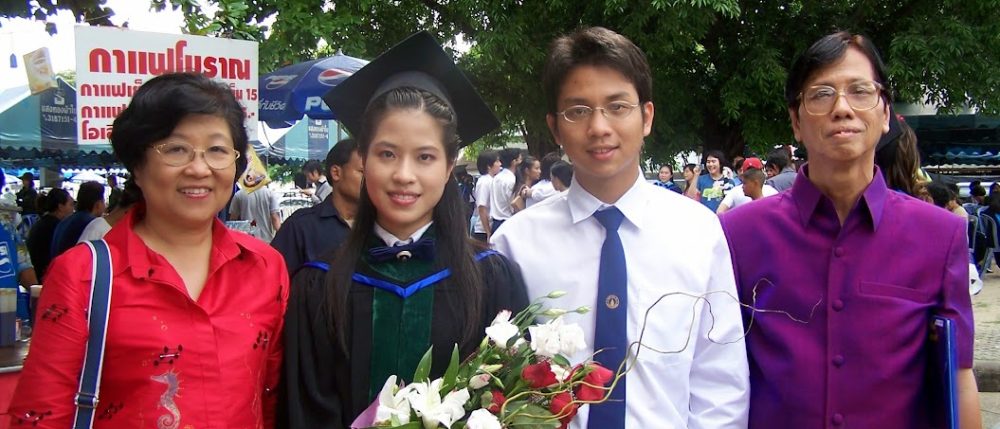
Kulit Sombatsiri, the ministry’s permanent secretary
By The Nation
The Energy Ministry has kicked off the process of drawing up what it calls Thailand’s integrated energy blueprint on Monday by holding a workshop on the plan with relevant parties.
Kulit Sombatsiri, the ministry’s permanent secretary, said the plan is divided into a five-year short-term plan (2022-2027), a five to 10 year mid-term plan and a 20-year long-term plan.
The Cabinet had in October asked the ministry to put together five energy plans issued in 2018, namely power development, alternative energy development, energy conservation, gas management and oil plan.
The ministry will hold a public hearing on the combined plan after next March and started drawing up a preliminary strategy in April.
He added that the integrated plan will not raise the ratio of coal-fired power plants and will retire old gas and coal-power plants early.
Thailand will also set a target for net-zero carbon emissions, he added.
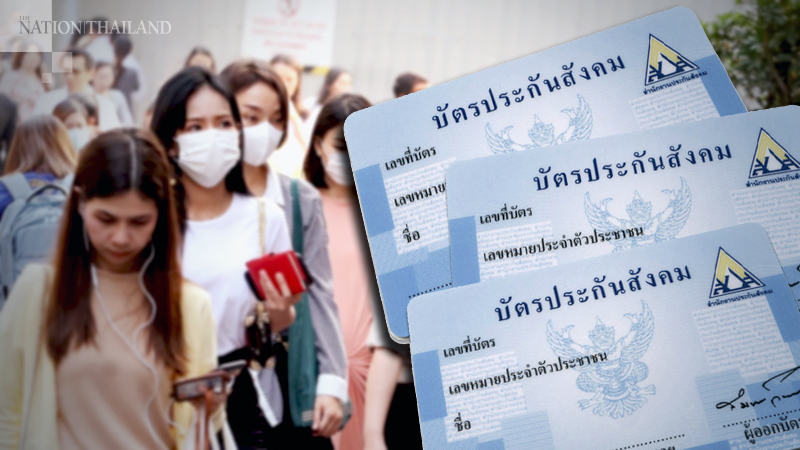
The Labour Ministry will ask the Cabinet on Tuesday to approve a reduction in workers’ and companies’ social security contributions from 5 per cent to 3 per cent of wages from January to March.
The reduction will cost Bt21 billion.
Social security contributions were cut to 2 per cent from September-November this year in a move to mitigate the impact of the Covid-19 pandemic.
Minister Suchart Chomklin described the latest proposal as a “New Year gift” to Thais.
Easy to tell if ‘coronation’ banknotes are genuine, says BOT
EconDec 14. 2020A sample of the Bt1,000 and Bt100 commemorative banknotes.
By The Nation
The Bank of Thailand (BOT) has responded to criticism of its recently issued commemorative Bt1,000 and Bt100 banknotes, insisting they have high standard anti-counterfeiting features and are easy to tell apart.
BOT deputy governor Paiboon Kittisrikangwan said the special banknotes issued to commemorate King Rama X’s coronation are safe thanks to advanced techniques used in their design.
The central bank issued the statement after netizens on social media complained of the similarity between the commemorative banknotes.
People could easily prove whether the notes were genuine, for example, by touching the raised figure indicating the note’s value at the corner, he said.
Meanwhile, the notes were easy to tell apart since the Bt1,000 version is 1.2 centimetres longer than the Bt100 bill. The number indicating their value is also prominently displayed, he added.
A total of 10 million Bt1,000 and 20 million Bt100 commemorative banknotes went into circulation on December 12.
The Stock Exchange of Thailand (SET) Index closed at 1,476.13 on Monday, down 6.54 points or 0.44 per cent. Total transactions amounted to Bt107.3 billion with an index high of 1,495.18 and a low of 1,471.56.
In the morning session, an analyst at Krungsri Securities expected the day’s index to fluctuate between 1,470 and 1,500 amid an influx of foreign funds in response to positive news of Covid-19 vaccines.
“However, the SET will face volatility due to the tight valuation at a price-to-earnings ratio of 29 times and a resistance line at 1,500 points,” he said.
The 10 stocks with the highest trade value today were CPALL, KBANK, ADVANC, AOT, PTT, BAM, DELTA, IRPC, STGT and PTTGC.
As of 4.30pm, the price of oil rose by US$0.47 or 1.01 per cent to $47.04 per barrel, while gold dropped by $14.90 or 0.81 per cent, to $1,828.70 per ounce.
Other Asian indices were mixed:
Japan’s Nikkei Index closed at 26,732.44, up 79.92 points or 0.30 per cent.
China’s Shang Hai SE Composite Index closed at 3,369.12, up 21.93 points or 0.66 per cent, while Shenzhen SE Component Index closed at 13,692.13, up 136.99 points or 1.01 per cent.
Hong Kong’s Hang Seng Index closed at 26,389.52, down 116.35 points or 0.44 per cent.
South Korea’s KOSPI Index closed at 2,762.20, down 7.86 points or 0.28 per cent.
Taiwan’s TAIEX Index closed at 14,211.05, down 50.64 points or 0.36 per cent.
The government’s move to shutter the Big Mountain Music Festival 2020 in Nakhon Ratchasima was unfair and motivated by the government’s fear of people expressing their opinions, the Move Forward Party said on Monday.
Party spokesperson Thanwarin Sukkhapisit said that the government’s order to the Nakhon Ratchasima governor to stop the event stank of double standards.
On Sunday, Nakhon Ratchasima’s governor told the organisers to call off the festival, citing lax Covid-19 preventive measures after thousands attended the festival on Saturday.
Wichian Chantaranothai said organisers had failed to limit the number of festival-goers or enforce mask-wearing, leading to shouting and singing among crowds which could transmit the virus.
“There are clearly double standards in enforcing Covid-19 prevention measures,” he said.
“There were Red Cross fairs held in several provinces in the past months with no strict preventive measures enforced. In Nakhon Ratchasima there is also the Pak Chong Winter Festival being held from December 13-24, which also has music performances on stage. After this decision, would the government shut that down as well?” he asked.
“The government should stop using fear as a compass in handling the Covid-19 situation,” he said.
“Thailand should move forward with hope. In the past year, we have learned to live with Covid-19 while our public health system is strong enough.
“Everybody can see that the festival was cancelled not because of fear of the outbreak, but because the government is afraid of the expression of opinion by the pro-democracy new generation,” he added.
InternationalDec 15. 2020President-elect Joe Biden announces Cabinet nominees on Friday, Dec. 11, 2020. MUST CREDIT: Washington Post photo by Joshua Lott
By The Washington Post · John Wagner, Felicia Sonmez, Matt Viser
WASHINGTON – Joe Biden has amassed the electoral votes to secure his White House win. California and its 55 electoral votes put the president-elect over the top, despite President Donald Trump’s efforts to subvert the Nov. 3 election results.
Members of the electoral college convened in state capitals throughout the country Monday to formally vote for Biden. After the gatherings, Biden plans to address the nation and say, “The flame of democracy was lit in this nation a long time ago. And we now know that nothing – not even a pandemic – or an abuse of power – can extinguish that flame,” according to excerpts of his speech.
Trump has planned no public events but continues to tweet grievances about the election, which he claimed Sunday is “under protest.”
Based on the results of the Nov. 3 general election, Biden is set to have 306 electoral votes to Trump’s 232 by the end of the day. To win the White House, a candidate needs 270 of the 538 total electoral votes.
The votes are cast by individual electors, who are typically leaders and loyalists of the political party that won the state’s popular vote. Their ballots will be formally counted during a joint session of Congress on Jan. 6.
A top Senate Republican on Monday warned members of his party not to challenge the electoral college results when both chambers of Congress meet next month to officially tally them.
“I think that would be a bad mistake,” Sen. John Cornyn, R-Texas, told reporters at the Capitol on Monday afternoon when asked about a possible GOP effort to object to the results.
“I think there comes a time when you have to realize that despite your best efforts, you’ve been unsuccessful. That’s sort of the nature of these elections,” Cornyn said. He added: “I just hope they realize that it would be futile and it’s unnecessary.”
At least one Trump ally, Rep. Mo Brooks, R-Ala., has suggested that he will try to use an 1880s law that allows members of Congress to challenge a state’s results during the Jan. 6 tally and make the whole Congress vote on whether to accept the results.
To do so, however, one senator would have to join in Brooks’s effort. No senator has publicly declared that they would, though Sens. Rand Paul, R-Ky., and Ron Johnson, R-Wis., have reportedly declined to rule it out.
Cornyn also on Monday inched closer to calling Biden “president-elect,” telling reporters that the title is warranted “subject to whatever additional litigation is ongoing.” But he declined to call on other Republicans to use the term, saying, “I’ll leave that up to each individual.”
One such lawmaker left his party on Monday.
Rep. Paul Mitchell, a second-term Michigan Republican who is retiring from Congress, announced Monday that he is leaving the Republican Party and will become an independent in protest of the GOP’s embrace of Trump’s efforts to overturn the results of the 2020 election.
In a letter to Republican National Committee Chairwoman Ronna McDaniel and House Minority Leader Kevin McCarthy, R-Calif., Mitchell delivered a rebuke of Trump’s actions, declaring that it is “unacceptable for political candidates to treat our election system as though we are a third-world nation and incite distrust of something so basic as the sanctity of our vote.”
He also criticized his party’s leaders for supporting efforts to overturn the vote and promoting the baseless claim that the election was rife with fraud.
“If Republican leaders collectively sit back and tolerate unfounded conspiracy theories and ‘stop the steal’ rallies without speaking out for our electoral process . . . our nation will be damaged,” Mitchell said in the letter, which was first reported by CNN.
Mitchell, the sophomore representative to the GOP House leadership, announced last year that he would not run for reelection in 2020, voicing frustration that “rhetoric overwhelms policy” in Washington. He was among the first Republican lawmakers to criticize Trump for his racist tweets aimed at four liberal minority congresswomen known as “the squad.”
In his letter, Mitchell said Republican leaders’ actions risk causing “long-term harm to our democracy.”
“As elected members of Congress, we take an oath to ‘support and defend the Constitution of the United States,’ not to preserve and protect the political interests of any individual, be it the president or anyone else, to the detriment of our cherished nation,” he said. “As a result, I am writing to advise you both that I am withdrawing from my engagement and association with the Republican Party at both the national and state level.”
He added: “I am also requesting that the Clerk of the U.S. House of Representatives change my party affiliation to Independent for the remainder of my term in office. While admittedly symbolic, we all know that symbols matter.”
Meanwhile, in a prime-time address Monday night, Biden is planning to deliver another victory speech, speaking to the nation after the electoral college has reaffirmed his presidential victory, while Trump continues to falsely claim the results are in doubt.
Biden’s remarks are intended to unify, with direct appeals to Trump supporters, while also proclaiming that American democracy has worked despite repeated attempts to subvert it.
“If anyone didn’t know it before, we know it now,” Biden plans to say, according to early excerpts of the speech. “What beats deep in the hearts of the American people is this: Democracy. The right to be heard. To have your vote counted. To choose the leaders of this nation. To govern ourselves.”
In remarks that appear clearly aimed at Trump, the president-elect also implicitly rejects Trump’s attempts to challenge the results of the election.
“In America, politicians don’t take power – the people grant it to them,” Biden plans to say. “The flame of democracy was lit in this nation a long time ago. And we now know that nothing – not even a pandemic or an abuse of power – can extinguish that flame.”
Even as Trump has refused to concede and pledged to continue fighting the election results despite few avenues left to him, Biden plans to call for the country to move on.
“In this battle for the soul of America, democracy prevailed,” he plans to say. “We the people voted. Faith in our institutions held. The integrity of our elections remains intact. And so, now it is time to turn the page. To unite. To heal.”
Biden has spent the past several weeks forming his Cabinet and preparing to take the oath of office on Jan. 20. Just as he did in his election victory speech more than five weeks ago, the incoming president plans to speak to Trump’s large number of supporters, many of whom view Biden as an illegitimate president-elect.
“I will work just as hard for those of you who didn’t vote for me as I will for those who did,” Biden plans to say, before turning toward the coronavirus pandemic and the plan to vaccinate millions of Americans.
“There is urgent work in front of all of us,” his remarks continue. “Getting the pandemic under control to getting the nation vaccinated against this virus: delivering immediate economic help so badly needed by so many Americans who are hurting today and then building our economy back better than ever.”
Former Minneapolis police officers seek delay in George Floyd murder trial
InternationalDec 15. 2020People gather to memorialize George Floyd in Minneapolis on Oct. 14, 2020. MUST CREDIT: Washington Post photo by Joshua Lott
By The Washington Post · Holly Bailey
MINNEAPOLIS – Two of the former Minneapolis police officers charged in George Floyd’s killing have asked a judge to delay the trial, accusing prosecutors of slow-rolling the handoff of key evidence and of turning over material that they say appears disorganized and riddled with technical problems.
In separate court filings, attorneys for Derek Chauvin and Tou Thao argued that the delays, and their concerns with the trial materials, have harmed their ability to prepare an adequate defense for their clients. The trial is scheduled to begin March 8.
Robert Paule, an attorney for Thao, asked Hennepin County District Judge Peter Cahill to delay the trial by four months – to July 5. Eric Nelson, an attorney for Chauvin, did not cite a specific date in his request for a delay but pressed for “relief the court deems just.”
Chauvin’s attorney also asked Cahill for an extension to a Dec. 15 deadline for the defense to disclose planned expert witnesses, partly blaming prosecution delays but acknowledging other issues in what has become a notorious case that spawned widespread protests and calls for police policy changes: “It also should be noted that the global profile of this case has also contributed to the delay in retaining experts willing or able to participate,” Nelson wrote.
Floyd died May 25 while handcuffed and restrained facedown on a South Minneapolis street as police investigated a 911 call about a counterfeit $20 bill that had been passed at a local convenience store. During a struggle, Chauvin pressed his knee into Floyd’s neck for more than nine minutes, as the 46-year-old Black man repeatedly complained he couldn’t breathe. Floyd ultimately lost consciousness and a pulse and was later pronounced dead at a hospital.
Chauvin, a 19-year-veteran of the Minneapolis force, was charged with second-degree murder and manslaughter, while the other officers at the scene – Thao, J. Alexander Kueng and Thomas K. Lane – were charged with aiding and abetting murder. The Minneapolis Police Department fired all four of the men.
In June, Cahill set an Aug. 14 deadline for disclosure of evidence in the case. But defense attorneys have repeatedly complained about the prosecution’s slow pace of disclosure and the nature of it, claiming the evidence has been disorganized.
Defense attorneys estimated they have so far received tens of thousands of pages of police documents and more than 300 gigabytes of video, including surveillance footage that captured the moments before Floyd’s death.
In a court filling Monday, Nelson said “every single round of discovery” had been riddled with problems, including corrupted files, videos that would not open and electronic documents that were arranged “in absolutely no discernible order.”
He estimated that prosecutors had disclosed “approximately 17,000 items of substantive value” after the judge’s August deadline and that key items appeared to be deliberately buried or “hay stacked” within material that seems irrelevant to the case, including documents related to the city’s mounted police patrol and planning reports for the 2008 Republican National Convention.
“It appears as if the state has printed the reports, shuffled them like a deck of cards and scanned them back into the computer to be disclosed,” Nelson wrote.
Minnesota Attorney General Keith Ellison, whose office is leading the case, said in a statement Monday that prosecutors “disagree with the characterizations” detailed by defense attorneys and would respond in detail in a future court filing.
Among the documents of contention is an FBI summary report of a July 8 interview between the agency and Hennepin County Medical Examiner Andrew Baker, who conducted Floyd’s autopsy and probably will be a key figure in the trial. The former officers have indicated that they will argue that Floyd died as a result of poor health and drug use, not because of any actions the officers took.
According to the FBI summary of the interview, which was not recorded, agents said Baker told them Floyd’s heart and lungs had stopped “due to the combined effects of his health problems as well as the exertion and restraint involved in Floyd’s interaction with police prior to being on the ground.”
The summary, filed into evidence as part of Thao’s motion, says Baker told the FBI other factors had contributed to Floyd’s cardiopulmonary arrest, including existing heart disease and the presence of fentanyl and other intoxicants. “Baker did not know if Floyd would have lived but for the officer’s actions,” the FBI summary reads. But the medical examiner told agents that “the stress from the events that occurred with Minneapolis police officers was more than Floyd could tolerate.”
Paule, Thao’s attorney, told the judge that prosecutors had been aware of the FBI interview at least as of Aug. 7, pointing to a letter prosecutors sent to the U.S. attorney’s office as FBI agents were working to summarize the interview. According to Paule and Nelson, the FBI report, dated Sept. 1, was given to defense attorneys on Oct. 28 – more than two months after the discovery deadline.
“The state had knowledge of this interview and its importance yet failed to timely and properly fully disclose the materials,” Paule wrote in a motion on Friday. He accused prosecutors of “knowingly” withholding evidence that Baker had “opined that the police restraint of George Floyd on the ground did not cause his death” and that their delayed disclosure “appears to have been done so in a manner designed to handicap” his client.
In addition to delaying the trial, Paule asked for the judge to sanction prosecutors by ordering them to pay defense attorney fees and costs related to the evidence disclosure delays.
In an unrelated case, Hennepin County prosecutors said Monday that they would not bring homicide charged against a White pawnshop owner who allegedly fatally shot a Black man in South Minneapolis during the civil unrest that followed Floyd’s death.
Calvin Horton, 43, was shot May 27 outside Cadillac Pawn along Lake Street during the second night of protests over Floyd’s death. John Rieple, the store’s owner, was arrested but was never formally charged.
County attorney Mike Freeman said Monday that prosecutors did not have enough evidence to counter Rieple’s claim of self-defense, pointing to a lack of cooperation from witnesses. Authorities also were hampered because they could not recover key evidence, Freeman said: Faced with a hostile crowd, police abandoned the scene before finding a weapon, and “looters destroyed all the video” from store security cameras.
By The Washington Post · Ben Guarino, Ariana Eunjung Cha, Josh Wood, Griff Witte
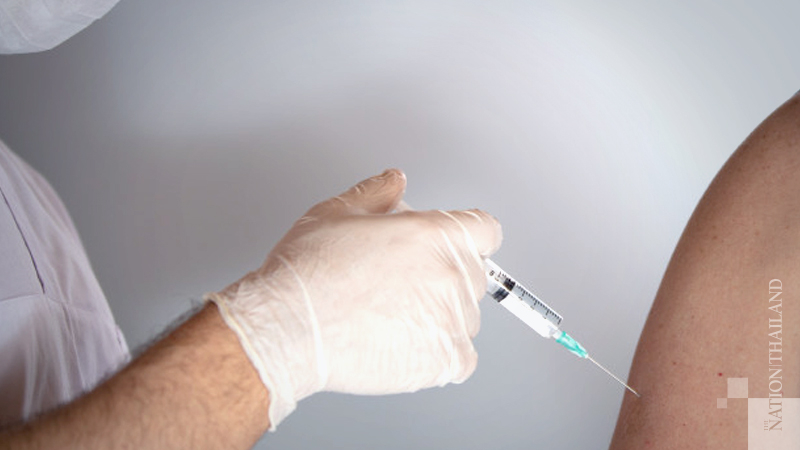
NEW YORK — With a quick jab to a nurse’s left deltoid, America entered a new phase in its fight against the coronavirus on Monday.
The injection to Sandra Lindsay’s arm at Long Island Jewish Medical Center made her the first American to receive the coronavirus vaccine outside a clinical trial. The small shot represented a giant leap in efforts to beat back the virus, a moonshot worth of hope amid a pandemic that has infected more than 16 million and killed more than 300,000 nationwide.
“Sandra, you didn’t flinch,” New York Gov. Andrew Cuomo, D, told the critical care nurse after the injection was administered, as he watched via live stream from his office.
“It didn’t feel any different than taking any other vaccine,” said Lindsay, seated in a puffy blue armchair.
But this vaccine is monumentally different. Developed in record time, it is expected, eventually, to help end a pandemic that has crippled much of life in the United States – and globally – for the better part of a year.
“I believe this is the weapon that will end the war,” Cuomo said.
Vaccinations rolled out across the country Monday, with doctors and nurses at hospitals nationwide injecting one another as part of a federal plan to prioritize front-line health care workers. Some said they had dedicated the experience to the patients they had lost, or to family members they had seldom seen as they battled around-the-clock to save others.
“I just lost my 27th patient today,” said Louisville physician Valerie Briones-Pryor. “So the vaccine I took today was for her family and for the other 26 I lost.”
The immunization campaign will rapidly expand in the days ahead, with some states beginning to include nursing homes. Federal officials leading the effort to manufacture and distribute the vaccines said Monday they expect 20 million people to get the first of two required doses by the end of the year.
The first batches shipped overnight Sunday, following emergency use approval over the weekend, with hospital administrators eagerly checking online tracking tools for arrival updates. In several states, governors were on hand at hospital loading docks as crates of dry-ice-packed vaccine were delivered to doctors and nurses who cheered their arrival.
The first inoculation was heavy on symbolism: Long Island Jewish Medical Center, in Queens, was on the front lines of the covid-19 fight this spring. It is part of the Northwell Health System, which has treated more than 100,000 covid patients. Several among the first to receive the vaccine, Lindsay included, are Black, a reflection of the virus’s outsized toll in communities of color.
But even as Cuomo, Lindsay and others watching live celebrated, they also offered reminders that it will take months for enough people to be vaccinated to influence the broader course of the virus among the public.
“There’s light at the end of the tunnel,” Lindsay said. “But we still need to wear masks and social distance.”
And even with the injection, Lindsay was not protected. The vaccine administered Monday – which was developed by Pfizer with the German company BioNTech – takes two doses to achieve the 95% effectiveness that studies have shown.
The initial distribution of 2.9 million doses will come as much-needed relief for medical workers and residents and staffers at long-term care facilities. But it alone will not arrest the spread of a virus that has never been more prevalent or destructive in the United States than it is today.
The first inoculations Monday came at a time when the United States is averaging more than 200,000 new cases and nearly 2,500 deaths each day. Both are record highs.
Nonetheless, large segments of the population continue to ignore warnings to wear masks and avoid gatherings. A significant segment of the country also says it has no intention of getting immunized: Recent surveys have shown between 42 percent and 61 percent of Americans are willing to get vaccinated.
Monday’s vaccinations – carried out on television and via live stream on social media – were aimed squarely at upping that percentage before the vaccine is made available to the general population, which is likely to happen in the late winter or spring.
“We just have to do it,” urged Cuomo. “The vaccine doesn’t work if it’s in the vial.”
President Donald Trump – who has repeatedly mocked mask-wearing and other public health measures while touting the virtues of a vaccine – signaled his approval. “First Vaccine Administered,” he tweeted within minutes of Lindsay’s injection. “Congratulations USA! Congratulations WORLD!”
The United States was not the first Western country to administer the Pfizer-BioNTech vaccine. That distinction belonged to Britain, which started inoculations last Tuesday with a shot in the arm of 90-year-old Margaret Keenan.
Approvals in the United States took slightly longer. But many American hospitals on Monday were wasting no time getting the process underway, administering doses nearly as soon as they had been delivered. More than half of states had received their initial vaccine shipments by around midday Monday.
At UPMC Children’s Hospital of Pittsburgh, UPS driver Dallas White wheeled a single box of vaccine through the hospital’s loading dock and up to the pharmacy first thing Monday.
Once there, Lynn Peffer, an inventory specialist, and Carol Vetterly, the clinical pharmacy director, used tongs, a box cutter and even a cake knife to work their way through the thickly packaged parcel. Beneath a layer of dry ice, they found a container the size of a kitchen tile containing 975 doses of the vaccine.
The doses were administered to front-line workers who interact with covid-19 patients, including emergency-room doctors, intensive care nurses, anyone assigned to patient transport and even custodial workers.
Sylvia Owusu Ansah, an emergency medicine physician, was among them. She said she wanted to take the vaccine to demonstrate to fellow African Americans that it was safe.
“There is a skepticism there that is not unwarranted,” she said, referencing the seed of distrust between Black Americans and experimental medicine planted with the Tuskegee syphilis experiment, in which Black men in the study were left untreated. “Basically, if I can do it, they can do it.”
In next-door Ohio, Gov. Mike DeWine, R, was on hand when a UPS delivery truck carrying 975 doses of the vaccine arrived outside the Biomedical Research Tower at Ohio State University’s Wexner Medical Center in Columbus at 9:15 a.m.
Just over an hour later, the inoculations were underway.
“Vaccinators, are you ready? Recipients. are you ready? Three, two, one!” Elizabeth Seely, Wexner’s chief administrative officer, announced to a room of 30 front-line health-care workers and vaccinators.
The first six shots were met with cheers and applause.
Robert Weber, 63, chief pharmacy officer and one of those administering the vaccine, said it was a “once-in-a-lifetime opportunity.”
In an appearance at George Washington University Hospital in Washington, Health and Human Services Secretary Alex Azar called the vaccine “a medical miracle.” He said that an additional 30 million Americans are predicted to receive a first dose of the vaccine in January.
Efforts are expected to be bolstered by a drug developed by Moderna that is in the process of being reviewed by federal regulators and, officials said, could be available for use starting next week.
For hospitals preparing to start the vaccination process, there was an expectation of desperately needed relief.
“The vaccine will liberate our workforce, the people who are really working taking care of patients, from worrying about whether they face a death sentence from accidentally getting infected,” said UC Davis Health CEO David Lubarsky.
Nearly 10 months after The UC Davis Medical Center staff treated the first known U.S. case of community transmission, the Sacramento, Calif., hospital was prepared to receive 4,875 doses of the Pfizer vaccine on Tuesday.
That depends, of course, on a smooth delivery of the shipments. But so far at least, there have been no reports of serious delays.
“It’s humbling being a part of this vaccine process because it’s going to save a lot of lives,” said Byron Bishop, the UPS driver who pulled his truck up to the University of Louisville Hospital at 9:40 a.m. He was greeted by applause plus an elbow bump from the governor, Andy Beshear.
Beshear, D, said he was feeling “the best I’ve felt since March 6,” the day when Kentucky counted its first coronavirus case. “Today is the day we start winning the war against covid.”
Later, he appeared to be fighting back tears as he talked about a close friend who lost his mother to the virus and then had to go into quarantine for two weeks, preventing him from grieving with his family.
On a day devoted to allaying concerns about the vaccine, medical professionals were among those who acknowledged some early concern, given the extraordinary speed with which it was developed.
“My initial thought was, it usually takes years and years to get a vaccine approved for anything, so I was a little skeptical at first,” said David Meysenburg, who directs Nursing, Emergency and Trauma Services at UF Health Jacksonville. “But then the more information I got on it, and the more research I did from credible sources, I felt very comfortable.”
He said he still felt that way after receiving his first dose Monday. He also felt hope.
“This is the first time where you can sense that there’s an end in sight,” he said.
At Ochsner Medical Center in Jefferson, La., the administration of the first doses was streamed live on Facebook. The event was a slick production full of medical details, such as how five doses are carried in each vial.
Chief Medical Officer Robert Hart hosted interviews with a diverse group of staffers as they got their shots, sending them off with “CV-19 vaccinated” stickers.
“She is in the middle of it day in and day out,” he said of one nurse, Mia Yepez, who works in a covid-19 unit.
Yepez said that it is especially important for her to be there because she is African American. She encouraged her colleagues and others in her community to get vaccinated.
“We want to be able to stop the many admissions,” she said.
Louisiana is one of the many states where the Black community was hit hard by initial waves of the outbreak and where news of the vaccine has been greeted with some skepticism.
When the presidents of two historically Black colleges in Louisiana – Walter Kimbrough of Dillard University and C. Reynold Verret of Xavier University – announced in early September that they had volunteered to test one of the vaccines, many reacted on social media with alarm.
On Monday, some of that hesitation showed up on Ochsner Medical Center’s Facebook page, with people commenting that they may eventually get the vaccine but have decided not to at the moment.
At the site of the first injection – Long Island Jewish Medical Center, in Queens – Yves Duroseau, emergency-medicine chair at Manhattan’s Lenox Hill Hospital, was the second person to receive his shot. Michelle Chester, director of employee health services for Northwell Health, administered vaccines to both Duroseau and to Lindsay.
“This is the beginning of the end of covid,” Chester said. “Together, as a community, as a nation, we can end this.”
Chester donned purple gloves and gave Duroseau a swift jab with a slender syringe.
“Ready?” she said.
“Please,” Duroseau said.
“Let’s do this!”
Duroseau said he had seen “devastation” from covid-19 in his family, with the death of an uncle. Another of his family members is in the hospital with the disease.
“Everyone was waiting for this day,” he said. “It could not have come soon enough.”
By The Washington Post · Rebecca Tan, Lola Fadulu, Michael Brice-Saddler
WASHINGTON – The first doses of a coronavirus vaccine were administered Monday in the Washington region, marking the start of a logistically massive undertaking that officials hope will halt a virus that has infected more than 540,000 residents and killed nearly 11,000 in the area.
Governments and hospitals are hosting events this week to show residents getting vaccinated as part of an effort to foster public trust in the vaccine. D.C., Maryland and Virginia are reserving the first shipments for health-care workers, first responders and nursing home residents.
Members of the public, officials said, probably will have to wait until spring. The rollout comes as the seven-day average of new infections approaches 7,000 across the greater Washington region – the most since the start of the pandemic.
“We still have a long way to go,” Maryland Republican Gov. Larry Hogan said to a group of hospital workers who were vaccinated Monday afternoon, “but you guys are the first. And we’re proud of all of you.”
Virginia Democratic Gov. Ralph Northam said the vaccine’s arrival is a “much-needed symbol of hope” for the state. Speaking at the Bon Secours hospital in Richmond, Va., which received a batch of doses on Monday, he urged residents to remain vigilant.
“This is the first step in a months-long process to receive, distribute and administer the vaccine as it becomes available,” he said.
Monday’s activity came as advocates for people with intellectual and developmental disabilities are calling on officials to add those individuals to the Phase 1 priority list, especially if they live in group homes. Research shows that they are significantly more likely to die of the novel coronavirus than others in the public, but Maryland and D.C. officials haven’t said when people with those disabilities might receive the vaccine.
“We just don’t know where folks with developmental disabilities are [on the vaccine list],” said David Ervin, chief executive for the Jewish Foundation for Group Homes, which operates 29 sites in Virginia and Maryland. “So far, nothing has been articulated.”
D.C. officials said “residential care community residents” would be in the latter part of the first phase of its distribution plan, though it’s not clear whether that would include residents of group homes. First in line are healthcare workers and first responders, city Health Director LaQuandra Nesbitt said last week.
As hospitals in the city received their first doses Monday, D.C. Democratic Mayor Muriel Bowser encouraged residents to beware of misinformation about the Pfizer-BioNTech vaccine, which the Food and Drug Administration authorized last week. She cited the vaccine’s efficacy and reminded residents that it would be normal to experience symptoms such as headaches and sore muscles after receiving it.
Six institutions will receive the city’s initial allotment of 6,825 doses this week. Five employees at George Washington University Hospital, including emergency medicine nurses and anesthesiologists, were among the first in the nation’s capital to receive the vaccine.
Shylee Stewart, a labor and delivery nurse, said she initially was unsure about receiving the vaccine because of possible side effects. “I was hesitant because I was uneducated,” Stewart said. “And then I did my own research and talked to my colleagues . . . and I had no doubt once I educated myself.”
Raymond Pla, an anesthesiologist, was the sole Black worker of the five to get vaccinated. His message to Black Americans was that it didn’t hurt and was supported by robust research.
“If you want the funerals from the covid-19 infection to slow down and stop, you got to get the vaccine,” he said.
Some government workers in the city, including members of the fire department, will be vaccinated this week as part of a campaign to build confidence in the vaccine, particularly among Black and Latino residents.
“My mother died when I was 5,” said Lt. Keishea Jackson, a firefighter who volunteered to be vaccinated. “My father is everything to me – whenever I come home from work every day, I have anxiety about passing [the virus] on to him.”
Like Pla, Jackson said she wants to “send a message to Black and Brown people” about the safety of the vaccine. “It is my race that is dying at a high rate,” she said.
D.C. officials said last week that the city is being shortchanged on vaccine doses. There are nearly 85,000 health-care workers in the city, but because most of them commute from Virginia or Maryland, the city expects to receive only a fraction of the requisite doses in its first shipment from the federal government.
On Monday, Nesbitt said Virginia would provide about 8,000 doses of the vaccine to residents employed as health-care workers in D.C.
Virginia and Maryland are expected to receive 70,000 and 50,000 doses, respectively, of the vaccine in their first shipments. Officials in both states also have said those estimates fall far short of what they need to protect all health-care workers, much less other vulnerable groups such as nursing home residents or those with other health conditions.
Daphne Pallozi, chief executive of CHI Centers, which operates 17 group homes in Maryland, urged Hogan last week to include group home residents in the state’s vaccine distribution priority list. She cited a recent study that includes data from Maryland and shows that individuals with intellectual disabilities are at least twice as likely as others in the public to die of covid-19, the disease caused by the coronavirus.
The Centers for Disease Control and Prevention says in its vaccine guidelines that states should prioritize long-term care settings.
Erin Beard, a Virginia Health Department spokeswoman, said Monday that group home residents will have the highest vaccine priority in the state. But Charlie Gischlar, a spokesman for the Maryland Health Department, said adults with intellectual disabilities fall under “Phase 1B” in the state’s vaccine distribution plan, meaning they will receive it after hospital workers and nursing home residents.
More details on vaccine distribution will be “fleshed out as more information is received from the federal government,” he said.
Group home providers, who care for thousands of vulnerable individuals in homes of four to six, say they have struggled to get adequate state and local assistance throughout the pandemic.
When the virus arrived in the spring, advocates say, they received less help in procuring protective equipment and cleaning supplies than nursing homes. In August, a coalition of providers told Virginia lawmakers that some group homes would close indefinitely without financial relief.
Amid soaring community spread, the virus has made its way back into some group homes, providers say. Without early vaccination, they say these facilities are likely to report more deaths.
The greater Washington region on Monday reported more than 5,700 new infections. Virus-related hospitalizations and deaths have trended upward since mid-November and are likely to continue growing until there is a significant change in transmission rates.
“We’re seeing record case numbers, and they’re continuing to grow, and they’re going to continue to increase,” said Neil J. Sehgal, assistant professor of health policy and management at the University of Maryland.
By The Washington Post · Rick Noack, Antonia Noori Farzan
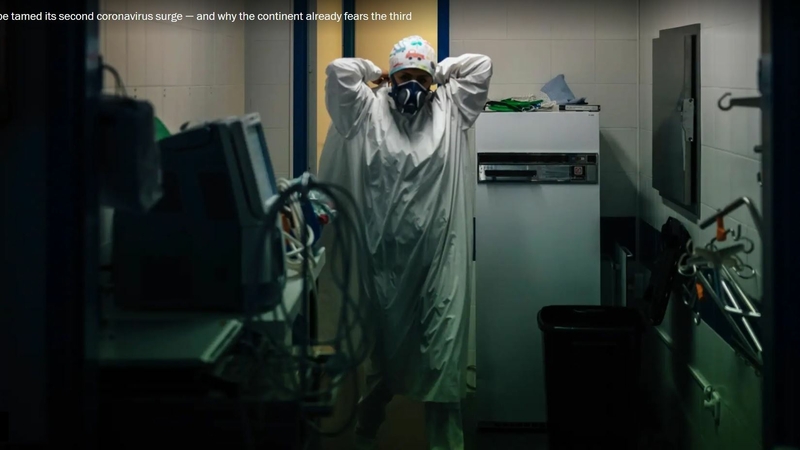
BERLIN – Germans will have to do without singing in churches and shopping for gifts in person this year. Mulled wine, the lifeblood of seasonal celebrations and Christmas markets, is set to disappear from the streets starting Wednesday. And the markets themselves are largely shuttered.
This country is bracing for comparatively cheerless Christmas and holiday season under lockdown after mounting restrictions in recent months failed to suppress the spread of the coronavirus.
New measures – announced Sunday by Chancellor Angela Merkel and set to take effect Wednesday – resemble the country’s hard lockdown in spring, with most retail stores set to close and most schools pivoting to remote learning.
As recently as last month, European leaders had raised hopes for a degree of normality over Christmas. But with Christmas Eve 10 days off, the dire reality of the pandemic is undeniable. Strict shutdowns are set to return or are being pondered in Germany, parts of Britain, the Netherlands and elsewhere on the continent.
Germany Chancellor Merkel on Sunday said social contact had “risen considerably” as a result of Christmas shopping, resulting in an “urgent need to take action.”
Officials appealed to Germans to refrain from rushing to gift shops before they close Wednesday. “I wish and I hope that people will only buy what they really need, like groceries,” Economy Minister Peter Altmaier said late Sunday. “The faster we get these infections under control, the better it is for everyone.”
Private gatherings will be limited to five people from no more than two separate households, though households in most parts of the country will get a temporary reprieve over Christmas, when they will be allowed to host up to four adult relatives, plus children. Germany is not instituting a ban on religious services, but all attendees must register in advance.
The restrictions are expected to last at least through Jan. 10.
At a barber shop in Berlin, the phone rang nonstop Monday morning, while customers hoping for last-minute trims lined up outside. Streets in the capital remained somewhat crowded.
Germany’s tougher guidelines will also include a ban on fireworks sales and public gatherings on New Year’s Eve. Officials said they hoped to avoid the typical spate of fireworks-related injuries over the holiday, given that hospitals are already overburdened.
Germany had initially opted for a more relaxed response to the second wave of the virus in Europe than many other European nations did, amid hopes that the country could keep its economy humming over the winter in the wake of one of the worst economic downturns in living memory. Last month, Germany closed theaters, museums and other venues, and ordered restaurants and bars to switch to takeout, but allowed other aspects of normal life to continue.
While some countries in Europe that imposed strict lockdowns in October or November saw case numbers drop in recent weeks, Germany’s infection rate only leveled off, before starting to surge again.
Germany recorded 181 new infections per 100,000 people over the last seven days, compared to 122 in France and 60 in Spain, even though infection rates are still over two times lower in Germany than in the United States.
Germany reported fewer per capita infections in spring than many of its European neighbors, but what was seen as a key reason for its success in spring – the federal system that empowered regional leaders to take action and allowed for quick mass testing programs – has hampered the coherence of country’s response to the second wave.
The new rules announced Sunday were the result of difficult discussions between Merkel and the leaders of the country’s 16 federal states, which had for weeks struggled to find common ground on a nationwide lockdown because infection rates differ across the country.
Unable to enforce such a lockdown on her own, Merkel appealed to state leaders in an emotional address to Parliament last week. “If we have too many contacts now before Christmas, and that ends up making it the last Christmas with the grandparents, then we will have failed,” she said.

 A sample of the Bt1,000 and Bt100 commemorative banknotes.
 President-elect Joe Biden announces Cabinet nominees on Friday, Dec. 11, 2020. MUST CREDIT: Washington Post photo by Joshua Lott
  People gather to memorialize George Floyd in Minneapolis on Oct. 14, 2020. MUST CREDIT: Washington Post photo by Joshua Lott