
The debate between cast-iron haters and loyalists is as enduring as the pan itself #SootinClaimon.Com

#SootinClaimon.Com : ขอบคุณแหล่งข้อมูล : หนังสือพิมพ์ The Nation.

The debate between cast-iron haters and loyalists is as enduring as the pan itself (nationthailand.com)

The debate between cast-iron haters and loyalists is as enduring as the pan itself

Dec 13. 2020The debate between cast-iron haters and loyalists is as enduring as the pan itself. MUST CREDIT: Photo by Stacy Zarin Goldberg for The Washington Post.
The debate between cast-iron haters and loyalists is as enduring as the pan itself. MUST CREDIT: Photo by Stacy Zarin Goldberg for The Washington Post. 

By The Washington Post · Emily Heil · FEATURES, FOOD 

Cast-iron pans have a storied place in American home cooking. The hefty, glossy black workhorses have plenty of attributes: they hold heat like champs, can put a crusty sear on a steak, and they look gorgeous hanging from a rack. Their fans are legion.

And so, inevitably, when someone expresses anything other than reverence for the durable cookware, the oven mitts come off, and Team Cast Iron (some of whom self-identify as “Skilletheads”) is spoiling for a fight.

This week saw the latest flare-up in the long-simmering debate between those who love the stuff and those who find them too fiddly, too high maintenance, or just too heavy.

Rosie Gray, a reporter for BuzzFeed News this week tweeted what one might have thought was an innocent musing. “I’ve never seen anyone make a convincing argument for why i should have a cast iron pan,” she wrote.

The missive drew nearly 2,000 responses, most in defense of the sacred cookware, including a small number of nasty responses. In an interview, Gray called her ensuing mentions “out of control” – and this is from a female reporter who has covered the Trump administration.

Gray says the heft of the cookware is simply unappealing, and so is the idea of doing a separate cleaning regime than she uses for her other pans. “People were like, it’s easy to just rub it with salt, or oil it, and I’m thinking, ‘or I could cook in a pan that I don’t have to do that to?'” she says. “I just might not be one of the people who has patience to do that.”

She isn’t the first cast-iron heretic to draw public note. This summer, New York chef Frank Prisinzano made headlines for his blistering put-down of cast iron. “We’re way past cast-iron now,” he said on Instagram, blasting the pans for being heavy, and time-consuming to clean and season. “This is really something from history here.”

But when you ask cast-iron partisans about the skeptics, a funny thing happens. Most don’t sling insults. Will Copenhaver, vice president for marketing and sales for the Charleston-based Smithey Ironware Co., strikes a genteel (yet unmistakably shade-filled) note when asked about those on the other side of the aisle.

Perhaps they’re just “contrarians,” suggests Copenhaver, whose company produces swoon-inducing, artisanal pans. Or it’s just a matter of taste, he says, with the unspoken suggestion that the haters . . . well, as Southerners say about people with bad taste, bless their hearts. “Some people don’t like old houses,” he says. “Some people do. People who haven’t been exposed to cast iron might think it’s a pure nostalgia play, which is not fair.”

Copenhaver allows that some people might find it annoying not to be able to put their pans in the dishwasher. But beyond that, he thinks that people who don’t like cast iron probably just think it’s harder to maintain than it really is.

Ashley Jones, author of the cookbook “Modern Cast Iron,” has a similar read on the doubters, and chalks up their negative takes to what she says is information overload – after all, many cast-iron devotees insist that they alone know the best way to care for their pans, whether that’s a salt-scrub method or using chain-mail “sponges” to clean them. “There’s a lot of confusion,” Jones says. “If you look up how to care for cast iron, there’s a lot of conflicting information, you’ll see a million different answers.” “It’s an old debate, and I don’t blame people for either side of it.”

Jones offers a simple technique for everyday cleaning that she hopes could win over the fearful. Go ahead and use soap, she says. (Today’s mild detergents aren’t your grandmom’s harsh lyes, and won’t strip the seasoning.) Dry the pan well on a warm burner, add a bit of oil, and give it a quick wipe with a paper towel.

Plenty of people similarly sought to educate Gray about cast iron in the hopes of converting her, sharing their own tips and techniques for maintaining it. But she’s still not planning to buy a new pan.

“Look, we should all use the kitchen tools that we like, and for me, the benefits don’t outweigh the negatives,” she says. “But I applaud the effort people put into convincing me.”

Don’t expect the faithful to give up trying. One of the biggest selling points for cast-iron pans is that they last forever. The debate over them will, too.
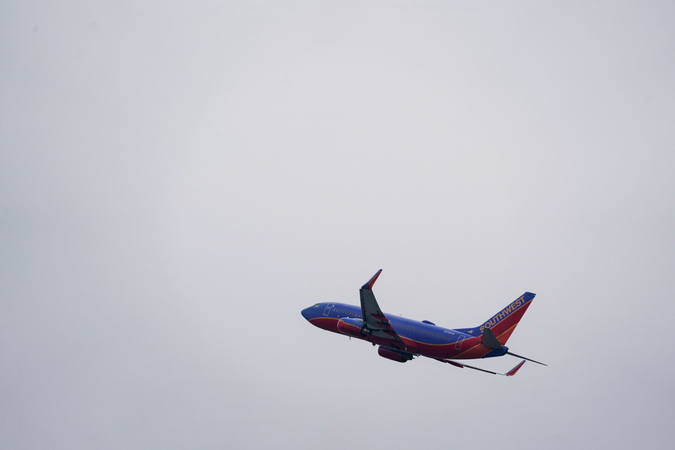

Air travel was down significantly this year. Climate activists hope it stays this way. #SootinClaimon.Com

#SootinClaimon.Com : ขอบคุณแหล่งข้อมูล : หนังสือพิมพ์ The Nation.

Air travel was down significantly this year. Climate activists hope it stays this way. (nationthailand.com)

Air travel was down significantly this year. Climate activists hope it stays this way.

WorldDec 13. 2020

By The Washington Post · Hannah Sampson · NATIONAL, BUSINESS, FEATURES, HEALTH, SCIENCE-ENVIRONMENT, TRANSPORTATION, US-GLOBAL-MARKETS, TRAVEL 

Ariella Granett wanted people to stop flying in 2020. Just not this way.

“The pandemic was not the way we were hoping to reduce air travel,” Granett, co-founder of Flight Free USA, said in an email. “But I think there is a lot to learn from it.”

According to an outlook from the International Air Transport Association, the number of air travelers in 2020 is expected to drop more than 60% to 1.8 billion, about the same number of people who flew in 2003. Next year, the group projects that number will increase to 2.8 billion – still far less than the 4.5 billion who flew in 2019. Airlines have slashed routes and furloughed workers, and some have gone out of business.

Those who advocate flight-free living have been grounded, in some cases for years, by choice. And in a year when so many more have been forced to stay put because of the novel coronavirus, leaders of the fly-less movement are hopeful that people, businesses and institutions will reconsider their behavior post-pandemic – and treat climate change as an emergency.

“Regardless of the pandemic, climate change is like the elephant in the room,” Granett, an architect who stopped flying two years ago, said in an interview. “It’s huge and we’re hurtling toward this cliff, toward this point of no return. It makes the pandemic seem like a little trial run.”

Magdalena Heuwieser, one of the founders of the Vienna-based network Stay Grounded, which advocates for a reduction in aviation, said she expects to see a continued rethinking of business travel moving forward.

“Companies just realized that it’s cheaper to do online conferencing … employees realized that it’s less stressful,” she said. “It’s something that I think will not jump back to previous levels.”

Climate scientist Peter Kalmus, founder of the site NoFlyClimateSci, said he has urged the American Geophysical Union in the past to hold its big fall meeting at least in part virtually.

“Now it’s a completely virtual meeting by force,” he said – and he thinks there’s potential to do the same in the future, maybe even a hybrid with regional groups meeting in person and others joining remotely.

“I think we can even do virtual meetings better than this,” Kalmus said. “This is a place where technology really should be shining.”

As hard-hit airlines continue to seek help from governments after receiving billions of dollars in aid earlier in the pandemic, Heuwieser cautioned that bailouts should come with climate change in mind.

“We worry that this will jump back to pollution as usual if structural changes are not imposed right now – if we don’t rather use this bailout money for recovery packages to finance living wage basic income for workers who are losing their jobs, social protection, retraining programs, creation of jobs in climate safe sectors and foster safe alternatives to flying,” said Heuwieser, who is based in Germany.

She said governments should be investing in better, more comfortable and attractive train services, for example.

Once the pandemic is over, the fly-less community hopes trains and other forms of slower travel will appeal to those who are eager to get out and explore again.

“This is not the optimal situation for flying less,” said Kalmus, who lives in Southern California and hasn’t flown since 2012. “Hopefully we can fly less in a more joyful way than this because we’ll still be able to travel, we’ll still be able to meet in groups. This is flying less superimposed onto all this other stuff that makes life so difficult for us.”

First coronavirus vaccines roll out as officials share months-long timeline for immunization effort #SootinClaimon.Com

#SootinClaimon.Com : ขอบคุณแหล่งข้อมูล : หนังสือพิมพ์ The Nation.

First coronavirus vaccines roll out as officials share months-long timeline for immunization effort (nationthailand.com)

First coronavirus vaccines roll out as officials share months-long timeline for immunization effort

Health & BeautyDec 14. 2020

By The Washington Post · Paulina Firozi, Meryl Kornfield, Josh Dawsey

WASHINGTON – The first vials of the coronavirus vaccine were shipped Sunday, paving the way for inoculations to begin across the country this week.

Nearly 3 million doses of the Pfizer-BioNTech vaccine are expected to arrive at 145 facilities Monday, marking the beginning of a massive logistical effort to stop the rampant spread of the disease covid-19, which has so far killed more than 298,000 Americans. The vaccine against the virus it causes will arrive at nearly 500 additional sites Tuesday and Wednesday.

But even as state officials scrambled to distribute the first doses, they criticized the federal government for a lack of transparency and limited financial help, warning that both could hamper efforts to quickly vaccinate the most vulnerable populations, including health-care workers and the elderly.

As the vaccine doses made their way to hospitals Sunday, Centers for Disease Control and Prevention Director Robert Redfield gave the final nod, approving the decision to recommend Pfizer’s vaccine for people 16 and older.

Additionally, the governors of California, Washington, Oregon and Nevada announced Sunday that an independent review of the Pfizer vaccine found it safe for public use. They said the vaccine was on the way but did not give a specific estimate for when the first shots would be given.

As the vaccine arrived at a Louisville, Ky., hub for distribution across the East Coast on Sunday, Democratic Gov. Andy Beshear moved up his timeline, announcing that immunizations could begin as early as Monday. New Jersey Gov. Phil Murphy, a Democrat, said Sunday that the first vaccines are expected to be administered Tuesday at University Hospital in Newark.

Amid questions about when people can get their shots, a Sunday report said people in President Donald Trump’s White House circle were told to expect to be vaccinated shortly.

“Senior officials across all three branches of government will receive vaccinations pursuant to continuity of government protocols established in executive policy,” National Security Council spokesman John Ullyot said in a statement. The administration has not mentioned when Trump will get a dose. Since contracting the virus, Trump has repeated false claims that he is “immune,” though experts are not yet certain about how long immunity lasts.

Despite the rapid rollout of the Pfizer vaccine, it will be months before immunizations have any effect on the pandemic in the United States, where case numbers are surging. As of Saturday, more than 16 million people in the United States have tested positive, and an average of 2,415 people died of the virus every day for the past week, a pandemic record.

Officials stressed that a large proportion of the nation’s population – about 70% to 80% – will need to get the vaccine before herd immunity is achieved.

Moncef Slaoui, chief science adviser to the White House’s effort to develop a vaccine, said officials hope to “reach that point between the month of May and the month of June.”

“All in all, we hope to have immunized 100 million people, which would be the long-term-care-facility people, the elderly people with co-morbidities, the first-line workers, the health-care workers,” he said in an interview on “Fox News Sunday. “It’s about 120 million people – we would have immunized 100 million people by the first quarter of 2021 with two doses of vaccines.”

Health and Human Services Secretary Alex Azar detailed what could come in the weeks and months following the initial vaccine shipments. He said the plan is to have 20 million people vaccinated by the end of December, up to 50 million by the end of January and 100 million by the end of February. That includes plans for a second vaccine, developed by Moderna, which is expected to gain emergency authorization from the Food and Drug Administration soon.

The FDA gave emergency use authorization for Pfizer and BioNTech’s vaccine on Friday for people 16 and older, and Moderna’s vaccine is expected to be authorized following a review scheduled for this Thursday by the agency’s independent advisers.

“We’ll be getting more and more Pfizer product, and we’ve got 12 1/2 million Moderna product, assuming that we get approval at the end of this week on Moderna, that we’ll ship out very soon thereafter,” Azar said during an interview with CBS News’s “Face the Nation.”

He also was asked by host Margaret Brennan whether he believes President-elect Joe Biden’s team will be able to meet the goals, and Azar appeared to acknowledge that the incoming Biden administration will take over the process.

“If they carry forward with the plans that we’ve put in place, 100 million shots in arms by the end of February is very much in scope,” Azar said.

Officials hoping to bolster confidence in the vaccine worry that such a large immunization effort could be hindered by skepticism.Francis Collins, director of the National Institutes of Health, said the level of potential vaccine hesitancy in the nation is of “great concern for all of us.”

During an interview on NBC News’s “Meet the Press,” he urged viewers to “hit the reset button on whatever they think they knew about this vaccine that might cause them to be so skeptical.”

“The data is out there now. It’s been discussed in a public meeting, all the details of the safety and the efficacy for anybody who wants to look,” he said, adding: “I think all reasonable people, if they had the chance to sort of put the noise aside and disregard all those terrible conspiracy theories, would look at this and say, ‘I want this for my family. I want it for myself.’ People are dying right now. How could you possibly say? ‘Let’s wait and see’ if that might mean some terrible tragedy is going to befall?”

There’s also particular concern about addressing any vaccine hesitancy in communities of color, especially because they have been disproportionately affected by the pandemic.

NBC’s Chuck Todd asked Collins to respond to concerns from a health-care worker who said she hopes people who look like her and other Black doctors in the community also will help generate trust in the vaccines.

“She’s absolutely right. For somebody like me to say, ‘You should be signing up for this vaccine,’ OK, a White guy who works for the government. Sure, that isn’t necessarily going to be the voice that people need to hear if they’re skeptical,” Collins said. “We are working closely with health-care providers, especially those in communities of color, and trying to make sure that all of those messages are ready to go.”

CDC advisory group recommends Pfizer vaccine for use #SootinClaimon.Com

#SootinClaimon.Com : ขอบคุณแหล่งข้อมูล : หนังสือพิมพ์ The Nation.

CDC advisory group recommends Pfizer vaccine for use (nationthailand.com)

CDC advisory group recommends Pfizer vaccine for use

Health & BeautyDec 13. 2020

By The Washington Post · Lena H. Sun, Isaac Stanley-Becker · NATIONAL, WORLD, HEALTH, SCIENCE-ENVIRONMENT, HEALTH-NEWS 

WASHINGTON – A federal advisory panel voted overwhelmingly Saturday to recommend the nation’s first coronavirus vaccine for people 16 and older, paving the way for inoculations to begin as shipments of vaccine arrive at hospitals and state health departments Monday.

The advisory panel to the Centers for Disease Control and Prevention found the benefits of the vaccine from Pfizer and BioNTech, which has been shown to be 95% effective at preventing illness after two shots, far outweighed side effects, including sore arms, fatigue, headaches, muscle pain and chills that resolved within a few days. The action follows the Food and Drug Administration’s action late Friday authorizing the vaccine for emergency use for people 16 and older.

The vote was 11 in favor, with three members not voting because of conflicts of interest.

“I know we’re going to have very tough and sad times ahead because of the surge and a limited vaccine supply, but I am really hopeful that this is the beginning of the end of the coronavirus pandemic,” said Peter Szilagyi, a professor of pediatrics at the University of California at Los Angeles.

The panel’s recommendation is “a hugely important step,” said Nancy Messonnier, director of the CDC’s National Center for Immunization and Respiratory Diseases.

Beth Bell, a global health expert at the University of Washington who chairs the panel’s coronavirus vaccine work group, referred to public concerns about the new vaccine and said she would get a shot when it is her turn and would recommend it for her family. Several members said they would do the same.

While Bell applauded the huge scientific achievement of developing a vaccine, she and others noted the stark imbalance between the $10 billion of taxpayer money used to fund vaccine development and the lack of funding – only “hundreds of millions” – for the enormously complicated and challenging distribution and vaccination effort rolling out across the country during the next year.

“The imbalance between that kind of money and funding provided for the vaccination program is really shocking and needs to be corrected,” Bell said. “We are not going to be able to protect Americans if we don’t have a way to deliver the vaccine to them.”

Jeffrey Duchin, a top health official for Seattle and King County, Wash., noted that the funding necessary for state and local health departments “has been put in the deep freeze with the vaccine,” referring to the vaccine’s ultracold storage and handling requirements.

Because the vaccine initially will be in extremely limited supply, the CDC recommended last week that about 21 million health-care workers and about 3 million residents of long-term care facilities be first to get the vaccine.

Health-care personnel are a priority because of their potential exposure to the virus and their critical role keeping the nation’s hospitals and clinics functioning. Residents and employees of long-term care facilities were prioritized because they account for nearly 40% of deaths from covid-19, the disease caused by the coronavirus.

The recommendations from the Advisory Committee on Immunization Practices were sent to CDC Director Robert Redfield, who is expected to approve them imminently. Once approved, they become the official CDC recommendation on immunization in the United States. Authorization from the FDA means the Pfizer vaccine is permitted to be administered, but an endorsement by the CDC immunization panel signals that the vaccine should be administered to the populations included in its guidance.

Recommendations from the group, an independent body of experts, have been the gold standard for evidence-based guidance on vaccine use in the United States for decades. Health-care providers rely on the group’s recommendations because of the committee’s reputation for rigor and attention to detail, said Jason L. Schwartz, a professor of health policy at the Yale School of Public Health. The committee has been planning for its recommendations for coronavirus vaccines since the spring.

The committee’s review of safety and efficacy data Friday and Saturday reached the same conclusions as the FDA and its advisory committee, including appropriateness of use in 16- and 17-year-olds. One member noted that teenagers can actively spread the virus to family members.

Committee members said pregnant women who are part of a group recommended to receive the shot may talk with their medical providers and choose to get vaccinated, even in the absence of data on the safety of coronavirus vaccines in pregnant women.

Many health-care personnel are women, and a significant percent are likely to become pregnant or to have recently had babies, noted physician Sandra Fryhofer, a liaison representative speaking on behalf of the American Medical Association.

Pregnant women have been excluded from coronavirus vaccine trials. A Pfizer official said Saturday the company plans to report to the FDA this month on a developmental and reproductive toxicity study in animals that could help elucidate any risks.

On Sunday, the CDC is expected to provide briefings for clinicians and provide additional detailed clinical considerations for health-care providers and patients on its website, including guidance on possible severe allergic reactions. Peter Marks, director of the FDA’s division that regulates vaccines, said Saturday that officials had looked carefully at such side effects and concluded that people should receive the vaccine unless they “have had a severe reaction to the vaccine or one of its components.”

Two health-care workers in Britain had severe anaphylactic reactions after getting the vaccine this week, according to authorities. Both had a history of serious allergic reactions and carry epinephrine auto-injectors, known as EpiPens, for such emergencies. A third health-care worker, with no history of allergies, developed a rapid heartbeat and skin reddening. The CDC is following up with British health officials on the cases and has convened experts in vaccine safety, immunology and allergy to investigate possible causes, officials said.

The weekend meeting was not devoted to deciding on allocation of finite vaccine supplies but whether to recommend its use.

But there was a preview of the jockeying certain to take place over who will gain preference following health-care workers and long-term care facility residents and staff, who constitute the first phase, known as phase 1a. Members of the advisory group heard from industry representatives and other advocates about why workers in certain sectors or particularly vulnerable people should have priority access.

John Allan III, vice president of regulatory affairs and international standards for the International Dairy Foods Association, warned that if food workers did not get immunized soon, “Our supply chains could eventually fall apart, creating widespread disruptions to our economy.”

Julie Russell, a representative of a school district in San Diego County, said teachers and other front-line education staff required attention because of “how many young lives each of them touch.”

And Charles Lee, president-elect of the American College of Correctional Physicians, said incarcerated people are of paramount concern because of the outbreaks that have torn through prisons.

There were also concerns about access in the first phase. A rural health advocate in Wisconsin said ultracold storage requirements and the batch size of the Pfizer vaccine, which is shipped in 975-dose allocations, threatens access beyond densely populated metropolitan areas.

Several members of the public warned about the pernicious effects of misinformation, asking the committee to develop a plan to combat false narratives about vaccination, particularly those targeting communities of color.

Fourth Round Suspended at U.S. Women’s Open; Play to Resume Monday #SootinClaimon.Com

#SootinClaimon.Com : ขอบคุณแหล่งข้อมูล : หนังสือพิมพ์ The Nation.

Fourth Round Suspended at U.S. Women’s Open; Play to Resume Monday (nationthailand.com)

Fourth Round Suspended at U.S. Women’s Open; Play to Resume Monday

Dec 14. 2020

 Fourth-round play at the U.S. Women’s Open has been suspended for the day due to course conditions and potential inclement weather later this afternoon.

Champions Golf Club has received .73 inches of rain in the past 24 hours.

“We want to ensure course conditions are worthy of crowning a major champion,” said John Bodenhamer, Senior Managing Director, Championships for the USGA.

Play will resume at 9 a.m. EST on Monday, Dec. 13. Eighteen players have yet to tee off in the championship’s final round. Golf Channel will air live coverage from 9 a.m. to 3 p.m. EST.

2019 AIG Women’s Open champion Hinako Shibuno sits atop the leaderboard at -4, with Amy Olson in second at -3. Moriya Jutanugarn and Ji Yeong Kim2 are tied for third at -1. 

Moriya trips a bit, but stays in contention at US Women’s Open #SootinClaimon.Com

#SootinClaimon.Com : ขอบคุณแหล่งข้อมูล : หนังสือพิมพ์ The Nation.

Moriya trips a bit, but stays in contention at US Women’s Open (nationthailand.com)

Moriya trips a bit, but stays in contention at US Women’s Open

Dec 13. 2020Moriya Jutanugarn (Photo credit to LPGA)Moriya Jutanugarn (Photo credit to LPGA) Despite stumbling to a third-round 72, Thai hope Moriya Jutanugarn is still in contention for her maiden Major crown.

Moriya fell three shots behind Japanese leader Hinako Shibuno after round three of the US Women’s Open on Saturday.

Moriya was -2 through 13 holes and within two strokes of Shibuno’s lead. She dropped a shot at the 14th and then landed a double bogey on the 17th hole to card a one-over 72. Sitting at one-under-par 212, she will round out Sunday’s final group with Shibuno and American Amy Olson.

The day also saw one of the most interesting outside-the-ropes moments of the week. Just a few minutes after signing her card for her second consecutive 72, which puts her -1 for the championship and tied for third going into the final round, Moriya stepped up to a USGA microphone and answered a few questions from journalists.

Then to her surprise, a reporter asked, to laughs from everyone around: “How far did your sister hit it past you?” Ariya Jutanugarn had played with Moriya on Saturday at Champions Golf Club. Ariya hit one-over-par 214 overall.

“Wow,” Moriya said, joining in the laughter. “I would say 30 to 40 yards today. But I definitely think I hit more greens and maybe made a few more putts.”

That small interaction offered a glimpse into the sibling love that those who follow the Jutanugarns see almost every week.

A victory in the tournament would make Moriya the second in the family after sister Ariya to win the US Women’s Open. They would be the third sisters to win USGA championships, joining Harriot (1906) and Margaret Curtis (1907, 1911, 1912) at the US Women’s Amateur; and Hollis Stacy (1969, 1970, 1971 US Girls’ Junior; 1977, 1978, 1984 US Women’s Open) and Martha Leach (2009 US Women’s Mid-Amateur).

After starting the day with a four-stroke lead, Japan’s Shibuno carded her first over-par round of the 2020 US Women’s Open on Saturday, shooting a three-over 74 at Champions Golf Club. The 2019 AIG Women’s Open champion holds a one-stroke advantage over American Olson, whose even-par 71 moved her into solo second going into Sunday’s final round.

Shibuno carded four bogeys to just one birdie at the wet Cypress Creek Course, opening with a bogey on No. 1 and stumbling to finish with bogeys on the 14th and 18th. She said the nerves of being in the final group played a factor in her struggles on Saturday, as well as the all-too-familiar 2020 feeling of not having fans outside the ropes.

“Last year when I won the major, there was a large number of people out in front of me and because of the audience, that gave me power and also it’s easy for me to get on a momentum as well,” said Shibuno. “However, now there’s no people, no audience and it’s very difficult for me to get momentum, because when I get a run of birdies, when I get the birdie, it’s silence.”

Olson, who held the 18-hole lead following a first-round 67, nearly holed out from the fairway with an 8-iron on No. 17, taking the short birdie to cap her round and move back into the final group.

“I’m really pleased with how I played today. It was such a grind,” said Olson, who played in the final group at the 2018 ANA Inspiration and 2018 Evian Championship but came up short.

“Pars were a great score on every single hole today. Fortunately, I made a couple of good birdies, especially the one on 17 coming in. Some really solid par putts and that’s really what it comes down to, making those putts whether they’re for birdie or par.”

The winner of the US Women’s Open will receive $1 million; the Mickey Wright Medal; custody of the Harton S. Semple Trophy for a year; and an exemption from qualifying for the next 10 US Women’s Open Championships.

Shibuno could join South Koreans Se Ri Pak and In Gee Chun as the only players in history to win majors as their first two LPGA Tour titles. Pak won her titles at the 1998 KPMG Women’s PGA Championship and the 1998 US Women’s Open, while Chun won the 2015 US Women’s Open and the 2016 Evian Championship.

Shibuno or Ji Yeong Kim would be eligible to accept immediate LPGA Tour membership.

Olson would become the season’s fourth Rolex First-Time Winner, joining Ally Ewing (LPGA Drive On Championship – Reynolds Lake Oconee), Mel Reid (ShopRite LPGA Classic) and Madelene Sagstrom (Gainbridge LPGA at Boca Rio). She would also become the second LPGA Tour winner from North Dakota, joining Beverly Hanson, whose 17 LPGA Tour victories included three major titles.

Loophole in FTAs allows more electric vehicles to be imported from next year #SootinClaimon.Com

#SootinClaimon.Com : ขอบคุณแหล่งข้อมูล : หนังสือพิมพ์ The Nation.

Loophole in FTAs allows more electric vehicles to be imported from next year (nationthailand.com)

Loophole in FTAs allows more electric vehicles to be imported from next year

Dec 14. 2020

By The Nation

Electric vehicles (EVs) from China are expected to start flowing into Thailand, while the Thai Auto Industry Association is calling on the government to further improve the existing free-trade agreements (FTAs) with China.

As per the China-Asean FTA, China can already send 100-per-cent electric vehicles to Thailand tariff free, which goes against the government’s policy of promoting the production of EVs locally in a bid to support the Thai automotive industry.

Automaker MG, a British brand with a Chinese owner, has taken advantage of this loophole to enter the Thai market with two EV models – the MG ZS EV SUV going for Bt1.19 million and the MG EP station wagon for Bt988,000.

The release of these vehicles adversely affects Japanese automakers, who are having to pay 20 per cent import duty under the Japan-Thai FTA.

For instance, Nissan Leaf which was initially launched at Bt1.99 million and recently reduced to 1.49 million, is still not moving. From June last year to December this year, barely 200 units of the car have been sold, though the Metropolitan Electricity Authority recently bought 24 Nissan Leaf units. Ramesh Narasimhan, president of Nissan Motor Thailand, admitted that the car was overpriced at Bt1.99 million.

Meanwhile, European carmakers have different policies when it comes to launching EVs in Thailand, and the Covid-19 outbreak is affecting their plans significantly. For instance, Mercedes-Benz has had to postpone plans to set up an assembly plant in Thonburi to the end of 2021, while Audi too has indefinitely put off its plan to set up a factory in Thailand.

Volvo, which imports the plug-in hybrid Recharge from Malaysia, will import its fully electric version from China in the second half of 2021.

BMW Thailand Group, which already assembles five plug-in hybrid models at its assembly plant in Rayong, will launch the fully electric BMW iX3 imported from China next year.

Apart from the import of many European brands from China, Chinese brands like the Great Wall Motor will also be entering the Thai market from 2021.

Ongarj Pongkijvorasin, chairman of the Federation of Thai Industries’ Automotive Industry Club, said recently that he has urged Prime Minister Prayut Chan-o-cha to consider bringing the tariff for EVs from China down to zero per cent as it will attract more foreign investment in the country.

“The government should have a clear policy on electric vehicles and all departments should coordinate and move in the same direction. More importantly, plans should be realistic and should take into consideration our potential, while preserving the original production base,” Ongari said.

New businesses mushroom in Malaysia despite Covid-19 pandemic gloom #SootinClaimon.Com

#SootinClaimon.Com : ขอบคุณแหล่งข้อมูล : หนังสือพิมพ์ The Nation.

New businesses mushroom in Malaysia despite Covid-19 pandemic gloom (nationthailand.com)

New businesses mushroom in Malaysia despite Covid-19 pandemic gloom

Dec 14. 2020Photo credit: https://www.greenpatch.academy/Photo credit: https://www.greenpatch.academy/ 

By Ram Anand
The Straits Times/ANN

KUALA LUMPUR – Educator Sujietra Jayaseelan was meant to set up a physical after-school coaching centre for children in Petaling Jaya, Selangor, but her plan was scuppered in March when Malaysia imposed a partial shutdown to curb the spread of the coronavirus.

After observing her own children study at home when schools were shut, she instead launched Green Patch Academy, an online centre offering academic and skills coaching for children.

“The online method had never crossed my mind before. I also offered a very low price bearing in mind the impact of the pandemic on people’s finances. It would have been so cheap if this was my initial idea,” she told The Straits Times.

Green Patch is just one of the nearly 280,000 new businesses registered in Malaysia between March and September, defying the pandemic gloom with fresh enterprises in sectors such as food and beverage, online retail and fitness.

This figure far outpaced the number of businesses that had shuttered since March – at 32,469, according to the Companies Commission – when the country introduced drastic movement curbs to contain the outbreak.

Entrepreneur Development and Cooperatives Minister Wan Junaidi Wan Jaafar described this development as a silver lining, saying local entrepreneurs were adapting their business models to be resilient during challenging times.

“I applaud this as such a move is vital for their business survival. An entrepreneur must be innovative, creative and dynamic to adjust and adapt to whatever situation they are in,” Datuk Seri Wan Junaidi told The Straits Times.

Malaysia’s economy has not been spared the fall-out from the coronavirus and is expected to contract by up to 4.5 per cent this year. Meanwhile the latest Business Confidence Index released by local ratings agency RAM on Dec 7 stood at 35.9 per cent, still substantially below the 50 percent threshold needed for it to be read as optimistic.

Nevertheless, some entrepreneurs are forging ahead.

A majority of these new businesses, Mr Wan Junaidi said, operated in the food and beverage sector, followed closely by online retail shopping businesses.

“Another interesting area is also the fitness industry. Because there are some people who are scared to go to gyms, there is an increasing demand for virtual fitness classes and personal training,” he said.

New entrepreneurs have pressed ahead with their business plans, all while pivoting on short notice when circumstances change.

Ms Dhashene Letchumanan, a former marketing executive, had been planning to sell her Skin Start beauty products at physical stores before the pandemic hit. By the time she launched her skincare line, movement controls were in place, forcing her to switch to online retail.

“I could have sold my products through retail stores, booths or kiosks if there was no pandemic. But now the best option is to just stay online and use dropshippers, which is a way to generate income for others who have lost their jobs,” Ms Dhashene told ST, referring to the practice of selling a product without holding stock, leaving orders to be fulfilled by the wholesaler or another retailer.

Meanwhile, other new businesses have been set up with the help of civil society organisations and social enterprises.

A group of construction workers who lost their jobs after Covid-19 clusters were discovered at their worksite now run The Nanas Lab, a business making pineapple jam.

“They have been growing pineapples to eat when their food supplies run out,” said Ms Raudhah Nazran, CEO of social enterprise Accelerate Global. “We saw that as a business opportunity and taught them how to monetise their farm.”

[South Korea] More than 2m facilities to face restrictions under Level 3 social distancing: ministry #SootinClaimon.Com

#SootinClaimon.Com : ขอบคุณแหล่งข้อมูล : หนังสือพิมพ์ The Nation.

[South Korea] More than 2m facilities to face restrictions under Level 3 social distancing: ministry (nationthailand.com)

[South Korea] More than 2m facilities to face restrictions under Level 3 social distancing: ministry

Dec 14. 2020Health Minister Park Neung-hoo. (Yonhap)Health Minister Park Neung-hoo. (Yonhap) 

By The Korea Herald/ANN

More than 2 million multiuse facilities and businesses will face restrictions if the government raises the social distancing scheme to Level 3, the health ministry said Sunday.

Son Young-rae, a ministry spokesman, told a regular press briefing that the highest level calls for a no-assembly order on around 450,000 facilities and restricted services at around 1.57 million others.

South Korea operates a five-tier social distancing scheme, with the greater Seoul area currently under the second-highest Level 2.5 and the rest of the country under Level 2.

Calls have grown for an elevation to Level 3 amid record-setting coronavirus case tallies this weekend. On Sunday, the country added a record 1,030 daily cases, a day after adding 950, the biggest number since the country reported its first COVID-19 case in January.

“When we decide to adopt Level 3, we will also review stronger antivirus measures that can be added to what is already in the manual,” Son said. “We would look at tougher measures for high-risk facilities in light of cluster infection trends and characteristics of the spread.”

Level 3 bans all gatherings of 10 or more people and requires all nonessential multiuse facilities to close.

Department stores and other large stores will be subject to a no-assembly order, while other shops may be required to close after 9 p.m., Son said.

“Level 3 is the final measure we can use to curb the spread of COVID-19,” he said. “There is no Level 3.5, 4 or 5.”

The spokesman added that without the voluntary participation of the public, even Level 3 may not produce the desired effect. (Yonhap)

Nepal reopens to tourists coming by air, land borders still closed #SootinClaimon.Com

#SootinClaimon.Com : ขอบคุณแหล่งข้อมูล : หนังสือพิมพ์ The Nation.

Nepal reopens to tourists coming by air, land borders still closed (nationthailand.com)

Nepal reopens to tourists coming by air, land borders still closed

Dec 14. 2020

By Sangam Prasain
The Kathmandu Post/ANN

Trekkers and mountaineers have been entering the country since October after the government allowed limited activities.

Nepal has thrown open the doors to foreign tourists after keeping them out for nine months as the country battled the Covid-19 pandemic.

All tourist visas have been restored, and foreign visitors are now free to fly into the country, the Department of Immigration said, but the land borders are still closed.

“Issuance of tourists entry visa from Nepali diplomatic missions abroad has resumed,” the Department of Immigration said. Only travellers with a pre-approval and recommendation of the government will be allowed entry overland, the department said.

On-arrival visas will be provided at Tribhuvan International Airport in Kathmandu only to representatives and families of diplomatic missions, United Nations agencies, international organisations and non-resident Nepalis without any pre-approval letters and recommendations, the department said.

“All foreigners should obtain a tourist visa from Nepali diplomatic missions abroad or they should have a pre-approval or recommendation letter from the concerned ministries for ensuring their ‘on-arrival’ visa at Kathmandu airport,” Ramesh Kumar KC, director general of the Department of Immigration, told the Post.

“A cabinet meeting held on December 3 decided to bring back tourists. This will help to increase arrivals to Nepal to some extent.”

On March 12, the government decided to suspend issuing on-arrival tourist visas to nationals of all countries besides cancelling spring mountaineering expeditions including Everest missions. The decision came a day after the World Health Organisation declared the Covid-19 outbreak a pandemic, and urged countries to take precautionary measures.

The government stopped international flights from March 20, and put the country under a lockdown from March 24. The stay-home order was lifted on July 21, with some restrictions still in place.

Charter and regular passenger flights resumed on September 1, but the government allowed only Nepalis and representatives of diplomatic missions, the UN and development partners to fly into Nepal.

Bowing to pressure to revive the country’s tourism industry hit hard by the Covid-19 pandemic, the government allowed foreigners to participate in trekking and mountaineering activities from October 17.

The year 2020 was supposed to be a significant year for Nepal’s tourism industry as it had major plans for its ‘Visit Nepal 2020’ campaign. Nepal was expecting some 2 million tourists this year and $2 billion in tourism-related revenue. Unfortunately, the coronavirus outbreak disrupted tourism plans.

According to the Immigration Department, all travellers must have a Covid-19 negative report (RT-PCR/gene Xpert/True NAAT or equivalent) obtained within 72 hours prior to their departure from the first port or the entry point to Nepal. Children below five years are exempt from this rule.

All foreigners are required to follow the health and security-related protocols of the government.

“There is a seven-day mandatory hotel quarantine for tourists coming to Nepal, and it is applicable to all, including Indian nationals who are coming to Nepal under the air bubble arrangement between Nepal and India,” said Kamal Prasad Bhattarai, spokesperson for the Tourism Ministry.

Tourists will also need to get tested for Covid-19 after five days of the isolation period before they are allowed to travel.

“The government requires all tourists to have $5,000 Covid insurance, and we are reviewing the provision based on suggestions from the private sector,” said Bhattarai.

Nepal and India have agreed to re-start flights under an air bubble arrangement with restrictions and regulations. Flights are expected to begin from December 17. The national flag carriers of both countries are scheduled to operate one daily flight each.

Nepalis travelling to India are required to undergo a two-week quarantine, and they must hold an RT-PCR (reverse transcription-polymerase chain reaction) test report completed less than 72 hours before departure.

The impact of Covid-19 has dealt a huge blow to Nepal’s tourism industry which generates Rs240.7 billion in revenue, and contributes almost 8 percent to the GDP, according to the annual World Travel and Tourism Council report. It supports, directly or indirectly, more than 1.05 million jobs.

Since the end of July, tourism entrepreneurs have turned to domestic visitors to stay afloat, reopening mountains and trekking trails, jungle safari and various landmarks to local travellers.

Hotels and restaurants have been struggling to survive with their guest rooms remaining empty for the last nine months. Covid-19 has thrown millions in the tourism and hospitality sectors out of a job and multiple hotels have shuttered.

Nepal’s economy is projected to grow by only 0.6 percent in 2021, inching up from an estimated 0.2 percent in 2020 as virus lockdowns disrupted economic activity, especially tourism, says the World Bank’s latest South Asia Economic Focus Beaten or Broken?