Israel is battling the coronavirus and a surge in flu cases. But its an outbreak of the H5N1 avian flu among migratory cranes and domestic poultry that is drawing global concern.
The bird flu, as its also called, is spreading fast in northern Israel, where at least 5,200 cranes have died from the disease and hundreds of thousands of chickens have been culled in an effort to contain its advance.
The avian flu is confined mostly to birds. It rarely jumps to humans, but when it does it can be lethal. As of October, the World Health Organization had confirmed 863 cases of H5N1 in people, 456 of whom died, around the world since 2003.
Israel has not recorded any infections in humans this year. Those possibly exposed to the virus are receiving preventive antiviral treatments.
Other countries, including Britain, China, Norway and South Korea, have also reported major or higher-than-unusual H5N1 outbreaks in recent months. In November, Great Britain declared a bird flu prevention zone, requiring all farmers to follow stricter biosecurity protocols after several outbreaks.
Israel is a central stop along the thoroughfare for many species of birds migrating from Europe and Asia to Africa, a convergence that raises the risk of avian flu spreading from wild birds to captive poultry populations in the country.
Each year around 500,000 cranes migrate through Israel, around 30,000 of which stayed to winter this year.. The yearly stopover, often part of journeys lasting thousands of miles, draws the attention of bird enthusiasts, who travel to observe the large, long-legged and necked birds.
The H5N1 outbreak has wrought “the most serious damage to wildlife in the history of the country,” Environmental Protection Minister Tamar Zandberg said in tweet Sunday.
She shared a photo of dead cranes peppering a lake in Israel’s Hula Nature Reserve, a hotspot for migratory birds.
“The extent of the damage is still unclear,” Zandberg said.
Israel reported its first cases of bird flu in 2006, and since has seen outbreaks nearly every year, according to the country’s Ministry of Agriculture and Rural Development.
The extent of this year’s train of transmission is not yet clear, but regulations require poultry and wild birds be kept separated to limit the chance of transference.
Word of Israel’s latest outbreak began to spread on Dec. 19, when the Ministry of Agriculture report that H5N1 had been detected in a farming community, Margaliot, near Israel’s northern border with Lebanon. The ministry said it isolated the area and halted egg production.
Crowded and unregulated chicken coops are a “ticking bomb” for developing diseases, Minister of Agriculture Oded Feror said in a statement at the time.
That same day Israeli media reported that around 100 cranes had died in a bird flu outbreak in Hula Lake in a nature reserve in northern Israel. Authorities closed down the area to the public and days later temporarily shut the entire nature reserve.
Israel’s Nature and Parks Authority shared photos of workers in hazmat suits collecting the bodies of dead cranes from the water.
In the following days, outbreaks were detected in at least three other farms in the north as the agriculture ministry underwent mass testing.
The parks authority said Thursday that an estimated one in five cranes in Israel were likely infected with the virus, Israeli media reported. There have also been reports of deaths from the virus among other bird species.
Israel’s agricultural ministry has warned the public to buy only eggs with the required regulatory stamp and consume thoroughly cooked eggs to prevent any further spread. The public has also been warned to keep a distance from wild birds.
On Tuesday, the ministry told chicken farmers in Margaliot to monitor cats who spend time around the coops, as felines can become infected with the virus too.
Israeli media outlets reported that the mass culling of chickens has created an egg shortage of between 15 to 20 million a month. About 200 million eggs are consumed monthly in Israel.
MOSCOW – Russias Supreme Court on Tuesday ordered the liquidation of the countrys most prominent human rights organization, the International Memorial Society, in a decision that dismayed rights advocates.
The ruling signaled the Kremlin’s determination to obliterate dissent, after a year in which authorities have jailed and harassed hundreds of opposition figures, activists, journalists and human rights lawyers, forcing dozens of them to flee the country.
The International Memorial Society, known as Memorial, was set up by dissidents – including renowned Nobel Peace Prize laureate Andrei Sakharov – during the final years of the Soviet Union. It is focused on researching Soviet abuses in the gulag, a vast web of prison camps where political prisoners toiled and died, many of them executed on the basis of concocted evidence.
It also has an archive of the case files of more than 60,000 Soviet victims of state repression – a sensitive issue as Russia rolls back rights and jails critics for protesting or even for joking about the regime.
Prosecutors accused the International Memorial Society of violating Russia’s law on foreign agents, which is used by authorities to target rights groups, independent journalists and activists. The court accepted the prosecutors’ call to liquidate Memorial for failing to tag all its materials with a foreign agent label, and it ruled that the organization and all of its regional and structural units would be abolished.
The organization countered that it had made strenuous efforts to meet the many requirements of the law. Memorial lawyer Grigory Vaipan said it was the first prosecution in Russia that sought to abolish an organization based solely on breaches of the law on foreign agents.
After the decision, Memorial supporters chanted “Shame!” outside the court. Police earlier arrested several Memorial supporters at the court who held up signs with slogans such as “We are Memorial” and “Hands off Memorial.” They also detained a few Memorial opponents with posters portraying the group as Nazis.
The organization’s human rights wing, Memorial Human Rights Center, faces a similar court hearing Wednesday to address charges of justifying terrorism and extremism, which could also result in its liquidation. The center focuses on contemporary human rights abuses. It released a tally of the 419 political prisoners jailed in Russia several months ago, and it has helped more than 1,500 Russians take their cases to the European Court of Human Rights in Strasbourg, France, to challenge rights abuses by Russian authorities.
President Vladimir Putin has taken a sharp authoritarian turn since engineering constitutional changes in 2020 to allow him to stay in power potentially until 2036. Authorities have targeted critics, declaring them to be foreign agents, undesirable organizations or extremists.
State agents poisoned the country’s leading opposition figure, Alexei Navalny, last year using a banned chemical weapon, according to the U.S. State Department. Authorities jailed him in February, designated his organizations as extremist in June and barred his associates from running for office.
The court decision on Memorial sets an ominous precedent for dozens of other organizations designated as foreign agents by Russian authorities.
It also raises questions about the fate of Memorial’s archives containing the personal files of 60,000 victims of Soviet repression, its searchable database containing 3 million names of victims, and its database with the names of nearly 42,000 people who worked for the Soviet secret police from 1935 to 1939, when repression peaked.
The archives are seen by activists as an irreplaceable record of the crimes of the Soviet state against millions of its citizens. Memorial’s own lawyers have said the group raises uncomfortable questions for a regime increasingly bent on legal repression of critics.
Prosecutor Alexei Zhafyarov said Tuesday that the International Memorial Society focused on “distorting history,” particularly about the Soviet record during the “Great Patriotic War,” as World War II is called in Russia. He asserted that the group worked at the behest of foreigners to create a false image of the Soviet Union as a “terrorist state.”
“It is obvious that, by cashing in on the subject of political reprisals of the 20th century, Memorial is mendaciously portraying the USSR as a terrorist state and whitewashing and vindicating Nazi criminals having blood of Soviet citizens on their hands,” Zhafyarov said.
Vaipan, Memorial’s lawyer, said the real violator was not Memorial but the Russian state for its law on foreign agents.
Another Memorial advocate, Maria Eismont, said the organization was dedicated to fighting for the openness of information, yet was accused by prosecutors of hiding the truth. She quoted George Orwell’s dystopian novel “1984” to describe the prosecution’s case, saying: “War is peace. Freedom is slavery. Ignorance is strength.”
“The liquidation of the International Memorial Society will throw the country backward and increase the risk of all-out repression,” she added.
Andrei Plushev, a presenter with the independent radio station Echo of Moscow, said the court’s decision was political and amounted to “a public justification of Stalinist repression.”
Renowned Russian human rights lawyer Ivan Pavlov, who fled Russia in September after authorities charged him with disclosing state secrets when he was representing a journalist charged with treason, said the verdict sends a message that anyone engaged in activism faces possible prosecution. Pavlov is known for defending opposition figures, journalists and rights activists.
“Memorial began the human rights era in our country, and it ends it today,” he said.
Condemnation of the decision poured in from rights advocates around the world. U.S. Ambassador to Russia John Sullivan called the ruling “a blatant and tragic attempt to suppress freedom of expression and erase history.”
Agnès Callamard, secretary general of Amnesty International, called it “heart-breaking” in a tweet.
Denmark’s foreign minister, Jeppe Kofod, said Memorial’s liquidation “is another step in the deplorable degradation of human rights” in Russia. Sam Zarifi, secretary general of the Geneva-based International Commission of Jurists, called it “another step toward darkness” in the country.
Piotr M.A. Cywinski, director of the Auschwitz-Birkenau museum and memorial in Poland, tweeted, “A power that is afraid of memory will never be able to achieve democratic maturity.”
Rachel Denber, deputy director of the Europe and Central Asian division of Human Rights Watch, wrote on Twitter that Memorial had worked for more than 30 years “to commemorate victims of Soviet repression, preserve truth about The Great Terror, [and] promote open debate.”
“It’s an outrageous assault on the jugular of Russia’s civil society,” she wrote. “Even when authorities have banned key opposition movement, jailed opposition figures, pushed independent media to the margins . . . today’s ruling is heralding a new era of repression.”
The European Parliament adopted a resolution Dec. 15 condemning what it called Russia’s politically motivated attempt to liquidate the two organizations.
On Monday, a Russian court increased the sentence of Yuri Dmitriyev, Memorial’s local chief in Karelia, in northwestern Russia, from 13 years to 15 years, after he was convicted of child pornography in a case that he says was fabricated for political reasons. Dmitriyev, a historian, played a key role in the investigation of a mass grave in Sandarmokh where at least 6,000 corpses were buried, victims of Stalin-era executions in 1937 and 1938.
Russian authorities also on Monday blocked the website of OVD-Info, a rights group that provides legal support to regime critics who are arrested.
Kremlin spokesman Dmitry Peskov said Monday that there was no trend in Russia to prohibit human rights groups.
“Yes, these are individual situations,” he said. “Some are less high-profile from a public viewpoint, some are more high-profile, but we don’t believe it’s some kind of a mass tendency. We don’t see any tendencies here.”
But a senior lawyer for Memorial, Marina Agaltsova, who has spent many years fighting for the release of archival materials in Russian courts, said that past repressions were painful for Russia’s authorities because they reflected on the present repression of critics and activists.
The message sent by liquidating the International Memorial Society is “that basically it’s very dangerous to do anything connected to politics,” she said. “And don’t be courageous, because it will lead to bad results, meaning that your organization can be liquidated or you can be imprisoned.”
Agaltsova added: “Russia sees itself as the child of the USSR. Of course we showed that there was state-organized terror during the Soviet era, but this is somehow very painful for the state authorities.” She said officials told her that the names of prosecutors and secret police from decades ago must continue to be kept secret because they were “serving our motherland.”
“Since they perceive this service that the prosecutors were doing at that time as something good – serving the country – I believe they are also afraid for themselves as well. It’s all interconnected,” Agaltsova said in a phone interview after the decision.
The United Nations called for an investigation following reports that at least 35 people, including a child, were killed in a massacre by Myanmars military on Christmas Eve. Two workers for Save the Children, a humanitarian organization, were among those killed, the London-based organization said Tuesday.
Photos of the charred remains of victims in torched vehicles circulated on social media in Myanmar, where activists say more than 1,300 people have died amid unrest since the military seized power on Feb. 1 and ousted the country’s civilian leader, Aung San Suu Kyi.
“I condemn this grievous incident and all attacks against civilians throughout the country, which are prohibited under international humanitarian law,” U.N. humanitarian affairs chief Martin Griffiths said in a statement Sunday.
He called for “a thorough and transparent investigation into the incident so that perpetrators can be swiftly brought to justice,” at a time when “millions of people in Myanmar remain in dire need of humanitarian support.”
The U.S. Embassy in Myanmar, in a statement Sunday, called the killings a “barbaric attack” and said it would “continue to press for accountability for the perpetrators of the ongoing campaign of violence against the people.”
In Friday’s attack, security forces reportedly rounded up civilians in Mo So, a village in the eastern state of Kayah, where people have been displaced by military offensives and clashes with armed groups.
A villager who visited the scene told the Associated Press that the occupants of three vehicles had been arrested, shot and burned in the vehicles. They had been en route to camps for internally displaced people in the western part of nearby Hpruso township, he said.
Save the Children said the military had attacked a car carrying two workers for the organization. They were initially reported missing.
“Two of our staff, who were on the way back to the office after conducting humanitarian response work in a nearby community, were caught up in the incident,” the aid organization said in a statement Saturday. “We have confirmation that their private vehicle was attacked and burned out. The military reportedly forced people from their cars, arrested some, killed others and burned their bodies.”
The aid agency, which placed an early death toll at 38, said it was “horrified at the violence carried out against innocent civilians and our staff.” It said its own investigation was underway.
On Tuesday, the group confirmed the death of two staff members, age 32 and 28. Save the Children withheld their names for security reasons but said both had recently become fathers.
Save the Children has been working in Myanmar since 1995. It said Saturday that it had suspended its work in the area and in parts of nearby Magway and Kayin.
Myanmar’s government has not commented on the allegations, the AP reported. But the country’s state-run Myanma Alinn daily newspaper reported Saturday that the military torched seven cars in fighting with guerrilla forces in Mo So on Friday, according to the AP.
A Washington Post investigation published in December reported that Myanmar’s military has carried out a premeditated campaign of arson and killing targeting civilians in western Chin state since September.
By analyzing more than 300 videos and photos, satellite imagery, eyewitness accounts and military planning documents, The Post found that the attacks were planned as early as June and that soldiers were given orders to “clear the region,” similar to the military’s 2017 operation against Rohingya Muslims.
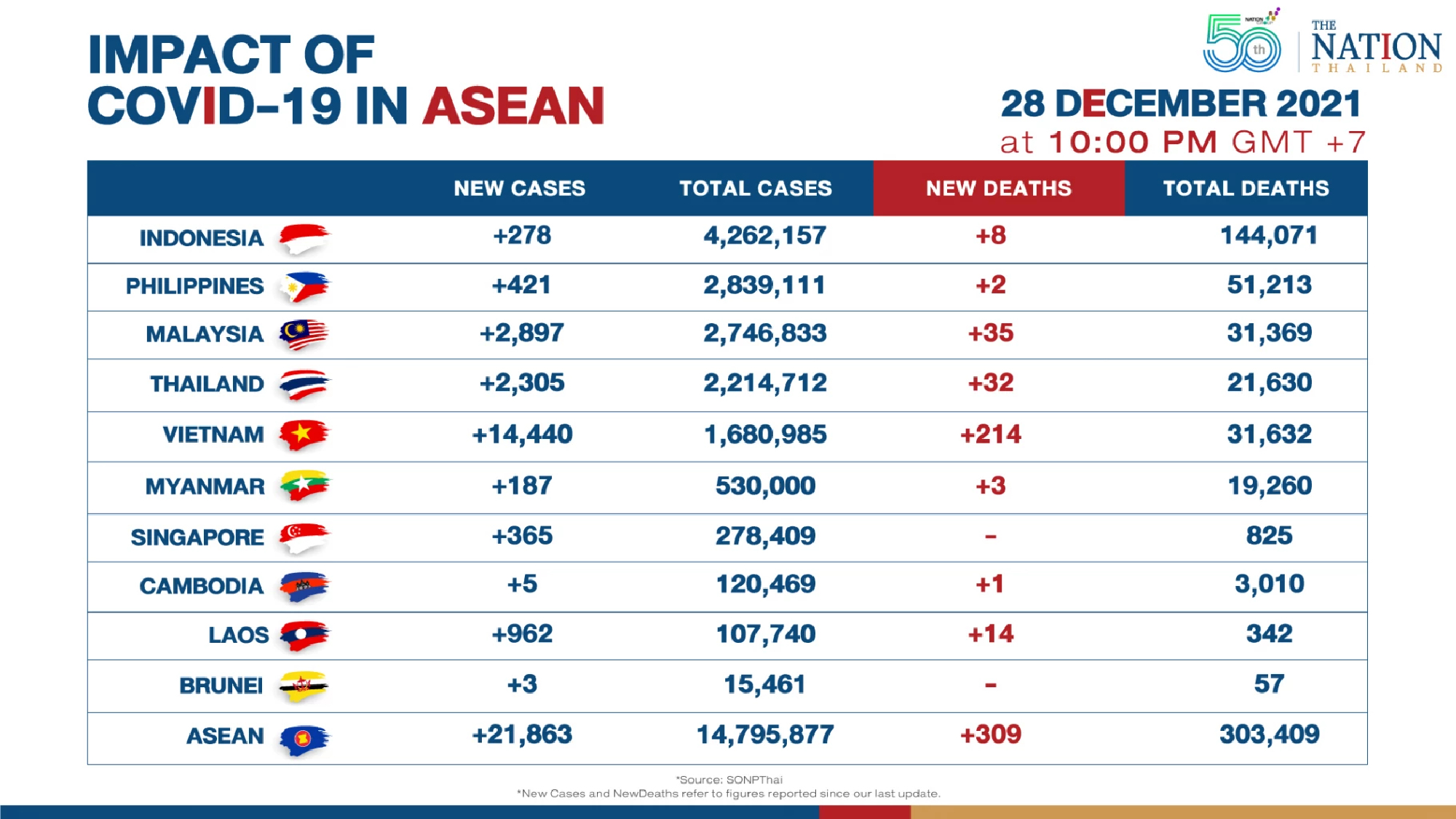
The number of Covid-19 cases crossed 14.79 million across Southeast Asia, with 21,863 new cases reported on Tuesday (December 28). New deaths are at 309, bringing accumulated Covid-19 deaths in Asean to 303,409.
Indonesia on Tuesday announced its first locally transmitted Omicron case in capital Jakarta, pushing the government to be more vigilant in tracking the spread of the virus. The patient is a male aged 37 years old, with no history of overseas travel in the last few months, nor any contact with international visitors.
With this new patient, the total number of Covid-19 cases of the Omicron variant stands at 47, including 45 international travelers and a worker at a quarantine center.
Meanwhile, Vietnam on Tuesday has detected its first Covid-19 case of Omicron variant in a quarantine facility in the capital Hanoi. The patient arrived in Hanoi on December 19 from Britain and tested positive for Covid-19. He was immediately transferred to a quarantine center under a hospital in the capital while his sample was sent for genome sequencing test. The result achieved on December 21 confirmed that he had the Omicron variant.
The government of the capital Hanoi on Monday mandated that everyone arriving in the city from the countries and regions, where the Omicron variant has been detected, should be put under quarantine regardless of their vaccination or recovery status.
The U.S. said its diplomatic boycott of the Beijing Winter Olympics stands after China announced that officials from the American government had applied for visas.
Any visa applications were for consular and security personnel, a State Department spokesperson said Tuesday in a statement, adding that it was routine to provide athletes, coaches and others with access to services enjoyed by Americans abroad.
The U.S. won’t change its decision to refrain from sending diplomatic or official representatives to the Olympics in February, according to the statement.
The Biden administration announced the boycott earlier this month, citing “crimes against humanity in Xinjiang, and other human rights abuses.” Australia, Canada and the U.K. followed Washington’s move, and Japan said it won’t send any government representatives, though it avoided the words “diplomatic boycott.”
Chinese Foreign Ministry spokesman Zhao Lijian said at a regular press briefing on Monday that Beijing had received visa applications from U.S. officials for the Olympics. He made the comments after being asked about reports Washington would send people from the State Department and others to the event.
At a similar briefing Tuesday, Zhao said that while the U.S. announced it wouldn’t send an official delegation, “there are many visa applications from officials from the State Department and Pentagon. Such remarks are truly confounding.”
Beijing has repeatedly and vociferously denied the genocide accusation leveled at its handling of the far western region of Xinjiang, home to a large Muslim Uyghur population. China insists it is providing job training and educational opportunities while quelling terrorism.
A survey conducted by the Pollution Control Department has pinpointed the best destinations in Thailand this year based on their beauty and state of the environment.
“The project aims to serve as a database for related agencies and help them in policy planning,” the department’s director-general Atthaphol Charoenchansa said on Tuesday.
The assessment is divided into four categories: Best beaches, best freshwater resources, the best quality of air and best waste-management practices.
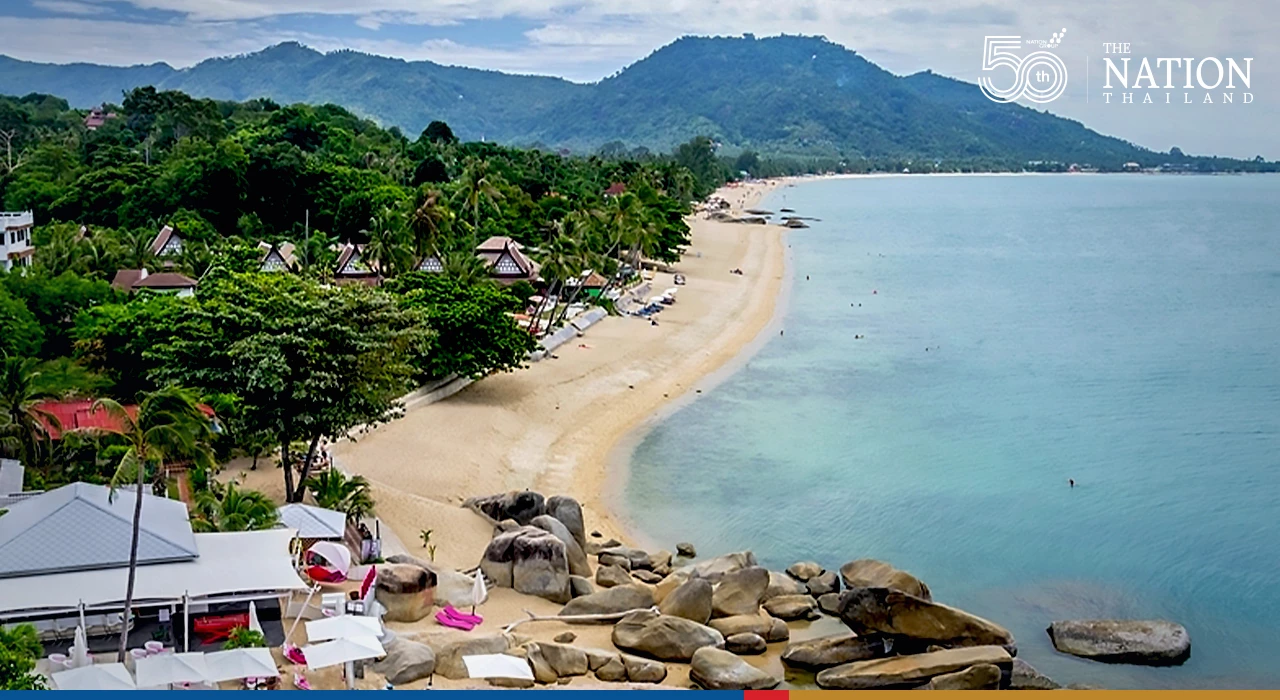
The top two “best” beaches this year were Ban Krut and Manao in Prachuap Khiri Khan, followed by Lamai, Chaweng and Mae Nam on Koh Samui.
The top five best freshwater resources in Thailand are Tapi River in Nakhon Si Thammarat, Phetchaburi River in Phetchaburi, Nong Han Lake in Sakon Nakhon, Kwae Noi River in Kanchanaburi and Li River in Lamphun.
The top five provinces with the best quality of air this year are Yala, Satun, Narathiwat, Nakhon Si Thammarat, with Songkhla and Phuket tying at the fifth position.
Provinces with the most efficient waste-management practices are Bangkok, Nonthaburi, Lamphun, Phuket and Yasothon.
To mark these achievements, the Pollution Control Department along with the Tourism Authority of Thailand and private partners are offering digital New Year greeting cards featuring photographs provided by Tripgether.com, John Wick Camping, and Aerial Filming & Photography.
In a Facebook post on Tuesday, Dr Teerawat Hemachuta, head of Chulalongkorn University’s Information Centre for Emerging Infectious Diseases, declared that nearly everybody will pick up an Omicron infection.
The reasons behind this declaration are:
• The efficacy of vaccines will drop by 40 per cent after three months, even with the most effective ones like Pfizer and Moderna.
• Those who are yet to be vaccinated will be prime candidates for infection.
• Without booster shots, cases can suddenly surge from 10,000 to 100,000 to even 1 million. This will include people who have not been vaccinated or the vulnerable.
• Symptoms will be mild for people who have been vaccinated or have been infected by the novel coronavirus before, except those in vulnerable groups.
Nineteen Thai karate athletes who returned from the 2021 Championships in Kazakhstan were infected with Covid-19.
Thai coach Yanisa Torrattanawathana revealed on Tuesday that athletes, staff, the president of the Karate Sports Association of Thailand, General Surachart Jitjaeng, and association secretary Praparnpongs Pochanasomburana, who were all infected, are currently in isolation in Thailand after returning from competing in the AKF Senior and Cadet, Junior and U21 Championships.
However, there were no worrying symptoms and they are currently under symptomatic treatment.
She said all athletes had been vaccinated before the tournament.
Yanisa pointedly blamed the hosts for the infections.
She said the Asian Karatedo Federation was “careless” in their management of the competition.
The tournament was ten days long but the athletes were tested via ATK only once, when they arrived.
Meanwhile, the venue was not well-ventilated. The room for training and warming up was small and athletes couldn’t maintain a proper social distance from one another.
Yanisa speculated that the disease spread during the competition.
Moreover, the hosts let everyone head easily back to their home countries.
The teams from Japan and Kuwait have also reportedly been infected.
The Thai team are now waiting to see if they are infected with the Omicron variant.
They can at least take consolation from the fact that they fared well at the competition. They bagged one gold medal, courtesy of Siwakorn Muekthong, in the U21 Kumite Male under-60kg category, and two silver medals, thanks to Irinlada Sriargardkraisang in the Junior Kata Female category and Penpisut Namkhao in the U21 Kumite Female under-55kg category. Meanwhile, Kewalin Songklin won bronze in the Senior Kumite Female +68kg category.
MINE Smart Ferry boats emit neither noise, water or air pollution and come equipped with photocatalytic oxidation air-conditioning and disinfection systems.
Bangkok’s MINE Smart Ferry electric passenger boat service added two new routes on Saturday – on the City Line between Sathorn Pier and Phra Pinklao Pier and the Metro Line between Sathorn Pier and Rama VII Pier.
Meanwhile, the Urban Line rush-hour service between Sathorn Pier and Phra Nang Klao Pier has been increased in the morning and evening.
As a New Year gift to passengers, fares on the three lines will remain 20 baht until yearend.
MINE Smart Ferry boats emit neither noise, water or air pollution and come equipped with photocatalytic oxidation air-conditioning and disinfection systems.
To prevent the spread of Covid-19, passengers can simply pay their fare via the HOP card or contactless credit/debit cards. Passengers will also be able to use HOP cards to pay bus fares in future.
The electric boats are wheelchair-friendly, while seats have been arranged to ensure social distancing in line with Covid-19 measures.
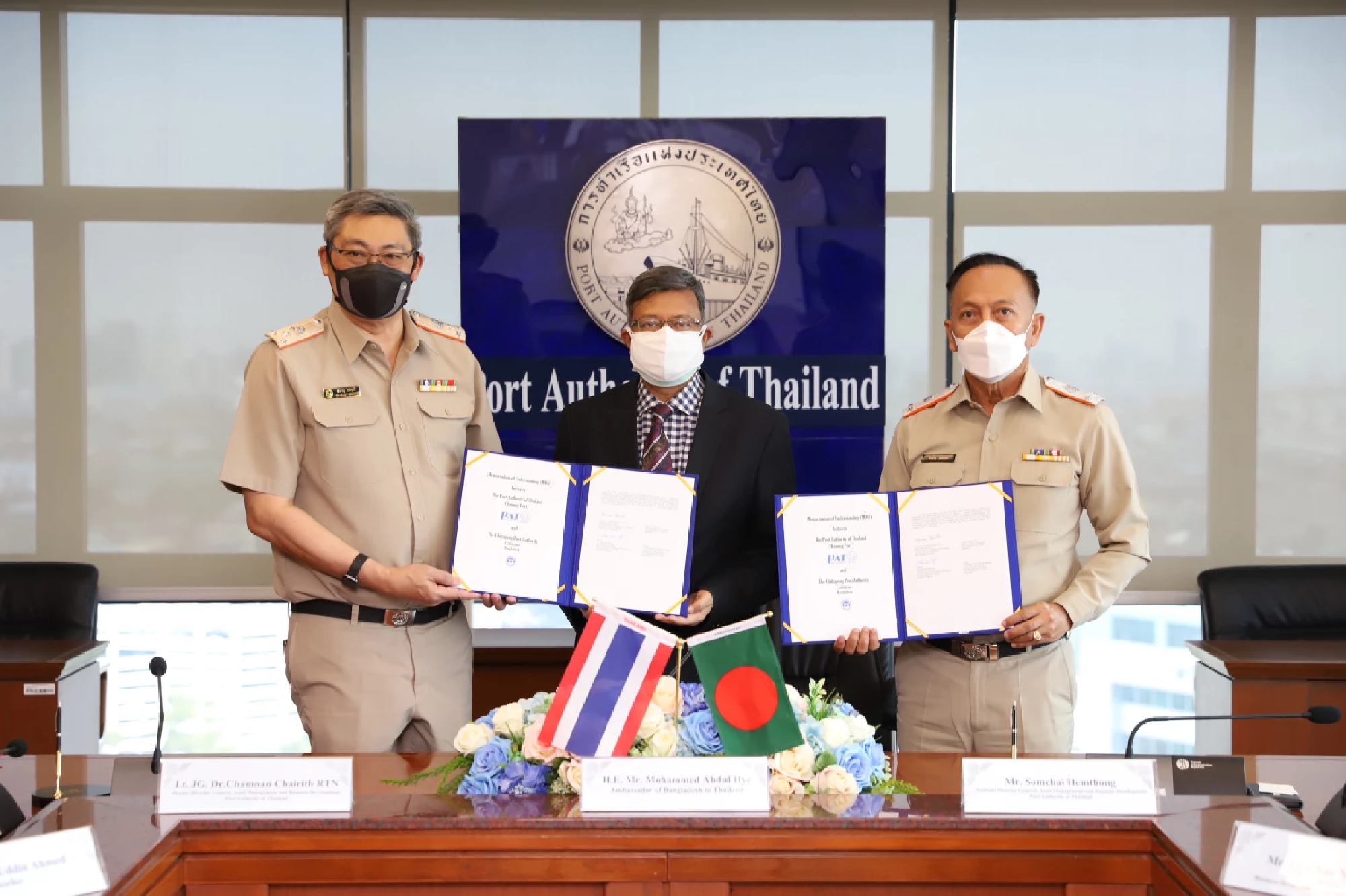
The MOU aims to create a port-to-port cooperation between the PAT and Chittagong Port Authority by means of port-related information exchange and maritime transport promotion in order to facilitate the launch of new shipping route between Ranong Port and Chittagong Port.
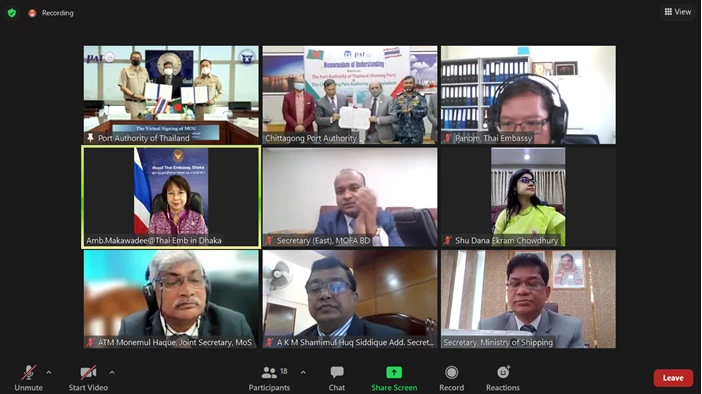
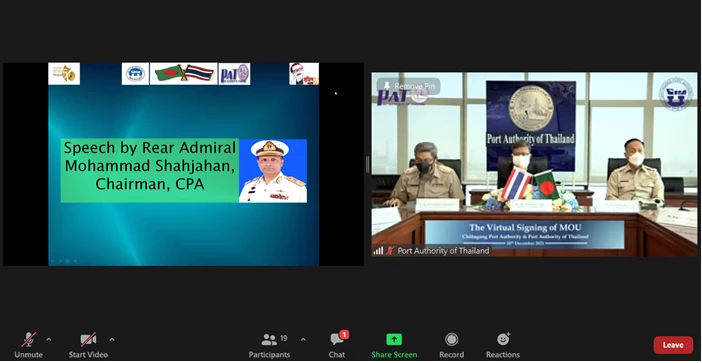
Lt. JG. Dr. Chamnan Chairith, R.T.N., PAT Deputy Director General (Asset Management and Business Development) and Mr. Md. Zafar Alam, Member (Admin & Planning) of Chittagong Port Authority have signed the Memorandum of Understanding (MOU) on the cooperation between the PAT’s Ranong Port and Chittagong Port, Bangladesh. The virtual signing ceremony was witnessed by H.E. Mr. Mohammed Abdul Hye, the Ambassador of Bangladesh to Thailand, H.E. Mrs. Makawadee Sumitmor, the Ambassador of the Kingdom of Thailand to Bangladesh, and the guests of honor from both parties.
The MOU aims to create a port-to-port cooperation between the PAT and Chittagong Port Authority by means of port-related information exchange and maritime transport promotion in order to facilitate the launch of new shipping route between Ranong Port and Chittagong Port. This move was pushed and supported by the Bangladesh Container Ship Owner’s Association (BCSOA) which expects that the coastal shipping route will enhance the maritime connectivity between the two countries with lower shipping time and cost, offering an alternative services to the shipping liners. Through this cooperative agreement, trade and business investment between Thailand and Bangladesh will be strengthened and even more robust under the BIMSTEC Framework.
The signing of this MOU will also mark the 50th anniversary of the establishment of diplomatic relations between Thailand and Bangladesh on October 5, 2022. Furthermore, both sides are also working closely to explore the possibility to negotiate a free trade agreement in order to facilitate trade and boost its volume.















 SootinClaimon.Com