The cases were identified among 61 passengers who tested positive for coronavirus. The Dutch health authority said the investigation has not yet been completed and the new variant may be found in more test samples.
The Dutch health authority said Sunday that it has found 13 cases of the new Omicron coronavirus variant among passengers on flights from South Africa.
The cases were identified among 61 passengers who tested positive for coronavirus, the National Institute for Public Health and the Environment (RIVM) said in a statement.
In an ongoing sequencing study, the new coronavirus variant B.1.1.529, or Omicron, first reported in South Africa, has been identified in 13 of the positive tests, said the RIVM.
The investigation has not yet been completed and the new variant may be found in more test samples, according to the RIVM.
A “corona pass” is scanned at a canal boat tour departure in Amsterdam, the Netherlands, Nov. 1, 2021. (Photo by Sylvia Lederer/Xinhua)
The RIVM called on returning travelers from Omicron-risk countries, including South Africa, Botswana, Malawi, Lesotho, Eswatini, Namibia, Mozambique and Zimbabwe, to get tested if they have returned since Nov. 22, even if they have no complaints.
On Friday, 624 passengers from South Africa were tested for coronavirus. Of them, 61 received a positive test result.
The Netherlands on Friday suspended flights from southern African countries in an effort to keep out the new and potentially more transmissible variant.
Health Minister Hugo de Jonge said Sunday that he did not rule out the possibility of additional containment measures, which will depend on the seriousness and contagiousness of the new variant, about which little is known yet.
Photo taken on Nov. 1, 2021 shows a COVID-19 precaution notice to keep 1.5-meter distance in a shop in Amsterdam, the Netherlands. (Photo by Sylvia Lederer/Xinhua)
The Karnak Temple Complex in Upper Egypts monument-rich city of Luxor is buzzing with tourists, as the North African country has witnessed a revival in tourism after a long recession amid the COVID-19 pandemic.
The Karnak Temple Complex in Upper Egypt’s monument-rich city of Luxor is buzzing with tourists, as the North African country has witnessed a revival in tourism after a long recession amid the COVID-19 pandemic.
This bustle and hustle around the temple and other archaeological sites in Luxor was more palpable especially when and after Egypt reopened the city’s ancient Avenue of Sphinxes on Friday after years of renovation work.
Visitors from different countries filed through the 2,400-year-old ancient walkway with 1,057 ram-headed and man-headed sphinxes lining both sides of it.
Egypt aspires to use the reopening of the historical avenue to promote Luxor as the largest open museum in the world and highlight its distinct diverse tourist and archaeological potentials.
Tourists visit the Karnak Temple Complex in Luxor, Egypt, on Nov. 26, 2021. (Xinhua/Ahmed Gomaa)
“The place is rich in culture and history … It is very exciting to closely see the ancient Egyptian civilization,” Ray Rasmany, a U.S. young man, told Xinhua as he walked through the Karnak Temple.
Rasmany, who visited Egypt for the first time, said the country is safe and the people are friendly, adding anti-COVID-19 measures are well applied in the country.
As one of the key sources of income for Egypt, tourism accounts for about 12 percent of the country’s GDP. It brought Egypt a record 13 billion U.S. dollars in revenues in 2019 with the arrival of more than 13 million tourists.
The peak came after a few years of decline in tourism caused by a Russian plane crash over the Sinai Peninsula in October 2015 that left 224 dead, and a later EgyptAir plane crash in May 2016 that killed all 66 people on board.
Later, tourism in Egypt began to decline again because of the COVID-19 pandemic and relevant lockdowns worldwide.
“A boom has been seen in tourism here after Russia resumed in August direct flights to Egyptian tourist cities after a six-year ban following the explosion of a Russian airliner,” Alaa al-Sahaby, owner of a hotel in Luxor, told Xinhua.
The middle-aged man noted that the precautionary measures against the COVID-19 pandemic, the ongoing vaccination campaigns and the government’s decision to resume tourism activities helped revive the ailing sector.
“My hotel is unexpectedly fully booked … This is almost the case with most of the other hotels across Egypt, not only in Luxor,” al-Sahaby told Xinhua.
Tourists visit the Karnak Temple Complex in Luxor, Egypt, on Nov. 26, 2021. (Xinhua/Ahmed Gomaa)
He expressed hope for Chinese tourists to come back soon to Luxor, saying the Chinese tourists used to come in large numbers and spend well in the city.
“Chinese tourists prefer cultural tourism. That is why they prefer to visit Luxor. A real boom will happen if Chinese tourists will visit again,” the hotel owner noted.
Egypt’s official statistics showed China became the fourth largest source of tourists to Egypt in 2017, and according to the Chinese Embassy in Egypt, more than half a million Chinese tourists visited Egypt in 2018.
For 2021, Egypt targets revenues of 6 billion dollars to 9 billion dollars in tourism and hopes to receive more than 6 million tourists.
Egypt received about 3.5 million tourists during the first half of 2021, while the total revenues were about 4 billion dollars, according to the tourism ministry’s data.
Time Out’s Awakening Bangkok light festival is scheduled to light up the environment and be a feast for your eyes from December 17 until the end of 2022. So get your camera ready for the glorious spectacle that will light up iconic attractions across the capital and provinces nationwide.
The annual light festival by Time Out Bangkok is making a comeback after an absence of two years.
The Awakening Bangkok festival this year is more special than ever, as it is set to be held in other provinces aside from the metropolis.
Here’s the festival schedule:
• December 2021, in Sam Yan district right in the heart of the capital.
• January 2022, the largest set of the festival in Bangkok’s Charoenkrung district.
• February to March 2022, urban partygoers can enjoy the festival from Soi Nana through Yaowarat to Khaosan Road.
• May 2022, the first showcase outside of the capital in Khon Kaen province.
• November 2022, capture state-of-the-art lighting installations in Chiang Mai while enjoying the winter breeze.
• December 2022, the festival is set to make its way back to Bangkok’s Charoen Krung.
The Tourism Authority of Thailand (TAT) on Monday provided an update to guide to Covid-19 vaccines for international travellers to Thailand effective from December 16, 2021.
International travellers, including returning Thais and foreign residents, who are above 18 years of age should get fully vaccinated for Covid-19 with a vaccine approved by Thailand’s Ministry of Public Health (MoPH) or the World Health Organisation (WHO) no less than 14 days before their travel date.
Travellers 12-17 years of age, travelling with parents under the Test & Go entry scheme and Sandbox Programme, are not required to be vaccinated but must have a negative RT-PCR test result within 72 hours before travelling. Those unaccompanied must get vaccinated with at least one dose of an approved vaccine and must have a negative RT-PCR test result.
Travellers 6-11 years of age, travelling with parents under the Test & Go entry scheme and Sandbox Programme, must have a negative RT-PCR test result within 72 hours before travelling.
Travellers under 6 years of age, travelling with parents with a negative RT-PCR test result within 72 hours before travelling, are not required to have a pre-arrival negative RT-PCR test result and can have saliva test when entering the Kingdom.
Travellers previously infected within 3 months before travelling must have a medical certificate of recovery or get vaccinated with at least one dose of an approved vaccine for an unspecified period of time before travelling.
List of approved Covid-19 vaccines
Currently, the MoPH has approved the following manufacturers and vaccines:
AstraZeneca or Covishield by AstraZeneca and the University of Oxford, SK Bioscience (South Korea), Siam Bioscience, and Serum Institute of India (Covishield) – 2 doses needed / 4-12-week interval;
Pfizer–BioNTech or Comirnaty by Pfizer Inc. and BioNTech 2 doses needed / 3-week interval;
Janssen or Janssen/Ad26.COV2.S by Johnson & Johnson Services, Inc. – 1 dose needed;
Moderna by Moderna Inc. – 2 doses needed / 4-week interval);
Sinopharm or COVILO by Sinopharm Co., Ltd. – 2 doses needed / 3-4-week interval);
Sputnik V by the Gamaleya Research Institute of Epidemiology and Microbiology – 2 doses needed – 3-week interval).
Meanwhile, the WHO’s guidance on the Covid-19 vaccines is available here.
Have you been fully vaccinated?
According to the MoPH, travellers are considered fully vaccinated if:
They get their second dose of a 2-dose vaccine; such as, the AstraZeneca or Pfizer vaccines, no less than 14 days before their travel date to Thailand.
They get a single-dose vaccine; such as, Janssen vaccine, no less than 14 days before their travel date to Thailand.
In case of mix-and-match vaccines, travellers should get their second dose of a different vaccine within the recommended interval of the first vaccine no less than 14 days before their travel date to Thailand. For example, if the first vaccine is CoronaVac from Sinovac Biotech and the second vaccine is AstraZeneca, the time between the two doses is 2-4 weeks.
Travellers who do not meet these criteria may be denied entry into Thailand.
Requirements for the ‘Certificate of Covid-19 Vaccination’
The travellers’ Certificate of Covid-19 Vaccination should contain the following details:
Given name and last name;
Date of Birth;
Nationality;
Passport or Identification No.;
Name of the Covid-19 vaccine;
Vaccination dates;
Vaccine manufacturer and lot/batch number;
Authorised organisation in the country of origin.
In addition to being fully vaccinated, international travellers should have all of their advance arrangements in good order for arrival and entry. For more information on Thailand’s reopening programmes, see: https://www.tatnews.org/thailand-reopening/.
Android is one of the most widely used operating systems in the world, and its full of settings and options to help keep your personal data safe. But trying to use all of those tools effectively can sometimes feel a little confusing – and thats where the Help Desk comes in.
We started our Privacy Reset project with guides to help you understand how to protect your data on Facebook, Amazon, Google and Venmo, and now we’re expanding it to cover the settings you should change on your Android devices.
There’s one more thing you should know: This guide mainly deals with privacy controls specific to your Android phone or tablet. Because Google’s services are tied so deeply to the way Android works, you’ll also want to work through our guide to Google privacy settings. Don’t worry: Just like with this one, it shouldn’t take you more than 15 minutes to make the most important changes.
– – –
If you only do one thing:
– Audit your apps
What makes an Android smartphone or tablet truly yours is the apps you use on it, but it’s common for people to install apps without thinking about what we have access to.
When you first launch an app after you’ve installed it, it will ask for permission to access certain parts of your phone (like its camera or microphone) or personal data like your contacts or text messages. It’s a good idea to periodically make sure the apps on your phone or tablet have access only to the things they’re supposed to.
Go to Settings > Privacy > Permissions Manager; you’ll see a list of options ranging from body sensors to location to your contacts. Tap each option and make sure the “allowed” apps make sense – Uber should probably have access to your location, for instance, but something like a calculator app shouldn’t.
If you find any apps that you don’t use frequently, just uninstall them. Go to Settings > Apps > See all apps, then find the app you want to get rid of. Then, tap its name, followed by the “Uninstall” button.
– – –
If you’re still concerned about privacy:
– Rethink your unlocks
Android offers a handful of ways to unlock your phone, but some can be much more secure than others. If you don’t mind a brief wait before unlocking your phone, setting a password or using a fingerprint sensor is one of the easiest ways to make sure people can’t easily get into your phone.
If you’re a stickler for security, you many want to avoid unlock patterns and face recognition – some versions can be surprisingly easy to fool. Here’s how to change your unlock method:
Go to Settings > Security > Screen Lock and select a new screen lock type.
– Hide your sensitive notifications
Notifications from apps and incoming messages are meant to appear on your phone or tablet’s screen before you’ve even unlocked it. If you’re not careful, though, that could mean people around you are able to see snippets of text and emails you don’t want them to. Here’s how to make sure none of that potentially sensitive information shows up on your lock screen when you don’t want it to:
Go to Settings > Apps and Notifications > Notifications and make sure the “Sensitive notifications” is unticked. (If done correctly, the toggle will appear gray.)
– – –
If you want to be extra cautious:
– Make sure your phone is encrypted
Most modern Android phones already come encrypted, which means the personal data stored on it can’t be easily accessed unless someone manages to unlock your device. But if you’re using an older Android phone or tablet, this feature might not be on yet. Here’s how to check:
Go to Settings > Security > Advanced > Encryption and Credentials. If everything is secure, you’ll see “Encrypted” under the “Encrypt phone” option and you won’t need to do anything else. If you don’t, you’ll be able to tap “Encrypt phone” and begin the process – don’t be surprised if it takes upward of an hour.
– Use Chrome wisely, or not at all
You’d be hard-pressed to find an Android phone sold in the United States that didn’t have the Chrome browser pre-installed and that wouldn’t be such a bad thing if Google didn’t keep tabs on what you do online in order to serve you personalized ads. If it’s at all possible, you might want to consider leaving Chrome behind in favor of more privacy-oriented browsers like Brave, Firefox and DuckDuckGo.
If you have to keep using Chrome though, there are a few ways to use it more safely. Launch the Chrome app and tap the three-dot menu button next to the address bar – then tap Settings, followed by Privacy and security. Once that’s done, make sure the options “Do Not Track” and “Always use secure connections” are turned on.
Thailand came in third among countries with the highest video gaming on any device, according to the Statista survey conducted in July.
Before the arrival of the digital era, most Thai children said they wanted to be soldiers or policemen when they grew up.
Now most of them want to become e-sports players, as the internet plays a very important role in many people’s lives.
The survey, covering internet users aged between 16 and 64, found that 85 per cent of the global population that is hooked up to the internet play games on at least one device. The Philippines topped the list, with a gaming penetration of 97 per cent.
Indonesia came in second with 94.3 per cent, while Japan, Ireland and Belgium came in as the bottom three with a gaming reach of less than 75 per cent.
After a year marked by the nations immunization effort – from early scrambles to get appointments for shots against the coronavirus, campaigns meant to incentivize holdouts, and now a push for boosters – Merriam-Webster determined “vaccine” is the word of the year for 2021.
Searches for the word “vaccine” increased by 601 percent this year at Merriam-Webster.com, according to the dictionary company, which chooses its word of the year based on lookup data. The winning word seems fitting – a year ago, Merriam-Webster announced that “pandemic” was the word of the year for 2020.
Interest in the word “vaccine” has been up since the coronavirus pandemic began – according to Merriam-Webster, lookups for the word surged 1,048 percent from 2019 to 2021.
The growing interest in this year’s word is layered, said Peter Sokolowski, Merriam-Webster’s editor at large.
“The biggest science event of the year quickly became the biggest political debate in our country, and the word at the center of both stories is vaccine,” Sokolowski said in a statement. “Few words can express so much about one moment in time.”
The word, he said, was “at the center of debates about personal choice, political affiliation, professional regulations, school safety, healthcare inequity.”
The lookup volume for the word was high when coronavirus vaccines were first developed and rolled out across the country – but also increased amid debates around vaccination mandates.
Searches were up at the start of the year as news emerged about the various vaccines and their levels of efficacy. As state and federal vaccine mandates became a cultural and political flash point over the summer, search interest “increased dramatically,” Merriam-Webster said. Interest in the word kept pace through the rest of the year, driven by President Joe Biden’s sweeping vaccine mandates for federal workers and businesses, then by the availability of the coronavirus vaccines for children, and as reports grew about vaccine boosters.
Earlier this year, the dictionary expanded its own definition of “vaccine,” updating it to include the role of messenger RNA technology in the development of shots. The pandemic has required a refresh of the lexicon in many ways – Merriam-Webster recently added “ghost kitchen” and “curbside delivery” to its dictionary.
The dictionary said its other top lookups for 2021 included “insurrection,” following the attack at the U.S. Capitol on Jan. 6.
Earlier this month, the British company that publishes the Oxford English Dictionary named “vax” as the 2021 word of the year.
Collins Dictionary, based in Scotland, earlier this month said “NFT,” the abbreviation for “non-fungible token,” was chosen as its word of the year.
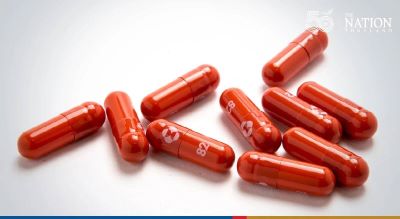
Expert advisers to the Food and Drug Administration on Tuesday recommended authorization of the first coronavirus pill to prevent high-risk people from developing severe illness in a divided vote that reflects the complicated mix of benefits and risks of a new and easy mode of treatment.
The drug, molnupiravir, was developed by Merck and Ridgeback Biotherapeutics as a five-day regimen to be taken at home within five days of the onset of coronavirus symptoms. The FDA is not bound by the 13 to 10 vote but typically follows its external advisers’ recommendations. The drug could have an immediate impact on the pandemic if authorized – just as the ominous new omicron variant has emerged, jolting the world with the prospect of a longer and more complicated pandemic.
Merck has pledged to manufacture enough medicine to treat 10 million patients by the end of the year, and the United States has preordered enough medicine to treat 3.1 million people. There are other treatments, monoclonal antibodies, that are harder to administer but are more effective, which led experts to debate who should receive the drug. An easy-to-use medicine that could be taken at home would offer an additional tool to reduce the strain on hospitals as a potential winter surge looms.
When given to people at high risk of developing severe illness, molnupiravir cut the risk of death or hospitalization by 30 percent in patients infected with a range of variants including delta, gamma and mu. Molnupiravir has not yet been tested against the omicron variant, but because it works in a different way than vaccines and monoclonal antibodies that train their firepower on the coronavirus spike protein, it is expected to hold up against a wide range of variants.
“As new variants have been becoming available, we have been testing them for the activity of molnupiravir,” said Nicholas Kartsonis, senior vice president of clinical research for infectious diseases and vaccines at Merck. “We expect, based on what we know about the omicron variant, that molnupiravir would be effective against this particular variant.”
But one committee member cautioned that it was an assumption that the drug would be more variant-proof than vaccines or other treatments.
“If we take a look at the omicron variant and see the number of mutations that virus has, I think in many ways we don’t really understand which direction the virus may even be going in terms of changing,” said W. David Hardy, a scientific and medical consultant at Charles Drew University School of Medicine and Science. “To assume this drug . . . is going to work when the monoclonals don’t is a big jump. We have no assurance of that.”
A second oral pill regimen – it was developed by Pfizer – is also being reviewed by the FDA. That drug could offer advantages that will make it the choice of physicians: That medicine was more effective at preventing hospitalization and death and doesn’t carry safety concerns about its use in pregnant patients. The advisory committee debated whether people who are pregnant should be eligible to receive molnupiravir.
Much of the expert committee’s debate Tuesday focused on the many unknowns about those safety issues, which are intertwined with how molnupiravir works. The drug becomes incorporated into the viral genome, causing genetic mistakes that disable the virus.
There are two concerns about potential unintended consequences: first, that molnupiravir could scramble the genome in the patient’s own cells, causing cancer, genetic diseases or birth defects. The company requested authorization for adults, but said that it should not be recommended for people who are pregnant or breastfeeding and said that people of childbearing age should use contraception during the treatment.
But the short duration of treatment and a gold standard laboratory test in rats designed to flag drugs that have the potential for mutagenesis – the process in which genetic change happens – suggested there was not a major risk to adult patients.
The concern that the drug could cause genetic mutations “in a clinical setting appears to be low,” said Robert H. Heflich, director of the Division of Genetic and Molecular Toxicology at the FDA’s National Center for Toxicological Research.
The second concern is that the drug might induce genetic changes to the virus that fuel the rise of new, threatening variants. FDA reviewers showed data demonstrating that in seven people treated with the drug, viral samples taken after treatments contained worrisome mutations seen in known variants, although the patients cleared the virus.
“Even if the probability is very low, 1 in 10,000 or 1 in 100,000, that this drug would induce an escape mutant for which the vaccines we have do not cover, that would be catastrophic for the whole world,” said James E.K. Hildreth, president of Meharry Medical College.
But FDA reviewers said those mutations also emerge naturally.
“It is unclear to us if molnupiravir would have a substantial impact on the evolutionary patterns that are already happening,” said Patrick R. Harrington, senior clinical virology reviewer at FDA.
Other questions that arose, without resulting in satisfying answers, included why the drug didn’t appear to work in people with type 2 diabetes. It also was less effective against the delta variant.
Additionally, when preliminary data on the drug was released in early October, molnupiravir appeared to cut risk of death and hospitalization in half, a finding so persuasive that the trial was halted at its midpoint. After continued follow-up of patients, the drug appeared less impressive, with risk of death and hospitalization reduced by 30 percent.
There are already three treatments, called monoclonal antibodies, authorized in the United States to help keep high-risk people from ending up in the hospital. Monoclonals are highly effective, but they are more cumbersome to administer and their uptake has often been uneven. Unlike pills that can be picked up at a pharmacy and taken at home, monoclonals are given through lengthy infusions or injections that are less convenient than a doctor prescribing a pill – and new variants can pose a threat to their use.
“As we enter the winter months, another surge is imminent, potentially in the setting of emerging new variants of concern,” Kartsonis said. “We remain in dire need of novel, effective, well tolerated and conveniently administered therapies to treat covid-19 in the outpatient.”
People infected by omicron in South Africa are showing very different symptoms to those suffering from the delta strain, said the doctor who alerted government scientists to the possibility of a new variant.
Patients who contracted it complain of fatigue, head and body aches and occasional sore throats and coughs, said Angelique Coetzee, who is also chairwoman of the South African Medical Association. Delta infections, by comparison, caused elevated pulse rates, resulted in low oxygen levels and a loss of smell and taste, she said.
After weeks of almost no Covid patients at her practice in Pretoria, the capital and epicenter of South Africa’s current surge, Coetzee said she suddenly started seeing patients complain of the symptoms on Nov. 18. She immediately informed the government’s Ministerial Advisory Council on Covid-19, and laboratories the next week identified a new variant, she said.
“I said these different symptoms can’t be delta, they are very similar to beta or it must be a new strain,” she said in an interview on Monday. “I don’t think it will blow over but I think it will be a mild disease hopefully. For now we are confident we can handle it.”
The World Health Organization is analyzing the new mutation, and has said it’s too early to say how transmissible and severe it is. It’s called on countries to start testing widely for omicron, saying the divergent design could fuel future surges of Covid-19.
South Africa announced the identification of a new variant on Nov. 25, saying a few cases had first been identified in neighboring Botswana and then others had followed in Tshwane, the municipal area in which Pretoria is located. The announcement caused a global panic, roiling markets and resulting in travel bans on southern African nations.
Scientists advising South Africa’s government told a media briefing on Monday that while omicron appeared to be more transmissible, cases appeared to very mild.
Coetzee’s patients have been relatively young. A vaccinated 66-year-old patient did return a positive test on Monday but was only mildly ill, she said.
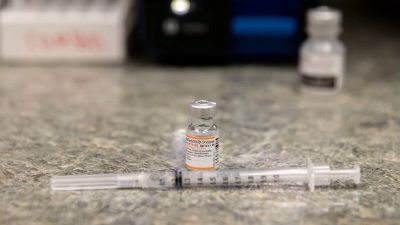
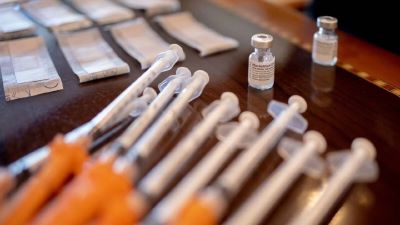
BioNTech, Moderna and Johnson & Johnson are working to adapt their Covid-19 vaccines to address the omicron variant, with the German partner of Pfizer saying it could have a new version ready within 100 days if necessary.
BioNTech said Monday that it has started development in order to move as quickly as possible. The first steps of developing a new vaccine overlap with the research necessary in order to evaluate whether the shot will be needed – a process that both it and Moderna began last Thursday as news of the new variant began to spread around the world.
Drugmakers have been preparing for months for the possibility of needing to tweak their vaccines to deal with a new variant. BioNTech, Pfizer and Moderna will be able to move at unprecedented speed: Both vaccines use messenger RNA technology, which shortens the timeline for a new shot to only a few months.
J&J’s vaccine relies on a different technology called a viral vector. The company said it’s testing immune blood components from participants in trials of its booster to look for responses to omicron and is pursuing a vaccine that specifically targets the variant that it will take into human studies if needed.
Omicron has raised concerns around the world, with countries implementing travel bans to buy time as researchers race to study whether it will evade vaccines and spread more rapidly. Understanding the new strain will probably take several weeks, according to scientists.
BioNTech’s American depositary receipts climbed 5.6% in trading before U.S. exchanges opened, extending a 14% jump on Friday. Moderna shares surged more than 10%. J&J was little changed before U.S. markets opened.
BioNTech and Moderna have both said it should become clear within weeks whether they’d need to adjust their shots. Pfizer and its partner put plans in place months ago to be able to ship a new version of their shot within 100 days if necessary, according to a spokeswoman.
It’s standard procedure to begin developing an updated vaccine in parallel with running tests of how the new strain reacts with the existing shot “in order not to waste any time,” BioNTech said. “Lab tests will deliver more information on whether or not adaption of the vaccine will be necessary.”
Vaccinated people should still be protected, depending on how long ago they got their shots, and for now the best advice is to take one of the current Covid vaccines, Moderna Chief Medical Officer Paul Burton said on Sunday on the BBC’s “Andrew Marr Show.”
Pfizer’s and BioNTech’s vaccine is on track to be the best-selling pharma product ever on a yearly basis. Another vaccine maker, AstraZeneca, said Friday it’s also investigating the variant.


 A “corona pass” is scanned at a canal boat tour departure in Amsterdam, the Netherlands, Nov. 1, 2021. (Photo by Sylvia Lederer/Xinhua)
 Photo taken on Nov. 1, 2021 shows a COVID-19 precaution notice to keep 1.5-meter distance in a shop in Amsterdam, the Netherlands. (Photo by Sylvia Lederer/Xinhua)

 Tourists visit the Karnak Temple Complex in Luxor, Egypt, on Nov. 26, 2021. (Xinhua/Ahmed Gomaa)
 Tourists visit the Karnak Temple Complex in Luxor, Egypt, on Nov. 26, 2021. (Xinhua/Ahmed Gomaa)