Marketing specialist named Samsung’s first female president outside founding family

#SootinClaimon.Com : ขอบคุณแหล่งข้อมูล : หนังสือพิมพ์ The Nation.

https://www.nationthailand.com/blogs/world/asia-pacific/40022789

Marketing specialist named Samsung’s first female president outside founding family

Marketing specialist named Samsung’s first female president outside founding family

TUESDAY, DECEMBER 06, 2022

Samsung Electronics on Monday appointed a female president, its first who is not a member of the founding family, in a year-end reshuffle that put emphasis on elevating young leaders based on their performances.

Lee Young-hee, now president and head of global marketing, is a veteran marketer who joined Samsung in 2007 after serving in various roles at global companies, including Unilever and L’Oreal.

The 58-year-old is known for playing a leading role in elevating the awareness of Samsung’s flagship smartphone brand Galaxy globally.

“Lee has made great contributions to fostering the brand value of Samsung, bringing its focus to customer value and experience,” Samsung said in a statement. “As the first female president, she is expected to breathe fresh air into the company.”

Together with Lee, Samsung also promoted six other executive vice presidents to president, most of them being tech specialists, especially in the field of semiconductors.

Kim Woo-june, senior vice president in charge of products and business strategy, was promoted to president and head of network business in recognition of his leadership in the areas of sales, technology and strategy. Kim, 54, is the youngest figure to be promoted in the latest reshuffle.

Head of global manufacturing of semiconductor business Nam Seok-woo was promoted to president, having proved his skills by leading the process development and manufacturing of all of the company’s memory chip products.

With the outlook grim for the next year’s semiconductor market, Samsung promoted Song Jae-hyuk, vice president and head of the Semiconductor R&D Center, to president. Song contributed to fostering the company’s competitiveness in semiconductor technology, and for the company to reach the top position in the global memory chip market, Samsung added.

Baek Su-hyeon was promoted to lead the communications team, while Park Seung-hee, former communications chief of Samsung C&T, was named as new head of corporate relations.

Baek, based on his career background in journalism, is credited for enhancing communications in and outside the company.

In a move to bolster responsiveness to China issues, Samsung also promoted Greg Yang, a China expert, to lead Samsung’s Chinese office. Having served several manager positions on China sales, Yang has led Samsung’s expansion in China, the company said.

Paul (Kyung-whoon) Cheun, president and general management of the network business unit of the smartphone and home appliance business division, called DX or digital experience.

Sebastian Seung, president and head of Samsung Research became the head of global R&D cooperation of Samsung Research, the company’s research and development centre.

For some time, Samsung is expected to maintain its co-CEO system, under which Vice Chairman Han Jong-hee oversees smartphone and home appliance businesses, while Vice Chairman Kyung Kye-hyun handles its semiconductor business, called DS or digital solution division.

Monday’s executive reshuffle is the first of its kind since Chairman Lee Jae-yong took the top seat last month. The Samsung chief is said to be visiting the United Arab Emirates this week to attend a private forum hosted by the kingdom’s de facto ruler Sheikh Mohammed bin Zayed Al Nahyan.

The Korea Herald

Asia News Network

Russia says three killed in Ukrainian drone attacks on two of its air bases

#SootinClaimon.Com : ขอบคุณแหล่งข้อมูล : หนังสือพิมพ์ The Nation.

https://www.nationthailand.com/world/russia-central-asia/40022788

Russia says three killed in Ukrainian drone attacks on two of its air bases

Russia says three killed in Ukrainian drone attacks on two of its air bases

TUESDAY, DECEMBER 06, 2022

Russia said on Monday that three of its military personnel were killed in what it said were Ukrainian drone attacks on two Russian air bases hundreds of miles from the front lines in Ukraine.

Ukraine did not directly claim responsibility. If it did carry out the attacks, they were the deepest military strikes it has conducted inside the Russian heartland since the start of what Moscow calls “special military operation” on Feb. 24.

One of the targets, the Engels air base near the city of Saratov, houses bomber planes that are part of Russia’s strategic nuclear forces.

“The Kyiv regime, in order to disable Russian long-range aircraft, made attempts to strike with Soviet-made unmanned jet aerial vehicles at the military airfields Dyagilevo, in the Ryazan region, and Engels, in the Saratov region,” the Russian defence ministry said.

It said the drones, flying at low altitudes, were intercepted by air defences and shot down. The wreckage caused slight damage to two aircraft, it said, and four people were wounded.

The ministry called it a “terrorist act” aimed at disrupting its long-range aviation.

Despite that, it said, Russia responded with a “massive strike on the military control system and related objects of the defences complex, communication centres, energy and military units of Ukraine with high-precision air- and sea-based weapons” in which it said all 17 designated targets were hit.

Ukraine said it shot down more than 60 of over 70 missiles launched by Russia on Monday – the latest in weeks of attacks targeting its critical infrastructure that have cut off power, heat and water to many parts of the country.

Russia’s RIA news agency said the three deaths occurred at the air base in Ryazan, 185 km (115 miles) southeast of Moscow.

The other base that was hit was Engels, near the city of Saratov, about 730 km southeast of Moscow. It is one of two strategic bomber bases housing Russia’s air-delivered nuclear capability, the other being in Amur region in the Russian Far East.

Russia has 60 to 70 strategic bomber planes of two types: the Tu-95MS Bear and the Tu-160 Blackjack. Both are capable of carrying nuclear bombs and nuclear-armed cruise missiles.

Saratov is at least 600 km from the nearest Ukrainian-held territory. Russian commentators noted on social media that if Ukraine could strike that far inside Russia, it may also be capable of hitting Moscow.

Kremlin spokesman Dmitry Peskov told reporters at a morning briefing that President Vladimir Putin was aware of the incidents, but declined further comment.

Ukrainian officials acknowledged the incidents on social media with tongue-in-cheek comments.

Presidential adviser Mykhailo Podolyak wrote on Twitter: “If something is launched into other countries’ airspace, sooner or later unknown flying objects will return to (their) departure point.”

Ukraine has previously demonstrated the ability to strike strategic Russian targets far beyond the 1,100 km-long front lines in the south and eastern Ukraine.

In August, at least seven Russian warplanes were destroyed by explosions at a Russian airbase on the southwest coast of Russian-annexed Crimea.

Ukraine did not publicly claim responsibility for that, or for a spate of explosions at sites such as weapons stores and fuel depots in Russian regions close to the border with Ukraine.

Reuters

Ropes on climbing routes litter Mount Everest

#SootinClaimon.Com : ขอบคุณแหล่งข้อมูล : หนังสือพิมพ์ The Nation.

https://www.nationthailand.com/blogs/world/asia-pacific/40022786

Ropes on climbing routes litter Mount Everest

Ropes on climbing routes litter Mount Everest

TUESDAY, DECEMBER 06, 2022

Record-setting mountaineer Kami Rita Sherpa didn’t find any fixed ropes in the “death zone” on Mt Everest when he climbed the peak in the spring. Sherpa, who holds the world record for summiting 8,000-metre mountains an astounding 39 times, knows the value of the ropes for climbers crawling up the frozen slopes.

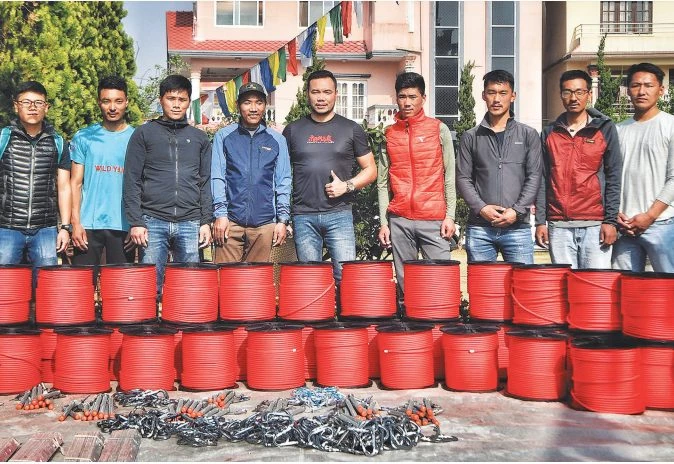
Every year, expert sherpas fix hundreds of kilograms of ropes leading to the top of the Himalayan peaks to help climbers following them. But what happens to these nylon ropes after the end of the mountaineering season?

“They are usually left on the mountain,” said Himal Pandit, training coordinator at the Nepal Mountain Academy established by the Tourism Ministry.

“Around 400 kg of plastic ropes are left on the mountain every year, and they remain there for decades. There is no policy to bring them down, and this has been polluting the mountains,” he said, speaking at the International Sustainable Mountain Tourism Conference in Kathmandu on Thursday.

Everest is a cash cow for the government. Climbers pump billions into Nepal’s economy annually. Around 60,000 trekkers visit Everest base camp alone to gaze in awe at the world’s highest peak, energising the economy all along the trail. But the government has no policy to keep the mountain clean, observers say.

Kami Rita, who has been climbing since 1994, told the Post, “In the past, if we saw any ropes, we would bring them down to the base camp and pass them around. They are good for tying yaks and cows. “I don’t know how much rope lies buried on the peak. It could be a lot.”

Pandit has been doing research on mountain pollution caused by plastic ropes. He has interviewed more than 20 high-altitude climbing sherpas.

“The sherpas say it’s not their responsibility to remove the ropes by risking their lives. We have estimated that there are ropes from 30 to 40 years ago. The government has a policy to fix the ropes, but there is no clear policy to remove them.”

According to Pandit, around 50 tonnes of ropes are estimated to lie buried under the snow on different mountains of Nepal.

There are risks in bringing the ropes down in the same season. “Besides, sherpas are not paid to bring them back. They are paid to fix the ropes only,” said Kami Rita.

“So it’s the responsibility of the sherpas who fix the ropes the following year to bring down the old ropes.”

According to Kami Rita, the rope-fixing team can’t wait for an expedition to finish. So the ropes are either blown away by the wind or swept down by avalanches and lie buried under the snow.

Dambar Parajuli, president of the Expedition Operators Association of Nepal, says ropes are fixed on Everest in two different systems.

From the Khumbu Icefall at the head of the Khumbu Glacier at 5,486 metres to Camp II at 6,400 metres, the ropes are fixed by icefall doctors deployed by the Sagarmatha Pollution Control Committee, a community-based NGO.

The committee charges $600 per climber for the service. These ropes are normally removed.

For the section from Camp II to the summit at 8,848.86 metres, the Expedition Operators Association of Nepal calls for applications from the expedition companies to fix the ropes.

“This system was introduced in 2014, but it was only fully implemented in 2016,” said Parajuli. “Before that, ropes used to be fixed through mutual understanding between the expedition operators.”

The operators had to contribute sherpas and logistics to fix the ropes.

According to Parajuli, it costs more than Rs10 million to fix the ropes, and on Everest, around 1,300 metres of rope is required. Beal climbing ropes are normally used for climbing.

Parajuli says they have a clear contract with the expedition operator who wins the contract to bring back the old ropes while fixing a new set.

“To avoid confusion about which is which, we use ropes of a different colour every year. If we have used red ropes in 2021, we use yellow ropes in 2022,” he said.

According to him, removing the ropes is a super difficult task. “It’s almost impossible to search, dig and fasten them. And we can’t risk a sherpa’s life. So, they are left on the mountain.”

Ropes on climbing routes litter Mount EverestThe litter left behind by visitors has long been a burden on the Everest region. Hundreds of mountaineers, sherpas, guides and other high altitude porters bound for Everest leave behind tonnes of both biodegradable and non-biodegradable waste, like empty oxygen canisters, bottles, ropes, kitchen waste and faecal matter, polluting the area and settlements downstream.

Plastic is a non-biodegradable material and most plastic is made from fossil fuels. If burnt, it poisons the air; if buried, it pollutes the soil. Plastic has been creeping up the mountains due to the increasing number of mountain climbers, mostly on the world’s highest peak Everest.

A conservative estimate puts the average time for one single plastic bag to completely biodegrade at 500 years.

A sherpa earns Rs900,000 to Rs1 million fixing ropes on Everest. It takes five to six days, depending on the weather. The expedition organiser says the old ropes mark the route which is a help to the rope fixers.

Over the years, plastic has created havoc in the Everest region. The trek from Lukla to Everest base camp has long been referred to as “garbage of toilet paper”. There is a big problem of human waste in the Khumbu area, and it has been polluting the water for people living downstream.

Nearly 60,000 trekkers travel to Khumbu annually, leaving behind massive pollution.

There is a government rule requiring every climber to bring back at least 8 kg of garbage—the amount of trash estimated to be produced by one climber—but it hasn’t been very effective.

“Garbage on the mountain is challenging, but it is a solvable problem. There is a solution,” said Alton C Byers, a mountain geographer, conservationist and mountaineer, while presenting a paper entitled “Notes from the Field: Contemporary Social and Physical Changes in Nepal’s High Mountains” at Thursday’s conference.

“Two decades ago, when I visited Khumbu, there was no garbage in any village,” said Byers, a professor at the University of Colorado. “Now, due to modern life, plastics are everywhere. Every food and beverage comes in plastic.”

He said that tourism in Khumbu had grown tremendously, and along with that the number of lodges is growing and growing. “This brings garbage.”

Since January 2020, Khumbu Pasang Lhamu Rural Municipality in Solukhumbu district has banned the use of plastic bags, bottles and other plastic items, citing their adverse effects on human health, especially in the Everest region. The use of plastic bags of less than 30 microns has been prohibited.

“But plastic is climbing up the mountain. This is a serious issue,” said Buddhi Sagar Lamichhane, joint secretary at the Tourism Ministry. “I hope the issue will get traction.”

G7 price cap on Russian oil kicks in, Russia will only sell at market price

#SootinClaimon.Com : ขอบคุณแหล่งข้อมูล : หนังสือพิมพ์ The Nation.

https://www.nationthailand.com/world/russia-central-asia/40022785

G7 price cap on Russian oil kicks in, Russia will only sell at market price

G7 price cap on Russian oil kicks in, Russia will only sell at market price

MONDAY, DECEMBER 05, 2022

The Group of Seven price cap on Russian seaborne oil came into force on Monday as the West tries to limit Moscow’s ability to finance its war in Ukraine, but Russia has said it will not abide by the measure even if it has to cut production.

The price cap, to be enforced by the G7, the European Union and Australia, comes on top of the EU’s embargo on imports of Russian crude by sea and similar pledges by the United States, Canada, Japan and Britain.

It allows Russian oil to be shipped to third-party countries using G7 and EU tankers, insurance companies and credit institutions, only if the cargo is bought at or below the price cap.

Because the world’s key shipping and insurance firms are based in G7 countries, the cap could make it difficult for Moscow to sell its oil for a higher price.

Russia, the world’s second-largest oil exporter, said on Sunday it would not accept the cap and would not sell oil that is subject to it, even if it has to cut production.

Selling oil and gas to Europe has been one of the main sources of Russian foreign currency earnings since Soviet geologists found oil and gas in the swamps of Siberia in the decades after World War Two.

A source who asked not to be identified due to the sensitivity of the situation told Reuters that a decree was being prepared to prohibit Russian companies and traders from interacting with countries and companies guided by the cap.

In essence, such a decree would ban the export of oil and petroleum products to countries and companies that apply it.

Still, with the price cap set at $60 per barrel, not much below the $67 level where it closed on Friday (December 2), the EU and G7 countries expect Russia will still have the incentive to continue selling oil at that price while accepting smaller profits.

The level of the cap is to be reviewed by the EU and the G7 every two months, with the first such review in mid-January.

“This review should take into account … the effectiveness of the measure, its implementation, international adherence and alignment, the potential impact on coalition members and partners, and market developments,” the European Commission said in a statement.

The cap on crude will be followed by a similar measure affecting Russian petroleum products that will come into force on Feb. 5, though the level of that cap has not yet been determined.

Putin drives across Crimean bridge damaged in October blast

#SootinClaimon.Com : ขอบคุณแหล่งข้อมูล : หนังสือพิมพ์ The Nation.

https://www.nationthailand.com/world/russia-central-asia/40022784

Putin drives across Crimean bridge damaged in October blast

Putin drives across Crimean bridge damaged in October blast

MONDAY, DECEMBER 05, 2022

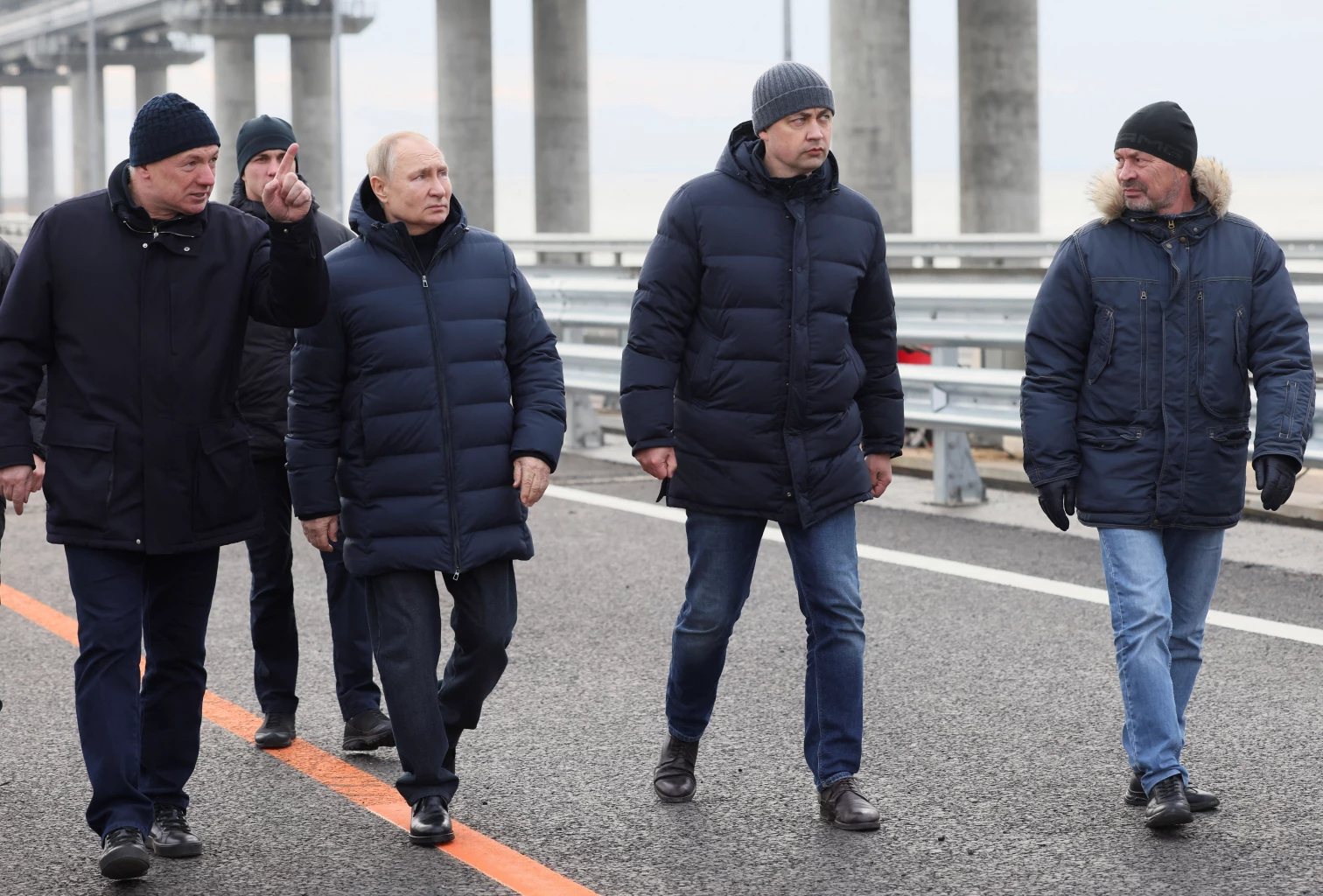
President Vladimir Putin on Monday drove a Mercedes across the Crimean Bridge linking southern Russia to the annexed Crimean peninsula, less than two months since an explosion tore through one of the Kremlin chief’s showcase infrastructure projects.

The 12-mile (19 km) road and rail bridge, which was personally opened by Putin in 2018, was bombed on October 8 in an attack Russia said was carried out by Ukraine.

Putin, accompanied by Deputy Prime Minister Marat Khusnullin, was shown on state television behind the wheel of a Mercedes, asking questions about where the attack took place.

Putin also walked along parts of the bridge, Europe’s largest, to inspect sections that are still visibly scorched.

Ukraine never claimed responsibility for the bombing of the bridge on the morning of October 8, a day after Putin’s 70th birthday. Russia’s Federal Security Service said the attack was organised by Ukrainian military intelligence.

The explosion wrecked one section of the road bridge, temporarily halting traffic across the Kerch Strait. The blast also destroyed several fuel tankers on a train heading towards the annexed Crimean peninsula from neighbouring southern Russia.

Russia in 2014 annexed Crimea, which was transferred from Soviet Russia to Soviet Ukraine in 1954 by then-Soviet leader Nikita Khrushchev and recognised by Russia in 1994 after the collapse of the USSR.

Putin drives across Crimean bridge damaged in October blast

Ukraine has vowed to return Crimea, which relies on the bridge for supplies.

Putin’s ally Arkady Rotenberg’s company built the vast structure, which is Europe’s longest bridge. Putin has long lauded the project, boasting at one point that Russian Tsars and Soviet leaders had dreamed of building it but never did.

Over 1,500 families in Nakhon Si Thammarat still affected by floods

#SootinClaimon.Com : ขอบคุณแหล่งข้อมูล : หนังสือพิมพ์ The Nation.

https://www.nationthailand.com/thailand/general/40022807

Over 1,500 families in Nakhon Si Thammarat still affected by floods

Over 1,500 families in Nakhon Si Thammarat still affected by floods

TUESDAY, DECEMBER 06, 2022

Up to 1,554 households in eight districts of Nakhon Si Thammarat province are suffering due to flash floods, the National Water Command Centre (NWCC) said on Tuesday.

The centre said flash floods due to continuous rains from Saturday to Monday (December 3-5) had inundated Sichon, Muang Nakhon Si Thammarat, Khanom, Phrom Khiri, Tha Sala, Nabon, Thung Yai and Ron Phibun districts.

“The Department of Disaster Prevention and Mitigation is cooperating with provincial agencies to help flood victims and evaluate the flood damage in line with the Interior Ministry’s regulations,” the NWCC said.

Over 1,500 families in Nakhon Si Thammarat still affected by floods

Earlier on Monday, the NWCC launched an announcement, warning residents in the Southern provinces to beware of severe conditions due to flash floods and runoffs from Thursday to Sunday (December 8-11).

The warning has been issued to residents in Chumphon, Phuket, Surat Thani, Nakhon Si Thammarat, Phatthalung, Songkhla, Trang, Satun, Pattani, Yala and Narathiwat provinces.

Over 1,500 families in Nakhon Si Thammarat still affected by floods

The NWCC also urged provincial agencies in the South to monitor the volume of water in dams and reservoirs in a bid to mitigate impact among residents, especially Bang Lang Dam in Yala’s Bannang Sata district.

“Related agencies have been asked to follow weather forecasts and the water situation closely, improve water management in dams and reservoirs regularly and publicise the water situation,” the announcement said.

Related stories:

No monkey business: 2 coconut plantations get Thailand’s cruelty-free stamp

#SootinClaimon.Com : ขอบคุณแหล่งข้อมูล : หนังสือพิมพ์ The Nation.

https://www.nationthailand.com/thailand/general/40022806

No monkey business: 2 coconut plantations get Thailand's cruelty-free stamp

No monkey business: 2 coconut plantations get Thailand’s cruelty-free stamp

TUESDAY, DECEMBER 06, 2022

The Department of Agriculture has started handing out “monkey-free” certificates to coconut farmers in Ratchaburi and Samut Sakhon to signify animal-cruelty-free harvests.

The certificates handed out on Tuesday verify that no monkeys were abused in the collecting of coconuts.

The issue of Thai farmers using chained monkeys to scale tall trees and bring down heavy coconuts was brought to global attention by PETA Asia in 2020. British supermarkets were the first to react and stopped stocking coconut milk from Thailand.

This prompted the Department of Agriculture to hold a virtual meeting with the International Coconut Community (ICC) and apply the principles of Good Agricultural Practice (GAP) to the industry. It also resulted in the department launching the “GAP Monkey-Free Plus” programme.

On Tuesday, department director-general Rapeepat Chansriwong presented the GAP Monkey-Free Plus certificates to Theppadungporn Coconut Co Ltd in Ratchaburi and K-Fresh Co Ltd in Samut Sakhon. They were the first two major coconut product manufacturers to pass the animal cruelty-free standards.

Rapeepat said coconut farmers are welcome to join the programme at any branch of the department’s Agricultural Research and Development Centre.

Officials will be dispatched to monitor the growing and harvesting process to ensure that GAP Monkey-Free Plus standards have been met before plantation owners receive a certificate.

This stamp can also be displayed on coconut-based products from these plantations.

Thailand exported 236.3 billion tonnes of coconut milk in 2021 worth 12.8 billion baht. Thai coconut milk is currently holding the largest market share of coconut milk products in the United States and Europe.

Related Stories

No more monkey business: Thai farmers now have a machine to take them up coconut trees

Govt urged to solve ‘monkey-picked coconuts’ row urgently

Ban on monkey-picked coconut products in UK won’t hurt: shippers’ council

Closing time for bars will not be extended, says Anutin

#SootinClaimon.Com : ขอบคุณแหล่งข้อมูล : หนังสือพิมพ์ The Nation.

https://www.nationthailand.com/thailand/general/40022802

Closing time for bars will not be extended, says Anutin

Closing time for bars will not be extended, says Anutin

TUESDAY, DECEMBER 06, 2022

Public Health Minister Anutin Charnvirakul announced on Tuesday that his ministry was against the Tourism and Sports Ministry’s proposal to extend the operating hours of nightspots by two hours.

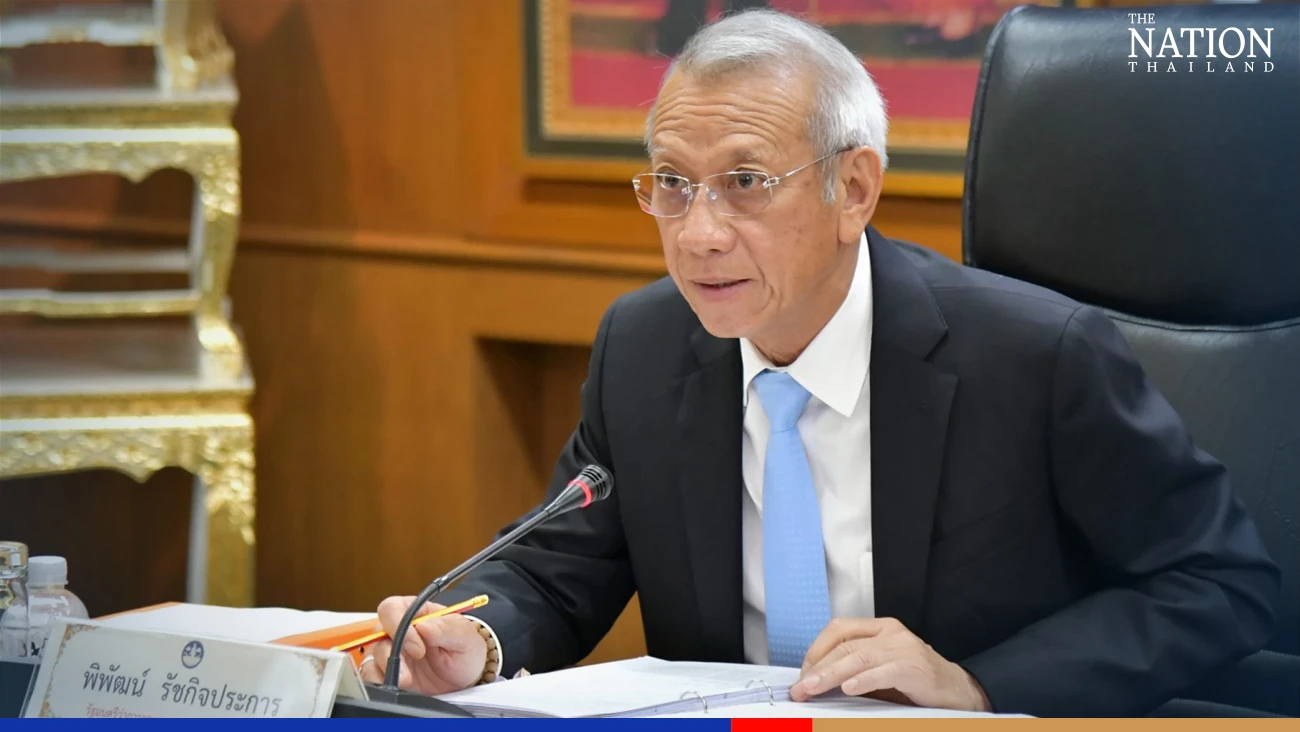
Political observers, however, have dubbed this announcement as bizarre, especially since Anutin is the leader of coalition partner Bhumjaithai and he appears to be going against a fellow party member, Tourism and Sports Minister Phiphat Ratchakitprakarn.

Anutin announced his ministry’s stance just before attending the Cabinet meeting on Tuesday morning. This was in response to an earlier announcement by Phiphat, who said the Cabinet was scheduled to deliberate his proposal to extend bar closing hours in specific tourist destinations on Tuesday.

Phiphat said he would ask the Cabinet to greenlight his plan to have nightspots in specific areas remain open until 4am instead of 2am.

He said if his proposal got the Cabinet go-ahead, he would immediately apply the new extended time to nightspots on Bangla Road in Phuket’s Patong area.

However, Anutin said the 2am closing time is perfectly fine because Covid-19 is still a threat.

“We also don’t want to see more road accidents caused by drunkards,” he added.

Observers believe Anutin is trying to distance himself from Phiphat’s proposal after it sparked criticism from civic groups and doctors, who believe that late closing hours will contribute to drunk driving and road accidents.

Closing time for bars will not be extended, says AnutinThey also believe that Anutin and his party are still reeling from criticism over the policy of decriminalising marijuana, which doctors are blaming for the reported surge in ganja consumption among young people.
Late last month, the Alcohol Control Committee rejected Phiphat’s proposal to keep entertainment venues open until 4am, because they said this would see booze being served for 11 consecutive hours from 5pm.

The committee also cited findings of a study showing that extending the opening hours of nightspots would boost road accidents by 27% and cause as many as 20 casualties from drunk driving.

It also cited records showing that despite police checkpoints and strict enforcement of the law being in place, no more than 50% of drunk drivers are intercepted.

Deliberation on Phiphat’s proposal, which was welcomed by the tourism sector, has been postponed for several months and only added to the Cabinet agenda on Tuesday.

Related story:

Proposal to let nightspots remain open till 4am rejected

Strolling wild elephants bring traffic to a stop in Khao Yai

#SootinClaimon.Com : ขอบคุณแหล่งข้อมูล : หนังสือพิมพ์ The Nation.

https://www.nationthailand.com/thailand/general/40022797

Strolling wild elephants bring traffic to a stop in Khao Yai

Strolling wild elephants bring traffic to a stop in Khao Yai

TUESDAY, DECEMBER 06, 2022

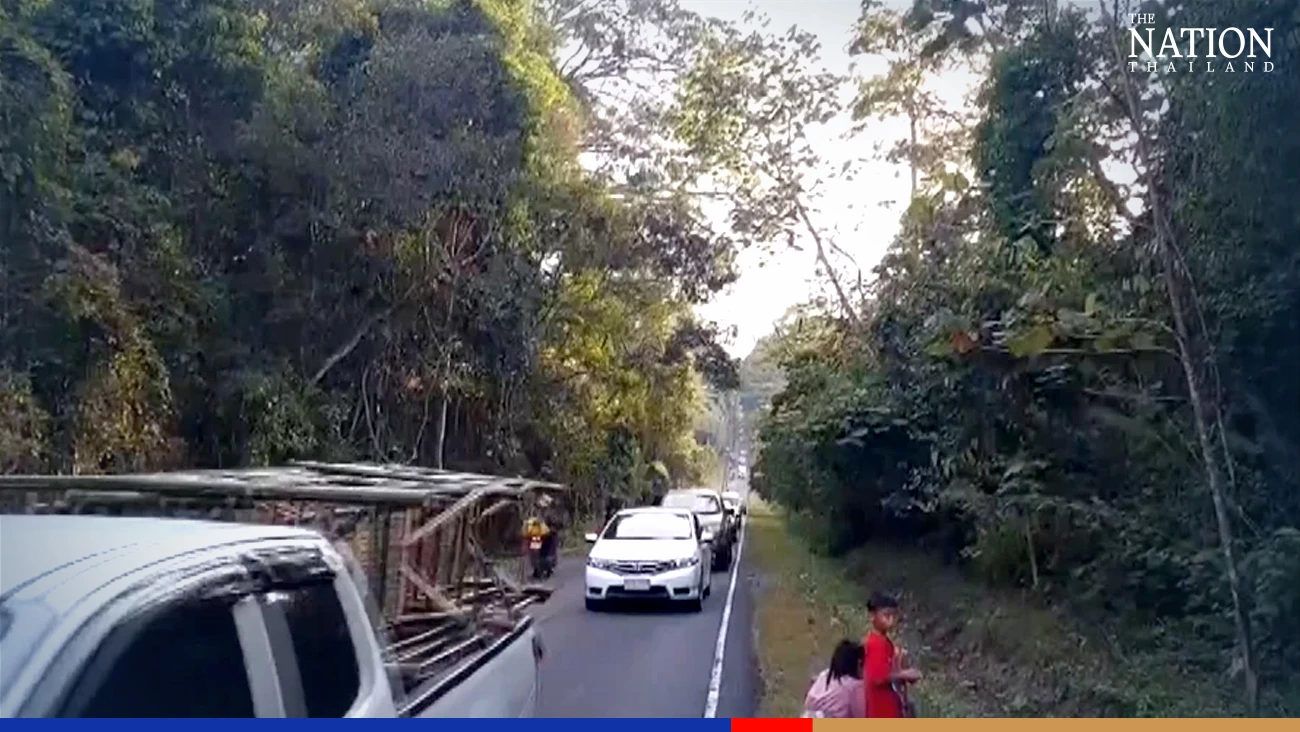
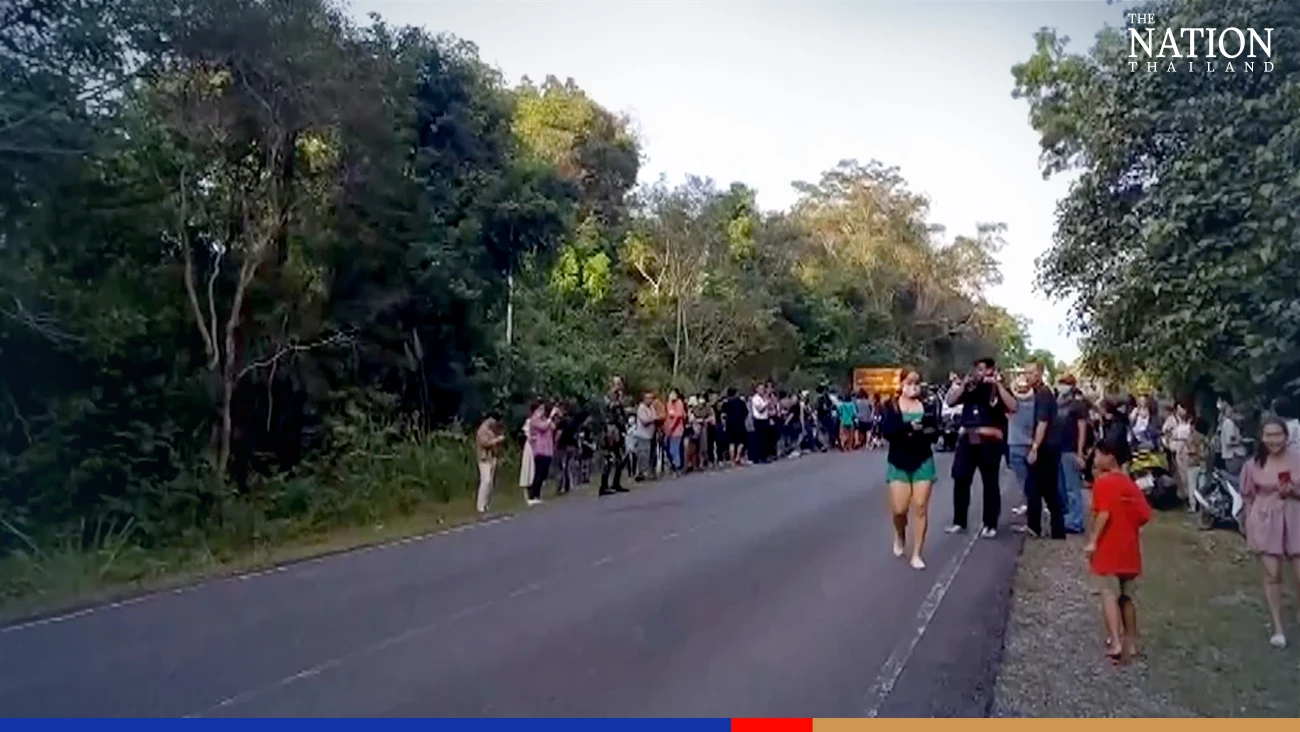
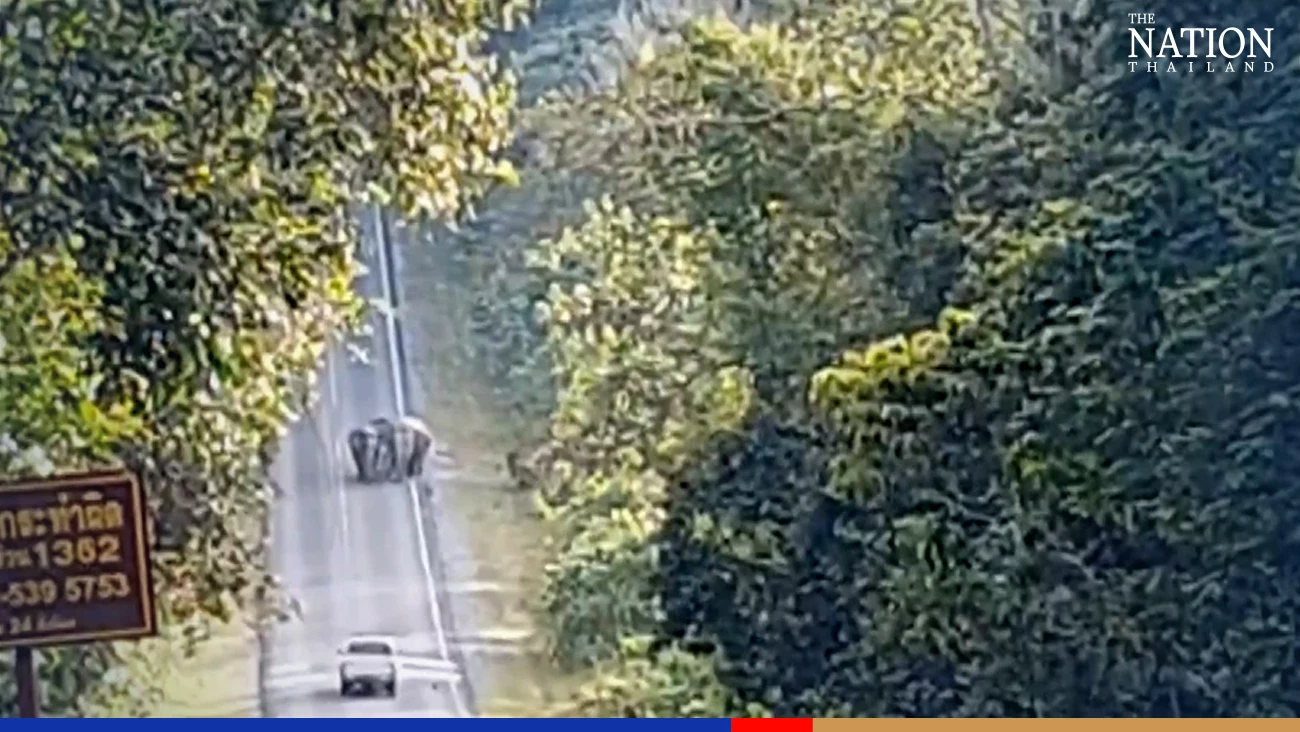
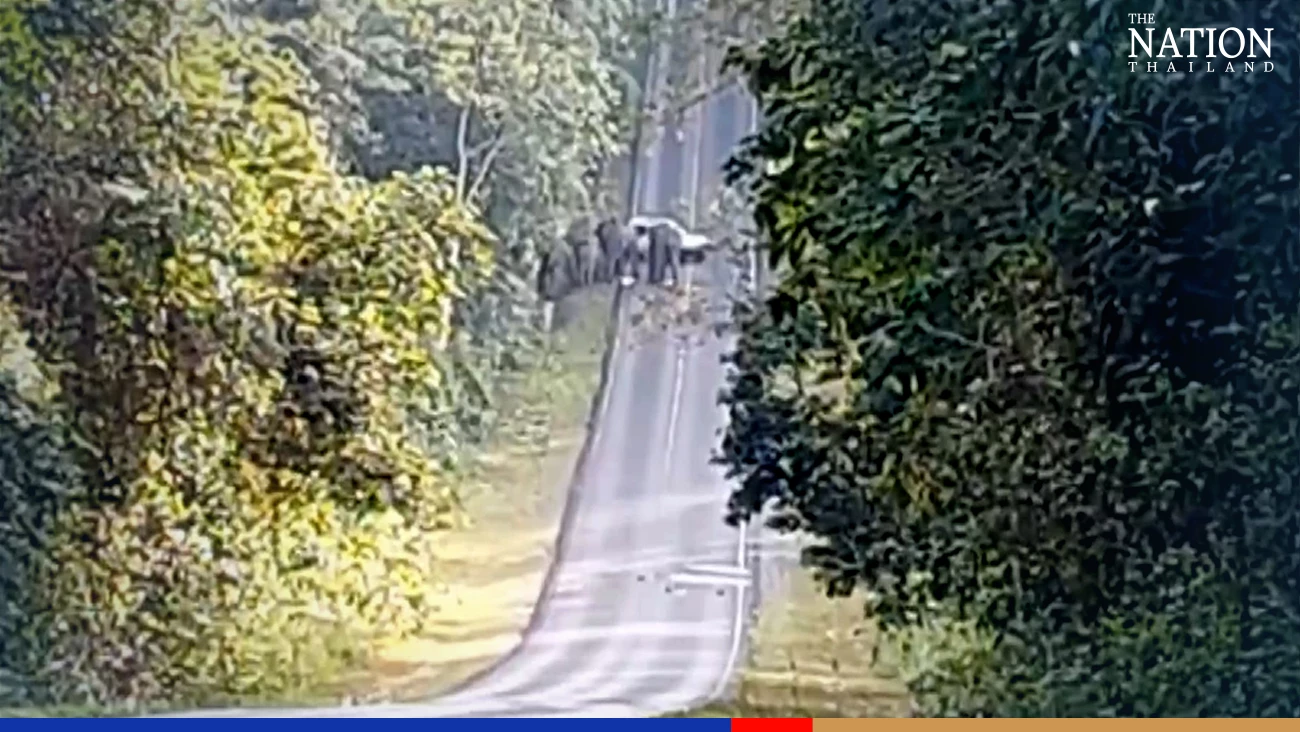
Tourists at Nakhon Ratchasima’s Khao Yai National Park had to park their cars for over an hour to make way for a herd of some 10 elephants to cross the road.

The wild elephants slowly sauntered across the road on Monday evening under the watchful eye of national park officials.

People had flocked to the national park in Pak Chong district during the Father’s Day long weekend.

Strolling wild elephants bring traffic to a stop in Khao Yai

Tourist Nattaporn Kwangpimai said she was excited to have had the chance to take pictures of wild elephants so closely.

“The herd was gentle and did not cause any panic among the tourists,” she said.

Strolling wild elephants bring traffic to a stop in Khao Yai

Related stories:

Bangkok Skytrain, Gold Line fares to rise by 1 baht from New Year’s Day

#SootinClaimon.Com : ขอบคุณแหล่งข้อมูล : หนังสือพิมพ์ The Nation.

https://www.nationthailand.com/thailand/general/40022796

Bangkok Skytrain, Gold Line fares to rise by 1 baht from New Year’s Day

Bangkok Skytrain, Gold Line fares to rise by 1 baht from New Year’s Day

TUESDAY, DECEMBER 06, 2022

Rides on the Gold Line feeder train between BTS Silom Line and Iconsiam shopping mall will cost 1 baht more from New Year’s Day.

In a Facebook post on Tuesday, the operator Krungthep Thanakom (KT) announced that the fare from Krung Thonburi to Klong San station will rise from 15 baht to 16 baht from January 1.

Senior citizens and war veterans, however, will continue paying 8 baht, while children below the height of 90 centimetres and the disabled will still get free rides.

KT is the business arm of the Bangkok Metropolitan Administration.

Also late last month, the Bangkok Mass Transit System (BTSC) announced that fares on the Sukhumvit (Mo Chit to On Nut) and Silom (National Stadium to Wong Wian Yai) BTS Skytrain lines will rise by 1-3 baht from January 1.

The basic fare for a one-station journey will cost 17 baht instead of 16, while the maximum fare – eight stations or more – will go up from 44 baht to 47 baht.

One-day passes will also cost 150 baht, up from 140 baht, from January 1. However, senior citizens will continue receiving special discounted fares.

Related story:

BTS Skytrain fares to rise on January 1