
Moon dials up diplomatic push for Southeast Asia #SootinClaimon.Com

#SootinClaimon.Com : ขอบคุณแหล่งข้อมูล : หนังสือพิมพ์ The Nation.

Moon dials up diplomatic push for Southeast Asia

Nov 13. 2020President Moon Jae-in (Yonhap)President Moon Jae-in (Yonhap) 

By Choi He-suk
The Korea Herald/ANN

Unveils ‘New Southern Policy Plus’ at Korea-ASEAN Summit, envisions deeper cooperation with Southeast Asia, other nations

President Moon Jae-in on Thursday announced the “New Southern Policy Plus” initiative to enhance the country’s regional diplomacy at the Korea-ASEAN Summit, held via satellite link.

Moon stressed the need for international cooperation in face of the coronavirus pandemic, saying the newly unveiled strategy reflects the changing needs of Korea and the member states of the Association of Southeast Asian Nations bloc, in light of the virus crisis.

“I think that it is very fortunate that the Korea-ASEAN Summit is held at a time when closer solidarity and cooperation is needed,” Moon said.

Saying that Korea and the ASEAN nations had worked together and that his New Southern Policy had achieved significant results, Moon introduced the new edition of the policy.

The New Southern Policy Plus is a continuation and upgrade of the New Southern Policy, one of Moon’s core foreign policy initiatives, which seeks to strengthen ties with countries to the south and southwest of Korea.

“New Southern Policy Plus contains new possibilities in seven core areas, such as comprehensive public health cooperation. It will allow the creation of ‘people centric community of peace and prosperity faster, while leading the way into the post-COVID era,” the leader said.

According to Moon’s senior economic aide Park Bok-yeong, the New Southern Policy Plus builds on the New Southern Policy while maintaining its core principles.

“New Southern Policy Plus will maintain the 3P — people, prosperity, peace — as core axis, and propose seven main strategic directions,” he said.

These are public health cooperation; sharing Korea’s education model and providing aid in human resources development; increasing cultural exchange; establishing a reciprocal and sustainable basis for trade and investment; cooperation in developing urban and rural infrastructure; cooperation in future industries; and cooperation on nontraditional security issues.

Cheong Wa Dae also hopes the Korea-ASEAN summit will serve as an opportunity to show Seoul’s continued commitment to the Korean Peninsula peace process, and to garner the international community’s support.

“In addition, President Moon will participate in the discussions on other regional security issues to express Korea’s stance and emphasize the importance of seeking peaceful resolutions,” Park explained at a briefing.

“The government will continue to improve on the strengthened cooperation with ASEAN, and strengthen strategic cooperation with New Southern countries through New Southern Policy Plus,” Park said, referring to the nations involved as the “New Southern countries.”

Moon is set to continue summit diplomacy with the ASEAN nations until Sunday.

On Friday, Moon will participate in the second Korea-Mekong Summit, where ways to improve cooperation among the participating countries will be discussed. The Korea-Mekong Summit was established at Moon’s suggestion in 2018 to strengthen Korea’s relations with Cambodia, Laos, Myanmar, Thailand and Vietnam. The inaugural Korea-Mekong Summit was held in Busan last year.

On Saturday, the ASEAN Plus 3 summit — involving the 10 ASEAN members plus Korea, China and Japan — is scheduled to be held, followed by the East Asia Summit later in the day. The East Asia Summit includes the ASEAN states, Korea, Australia, China, India, Japan, New Zealand, Russia and the US.

The series of multilateral summits will wrap up with a summit of countries in the Regional Comprehensive Economic Partnership — the ASEAN states, Korea, Australia, China, Japan and New Zealand.

According to Cheong Wa Dae, the participating countries will sign the final RCEP agreement, completing eight years of negotiations. The text of the agreement was agreed to last year, without the participating countries finalizing details of how their markets will be opened to each other.

Cheong Wa Dae said the signing of the RCEP agreement is a major milestone for the Moon Jae-in administration’s New Southern Policy, bringing Korea into the world’s largest free trade agreement and the policy’s goals closer, as well as aiding local firms to expand into new markets.

Respect sovereignty & territorial integrity: Modi’s message to China, Pak at SCO summit #SootinClaimon.Com

#SootinClaimon.Com : ขอบคุณแหล่งข้อมูล : หนังสือพิมพ์ The Nation.

Respect sovereignty & territorial integrity: Modi’s message to China, Pak at SCO summit

Nov 12. 2020Prime Minister Narendra Modi (Photo: Twitter | @narendramodi_in)Prime Minister Narendra Modi (Photo: Twitter | @narendramodi_in) 

By The Statesman

In a stern message to China, Prime Minister Narendra Modi today asked members of the Shanghai Cooperation Organisation (SCO) to respect one another’s sovereignty and territorial integrity and, in a veiled reference to Pakistan, regretted that bilateral issues were being unnecessarily brought into the SCO agenda.

In his speech at the eight member Shanghai Cooperation Organisation (SCO) summit, held virtually, Modi said, “India has strong cultural and historical ties with SCO countries… India believes that to enhance connectivity it is important that we move forward while respecting one another’s sovereignty and territorial integrity”. In an oblique reference to Pakistan raising the Kashmir issue in the past meetings, Modi said, “It is unfortunate that there are unnecessary attempts to bring bilateral issues in the SCO agenda, which is in violation of SCO Charter and Shanghai spirit.”

India, he said, strongly believed in peace, security and prosperity and has always opposed terrorism, illegal arms smuggling, drugs and money laundering. India has remained firm in its commitment to work as per the principles laid down in the SCO Charter, he added. Modi also called for “reformed multilateralism” to meet the present day challenges facing the global community.

This was the first time since the Sino-India border row in eastern Ladakh began in early May that Modi faced, albeit virtually, Chinese President Xi Jinping.

Pakistan Prime Minister Imran Khan, Russian President Vladimir Putin and leaders of four central Asian countries: Kazakhstan, Kyrgyzstan, Tajikistan and Uzbekistan participated in the Summit. Putin chaired the summit.

“India believes that to enhance connectivity, it is important that we move forward by following the core principle of respecting each other’s sovereignty and territorial integrity,” Modi said while referring to New Delhi’s involvement in International North South Corridor project, development of the Chabahar port and Ashgabat agreement.

The International NorthSouth Transport Corridor (INSTC) is a 7,200-km-long multi-mode transport project for moving freight among India, Iran, Afghanistan, Armenia, Azerbaijan, Russia, Central Asia and Europe.

Ashgabat agreement is a transport agreement among several Gulf and Central Asian countries which is aimed at creating a transit corridor to spur trade and investment. India has been supporting the project.

In mid-September, India’s National Security Advisor Ajit Doval walked out of a virtual meeting of top security officials of the SCO member states after the Pakistani representative projected a map that inaccurately depicted Kashmir.

In his address, Modi also delved into a number of key issues like the threat of terrorism, long-pending reform of the United Nations and the need for concerted efforts to deal with the COVID-19 pandemic as well as its adverse impact on global economy.

“India strongly believes in peace, security and prosperity, and we have always voiced opposition to terrorism, illegal arms smuggling, drugs and money laundering,” Modi said.

In this difficult time of unprecedented epidemic, India’s pharma industry sent essential medicines to over 150 countries, he said.

“India strongly believes that a combination of economic multilateralism and national capacity building can help the countries including in the SCO region recover from the economic losses caused by the pandemic,” Modi said.

I am confident that a self-reliant India will prove to be a force multiplier for the world economy and will trigger a momentum for economic development of the SCO countries,” he said.

The Prime Minister also talked about India hosting a summit of the council of heads of government of the SCO on 30 November in the virtual format, and said an elaborate agenda is being prepared focussing on economic issues.

The summit will culminate with the release of a Moscow Declaration which will reflect broad agenda of the bloc for one year, sources said. Separate documents on digital economy and Covid-19 may also be issued.

Indonesia to have world’s fourth-largest air passenger market by 2039: IATA #SootinClaimon.Com

#SootinClaimon.Com : ขอบคุณแหล่งข้อมูล : หนังสือพิมพ์ The Nation.

Indonesia to have world’s fourth-largest air passenger market by 2039: IATA

Nov 12. 2020On the rise: Passengers are seen at Terminal 3 of Soekarno-Hatta International Airport in Tangerang, Banten, on Friday. The airport recorded 350-400 flights per day in July, up from 243 flights per day in the preceding month. (JP/Dhoni Setiawan)On the rise: Passengers are seen at Terminal 3 of Soekarno-Hatta International Airport in Tangerang, Banten, on Friday. The airport recorded 350-400 flights per day in July, up from 243 flights per day in the preceding month. (JP/Dhoni Setiawan) 

By Mardika Parama
The Jakarta Post/ANN

The International Air Transport Association (IATA) projected Indonesia’s air passenger market to become the fourth-largest globally by 2039, jumping from 10th position in 2019 thanks largely to travel demand from the country’s growing middle class, according to an official.

IATA Asia Pacific member external relation assistant director Kelvin Lee said on Tuesday that the growth of the middle class in Indonesia and Southeast Asia was making the region a hotspot for air passenger market growth over the next two decades, surpassing conventional markets such as Europe and Northern America.

“We see that the Asia Pacific will become the region where air travel is expected to grow very strongly and ASEAN plays a key role in the strong growth,” he said in an online webinar held by Malaysia-based think tank Institute for Democracy and Economic Affairs (IDEAS).

IATA expected the Asia-Pacific region to have a 4.5 percent compound annual growth rate (CAGR) over the next 20 years, far above the traditional aviation industry market of Northern America and Europe, which is estimated to see a CAGR of 1.6 percent and 1.8 percent, respectively.

China is also projected to surpass the United States in becoming the world’s biggest air passenger market in 2039, while India is set to jump to third place that year from fifth place in 2019, the organization’s data shows.

According to the World Bank’s “Aspiring Indonesia: Expanding the Middle Class” report, Indonesia’s middle-class population has expanded over the last 15 years from just 7 percent of the population to 20 percent currently, with 52 million Indonesians currently belonging to the group.

Despite the burgeoning middle-class population, Indonesia saw an 18.54 percent year-on-year (yoy) decline in domestic air passengers last year to 76.7 million people, according to Statistics Indonesia (BPS) data. The COVID-19 pandemic has further pressured domestic passenger travel demand this year, with only 23.5 million passengers flying as of September, or 58.33 percent lower compared to the same period last year. Meanwhile, the number of foreign air passengers in the same period plummeted 74.54 percent yoy to 3.5 million people.

The Indonesian National Air Carrier Association (INACA) has projected the number of air passengers to only reach around 45.8 million by the end of 2020, a 40 percent drop from last year.

Kelvin said ASEAN member countries should also take additional steps to harmonize the regulation on the aviation industry among the region’s member countries, as well as take a more liberal market approach in order to boost the sector’s development in the future.

“In order for ASEAN to fully reap its travel growth potential, the region needs to do more in terms of regulatory harmonization to deal with key challenges such as very diverse regulatory maturity. Furthermore, we also expect government controls to remain conservative,” he said during the discussion. The 10-member bloc implemented the ASEAN Single Aviation Market (ASAM) in 2015 to increase regional connectivity.

With the agreement, airlines in the region are allowed the fifth freedom of the air, which entails the right to carry traffic between two foreign countries with services starting or ending in the airline’s own country. However, several member states, including Indonesia, are reluctant to take further steps by opening its domestic market to foreign airlines in an effort to protect their local airline industry.

Prasetiya Mulya University aviation law researcher Ridha Aditya Nugraha said Indonesia had the strictest minimum operating aircraft regulation, which required an airline to own a minimum of five aircraft and control another five. The requirement was eased by the newly passed Law No. 11/2020 on job creation.

The Job Creation Law is intended to cut bureaucratic red tape to boost investment, among other targets.

“Investment-friendly provisions among ASEAN member states should lead to the establishment of new airlines and create an environment that supports them. That would bring us seamless air connectivity in ASEAN,” Ridha said during the discussion.

INACA previously welcomed the controversial law, believing it will spur investment in an industry that has been battered by the pandemic.

Taiwan opposition head criticizes ruling party for ‘betting on Trump’ #SootinClaimon.Com

#SootinClaimon.Com : ขอบคุณแหล่งข้อมูล : หนังสือพิมพ์ The Nation.

Taiwan opposition head criticizes ruling party for ‘betting on Trump’

Nov 12. 2020Kuomintang Chairman Johnny Chiang gestures in a speech at the party's weekly Central Standing Committee on Nov. 11, 2020. (NOWnews)Kuomintang Chairman Johnny Chiang gestures in a speech at the party’s weekly Central Standing Committee on Nov. 11, 2020. (NOWnews) 

By The China Post/ANN

TAIPEI (The China Post/ANN) — Kuomintang Chairman Johnny Chiang (江啟臣) criticized the ruling Democratic Progressive Party (DPP, 民進黨) on Wednesday for allegedly “betting on Trump” (押寶川普).

In a speech at the party’s weekly Central Standing Committee, Chiang condemned the ruling party for “betting” on U.S. President Donald Trump for quick diplomatic gains while blaming the KMT of “betting on China against the United States” (押中反美).

The chairman expressed the KMT’s support for stronger ties between Taipei and Washington but stressed that peaceful cross-strait relations and safeguarding the sovereignty of the Republic of China (ROC) are equally important.

Chiang further denounced DPP’s allegations that the opposition party is anti-U.S., noting that more than 160 countries around the world, including 20 countries from the European Union, have restrictions in place against U.S. meat imports.

They are not “anti-American” for all that, Chiang explained.

“We are pro-U.S., but we love Taiwan more,” he said, adding that the opposition party has only accepted to import U.S. beef from cattle aged under 30 months so far.

Given that Taiwan people eat seven times more pork than beef, Chiang warned against dropping import restrictions on U.S. beef from cattle over 30 months old and on U.S. pork containing ractopamine.

That’s the reason why opposition supporters will take the streets to protest on Nov. 22 against President Tsai Ing-wen’s decision to lift the restrictions “in line with international standards,” he pointed out.

Moon, Biden agree to cooperate closely on N. Korean nuke issue in phone call #SootinClaimon.Com

#SootinClaimon.Com : ขอบคุณแหล่งข้อมูล : หนังสือพิมพ์ The Nation.

Moon, Biden agree to cooperate closely on N. Korean nuke issue in phone call

Nov 12. 2020An image of South Korean President Moon Jae-in (L) and US President-elect Joe Biden (Yonhap)An image of South Korean President Moon Jae-in (L) and US President-elect Joe Biden (Yonhap) 
By The Korea Herald/ANN

South Korean President Moon Jae-in and his incoming US counterpart, Joe Biden, agreed to work closely together to resolve the North Korean nuclear issue, as they had a 14-minute phone conversation Thursday, Cheong Wa Dae said.

Biden described South Korea as a “linchpin” of security and prosperity in the Indo-Pacific region, according to Moon’s spokesman Kang Min-seok.

Moon asked Biden to “communicate closely” for the forward-looking development of the Seoul-Washington alliance, denuclearization of the Korean Peninsula and establishment of lasting peace here.

The president cited the allies’ 70 years of partnership for the protection of such shared values as democracy and human rights, Kang said.

Biden reaffirmed Washington’s firm security commitment to South Korea and said that he would “closely cooperate” for a resolution to the North Korean nuclear issue, he added.

They also agreed to expand cooperation on global challenges, including COVID-19 and climate change, and agreed to meet at an early date after Biden’s inauguration, Kang said.

It marked their first conversation since Biden was declared the winner of last week’s election.

Moon took note of Biden’s visit to the Korean War Memorial in Philadelphia on Veterans Day.

While praising Seoul’s efforts to contain new coronavirus transmissions, Biden said he will do his best to contain the coronavirus in the US before the official launch of his administration.

Moon earlier wrote on Twitter that he and Biden “reaffirmed our firm commitment to a robust ROK-US alliance and peaceful and prosperous Korean Peninsula.” ROK is the acronym for South Korea’s official name, the Republic of Korea.

He added, “Going forward, I will work closely with him to meet global challenges, including COVID-19 and climate change.”

Biden reportedly spoke by phone with Japanese Prime Minister Yoshihide Suga on the day as well, following calls with Canadian and European leaders.

Meanwhile, members of Cheong Wa Dae’s National Security Council’s standing committee discussed the developments of the American presidential election and the means to sustain and further develop the South Korea-US relationship based on the bilateral alliance.

The session was presided over by Suh Hoon, director of national security at Cheong Wa Dae.

The members also discussed measures to “achieve lasting peace on the Korean Peninsula and its denuclearization,” according to Cheong Wa Dae. (From news reports)

Hong Kong opposition quits as China moves to quash dissent #SootinClaimon.Com

#SootinClaimon.Com : ขอบคุณแหล่งข้อมูล : หนังสือพิมพ์ The Nation.

Hong Kong opposition quits as China moves to quash dissent

Nov 12. 2020

By Claire Huang
The Straits Times/ANN

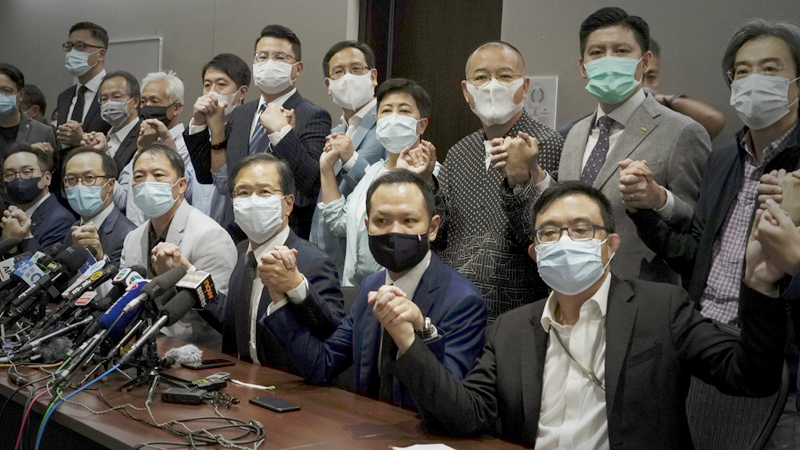
HONG KONG – Hong Kong’s legislature will have no opposition lawmakers if members of the pan-democratic camp follow through on their threat to resign en masse on Thursday (Nov 12), adding to growing fears that Beijing wants to crush dissent and create a rubber-stamp Parliament.

This comes after China’s top legislative body passed a resolution on Wednesday that required Hong Kong lawmakers to be patriots, widely viewed as a move to curb debate in a city that had managed to thrive on it.

The resolution of the National People’s Congress Standing Committee (NPCSC) stated that legislators who promote or support Hong Kong independence, refuse to acknowledge China’s sovereignty over Hong Kong, ask external forces to interfere in the territory’s affairs or commit other acts that threaten national security should be disqualified.

Citing the need for a smooth implementation of the “One Country, Two Systems” principle and long-term stability in Hong Kong, it said all public servants in the city – including lawmakers – must support the Basic Law – and be loyal to the Hong Kong government.

NPCSC Chairman Li Zhanshu said at the close of a two-day meeting that Beijing’s decision is “conducive to the long-term peace and stability, as well as prosperity and development of Hong Kong.”

The decision applies not only to future lawmakers but also to four pan-dem lawmakers who were barred from running in the Legislative Council or Legco elections, postponed from September till next year.

The Hong Kong government announced the disqualification of Mr Alvin Yeung, Mr Dennis Kwok, Mr Kwok Ka Ki and Mr Kenneth Leung, with Chief Executive Carrie Lam endorsing the decision.

She said it would be a “blatant deviance” from the Basic Law that governs the territory if lawmakers who breached their oaths stayed in office.

The Hong Kong and Macau Affairs Office said that the disqualification “has a solid legal foundation and has an undeniable authority”.

The Legco has been plagued by bitterness between the pan-dem and pro-establishment camps, with filibustering and chamber drama arising several times in at least the past year.

“I have taken the responsibility to seek a solution to address this problem,” said Mrs Lam, who said Hong Kong plans to introduce legislation to formalise the process and spell out legal consequences for violators.

“I cannot arbitrarily take action without any basis that’s why I made the request to an organ that has the power to make such a decision. There is no relationship with the timing of my visit,” she added, referring to her recent Beijing visit to seek support on measures to support Hong Kong’s economy.

Democratic Party chairman Wu Chi Wai said on Wednesday that the remaining 15 opposition lawmakers will hand in their resignation letters on Thursday – a move the pan-dem bloc had warned of on Monday if any of them were to be disqualified.

He noted that as early as 2014, Beijing had announced in a white paper that it would extend its jurisdiction over Hong Kong completely. 

“There is a separation of power under the stipulation of the Basic Law, but today, the decision made by the central government simply says that all the separation of power will be taken away, and all the power will be centralised in the Chief Executive.

“Of course, the Chief Executive is a puppet of the central government …we say that today is the end of the ‘One Country, Two Systems” (principle),” said Mr Wu.

Legco President Andrew Leung dismissed the notion that the decision creates a rubber-stamp legislature: “Do you think the pro-government camp is one party? They have a lot more different voices … Without the pan-dems, we might have more opposition from the pro-government camp than anyone.” 

Associate Professor Alfred Wu of the Lee Kuan Yew School of Public Policy noted that even if the pan-dems were to stay on, the opposition bloc would not be able to veto the passing of measures with the disqualification of the four lawmakers.

“Beijing has a clear idea of the consequence of what will happen if they resign. Now, it’s very clear that Hong Kong lawmakers have become a rubber stamp since all of them are pro-government,” he said.

Asked about Mr Leung’s suggestion that pro-Beijing lawmakers can be the opposition voice too, Prof Wu said: “China also has a similar model. Who believes China really has check and balance between power and government?”

Mr Lau Siu Kai, vice-president of the Chinese Association of Hong Kong and Macau Studies, said Beijing, which decides on matters of the Basic Law and the “One Country, Two Systems” principle, has to ensure that these are executed with precision.

He noted that the chaos in Hong Kong’s Legco has meant that it could not function and the government is stuck in a quandary. This situation prompted Beijing to act, he said.

“If the opposition leaves, relations within Legco will improve in the year that follows and major policies dealing with different crises can be pushed through quickly. The government and the pro-Beijing camp will have to account for the success or failure of those policies so they are likely to move cautiously ahead.”

Britain’s foreign minister Dominic Raab said the expulsion of the four lawmakers constituted an assault on 

Hong Kong’s freedoms as set out in the UK-China Joint Declaration. 

“This campaign to harass, stifle and disqualify democratic opposition tarnishes China’s international reputation and undermines Hong Kong’s long-term stability,” he said on Wednesday in a statement.

Biden and India #SootinClaimon.Com

#SootinClaimon.Com : ขอบคุณแหล่งข้อมูล : หนังสือพิมพ์ The Nation.

Biden and India

Nov 11. 2020US President-elect Joe Biden with his deputy Kamala Harris. (Photo: Twitter/@JoeBiden)US President-elect Joe Biden with his deputy Kamala Harris. (Photo: Twitter/@JoeBiden) 

By The Statesman/ANN

New Delhi and its amplifiers in media will tell you that US-India ties have reached a level of maturity wherein a change of administration in Washington will not impact fundamentals. It is true that there is bipartisan support for strengthening the US-India strategic, economic and civilisational relationship.

But with President-elect Joe Biden now on his way to the White House with Kamala Harris in tow as his V-P, the granular reality is likely to be a little different. India would do well to be prepared for it. Whatever President Donald Trump’s angularities, and despite the aesthetic discomfort many have had with his more obnoxious personality traits, he was, like Republican presidents before him post-Ronald Reagan, good for India.

Notwithstanding the transactional nature of his Administration’s dealings, he was resolute in staring down China, dehyphenating the India-Pakistan relationship and promoting an Indo-Pacific strategic architecture. All in the US’ interests, of course, but it gave India leverage in a multipolar world.

President-elect Biden, given what he owes the American left-liberal establishment for getting him elected with the highest ever popular vote to turf out a populist demagogue, will likely have different priorities. From the Indian perspective, on the credit side, will be the likely resurrection of the Iran nuclear deal which will help India in balancing its relationship between Teheran and Washington both of which are of vital strategic importance.

A fillip to economic ties with an easing of trade barriers is on the cards and the Indian IT industry is expected to benefit as strict job visa regulations are reviewed. Mr Biden’s foreign policy expertise acquired over four decades in public life and his calm demeanour ought to help the US-Russia relationship recover from a collegiate competitiveness between alpha males which is how it’s been over the past four years.

Again, good for New Delhi, as it is in the Indian national interest not to have Washington and Moscow expending their energy on showing each other down while China acquires more heft. The problem areas for India with Biden in charge are going to be the CAA, NRC, integration of the Kashmir Valley and India’s fight against terror – the Indian state’s unifying agenda on which a civic nationalism may be premised.

Sanctimonious and unsolicited advice bordering on interference is certainly on the anvil from our strategic ally on these issues. Naturally, these fault-lines will be sought to be exploited by India’s adversaries. Allegations around human rights as relating to groups rather than individuals ~ and concomitant notions of intolerance and dissent ~ too will be areas of disagreement given the Democrats are now the leading global practitioners of identity politics.

But our money is on hard-nosed policy establishments on both sides ensuring these do not have a material impact on India-US ties. What will, however, prove to be truly problematic for India, is if President-elect Biden decides to accommodate instead of contain China, engage rather than isolate Pakistan, and push the trope that contemporary global terrorism is not linked to religion.

Colombia, Cuba, South Africa join Treaty of Amity and Cooperation in Southeast Asia #SootinClaimon.Com

#SootinClaimon.Com : ขอบคุณแหล่งข้อมูล : หนังสือพิมพ์ The Nation.

Colombia, Cuba, South Africa join Treaty of Amity and Cooperation in Southeast Asia

Nov 11. 2020Deputy Prime Minister and Foreign Minister Phạm Bình Minh attends the signing ceremony of the instruments of accession to TAC by Colombia, Cuba and South Africa which is held online on Tuesday. VNA/VNS Photo Lâm KhánhDeputy Prime Minister and Foreign Minister Phạm Bình Minh attends the signing ceremony of the instruments of accession to TAC by Colombia, Cuba and South Africa which is held online on Tuesday. VNA/VNS Photo Lâm Khánh 

By Viet Nam News/ANN

HÀ NỘI – Colombia, Cuba and South Africa have joined the Treaty of Amity and Cooperation in Southeast Asia (TAC) during the 37th ASEAN Summit and related meetings in Hà Nội.

Deputy Prime Minister and Foreign Minister Phạm Bình Minh and other ASEAN foreign ministers witnessed the signing ceremony by the three countries which was held online on Tuesday.

In his remarks, Minh said the expansion of the treaty showed ASEAN’s position and role in enhancing co-operation, and in promoting peace and security in the region and the world.

The TAC was signed in Bali, Indonesia, in February 1976 and has 43 signatories so far. Since its signing and entry into force, the treaty has become a key instrument governing relations between states to maintain regional peace and stability.

In recent years, there had been growing interest of non-ASEAN member states in the treaty, he said, adding that the accession by Colombia, Cuba and South Africa to the TAC would contribute to the reinforcement of the importance and relevance of the treaty’s purposes and principles which encompass the peaceful settlement of disputes and resolutions of differences.

Minh called on the three countries to commit themselves to the TAC objectives and strive to strengthen ties with ASEAN while contributing to promoting peace and security in the region and beyond.

He also expressed his hope for more commitments, saying substantial and concrete actions should be taken to work towards a more peaceful, stable and prosperous region and the world.

Cuban FM Bruno Rodriguez Parrilla recognised the work of Việt Nam and ASEAN in the fight against COVID-19 and expressed his condolences to Cambodia, the Philippines, Laos, Thailand, and Việt Nam over the heavy losses caused by recent natural disasters.

The signing took place in an international context that showed the values of solidarity and co-operation to control global challenges, including the COVID-19 pandemic, the minister said.

He pledged to work with ASEAN in biotechnology, pharmacy, medical services, Spanish language teaching, culture, sports, and strategies to address climate change, suggesting the establishment of a joint biotech research and development centre in ASEAN and the conduction of clinical tests. — VNS

S’pore may have a Covid-19 vaccine by early 2021, commits close to $300m to make and buy vaccine #SootinClaimon.Com

#SootinClaimon.Com : ขอบคุณแหล่งข้อมูล : หนังสือพิมพ์ The Nation.

S’pore may have a Covid-19 vaccine by early 2021, commits close to $300m to make and buy vaccine

Nov 11. 2020Preliminary findings indicate positive responses in both safety and human immune response. PHOTO: ST FILEPreliminary findings indicate positive responses in both safety and human immune response. PHOTO: ST FILE 

By Audrey Tan
The Straits Times/ANN

SINGAPORE – Singapore could have a Covid-19 vaccine by early next year.

The first shipments of the vaccine co-developed by Singapore researchers are expected in the first quarter.

Arcturus Therapeutics, the American pharmaceutical company working with Duke-NUS scientists on the vaccine, said this on Monday (Nov 9), as it announced positive preliminary results from the early-stage clinical trials ongoing in Singapore.

Singapore’s Economic Development Board (EDB) is pumping in some US$45 million (S$60.5 million) into the manufacture of the vaccine, said Arcturus.

EDB will also have the right to purchase up to US$175 million of the vaccine at pre-negotiated prices, with shipments expected to begin in the first quarter of 2021, said Arcturus.

Duke-NUS Medical School’s Professor Ooi Eng Eong, who had co-developed the vaccine with Arcturus, said the results so far show that the vaccine could be effective as a single dose.

“This differentiates this investigational vaccine from many other Covid-19 vaccines in development,” said Prof Ooi, who is also a member of Arcturus’ Vaccine Platform Scientific Advisory Board.

“The vaccine has the potential to provide important public health benefits by greatly facilitating broad administration across multiple populations worldwide.”

Arcturus chief financial officer Andy Sassine said the funds from Singapore will provide the firm with additional resources to sustain rapid scale up of (the vaccine) to meet the requirements of its existing Israeli and Singapore agreements as well as other potential supply deals in 2021.

The encouraging preliminary findings from the Singapore co-developed Covid-19 vaccine comes as the race to the vaccine heats up.

Earlier this week, Pfizer and BioNTech announced that their experimental vaccine is 90 per cent effective at preventing Covid-19. They are still awaiting data on safety, which could come later this month.

Some 106 volunteers are enrolled in Arcturus’ early-stage trials in Singapore, of whom 28 received placebos. Seventy-eight subjects received one dose of the vaccine, while the rest received two injections.

During these early-stage trials, researchers look out for dangerous side effects and analyse patient samples to see how the human immune system is responding to the vaccine.

They also seek to determine how many doses are needed to incite the desired immune response.

Preliminary findings indicate positive responses in both safety and human immune response.

Arcturus said no subjects have withdrawn from the study, and that there have been no serious adverse events deemed to be treatment-related. As for the immune response, both antibody and T-cell response have been observed in volunteers.

The Straits Times had earlier reported that these later-stage clinical trials could start before the end of this year.

Such trials are much larger in scope than the earlier ones, usually involving thousands to tens of thousands of people. These are often held across multiple jurisdictions or countries. The aim of these trials is to see if the vaccine can confer protection from infection.

Xi: China to actively consider the vaccine needs of SCO countries #SootinClaimon.Com

#SootinClaimon.Com : ขอบคุณแหล่งข้อมูล : หนังสือพิมพ์ The Nation.

Xi: China to actively consider the vaccine needs of SCO countries

Nov 11. 2020In this file photo, Chinese President Xi Jinping speaks during the 19th meeting of the Council of Heads of State of the SCO in Bishkek, Kyrgyzstan's capital, June 14, 2019. (PHOTO / XINHUA)In this file photo, Chinese President Xi Jinping speaks during the 19th meeting of the Council of Heads of State of the SCO in Bishkek, Kyrgyzstan’s capital, June 14, 2019. (PHOTO / XINHUA) 

By China Daily/ANN

BEIJING – China is willing to actively consider the COVID-19 vaccine needs of the Shanghai Cooperation Organization (SCO) countries, said Chinese President Xi Jinping on Tuesday.

Xi made the remarks in Beijing while attending the 20th meeting of the Council of Heads of State of the SCO via video link.

Xi called on the countries to strengthen joint efforts in prevention and control of COVID-19, support each other, and deepen communication and cooperation in epidemic monitoring, scientific research as well as the prevention and treatment of the disease.

He also proposed setting up hotlines among the centers for disease control and prevention of the SCO members.

Xi called for real actions to practice multilateralism, improve global governance and safeguard international order.

Highlighting the principle of consultation and collaboration for shared benefits, he also called for addressing global issues through consultation, building the governance system with joint efforts and enabling people from all countries to share the benefits of development.

Multilateralism over unilateralism

Xi said history has proven and will continue to prove that multilateralism will win over unilateralism. 

Humanity lives in a global village where the interests and destinies of all countries are intertwined, Xi said.

Noting that people across the world have a stronger yearning for a better life, Xi said the trend toward peace, development, cooperation and mutual benefit is unstoppable.

Good neighborliness and friendship will prevail over a beggar-thy-neighbor approach, mutually beneficial cooperation is certain to replace zero-sum game, and multilateralism will win over unilateralism, Xi added.

Xi called on the SCO to make more explorations to build a community with a shared future for humanity.

In current circumstances, the SCO should carry forward the Shanghai Spirit, deepen solidarity and collaboration, and contribute more to the stability and development of countries in the region, said Xi.

Opposing interference

Each civilization is distinctive, and no one is superior to others, Xi said as he voiced firm opposition to interference by external forces in the domestic affairs of SCO member states.

He stressed the need to firmly support relevant countries in steadily advancing major domestic political agendas according to law and safeguarding political security and social stability. 

Xi also said China cannot develop without the rest of the world, nor can the world as a whole prosper without China.

China is speeding up efforts to foster a new development pattern with domestic circulation as the mainstay while allowing domestic and international circulations to reinforce each other, and is building an open economy of higher standards, he said.

China will remain firmly committed to a mutually beneficial strategy of opening up, draw development impetus from the rest of the world, and deliver more benefits to the world with the country’s development, Xi said, adding all parties are welcome to seize the opportunities brought by China’s development and make active endeavors to deepen cooperation with China.