S. Korea warns against ‘hasty’ expectation about vaccine results
Nov 11. 2020
By Ock Hyun-ju The Korea Herald/ANN
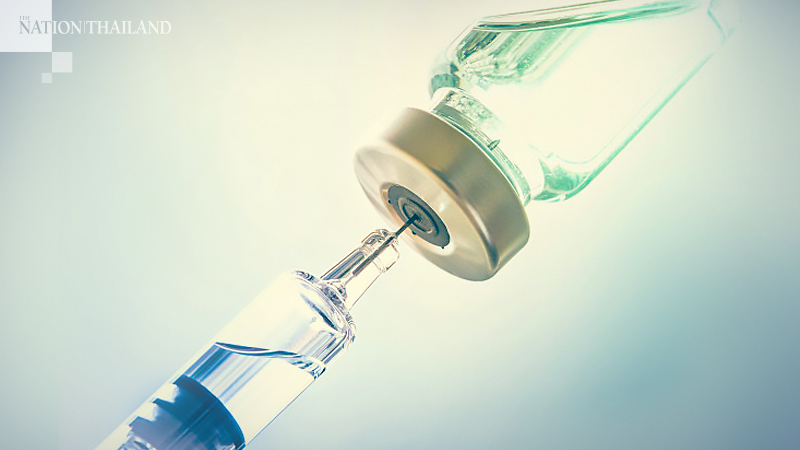
South Korea’s health authorities said Tuesday it is “encouraging” that US pharmaceutical firm Pfizer has made a breakthrough in developing a vaccine against the coronavirus, but warned against “hasty” expectations.
Pfizer announced Monday that its vaccine candidate developed with BioNTech was found to be more than 90 percent effective in preventing COVID-19, raising hopes for bringing forward an end to the global fight against the pandemic.
“As the virus situation abroad is too serious, there seem to be heightened expectations (about the results),” Sohn Young-rae, a senior health official, told reporters, adding it is just an interim result of phase 3 clinical testing. “The effectiveness of the vaccine remains to be seen and it is hasty to expect it to be effective.”
Korea reported 100 new coronavirus cases — 71 locally transmitted and 29 imported from overseas — in the 24 hours ending Monday at midnight, according to the Korea Disease Control and Prevention Agency.
The daily tally saw a triple-digit gain for the third consecutive day Tuesday, leading authorities to consider moving up the level of social distancing by a notch in the country’s five-tier social distancing scheme.
Currently, the lowest Level 1 social distancing rules are in place, with most antivirus restrictions lifted in most parts of the country. Exceptions are Asan and Cheonan in South Chungcheong Province, which are grappling with recent spikes in coronavirus cases.
“The country may revise up the social distancing scheme to Level 1.5 after two or three weeks, should the current trend continue,” Sohn said.
Sporadic clusters of infections emerged in connection with a family gathering and a private cram school. Cases linked to workplaces, nursing homes and private gatherings continue to rise.
Of Tuesday’s locally transmitted cases, the majority were in Greater Seoul — 32 in Seoul and 18 in Gyeonggi Province, which surrounds the capital. Four cases each were reported in Gwangju and South Chungcheong Province, with three each in Incheon and Gangwon Province.
The transmission route for 12.7 percent of cases reported for the past two weeks remained unknown as of Tuesday, according to the KDCA.
Korea reported 29 imported cases. Among them, 21 were identified while the individuals were under mandatory self-quarantine in Korea, with the other eight detected during the screening process at the border. Eighteen cases were from the Americas, six came from Europe and five were from elsewhere in Asia. Eighteen of those cases involved foreign nationals.
The number of COVID-19 patients in serious or critical condition here was 54.
Five more people died from the virus, bringing the death toll to 485. The overall fatality rate is now 1.75 percent.
So far, of the 27,653 people confirmed to have contracted the new coronavirus here, 25,160 have been released from quarantine upon making a full recovery, up 131 from a day earlier. Some 2,008 people are receiving medical treatment under quarantine.
The country carried out 14,761 tests in the past day. A total of 27,855 people were awaiting results.
Nov 10. 2020Assoc Prof Dr Major General Pham Ngoc Lang, the new president of the Vietnam Aerospace Association speaks at the association congress held in Ha Noi last week. — Photo courtesy of the association
By Viet Nam News/ANN
At the fourth congress of the Vietnam Aerospace Association last week, delegates agreed to study the possibility of establishing a non-profit Vietnam Aerospace Group.
The congress also approved the association’s plan for 2020-25. Under the plan, it will work to strengthen its capacity and enable its members to make the most of their potential and boost the development of the country’s aerospace industry.
It will also foster domestic and international tie-ups to keep abreast of advanced technologies around the world and conduct researches on aerospace application in key sectors and for defence.
The congress voted Assoc Prof Dr Major General Pham Ngoc Lang, former vice president of the Vietnam Academy of Science and Technology and VASA’s former vice president as its president for 2020-25. — VNS
Nov 10. 2020China’s official app for digital yuan is seen on a mobile phone next to 100-yuan banknotes in this illustration picture taken on Oct 16, 2020. [Photo/Agencies]
By CHEN JIA China Daily/ANN
Trial of DC/EP in Shenzhen shows tech innovation could strengthen monetary system
When China’s years-long efforts for a cashless society bore fruit in Shenzhen, Guangdong province, on Oct 12, some 50,000 lucky residents of the southern boomtown, winners of a lottery, received the first batch of DC/EP, or digital currency/electronic payment.
DC/EP was issued in the form of hongbao, or electronic red packets, worth 200 yuan ($29.9) each. Some of the winners recalled that 2,000 years ago, the reigning emperor of the Qin Dynasty (221-206BC) unified China for the first time by exhorting Chinese people to use a single currency. Back then, the only legal tender of the empire was made in gold or copper.
Although backed by the People’s Bank of China, the central bank, DC/EP still has to pass numerous complex tests before it can be introduced across the world’s most populous nation.
Because DC/EP is not from the private sector, but permitted by the nation’s law to be circulated within the national jurisdiction, it has attracted attention from all over the world. It marks a new chapter in the development of China’s financial technology, or fintech sector, which is already a pioneer in electronic payments, direct loan transfers, microcredit, peer-to-peer lending and innovative crowdfunding.
DC/EP is also in line with the proposals made for the formulation of the nation’s 14th Five-Year Plan (2021-25) that stress science, technology and innovation, analysts said.
A meeting of China’s top leadership in late October highlighted that innovation will be at the core of development of modern Chinese society. China will make major progress in developing core technologies in key areas and become a global leader in innovation. The nation’s economic and technological strengths are projected to rise significantly by 2035.
Some select cities besides Shenzhen have joined the digital yuan trials, in the run-up to the 2022 Winter Olympic Games in China. Yi Zhaoxia, a manager of Shenzhen Publication & Distribution Group’s store in Luohu district, where the DC/EP trial was launched, said he has updated the operating system on the point-of-sale terminals to deal in the digital renminbi.
Some of the lucky winners of DC/EP in Shenzhen spent the embedded money at Yi’s bookstore by scanning a QR code on their smartphones. It’s a drill they, as users of mobile payment tools Alipay and WeChat Pay, are familiar with.
The money in their digital red packets was paid by the district government’s finance department. The idea was to encourage consumption and offset the economic impact of the COVID-19 epidemic. Restaurants and supermarkets are among the 3,000 commercial establishments that are participating in the DC/EP trial. They offer related discounts to encourage consumers to use the digital renminbi.
DC/EP is different from both Alipay and WeChat Pay. While the government-backed DC/EP is the underlying currency, the two mobile payment tools are private-sector digital mechanisms to pay in yuan electronically. Hence, DC/EP would not sound the death knell for mobile payment tools.
DC/EP transactions entail smart contracts whose records are maintained, thereby ensuring fool-proof security. Alipay and WeChat Pay are more like digital wallets to keep a certain currency to make mobile payments. While DC/EP is digital cash itself, mobile payment tools are part of the country’s financial infrastructure, said a senior PBOC official.
So, in practical terms, DC/EP is not a competitor to Alipay and WeChat Pay. Rather, Alipay and WeChat Pay can function as digital wallets in which people can keep their DC/EP.
The public in China can exchange local currency from their bank accounts for DC/EP at certain qualified commercial banks, said Mu Changchun, head of the PBOC’s digital currency research institute.
The digital yuan is legal money available digitally. Conceivably, in the future, when adequate DC/EP is issued by the PBOC, and accepted at all POS terminals and elsewhere, people can use it just like paper notes and coins. Toward this end, the PBOC has started consultations with the public to revise a related law for clarity that “the renminbi has both physical and digital types”.
DC/EP could also serve as a back-up for electronic payments in the event of extreme situations like, say, a platform collapsing suddenly or when it needs to be closed at short notice, the PBOC official said.
“The digital currency could create value and we should start thinking about how to establish a new type of financial system through digital currency,” said Alibaba Group founder Jack Ma.
Alibaba’s Ant Group has participated in the central bank’s digital currency designing process and trials. In about 30 years, the digital currency will likely prove to be a very significant innovation for the world’s financial system. “The market should tell what kind of problems the digital currency could solve, not told by the regulators or research institutions”, and these issues include global economic growth, sustainable trade, green and inclusive development, said Ma.
The PBOC will spearhead the country’s digital currency issuance and management system, which will control the issuance quota, and conduct unified technical, security and application standards. More importantly, it will manage digital renminbi wallets, which will allow users to draw money from their electronic devices.
In this respect, DC/EP will be different from the distributed ledger used by private-sector, decentralized cryptocurrencies such as Bitcoin and Facebook-backed Libra, which are not allowed to be used in China as legal money, while trading in crypto assets was banned earlier.
Chinese monetary authorities chose a centralized design approach, which will record all transactions of the digital currency in the central bank’s own ledger.
China accelerated its research into digital renminbi last year as the central bank desired to stay ahead of evolving currencies and payment systems, amid talk that Facebook’s Libra and other popular cryptocurrencies could potentially disrupt existing monetary systems globally.
DC/EP trials have confirmed China as a forerunner in research and development of digital currency and also as a global leader in electronic payments, ahead of the United States and Europe.
A report jointly issued by the Group of Seven and the Bank for International Settlements outlined certain common principles and the key features a central bank digital currency, or CBDC, should have. One of the key features is that the new currency’s issuance should not compromise monetary or financial stability. Also, it should coexist with and complement existing forms of money.
The digital renminbi is significantly different from CBDC though. “The G7 attaches great attention to cross-border payments and responses to Libra, while the Chinese digital renminbi focuses on improvement of domestic retail payments system,” said Zhou Xiaochuan, former governor of the PBOC.
China’s “two-tier design framework” of the digital renminbi, which allows the central bank to deliver digital currency to commercial banks first, and then to retail users, will better solve the problem of “financial disintermediation”, said Fan Yifei, vice-governor of the PBOC.
A recent survey found that 80 percent of the world’s central banks are engaged in exploring CBDC and half have progressed past conceptual research into experimenting and running pilots.
Most of the central banks such as the European Central Bank and the US Federal Reserve are cautious about adopting digital currencies, including those issued by foreign counterparts. Central banks fear that use of digital currencies may threaten a country’s financial, economic and political sovereignty.
Adoption of digital currencies, they fear, could squeeze deposits in commercial banks as people may shift money into sovereign-backed central bank account for safety. Another concern is about loss of privacy as the central bank, if it so desires, could figure out how, where, when and what for the digital money is used.
The G7/BIS report said the speed of innovation in payments and evolution of various money forms mean that questions like where and how a central bank should play a direct role in a financial ecosystem, and what the appropriate role might be for private participation, are ever more urgent.
The latest G20 meeting involving finance ministers and central bank governors held in early October urged that no so-called global stable coins, a type of digital currency supported by bank reserves and for cross-border usage, “should commence operation until all relevant legal, regulatory and oversight requirements are adequately addressed through appropriate design and by adhering to applicable standards”.
Biden administration likely to benefit Korea’s eco-friendly cars, energy, bio
Nov 10. 2020Hyundai Motor’s EV Kona Electric (Hyundai Motor)
By Shin Ji-hye The Korea Herald/ANN
Hyundai, Hanwha, LG Chem, Celltrion, Samsung Biologics expected to boost business in US
As Joe Biden — who has made energy and climate policy a high priority — has won the US presidential election, Korean businesses related to eco-friendly cars, green energy and bio are expected to gain momentum in the US market.
Earlier, the new president-elect pledged a $2 trillion plan to invest in eco-friendly infrastructure. He also promised to rejoin the Paris Agreement on Climate Change, which Trump withdrew from, and to push for carbon emissions to reach “net zero” by 2050.
As for green cars, Biden plans install 500,000 electric vehicle charging stations across the US by 2030. Bus production is expected to be converted to carbon-free electric buses, with 3 million official state cars being replaced by electric vehicles.
In line with the new policies, the nation’s largest automakers, Hyundai Motor and Kia Motors, are expected to boost the development of electric and hydrogen vehicles to take more shares in their biggest export market. Their EV sales performance in the US is not yet strong with sales of 4,242 units from January to September, compared to 127,661 units on the overall global market.
“The overall pie of Hyundai Motor’s electric cars is expected to be bigger than it is now with Biden’s win, although Tesla currently has a strong influence in the US EV market,” said Lee Ho-geun, a professor of automotive engineering from Daeduk University.
“If Hyundai is able to rapidly raise sales volume to more than 50,000 units in the market, production costs will go down by around 30 percent, having a positive impact on new car development.”
Hyundai Motor and Kia Motors are already heavily investing in electric vehicles and hydrogen cars. In July, Hyundai Motor Chairman Chung Euisun declared that the automaker would become a global leader by achieving more than 10 percent market share with 1 million electric vehicle sales in 2025. The carmaker plans to mass-produce 23 models of electric vehicles by 2025.
Korean battery companies LG Chem, Samsung SDI and SK Innovation, which have a combined 35 percent global market share, are also expected to benefit from US policies favorable to electric vehicles. LG Chem has battery production plants in Ohio and Michigan, while SK Innovation is building a battery plant in Georgia.
Korea’s solar power industry is also expected to gain momentum in the US market.
Biden said he would expand energy storage systems, including the installation of 500 million solar panels and 60,000 wind turbines by 2035.
Companies, such as Hanwha Q Cells and LG Electronics, which have a high share in the US home and industrial solar market, are expected to benefit either directly or indirectly, industry watchers said.
As of the first half of this year, Hanwha Q Cells’ US residential solar market share was 22 percent, and the commercial solar market share was 21.5 percent. During the same period, LG Electronics ranked second with 12.8 percent of the US residential solar market and fifth with 5.1 percent in the commercial solar market.
Biden as president of the US is also expected to spell widened opportunities for Korean generic and biosimilar drugmakers such as Celltrion, Samsung Biologics and Samsung Bioepis.
The president-elect has vowed in his pledges that not only would he resurrect Obamacare, but that he would even expand on it to ensure health care for all.
Obamacare — officially the Affordable Care Act — seeks to subscribe 97 percent of the US population to state-subsidized health insurance plans.
Biden also said that he would enable 70 million more elderly persons to join an existing private health insurance plan by lowering the eligible age by five years from the previous 65 to 60.
In order to foot the bill for such bold moves, it is almost an inevitability to seek to lower the cost of medicines.
The pharmaceuticals and biopharmaceuticals industry cautiously forecast that Biden’s regime will put more emphasis on cheaper copy drugs than blockbuster original drugs that can cost 10 times more.
Korean companies such as Celltrion and Samsung Bioepis, who are gaining an edge in the global domain for their popular biosimilars, may have an upper hand in the coming years.
“Lowered drug prices raise red flags for a possible decrease in research and development investments, but there may be an increased interest for generics and biosimilars,” KTB Investment & Securities analyst Lee Hye-rin said in a report.
“Furthermore, digital health care encompassing early diagnosis, precision medicine and telemedicine is anticipated to be on the rise,” Lee said.
“More public health insurance will lead to a spike in demand for affordable Korean biosimilars,” Huh Hye-min of Kiwoom Securities said, seconding the sentiment.
Another aspect of the Korean health care industry that may get the wind in its sails is for COVID-19 test kits and masks.
Unlike Trump, Biden seeks to seriously address the pandemic.
Biden’s initiative to ensure adequate availability of test kits nationwide and mandate the wearing of masks is hoped to prolong the export spark for “Made in Korea” supplies.
Currently, there are 19 products from 17 companies being distributed in the US after acquiring the necessary approval from the US Food and Drug Administration. The industry is upbeat that more approvals will be granted.
[Philippine] Gov’t mulls $9-billion loan for purchase of vaccine
Nov 10. 2020Carlos Dominguez III (left) and Carlito Galvez Jr.
By Jovic Yee Philippine Daily Inquirer/ANN
The government is considering borrowing up to $9 billion (P433.3 billion) from the World Bank to help fund the country’s purchase of a potential COVID-19 vaccine as it starts negotiations with a leading pharmaceutical company for at least 3 million doses of the drug that will be given primarily to health workers.
Carlito Galvez Jr., COVID-19 national task force chief, said on Monday that the country would have to enter into “multilateral engagements with our credit partners,” such as the World Bank and the Asian Development Bank, since the allotted budget for the vaccine cannot be used to buy the drug in advance.
Galvez said Finance Secretary Carlos Dominguez III was already working on how much the government could borrow from the World Bank for the advance procurement of the vaccine.
‘A lot of funds’The government has set aside P10 billion and may get an additional P8 billion for vaccines, Galvez said. This is apart from the P25-billion standby fund for COVID-19 response under the Bayanihan to Recover as One Act, he said.
“Plus more or less the $5 to $9 billion that can be credited to our account, we already have allocated a lot of funds. This is why the President is very much confident that we already have the money, and he will still get more, for the vaccine,” Galvez said.
In September, the Department of Health (DOH) said some vaccine makers required advance payment for the Philippines to secure supplies. The procurement law, however, prohibits agencies from paying preordered items.
Galvez said the government was planning to buy an initial 50 million doses of a vaccine for 25 million Filipinos, mostly health workers and the elderly.
Earlier, British-Swedish drug maker AstraZeneca announced that if its large-scale Phase 3 clinical trials proved successful, it would ramp up manufacturing of its vaccine, which could be out in the market by January next year.
Galvez said the country’s vaccine expert panel gave AstraZeneca a “good evaluation,” but he did not provide details.
He, however, said the government had already met thrice with AstraZeneca and had been given assurance that the vaccine would be accessed by poor countries and sold at cost.
Of all the vaccines that have so far been evaluated by the panel, AstraZeneca’s is the cheapest at $5 per dose.
“Right now our negotiations [with AstraZeneca] are looking at accessing at least 3 to 5 million [doses]. But we’re working to [raise it to] at least 10 million doses for our [medical] front-liners,” he said.
Early 2022But Galvez sought to temper expectations, saying that despite these developments, there was a possibility that the bulk of the supplies needed by the country may not arrive till early 2022.
“As of this moment, if we can close negotiations within this year, there may be hope. Realistically, we may get 10 to 15 million [doses] between May and July,” he said.
Presidential spokesperson Harry Roque told a news briefing on Monday that the government hoped to be ready by March with its procurement processes, storage arrangements and early distribution plans for the vaccine.
Roque said the plans were based on a timeline submitted by Galvez.
He said the safety and efficacy of the vaccine must first be confirmed by the Food and Drug Administration and a panel of vaccine experts.
A decision must also be made whether to choose a vaccine administered in a single dose or two doses, as this would determine the type of cold storage that must be prepared.
It should also be decided if the vaccine must be procured from a single or multiple sources, Roque said.
He said the Department of Health (DOH), together with the national and local governments, would be in charge of implementing the nationwide vaccination program.
New infectionsOn Monday, the DOH logged 2,058 additional coronavirus infections, pushing the overall number of confirmed COVID-19 cases to 398,449.
Rizal province reported the most number of new infections, 103, followed by Davao City (81), Maguindanao (81), Quezon City (77) and Cavite (76).
Another 182 patients had recovered, bringing the total number of COVID-19 survivors to 361,784, the DOH said. The death toll, however, rose to 7,647 as 108 patients succumbed to the severe respiratory disease.
The recoveries and deaths left the country with 29,018 active cases, or 7.3 percent of the total, of which 82.7 percent were mild, 9.4 percent asymptomatic, 2.8 percent severe, and 5 percent critical. — WITH A REPORT FROM JEROME ANING INQ
Aung San Suu Kyi’s party says it has won enough seats to form government
Nov 10. 2020
Supporters of the National League for Democracy party react in front of the party’s headquarters in Yangon, Myanmar, on Nov 8, 2020. (PHOTO: AFP)
By Tan Hui Yee The Straits Times/ANN
BANGKOK – Myanmar’s ruling National League for Democracy (NLD) has won enough votes to form the government, the party said after Sunday’s general election which drew a large turnout despite the coronavirus pandemic.
“We have enough seats to form the government, or perhaps even more than needed,” NLD spokesman Monywa Aung Shin told The Straits Times on Monday (Nov 9).
Although official results have yet to be announced, he confirmed that NLD leader and state counsellor Aung San Suu Kyi successfully defended her Lower House seat in Kawhmu township.
President Win Myint, representing the NLD in Yangon’s Tamwe township, similarly beat off other challengers, he said.
The election was the second since Myanmar eased out of direct military rule in 2011 and was seen as a gauge of popular support for the NLD, which was widely expected to win.
Under a power-sharing system drawn up by the former ruling junta, 25 per cent of all Parliament seats are reserved for the military, which also controls the defence, home affairs and border affairs ministries.
In 2015, the NLD won almost 80 per cent of contested seats in the Upper and Lower Houses. But it has since disappointed ethnic minority allies, among other groups, which have tried to go their own in this election.
Voting was cancelled in some areas, including much of Rakhine state, where the military is waging war against the ethnic Rakhine Arakan Army.
Taking into account these cancellations, the NLD needs to win at least 322 Parliament seats this time so that it can govern without turning to appointees of the military or its proxy, the Union Solidarity and Development Party.
The election was held amid a surging Covid-19 outbreak which has killed at least 1,420 in Myanmar so far. The number of infections, which reached 61,377on Sunday night, have been climbing by some 1,000 or more each day.
Although the election commission was heavily criticised for its opaque decisions before the poll, observers noted that the actual event went fairly well.
The Yangon-based People’s Alliance for Credible Elections, in a report released on Monday, said the polls went generally smoothly despite the difficulties caused by the pandemic.
“Overall, the election-day process was peaceful, and no major incidents were recorded,” it said.
According to state media, 5,639 candidates and 87 political parties took part in the polls.
In the week before the election, powerful military chief Min Aung Hlaing publicly rebuked the election commission and the government, and refused to commit to honouring the election results. The tension only eased on Sunday when he said he would accept the people’s wishes.
“I feared something bad would happen,” Kachin state-based voter Jar Seng Bu,27, told The Straits Times: “But nothing happened after the election. I feelsecure now, and happy that I could vote.”
So widely anticipated is NLD’s triumph that thousands of exuberant supporters massed at the party headquarters in Yangon’s Bahan township on Sunday night, ignoring pleas from the party to disperse.
There are preliminary reports that the NLD managed to widen the majority it won in 2015.
Mr David Mathieson, an independent Myanmar researcher, said the preliminary results showed “there is a lot more patience out there than wemight have believed”.
“A lot of people who might actually recognise the shortcomings of the NLD as a government, dissociate Aung San Suu Kyi from that. To them, she can do no wrong,” he told The Straits Times.
“And if things have been slower, and gains much lesser than what many people havethought, then that’s because (to them) there is a long way to go.”
Ceremony proclaims Japan’s Crown Prince Akishino as first in line for throne
Nov 09. 2020The Emperor and Empress, Crown Prince Akishino and Crown Princess Kiko attend the Rikkoshi-Senmei-no-gi ceremony at the Imperial Palace on Sunday. (Pool photo / Jiji Press)
By The Yomiuri Shimbun & The Japan News Asia News Network
The Rikkoshi-Senmei-no-gi, the main ceremony to proclaim Crown Prince Akishino’s rise to first in line to the throne, was held at the Imperial Palace on Sunday morning.
“I want to think deeply about my duties as crown prince and fulfill them,” he pledged at the ceremony.
The Rikkoshi-Senmei-no-gi is the main ceremony of the Rikkoshi-no-rei, a state affair based on the Constitution. It is the first time in the history of Japan’s constitutional politics that a younger brother of the Emperor, instead of a son, has been publicly presented as the crown prince.
There were also another 46 people present, including Prime Minister Yoshihide Suga, the heads of the three branches of government and the heads of diplomatic missions.
Clad in his Korozen-no-Goho raiment, the Emperor said, “Today, I hereby perform the Rikkoshi-Senmei-no-gi ceremony for the proclamation of the crown prince, in accordance with the Imperial Household Law, and proclaim to those at home and abroad that Prince Akishino is crown prince.”
Crown Prince Akishino, dressed in the Oni-no-Ho garb of successive crown princes, expressed his determination.
After that, Suga expressed his congratulations on behalf of the people.
“The people of Japan have a deep respect for their Imperial Highnesses [Crown Prince and Crown Princess Akishino], who meet people on an intimate footing. It is a great pleasure that the Rikkokshi-no-rei is being held in this manner,” the prime minister said.
The government initially planned to hold the ceremony on April 19, but postponed it due to the spread of the novel coronavirus. As measures against infection, the number of participants at the ceremony was drastically reduced from the original of about 350 people, and the participants were also separated by about 1.5 meters.
Everyone except the Emperor and Empress, Crown Prince and Crown Princess Akishino, and Suga wore masks. Doors and shoji paper sliding doors were also opened to ventilate the Matsu-no-Ma well.
PM Modi says demonetisation helped in reducing black money, gave boost to transparency
Nov 09. 2020Prime Minister Narendra Modi had, on 8 November 2016, via a televised address announced that the currency notes of denominations Rs 500 and Rs 1000 would cease to be legal tenders. (Photo: Twitter/@BJP4India)
By The Statesman/ANN
The move led to nearly 86 per cent of the currency in circulation becoming null and void from the midnight of the announcement.
On the fourth anniversary of Demonetisation, Prime Minister Narendra Modi tweeted, “Demonetisation has helped reduce black money, increase tax compliance and formalization and given a boost to transparency. These outcomes have been greatly beneficial towards national progress. #DeMolishingCorruption.”
Prime Minister Narendra Modi had, on 8 November 2016, via a televised address announced that the currency notes of denominations Rs 500 and Rs 1000 would cease to be legal tenders with effect from the midnight and that new currency notes in the denominations of Rs 500 and Rs 2000 would be issued in exchange for the demonetised banknotes.
The move led to nearly 86 per cent of the currency in circulation becoming null and void from the midnight of the announcement.
Prime Minister Modi had said that the step was taken to check the black money, counter counterfeit cash, terrorism and promoting cashless economy by pushing digital transactions.
According to the Reserve Bank of India (RBI) data, more than 99 per cent, i.e. of the Rs 15.41 lakh crore worth cancelled notes, currency notes worth Rs 15.31 lakh crore were returned which is approximately 99.3% of the demonetised notes.
China’s foreign trade maintains upward momentum in October
Nov 09. 2020Aerial photo shows a ro-ro ship waiting to load China-made cars for export at a berth of Port of Lianyungang in Lianyungang city, East China’s Jiangsu province, Sept 7, 2020. [Photo/Xinhua]
By China Daily/ANN
BEIJING — China’s foreign trade sustained its upward momentum in October with notable growth and improved structure, official data showed Saturday.
The country’s foreign trade expanded 4.6 percent year on year in October, with exports jumping 7.6 percent year on year and imports climbing 0.9 percent in yuan terms, the General Administration of Customs (GAC) said in a statement.
In the first 10 months, China’s foreign trade of goods totaled 25.95 trillion yuan (3.91 trillion U.S. dollars), up 1.1 percent year on year, accelerating from an increase of 0.7-percent in the first three quarters.
General trade, involving longer production chains and better reflecting the country’s manufacturing strength, edged up 2.8 percent during the 10-month period, taking a larger share of the total trade of goods.
The Association of Southeast Asian Nations remained China’s largest trading partner during the period, followed by the European Union and the United States.
A visitor takes photos at the Trade in Services exhibition area during the third China International Import Expo (CIIE) in Shanghai, East China, Nov 5, 2020. [Photo/Xinhua]
Private companies played a significant role in propelling trade growth, with their foreign trade expanding by 10.5 percent in the first 10 months to account for 46.2 percent of the country’s total, GAC data showed.
Mechanical and electrical products took the lion’s share of the country’s exports, with their export value reaching 8.45 trillion yuan in the first 10 months, up 3.8 percent year on year.
Textile exports including masks jumped 34.8 percent year on year during the period, while auto exports slipped 6.7 percent.
China’s foreign trade has emerged from the woes of the COVID-19 pandemic in recent months thanks to government policies to stabilize the sector.
Commodities from South Korea are transported to a warehouse under full-time tracking at a cross-border e-commerce supervision center in Qingdao, East China’s Shandong province, June 3, 2020. [Photo/Xinhua]
To mitigate the impact of the pandemic on foreign trade firms, the country has introduced streamlined procedures at customs and incentives for cross-border e-commerce and other innovative trade forms.
In its latest effort to open its market and boost trade, the country unveiled measures ranging from shortening the catalog of technologies prohibited or restricted from import to strengthening intellectual property protection at the ongoing China International Import Expo in Shanghai.
The country also vowed to set up 10 demonstration zones to promote imports, with innovative regulatory systems and flexible trade models to be piloted at these zones.
As China implements a new development pattern of “dual circulation,” where the domestic and foreign markets can boost each other, with the domestic market as the mainstay, China will see the scale of foreign trade continue to expand, according to Han Wenxiu, an official of the Central Committee for Financial and Economic Affairs.
A painting in the Indian city of Mumbai yesterday showing the US’ President-elect Joe Biden and his second-in-command Kamala Harris. PHOTO: EPA-EFE
By Tan Dawn Wei, Nirmala Ganapathy, Et al. The Straits Times/ANN
While congratulatory messages for US President-elect Joe Biden pour in from across the globe, politicians from one country have stayed conspicuously silent.
China’s leaders held back from commenting on the results of the United States election, and Chinese state media largely reported just the news of Mr Biden’s win.
But the hawkish Communist Party-backed Global Times took aim at the US in two editorials over the weekend.
One described the “negative effects of indulging and intensifying social divisions” resulting in “a destructive tipping point”, while the other said “the balance of power in the election shows that the serious social division has jeopardised Americans’ judgment”.
China-US ties have worsened significantly in recent years, with tensions bubbling on multiple fronts, including the pandemic and tussles over trade and technology.
Others around the world were more upbeat, with government leaders expressing hopes of strengthening ties with Mr Biden’s administration and political watchers predicting a return to more congenial diplomacy.
“Congratulations @JoeBiden… on your spectacular victory!” Indian Prime Minister Narendra Modi tweeted on Sunday. “I look forward to working closely together once again to take India-US relations to greater heights.”
In a tweet to Vice-President-elect Kamala Harris, referencing her South Asian roots, he wrote: “Your success is path-breaking, and a matter of immense pride not just for your chittis (aunties), but also for all Indian Americans.”
Ms Harris had spoken in August of her Tamil-origin mother and “chittis” when accepting the Democratic Party’s nomination.
Malaysian Prime Minister Muhyiddin Yassin noted: “The American voters have decided decisively in endorsing Mr Biden… for his leadership and vision.”
Thai Premier Prayut Chan-o-cha congratulated Mr Biden and Ms Harris on the trust they had earned from the American voters, while Philippine President Rodrigo Duterte said he was “looking forward to closely working” with Mr Biden’s new administration.
Mr Duterte had previously said he preferred to see Mr Donald Trump re-elected, having been criticised by US Democrats over his drug war and crackdown on civil liberties.
Japanese Prime Minister Yoshihide Suga said he looked forward to strengthening the Japan-US alliance and ensuring peace and prosperity in the Indo-Pacific.
Japanese media cited government sources as saying that Mr Suga hopes to meet Mr Biden in the US as soon as possible after he is sworn in on Jan 20.
South Korean President Moon Jae-in expressed “great expectations” for the future of the country’s ties with the US.
Singapore Institute of International Affairs senior fellow Oh Ei Sun said Mr Biden’s win will usher in a more liberal administration for the US, with increasing domestic concerns such as affirmative actions and immigration.
“Internationally, it would mean a less transactional, more predictable America which once again embraces multilateralism and free trade,” Dr Oh said.
Dr Dinna Prapto Raharja of Indonesia’s Bina Nusantara University agreed, saying: “Under Trump, the US has shunned several multilateral diplomacy forums. We expect this to reverse.”
Public policy lecturer Huynh The Du of Fulbright University in Vietnam said: “Biden is very experienced… Other countries want some kind of leadership from the US, to uphold a world order. The Biden leadership may be clearer than the Trump administration on this aspect.”

 Assoc Prof Dr Major General Pham Ngoc Lang, the new president of the Vietnam Aerospace Association speaks at the association congress held in Ha Noi last week. — Photo courtesy of the association
 ![China's official app for digital yuan is seen on a mobile phone next to 100-yuan banknotes in this illustration picture taken on Oct 16, 2020. [Photo/Agencies]](https://media.nationthailand.com//images/news/2020/11/10/30397656/800_253abee4858873e.jpeg?v=1604976057) China’s official app for digital yuan is seen on a mobile phone next to 100-yuan banknotes in this illustration picture taken on Oct 16, 2020. [Photo/Agencies]
China’s official app for digital yuan is seen on a mobile phone next to 100-yuan banknotes in this illustration picture taken on Oct 16, 2020. [Photo/Agencies]  Hyundai Motor’s EV Kona Electric (Hyundai Motor)
  Carlos Dominguez III (left) and Carlito Galvez Jr.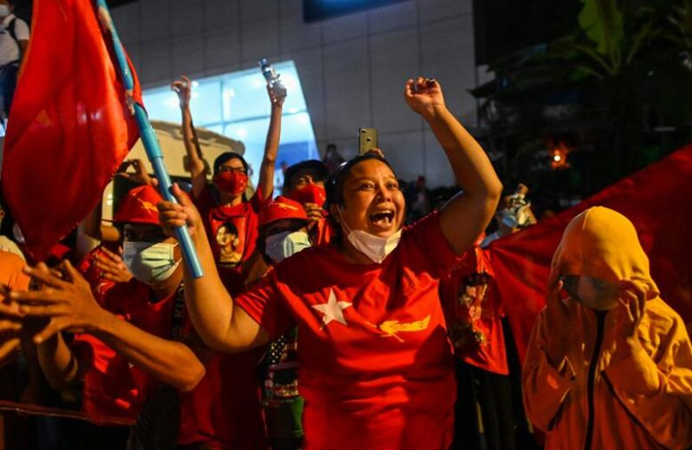
 The Emperor and Empress, Crown Prince Akishino and Crown Princess Kiko attend the Rikkoshi-Senmei-no-gi ceremony at the Imperial Palace on Sunday. (Pool photo / Jiji Press)
  Prime Minister Narendra Modi had, on 8 November 2016, via a televised address announced that the currency notes of denominations Rs 500 and Rs 1000 would cease to be legal tenders. (Photo: Twitter/@BJP4India)
 ![Aerial photo shows a ro-ro ship waiting to load China-made cars for export at a berth of Port of Lianyungang in Lianyungang city, East China's Jiangsu province, Sept 7, 2020. [Photo/Xinhua]](https://media.nationthailand.com//images/news/2020/11/09/30397593/800_e2c4fb75413b5dd.jpeg?v=1604890883) Aerial photo shows a ro-ro ship waiting to load China-made cars for export at a berth of Port of Lianyungang in Lianyungang city, East China’s Jiangsu province, Sept 7, 2020. [Photo/Xinhua]
Aerial photo shows a ro-ro ship waiting to load China-made cars for export at a berth of Port of Lianyungang in Lianyungang city, East China’s Jiangsu province, Sept 7, 2020. [Photo/Xinhua] 


