Metropolitan Electricity Authority (MEA), Provincial Electricity Authority (PEA), and Electricity Generating Authority of Thailand (EGAT) invite the public to learn how to save electricity through a short video clip, which can be viewed at facebook pages of the three electrical authorities. Viewers could also win special gifts.
Here’s how you can save electricity:
– Adjust the air conditioner’s temperature to 26-27 degrees Celsius, and use an electric fan to help disperse the coolness. – Use only electrical appliances with No-5 labelling, which indicates energy efficiency. – Turn off the light when leaving the room, and unplug all appliances when finish using. – Switch to LED lamps which are brighter, more energy-efficient, and environmentally friendly.
Deputy Prime Minister and Public Health Minister Anutin Charnvirakul presided over “Thailand Moving Together: Hug, Eat, Fly, Travel, Live Together” meet and greet session and hosted a public hearing with operators in tourism and transport sectors examining ways to make the transition to the endemic phrase of Covid-19, allowing increasing numbers of tourists to enter the kingdom.
Easing of restrictions aims to drive the economy and enable the public to live safely with Covid backed with sufficient public health facilities and support.
Anutin was joined by: Saksayam Chidchob, Transport Minister; Siraphop Duangsodsri, Advisor to the Minister of Tourism & Sports; Dr. Kiattiphum Wongrachit, Permanent Secretary, Ministry of Public Health; Chayatham Promsorn, Permanent Secretary for Ministry of Transport; and Chote Trachu, Permanent Secretary of Ministry Of Tourism & Sports.
“The tourism and hospitality sector in Thailand has lived with the adversity caused by Covid-19 and closing of the country for over two years,” the Public Health Minister reflected. “The Ministry of Public Health along with the Ministry of Tourism & Sports and Ministry of Transport are working closely to provide solutions to rebalance pandemic controls to facilitate the opening of the country. Currently, the Covid-19 situation is improving with steadily decreasing numbers of cases and death. This is thanks to cooperation by the public and business owners in following the preventive measures and other restrictions, including lockdown measures, services shutdown, social distancing area provision, ventilation system improvement, vaccination provision for staff, and Covid-testing for staff. These collaborations enable the Ministry of Public Health to further propose other easing policies to facilitate tourism operators.
“From 1 May 2022 onward, the government stopped the Test & Go scheme for fully-vaccinated tourists to enter the kingdom freely. Therefore, increasing numbers of tourists are travelling to Thailand, catalysing positive economic recovery.
“As the transition from pandemic to endemic is expected to see rising numbers of tourists in the kingdom, the Ministry of Public Health therefore organised a hearing with 22 representatives of associations and departments including tourism, hospitality, restaurants and hotels. The hearing and solution session aims to identify appropriate public health measures to propose to the Center for Covid-19 Situation Administration (CCSA) conference to enable convenience and affirmation for tourism and transport sectors and support Thai people to resume normalcy and living with Covid-19 safely.
“The hearing session shows agreement between government and business sectors in proposing guidelines for Thailand to overcome the crisis on the basis of public safety while boosting tourism and the economy. Unnecessary restrictions are being eased to drive transition to the endemic phase. Advance policy notification from the Ministry of Tourism is necessary for business operators to prepare and adjust their plans. The Ministry of Transport and other relevant agencies are requested to facilitate tourism convenience speedily. The Ministry of Public Health is required to provide medical and public services as well as relaxing measures and keeping the public appraised of and compliant with the ongoing situation. For its part, the Ministry of Public Health has already provided full medical support, including beds, medicines, medical professionals, medical devices, and personal hygiene protection to tackle the Covid outbreaks.
“While social measures have been relaxed, the most vital factor is cooperation from business owners to understand and follow the 2 U Policy which includes: Universal Prevention; infection prevention with social distancing, washing hands, wearing masks in indoor spaces and crowded areas, and testing when contacting high risk groups, and; Universal Vaccination; ensuring availability of booster shots to elevate safety levels. When all requirements are met, and vaccinations are fully boosted as advised, the country opening for tourists need no longer raise concerns about a repeat outbreak. Even if infection occurs, severe symptom or loss of life are not major threats.
“The Ministry of Public Health adheres to the HEALTH FOR WEALTH framework which includes cultivating the public health system to support Thailand to develop and grow stronger economically. The vision is not one dimensional: Thailand’s public health system helps boost and promote business and investment. Herbal and cannabis product development is one of the models used to promote domestic medical treatment and exports while enhancing the country to become a world medical hub that attracts health tourism travellers.
“The Ministry of Public Health believes that strong healthcare development is a key-driver of positive economic and social development. Thai people’s safety is ensured by having quality public health,” said Anutin.
Thai Airways International (THAI) said on Tuesday it may exit its rehabilitation period sooner than the 2025 deadline granted under bankruptcy protection.
THAI’s head of finance Chai Iamsiri said the national carrier’s performance has improved following restructuring of the organisation and costs.
“The company may be able to exit the rehabilitation programme sooner than initially planned. But I can’t tell how soon because there must be steps to be taken first,” Chai said.
The Cabinet gave the green light for THAI to undergo rehabilitation under the Bankruptcy Act in May 2020, while the airline’s protection filing was granted by a court in June last year. Chai said THAI’s initial five-year rehab plan can be extended twice by a year each time, meaning a maximum rehab period of seven years.
He added that the airline may not have to seek a new loan of up to Bt25 billion as earlier expected because its cashflows have increased.
THAI filed for bankruptcy protection after reporting total debts of 245 billion baht at the end of 2019. The rehabilitation programme requires the airline to halve its 30,000-strong workforce and cut costs to 53 billion baht this year.
The Stock Exchange of Thailand has suspended trading in THAI shares, with the airline handed a deadline of 2025 to resolve the problems that triggered suspension.
Chai said the airline was committed to improving performance so that trading could resume before the 2025 deadline.
The Queen Sirikit National Convention Center (QSNCC) has announced the launch of the “Hotel Partnership” program, which is designed to take service to a new level.
QSNCC, in collaboration with 13 leading hotel partners in Bangkok and tourism provinces, offers special hotel benefits and services to event organizers and participants at the center. As a celebration of the new QSNCC’s opening this September, guests can expect a superior experience and the highest level of satisfaction.
The Hotel Partnership program is one of QSNCC’s active customer-focused marketing strategies that aim to provide more than just a venue service. For organizers and participants working with the center, QSNCC and hotel partners offer a great variety of benefits and privileges, including complimentary transportation services between QSNCC and hotels, complimentary MRT or BTS pass, special rate for room and transportation to and from the airport, check-in service at QSNCC, hotel loyalty awards, and early check-in and late check-out privileges.
“The Hotel Partnership program was born out of our intention to answer all dimensions of customer needs from the event area, technology, safety environment, and accommodation,” said Sakchai Pattarapreechakul, CEO of N.C.C. Management & Development Co., Ltd., the operator of QSNCC. “In the first phase, we have partnered with nine leading Bangkok hotels that can provide over 3,500 rooms and four hotels in tourism provinces which offer some 680 rooms. In addition, we have created special packages to meet the needs of QSNCC customers and offer a superior experience.”
This collaboration is supported by leading hotel partners in Bangkok and tourism provinces, including:
Nine hotels within a 5-kilometer radius of the Queen Sirikit National Convention Center (Satellite Hotel), namely 1) Bangkok Marriott Marquis Queen’s Park, 2) Hilton Sukhumvit Bangkok, 3) The Athenee Hotel, a Luxury Collection Hotel, Bangkok, 4) W Bangkok, 5) The Okura Prestige Bangkok, 6) Le Méridien Bangkok, 7) DoubleTree by Hilton Hotel Sukhumvit Bangkok, 8) Modena by Fraser Bangkok Hotel Residences, and 9) Holiday Inn Express Bangkok Sathorn.
Four hotels in tourism provinces, namely 1) Sheraton Samui Resort, 2) Meliá Koh Samui, 3) Vana Belle, a Luxury Collection Resort, Koh Samui, and 4) Meliá Chiang Mai.
The Hotel Partnership program will boost service efficiency and customer satisfaction. It will also assist a large number of international visitors who will organize or attend events at the Queen Sirikit National Convention Center. Since May 1, the Thai government has discontinued the Test & Go scheme, positively impacting the growth of the MICE industry, which has severely hampered by Covid-19.
To learn more about special offers from Queen Sirikit National Convention Center partner hotels, visit www.qsncc.com.
Bangkok, June 17, 2022 – B.Grimm Power PCL (BGRIM) announced a reshuffle of its senior management to support its sustainable growth plan.
The shakeup, endorsed by BGRIM’s Board of Directors on June 15, also saw the creation of a new unit that will drive the strategy of pursuing investment, innovation and sustainability.
Nopadej Karnasuta has been entrusted to lead the new unit that was mandated with three main missions as follows:
* Accelerating investment in new businesses by exploring opportunities for cooperation with domestic and international partners including start-ups or new generation investors
* Expediting the development of integrated energy innovations such as Smart Energy, EV, Energy Trading and Smart Grid to deliver the best value and quality for customers in the whole industry and extending to users of the company’s new solutions in the future
* Continuing operations towards a sustainable organisation and achieving Net-Zero Emission by 2050 by means of investment and organisational restructuring and transformation
The management reshuffle which took effect on June 16 saw Mr Nopadej being appointed Senior Executive Vice President – Investment, Innovation and Sustainability Division; Siriwong Borvornboonrutai, as Executive Vice President – Finance and Accounting; Cherdchai Yiwlek as Executive Vice President – Business Service and Project Development; and Saroche Arunpairojkul, First Senior Vice President – Customer Relations and Operation Management 1.
Dr. Harald Link, President of BGRIM, said the new senior management line-up will support the company’s continuous and sustainable business expansion and in line with its ‘Empowering the World Compassionately’ vision that is geared towards investing in new businesses and the development of the energy business to be modern and comprehensive.
Ms Siriwong, who succeeded Mr Nopadej as the CFO, graduated from Thammasat University and University of Illinois at Urbana-Champaign. She has over 25 years of experience in financial management and accounting in banking and industry sectors.
She has been instrumental in making BGRIM a company recognised by domestic and foreign investors through various investment projects and fund raising. Ms Siriwong is poised to enable BGRIM to continue to grow strongly and sustainably.
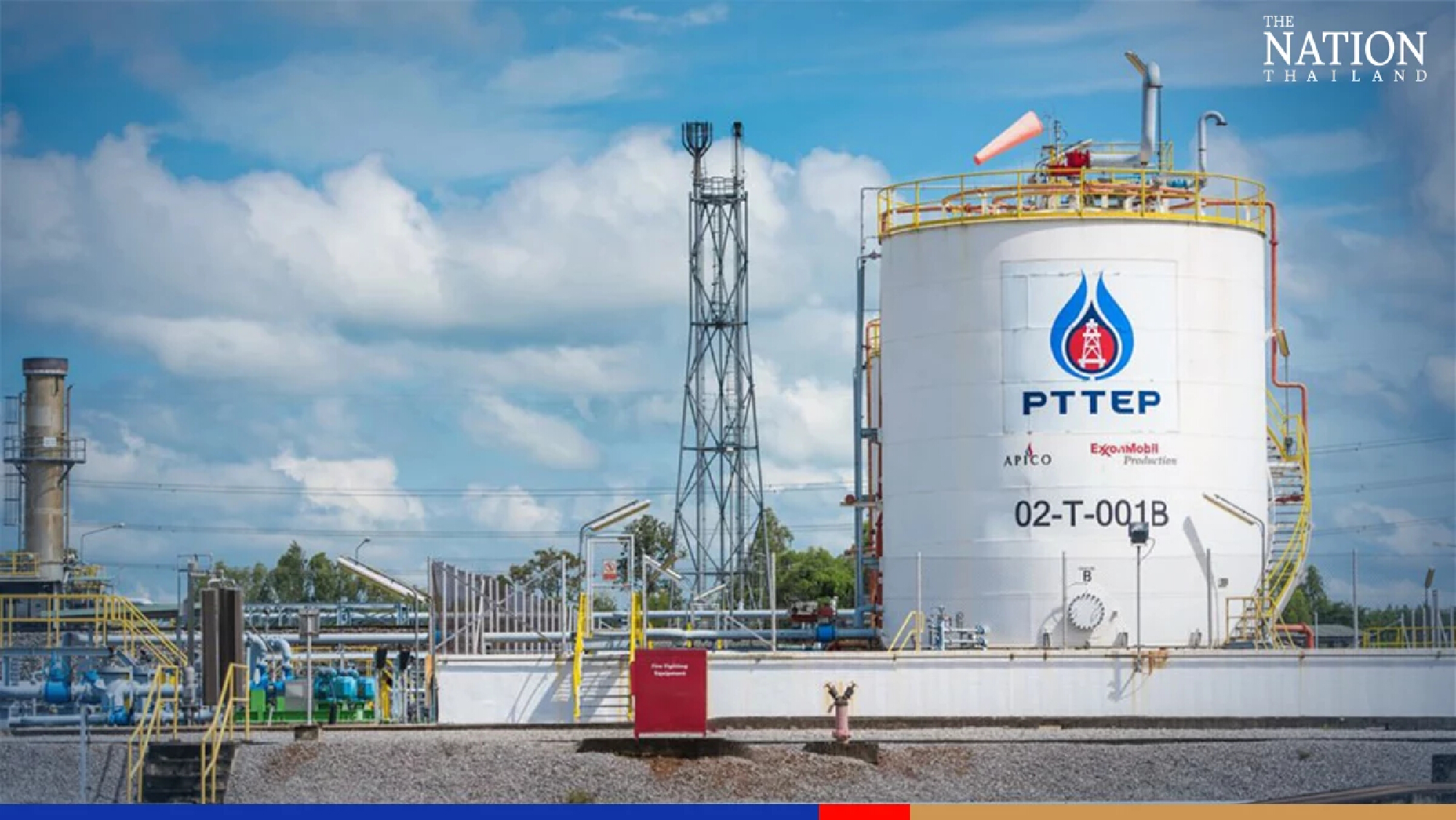
The Petroleum Refining Industry Club on Monday dismissed as untrue a claim by Kla Party secretary-general Korn Chatikavanij that Thai refineries were enjoying a high margin of over 8 baht per litre of oil.
The club, which is part of the Federation of Thai Industries, issued a statement that Korn was simply presenting a select part of the information to cause public misunderstanding. It clarified that refining margin had risen by just 0.47 baht per litre, and not by 10 times as claimed by Korn.
Korn had earlier called on the government to ask refineries to reduce their “high refining margin” to bring down oil prices. He proposed that the government slap a “windfall tax” on the refineries as they were enjoying an up to 8.56 baht margin per litre after global oil prices rose. Korn said the refining cost should not change, so the claim of refining cost was an “imaginative cost.
Korn pointed out that gross refining margin rose from 0.87-0.88 baht per litre in June 2019 and in 2020 to 8.56 baht in June this year, up 10 times.
But the Petroleum Refining Industry Club said the figures cited by Korn were not the market gross refining margin and Korn’s figures have not taken into account several other costs.
The club said that Korn had selected figures from the period of Covid-19 restrictions when oil consumption was very low, and compared them with figures when oil prices have soared.
The club clarified that refining margin in the first quarter of this year rose just by 0.47 baht per litre compared to the period before the Covid-19 pandemic.
The club explained that the refining margin was affected by several factors, including crude oil’s premium value — the difference between the crude oil price and the reference price of refined oil — transportation costs, the cost of fuel used in refining, the ever-changing labour cost and the investment cost in machinery to improve refining quality.
The club also pointed out that refineries could not set the refining margin on their own as the margin was calculated from the average value of all types of refined oil that is sold in proportion to the refining production. The average price will be deducted from the price paid for crude oil, which includes premium value, transportation cost and insurance cost.
The club added that the cost of fuel used and cost of loss during the refining process should be also be taken into account in determining the margin. The refining margin would fluctuate depending on global oil prices and demand and supply as well as the reserves of oil, the club added.
The Tourism Authority of Thailand (TAT) expects most of the 2.5 million government officials to take advantage of the “Rath Tour Tua Thai” travel scheme and generate up to 50 billion baht in revenue.
This prediction was made on Monday by TAT deputy governor Thapanee Kiatphaibool in reference to the scheme proposed by Tourism and Sports Minister Phiphat Ratchakitprakarn.
Thapanee, who oversees domestic tourism marketing, said TAT is drafting details for the National Tourism Policy Committee to endorse before the minister proposes the project to the Cabinet.
Phiphat revealed the plan on Sunday, saying it would be similar to the “Work from Anywhere” campaign that the government encouraged private firms to adopt to promote local tourism.
He said the Rath Tour Tua Thai (Government Officials Travel around Thailand) will encourage state officials to go on a two-day “workation” to other provinces. The scheme will run from July to December this year.
Thapanee said state officials will be encouraged to visit 55 secondary-tier provinces instead of key destinations in a bid to help distribute income.
She added that each government agency can set its own conditions requiring officials to travel to provinces where they can help promote community tourism or promote local festivals and unique provincial characteristics as soft power.
Thapanee said each official is expected to spend about 4,100 baht per trip and if 90 per cent of the 2.5 million officials take a workation, they will generate some 50 billion baht in revenue.
She believes this scheme will receive a warm welcome because government officials did not suffer from salary cuts during the pandemic, unlike their counterparts in the private sector.
Commerce Minister Jurin Laksanawisit led a trade delegation to Denmark and Iceland to introduce Thai products, promote the Kingdom and boost the country’s customer base.
On Saturday, Jurin visited Copenhagen’s ILLUM luxury shopping mall and met its owner.
“ILLUM will let us set up in-store promotion booths for Thai luxury products,” Jurin said. “So, I asked the trade representatives to select high-end products that can be put on display here.”
Later in the day, he visited the MANY supermarket, which has more than 100 outlets in Denmark and 200 worldwide.
Jurin said MANY sells Asian food products, but there are not many Thai products on the shelves. Since the Danish supermarket chain gets its supplies from the Netherlands, Jurin instructed the delegation to contact the Dutch suppliers and encourage them to export more Thai products.
“We plan to open a direct channel for Thai products and put them on the shelves without changing labels or going through middlemen, which will help reduce costs,” the minister said. “The first batch will include ready-to-eat meals, seasoning, organic foods and fruits. These should be on the shelves in the next three to six months.”
On Sunday, Jurin took the delegation to Reykjavik’s Kronan supermarket, which has 23 branches across Iceland and sells products imported from China, Vietnam and Thailand.
“The supermarket buys Thai products from traders in the UK, Germany and the Netherlands, so the choices are very limited. Thai products available at Kronan are coconut, seasonings and frozen meals, but the choices are limited,” Jurin said. “This is a good opportunity for us to start exporting Thai products directly to Kronan. We have spoken to the owner and they have allowed us to hold in-store promotions.”
Jurin expects to add coconut milk, ready-to-eat meals, fruits and organic foods to the shelves at Kronan and has instructed the Department of International Trade Promotion to coordinate with manufacturers, exporters and the Icelandic supermarket to add Thai products to the shelves as soon as possible.
The baht opened at 35.23 to the US dollar on Monday, weakening from Friday’s close of 35.21.
The Thai currency is expected to move between 35.15 and 35.35 to the dollar during the day and between 34.90 and 35.50 during the week, Krungthai market strategist Poon Panichpibool predicted.
He added that the baht may fluctuate and weaken to test its resistance level at 35.40 to the dollar because foreign transactions are flowing out of the country. This is because the market is in a risk-off state, while the dollar is not weakening easily until the market is confident that the US Federal Reserve will not increase the interest rate too high.
He added that the baht’s weakening may be limited if the gold price rebounds, which will encourage investors to sell gold.
The baht may also not weaken to the new resistance level of 36 to the dollar unless a new lockdown is enforced in China, forcing investors to dump assets in emerging Asian markets.
He speculated that the dollar may strengthen as the market fluctuates due to concerns over a recession.
However, the dollar may weaken if the Fed does not signal a high increase in interest rates or if the market is in a risk-on state.
Poon advised investors to use hedging tools like options to manage their risks in the highly volatile currency market.
A leading academic has urged the Bank of Thailand (BOT) to delay any policy rate rise until the last quarter, warning that a hasty decision could trigger economic slowdown.
Montree Socatiyanurak, director of the National Institute of Development Administration (Nida)’s advanced management programme, said the BOT’s Monetary Policy Committee (MPB) was caught in a dilemma. The MPB must decide whether to raise the rate to halt the baht’s slide, or retain the current rate to facilitate exports but at the cost of higher costs for energy imports.
Montree said the Thai economy is growing sluggishly at 1 to 1.5 per cent due to external uncertainties plus rising domestic inflation, manufacturing costs and consumer goods prices, as well as the possible interest rate rise.
On June 8, the MPC voted 4:3 to retain the current policy rate of 0.50 per cent per annum. However, the fact that three MPC members voted for 0.25 per cent rise led to expectation of rate hikes in the second half of this year to combat high inflation.
Montree said inflation rose from 5 per cent early this year to 7.1 per cent in May – the highest in 13 years – driven mainly by higher prices for energy and food.
He said economic growth accounted for only 2 per cent of inflation, with about 7 per cent coming from rising costs in the business sector.
Since inflation was being driven by costs rather than economic growth, raising the policy rate would not do much to contain it, Montree added.
The MPC has to consider various economic impacts before making its policy rate decision, said Montree.
Raising the policy rate would not bring down energy and food prices, but it would support the weakening baht, which has fallen to Bt35 per dollar. And this would help Thailand pay for oil imports.
However, retaining the policy rate would lead to further baht depreciation, meaning Thailand would have to exchange more baht for dollars to buy oil – affecting the country’s current account balance.
Leaving the policy rate untouched would also hit the baht as foreign investors would move their money to the US where yields are higher after the policy rate was raised by 0.75 percentage points last Wednesday.
A weak baht would, however, help exports and tourism as foreign visitors would have more money to spend in the Kingdom.
“So, the MPC will have to consider several factors and get the timing right,” Montree said.
He warned that hiking the rate too soon would cause bank interest rates to rise across the board, adding pressure to people with high household debts.
He added that to prevent economic slowdown, policy rate hikes should be delayed until the last quarter when tourism will have recovered, incomes will be higher and the business sector will have more liquidity.






 The club also pointed out that refineries could not set the refining margin on their own as the margin was calculated from the average value of all types of refined oil that is sold in proportion to the refining production. The average price will be deducted from the price paid for crude oil, which includes premium value, transportation cost and insurance cost.