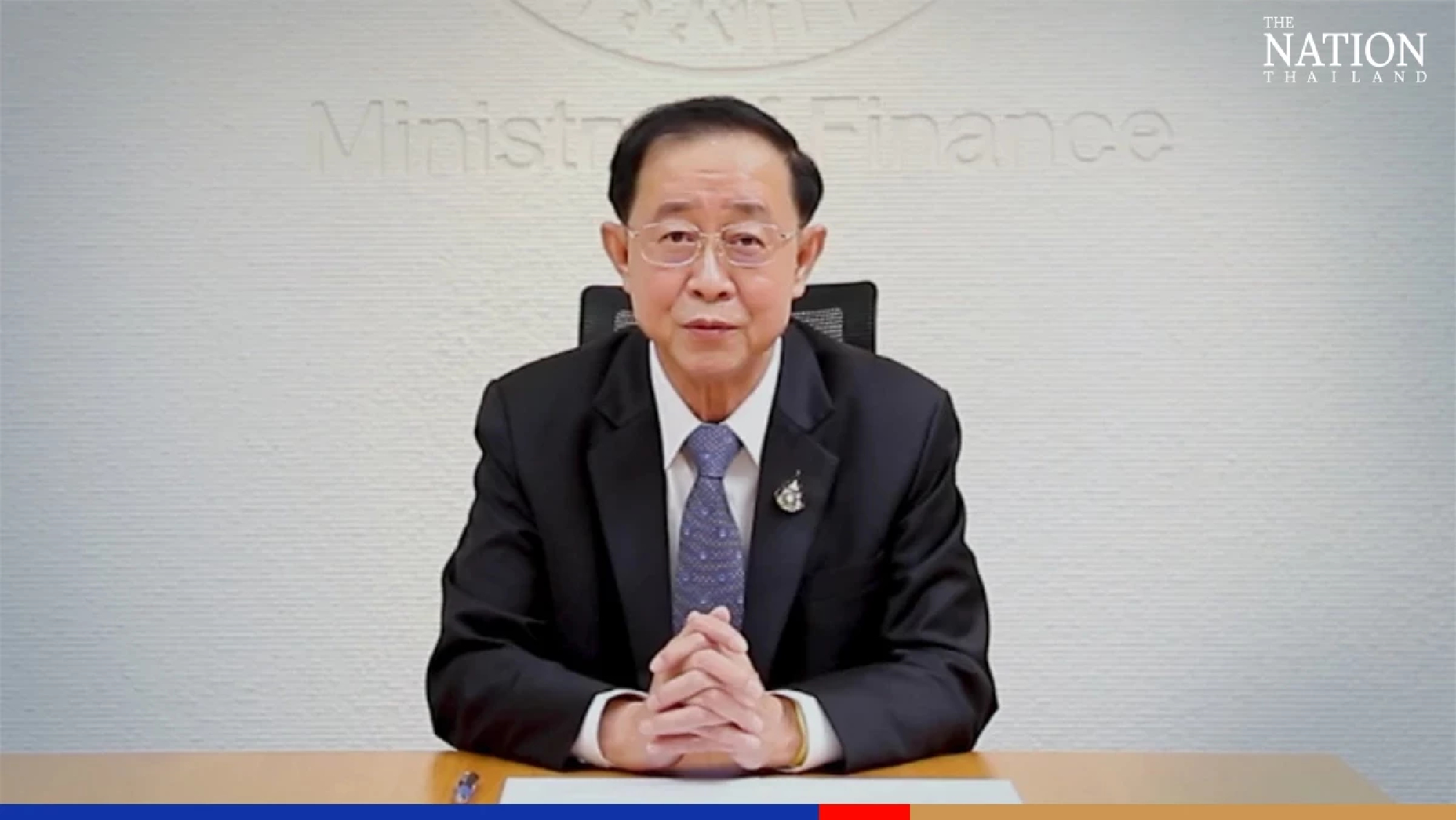
Finance Minister Arkhom Termpittayapaisith on Monday denied reports on Thai websites that the government would lower the cost-of-living subsidy in a Covid-linked scheme from 50 per cent to 25 per cent.
Several websites reported on Monday morning that the Finance Ministry would alter the Khon La Khrueng (half-half) scheme to Khon La Siew (75:25) scheme after the “Rao Chana” (We win) Facebook page of the ministry made a post on Sunday that the Khon La Khrueng scheme would end soon.
“Get ready to say goodbye to Khon La Khrueng and meet ‘Khon La Siew’. The government will pay 25 per cent and the people will pay 75 per cent,” the post states. The post remained on Monday afternoon even after Arkhom denied such a plan.
Under the Khon La Khrueng scheme, which has been launched in four phases so far, the government transfers a sum of money to the G Wallet account of a recipient. The provided sum can be used to subsidise half the price of goods and services the recipient pays for, with the subsidy which is limited to THB150 a day. This means when a subsidy recipient pays THB300 for goods or services, the amount in the G Wallet will be deducted by THB150 and the money of the buyer will be deducted by THB150.
Arkhom told reporters on Monday afternoon that the Finance Ministry had not yet decided on whether to launch another phase of the subsidy scheme.
He said the ministry has budget constraints and the country’s economic indicators are improving.
“It has to be considered whether those who have regular income and those with daily income will have more income after the economy has improved. This is because when the economy has improved, this kind of stimulus measure will be reduced,” Arkhom said.
“It will be Khon La Khrueng Phase 5. I didn’t say Khon La Siew. But It has to be first considered whether there should be a Phase 5.”
The finance minister affirmed that the fourth phase of the Khon La Khrueng will end as scheduled on April 30 and there will be no new measure starting on May 1 because the government will have to assess the situation and whether the subsidy measure was required.
Thailand exported 93,840 cars in March, down by 10.21 per cent year on year due to a shortage of parts and semiconductors for some car models, the Federation of Thai Industries (FTI) said on Monday.
“However, car export in March rose 18.11 per cent compared to February,” FTI vice president and spokesman Surapong Paisitpattanapong said.
In the first quarter of 2022, Thailand exported 243,124 cars, down 5.81 per cent year on year. However, the value of cars and components exported in the first quarter came in at 217.60 billion baht, up 2.82 per cent year on year, he added.
A shortage of parts and semiconductors had triggered a global decline in the manufacturing and export of cars, he said.
Surapong also said it is necessary to monitor the Russia-Ukraine war as it will intensify a shortage of parts and semiconductors.
Surapong explained that if the war is prolonged, then the global production of cars will drop by about 2.8 million vehicles.
Meanwhile, some automakers have also stopped taking reservations for electric vehicles due to the Covid-19 lockdown in Shanghai, where many large semiconductor manufacturers are located, he added.
Thailand manufactured 172,671 cars in March alone, up 6.25 per cent year on year. Of them, 87,133 were produced for the local market, up 32.16 per cent year on year.
He added that 480,078 cars were manufactured in the first quarter, up 3.06 per cent year on year, while 87,245 were sold locally in March, up 9.1 per cent year on year. Local first-quarter sales came in at 231,189 cars, up 19.09 per cent year on year, and 448,147 motorcycles, up 2.92 per cent year on year.
He put the surge in local sales down to the easing of lockdown and the launching of government measures to relieve the Covid-19 fallout. He said these government schemes resulted in more cash going into circulation and a boost in people’s purchasing power.
However, he added, it was necessary to monitor the Covid-19 crisis and surging product prices as well as household debts as they will make the economy slow down, he added.
“Cannabis” is regarded as among Thailand’s potential economic crops, with the goal of increasing revenues and income distribution for both organizations and small households, thereby elevating the country’s economy to a greater level.
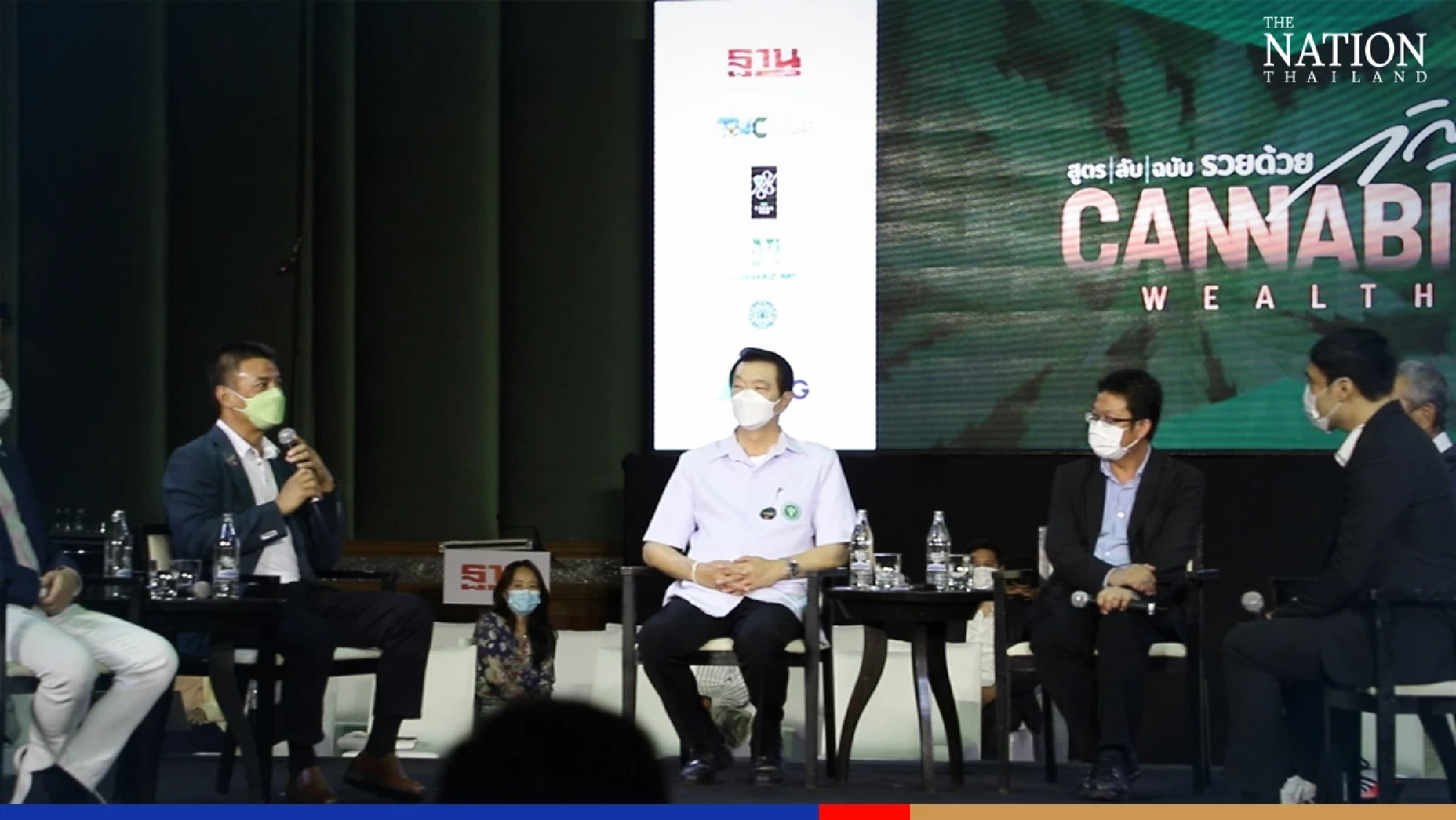
The government is working on ways to help the “cannabis” industry generate more revenue for the “grassroots economy” while reducing national costs, Deputy Public Health Minister Satit Pitutacha said at Cannabis Wealth, a forum organised by Thansettakij.
The forum, held on on April 22 at The Grand Hyatt Erawan Hotel in Bangkok, brought together experts to discuss the growing economic potential of cannabis for Thailand’s economy. The experts discussed three different topics: Thailand’s readiness for this new opportunity, Thai cannabis’ competitive edge, while industry entrepreneurs offered advice on how to successfully engage in cannabis business.
Speaking at the first forum on Thailand’s readiness for this “new economic opportunity”, Satit laid out the work done by the government to support the Thai cannabis industry and outlined plans for future. The key point of his speech was the opportunity the industry offered, now that the new law allows “cannabis” plantation, research and development, and their usage for health and wellness, food and beverages, and cosmetics.
The next legalisation phase is expected to allow households to be able to plant their own cannabis, and send the plant over to the Department of Traditional and Alternative Medicine for extraction, he said. “With further research and development Thailand can come up with more of our own medicines, reducing the import of medicines, which is an efficient way to reduce cost while generating our own revenue,” Satit said.
Speaking at the forum on “Thai Cannabis’ Competitive Edge”, Dr Kwanchai Wisitthanon, deputy director-general of the Thai Traditional and Alternative Medicine, said cannabis has many health-providing qualities that can support today’s medicinal industry and can also expand the products into many more goods and services.
“Cannabis has the ability to cure symptoms in palliative care as it functions as a painkiller, stimulates appetite and alleviates nausea from chemotherapy radiation,” Kwanchai said.
He suggested that in order to build “Thailand’s grassroots economy,” the district and provincial authority should support households in the sprouting phrase by providing cannabis seedlings to them at an affordable price, as this would be a foundation for the industry to foster.
Cannabis can be transformed into many products and services, and there is no need to fear a red ocean, Kwanchai said.
In the final part of the forum, entrepreneurs who have their business in the upstream, middle stream and downstream supply chain of cannabis shared their insights on how to run a business successfully.
Aunarin Kitpaiboon, the owner of Cannabis Way, shared her experience of planting “cannabis”, managing the CBD Agro-Tech Center for CBD extraction, and the cannabis refreshment drink kiosk. One of the main challenges she faces is “quality control” in planting cannabis, which is the most important part since it is where tincture is controlled.
“Newcomers to the industry have to conduct in-depth studies before they start planting cannabis,” Aunarin said.
In March alone, some 53 investors brought 10.83 billion baht to Thailand, the Commerce Ministry said on Monday.
Of the investors, 17 hold business licences and 36 hold business certificates, Deputy Commerce Minister Sinit Lertkrai said.
He added that these investments created 447 jobs for locals and brought in advanced technology, such as oil well control, advanced solar panel design and installation of electric vehicle charging stations.
Most businesses given the go-ahead in March match the government’s policy to promote investment and support industry to boost the economy, he said.
He added that 29 of the investors were based in Bangkok and 10 in the Eastern Economic Corridor (EEC). The 10 foreigners invested 6.32 billion baht in EEC, accounting for 58 per cent of all foreign investment.
Of the 10 investors, three hail from China and have invested 3.18 billion baht, two come from Japan with 630 million baht, and one from the US with 637 million baht, he said.
The EEC investors are focusing on the telecommunications and mobile phone industry, international trading companies, raw materials and spare parts as well as the manufacturing of automobile parts, he added.
The baht opened at 33.96 to the US dollar on Monday, weakening slightly from Friday’s close of 33.94 and edging closer to the 34 level.
The Thai currency is expected to move between 33.85 and 34.05 during the day and between 33.60 and 34.15 during the week, Krungthai market strategist Poon Panichpibool said.
Poon predicted the baht could drop below the key level of 34 to the dollar due to the strengthening dollar and dividend payments. Breaching that closely watched level would invite further losses for the Thai currency.
Poon advised close monitoring of foreign investors, cautioning that the baht would face downward pressure if they sold a large quantity of stocks and bonds.
He said the baht’s key resistance level is 34, at which point exporters would sell the dollar.
He advised businesses to use hedging tools such as options to manage risks in the highly volatile currency market.
He added that the dollar could rise further supported by a risk-averse market and listed companies’ reports. It could also be supported by a weakening Yen if the Bank of Japan eases monetary policy following the US Federal Reserve’s move to raise its interest rate.
The operation of the Erawan and Bongkot gas fields in the Gulf of Thailand has been smoothly handed over to a new concessionaire, the Mineral Fuels Department said on Sunday.
Sarawut Kaewtatip, director-general of the Mineral Fuels Department, said the operation of Erawan (G1/61) and Bongkot (G2/61) gas fields continued uninterrupted during the transition period.
PTTEP Energy Development Co Ltd (PTTEP ED) won the bid for both fields in December 2018 and signed new product-sharing contracts with the government. PTTEP ED is a subsidiary of PTT Exploration and Production Plc.
Sarawut said this is the first time that a product-sharing contract has been signed in Thailand, heralding a change from concession contracts that have been in use for more than 50 years.
Under the new contract, the government will take 68 per cent of the production profits from Erawan and 70 per cent from Bongkot, an earlier report from Reuters said.
The two fields have a combined output of 2.1 billion cubic feet of gas daily.
Chevron Corp’s Thai unit operated the Erawan gas block earlier and the state-backed PTTEP ran the Bongkot bloc before PTTEP ED won production and development rights of both gas fields on December 13 2018.
Meanwhile, Sarawut said the Mineral Fuels Department had set up a war room to manage the smooth transition and coordinate between the new and old concessionaires as well as buyers of natural gas.
He said initially Chevron would not allow the new concessionaire to enter the G1/61 field during the transition period, but the department stepped in and negotiated an agreement on December 20. The new concessionaire was then allowed to enter the field to prepare for gas production.
During the transition period, the department set up eight teams to monitor the situation at the gas rigs closely.
A team was stationed at each of the five gas rigs and three others at the petroleum tankers. The team measured the volume of the last round of production and the amount of petroleum stored in the tankers before operations were officially handed over to the new contractor.
He said the department also checked the structure and safety of facilities for production at both fields before the handover.
He also applauded department officials for the handover going ahead without a glitch.
The Erawan field produced 399 million cubic feet of gas and Bongkot’s G2/61 938 million cubic on the day of the handover.
Commercial banks in Thailand have shut down 801 branches over the past year, with Bangkok Bank recording the most closures.
As of the end of March, the number of commercial bank branches in Thailand stood at 5,553, down from 6,354 in the same period last year, according to the central bank.
Bank of Thailand’s statistics also shows that the top five commercial banks that closed the highest number of branches over the past year as of the end of March are:
1. Bangkok Bank: Closed 114 (1,014 in operation)
2. Siam Commercial Bank (SCB): Closed 110 (739 in operation)
3. TMBThanachart Bank (ttb): Closed 46 (622 in operation)
4. Bank of Ayutthaya (BAY): Closed 31 (635 in operation)
4. Land and House Bank: Closed 31 (77 in operation)
5. Kasikorn Bank: Closed 26 (836 in operation)
During the first quarter of this year alone, Bangkok Bank closed 45 branches, followed by SCB (15), ttb (14), Krung Thai Bank (8) and BAY (7).
Observers believe commercial banks are closing their branches because most customers prefer mobile banking and very few use over-the-counter services. Also, banks now prefer to set up branches in shopping malls instead of independent ones.
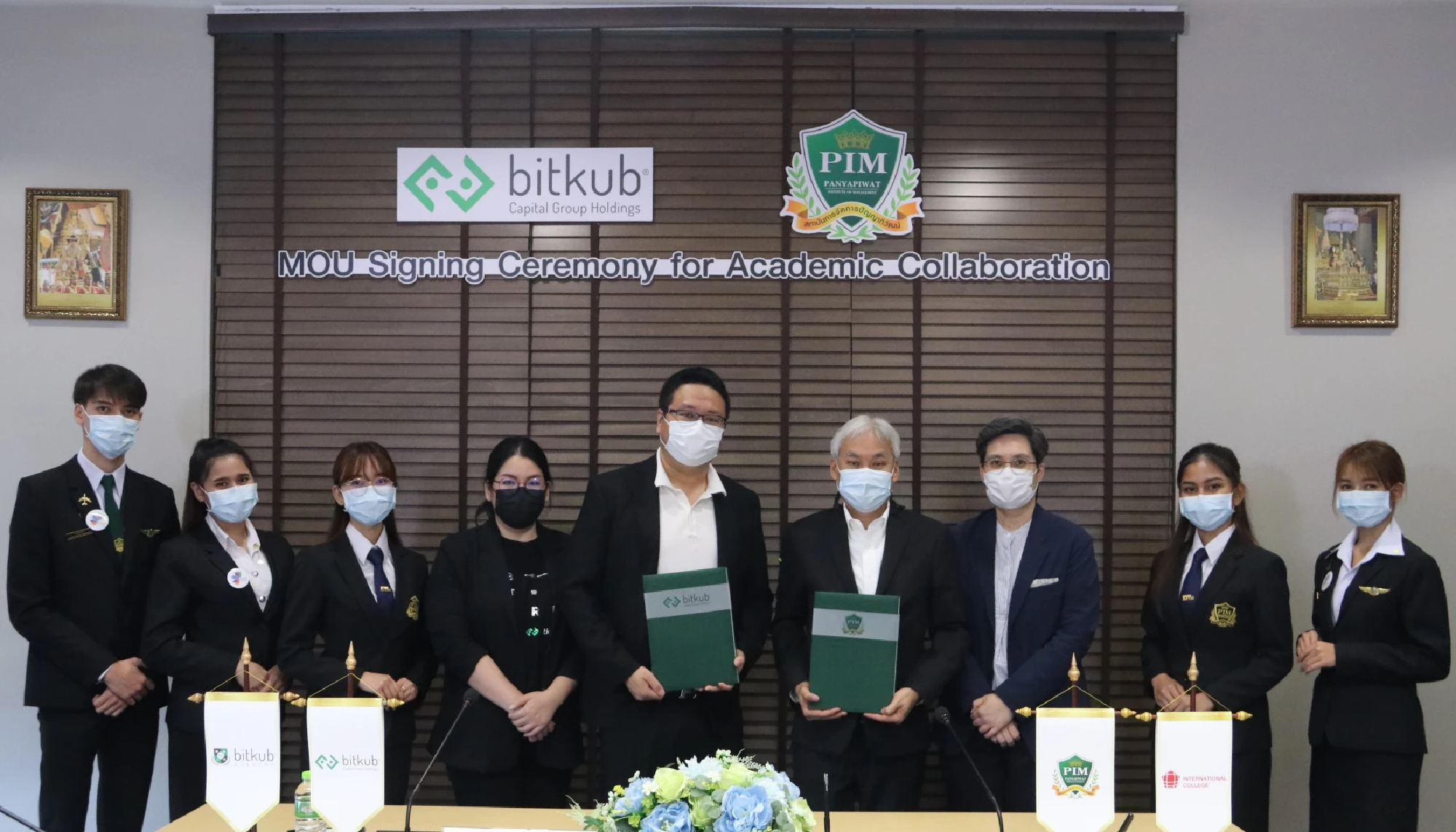
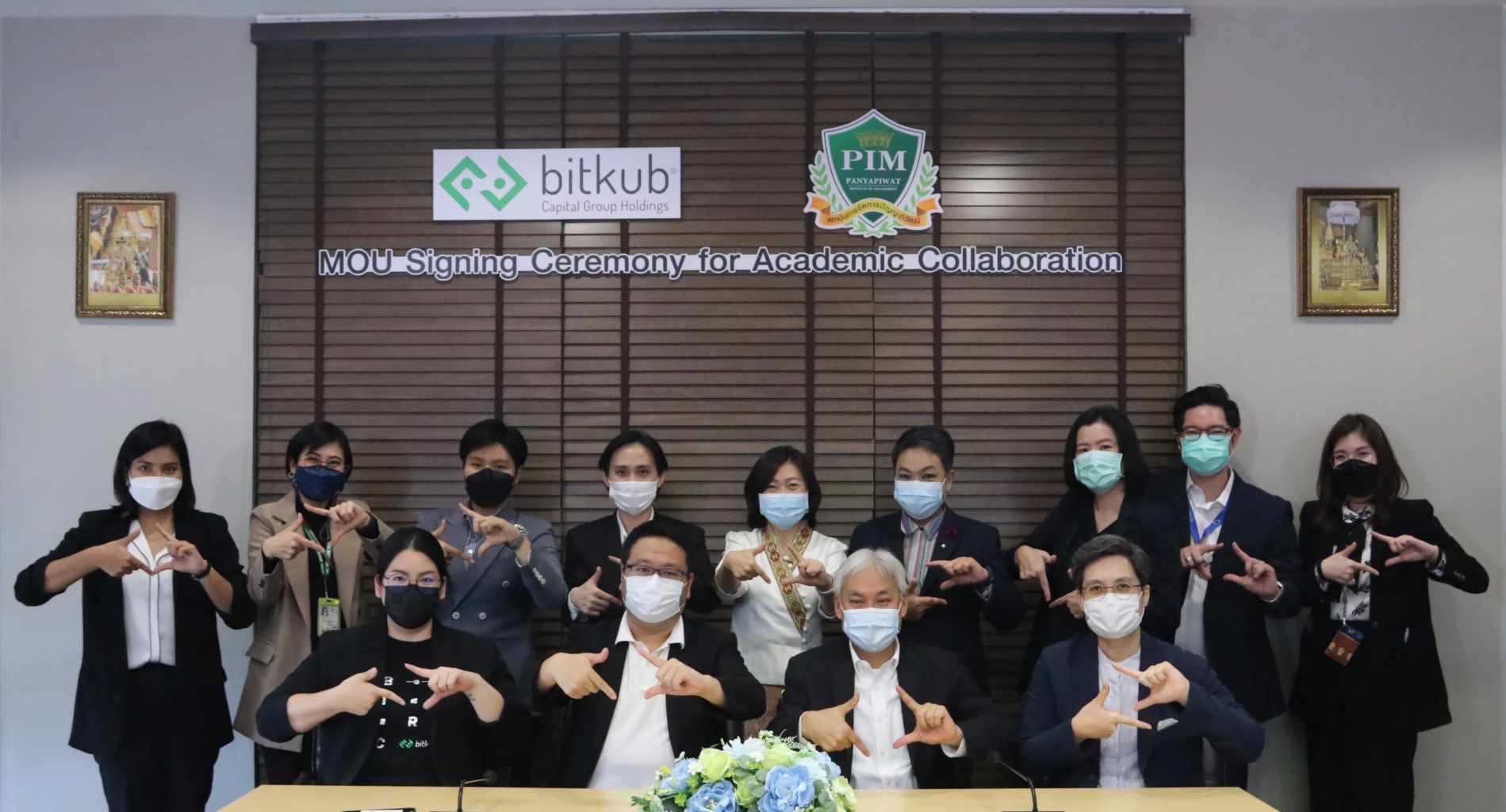
On April 4, International College, Panyapiwat Institute of Management (PIM) and Bitkub Capital Group Holding signed a Memorandum of Understanding (MOU) to promote the academic collaborations and further business and digital asset education to prepare learners for becoming international entrepreneurs in the future.
On April 4, International College, Panyapiwat Institute of Management (PIM) and Bitkub Capital Group Holding signed a Memorandum of Understanding (MOU) to promote the academic collaborations and further business and digital asset education to prepare learners for becoming international entrepreneurs in the future.
The MOU signing ceremony took place at CP ALL Academy Building on Chaengwattana Road and was attended by Associate Prof. Dr. Somrote Komolavanij, Vice President for Academic Affairs and Research at PIM and Sakolkorn Sakavee, co-founder & chairman of Bitkub Capital Group Holdings.
Bitkub Lab Co., Ltd., also known as “Bitkub Academy”, which is the learning hub of digital asset and blockchain technology, will collaborate with International College and International College International Startup Academy (IC I-SA) in promoting the advancement of business and digital asset knowledges and expertise through the curriculum development, conducting researches and human resource trainings for both partners, designing business case studies, hosting academic activities and startup and business competitions, and offering internship opportunities with companies under the Bitkub Capital Group Holding to International College students. These mutual collaborations will enhance learner’s competencies to be ready in penetrating the international startup ecosystem.
International College, Panyapiwat Institute of Management (PIM) is building “Future Inno-preneur”
International College, Panyapiwat Institute of Management (PIM) is building “Future Inno-preneur”
– an entrepreneur with innovative mindset to serve the business transformation in the digital era by facilitating students with a world-class startup centre, “International College International Startup Academy (IC I-SA).”
Under the rapid transformation in the digital era, we have been facing with all kinds of disruption; the education system is among the sector undergone radical transformation. The pandemic as well as new technological inventions are the major catalyst forcing paradigm shift of traditional pedagogy and learning environment. The main challenge is whether how Thai educational system continuing to thrive under the innovative environment.
The International College, Panyapiwat Institute of Management (PIM), is an education institution not only offering theoretical knowledge but also a place where students acquiring practical knowledge through real business practices. Students gain various skills such as digital literacy, innovation & creativity, knowledge start-up and entrepreneurial mind-set that excel them to gain competitive human capital under the new digital era. Thus, the international college has recently re-designed the two curriculums: the bachelor of modern trade business management and the international MBA aiming to build innovative entrepreneur for the future enhancing international business, building academic and business network, and researches for sustainable global citizenship community.
Presently, the International College opens two programs:
1. B.B.A. in Modern Trade Business Management (iMTM)
2. M.B.A. in International Business (iMBA)
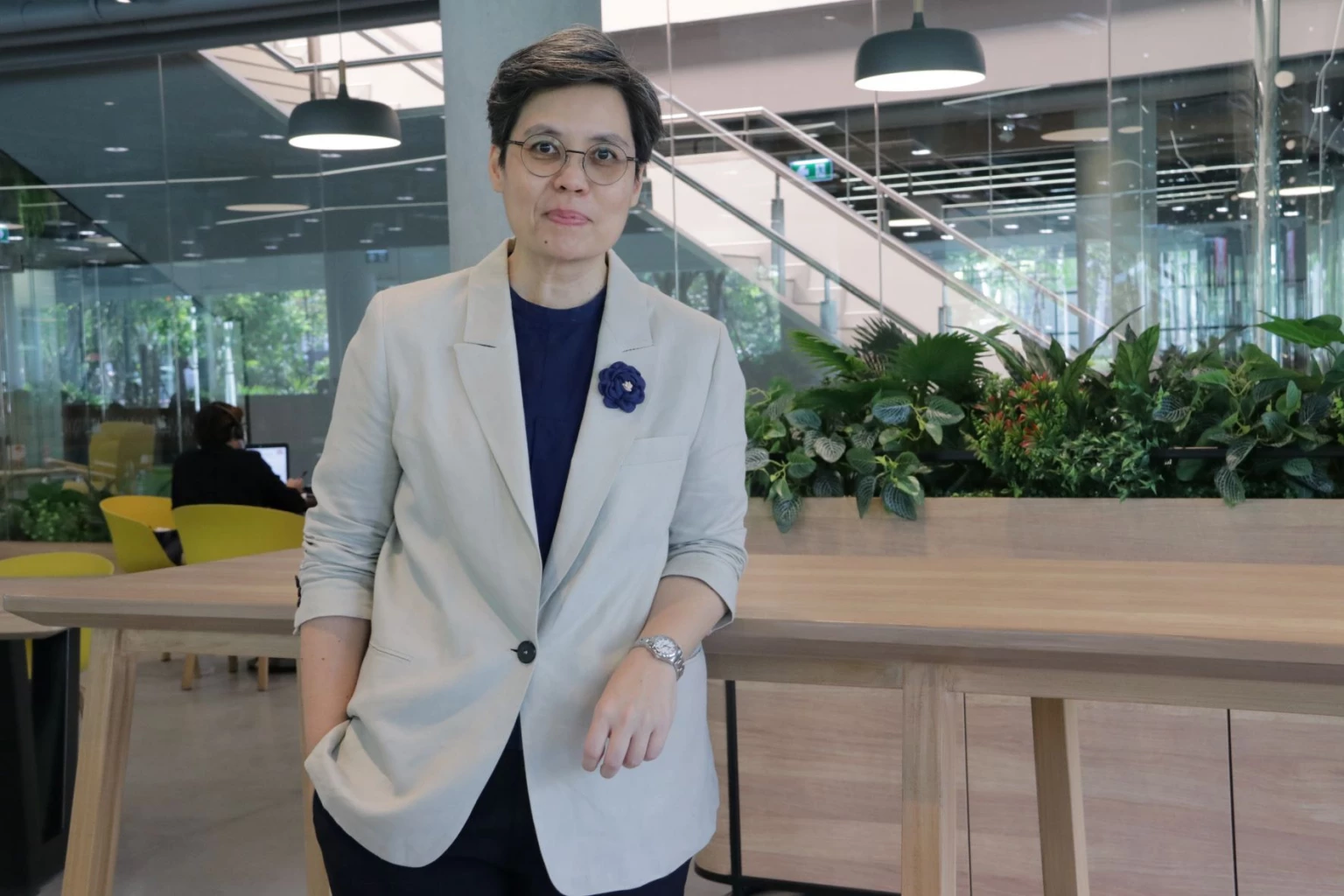
Assistant Professor Veerisa Chotiyaputta, DBA, Deputy Dean of International College, has revealed the vison to build business entrepreneur that corresponded to the world trend that the International College is building bachelor and master programs to response to the need of the fast-changing world. They will be equipped with diverse skills requirement in the 21st century, integrating academic theory with practicality through the “Work-based Education” of PIM. We will groom students under the concept of “Towards the future Inno-preneur” which combines the two intellections; innovators and future entrepreneur.
Under the “Inno-preneur”, some important skills are taught and trained throughout each curriculum such as digital literacy, soft skills for future leaders (social & emotional intelligence and becoming cutting-edge entrepreneur). Upon successful graduation, students will walk out of the program with own business “prototype” and business model readily to start his/her dream business.
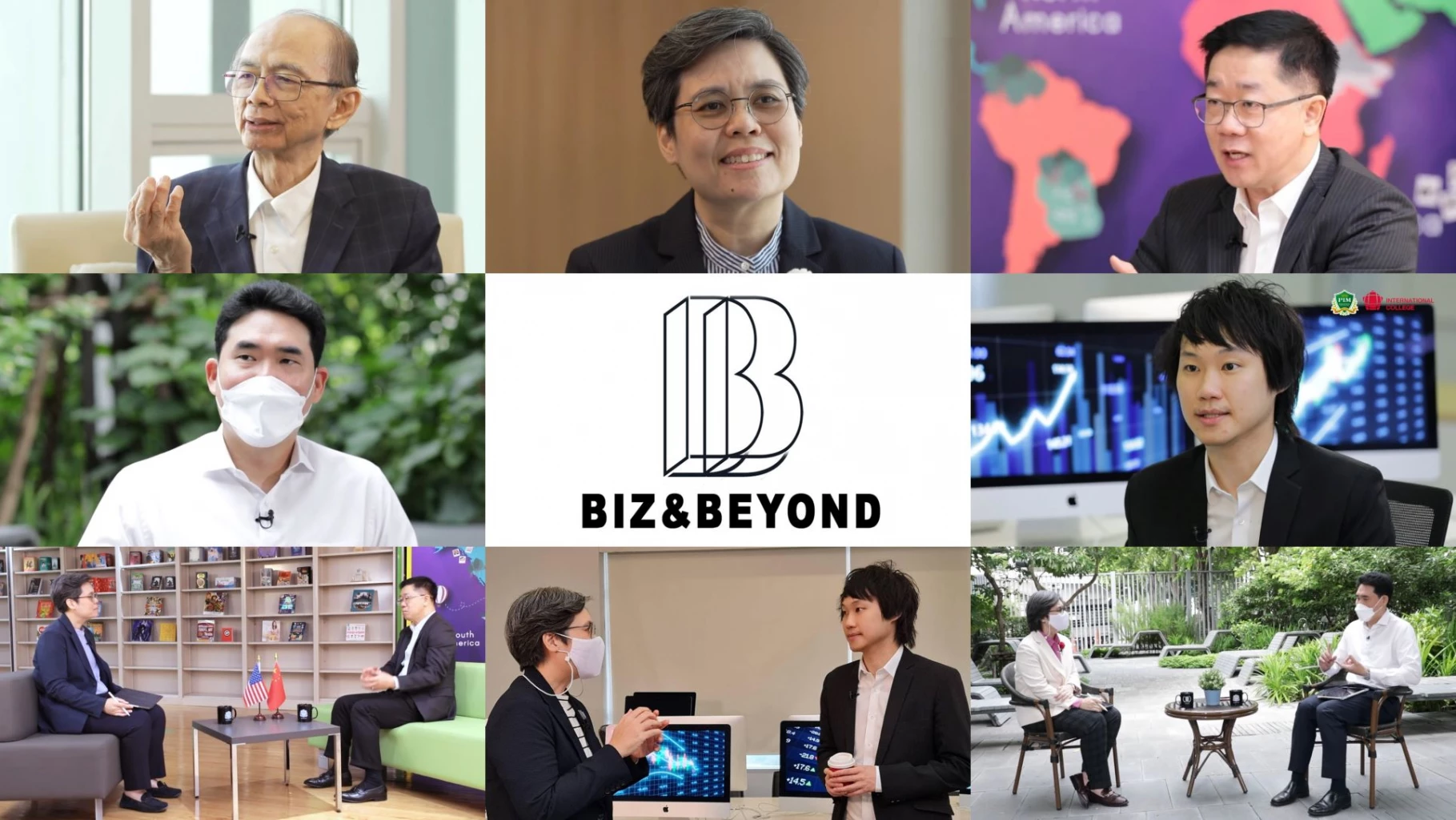
To foster and enhance learning environment, the International College hosts business series called “Biz&Beyond” (https://www.youtube.com/c/BizBeyond). The program provides expert opinion and insights under topic of interest and other trendy issues in the business and beyond. The series shares publicly via the YouTube channel.
“In addition, the International College also collaborates with many universities, institutions and businesses within and outside the country. This is to help increase internalisation and the opportunity to gain real business practice such as Bitkup Academy and overseas start-up partners. Executives, practitioners and other expert partners are regularly invited to share real cases in order to boost complex problem solving skill on different topics such as “retailing”, “emerging technologies”, or “green business/economy”. We also have “international venture capitalists” to provide advice on students’ business model and seek funding opportunity,” said Veerisa.
In September 2021, the international college launched a new unit named the “International College International Startup Academy” or IC I-SA to be students’ international start-up hub for idea pitching focusing on overseas businesses. IC I-SA is a learning development centre to springboard 21st century skills of international start-up entrepreneur. The centre will sharpen diverse digital skills and entrepreneurial mindset by boosting a sense of social innovation and globalization with focus on the development of retail expertise and change leadership. IC I-SA will as well become the main hub for building innovation by training and giving workshops from experts and specialists with great expertise that provide new knowledge and future model. Furthermore, there will be annual international hackathon event held by the IC I-SA and strategic partners to showcase different business innovation and attracting Thai and foreign venture capitalists from all around the world.
In December 2021, IC I-SA organized a competition to showcase the business idea – the first international virtual hackathon under the theme “From Covid to Climate: Joining the Race to Net Zero Emissions” co-hosted with partners from New Energy Nexus, Seneca College Canada and Solution Creation Co. Ltd., under PTT Global Chemical Public Company Limited.
The event was organised for the students to brainstorm their business ideas, designing sustainability, aiming to reduce the emission of greenhouse gases. The event received great response from many students from both PIM, partnering schools and international universities.
“IC I-SA is also a meeting and marketplace to network with the international college’s alumni who are well equipped and trained as mentors in start-up field. They (alumni) will be able to help provide different guidance and polish ideas as a step closer to students’ dream businesses,” added Veerisa. “The vision and mission of the International College of Panyapiwat Institute of Management are to create future leaders and entrepreneurs, excel creativity and new knowledge thus enhancing new dimensions of 21st century education and internationalisation.”
Ten major Thai commercial banks have reported a combined net profit of over 53 billion baht in the first quarter of 2022, up 14.4 per cent from the same period last year.
The increase was attributed to higher interest revenue earned from new loans and lower coverage ratio for non-performing loans.
Those 10 banks reported net profit totalling THB53.3 billion in the first quarter, up by THB6.7 billion from the same period last year.
CIMB Thai’s net profit amounted to THB1.1 billion, a 211 per cent jump from the first quarter of last year. That was the largest gain in terms of percentage points among the 10 major banks.
Krungthai Bank came second with its net profit increasing 57.4 per cent, followed by Kiatnakin Phatra Bank with a gain of 40.5 per cent, TMB Thanachart (14.8 per cent), Bank of Ayudhya (14 per cent), Kasikornbank (5.4 per cent), Bangkok Bank (2.8 per cent), Tisco Bank (1.8 per cent), and Siam Commercial Bank (1 per cent) as its net profit increased to THB10.2 billion.
However, LH Financial Group, which runs LH Bank, reported an 8.7 per cent decline in net profit, gaining THB511 million in the first quarter, compared to THB560 million in the same period last year.







 Bitkub Lab Co., Ltd., also known as “Bitkub Academy”, which is the learning hub of digital asset and blockchain technology, will collaborate with International College and International College International Startup Academy (IC I-SA) in promoting the advancement of business and digital asset knowledges and expertise through the curriculum development, conducting researches and human resource trainings for both partners, designing business case studies, hosting academic activities and startup and business competitions, and offering internship opportunities with companies under the Bitkub Capital Group Holding to International College students. These mutual collaborations will enhance learner’s competencies to be ready in penetrating the international startup ecosystem.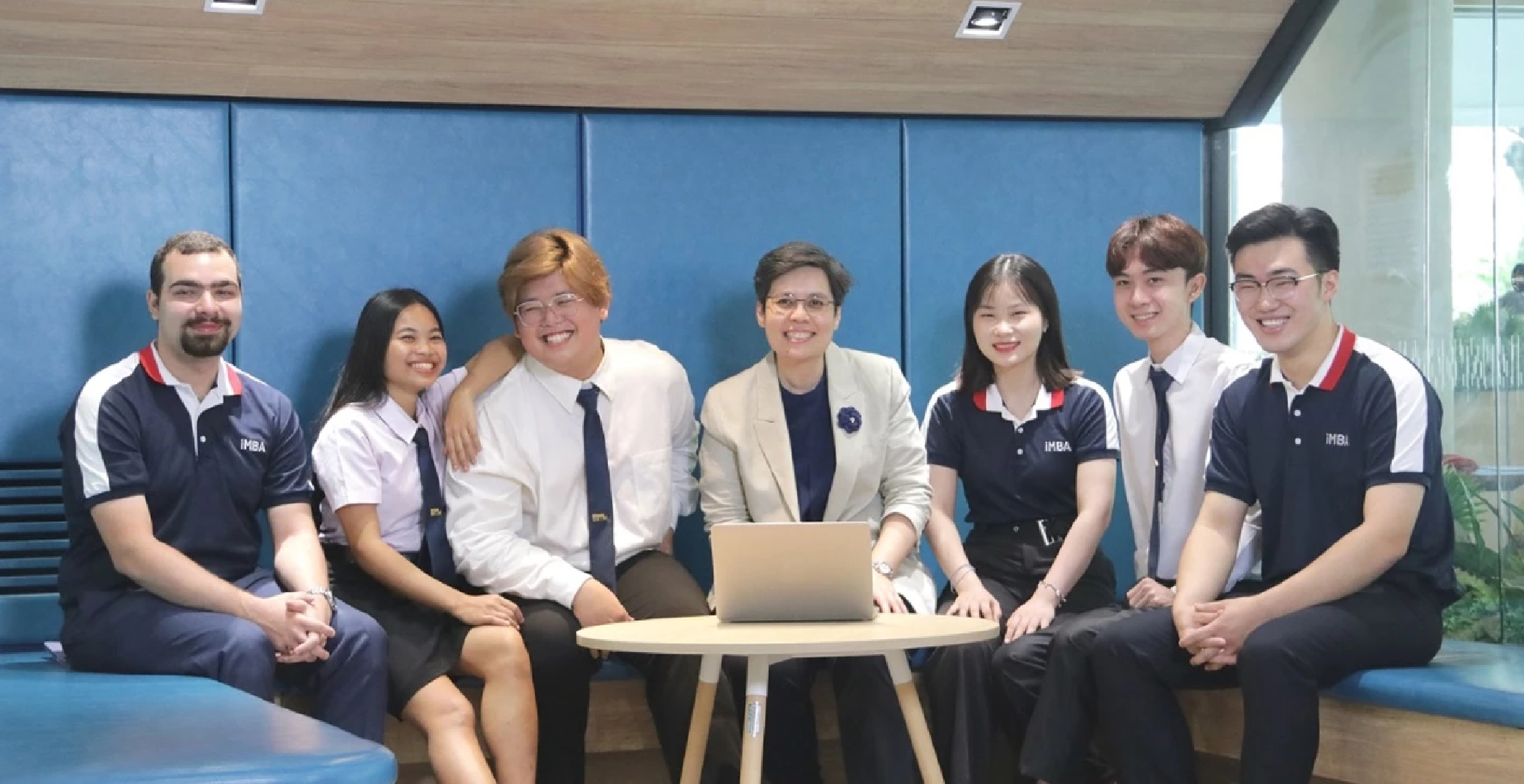

 To foster and enhance learning environment, the International College hosts business series called “Biz&Beyond” (
 “In addition, the International College also collaborates with many universities, institutions and businesses within and outside the country. This is to help increase internalisation and the opportunity to gain real business practice such as Bitkup Academy and overseas start-up partners. Executives, practitioners and other expert partners are regularly invited to share real cases in order to boost complex problem solving skill on different topics such as “retailing”, “emerging technologies”, or “green business/economy”. We also have “international venture capitalists” to provide advice on students’ business model and seek funding opportunity,” said Veerisa.
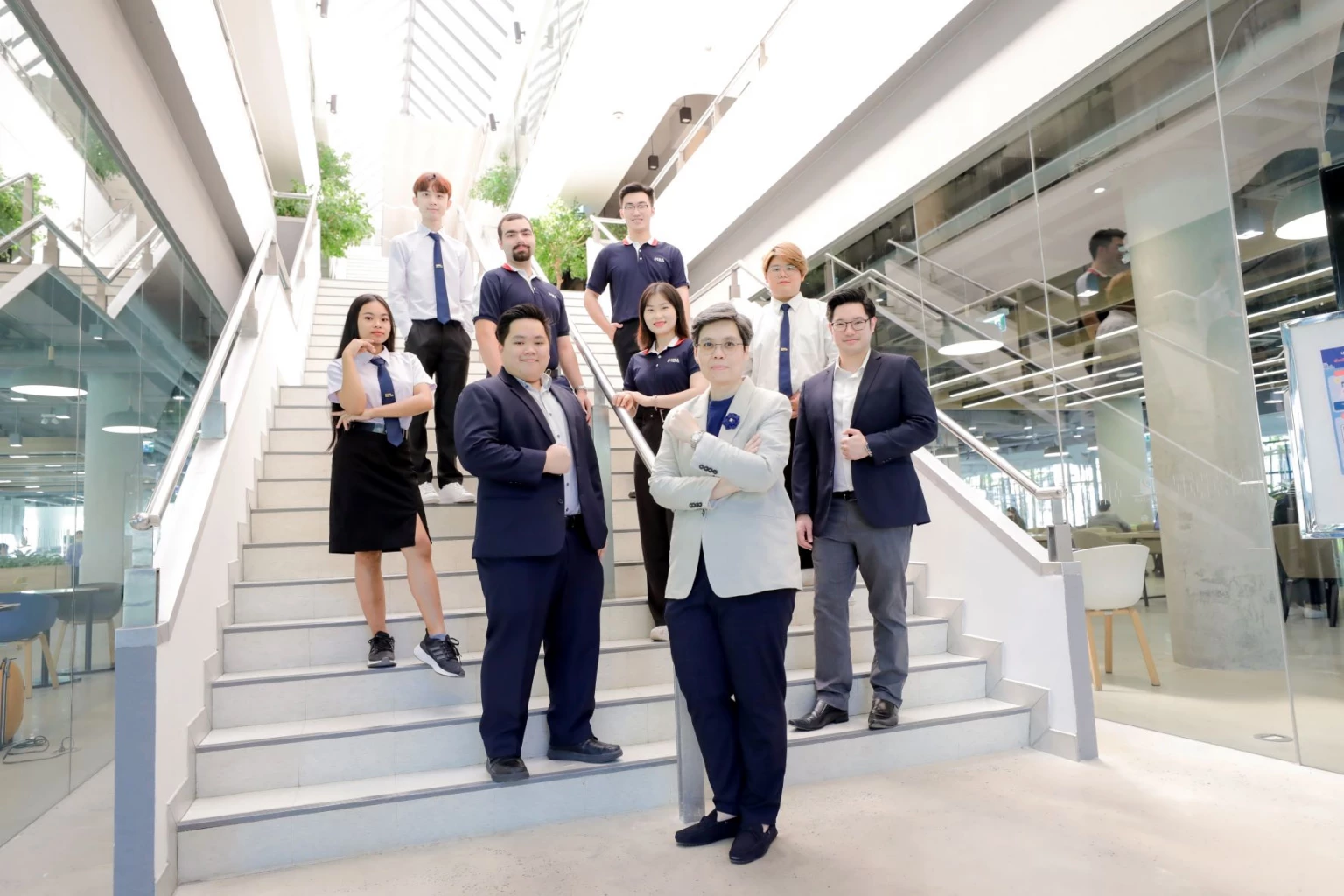 In September 2021, the international college launched a new unit named the “International College International Startup Academy” or IC I-SA to be students’ international start-up hub for idea pitching focusing on overseas businesses. IC I-SA is a learning development centre to springboard 21st century skills of international start-up entrepreneur. The centre will sharpen diverse digital skills and entrepreneurial mindset by boosting a sense of social innovation and globalization with focus on the development of retail expertise and change leadership. IC I-SA will as well become the main hub for building innovation by training and giving workshops from experts and specialists with great expertise that provide new knowledge and future model. Furthermore, there will be annual international hackathon event held by the IC I-SA and strategic partners to showcase different business innovation and attracting Thai and foreign venture capitalists from all around the world.