The Stock Exchange of Thailand (SET) Index is expected to drop between 1,675 and 1,680 points on Friday after the US Federal Reserve signalled it would raise the interest rate to 0.5 per cent in May to curb inflation, Krungsri Securities said.
It added that this announcement has pushed the US 10-year bond yield to surge to nearly 3 per cent, resulting in negative sentiment in the index.
“However, mass buy-ups of energy shares in line with rising oil and coal prices, as well as stocks that gained specific positive sentiment, will help boost the index,” Krungsri Securities said.
It recommends the purchase of the following as an investment strategy:
• PTTEP, TOP, IVL, SPRC, BCP and BANPU will benefit from rising prices of oil, coal and gross refining margin.
• PSL and TTA will benefit from the rising freight rate.
• BDMS, BH, INTUCH, ADVANC, BTS and BEM can tolerate market volatility.
The SET Index closed at 1,690.55 on Thursday, up 10.20 points or 0.61 per cent, thanks to a rise in foreign stock markets and speculation in small-cap shares of companies whose first-quarter net profit is expected to rise, such as agriculture, food and finance, Krungsri Securities added.
Transactions totalled 71.08 billion baht with an index high of 1,693.14 and a low of 1,682.65.
The baht opened at 33.90 to the US dollar on Friday, the highest in four months, strengthening from Thursday’s close of 33.85.
Krungthai Bank market strategist Poon Panichpibool predicted that the currency will move between 33.80 and 34 during the day.
He added that the baht may further strengthen to 34 as it is being pressured by a weakening dollar and dividend payments. However, he said, it may not cross the resistance level because exporters are waiting to sell the dollar.
Poon also advised investors to monitor foreign investors, as there is a chance that the baht will test the key resistance level of 34 if foreign investors sell a large number of stocks and bonds.
He added that there is a possibility the market will close at a high-risk level, though foreign investors are still trading in Thai assets.
However, he said, investors should use hedging tools to deal with high volatility in the currency market.
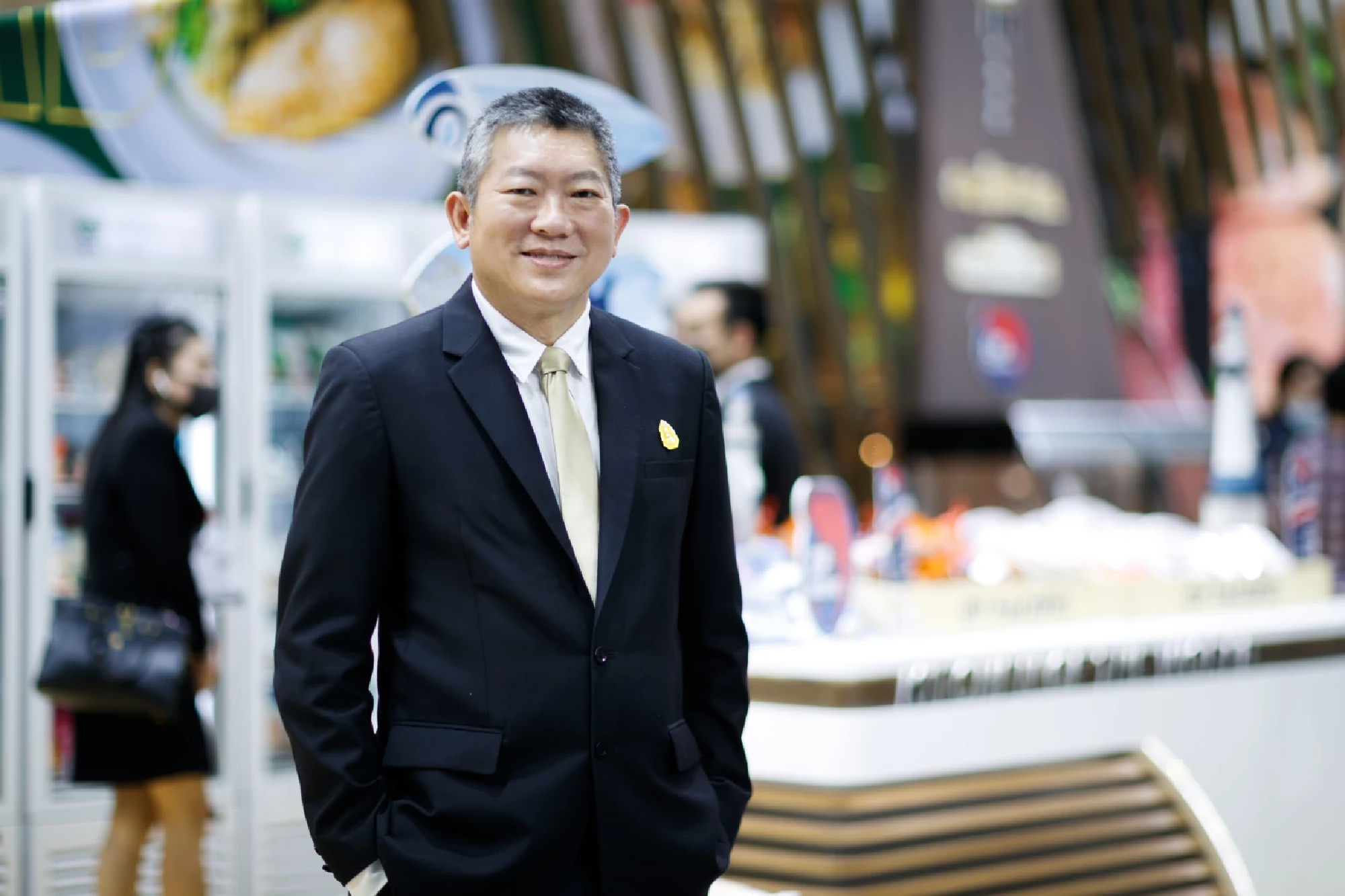
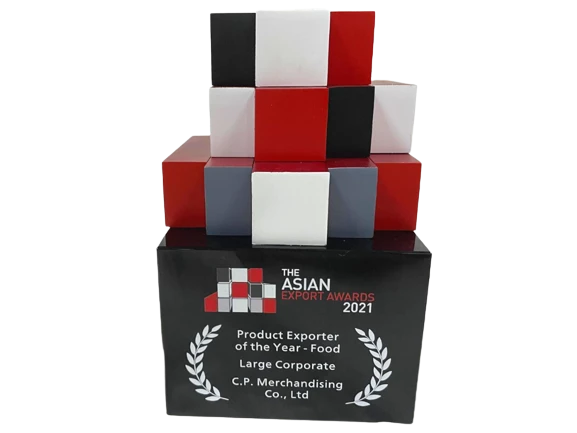
CP Merchandising, a subsidiary of CP Foods, has won two awards at the Asian Export Awards 2021.
Anat Julintron, the managing director of CP Merchandising, said that the company had received two major awards, “The Product Exporter of the Year – Food”, for its sustainable packaging for CP Flamin Chicken tenders, and “The Export Initiative of the Year – Food”, for its plant-based innovative brand Meat Zero.
The annual awards programme was organised by Manufacturing Asia which recognises top exporters in the region.
“These prestigious awards bolster the confidence of our customers and partners in the company’s products. CP Merchandising, as an exporter of high-quality food products, places importance on safety standards as well as social and environmental responsibility throughout the supply chain,” Anat said.
“The new packaging for our chicken tenders is not only reducing paper waste by 44 per cent, but is also a good solution for our wholesalers and consumers. The new display carton is more convenient to tear off and is also distinctive on the shelf,” he added.
Last year, the company exported more than 200,000 cartons. He said with this new sustainable packaging, CP Merchandising has saved over 170 trees.
He said Meat Zero is an innovative plant-based product line. “With Plant-Tec technology, Meat Zero looks, cooks, and tastes like meat but is made from plants, making it a healthy option with high protein and zero cholesterol,” he said.
CP Merchandising launched Meat Zero in Thailand in May 2021 and it is currently the No.1 plant-based brand in Thailand, he said.
The company is currently listing its Meat Zero products in key retailers, online channels and foodservice channels starting with Hong Kong in July 2021 and Singapore in October 2021. It is now rolling out its expansion plan, exporting to the rest of Southeast Asia, Japan, China and South Korea within this year and US, UK and EU markets later on to make it world’s top three alternative meat brand in three years, he said.
The Standard, Huruvalhi Maldives is inviting guests to plunge into an aquatic world of wonder this summer, with the opportunity to “unwind in paradise” and experience a once-in-a-lifetime encounter with majestic manta rays.
The Standard, Huruvalhi Maldives is inviting guests to plunge into an aquatic world of wonder this summer, with the opportunity to “unwind in paradise” and experience a once-in-a-lifetime encounter with majestic manta rays.
Every summer, these magnificent creatures flock to Hanifaru Bay, a Unesco World Biosphere Reserve and marine protected area located just a short 35-minute boat ride across the sparkling sea from The Standard, Huruvalhi Maldives.
To celebrate the start of manta ray season in the Maldives, The Standard’s “Go Deep Blue” campaign will give guests the opportunity to get up close and personal with the area’s mesmerising marine life.
Under a “Manta Magic” special offer, visitors can stay in one of the resort’s private pool villas, either perched over the water or nestled on the pristine sandy beach, and enjoy up to 30 per cent off for stays from May 1 to November 30.
“The Standard, Huruvalhi Maldives is a strong advocate of sustainable tourism and strictly adheres to the Manta Trust’s guidelines on responsible and respectful encounters,” the hotel said in a press release.
The resort’s water sports team will provide guests with information on how they can enjoy this unique activity in an ethical and eco-sensitive manner, the hotel added.
The manta ray excursion is priced at US$250 (THB8,450) per person, with a minimum of two people per trip.
Thrill seekers can also feel the spray of the ocean waves at the resort’s turquoise lagoon with a variety of complimentary ocean sports and activities, including unlimited snorkelling equipment hire and 30 minutes of kayak or paddle-board rental daily, free access to the tennis court, gym and other sports facilities, plus scheduled yoga and wellness classes.
Additionally, scuba divers can plunge deeper into the pristine marine ecosystem with offshore excursions to dive sites and PADI diving courses, both available at an extra charge.
“Hanifaru Bay is a breathtaking destination at any time of the year, but it really comes alive in the summer months when the majestic manta rays flock to its serene shores,” Standard International executive chairman Amar Lalvani said.
“These gentle giants are wonderfully graceful and the chance to swim with them in their natural habitat is truly inspiring. We look forward to celebrating ‘Manta Magic’ in the Maldives this summer and creating unforgettable adventures for our lifestyle-focused clientele,” Lalvani added.
The government still has room to borrow another THB1.3 trillion before it reaches the 70 per cent ceiling of public debt as a ratio of gross domestic product, a source from the Finance Ministry said.
Public Debt Management Office (PDMO) director Patricia Mongkhonvanit said on Thursday that there was still room for the Finance Ministry to borrow more loans, but the government will have to issue a special law to permit the borrowing.
She said all the borrowings must comply with existing laws and must clearly state the reasons, the urgency and objectives.
The PDMO director did not elaborate on the amount of money the government could borrow, but the source explained that the 70 per cent ceiling could allow the government to borrow another THB1.3 trillion.
The Finance Ministry source was speaking after Prime Minister Prayut Chan-o-cha said on Tuesday that he had asked the Finance Ministry to seek more loans for providing more subsidy packages, especially a new phase of the co-payment scheme, to the public.
The source said only THB70 billion are left of the loans borrowed under the THB500-billion borrowing decree. If the government wants to spend more than THB70 billion, the government would have to issue another decree to allow the borrowing.
If no new decree is issued, the government may divert the budget from the central fund or use advance payments, the source said. The government is allowed by the Budgetary Procedures Act BE 2561 (2018) to use advance payments with a ceiling of THB50 billion.
According to the source, the THB500-billion loans have been allocated in three categories:
— THB110 billion for medical and public health purposes
— THB220 billion for providing remedies to people affected by Covid-19
— THB170 billion for economic and social recoveries.
The source added that the Finance Ministry has not yet confirmed whether it would launch the fifth phase of the Khon La Krueng (half-half) co-payment scheme.
If the ministry goes ahead with the new phase of the scheme, it would need about THB39 billion if the grant of THB1,500 per person is approved to 26 million citizens, the source added.
Meanwhile, Fiscal Policy Office director Pornchai Thiraveja, who is also the spokesman of the Finance Ministry, said the fourth phase of the Khon La Krueng scheme will end in 10 days so those who have not used up the subsidy should hurry up.
He said the grant of THB1,200 has been given to 26.38 million citizens under the fourth phase. So far, 12.69 million people have used up the subsidy and 120,000 people have not spent any of the grant, the spokesman added.
As of April 19, a total of THB60 billion has been spent under the fourth phase of the Khon La Krueng scheme by 26.26 million subsidy receivers.
He said 1.35 million shops have joined the programme.
The Stock Exchange of Thailand (SET) Index is expected to fluctuate between 1,670 and 1,690 points on Thursday after the US Federal Reserve signalled it would raise the interest rate gradually to prevent an impact on US economic recovery, Krungsri Securities said.
However, it predicted that the ongoing Russia-Ukraine war, as well as mass sell-offs of shares in line with signs of overbought stocks, would pressure the index.
It recommends purchase of the following companies’ shares:
• AOT, AAV, BA, Mint, Centel, ERW, CPN, CRC, HMPro, CPAll, Makro, Amata and WHA, which would benefit from countries reopening.
• Top, SPRC, BCP and IVL, which would gain from the rising gross refining margin.
• BDMS, BH, Intuch, Advanc, BTS and BEM, which can tolerate market volatility.
The SET Index closed at 1,680.35 on Wednesday, up 4.73 points or 0.28 per cent, thanks to mass buy-ups of bank shares on hopes that their first-quarter net profit would rise, Krungsri Securities added.
Transactions totalled 69.12 billion baht with an index high of 1,685.90 and a low of 1,675.58.
The baht opened at 33.81 to the US dollar on Thursday, weakening from Wednesday’s close of 33.76.
Krungthai Bank market strategist Poon Panichpibool predicted the Thai currency would move between 33.75 and 33.90 during the day.
Poon said the baht would swing sideways as it was pressured by dividend transactions and gold sales after investors were waiting for the price of the precious metal to rebound back to its resistance level of 1,980-2,000 dollars per ounce.
He expected exporters to sell the dollar at 33.80-34 as long as the market did not turn heavily risk-averse, which would add pressure to the baht.
Poon suggested monitoring foreign investor transactions. He said there was a chance the baht could test the key resistance level of 34 if foreign investors sold a large amount of stocks and bonds.
With high volatility in the currency market, businesses should use hedging tools such as options to manage risks, he advised.
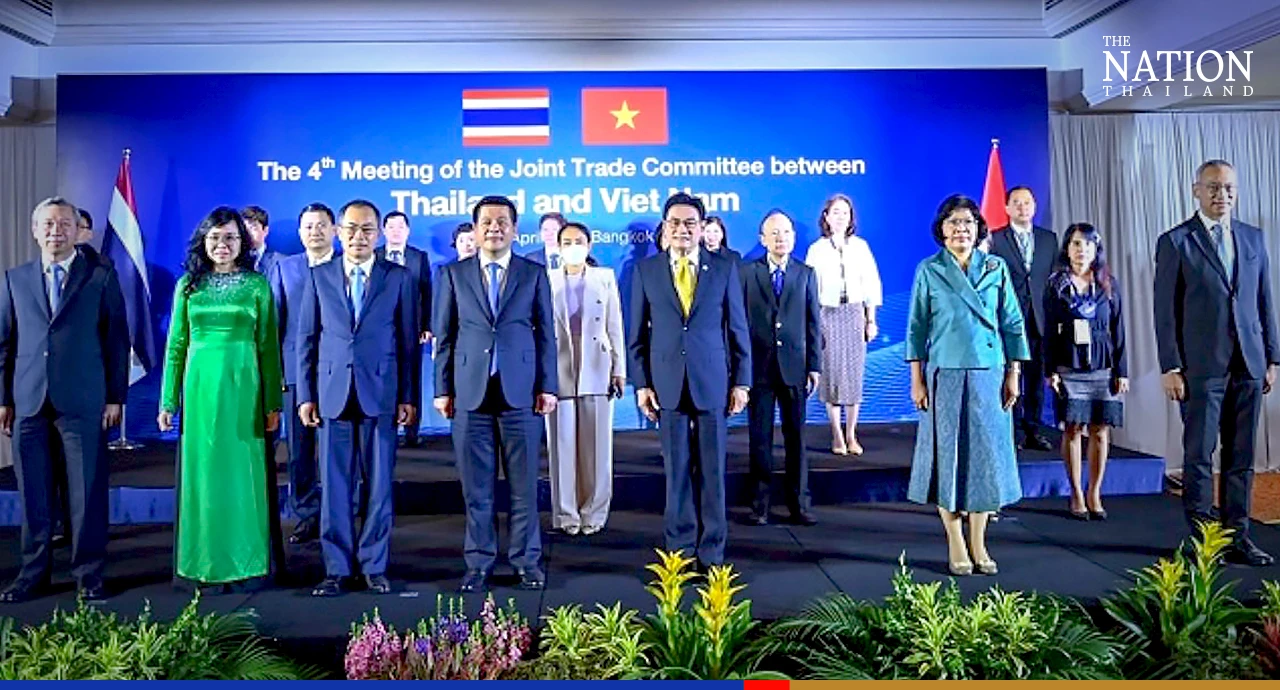
Thailand has urged Vietnam to negotiate with China on opening their three checkpoints round the clock to facilitate the export of fruits.
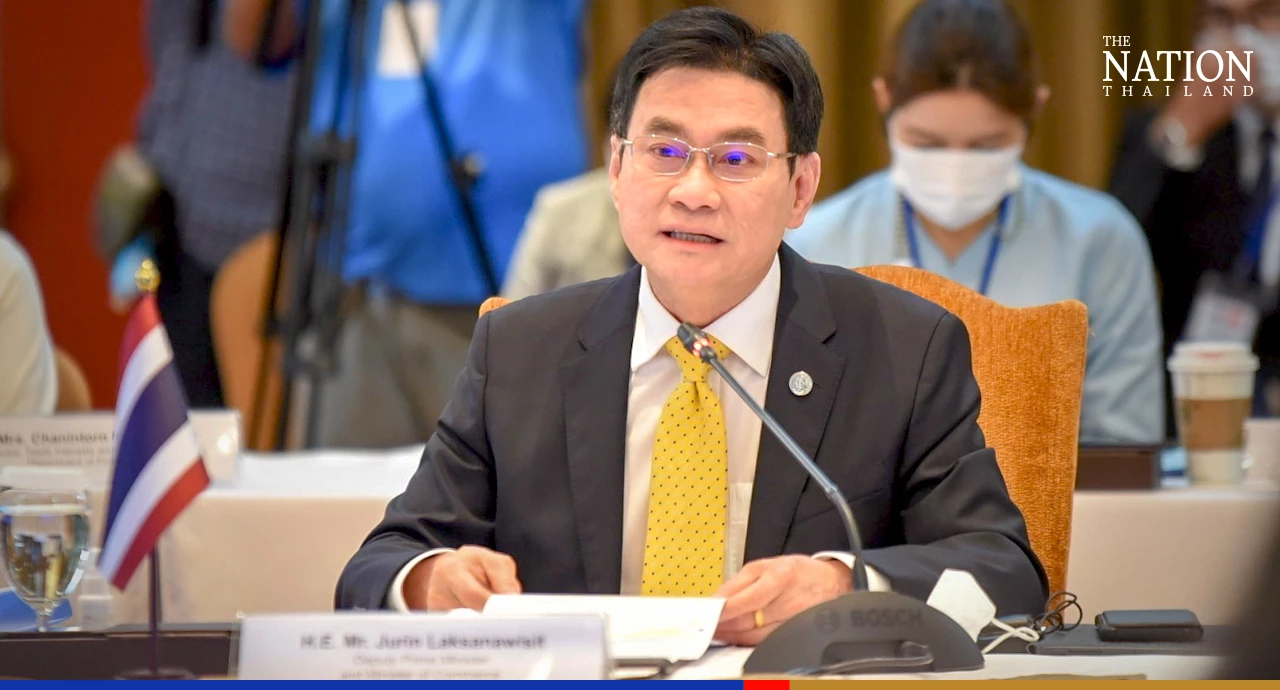
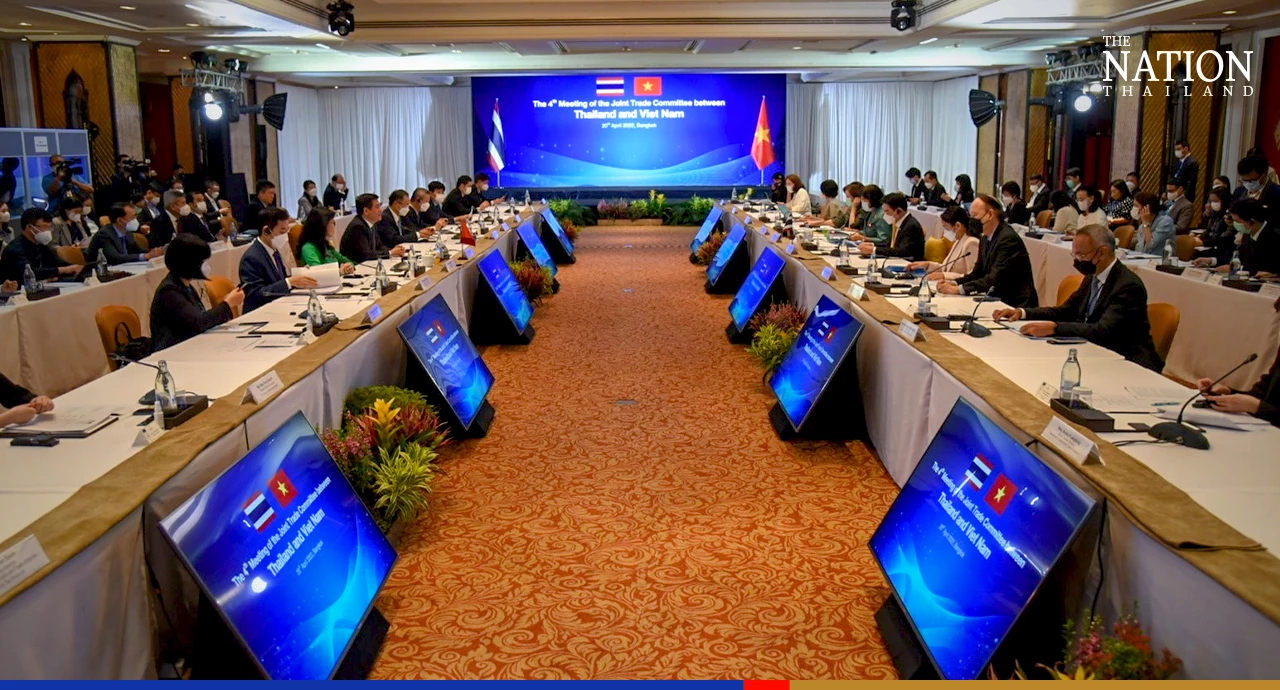
Deputy Prime Minister and Minister of Commerce Jurin Laksanawisit said he had made the suggestion to Vietnam’s Minister of Industry and Trade, Nguyen Hong Hsien, during the fourth meeting of the bilateral Joint Trade Committee in Bangkok.
Jurin said he had suggested to the Vietnamese minister to negotiate with the Chinese government on keeping the three checkpoints at Youyguan, Pingxing and Dong Dang open 24 hours, which would facilitate the delivery of Thai fruits. Currently Youyguan, bordering Vietnam’s Wu Ngi checkpoint, and the Pingxiang railway checkpoints are open from 8am to 7pm.
Meanwhile, Vietnam’s Dong Dang railway checkpoint is open for business from 8.30am to 6pm. Opening the checkpoints for longer hours will help the smooth movement of Thai fruits to China. Currently exporters are worried about their consignments to China getting spoilt. If all three checkpoints are open 24 hours a day, it would alleviate the suffering of exporters, Jurin said.
Next month, Thai fruits will reach their peak season. Jurin said the ministry has written to the Chinese government to discuss the problems faced by Thai fruit exporters in transporting their consignments.
Jurin requested additionally that Vietnam and China expand the Green Lane to facilitate the delivery of Thai products through the Covid-19-free process according to the standards to enter China faster, and also increasing staffing.
During the meeting, Vietnam also requested Thailand to expedite the issuance of licences for import of five types of fruit — grapefruit, custard apple, passion fruit, star apple or milk fruit and rambutan — while Jurin proposed that the matter be resolved using the MoU channel established with the Thai Ministry of Agriculture and Cooperatives as a dialogue forum.
Jurin also requested Vietnam’s assistance in promoting trade shows, particularly the Mini Thailand Week, which will be held in Can Tho from May 20-22, and in Quang Ninh from June 16-19, and Thai products in the Vietnamese markets. Nguyen suggested that Thailand use Vietnam’s online platforms as a channel, such as Shopee, Lazada, Vietnam Tikki, and Sendo.
The fourth Thai-Vietnam Conference will cover a wide range of subjects in the coming months, including resolving Vietnam’s trade imbalance with Thailand and the worldwide economic impact of the Russia-Ukraine conflict.
The Energy Ministry is seeking ways to mitigate the impact of rising diesel price in May, Energy Minister Supattanapong Punmeechaow said on Wednesday.
He confirmed that the government would pay 50 per cent subsidy on diesel price exceeding 30 baht per litre from May 1. The previous policy, controlling diesel price at not more than THB30 per litre, ends on April 30.
He said the Commerce and Finance ministries are concerned that diesel price at THB35 per litre due to rising oil price would be too high.
“If we raise diesel price to 35 baht per litre, we have to monitor inflation and the impact on citizens, as transportation costs will rise immediately,” he said.
He said the Oil Fuel Fund Office has prepared plans to tackle rising diesel price, such as raising diesel price to THB32 per litre along with monitoring the oil fund flow, discussing diesel excise tax reduction and determining diesel price based on Asean prices.
“If global fuel prices continue to rise, we have to evaluate how long diesel price can be maintained at THB32 per litre and whether there will be an extension on the diesel excise tax reduction period,” he said.
He said raising diesel prices gradually and comparing prices with neighbouring countries are good ideas if the oil fund has to continue paying subsidies of more than THB10 per litre.
He added that the Energy Ministry has cooperated with the Finance Ministry to boost confidence among financial institutions on granting loans for the oil fund, expected to conclude by April this year.
According to the Energy Policy and Planning Office, the real diesel price is THB41.15 per litre.
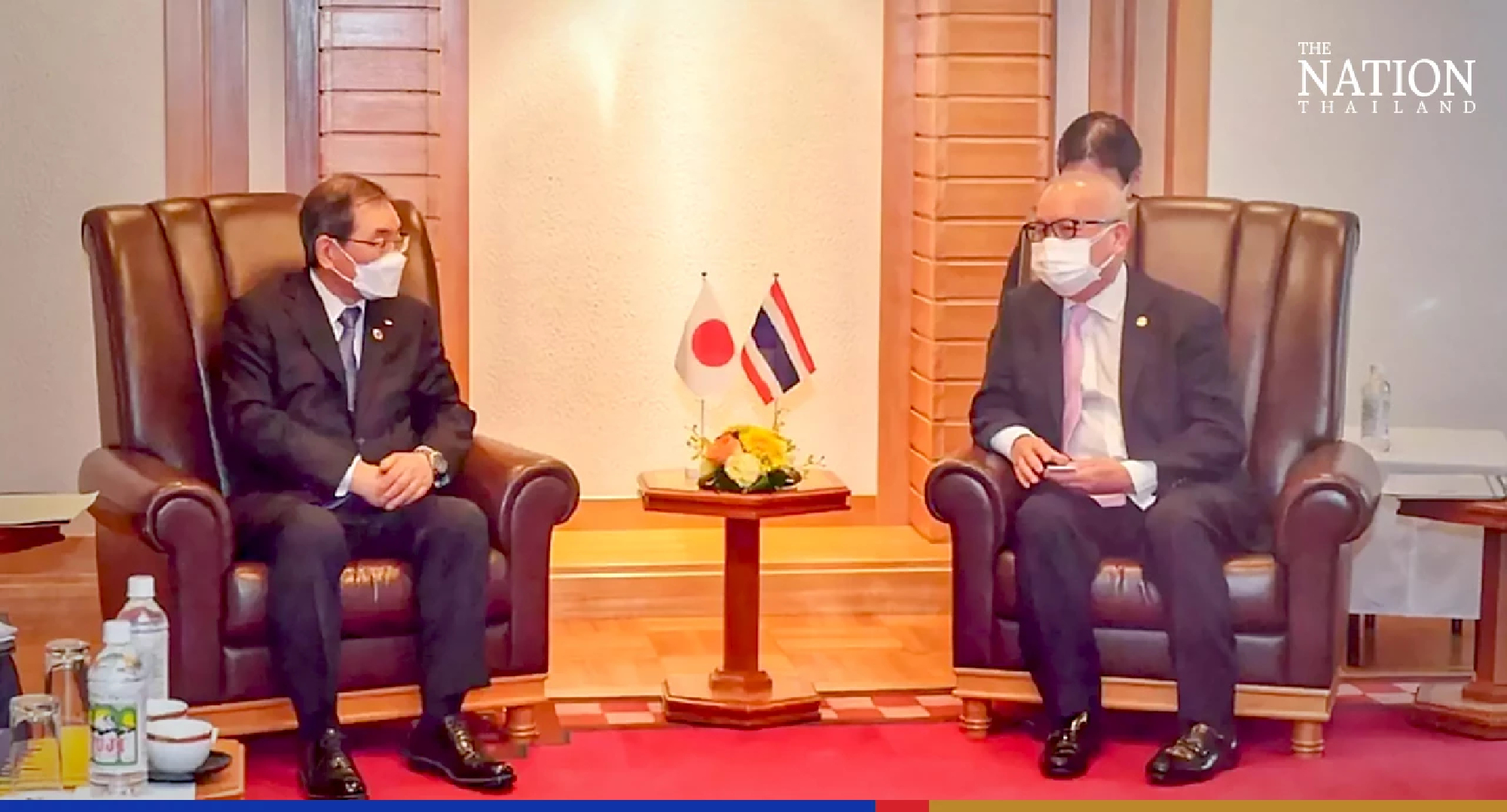
Deputy Prime Minister and Energy Minister Supattanapong Punmeechaow is leading a delegation to Japan aimed at inviting Japanese businesses to invest in electric vehicles and high-tech industries in Thailand.
Duangjai Asawachintachit, secretary-general of the Board of Investment, said Supattanapong’s roadshow, with the Thai economic team, was scheduled to visit Tokyo and Kanagawa from Tuesday to Saturday.
The delegation also included Thai representative ML Chayothit Kridakorn.
Duangjai said it was the first official trip by the Thai government to Japan since the Covid-19 pandemic.
The BOI secretary-general said that as the pandemic situation has started to ease and several countries are beginning to open up, the Thai government has decided to start making overseas trips to invite foreign investors to invest in the Kingdom.
The trip is a roadshow held by the BOI to promote investment and to create confidence among foreign investors, she added.
The Japan trip was aimed at continuing the “co-creation initiative” between Thailand and Japan that would lead to investments under the Asia-Japan Investing for the Future Initiative (AJIF), Duangjai added. She said the two nations had jointly announced the AJIF in January.
Duangjai said Supattanapong would later meet Hirokazu Matsuno, the Japanese Cabinet secretary-general, and Japan’s Trade and Industry Minister Hagiuda Koichi as well as meet representatives of the Japan Business Federation.
She said the Thai deputy prime minister would also meet representatives of large Japanese corporations of the automobile and electronics industries to present Thailand’s policies that emphasise the EV and smart electronic, Bio-Circular-Green, and tourism and services industries.
The deputy prime minister will highlight that the Thai government has issued several measures to support and facilitate investments in EV manufacturing, which is a target industry for the country. Supattanapong would point out that it would be a good chance for Japanese investors to invest in the EV industry in Thailand.
Supattanapong would also highlight during the trip that the Thai government has a policy to invite Japanese businesspeople and investors to stay in Thailand by granting long-term resident visa of up to 10 years.
She said the deputy prime minister would point out that Japanese people are the target group for LTR visas because they have advanced skills.




 The company is currently listing its Meat Zero products in key retailers, online channels and foodservice channels starting with Hong Kong in July 2021 and Singapore in October 2021. It is now rolling out its expansion plan, exporting to the rest of Southeast Asia, Japan, China and South Korea within this year and US, UK and EU markets later on to make it world’s top three alternative meat brand in three years, he said.