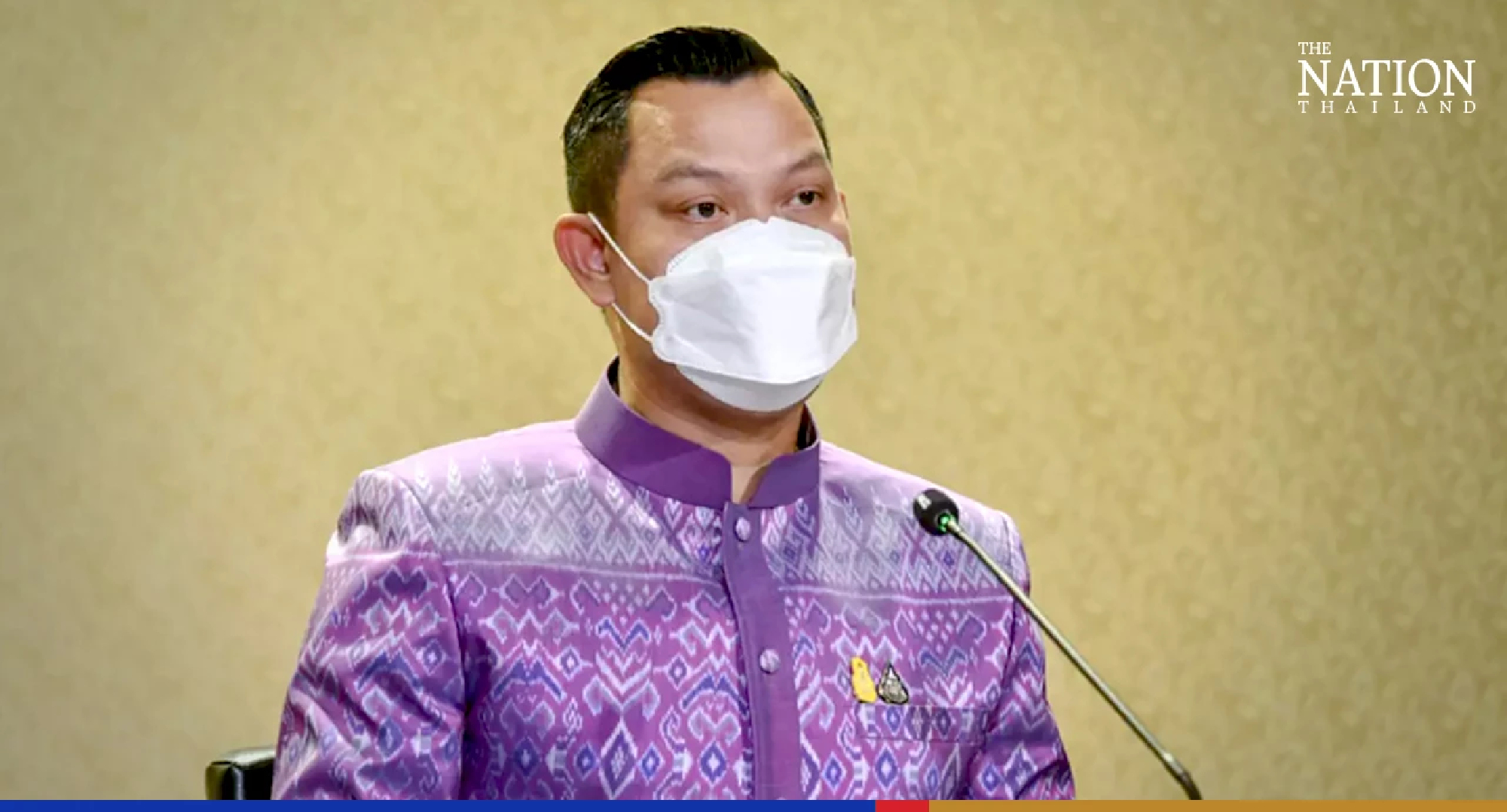
Thailand is financially stable despite the Covid-19 crisis and global economic woes, the government spokesman said on Sunday.
Spokesman Thanakorn Wangboonkongchana said the country is economically strong even though the government has had to offer subsidies to ease the burden on citizens affected by the pandemic and global oil crisis. He added that the country’s financial stability has been maintained because the government has implemented support measures under strict financial discipline.
Thanakorn added that the country’s financial stability is evident from the fact that the treasury had about 418.59 billion baht in cash for the first five months of the 2022 fiscal year (October 2021-February 2022).
During these five months, the Finance Ministry earned about 901.44 billion baht in revenue, while government spending came in at 1.43 trillion baht, forcing it to borrow 394.47 billion baht to offset the deficit.
The spokesman added that the government had made provisions for a budget deficit of 700 billion baht for the 2022 fiscal year and the more than 400 billion baht cash in the treasury was in line with its plan to maintain a reserve of 400 billion to 500 billion baht.
The spokesman said the government was confident that its revenue for the entire fiscal year would meet the target of 2.4 trillion baht, adding that the country’s foreign exchange reserve is also strong at US$245 billion.
Thanakorn added that the government was able to keep the price of consumer goods stable and the inflation at a manageable rate.
Rising global energy prices pushed inflation up to 3 per cent in January and 5 per cent in February. However, if the rising price of fuel is not taken into account, then the rate of inflation comes in at 0.5 per cent in January and 1.8 per cent in February, he said.
The spokesman added that the government has set up 10 measures to help mitigate the burden on people affected by the rising prices of fuel and consumer goods, adding that the measures are adjusted according to the situation.
He added that the rate of unemployment dropped to 1.6 per cent in the fourth quarter last year when the government loosened Covid-19 restrictions in November. Its Rao Tiew Duay Kan (We Travel Together) co-payment tourism scheme also helped create jobs.
He went on to say that the export sector has been improving since 2021 after the factory quarantine policy was implemented, allowing factories to resume operations.
Thanakorn said the value of exports in 2021 rose by about 17-20 per cent and is expected to expand by another 5-10 per cent this year.
He added that Thailand can expect to enjoy economic growth this year thanks to agriculture and border trade as these two sectors have not been affected by Covid-19. He pointed out that Asean countries still require consumer goods made from agricultural products made in Thailand.
The spokesman said growth would also be fuelled by export and government spending, as well as the expansion of investment by the private sector, especially in the electric vehicle industry thanks to supportive measures offered by the government.
The Federation of Thai Industries (FTI) says global disruption caused by the Russia-Ukraine conflict offers major opportunities for the Thai economy.
The Ukraine-Russia war is hitting trade across the world including Thailand, driving up the price of fuel and other commodities. Thailand’s economic recovery is now slowing under pressure from inflation, as sanctions imposed on Russia by the West threaten to make the situation even worse.
On Wednesday, representatives of the Thai private sector discussed how to turn this crisis into an opportunity at “The Big Issue 2022” seminar organised by Thansettakij and Bangkokbiz.
Kriengkrai Thiennukul, vice chairman of the FTI, said the conflict was affecting supply chains for many important products. However, Thailand could turn this disruption into an opportunity by establishing industrial estates for several of the affected supply chains, he added.
He said Thailand had the potential to produce material or parts for many industries.
Thai manufacturers could proceed even with the world supply chain facing problems while they could also attract foreign investment to boost the domestic economy.
He said the FTI would propose this move to the Eastern Economic Corridor policy committee and Thailand Board of Investment soon.
Kriengkrai also suggested pushing the Bio-Circular-Green (BCG) model as the new economic engine to create added value across Thai industries.
Meanwhile, Thailand has the potential to become a top-10 exporter of trending products such as plant-based food, he said. The country should push to use more bio-fertilisers to increase the export value of organic goods, he continued.
Sanan Angubolkul, chairman of the Thai Chamber of Commerce, said the government should speed up its transition to endemic Covid-19. He said it should not wait until July but instead gradually ease restrictions on economic activities to boost Thailand’s competitiveness and attract tourists.
Sanan urged the introduction of innovative technologies to drive the economy. He also pushed targets for new S-Curve businesses via the four Rs, namely Restart: create new businesses from existing ones; Reimagine: rethink business models to respond to the changing situation; Recover: reorientate and find new opportunities for recovery; and Reform: scrap outdated regulations and laws to transition to e-government.
Sanan added that the government should keep the policy interest rate low to boost SMEs and liquidity. Failure to keep the interest rate low would lead to GDP growth of less than 3 per cent and stagflation, he warned. The government should also use budget borrowing to lift the economy after the Cabinet raised the debt ceiling to 70 per cent.
Payong Srivanich, president of Krungthai Bank, urged the government to help with manufacturing costs, living costs, and the employment situation. It should also adopt measures to boost economic recovery.
In the mid to long term, the government should focus on transitioning to a green economy to reach the goals of the COP 26 global climate conference. This would create trust for investment that would boost employment and economic circulation. Manufacturing and investment should be geared to the digital economy era to increase Thailand’s competitiveness, Payong added.
Moreover, he urged the government to avoid overreliance on exports and tourism, especially Chinese tourists. He suggested focusing on quality tourism and promoting Thailand to new groups of visitors.
Paiboon Nalinthrangkurn, chairman of the Federation of Thai Capital Market Organisations (FETCO), noted that government and private debt had soared above US$300 trillion globally because of the Covid-19 crisis.
He warned that purchasing power would be hit if the interest rate is increased.
Addressing inflation, he said the prices of 94 per cent of products that had risen would not fall again once the inflation crisis was over, admitting this was a difficult problem to solve.
He wanted the government to use this opportunity to support investment for small operators and start-ups. FETCO has already proposed this plan to government.
Paiboon added that inflation was being driven up by the rising fuel price. Raising the interest rate would not bring down fuel prices or solve inflation. Instead, the government should continue subsidising fuel to cap prices, he said.
In a bid to help stimulate the tourism industry, Prime Minister Prayut Chan-o-cha is urging people to go on working holidays as part of the “Workation Paradise Throughout Thailand” campaign.
Government spokesman Thanakorn Wangboonkongchana said on Sunday that the campaign is being launched with the economy and public health in mind.
He said the Tourism and Sports Ministry has taken up the initiative and is looking for the best way to launch it.
“The new policy will encourage people to travel during weekdays, so they can work in new surroundings as well as help stimulate the tourism sector. It will also encourage tourism operators to adjust and develop their hotels and resorts from a new dimension to respond to the trend of working holidays,” he said.
Thanakorn added that is “workation” trend will boost revenue for the tourism industry and allow it to move forward sustainably.
The spokesman said the Tourism and Sports Ministry expects Thailand to earn up to 1.8 trillion baht from tourism this year. The 15 million foreign tourists expected this year should generate up to 800 billion in revenue, while domestic tourists should generate some 700 billion.
“The government will continue promoting tourism despite the ongoing spread of the Omicron variant. The authorities will come up with measures to prepare for transitioning to endemic. The measures will respond to the current situation by taking public health into account,” he said.
Though the government has launched the Rao Tiew Duay Kan (We Travel Together) co-payment scheme, it has not said whether a new subsidy will be launched for this “workation” scheme.
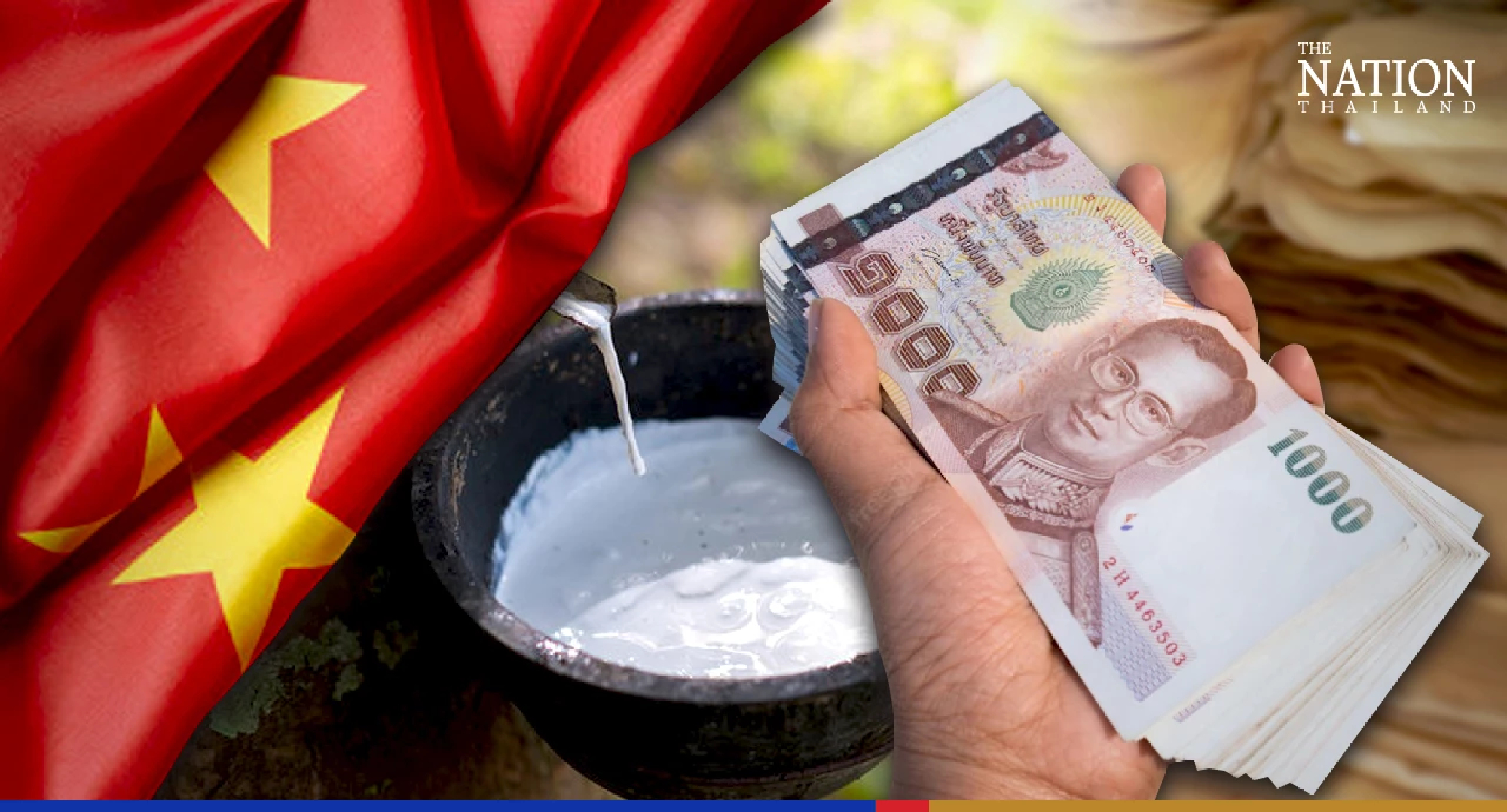
The Rubber Authority of Thailand (RAOT) expects the rubber price in the second quarter to remain stable at Bt63 to Bt65 per kilo.
However, the price would also depend on developments in the Ukraine-Russia conflict, RAOT governor Nakorn Tangavirapat told the Thansettakij news outlet.
Athiwee Daengkanit, RAOT’s research and development director, said the price was being supported by the low quantity of rubber in the market as Thailand enters the dry season. Meanwhile, market demand is high, supported by China’s economic stimulus policy and subsiding Covid-19 infections that allowed more Chinese factories to open.
China is by far the biggest market for Thai rubber exports.
Another positive factor was Chinese car sales, which rose 18.7 per cent to 1.74 million units in February from a year earlier, breaking an eight-month slide.
Chinese sales of neighbourhood electric vehicles (NEV) also surged 197.5 per cent in February, raising demand for rubber even higher.
However, the energy price remains high after the International Energy Agency (IEA) reported that oil supply from Russia will fall by 3 million barrels per day next month.
This would lead to a global shortage of 700,000 barrels per day in the second quarter.
Meanwhile, the baht has strengthened again on dollar sell-offs as the US Federal Reserve is expected to raise the interest rate by 0.25 to 0.50 per cent with another six rises signalled for this year.
Athiwee said the market is closely monitoring the Ukraine-Russia conflict as it will affect rubber demand and prices. She expects the price to remain stable through April on demand from China and Japan, though said the Russia-Ukraine conflict would be a factor.
Worathep Wongsasuttikul. honorary president of Thai Latex Association, forecast that the rubber price would remain strong. He cited the probability of an early dry season due to the La Niña phenomenon. But he also cautioned that the European conflict could drive up the price.
Thailand is the world’s largest exporter of rubber, with an industry that supports around 1.7 million Thai households.
Athiwee Daengkanit, RAOT’s research and development directorRAOT governor Nakorn Tangavirapat
When new rules come in force from April 1, buyers of property or vehicles will still be able to use digital money as a guarantee, but not to pay for the purchase, a senior official from the Bank of Thailand said recently.
Naphongthawat Phothikit, director of the central bank’s Payment Systems Policy Department, said the use of cryptocurrencies as deposits or investments is still allowed, though they will be banned as payment for goods and services.
Under the new rules, business operators including crypto exchanges are prohibited from providing payment services promoting the use of digital assets and cryptocurrency to pay for goods and services. This ban has been imposed because Thai authorities say the wider use of digital assets is threatening the country’s financial system and economy.
Meanwhile, the Securities and Exchange Commission (SEC) is gathering information to set measures for controlling the use of “utility tokens” or crypto tokens that allow users to get future access to goods or services provided by a certain company.
Surasak Ritthongpitak, director of SEC’s Market Supervision Department, said a public hearing on the matter will be held in April and expects the agency to set regulations on the use of utility tokens in the third or fourth quarter of this year.
The use of cryptocurrency as a means of payment has been banned after many young Thai investors increased their trade of digital assets in search of better returns amid the economic slowdown.
Thai investors are now holding up to 114.5 billion baht worth of digital assets, up from 9.6 billion baht a couple of years ago, Bloomberg reported on Wednesday, citing government data released in January.
It said average daily turnover has jumped to 4.8 billion baht from 240 million baht, with the number of active trading accounts swelling to 1.98 million from 170,000 before the pandemic.
A recent survey by the Government Housing Bank’s Real-Estate Information Centre (REIC) shows that though fewer new property units are being released in the South, the property market in the Northeast is recovering fast.
“This year, the Isaan market has 3,928 new properties, up by 60.3 per cent from 2,450 units during the same period last year,” Wichai Viratakaphan, REIC’s acting director-general, said on Friday.
REIC estimates that Nakhon Ratchasima and Khon Kaen have seen the highest number of new properties added to the market this year at 1,917 and 1,195 units, marking a 106 per cent and 66.4 per cent increase year on year, respectively.
“We expect 4,206 units in the Northeast to be sold this year, up 5.9 per cent from 3,973 units sold in 2021. The sale value will also rise by 4.8 per cent to 13.5 billion baht from 12.9 billion baht,” he said.
In comparison, provinces in the South have 17,399 properties up for sale, marking a 2.1 per cent drop year on year. The total value of properties has also dropped by 0.9 per cent year on year to 76.29 billion baht.
“Nakhon Si Thammarat recorded the biggest dip in new properties, marking a 60.8 per cent drop year on year, followed by Songkhla, which recorded a 47.8 per cent decrease,” he said.
“The trend in Phuket, however, is improving with 439 new condos and 177 new horizontal units being launched this year, up 74.2 per cent and 3.5 per cent year on year, respectively.”
In terms of properties sold, REIC reckons the South will see 5,495 units bought up this year, up 56.4 per cent year on year. The total value of sold units is also expected to rise 67.7 per cent year on year to 22.9 billion baht.
REIC expects 2,768 houses valued at 10.14 billion baht and 2,727 condos valued at 12.77 billion baht to be sold this year.
The number of unsold properties in the South this year is estimated to hit 15,319 units, down 0.5 per cent year on year. Of these, 9,907 units are houses worth 37.9 billion baht and 5,412 units condos and flats worth 27.7 billion baht.
This year, Phuket is expected to have the highest number of unsold units, followed by Songkhla, Surat Thani and Nakhon Si Thammarat.
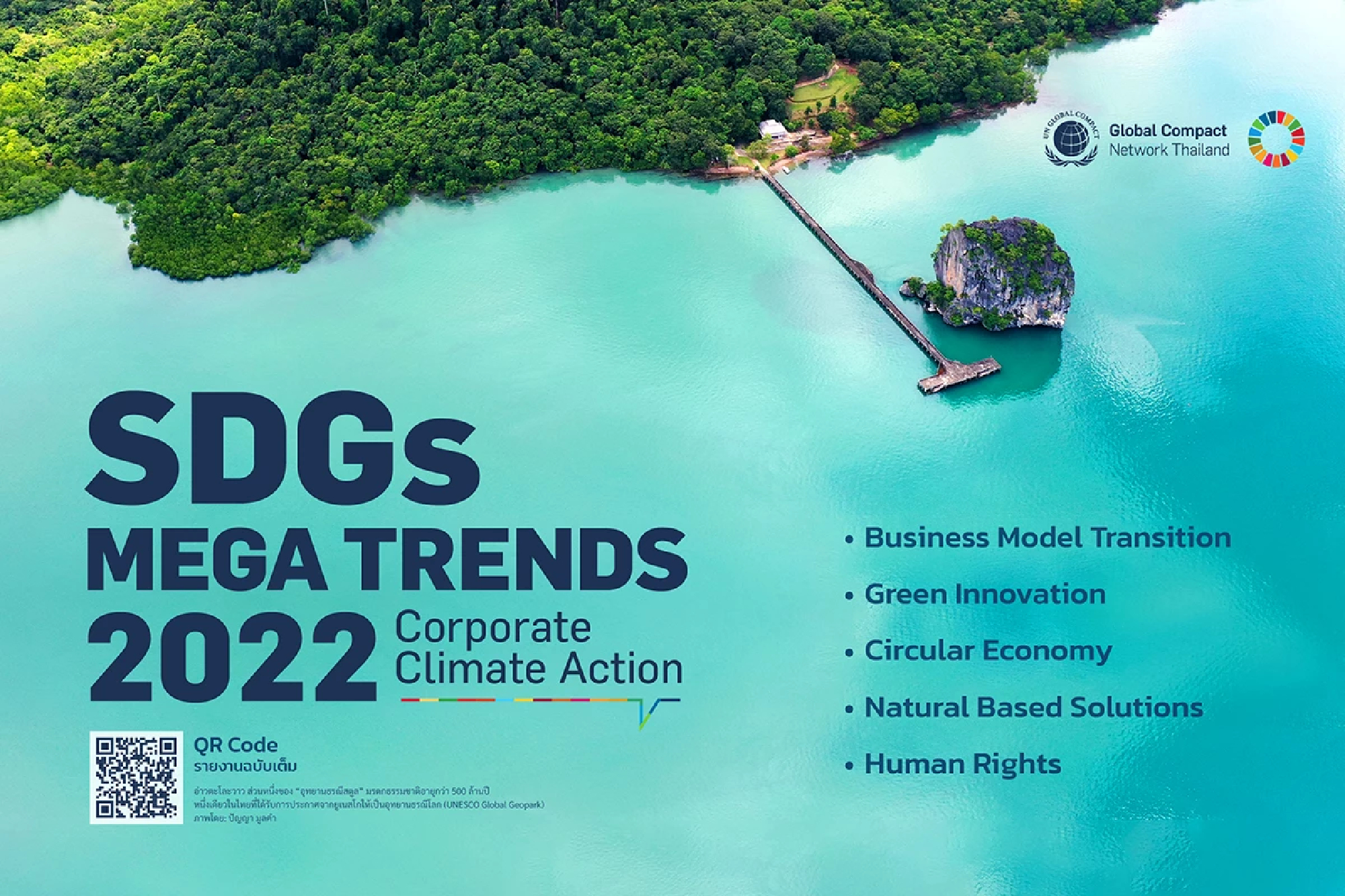
Thailand’s largest sustainability network, Global Compact Network Thailand (GCNT), has published its “SDGs Mega Trends 2022” report as a sustainable development framework focused on business transformation in the era of climate change.
Thailand’s largest sustainability network, Global Compact Network Thailand (GCNT), has published its “SDGs Mega Trends 2022” report as a sustainable development framework focused on business transformation in the era of climate change.
The third annual SDGs Mega Trends report deals with climate change prevention and solutions.
“This is a crisis faced by everyone, and we must address it together, particularly the influential private sector. Corporate leaders are the most significant figures in establishing and directing business goals in compliance with these challenges,” GCNT chairperson Suphachai Chearavanont said.
This year, SDGs Mega Trends presented a UN Global Compact study on the climate perspectives of 1,232 CEOs drawn from 21 industrial sectors across 113 countries.
The survey, including exclusive interviews with CEOs from six of Thailand’s leading corporations, reveals their vision for reducing CO2 emissions and tackling other environmental problems.
The exclusive interviews include six CEOs of GCNT members with the vision to tackle climate change for business enhancement, namely, PTT Public Company Limited (Energy Transformation), Bangchak Corporation (Green Energy Balance on Business), The Creagy (Net Zero Economy), Charoen Pokphand Foods or CPF (Kitchen of the World), Mitr Phol Group (Dynamic new business) and Indorama Ventures (Circular Economy).
The work of the UN’s Net Zero Coalition is based on scientific data that is fundamental to new sustainable solutions and can be applied to value chains, as well as concrete policy, strategy and operational plans which can be put into practice by any organisation.
“By building awareness through SDGs Mega Trends, we expect to stimulate and promote tangible prevention and resolutions across industries,” GCNT said.
“The operations framework includes the government’s bio-circular-green [BCG] economic model, the green economy, nature-based biodiversity solutions, and innovation and technology development – particularly in clean energy, human rights and commitments to reduce the social gap.”
SDGs Mega Trends 2022 includes:
· Business model transition: Revision and transformation from traditional methods to green businesses or the establishment of alternative business models for sustainability to increase value and reduce negative impacts on the environment, with value-chain improvement. By implementing innovative development in basic infrastructure, organisations are prompted to handle changes and transition into sustainable industries that respond to future lifestyle trends and commit to reducing greenhouse gas emissions.
· Green innovation: Investment in innovative green technology and clean energy can be applied throughout the value chain, such as by increasing the proportion of alternative energies with lower CO2 and pollutants, adjusting strategies in production and services and reducing negative effects of the value chain on the environment.
· Circular economy: Prompting the circular economy to build sustainability throughout the production chain with technology used to create value as well as cultivating available resources for maximum efficiency throughout the product lifecycle.
· Nature-based solutions: Biodiversity recovery and resilience through nature-based solutions, including forestation to help reduce carbon dioxide, enabling stability of conditions for humans and animals, restoring green abundance and preserving biodiversity.
· Human rights: Respecting human rights and equality as well as reducing gaps in access to resources. Protect vulnerable groups prone to risks via “just transition” trends involving farmers’ standards of living, upstream industries, SMEs, career support for vulnerable groups, social welfare, and new skills training for the workforce.
Among the GCNT member-companies whose CEOs presented their visions to tackle climate change for business enhancement were PTT Plc (Energy Transformation), Bangchak Corporation (Green Energy Balance in Business), The Creagy (Net Zero Economy), Charoen Pokphand Foods or CPF (Kitchen of the World), Mitr Phol Group (Dynamic new business) and Indorama Ventures (Circular Economy).
Courtyard by Marriott, a trailblazer with the largest global footprint of hotels within Marriott Bonvoy’s portfolio of 30 brands, has opened its newest hotel in north Pattaya.
Courtyard by Marriott, a trailblazer with the largest global footprint of hotels within Marriott Bonvoy’s portfolio of 30 brands, has opened its newest hotel in north Pattaya.
The Courtyard North Pattaya offers guests comfort and style with inviting spaces, thoughtful amenities and technology catering to the needs of next-gen business and leisure travellers.
Just a few minutes from the Wongamat Beach in Naklua, North Pattaya, the hotel is only two hours from Bangkok and an hour and a half from Suvarnabhumi Airport.
Guests at the Courtyard North Pattaya can enjoy many of the local attractions in the city, from world-class water parks and retail malls, including Terminal 21 and Central Festival, to cultural sites like the Sanctuary of Truth and floating market, championship golf courses, beautiful beaches and Pattaya’s famous Walking Street.
“It gives me great pleasure to unveil the newest addition to the Courtyard by Marriott brand portfolio in Thailand. Designed to provide guests with everything they need to move forward, Courtyard North Pattaya is the ideal choice for business and leisure travellers,” said Jakob Helgen, Marriott International’s area vice president for Thailand, Vietnam, Cambodia & Myanmar.
“Our ‘select services’ portfolio is driving momentum for growth in the region with an exciting pipeline. With international borders reopening, we look forward to welcoming international travellers with expanded travel choices and diversified experiences.”
Accentuating contemporary design that encompasses comfort and functionality, the new hotel’s decor also incorporates elements and patterns of the sand and beach, creating a connection with the local community.
Guests can choose from 233 contemporary rooms and suites, ranging from the 28-square-metre Superior Rooms and Premier Rooms to the larger 37sqm Deluxe Rooms, spacious 41sqm Deluxe Suites and 44sqm Courtyard Suites. All rooms are equipped with comfortable bedding, ergonomic workspaces, LCD TVs, complimentary Wi-Fi and spacious marble bathrooms with rain showers to ensure peaceful and productive stays.
The guestrooms also feature the brand signature window side lounger, providing guests with a perfect spot to recline, relax and enjoy the view.
Dining options at the hotel include Café 22, an all-day dining venue that serves a wide selection of local and seasonal cuisine along with international favourites in a vibrant ambience with open kitchens.
This is the perfect place to kickstart the day with an energising buffet breakfast, grab light bites and healthy snacks throughout the day, and enjoy memorable evening meals.
The poolside Surf Bar is a great spot to enjoy refreshing drinks whilst gazing out over Pattaya’s skyline. The Spart’s Bar where guests can relax and unwind over crafted cocktails, cold-brew coffee, and more by an expert mixologist and barista.
When visitors are not working or exploring the area’s many local attractions, they can work out at the 24/7 Fitness Centre, with its state-of-the-art equipment, changing rooms and showers, or soak up the sun at the inviting rooftop pool. Children, meanwhile, are kept fully engaged and entertained at the Kid’s Club, with its indoor and outdoor play zones.
For business travellers and meeting planners, Courtyard North Pattaya’s Grand Ballroom can host exceptional events. This impressive 230sqm, pillar-free function room can host mid-sized meetings or social occasions, or be divided into two smaller spaces for more intimate events. The foyer also provides a great option for coffee breaks and cocktail receptions.
“Pattaya is a great destination and has a lot to offer to every kind of traveller, from business travellers visiting the vibrant business parks of the Eastern Seaboard to couples seeking a spot of beachfront relaxation, and families or friends planning an energizing break with plenty of activities,” the hotel’s general manager Shashank Singha said.
“We look forward to welcoming travellers to Pattaya and extending to them the same amazing levels of service excellence and great hospitality that our guests have come to expect from Courtyard hotels across the world.”
Guests can rest assured that Courtyard North Pattaya upholds the highest health and safety standards under Marriott International’s global “Commitment to Clean”. It has also been certified by the Amazing Thailand Safety & Health Administration Extra Plus (SHA++) programme.
Courtyard North Pattaya is the third Courtyard branded Marriott hotel in Thailand, joining the popular Courtyard Bangkok and the recently-opened Courtyard Phuket Town.
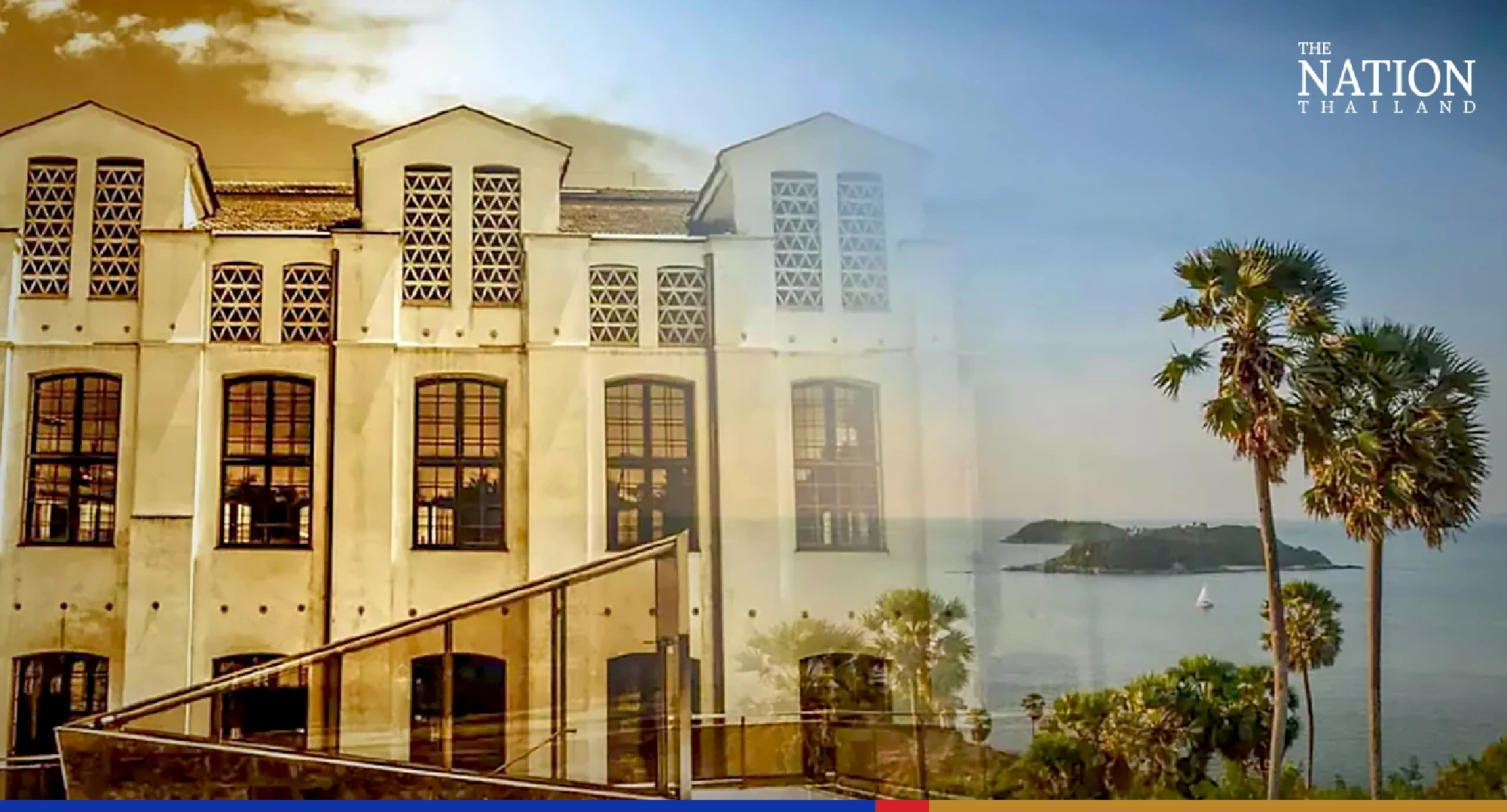
The Standard, Hua Hin will mark Earth Hour 2022 by switching off all non-essential lights for one hour in a bid to give the planet a break on Saturday (March 26).
The new vibrant beach resort, which has quickly become a buzzing social and cultural hub in Hua Hin, is also tackling the world’s biggest issues – including the fight against climate change.
This month, The Standard will join millions of other homes and businesses around the world by plunging into darkness to mark the global movement that has become a catalyst for environmental action.
From 8.30pm to 9.30pm (local time), The Standard will extinguish the lights in all parts of the property, including the exterior facades of both main hotel buildings, the lobby area, The Lido restaurant, The Lido Bar, Juice Café and Praça, the restored heritage house and Thai izakaya.
The Earth Hour message will also be communicated to in-house guests, who will be encouraged to turn off their room lights and come together by candlelight at the resort’s atmospheric restaurants and lounges, to exchange bright ideas and practical action we can all take to help save the planet.
“At The Standard, we understand the importance of supporting Earth Hour. This annual event reflects a philosophy we try to practice all-year-round – to reduce our carbon footprint, operate in a more sustainable manner, and build a better future for the next generation,” said Standard International executive chairman Amar Lalvani.
“Participating in Earth Hour is a simple gesture, but it forms part of a powerful global movement. The Earth needs a break, so let’s all turn off our lights on March 26,” he added.
Launched in 2007 by the World Wildlife Fund (WWF), Earth Hour started out as a symbolic lights-out event to raise awareness of climate change. It has grown into one of the world’s largest grassroots environmental movements.
Held annually on the last Saturday of March, it engages supporters in more than 190 countries and territories, all taking action to ensure a brighter future for the planet.
Opened in December 2021, The Standard, Hua Hin brings a cool Miami vibe to Thailand’s golden gulf coast. With 199 rooms, suites and villas, the mid-century design Lido pool and bar, a beachfront Thai izakaya restaurant and juice café, this chic seafront hotel is a haven for curious global explorers.
The Standard hotels are located in desirable destinations spanning Miami Beach to the Maldives, London to New York, and now Hua Hin, with Ibiza and Bangkok soon to be added.
Connect with the hotel via The Standard Hua Hin Facebook page, @thestandardhuahin Line account and www.standardhotels.com.
Huawei definitely plays a leading role in this area, not only in products and solutions, but in fundamental theory research and industrial design as well.
Asia-Pacific is ripe with opportunities for digital transformation, and the pandemic has accelerated this change. As 5G rolls out at scale, connectivity, cloud, AI, computing, and industry applications have all come together to create unprecedented opportunities for the ICT sector. According to the Asian Economic Integration Report 2021, Asia Pacific will reap an economic dividend of more than $1.7 trillion per year or more than $8.6 trillion through 2025. The increased use of digital technologies will result in about 65 million new jobs created every year in the region until 2025. With stable human, financial and business fundamentals, the highest net profit in history, and our continued efforts to globalise under pressure and increase R&D investment, Huawei’s unwavering business strategy, focused on connectivity and computing and rapidly developing new businesses including digital power and cloud, is perfectly aligned to drive the digital economy in Asia Pacific.
Leveraging key digital trends As we shift gears from Covid-19 being a great disruptor to focusing on new opportunities from the acceleration towards digital transformation, I’m re-energised with the possibilities of our digital future. In 2022, our Huawei vision and mission continues, that is to bring digital empowerment to every person, home and organisation for a fully connected, intelligent world. This year, with the Mobile World Congress 2022 now behind us, brings the perfect opportunity to re-emphasise this vision and extend it to our view for the future world of 2030. Looking at the future world in 2030, its characteristics and how it will impact every aspect of life, industry, society and economy, Huawei is predicting various indicators across four broad areas – Digital Life, Digital Industries, Digital Infrastructure and Digital Carriers. For Digital Life, new XR and enhanced multimedia experiences will scale to 1 billion users and offer immersive solutions that will redefine everything from museum visits to shopping. Combining the data required for this with Digital Industry will mean the amount of data generated worldwide each year will likely exceed one trillion gigabytes and cloud services will account for more than 87 per cent of enterprise application spending.
Simon Lin, president of Huawei Asia Pacific
Digital Infrastructure will improve energy conservation and emission reduction with renewable energy accounting for 42 per cent of the industry’s electricity generation. ICT technologies, while consuming only 2 per cent of global energy, will help reduce CO2 emissions by 20 per cent. Underpinning all this will be Digital Carriers, supporting more than 200 billion connections and providing more computing and storage capabilities to industries. The Intelligent World will redefine experiences, optimise operations, and ignite new business. Embracing business, technology and sustainability we hope to work together with customers, partners, governments, industry and consumers to enrich lives through this new digital future.
Driving innovation in digital infrastructure Fundamentally, our future world will be based on three driving forces: business, technology and sustainability. First, business-driven forces will arise from the application of digital technologies in various industries to drive digitalisation and improve services. Second, technology-driven forces will emerge from new connectivity including 5G Advanced, 6G and IPv6+ and computing technologies that are evolving to enable new applications. Lastly, sustainability-driven forces including green development, social responsibility, and fast response to emergency situations will profoundly change people’s lives. Connectivity and cloud are the lifeblood of the digital frontier; however, the digital readiness of the region varies greatly. Huawei’s Global Connectivity Index (GCI) shows that India, Indonesia and Philippines ranked 63, 58 and 59 respectively out of all countries, while Singapore ranked No 2. Philippines and Indonesia are the lowest in fixed broadband speeds compared to Singapore, and Thailand at the front. More broadly, cloud penetration in the region is less than 20 per cent, 4G mobile coverage is slightly above half, and FBB reaches barely one-third of households. Under our Tech4All initiative, for example, Huawei’s RuralStar programme, with the aim to provide internet and connectivity for underdeveloped regions since 2017, has successfully cooperated with 12 operators in eight countries, including Thailand and Indonesia, in its first year. In the remote mountains of Chiang Mai, Thailand, for example, Huawei’s AirPON solution reuses existing poles and fibre resources, creating an “air network equipment room” that has provided connectivity to more than 10,000 villages. As part of its efforts to create a greener and more sustainable digital world, Huawei will increase its investment in sustainable green solutions, leveraging clean power generation, electric transportation, and smart energy storage, to support the Asia Pacific region’s goals of cutting carbon emissions, promoting renewable energy, and contributing to a circular economy.
Lighting up Asia Pacific As one of the most populous and diverse regions in the world, Asia Pacific’s fast-growing economies are at the forefront of the global digital landscape. We are seeing huge opportunities for digital economy growth and digital transformation in the region, while many countries in the region have also issued national digitalisation strategies. For example, Singapore released its Smart Nation 2025 blueprint. Indonesia and Malaysia released strategies to go digital, Bangladesh has released a strategy called Digital Bangladesh, and Thailand announced its vision to become a digital hub in Asean. In this great journey, we are committed to supporting the region’s digital vision as a key contributor. Towards this goal, we will focus on three key areas: Connectivity and Intelligence, Low-Carbon Development, and Digital Inclusion initiatives. Digital Connectivity, including 4G, 5G, fibre and IoT is fundamental to the success of the digital economy and has been further accelerated by Covid-19 with the demand from digital subscribers and for digital services growing significantly. Huawei definitely plays a leading role in this area, not only in products and solutions, but in fundamental theory research and industrial design as well. Cloud Computing and Intelligence is the cloud infrastructure for an intelligent Asia Pacific, including data centres, cloud services and AI enablement to support data monetisation and promote industry digitalisation. According to Gartner’s latest report, HUAWEI CLOUD was the fastest growing cloud in the global IaaS market with a growth rate of more than 220 per cent. We are currently ranked 5th in global market share, and in Asia Pacific we operate seven Availability Zones in Thailand, Hong Kong and Singapore and have local service teams in over 10 countries. Through heavy R&D investment, the carbon emission for our E2E products and services has been reduced by over 80 per cent while retaining the same capacity. Huawei combines digital and electronic technologies to develop innovative digital power services to use energy as efficiently as possible, and minimise the carbon footprint of ICT infrastructure, by leveraging clean power generation, electric transportation, and smart energy storage. By the end of 2021, Huawei had helped global customers reduce carbon emissions by 230 million tons. Meanwhile in Singapore, we supported Sunseap Group with industry-leading solar inverters to build one of the world’s largest offshore floating farms, contributing to the clean energy landscape in Asia Pacific. Lastly, we will keep driving digital innovation for an inclusive Asia Pacific and leave no one behind. In our vision, a digital world is not just about technology, it is about people and humanity. Over the next three years Huawei will invest US$100 million to build the startup ecosystem in Asia Pacific, and over the next five years we will invest $50 million to develop 500,000 digital talents. In Malaysia, we launched our TECH4ALL initiative to help bridge the digital divide, and with our Huawei IdeaHub smart screen, we have connected students in remote areas to digital interactive learning centres.
Huawei’s outlook Huawei’s Carrier business continues to benefit from 5G network infrastructure construction and remains robust, with 13 overseas countries having the best experience of Huawei’s 5G network in third-party tests. Overseas, along with our operators and partners, we promoted 3,000 5G applications, including many applications for industry commercialisation. Our Enterprise business, established in 2011, has exceeded expectations and already includes more than half of the top Fortune Global 500 companies and more than 30,000 partners, helping transformation in various industries including education, government, finance, energy, transportation and more. Cumulative shipments of smart wear devices now exceed 100 million worldwide, driving our Consumer business and we continue to expand our footprint with new devices that include premium smartphones and tablets, smart screens, audio, printers, laptops, desktops and more. Our Harmony operating system has surpassed 220 million users globally and Asia Pacific continues to lead with the rapid development of our consumer HMS ecosystem. Our Cloud and Digital Energy businesses achieved double-digit growth in part due to a community of over 8 million Huawei Cloud developers and green sites deployed in more than 100 countries worldwide. Certainly, the political climate has impacted Huawei’s ability to do business as we would like. But even in the face of adversity, we have achieved the highest net profit in history, hold sufficient net cash, and maintain a healthy financial position of the company. Going forward Huawei will adapt to this new environment with an optimised organisational structure and continuously improve our operating capabilities and organisational efficiency. While maintaining the advantage of a large platform, we have shortened the management chain through the pilot operation of industrial subsidiaries that are able to respond more quickly to customer needs. Huawei has both the capabilities and confidence to continue serving our customers with innovative, business-aligned, sustainable solutions. Huawei’s business strategy is clear, focusing on connectivity and computing, and developing new businesses that include digital energy and cloud. More importantly, we will support industry transformation by leveraging our more than 3,000 5GtoB projects to offer guidance and solutions for Smart Mining, Smart Manufacturing, and Smart Ports, helping operators launch 5GtoB services more successfully. We are committed to driving innovation, attracting top and outstanding global talent, and supporting the continuous operation of hundreds of operators, millions of businesses and billions of consumers. We continue to be guided by our commitment to innovation, openness, collaboration and shared success. Even under heavy pressure, we leverage our world-leading strong investment in R&D and drive the implementation of our globalisation strategy that includes standards, talent and supply chain. Through this, we maintain our ability to create value for customers, cooperate with partners for shared success, and contribute to society as a whole. Only by working together can we build the infrastructure, services and trust that will power us into the Intelligent World.



 Athiwee Daengkanit, RAOT’s research and development director
 RAOT governor Nakorn Tangavirapat



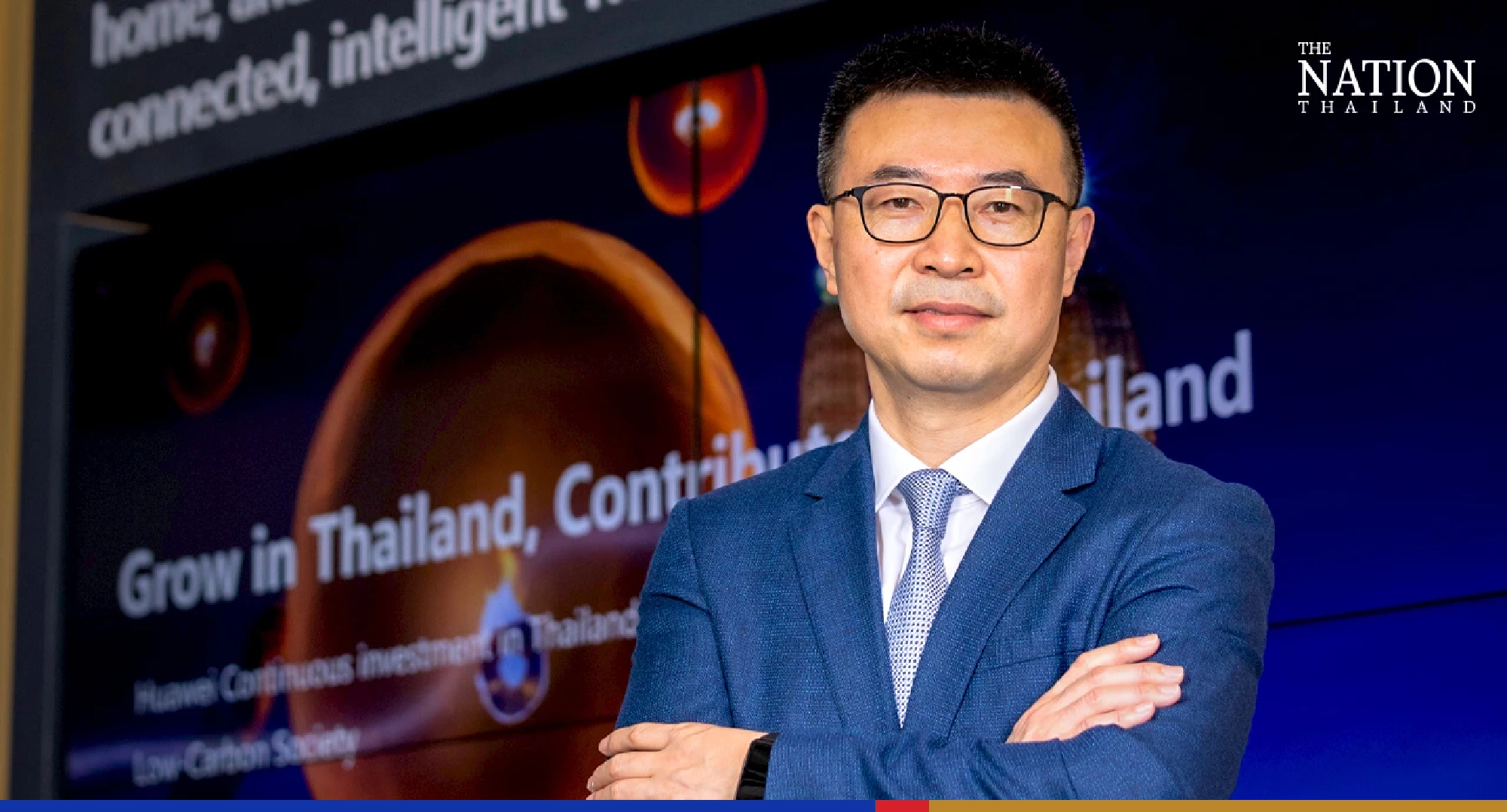
 Simon Lin, president of Huawei Asia Pacific
