
Fed confronts economy with most widespread shortages since 1970s #SootinClaimon.Com

#SootinClaimon.Com : ขอบคุณแหล่งข้อมูล : หนังสือพิมพ์ The Nation.

https://www.nationthailand.com/business/40008276


Federal Reserve officials meet this week as consumers and companies fret the U.S. economy is facing the most widespread supply crunch since the oil crisis of 1973.
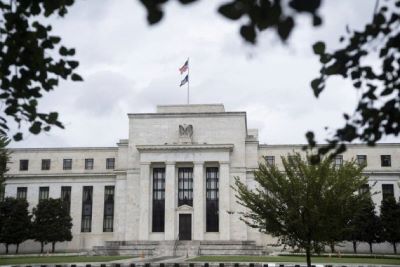
Chair Jerome Powell and his Federal Open Market Committee meet Tuesday and Wednesday as supply chains fray at multiple junctions for trade. The hard part of their job: deciding if snarls are localized and temporary, or are longer-term headwinds that’ll fan inflation if supply and demand remain out of balance.

Ports including Los Angeles and Savannah, Georgia, are congested, key manufacturing materials such as semiconductors are tricky to source, commodity prices are soaring and some employers are struggling to find even unskilled workers. Yet problems are uneven, with ports in Boston and Oakland, California, promoting the relative ease of moving goods across their docks.

In the Fed’s recent snapshot of the economy, 10 of its 12 regional banks reported anxiety of some form of scarcity, be it of workers, inputs or goods. Forms of the word “shortage” appeared 70 times, six of the districts cited “bottlenecks” and most reported “significantly elevated prices.” Added together, use of “shortage” in the so-called Beige Book is around its highest since the early 1970s, according to MetLife Investment Management.

The central bank’s dilemma is whether the supply squeeze represents so great an inflationary threat that will need addressing with tighter monetary policy or will soon pass as the economy returns to normal, meaning policy can remain super loose for longer. The upcoming holiday season will pose a further test to the outlook.

“In the U.S. and in other advanced economies with these supply constraints and shortages and therefore elevated inflation, they are likely to last longer than previously expected — likely well into next year,” Chair Jerome Powell said Oct. 22. “But it is still the most likely case that as supply-side constraints abate, as they eventually will, and as job gains move back up, inflation will move back down closer to our 2% goal.”

The Fed districts are keeping tabs on how the risks break down regionally.

In an October survey of businesses by the Atlanta Fed, 52% of respondents said they had hired new suppliers to mitigate disruptions and 34% had changed their products or services. Thirty-three percent had shifted from “just in time” management of inventories to “just in case.”

In another poll, the Richmond Fed found almost three-quarters of large and small firms alike experiencing tangled supply chains. Availability of materials, shipping problems and production delays were the most cited challenges.

In response to questions from the Dallas Fed, where winter storms earlier this year pummeled manufacturers of chemicals, plastics and other industrial ingredients, a metals maker said “it is beginning to feel like we are headed to a slowdown in a few months with inflation kicking in.”

A chemical maker added, “the potential for recession is ever increasing without major fiscal policy improvement.”

“In some cases the economy is clearly supply constrained, and some people are hanging back from working during Covid,” said Stephen Stanley, chief economist at Amherst Pierpont Securities. “But some of the supply disruptions are also a function of demand being unusually high.”

Published : November 02, 2021

By : Bloomberg
EU gas surges on disturbance to Russian shipments #SootinClaimon.Com

#SootinClaimon.Com : ขอบคุณแหล่งข้อมูล : หนังสือพิมพ์ The Nation.

https://www.nationthailand.com/business/40008273


Europe faced a tightening squeeze on natural gas after some Russian supplies reversed direction and Algeria stopped shipments to Spain.

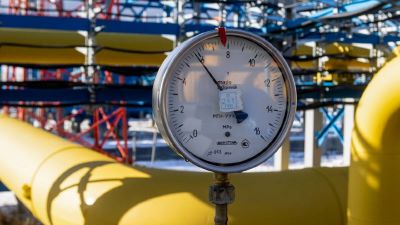
Benchmark gas futures surged as much as 15%, before paring those gains as traders weighed lower prices in Asia and Russia’s promises to boost supplies against disruptions in some parts of Europe. The market was roiled in early trading as Russian gas started flowing eastward from Germany to Poland, reversing the usual direction. Spain is also getting less gas after a 25-year transit deal to ship Algerian gas via Morocco expired.

European gas futures broke records several times this year as Russia capped flows to the region just as cargoes of liquefied natural gas were diverted to Asia. Soaring energy costs helped send euro-zone inflation to a 13-year high in October, fueling concerns about an economic slowdown. President Vladimir Putin has promised more gas supplies to Europe, but that has yet to flow.

“Gas prices are currently all about signals and especially those being sent from Russia,” said Ole Hansen, head of commodity strategy at Saxo Bank A/S. The market is “in flux and still very worried.”

LNG prices in North Asia meanwhile fell as moves by China’s authorities to raise coal production reduced concern over tight energy supplies this winter in the region.

Russian gas shipments entering Germany’s Mallnow compressor station dropped to zero on Saturday, according to data from grid operator Gascade. The Yamal-Europe pipeline was instead sending gas eastward from Germany to Poland, and those flows increased further early on Monday.

Russian gas shipments through Yamal-Europe pipeline, one of several routes used to deliver fuel to the region, were already expected to be capped this month after Gazprom PJSC only booked 35% of the monthly pipeline capacity offered at Mallnow. The reverse flows, however, left traders scratching their heads after Putin signaled a potential increase in supplies from Nov. 8, when Russian storage sites will be full.

Gazprom said on Saturday that it was meeting requests from its European customers in full, and “fluctuations in demand for Russian gas depend on the actual needs of buyers.”

The reverse flows suggest Poland is ordering more gas from the west. That’s leaving less supplies for Germany, which also receives its fuel via a Baltic Sea pipeline from Russia.

The Polish network operator Gaz-System said on Sunday that there was no demand for gas transit toward Germany. Gascade said reverse flows are not unusual.

“I think Yamal forward flow will rebound after Nov. 8, when Gazprom will start sending gas for refilling European storages,” said Katja Yafimava, a senior research fellow at the Oxford Institute for Energy Studies.

Traders will be watching closely for any signs Russia will top up shipments this heating season. Auctions on Tuesday for pipeline capacity to move Russian gas via Ukraine and Poland will provide clues as to whether Gazprom intends to boost supplies in the first three quarters of 2022.

Russian gas transit to the European Union via Ukraine fell to 57 million cubic meters a day on Nov. 1, down from 86 million a month ago, Gas Transmission System Operator of Ukraine said Monday. Bulgaria halted gas transit to some neighboring countries because of a damaged pipeline.

Spain, which has limited to connections to other European countries, was also facing a supply crunch. Algerian President Abdelmadjid Tebboune ordered a halt to gas flowing to Spain via Morocco amid a diplomatic spat between the two North African nations. He also told state-run energy company Sonatrach not to renew its transit accord with Morocco.

Published : November 02, 2021

By : Bloomberg

Thailand gives RCEP its stamp of approval #SootinClaimon.Com

#SootinClaimon.Com : ขอบคุณแหล่งข้อมูล : หนังสือพิมพ์ The Nation.

https://www.nationthailand.com/blogs/business/40008270


Thailand ratified the Regional Comprehensive Economic Partnership (RCEP) on October 28, Commerce Minister Jurin Laksanawisit said on Monday, adding that the pact should come into force by January.

The pact will remove export tariff on 39,366 items and expand the market for many Thai products such as fresh and processed fruit, fishery products, rubber etc.

urin said Singapore, Brunei, Laos, Cambodia and Vietnam, along with non-Asean countries China and Japan have ratified the pact.

If one more non-Asean country sanctions the pact, all conditions will have been met, he said.

Terms stipulate that RCEP must be ratified by at least six of 10 Asean members and three out of five non-Asean signatories.

RCEP is a free-trade agreement among 15 Asia-Pacific countries, namely Australia, Brunei, Cambodia, China, Indonesia, Japan, Laos, Malaysia, Myanmar, New Zealand, the Philippines, Singapore, South Korea, Thailand and Vietnam.

With 15 members, RCEP is seen as the largest FTA ever, covering 2.3 billion people or 30 per cent of the global population. The member states account for 33.6 per cent or a third of the world GDP and a third of global trade.

Published : November 01, 2021

By : THE NATION

Thailand’s BAAC grants fewest loans this year #SootinClaimon.Com

#SootinClaimon.Com : ขอบคุณแหล่งข้อมูล : หนังสือพิมพ์ The Nation.

https://www.nationthailand.com/blogs/business/40008269


Loans granted by the Bank for Agriculture and Agricultural Cooperatives (BAAC) during the first half of 2021 was the lowest in three to five years owing to low economic activity due to Covid-19.

So far, the bank has only granted new credit worth around 9 billion baht or just 15.77 per cent of its full-year target of 57 billion baht, BAAC president Tanaratt Ngamvalairatt said on Monday.

Farmers have been earning very little because their exports have been blocked due to sealing measures employed by different countries. At the same time, Thailand’s tourism industry has slowed down, with many operators in the service sector such as restaurants, bars and hotels shutting down. Stimulus and remedy packages offered by the government have also reduced the number of people seeking loans, he said.

BAAC’s non-performing loans (NPLs) as of September 30 stood at 4.2 per cent of outstanding credit. This was slightly higher than the 3.9 per cent in the same period last year. However, Tanaratt reckons NPLs will drop to 4 per cent by the end of the year.

Published : November 01, 2021

By : THE NATION

SET drops 0.59 per cent despite positive news of Thailand reopening #SootinClaimon.Com

#SootinClaimon.Com : ขอบคุณแหล่งข้อมูล : หนังสือพิมพ์ The Nation.

https://www.nationthailand.com/business/40008266


The Stock Exchange of Thailand (SET) Index closed at 1,613.78 on Monday, down 9.65 points or 0.59 per cent. Transactions totalled 69.80 billion baht with an index high of 1,632.73 and a low of 1,611.39.

The index dropped for the fourth day running after falling by 0.05 per cent on Friday, 0.20 per cent on Thursday and 0.51 per cent on Wednesday.

In the morning session, Krungsri Securities forecast the SET Index on Monday would fluctuate between 1,615 and 1,635 points despite the rise in other Asian indices in response to Japan’s election result and Thailand reopening.

It said the fall in China’s manufacturing Purchasing Managers Index and investors’ move to delay investment to follow the result of US Federal Open Market Committee and Opec+ meetings would pressure the index.

The 10 stocks with the highest trade value today were BANPU, KBANK, PTT, PTTEP, AOT, CPALL, OR, KCE, HANA and TRUE.

Other Asian indices were mixed:

Japan’s Nikkei Index closed at 29,647.08, up 754.39 points or 2.61 per cent.

China’s Shanghai SE Composite closed at 3,544.48, down 2.86 points or 0.081 per cent, while the Shenzhen SE Component closed at 14,476.53, up 25.14 points or 0.17 per cent.

Hong Kong’s Hang Seng Index closed at 25,154.32, down 222.92 points or 0.88 per cent.

South Korea’s KOSPI Index closed at 2,978.94, up 8.26 points or 0.28 per cent.

Taiwan’s TAIEX Index closed at 17,068.24, up 80.83 points or 0.48 per cent.

Related stories:

Published : November 01, 2021

By : THE NATION

Thailand’s traditional herb industry expected to grow by THB50 billion this year #SootinClaimon.Com

#SootinClaimon.Com : ขอบคุณแหล่งข้อมูล : หนังสือพิมพ์ The Nation.

https://www.nationthailand.com/business/40008255


The Department of Thai Traditional and Alternative Medicine is working on further developing traditional herbs as it expects the Thai herb market to bring in an extra 50 billion baht this year.

Dr Thiti Sawangtham, the department’s deputy director-general, said on Sunday that the global herb market is valued at around US$91.8 billion, and the top five consumers are Japan, South Korea, China, France and Germany. He was citing data from the Department of International Trade Promotion.

Also, he said, the export value of Thai herbs stands at around 100 billion baht, thanks to many people opting for healthier and more eco-friendly products.

“If Thailand becomes a herb-production hub that meets international standards, we can develop herbs that will help generate income for farmers, boost the growth of the industry and expand the market,” he said.

He expects the Thai herb market to grow by more than 50 billion baht this year as the demand for at least 24 Thai herbs is currently high.

“The department’s division in charge of developing cash crops is opening distribution channels for farmers to boost the industry’s growth,” he added.

Related stories:

Published : November 01, 2021

By : THE NATION

Baht opens weak, expected to fluctuate as US Fed meeting comes up #SootinClaimon.Com

#SootinClaimon.Com : ขอบคุณแหล่งข้อมูล : หนังสือพิมพ์ The Nation.

https://www.nationthailand.com/business/40008251


The baht opened at 33.32 to the US dollar on Monday, weakening from the previous closing of 33.18.

The Thai currency is likely to move between 33.25 and 33.40 during the day and between 33.00 and 33.50 during the week, Krungthai Bank market strategist Poon Panichpibool predicted.

Poon reckons that the baht will fluctuate, especially since the US Federal Reserve is set to meet this week. Important economic data in the US such as the Purchasing Managers’ Index and Nonfarm Payrolls Report will also affect the greenback.

Moreover, gold may also cause volatility, swinging sideways between $1,760 and $1,810 per ounce. This volatility will possibly make investors hold back.

The sell-off of Thai assets by foreign investors may also pressure the baht to fluctuate. Investors may reduce their holdings of stocks and bonds in the short term if they are afraid of a tight monetary policy from central banks.

The key resistance level for the baht will be between 33.40 and 33.50 to the dollar, which is the level at which exporters may sell the US currency.

Related News

Weaker dollar, gold sell offs strengthen baht

Baht strengthens amid pressure from gold sales

Chinas real-estate crisis pulls down the baht

The baht’s key support level will be from 33 to 33.10 to the dollar, at which level some importers may buy dollars, Poon said.

Published : November 01, 2021

By : THE NATION

Gold price inches up in the opening trade #SootinClaimon.Com

#SootinClaimon.Com : ขอบคุณแหล่งข้อมูล : หนังสือพิมพ์ The Nation.

https://www.nationthailand.com/business/40008249


The price of gold rose by THB50 in morning trade on Monday.

AGold Traders Association report at 9.27am said the buying price of a gold bar was THB28,100 per baht weight and selling price THB28,200, while the buying and selling price of gold ornaments is THB27,591.20 and THB28,700, respectively.

At close on Saturday, the buying price of a gold bar was THB28,050 per baht weight and selling price THB28,150, while gold ornaments were THB27,545.72 and THB28,650, respectively. 


The spot gold price on Monday morning hovered around US$1,786 (THB59,688) per ounce after Comex gold at close on Friday dropped by $18.7 to $1,783.9 per ounce due to pressure from the appreciation of the US dollar.

Related news:

The Hong Kong gold price, meanwhile, crashed by HK$100 to $16,540 (THB70,841) per tael, the Chinese Gold and Silver Exchange Society reported.

Published : November 01, 2021

By : THE NATION

Heading to the greener energy journey in Southeast Asia – Renewable energy generation is not the end of the story #SootinClaimon.Com
#SootinClaimon.Com : ขอบคุณแหล่งข้อมูล : หนังสือพิมพ์ The Nation.

https://www.nationthailand.com/pr-news/business/40007929


Standfirst: With improvements in battery technology and artificial intelligence (AI), green hydrogen helps overcome obstacles in adopting renewable energy.

In Southeast Asia, one of the world’s fastest growing regions, the need for green energy has never been clearer than in recent years.

Too often in the past, the lack of a consistent supply of renewable energy has been an obstacle for its takeup. Now, that’s changing. Moreover, when we hear about clean energy / decarbonization, we tend to think about changing the way we generate electricity. However, true decarbonization is achieved by going clean energy for entire energy journey, from generation, storage, distribution, smart usage to management.

With developments in green hydrogen, batteries and AI that enable “virtual” power plants away, it is becoming easier and viable to tap on greater amounts of renewable energy.

First, green hydrogen. This is a form of hydrogen that is produced without emitting any carbon because it is created with renewable sources such as solar or geothermal.

It can be used to generate electricity when needed and also stored and distributed in a way that reduces the uncertainty of renewable energy, which may vary with day, weather and season.

Hydrogen is not a new fuel. While most of the world’s hydrogen is still created by separating the components of water using fossil fuels, there are efforts to turn to renewable energy instead.

The green process is helped by the falling prices of renewable electricity, particularly from solar and wind, which can be used to generate hydrogen. This can then be released to generate electricity that is delivered to homes, offices and factories.

Takeup in green hydrogen

Some testbeds have carried out green hydrogen trials in Southeast Asia in recent years. In 2019, SP Group successfully established the first zero-emission building in the region that is powered by green hydrogen.

It used Toshiba’s pure hydrogen fuel cell system, a hydrogen-based autonomous energy supply system that produces hydrogen and stores the fuel for producing electricity later with its Fuel Cell technology.

The system uses a special metal alloy as a storage medium to bond with hydrogen, allowing for the storage of a large volume of hydrogen at a much lower pressure over a long period of time without any deterioration.

When electricity is needed, the stored hydrogen is released slowly and regulated, making it safer and more compact to be stored and managed.

Besides Singapore, the governments of Indonesia and the Philippines are working with Toshiba to provide green hydrogen as an off-grid energy source to power their remote islands.

SCiBTM batteries

Just as important as producing renewable energy is storing it for use later. Here, advancements in rechargeable batteries are set to make a big difference.

With them, solar or geothermal energy that is harvested can be converted into electricity and stored on a battery for use later to deliver power when needed.

To do this, Toshiba’s SCiBTM battery uses lithium titanium in its anode to deliver safety, long life, low-temperature performance and rapid charging and high effective capacity.

It has been used by energy companies, such as Tohoku Electric Power Co in Japan, as a way to store energy and reduce grid frequency changes at a substation.

In portable form, the SCiBTM battery is used in electric buses for public transport to automated guided vehicles and mobile robots on a factory floor. It is even used by some of Japan’s famous Shinkansen trains to move to a safe place should a power outage occur.

A virtual power plant (VPP)

Besides green sources of energy, what will also help to decarbonize the environment is improved management of the energy that is supplied and consumed. Here, a transformation is happening with smarter software systems driven by AI and the Internet of Things (IoT).

A VPP is possible now with recent advances. It calls for all the distributed sources of energy, including the solar panels and batteries in homes and offices and renewable energy produced by generation companies, to be managed as one virtual power plant.

Heading to the greener energy journey in Southeast AsiaHeading to the greener energy journey in Southeast Asia
Using AI and IoT to predict how much energy is expected to be used and supplied, this system can manage the delivery of energy in a more efficient way. It helps to match demand with supply, catering to the peak and troughs of a usage cycle and reducing waste.

With all the data on hand, consumers can also smartly manage their energy use. They can gain credits or discounts when they agree to a request to scale down their usage during a period of high demand.

Already, Toshiba is seeking to launch VPPs across Japan as early as next year in a shift away from a power grid centralized around a single energy generator.

Finding a path forward

Ultimately, the goal is to find a way to use energy more efficiently and to generate that energy through green sources that do no further harm to the planet.

Toshiba is utilizing its wide range of products and services in the generation, distribution, and storage of power, while actively pursuing carbon capture and utilization technologies

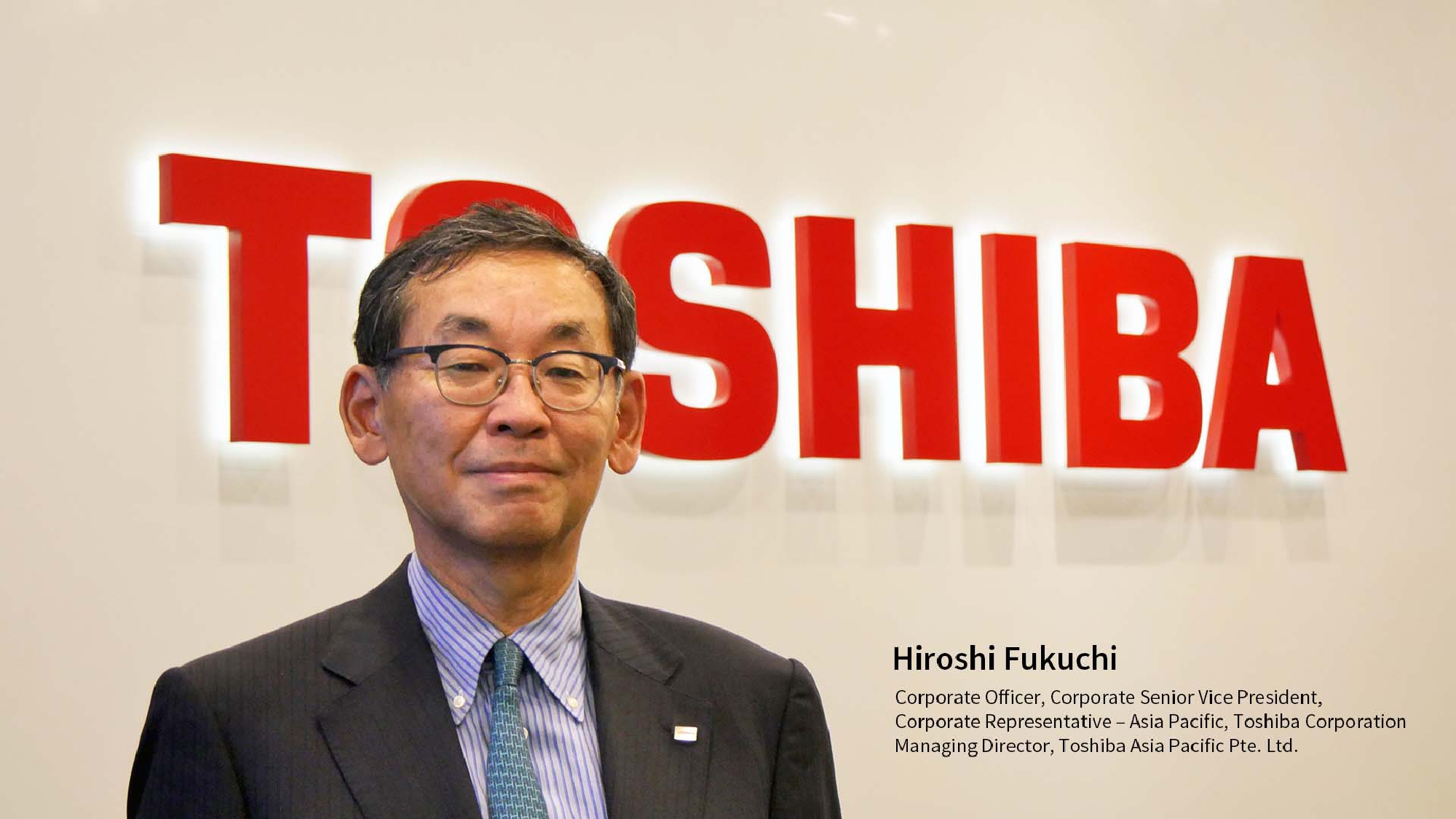
“Renewable energy shows us a path forward to a future where economies can grow while being sustainable in the long term,” said Mr Hiroshi Fukuchi, Corporate Representative – Asia Pacific, Toshiba Corporation and Managing Director, Toshiba Asia Pacific Pte. Ltd.

Heading to the greener energy journey in Southeast AsiaHeading to the greener energy journey in Southeast Asia

“With a strong foundation forged by more than 140 years of experience, together with our partners, we are confident we are making progress and delivering holistic and sustainable solutions to our most pressing challenges today,” he added.

For more information, please visit Toshiba Asia Pacific.

For more stories, please visit Toshiba Clip.

Published : November 01, 2021

SET expected to fluctuate despite Japans election result, Thailand reopening #SootinClaimon.Com

#SootinClaimon.Com : ขอบคุณแหล่งข้อมูล : หนังสือพิมพ์ The Nation.

https://www.nationthailand.com/business/40008243


Krungsri Securities forecast the Stock Exchange of Thailand (SET) Index on Monday (November 1) would fluctuate between 1,615 and 1,635 points despite the rise in other Asian indices in response to Japans election result and Thailand reopening.

It said the fall in China’s manufacturing Purchasing Managers Index and investors’ move to delay investment to follow the result of US Federal Open Market Committee and Opec+ meetings would pressure the index.

It also recommended buying of the following companies’ shares as an investment strategy:

▪︎ GULF, BGRIM, CHG, BCH, BDMS, KCE and JMT, whose third-quarter profit is expected to grow.

▪︎ AOT, AAV, BA, MINT, KBANK, SCB, CPN, CRC, HMPRO, CPALL, AMATA, WHA, MAJOR, BTS and BEM, which benefit from the country reopening.

Published : November 01, 2021

By : THE NATION