Gates raises $1 billion as corporate CEOs join race to scale clean tech #SootinClaimon.Com

#SootinClaimon.Com : ขอบคุณแหล่งข้อมูล : หนังสือพิมพ์ The Nation.

https://www.nationthailand.com/business/40006411


Bill Gates raised more than $1 billion in corporate funding for Breakthrough Energy Catalyst, drawing on BlackRocks Larry Fink and Microsofts Satya Nadella to rally support for some of the worlds most demanding clean-energy projects.
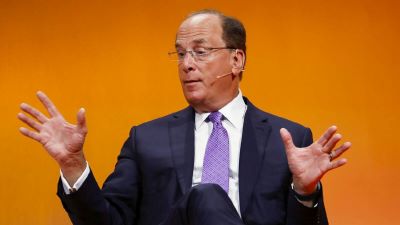
BlackRock is making a five-year, $100 million grant from its charitable foundation. Microsoft and the other backers — General Motors, Bank of America, American Airlines, Boston Consulting and ArcelorMittal — are providing a mix of equity capital and so-called offtakes, or purchase agreements tied to the projects.

“We’re not doing this to make money,” Fink, BlackRock’s CEO, said in an interview together with Gates on Bloomberg Television. “We’re doing this to seed these ideas, to rapidly accelerate ideas.”

Gates established Breakthrough Energy Catalyst to accelerate the commercial viability of four key solutions to the climate crisis: green hydrogen, sustainable aviation fuel, long-duration battery storage and carbon capture from the air. In practice, Catalyst will supply the cash needed to get capital-intensive projects off the ground, before debt financing and government funds can be raised to cover the remaining 90% of the cost.

Today, none of those four solutions is cheap enough to spur widespread adoption. For example, jet fuel derived from more-sustainable sources such as industrial waste or alcohol is about five times as expensive as kerosene.

ADVERTISEMENT

Ideally, the Catalyst projects will, by operating at scale, prove that the underlying technology can be cost-competitive and eliminate the “green premium” over conventional standards.

“The model here is what happened with wind and solar and lithium-ion,” Gates said. “Those products had very high prices compared to conventional techniques, and fortunately Germany and Japan and other buyers funded the scale-up, and now those products fit the normal sort of client-investing metrics.”

The difference now is speed. Governments that signed the Paris Agreement on climate in 2015 are racing to meet a mid-century goal of reaching net zero, which requires not only emissions cuts but also removing carbon dioxide from Earth’s atmosphere.

Nine of the world’s largest economies and many companies, including BlackRock, have pledged to reach that target.

“The pathway for solar and wind, that was a 30-year pathway to make it competitive with hydrocarbons,” Fink said. “We don’t have 30 years. We don’t have 10 years.”

Gates, who has estimated the cost of reaching net-zero emissions at $50 trillion, is hoping his program becomes a model for public-private cooperation to address the threat of climate change.

In August, Catalyst agreed to raise $1.5 billion in return for billions more in support, some of it contingent on legislation from the U.S. Department of Energy. Separately, Catalyst committed $500 million in June in return for matching funds from the European Commission and European Investment Bank for a similar effort across the Atlantic.

Gates first pitched Nadella and then Fink, who said he in turn had some “very serious conversations” persuading fellow CEOs to back Catalyst. ArcelorMittal is making a $100 million equity investment over five years, and American Airlines also is contributing $100 million. The other partners didn’t detail their involvement.

Up-front expense and scalability are two major differences between most tech products and clean-energy solutions. While little to no capital may be required to develop a smartphone app, even a pilot project in carbon capture can cost tens of millions of dollars.

Also, large investors have mostly steered clear of ambitious green undertakings because of uncertain returns. Gates himself has noted publicly that he “lost a lot of money” on battery development.

Fink, who oversees almost $10 trillion in assets at BlackRock, said there’s an “enormous” amount of capital waiting to invest in technology proven to reduce the green premium.

“I’m not frightened about where the money’s coming from,” he said. “I just want to make sure that we have the science and technology and the viability. Once we know that, the capital will be there.”

Coinciding with the infusion of new cash and commitments, Catalyst is inviting would-be projects to fill out a request for information. That’ll be followed by a more precise and technical request for proposal, or RFP, possibly by the end of the year.

Gates, in the interview, laid out a timeline and some parameters:

–Catalyst will start funding projects in 2022, probably several in each area.

–Funding will cover early-stage costs such as design and add up to “maybe 10%” of the total cost.

–The plan is to recruit a total of about 20 companies as anchor partners and increase the pool of private capital to $3 billion.

–Green hydrogen and sustainable jet fuel are advanced enough that they could “get to a low price” in three to four years.

“I’d be very disappointed if we don’t see a dramatic reduction in the green premium, even in less than five years,” Gates said. “Because that should let us do two rounds of projects, the first projects and then take the learning from those first two and a half years and do a second round that will bring the costs down even further.”

Catalyst is the latest in a series of initiatives that Gates has founded under the Breakthrough Energy banner. A venture-capital arm, Breathrough Energy Ventures, raised some of its money from billionaires Jeff Bezos and Michael Bloomberg, the founder of Bloomberg LP, the parent company of Bloomberg News. Catalyst is run separately and funded independently.

Published : September 21, 2021

Thailand hikes public debt-GDP ceiling to 70% to fund recovery #SootinClaimon.Com

#SootinClaimon.Com : ขอบคุณแหล่งข้อมูล : หนังสือพิมพ์ The Nation.

https://www.nationthailand.com/blogs/business/40006408


The State Fiscal Policy Committee on Monday approved raising Thailand’s public debt ceiling from 60 per cent to 70 per cent of GDP.

The new limit would be proposed at Tuesday’s Cabinet meeting for approval, said Finance Minister Arkhom Termpittayapaisith.

The committee, which is chaired by Prime Minister General Prayut Chan-o-cha, said it approved the hike in case the government needs to borrow more money in the medium term.

A Finance Ministry source said raising the debt ceiling would aid the government in setting its budget deficit for fiscal year 2022, which starts next month.

The government has so far borrowed 1.5 trillion baht to fund Covid-19 relief and stimulus programmes, 500 billion baht of which was approved this year. However, Bank of Thailand Governor Sethaput Suthiwartnarueput recently urged the government to borrow another 1 trillion baht to aid recovery from the pandemic.

The committee said Thailand’s fiscal position remains healthy with good debt-repayment capability.

Published : September 20, 2021

SET Index down almost 1.5% #SootinClaimon.Com

#SootinClaimon.Com : ขอบคุณแหล่งข้อมูล : หนังสือพิมพ์ The Nation.

https://www.nationthailand.com/business/40006404


The Stock Exchange of Thailand (SET) Index closed at 1,603.06 on Monday, down 22.59 points or 1.39 per cent. Transactions totalled 85.01 billion baht with an index high of 1,620.72 and a low of 1,601.16.

In the morning session, Krungsri Securities forecast the index would fluctuate between 1,615 and 1,635 points due to lack of positive sentiment.

It said uncertainty over a US corporate tax hike and investors’ move to delay investment to hear the result of the US Federal Open Market Committee session on September 21-22 would pressure the index.

“However, mass buy-ups of stocks which gained specific positive sentiment and whose third-quarter profit is expected to rise would help boost the index,” Krungsri Securities said.

The 10 stocks with the highest trade value today were KBANK, PTT, KCE, SCGP, BANPU, TTA, DELTA, ADVANC, HANA and PTTGC.

ADVERTISEMENT

Related stories:

Hong Kong’s Hang Seng Index closed at 24,099.14, down 821.62 points or 3.30 per cent.

Japan’s Nikkei Index was closed for Respect for the Aged Day.

China and Taiwan indices were closed for the Mid-Autumn Festival.

South Korea’s KOSPI Index was closed for Korean Thanksgiving Day.

Published : September 20, 2021

Stocks with positive sentiment prop up SET #SootinClaimon.Com

#SootinClaimon.Com : ขอบคุณแหล่งข้อมูล : หนังสือพิมพ์ The Nation.

https://www.nationthailand.com/business/40006383


The Stock Exchange of Thailand (SET) Index fell by 8.61 points, or 0.53 per cent, to 1,617.04 on Monday morning, witnessing a high of 1,618.58 and a low of 1,614.90 in opening trade.

The SET Index had closed at 1,625.65 on Friday, down 6.05 points or 0.37 per cent. Transactions totalled THB105.67 billion with an index high of 1,635.04 and a low of 1,617.31.

Krungsri Securities forecast the index on Monday would fluctuate between 1,615 and 1,635 points due to lack of positive sentiment.

It said uncertainty over a US corporate tax hike and investors’ move to delay investment to hear the result of the Federal Open Market Committee (FOMC) session on September 21-22 would pressure the index.

“However, mass buy-ups of stocks which gained specific positive sentiment and whose third-quarter profit is expected to rise would help boost the index,” Krungsri Securities said.

It also recommended buying of the following companies’ shares as an investment strategy:

ADVERTISEMENT

▪︎ HANA, KCE, TU, CPF, GFPT, ASIAN, EPG, NER, SUN and APURE, which benefit from the weakening baht.

▪︎ BANPU, LANNA, CKP, GULF, CHG, BCH and BDMS, whose third-quarter profit is expected to rise.

Related stories:

Published : September 20, 2021

Strengthening dollar pulls gold down #SootinClaimon.Com

#SootinClaimon.Com : ขอบคุณแหล่งข้อมูล : หนังสือพิมพ์ The Nation.

https://www.nationthailand.com/business/40006388


The price of gold dropped by THB50 in morning trade on Monday.

AGold Traders Association report at 9.28am said the buying price of a gold bar was THB27,550 per baht weight and selling price THB27,650, while gold ornaments cost THB27,060.60 and THB28,150, respectively.


At close on Saturday, the buying price of a gold bar was THB27,600 per baht weight and selling price THB27,700, while gold ornaments were THB27,106.08 and THB28,200, respectively.


Spot gold price on Monday morning was moving at around US$1,746 (THB58,263) per ounce after Comex gold at close on Friday dropped by $5.3 to $1,751.4 per ounce. The price has dropped for the second day in a row due to pressure from the appreciation of the US dollar.

Related news:

ADVERTISEMENT

Hong Kong gold price, meanwhile, dropped by HK$80 to $16,270 (THB69,661) per tael, the Chinese Gold and Silver Exchange Society reported.

Published : September 20, 2021

Baht level linked to signal from Fed, gold trend #SootinClaimon.Com

#SootinClaimon.Com : ขอบคุณแหล่งข้อมูล : หนังสือพิมพ์ The Nation.

https://www.nationthailand.com/business/40006381


The baht opened at 33.32 to the US dollar on Monday, weakening from last week’s closing rate of 33.25.

The Thai currency is likely to move between 33.25 and 33.40 during the day and between 33.00 and 33.50 this week, Krungthai Bank market strategist Poon Panichpibool said.

Poon said the baht was still pressured by the decision of some investors who had sold their assets as they were worried about the Covid-19 situation in Thailand. They had stopped speculating that the baht would strengthen, and had sold a large number of short-term bonds last week.

Also, the baht might fluctuate according to the gold price in light of the Federal Open Market Committee meeting. A fall in gold price might prompt investors to exchange the dollar for the precious metal, which will pressure the baht to weaken.

Meanwhile, he added that the dollar might be sold if the US Federal Reserve does not send a signal to reduce quantitive easing more than the market expected. The dollar might weaken if the Fed expresses concern about economic recovery as the US economy is slowing down.

Related News

ADVERTISEMENT

Baht hits weakest level in almost a month

Baht strengthens a tad on opening

Baht performance hinges on Covid situation: market strategist

The key resistance level for the baht would be from 33.30 to 33.50 to the dollar, which is the level at which exporters might sell the US currency.

The baht’s key support level would be at 33.00, the level some importers are waiting for so they can buy dollars, he added.

Published : September 20, 2021

Janet Yellen faces climate test as environmentalists push for more aggressive financial action #SootinClaimon.Com

#SootinClaimon.Com : ขอบคุณแหล่งข้อมูล : หนังสือพิมพ์ The Nation.

https://www.nationthailand.com/business/40006352

Janet Yellen faces climate test as environmentalists push for more aggressive financial action


WASHINGTON – While President Joe Biden has called climate change a “code red” crisis, his treasury secretary is poised to resist calls to ask financial regulators to rein in lending to the nations worst greenhouse-gas emitters.

Treasury Secretary Janet Yellen is currently leading a review of what federal banking regulators should do to ensure the financial system is protected from climate-related risks. While the Biden administration pursues separate climate legislation with Congress, environmental groups want Yellen to use the lesser-known financial review process to advance measures to curb or discourage lending from Wall Street banks to companies that produce large amounts of carbon emissions.

These advocates insist that existing federal power to ensure financial stability enables regulators to impose new rules to mitigate climate change. They suggest that unfettered lending to companies responsible for greenhouse gas emissions threatens the broader financial system through economic shocks.

For now, however, Treasury officials appear unlikely to embrace the most dramatic steps pushed by climate advocates, according to interviews with four senior administration officials, who spoke on the condition of anonymity to reflect thinking on a matter not yet finalized.

Yellen has repeatedly emphasized the need to increase mandatory disclosure by banks and public companies of climate-related financial risks, a measure regarded as important but inadequate by an array of liberal groups and climate advocates, who want new limits on fossil-fuel-related lending. Treasury officials say that enacting policy to crack down on such lending is difficult, in part because it requires convincing an array of independent U.S. banking regulators – including three appointed by Republicans – to unite behind an aggressive climate framework.

Additionally, Treasury officials believe mandatory disclosure is a “necessary precursor” to actual restrictions on climate-related lending, one Treasury official said. But the data produced by new disclosure rules could lay the groundwork for more aggressive measures to be enacted in the future, the official said.

ADVERTISEMENT

In the meantime, GOP lawmakers have been calling on regulators to drop any discussion of new rules narrowing lending to companies in the name of helping the environment, suggesting doing so is “beyond the scope” of their purview, according to a letter from Sen. Patrick Toomey, R-Pa., and other leading GOP senators on the Banking Committee to the Federal Reserve earlier this year.

The potential split between the administration and some of its climate allies represents one of the more vexing challenges facing Yellen, who as treasury secretary oversees a vast portfolio of economic issues.

Treasury officials are adamant that they are, in fact, moving swiftly under Yellen to confront climate change, pointing to their reversal of the climate apathy of the Trump administration and a range of steps they have taken on the issue.

Still, some advocates and liberal groups want Yellen to move quickly to back rules that would make it far more difficult for banks to lend to the most egregious fossil fuel producers than Treasury is currently expected to adopt.

“Climate risk impacts all the firms that the financial regulators supervise. As a convener of regulators, Treasury needs to do more than acknowledge it – it should urge each financial regulator to use every tool at its disposal to tackle climate risks,” said Alexis Goldstein, a financial expert at Open Markets, a left-leaning group.

Treasury’s expected hesitancy reflects long-standing reluctance to dictate social policy unilaterally, as well as the complicated bureaucratic structure of U.S. financial oversight.

Treasury convenes and leads meetings of the Financial Stability Oversight Council, a regulatory body composed of banking regulators such as the Office of the Comptroller of the Currency and the Federal Reserve. While Treasury can urge FSOC members to adopt certain policies, it cannot force the group’s independent banking regulators to enact them. If Treasury advances climate rules that other members of FSOC regard as too far-reaching, the council’s membership could fracture. That could invite a legal challenge, or dilute the effectiveness of climate rules.

“If they go out and tell the banks who to lend to – that is rightly seen as very interventionist,” said Eswar Prasad, an economist at Cornell University. “If the insurance industry is very exposed to catastrophic events resulting from climate change – and if that was going to cause problems for the broader financial system – then FSOC might have some role to play. Barring that, it’s not obvious what role they should play because ultimately their job is about financial stability.”

In a sharp reversal from her GOP predecessor, Yellen has taken numerous steps designed to confront climate change, which is unfamiliar territory for Treasury.

Yellen has changed the rules for U.S. guidance for lending by international financial institutions, such as the World Bank, to prioritize clean energy investments and have the United States oppose most fossil fuel projects.

Yellen has also established a climate hub at Treasury to oversee the department’s push to boost climate projects in the United States and abroad. Treasury is working to implement an international climate financing plan with global counterparts. Last Tuesday, officials announced support for an international proposal to limit export credit for coal power.

Treasury is also involved in a massive series of climate-related tax changes as part of Democrats’ $3.5 trillion budget plan over 10 years that would spend hundreds of billions of dollars on clean energy incentives to encourage production in solar, wind and other renewable projects.

But Treasury’s review of “climate-related financial risk” – which comes out of a White House executive order from May – will probably be where Yellen faces the sharpest criticism from climate hawks.

Yellen’s coming report on the financial risks posed by climate change is expected this fall. In a July speech on the matter, she repeatedly emphasized the need for “understanding the risks and opportunities climate change presents.”

“The current financial reporting system is not producing reliable disclosures,” Yellen said, adding the administration is pushing to “advance the disclosure of climate-related financial risks” through FSOC.

Liberal groups say that’s not enough to head off the danger posed by climate change. They would prefer Treasury to push regulators to enact new climate-related capital requirements, which would make it more expensive for banks to lend to companies that drive up emissions, while not outright banning them. Treasury could also change how climate-related assets are “weighted” so they are considered a riskier part of a bank’s portfolio, which would require them to have more capital set aside as protective cushion. These advocates say these changes are squarely within regulators’ purview.

“We’re saying financial regulators should crack down on financing for high-emissions projects, because that activity exacerbates climate change, which is a threat to financial stability,” said Gregg Gelzinis, associate director for economic policy at the Center for American Progress, a center-left think tank. “We’re not saying Treasury should be the EPA,” he said, referring to the Environmental Protection Agency.

A Treasury spokesman declined to comment on the record.

Stacy Coleman, a former Federal Reserve official who is now an independent consultant and member of the Task Force on Climate Related Financial Disclosures, said FSOC could push new lending requirements but that “some work has to be done to understand what that means and how something like that would be put together.”

“I think Treasury is going as far as it can,” she said. “It’s not as simple as putting a charge on lending to fossil fuel companies.”

The tricky politics of financial regulation related to climate change has also ensnared Federal Reserve Chair Jerome Powell. Powell’s renomination to lead the central bank is currently imperiled in part because liberal lawmakers, including Rep. Ayanna Pressley, D-Mass., have said he has done too little about climate change.

Treasury and the Fed could seek to impose liability insurance requirements that would increase the amount of insurance firms and banks would have to purchase for investments that exacerbated climate change, said Bob Hockett, a financial expert at Cornell University who worked for the International Monetary Fund. Those requirements could drive up the costs of – and therefore deter – financing of carbon-intensive projects.

“It would be very easy through finance regulation to require banks and firms to absorb the risks of harm to people through climate change,” Hockett said. “I don’t understand why both the Fed and Treasury are dragging their feet on this.”

More likely on Treasury’s agenda is pushing bank regulators to require companies to disclose their climate-related financial risks. Beyond that, regulators may also subject banks to regular “stress tests” that gauge their ability to handle climate-related financial shocks. Other more probable changes could include guidance from federal regulators to provide advice about how to assess the risk of certain dirty projects, such as a coal mine. Those measures are more likely to be encouraged by FSOC, but face criticism from some climate advocates as inadequate.

“Disclosures and stress tests reveal the problem. They don’t do anything about the problem. It’s not even a job half-done,” said Justin Guay, director of global climate strategy at the Sunrise Project, a climate group.

Conservatives and business groups are far more likely to object to changes that require them to alter their practices.

Doug Holtz-Eakin, president of the conservative American Action Forum and former director of the nonpartisan Congressional Budget Office, said measures to provide greater transparency about climate risks should be welcomed. He cautioned that mandating new climate-related lending rules, however, should be done by Congress through the legislative process.

“Stress tests were enormously helpful in identifying capital risks – this is the same thing in a climate setting and can be very useful,” Holtz-Eakin said. “But if you actually want to cut people off, the government should do it. We shouldn’t pretend the banks are doing it.”

Published : September 19, 2021

Whats behind Europe skyrocketing power prices #SootinClaimon.Com

#SootinClaimon.Com : ขอบคุณแหล่งข้อมูล : หนังสือพิมพ์ The Nation.

https://www.nationthailand.com/business/40006351

Whats behind Europe skyrocketing power prices


Europes energy ambitions are clear: to shift to a low-carbon future by remaking its power generating and distribution systems. But the present situation is an expensive mess.

Aglobal supply crunch for natural gas, bottlenecks for renewable energy and wind speeds in the North Sea among the slowest in 20 years, idling turbines, have contributed to soaring electricity prices. As winter approaches, governments are preparing to intervene if needed in volatile energy markets to keep homes warm and factories running.

1. What’s the problem here?

Energy prices skyrocketed as economies emerge from the pandemic — boosting demand just as supplies are falling short. Coal plants have been shuttered, gas stockpiles are low and the continent’s increasing reliance on renewable sources of energy is exposing its vulnerability. Even with mild weather in September, gas and electricity prices were breaking records across the continent and in the U.K. Italy’s Ecological Transition Minister Roberto Cingolani has said he expects power prices to increase by 40% in the third quarter.

2. Why is there a supply shortfall?

Late summer in Europe is usually when natural gas inventories are replenished for winter. This year, storage sites had their lowest levels in more than a decade for this time of year, following an unusually cold winter. Supplies from Russia were limited because it was rebuilding its own inventories, while Norwegian gas flows were lower than average during maintenance work at its giant fields and processing stations. Prices in Europe would need to rise more to attract cargoes of liquefied natural gas away from Asia, where China is stockpiling to power its economy and ensure it has enough reserves for winter.

3. What do gas prices have to do with electricity?

ADVERTISEMENT

Some 23% of European Union electricity was generated from gas in 2019, just behind the 26% that came from nuclear plants. Electricity is very hard to store, which means that big swings in fuel costs translate quickly into price volatility. Large batteries exist, of course, and that technology is developing quickly, but it will be many years before they can offer serious storage capacity for renewable energy. Some European countries have become increasingly dependent on electricity exports from others with an abundance of power.

4. How are power prices set in Europe?

While short-term trading is increasing, utilities and big companies also buy and sell power years in advance. In those trades, views on the economy and long-term fuel cost forecasts play a bigger role. But the broader European power market has traditionally been focused on the price for the following day, with auctions supplying a day-ahead price functioning as the benchmark. Traders submit bids and offers for each hour based on their calculations of supply and demand, and then an average price is calculated by the exchange handling that market. U.S. markets are more regional. Most of the power is also sold a day in advance, with similar arrangements for trading for the same day as in Europe. Consumer prices are set by state regulators after utilities request rate changes based on how much they’ve paid for wholesale power, transmission investments and overall upkeep of their grids.

5. What’s new in the system?

The explosion of renewable energy, which is more intermittent than fossil or nuclear fuel generators. Because weather patterns can create big price shifts, markets for shorter time periods later the same day have also become vital.

6. What’s happening with wind power?

Northern, coastal countries including the U.K., Germany and Scandinavian nations have become leaders in wind generation and technology. Elsewhere, the picture is mixed. In Spain, the growth in wind and solar plants helped send its share of renewable energy to a record 44% of total power in 2020. France is also producing more power from wind, but its electricity generation is still dominated by nuclear plants.

7. Which countries are most at risk of running out of power?

Those with limited cables linking them with their neighbors, because in a crisis they are unable to benefit fully from Europe’s interconnected market. That enables power to flow to where it’s needed the most and where it fetches the highest price. Ireland’s grid operator warned in September that there was a risk of blackouts due to lack of wind. While the U.K.’s supply is a mix of renewable energy, natural gas, nuclear and coal, many of its plants are old and break down from time to time. If big outages coincide with little wind or sun, the nation could be close to running out of electricity.

8. What does this mean for Europe’s climate goals?

Renewable energy brings volatility and that’s going to make it very costly for the continent to reach its targets. Germany is a prime example — Chancellor Angela Merkel’s energy policies have cost its citizens hundreds of billions of euros in subsidies. The EU is unperturbed though. Climate chief Frans Timmermans has said that higher prices mustn’t undermine the bloc’s resolve to expand renewable power and that the industry should speed up instead to make more cheap green energy available.

Published : September 19, 2021

India celebrates overseas development success in Bangkok #SootinClaimon.Com
#SootinClaimon.Com : ขอบคุณแหล่งข้อมูล : หนังสือพิมพ์ The Nation.

https://www.nationthailand.com/business/40006290

India celebrates overseas development success in Bangkok


Thai beneficiaries of India’s overseas development programme shared their experiences at the country’s embassy in Bangkok this week.

Celebrating lndian Technical and Economic Cooperation (ITEC) Day 2021, Ambassador Suchitra Durai hailed the longstanding cooperation between India and Thailand in the area of capacity building.

Presented at the event were video messages from ITEC alumni, including the “Thai Solar Sisters” from the ground-breaking Mechai Pattana Bamboo School in Buri Ram. The “sisters” attended the “Training Rural Women on Solar Electrification & Rainwater Harvesting” course at the Social Work and Research Centre (SWRC or Barefoot College) in Tilonia, Rajasthan.

Launched in 1964, the ITEC programme has three components: short-term training courses of three weeks to two years, deployment of lndian experts abroad, and study tours for foreign officials in India. The programme operates in 160 partner countries and territories and offers around 14,000 training slots annually. Courses cover subjects ranging from rural development, governance, lT and banking to renewable energy and robotics. ITEC courses are offered to both civilian and defence personnel.

India celebrates overseas development success in BangkokIndia celebrates overseas development success in Bangkok

ADVERTISEMENT

The embassy said that more than 700 Thai officials have attended regular ITEC courses while 150 have taken online training.

Published : September 17, 2021

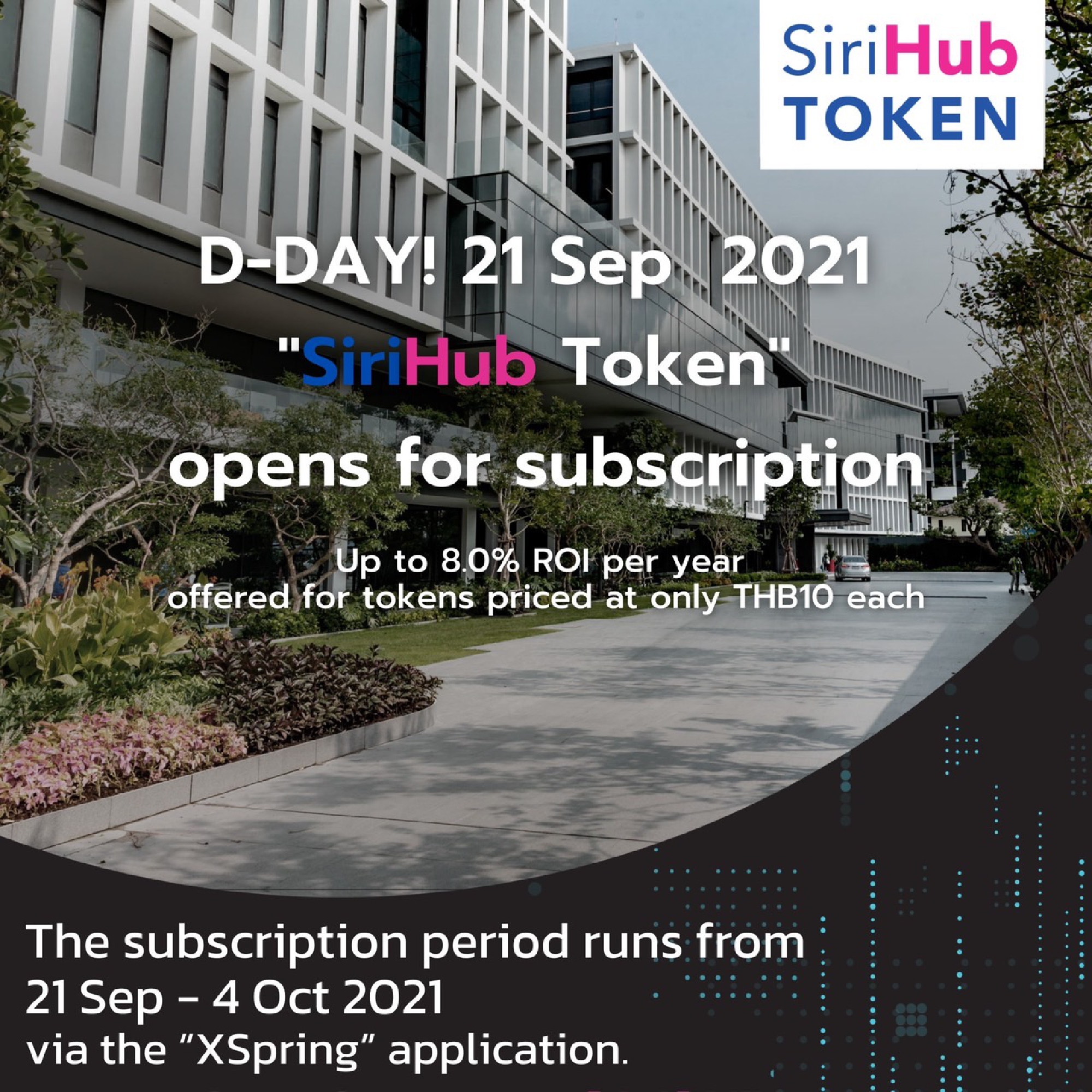
D-Day! XSpring announces subscription to “SiriHub Token” Thailand’s first Real Estate-Backed ICO #SootinClaimon.Com

#SootinClaimon.Com : ขอบคุณแหล่งข้อมูล : หนังสือพิมพ์ The Nation.

https://www.nationthailand.com/pr-news/business/40006277

D-Day! XSpring announces subscription to “SiriHub Token” Thailand’s first Real Estate-Backed ICO


Opens on Sep 21 8.0% ROI per year offered for 4 years of entire project. A limited number of digital tokens – 240 million – will be offered at only THB10 each on a first come, first served basis.

  • As it has received approval from the Securities and Exchange Commission of Thailand (SEC), XSpring announces that the subscription period for its SiriHub Investment Token will run from September 21 to October 4, 2021, with a minimum initial investment of only THB10 per token. This means that all investors now have a much broader opportunity to secure and build their wealth – by investing in the first SEC-approved real estate-backed ICO in Thailand.
  • The SiriHub Investment Token offers investment benefits far superior to the current deposit interest offered by commercial banks. Two tranches of tokens, SiriHubA and SiriHubB, will be available for all investors. SiriHubA offers a quarterly return of up to 4.5% per year, while SiriHubB offers a quarterly return of up to 8.0% per year. In addition, both tranches will get a revenue boost from the disposal of assets at the end of the project. The subscription volume is expected to meet its target due to the expected enthusiastic response from investors looking for alternative investments such as digital assets. A limited number of digital tokens – 240 million – will be offered on a first come, first served basis.
  • All investors are recommended to download the “XSpring” app to their smartphones to verify their identity and thus ensure that they can subscribe to the digital tokens on the day of the opening sale and can pay the subscription fee immediately via the app.

D-Day! XSpring announces subscription to “SiriHub Token” Thailand’s first Real Estate-Backed ICOD-Day! XSpring announces subscription to “SiriHub Token” Thailand’s first Real Estate-Backed ICO

ADVERTISEMENT

Thailand’s digital asset market is set to be bustling again after XSpring Digital ICO portal service provider (approved by the SEC) announced the subscription day for its SiriHub Tokens in what is Thailand’s first real estate-backed ICO that has Siri Campus Office Building, the headquarters of Sansiri Public Company Limited, as an underlying asset.

Investors from all levels of society will be able take advantage of the opportunity with a minimum subscription price of only THB10 per token and earn returns up to 8.0% per year. The subscription period will run from September 21 to October 4, 2021 via the “Xspring” application. In addition, ERX Co.,Ltd is collaborating with XSpring Digital in the distribution of SiriHub Token. ERX has outsourced its sale functions to 4 leading brokers: KTBST SEC, Finansia Syrus Securities, Krungthai Zmico Securities, and Asia Plus Securities, to support the sales of SiriHub Tokens.

Mr. Rathian Srimongkol, Chairman of XSpring Capital Public Company Limited (XPG), said: “XSpring Digital’s success in the launch of its SiriHub Token, Thailand’s first real estate-backed ICO, is an important step by XSpring Group to enable investors to access new investment innovations and is part of our commitment to develop a digital investment platform and create a financial services business ecosystem to connect the current financial world with the digital financial world. Such a ‘Digital Financial Service’, puts the group at the vanguard of being a complete, fully integrated financial services provider and will enable everyone to access the financial and investment world easily and cost-effectively.”

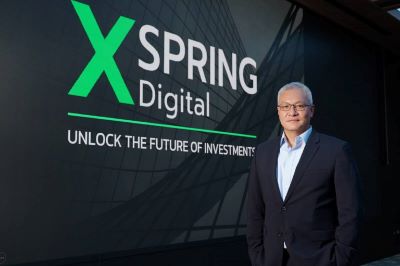
Mr. Att Tongyai Asavanund, Chief Executive Officer, XSpring Digital Company Limited, the company that has received approval from the SEC as a service provider for offering digital tokens in Thailand (as an ICO portal operator), said that the “SiriHub Investment Token is a new investment model that uses digital technology to connect elements of the capital market world. Its main goal is to provide opportunities for investors at all levels of society to access high-value real estate investments. It essentially broadens access as such investors can invest even with a small amount. We offer a minimum subscription price of only THB10 per token and provide investors with quarterly returns over four years at a much higher rate of return than current bank deposit rates. This is so that both the public and new investors interested in preserving and expanding their wealth, as well as all institutional investors, have equal access to the opportunity of understanding and investing in digital assets.”

Investors can choose to invest in either of the SiriHub Investment Token offerings, SiriHubA or SiriHubB. SiriHubA provides a quarterly return of up to 4.5% per year, while SiriHubB offers a quarterly return of up to 8.0% per year. In addition, both tranches will get a revenue boost from the disposal of assets at the end of the property project’s development. SiriHubA holders will receive a final revenue share from the disposal of assets at the end of the project to a maximum of THB1.6 billion. SiriHubB holders will obtain the final income from the sale of the property project that exceeds THB1.6 billion.

SiriHub Investment Tokens are based on the pending revenue stream from the Siri Campus Project, a modern mixed-use office building complex located within T77, a lifestyle community in the heart of Bangkok’s On Nut area, which has Sansiri Public Company Limited as the only tenant to have leased 100% of the space in the building under a long-term lease for up to 12 years. This means the project will have dependable and continuous income throughout the four-year project period. Analysis of the market value of both the Siri Campus land and building by the appraiser and approved by the SEC in two cases, puts the campus value at THB2.4 billion and it is predicted that in the next 10 years, the market value of this project could rise to as high as THB3.2 billion.

“We are confident that the SiriHub Token offering will receive an enthusiastic response from investors. The ICO price is interesting considering the fundamental factors of the asset and relates to the project Siri Campus, which has potential for continuous income and investor protection mechanisms at every step. Currently, XSpring Digital is finalizing steps for prospective subscribers to register and access the XSpring application with ease. Interested investors can register in advance starting today to save time when the subscription opens and will allay any ‘fear of missing out’ as subscriptions will open on a first come, first served basis with a limited token offering,” Att Thongyai concluded.

What you should know about SiriHub Investment Token before you sign up and verify on the XSpring app to prepare for subscription

Thailand’s first real estate-backed ICO

The SiriHub Investment Token is Thailand’s first digital token put up for a real estate-backed ICO under the Emergency Decree On Digital Asset Businesses B.E. 2561 (2018) regulation issued by the SEC.

Tokenization converts assets into an investment token

The SiriHub tokens convert revenue from leasing the Siri Campus office buildings into investment tokens. Investors will receive benefits identified in the Smart Contract that employs the Tesoz blockchain technology, which is: reliable and especially designed for ICO; stable; transparent; precise; verifiable; and has the most advanced security features.

SiriHub Investment Token

• The digital tokens are issued by SPV 77 Company Limited.

• The total fundraising value is THB2.4 billion.

• SiriHub Investment Tokens are the tokens offered and these are divided into two tranches: 1) SiriHubA offers 160 million tokens valued at THB1.6 billion and

2) SiriHubB offers 80 million tokens valued at a total of THB800 million.

• The proceeds from funding are invested in order to acquire revenue stream from the Siri Campus office building and 100% of the shares of Siripat Four Company Limited, which owns ownership of the Siri Campus office building, at which Sansiri Public Company Limited is currently the 12 years long term sole tenant.

• The issuer of the digital tokens will then allocate the income from the leasing of the Siri Campus project after deduction of costs quarterly during the entire project duration of four years to the holders of the digital tokens.

• When expire of the four-year project nears, the project property will be auctioned for sale in the third year, after which investors will get sharable revenue from the sale of the property at the end of the project (after expenses related to sales, marketing and other commitments are deducted).

• The tokens have a minimum subscription price of only THB10 for each token.

• A total of only 240 million tokens are available.

• Investors can choose to invest in both types but retail investors may hold a set of tokens to a maximum value of THB300,000. For ultra-high-net-worth (UHNW) investors, institutional investors, corporate joint investments, no maximum subscription value has been set.

• The digital tokens are allocated following successful payment on a first come, first served basis until the subscription is sold out.

• Retail investors must register and verify themselves via the “XSpring” application before the subscription day.

Investors interested in investing can learn about their investment options and should open an account, verify their identity and take a knowledge test starting today to prepare for subscription. Investors can download the XSpring app on both iOS and Android systems. This will save time and allow investors to complete their subscriptions quickly, conveniently and securely. The subscription period runs from September 21 to October 4, 2021

Five steps to take for convenient and secure registration

• Download XSpring application from App Store or Play Store or the link http://onelink.to/efumnu

• Sign up, fill in your email, set a password and wait for the approval email from the system. Upon receiving the approval email, open the application to log in.

• Log in to verify yourself (KYC/CDD). The step, Know Your Customer / Customer Due Diligence is required by Thailand’s Anti-Money Laundering Act of B.E. 2542. Just fill out the ID card information and personal information, and state that this is for investment purposes. Then take a photo of the ID card and take a face scan to reconfirm identity.

• Upload your bank account and follow the steps.

• Pass the Investor Knowledge Test

Remark: If prospective investors have any questions about registration and the use of the applications, they can watch the instructional videos here: https://youtu.be/bPSTTUTDgxI

Those interested can contact 02-038-5999 and follow news about digital assets and digital tokens at:

XSpring Digital Internet Resources

Website: www.xspringdigital.com

Facebook: https://www.facebook.com/XSpringDigital

Remark: Before making an investment decision, investors should study the information in the draft white paper to understand the nature of the product, return conditions and the risks involved.

The white paper can be downloaded at the SEC’s website: https://market.sec.or.th/public/ipos/IPOSTD01.aspx?TransID=319985

Published : September 17, 2021