The Stock Exchange of Thailand (SET) Index closed at 1,633.76 on Monday, down 1.59 points or 0.10 per cent. Transactions totalled THB86.15 billion with an index high of 1,642.63 and a low of 1,627.29.
In the morning session, Krungsri Securities forecast the index on Monday would fluctuate between 1,625 and 1,645 points amid uncertainty over whether the US Federal Reserve’s will taper its quantitative easing programme and raise interest rates sooner than expected after the Producer Price Index rose again in August.
However, it forecast that speculation on stocks with specific positive sentiment, plus the decline in domestic Covid-19 infections, would help boost the index.
The 10 stocks with the highest trade value today were DELTA, EA, KBANK, PTT, AOT, U, ADVANC, JMT, GULF and INTUCH.
Japan’s Nikkei Index closed at 30,447.37, up 65.53 points or 0.22 per cent.
China’s Shanghai SE Composite Index closed at 3,715.37, up 12.26 points or 0.33 per cent, while the Shenzhen SE Component Index closed at 14,705.83, down 66.04 points or 0.45 per cent.
Hong Kong’s Hang Seng Index closed at 25,813.81, down 392.10 points or 1.50 per cent.
South Korea’s KOSPI closed at 3,127.86, up 2.10 points or 0.067 per cent.
Taiwan’s TAIEX closed at 17,446.31, down 28.26 points or 0.16 per cent.
Gold slides in Thailand, Hong Kong as dollar appreciates
The price of gold dropped by THB100 in morning trade on Monday.
AGold Traders Association report at 9.26am said the buying price of a gold bar was THB27,650 per baht weight and selling price THB27,750, while gold ornaments were priced at THB27,151.56 and THB28,250, respectively.
At close on Friday, the buying price of a gold bar was THB27,750 per baht weight and selling price THB27,850, while gold ornaments were THB27,257.68 and THB28,350, respectively.
Spot gold on Monday morning was moving at around US$1,789 (THB58,590) per ounce after Comex gold at close on Friday dropped by $7.9 to $1,792.1 per ounce due to pressure from the appreciation of the US dollar, including selling gold as a safe-haven asset after President Joe Biden had a telephone conversation with Chinese President Xi Jinping, which eased concerns about the conflict between the US and China.
SET expected to gain from improvement in Covid situation
The Stock Exchange of Thailand (SET) Index rose by 3.61 points, or 0.22 per cent, to 1,638.96 on Monday morning, witnessing a high of 1,639.05 and a low of 1,634.25 in opening trade.
The SET Index closed at 1,635.35 on Friday, up 6.23 points or 0.38 per cent. Transactions totalled THB92.05 billion with an index high of 1,639.65 and a low of 1,620.58.
Krungsri Securities forecast the index on Monday would fluctuate between 1,625 and 1,645 points amid uncertainty over the US Federal Reserve’s will to taper the quantitative easing programme and raise interest rate sooner than expected after the rise in Producers Price Index.
However, it predicted that speculations in stocks that gained specific positive sentiment and the decline in domestic Covid-19 case would help boost the index.
It also recommended buying the following companies’ shares as an investment strategy:
ADVERTISEMENT
▪︎ HANA, KCE, TU, CPF, GFPT, ASIAN, EPG, NER, SUN and APURE, which benefit from the weakening baht.
▪︎ COM7, SYNEX, SPVI and CPW, which benefit from Apple’s move to launch iPhone 13 in the middle of September.
▪︎ PTT, PTTEP, TOP and PTTGC, which benefit from rising oil price.
Baht expected to move sideways as market awaits key US data
The baht opened at 32.74 to the US dollar on Monday, weakening from last week’s closing rate of 32.65.
The Thai currency is likely to move between 32.65 and 32.80 during the day and between 32.50 and 32.90 this week, Krungthai Bank market strategist Poon Panichpibool said.
Poon predicted that the baht would drift sideways in the short term. Foreign investors are keeping an eye on the Covid-19 situation in the country after the easing of lockdown measures, including the economic recovery and the Bank of Thailand’s policy. The Monetary Policy Committee will be meeting at the end of this month.
He said the dollar might be pressured if US economic data is worse than expected, especially retail sales and consumer confidence. Investors expect that the US Federal Reserve might not hurry to reduce quantitative easing at the meeting in September if the US economy slows down.
The dollar might still be in demand from the need for safe-haven assets if investors are in risk-off mode due to the economic recovery.
The key resistance level for the baht would be from 32.80 to 33.00 to the dollar, which is the level at which exporters might sell the US currency, Poon said.
Meanwhile, the key support level for the baht is 32.60 to th dollar, the level that some importers are waiting for to buy the US currency.
The problem with Latin Americas rate hikes: They barely work
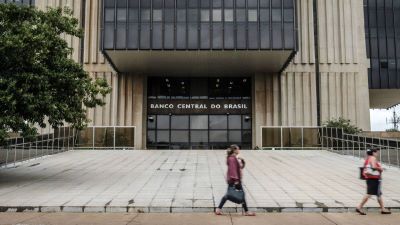
When it comes to raising interest rates to cool off pandemic inflation, Latin Americas central banks have been near the front of the global pack. Theyre also among the worst-equipped for that task.
Half a dozen countries in the region have hiked borrowing costs since March. There’s been more tightening than in most parts of the world because prices are rising faster — a problem highlighted Thursday when the region’s two biggest economies posted new inflation data.
Brazil’s headline number exceeded forecasts and nudged close to 10% — fueling talk of even more rate increases — while in Mexico core inflation accelerated for the ninth straight month.
But economists say there are limits to what rate hikes can achieve, thanks to a backdrop that makes Latin America a uniquely unfavorable place to use monetary policy as a tool to combat inflation. Swaths of its economy are off the books, with low levels of lending — many people don’t even have bank accounts — so raising the cost of credit has less of a dampening effect on demand. Politics tend to be volatile, and its dramas often eclipse central-bank policy tweaks in the eyes of markets.
Plus, there’s often a fairly recent history of high inflation that makes investors and the public ever-wary of rising prices — especially when governments ramp up spending, as Latin America’s mostly have in the pandemic.
Central bankers sometimes have to hit the brakes harder than they might want to when fiscal policies pull in the opposite direction — and some Latin American monetary authorities have a long way to go to convince investors that they’re autonomous from politicians. In any case, much of the current wave of inflation is driven by forces — like pandemic disruptions to supply chains, or rising commodity prices — that are beyond central-bank control.
ADVERTISEMENT
All the region’s monetary authorities face some combination of these problems.
In Mexico, the government has stuck to its austerity plan through the pandemic, and politics are fairly stable. Inflation has surged anyway, pushing the central bank into two rate hikes this year. It doesn’t expect to hit the 3% target until early 2023, and the country’s large informal economy may be one reason why. Less than 40% of Mexicans have access to bank accounts, lagging an overall rate of 55% for the region that’s itself low by world standards. Credit to households and businesses adds up to 45% of Mexico’s GDP; in Thailand, where per-capita incomes are similar, the figure is 131%.
“When you’re working informally, you’re not buying houses left and right,” said Enrique Cardenas, an economic historian at the Iberoamerican University of Puebla. “Modifications to the key rate do not affect you that much. They’re not that relevant.” With limited power to influence the economy via credit, central bankers in Latin America often have to rely on exchange rates. Higher interest rates attract foreign investors, propping up currencies and making imports cheaper. That doesn’t work so well when political tensions or fiscal spending overshadow everything else.
In Brazil, the currency strengthened after the central bank’s surprise 75-point rate-increase in March. But since June it’s declined again even though the bank kept hiking. Investors remain concerned about a possible breach of spending rules, as President Jair Bolsonaro considers expanding social programs. And tensions have only escalated last week, amid street demonstrations orchestrated by Bolsonaro and a fight over the Supreme Court’s powers. “Political noise and the threats to breach the fiscal ceiling are preventing the real from strengthening,” said Jose Julio Senna, a former central banker now in charge of monetary studies at the Institute of Brazilian Economics. “So monetary policy loses a very important transmission channel.”
Peru is another example. For years it’s been among the region’s rare investment-grade credits. But the country has been through weeks of turmoil after a knife-edge election won by a left-wing outsider. The sol currency has plunged, driving inflation to a 12-year high, and analysts expect the central bank’s first rate increase in five years won’t be the last.
Chile, South America’s richest country and usually one of its more tranquil, has been hit by street protests in the last two years. It’s also been a relatively big spender in the pandemic — and congress has been trying another form of stimulus by letting people tap their pension funds early. That’s escalating inflation risks, warns central bank chief Mario Marcel, who surprised markets last week with a bigger-than-expected interest-rate hike.
Consumer prices have exceeded forecasts for the past two months. Many of these problems pre-date the pandemic, which hit the region harder than most. It’s just that they’ve gotten worse. And they leave policy makers walking an especially precarious line. There’s pressure from above, from the financial markets, to keep finances sound — and from below to remedy deep-seated social divides. “When institutions and economic policy foundations are not strong, central banks are forced to hike interest rates before time, like it’s happening today,” said Ernesto Revilla, chief Latin America economist at Citigroup Inc. “We have called this the Latin American dilemma,” he said. “It’s not obvious how it will be solved.”
Biden vaccine push wins cautious business support as political opponents fume
WASHINGTON – Bob Harveys phone did not ring.
In Washington, a political furor had erupted over President Joe Biden’s new coronavirus vaccine and testing mandate for businesses, with Republicans howling about an unconstitutional power grab and vowing to challenge him in the courts.
But in Houston, where Harvey heads the city’s largest business group, employers took the news in stride.
“I have not heard from my members today, which is interesting. I think the reason is what he announced is so in line with the conversations we’ve been having,” Harvey, the chief executive officer of the Greater Houston Partnership, said Friday. “This will come as a relief to the business community, to have an order that requires all of them to move together.”
The president’s decision to require medium and large companies to subject their employees to mandated vaccination or weekly coronavirus testing represents a sharp expansion of the federal government’s workplace powers, according to political scientists and legal experts.
ADVERTISEMENT
For a leader who has said he is committed to reviving Washington’s bipartisan impulse, it amounted to an unapologetic offensive in the culture wars that have divided the country and inflamed its politics.
Instead of directly mandating Americans take the vaccine, Biden effectively outsourced the job to the business community. But unlike previous White House interventions in the market – notably including President Barack Obama’s 2010 health insurance mandate – Biden’s action was welcomed by many bosses.
Texas Republican Gov. Greg Abbott called Biden’s move “an assault on private businesses,” but businesses in his state’s largest city did not see it that way.
“The context in which this is occurring really matters,” said Harvey, a former energy industry executive. “We’ve been hit hard by this fourth wave [of the virus] . . . and employers simply must play a role in addressing this problem. We’ve tried it every other way.”
In a recent survey, 23% of partnership members already required coronavirus vaccines for some or all employees and an additional 30% were considering doing so. Of the remaining 46% that were not, most said they feared that some workers would quit rather than submit.
The president’s blanket order, applying to all companies with at least 100 employees, eliminated that worry, Harvey said.
Texas is a hotbed of resistance to pandemic health measures. Its vaccination performance – 58.6% of those 12 and older are fully vaccinated – trails the national average, according to state and federal data.
Employers in the Houston area have been talking for weeks about what to do in response to the virulent delta strain of the coronavirus, which has emptied workplaces and filled hospitals, Harvey said. Now, they can get down to it.
“The reality is there are a number of businesses that are wanting the government to step in. This gives them the cover to do what they want to do anyway,” said Charles Shipan, a political scientist at the University of Michigan.
Indeed, the vocal Republican opposition to the president’s initiative threatens to leave the GOP at odds with its traditional business constituency.
Houston is a largely Democratic city. But Harvey’s group has members in 11 counties, nine of which backed former president Donald Trump last year, and includes numerous companies in traditionally conservative industries, such as oil and banking. Among them: ExxonMobil, Chevron, JPMorgan and Wells Fargo.
Biden’s new covid plan also drew backing from some national business groups, such as the Business Roundtable, the National Association of Manufacturers, and the American Apparel and Footwear Association
And the president cited the example of several large companies that already require employees to be vaccinated, including Disney and United Airlines and “even Fox News.” (The cable network actually required employees to disclose their vaccination status, not get vaccinated, according to published reports.)
“We’re going to reduce the spread of covid-19 by increasing the share of the workforce that is vaccinated in businesses all across America,” Biden said, speaking in the State Dining Room.
The president said he was acting, in part, to protect the economic recovery. In recent weeks, the resurgent virus has drained momentum from industries that had been rebounding, such as the airlines.
Employers added just 235,000 jobs last month, well below economists’ expectations, and forecasts for September aren’t much better.
In August, the University of Michigan consumer sentiment gauge fell to its lowest mark since the pandemic’s initial weeks. Wholesale inflation on Friday hit a new annual high of 8.3%. And on Wall Street, stock prices have drifted sideways for two months.
If the need for federal action last week seemed clear, the response in some quarters to Biden’s announcement was hostile.
Several Republican governors, including in Texas, Georgia, and South Dakota, vowed to fight the mandate in court.
South Carolina Gov. Henry McMaster said Biden and the Democrats had “declared war against capitalism” and he pledged to “fight them to the gates of hell to protect the liberty and livelihood of every South Carolinian.”
Even before the president spoke on Thursday afternoon, the Federalist, a right-wing publication, assailed the vaccine-and-testing plan as “a fascist move.”
J.D. Vance, a Republican Senate candidate in Ohio, called for “mass civil disobedience,” urging Americans to refuse to comply with any new requirement or to pay any subsequent fine. And Josh Mandel, another Senate aspirant in Ohio, warned that Biden would use “the Gestapo” to enforce his directive.
Social media chatter about workers quitting their jobs rather than complying with the new federal mandate has left Wall Street economists unimpressed. Michael Feroli of JPMorgan Chase called it “noise,” pointing out that employees who quit are not eligible for unemployment insurance.
Jim O’Sullivan, chief U.S. macro strategist for TD Securities, said the option of weekly testing would offer vaccine skeptics an alternative, thus minimizing any workforce loss. And cautious service-sector workers might be drawn back into the labor force if it appeared that more of their co-workers were likely to be immunized, he said.
Biden’s action is the latest in a long expansion of presidential involvement in business affairs. From a laissez-faire stance in the 19th and early 20th centuries, Washington responded to war and economic crises by increasing its sway over commercial activities.
Numerous White House occupants have battled with powerful industries over their commercial practices. President Theodore Roosevelt broke up John D. Rockefeller’s Standard Oil trust. President John F. Kennedy forced U.S. Steel to roll back price increases at a time of incipient inflation. President Richard M. Nixon went farther in 1971, imposing economy-wide wage and price controls.
Yet Biden’s coronavirus plan tests the limits of presidential power, according to Shipan, who has written on the subject. The president is requiring employers to delve into employees’ personal medical practices, not companies’ market behavior.
“This is a break from what presidential power has done in the past,” said Shipan. “That doesn’t mean it’s necessarily outside the boundaries of what presidents have the power to do.”
Biden has ordered the Labor Department to write an emergency rule requiring employers with more than 100 workers to demand weekly tests or proof of vaccination. Violations are punishable with fines up to $14,000 each.
Up to 80 million Americans could be covered by the action.
In 1970, Congress gave the department’s Occupational Safety and Health Administration (OSHA) authority to write regulations governing workplace safety, including emergency standards that are valid for six months.
In June, the agency issued an emergency rule to prevent the spread of coronavirus in health care settings. But courts have fully or partially struck down five of the nine emergency rules OSHA has promulgated, according to the Congressional Research Service.
Josh Blackman, a constitutional law specialist at the South Texas College of Law, said Biden was attempting to stretch a half-century old law beyond what Congress had intended.
OSHA regulations customarily deal with workplace conditions that directly affect employee health and well-being, such as the handling of hazardous chemicals, slippery floors or dangerous stairs.
“This is completely novel. There’s a credible argument it goes beyond the scope of delegated authority,” he said. “Lawsuits will be filed and inevitably some judge will find this goes too far.”
Brexit and Covid are helping to deliver a long-promised blue-collar wage boom in the U.K.
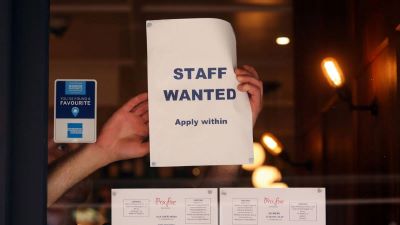
Acombination of the pandemic and new immigration rules after the country left the European Union has left key industries suffering from intense shortages of workers. With the supply of candidates falling at a record pace, that’s fueling a rapid escalation of wages as firms scramble to fill vacancies left by immigrants from EU countries.
But despite pay increases and sign-on bonuses, there isn’t a ready stream of U.K. workers to fill the void. While almost 2 million have either lost their job during the pandemic, left the workforce or are on furlough, there’s a mismatch between those people and the skills needed.
After years of stagnant pay, the situation is a rare moment of leverage for some workers to secure better conditions. Posted salaries for job openings in construction are up almost 7% this year, with those for drivers rising 5.7%, according to data up to July on jobs website Indeed.
Drivers for supermarket chains J Sainsbury Plc and Tesco Plc are considering strike action. The British Meat Producers Association says pay for processors has spiked to as much as 18 pounds an hour, twice the minimum wage.
“Companies have never had any issue saying, well, we can’t get a CEO for a million quid, we will put that up to 1.25 million,” said Andy Prendergast, acting National Secretary for the GMB union. “They’ve always had that reluctance to do that when it comes to shelf stackers or cleaners or laborers on building sites.”
A report from the Recruitment and Employers Confederation Thursday showed vacancies jumped in August, but the supply of candidates plunged. That sent starting salaries up at the fastest pace since it began collecting data in 1997.
ADVERTISEMENT
The shortages are already leading to very public signs of strain. The British summer has been filled with stories of firms in dire need of truck drivers, and pictures of empty shelves at supermarkets.
Warnings about Christmas deliveries have also surfaced, sucking some of the optimism out of the economy’s rebound from successive virus lockdowns. The British Chambers of Commerce says that staff shortages will hamper growth in the coming months.
How the government and businesses deal with the dilemma will help direct the economy toward a smooth recovery or a bumpy ride. A sustained jump in pay rates could add to inflation and worry Bank of England policymakers, who have started already talking about the need for higher interest rates.
The U.K.’s biggest business lobby warned this week that the issue could last for as long as two years, and recent figures point to a worsening situation. Employers added 200,000 job adverts in the last week of August alone, and the REC estimates the total is almost 1.7 million.
About 60 of those vacancies can be found at Corbetts the Galvanizers, a 161-year old steel firm in Shropshire, where Chairman Andy Dodwell has tried to lure workers with higher wages, flexible working hours and other perks.
“There’s just not enough local labor to get on board and bring to work,” he said. “It’s a big, big challenge. And I don’t see it ending until probably very late in 2022.”
That said, there are signs the latest developments don’t mark the start of a new trend in rampant wage growth.
Big increases are confined to very limited number of roles, and many of the incentives are sign-on bonuses that won’t apply to existing staff. The use of that enticement has increased 66% in the past five months.
“On balance, we’re unlikely to see persistent increases, certainly on the scale we’ve seen,” said Reamonn Lydon, an economist at Ireland’s central bank who works with Indeed on labor data. “Some of those increases in the first half of the year are around 7%. It would be very, very hard for the sectors to sustain this.”
The government has so far refused to address the worker shortages by allowing changes to its visa policies.
The irony is the current situation, albeit sharpened by Covid, is exactly what both sides said would happen during the 2016 Brexit referendum. Leave campaigners promised higher wages, while Remainers warned of food left rotting in fields amid a lack of foreign workers.
After trade hassles earlier this year, many businesses see the latest issue as another example of the government “delivering” Brexit, but leaving them to deal with the consequences. The stance could perhaps be summed up by the Twitter page of David Frost, the U.K.’s Brexit minister, which reads: “You can’t have freedom for free.”
“That’s not what was on the table a year ago,” said David Lindars from the British Meat Producers Association. “At the end of the day, there’s no extra people. They can’t come here because of our immigration policy.”
Dot Property 48 Hour Mega Sale sees a record number of property seekers take advantage of historic discounts
Dot Property 48 Hour Mega Sale recorded a 25 percent increase on enquiries as people looked to secure their discounted unit.
The Dot Property Group network of websites welcomed more than 160,000 visitors during the Dot Property 48 Hour Mega Sale. Real estate seekers took advantage of THB250 million in discounts available on condominiums, villas and houses throughout Thailand.
Not only was website traffic up over last year’s event, but the Dot Property 48 Hour Mega Sale recorded a 25 percent increase on enquiries as people looked to secure their discounted unit. The full force of Dot Property Group supported the two-day sale with synergy between Thailand-Property, Dot Property, Hipflat and other leading portals providing greater visibility and attracting even more property buyers.
Dot Property 48 Hour Mega Sale sees a record number of property seekers take advantage of historic discounts
Na Reva Charoennakhon was among the most popular developments in Bangkok during the Dot Property 48 Hour Mega Sale. As one of only a few modern condominiums offering unobstructed, panoramic views of the Chao Phraya River, several buyers found the discounts for units here too good to pass up.
“We were impressed with the interest Na Reva Charoennakhon received throughout the Dot Property 48 Hour Mega Sale and sold several units during the event,” Khun Haruthai Sredrattanaskaw, Senior Sales Manager at Na Reva Charoennakhon, noted. “By attracting a large, engaged audience of property buyers, this event showed there is still real demand out there for Bangkok condominiums if you have the right product in a good location.”
Dot Property 48 Hour Mega Sale sees a record number of property seekers take advantage of historic discounts
Wyndham Nai Harn Beach Phuket from Cissa Group was another development that drew a sizable amount of interest from Dot Property 48 Hour Mega Sale attendees. Located in Phuket, the investment property garnered attention from both local and overseas buyers.
“The Dot Property 48 Hour Mega Sale allowed us to reach an audience that was ready to make a decision. With most real estate buyers currently needing more time to figure out if they want to purchase or not, this event was a great way for us to overcome that obstacle,” Tara Rungsangsuwan, Cissa Group Assistant Chief Commercial Officer, explained.
Dot Property 48 Hour Mega Sale sees a record number of property seekers take advantage of historic discounts
Travel restrictions and the lingering impact of COVID-19 has slowed the Thailand property market in 2021 with key segments, such as condominiums in Bangkok and Phuket, among the most affected. This challenge remains, although research has shown there are a few possible solutions.
In a recent report surveying developers and real estate professionals, Dot Property Group found discounts were the most successful mechanism to attract buyers and convince them to make a decision. With more than THB250 million in discounts available on real estate throughout Thailand, the Dot Property 48 Hour Mega Sale was the country’s largest online sales event this year.
“Tapping into the full power of the Dot Property Group allowed us to take the Dot Property 48 Hour Mega Sale to the next level. The record-setting amount of website traffic, leads and transactions we saw this year highlights just how powerful our network is,” Adam Sutcliffe, Director, Events and International Markets at Dot Property Group, stated. “We are delighted to have this opportunity to connect property seekers and sellers in a unique setting. It shows that even during a challenging environment, demand for Thailand property still exists.”
BGRIM named sole Asia Pacific winner of top ARC Award 2021 for sustainability report
B.Grimm also supports the non-profit organisation Freeland in its “EndPandemics” campaign to end wildlife trafficking through various communication channels, both online and offline, such as staging public seminars through various media to publicise and raise awareness in the wider global community.
B.Grimm Power PCL (BGRIM), Thailand’s leading industrial power producer, is the only firm in Asia Pacific to earn the Gold award in the Interior Design category from the International ARC Awards 2021 for its “Sustainability Report 2020: Empowering the World Compassionately”. The sustainability report won the top accolade for its creative design, beautiful presentation and information layout which can effectively communicate BGRIM’s vision and missions clearly in an easy-to-understand manner.
“The award mirrors BGRIM’s determination to promote a sustainable business growth (sustainability) under the principles of good governance as well as responsible value chain management by taking into account the economic, social and environmental impacts,” said Dr Harald Link, Chairman and President of BGRIM.
BGRIM named sole Asia Pacific winner of top ARC Award 2021 for sustainability report
The International ARC Awards form part of MerComm International Awards Programs organised by MerComm Inc, an independent global firm that promotes excellence in communications and honouring individuals, organisations and companies with outstanding performance in the field.
The awarding has been held continuously for 35 years. Entries evaluated by independent experts in the field of economic information communications and technology from around the world in the form of “blind judges”, with an order of marks according to the criteria of the award, with winners must have a score of more than 70%.
For 143 years, B.Grimm, the parent firm of BGRIM, has been operating in Thailand. With the philosophy of “Doing business with compassion for the development of civilisation in harmony with nature”, the company has focussed on creating benefits for people and society while placing importance on the conservation of the environment and wildlife.
One of the important projects that B.Grimm has been supporting over the past seven years is the conservation and restoration of tiger populations at Mae Wong and Khlong Lan National Parks in Kamphaeng Phet Province.
The company collaborates with the Department of National Parks, Wildlife and Plant Conservation, and the WWF-Thailand to protect tiger habitats from poaching, hunting and helping to restore the nature of the western forests of Thailand. The effort encompasses research and surveys of tiger populations and other wild animals, and support smart patrol system to ensure safety for forest rangers. The company has also played an important role in raising awareness and building a network of tiger and wildlife conservation in Thailand.
BGRIM named sole Asia Pacific winner of top ARC Award 2021 for sustainability report
In addition, B.Grimm also supports the non-profit organisation Freeland in its “EndPandemics” campaign to end wildlife trafficking through various communication channels, both online and offline, such as staging public seminars through various media to publicise and raise awareness in the wider global community.
Currently, B.Grimm Power has a total of 50 power plants in commercial operation. The company aims to ramp up its total installed capacity from 3,058 MW at the end of 2020 to at least 7,200 MW of secured PPA by 2025 and further to 10,000 MW by 2030 with an annual revenue of more than 100 billion baht being targeted. More importantly, B.Grimm Power is moving strenuously towards realising net-zero carbon emissions by 2050.
ICONSIAM boosts confidence for Thai retail industry – becomes Thailand’s first-ever project
First Thai Project ever recognized by the globally respected MIPIM Awards
ICONSIAM, the urban lifestyle megaproject of the future under the management of Siam Piwat, with Charoen Pokphand and Magnolia Quality Development Corporation as joint owners and co-developers and Urban Architects Co., Ltd. as architectural collaborator, ranked in the top four in the Best Shopping Center Category at the MIPIM Awards 2021, a world-class real estate competition that has been organized for over 30 years, on September 8, 2021 in Cannes, France. This not only marked the first time for a Thai retail property developer to get an opportunity to vie for this award, but also demonstrates Siam Piwat’s unwavering commitment to all Thais and determination to present to the world the best that Thailand has to offer in order to earn reputation for the country and capture the hearts of people across the globe.
stated, “ICONSIAM is a project whose ultimate goal is to bring together everything Thai and present it for the world to see and experience under the concepts of “Co-creation” and “Creating Shared Value” as well as to unite Thai people across all sectors in an effort to create a project that brings value and benefits to the general public, communities, and the country. Despite business challenges brought on to all sectors by COVID-19, ICONSIAM remains steadfast in its aspiration to provide assistance to business owners, communities, and the general public and enable them to navigate through these difficult times. As Thailand’s first retail developer to ever compete in the world-class MIPIM Awards 2021 in the Best Shopping Center Category, we hope to play a part in building confidence among international business partners and elevate the capability of Thailand to capture the attention of the world again.”
ICONSIAM boosts confidence for Thai retail industry – becomes Thailand’s first-ever project
ICONSIAM ranked among the four best shopping centers in the world out of 172 entries from 36 countries at the MIPIM Awards 2021 and is Thailand’s first-ever retail property development to compete in the Best Shopping Center Category in this internationally-recognized real estate competition, which has been organized for over 30 years and dubbed the Academy Award of the property development industry. This honor is a recognition of ICONSIAM’s unprecedented concepts, realized through a large-scale collaboration with experts in different fields from across Thailand and 15 other countries, including architects, engineers, artists, and artisans, as well as with community leaders from various provinces nationwide, government agencies, and over 1,000 retail business owners, who have come together to tell their stories and bring to life a project that reflects every aspect of Thainess, from art and culture all the way to local wisdom and architecture. In addition, this distinction is a testament to the tremendous benefits and prosperity that ICONSIAM has brought to the surrounding communities and businesses, which have previously won ICONSIAM 13 prestigious accolades from various global-level competitions, including the Best Design of the Year at the World Retail Awards 2019 hosted by the World Retail Congress, the first prize in the Best Shopping Center category at the MAPIC Awards 2019 in Cannes, France, and the 2020 VIVA Best-of-the-Best Design and Development Award.
ICONSIAM boosts confidence for Thai retail industry – becomes Thailand’s first-ever project
“It is our determination to present the best of Thailand to the world and bring the best of the world to Thailand that has enabled us to compete for such a prestigious award. Earning our place in the world’s most important real estate competition is considered an achievement that Thai people should be proud of. Siam Piwat Group is still just as resolute as ever to enhance Thailand’s reputation and bring benefits to the public as has been its aspiration in order to help Thailand reclaim its position as the ultimate tourist destination and win the hearts of people across the world again,” concluded Chadatip.
ICONSIAM boosts confidence for Thai retail industry – becomes Thailand’s first-ever project
ICONSIAM has been selected as Thailand’s key countdown venue for three consecutive years and has been delivering exciting experiences and happiness to Thai and international visitors alike. Today, with the easing of the lockdown, ICONSIAM is ready to dazzle you with fresh experiences by various leading domestic and international brands that have opened their doors despite the pandemic on a space of over 10,000 square meters. These include :-
• Starbucks Reserve Chao Phraya Riverfront, Thailand’s largest Starbucks store with a whopping 1,300 sq.m. floor space that incorporates local Thai cultural elements and delivers a vibrant coffee experience; and a new 1,300 sq.m.
• MUJI outlet that showcases an awe-inspiring list of 6,193 products across all categories, along with special zones and services, such as Labo, which offers clothing for all occasions; a local treat and delicacy zone, MUJI Coffee Corner; where you can enjoy a cup of coffee made with Doi Tung coffee beans in a relaxing atmosphere; as well as interior design services.
• Also opening their doors are a stunning 1,638 sq.m. Experience Center by China’s leading electric and hybrid automobile manufacturer Great Wall Motors
• A 4,438 sq.m. world-class indoor playground Mega Harborland, featuring the theme Little Thailand and designed by the world’s leading playground equipment manufacturers, scheduled to open in January 2022.
Visitors can also look forward to the reopening of SookSiam, the ultimate hub of Thai food and products from the 77 provinces of Thailand. An eye-popping range of promotions that are set to help boost sales for the stores and stimulate the Thai economy in the last quarter of the years.
About MIPIM Awards
The MIPIM Awards is an internationally-renowned real estate and retail competition that was established in 1991. Commonly dubbed the Academy Awards of the real estate industry both at the global level and in Asia, the MIPIM Awards honors the most outstanding and accomplished property and retail projects around the world. Aside from this competition, MIPIM has also hosted world-class real estate seminars and events that bring together the world’s most influential players across the real estate industry since 1990.





 Dot Property 48 Hour Mega Sale sees a record number of property seekers take advantage of historic discounts
 Dot Property 48 Hour Mega Sale sees a record number of property seekers take advantage of historic discounts
 Dot Property 48 Hour Mega Sale sees a record number of property seekers take advantage of historic discounts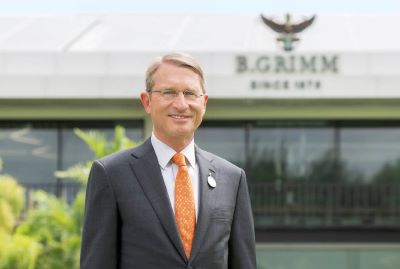
 BGRIM named sole Asia Pacific winner of top ARC Award 2021 for sustainability report
 BGRIM named sole Asia Pacific winner of top ARC Award 2021 for sustainability report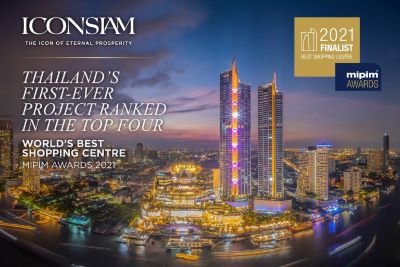
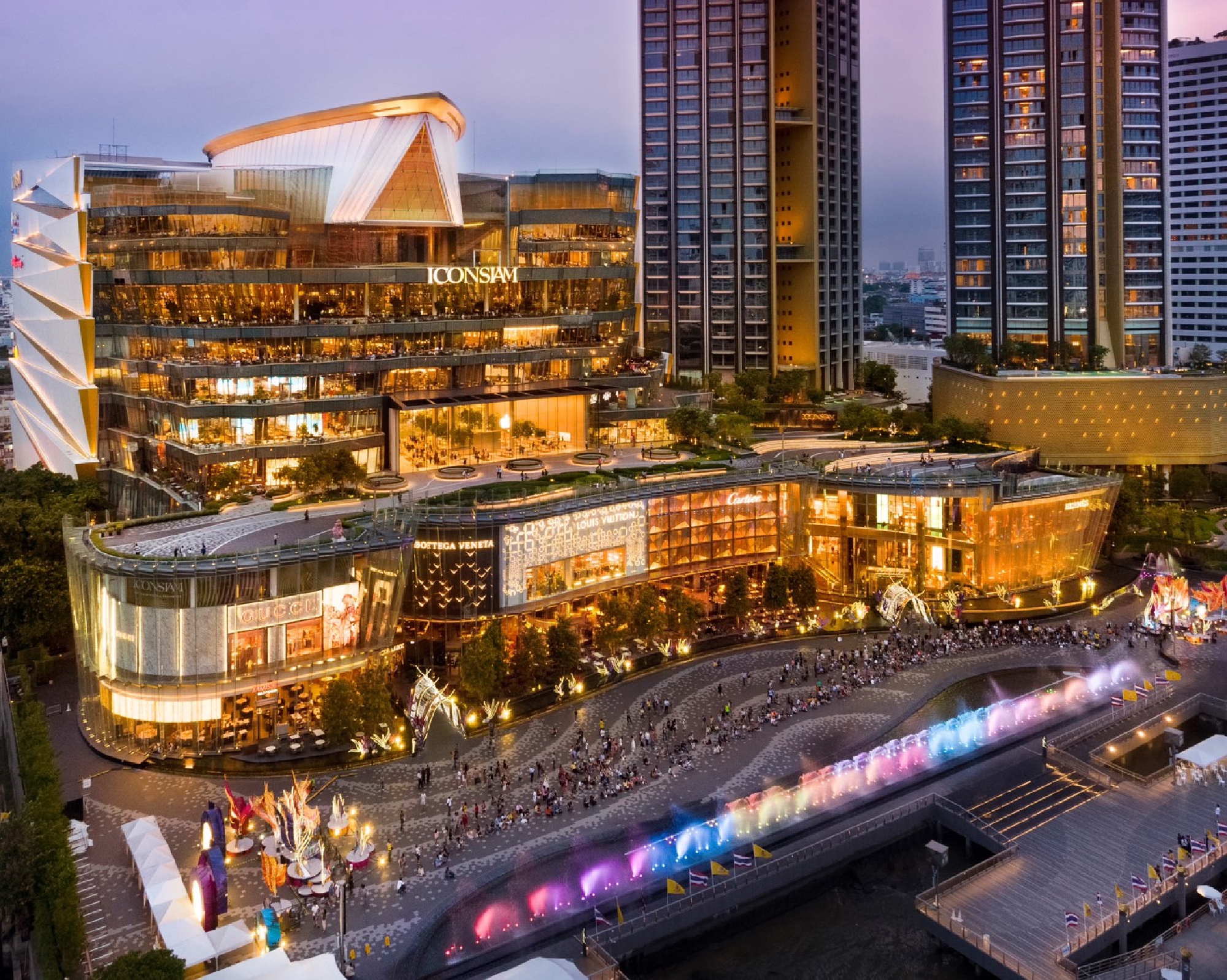 ICONSIAM boosts confidence for Thai retail industry – becomes Thailand’s first-ever project
 ICONSIAM boosts confidence for Thai retail industry – becomes Thailand’s first-ever project
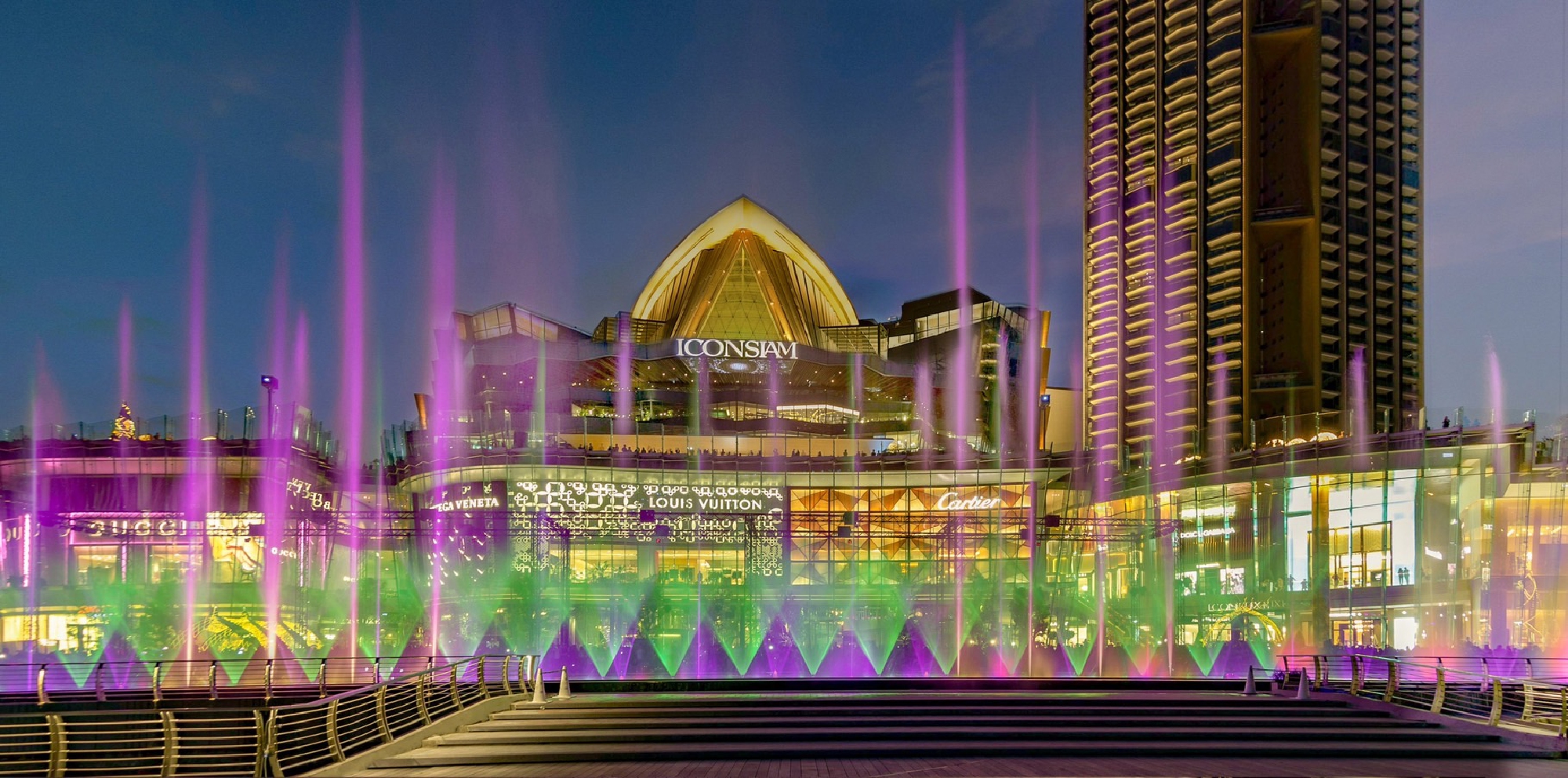 ICONSIAM boosts confidence for Thai retail industry – becomes Thailand’s first-ever project
