Baht slides to 33.27, the lowest in nearly three years
The baht hits its lowest level in nearly three years, opening at 33.27 to the US dollar on Friday, weakening from Thursday’s closing rate of 33.24.
It was the lowest the baht had slid to in two years and nine months.
The Thai currency is likely to move between 33.25 and 33.35 during the day, Krungthai Bank market strategist Poon Panichpibool said.
Poon said that the baht would continue to weaken due to the Covid-19 situation. Importers have also purchased US dollars, as they are afraid the baht could weaken quickly and sharply, he said.
Poon believed the Thai currency could easily weaken to 33.50 per US dollar in the short term if the Covid situation worsened and the dollar momentum rose. The momentum would rise if supported by the US Federal Reserve’s statement to decrease quantitative easing or the economy of the US was better than expected.
ADVERTISEMENT
Moreover, the baht will continue to weaken until the Covid-19 situation gets better, which is expected to be in early September, Poon added.
Covid-19 and wildfires spell big business for the air purifier industry
Between Covid-19s airborne transmission and more recently choking smoke sent aloft by western wildfires – some of which drifted thousands of miles to settle over East Coast cities – the very air Americans breathe has gone from afterthought to worrisome threat.
One sector that’s managed to benefit from these dual crises is the air purifier industry. Sales have been climbing since the onset of the pandemic in 2020, a trend that’s been turbocharged this year by unprecedented, climate change-induced infernos raging across the West.
Researchers who spend their days thinking about air quality say some purifiers can be an effective way to make inside air cleaner – and that when it comes to the coronavirus, potentially help lower risk of transmission – when coupled with other, traditional precautions.
The air treatment systems market is expected to expand by 29% this year, according to research and consulting firm Verify Markets, driven in part by the spreading delta variant of Covid-19 and smoke from wildfires in the West. It follows a growth rate of 57% in 2020, when Americans rushed to buy anything that they thought might prevent them from getting infected.
This year, when it comes to the consequences of western wildfires, Environmental Defense Fund air pollution specialist Maria Harris said “there’s no place in the U.S. not potentially vulnerable.”
As long as users follow certain guidelines and don’t get swayed by hyperbolic marketing claims, portable purifiers can be helpful in dealing with poor air quality. And you won’t necessarily have to shell out thousands of dollars to get a solid machine either.
In the U.S., search-engine queries for related terms have jumped over the past month, with the phrase “air purifier for smoke” becoming 140% more popular, according to Google Trends. Unsurprisingly, interest appeared stronger in the Northwest, where fires have been terrible this summer. But it was also robust across the country in places such as Mississippi, underscoring the broad-ranging impact of the disasters.
Wildfire smoke has been linked to a range of negative health effects, including asthma attacks and more susceptibility to respiratory infections, Harris said.
That’s “particularly concerning in the context of the Covid-19 pandemic,” she said. “The pollutants in smoke can harm health in many different ways, so anything we can do to reduce exposure is a good idea.”
Choosing a product, however, can seem daunting with so many brands and models on the market. The first step is ensuring the purifier has a high efficiency particulate air filter, most commonly known as HEPA, according to Lew Harriman, the retired director of research at consulting firm Mason-Grant.
When it comes to combatting the spread of the coronavirus, Illinois Institute of Technology engineering professor Brent Stephens said the empirical evidence supporting air purifiers is newer and less concrete. But he added that he believes they can be helpful. He highlighted a July report from the U.S. Centers for Disease Control and Prevention, which found in a study performed this year that a HEPA air cleaner can reduce exposure to Covid-19 indoors, particularly when combined with masking.
ADVERTISEMENTx
Stephens normally avoids add-ons such as ionization systems aimed at inactivating viruses, because the literature on them is limited, he said. Moreover, he said there’s some indication these technologies could prove counterproductive. Some HEPA models include such features, which he just turns off.
He does recommend checking an air purifier’s clean-air delivery rate, an industry standard that helps measure efficacy. The higher the rate, the more particles the unit can filter and the larger area it can serve, according to the U.S. Environmental Protection Agency. For wildfire smoke, users might want to buy a model that filters out odors in addition to pollutants, Stephens said. Harris, with the Environmental Defense Fund, also advises scanning third-party effectiveness tests.
To make sure people are getting clean air wherever they are in the home, Harriman suggests buying several small purifiers and scattering them around the house – which could also come at a lower cost than buying a larger machine. It’s more effective to be near a working air purifier when inside, he said, rather than rely on the reach of a big one in another room.
Overall, there’s no need to spend a fortune, either. Some “workhorse models” cost around $500 to $600, Stephens said, but it’s also possible to get “really good products” for $200 to $300. The price will of course depend on what’s available in a particular area and whether others are also rushing to buy the appliances.
Reliable HEPA cleaners include those made by Blueair AB, Honeywell International and Coway, among others, Harriman said. In the past three months, Coway purifier sales increased by 102.8% compared to the same period in 2020, spokesperson Jordan Weintraub said in an email. The company usually sees a spike when air quality worsens amid wildfires.
Harris said she’s experienced the reassurance air purifiers provide in reducing pollution on smoky days, in terms of how the atmosphere in her house feels and smells. But she notes that relying on appliances to deal with the threat posed by a deadly pathogen or fallout from global warming is not a long-term strategy.
Many people “lack the resources to make purchases like private air purifiers to help reduce their exposure,” Harris said. “There are societal solutions needed here, very clearly.”
Published : August 06, 2021
By : Syndication Washington Post, Bloomberg · Daniela Sirtori-Cortina
Markets wrap: Stocks gain as earnings outweigh virus concerns
U.S. equities gained ahead of Fridays jobs report as investors balanced corporate results and jobless claims against the economic threat of the delta virus variant.
The S&P 500 and Nasdaq 100 rose to record highs, with Booking Holdings Inc., Fox Corp. and MercadoLibre Inc. higher after earnings. Meanwhile, the dollar was weaker, gold fell and Treasuries slid after initial unemployment claims declined for a second week.
In Europe, the Stoxx 600 index also notched an all-time high following more mixed corporate earnings. Drugmakers Novo Nordisk A/S and Merck KGaA gained after raising forecasts while Bayer AG plunged on margin concerns. The pound also extended a gain against the greenback after the Bank of England left its benchmark interest rate unchanged.
“This continues to be a favorable market for equities and will probably remain that way as long as the Fed stays accommodative and companies’ earnings continue to rebound,” Carter Henderson, portfolio manager at Fort Pitt Capital Group, said by phone. “That being said, the market is up 17% for the year. We believe room to the upside is probably limited.”
The U.S. job market remains a key window onto the economic outlook, with the latest reports showing a much softer-than-expected ADP employment report but a record expansion for U.S. service industries. Data on new unemployment claims Thursday also suggested incremental improvement, with the focus now turning to Friday’s key non-farm payrolls numbers.
“While jobless claims have been a bit erratic over the last few months, we’re starting to see less file for unemployment week over week, suggesting that more are taking jobs. And the historic low on the trade deficit front is a testament to the demand we’re seeing from consumers,” Mike Loewengart, managing director of investment strategy at E*Trade Financial, said. “So while there may be supply shortages on the labor and goods front, it’s encouraging to see robust demand in the face of delta fears weighing on investors.”
Crude oil was higher after several days of losses. Bitcoin rose above $40,000. And in Asia, equities edged up in Japan but slipped in Hong Kong and China.
Here are some key events to watch this week:
– Reserve Bank of India monetary policy decision, briefing Friday
– The U.S. jobs report is expected to show another robust month of hiring Friday
ADVERTISEMENTx
These are the main moves in markets:
– – –
– The S&P 500 rose 0.6% as of 4 p.m. New York time
– The Nasdaq 100 rose 0.7%
– The Dow Jones Industrial Average rose 0.8%
ADVERTISEMENT
– The MSCI World index rose 0.4%
– – –
– The Bloomberg Dollar Spot Index was little changed
– The euro was little changed at $1.1836
– The British pound rose 0.3% to $1.3931
ADVERTISEMENT
– The Japanese yen fell 0.2% to 109.75 per dollar
– – –
– The yield on 10-year Treasuries advanced four basis points to 1.22%
– Germany’s 10-year yield was little changed at -0.50%
– Britain’s 10-year yield advanced one basis point to 0.52%
– – –
– West Texas Intermediate crude rose 1.5% to $69.20 a barrel
– Gold futures fell 0.4% to $1,806.70 an ounce
Published : August 06, 2021
By : Syndication Washington Post, Bloomberg · Vildana Hajric
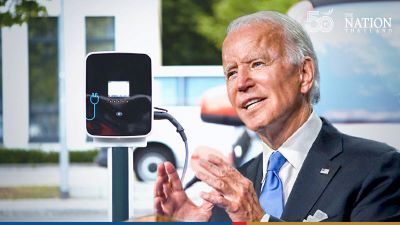
Biden calls for half of new cars to be electric or plug-in hybrids by 2030
WASHINGTON – President Joe Biden on Thursday unveiled a far-reaching, multipronged plan to make U.S. cars and light trucks more fuel-efficient and to begin a shift to electric vehicles over the coming decade. The move marks one of the administrations most consequential pushes so far to combat climate change and tackle the nations biggest source of greenhouse gas emissions.
The suite of new goals and mandates, forged after months of talks with car manufacturers, autoworkers and environmental groups, is meant to transform the kind of vehicles Americans drive and to reduce the country’s reliance on fossil fuels. The move comes with political risks for Biden, who has faced pressure from activists and industry representatives alike. But it represents a key part of his promise to try to slow rising global temperatures and propel the country toward a future in which the vehicles on roads and highways rely on little or no gasoline.
“Today, labor and industry, state and local leaders, are all working together to write the next chapter in the American story,” Biden said on the White House’s South Lawn. “We’re in competition with China and many other nations for the 21st century. To win, we’re going to have to make sure that the future will be made in America.”
But it remains to be seen whether Biden’s call to action will be enough to get the American auto industry to shift gears to cleaner cars quickly enough as part of a broader effort to tackle global warming.
The president signed an executive order calling for half of new passenger car sales to be of electric vehicles powered by batteries and fuel cells or plug-in electric hybrids by the end of the decade. Executives from auto companies, including Ford and General Motors, as well as lawmakers and United Auto Workers members joined Biden at the White House on Thursday afternoon.
Biden, a self-described “car guy,” turned to GM chief executive Mary Barra during his remarks and quipped: “When they make the first electric Corvette, I get to drive it.”
In the near term, the Environmental Protection Agency and the Transportation Department were also set Thursday to propose new requirements on greenhouse gas emissions and fuel efficiency for cars, SUVs and pickup trucks through model year 2026.
That rulemaking represents the Biden administration’s first major effort to use the federal government’s regulatory authority to cut carbon emissions. It also is a repudiation of a freeze on fuel-efficiency standards imposed under Donald Trump, one of the former president’s biggest environmental rollbacks. Trump scaled back the requirements put in place under the Obama administration in 2012, which would have ramped up average fuel economy to 54.5 miles per gallon by model year 2025.
The Biden administration expects its actions to conserve about 200 billion gallons of gasoline and forestall around 2 billion metric tons of carbon pollution.
Looking further out, the Biden team is also kicking off its push to set longer-term pollution standards for everything from tiny sedans to huge semitrailers made in the second half of the decade.
Taken together, the administration’s effort to spur the sale of electric vehicles aims to slash emissions from the nation’s top driver of global warming: The transportation sector, in which more than 90 percent of the fuel used today is derived from petroleum.
Yet to get Americans into cleaner cars, the administration faces a bumpy road ahead.
“What we need to be doing is figuring out how to get really dramatic reductions [in emissions] going forward,” said Mary Nichols, the former chair of the California Air Resources Board who helped forge a deal with five major automakers in 2019 to tighten their mileage standards beyond what the Trump administration set.
ADVERTISEMENTx
The Biden team modeled its near-term tailpipe targets on the California agreement. “We’ve been heating up, choking up and burning up on the West Coast of the United States,” California Gov. Gavin Newsom (D) said in an interview Thursday. “We’ve been waiting for this announcement for years.”
A fast-growing fire that tore through the Northern California town of Greenville this week, he added, underscores “the fact that we need to step up our efforts to address the underlying cause here.”
But it is difficult to make up for lost ground in improving engines after the Trump administration eased regulations. Dave Cooke, senior vehicles analyst for the Union of Concerned Scientists, said that while he had not yet seen the administration’s final proposal, his group and others have been pressuring the White House to push beyond the parameters of the California deal.
“They are not really forcing the industry to do a full course correction after the Trump [rollback],” Cooke said. “It puts us far behind where we need to be.”
And it’s still unclear whether the Biden administration will do enough to put the country on the path to reach its goal under the Paris climate agreement. The president wants to cut U.S. emissions in half by 2030, compared with 2005 levels. With his executive order Thursday, Biden hopes to send a signal to other countries to set their own aggressive climate goals ahead of a major climate conference in Scotland in the fall.
ADVERTISEMENT
In Detroit and other industrial cities, electric vehicles represent a challenge to autoworkers as factories shift from making internal combustion engines to battery-powered ones. A concern among factory workers is that their employers may be able to get by with fewer workers on the assembly line since electric vehicles have fewer parts. Both Ford and GM are investing in battery factories in the United States.
Brian Rothenberg, a spokesman for the United Auto Workers, which endorsed Biden last year, said the union’s focus “is not on hard deadlines or percentages, but on preserving the wages and benefits that have been the heart and soul of the American middle class.”
Meanwhile, the nation’s Big Three automakers – Ford, GM and Stellantis, formerly Fiat Chrysler – rallied around a “shared aspiration” less ambitious than the Biden goal. They are proposing that 40 to 50 percent of their annual U.S. sales be battery electric, fuel cell and plug-in hybrid vehicles by 2030. Ford chief executive Jim Farley said that based on early demand for electric F-150 trucks and other vehicles his company is “well positioned” to meet that mark.
But in a joint statement, the automakers said the shift “can be achieved only with the timely deployment of the full suite of electrification policies” from the federal government, including new financial incentives for drivers to buy zero-emission vehicles.
On Twitter, Elon Musk, a chief executive of electric vehicle giant Tesla, suggested his company was snubbed from Biden’s event. It “seems odd that Tesla wasn’t invited,” Musk wrote.
ADVERTISEMENT
Reaction was mixed from environmental groups.
Simon Mui, deputy director for clean vehicles and fuels at the Natural Resources Defense Council, praised Biden’s proposal for getting the country “back on the road to cleaning up tailpipe pollution.” But he added: “This proposal delivers less carbon pollution reductions than the Obama-era standards and includes unfortunate loopholes that undercut progress.”
Without a quick transition, the United States risks sliding even further behind Europe and Asia in making batteries and other key components for electric vehicles. Biden’s action will undoubtedly face comparisons with what other developed nations are doing to speed the shift to electric vehicles.
“Whether U.S. manufacturers and workers see the benefits of this transition really depends on actions now,” said Zoe Lipman, director of manufacturing and advanced transportation at the BlueGreen Alliance, a coalition of labor and environmental groups.
The European Union last month proposed changes that would effectively phase out the sale of new gasoline-powered engines by 2035, part of a far-reaching package of measures intended to put the 27-country bloc on pace to reach net zero emissions throughout its economy by mid-century.
The U.S. government must play a role in hastening its own shift, Nichols said, because some automakers are reluctant to move away from selling the highly profitable but gas-guzzling SUVs and trucks that remain popular today.
“They are not going to do it any faster than they have to,” said Nichols, who is now a visiting fellow at Columbia University’s Center on Global Energy Policy.
Advocates for electric vehicles, in both government and industry, must also sway an American driving public worried about not being able to find spots to plug in and recharge.
“The auto companies are there. We need the consumers to be there,” said Don Stewart, executive vice president of public affairs at the Alliance for Automotive Innovation, a trade group that represents carmakers. “And the federal government plays a huge role in that.”
A big question is how much financial support Congress will provide.
Plans to provide new tax breaks for buying electric vehicles hinge on Democrats passing a budget bill with razor-thin majorities in the House and Senate. And a bipartisan infrastructure plan includes just $7.5 billion for dotting U.S. corridors with vehicle chargers – half the amount Biden first called for to build 500,000 recharging spots.
“Now Congress has to act because this goal won’t be met just by setting it,” said Rep. Daniel Kildee, D-Mich., whose district has been decimated by factory closures. “We have to have industrial policy in this country that is about something.”
Published : August 06, 2021
By : The Washington Post · Dino Grandoni, Brady Dennis
SET slides as Covid cases surpass 20,000 for 2nd day in a row
The Stock Exchange of Thailand (SET) Index closed at 1,527.66 on Thursday, down 18.20 points or 1.18 per cent. Transactions totalled THB81.29 billion with an index high of 1,547.38 and a low of 1,526.91.
The index was pressured by rising Covid-19 cases as Thailand’s daily caseload surpassed 20,000 for the second day running. Thailand logged 20,920 new infections and 160 deaths on Thursday.
The 10 stocks with the highest trade value today were 7UP, IVL, PTT, KCE, PTTGC, GPSC, SCB, GULF, ADVANC and PSL.
ADVERTISEMENTx
Other Asian indices were down with one exception:
Japan’s Nikkei Index closed at 27,728.12, up 144.04 points or 0.52 per cent.
China’s Shanghai SE Composite Index closed at 3,466.55, down 10.67 points or 0.31 per cent, while the Shenzhen SE Component Index closed at 14,872.23, down 117.88 points or 0.79 per cent.
Hong Kong’s Hang Seng Index closed at 26,204.69, down 221.86 points or 0.84 per cent.
South Korea’s KOSPI closed at 3,276.13, down 4.25 points or 0.13 per cent.
Taiwan’s TAIEX closed at 17,603.12, down 20.77 points or 0.12 per cent.
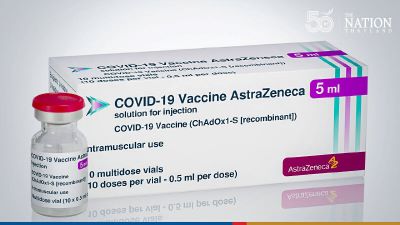
AstraZeneca vaccine over 80% effective against severe disease, death after first dose, study shows
The AstraZeneca/Oxford University vaccine against Covid-19, Vaxzevria, has been found to be effective against severe disease or hospitalisation caused by the Beta and Delta variants.
Real-world data from Canada shows 82 per cent and 87 per cent effectiveness after one dose of the vaccine against hospitalisation or death caused by the Beta/Gamma and Delta variants respectively.
The effectiveness of the AstraZeneca jab after one dose against hospitalisation or death was similar to that of other vaccines tested in the study. The follow-up time was not enough to report on its effectiveness after two doses, though other studies have shown increased effectiveness after two doses.
Vaxzevria was also found to be effective against milder symptomatic infection, though data was collected after the first dose. Vaccine effectiveness against any symptomatic disease was 50 per cent against Beta/Gamma variants and 70 per cent and 72 per cent against the Delta and Alpha variants respectively.
Trials carried out by the University of Oxford in the UK and the University of the Witwatersrand in South Africa in January showed limited efficacy against mild disease primarily due to the Beta variant. The study was unable to properly ascertain vaccine efficacy against severe disease, including hospitalisation and death, given that the subjects were predominantly young, healthy adults who only experienced mild symptoms.
Mene Pangalos, executive vice president of research and development at BioPharmaceuticals, said: “With different variants threatening to disrupt our route out of the pandemic, this real-world evidence shows that Vaxzevria, along with other vaccines used in Canada, provides a high level of protection against the most serious forms of the disease, even after just one shot. It is essential that we continue to protect as many people as possible in all corners of the world in order to get ahead of this deadly virus.”
The analysis included 69,533 individuals who tested positive for Covid-19 between December 2020 and May this year in Ontario, Canada. Of the subjects, 28,705 (6.8 per cent) tested positive for non-variants of concern and 40,828 (9.7 per cent) were positive for a variant of concern.
Vaxzevria, formerly AZD1222, was co-invented by the University of Oxford and its spin-out company, Vaccitech. It uses a replication-deficient chimpanzee viral vector based on a weakened version of a common cold virus (adenovirus) that causes infections in chimpanzees and contains the genetic material of the Covid-19 virus spike protein. After vaccination, the surface spike protein is produced, priming the immune system to attack the SARS-CoV-2 virus if it later infects the body.
The vaccine has been granted a conditional marketing authorisation or emergency use in more than 80 countries across six continents. More than 700 million doses of the vaccine have been supplied to 170 countries worldwide, including more than 100 countries through the Covax facility.
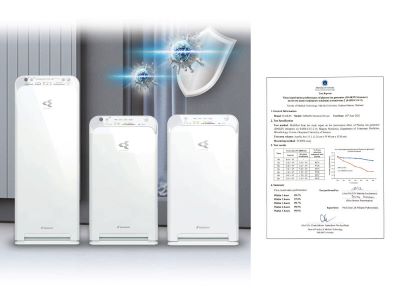
Daikin teams up with Mahidol University to test the efficacy of Streamer technology in some of Daikin’s air conditioners and air purifiers
Daikin teams up with Mahidol University to test the efficacy of Streamer technology in some of Daikin’s air conditioners and air purifiers and confirms its ability to deactivate 99.9% of novel corona virus in Thailand
Mr. Akihisa Yokoyama, President of Siam Daikin Sales Co. Ltd, one of the world’s leading firms in air conditioning technologies, reveals that the firm has recently formed an official academic partnership with Faculty of Medical Technology at Mahidol University to evaluate the efficacy of Daikin’s patented Streamer technology in deactivation the novel corona virus (SARS-CoV-2) that is causing the current pandemic. This is to ensure the Thai consumers of Daikin’s wellbeing enhancing feature in its products and strengthen its position as the world’s leader in air conditioning technologies.
Earlier in July 2020, Daikin Industries (Japan) announced scientific test result with the University of Tokyo and Okayama University of Science in Japan which confirms that Streamer technology can deactivate 99.9% of SARS-CoV-2 after 3 hours of use. The test was conducted to instill confidence among Thailand consumers.
ADVERTISEMENTx
Daikin teams up with Mahidol University to test the efficacy of Streamer technology in some of Daikin’s air conditioners and air purifiers
Siam Daikin Sales collaborated with Faculty of Medical Technology at Mahidol University to test the efficacy of Streamer technology against the SARS-CoV-2. The test, which was conducted with SARS-CoV-2 samples harvested from current outbreak areas in Thailand, confirms that the Streamer technology can deactivate 99.9% of SARS-CoV-2 that is spreading in Thailand. The test result from Mahidol University aligns with the one previously conducted in Japan.
Assistant Professor Dr. Hatairat Lerdsamran and research team at Faculty of Medical Technology at Mahidol University revealed that the efficacy test of Streamer technology was conducted with Daikin air purifiers MCK55TVM6, MC55UVM6 and MC40UVM6 and Daikin’s latest air conditioner model, ZETAS, to determine whether Streamer technology can deactivate SARS-CoV-2 that is presently spreading in Thailand. The test was done with SARS-CoV-2 sample harvested from COVID-9 positive patients, which was then cultured, categorized, and intensified to test the efficacy level of Streamer technology in Daikin products. The test result was scientifically confirmed that Streamer technology in three models of Daikin air purifiers MCK55TV6, MC55UVM6 and MC40UVM6 and Daikin ZETAS air conditioner can deactivate 99.9% of SARS-CoV-2 within 4 hours after 6 hours of operation (reference: test result dated 18 June 2021).
The test was conducted with SARS-CoV-2 in biosafety level 3 laboratory. One 31-litre acrylic box was fitted with Streamer technology from Daikin MC40UVM6 air purifier while the other was not. The SARS-CoV-2 viral solution was placed on 6-well plate (0.5ml each well), then on a centrifuge with 12times per/minute speed within the two acrylic boxes.
The Streamer equipment released plasma through the air to the 6-well plate where viral solution is being shaken on the centrifuge. The research then collected the viral solution from the well every 1,2,3 and 6 hours and counted the surviving live virus with Plaque method with Vero E6 cells and TCID50 process.
Mr. Akihisa Yokoyama says that the efficacy test confirms Streamer technology’s ability to effectively deactivate SARS-CoV-2 in Thailand under the Thai environment, and hence sets new benchmark in the air conditioner and air purifier industry. The effort also firmly professes Daikin’s mission to “Perfecting the Air” for all of its Thai consumers.
The collaboration between Siam Daikin Sales and Mahidol University also raises the standard of air conditioner industry in Thailand and further improves the tried and tested innovation to offer effective technologies to the consumers.
Streamer technology had been constantly developed by Daikin Industries (Japan) and was first introduced in the market in 2004. The technology releases Streamer discharge that has the ability to deactivate harmful matters and purify the air with stable, high-speed electrons – a technology which was difficult to harness and put into practice at the time. The efficacy is successfully achieved by Streamer technology’s oxidation method that deactivates harmful matters, which is 2-3 times more powerful than the commonly used glow discharge method.
Moreover, when combined with the air’s molecules, these high-speed electrons deactivate harmful matters with oxidation process, allowing it to rid the air of unpleasant odors, bacteria and in-door air pollutants such as formaldehyde among others.
Linden Cogeneration Announces Hydrogen Fuel Blending Arrangement Reducing CO2 Emissions by 10%
EGCO Linden II has invested in Linden Topco, a company that operates the Linden gas-fired power cogeneration project in the United States.
Electricity Generating Public Company Limited or EGCO Group through its subsidiary EGCO Linden II has invested in Linden Topco, a company that operates the Linden gas-fired power cogeneration project in the United States. The operating company has concluded an agreement with Phillips 66, a major oil refiner in the United States to receive refinery produced fuel gas containing hydrogen.
The operating company will modify the existing gas turbine of Linden Unit 6 so that refinery produced fuel gas containing the hydrogen, supplied by Phillips 66’s Bayway Oil Refinery adjacent to the power plant, can be mixed and co-fired with natural gas. After completion of this modification in 2022, Linden Unit 6 will be capable of mixed combustion with up to 40% hydrogen, reducing CO2 emissions by as much as 10% of the regular annual CO2 emissions from Linden Unit 6.
ADVERTISEMENTx
Mr. Thepparat Theppitak EGCO Group’s President
Mr. Thepparat Theppitak, EGCO Group’s President, said, “Specialists in the power and fuels industry like our partners at Linden Topco from JERA Americas are working on advancements to make hydrogen a viable fuel option for power and transport. EGCO Group has also invested in the Gangdong fuel cell power plant in South Korea which uses hydrogen as its primary feedstock for power and heat generation. Through investments such as Linden Cogen and Gangdong, EGCO Group aims to accumulate technological know-how and experience that it can apply more broadly to its domestic and international projects in the future as the technology matures.”
“EGCO Group is in the forefront of Thailand’s plans to promote the use of hydrogen as a clean fuel for power generation. We are committed to promoting the adoption of cleaner fuels and the pursuit of excellence in new cutting-edge power generation technologies”, concluded Mr. Thepparat.
Linden Cogeneration Announces Hydrogen Fuel Blending Arrangement Reducing CO2 Emissions by 10%About Linden Cogen Facility
The Linden Cogen Facility consists of Linden Unit 1-5 (800MW) selling energy, capacity and ancillary services into the New York System Operator (NYISO-Zone J) and Linden Unit 6 (172MW) selling energy and capacity to PJM PS North power market in New Jersey. These are two of the most congested and capacity constrained power markets in the United States. The Facility also enjoys long-term process steam and electricity sales contracts with large investment grade industrial off-takers in the co-located Bayway refinery anchored by Phillips 66. The Facility gets the advantage of fuel supply resulting from its physical location in the city of Linden, New Jersey, and access to abundant sources of natural gas via multiple pipelines. Linden Cogen is owned by JERA Americas (50%), EGCO Group (28%), DBJ (12%), GS-Platform Partners (10%).
Huawei to invest US$100 million in Asia Pacific startup ecosystem over 3 years
Huawei has been helping Singapore build the first startup hub in APAC since 2020, and has expanded the program to Hong Kong, Thailand and Malaysia in the past year. At the summit, Huawei also announced that this program would focus its efforts on developing four additional startup hubs
Huawei announced its plan to invest US$100 million in startup support today at its inaugural Spark Founders Summit, which took place simultaneously in Singapore and Hong Kong. Huawei said the investment would go towards its Spark program, which aims to build a sustainable startup ecosystem in the Asia Pacific region over the next three years.
Huawei has been helping Singapore build the first startup hub in APAC since 2020, and has expanded the program to Hong Kong, Thailand and Malaysia in the past year. At the summit, Huawei also announced that this program would focus its efforts on developing four additional startup hubs – in Indonesia, the Philippines, Sri Lanka, and Vietnam – with the overarching aim of recruiting a total of 1,000 startups, out of which 100 are scaleups, into the Spark accelerator program.
In Thailand, Huawei Thailand collaborated with depa, NIA and other well-known partners to kick start “Spark Ignite 2021 – Thailand Startup Competition” in June 2021, calling for tech startups across Thailand to join this competition for a chance to enter the Huawei Spark Accelerator programme. This competition, aiming to be one of Thailand’s biggest and most influential start-up events, will highlight key aspects Thailand’s start-up ecosystem, feature 10 high potential startups from the whole country, and connect founders, venture firms, corporations and government.
The Spark Founders Summit was attended by representatives from many prominent Asian startups, academia, various industries and governments, and the media, as well as more than 50 regional top venture capitalists and over 300 startup founders. Speeches and panels at the event focused on the social value of this startup ecosystem and how startups can promote technological and ecosystem innovation, to contribute to local communities and drive socioeconomic development.
Three additional startup-related initiatives were launched by Huawei at the event: The Spark Developer Program, which aims to nurture a developer ecosystem powered by HUAWEI CLOUD in the Asia Pacific region; the Spark Pitstop Program, designed to onboard and support startups on HUAWEI CLOUD to accelerate product development; and the Spark Innovation Program (SIP), focused on facilitating enterprise innovation through the Spark startup ecosystem.
ADVERTISEMENTx
Huawei Senior Vice President and Board Member Catherine Chen opened the summit by emphasizing how important startups are to social advancement and what Huawei is doing to support startups: “We all know how brilliant startups and SMEs are. They are the innovators, disruptors, and pioneers of our times. These companies account for two-thirds of jobs worldwide, create two-thirds of new jobs, and generate almost 50% of global GDP. 34 years ago, Huawei was a startup with just 5,000 dollars of registered capital. Recently, we have been thinking: How can we leverage our experience and resources to help more startups address their challenges? Doing so would allow them to seize the opportunities posed by digital transformation, achieve business success, and develop more innovative products and solutions for the world.”
Zhang Ping’an, CEO of Huawei’s Cloud Business Unit, noted, “Since its launch in 2017, HUAWEI CLOUD has been the world’s fastest-growing cloud, and has driven the growth of countless startups. Last year, we launched the Spark Program in Asia Pacific. Through this program, we are working with local governments, leading incubators, well-known VC firms, and top universities to build support platforms for startups in many regions. Now 40 startups are participating in our program.”
Zhang continued, “Starting today, we are stepping up our support for startups through four new initiatives, aimed at cloud-plus-cloud collaboration, continuous tech innovation, global and local services, and high-quality business ecosystems. Today, we launched our Cloud-plus-Cloud Collaboration and Joint Innovation Program, through which we will support startups with US$40 million worth of resources. Half of that investment is coming from HUAWEI CLOUD, half from Huawei Mobile Services (HMS). In 2021, our plan is to support 200 startups in the HMS ecosystem, and share our network of channel resources with developers worldwide who together serve 1 billion Huawei device users. In addition, we will open an HMS Developer Innovation Center to support 100,000 HMS cloud-native developers.”
More and more startups are pursuing end-to-end digitalization as they move towards a fully connected, intelligent world. HUAWEI CLOUD infrastructure works in conjunction with Huawei Mobile Services to support startups from all industries. Huawei’s cloud offerings help developers and partners to unify accounts, development platforms, and app distribution and operation. HMS is now the world’s third largest mobile app ecosystem, and is helping many startups expand their global influence. Currently, 4.5 million developers from over 170 countries and regions rely on HMS.
Huawei recognizes startups as key partners in creating social value and contributing to communities around the world. At the Spark Founders Summit, Huawei unveiled the latest data on its innovation research programs with startups. The data shows solid relationships between Huawei and more than 2,000 partners from across the Asia Pacific region, with ongoing initiatives to build support platforms in close partnerships with governments, top VCs, and leading universities in Hong Kong and Singapore.
Huawei rounded off the series of announcements with plans to give developers access to its global network of channel partners, including the world’s top 50 telecom carriers and local banking institutions. Finally, in terms of talent development, Huawei will build an HMS Developer Innovation Center to cultivate future talent in cooperation with 210 leading universities across the Asia Pacific region.
“‘In Asia Pacific, for Asia Pacific’ has been our unchanged commitment for the past two decades,” said Jeffery Liu, President of Huawei Asia Pacific, “Leveraging Huawei’s global customer base and full-stack technologies, the Spark Program will invest over $100 million in the next three years, and provide comprehensive support to build a sustainable startup ecosystem and create new value for the dynamic region.”
As the 1st global cloud vender who established local region (physical data centers) to provide REAL local services in Thailand, HUAWEI CLOUD is committed to help Thailand realize the visionary blueprint of Thailand 4.0 and to cultivate a digital ecosystem in the digital age. Huawei has launched online training series called Cloud Diary, which joined hands with local customers and partners from every industry to share best cloud-based experiences in agile innovation, reaching more than 700,000 total views among developers, universities students, teachers and enterprise employees. In 2021, it will continue sharing digital era’s necessary knowledge in the most close-to-life way.
Meanwhile, the HUAWEI CLOUD Warrior Workshop is operating monthly to cover IT practitioners from various enterprises including SMEs and Startups. Trending topics like Security and Compliance, Server and Database Migration to Cloud, Machine Learning, Enterprise Intelligent and Data Platform on Cloud, are hands-on practiced under professionals’ step-by-step instruction. Currently around 30 SMEs and startups are joining each session.
In November 2020, during POWERING DIGITAL THAILAND: HUAWEI CLOUD & CONNECT, the first Cloud Developer Contest of HUAWEI CLOUD Thailand is held. It encouraged participants to develop and deploy solutions that benefit Thai people and society at large by leveraging HUAWEI CLOUD’s basic and advanced services. As Mr. Abel Deng, CEO of Huawei Thailand emphasize, “Thailand is already a forerunner in Cloud, AI, and 5G adoption which will be the major driving force to implement cloud and intelligent transformation in various industries. The readiness of infrastructure is considered to be foundations for a digital economy. Therefore, we aim to bolster Thailand to become the Digital Hub of ASEAN to achieve Thailand 4.0 strategy.”
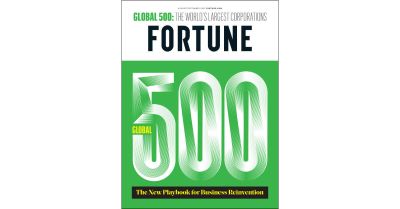
Fortune Releases annual fortune global 500 List 2021 Ranking Features 143 Chinese Companies, 122 U.S. Companies, and 53 Japanese Companies
Walmart Maintains Top Spot for 8th straight year; 27 companies make their debut
FORTUNE announced the FORTUNE Global 500 for the 2020 fiscal year, ranking the world’s largest corporations by revenue. Walmart claimed the top spot for the eighth consecutive year, and for the 16th time since 1995. Mainland China (including Hong Kong) once again has the most companies on the list, up 11 from last year with 135. Adding Taiwan, the total for Greater China is 143. The U.S. is up one with 122, and Japan held steady with a total of 53. The companies on the 2021 list are based in 220 cities and 31 countries around the world. This year there are 23 women CEOs of FORTUNE Global 500 companies, nine more than last year.
ADVERTISEMENTx
FORTUNE Global 500 companies generated revenues totaling more than one-third of the world’s GDP. They generated $31.7 trillion in revenues (down 5%), $1.6 trillion in profits (down 20%) and employ 69.7 million people worldwide. Apple (No. 6) netted $57 billion in profits, and is the FORTUNE Global 500’s most profitable company in 2021, ending Saudi Aramco’s (No. 14) two-year reign.
Of the 2021 rankings, FORTUNE List Editor Scott DeCarlo says, “The radical changes the pandemic has wrought will have long-term implications for businesses worldwide. Using it as a catalyst, the Global 500 showed the world how to adapt, evolve, and reinvent themselves. The Global 500 is a picture of a world we’re rapidly leaving behind and also a guide to the new environment taking shape.”
THE FORTUNE GLOBAL 500 TOP 10 LIST:
1. Walmart (U.S.)
2. State Grid (China)
ADVERTISEMENT
3. Amazon.com (U.S.)
4. China National Petroleum (China)
5. Sinopec (China)
6. Apple (U.S.)
7. CVS Health (U.S.)
ADVERTISEMENT
8. UnitedHealth Group (U.S.)
9. Toyota Motor (Japan)
10. Volkswagen (Germany)
View the complete ranking here.
Explore a data visualization of the history of the Global 500.
In his foreword to the Aug./Sept. 2020 issue of FORTUNE, Acting Editor-in-Chief Brian O’Keefe writes:
Companies are ranked by total revenues for their respective fiscal years ended on or before March 31, 2021. All companies on the list must publish financial data and report part or all of their figures to a government agency. Figures are as reported, and comparisons are with the prior year’s figures as originally reported for that year.





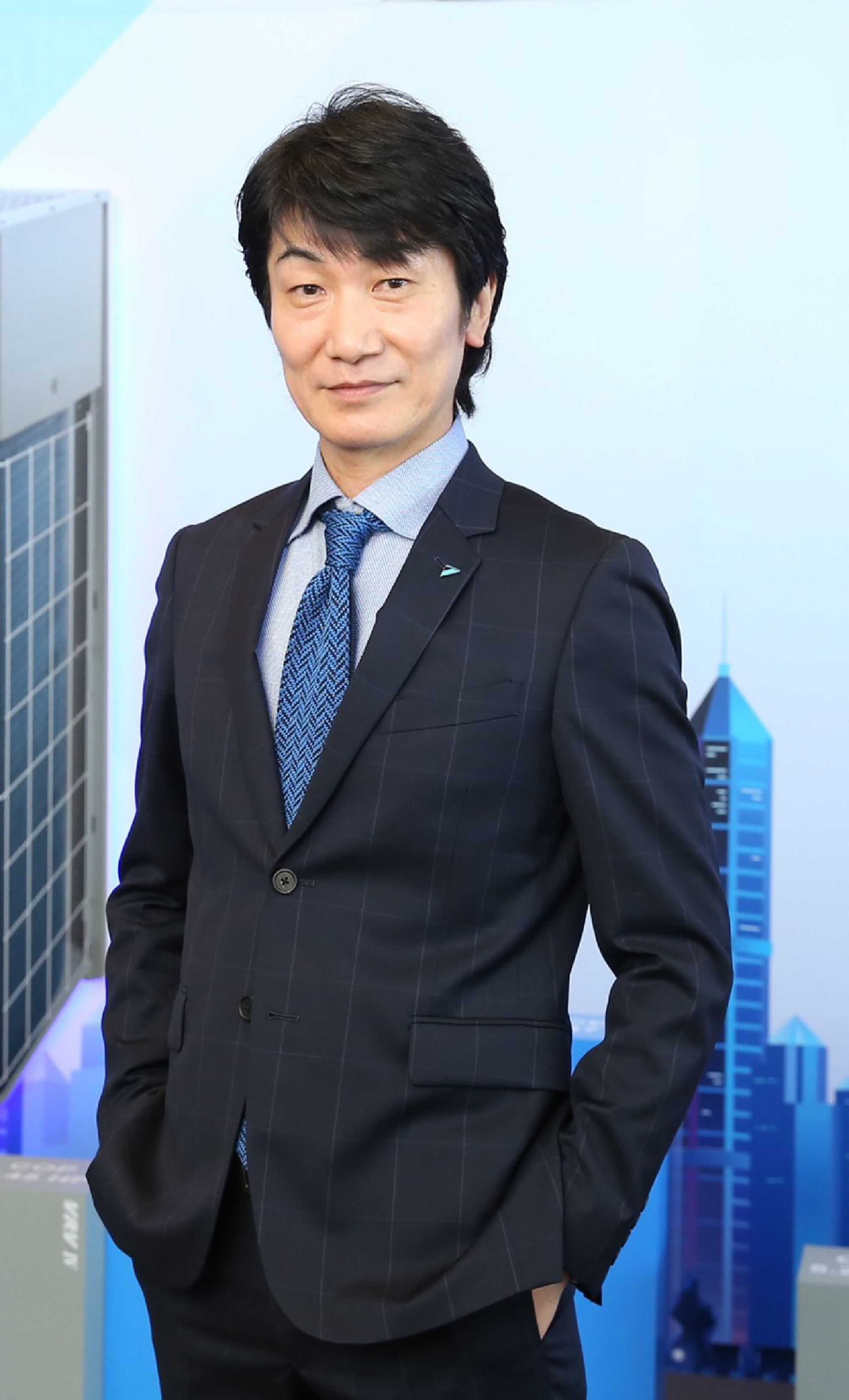 Daikin teams up with Mahidol University to test the efficacy of Streamer technology in some of Daikin’s air conditioners and air purifiers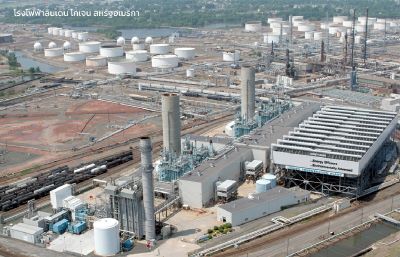
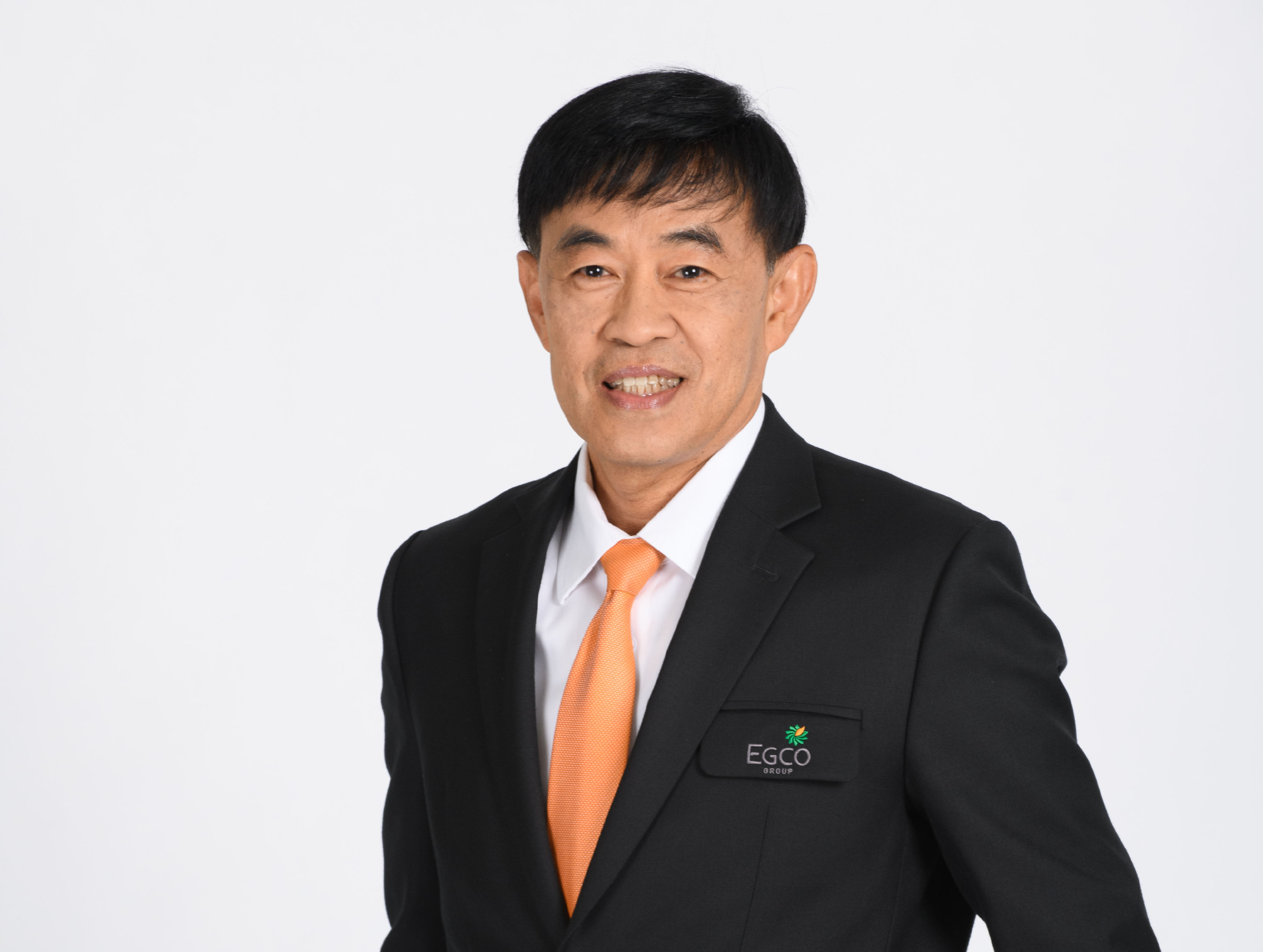 Mr. Thepparat Theppitak EGCO Group’s President
 Linden Cogeneration Announces Hydrogen Fuel Blending Arrangement Reducing CO2 Emissions by 10%About Linden Cogen Facility