The Stock Exchange of Thailand (SET) Index fell by 7.18 points, or 0.47 per cent, to 1,511.95 in the morning session on Monday.
An analyst at Krungsri Securities expected the index to drop to between 1,500 and 1,510 due to uncertainty over US President-elect Joe Biden’s measures to raise the tax rate as it would pressure companies’ turnover.
“Besides, the SET would be under pressure from its tight valuation, the decline in foreign funds flows and falling oil price in response to countries’ lockdowns,” he said.
He recommended that investors buy:
▪︎ PTTGC, TOP, IVL, EPG, SCGP, CBG, ROJNA, TVO, RCL, SYNEX, XO, WICE, JMT, MTC and SAWAD, whose fourth-quarter turnover is expected to improve.
The SET Index closed at 1,519.13 on Friday, down 16.85 points or 1.10 per cent. Total transactions amounted to Bt101.41 billion with an index high of 1,544.11 and a low of 1,513.48.
The price of gold dropped by Bt50 per baht weight in morning trade on Monday, the Gold Traders Association reported.
As of 9.26am, the buying price of a gold bar was Bt25,950 per baht weight and selling price Bt26,050, while gold ornaments were priced at Bt25,483.96 and Bt26,550, respectively.
At close on Saturday, the buying price of a gold bar was Bt26,000 per baht weight and selling price Bt26,100, while gold ornaments were Bt25,529.44 and Bt26,600, respectively. The price dropped by Bt350 per baht weight last week.
Spot gold moved to US$1,826 (Bt54,980) per ounce in the morning, while Comex (Commodity Exchange) gold to be delivered in February slumped by US$21.5, closing at $1,829.94 per ounce on Friday, as mass buy-ups of the dollar amid worries over the Covid-19 outbreak caused the currency to strengthen.
Meanwhile, gold price was pressured by the decline in US retail sales.
Hong Kong gold price sunk by HK$280 to $16,850 (Bt65,436) per tael, the Chinese Gold and Silver Exchange Society reported.
The Government Savings Bank (GSB) has adjusted its lending criteria to help customers hit by the fresh Covid-19 outbreak, by focusing on their collateral instead of their cash flow.
The move would enable customers to access credit, which would prevent them from adding to the bank’s bad debt, said president Vitai Ratanakorn.
He said he was confident the bank could control its bad debt.
The government should increase expenditure in the next fiscal year to deal with the economic fallout post Covid-19, while investors should beware of a major correction in the stock market, an economist has said.
Anusorn Tamajai, former dean of the Faculty of Economics at Rangsit University, said that the Thai government should increase expenditure by 2 to 3 per cent for fiscal 2022.
The government plans to spend Bt3.1 trillion, down Bt185.9 billion or 5.66 per cent, from the current fiscal year. The 2022 fiscal year starts in October this year.
Instead of cutting spending, the government should hike spending by 2 or 3 per cent over the current fiscal year, he said.
The government should increase capital spending by Bt100 billion to Bt200 billion more, aimed at creating jobs, building an irrigation system and taking care of the environment, he suggested.
The government could raise more revenue via collection of online tax and land and building tax, he suggested.
More tax would lessen pressure of public debt, which is expected to exceed 60 per cent of GDP, a sustainable threshold.
While the government plans to borrow Bt700 billion to finance the budget deficit in the next fiscal year, Anusorn said that if the government spent on productive projects then they would generate income back into economy.
He was pessimistic of the latest government plan to offer people Bt3,500 cash handouts for two months, subsidising shopping of daily necessities, and discounting utility cost, saying they would not have an impact on economic growth. They might just reduce the cost of living for people affected by the new wave of the virus, he said.
The key concern of the government is how to drive exports, boost private investment and make the job market healthy, he said.
He also expressed concerns over the authorities taking legal actions against youth protesters who are demanding reform of the monarchy and scrapping of the lese majeste law. Police actions could escalate political conflict, which could dampen investor confidence and damage the economy, he warned.
It is unlikely that the Thai economy will grow 3.5 per cent next year with inflation rate of 1.2 per cent as forecast by Thai authorities, he said.
He added that US President-elect Joe Biden’s economic stimulus package worth US$1.9 trillion would boost the US economy to expand as much as 8 to 9 per cent this year. Many research houses project the package would add 0.7 to 2 percentage points to US growth rate projected earlier. The US labour market is expected to achieve full employment this year instead of waiting for three or four years. Easing of the virus outbreak would also boost the US economy, he said.
He warned that capital inflows into Asia and emerging markets in the past 18 months may flow back to the United States. Emerging markets, including Thailand’s stock market, may face major correction, he warned. The Thai baht may also reverse course from appreciation to depreciation, he predicted.
US markets offer opportunities and challenges to investors despite political turmoil
EconJan 18. 2021US Ambassador Michael George DeSombre hosts a virtual seminar on Thursday on ‘SelectUSA: Helping Thai Companies Go Global,’ exchanging views with Thai business leaders. Thai investors revealed how they had made successful investments in the US and why they were not worried about political turmoil during the transition from President Donald Trump to President-elect Joe Biden.
By Wichit Chaitrong The Nation
US Ambassador to Thailand Michael George DeSombre hosted a virtual seminar on Thursday on ‘SelectUSA: Helping Thai Companies Go Global,’ to give Thai companies information they needed before expanding their business to the US and abroad.
Thai investors who have business presence in the US are optimistic about the US economy going forward, despite the political divide that led to rioters besieging the Capitol ealier this month.
Thai investors ranging from manufacturing to the financial services sectors aired their views during the virtual seminar and press conference in Bangkok.
Ambassador DeSombre moderated a panel of leading Thai CEOs from key industries, including Aloke Lohia, group chief executive officer of Indorama Ventures Pcl; Boonchai Opas-iam-likit, US Business chairman, Charoen Pokphand Group; Chanin Vongkusolkit, chairman of Banpu Pcl; Chartsiri Sophonpanich, president of Bangkok Bank Pcl; and Thirapong Chansiri, president and CEO, Thai Union Group Pcl.
The seminar in Bangkok took place after Trump’s supporters stormed the Capitol building on January 7 while members of Congress were convening to certify the presidential election outcome. The four years of the Trump administration has been seen by critics as promoting nationalism and undermining multilateral organisations such as the World Trade Organisation, in order to gain support from voters who were discontent with globalisation.
DeSombre assured that the US transition period would not raise any challenge for Thai and other businesses investing in the US.
“I think obviously any change in administration may certainly involve change in policies, but the US is always the largest destination for foreign direct investment in the world and I don’t see that changing,” he said.
Chartsiri believes that globalisation will continue and regionalism and localisation will move in parallel, creating business opportunities. He said that there may be some changes in supply chains but overall development is positive for Thailand, Asean and other countries. Bangkok Bank has a branch in New York.
Boonchai said CP group is a strategic investor and takes a long-term view. CP’s investment must benefit the host country, community and the company’s shareholders, he emphasised.
He said he was optimistic that his company saw potential to expand its shrimp market in the US. CP Group has been making other investments in the United States. In 2016, the firm bought Bellisio Foods Inc, maker of Chili’s At Home and Boston Market frozen foods, for about $1.1 billion. CP also has recently started investing in a shrimp farm in Florida.
Boonchai said CP foresaw the potential of the shrimp market in the US due to American consumers’ appetite for shrimp.
Aloke, acclaimed for mergers and acquisitions, said that the world’s leading chemical company has been using Thailand as base for expanding investment into the global market. Diversification is the key as we don’t want to rely too much on one country or a region and investment abroad means also move production base close to customers.
Chanin recounted that Banpu first started a small scale energy business in the US before scaling it up. Energy conglomerate Banpu has invested in shale gas production in Pennsylvania and Texas in the United States. Fossil fuel businesses remain promising as it will take a long time before renewable energy could prevail, he said. The problem with renewable energy such as solar and wind power is their supply is not stable. While Biden may issue policies to support green energy, the US has to look at the experience of other countries, such as Germany, due to unstable renewable energy supply, he pointed out.
Thirapong said he went to the US when he was 31 years old and his food company was small when he made his first investment in the US. He attributed his successful investment in the US to cost advantage in food manufacturing and acquiring of strong local brand names. He, however, said that the company had shifted focus to Asia recently.
“After 24 years investing in US and 10 years in Europe, we have now shifted our focus to the Asia Pacific region due to the region’s higher economic growth rate,” he said.
Thai investors shared views that US is the world’s largest market with superior technology. But they warned that the US market is very competitive so Thai investors looking to invest, must have their own competitive advantage.
Investors have to make sure they comply with laws and regulations as different states have different sets of rules. And it is the most challenging to deal with US customers, because companies could face lawasuits, Thirapong warned.
Post the Covid-19 pandemic, DeSombre predicted more mergers and acquisitions in the US and other countries as the pandemic had led to many deals being stuck.
Regarding attracting foreign investors to invest in Thailand, DeSombre said that he is very encouraged by Thai authorities recognising the urgent need to relax visa rules in order to make it much easier for talent workers and their family members to work and stay in Thailand.
Ice cream for dogs? Even pets are eating their pandemic feelings.
CorporateJan 17. 2021Ben & Jerry’s this week announced the debut of Doggie Desserts: four-ounce cups of mostly nondairy frozen treats, one featuring pumpkin with cookies and another with peanut butter and pretzels.MUST CREDIT: Ben & Jerry’s handout photo
By The Washington Post · Laura Reiley
We’ve reached peak pet. There’s really nowhere else to go. Animal shelters are out of dogs. Tech conventions are debuting cat exercise equipment and, more creepily, headless, robotic lap cats with very swishy tails.
How do we know we’ve planted our flag at the pinnacle of pet obsession? One of the best-known premium ice cream companies has gone to the dogs.
Ben & Jerry’s this week announced the debut of Doggie Desserts: four-ounce cups of mostly nondairy frozen treats, one featuring pumpkin with cookies and another with peanut butter and pretzels. It’s nondairy because some dogs, like some people, don’t tolerate lactose well; the base is sunflower seed butter, the same as Ben & Jerry’s nondairy frozen confections for humans.
And therein is the essence. During the pandemic, ice cream sales have surged. Over the 52 weeks ending Sept. 6, in-home ice cream expenditures were up 13.4 percent and unit sales increased by 8.4%, according to data from Chicago-based market research firm IRI.
Creamy, frozen treats have provided succor during these difficult times. And we want man’s best friend to be right there with us on the couch, eating our feelings.
The urge to anthropomorphize and accessorize the animals we live with has gained steam. Between 2013 and 2019, pet stuff has been one of the fastest-growing spending categories, according to U.S. Bureau of Labor Statistics’ Consumer Expenditure Surveys.
In 2013, we spent about the same on our pets ($57.8 billion) as we did on alcohol ($55.8 billion). By 2019, we spent $13.5 billion more on our pets than on alcohol: $90 billion to alcohol’s $76.5 billion. We also spent more than twice as much on our pets as we did on major appliances, fresh fruit or tobacco products that year.
Spending on dog treats alone has jumped 44% from 2015 to 2020, with pet owners spending $5.5 billion on them last year, according to data firm Euromonitor.
This is not news to Ben & Jerry’s, and its parent company, Unilever, a titan in the ice cream business. (Its brands dominate the freezer aisle: Magnum, Breyers, Klondike, Talenti, Good Humor and Popsicle.) There have been ice creams for dogs in the past – Frosty Paws, Pooch Creamery, Dairy Queen offers a Pup Cup and Starbucks whips up Puppuccinos so you can watch them scoot the cup around the floor – but this represents the first nonhuman foray into the “super-premium” category.
Lindsay Bumps, global marketing specialist for Ben & Jerry’s and a certified veterinary nurse, says the idea for the product surfaced last February, right before the pandemicreached the United States.
“Treats are such a big category. I might go to the vet with my dog and he did so great I want to take him for a Pup Cup,” she said (companion: a French bulldog named Spock). “It normally takes about 12 months to launch a product, but we had to adjust our ways of working, because we all started working from home.”
Nonetheless, the project entailed a flavor guru (her companion: a Great Pyrenees named Boone who prefers the pumpkin flavor), the innovation team, a nutrition consultant, a regulatory consultant and lengthy negotiations over flavors and size.
Then there was the focus-grouping: According to Bumps, in ordinary times, the Ben & Jerry’s Vermont headquarters has an average of 40 “Canine to Fivers” on premise any given day. Still, these work-from-home dogs weighed in.
Cat owners are restive now. What about us? According to Bumps, dogs have receptors for sweet like humans, while cats do not. Sweet feline folderol would be lost on them.
Bumps suggests trying the product out slowly on pooches, scooping a little into a bowl to see how it is digested. There are no verboten ingredients, such as chocolate or coffee, but it’s still a good idea to take it slow. She says more flavors will probably be added down the pike.
The treats – offered in mini-cups or multipacks priced between $2.99 and $4.99 – will debut next week but won’t be located in the B & J section next to Cherry Garcia or Chunky Monkey. They will be in the frozen “novelties” section next to bars and ice cream sandwiches. Might a human eat them by mistake?
“They are very clearly for dogs, with dog tags for the flavor names,” Bumps says, and the stories of the flavors’ namesakes, Ben & Jerry’s staff dogs Pontch and Rosie, on the back.
But what if you accidentally grabbed a cup for yourself?
“You can absolutely eat them. I’ve tried,” Bumps says. “They are delicious.”
Stocks drop the most in a week; dollar strengthens
EconJan 17. 2021American flags outside the New York Stock Exchange in New York on Jan. 4, 2021. MUST CREDIT: Bloomberg photo by Michael Nagle.
By Syndication Washington Post, Bloomberg · Claire Ballentine
U.S. stocks fell by the most in more than a week after Wells Fargo & Co. dragged down the banking sector in the wake of disappointing fourth-quarter results. Crude oil declined from a 10-month high as the dollar strengthened.
The energy and financial sectors led the S&P 500 into the red for a second day, with Exxon Mobil Corp. dropping 4.8% after a report said the company is being investigated for overvaluing assets. Utilities and real estate shares rose. Stocks were already lower in Europe and Asia as President-elect Joe Biden’s much-anticipated $1.9 trillion covid-19 relief plan came under scrutiny. Treasury yields declined.
Optimism about the U.S. aid package had helped spur the so-called reflation trade, but the plan is far from a done deal. Biden’s proposal could be watered down under congressional opposition, and there’s the possibility that some taxes could rise.
“There’s just a realization that this is a starting point for negotiations — there’s a little bit of a reality that this isn’t going to be a smooth quick process,” said John Porter, head of equities at Mellon Investments Corp.
Biden’s “American Rescue Plan” includes a wave of new spending, more direct payments to households, an expansion of jobless benefits and an enlargement of vaccinations and virus-testing programs as deaths reach record levels and local governments expand lockdowns.
Attention is now turning to how much of the package will ultimately get passed by Congress, with the go-big price tag and the inclusion of proposals set to be opposed by many Republicans. As lawmakers wrangle over details, U.S. jobless claims published Thursday painted a dismal picture and the U.S. is leading all countries in virus deaths with New York state reporting more than 200 daily fatalities for the first time since May.
“With a big number on the heels of a $9 billion package, it’s not going to be easy to get the next stimulus package passed,” said James Ragan, director of wealth management research at D.A. Davidson. “I think a combination of that and the weakening consumer data is causing the pause today. It was kind of inevitable, we’ve had a pretty strong run to start the year. Maybe a little more caution going into the long weekend.”
U.S. financial markets are closed Monday for the observance of Martin Luther King holiday.
These are some of the main moves in markets:
Stocks
The S&P 500 Index dipped 0.7% to 3,768.25 as of 4:02 p.m. EST, the lowest in more than a week on the largest decrease in more than a week.
The Nasdaq Composite Index declined 0.9% to 12,998.50, the lowest in more than a week.
The Dow Jones industrial average dipped 0.6% to 30,814.26, the lowest in more than a week on the largest decrease in more than a week.
The Stoxx Europe 600 Index sank 1% to 407.85, the lowest in more than a week on the biggest tumble in more than three weeks.
The MSCI All-Country World Index sank 0.9% to 655.71, the lowest in more than a week on the largest decrease in 11 weeks.
Currencies
The Bloomberg Dollar Spot Index gained 0.6% to 1,126.29, the biggest rise in more than a week.
The euro sank 0.6% to $1.2076, the weakest in more than six weeks on the largest decrease in more than two weeks.
The Japanese yen weakened 0.1% to 103.89 per dollar.
Bonds
The yield on 10-year Treasurys declined four basis points to 1.09%.
Germany’s 10-year yield increased one basis point to -0.54%.
Britain’s 10-year yield decreased less than one basis point to 0.288%, the lowest in more than a week.
Commodities
West Texas Intermediate crude sank 2.6% to $52.19 a barrel, the lowest in more than a week on the biggest tumble in more than three weeks.
Gold depreciated 1.1% to $1,826.30 an ounce, the weakest in more than six weeks on the largest fall in a week.
CP Foods and partners supply food for Myanmar migrant workers
Jan 15. 2021
By The Nation
Charoen Pokphand Foods PCL (CP Foods) has joined hands with True Corporation and Osotspa to provide nourishing food and other necessities to 1,200 families of Myanmar migrant workers under quarantine in Samut Sakhon province.
The relief supplies are being distributed through the Myanmar Embassy in Bangkok as a part of the “CPF Food from the Heart Against Covid-19” project.
Myanmar Ambassador Myo Myint Than thanked the Thai public and private sectors for supporting the migrant workers and their families who are affected by the virus outbreak. It is the grateful of Myanmar people.
CP Foods said it had supplied nourishing quality products including 36,000 fresh eggs, 1,200 bags of Royal Umbrella rice, 1,200 bottles of vegetable oil, 3,600 cups of CP Veg It Up soup and 14,400 bottles of drinking water to the migrant workers.
14,400 bottles
The “CPF Food from the Heart Against Covid-19” project has been up and running since early 2020 to alleviate the hardships facing Thai and migrant people, said CP Foods CEO Prasit Boondoungprasert.
Suphakit Vuntanadit, group chief commercial officer at True Corporation, said the company donated 2,000 SIMs with unlimited internet for 30 days and 2,000 fabric face masks. The internet SIM card will allow migrants to access online entertainment and keep them in touch with their families and friends during the quarantine, he said
Sze Tian Poh, chief international business officer at Osotspa, said that it had donated 10,000 bottles of its M150 and Lipo energy drinks, plus 3,600 bottles of C-Vitt to strengthen the immune system.
Since March 2020, “CPF Food from the Heart against COVID-19” has delivered foods to 200 public hospitals nationwide and further delivered foods to 20,000 families of doctors and nurses. Also, the company supports 5 hospitals in remote areas of Tak Province to prevent outbreaks at the Thai-Myanmar border.
CP Foods has also partnered with the Labour Protection Network (LPN) to provide over 30,000 packs of CP Foods products and 10,000 fresh eggs to help migrant workers in the Mahachai shrimp market.
Unicef distributes Covid-19 prevention gear to migrant communities in risky provinces
Jan 15. 2021
By The Nation
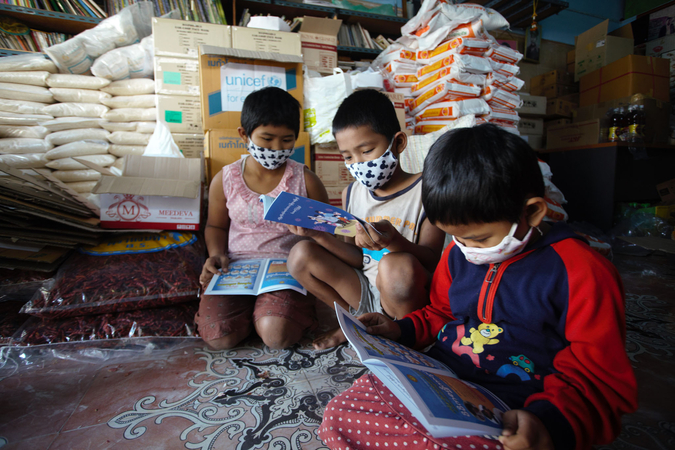
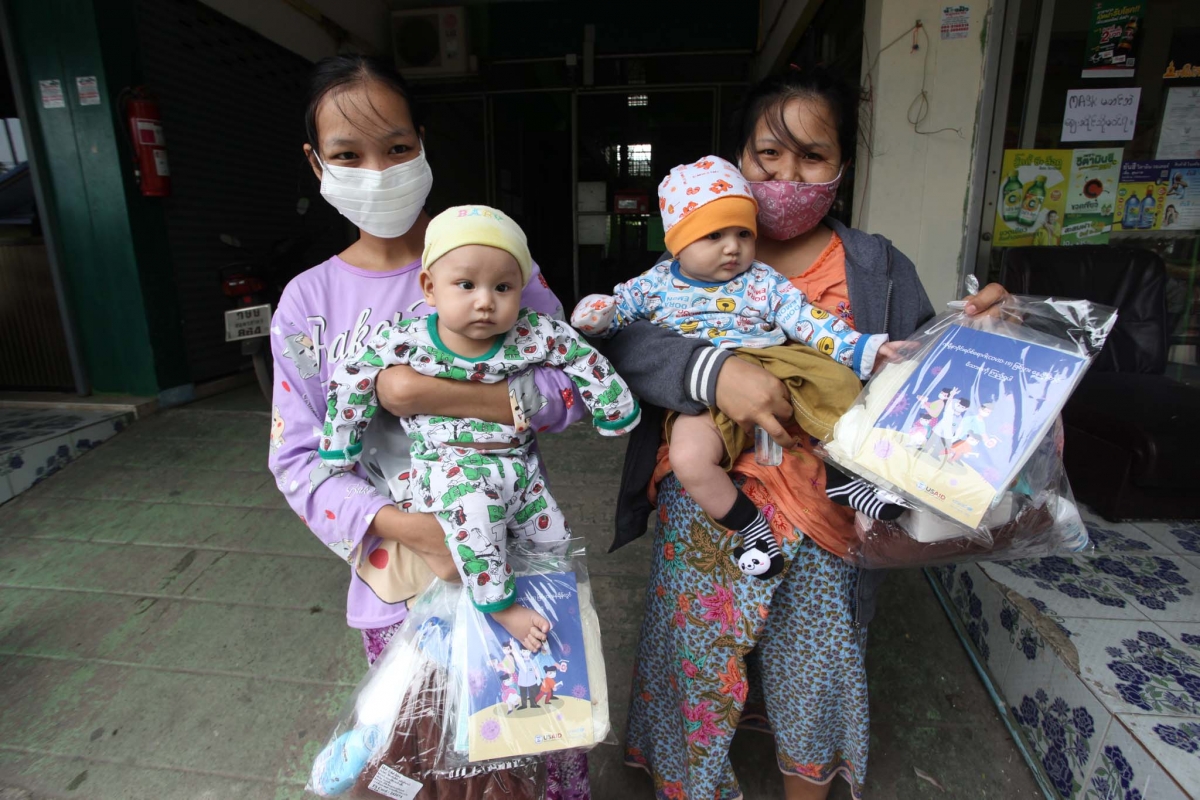
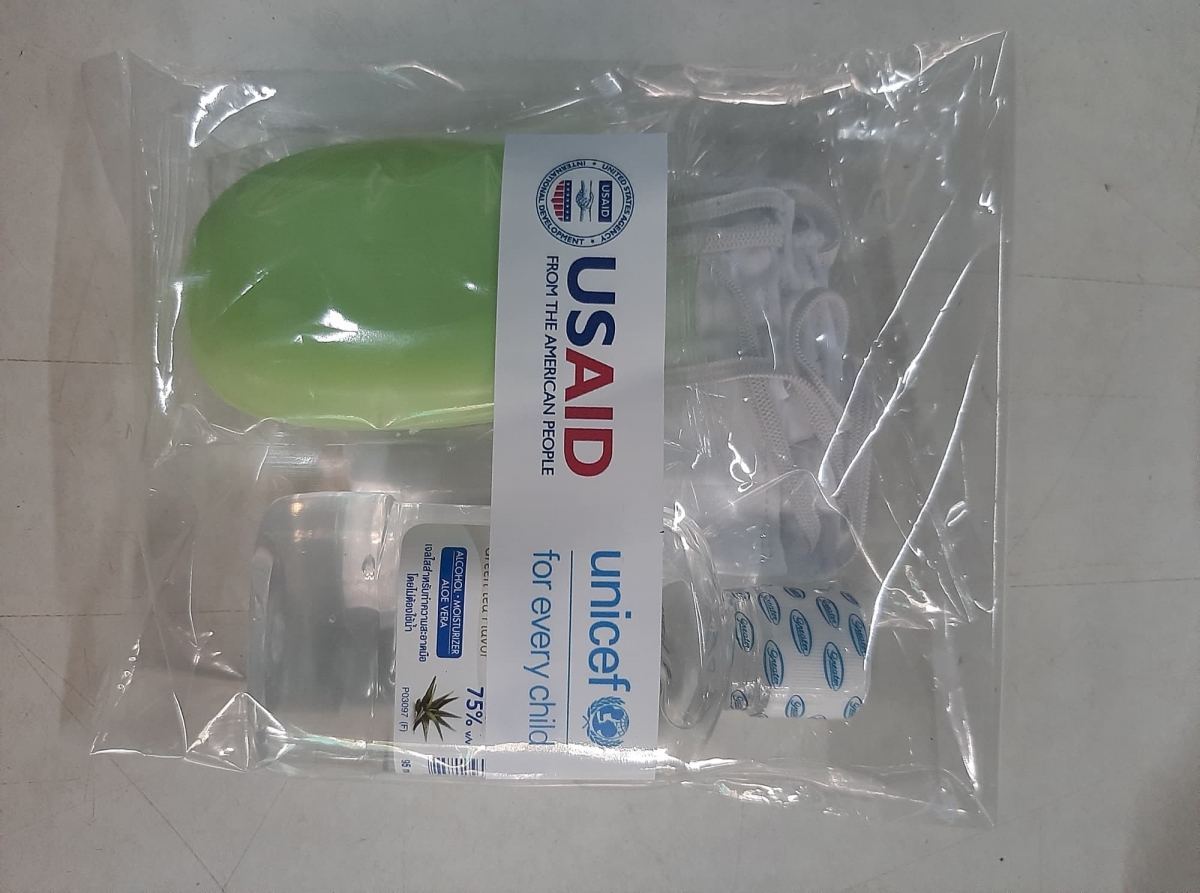
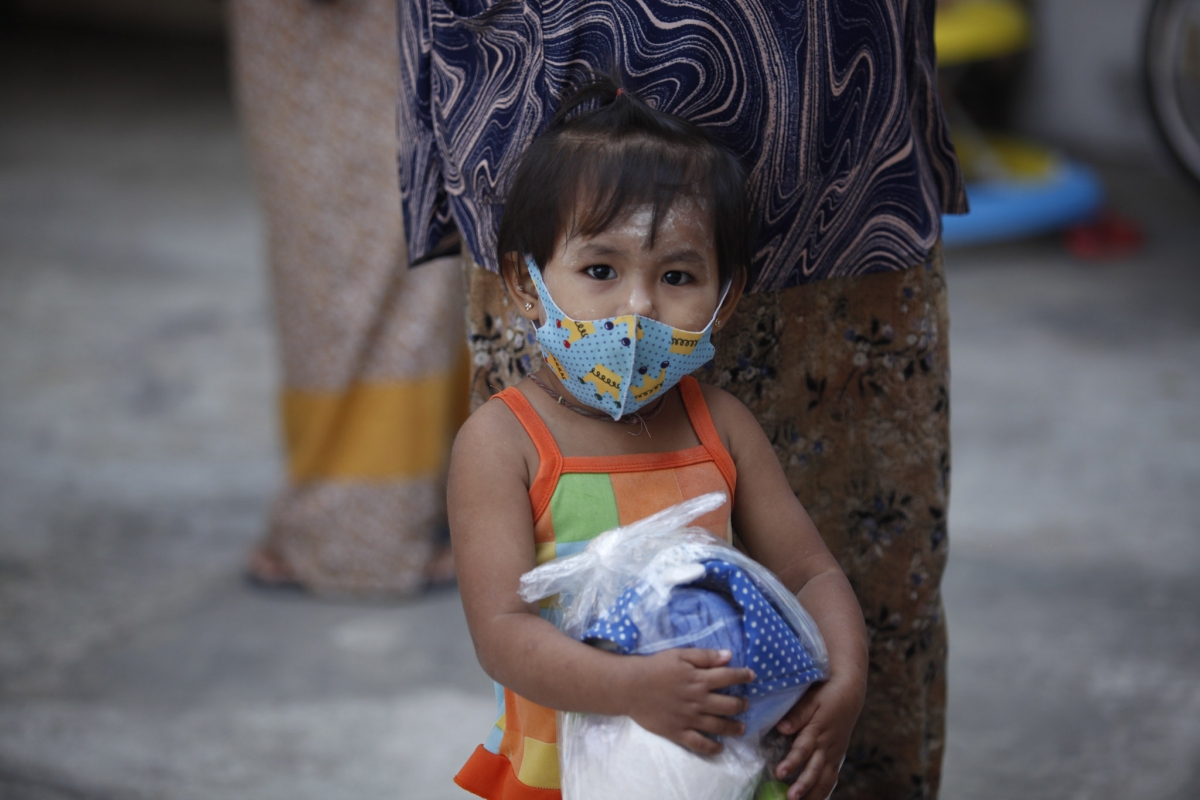
Unicef along with USAid and other NGO partners are distributing critical supplies and training communities on Covid-19 protection in high-risk areas in Thailand to help curb infections and mitigate the impact on vulnerable people, including migrants.
This project aims to reach up to 30,000 migrant workers.
“We know that early intervention is key to avoiding the spread of the virus,” said Severine Leonardi, Unicef deputy representative for Thailand. “This supply and informational support for migrants aims to ensure their health and safety and equip them with knowledge for Covid-19 prevention as a community in the long term. The fight against Covid-19 must leave no one behind, no matter their status.”
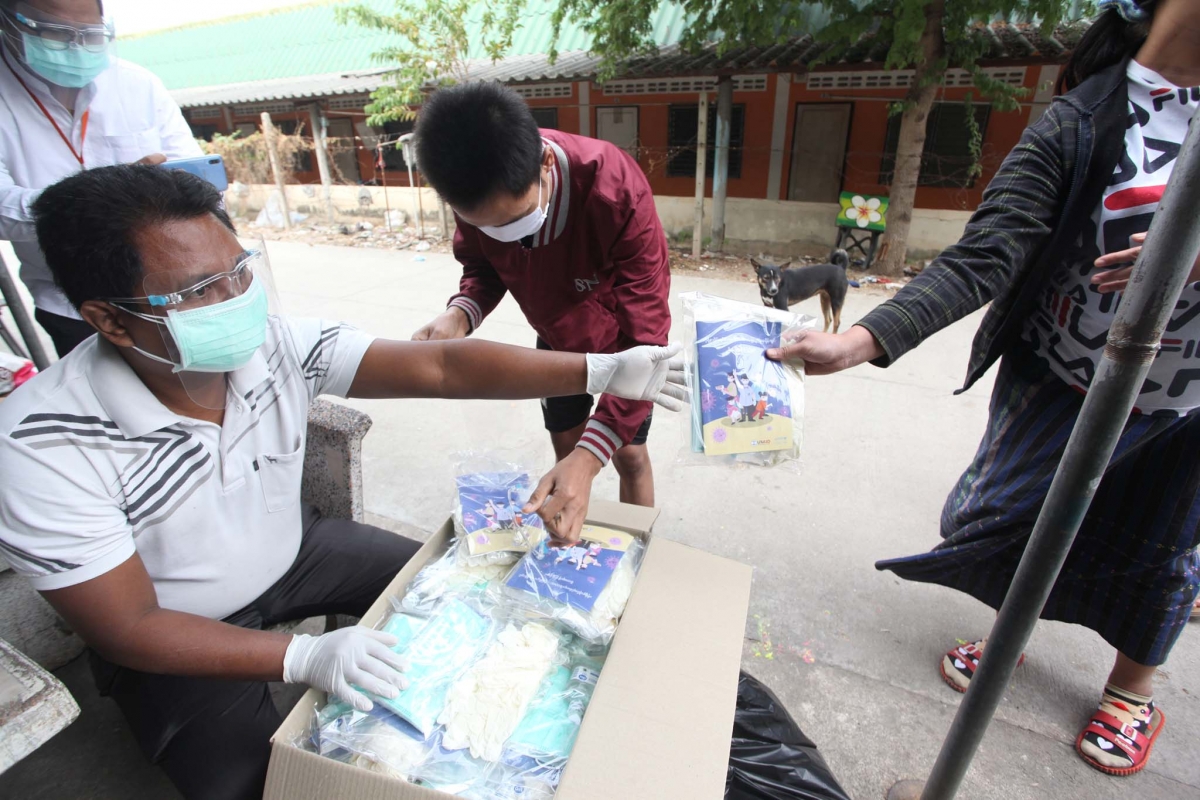
Unicef is delivering critical supplies, including Covid-19 booklets and 10,000 soaps and hand sanitisers, to the Migrant Workers Rights Network, Foundation for Rural Youth and Proud Association for distribution to migrant workers in Samut Sakhon province and affected areas nearby. Supplies including 1,800 isolation gowns, 650 face shields, 400 boxes of disposable face masks, 380 boxes of gloves and 100 gallons of disinfectant are also distributed to staff, migrant health volunteers and translators who are supporting public health officers in tracing and follow-up with Covid-19 cases in the affected communities.
In addition to supply distribution, UNICEF and USAID are supporting NGO Raks Thai Foundation to train migrant community leaders and members to screen for Covid-19, share related messages and engage others in establishing Covid-19 prevention measures in 40 communities in high-risk areas, including the Samut Sakhon, Samut Prakarn, Rayong and Chantaburi provinces.
UNICEF is also expanding support to migrant learning centres and communities in Mae Sot district of Tak province through online learning support, teacher outreach and internet provision for teachers.
Green light for north, west, east expansion of Suvarnabhumi airport
CorporateJan 15. 2021Transport Minister Saksayam Chidchob
By The Nation
The Airports of Thailand (AOT) got the go-ahead on Friday for the northern, western and eastern expansion of Suvarnabhumi airport at a cost of Bt60 billion, said Transport Minister Saksayam Chidchob.
The plan was approved at a meeting between the committee tasked with boosting the airport’s capacity, the National Economic and Social Development Council, the Finance Ministry and AOT.
The East expansion and West expansion projects each will boost capacity by 15 million passengers per year and each cost over Bt7.8 billion.
The northern expansion will serve 30 million passengers per year and cost Bt41.26 billion.
The AOT told the meeting that the airport needs to expand after seeing 60 million passengers per year pre-Covid-19, while the existing main passenger terminal could only cater to 45 million per year.
The AOT is also developing a third runway, which will raise capacity from the current 68 to 90 flights per hour, lifting passengers per year from 60 million to 90 million.
The proposed expansion is due to be vetted by the Cabinet in March.
The bidding process to build the northern expansion is expected to take six months, with construction due to be completed in September, 2023. Construction of the eastern and western expansions is slated for completion in January 2024.
AOT president Nitinai Sirismatthakarn said the AOT is ready to make investment as planned. It has cash flow of Bt32 billion.


 GSB president Vitai Ratanakorn
 Anusorn Tamajai
 US Ambassador Michael George DeSombre hosts a virtual seminar on Thursday on ‘SelectUSA: Helping Thai Companies Go Global,’ exchanging views with Thai business leaders. Thai investors revealed how they had made successful investments in the US and why they were not worried about political turmoil during the transition from President Donald Trump to President-elect Joe Biden.
 Ben & Jerry’s this week announced the debut of Doggie Desserts: four-ounce cups of mostly nondairy frozen treats, one featuring pumpkin with cookies and another with peanut butter and pretzels.MUST CREDIT: Ben & Jerry’s handout photo
 American flags outside the New York Stock Exchange in New York on Jan. 4, 2021. MUST CREDIT: Bloomberg photo by Michael Nagle.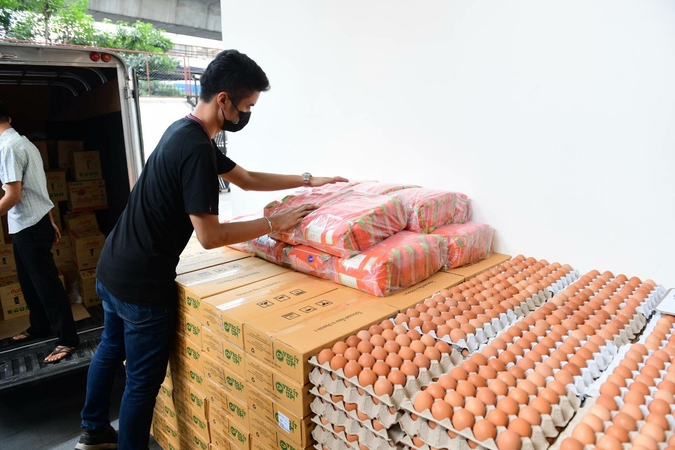
 Transport Minister Saksayam Chidchob
