Millcon Steel positive of growth despite Covid fallout
Jan 19. 2021Prawit Horrungruang
By The Nation
Millcon Steel Group, Thailand’s top steel manufacturer, is confident about its performance this year as it stands to gain from high-speed railway projects and the rising global trend in steel prices.
The company’s chief executive officer Prawit Horrungruang said the company’s focus will be to produce high-quality products and reduce its debt by as much as Bt3.8 billion.
He added that Millcon’s projected revenue should rise this year despite the Covid-19 fallout because the government is expected to launch start building the high-speed rail project, which will boost the demand for high-quality steel products.
“The demand for steel products this year is expected to reach 3.5 million tonnes, and global prices are also rising because the pandemic has delayed construction projects and disrupted ore production.
“This has caused an increase in raw materials. Imports and exports were affected and logistics also disrupted last year. These factors will push up the price of steel products this year.
“The Millcon Group is focused on the production of high-quality products which deliver a fat margin, therefore we expect our performance will continue to be positive,” he said.
The Millcon Group has an edge over other manufacturers, as it has a comprehensive integrated operation including steel-rolling mills, furnaces and steel-scrap recycling facilities. Most local steel manufacturers only have steel-rolling factories.
“The company is also strong financially and we plan to reduce debts by Bt3.8 billion this year,” Pravit added.
Alibaba offers to help Thai entrepreneurs digital dreams come true
Jan 18. 2021
By The Nation
Young owners of digital start-ups as well as traditional businesses seeking digital transformation in these challenging times can apply for the third Alibaba Netpreneur Training Programme for Thailand.
The programme is jointly organised by Alibaba Business School, the Digital Economy Promotion Agency (Depa), National Innovation Agency (NIA) and international venture capital firm Gobi Partners.
The deadline for applications is January 31.
The programme, which was previously only offline, has now been developed as a combination of both online and offline training modules for young entrepreneurs as well as businesses with digital aspirations.
Alibaba Business School aims to expand the reach of the program through an online version, which will kick off on March 2 and last for six weeks. The cost of the course will be fully covered by Alibaba Business School.
It will provide first-hand exposure to e-commerce and digital innovations, access to business leaders across Alibaba and China, as well as an opportunity to connect with like-minded, leading entrepreneurs in participants’ own region, through exercises, interactive lectures and dynamic discussions.
During the training, participants will learn about China’s digital economic transformation, Alibaba’s own successes and mistakes as well as the work that went into creating a company culture and management practices as they grew from a fledgling start-up into a full e-commerce ecosystem.
During the online training course, participants will receive assignments on a weekly basis and a capstone project at the end. Based on the outcome of the online participation and the assignments/project completions, top performers of this class will be invited to attend the offline immersion at Alibaba Group’s headquarters in Hangzhou, China once travel restrictions due to the pandemic are lifted.
Retail investors will be prioritised in the initial public offering (IPO) by PTT Oil and Retail Business (PTTOR) late this month, in what looks set to be one of Thailand’s largest listings this year.
The ministry will allocate the PTTOR shares for retail investors to book via financial institutions, said Energy Minister Supattanapong Punmeechaow said on Monday.
The minimum booking of 300 shares will cost around Bt5,400, making them affordable for all, explained Supattanapong, who is also deputy prime minister.
Shares will also be allocated to existing shareholders, institutional investors and the government as a PTT shareholder, he said.
PTTOR plans to raise Bt41 billion-Bt46.9 billion via the IPO. Share booking will run from January 24-February 2 for retail investors, from January 25-28 for PTT shareholders, and February 3-5 for institutional investors.
Retail investors can book shares via three banks – Kasikornbank, Bangkok Bank and Krungthai Bank. Kasikornbank said investors could book via its website from 9am on January 24.
Last week, PTTOR set the price of its 3 billion IPO shares (including 390 million overallotment shares) at Bt16-Bt18 per share, aiming to raise between Bt48 billion and Bt54 billion.
PTTOR will offer 300 million shares to existing PTT shareholders, 595.7 million to retail investors, and 1.71 billion to institutional investors.
Of the latter, 1.26 billion will be offered to domestic institutional investors and 450 million to international institutional investors.
The biggest domestic institutional investor in the IPO will be SCB Asset Management (239 million shares), while the biggest international institutional investor will be GIC Private Limited (215 million).
After the IPO, PTTOR’s registered capital will rise from 9 billion to 12 billion shares, and the company will be listed in the SET50 index with a market capitalisation of at least Bt200 billion.
PTT will remain the largest shareholder with a 75 per cent stake, followed by institutional investors with a 14.29 per cent stake.
The IPO will raise funds to support PTTOR’s five-year expansion plan covering new PTT stations, fuel distribution centres, retail stores and overseas business. The company will also use the funds to repay loans and invest in new businesses.
UOB Kay Hian Securities strategist Kitpon Pripisankit said the price of PTTOR’s IPO has a forward price-to-earnings (forward P/E) ratio of 16-18 times – lower than the forward P/E ratio of oil retail business (17-20 times) and non-oil business (25-28).
“Institutional investors’ demand for PTTOR shares will exceed the number allocated because large companies’ shares are currently attractive,” he said.
PTT Oil and Retail Business (OR) will launch an initial public offering (IPO) to raise up to Bt54 billion in funds late this month.
Last week, OR set the price of its 3 billion IPO shares (including 390 million overallotment shares) at between Bt16 and Bt18 per share, which will help raise between Bt48 billion and Bt54 billion.
OR will also offer 300 million shares to specific PTT shareholders from January 25 to 28, 595.7 million shares to individual investors from January 24 to February 2, and 1.71 billion shares to cornerstone institutional investors from February 3 to 5.
Of the 1.71 billion shares, 1.26 billion will be offered to domestic institutional investors and 450 million shares to international institutional investors.
Among cornerstone investors, the domestic institutional investor that will obtain the most IPO shares is SCB Asset Management with 239 million shares, while the international institutional investor that will obtain the most shares is GIC Private Limited with 215 million shares.
After launching the IPO, OR’s registered capital will rise to 12 billion shares from 9 billion, and the company will be listed in the SET50 index with a market capitalisation of at least Bt200 billion.
PTT will remain the largest shareholder with a 75 per cent stake, followed by institutional investors with a 14.29 per cent stake.
According to the Securities and Exchange Commission, this fundraising aims to support OR’s five-year expansion plan, such as increasing the number of PTT stations, fuel distribution centres, retail stores and overseas business. The company will use the funds to repay loans and invest in new businesses.
An analyst from Asia Plus Securities said he did not expect the Stock Exchange of Thailand (SET) to face volatility once OR is listed in February because the company’s market capitalisation will only account for about 5 per cent of total energy shares in the market.
He added that Com7 and TTW will be delisted from SET50 Index, while Taokaenoi Food & Marketing (TKN), BEC World (BEC), Major Cineplex Group (MAJOR) and WHA Utilities and Power (WHAUP) will be delisted from SET100 index after OR’s listing.
UOB Kay Hian Securities strategist Kitpon Pripisankit said the price of OR’s IPO is equal to forward price-to-earnings (forward P/E) ratio of 16-18 times, lower than the forward P/E ratio of oil retail business of 17-20 times and non-oil business of 25-28 times.
“Institutional investors’ demand for OR shares would be higher than allocated, because large companies shares are attractive,” he said.
The Stock Exchange of Thailand (SET) Index rose by 11.10 points, or 0.74 per cent, to 1,521.23 in the morning session on Tuesday.
An analyst at Krungsri Securities forecasts the day’s index to rebound to between 1,515 and 1,520 after China’s fourth-quarter gross domestic product in 2020 rose by 6.5 per cent compared to 4.9 per cent in the previous quarter.
“However, investors should beware of volatility due to tight SET valuation and the decline in foreign funds inflow,” he said, adding the index price-to-earnings ratio was 30 times.
He recommended that investors buy:
▪︎ PTTGC, TOP, IVL, EPG, SCGP, CBG, ROJNA, TVO, CPF, RCL, SYNEX, XO, WICE, JMT, MTC and SAWAD whose fourth-quarter turnover is expected to improve.
▪︎ ADVANC, INTUCH, AP, SIRI and WHAUP, which pay high dividends.
The SET Index closed at 1,510.13 on Monday, down nine points or 0.59 per cent. Total transactions amounted to Bt74.43 billion with an index high of 1,515.51 and a low of 1,503.04. The index was down for a third successive day of trading, after dropping 0.73 per cent on Thursday and 0.84 per cent on Friday.
The price of gold rose by Bt100 per baht weight in morning trade on Tuesday, the Gold Traders Association reported.
As of 9.25am, the buying price of a gold bar was Bt26,150 per baht weight and selling price Bt26,250, while gold ornaments were priced at Bt25,681.04 and Bt26,750, respectively.
At close on Monday, the buying price of a gold bar was Bt26,050 per baht weight and selling price Bt26,150, while gold ornaments were Bt25,574.92 and Bt26,650, respectively.
Spot gold price moved to US$1,843 (Bt55,413) per ounce in the morning. The Comex market on Monday was closed for Martin Luther King Jr Day.
Hong Kong gold price rose by HK$40 to $17,010 (Bt65,972) per tael, the Chinese Gold and Silver Exchange Society reported.
Co-payment scheme planned for low-salaried tourism workers
EconJan 19. 2021Tourism and Sports Minister Phipat Ratchakitprakarn
By The Nation
Tourism and Sports Minister Phipat Ratchakitprakarn said he will meet with Labour Minister Suchart Chomklin this week to seek ways of shielding the hard-hit tourism sector from fresh Covid-19 fallout.
He said he might propose that the government co-pay the monthly salaries of employees in the sector. The planned measure will cover workers with salaries of up to Bt15,000, though the co-payment period has yet to be finalised.
“A number of tourism business operators are suffering and might have to shut down. Helping them retain jobs is a move that must be taken immediately without waiting for the end of the outbreak,” Phipat said.
The Finance Ministry will ask the Cabinet to approve the government’s “RaoChana” (We Win) cash handouts scheme on Tuesday (January 19), to mitigate the impact of the new Covid-19 outbreak, said Kulaya Tantitemit, acting director of the Fiscal Policy Office (FPO).
The scheme will hand two monthly payments of Bt3,500 to the self-employed, farmers and welfare card holders whose savings do not exceed the eligibility criteria.
About 31 million people will be eligible for the scheme, which will cost an estimated Bt210 billion.
After Cabinet approval, the ministry will open the scheme to applicants.
By The Washington Post · Gerry Shih · BUSINESS, WORLD, US-GLOBAL-MARKETS, ASIA-PACIFIC
TAIPEI, Taiwan – A year ago, the coronavirus began spreading rapidly in China. Today, China’s economy is bouncing back hard, and expanding faster than it did before the pandemic.
Economic data published Monday showed that China logged 2.3% growth for 2020, becoming the only major economy that grew during a year that exacted a generational toll on swaths of the world. As other major nations and geopolitical competitors, from the United States to Europe to India to Japan, struggle to beat back a winter wave, China’s containment success has buoyed its economy and the ruling Communist Party’s claims to global leadership in the post-pandemic world.
In a sign of how quickly China has managed a turnaround, the National Statistics Bureau said gross domestic product rose 6.5% during the fourth quarter of 2020, exceeding the 6% pace at the end of 2019, before the pandemic took hold.
As President-elect Joe Biden enters office this week, he’ll be confronted with a China that does not seem at all diminished in economic health or international stature. Xi Jinping, the Chinese leader, struck a bullish tone during his New Year’s Eve address, when he told his countrymen that he was “proud of his great motherland” and the sacrifice and unity its people displayed to quickly beat back the coronavirus through lockdown measures and a mobilization of medical and manufacturing workers.
In recent weeks, Chinese state media and the nation’s globe-trotting foreign minister, Wang Yi, have told world leaders from Myanmar to the European Union, as well as global investors, that China’s fast recovery could lift the rest of the world. Under Xi’s leadership and through his diplomacy through online video calls, Wang claimed this month, China “has brought hope for the world economy to step out of the doldrums.”
“China’s economy continues to power ahead with remarkable momentum, leaving other major economies, most of which are still struggling to register some semblance of growth, in the dust,” said Eswar Prasad, a professor at Cornell University and former China director for the International Monetary Fund. “With its outstanding growth performance, China has cemented its position as the primary driver of what has so far been a dismal global economic recovery.”
Last week, Chinese officials said exports reached a new all-time high of $2.6 trillion in 2020. Despite a bitter trade war with President Donald Trump, China’s surplus with the United States reached a record of $316.9 billion for the year.
Employment was also picking up as the economy created 11.86 million jobs during the year, the statistics bureau said.
China’s economy dipped into negative territory once, during the first quarter of 2020, when authorities locked down Hubei Province and its capital, Wuhan, and enforced softer lockdown measures in cities across the country.
The Chinese Academy of Social Sciences predicted this month that China could grow 7.8% in 2021 as it fully bounces back, a whopping rate reminiscent of China’s explosive growth in past decades. But it’s not guaranteed that China can continue its late-2020 surge if coronavirus cases take hold again.
The Chinese government is trying to prevent a resurgence; it reinforced a lockdown over about 20 million residents in northern China, including several large cities near Beijing, after several small outbreaks.
Although the measures will help prevent new cases from spiraling out of control, they may crimp economic activity in industries such as travel in the short term.
Chinese officials have canceled public events, large gatherings such as weddings, and unfurled street signs and publicity campaigns urging workers not to travel home during the Lunar New Year period, when hundreds of millions of citizens usually crisscross the country to visit family members.
In northern Hebei Province, which surrounds Beijing, authorities have reported almost 700 cases since the beginning of January, the biggest flare-up since the spring.
The Stock Exchange of Thailand (SET) Index closed at 1,510.13 on Monday, down 9.00 points or 0.59 per cent. Total transactions amounted to Bt74.43 billion with an index high of 1,515.51 and a low of 1,503.04. The SET was down for a third successive day of trading, after dropping 0.73 per cent and 0.84 per cent on Thursday and Friday.
In Monday’s morning session, an analyst at Krungsri Securities forecast the index would drop to between 1,500 and 1,510 due to uncertainty over whether US President-elect Joe Biden’s pledge to raise corporate tax would pressure companies’ turnover.
“The SET will also be under pressure from its tight valuation, the decline in foreign fund flows and falling oil price in response to countries’ lockdowns,” he said.
The 10 stocks with the highest trade value today were PTT, TASCO, CPF, GPSC, CBG, EA, KBANK, CPALL, PTTEP and NER.
As of 4.30pm, the price of oil dropped by US$0.03 or 0.06 per cent to $52.33 per barrel, while gold rose by $1.30 or 0.07 per cent to $1,831.20 per ounce.
Other Asian indices were mixed:
Japan’s Nikkei Index closed at 28,242.21, down 276.97 points or 0.97 per cent.
China’s Shang Hai SE Composite Index closed at 3,596.22, up 29.85 points or 0.84 per cent, while Shenzhen SE Component Index closed at 15,269.27, up 237.57 points or 1.58 per cent.
Hong Kong’s Hang Seng Index closed at 28,862.77, up 288.91 points or 1.01 per cent.
South Korea’s KOSPI Index closed at 3,013.93, down 71.97 points or 2.33 per cent.
Taiwan’s TAIEX Index closed at 15,612.00, down 4.39 points or 0.028 per cent.
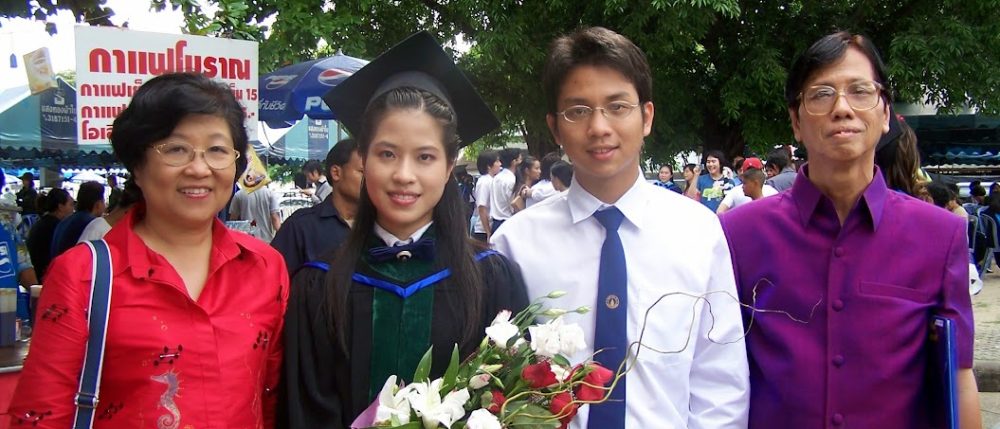
 Prawit Horrungruang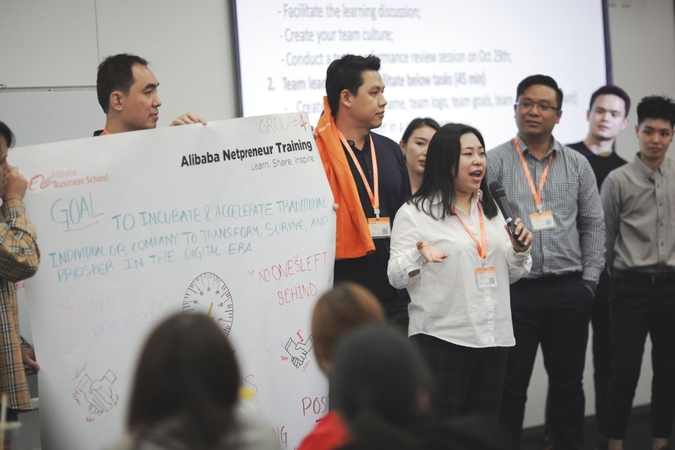

 Tourism and Sports Minister Phipat Ratchakitprakarn