The Stock Exchange of Thailand (SET) Index rose by 2.67 points, or 0.18 per cent, to 1,525.26 in the morning session on Wednesday.
An analyst at Krungsri Securities predicted the index would fluctuate between 1,515 and 1,535 points amid hopes of a fresh $1.9-trillion US economic stimulus package and mass buy-ups of shares whose fourth-quarter turnover is expected to improve.
“However, the SET would be under pressure due to its tight valuation and the decline in foreign fund inflows,” he said.
He recommended investors buy:
> PTTGC, TOP, IVL, EPG, SCGP, CBG, Rojna, TVO, STGT, CPF, RCL, PSL, SYNEX, Com7, XO, Wice, JMT, MTC, Sawad and KTC, all of whose fourth-quarter turnover is expected to improve.
> ADVANC, INTUCH, AP, Siri and WHAUP, which pay high dividends.
The SET Index closed at 1,522.59 on Tuesday, up 12.46 points, or 0.82 per cent. Total transactions amounted to Bt87.64 billion, with an index high of 1,529.17 points and a low of 1,518.66. The index snapped a three-day run of losses that began last week on Thursday.
The price of gold was unchanged in morning trade on Wednesday, the Gold Traders Association reported.
As of 9.26am, the buying price of a gold bar was Bt26,150 per baht weight and selling price Bt26,250 while gold ornaments cost Bt25,681.04 and Bt26,750, respectively.
The spot gold price moved to US$1,848 (Bt55,390) per ounce in the morning, while the Comex (Commodity Exchange) gold price to be delivered in February rose by $10.30 to $1,840.20 per ounce on Tuesday over a weakening dollar.
Meanwhile, gold also gained positive sentiment from incoming Treasury Secretary Janet Yellen’s move to urge Congress to approve a $1.9-trillion economic stimulus package.
The Hong Kong gold price meanwhile dropped by HK$10 to $17,030 (Bt65,854) per tael, the Chinese Gold and Silver Exchange Society reported.
By Syndication Washington Post, Bloomberg · Anchalee Worrachate, Cormac Mullen
U.S. stocks rose, led by gains in tech shares and small caps, with Wall Street parsing the latest earnings ahead of a flood of reports this week.
The S&P 500 Index rebounded from Friday’s sell-off after a three-day weekend that brought little by means of fresh macro news. Ten-year Treasury yields climbed back toward 1.1% and the dollar weakened. Crude oil and emerging markets also advanced. Goldman Sachs Group Inc. turned lower even after reporting that profit more than doubled. Bank of America Corp. shares edged higher after its results. General Motors Co. rose to a record after Microsoft Corp. invested in its self-driving car start-up. Netflix Inc. reports results after markets close.
Janet Yellen encountered early Republican resistance to President-elect Joe Biden’s $1.9 trillion covid-19 relief plan in her confirmation hearing to become treasury secretary. Donald Trump is in the final hours of his term, with Biden to be sworn in at noon Wednesday in Washington.
The market moves on Tuesday show that investors are coming back to the reflation trade, betting that the incoming U.S. administration will use its legislative firepower to propel economic growth. Biden’s stimulus package includes measures like a minimum-wage hike and substantial expansion in family and medical leave — programs that have already triggered Republican opposition.
“Yellen is a positive,” said Mohit Kumar, strategist at Jefferies International. “We should have greater cooperation between the Fed and the Treasury, with both the monetary and fiscal policy working together and supportive. This is a good backdrop for risk sentiment.”
In Asia, Hong Kong stocks closed at the highest level since May 2019. A spending spree by mainland investors is powering gains, lifting the Hang Seng Index up 2.7% on Tuesday.
Signs suggest that mainland buying will continue, with investors shifting out of A shares to buy those listed in Hong Kong. The benchmark Hang Seng Index is still cheaper than the Shanghai Composite gauge in terms of price-to-earnings multiples.
Here are the main moves in markets:
Stocks
– The S&P 500 Index jumped 0.8% as of 4 p.m.EST.
– The Stoxx Europe 600 Index lost 0.2%.
– The MSCI Asia Pacific Index increased 1.2%.
– The MSCI Emerging Market Index increased 1.6%.
Currencies
– The Bloomberg Dollar Spot Index declined 0.2%.
– The euro climbed 0.4% to $1.2124.
– The British pound increased 0.3% to $1.3631.
– The Japanese yen weakened 0.2% to 103.89 per dollar.
Bonds
– The yield on 10-year Treasurys was little changed at 1.09%.
– The yield on two-year Treasuries slipped to 0.13%.
– Germany’s 10-year yield advanced one basis point to -0.526%.
Commodities
– West Texas Intermediate crude advanced 1.2% to $53.01 a barrel.
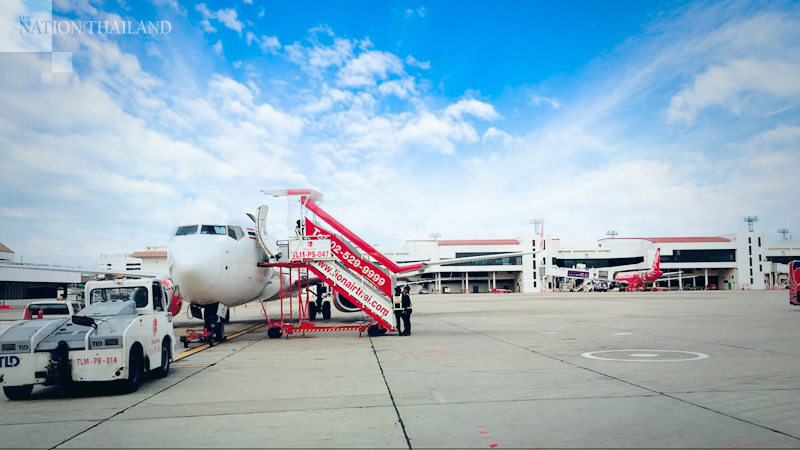
The Bt3.7-billion upgrade of Krabi airport is 50 per cent complete, according to airport authorities.
Construction of the third passenger terminal, an apron, and renovation of the two existing terminals is at the halfway point and expected to be completed in 2023, said Krabi airport deputy director general Somkiat Maneesathit.
The new terminal will double the airport’s capacity from 4 million to 8 million passengers per year in the southern holiday province.
Of the total Bt3.7 billion cost, Bt2.923 billion is for construction of the third terminal and renovation of the first and second terminals. The remainder is being used for the apron and related electrical system.
The Office of Small and Medium Enterprises Promotion (OSMEP) is planning to launch a special “Let’s Go Halves” scheme to help SMEs save on operating costs, OSMEP’s director-general Veerapong Malai said.
For instance, he said, the scheme can help co-pay fees charged for the inspection of export products, which in some cases goes as high as Bt10,000 per product, he said.
The office is discussing the matter with Deputy Prime Minister Supattanapong Punmeechaow and will table the plan before its board Wednesday. It will then put the matter forward to the Cabinet next month.
Cash handouts, co-payment scheme to boost Thai GDP by 1%: Minister
EconJan 20. 2021Finance Minister Arkhom Termpittayapaisith
By The Nation
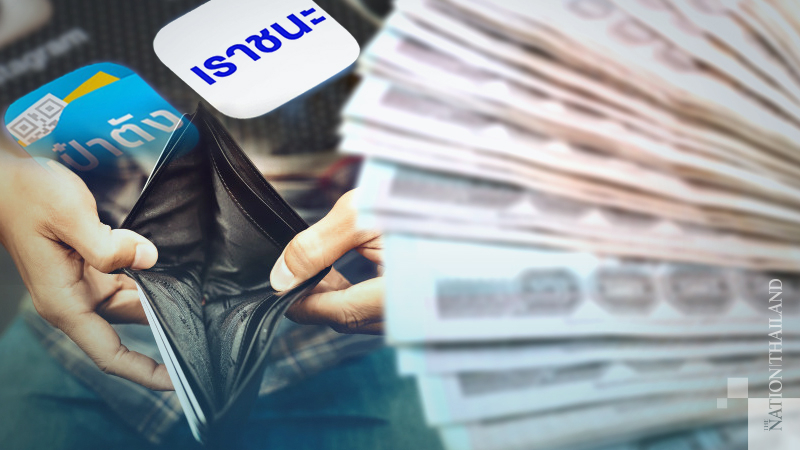
The government’s “RaoChana” (WeWin) cash handout scheme and the first two phases of the “Khon La Khrueng” (Let’s Go Halves) co-payment scheme are expected to boost Thai GDP by 1 per cent, said Finance Minister Arkhom Termpittayapaisith.
The Cabinet on Tuesday approved the new WeWin scheme and another round of Let’s Go Halves, aiming to ease financial burdens on people hit by the new Covid-19 outbreak.
The minister said the WeWin scheme alone could boost GDP by 0.5 per cent.
The WeWin scheme will hand two monthly payments of Bt3,500 to the self-employed, farmers and welfare card holders.
People can register for the cash payments online from January 29 onward. About 31 million people will be eligible for the scheme, which will cost an estimated Bt217 billion.
The first and second phases of Let’s Go Halves began last October and December, respectively. The new round, which is for those who failed to register in the second phase, will run until March 31 and cover 50 per cent of bills for food, drinks and necessities up to Bt150 per day. The total subsidy per person is capped at Bt3,500.
The Stock Exchange of Thailand (SET) Index closed at 1,522.59 on Tuesday, up 12.46 points or 0.82 per cent. Total transactions amounted to Bt87.64 billion with an index high of 1,529.17 and a low of 1,518.66. The SET snapped a three-day run of losses that began last week on Thursday.
In Tuesday’s morning session, an analyst at Krungsri Securities forecast the day’s index would rebound to between 1,515 and 1,520 after China’s fourth-quarter GDP in 2020 rose by 6.5 per cent, accelerating from 4.9 per cent in the previous quarter.
“However, investors should beware of volatility due to the tight SET valuation and decline in foreign capital inflows,” he said, adding the index’s price-to-earnings ratio was 30 times.
The 10 stocks with the highest trade value today were PTT, CBG, KBANK, GPSC, BANPU, IVL, STGT, PTTEP, CPF and TASCO.
As of 4.30pm, the price of oil rose by US$0.05 or 0.10 per cent to $52.41 per barrel, while gold rose by $12.50 or 0.68 per cent to $1,842.40 per ounce.
Other Asian indices were mixed:
Japan’s Nikkei Index closed at 28,633.46, up 391.25 points or 1.39 per cent.
China’s Shang Hai SE Composite Index closed at 3,566.38, down 29.84 points or 0.83 per cent, while Shenzhen SE Component Index closed at 15,003.98, down 265.29 points or 1.74 per cent.
Hong Kong’s Hang Seng Index closed at 29,642.28, up 779.51 points or 2.70 per cent.
South Korea’s KOSPI Index closed at 3,092.66, up 78.73 points or 2.61 per cent.
Taiwan’s TAIEX Index closed at 15,877.37, up 265.37 points or 1.70 per cent.
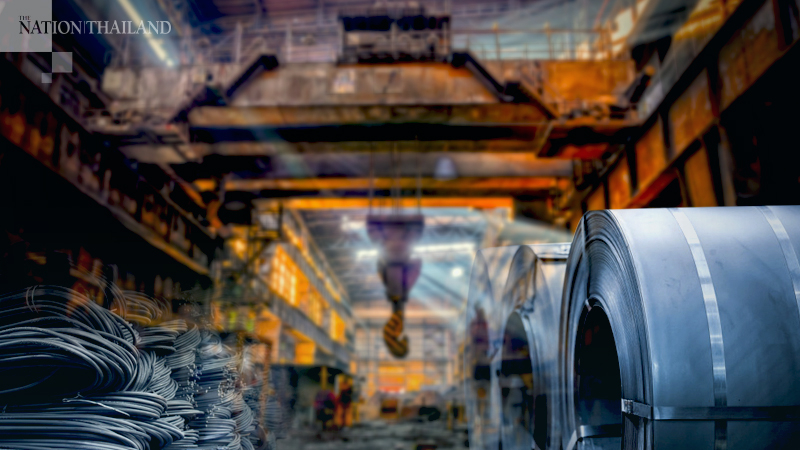
Steel consumption is expected to grow by 5-8 per cent, the Iron and Steel Industry Club of the Federation of Thai Industries (FTI) predicted.
Domestic steel consumption this year will grow by 5-8 per cent, or around 17-18 million tonnes, as the Thai economy has started to recover.
Steel demand will also grow under the “Made in Thailand” policy announced recently in the Government Gazette by the Comptroller-General. Under the policy, government agencies have to procure not less than 60 per cent from domestic produce and the FTI has included steel in the list. The policy is expected to be effective in February and will give an impetus to use of local steel in construction work. Although the new regulation allows imports if necessary, government agencies are expected to follow the regulation.
However, the steel industry still has to be closely monitored vis-a-vis global steel price, which has been steadily rising since the end of 2020, especially due to increasing Chinese demand despite the Covid-19 situation. Demand from China increased by 8 per cent in 2020, compared to 2019, forcing China to import every type of steel.
Meanwhile, many countries faced economic recession, both in Europe and Japan, causing many steel furnaces to be shut down, pushing all types of global steel prices, including construction steel, up by 10 per cent.
Nava said global steel prices will continue to rise until the first quarter of 2021 and should fall in the second quarter as steel companies that were shut down due to Covid-19 gradually reopen.
The extension of moratorium offered to debtors to mitigate the impact of the second Covid-19 wave would have limited impact on commercial banks’ turnover, experts said.
To help debtors cope with the recent Covid-19 outbreak, the Bank of Thailand (BOT) had instructed financial institutions to extend the debt moratorium until June 30 this year from December 31 last year.
Tanawat Ruenbanterng, an analyst at Tisco Securities, said the extension of BOT’s measures would only affect commercial banks’ interest income, effective interest rate and net interest margin (NIM).
He said the banks would benefit from the decline in non-performing loans (NPLs), as they don’t have to set up more reserve fund.
He didn’t expect these measures to erode banks’ net profit because they would not be issuing measures to cut the interest rate as much as in the previous year.
“However, investors should monitor the banks’ moves to set up a reserve fund, as the number of NPLs would increase if the Covid-19 situation is prolonged,” he said.
He added that commercial banks’ fourth-quarter net profit would recover as their share price had risen from the influx of foreign funds.
“However, bank shares are still not attractive among investors,” he added.
An analyst at Capital Nomura Securities said the extension by BOT of the moratorium would have less effect on commercial banks because the measures aim to enable debtors to restructure debt.
He added that debt restructuring would enable banks to realise interest revenue in line with the Thai Financial Reporting Standard and reduce NPLs.
“Therefore, we still advise investors to buy bank shares,” he said.
An analyst at Asia Plus Securities expected the number of debtors participating in BOT’s measures this year to be lower than last year because the new Covid-19 outbreak is likely to cause less impact on the economy.
Although the debt restructuring will affect banks’ NIM, they have more time to manage asset quality of debtors with high risk,” he said.


 Finance Minister Arkhom Termpittayapaisith