Thai Life Insurance has launched a blood-donation campaign to meet shortages amid the new wave of Covid-19 infections.
“To ensure blood supply meets demands in the country, Thai Life Insurance has launched a campaign encouraging people to donate blood every three months,” the company’s executive vice president Duangduen Kongkasawad said, adding that the aim is to procure 1.2 million cubic centimetres (cc) of blood this year.
The first blood-donation event will be held on the first floor of Thai Life Insurance headquarters on Bangkok’s Ratchadapisek Road from January 13 to 15. Donations will also be collected via a mobile unit parked in front of the company’s Rattanathibet branch on January 13. Blood donations will be collected from 9am to 3pm.
“To ensure donors’ safety, the company has implemented strict measures to contain the spread of Covid-19, such as screening each donor’s body temperature, collecting information on their history and providing enough space to implement social distancing,” she said.
Members of the company’s Life Fit programme can collect points for up to 30 per cent discount on next year’s premium after submitting their blood donation reports via the Thai Life Insurance smartphone app.
“There are still many people who are sick and need blood for treatment, so we invite healthy people to donate blood every three months,” she said.
Southeast Asia is awash with counterfeit beauty, skincare, and cosmetic products, many of which pose a real threat to the health and well-being of the people who use them and the economies they are trafficked in, according to the IP Key Southeast Asia project.
Funded by the European Union (EU), the project has launched the second phase of the #YourHealthIsPriceless campaign in the region to directly connect with consumers and help raise their awareness about the risks and dangers associated with substandard products.
An OECD-EUIPO 2017 report identified China and India as major producers of counterfeit pharmaceuticals, and Singapore as well.
In terms of counterfeit perfumes and cosmetics, an OECD-EUIPO 2017 report states that generally, China is the key producer of these products, that are shipped worldwide, but these goods are also produced in countries such as Malaysia, Thailand, India, and Singapore. But, seeing as how counterfeiters use complex and constantly changing trade routes so as to avoid detection, it can be difficult to pinpoint the exact origins and manufacturing sources of some products, the project said.
Due to the surreptitious manner in which counterfeit goods are produced and trafficked from one country to another, the value of counterfeit cosmetics and beauty products in a specific country would be very difficult to estimate, the report said. Nevertheless, the value and volume of counterfeit goods seized by Thai IP enforcement authorities, as reported by the Department of Intellectual Property (DIP) Thailand, gives a good indication of the size and value of the counterfeiting industry in general. The IP Key SEA project is working with the DIP and Thai authorities in order to address the pressing issues of counterfeiting and piracy in the country.
According to the European Commission’s “Counterfeit and Piracy Watchlist 2018”, these physical marketplaces, including shopping venues and open-air markets, are still operating and selling counterfeit products of different brands, especially in this sector. These physical marketplaces are very well-known, open to the public, close to landmarks and tourist attractions, and easily accessible via public transportation.
The major venues include MBK Center in Bangkok, where allegedly more than 2,000 shops count 100-500 counterfeit items per shop, including a large number of fake cosmetics, personal care products, and beauty products. EU stakeholders have also reported the presence of huge quantities of counterfeit goods at Mike Shopping Mall in Pattaya, Phuket Night Market in Phuket, and Rong Kluea Market in Sa Kaeo province. Regarding other Southeast Asian countries, these fakes can be found for sale in Petaling Street Market in Kuala Lumpur, and Saigon Square Plaza in Vietnam, for instance.
But it’s not just the physical marketplaces that pose a problem; these fake goods are easily available across a number of online shops, which adds another level of complexity to stopping the incessant trade of these poor quality and health endangering-products. Only through heightened consumer awareness can this marketplace also be cut off as a contributor to the problem, the report said.
“The first phase of our #YourHealthIsPriceless campaign, launched last September, received a good reception and much interest from Thai media outlets and those in Southeast Asia and the EU, which is helping us communicate with the public and spread the message of just how important consumer vigilance is to help stop the trade of these dangerous products. On top of our social media efforts during the first phase, we also partnered with young Thai micro-influencers to connect with people of all ages, and communicate relevant information to them and make them aware of the importance of safeguarding their health and well-being by only purchasing genuine products,” said Tiago Guerreiro, IP Key SEA Project leader.
In this second phase of the #YourHealthIsPriceless IP Key SEA campaign, the focus will be on starting conversations in the community about the importance of intellectual property and trademarks and how they contribute to protecting them from poorly made pirated products. The campaign will share important insights such as helping people identify a counterfeit product. Local authorities are embracing the IP Key SEA project across Southeast Asia as they continue to make inroads to halt the import and sale of counterfeit cosmetics and beauty products, he said.
“We have been working closely with Southeast Asian IP authorities for three years now through the organisation of activities covering various areas of intellectual property, namely trademarks, copyright, and related rights, industrial designs, geographical indications, patents, plant variety protection/plant breeders’ rights, and IPR enforcement. We organise technical meetings, where we share best practices, and capacity building activities with our IP and law enforcement counterparts in order to assist them in addressing the challenges that arise in relation to the protection and enforcement of IP rights. It’s through these activities that the project promotes the adoption of international and EU best practices in the enforcement of IP rights, which would contribute to a more transparent IPR environment in the region,” Guerreiro added.
Combating the trade in counterfeit and pirated goods requires collaboration between countries and a united effort to cut off trade routes and implement more stringent systems and processes. One of the key missions of IP Key SEA is to help countries in the region to be better equipped to understand how they can bolster their law enforcement capabilities and work more effectively when it comes to cross-border IPR enforcement. By doing this they are not only protecting their citizens they are also protecting their economies, he said. For example, in the EU alone, the total revenue loss attributable to the legitimate sector averages annually at 17.9 billion euros and 3.5 billion euros total government revenue loss during 2013-17.
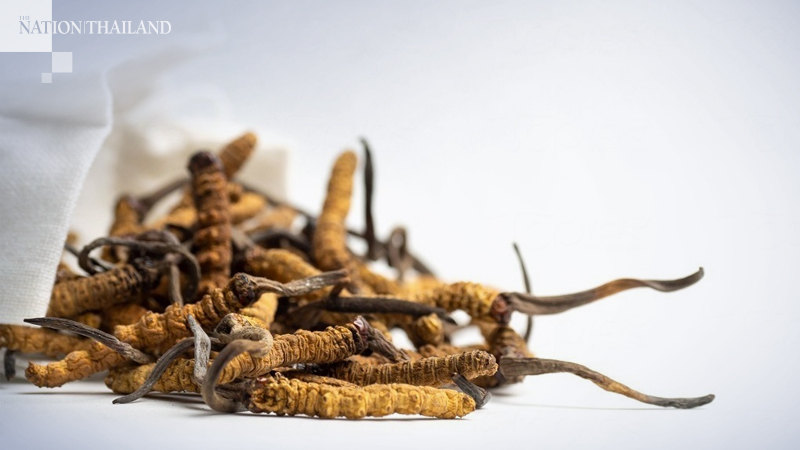
The Rural Doctors Society has warned that Chong Cao (Cordyceps), a traditional Chinese remedy for the kidneys, can cause renal failure if taken in high doses.
The society urged the government to monitor companies who advertise products made from Chong Cao, which is also sold as an aphrodisiac. Sales of the herbal remedy – which is derived from a fungus that feeds on caterpillars and can be high in arsenic – are strictly regulated in China.
In Thailand, Chong Cao is advertised as a remedy for kidney disease and is especially popular among elderly people.
However, according to the Rural Doctor Society’s Facebook page, Chong Cao can suppress kidney function.
On Tuesday, the society cited a recent article published in “Chalat Sue” (Buy Smartly) health magazine by Dr Mayuree Tangkiatkumjai from the Faculty of Pharmacy, Srinakharinwirot University.
Dr Mayuree said low estimated glomerular filtration rates (eGFR) were detected among a group of kidney patients who took Chong Cao once a day for a month. However, when they stopped taking Chong Cao, their kidney eGFR recovered to healthier levels.
The Rural Doctor Society thus urged the National Broadcasting and Telecommunications Commission to prevent advertisements related to Chong Cao from exaggerating the products’ qualities.
ศาสตราจารย์ ดร.นพ.พรชัย โอเจริญรัตน์ หัวหน้าศูนย์เต้านม โรงพยาบาลเมดพาร์ค และศัลยแพทย์ด้านมะเร็งเต้านม โรงพยาบาลเจ้าพระยา ผู้เชี่ยวชาญด้านการผ่าตัดและค้นคว้าด้านนวัตกรรมใหม่ๆ ในการรักษามะเร็งเต้านม และสำเร็จการศึกษาจากสถาบันทางการแพทย์ชั้นนำระดับโลก ได้แก่ โรงพยาบาล Royal Marsden, Institute of Cancer Research กรุงลอนดอน ประเทศอังกฤษ และ Memorial Sloan-Kettering Cancer Center กรุงนิวยอร์ก ประเทศสหรัฐอเมริกา ได้กล่าวถึงแนวทางการรักษาใหม่ล่าสุดสำหรับผู้ป่วยมะเร็งเต้านม โดยเฉพาะในกลุ่มที่มีอายุน้อยหรือวัยก่อนหมดประจำเดือนในประเทศไทย ว่าจำเป็นต้องใช้แนวทางที่เรียกว่า “การแพทย์แบบแม่นยำ (Precision medicine)
More virus-zapping robots are coming, and they’ll stick around
Health & BeautyJan 11. 2021The LG CHOi is an autonomous robot that can clean hotels, schools and retail stores. MUST CREDIT: Photo by LG
By The Washington Post · Dalvin Brown
Businesses across a broad range of industries continue to turn up the dial on high-tech surface disinfection, and LG Electronics is among the latest tech companies to bank on the deep-cleaning boom extending beyond the pandemic.
The South Korean technology giant’s American arm is introducing an autonomous UV-C light robot designed to kill viruses on heavily touched surfaces, joining a long list of companies to deploy such gadgets amid the ongoing coronavirus crisis.
LG’s CLOi robot looks like a plug-in space heater on wheels and is set to be introduced Monday at CES, which is among the world’s biggest tech conferences and will be hosted online this year.
The device will ship to LG’s business customers in April – almost a year after several start-ups and organizations began hyping their automated germ-blasting machines in the face of a deadly respiratory virus. LG says it is right on time as industries remain crippled by the outbreak and Americans face months of vaccine distribution ahead.
“I don’t think that the concern over items like this is going to go away anytime soon,” said Mike Kosla, the vice president for hospitality at LG’s business division in the United States. “This product is going to have a strong, strong life ahead of it.”
While the novel coronavirus is primarily spread through the air, UV-C robots disinfect rooms and equipment with ultraviolet light. CLOi will be LG’s first robot to be rolled out in the United States, and it would not have existed, LG says, had the pandemic not presented a new business opportunity.
Hospitals have relied on mechanical UV light cleaners for years. But since March, a growing number of malls, airports and hotels have spurred demand for a new wave of user-friendly, anti-contamination robots that could safely zap high-traffic areas with or without people in the room. Companies grew desperate to attract foot traffic with elaborate displays of cleaning.
A New Mexico school district is already using a UV robot by Xenex as a safety measure. MIT began work on its UV-C robot for schools and grocery stores in April. Other such robots have been spotted at airports and sports arenas, and more are on the way.
Sales of cleaning robots are projected to swell from $341 million in 2019 to more than $2.3 billion by 2025, according to a market advisory firm Mordor Intelligence. Most of the growth comes in health-care settings, the report said, but buyers include schools and industrial facilities.
Before the pandemic, demand for UV light robots outside hospitals did not exist, according to companies in the field. Analysts and tech firms say the robots are here to stay and will continue to crop up in new places as prices fall.
“I do believe there has likely been a slight paradigm shift in how people think about hygiene, as well as how corporations and governments approach sanitation-related issues,” said Tim Mulrooney, a commercial services equities analyst for William Blair.
The investment bank said in a research note that it expects the commercial cleaning market to settle at a higher level after the pandemic because of increased attention to hygiene and because of businesses signing long-term commercial cleaning contracts.
Hills Engineering, which developed a robotic arm system that sprays disinfectant and emits UV light, also will show at CES. On Jan. 21, Canada’s Prescientx will release its talking UV-C robots, dubbed “Charlotte” and “Violette,” that were created to kill germs in large public spaces.
“We started developing a UV robot in 2016, but there was no demand. It was ahead of its time,” said Barry Hunt, the chief executive of Prescientx. “Now there are all kinds of companies, probably 100 companies, around the world that are all jumping into that market because of covid.”
LG’s upcoming device has a built-in motion sensor that shuts it off when people are around, and it is meant for restaurants, corporate offices and retail stores. It can navigate around tables, chairs and other furniture by itself, generally disinfecting a room’s touchable surfaces in up to 30 minutes.
The company developed the project in eight months, building on various other overseas robotics projects. When it does launch, it’ll face a wave of competition.
LG says it will be more affordable than comparable products on the market, which can cost as much as $100,000 per unit.
The virus that causes the illness covid-19 is primarily spread through respiratory droplets in the air, not through surfaces, according to the World Health Organization. The gadgets may make people feel safer and could be an added layer of protection in an era when cleanliness is top of mind.
A sustained market for cleaning robots hinges on the pandemic having a lasting impact on the American psyche, analysts say.
Part of what is expected to keep these boxy, light-emitting cleaners around is the notion that people will not be as quick to forget the pandemic compared with other outbreaks such as SARS and Ebola. Health experts say outbreaks of infectious diseases are becoming more common, so a fleet of robotic germ fighters will be around when the next one hits.
“If anything, this should be something that allows us to be better prepared,” said John Rhee, the general manager of UBTech Robotics, a firm offering a range of humanoid “anti-epidemic” gadgets. “One of the things that companies can do is develop products and become a part of a government’s core strategy on what to bring out of the warehouse when the next one occurs.”
Sinovac’s covid shot proves 78% effective in Brazil trial
Health & BeautyJan 08. 2021Dimas Tadeu Covas, director of the Butantan Institute, from left, Jean Gorinchteyn, Sao Paulo’s health secretary, and Joao Doria, Sao Paulo’s governor, hold boxes of the Sinovac Biotech coronavirus vaccine at Guarulhos International Airport in Sao Paulo, Brazil, on Nov. 19, 2020. MUST CREDIT: Bloomberg photo by Jonne Roriz.
By Syndication Washington Post, Bloomberg · Andre Romani
The experimental vaccine developed by China’s Sinovac Biotech was shown to be 78% effective against covid-19 in late-stage Brazil trials, the most definitive result so far on the shot’s efficacy after previous data sparked confusion and doubt.
The protection rate, which was reported by newspaper Folha de Sao Paulo on Thursday and confirmed by Sao Paulo state officials, was derived from Sinovac’s most advanced phase III trials in Brazil, involving about 13,000 participants. The number is below the near 95% effectiveness seen in the mRNA vaccines developed by Pfizer and Moderna.
Sao Paulo Governor Joao Doria is attempting to move quickly while the central government delays presenting concrete vaccination dates. Almost 11 million doses of Sinovac’s vaccine, called CoronaVac, have already been shipped to the country. Doria, a political rival of Brazil President Jair Bolsonaro, plans to obtain swift approval and begin vaccinating the state of some 45 million people on Jan. 25. Pressure from other governors led the health ministry to include the shot, which has been publicly shunned by Bolsonaro, to the country’s vaccination plans.
Conflicting and incomplete information from Sinovac’s trials last month created confusion over exactly how effective its shot is in protecting people sickened by the novel coronavirus. Researchers in Brazil delayed releasing complete data on the so-called CoronaVac shot in late December, saying only that it was found to be more than 50% effective. Sao Paulo state Health Secretary Jean Gorinchteyn later said the vaccine “didn’t reach 90%” efficacy. Further confusing matters, Turkey said its trial showed an estimated efficacy rate of 91.25%, though that was based on only 29 cases.
The release of more definitive data on the vaccine’s efficacy was delayed because the Beijing-based vaccine developer needed to reconcile results from different trials using varying protocols, according to a person familiar with the matter.
While Sinovac’s disclosure now provides a clear picture of its vaccine’s efficacy and should shore up confidence in countries where it has inked supply deals like Indonesia and Brazil, Chinese developers’s lack of timely and clear disclosures have contributed to a lack of trust in their shots.
China has already administered more than 4.5 million doses under emergency use authorization, and is aiming to inoculate 50 million people against the virus by early February, ahead of the annual Lunar New Year holiday.
Both Sinovac and state-owned developer China National Biotec Group Co., whose shot last week became the country’s first to be approved for general public, have seen conflicting data disclosed on their vaccines. CNBG said its vaccine is effective in preventing covid-19 in 79.3% of people, less than the 86% reported earlier from its trials in the United Arab Emirates.
Sinovac can make more than 600 million doses a year at its production facilities in China. The company has orders from countries involved in vaccine trials, including Brazil, Turkey and Indonesia, and will also supply Singapore and Hong Kong in addition to the Chinese mainland.Sinovac and CNBG’s inactivated vaccines use a killed version of the coronavirus to stimulate the body’s immune response. They can be stored at refrigerated temperature (2 to 8 degrees Celsius), making them potentially better choices for distribution and use in the developing world than the mRNA vaccines from Pfizer and Moderna that require deep freezing.

 Duangduen Kongkasawad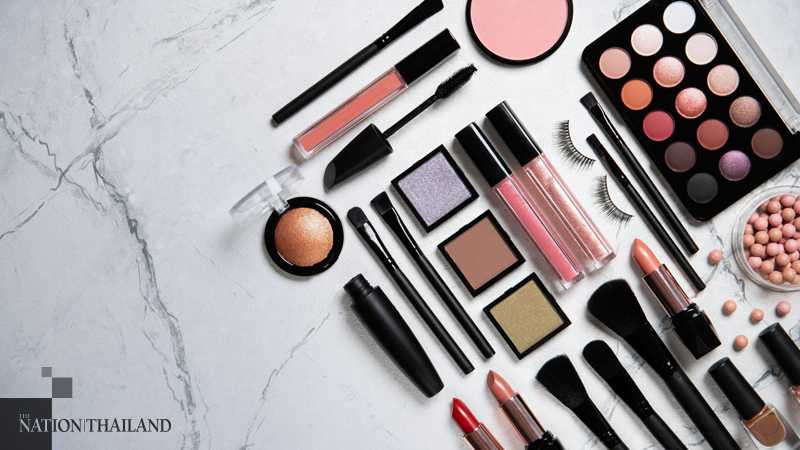

 นพ.ประยุทธ อังกูรไกรวิชญ์ อายุรแพทย์โรคติดเชื้อ โรงพยาบาลเวชธานี ย้ำ 8 กลุ่มเสี่ยงที่อาจมีอาการรุนแรงหากติดโควิด-19 พร้อมชี้สาเหตุและอาการ

 เช็กก่อนรู้ก่อน จับสังเกต 4 อาการโรคที่ดูเหมือนไม่ร้ายแรงอาจเป็นสัญญาณของโรคร้ายจากระบบภูมิคุ้มกันทำงานผิดปกติ พร้อมรู้ไลฟ์ไสตล์ไม่เหมาะสมที่อาจทำลายภูมิคุ้มกัน และวิธีเสริมสร้างเพื่อร่างกายที่แข็งแรงรับมือโรคภัยไข้เจ็บ
 กรมการแพทย์เตือนอาการเวียนศีรษะบ้านหมุน อาจนำไปสู่โรคภัย พร้อมแนะนำการสังเกตอาการ และการปรับพฤติกรรมเพื่อหลีกเลี่ยงอาการ
 ผู้เชี่ยวชาญด้านมะเร็งเต้านม เผยแนวทางการรักษาใหม่สำหรับผู้ป่วยมะเร็งเต้านมด้วยการแพทย์แบบแม่นยำ “Precision Medicine”


 The LG CHOi is an autonomous robot that can clean hotels, schools and retail stores. MUST CREDIT: Photo by LG
 Dimas Tadeu Covas, director of the Butantan Institute, from left, Jean Gorinchteyn, Sao Paulo’s health secretary, and Joao Doria, Sao Paulo’s governor, hold boxes of the Sinovac Biotech coronavirus vaccine at Guarulhos International Airport in Sao Paulo, Brazil, on Nov. 19, 2020. MUST CREDIT: Bloomberg photo by Jonne Roriz.
