British Hinkley Point nuclear plant delayed with higher costs
InternationalJan 28. 2021A crane lifts a prefabricated steel containment ring into position at the nuclear Reactor Unit 1, at Hinkley Point C nuclear power station construction site, near Bridgwater, England, on Dec. 17, 2020. MUST CREDIT: Bloomberg photo by Luke MacGregor.
By Syndication Washington Post, Bloomberg · Francois de Beaupuy, Rachel Morison
Electricite de France said the completion of its flagship British nuclear plant project will be delayed at least six months and cost about 500 million pounds ($687 million) more than previously planned because of the coronavirus pandemic.
While the delay announced Wednesday is short at this stage, it’s likely to revive controversy about how expensive the technology is and whether further holdups are inevitable. EDF is already struggling to finish a French reactor more than a decade behind schedule.
“We are still facing the full force of the pandemic,” Hinkley Point C Managing Director Stuart Crooks said. “This means we have not been able to bring on the extra people needed to catch up on work we postponed at the height of the crisis.”
The French state-controlled utility warned last year that such risks had risen as Covid-19 slowed construction of the two reactors it’s building with its Chinese partner at Hinkley Point in Southwest England. EDF had planned to make up key milestones missed in 2020 by the end of this year but continued social distancing requirements have limited the number of workers allowed on site.
The project completion cost at Hinkley Point C is now estimated at 22 billion to 23 billion pounds, half a billion more than estimated in 2019, EDF said in a statement Wednesday. The first reactor will begin producing power in June 2026, compared with end-2025 as initially announced in 2016, it said.
The six-month delay is dependent on being able to begin to ramp up back to normal site conditions from July, EDF said.
EDF fell 3.2% to 10.40 euros by 11:20 a.m. in Paris. The utility will have to shoulder the extra costs and won’t be paid any money from the U.K. government until the project is finished and electricity is being produced.
Nuclear doesn’t have a good track record for finishing on time. EDF is struggling to finish a reactor at Flamanville, which is delayed by more than 10 years, leading France to put further new projects on hold.
“Not great news, though given the covid-19 crisis and the very poor project evolution at Flamanville this is a fairly benign update,” JPMorgan Chase analysts said in a note, referring to EDF’s delayed nuclear project in France.
Delivering Hinkley Point C without huge delays is important for both EDF and U.K. policymakers who are relying on power from the reactor to plug a supply gap that’s emerging as older reactors shut. The utility is in talks with the government about financing a second project at Sizewell C. The government says the project needs to be cheaper than Hinkley Point C.
In a show of the importance of making a success of Hinkley, U.K. energy minister Kwasi Kwarteng gave his public backing to the project last week.
“I’m confident that if we do Hinkley Point C on time, which is looking likely, or if we miss it, it won’t be by very much, ” he said.
The U.K. is likely to need nuclear power as a source of low carbon electricity to meet its commitment to zero-out emissions by 2050. Electricity use is set to double by then as heating and transport sectors electrify. The huge program of offshore wind the U.K. is planning to roll out within nine years will need back up for when the weather is calm.
The delay and cost overruns will trim EDF’s projected rate of return on the project. The French company reiterated that units 1 and 2 still face another potential delay of 15 and 9 months, respectively, which might result in additional costs of about 700 million pounds.
European economy lags China and U.S. on pandemic recovery
InternationalJan 28. 2021A dockworker monitors a shipping container being loaded onto a freight train at the railway terminal at Behala inland port in Berlin on Jan. 26, 2021. MUST CREDIT: Bloomberg
By Syndication Washington Post, Bloomberg · Craig Stirling
Europe’s economy is starting to follow the familiar script of lagging its international peers when recovering from a crisis.
That was the upshot of the International Monetary Fund’s forecasts on Tuesday, which downgraded the growth outlook for 2021 across Europe and underscored a generally poorer performance compared with China and the U.S.
Such diverging fortunes reflect the stringency of lockdowns across the euro zone to contain the coronavirus, as well as a late and stumbling vaccination campaign — headwinds that threaten to deepen what already looks likely to be a double-dip recession. Political unease over the future leadership of Germany and a crisis in Italy are compounding the gloom.
By contrast, China is fulfilling a V-shaped recovery, and the U.S. is strutting more confidently with a new president overseeing an extra stimulus injection and a more aggressive vaccine effort.
“We’ve started the year on a softer footing, particularly in Europe, because much of Europe seems to have gone back into recession,” Janet Henry, chief global economist at HSBC Holdings in London, told Bloomberg Television. “China is already back above pre-pandemic levels and, on our projections, the U.S. will be by the end of 2021. For the euro zone, it’ll be the end of 2022.”
That divergence was emphasized in the IMF’s forecasts, which showed euro-area gross domestic product rising only 4.2% this year, after falling 7.2% in 2020. The U.S. economy is seen expanding 5.1%, more than recouping last year’s 3.4% contraction.
The most immediate cause of Europe’s relative weakness is the need for stricter and longer lockdowns to combat a resurgent coronavirus outbreak, and to contain nastier strains of the disease.
As European Central Bank President Christine Lagarde put it last week, a contraction in the fourth quarter will now “travel” into the first three months of the year.
“The short-term risk is tilted to the downside,” she added somberly. “Uncertainty is in the air.”
Sluggish immunization programs also threaten to widen the disparity between Europe and the rest. The European Union’s best performers in that regard, tiny Malta and Denmark, have administered only around 4 shots per 100 people. The U.S. has managed 7 and the U.K. is above 10. The EU is now in a standoff with AstraZeneca over delayed vaccine deliveries.
With such shortcomings likely to cement lockdowns even further, the contrast in economic destinies is looking stark, with banks including Barclays Plc pointing to an “Atlantic divide.”
“The U.S. outlook is improving, Europe’s is deteriorating” BofA Global Research’s economics team wrote in a report. “Don’t think of both economies’ recovery prospects as equal.”
Such a trajectory evokes the frequent impression that Europe has become a natural economic laggard to the rest. That sense has persisted for much of the current century, not least after the region’s sovereign-debt crisis impaired its recovery from the global financial crash a decade ago, while the U.S. and China powered ahead, at least in relative terms.
Newfound political disarray is only serving to highlight Europe’s listlessness. Post-Brexit trade curbs with the U.K. are already an irksome reminder of the recent trauma of divorce disfiguring the region.
Meanwhile, the succession to Germany’s Angela Merkel is still unresolved, keeping open the question of how the bloc will galvanize itself into fighting crises in the era after she leaves. Even after a candidate to replace her as chancellor is settled, an election in September — no doubt followed by coalition talks — will prolong the drift.
The sudden resignation of Italian Prime Minister Giuseppe Conte, against a backdrop of burgeoning debt obligations, also shows how turmoil is never far from erupting somewhere in the region. The country has been the focus of the EU’s efforts to forge a joint recovery fund to shore up the integrity of its common currency.
For all their potential despair, European policymakers can still cling to hopes that their economies remain sound beneath the surface.
Government support programs in the region have tended to be highly targeted toward keeping companies and jobs afloat even when output is shut down, possibly avoiding unnecessary destruction to growth potential.
“Economies are being held in an imperfect state of suspended animation, and by and large it keeps underlying economies healthy,” said Kallum Pickering, an economist at Berenberg. “My hunch actually is that there’s a bit less scarring than most people think.”
In any case, Europe’s finance chiefs are now resigning themselves to being patient for when vaccination setbacks can be cleared, and the pandemic tamed, so that their economies can finally be unleashed — even if that happens far later than global rivals.
“We have to divide the year 2021 in two parts,” French Finance Minister Bruno Le Maire said in a Bloomberg Television interview. “We have everything that is required to have a very strong, very quick rebound as soon as the pandemic is over.”
Dutch central bank Governor Klaas Knot shares that view — but also cautions that there will be a long road ahead to repair the damage.
“There is optimism, but then of course we will be stuck with the legacy of the corona pandemic,” he told Bloomberg Television. “Output will be below potential for some time to come.”
EU-Astra vaccine call back on after chaotic morning in dispute
InternationalJan 28. 2021Pascal Soriot, chief executive officer of AstraZeneca, poses for a photograph following a Bloomberg Television interview in London on Nov. 8, 2018. MUST CREDIT: Bloomberg photo by Simon Dawson.
By Syndication Washington Post, Bloomberg · Suzi Ring, Jonathan Stearns, Nikos Chrysoloras
The clash between the European Union and drugmaker AstraZeneca over covid-19 vaccine delays temporarily descended into chaos on Wednesday before the two sides confirmed that a crunch call to resolve the standoff will take place.
Earlier on Wednesday, an EU official said the company had pulled out of the planned talks with the European Commission and government representatives. The official, who asked not to be named, said Astra executives had sent an email on Tuesday evening withdrawing “because there are too many moving parts.” The cancellation was disputed by Astra, and the EU subsequently said discussions were back on.
The contradictory statements were just the latest twist in a saga that erupted late last week when Astra warned of delays at a production plant in Belgium. That was followed by public disagreement over contract terms, accusations of blame, and even threats to put limits on vaccine exports. The latest confusion — which pushed the life-and-death issue into the realm of farce — is also an echo of the broader disorganization that’s marked the EU’s rollout of coronavirus shots so far.
Iskra Reic, Astra’s Executive Vice-President for Europe and Canada, will take part in the meeting, where the EU wants to get more details about the delay to the rollout of shots. Governments are desperate to speed up the vaccination, as it’s proved sluggish so far, and also keen to avoid taking the blame.
The on-off status of the call emerged after Astra Chief Executive Pascal Soriot used an interview with European newspapers to deflect responsibility to the EU. He said the company has a so-called best-effort agreement that doesn’t specify a quantity. That’s because the EU insisted on receiving the AstraZeneca vaccine about the same time as the U.K. despite putting in its order three months later.
A key part of the disagreement is the use of vaccines produced in U.K. factories. Speaking on condition of anonymity, an EU official said that Soriot’s claim that the U.K. has priority on vaccines from British plants doesn’t exist in the contract.
The EU’s vaccination pace is lagging way behind the U.S. and the U.K. in terms of the share of its population inoculated, according to Bloomberg’s global tracker. Soriot said that once Astra gets EU regulatory approval — expected within days — it will ship at least 3 million doses immediately, with a target of 17 million by February.
That should help Europe accelerate vaccinations and get economies closer to exiting damaging lockdowns that have crippled industries and caused growing discontent. Soriot suggested he understands that the situation is difficult for leaders across Europe, where Brussels has coordinated a vaccine-buying program.
“Everybody is getting kind of a bit, you know, aggravated or emotional about those things.” he said in the comments published in La Repubblica and other newspapers. “But I understand because the commission is managing the process for the whole of Europe.”
In an effort to alleviate supply shortages, French drugmaker Sanofi said it has agreed to help produce more than 125 million doses of the shot Pfizer Inc. developed with Germany’s BioNTech SE. That shot, and one by Moderna Inc., are already authorized for use.
Sanofi will provide BioNTech access to its production sites in Frankfurt starting this summer, it said in a statement Wednesday. The goal is to accelerate efforts to package and distribute the vaccine, which needs to be kept at ultra-cold temperatures.
New pro-Beijing party signals China’s future plans for Hong Kong
InternationalJan 28. 2021The logo for the Bauhinia Party on a laptop as Charles Wong Chau-chi, co-founder, works at his desk in Hong Kong on Jan. 12, 2021. MUST CREDIT: Bloomberg photo by Paul Yeung.
By Syndication Washington Post, Bloomberg · Kari Lindberg
As China moves to neutralize Hong Kong’s pro-democracy opposition, it is also giving the green light to a new political party that provides a window into how Beijing may change the territory in the years ahead.
The Bauhinia Party, named after the flower on Hong Kong’s flag, was founded last May by Western-educated businessmen who were born in the mainland and have links to the Communist Party. Although still tiny, the group consulted with officials in the Hong Kong government, the Liaison Office — Beijing’s main body overseeing the city — and relevant offices in China, according to Charles Wong Chau-chi, one of the co-founders.
In an interview, Wong said that while the party never asked formally for the endorsement of those Chinese agencies, “we believe there is no reason they do not want to endorse us.”
The party’s purpose, he added, was to support people to stand for the position of chief executive, which will be up for grabs next year when Hong Kong leader Carrie Lam’s first term expires. One possibility is Li Shan, the party’s chairman, who is chief executive of Silk Road Finance Corp., a board member of Credit Suisse and a delegate to the National Committee of the Chinese People’s Political Consultative Conference, an advisory body to Beijing. Li declined an interview request.
Wong said Li would be interested in becoming Hong Kong’s next leader only if he’s “required and asked to, not necessarily he wants to.” The Bauhinia Party, Wong said, isn’t ready to compete in September’s Legislative Council elections, which were delayed for a year due to the pandemic.
The group’s formation at a time when China is facing criticism in the West for locking up democracy advocates signals an effort by Beijing to refine a managed version of electoral politics that gives the Communist Party ultimate veto power. Chinese authorities last year passed a sweeping national security law that has been used to curtail free speech, while also imposing a patriotism test to disqualify pro-democracy lawmakers — a move that prompted opposition members in the Legislative Council to resign en masse in November.
The Bauhinia Party’s emergence points to a multi-party system that “competes for blessings and a show of loyalty and devotion to whoever is in charge in Beijing,” said Kenneth Chan, associate professor at the Hong Kong Baptist University.
Any moves by Beijing to further tighten its hold on Hong Kong would provide an early test for U.S. President Joe Biden, who has vowed to support democracy proponents in the former British colony. A former Hong Kong leader still close with Beijing recently suggested the next chief executive should be decided next year by consultation, rather than through a 1,200 person committee. Beijing in any case can veto any winner it doesn’t like.
The Bauhinia Party’s platform says it aims to “respect ‘one country,’ cherish ‘two systems,’ and safeguard Hong Kong’s core values of freedom, democracy and rule of law.” Yet while that sounds in line with Hong Kong’s moderate pro-democracy camp, the group’s diagnosis of the territory’s troubles mirrors that of Beijing.
Wong said the root causes of the 2019 unrest had “nothing to do with China” while pointing to factors such as high-priced housing, poor local governance and an opposition he said was “tearing apart the social fabric and getting everybody angry.” The national security law, he added, was “timely to help stabilize Hong Kong” and had no impact on “one country, two systems” — the framework that guaranteed the territory’s autonomy for 50 years after Britain handed over the former colony in 1997.
Wong laid out a series of policy proposals he said would help bolster Hong Kong’s economy for decades to come: “One country, two systems” should be expanded for another 50 years. Young people should learn more about China, study Mandarin and spend time working in the mainland. Hong Kong should take advantage of the Greater Bay Area, Beijing’s plan to link the territory with Macau and neighboring Shenzhen, home to Huawei Technologies Co. And the city should implement a proposal on universal suffrage endorsed by Beijing.
Perhaps the toughest problem, Wong said, was expensive housing. High property prices were affecting everyone, he said, boosting the cost of living and making Hong Kong “less and less competitive.” The party platform calls for “bold solutions” including land and waterfront reclamation, farmland re-zoning, land co-development with the nearby cities of Shenzhen and Zhuhai, and converting country parks that now make up about 40% of Hong Kong’s total land area.
“The supply of land is not a problem,” Wong said. The challenge, he added, was finding “a common denominator that is shared by everybody to really push your housing program through.”
While it’s unclear whether the Bauhinia party can gain much traction, the current Beijing-friendly groups in Hong Kong have dismissed its chances to win elections. “The business community will not invest their resources in new parties without political influence, and little prospect of winning seats in LegCo or at the district level,” said Regina Ip, a pro-establishment lawmaker.
Wong said the party aims to eventually have as many as 250,000 members. He added that the party’s communication with China’s government would likely be “quite fluid,” while saying it was “silly” that critics said it had Beijing’s backing.
“A lot of people try to pin us down as to whether we are from China,” Wong said. “I think they really miss the point. We should look at whether we are for Hong Kong or not. And China is there to help, but there are bottom lines, there are red lines.”
India farmers clash with police, swarm Delhi as protests mount
InternationalJan 27. 2021Farmers at a rally near Singhu border on the outskirts of New Delh on Jan. 26, 2021. Bloomberg photo by Anindito Mukherjee
By Syndication Washington Post, Bloomberg · Archana Chaudhary, Santosh Kumar
Thousands of Indian farmers on Tuesday escalated protests to revoke controversial agricultural laws, clashing with police and storming key landmarks in New Delhi to pressure Prime Minister Narendra Modi.
The farmers, who have camped at various border points around the capital for two months, had permission to demonstrate after the completion of an annual military parade to mark Republic Day, a major public holiday in India. But many gathered early in the day and broke through barricades on the outskirts of the city, prompting police to deploy tear gas in some areas.
Television footage showed thousands of protesters clashing with police in central Delhi before reaching the iconic Red Fort, where Indian prime ministers typically address the nation on the country’s independence day in August. It remained unclear if the farmers, many of whom gathered peacefully, would camp out in the middle of Delhi or return to locations outside the city where they had been staying.
“We are talking to the farmers — we are convincing them to go back,” said Depender Pathak, special commissioner of police. “We have faith in farmers. This is an unprecedented situation.”
A farmer ascends a flagpole at the Red Fort during a protest in New Delhi on Jan. 26, 2021. Bloomberg photo by Anindito Mukherjee
India’s federal home ministry suspended mobile internet services in some parts of the city where the protests were most tense. Several metro stations were also shut down.
Farmer leaders called on protesters to stay peaceful, warning that any violence could hurt their cause.
“For the last two months, the entire country and the world has been saying that the peaceful nature of these farmers protests is their strength,” said Yogendra Yadav, leader of Sanyukta Kisan Morcha, an umbrella organization of several dozen farm groups leading the protests. “If this peace breaks down, our strength will take a hit.”
Farmers travel along the Inner Ring Road in New Delhi in January 2021. Bloomberg photo by Anindito Mukherjee
Leaders of the protests have rejected Modi’s offers to temporarily shelve the three laws passed in September that overhauled the way farm goods are sold in the country of more than 1.3 billion people, almost half of whom depend on agriculture for their livelihood. The government has defended the legislation, saying they would eliminate middlemen in state-run wholesale markets, increase earnings for farmers and make India more self-reliant.
The farmers have continued to call on the government to repeal the legislation, which they say will hurt their incomes and leave them vulnerable to big corporations. While Modi’s Bharatiya Janata Party has a lock on parliament and doesn’t need to call a national vote until 2024, the protests risk hurting his appeal in state elections and could halt momentum for other reforms.
Although the demonstrations have hurt the government, the scenes on Tuesday of unruly farmers may undermine their cause, according to Asim Ali, a New Delhi-based researcher at the Center for Policy Research.
“This was always the danger, and it seems that it has gone out of hand,” Ali said. “This is possibly what the ruling party would have liked to see.”
Prime Minister Narendra Modi was attending Republic celebrations during the Jan. 26, 2021, protest. Bloomberg photo by T. Narayan
The tractor rallies marked the first time the protesting farmers have marched into the capital. They are mostly from the neighboring states of Punjab, Haryana, Uttarakhand and Uttar Pradesh. But they have also found support in other Indian cities, including financial centers Mumbai and Bangalore, where protest marches have also taken place.
“More than a 100,000 people with tractors have gathered here and we expect more to join us,” said Manjit Rai, 57, a farm leader coordinating entry at one of the half-dozen entry points into the capital. “People are enthusiastic about the celebrations and we are determined that we will peacefully continue to make our case.”
Biden administration seeks to buy 200 million more vaccine doses, to be delivered through the summer
InternationalJan 27. 2021White House coordinator of covid-19 response Jeff Zients waits before President Joe Biden arrives to speak about the coronavirus pandemic on Thursday, Jan. 21, 2021. MUST CREDIT: Washington Post photo by Jabin Botsford
By The Washington Post · Isaac Stanley-Becker, Laurie McGinley, Christopher Rowland
WASHINGTON – The Biden administration said Tuesday it was on the cusp of securing an additional 200 million doses of the two coronavirus vaccines authorized for emergency use in the United States.
The purchases would increase available supply by 50%, bringing the total to 600 million doses by this summer.
Because both products – one developed by Pfizer and German company BioNTech and the other by Moderna – are two-dose regimens, that would be enough to fully vaccinate 300 million people. An estimated 260 million people in the United States are currently considered eligible to receive a coronavirus vaccine, though Pfizer and Moderna have initiated trials for children as young as 12, the results of which could expand the pool.
The deals promised by President Joe Biden would not immediately speed up vaccinations. But they would greatly boost his chances of returning the nation to some semblance of normalcy by late summer or the fall.
The president said Monday he expects the general public to gain access to shots by the spring – as he seemed to elevate his administration’s goal from 1 million vaccinations a day to 1.5 million – though aides said that was aspirational. And Biden drew back Tuesday to his earlier ambition of administering 100 million shots in his first 100 days, insisting it would be a good start.
Biden, in remarks Tuesday evening, said he expected the additional doses to be delivered through the summer.
“This is an aggregate plan that doesn’t leave anything on the table or anything to chance, as we’ve seen happen in the past year,” the president said.
He added, in a further effort to distinguish his approach from that of his predecessor, “This is a wartime effort.”
The companies were more cautious in public statements, though people knowledgeable about the negotiations said formal deals were imminent because the government was using options built into existing contracts to receive the additional doses. Those people, like several others, spoke on the condition of anonymity to describe internal matters.
Moderna spokesman Ray Jordan declined to comment. Pfizer spokeswoman Amy Rose said the company “has engaged in regular communications with the Biden administration and we stand at the ready to start negotiations should the White House choose to execute their option for additional doses.”
Each company has already agreed to deliver 200 million doses to the federal government by the end of June. Pfizer has said it can deliver 120 million of those doses by the end of March, at a price of $19.50 per dose, while Moderna has pledged 100 million by then, with each dose sold for $15.
Manufacturing has steadily ramped up, in pace with those targets. As a result, federal allocations to states and other jurisdictions will increase by about 16% next week, easing shortages that have intensified nationwide without immediately alleviating supply problems.
Jeff Zients, coordinator of the White House’s coronavirus response, informed governors of the increase on a call Tuesday afternoon, according to two people who participated and spoke on the condition of anonymity to describe the conversation.
The weekly allocation is forecast to go from about 8.6 million doses to about 10 million. The vaccines are distributed on a population basis among 64 jurisdictions, including 50 states, eight territories and six major cities.
Senior administration officials said the increased supply will come mostly from releasing more doses of Moderna’s vaccine. The stepped-up allocations will remain for three weeks, these officials said, as the Department of Health and Human Services provides estimates on that time scale going forward.
The increased allocations and the promise of better forecasts came as welcome news to state and local officials, who have implored the federal government for estimates of available supply so they can plan and set expectations for the public.
Such projections were not possible in December, according to current and former federal officials, because of uncertainty about manufacturing and instability in the supply chain. The government has gained greater understanding of production schedules, especially after directing suppliers to fulfill Pfizer’s needs under the Defense Production Act.
Moderna this month raised its global target for the year from 500 million doses to 600 million. Pfizer and BioNTech recently raised their target from 1.3 billion doses to 2 billion.
But precise manufacturing schedules remain difficult to predict, and Zients could not answer questions on Tuesday’s call with governors about exact production levels and when he expected significant scale-up, according to one state official who participated. The official said the administration promised more details “sooner rather than later.”
Meanwhile, vaccine shortages are having stark consequences throughout the country. Appointments have been canceled en masse as health officers and medical providers confront a sharply limited supply of doses, which are being targeted at medical workers, older people, some front-line workers and other highly vulnerable people. The patchwork of rules about eligibility has deepened confusion about access to the shots.
New information is around the corner about a third vaccine, though its efficacy is not publicly known. Health officials are awaiting data from a trial by Johnson & Johnson, which will probably arrive in the next week.
That data may also suggest how a vaccine performs against one of the virus variants spreading alarm globally, because some of the trial was conducted in South Africa, where a more transmissible variant has been identified. The federal government has already paid $1 billion for the first 100 million doses of Johnson & Johnson’s vaccine, which, if it proves effective, would be a boon because it is a single dose.
The effort to buy additional Pfizer and Moderna doses vaccines represents a shift in strategy, as the Biden administration doubles down on two highly effective products authorized by federal regulators. The Trump administration worked to spread its risks over many vaccine candidates.
Once the Pfizer and Moderna vaccines late last year showed such high efficacy – about 95% – some government experts argued the administration should quickly acquire as much of those vaccines as possible, even if the United States ended up with more vaccine than needed.
That argument has gained currency with the Biden administration, according to people familiar with the government’s thinking, partly because of the emergence of variants that appear to be more transmissible and possibly more lethal than the original coronavirus.
Early data shows that the two vaccines may be effective against the British variant of the virus that already is causing infections in the United States. And scientists believe they may possibly be effective against other variants, including ones identified in Brazil and South Africa. The South African variant has not appeared in the United States, but the Brazilian one was recently found in a case in Minnesota.
In addition, the Pfizer and Moderna vaccines, which use a platform known as mRNA to elicit a potent immune response, are the easiest type of vaccine to change to counter threatening new variants.
Biden and his top aides have stressed that vaccine supply is only one aspect of the challenges involved in executing the immunization campaign. The administration is seeking additional resources for state and local health departments and has vowed greater federal coordination of the efforts, including plans to augment the public health workforce and set up mass vaccination sites.
The administration has also pledged to increase transparency for state and local officials overseeing ground-level planning and for members of the public waiting to be vaccinated.
Biden administration officials are also seeking to have more data related to vaccination efforts posted on the website of the Centers for Disease Control and Prevention, according to a federal health official. Ideally, that would include data about manufacturing, supply and allocation to the states. Information about production and supply is not currently publicly available.
The vaccine rollout has been marked by a lack of transparency about stockpiles, short-term rollout schedules and contradictory statements from government officials. Companies producing vaccines have issued broad statements about vaccine goals, based on quarterly projections.
In Pfizer’s case, production estimates were recently accelerated by the Food and Drug Administration’s recognition of a sixth dose in each vial, which previously had been considered to be “over fill” beyond the initial five-dose capacity. The change resulted in an instant 20% increase in Pfizer’s quota.
The companies said they have been giving more detailed information about vaccine availability to the government, which then relays the information about weekly shipment expectations to state officials.
But the lack of accurate and consistent information has been a major complaint at the state level, as the initial shipments of vaccine have not matched the volume of vaccines local systems are demanding.
The Biden administration appeared to put pressure over the weekend on Pfizer and Moderna to improve the flow of information about vaccine manufacturing and supply. Appearing on “Fox News Sunday,” Biden’s director of the Centers for Disease Control and Prevention, Rochelle Walensky, said, “I can’t tell you how much vaccine we have, and if I can’t tell it to you then I can’t tell it to the governors and I can’t tell it to the state health officials.”
Asked to respond to Walensky’s concerns this week, Moderna and Pfizer said they have been reporting on a daily and weekly basis the amount of vaccine that will be ready.
“We have and are continuing to work closely with the U.S. government on our production, release and shipping schedules – to ensure Americans receive their first and second doses of the vaccine on time,” Pfizer said in a statement this week. “We have provided them with a specific schedule, and we foresee no issues in delivering on the commitments we have made.”
Jordan, Moderna’s spokesman, said the U.S. government is in charge of relaying fine-grained information to states. “The U.S. Government is our customer, and they are free to communicate as they wish,” he said.
A former Trump administration official, who spoke on the condition of anonymity to address sensitive matters, said Moderna has been more forthcoming about its vaccine production than Pfizer.
“With Moderna, we always had a pretty clear sense of what was further ahead, and any potential issues, a better ability to accurately predict what was coming,” the official said. “With Pfizer, we didn’t have as much insight. It was a byproduct of their unwillingness to work as collaboratively with Warp Speed as other companies.”
Pfizer did not respond to a request to address the criticism.
Along with other vaccine manufacturers, Pfizer last summer signed an advanced purchase contract with the Trump administration. But the company did not accept research and development money or backing for clinical trials from the government.
Pfizer also opted to distribute its vaccine to states on its own, rather than permit its vaccine to be shipped by national wholesaler McKesson, the government’s designated distributor for vaccine and supplies. Its shipments are nonetheless following the federal government’s allocation guidance.
Much of Pfizer’s supply is obligated to other countries. But the pharmaceutical giant has recently delayed or reduced shipments to Canada and Europe as it retools a factory in Belgium, frustrating foreign governments.
InternationalJan 27. 2021President Biden speaks his week at the White House. MUST CREDIT: Washington Post photo by Jabin Botsford
By The Washington Post · Cleve R. Wootson Jr., Tracy Jan
WASHINGTON – President Biden signed four executive actions Tuesday aimed at increasing racial equity across the nation, a move the administration said was a big early step in his efforts to dismantle systemic racism, though civil rights groups made it clear they will press for more-sweeping change in the months ahead.
The measures seek to strengthen anti-discrimination housing policies that were weakened under President Donald Trump, nix new Justice Department contracts with private prisons, increase the sovereignty of Native American tribes and combat violence and xenophobia against Asian Americans and Pacific islanders, a week after the departure of a president who blamed the Chinese for the coronavirus pandemic.
Biden said the actions were part of an effort to infuse a focus on equity into everything the federal government does.
“We’re in a battle for the soul of this nation, and the truth is our soul will be troubled as long as systemic racism is allowed to exist,” Biden said. “I’m not promising that we can end it tomorrow, but I promise you that we’re going to make strides to end systemic racism, and every branch of the White House and the federal government will be part of that.”
The actions reflected the extent to which Biden’s ascent to the presidency was wrapped up with the nation’s racial struggles. He kicked off his campaign with a rejection of Trump’s approach to race, was propelled to the nomination largely by Black voters and – as racial justice protests erupted across the country – aligned his campaign increasingly with their cause.
Activists are making it clear that they expect more from Biden than a diverse administration and rhetoric about justice. Tuesday marked his first major effort to respond, to mixed reviews from civil rights groups.
In a memo, the administration pledged to work with Congress on legislation that increases funding for minority-owned small businesses, invests in historically Black colleges and universities, and triples funding for Title I schools serving a high proportion of low-income children.
Some activists cautioned that tackling system racism is complex and will not be resolved by government edicts.
Melanie Campbell, who leads the Black Women’s Roundtable, a group of Black female activists, said that she was buoyed that Biden took decisive steps on equity – especially related to housing discrimination – less than a week into his term but that more work needs to be done.
“We plan to engage this administration and to engage Congress,” Campbell said. “Black people didn’t just help the Biden-Harris ticket win for our health. I’m not waiting on announcements, I’m engaging. Maybe we’ll give them a week or two to settle in, but we are not sitting around waiting.”
Biden spoke Tuesday in unusually blunt terms, decrying white supremacy and systemic racism, and saying the nation must change its entire approach to racial equity. “It’s time to act because that’s what faith and morality call us to do,” he said. “It’s what the core values of this nation call us to do.”
The moment carried echoes of Lyndon Johnson, who assumed the presidency amid another period of racial turmoil, said Ravi Perry, chairman of the political science department at Howard University.
The 1963 March on Washington and other civil rights protests led to the 1964 Civil Rights Act and laid the groundwork for the 1965 Voting Rights Act and the 1968 Fair Housing Act, Perry said. Johnson spoke out on the need to eradicate racism, delivered a commencement address at Howard University and famously declared that “We shall overcome” to a joint session of Congress.
But the landmark civil rights laws were passed because “a president decided to make racial justice a substantive legislative domestic priority – not just soaring rhetoric,” Perry said. “LBJ set the tone, not just in speeches but working behind the scenes to create legislation.”
The question, he said, is whether Biden’s rhetoric is followed by similar advances.
“I think people are certainly hoping that by spring we will begin to see some of these executive orders turn into legislative policy,” Perry said, “and if it doesn’t happen, then Democrats are going to have a lot of young people to answer to in the midterms of 2022.”
Throughout the presidential race, Biden cast his campaign as a rejection of Trump’s racial attitudes, and on Tuesday he targeted several high-profile moves by his predecessor. He said he was reversing a Trump order that banned government agencies from offering racial-sensitivity training, for example, and would rescind the report of a “1776 Commission” that Trump depicted as an antidote to political correctness.
Biden also took implicit aim at Trump’s habit of calling the coronavirus the “China virus.” One of the new president’s orders denounced anti-Asian bias and encouraged federal agencies combating the pandemic to make education part of their response.
Civil rights groups, while welcoming the actions, said they are far from enough.
Changing the police and criminal justice system are among the most urgent goals for many of these groups, as are fighting voter suppression. Beyond that, many activists say they want Biden to put resources toward reducing disparities in educational and economic opportunities.
Biden mentioned many of those aims in his remarks Tuesday in the White House State Dining Room, but he cautioned that dismantling systemic racism was a herculean undertaking. “It’s not going to be overnight,” he said. “We’re not going to eliminate everything.”
Black Americans trail Whites on every economic measure, including wealth, income, employment and homeownership. The disparities have existed for decades, even when comparing workers with similar education levels. The gaps, many economists say, stem in large part from government-sanctioned policies that continue to discriminate against Black people in lending, education, criminal justice and housing.
Fair-housing advocates characterized Biden’s early step as the minimum necessary to fight systemic racial disparities. Lisa Rice, president and chief executive of the National Fair Housing Alliance, said civil rights groups have laid out a detailed timeline for the actions they expect the administration to take to “make the executive orders come to fruition.”
“You can tell me all day long you want to advance racial equality, but if I don’t see you doing substantive things like encouraging lending institutions to develop special-purpose credit programs, then I begin to wonder if this wasn’t just all talk,” Rice said. “Changing the policies is one thing. Now you’ve got to implement them.”
During his inaugural address, Biden said one of his administration’s goals would be to dismantle systemic racism. He has long said a first step on that path is a Cabinet that “looks like America.”
Biden picked Sen. Kamala Harris, D-Calif., to be vice president, the first Black and Asian American woman to win a nationally elected office – though it remains to be seen whether Harris will play a large role in Biden’s efforts on racial equity.
Biden has also nominated several African Americans to key Cabinet posts. Biden’s defense secretary, Lloyd Austin, was sworn in Monday. Susan Rice, whom Biden has chosen to lead the Domestic Policy Council, has been focused on ensuring that efforts toward equity are integrated into the administration’s broader policies.
And Biden has nominated Rep. Marcia Fudge, D-Ohio, the former chair of the Congressional Black Caucus, to lead the Department of Housing and Urban Development. Homeownership has long been an important way for Americans to build wealth; 46% of Black families owned homes compared with 75% of White families in 2020, a gap that has widened since 1976.
Yet strides in this area may not come without conflict. Biden has been criticized by some Republicans who say the focus on equity in his inaugural address suggested that his political opponents are racist.
“If you read his speech and listen to it carefully, much of it is thinly veiled innuendo calling us white supremacists, calling us racists, calling us every name in the book, calling us people who don’t tell the truth,” said Sen. Rand Paul, R-Ky.
And policies designed to increase housing equity that were scaled back by the Trump administration remain an object of criticism by some Republicans.
Under Tuesday’s actions, for example, HUD is expected to reinstate a 2013 rule that codified a decades-old legal standard known as “disparate impact.”
That rule was aimed at barring the housing industry from enacting policies such as requiring tenants to undergo a criminal-background check and using artificial intelligence to predict creditworthiness that, while seemingly race-neutral, have an adverse effect on Black and Latino Americans.
Civil rights attorneys say that applying the disparate-impact standard has helped reduce inequality. But some conservatives argue that this approach unfairly ties the hands of businesses, and the Trump administration changed the rule, saying it would free up firms to “innovate and take risks without the fear they will be second-guessed through statistics down the line.”
The Trump administration had also repealed regulations requiring communities to identify and address barriers to racial integration or risk losing federal funds. It argued that the regulations were too burdensome for communities and sucked up too many federal resources.
Then-HUD Secretary Ben Carson criticized the Obama-era rule for forcing communities to find “anything that looks like discrimination,” rather than responding to actual problems. And on Tuesday, Biden said he is pushing HUD to reinstate those regulations.
Biden faces an unusually turbulent landscape early in his presidency, and he often frames the country’s racial reckoning as one of several crises facing the country – along with the pandemic, the economic collapse and climate change.
Some critics on the right have suggested his emphasis on racial justice amounts to a show of favoritism, and Tuesday the president argued that advancing racial equality is not a gift to one part of the population. “When one of us is lifted up, we’re all lifted up,” Biden said. “And the corollary is true – when any one of us is held down, we’re all held back.”
Nearly all GOP senators vote against impeachment trial for Trump, signaling likely acquittal
InternationalJan 27. 2021Sen. Rand Paul, R-Ky., speaks to reporters as he makes leaves the Senate on Tuesday, Jan. 26, 2021. MUST CREDIT: Washington Post photo by Salwan Georges
By The Washington Post · Mike DeBonis, Seung Min Kim
WASHINGTON – All but five Republican senators backed former president Donald Trump on Tuesday in a key test vote ahead of his impeachment trial, signaling that the proceedings are likely to end with Trump’s acquittal on the charge that he incited the Jan. 6 Capitol riot.
The vote also demonstrated the continued sway Trump holds over GOP officeholders, even after his exit from the White House under a historic cloud caused by his refusal to concede the November election and his unprecedented efforts to challenge the result.
Trump’s trial is not scheduled to begin until Feb. 9, but senators were sworn in for the proceedings Tuesday, and they immediately voted on an objection raised by Sen. Rand Paul, R-Ky., questioning the constitutional basis for the impeachment and removal of a former president.
“Impeachment is for removal from office, and the accused here has already left office,” he argued, adding that the trial would “drag our great country down into the gutter of rancor and vitriol, the likes of which has never been seen in our nation’s history.”
But Democrats argue that Trump must be held accountable for the riot, which saw the Capitol overrun and claimed the lives of one police officer and four rioters. Paul’s argument, they said, suggests that presidents can act with impunity late in their terms.
Senate Majority Leader Charles Schumer, D-N.Y., said Tuesday that the Republican argument is “flat-out wrong by every frame of analysis – constitutional context, historical practice, precedent and basic common sense.”
The final vote was 55 to 45 to kill Paul’s objection, with GOP Sens. Susan Collins of Maine, Lisa Murkowski of Alaska, Mitt Romney of Utah, Ben Sasse of Nebraska and Patrick Toomey of Pennsylvania joining all 50 Democrats.
The largely partisan vote indicated that, nearly three weeks after the Capitol attack, much of the GOP anger over Trump’s actions immediately before and during the siege has faded. Notably, Senate Minority Leader Mitch McConnell, R-Ky. – who previously said Trump had “provoked” the Capitol mob – voted to back Paul and Trump, who has reached out to senators directly and through intermediaries to marshal support for his defense.
Convicting Trump would require support from 67 members of the 100-member body. The Democratic-led House has already impeached Trump a historic second time. If convicted in the Senate, the former president could be barred from holding future office with a subsequent majority vote.
Paul had sought to muster at least 34 votes in support of his objection to signal that there were enough senators with constitutional misgivings to secure an acquittal. After the vote, Paul declared that “the impeachment trial is dead on arrival.”
Sen. Lindsey Graham, R-S.C., who has been advising Trump on his defense, said Tuesday that he considered 45 votes to be “a floor, not a ceiling” for an acquittal vote.
“He just needs to keep doing what he’s doing, and the trial will be over in a couple of weeks,” he told reporters.
A few senators who voted with Paul disputed that Tuesday’s vote was a foolproof indication of the trial’s outcome. Sen. Rob Portman, R-Ohio, for instance, told reporters he wanted to hear further debate on the constitutionality question but had not yet decided whether to convict Trump.
But several other Republicans, including Collins, drew the conclusion that a Trump acquittal was now fait accompli. “I think it’s pretty obvious from the vote today that it is extraordinarily unlikely that the president will be convicted,” she said. “Just do the math.”
Before the vote, Republican senators met for a private lunch where they heard from Jonathan Turley, a George Washington University law professor who has argued that a former president cannot be tried for impeachment.
Exiting the lunch, Turley said that he had presented a nuanced argument – that the benefits of condemning a now-departed president were “outweighed by the cost” of setting the precedent that Congress could retrospectively impeach and remove former presidents, creating a new political weapon.
The theory has gained traction among Republicans as a way to side with Trump while sidestepping the question of whether he “incited” the violence at the Capitol – the allegation that is at the heart of the impeachment effort.
Sen. Ron Johnson, R-Wis., said he hoped that Tuesday’s vote would prompt Democrats to reassess if it was even worth having a trial.
“I hope my colleagues… look at it from the standpoint, is it wise to do this?” he said. “I would hope we would end this now. It’s just not wise. It’s not healing. It’s divisive.”
Democrats and many legal scholars have balked at the argument that a former president – or any former official – cannot be convicted of impeachment.
“The theory that the Senate can’t try former officials would amount to a constitutional get-out-of-jail-free card for any president who commits an impeachable offense,” Schumer said.
“It makes no sense whatsoever that a president – or any official – could commit a heinous crime against our country and then defeat Congress’ impeachment powers by simply resigning, so as to avoid accountability and a vote to disqualify them from future office.”
Schumer and other have raised the precedent sent in 1876, when Secretary of War William Belknap resigned a matter of moments before the House was set to vote on his impeachment on corruption charges. The House impeached Belknap anyway, and the Senate proceeded with a trial in which Belknap was acquitted.
McConnell did not speak before Tuesday’s vote or release any statement squaring his vote with his previous statements critical of Trump’s behavior. In the immediate aftermath of the Capitol attack and the House impeachment, McConnell communicated to his GOP colleagues that he was open to supporting a conviction.
Sen. John Thune, R-S.D., the majority whip, said Tuesday’s vote indicated that many Republicans consider the trial to be on “a very shaky foundation” but have not necessarily ruled out a vote to convict.
“I, as a juror, am going to wait until the trial commences and hear the arguments on both sides,” he said. “And I think that’s where the leader is.”
The former president’s aides also have started putting GOP senators on notice about the impending trial vote asserting that Trump will continue to be in a force within the Republican Party. Sen. Kevin Cramer, R-N.D., said Brian Jack, a political aide to Trump, called him over the weekend to stress that Trump had no interest in starting a third party and that his political activity post-presidency would be with the GOP.
“I would say it wasn’t out of the blue,” Cramer said of the call, first reported by Politico. “I think it was strategic.”
Among the other key Republicans who aired constitutional concerns Tuesday was Sen. Charles Grassley, R-Iowa, a former chairman of the Senate Judiciary Committee and the longest-serving GOP senator. He raised qualms about the fact that Chief Justice John Roberts Jr., who is constitutionally mandated to preside over the impeachment trial of a sitting president, has opted not to appear at Trump’s second trial.
“That would send a pretty clear signal to me what Roberts thinks of the whole thing,” Grassley said. Roberts, through a Supreme Court spokeswoman, has declined to comment.
Rather than Roberts, presiding over the trial will be Sen. Patrick Leahy, D-Vt. – the Senate president pro tempore and longest-serving senator. While Leahy pledged Monday to act fairly in the role, the image of a Democrat presiding over the trial of a GOP former president led several Republicans to cry foul.
“Brazenly appointing a pro-impeachment Democrat to preside over the trial is not fair or impartial and hardly encourages any kind of unity in our country,” Paul said Tuesday. “No, unity is the opposite of this travesty we are about to witness.”
A few Republicans, however, said they believed that the trial of a former president is in fact constitutional. Sen. Lisa Murkowski, R-Alaska, told reporters Tuesday that, in her view, “impeachment is not solely about removing a president, it is also a matter of political consequence.”
Despite the broad constitutional concerns among Republicans, it appeared Democrats had little intention of canceling or curtailing the trial.
Some, including Sen. Richard Blumenthal, D-Conn., said the vote Tuesday suggested that House impeachment managers needed to make an even more detailed case against Trump – calling witnesses and presenting evidence attesting to the depravity of his behavior leading up to and during the events of Jan. 6.
Blumenthal said he believed that the trial would rekindle the anger many Republicans felt in the immediate aftermath of the Capitol assault: “They were in a different frame of mind than today when they were voting on the motion to dismiss,” he said. “And I want to bring back the feelings of revulsion and terror that were caused on that day.”
Other Democrats suggested that Republicans were simply trying to avoid contending with the political consequences of rendering a judgment on Trump’s conduct.
“They don’t want to argue the merits,” said Sen. Gary Peters, D-Mich. “We have a president who incited a violent attack on the United States Capitol, and on our very democracy, so it’s absolutely critical that we call that out and make sure that future presidents understand that this is completely unacceptable behavior and will never be tolerated by the American people.”
Schumer on Tuesday said Trump’s behavior – which included spreading baseless theories about the November election being stolen, pressuring state officials to change vote tallies, encouraging supporters to rally in Washington as Congress certified the electoral college on Jan. 6, and then calling that day for ralliers to march to the Capitol – amounted to “the most despicable thing any president has ever done.”
Yellen takes charge at Treasury with economic rebound weakening
InternationalJan 27. 2021Former Federal Reserve chair Janet Yellen speaks during the American Economic Association and Allied Social Science Association Annual Meeting in Atlanta on Jan. 4, 2019. MUST CREDIT: Bloomberg photo by Elijah Nouvelage
By Syndication Washington Post, Bloomberg · Saleha Mohsin, Christopher Condon, Erik Wasson
Janet Yellen won confirmation to become U.S. treasury secretary, building out President Joe Biden’s team as the administration struggles to win bipartisan support for a $1.9 trillion covid-19 relief plan for shoring up a weakening economic recovery.
The first woman to serve in the post, Yellen will take charge of a department with responsibilities spanning tax policy and government spending to financial stability, economic sanctions and foreign-exchange policy. She’ll also oversee ties with the Federal Reserve, which she previously chaired. She was confirmed by the Senate 84-15 Monday evening.
Yellen already saw the uphill fight the administration faces in its stimulus campaign last week, with Republicans on the Senate Finance Committee rejecting her arguments that historically low interest rates offer an opportunity for expansive deficit spending. White House economic adviser Brian Deese similarly ran into challenges from a bipartisan group of lawmakers Sunday, who asked for the basis for such a large package so soon after December’s $900 billion bill.
Sen. Joe Manchin, D-W.Va., told reporters Monday that lawmakers had received more details on the justification for the $1.9 trillion, and the bipartisan group is evaluating the information. Biden said at a press briefing Monday said he was open to negotiating, though “reluctant to cherry pick and take out one or two items here.”
A group of 16 senators, along with leaders of a group of House centrists, have engaged with the White House on the aid bill. Sen. Jeanne Shaheen, D-N.H., said Monday it would take “a lot of negotiating” to get a bipartisan deal.
Yellen is relatively new to a political sales role, after having mainly defended and explained Fed actions during her previous career. She brings a wealth of economic knowledge to the administration’s case, however.
The 74-year-old was also the first woman to head the U.S. central bank, which she left in early 2018 after overseeing a winding back of monetary stimulus after the last recession and its slow recovery.
“The symbolism and sense of technical expertise and decades of Washington experience that Janet Yellen brings will bring immediate credibility” to Biden’s economic agenda, said Tim Adams, who served as a Treasury undersecretary during the George W. Bush administration and now heads the Institute of International Finance, a banking group. “Yellen will be a key anchor of the economic team.”
Yellen has been a trailblazer throughout her career: She was the only woman out of 24 students in 1971 to earn a doctorate in economics from Yale University. She later taught economics at Harvard, and worked for more than 16 years at the Fed, including a stint as president of the Federal Reserve Bank of San Francisco during the financial crisis.
Brooklyn, N.Y.-born Yellen follows Jimmy Carter appointee G. William Miller, who also served as treasury secretary after being Fed chair. She’ll be the first to have had both those jobs and head of the White House Council of Economic Advisers, a role she had in the Clinton administration.
She had an early look at the challenges of the new job in her confirmation hearing at the Senate Finance panel last week. Her argument that it’s critical to “act big” now with emergency deficit spending to avoid long-term “scarring” in the economy was rejected by Republican lawmakers voicing concerns about rising debt.
“Right now, short term, I feel that we can afford what it takes to get the economy back on its feet, to get us through the pandemic,” Yellen told the committee. She highlighted the opportunity presented by historically low interest rates, and flagged that debt-servicing payments as a share of the economy are lower today than before the 2008 financial crisis.
Next steps on covid-19 relief are unclear. Biden on Monday didn’t rule out pursuing a Democrat-only route for passage, using an expedited process called reconciliation.
Under reconciliation, the House and Senate would need to first draft a budget resolution for fiscal 2021. House Budget Committee Chair John Yarmuth said his panel is preparing his chamber’s version to be on the House floor next week.
Biden left it to House Speaker Nancy Pelosi, D-Calif., and Senate Majority Leader Charles Schumer, D-N.Y., to make the call on reconciliation.
“I don’t expect we’ll know whether we have an agreement, or to what extent the entire package will be able to pass or not pass, until we get right down to the very end of this process, which will be probably in a couple weeks,” Biden said.
Tesla, BMW approved for slice of $3.5 billion EU battery aid
InternationalJan 27. 2021Tesla Model X SUVs stand on hydraulic platforms during assembly for the European market at the Tesla Motors factory in Tilburg, Netherlands, on Dec. 9, 2016. MUST CREDIT: Bloomberg photo by Jasper Juinen
By Syndication Washington Post, Bloomberg · Ewa Krukowska, Tara Patel, Stefan Nicola
The European Union paved the way for companies including Tesla and BMW to get about 2.9 billion euros ($3.5 billion) of state aid for battery projects that will strengthen the bloc’s position in the race to produce more electric vehicles.
The European Commission expects the support to trigger more than three times as much private investment, bringing the total spent to about 12 billion euros. The aid will go to 42 companies across a dozen countries, with beneficiaries also including Fiat Chrysler owner Stellantis and startup Northvolt.
The 27-nation bloc plans to slash greenhouse gas emissions from transport under the European Green Deal, an ambitious economic overhaul aimed at reaching climate neutrality by 2050. Along the way, the EU wants to reduce its reliance on EV batteries from Asian producers. The value of Europe’s battery market will reach 250 billion euros by 2025 and meet demands from the auto industry, according to the commission.
“Europe will cement in this way its position as a global hot spot for battery investment,” European Commission Vice President Maros Sefcovic said. “This pan-European project will help revolutionize the battery market.”
More information about the amount of aid going to each project will be available in the public version of the Commission’s decision once it has agreed with member states and third parties on any confidential business secrets that need to be removed.
Aid for the projects, which are expected to be completed by 2028, will be disbursed by countries including Finland, Spain, France and Poland, and was coordinated by Germany. It follows a 3.2 billion-euro package to support a total of 9 billion euros of public and private spending that was coordinated by France and approved in December 2019.
Battery investment has poured in as Europe’s stricter pollution standards forces carmakers to embrace electric cars and limit carbon-dioxide emissions. BloombergNEF is forecasting 1.9 million sales of plug-in hybrid and battery-electric vehicles in Europe this year, topping China and almost quadrupling the total expected in North America.
As part of the Green Deal, the EU wants to toughen its 2030 emissions-reduction target to at least 55% from 1990 levels, compared with the existing goal of a 40% cut. The overhaul is a key pillar of the region’s strategy to recover from the virus-induced recession.
European policy makers are aware the bloc’s key industries risk falling behind if they don’t fill manufacturing gaps in energy-storage technology. Lithium-ion batteries will power plug-in cars and also help balance electric grids transmitting renewable energy including wind and solar.
The battery initiative announced Tuesday got priority status as an Important Project of Common European Interest, or IPCEI. It will involve research and development of new technologies to reduce or completely eliminate cobalt or natural graphite and replace it with synthetics.
The projects will cover the entire battery value chain, from extraction of raw materials, design and manufacturing of battery cells and packs, and recycling and disposal. The aid is expected to contribute to development of technological breakthroughs, including different cell chemistries, novel production processes and other innovations.
Tesla Chief Executive Officer Elon Musk has said the electric-car maker plans to add a battery-cell production facility at the vehicle-assembly plant it’s building near Berlin. The site will initially have capacity of more than 100 gigawatt-hours a year and eventually ramp up to as much as 250 gigawatt-hours, Musk said during a battery conference in November.
“I’m pretty confident at that point it would be the largest battery-cell plant in the world,” Musk said. He didn’t give time frames for when he expects the facility to reach those capacity levels.
The factory Tesla is building in the small town of Gruenheide will be the company’s first in Europe. It’s slated to start making vehicle in the middle of this year and eventually assemble as many as 500,000 cars annually. While construction is far along, the company is still awaiting final approval for the project from local authorities. It also has been hung up by environmental groups’ legal challenges.
Other carmakers investing in European battery production include PSA Group, which merged with Fiat Chrysler to form Stellantis. It set up a joint venture called Automotive Cells Company with French oil giant Total’s Saft unit in September. Sweden’s Northvolt will operate a plant with Volkswagen in Germany, with BMW also participating in the project and ordering billions’ worth of batteries from the startup.
Asian battery giants including South Korea’s LG Chem, Japan’s Panasonic and China’s Contemporary Amperex Technology also have said they’re going to set up or expand operations in the region.

 A crane lifts a prefabricated steel containment ring into position at the nuclear Reactor Unit 1, at Hinkley Point C nuclear power station construction site, near Bridgwater, England, on Dec. 17, 2020. MUST CREDIT: Bloomberg photo by Luke MacGregor.
 A dockworker monitors a shipping container being loaded onto a freight train at the railway terminal at Behala inland port in Berlin on Jan. 26, 2021. MUST CREDIT: Bloomberg
 Pascal Soriot, chief executive officer of AstraZeneca, poses for a photograph following a Bloomberg Television interview in London on Nov. 8, 2018. MUST CREDIT: Bloomberg photo by Simon Dawson.
 The logo for the Bauhinia Party on a laptop as Charles Wong Chau-chi, co-founder, works at his desk in Hong Kong on Jan. 12, 2021. MUST CREDIT: Bloomberg photo by Paul Yeung.
 Farmers at a rally near Singhu border on the outskirts of New Delh on Jan. 26, 2021. Bloomberg photo by Anindito Mukherjee


 White House coordinator of covid-19 response Jeff Zients waits before President Joe Biden arrives to speak about the coronavirus pandemic on Thursday, Jan. 21, 2021. MUST CREDIT: Washington Post photo by Jabin Botsford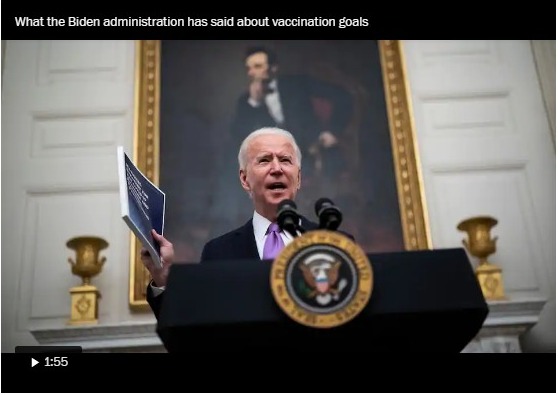
 President Biden speaks his week at the White House. MUST CREDIT: Washington Post photo by Jabin Botsford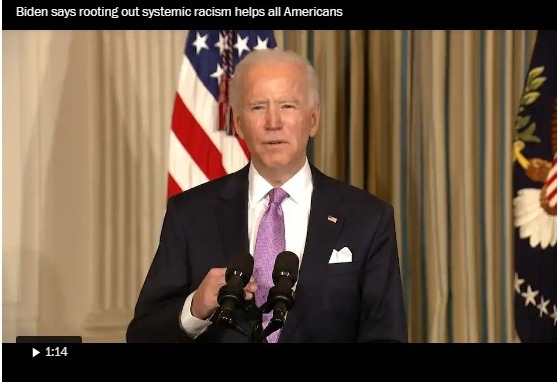
 Sen. Rand Paul, R-Ky., speaks to reporters as he makes leaves the Senate on Tuesday, Jan. 26, 2021. MUST CREDIT: Washington Post photo by Salwan Georges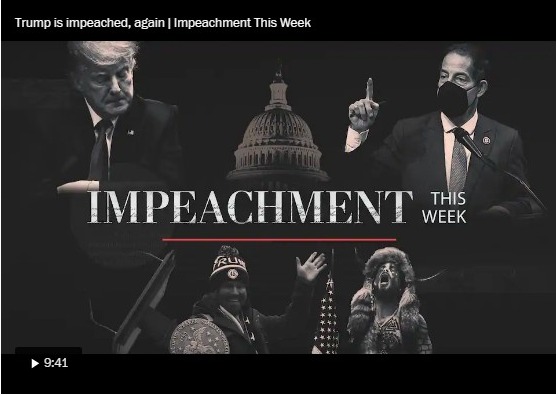
 Former Federal Reserve chair Janet Yellen speaks during the American Economic Association and Allied Social Science Association Annual Meeting in Atlanta on Jan. 4, 2019. MUST CREDIT: Bloomberg photo by Elijah Nouvelage
 Tesla Model X SUVs stand on hydraulic platforms during assembly for the European market at the Tesla Motors factory in Tilburg, Netherlands, on Dec. 9, 2016. MUST CREDIT: Bloomberg photo by Jasper Juinen
